




Abstract
I examine how volunteering dynamics changed in the United Kingdom during the coronavirus disease 2019 (COVID-19) pandemic relying on data from the “Understanding Society” survey. Descriptive analyses and linear probability models yield three main findings: First, the share of volunteers (for all causes) dropped at least by a third during the first lockdown and did not increase until March 2021. Second, disproportional (absolute) declines occurred among the elderly, women, and those with higher education. Elderly individuals were particularly likely to quit their voluntary engagement, while the propensity of starting declined particularly among higher educated individuals. Third, volunteering in response to COVID-19 was performed by only 3.4% of all respondents and was more common among the higher educated, women, and experienced volunteers. These results suggest that volunteering might well decrease during disasters that affect the opportunities of potential volunteers contrasting the mobilizing role of disasters highlighted by earlier research.
Introduction
The coronavirus disease 2019 (COVID-19) pandemic caused massive societal disruptions in almost all countries across the globe, and tremendous volunteer efforts took place in response to the onset of the pandemic. Formal volunteering, that is, activities under the roof of organizations in which time is given freely to benefit others (Wilson, 2000), has been linked to numerous benefits on the individual level including better health (Jenkinson et al., 2013), higher life satisfaction (Binder, 2015), and economic returns (Qvist & Munk, 2018)—outcomes that have generally come under strain during the pandemic. Interestingly, volunteers also reported lower levels of depression than non-volunteers during the COVID-19 pandemic (Laurence & Kim, 2021). 1
The onset of the pandemic fundamentally changed patterns of social interaction in daily life, and it remains an open question how it impacted voluntary action and community cohesion. While some authors highlight emerging solidarity in communities during the pandemic (Bertogg & Koos, 2021; Carlsen et al., 2021; Mak & Fancourt, 2021), others argue that communities were rather “coming apart” (Borkowska & Laurence, 2021). Volunteering in formal organizations is an important mode of active involvement in community affairs as it entails prosocial behavior directed toward persons, groups, or organizations (Wilson, 2000, p. 215), and knowledge on its dynamics in recent years contributes to our understanding of the impact of the pandemic on community affairs more widely.
The pandemic triggered two opposing developments for the voluntary sector: On the one hand, it caused massive societal disruptions that increased the demand for volunteer services. Many people faced extraordinary situations like food scarcity, mental and/or physical health issues requiring direct help from volunteers. In response to this emerging demand, tremendous volunteer efforts and informal help arrangements were reported during the start of the COVID-19 pandemic—particularly so in the United Kingdom (e.g., The Guardian, 2020), and consistent with the findings of previous studies on volunteer efforts in response to other disasters (Beyerlein & Sikkink, 2008; Harris et al., 2017; Michel, 2007; Rotolo et al., 2015).
On the other hand organizations had to cope with strict regulations threatening volunteering activities in other, non-COVID-19-related, domains (e.g., sports and leisure associations) and individuals took various precautions to minimize the risk of infection. These developments made it very difficult, less attractive, and in some instances impossible, to continue to provide volunteer services. Importantly, the risks imposed by the virus and the preventive measures in response to it might have affected volunteer activities differently across social strata. Age, health, gender, education, and the presence of children in the household might influence the extent to which people withdraw from volunteering during the pandemic.
Earlier work on volunteering during the COVID-19 pandemic focused specifically on COVID-19-related volunteer activities (Jones et al., 2020; Mak & Fancourt, 2021; Trautwein et al., 2020) and informal help arrangements (Bertogg & Koos, 2021) but did not take into account the impact of the pandemic on COVID-19-unrelated volunteer activities. Against this backdrop, I investigate the effect of the pandemic on formal volunteering (i.e., COVID-19-related and -unrelated volunteering in organizations) and socio-demographic differences therein, responding to recent calls for research on the impact of COVID-19 on the nonprofit sector (Bies et al., 2020). Focusing on the United Kingdom, a country with a vivid third sector and a country that had a relatively high number of COVID-19 cases compared with other European countries (Our world in data, 2021), this research note employs linear probability models to address three main questions:
Research Question 1 (RQ1): How did volunteering rates change during the pandemic and was this caused by increased quitting and/or decreased starting of volunteer work?
Research Question 2 (RQ2): Among which social strata were these changes particularly pronounced?
Research Question 3 (RQ3): Which groups were particularly likely to volunteer in response to COVID-19?
Volunteering During the Pandemic
While the onset of the pandemic triggered motivations for response-volunteering (see below), it largely undermined the continuation of existing volunteer activities. There are three main reasons for reduced volunteer activities after March 2020. First, social distancing regulations limited individual self-determination (i.e., the freedom to meet as many people as one wants to) and the availability of social and civic associational infrastructures. Many activities organized by voluntary associations were no longer allowed (e.g., no large events, such as charity concerts or sports tournaments) or became subject to strict regulations restricting the number of attendees or the activities pursued (e.g., no singing or contact sport). Second, individuals deliberately reduced their voluntary engagement in the physical presence of fellow volunteers or recipients of the voluntary service to minimize their risk of infection. Moreover, limited social returns (e.g., networking with a large number of fellow volunteers) and diminished appeal of events due to restrictions (e.g., remote meetings instead of in-person gatherings) likely inhibited the attractiveness of volunteering in various domains (e.g., sports, culture, charity). Third, the beginning of the pandemic caused an economic recession prompting unemployment and economic hardship, both known to reduce voluntary engagement (Bundi & Freitag, 2020; Lim & Laurence, 2015). The restrictions not only affected the activities of engaged volunteers but also limited the opportunities for organizations to recruit new volunteers, which is particularly relevant given the increasingly sporadic and episodic patterns of volunteering (Flanagan & Levine, 2010; Putnam, 2000). While recruitment through social media channels was still feasible under social distancing conditions, offline recruitment in the public or private sphere was impeded by social distancing restrictions. Taken together, this suggests a pronounced decline in volunteer activities during the pandemic because active volunteers were more likely to quit and non-volunteers were less likely to start volunteering compared with previous years.
Importantly, the extent to which volunteer activities were affected by the pandemic likely varies across sociodemographic strata. While we know well that individual characteristics, such as higher education (Wilson, 2012), better health (Papa et al., 2019), midlife age (Lancee & Radl, 2014), and raising school-aged children (Einolf, 2018) are associated with a higher propensity to volunteer, 2 I investigate in this research note how voluntary activities of different social strata were affected differently by the pandemic.
Besides its detrimental effects on volunteering, the pandemic also increased the demand for volunteer work in important areas, such as food scarcity, mental health, social care, education, and economic difficulties (Comas-Herrera et al., 2020; Jones et al., 2020). Next to the informal provision of help within neighborhoods during the beginning of the pandemic, voluntary associations played an important role in responding to the increased demand, too (see Bertogg & Koos, 2021). They offered various services for people who have been particularly affected by the consequences of COVID-19, including (telephone-) support lines for the lonely and mentally ill, child care arrangements for parents working in non-home-office arrangements, private tutoring and homework assistance for pupils, and the distribution of food donations for those who experienced economic hardship during the pandemic. Even national bodies, like the National Health Service, quickly reached their capacity limits and called for volunteers (NHS, 2020).
Previous studies found an increased prevalence of volunteer activities in the aftermath of disasters, such as hurricanes (Michel, 2007), floods (Harris et al., 2017), terror attacks (Beyerlein & Sikkink, 2008), and foreclosures (Rotolo et al., 2015), and volunteers who counteracted disasters had a similar profile to “normal” volunteers. Nonetheless, some studies suggest small differences in the importance of demographic predictors (Michel, 2007; Rotolo & Berg, 2011). Mak and Fancourt (2021) provide preliminary evidence from a non-random sample for a profile of COVID-19 volunteers in the United Kingdom during the first weeks of the pandemic. They show that higher educated individuals were more likely to engage in formal volunteering in response to COVID-19. I investigate which socio-demographics (i.e., age, health, education, gender, and children) are associated with formal volunteering in response to COVID-19.
Data and Measures
I draw on the responses of 67,955 individuals (i.e., 227,700 observations) during Waves 2, 4, 6, 8, and 10, of “Understanding Society”—the UK Household Longitudinal Study covering the time between 2013 and 2019, as well as two of its COVID-19 follow-up web-surveys, labeled 11Cov and 12Cov (University of Essex Institute for Social and Economic Research, NatCen Social Research, & Kantar Public, 2021). 3 The COVID surveys were conducted in July 2020 after the first lockdown and in March 2021 when restrictions gradually started to ease and the vaccine rollout gained momentum (see Appendix A1).
Three dummy variables indicate whether respondents volunteer (at least 1 hour in the last 4 weeks) in a given wave, whether they quit volunteering (i.e., volunteered in the previous wave but not in the focal wave) and whether they started volunteering (i.e., did not volunteer in the previous wave but did so in the focal wave). 4 Only individuals “at risk” of experiencing the particular transition (i.e., starting/quitting) were considered for the latter two variables (see Appendix A2). In waves 11Cov and 12Cov, volunteers also indicated whether their “main motivation was to support the response to the coronavirus pandemic”, which I label as “COVID-19 response volunteering.” Combined with a wealth of socio-demographic covariates, these data allow analyzing changes in volunteering rates and differences in COVID-19 response volunteering across different social strata.
My analysis proceeds in three steps. First, I describe the trends in volunteering in the United Kingdom between 2013 and 2021. Second, using Linear Probability Models (LPMs), I analyze among which social strata volunteering rates changed disproportionally comparing the likelihood of volunteering between three time points: 2019 (i.e., before the pandemic, coded 0), July 2020 (i.e., the early stage of the pandemic, coded 1) and March 2021 (i.e., the later stage of the pandemic, coded 2). Closely related, I study which individual characteristics were associated with individual volunteering trajectories, that is, starting and quitting volunteering. Finally, in a more exploratory step, I study which individual characteristics (i.e., gender, age, education, health, children, previous volunteering) are associated with COVID-19 response volunteering.
Results
The first panel of figure 1 depicts that volunteering rates were comparatively stable around 14% between 2013 and 2019 but dropped to 9% in July 2020 (i.e., −5 percentage points [pp]) and 8% in March 2021 (i.e., −6 pp) during the COVID-19 pandemic (see also Appendix A3). Thus, between 2019 and 2020, the volunteering rate declined by approximately a third (1−0.09/0.14=0.36) and remained this lower level thereafter. Moreover, only 3.4% of the population volunteered in response to the pandemic in July 2020 and this share decreased slightly until March 2021. The second panel reveals that around 43% of all active volunteers quit their engagement in each wave prior to the pandemic, but that 66% did so in 2020 (i.e., +23 pp). In other words, the probability of quitting increased by 53%, (0.66−0.43)/0.43=0.53. The third panel highlights that the share of individuals who start volunteering among those who have previously been uninvolved continuously declined during the beginning of the pandemic (7% in 2019, 5% in 2020, 3% in 2021). In comparison to 2019, there was 29% less starting in 2020 (1−0.05/0.07 = 0.29) and 57% less starting in 2021 (1−0.03/0.07). Concerning RQ1, this suggests that volunteering declined overall because more volunteers quit and fewer individuals started volunteering. Figure 3 in Appendix A4 shows that volunteering is fairly evenly distributed across months, indicating that the low volunteering rates in July 2020 and March 2021 are not driven by seasonal trends.
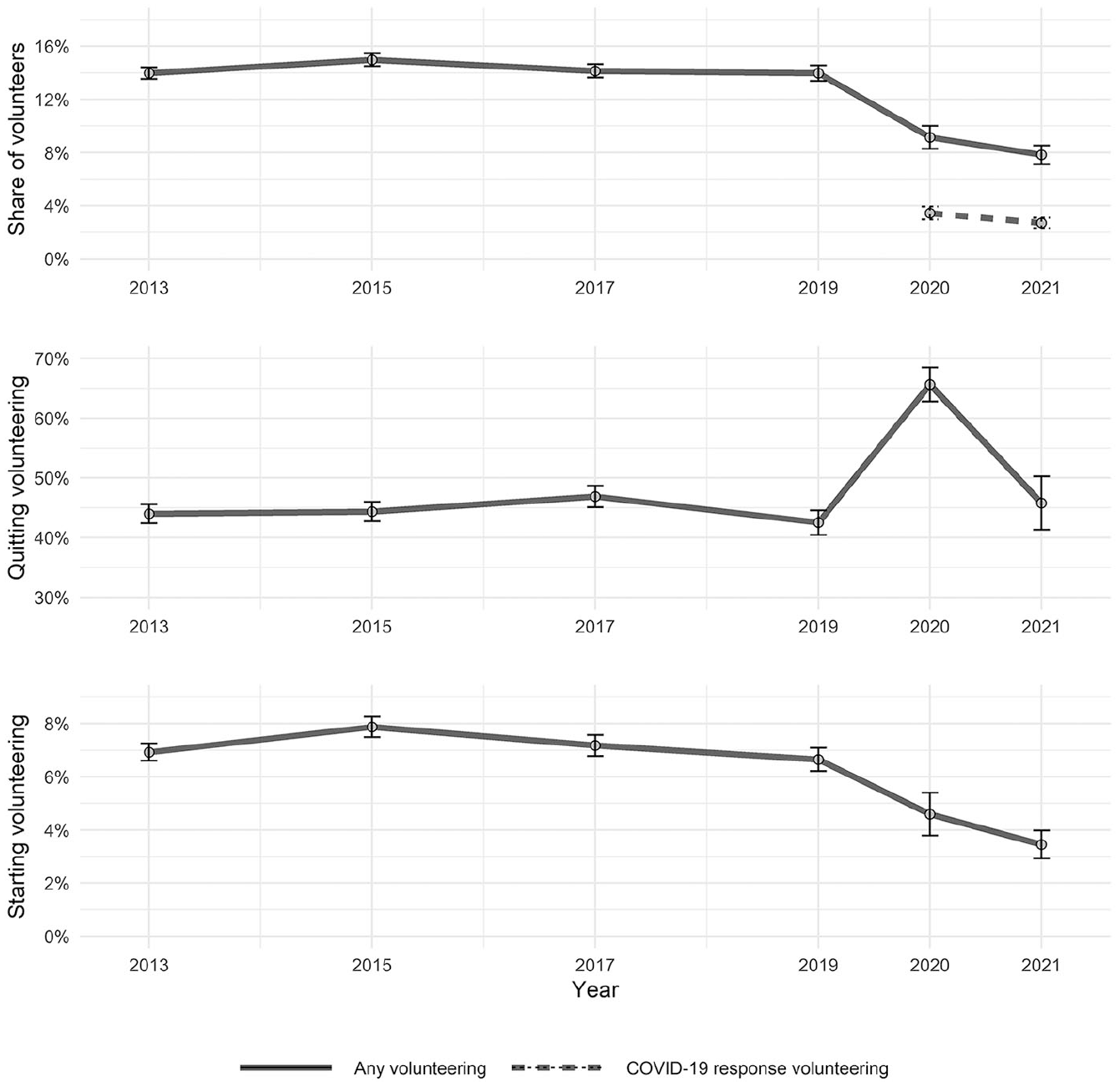
Share of volunteers before and during the pandemic.
To address RQ2, figure 2 contrasts the share of volunteers in 2019 (squares) to the respective figures in July 2020 (circles) and March 2021 (triangles) across different social strata. 5 Unsurprisingly and in line with findings from previous research (McPherson & Rotolo, 1996; Papa et al., 2019; Wilson, 2012), the share of volunteers prior to the onset of the pandemic (i.e., 2019) varied considerably across social strata: Women, university degree holders, elderly individuals, and those with high levels of self-rated health were more likely to volunteer. Volunteer rates among parents equaled those among childless individuals. Between 2019 and 2020, volunteer rates decreased among all social strata, albeit to different extents. Decreases in volunteering rates were particularly large (in absolute terms) among groups with previously particularly high rates of volunteering. Between July 2020 and March 2021, further (small) reductions in volunteering took place among almost all groups.
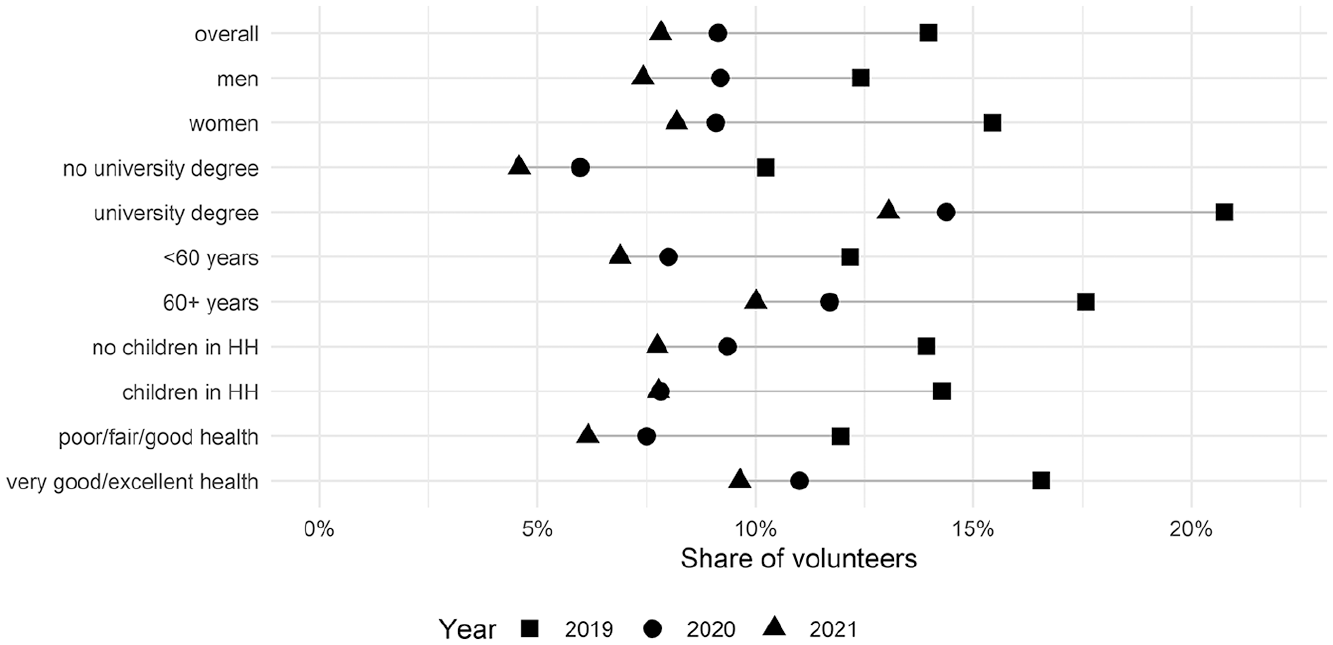
Share of volunteers across social strata.
Table 1 shows the results of the LPMs. Models 1 and 2 largely mirror the descriptive findings from figures 1 and 2: Controlling for the demographic variables, the likelihood of volunteering was about 5 (6.4) percentage points lower in 2020 (2021) compared with 2019. Elderly (i.e., aged >60 years; +6.3 pp) and healthier individuals (+2.0 pp), women (+2.0 pp), and university degree holders (+9.5 pp) were significantly more likely to volunteer than younger (i.e., aged <60 years) and less healthy individuals, men and those without a university degree. No significant difference is found with respect to children (see Model 1). In Model 2, I add interaction terms for all socio-demographic variables with the year variable which indicate to which extent their effects changed over the years. Hence, the main effects can be interpreted as the effects of those variables on volunteering prior to the pandemic. The statistically significant negative interaction effects of the time variable with age, gender, and education restate the insights from figure 2: The reduction in the volunteer rate was more pronounced among groups who were more likely to volunteer prior to the pandemic: elderly (−2.8 pp/ -2.9 pp), women (−2.8 pp/−1.9 pp) and those holding a university degree (−2.2 pp/−2.1 pp). In sum, figure 2 and Models 1 and 2 in table 2 reveal differences in the absolute reductions in volunteering across social strata suggesting that the composition of the group of “volunteers” changed considerably during the pandemic. Higher age, being a woman, and holding a university degree were better predictors for volunteering in 2019 than during the pandemic. However, given that different groups started with different volunteer rates in 2019, these absolute reductions say little about changes in individual propensities to start or quit volunteering.
Volunteering, Quitting, and Starting Before and During the Pandemic.
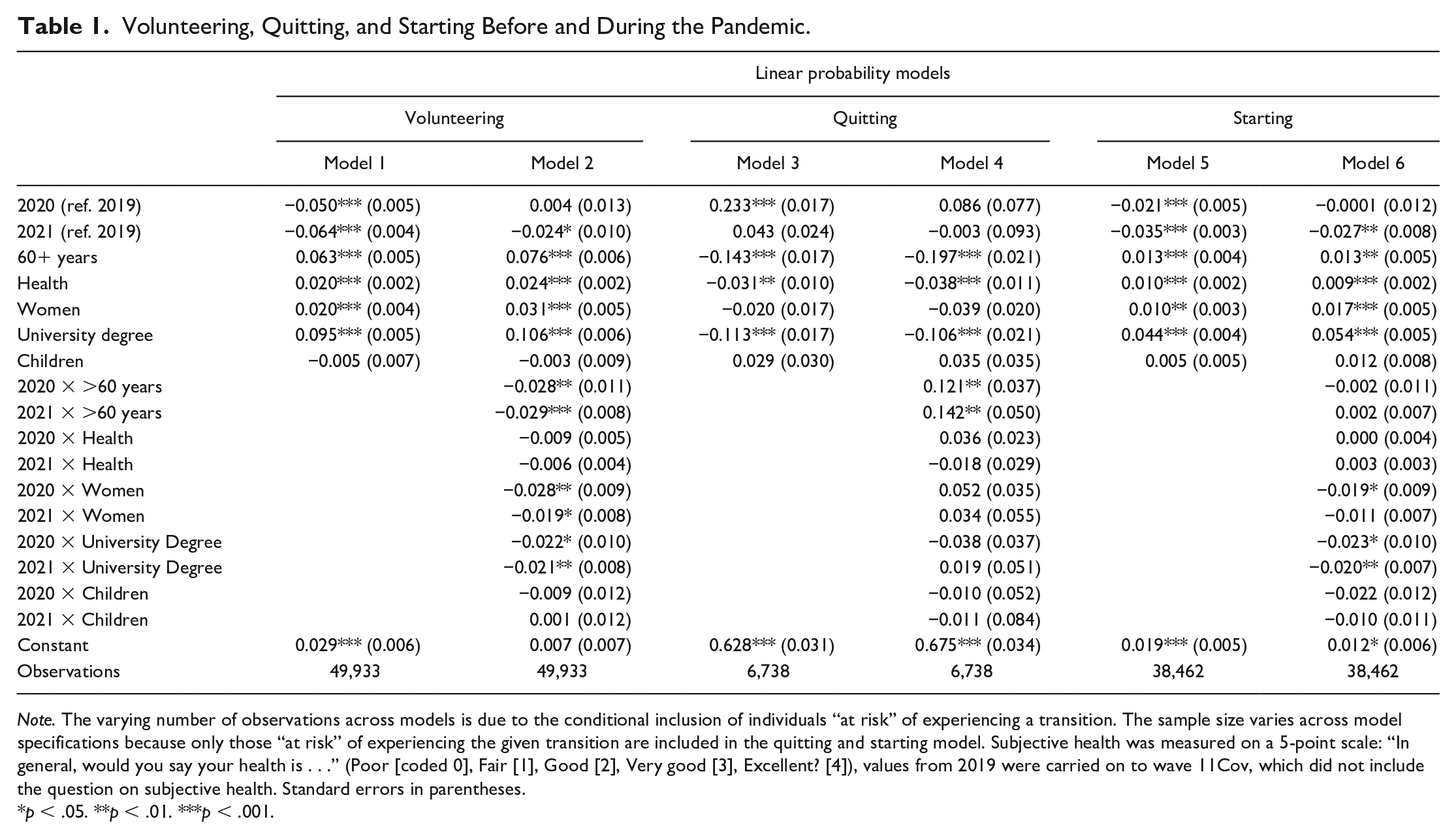
Note. The varying number of observations across models is due to the conditional inclusion of individuals “at risk” of experiencing a transition. The sample size varies across model specifications because only those “at risk” of experiencing the given transition are included in the quitting and starting model. Subjective health was measured on a 5-point scale: “In general, would you say your health is . . .” (Poor [coded 0], Fair [1], Good [2], Very good [3], Excellent? [4]), values from 2019 were carried on to wave 11Cov, which did not include the question on subjective health. Standard errors in parentheses.
p < .05. **p < .01. ***p < .001.
Volunteering in Response to COVID-19.
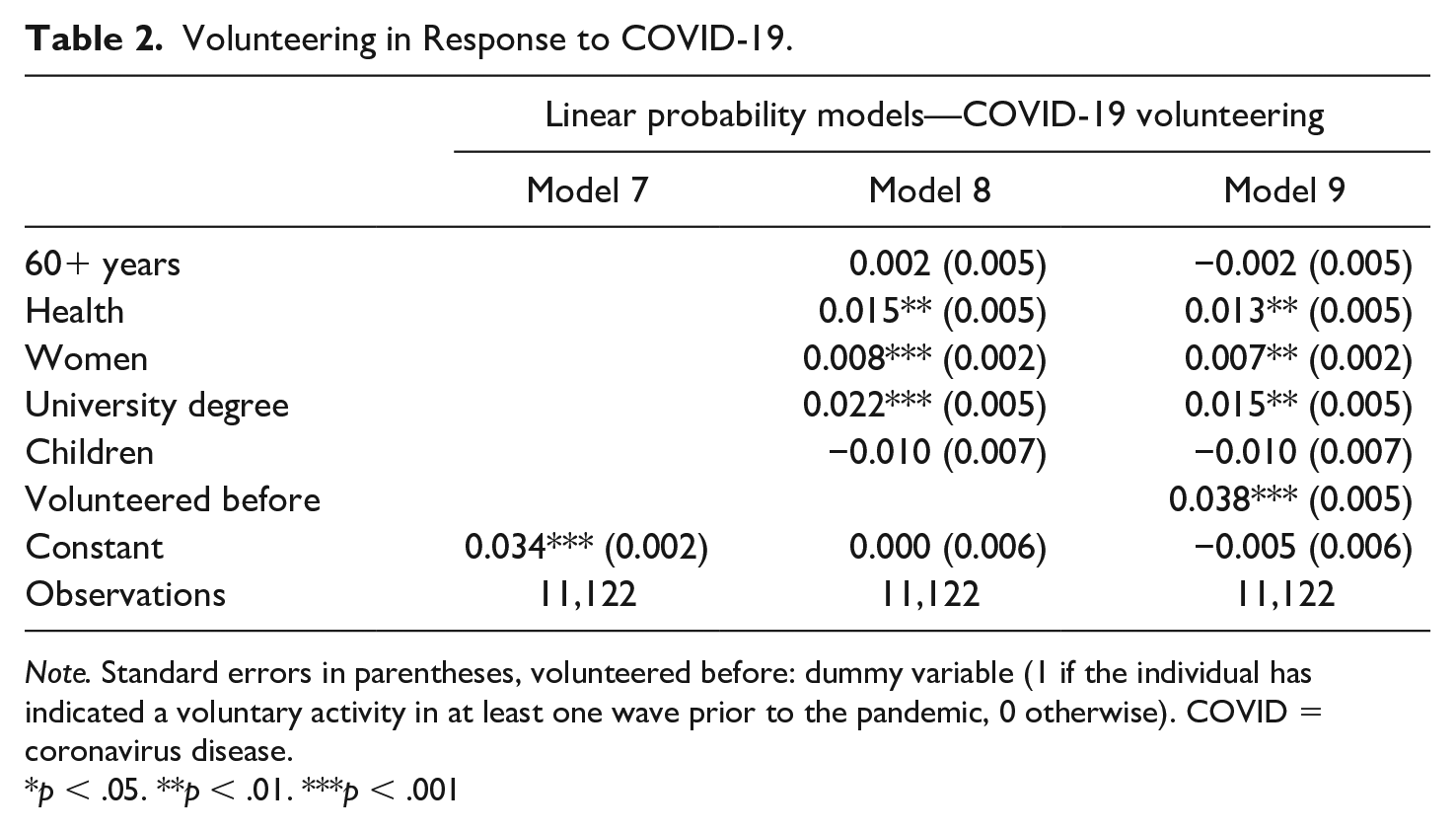
Note. Standard errors in parentheses, volunteered before: dummy variable (1 if the individual has indicated a voluntary activity in at least one wave prior to the pandemic, 0 otherwise). COVID = coronavirus disease.
p < .05. **p < .01. ***p < .001
Thus, I examine whose volunteering activities were disproportionally affected by the pandemic by investigating individual transitions (i.e., starting and quitting volunteering) accounting for an individual’s volunteer status in the preceding wave. In line with the second panel in figure 1, Model 3 reveals that the probability to quit volunteering was 23.3 pp higher in 2020 compared with 2019 (see Model 3). Elderly, healthier, and higher educated volunteers were overall less likely to quit their engagement. The pandemic hardly changed these patterns (see Model 4): The interaction effects of the time variable with all socio-demographic variables remain insignificant—with one important exception: The effect of the pandemic on the likelihood of quitting volunteering was about 12.1 pp (in 2020) and 14.2 pp (in 2021) stronger among elderly volunteers compared with younger ones. This pattern may be explained by the knowledge disseminated early on in the pandemic that elderly individuals were at heightened risk (Public Health England, 2020). These findings imply that higher age impeded the propensity to sustain volunteering systematically while other individual characteristics did not.
Echoing the pattern in the third panel of figure 1, Model 5 reveals that the likelihood of starting volunteering was considerably lower during the pandemic (i.e., −2.1 pp in 2020 and −3.5 pp in 2021 compared with 2019). Prior to the pandemic, elderly and healthier individuals, women, and those holding a university degree were more likely to start volunteering. This probability of starting declined disproportionally during the pandemic among higher educated individuals (−2.3 pp [in 2020] and 2.0 pp (in 2021), see Model 6), potentially because they lost their advantage of being more likely to be asked to volunteer given the social distancing regulations (e.g., Bryant et al., 2003). Moreover, I find that the probability of starting declined disproportionally among women in 2020 (−1.9 pp). 6 It is well established that child care arrangements in response to school closures relied disproportionally on women (Sevilla & Smith, 2020; Zoch et al., 2021), which would leave them with less time for volunteer activities. Moreover, women tend to volunteer in settings that entail direct contact with recipients of the provided services, for instance, education, youth, or (health-) care work (Rotolo & Wilson, 2007; Wilson, 2012). On the contrary, men are overrepresented among volunteers carrying out tasks that can be performed without immediate interpersonal contact, such as maintenance work or administrative roles. Thus, social distancing restrictions might have impeded volunteering tasks typically performed by women more than those typically performed by men.
Overall, the groups that were most likely to volunteer in 2019 reduced their voluntary activities most. The individual propensity to quit volunteering varied only with respondents’ age and declines in the likelihood of starting were more pronounced among higher educated individuals.
Volunteering in Response to COVID-19
In a final, more exploratory step, I examine which socio-demographic characteristics are associated with volunteering in response to COVID-19 in 2020, 7 again using LPMs. Model 7 (table 2) echoes the finding from the first panel of figure 1 that only 3.4% volunteered in response to COVID-19. Model 8 shows that being a woman (+0.8 pp), holding a university degree (+2.2 pp), and being healthier (+1.5 pp) are significantly positively associated with volunteering in response to COVID-19. Given the overall share of 3.4% COVID-19 response volunteers, these differences are substantive in size. Age and the presence of children in the household were not linked to the likelihood of volunteering in response to COVID-19 at conventional levels of statistical significance. In Model 9, the effect sizes of education decreased substantively after controlling for previous volunteer activities, which revealed the strongest association with COVID-19 response volunteering (+3.8 pp). Voluntary organizations were possibly able to recruit existing volunteers to perform tasks in response to the pandemic.
Discussion and Conclusion
I investigated the dynamics of voluntary work in the United Kingdom before and during the onset of the COVID-19 pandemic using large-scale survey data providing three key insights related to the research questions proposed in the introduction:
First, volunteer rates dropped at least by a third in the United Kingdom during the first lockdown in 2020, that is, from 14% to 9%. Until March 2021, when restrictions started to ease, the volunteer rate had declined even further (down to 8%). The likelihood of quitting among active volunteers increased by 53% between 2019 and 2020 and inactive individuals were about 29% (57%) less likely to start during the onset of the pandemic in 2020 (2021). These results provide clear evidence against the public narrative of more volunteering during the beginning of the pandemic (The Guardian, 2020).
Second, volunteering rates varied across different social strata prior to the pandemic and declined heterogeneously. The largest absolute changes unsurprisingly occurred among groups that were already comparatively likely to volunteer before the pandemic, such as university degree holders, women, elderly and healthy individuals. Elderly active volunteers were disproportionally likely to quit their engagement and university degree holders started disproportionally less often to volunteer during the pandemic.
Third, no more than 3.4% of the British population engaged in formal volunteering in response to COVID-19. Socio-demographic characteristics that were associated with volunteering prior to the pandemic also predict COVID-19 response volunteering (good health, women, university degree). By far the best predictor for volunteering in response to COVID-19, however, was volunteer experience in previous years implying that the pandemic rather mobilized existing than new volunteers.
These findings speak most directly to an emerging literature studying changes in community life and helping behavior during the COVID-19 pandemic. In contrast to studies that solely focus on helping behavior and volunteering related to the pandemic and highlight that the pandemic had strengthened local solidarity and that new social capital emerged as a result (Bertogg & Koos, 2021; Jones et al., 2020; Mak & Fancourt, 2021; Mao et al., 2021), this study rather suggests the opposite: When considering both, COVID-19 response volunteering and unrelated volunteer activities of which many did not take place because of the pandemic, one observes a large decline in voluntary action between 2019 and 2021. In line with a recent study on neighborhood cohesion (Borkowska & Laurence, 2021), this implies that the pandemic has substantively threatened rather than revived community life in the United Kingdom.
I also contribute to the literature on disaster–response volunteering. Previous research relating disasters to voluntary work accumulated a substantive number of instances that showed how volunteering flourished in their aftermaths (Beyerlein & Sikkink, 2008; Harris et al., 2017; Mak & Fancourt, 2021; Michel, 2007; Rotolo et al., 2015). However, with one exception (Rotolo et al., 2015), they only investigated disaster-specific response volunteering, thereby neglecting the disruptive effect of disasters on community affairs more widely. I showed that many volunteer activities are not happening because of these disruptions. Future work on volunteering during times of disasters should, therefore, always consider both, increased demand for responsive volunteer work and disruptive effects on existing structures that provide unrelated voluntary services.
This research note has several limitations which call for further research. First, the data did not allow to disentangle the underlying mechanisms of the negative effect of the pandemic on volunteer activities. Second, I cannot rule out the possibility that the volunteering decline due to COVID-19 was even stronger, that is, volunteer rates in 2020 and 2021 might be even lower. Abraham et al. (2009) argue that continuous participation in surveys strongly correlates with volunteering and that volunteering rates will be overestimated in follow-up waves because volunteers stay in the sample, while non-volunteers drop out at a higher rate (see Appendix A6). Third, the only measure of volunteering that is comparable across all waves referred to volunteering during the last four weeks. It might well be possible that individuals start and/or quit volunteering multiple times during the interviews. However, additional analyses revealed that using assessments of volunteering over the last year or 4 months makes no substantial difference to the results. Finally, it would certainly be interesting to investigate the development of volunteering dynamics throughout later stages of the pandemic, especially during the time of easing restrictions and vaccination programs.
Footnotes
Appendix
A1: Social distancing rules during the period of observation:
The responses to the volunteering item refer to the time span 26 June to 31 July 2020 and 24 February 2021 to 31 March 2021. During the first period, social distancing restrictions had been eased after the first lockdown (GOV.UK, 2020), the “rule of six” had been recently introduced and from 4 July onwards and social clubs and places of worship were permitted to reopen. The 7-day rolling average of new confirmed COVID-19 cases fluctuated between 5.5 and 11 per 1,000,000 inhabitants. During the second period, this figure decreased from 154.2 to 69.8, and the share of single-jabbed individuals increased from 27% to 45% (Our world in data, 2021). The prime minister announced his “roadmap” to ease lockdown restrictions but most lockdown measures remained in place until March 29, 2021 (GOV.UK, 2021).
Acknowledgements
I would like to thank Nan Dirk de Graaf and Richard Breen for their valuable feedback.
Declaration of Conflicting Interests
The author declared no potential conflicts of interest with respect to the research, authorship, and/or publication of this article.
Funding
The author disclosed receipt of the following financial support for the research, authorship, and/or publication of this article: This work was supported by the Economic and Social Research Council grant ES/P000649/1.
