




Abstract
There has been a steady increase in research studying the role of gender in prosocial behavior, such as charitable giving and volunteering. We provide an extensive review of the interdisciplinary literature and derive hypotheses about three different pathways that lead men and women to differ in their display of giving and volunteering: pathways through social capital, motivations, and resources. We test these hypotheses across 19 countries by analyzing 28,410 individuals, using generalized structural equation models. Our results support previous research, conducted in single countries, that there are distinct different pathways that lead men and women to engage in giving and volunteering: Women report stronger motivations to help others, but men report more of the financial resources that make giving and volunteering possible. The gendered pathways to giving and volunteering that lead through social capital, educational achievement, and financial security vary by country.
Introduction
Over the past two decades, there has been a steady increase in research on gender differences in prosocial behavior, such as giving to charitable causes and volunteering (Wiepking & Bekkers, 2012; Women’s Philanthropy Institute, 2015). However, there are large incongruences in the findings of many of these studies, with some finding that men volunteer more (Musick & Wilson, 2008) and give more (Andreoni et al., 2003; Einolf, 2011), others that women give and volunteer more (Women’s Philanthropy Institute, 2015), and some finding little or no difference (Eagly, 2009). These conflicting results may be the consequence of different methods (Wiepking & Bekkers, 2012) as well as cultural and historic differences between countries (Wiepking & Bekkers, 2012; Women’s Philanthropy Institute, 2015, p. 17).
In the present study, we aim to contribute to the understanding of the previous conflicting findings for the relationship between gender and giving and volunteering, and the explanations for gender differences in these behaviors. We provide an extensive review of the interdisciplinary literature and derive hypotheses about three different pathways that lead men and women to differ in their display of giving and volunteering: pathways through social capital, motivations, and resources. We test these hypotheses using a large international survey study, the European Social Survey (ESS, 2003), which uses consistent sampling and survey methods across countries. We use generalized structural equation models with country-clustered standard errors to test the hypotheses and include the most relevant confounding factors in the analyses (Wiepking & Bekkers, 2012). We find that women report stronger motivations to help others, but men report more of the financial resources that make giving and volunteering possible. However, the gendered pathways to giving and volunteering that lead through social capital, educational achievement, and financial security vary by country.
Gender Differences in Giving and Volunteering
The relationship between gender and prosocial behavior is complex and varies across countries. In the United States (Einolf, 2011; Themudo, 2009), the Netherlands (Schuyt et al., 2007), Italy (Dekker & van den Broek, 1998), and Australia, the United Kingdom, and Japan (Musick & Wilson, 2008), women are found to be more likely to volunteer than men. In Canada, however, no gender differences are reported, and in Sweden, men are found to be more likely to volunteer (Musick & Wilson, 2008).
Analyzing gender differences in charitable giving is difficult because most adults are married, and married couples tend to pool income and make joint decisions about charitable giving (Andreoni et al., 2003; Wiepking & Bekkers, 2010). Studies on single adults in the United States reach conflicting conclusions, with three finding that single women were more likely to give money to charity (Andreoni et al., 2003; Mesch et al., 2006; Piper & Schnepf, 2008) or gave larger amounts (Mesch et al., 2006) and two finding that men give larger amounts (Andreoni et al., 2003; Einolf, 2011). A recent study found that single women were more likely to give money to charity, but never married and divorced men gave larger amounts, while widowed women gave larger amounts to charity than widowed men (Eagle et al., 2018). In the Netherlands, single women are more likely to give and give to a larger number of charities, while single men give higher amounts (De Wit & Bekkers, 2016).
Hypotheses
We build on the most prominent explanations from the literature in psychology, sociology, economics, and philanthropic studies to derive hypotheses about gender differences in volunteering and charitable giving (Andreoni et al., 2003; Bryant et al., 2003; De Wit & Bekkers, 2016; Einolf, 2011; Einolf & Chambré, 2011; Musick & Wilson, 2008; Themudo, 2009; Wiepking & Maas, 2009; Wilson & Musick, 1997). Following this literature, we argue that there are three distinct pathways that lead men and women to engage in giving and volunteering, leading through social capital, motivations, and resources. These three are related in that they are all forms of capital (Wilson & Musick, 1997), with motivation representing cultural capital and resources representing human capital. They correlate with one another, as persons high in one type of capital tend to be high in each of the others, but are distinct concepts. Figure 1 shows the conceptual framework for the relationship between gender, pathways, and giving and volunteering.
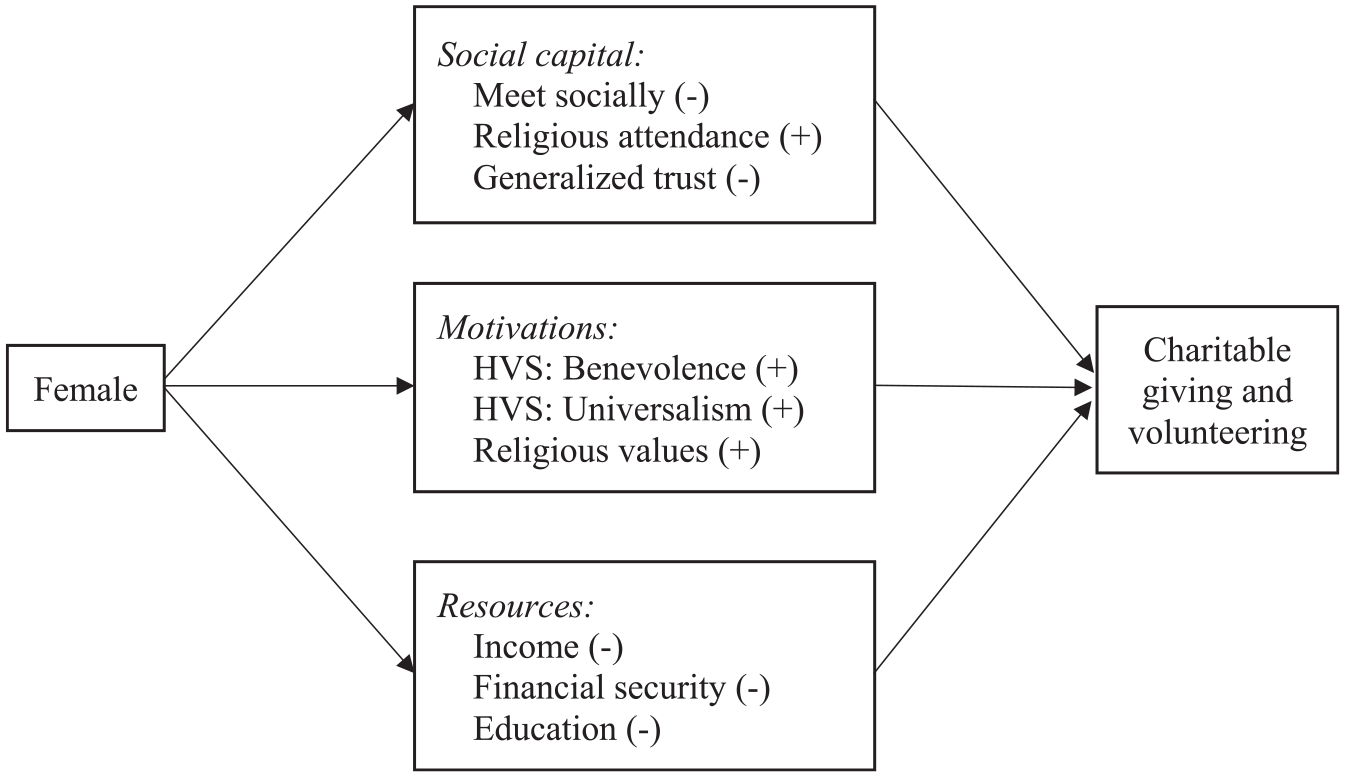
Conceptual framework for the three pathways through which gender and giving and volunteering are related: social capital, motivations, and resources.
Social Capital
Social capital refers to “networks, norms, and social trust that facilitate coordination and cooperation for mutual benefit” (Putnam, 1995, p. 67). Both social networks and generalized trust are crucial elements in social capital (Evers & Gesthuizen, 2011; Putnam, 2000), and both have a positive association with volunteering and charitable giving (Brown & Ferris, 2007; Ingen & van Bekkers, 2015; Kim & Lee, 2014; Musick & Wilson, 2008; Wiepking & Maas, 2009; Wilson & Musick, 1997). Using data from the European Social Survey, Glanville et al. (2016) found that both individual and regional-level social capital positively correlated with volunteering.
In regard to involvement in social networks, the key mechanism is solicitation: Through their social networks, people receive requests to give money and time (Bekkers & Wiepking, 2011a), and being asked is one of the most important causes of charitable giving (Bryant et al., 2003) and volunteering (Bekkers, 2005; Okun et al., 2007). It is not clear whether men or women have more social contacts, with two studies finding that women have more (Karhina et al., 2019; Pinillos-Franco & Kawachi, 2018), one finding that men have more (McPherson et al., 2001), and another finding that they are similar (Smith, 2000). Women are socialized into being “kin-keepers” who maintain family ties (Norris & Inglehart, 2006), whereas men are socialized into being more oriented toward career achievement. Thus, women’s social networks tend to include more family and neighbors, whereas men’s social networks include more friends and work colleagues (Norris & Inglehart, 2006; Smith, 2000). Men also belong to more voluntary associations (Norris & Inglehart, 2006). Childrearing and housework can isolate women from their external environment, which may result in women having less extensive social networks (Moss, 2002; Munch et al., 1997). A U.S. study found that men scored higher on measures of social capital connected to secular activities such as socializing, whereas women score higher on measures of social capital connected to religious activities (Einolf, 2011).
Several studies have found significant correlations between individuals’ generalized trust, volunteering (Brown & Ferris, 2007; Wilson, 2000), and charitable giving (Taniguchi & Marshall, 2014; L. Wang & Graddy, 2008), and one has found a correlation with trust measured at the regional level (Glanville et al., 2016). General trust in society may encourage a specific trust in charitable institutions (Bekkers, 2003) or a general sense of “buying into the system,” and therefore wanting to participate in it (Brown & Ferris, 2007). These empirical studies build upon a general literature in social capital (Putnam, 2000), cooperation (Olson, 1965), and social exchange theory (Molm et al., 2007), which argues that people can only work together if they trust one another to reciprocate favors and not take advantage of group efforts by free riding. It is unclear whether men or women are more trusting, as the 1991 World Values Survey found that men in most countries were slightly more trusting (Norris & Inglehart, 2006), whereas the 2016 European Social Survey found that women scored higher on measures of trust (Pinillos-Franco & Kawachi, 2018).
Social capital can be divided into religious (Smidt, 2003) and secular types. Whereas subjective religiosity can be thought of as a motivation, religious services attendance can be a form of social capital, as it brings with it networks of people and norms of reciprocity and trust. People who attend religious services are more likely to engage in giving (Bekkers & Wiepking, 2011b) and volunteering (Musick & Wilson, 2008). Religious attendance tends to bring with it larger social networks, which makes it more likely that people will be asked to give and volunteer. Accordingly, we use religious service attendance (which is different from religiosity) as a measure of social capital. Furthermore, the ethical values of religion create external norms that make people more likely to comply with those requests. Women tend to be more religious than men in most countries (Pew Research Center, 2016), so this is a form of social capital of which women have more. However, religious attendance has a stronger association with giving for single males than single women in the United States (Eagle et al., 2018).
More diverse and higher status networks are particularly important for engaging in more charitable giving and volunteering (Bekkers & Schuyt, 2008; Wiepking & Maas, 2009). Unfortunately, the ESS does not have measures of the status or diversity of networks; it only has a question asking how often respondents socialize with family, neighbors, and friends. Following Einolf (2011), we expect that men will socialize more often and that this higher level of secular social contact will lead to more charitable giving and volunteering. We expect that women’s greater religious social capital will influence their giving and volunteering in a similar way. Hence, we formulate Hypotheses 1a and 1b:
Motivations
Prosocial motivations such as empathy, caring, and moral obligation are other important factors contributing to prosocial behaviors (Bekkers & Ottoni-Wilhelm, 2016; de Waal, 2008; Penner, 2002). Women tend to rate themselves higher than men on many measures of prosocial motivations, values, and personality traits, including empathic concern, prosocial role identity, moral obligation, and caring (Baez et al., 2017; Christov-Moore et al., 2014; Einolf, 2011; Paulin et al., 2014; Willer et al., 2015), although some research has found that gender differences were not statistically significant (Toccaceli et al., 2018), and gender differences can depend on measurement instruments (Baez et al., 2017) and social contexts (Clarke et al., 2016). Women rate themselves higher on subjective measures of religiosity (Cnaan et al., 1993; Musick & Wilson, 2008) and caring (Mesch et al., 2011; Skoe et al., 2002; Wilhelm & Bekkers, 2010). Women rate themselves higher on five of the six motivations in Clary and Snyder’s “Volunteer Functions Inventory”—values, understanding, enhancement, social, and protective functions—and on the sixth function, career-related motivations, there are no statistically significant gender differences (Clary et al., 1996).
The empirical results on the relationship between gender and motivations for prosocial behavior reflect the socially constructed nature of these motivations. Gender is continuously reconstructed through a process of socially guided perceptual, interactional, and micropolitical activities, embedded in everyday interaction. As Brink and Stobbe (2009) state, Gender stereotypes are dichotomous ideological and prescriptive devices that prescribe what women as a group should do or be like in contrast to what men as a group should do or be like, based on a set of culturally produced values and beliefs. (p. 454)
People who view themselves as more empathic and caring are more likely to make charitable donations and volunteer (Wilhelm & Bekkers, 2010). When people who ascribe these prosocial personality traits to themselves decline a request for a donation or a request to volunteer, they experience cognitive dissonance with their self-image as a compassionate and prosocial person, and they also worry about how others in their social environment will think of them (Bekkers & Wiepking, 2011a).
The empirical research shows that women identify more strongly with prosocial motivations, values, and personality traits than men do. When asked to contribute money or time, it is thus likely that women will experience a stronger desire to avoid conflicting self and perceived social images than men, and this will lead women to engage in more volunteering and charitable giving.
Resources
Resources relate to the different levels and forms of human capital and other personal resources available to men and women to help them engage in giving and volunteering. People with higher levels of income and wealth, who feel financially secure, and who have completed a higher level of education are more likely to volunteer and make charitable donations (Bekkers & Wiepking, 2011b; Wiepking & Breeze, 2012). Volunteering can compete with other leisure activities for the scarce resource of free time, particularly for women (Downward et al., 2020).
People need money to give it away, so at least some level of financial resources are a prerequisite for making donations (Wiepking & Breeze, 2012). According to Maslow’s hierarchy of needs, people with higher income tend to pursue self-fulfillment, thus increasing the likelihood to volunteer (X. Wang & Zhao, 2013). Not only do absolute financial resources matter, but people also need to perceive that they are financially secure before they give money to unknown others (Havens et al., 2006).
Education positively influences charitable giving and volunteering through several mechanisms, of which skills and knowledge appear most relevant. Education provides people with skills that increase their potential earnings, level of financial resources, and financial security, leading to increased charitable giving (Brown & Ferris, 2007; James, 2011). Education gives people skills needed in volunteer work, making it more likely that other people will ask them to volunteer (Einolf & Chambré, 2011; Wilson & Musick, 1997). Higher education also promotes people to have more cognitive competence and a less localistic orientation, which can increase the likelihood of volunteering (Gesthuizen & Scheepers, 2012).
On average, men have more of the resources that enable people to give up their money and time. Men earn more than women in all countries (England, 2010; Segovia et al., 2017). Men also tend to be higher educated on average (Barone, 2011; Zeng et al., 2014), although this is changing and even reversing in some countries in recent years (Van Bavel et al., 2018).
Based on what we have discussed above, we formulate Hypothesis 3:
The Influence of Societal Context
In addition to examining the different individual pathways that lead men and women to giving and volunteering, we explore if gendered pathways toward giving and volunteering differ among contexts. From the experimental literature, we know that women’s cooperative behavior is more sensitive to the contextual conditions of an experiment, such as whether they interact with other women or with men, group size, and whether there are repeated interactions in the experiment (Balliet et al., 2011). This indicates that at the micro or individual level, context matters for prosocial behavior. As far as we know, there is no previous literature specifically examining the relevance of the macro, cultural contextual level for the role of gender in prosocial behavior. Therefore, we conduct exploratory analyses to examine whether the different pathways for men and women to giving and volunteering are consistent or different across cultural contexts.
Data and Method
Data
We used the first wave of the ESS (2003), a random, representative sample of more than 43,000 respondents from 22 countries that asks questions about a wide range of social topics. The ESS does not specifically focus on giving and volunteering but has measures of these behaviors as well as measures of social capital, motivations, and resources. Although these are older data, it is currently the best cross-national data set for testing our hypotheses. Because the information on donations from Switzerland was incomplete, and in Italy and Luxembourg the Human Values Scale (HVS) was not measured, we excluded these countries from the analyses.
The ESS uses a standard questionnaire format, translated into the language of each country, to ensure that responses are comparable across countries. Like many other cross-national surveys, the first wave of the ESS suffers from item nonresponse, ranging from a few missing values (<0.01%) for most variables to more than 30% for the measure of household income in Spain, Portugal, and Austria. Listwise deletion of missing values resulted in the inclusion of 28,410 respondents (N1) in 19 countries (N2) in the analyses testing the hypotheses. For more information about the ESS, we refer readers to the extensive ESS data documentation (ESS, 2021).
Measures
Volunteering and giving
We define volunteering as the voluntary donation of time to another person, group, or cause, and like most definitions of formal volunteering, we exclude assistance given to family members (Musick & Wilson, 2008; Wilson, 2000). We define charitable giving as the voluntary donation of money to organizations that benefit others or create public goods (Bekkers & Wiepking, 2011a).
While the ESS does not ask for amounts of time or money donated, it does ask about individual donations to and volunteering for 12 different types of organizations: “a sports club or club for outdoor activities,” “an organization for cultural or hobby activities,” “a trade union,” “a business, professional, or farmers’ organization,” “a consumer or automobile organization,” “an organization for humanitarian aid, human rights, minorities, or immigrants,” “an organization for environmental protection, peace or animal rights,” “a religious or church organization,” “a political party,” “an organization for science, education, or teachers and parents,” “a social club, club for the young, the retired/elderly, women, or friendly societies,” and “any other voluntary organization.” For the analyses, we combined these into dichotomous measures for overall volunteering and giving. 1
Gender
In this study, gender is the key independent variable, where 1 indicates female and 0 indicates male.
Social capital
The ESS does not measure the status or diversity of respondents’ social networks, but it does ask respondents how often they “meet socially with friends, relatives, or work colleagues,” with responses ranging from “never” to “every day,” which we recoded to the times a month people meet socially. We recoded attendance at religious services from a similar ordinal scale to a dichotomous variable measuring religious attendance (i.e., whether respondents attended religious services over the course of a year or not). 2 The ESS asks whether “most people can be trusted or you can’t be too careful in dealing with people,” with responses from zero (lowest) to 10 (highest), which we included as a measure of generalized trust.
Motivations
The ESS measures 10 universal human values using a 21-item subset of Schwartz’s HVS (Davidov et al., 2008). Among these universal human values are benevolence and universalism, which we include in our analyses as prosocial motivations for giving and volunteering (van Dijk et al., 2019). We recoded these two measures to individual centered values, correcting for individual differences in use of response scales. 3 The ESS also measures how religious people consider themselves to be, on a scale of zero to 10, which we include as religious values.
Resources
In line with our theoretical arguments, we selected income, financial security, and education as indicators of resources that enable giving and volunteering. The ESS asks for total net household income in euros in 12 increments, which we recoded to the mean value of the respective increment, with the highest increment recoded to the highest value mentioned (€120,000). 4 We then transformed this income measure to a natural logarithmic scale. Respondents were also asked how financially secure they felt about their household income on a 4-point scale from 0 = “finding it very difficult” to 3 = “living comfortably.” As the relationship between education and giving and volunteering was not linear, we divided education into four dichotomous variables for no education/primary (reference category), lower secondary, higher secondary, and tertiary (university level) education. 5
Control variables
In our analyses, we control for some factors potentially influencing the relationship between gender and giving and volunteering. First, age affects charitable giving and volunteering in a nonlinear fashion, so we divided age into three groups: younger than 45 years of age (reference category), between 46 and 65 years, and older than 65 years. 6 Second is marital status, with 0 indicating being separated, divorced, widowed, or never married and 1 indicating being married. The variable for any children is dichotomous, where 1 indicates that there are children present in the household.
Analytical Strategy
First, we compared gender differences in the levels of volunteering and charitable giving for different causes and gender differences in the measures of social capital, motivations, and resources (Tables 1 and 2). Next, we examined whether there were indeed different individual level pathways that lead men and women to display prosocial behavior. To test whether gender differences in social capital, motivations, and resources can explain gender differences in giving and volunteering, we conducted mediation analyses using generalized structural equation models (SEMs) with country-clustered standard errors (Table 3). The general equations can be written as follows:


where X refers to the independent variable (i.e., gender), Z refers to the mediating variables (i.e., social capital, motivations, resources), Y refers to the dependent variables (i.e., giving and volunteering), C refers to a set of control variables,
We adopted generalized SEMs with country-clustered standard errors for three reasons. First, conventional mediation analysis often uses a series of regression equations (Baron & Kenny, 1986), but the SEMs have more advantages (Gunzler et al., 2013). For example, all the coefficients can be efficiently estimated in a single run rather than conducting multiple regressions. Second, traditional SEMs are appropriate for continuous variables, but because our dependent variables are dichotomous rather than continuous, generalized SEMs are a better alternative. Finally, our data are from different countries, so to control for the impact of country differences, country-clustered standard errors are preferred. Therefore, we adopted generalized SEMs with country-clustered standard errors to examine the possible mediation of the relationship between gender and volunteering and giving through social capital, motivation, and resources. All the statistical analyses were run in Stata 15.
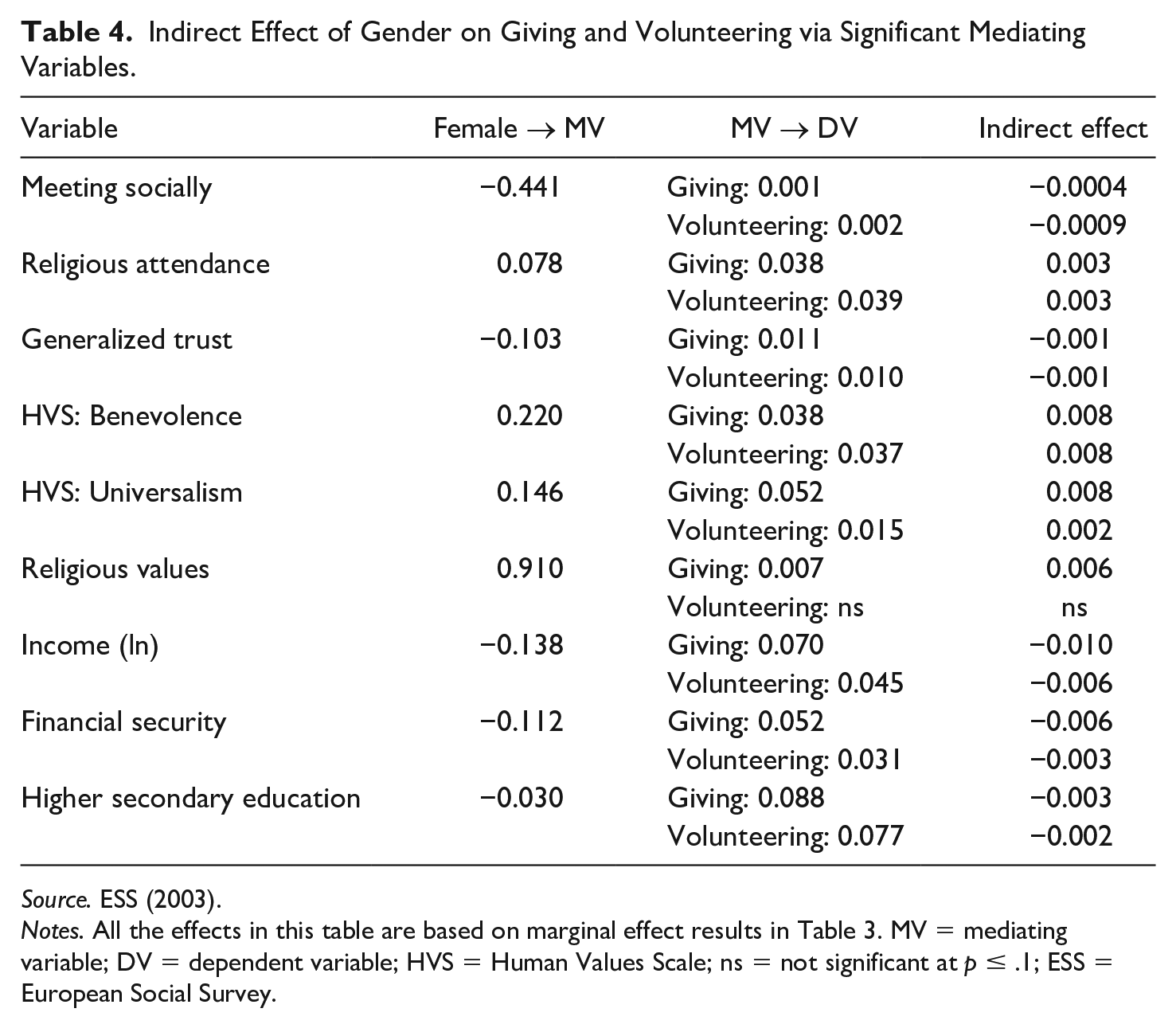
After running the structural equation models, we calculated the indirect effects of gender via the mediating variables that were found to have a significant relationship at the p ≤ .1 level (Table 4), which allowed us to compare which mediating variables have the most substantial influence on the relationship between gender and giving and volunteering.
We conducted exploratory analyses to examine whether gendered pathways toward giving and volunteering differed between countries. In the Supplemental Appendix, we report the results from these generalized structural equation models computed for every country separately (results reported in Supplemental Appendix Tables 1 and 2).
Results
Descriptive Results
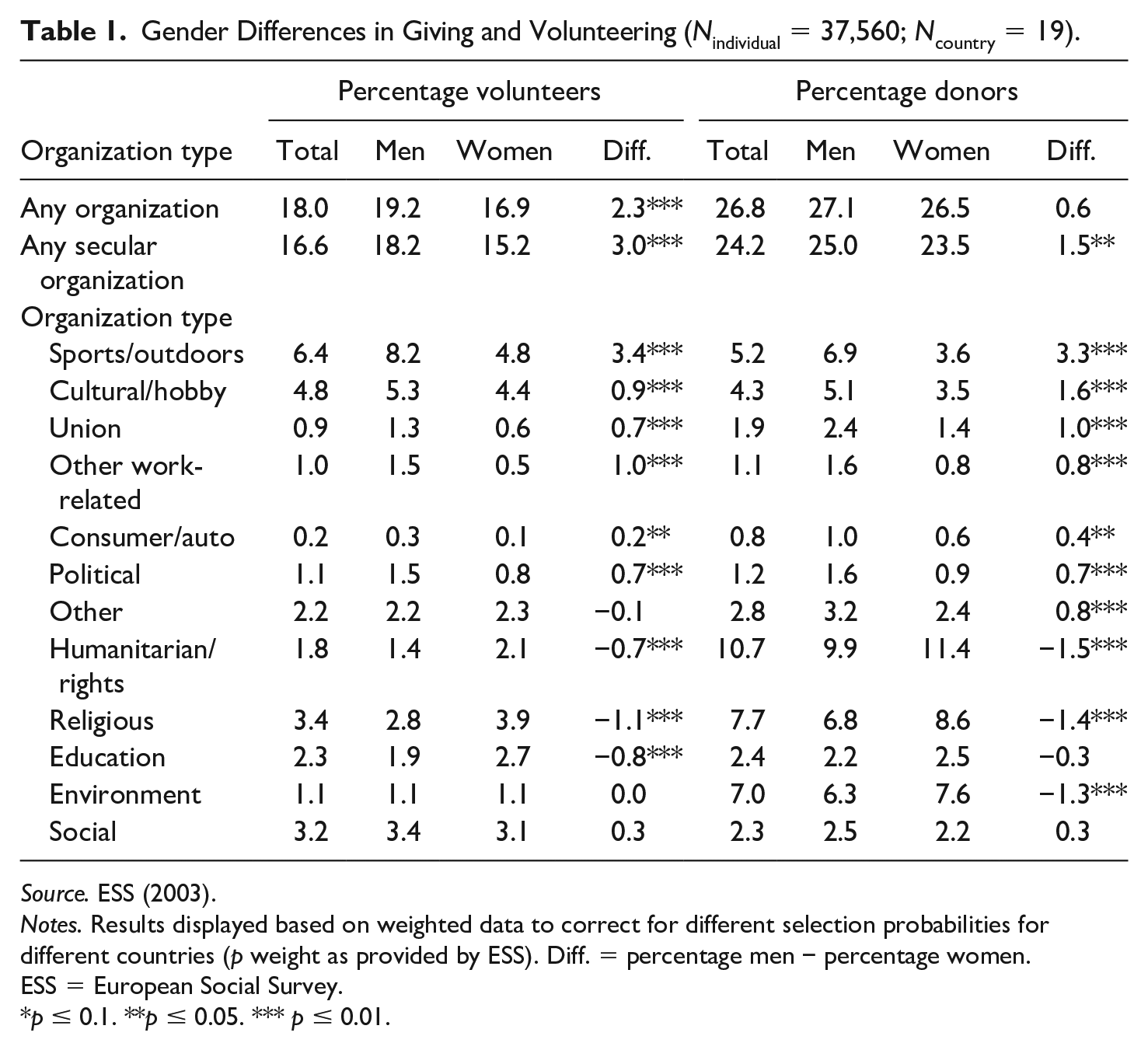
The proportion of respondents who donated time and money to different types of organizations, both overall and divided by gender, are listed in Table 1. A larger percentage of men (19.2%) than women (16.9%) volunteered, but there was no statistically significant difference in participation in charitable giving by men (27.1%) and women (26.5%). Men were found to be more likely to volunteer and give money to sports/outdoors, cultural/hobby, union, other work-related, consumer/automobile, and political organizations. Men were more likely to give to “other” organizations. Women were more likely to volunteer and give money to humanitarian/rights and religious organizations. Women were more likely to volunteer for educational organizations and give to environmental organizations.
Gender Differences in Giving and Volunteering (Nindividual = 37,560; Ncountry = 19).
Source. ESS (2003).
Notes. Results displayed based on weighted data to correct for different selection probabilities for different countries (p weight as provided by ESS). Diff. = percentage men − percentage women. ESS = European Social Survey.
p ≤ 0.1. **p ≤ 0.05. *** p ≤ 0.01.
Additional descriptive analyses (see Supplemental Appendix Table 1) showed that men were more likely to volunteer in Austria, Belgium, the Netherlands, Poland, Portugal, Slovenia, and Sweden. There were no countries where women were more likely to volunteer. Women were more likely to donate money in Finland, the Netherlands, Norway, and Sweden, whereas men were more likely to donate money in Greece, Ireland, and Slovenia. In all other countries, there were no statistically significant gender differences in giving.
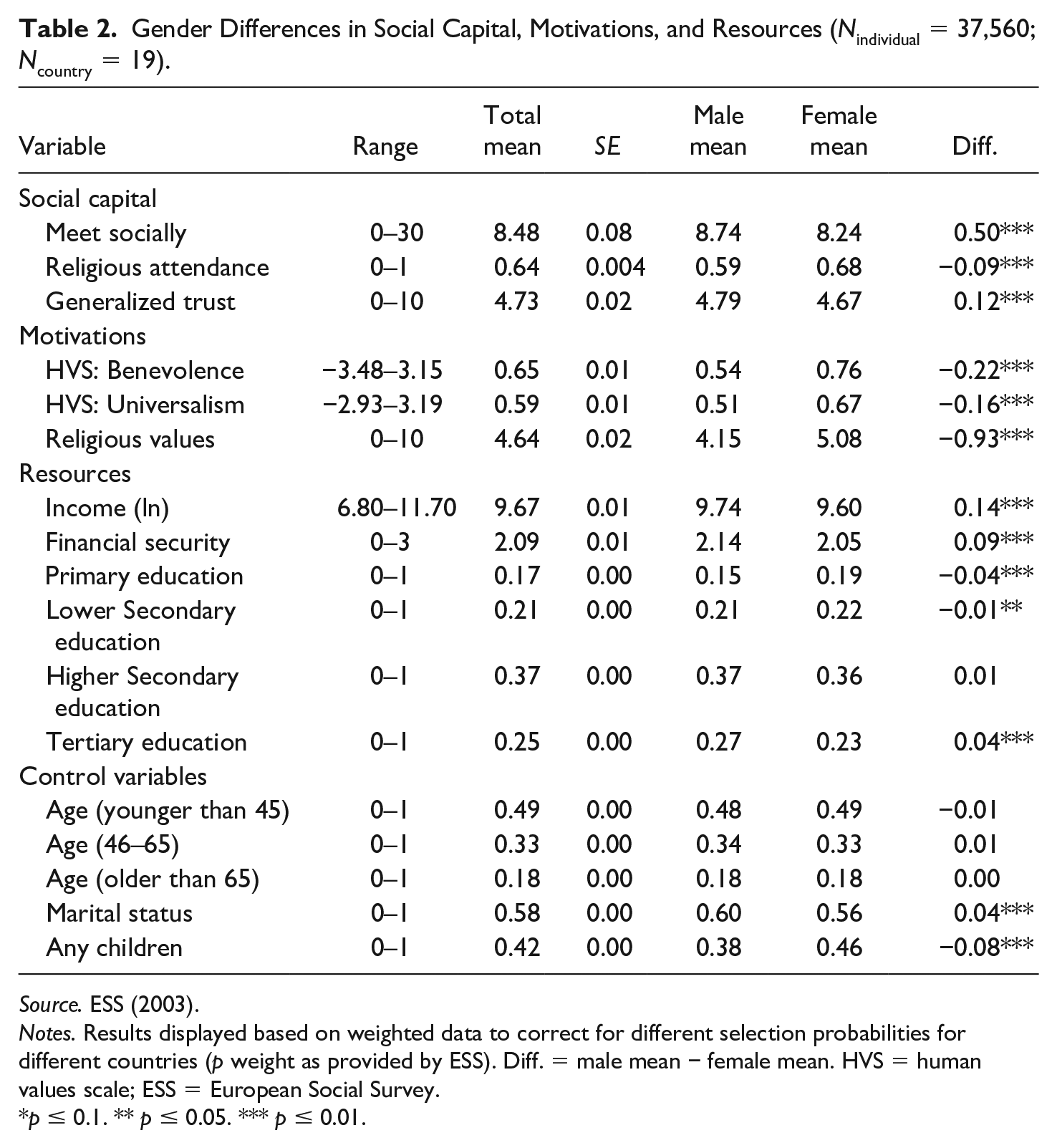
Table 2 presents descriptive statistics, including the range, total mean, standard error, and mean for males and females for the variables included in the analyses. On average, men self-reported higher levels of socializing with friends, relatives, and work colleagues and higher levels of generalized trust. Women self-reported a higher likelihood of religious service attendance. Women also self-reported higher scores on the three indicators for the prosocial motivations of benevolence, universalism, and religious values. Finally, men self-reported higher scores on the resources of income, financial security, and education.
Gender Differences in Social Capital, Motivations, and Resources (Nindividual = 37,560; Ncountry = 19).
Source. ESS (2003).
Notes. Results displayed based on weighted data to correct for different selection probabilities for different countries (p weight as provided by ESS). Diff. = male mean − female mean. HVS = human values scale; ESS = European Social Survey.
p ≤ 0.1. ** p ≤ 0.05. *** p ≤ 0.01.
Results for the Gendered Pathways of Giving and Volunteering
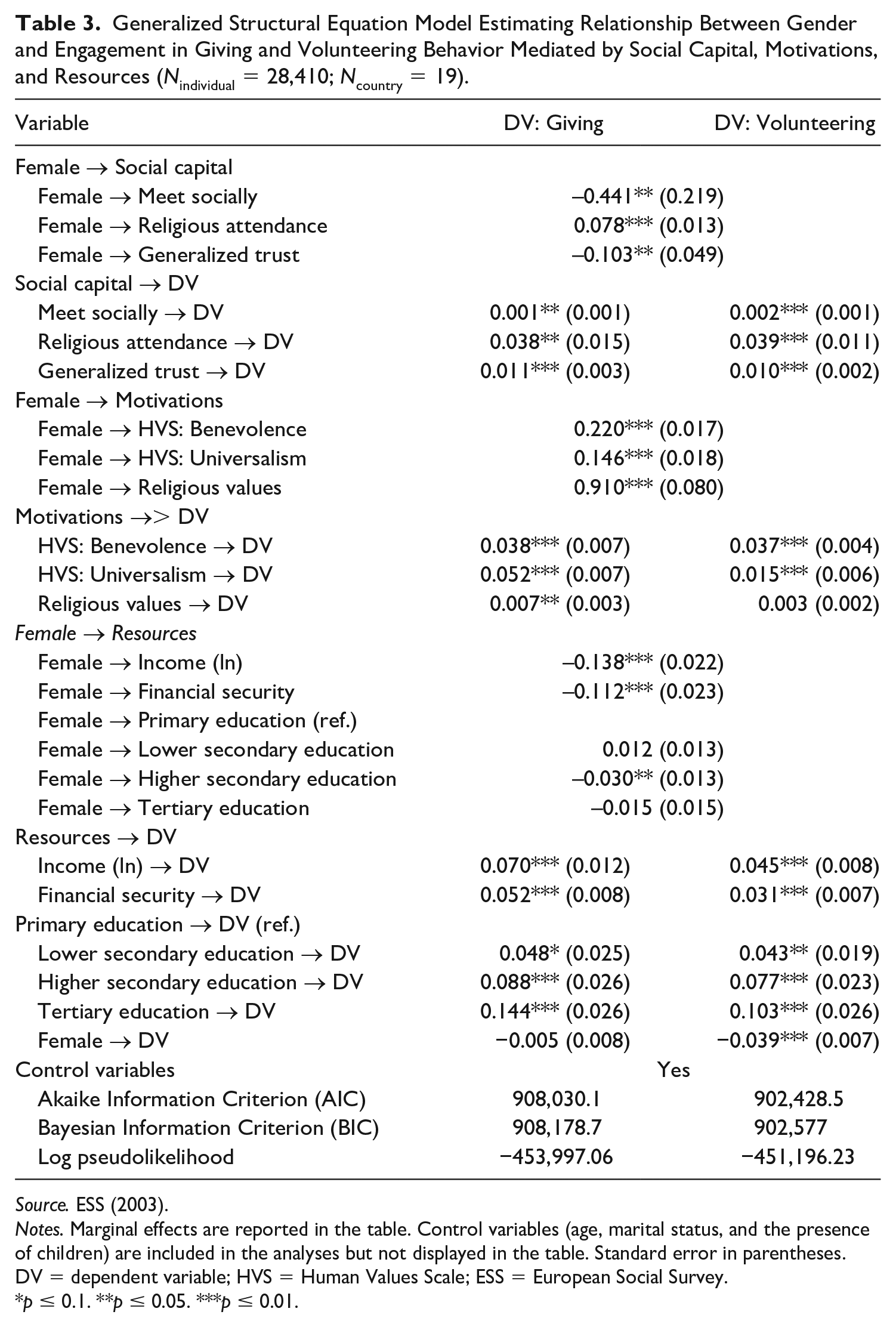
Table 3 reports the results from a series of generalized SEM analyses we conducted to test our hypotheses about the mediating effects of social capital, motivations, and resources.
Generalized Structural Equation Model Estimating Relationship Between Gender and Engagement in Giving and Volunteering Behavior Mediated by Social Capital, Motivations, and Resources (Nindividual = 28,410; Ncountry = 19).
Source. ESS (2003).
Notes. Marginal effects are reported in the table. Control variables (age, marital status, and the presence of children) are included in the analyses but not displayed in the table. Standard error in parentheses. DV = dependent variable; HVS = Human Values Scale; ESS = European Social Survey.
p ≤ 0.1. **p ≤ 0.05. ***p ≤ 0.01.
In regard to H1a and H1b, both secular and religious social capital increased the probability of charitable giving and volunteering, although the marginal effects were relatively small. The more secular social capital in the form of socializing, the higher probability to give (β= .001, p ≤ .05) and volunteer (β = .002, p ≤ .01); attending religious services related to a higher probability to give (β = .038, p ≤ .05) and volunteer (β = .039, p ≤ .01); the higher level of generalized trust, the higher probability to give (β = .011, p ≤ .01) and volunteer (β = .010, p ≤ .01). Compared with men, women self-reported lower levels of secular social capital in the form of socializing (
When examining the mediating role of prosocial motivations, we found that our results supported Hypothesis 2. Results in Table 3 showed that prosocial motivations had a strong positive relationship with giving and volunteering, which included benevolence motivations (β = .038, p ≤ .01 for giving; β = .037, p ≤ .01 for volunteering), universalism motivations (β = .052, p ≤ .01 for giving; β = .015, p ≤ .01 for volunteering), and religious values (β = .007, p ≤ .05 for giving; not significant for volunteering). Consistent with H2, women scored higher on benevolence motivations (β = .220, p ≤ .01), universalism motivations (β = .146, p ≤ .01), and religious values (β = .910, p ≤ .01). These higher levels of prosocial motivations were associated with higher likelihood of giving and volunteering among women. The only exception was the mediating role of religious values between gender and volunteering. Although women indicated to have stronger religious values than men, religious values did not significantly relate to a higher likelihood of volunteering.
We find partial support for our third hypothesis about the mediating role of resources. We predicted that men have higher levels of resources than women, which relates to their higher likelihood of giving and volunteering than women. On the one hand, resources played an important role in giving and volunteering. Higher income correlated with a higher likelihood of giving (β = .070, p ≤ .01) and volunteering (β = .045, p ≤ .01). People with a higher level of financial security were more likely to give (β = .052, p ≤ .01) and volunteer (β = .031, p ≤ .01). Education was also positively associated with giving and volunteering. On the contrary, the results from the generalized SEM analyses only partially confirmed the role of the higher level of reported resources by men. Women on average reported lower household incomes (β = −.138, p ≤ .01), a lower level of financial security (β = −.112, p ≤ .01), and lower probabilities of having completed higher secondary education (β = −.030, p ≤ .05). Unexpectedly, the results showed no gender differences in lower secondary education and tertiary education.
Based on Table 3, we can calculate the indirect effect of gender via mediating variables that were found to significantly mediate the relationship between gender and giving and volunteering, as shown in Table 4. The indirect effect is the product of the effect of gender on a mediating variable and the effect of the mediating variable on giving or volunteering. Take income as an example, relative to men, the likelihood of giving and volunteering for women was 1% and 0.6% lower owing to the mediating role of income. The indirect effects of other mediators can be interpreted in the same way. When comparing the absolute value of effect size, we found that the indirect effect via meeting socially was the smallest on both giving and volunteering, whereas the indirect effect via income was the largest on giving. In addition, to check the robustness of the mediation analysis reported in this section, we conducted a sensitivity analysis where we removed one country each time and reran all the models for the remaining countries. The results of these sensitivity analyses were similar to the results reported here.
Indirect Effect of Gender on Giving and Volunteering via Significant Mediating Variables.
Source. ESS (2003).
Notes. All the effects in this table are based on marginal effect results in Table 3. MV = mediating variable; DV = dependent variable; HVS = Human Values Scale; ns = not significant at p ≤ .1; ESS = European Social Survey.
Overall, the analysis revealed statistically significant but relatively small mediating roles of social capital, motivations, and resources. We found that the relationship between gender and giving was mediated by the indicators for our three hypothesized pathways and that there was no direct effect of gender. In relation to volunteering, our results demonstrated gender had a direct effect on volunteering, even when the indicators for three pathways were included in the models. This means there may be other explanations, for example, capacity and skills, that mediate the relationship between gender and volunteering.
Exploratory Analyses of Societal Context
Finally, we ran generalized structural equation models separately for every country to explore whether gendered pathways toward giving and volunteering differ among contexts (Supplemental Appendix Table 2). Pathways to giving and volunteering were similar across all countries for the three indicators for prosocial motivations and for the resource of income. This indicates that both prosocial motivations and income mediate the relationship between gender and giving and volunteering similarly across countries, indicating that these are robust pathways, not depending on (cultural) context, at least not for Europe and Israel.
However, the pathways through social capital and the resources of financial security and education substantially varied across countries, indicating that these pathways may depend on national context and culture. Because these are exploratory analyses, with a primary goal to examine whether the pathways leading men and women to give and volunteer are context-dependent, we largely refrain from post hoc interpretations of these results. Readers interested to see the cross-national variation in the mediating relationship of the indicators for social capital and financial security resources are kindly referred to Supplemental Appendix Table 2, and the accompanying description of the key results there.
However, based on these exploratory findings, there is one relevant trend we believe we can discern in relation to the findings for the mediating role of the resource of education. In contrast to our H3, in Finland and Sweden (and only in these countries), women’s (and not men’s) higher tertiary education relates to a higher likelihood of giving and volunteering. The ESS data capture the situation in the early 2000s, when countries like Finland and Sweden already had a substantial gender gap in education in favor of women. Among the respondents with tertiary education, the ratio of men to women was 65.3% in Finland and 71.0% in Sweden. Other countries in our study in which the gender gap in tertiary education clearly favored women were Austria, Czech Republic, France, Hungary, Israel, Poland, and Portugal (see Supplemental Appendix Table 4 for an overview of the gender gap for tertiary education per country). However, in these countries, tertiary education did not significantly mediate the relationship between gender and giving and volunteering. One possible explanation is that specific gender policies in Finland and Sweden (such as universal childcare and paid maternity leave) resulted in more women completing tertiary education and consequently lead women to have an increased likelihood of giving and volunteering. This may be something to explore further in future research.
Discussion and Conclusion
In this article, we showed that there are different pathways that lead men and women to engage in giving and volunteering behavior and that these pathways are largely consistent across the different cultural contexts included in our study, which include 18 European countries and Israel. Men’s higher levels of income make them more likely to give and volunteer, whereas women’s stronger prosocial values and motivations lead them to engage in more giving and volunteering. The story is more complex for the pathways that lead men and women to giving and volunteering through religious and secular social capital and through resources in the form of educational achievements and financial security. There we find mixed evidence, where the pathways leading men and women to giving and volunteering differ across the countries we studied.
This study advances the work begun by Einolf (2011) and De Wit and Bekkers (2016), each of whom studied only residents of a single country, by applying some of their theories to a multinational European data set, also including Israel. Like Einolf (2011) and De Wit and Bekkers (2016), we found that men typically have higher levels of resources and women have higher levels of motivations. Like Einolf (2011), we find that men and women have advantages in different types of social capital. Our article replicates these earlier papers’ findings on a larger data set, uses stronger statistical methods to test for mediation, and offers insights into differences in findings between cultural contexts.
Our results shed light on the inconsistency in findings in the literature relating to the study of gender and giving and volunteering. The relationship between gender and giving and volunteering is mediated by several indicators for social capital, motivations, and resources, and whether studies account for these mediating factors influences the findings. One of our key findings is that for women prosocial motivations and for men income are pathways to giving and volunteering across all countries in our study. This indicates that these are robust pathways, not dependent on the cultural context at least for Europe and Israel. A related key finding is that the mediating role of social capital and perceived financial security is different in different countries. Based on these exploratory analyses, we identified one interesting pattern: In the two countries in our study where the gender gap in educational achievement favored women over men in the early 2000s (when the ESS data was collected), higher educational achievement relates to higher giving and volunteering by women. It is our expectation that women’s increasing advantage in higher educational achievement compared with men will lead them to give and volunteer more.
Despite the merits of the study, a number of limitations in the data restrict the applicability of the findings. These include the fact that the dependent variables are dichotomous, asking only whether respondents gave time or money not the amount given. This contributed to the rather small indirect effects of gender on giving and volunteering via the mediating variables (as reported in Table 4). The indirect effects of the mediating variables would probably be more substantive if we could have studied the relationship between gender and the intensity of giving and volunteering. Our findings may be conditional on the indicators for motivations, resources, and social capital available in the data, as well as the selection of countries available in the ESS, which may have skewed our results and consequently our conclusions. The countries in the ESS are mostly relatively wealthy European countries, so our findings may not generalize to the rest of the world. Because the ESS is a cross-sectional data set, we have to be careful when interpreting the mediating relationships, as we cannot substantiate any claims about causality. Finally, gender differences in social capital, motivations, and resources may have changed since the ESS data were collected in the early 2000s. While the ESS data are still the best micro-level comparative data publicly available, better and more recent data are needed to facilitate the research on gendered pathways of giving and volunteering behavior. Future studies would also benefit from more complete survey data, including a wider range of resources, social networks, and motivations and measurements of the amounts of money and time donated.
Despite these limitations, this study represents a major advance in knowledge over previous studies. It analyzes giving and volunteering in a large number of countries, uses more measures of mediating factors, and uses more sophisticated and appropriate statistical methods to test for mediation. The fact that it largely replicates single country results from the United States (Einolf, 2011) and the Netherlands (De Wit & Bekkers, 2016) indicates some commonalities in the ways gender relates to volunteering and charitable giving, at least in Western societies. Future research can also explore why there are some cross-national differences in how gender is mediated through religious and secular social capital and how more gender equality in access to resources may change giving and volunteering behavior by men and women. Finally, we hope that future research will extend the analysis of gender and giving and volunteering to countries outside of the Western context and will allow for a more inclusive approach to gender, including different gender identities.
Supplemental Material
sj-docx-1-nvs-10.1177_08997640211057408 – Supplemental material for The Gendered Pathways Into Giving and Volunteering: Similar or Different Across Countries?
Supplemental material, sj-docx-1-nvs-10.1177_08997640211057408 for The Gendered Pathways Into Giving and Volunteering: Similar or Different Across Countries? by Pamala Wiepking, Christopher J. Einolf and Yongzheng Yang in Nonprofit and Voluntary Sector Quarterly
Footnotes
Acknowledgements
The authors would like to thank Babette Pouwels, Matthew Bennett, René Bekkers, Ineke Maas, Mark Ottoni-Wilhelm, Richard Steinberg, the participants to the Voluntarism session at the 2012 ASA Conference in Denver, particularly organizer Thomas Rotolo, the participants of the 2011 Women’s Philanthropy Institute Research Group at the ARNOVA Conference in Toronto, and the editor and reviewers for their constructive feedback on earlier versions of this paper. Pamala Wiepking would like to thank Mary Joy and Jerre Stead, NWO and the Postcode Lottery for their generous support for her work.
Declaration of Conflicting Interests
The author(s) declared no potential conflicts of interest with respect to the research, authorship, and/or publication of this article.
Funding
The author(s) disclosed receipt of the following financial support for the research, authorship, and/or publication of this article: Pamala Wiepking’s work on this article was supported by the Netherlands Organization for Scientific Research (NWO) (Grant number: veni-451-09-022). Pamala Wiepking’s position as Visiting Stead Family Chair in International Philanthropy and Visiting Associate Professor of Philanthropic Studies is funded through a donation from Mary Joy and Jerre Stead to the IU Lilly Family School of Philanthropy, and Pamala Wiepking’s position as Professor of Societal Significance of Charitable Lotteries at VU Amsterdam is funded by the Postcode Lottery.

Supplemental Material
Supplemental material for this article is available online.
Notes
Author Biographies
References
Supplementary Material
Please find the following supplemental material available below.
For Open Access articles published under a Creative Commons License, all supplemental material carries the same license as the article it is associated with.
For non-Open Access articles published, all supplemental material carries a non-exclusive license, and permission requests for re-use of supplemental material or any part of supplemental material shall be sent directly to the copyright owner as specified in the copyright notice associated with the article.
