




Abstract
Non-profit organizations, corporate volunteer programs, and government workplace schemes are asking volunteers for their time and effort. But, with the changes in how people volunteer, such as episodic, micro, and cyber volunteering, those managing volunteers need to understand whether they should focus on encouraging volunteers to donate more time or effort. Using public service motivation to measure volunteer’s propensity to engage in volunteering, we compare three outcomes: time spent volunteering, frequency of volunteering, and volunteering intensity. In a sample of 411 volunteers, we find public service motivation is associated with more time spent volunteering, increased frequency, and higher levels of volunteering intensity. However, volunteering intensity explains the most variance. These findings suggest that how the individual perceives they exert volunteering intensity may be useful among public service motivated volunteers.
Introduction
In private sector employment relationships, pay is exchanged for labor and an employer can reasonably assume that the employee will exert some effort (De Cooman et al., 2009). In contrast, when it comes to volunteering, the essence of the relationship is characterized by free labor. The question of how much effort is expected to be exerted is rarely brought into the conversation even though it is considered as a “strategic and essential task of contemporary (NPO) managers, and an important issue in volunteer research” by some (Bidee et al., 2013, p. 34). Vantilborgh et al. (2014) suggested that due to the different expectations between free labor and paid labor, volunteer managers need to ensure psychological contracts are not breached if they want the volunteer to exert effort. They further clarify that effort is distinctively separate from motivation. Hence, the time volunteers spend on site or the frequency with which they show up often becomes the relevant criterion.
Yet, Costello et al. (2017) questioned if it is more important to spend time or focus on effort given that online volunteering and micro-volunteering can take much less time than if one was volunteering, for example, weekly at a museum. Einolf and Yung (2018) found that the “super-volunteers” or those who spent more than 10 hr a week volunteering actually required managers to spend more time and be more flexible with them. Although we acknowledge the variety of needs different volunteers serve, we argue an enhanced understanding of the antecedents of volunteering effort is useful for volunteer managers. Further acknowledging the multidimensionality of effort, we categorize it into the dimensions of time, frequency, and intensity. Therefore, this study builds on the research of Rodell (2013) and Rodell et al. (2016) who called for more studies on volunteering intensity and future research proposals outlining possible studies on time and effort.
We investigate the individual motivations to engage in public service through volunteering by using Perry and Wise’s (1990) public service motivation (PSM) theory. This further expands on D. Coursey et al.’s (2011) study surrounding PSM and different volunteering domains. PSM is a good enabling theory as it has already proven itself to be useful in determining an individual’s propensity to volunteer (Christensen et al., 2015; Clerkin et al., 2009; Lee & Jeong, 2015; Walton et al., 2017). Although a link has been established between PSM and increased frequency or time spent volunteering, it has not been explored in regard to volunteering intensity or effort (Figure 1).
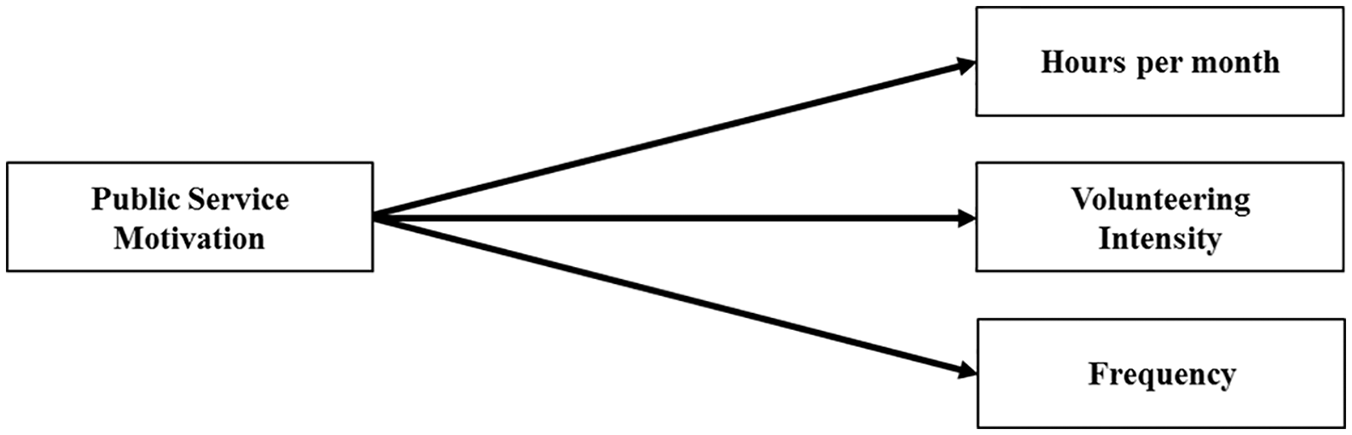
Conceptual model.
By addressing how motivation differs between spending time volunteering and exerting effort when volunteering, we begin the academic conversation on if a difference even exists. Second, we make an empirical contribution by establishing PSM as a predictor for volunteering intensity—a yet under-researched facet of volunteering effort. This study is relevant to practitioners because it provides volunteer coordination managers with a better understanding of how to utilize individual motivations to volunteer in a manner that supports the program goal—be it through volunteering more often, longer, or with more intensity.
Literature Review
PSM
Perry and Wise (1990) first proposed PSM as motivation theory to explain “individuals’ predisposition to act on motives grounded primarily or uniquely in public institutions and organizations” (p. 368). However, as the theory evolved, it was also linked to volunteering (D. Coursey et al., 2011; Einolf, 2016; Houston, 2006) and was re-defined as “[a]n individual’s orientation to delivering service to people with the purpose of doing good for others and society” (Perry & Hondeghem, 2008, p. 4). This purpose oriented focus has a good fit with the topic of volunteering addressed in this study.
PSM consists of three motives: rational, norm-based, and affective (or emotional) motives which in turn are composed of several dimensions capturing different attitudes (Perry, 1996). Attraction to policy making is a rationality-based motive that examines if the individual seeks opportunities that will let them affect policies and procedures (Ritz, 2011). Social justice, commitment to public interest, and civic duty are norm-based motives that explore the reflection of society’s attitudes to these three elements within the individual (Brewer et al., 2000). The last two dimensions, self-sacrifice and compassion, are classified as affective- or emotionally based motives (Perry, 1996). It should be noted that while Perry (1996) would drop social justice and civic duty when examining public sector employee attitudes and the four dimensional approach to PSM is very common, we deviated from this approach as these dimensions (i.e., civic duty and social justice) are important when exploring volunteers’ attitudes about supporting causes they may advocate and what they deem as being their civic duty.
PSM research has often espoused that individuals are motivated by intrinsic needs (Grant, 2008; Park & Word, 2012; Perry & Wise, 1990). Some scholars argue that organizations that offer volunteering opportunities are engaging in practices that support fulfilling intrinsic needs with the possibility to conciliate private and professional life (Rodell, 2013). However, Walton et al. (2017) found evidence linking PSM to volunteering in general, but not among those who volunteered as non-profit board members. The authors suggest that PSM’s rational motives do not capture the possible ego-based motives associated with some types of volunteering. For example, Nov (2007) found that volunteers who engage in creating content for Wikipedia may do so for ego reasons. Other studies explored if PSM would lead to volunteering or not and found evidence that those who had higher levels of PSM (especially social justice in the case of Piatak’s, 2016, sample, and civic duty and self-sacrifice in Clerkin and Fotheringham’s, 2017, sample) were more likely to volunteer.
Time and Effort
Time is a common measurement of volunteering effort among volunteer scholars (van Ingen & Wilson, 2017; Wilson & Musick, 1997). Time can be shown in hours or days at which one volunteers and it may seem rare to conceive of a survey where respondents are not asked how many hours they volunteered (Glanville et al., 2011; Handy et al., 2010; Wollebaek & Selle, 2002). Indeed, the British Red Cross (2017) often advertised that that they need volunteers to commit “time.”
PSM volunteering studies provide evidence that high levels of PSM among volunteers is related to increased time spent volunteering (D. H. Coursey et al., 2008). Clerkin et al. (2009) gave individuals with a history of volunteering a choice between donating money, donating time (2–5 hr), and neither option. Respondents with high levels of PSM were significantly more likely to volunteer time. This suggests that PSM, when examined in the volunteering context, can lead to increased time opposed to the less time sensitive nature of donating to a charity. Einolf (2016) measured the time one volunteered, or what he referred to as the rate, with a range of hours over the course of a year—that is, 1 to 19, 20 to 39, 40 to 70, and so on and discovered individuals with high levels of PSM reported more time spent volunteering. Hence, individuals with high levels of PSM are likely to choose to help others by donating more time:
Despite the many volunteering studies focusing on time spent volunteering, some scholars argue that there are challenges associated with measuring time such as recalling the exact amount of time one volunteered (Handy et al., 2010). By using frequency instead, it may be easier for respondents to recall and it allows for researchers to identify simple patterns of participation (Holmes & Slater, 2012). For example, if an individual knows they volunteer once a year in support of a local marathon, then it is easier for them to recall the frequency level opposed to remembering how many hours they spent helping out. For researchers, seeing that an individual reports volunteering on an annual basis, this could signal that they have a tendency to engage in one-off volunteering activities. This could have implications for activities such as the Olympics or annual marathons that do not require frequent volunteers.
Although, when Christensen et al. (2015) compared individual levels of PSM and how frequently they volunteered, they discovered those with high levels of PSM were more likely to volunteer monthly or weekly opposed to yearly or never. Other scholars used sector as a proxy for PSM, and found evidence at the sector level related to frequency of volunteering (Ertas, 2014; Houston, 2006). Similarly, studies using large datasets such as the Current Population Survey, repeatedly found public sector and non-profit employees volunteering at higher frequency than private sector employees (Piatak, 2015; Rotolo & Wilson, 2006a). Studies using frequency as their measure of volunteering effort have also found that individuals with high levels of intrinsic motivation volunteer at higher frequency rates (Geiser et al., 2014). Although longevity may be a benefit for organizations relying on increased rates of frequency, volunteering frequently could put those volunteers at risk for burnout (Moreno-Jiménez & Villodres, 2010). However, understanding historical frequency can signal if the individual is a one-off versus a long-term volunteer. Therefore, we propose,
Finally, Rodell (2013) referred to volunteering intensity as the physical, mental, or emotional effort exerted by the volunteer. This definition of volunteering intensity challenges the main means of measurement (time) that many volunteer motivation studies (see above) have used to define or determine intensity. Studies have found that those volunteers who report a higher number of hours are portrayed as contributing more and with wider intensity (Shantz et al., 2014). As mentioned previously, volunteering intensity can consist of more than physical exertion (Anderson et al., 2014). Rodell (2013) developed and validated a five-item intensity scale to measure the physical, mental, and emotional effort a volunteer perceives they exert.
Although no research has linked PSM and volunteering intensity yet, a large literature exists studying the relation between PSM and work effort (Frank & Lewis, 2004; Leisink & Steijn, 2009; Wright, 2007). For example, Frank and Lewis (2004) found that government employees who valued helping others reported working harder than their private sector counterparts. Leisink and Steijn (2009) found individuals with high levels of PSM had a willingness to exert more effort. In addition, Bidee et al. (2013) were able to show that autonomous motivation positively associates with self-assessed work effort among volunteers. Thus, drawing on the link between motivation and effort, the supporting empirical evidence briefly reviewed above, and considering that PSM is a form of autonomous motivation, a positive association between PSM and volunteering intensity is expected.
Volunteering Effort and PSM Dimensions
Finally, the PSM dimensions themselves are hypothesized to result in different impacts. Increasingly, more PSM studies are looking at how the different dimensions influence outcomes because of the differences between rational, norm-based, and affective motives (Chen & Hsieh, 2015). However, we acknowledge that it may not be possible to link all dimensions to all outcome variables of interest (i.e., time, frequency, and volunteering intensity). We will focus on selected links for which we found supporting arguments in the literature and make efforts to associate each category of public service–oriented motives (i.e., rational, affective, and norm-based) to time, frequency, and volunteering intensity.
The attraction to policy making dimension suggests some individuals are motivated to try to influence decisions that have an impact on the public (Andersen & Kjeldsen, 2013). Changes in political systems or even internal policies can take time. Lee and Jeong’s (2015) study supports this supposition as they found a significant relation between volunteers with a high sense of attraction to policy making and increased hours spent volunteering among South Korean government employees. When Christensen et al. (2015) explored attraction to policy making among volunteers, they discovered those individuals with high levels of PSM were more likely to volunteer monthly or weekly. They argued that the instrumental motivational aspect of attraction to policy making might be particularly strong among university students (their sample) because it helps them build a sense of community. J. K. Taylor and Clerkin’s (2011) study found strong support between undergraduates’ attraction to policy making and political communal activities, campaigning, and contributing.
Because change to policies tend to be prolonged over time, volunteers who have high levels of attraction to policy making will have rationally deliberated and will understand and accept that change will require a longer commitment. Therefore, we hypothesize,
Norm-based motives, commitment to public interest and civic duty, are often associated with studies that examine those individuals active in the public safety setting such as part of the military (Braender & Andersen, 2013; Drevs & Müller, 2015) or firefighters and police (Battaglio & French, 2016; Kim, 2011; Neumann, 2017; van Loon et al., 2013). These professions and contexts can require a combination of physical, mental, and emotional motivation due to the risk of life and safety.
Arguably, serving one’s country in the military is one way to ensure public safety. When Braender and Andersen (2013) investigated Danish soldier’s commitment to public interest before and after deployed to war zones, they found a positive significant relationship between commitment to public interest and one’s first deployment. Volunteering for missions such as this can have a physical toll, but can also require emotional effort in dealing with tragedy and mental effort when trying to overcome challenges. Braender and Andersen (2013) concluded that one “cannot serve without purpose” (p. 473) which indicates those protecting the public’s safety do so with a norm-based purpose. Furthermore, Charbonneau and Van Ryzin (2017) found that having a parent who served in the military was positively associated with commitment to public interest lending further support that this norm-based dimension was related to the context of protecting the public.
To show how PSM differed among different types of public servants, Battaglio and French (2016) did a means difference test comparing PSM from police and firemen with other municipal employees. Their evidence supported those involved in public safety (police and fireman) had significant levels of commitment to public interest. Similar to serving in the military, emotional, mental, and physical efforts are necessary for ensuring public safety and dealing with the aftermath of actions that endanger lives. These studies are a combination of those volunteering to serve their country through military service and others who elect to choose a career specifically related to public safety; however, some studies have shown that volunteers in times of a natural disaster do exert more effort to protect public safety (Glanville et al., 2011). Because of the essence of natural disasters, one could argue that volunteers are not needed for extended time or with frequency. Likewise, volunteering for public safety is not a constant threat or necessarily a frequent threat. Hence, we propose the following:
Affective motives consist of self-sacrifice and compassion. Several studies have explored PSM in general among nurses arguing that compassion is an essential component of the career field (e.g., Belle, 2013; Krogsgaard et al., 2014; Levitats & Vigoda-Gadot, 2017; Schott & Pronk, 2014). Other studies that explored PSM on a dimension level found physicians have higher levels of self-sacrifice and compassion (Jensen & Vestergaard, 2017; Kjeldsen, 2012; Roh et al., 2016). Indeed, these emotional laborers—those who are in constant contact with the public and must control their emotions in extreme circumstances—have a higher sense of self-sacrifice (Lui, 2009; Roh et al., 2016). Despite evidence linking those in the health industry to affective motives, when Lapworth et al. (2018) conducted a qualitative study of PSM among different non-profit employees, they found those working for health charities tended to focus around the instrumental motives related to attraction to policy making.
As affective norms are often seen as desirable, it is reasoned that once identified in individuals, volunteer coordination managers will call on them more frequently. Due to the individuals’ sense of compassion and self-sacrifice, they will also volunteer more time and with increased frequency. Finally, because of the sacrificing nature of affective motives, they will volunteer with greater intensity. Hence, we can hypothesize,
Method
Sample and Procedure
In 2016, a web-based survey was distributed through a community volunteer center and a university in the Southwest of England with the intent of sampling a population of individuals who had a history of volunteering. A screening question was asked to ensure the individuals had volunteered previously. The reason we did not capture non-volunteers is because the dependent variable (DV) volunteering intensity measured the effort the individual exerted. Hence, we consider our sampling adequate given the purposes of this study and in accordance with principles outlined in Highhouse and Gillespie (2009) on sample selection, who underline the importance of participants being in a position to give meaningful answers to the questions on the survey. The study focuses on the southwestern region of the United Kingdom because according to the U.K. government’s Community Life Survey (U.K. Government, 2013), this region of England has the second largest percentage of people (46%) who reported volunteering at least once in the past year. Due to U.K. data protection laws, the community volunteer center sent an email and a reminder to approximately 2,000 registered individuals who expressed an interest in volunteering. A similar email was sent to 500 students who had opted in to receive survey emails from the university. To ensure the two samples did not overlap, respondents were asked to create a unique user code. We cross-checked the two samples to ensure there were no duplication of respondents. After controlling for unengaged responses, we were left with a total of 411 participants (309 from the community volunteer and 102 from the university). The major characteristics of our sample are representative of the population of U.K. volunteers according to the Community Life Survey 2017–2018. For example, in the youngest age group of the Community Life Survey (16–24), 24% of the respondents volunteer; whereas, this number is 23.8% in our sample. The participants were primarily female (65.5%) and ranged from age 15 to 90 with a mean age of 43.32 (SD = 18.500 years). A dummy variable (0 = no, 1 = yes) depicting Generation Y (ages 22–39) was created as this age group was the largest (35.52%). The majority of participants were employed (57.4%) at the time of the survey, with private sector employment accounting for the largest percentage (28%). Regarding their home life, 50.9% were married and 59.1% did not have children.
Because the cross-sectional survey consisted of self-reported data collected with the same measurement tool, the authors wanted to minimize common method bias (CMB) in the questionnaire design phase. For that reason, items measuring intensity were buffered from the measured independent variables (IVs) with non-related questions about their employment history (e.g., what sector they were employed in, how long had they been employed at that job, the person–organization fit between them and their work organization, and which sector would they prefer to work in). The choices described in the preceding lines follow the suggestions to reduce CMB outlined in Podsakoff et al. (2013) in the survey design. We also acknowledge that there is debate on CMB with some contributors considering CMB-related concerns as being exaggerated (George & Pandey, 2017; Spector, 2006).
Measurement of Main Variables
The study has three DVs: time volunteered each month, frequency volunteered, and volunteering intensity. Time was measured by asking “how many hours do you typically volunteer per month on average?” and has a range of 1 to 312 and a mean of 20.88 (SD = 39.968 hr per month). The question is commonly used in big data volunteering surveys such as the National Survey of Midlife Development (Taniguchi, 2006). Frequency was measured with a variation of Geiser et al.’s (2014) scale of 0 = rarely, 1 = occasionally, 2 = monthly, and 3 = weekly. Respondents primarily volunteered occasionally (38%) or weekly (37.5%). From this, a dummy variable was created where 1 = high frequency (weekly). Volunteer intensity was measured using Rodell’s (2013) five-item scale. Sample items include “I devote my energy toward a volunteer group” and “I apply my skills in ways that benefit a volunteer group.” A confirmatory factor analysis (CFA) confirmed a one-factor structure for volunteering intensity (chi-square mean/degree of freedom [CMIN/DF] = 3.081, comparative fit index [CFI] = .997; Tucker–Lewis Index [TLI] = 0.990; root mean square error of approximation [RMSEA] = 0.071; standardized root mean square residual [SRMR] = .0085) and a composite reliability of .951.
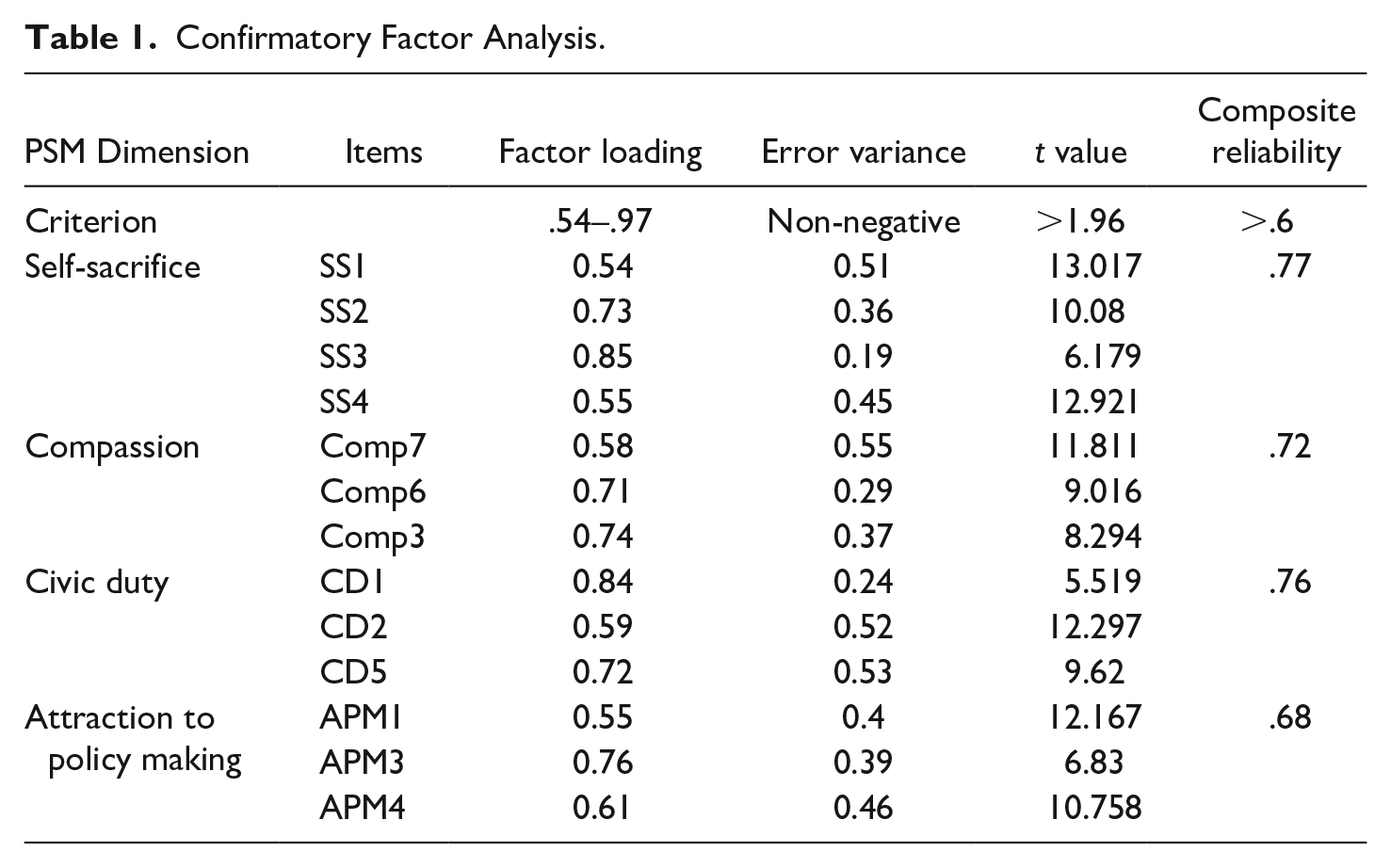
To measure our IV, PSM, we used Perry’s (1996) original 40 questions using a 5-point Likert-type scale where 1 is strongly disagree and 5 is strongly agree. Similarly to D. H. Coursey et al. (2008), we conducted a psychometric verification of the PSM scales through a CFA. We deemed this was needed due to returning to Perry’s (1996) original scales with the original six dimensions. However, results from this test suggested dropping social justice and commitment to public interest. Whereas other studies (Moloney & Chu, 2016) decided to create a new variable consisting of commitment to public interest, compassion, and social justice, we wanted to ensure purity of the concepts as based on norm versus affective motives such as Piatak’s (2016) study. The remaining standardized coefficients all had values between .54 and .85 and PSM dimensions had composite reliabilities above .60 (Table 1). To verify the remaining four PSM dimensions, we conducted a CFA with results confirming the four-factor structure (CMIN/DF = 1.956, CFI = .959; TLI = 0.945; RMSEA = 0.052; SRMR = .0499; Byrne, 2009). The goodness of fit was akin to other PSM studies (Battaglio & Gelgec, 2017; Word & Carpenter, 2013). PSM was calculated using the remaining dimensions from the CFA. In line with common practice (Asseburg et al., 2019; Liu et al., 2015; Vandenabeele, 2014), items were averaged to generate the variables for each PSM dimension. This approach avoids weighting the dimensions differently as would be the case when using factor scores (Spector, 1992). The PSM measure has a composite reliability of .917.
Confirmatory Factor Analysis.
Control Variables
Respondents were asked to indicate their biological gender (male = 0, female = 1). Gender was controlled for as studies have found that women tend to volunteer the most (Clerkin et al., 2009; Mesch et al., 2006). Age was measured by how old they were on the day they filled in the survey. Age was controlled for as studies find retirees volunteer more often (Tang, 2016; van Ingen & Wilson, 2017). Children (0 = no, 1 = yes) was included as a control variable due to volunteer studies finding those individuals with children tend to volunteer more (Carpenter & Myers, 2010; Einolf, 2018). Likewise, marital status (0 = single, 1 = married) was controlled as spousal influence studies show married people also have a tendency to volunteer more than singles (Rotolo & Wilson, 2006b). Table 2 presents the descriptive statistics.
Descriptive Statistics and Correlations.
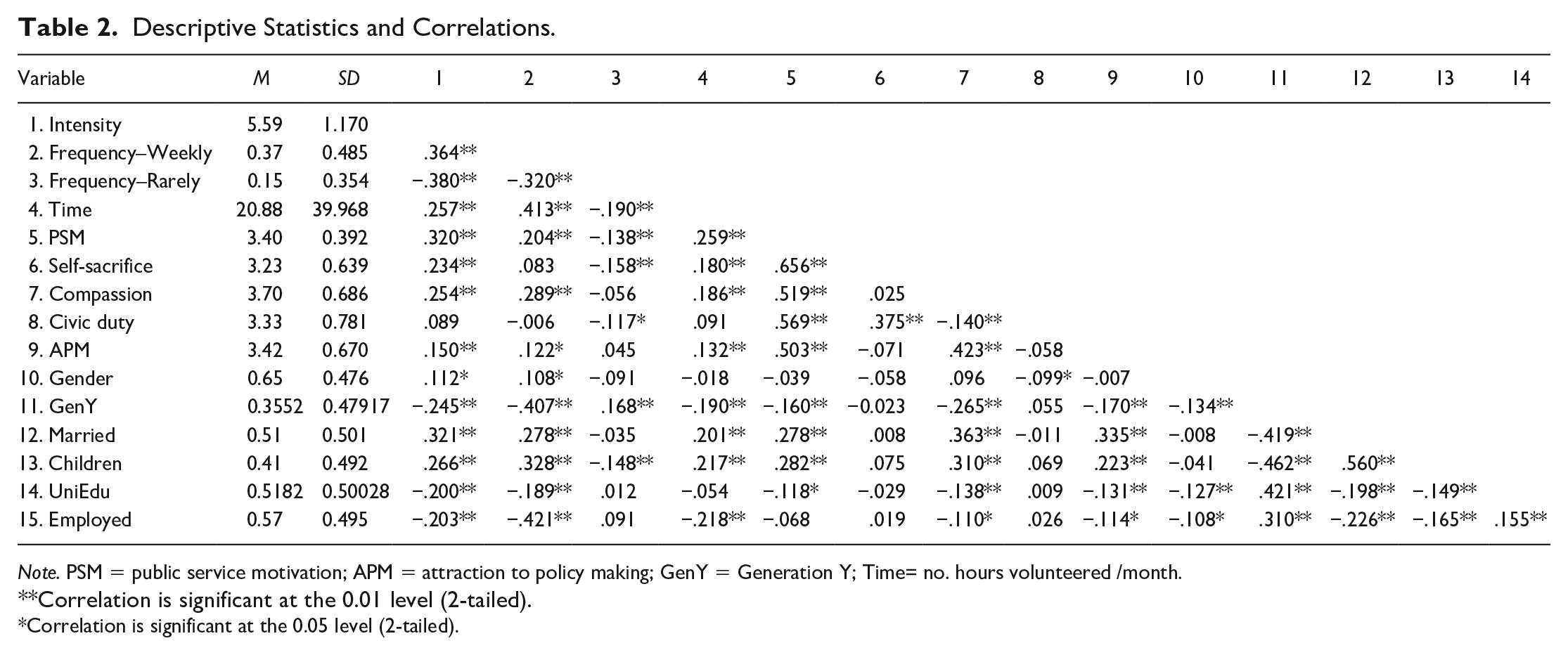
Note. PSM = public service motivation; APM = attraction to policy making; GenY = Generation Y; Time= no. hours volunteered /month.
Correlation is significant at the 0.01 level (2-tailed).
Correlation is significant at the 0.05 level (2-tailed).
Findings
The analysis uses ordinary least squares (OLS) regression for time and volunteering intensity models, and logistic regression for frequency as the variable was dichotomized.
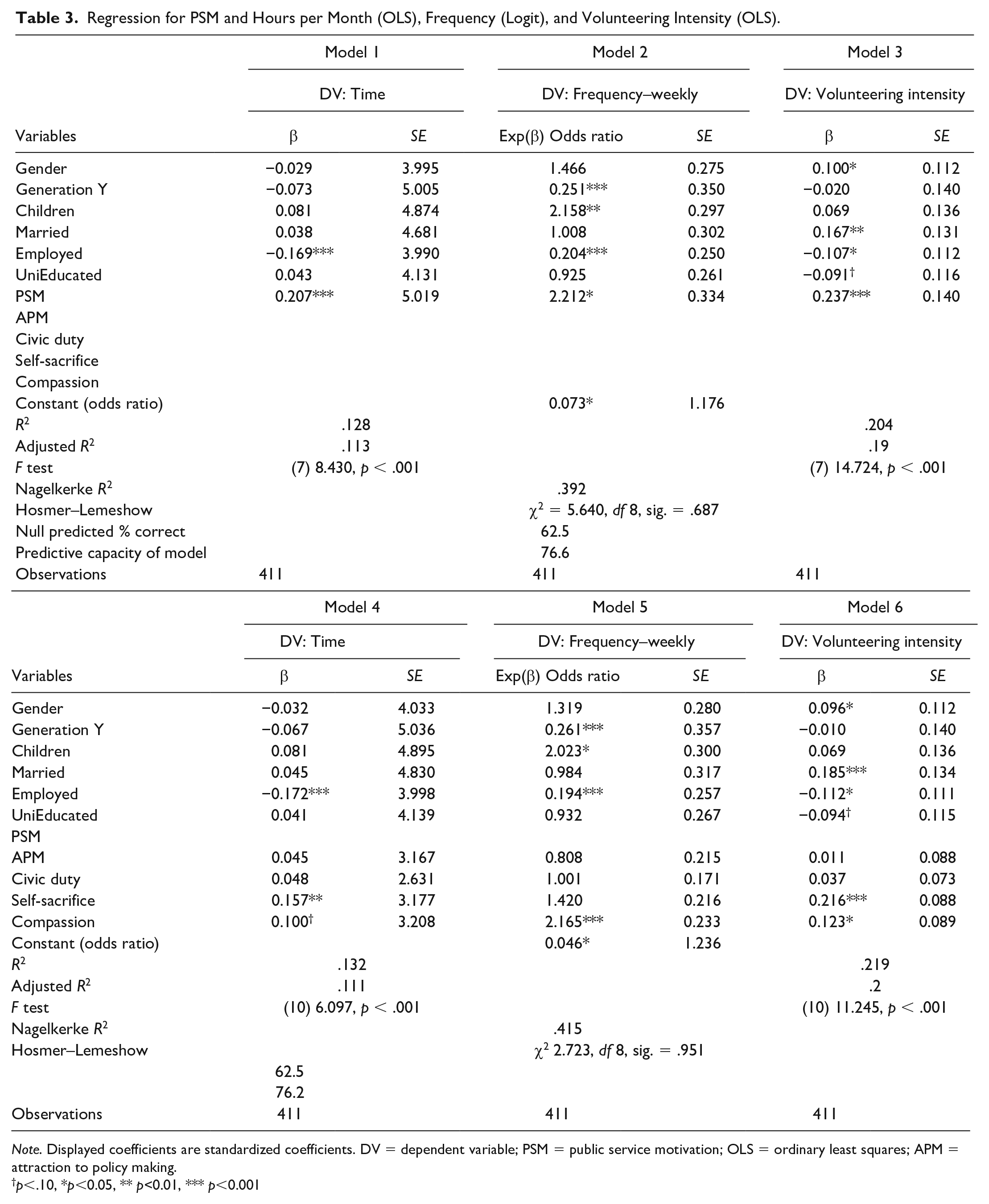
Hypothesis 1 anticipates PSM will positively affect time spent volunteering. PSM proved to be a good predictor of how much time one volunteered (β = .207, p < .001), and the model accounted for 12.8% of the variance in time spent volunteering (Model 1, Table 3). Therefore, evidence shows support for Hypothesis 1.
Regression for PSM and Hours per Month (OLS), Frequency (Logit), and Volunteering Intensity (OLS).
Note. Displayed coefficients are standardized coefficients. DV = dependent variable; PSM = public service motivation; OLS = ordinary least squares; APM = attraction to policy making.
p<.10, *p<0.05, ** p<0.01, *** p<0.001
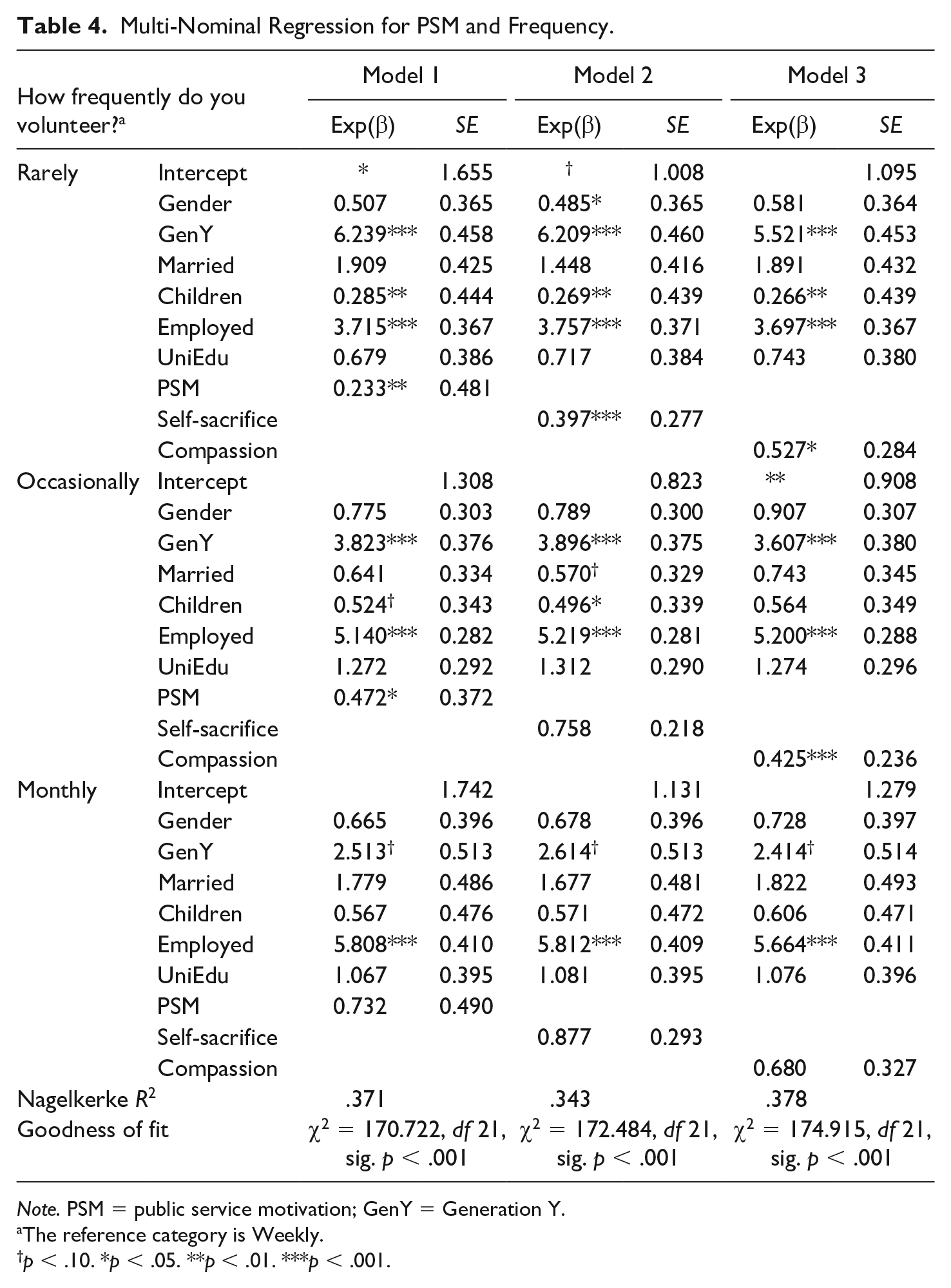
Hypothesis 2 stipulated that PSM would also prove to be a good predictor of how frequently one volunteered. Volunteers with high levels of PSM are two times more likely to volunteer with greater frequency (weekly), exp(β) = 2.212, p < .05 (Model 2, Table 3). To check volunteers across the frequency spectrum showed different levels of PSM when compared with volunteering frequently, a multinomial logistic regression was run. PSM is less likely to be associated with those who volunteered rarely, exp(β) = .233, p < .01, and occasionally, exp(β) = .472, p < .05, while volunteering monthly was not significant, exp(β) = .732, p = .524 (Model 1, Table 4). Therefore, there is evidence that Hypothesis 2 is supported among individuals who volunteer on a weekly basis.
Multi-Nominal Regression for PSM and Frequency.
Note. PSM = public service motivation; GenY = Generation Y.
The reference category is Weekly.
p < .10. *p < .05. **p < .01. ***p < .001.
Hypothesis 3 expects PSM to lead to increased volunteering intensity. PSM proved a good predictor of volunteering intensity (β = .237, p < .001) with the model accounting for 20.4% of the variance (Model 3, Table 3). Hence, there is evidence supporting Hypothesis 3.
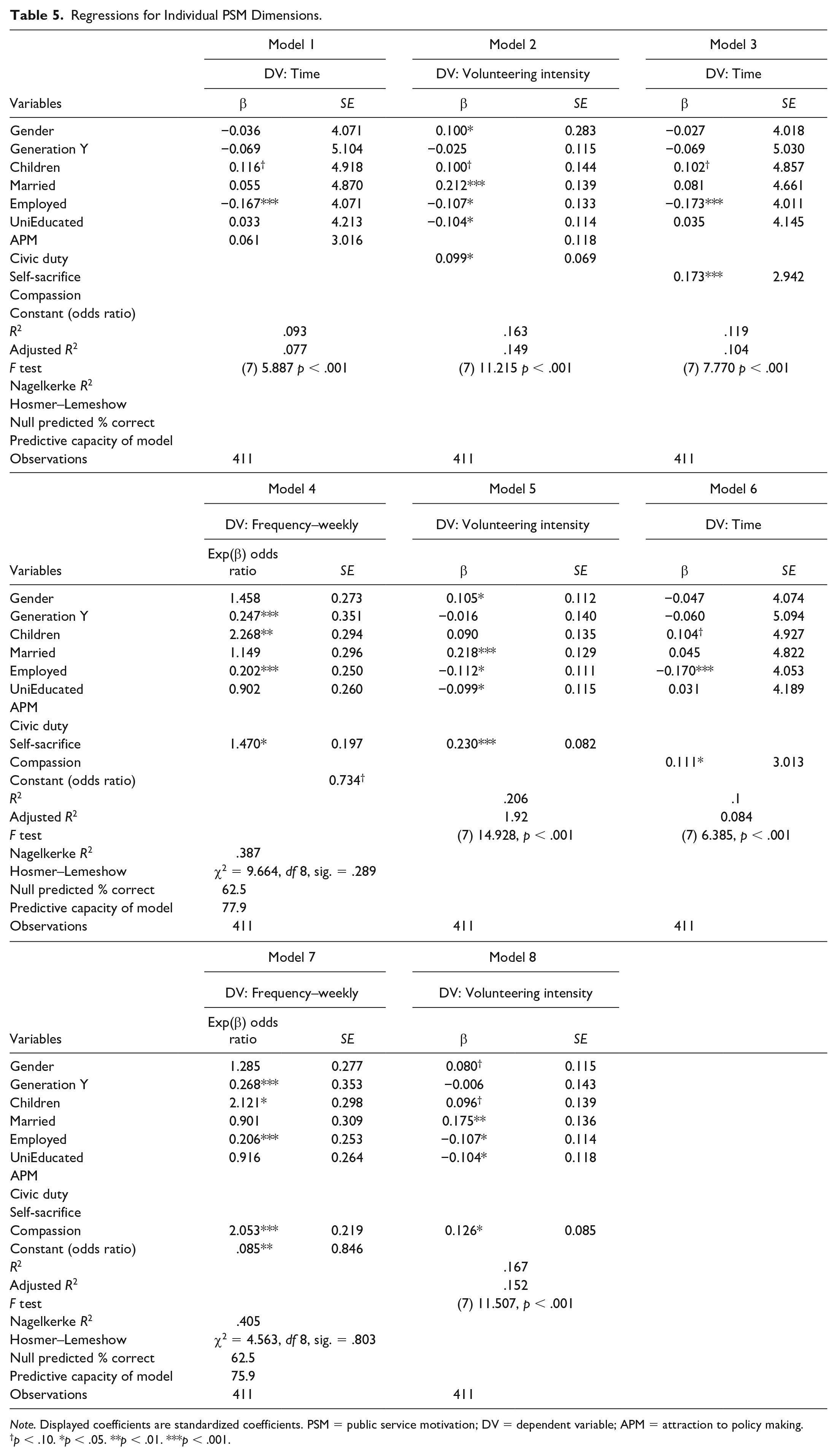
In terms of PSM dimensions, Hypothesis 4 expects volunteers with rational-based motives (attraction to policy making) to be positively related to volunteering more time. Attraction to policy making proved a poor predictor of time spent volunteering (β = .061, p = .227) with the model accounting for 9.3% of the variance (Model 1, Table 5). There is no evidence supporting Hypothesis 4 and it is therefore rejected.
Regressions for Individual PSM Dimensions.
Note. Displayed coefficients are standardized coefficients. PSM = public service motivation; DV = dependent variable; APM = attraction to policy making.
p < .10. *p < .05. **p < .01. ***p < .001.
Hypothesis 5 expects volunteers with high levels of norm-based motives (civic duty) to volunteer with greater volunteering intensity. Civic duty proved to be a good predictor of volunteering intensity (β = .099, p < .05) (Model 2, Table 5). Thus, Hypothesis 5 is supported in terms of norm-based motive civic duty.
The final Hypothesis 6 expects affective motives as represented by self-sacrifice and compassion to be significantly related to all three volunteer outcomes. Self-sacrifice proved to be a good predictor of time (β = .173, p < .001; Model 3, Table 5) and volunteering intensity (β = .227, p < .001; Model 5, Table 5). Furthermore, volunteers with high levels of self-sacrifice are 1.4 times more likely to volunteer with greater frequency (weekly), exp(β) = 1.470, p < .05; Model 4, Table 5. When exploring self-sacrifice among the frequency spectrum, only low levels were significantly related to rarely volunteering, exp(β) = .397, p < .001 (Model 2, Table 4).
Compassion also proved to be a good predictor of time (β = .111, p < .01; Model 6, Table 5) and volunteering intensity (β = .126, p < .05; Model 8, Table 5). Volunteers with high levels of compassion are twice as likely to volunteer with greater frequency (weekly), exp(β) = 2.053, p < .01; Model 7, Table 5. When exploring compassion among the frequency spectrum, low levels were significantly related to rarely volunteering, exp(β) = .527, p < .05, (Model 3, Table 4) and occasionally volunteering, exp(β) = .425, p < .001 (Model 3, Table 4). Hence, the findings support Hypothesis 6.
Discussion
This article aimed to answer the question of whether volunteers’ motivations as measured by PSM were linked to the different ways of measuring volunteering effort. The intent was twofold. First, we integrated volunteering intensity as a measure for volunteering effort in the literature studying the relationship between PSM and volunteering. Second, we further the discussion in the volunteering literature as a way to improve the measurement of volunteering effort. Thus, we contribute to the debate surrounding the necessity not to conflate time and intensity with effort. We found evidence that PSM is associated with volunteer time, frequency, and intensity; however, there is significant variation at the dimensional level.
When exploring the relationship between PSM and work outcomes (J. Taylor, 2007), PSM and public service behaviors (Jensen & Vestergaard, 2017), and PSM and volunteering (Clerkin & Fotheringham, 2017; Fazzi & Zamaro, 2013), a variety of associations have been empirically shown. To some extent, our results are consistent with previous findings as we also find some variability at the dimensional level of PSM. More specifically, rational motives such as attraction to policy making were found to not be related to time spent volunteering. Other PSM–volunteer studies have identified this dimension as being the least effective in predicting volunteering (Clerkin et al., 2009). It could be that satisfaction plays a strong role in the amount of time one spends volunteering. If one is volunteering for a political party and it fails to win or is plagued with corruption crises, it could result in less satisfaction and termination of time spent volunteering.
The norm-based motive civic duty was found to support volunteering intensity (as hypothesized). It was reasoned that due to the abrupt nature of public safety, volunteers with high levels of norm-based motives will not volunteer more frequently. Rather, the volunteering intensity exerted should have reflected the personal feelings of helping society during a time of need such as the post-9/11 volunteering effort (Beyerlein & Sikkink, 2008).
The connection established between civic duty and intensity identifies two actionable points. The first relates to the fact that one may distinguish between tasks that require more from those requiring less intense work. This would allow to allocate volunteers depending on their civic duty motives. The second actionable point refers to the management of volunteers at times of crisis or emergency. Those are, according to the literature (e.g., Glanville et al., 2011), times in which norm-based motivated individuals will exert higher intensity volunteering. Apparently, the problem with an emergency or crisis situation may be that increased time of volunteering is also necessary. The combination of the two elements—that is, time and intensity—may reveal to be a key aspect for a successful performance. Hence, it may be reasonable to operate on balancing norm-based motives with the other PSM.
Finally, affective motives, that is, self-sacrifice and compassion, were associated with all three outcomes. Volunteering recruitment itself is often entered around emotional arousal (Lindenmeier, 2008). Moreover, self-sacrifice is commonly associated with volunteering (Steen, 2006). PSM studies examining the self-sacrifice dimension similarly showed a strong connection between the dimension and volunteering (Lee & Brudney, 2015). Hence, our results are in line with previous findings. Nonetheless, we want to acknowledge findings by Christensen et al. (2015), Clerkin et al. (2009), and Piatak (2016) who were not able to show a significant association between self-sacrifice and an individual’s likelihood to volunteer. But one needs to bear in mind differences between the aforementioned studies and the research reported here. For example, we distinguish between time, intensity, and frequency of volunteering and thus are able to offer a more nuanced picture. Also, in contrast to Christensen et al. (2015), Clerkin et al. (2009), and Piatak (2016), we do not use a pure student sample and our participants tend to be more mature than freshman, on average. Overall, it appears that the relationship between PSM and volunteering has different facets which merit further study with varying sample specifications.
What is of particular interest is that the control variables within the model performed differently. We discovered that not being employed is consistently linked to time and effort. While many volunteer studies stipulate that retirees will volunteer more time and frequently (Dury et al., 2015), there is also evidence that in some countries, such as Australia, older people do not volunteer as frequently despite being retired (Warburton & Crosier, 2001). Indeed, when we examined Generation Y’s reported volunteering frequency, we found that with the increase in age, there was an increase in frequency. This supports studies that show European older volunteers are more committed to conduct volunteer activities (Principi et al., 2012). It also lends support to the discussion about how mandatory community service for high school and university age students may cause them to only engage in volunteering as a one-off event.
Our results have practical implications for volunteer coordination managers. For example, if needing volunteers with high affective motives (i.e., the self-sacrifice and compassion dimensions in PSM) and much time donated, volunteer coordination managers should focus on unemployed individuals. However, if volunteers are needed more frequently, then older volunteers with children are desired. The main PSM dimension contributing to the frequency of volunteering is compassion; whereas, self-sacrifice does contribute more strongly to the time spent and intensity of volunteering. Depending on what type of volunteering is needed, volunteer coordination managers could try address the respective PSM dimensions. Finally, if an organization is just concerned with intensity, then females who are married and unemployed would be ideal. This, of course, is all in relation to volunteers with high PSM levels, in particular, self-sacrifice or compassion. As an additional analysis, we have produced three-way interaction plots on the three main outcome variables, gender and employment status. These figures are displayed in Supplemental Appendix 1 and substantiate the claims made. For example, Supplemental Figure A1 clearly shows the high volunteering intensity of unemployed, married women whereas Supplemental Figure A2 shows unemployed individuals tend to give more time. Together, these insights collectively shed light on existing literature and offer theoretical and practical implications.
This study is not without limitations. One area that should have been taken into consideration was measuring directly if respondents were involved in episodic, micro, or cyber volunteering. By knowing the activity, this could possibly have allowed us to isolate the issue of time and understand if time was not an issue because this particular type of volunteering is not reliant on time. This could also explain why those who volunteer more frequently may have felt they did not exert a large level of intensity. Hence, a more nuanced study that looks into volunteer activities and how they interfere with the relationships investigated in the present work would constitute a rich field for future inquiry.
Conclusion
Through our findings, we are able to provide empirical support of how PSM is associated to volunteer behavior in the form of time, frequency, and volunteering intensity. We establish a clearer connection between the amount and intensity of volunteering and volunteers’ PSM. Finally, we contribute to the discussion about how each individual dimension of PSM has different impacts (Perry & Vandenabeele 2015). This study has practical implications as it can provide volunteer coordination managers with a better understanding of how to utilize individual motivations to volunteer. By understanding how motivation may lead to different exertions of time and energy, it may influence the way in which volunteers’ managers recruit volunteers.
Supplemental Material
Appendix – Supplemental material for The Public Service Motivated Volunteer: Devoting Time or Effort?
Supplemental material, Appendix for The Public Service Motivated Volunteer: Devoting Time or Effort? by Joyce Costello, Fabian Homberg and Davide Secchi in Nonprofit and Voluntary Sector Quarterly
Footnotes
Declaration of Conflicting Interests
The author(s) declared no potential conflicts of interest with respect to the research, authorship, and/or publication of this article.
Funding
The author(s) received no financial support for the research, authorship, and/or publication of this article.

Supplemental Material
Supplemental material for this article is available online.
Author Biographies
References
Supplementary Material
Please find the following supplemental material available below.
For Open Access articles published under a Creative Commons License, all supplemental material carries the same license as the article it is associated with.
For non-Open Access articles published, all supplemental material carries a non-exclusive license, and permission requests for re-use of supplemental material or any part of supplemental material shall be sent directly to the copyright owner as specified in the copyright notice associated with the article.
