




Abstract
Worldwide, millions of people volunteer for nonprofit organizations. These organizations heavily depend on volunteers, such that successfully retaining them represents an indispensable task, as well as one that might benefit from the application of fit theory. The complex mechanisms that shape volunteers’ fit throughout their volunteering experiences in the nonprofit environment have been scarcely analyzed though, and fit research has only selectively assessed volunteer experiences. Therefore, the current study investigates how volunteers perceive person–environment fit using a qualitative research design that relies on narrative interviews. Eight service-related and daily-life–related fit themes emerge at the organizational, collaborational, individual, and external levels. These identified fit themes help clarify how volunteers relate distinctly to the environments established by the organizations for which they volunteer. In addition to extending research on volunteering experience, this qualitative analysis of perceived fit among volunteers enriches fit theory, by contextualizing the concept of fit for volunteers.
Volunteers are valuable resources, contributing to society, the broader economy, and the achievement of specific goals set by nonprofit organizations (Brudney & Meijs, 2009; Studer, 2016). Because nonprofit organizations around the world depend on the millions of volunteers who aid them (Snyder & Omoto, 2008), the retention and management of volunteers represents a critical task for nonprofit management. Such retention likely requires person–environment fit, a status that contributes to positive work outcomes in organizational settings. By examining the relationships volunteers experience with the circumstances surrounding their voluntary engagement, we propose a point of departure for implementing novel human resource practices to ensure the realization of volunteers’ full potential.
Broadly defined, fit is the “congruence, match, or similarity between the person and environment” (Edwards, 2008, p. 168), suggesting that human behaviors result from compatibility between the person and the organizational environment (Kristof-Brown, Zimmerman, & Johnson, 2005). Using contextualized knowledge about person–environment fit, organizations can establish successful human resource practices and enhance employees’ performance (Chuang, Hsu, Wang, & Judge, 2015). But findings from for-profit settings might not generalize to volunteers: Unlike their paid counterparts, volunteers are not formally bound to the organization (Pearce, 1993) and participate for mainly altruistic or affiliative motives (Puffer & Meindl, 1992). Thus, we need specific knowledge about volunteers’ fit, especially in relation to the complex mechanisms that arise during volunteering experiences shaping volunteers’ fit with the environment (van Vianen, Nijstad, & Voskuijl, 2008; Wilson, 2012). In response, we intend to answer the research question, how volunteers perceive person–environment fit? We do so by qualitatively assessing volunteers’ fit narratives, or the stories that volunteers craft of their fit experiences, which summarize the perceptions of their fit with diverse components in the volunteer environment (Shipp & Jansen, 2011). By analyzing these fit narratives, we derive a volunteer context-specific fit model.
In so doing, we contribute to existing literature in three ways. First, this article offers the first holistic analysis of perceived fit in a volunteer context. By identifying these specific fit themes, we detail how volunteers relate to their environment and the organization for which they volunteer. The qualitative analysis accordingly enriches fit theory, by contextualizing the notion of fit for the specific group of volunteers, such that it sheds new light on existing conceptualizations (Kristof-Brown & Billsberry, 2013). Second, this study offers new insights into volunteers’ behavior and attitudes, relative to the context of their volunteering activity. In this sense, we enrich existing knowledge on volunteering experiences (Wilson, 2012). Third, our findings on volunteer–environment fit enable nonprofit practitioners to develop better configurations of human resource practices to manage volunteers (Studer, 2016).
Conceptual Background
Person–Environment Fit: State of the Art
Scholars have long researched person–environment fit (Edwards, 2008), usually conceptualized as supplementary or complementary (Muchinsky & Monahan, 1987). Supplementary fit exists when a person’s motives, behaviors, and attitudes match the environment, so it reflects congruence and similarity among various internal, personal components and diverse external, environmental factors. Complementary fit instead occurs when some weakness or need manifested by the person or the environment can be offset by the other party. For example, demand–ability fit implies a connection between an employee’s capabilities and the job requirements, and need–supply fit entails a match between the employee’s job requirements and the job’s potential to fulfill these needs (Edwards, 1991).
Moreover, prior research offers two main approaches to measure fit (Kristof-Brown & Billsberry, 2013). With an interactionist approach, scholars analyze fit by comparing a person’s motives, attitudes, and behaviors against elements of the surrounding environment. Thus, fit can be calculated by contrasting two separate data sets for the examined person and the environment, producing two forms of fit to measure: subjective and objective (Kristof-Brown et al., 2005). With its multitudinous operationalizations, this interactionist paradigm has been criticized as elusive (Kristof-Brown & Billsberry, 2013); it also cannot explain how people actually perceive fit.
In contrast, the perceived fit paradigm suggests that perceived fit is a psychological construct, reflecting a personal attitude toward the environment (Kristof-Brown & Billsberry, 2013). Therefore, the person directly assesses the compatibility between himself or herself and the environment (Kristof-Brown et al., 2005). With this approach, scholars can assess person–environment fit comprehensively, without confining themselves to specific fit concepts. Accordingly, with our exploratory research, we assess volunteers’ perceptions of fit in an effort to identify their fit interpretations more holistically.
Fit in Volunteer Contexts
Volunteering is defined as the unremunerated commitment of time and engagement to benefit others in a formal organizational setting (Cnaan, Handy, & Wadsworth, 1996). The voluntary nature of such acts differentiates volunteers from paid employees, in terms of both their employment relationship and their motivational structure. First, without any contractual obligation or monetary remuneration, volunteers do not work under any formal authority (Pearce, 1993), so formal incentives have less influence than they do for paid employees. With their sense of freedom, volunteers can come and go arbitrarily, such that they may represent rather unreliable resources (Kreutzer & Jäger, 2011). Second, by applying functional theory (Katz, 1960) six different motives underlying volunteering can be identified (Clary et al., 1998): to help others, to build relationships with others, to increase self-esteem, to distract from their own personal problems, to accumulate knowledge and skills, and to improve career opportunities. These motives are intertwined and appear to varying degrees due to diverse factors, like the volunteer’s age, the type of activity, and previous volunteering experience (Peachey, Lyras, Cohen, Bruening, & Cunningham, 2014). Due to these specific labor relations and the complex motives driving volunteers, fit themes established in a for-profit context among paid employees might not transfer easily to a volunteering context.
Referring to specific aspects of fit, previous research empirically confirmed that the degree to which initial motives (Güntert, Neufeind, & Wehner, 2015; Stukas, Worth, Clary, & Snyder, 2009) and goals (Tschirhart, Mesch, Perry, Miller, & Lee, 2001) are met by the volunteering activity significantly influences work outcomes. Stukas et al. (2009) determine that an index between the six volunteering motives and the volunteering activity’s potential to fulfill these needs best explains work outcomes. Moreover, they find that the type of task volunteers perform shapes the relation between motives and outcomes such that outcomes are more positive if tasks somehow match volunteers’ needs (Stukas, Hoye, Nicholson, Brown, & Aisbett, 2016). Testing two specific fit concepts, van Vianen et al. (2008) find that both personality fit and culture fit explain affective work outcomes. To sum up, previous research regarding fit concepts in the volunteering context focuses on the empirical assessment of existing fit components and their consequences. In contrast, an exploratory approach, openly investigating individual perceptions of fit in a volunteer context, is needed. Such an approach helps to holistically identify volunteers’ perceptions of important environmental elements.
Method
Figure 1 illustrates our research procedure that is detailed hereafter.
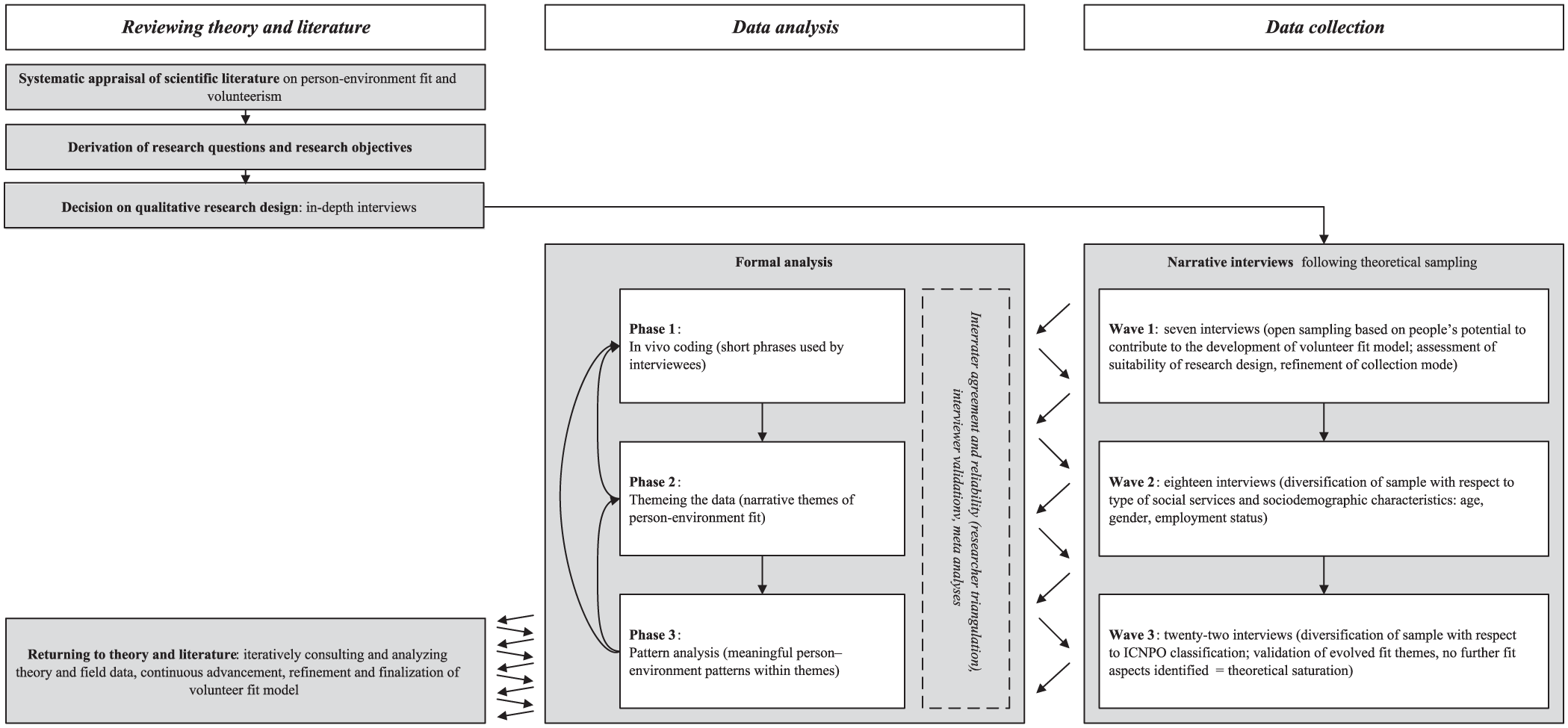
Research procedure.
Design and Sampling Strategy
Due to the exploratory nature of our research, we developed a qualitative research design and conducted in-depth interviews to gather detailed information about the individual fit experiences of the interviewed volunteers (Yeo et al., 2014). We conducted 47 semistructured interviews with volunteers covering a broad range of individual characteristics as well as organizational settings (gender: 26 female, 21 male; tenure: 1-20 years, average 6 years; work status: 10 students, 10 retired, 10 part-time, 17 full-time). This multiunit analysis helped ensure that our study features a broad range of person–environment configurations.
Following theoretical sampling (Ritchie, Lewis, Elam, Tennant, & Rahim, 2014), volunteers were selected based on their potential to contribute to our research endeavor in capturing stories on perceived fit. The sampling process was conducted in three waves. An initial sample (seven interviews) was selected following an unstructured, open sampling strategy (Wave 1). These interviews also served to assess the suitability of our research design and to refine the data collection mode. Thereafter, interviewees were picked to further diversify our sample (Wave 2: 18 interviews): on one hand, we chose volunteers from diverse areas of social services organizations. On the other hand, we aimed at diversifying our sample with respect to participants’ sociodemographic characteristics. Finally, we selected another 22 volunteers to cover a broader range of sectors volunteers are engaged in based on the international classification of nonprofit organizations (Wave 3). Interviews were conducted until no further fit aspects evolved and theoretical saturation was reached (Corbin & Strauss, 2015).
In all these waves, selected interviewees had been with the respective organization for at least 1 year. This criterion ensured that the initial socialization period, which strongly determines fit (van Vianen et al., 2008), had been completed, such that the respondents’ perceptions of fit should be well informed.
Data Collection
The interviews were conducted by one or two researchers and took place between December 2015 and December 2018. Each interview lasted an average of 42 min and ranged between 12 and 78 min. We approached personal contacts, to create a confidential, open, and trusting atmosphere (Webster, Lewis, & Brown, 2014) that benefits interviews about personal topics.
The narrative interviews, in which we encouraged the respondents to tell spontaneous stories about their fit experience (Eriksson & Kovalainen, 2008), realistically depict the complexities that inform how volunteers perceive fit (Shipp & Jansen, 2011). Moreover, we assessed narratives to identify the respective underlying fit theme as the “internally coherent and encompassing idea that helps individuals make sense of their experience of person-environment fit” (Chuang et al., 2015, p. 481).
Core topics to be covered throughout interviews were determined in advance, but the questions remained open to allow flexibility. The interviews comprised three parts. In the first part, we gathered contextual information about the respondents’ demographics, roles, and activities as volunteers. The second core part aimed to pull out volunteers’ narratives about their individual fit perceptions. To activate storytelling (Elliott, 2005), we applied a critical incident technique (Bryman & Bell, 2011), then engaged in active listening techniques to encourage the narratives to continue (Riessman, 2008). Following Chuang et al.’s (2015) approach, we asked directly about perceived fit, with questions such as, “What exceptional experiences as a volunteer have you had in which you particularly noticed that you fit with the activity and the environment in which you were engaged?” Finally, in the third part, we consolidated the gathered information by summarizing the respondent’s main points to validate the plausibility of answers and encourage interviewees to raise any additional important issues. Moreover, we applied researcher triangulation throughout the data collection and analysis processes (Eriksson & Kovalainen, 2008), such that we constantly discussed the interview content. This helped us to contextualize information, validate content, and prepare for upcoming interviews.
Data Analysis
The interviews were audio recorded, transcribed, and coded in MAXQDA. The data analysis was iteratively conducted in three phases (see Figure 1). First, we used in vivo coding to identify relevant short phrases used by the interviewees (Saldaña, 2013), to ensure that we accurately recalled their individual perceptions (Charmaz, 2006). As a complement, we analyzed memos captured during the interview process, for documentation and reflection purposes.
Second, we identified the main themes within the fit narratives by inductively making sense of the data. We identified 587 episodes that served as units of analysis, which we interpreted, contrasted, and attributed to a fit theme, seeking to maximize the difference between and minimize the differences within themes. With this process, we identified eight first-order codes (Pratt, 2009): mission congruence, fulfilled need for organizational support, collegial commonalities and complementarity, appropriate supervision, competence-service matching, fulfilled need for autonomy and freedom, compatibility with other spheres of life, and fulfilled need for recognition and appreciation. These themes represent coherent individual concepts, which volunteers use to make sense of their fit experience.
Third, we analyzed volunteers’ narratives in relation to prior research into person–environment fit. Thereby, we identified more meaningful patterns to describe the perceived interrelation between the volunteer and his or her environment. We coded and aggregated these person–environment fit perceptions and attributed them to the first-order codes (themes). Thereby, we reflected the perceived person–environment fit against the background of the conceptual distinction between supplementary and complementary fit. Correspondingly, for each first-order code, we determined 2 second-order codes, each describing the volunteers’ perceived fit components regarding the volunteer as person on one hand and the relevant external factor on the other. For example, for episodes assigned to the fit theme “competence-service matching” reflecting complementary fit, volunteers recalled incidents in which they realized that by contributing their individual knowledge, abilities, and skills (representing the person), the service quality (representing the environment) increased. These three steps were iteratively conducted for each collection wave. Throughout this process, fit themes and related person–environment patterns were continuously refined. Finally, we created a meta-summary for each participant, representing the most important components of the specific fit experience. Thus, we could compare individual fit perceptions and draw conclusions about the relations, similarities, and boundaries across volunteers.
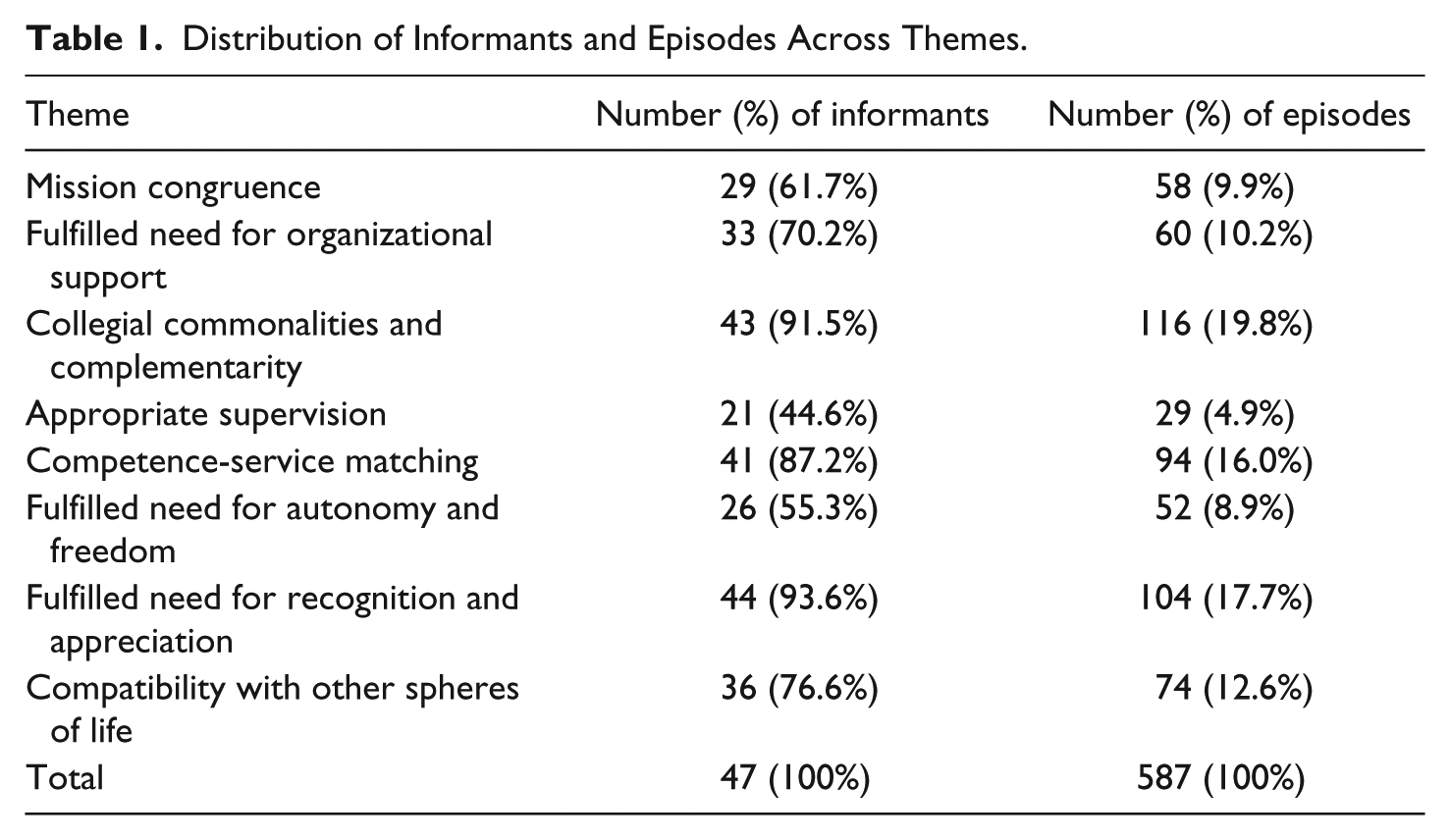
Applying triangulation of researchers (Eriksson & Kovalainen, 2008), two researchers conducted the data analysis. In parallel, we discussed the findings with a group of five international scholars, experienced in volunteerism research. By clearly defining the codes in mutually exclusive ways, we increased the reliability of our findings (Campbell, Quincy, Osserman, & Pedersen, 2013). The interrater reliability between the two coders was good (.98; Brennan & Prediger, 1981), and disagreements on 13 episodes were discussed until agreement was achieved. However, four codes could not be resolved and thus were discarded, leading to the final set of 587 episodes. Table 1 summarizes the distribution of informants and episodes across the eight main themes.
Distribution of Informants and Episodes Across Themes.
Results
Volunteer Model of Fit
The eight themes we identified (Figure 2) emerged in various combinations and different frequencies. Following Chuang et al. (2015), we categorized the eight themes along two dimensions: domain and content (Figure 2). The domain dimension distinguishes between different spheres of influence on the volunteer activity. We identified two domains: service-related and daily-life–related fit. In the former case, the fit themes can be assigned directly to experiences during the volunteering activity. Daily-life–related fit means that fit perceptions are not directly linked to the volunteering service, but to circumstances in volunteers’ everyday life.
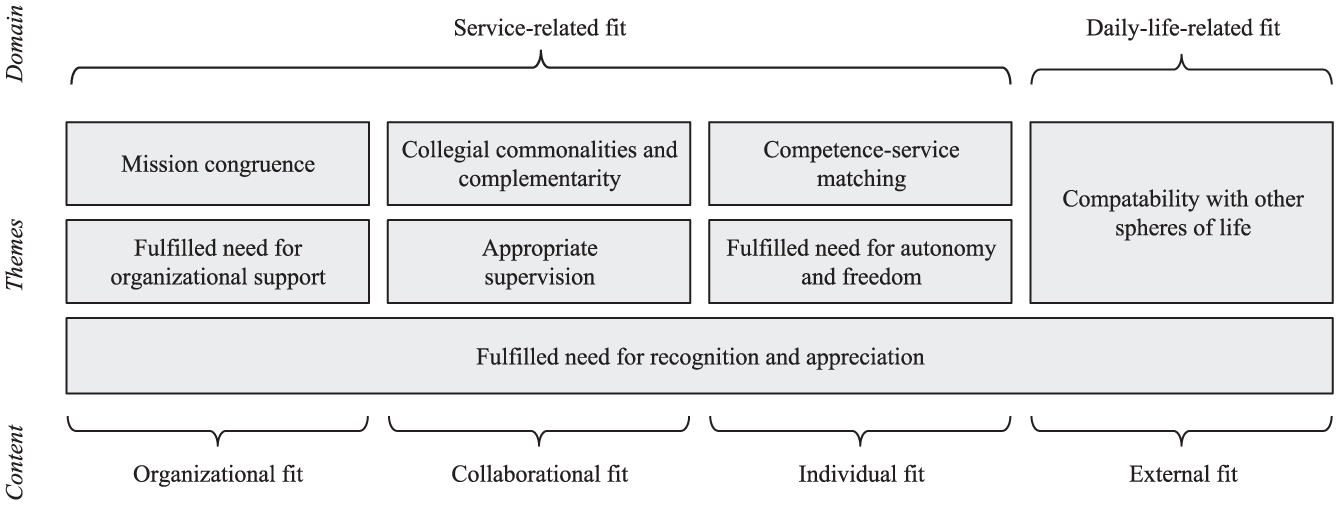
Volunteer fit model.
We also systemized the themes content-wise according to the organizational sphere, such that we classified perceptions into fit related to the organizational level, for example perceived fit regarding the organizational identity, culture or organizational structures, volunteers’ cooperation with other organizational actors (collaborational fit), the individual volunteering experience (individual fit), and external themes, that is to say perceived fit that relates to volunteers’ life beyond the volunteering activity (external fit). However, one theme, “fulfilled need for recognition and appreciation,” constitutes a special case, in that it extends across categories. That is, recognition and appreciation of the volunteer’s contribution is experienced as fit in terms of organizational rewards, as well as recognition by colleagues and appreciation by beneficiaries, or other persons external to the service provision.
In presenting each of the eight fit themes (first-order codes) in detail, we outline their underlying mechanisms, reflecting the perceived interrelation between aspects of the volunteer and the environment (second-order codes; see Figure 3). Illustrative quotes are depicted in the online appendix. By analyzing fit themes with respect to supplementary and complementary fit elements, we also can elaborate on the specific manifestation of the person–environment patterns.
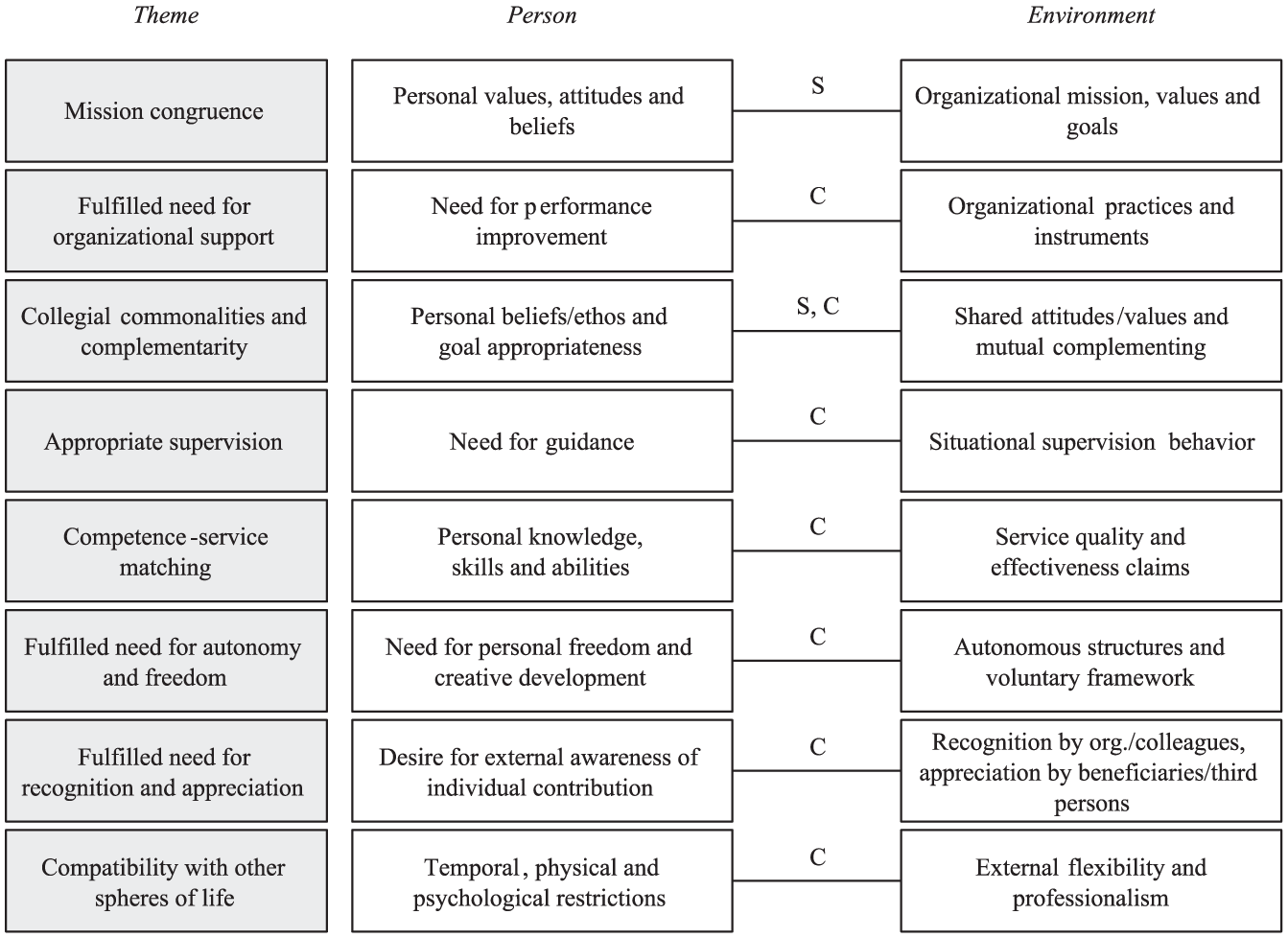
Fit themes: person–environment interaction.
Mission Congruence
On the organizational level, reflecting supplementary fit the perceived personal congruence with the organization’s mission is a primary theme. The organization’s mission incorporating its values and goals is inherent to its culture. Fit perceptions arise due to volunteers’ constant reconciliation of organization-level factors with their own personal mission, that is to say personal values, attitudes, and beliefs. On one hand, volunteers evaluate whether the organizational mission fits their personal needs. Simultaneously, they continuously re-examine if personal beliefs and convictions still fit the organization’s mission. Among these fit narratives, volunteers expanded on the congruence of organizational and personal values, such as when a volunteer engaged in aiding homeless people highlighted that in doing so she could put her Christian values of charity into practice.
The informants also cited their personal interest in the organization’s core activity, reflecting personal satisfaction due to perceived goal congruence. A volunteer in an organization supporting women in distress thus explained: “I have always felt solidarity with women. To participate in women’s help, I needed to find the proper organization, for which the organizational goals fit my own interests.” In other words, the organizations provide opportunities for them to live out their personal values.
Fulfilled Need for Organizational Support
The theme “fulfilled need for organizational support” emerged in narratives elaborating on organizational practices that improve, support, complement, or enable volunteers’ performance. More specifically, volunteers narrated on organizational practices and instruments fulfilling a personal need to improve their service provision (complementary fit). Three elements predominantly appear in the informants’ narratives. First, volunteers perceive fit when they experience organizational support, in the form of access to service-relevant resources or infrastructure. For example, a refugee aid volunteer reported as follows: “The organization plays a huge role. They give me the opportunity to execute the things I need to do. They provide cars, insure both us and beneficiaries, make buildings and material available so that we can best serve beneficiaries.”
Second, professional development training evokes a sense of fit when it is advantageous and necessary for the service provision. A volunteer in an emergency phone center highlighted the appeal of education and training: “Essentially, training is provided to acquire required skills . . . This is always great. You gain professional competence, which I think is important and always goes down very well with us volunteers.” Volunteers referred to the development of skills and competence, but also the experience of a personal feeling of well-being and security that resulted from organizational safeguarding mechanisms, such as official feedback loops and question periods.
Third, informants perceive organizational development opportunities as personally enriching. Thus, organizational support positively affects work performance, but it also benefits these respondents in their daily lives, beyond their volunteering engagement. A volunteer participating at children’s camps highlighted:
“By attending seminars, I gained knowledge that I applied in my work with both youths and adults. The results were amazing. I believe that—once I will have personnel responsibility—I will be able to benefit from the methods I became familiar with.”
Collegial Commonalities and Complementarity
One of the most frequently mentioned fit themes revolved around positive perceptions of both mutual supplementing and complementing with colleagues. Volunteers elaborated on two key aspects: common values and mutual alignment toward common goal attainment. Informants perceive both elements of this collegial commonalities and complementarity as reciprocal. First, positive fit, in terms of a fit of personal ethos and beliefs with common attitudes and values, creates solidarity, loyalty, and a feeling of togetherness. A volunteer engaged as scout leader noted: “I don’t know the others at a camp, but with our scout principles, I quickly find common ground with the others. We can work very well together due to this common basis.”
Second, for service provision, informants highlight the importance of reciprocal support and the contributions of various skills. Thus, a personally perceived goal appropriateness is met by mutual complementing of skills and competencies. Effective teamwork and clear exchanges of information and experience are considered as important for the success of the volunteering activity. According to our informants, these components foster an atmosphere of mutual complementarity, not only among volunteers but also between volunteers and full-time employees. An informant who volunteers in a psychological care setting commented on cooperation with other employees: “Instead of substituting, we complement and enrich each other.”
On the basis of shared attitudes and values as well as mutual complementing with respect to the provided service, the existence and emergence of deep relationships, deeper than just joint activity by colleagues, shape volunteers’ fit. On one hand, informants highlighted the importance of existing friendships as decisive factors for choosing a certain volunteer activity. A volunteer engaged in a service club noted, “In this club I know the people. I am able to maintain friendships. To be in this particular service club is a purely personal choice.” On the other hand, volunteers narrated on close relationships through perceptions of a common ethos. One informant described this personal proximity: “Because of our common goals and shared values, we feel very close and trust each other with very personal subjects, thereby developing deep relationships.”
Appropriate Supervision
Although volunteers do not fall under formal authority, supervision emerged as a fit theme—if personally judged as appropriate. Informants appreciate supervision in the form of constructive criticism, which they experience as feedback that provides them with assistance and support. In addition, respondents perceive supervision as a protective mechanism that helps them maintain a professional distance from their service and its beneficiaries. A volunteer engaged in the church puts it as follows: “In case of difficulties and problems, I can always get advice from our very experienced supervisor. This kind of supervision is really helpful to me.”
In addition, participatory leadership style constitutes a component of perceived fit within this theme. A volunteer engaged in sport classes for disabled people described, “It functions so well because the supervisor’s leadership style is very participatory—she includes every volunteer, employee and the beneficiaries’ parents in any decision processes.”
Yet, if necessary and appropriate for the situation, the volunteers accept authoritarian and hierarchical leadership, especially in emergency situations. An informant who helps provide ambulance services thus reported:
“Sometimes our supervisor flips. In these situations, he expects us to do things exactly as he instructs us. This is far away from the way I deal with other people. But in certain situations this leadership style works well . . . In large-scale emergencies, the supervisor has to pull the strings, and we have to follow. He has to be able to count on us.”
The individual fit assessments make clear that situational supervision behavior fills a personal need for guidance mirroring complementary fit. Thus, supervision is evaluated in terms of its appropriateness for and impact on the efficiency and effectiveness of volunteers’ personal service provision.
Competence-Service Matching
A dominant (and frequent) element in volunteers’ fit narratives is their orientation toward their individual contribution to service provision. Within this theme, volunteers elaborated on their personal skills, knowledge, and abilities helping to fulfill environmental service quality and contribute to mission fulfillment. Informants want to provide their skills in their service provision as best they can. Therefore, volunteers expand their professional knowledge and skills so they can serve customers or beneficiaries in a more meaningful way.
First, our informants perceive their engagement as a vocation and continue when they experience a sense of being good at what they do. A volunteer who works with elderly and terminal patients elaborated on his service-related fit: “I have a medical educational background. Unlike someone without previous experience in the field, I can professionally assess certain situations and empathize with beneficiaries . . . My job is kind of a vocation to me.”
Second, the informants also highlight personal capabilities and qualities that differentiate them from others and make their personal contribution and engagement more valuable. A volunteer engaged in emergency services explained, “I can make clients feel as though they are in good hands. I am just good at that, good at serving clients, their relatives and colleagues.”
Third, volunteers perceive fit if they experience that through their competent and skilled service the activity becomes more significant. One informant volunteering for sport classes for disabled people narrated, “After substantial training, a disabled child, with huge initial problems, was able to kick the ball into the goal. Thereby, I could see the wonderful outcome and significance of my service.”
Finally, fit narratives about service effectiveness often involve psychological outcomes. Volunteers perceive a connection or bond between the beneficiaries and themselves, which is based on mutual sympathy and trust, and satisfies both parties, resulting in a feeling of pride. A volunteer engaged with an emergency phone center describes:
“Fit means for me, when you get the feeling that you did it right, when you meet the requirements of the anonymous person in need, when you get the feeling that she is more satisfied and happy than before. This creates a satisfying feeling—also to me.”
Thus, the fit perceptions classified within the “competence-service matching” theme reflect complementary fit such that the individual volunteer with his competencies offsets a need regarding service provision. Informants want to make maximum use of their personal gifts and capabilities, and they need to experience the quality and significance of their actions.
Fulfilled Need for Autonomy and Freedom
Stories assigned to this theme reflect the core of volunteering—that is, the voluntary nature of the act. Volunteers have a need for freedom and creative development that they want to outline through their voluntary engagement. Thus, they need to be granted with autonomous structures and a voluntary framework. The narratives contained two main aspects. First, fit means having the freedom to participate in the fundamental planning of the engagement. A volunteer engaged in psychological care says, “I strongly believe that the freedom to say ‘no’ is essential for every volunteer. If I am allowed to say ‘no,’ I find it much, much easier to say ‘yes.’” Thus, a lack of contractual obligation provides volunteers with a fulfilled need for autonomy which, in turn, enhances their fit experiences throughout volunteering. The volunteer thereby refers to the opportunity within an organization to stop the voluntary engagement for a while. Being aware of this enhances the current engagement.
Second, freedom results from fit with the content design of the engagement. When they are granted autonomy and trust, volunteers experience a work space that is distinct from a full-time job. A volunteer engaged in an environmental association put it like this: “I am completely free in the planning and implementation of my activities. In this regard, I perceive the organization as very open for new ideas and innovative concepts. Accordingly, I appreciate this autonomy and freedom a lot.”
Although it may appear intuitive, within this theme volunteers emphasize the importance of voluntariness, freedom, and creativity for their activity. Thus, an environment fostering individual volunteers’ awareness of an organizational culture that encourages trust and autonomous structures helps to fulfill this personal desire classifying this theme as complementary fit.
Fulfilled Need for Recognition and Appreciation
Volunteers want their service to be meaningful and significant. To feel useful, they explain the significance of external awareness of their individual contributions. In terms of frequency and distribution, this theme is predominating. Addressing complementary fit in their narratives, informants distinguish four groups who could offer recognition or appreciation of their contribution: the organization, colleagues, beneficiaries and relatives, as well as third persons.
First, informants emphasize the positive personal feelings they attain when they receive recognition from the organization for which they volunteer. They mainly consider symbolic rewards enriching, such that a volunteer at an emergency phone center recalled that “once a year at New Year’s Day, we meet and as a personal thank you, we go out for a pizza, drink champagne, and get roses . . . For me, this is the cherry on the cake.”
Second, in accordance with the noted importance of productive cooperation with colleagues, recognition by other volunteers or peers who are full-time employees is rewarding. Describing the perception of paid collegial respect, one respondent notes: “They give me the feeling that I am valuable to the team, which gives me just a beautiful feeling.”
Third, gratitude from beneficiaries, in the form of verbal or nonverbal expressions, is perceived as pleasant and as an incentive to continue volunteering. For example, an informant highlighted the appreciation by relatives: “Once, a mother of a mentally disabled person prepared a meat salad for me. Although I don’t like meat salad, I loved this kind of symbolic appreciation.”
Fourth, admiration by third persons is a component of the sense of fit with life as a volunteer. External persons might appreciate volunteers’ service and contribution, which fosters the volunteers’ self-awareness. A refugee aid volunteer described that “it is always worth a lot to me, when people know about my work and value it, or even say thank you.” Such recognition relates not only to the service provision itself but also to volunteers’ ability to integrate this engagement into their daily lives.
Compatibility With Other Spheres of Life
Compatibility with other spheres of life is the only fit theme that comprises another domain of fit, namely, aspects outside the core activity. Still, many informants require the context conditions to fit too. For example, individual flexibility needs to be guaranteed so that they can react to external restrictions, whether temporal, physical, or psychological. Reflecting complementary fit, volunteers thus estimate flexible and professional external structures enabling them to respond to these personal constraints. In particular, with regard to the time required, the volunteers must be able to afford this engagement. Full-time jobs, family responsibilities, and other hobbies dominate most informants’ daily lives, and volunteer engagement is just one component among many. When these external obligations decrease though, informants note their intentions to fill their new leisure time in a way they perceive as meaningful. Working in an emergency phone center, one respondent narrated as follows:
“When my father died, my son was at an age when he didn’t need me that much anymore. This gave me free time for meaningful things. That was the moment I decided to start volunteering. Thus, I looked for something that fits in terms of an adequate temporal frame and that was doable in terms of physical strength.”
Temporal restrictions come along with place-related restrictions, for example, one student volunteer explained that “I wanted to get engaged as a volunteer here at the university. Therefore, I chose this advocacy organization.”
Informants also highlight the importance of physical restrictions when they undertake careful considerations of fit, as well as their need to set clear emotional boundaries. Fit thus can stem from the psychological feasibility of voluntary engagement. As an example, a volunteer who provides psychological aid offered the following:
“There are always ups and downs. I once took a break from my voluntary engagement when I felt that my batteries were empty. That was when I learnt that I needed to keep a professional distance. When I get too close, I am not able to help anymore. There is this saying: “You are important, but it does not depend on you.” This citation is very, very important to me. It lifts the burden off me.”
Thus, our informants’ narratives mainly revolve around continuously balancing various demands of life with the voluntary engagement. In their environment, flexibility and professionalism help engaging as a volunteer by granting the opportunity to react to these temporal, physical, and psychological boundaries.
Discussion
In our attempt to determine how volunteers perceive person–environment fit, we have identified eight fit themes, reflecting diverse domains (service-related vs. daily-life–related) and various content levels (organizational, collaborational, individual, external). For this discussion, we rely on the grounding of existing knowledge about person–environment fit, as well as the particularities of the specific employee group of volunteers that we investigate herein.
Volunteer Fit in Light of Existing Fit Research
Fit is not a single, overarching sense of compatibility; it consists of various themes that represent diverse fit dimensions. The eight themes all address some elements of established fit concepts, representing both supplementary and complementary fit. For example, “mission congruence” resonates with the value and goal congruence elements of person–organization fit (Kristof-Brown et al., 2005), and volunteers are likely to perceive the importance of both the internalization of values and enthusiasm for organizational goals.
Complementary fit types (e.g., demand–ability fit) also are represented, such as in the “competence-service matching” theme, which reveals that volunteers contribute skills and knowledge that the organization needs to improve its services to beneficiaries. We also uncover both supplementary and complementary fit elements within single themes: In “collegial commonalities and complementarity” narratives, informants highlight the importance of similarities among colleagues, though they also perceive fit when colleagues’ skills and capabilities are complementary to the volunteer’s own. Thus, a strictly separated analysis of distinct fit concepts is not expedient. By holistically identifying perceived fit themes for volunteers, we substantiate existing, unique fit concepts in terms of content, but we also, in accordance with Jansen and Kristof-Brown (2006), find empirical evidence of the multidimensionality of fit.
The fit themes are mutually exclusive and distinct. Yet, interrelations both within and across specific aspects can be identified. In terms of spillover effects, the respondents note their perception of the positive impacts of organizational practices such as training or personal skill development, such that they narrate on the “fulfilled need for organizational support” fit theme. Simultaneously, at the individual level, their effective use of their individual abilities, potentially influenced by organizational practices, might cause them to perceive high-quality service as fit, in accordance with the “competence-service matching” theme. At the start of their engagement, volunteers have a high need for organizational support, yet once they acquire the abilities and experience their personal competence matching service provision claims, they might require such environmental factors less.
Other relationships arise within the themes. For example, within the “collegial commonalities and complementarity” theme, we recognize that volunteers arrive with personal values and goals. As they engage with the organization and colleagues, they realize how they best ensure common goal attainment in a team setting, which affects their personal attitudes and behaviors toward colleagues. Empirically, the fit themes thus seem interrelated (Jansen & Kristof-Brown, 2006; Shipp & Jansen, 2011).
The empirical evidence also shows that perceived fit depends on contextual factors. On one hand, individual peculiarities shape volunteers’ specific fit experiences. The composition and frequency of themes varies substantially. On the other hand, environmental factors influence individual fit perceptions, including both external factors (e.g., balance across different life domains) and environmental conditions within the organization. For example, the role and perception of supervision is likely to differ for volunteers engaged in youth service versus emergency control. These findings align with Jansen and Kristof-Brown’s (2006) assertion that single dimensions of person–environment fit are insufficient. This view on perceived fit thus provides a more holistic assessment, taking the environmental context into consideration (Shipp & Jansen, 2011).
Specifics of Volunteer Fit
In our model, many established fit conceptualizations emerge, but our findings also include volunteer-specific themes that likely reflect this special employment relationship. First, the voluntariness of the engagement might help volunteers perceive fit, in accordance with an individual desire for autonomy. This fit theme is specific to volunteer contexts, in which organizations have no formal authority to issue directives, empowering volunteers to reject instructions or requests (Kreutzer & Jäger, 2011). Instead, our empirical evidence proposes that autonomy-supporting leadership increases volunteers’ motivation (Oostlander, Güntert, van Schie, & Wehner, 2014). Second, citing collegial commonalities, our informants describe deep relationships and friendships evolving from joint collaboration, which is in line with previous findings that suggest the boundaries between work life and other domains are more fluid for volunteers than for paid employees (Pearce, 1993). Third, because their engagement is unpaid, performance recognition for volunteers is not based on explicit incentives. Rather, experiencing personal recognition and appreciation for their contributions, through gestures, words, and symbolic rewards, might cause volunteers to perceive fit. Fourth, fit is influenced by underlying motives (Shipp & Jansen, 2011), so volunteers’ specific motives shape the distinctive fit themes. For example, perceiving congruence with the organizational mission indicates the dominant motive when volunteers act out their values (Clary & Snyder, 1999). Only if organizational values are compatible with personal values can volunteers identify with the organization’s mission and feel involved.
To conclude, we can validate findings on fit of volunteers’ initial motives and needs with environmental affordances. Furthermore, our analysis indicates perceived environmental features, and how they are intertwined with volunteers’ personal characteristics, creating fit perceptions.
Managerial Implications
Organizations lack formal authority over volunteers, but the fit themes we identify suggest starting points for designing human resource practices. By highlighting fit as an important antecedent of performance (Kristof-Brown et al., 2005), volunteer managers can derive some appropriate approaches.
First, organizations should establish and communicate their mission clearly. Only if volunteers understand the organization’s mission are they able to evaluate their personal value congruence and potentially identify with it. Second, access to infrastructure and individualized training programs is critical, because experiencing such organizational support can enhance volunteers’ perceived fit. For example, accounting for the specifics of psychological demands in social services organizations, resources to prevent and treat secondary trauma symptoms could be increased (Elwood, Mott, Lohr, & Galovski, 2011).
Third, organizations should establish team-building efforts to foster volunteers’ perceived complementarity with colleagues, increase team cohesion, and enhance performance. Fourth, the peculiarities of volunteer fit perceptions call for adjustments in leadership styles. Leadership behavior that supports beneficiaries should promote greater volunteer engagement. For example, in combining servant with transformational leadership managers might transform volunteers’ individual aspiration levels by establishing a shared vision dedicated to help others, a caring community spirit, and freedom and resources for volunteers to become servants of the common cause (Parris & Peachey, 2012). Simultaneously, in line with previous research on emergency scenes (Bigley & Roberts, 2001), volunteers appreciate hierarchy and authority in large-scale emergencies.
Fifth, effectiveness on both organizational and individual levels requires the right volunteers for the right job. If competent for a delegated activity, volunteers can make a difference and enhance the organization’s service provision. In line with need–satisfaction concept (Muchinsky & Monahan, 1987), such a sense of competence also can leave volunteers more satisfied with their tasks, which further increases their fit perceptions and performance. Once organizations have identified and placed the right volunteers, they have to grant them substantial freedom and flexibility. Organizations should thus create autonomous structures and react quickly to volunteers’ external, personal restrictions.
Sixth, recognition and appreciation for performance is important for volunteers, so managers should establish a culture of recognition, both internally and externally. Volunteers should symbolically receive and experience recognition.
Limitations and Further Research
This study’s findings must be considered in terms of its exploratory qualitative design and limited generalizability. We interviewed a broad range of volunteers following an iterative theoretical sampling logic. With our sampling strategy, we aim at representational generalization (Lewis, Ritchie, Ormston, & Morrel, 2014). In other words, our model is likely to be found among diverse types of volunteers. Yet, the sampling strategy excluded volunteers who quit their activity. Further research could approach former volunteers to understand whether their turnover was caused by poor fit or misfit. Following recent research endeavors (Follmer, Talbot, Kristof-Brown, Astrove, & Billsberry, 2018), further research could qualitatively assess how poor fit and misfit evolve, how volunteers cope with such strains—because, intuitively, as unreliable resources, volunteers might immediately quit when experiencing poor fit or misfit—and how fit and misfit interact.
To generalize our findings, further research also could validate the multidimensionality of volunteer fit quantitatively (Jansen & Kristof-Brown, 2006). For example, studies might analyze the relationships of fit themes with volunteer work outcomes, such as satisfaction, commitment, retention, quality of work, or performance, to identify appropriate volunteer management practices that can ensure alignment with organizational goals. Moreover, specifically drawing from previous analyses of fit in a volunteering context, future research on volunteer fit could empirically assess how volunteer motives relate to particular fit themes.
Finally, the volunteers’ narratives were collected at one specific point in time. We propose that relationships between and within fit themes are dynamic. The different frequencies of the fit themes suggest their varying significance and perhaps even hierarchical relationships. To describe how fit perceptions evolve over time (Shipp & Jansen, 2011), a longitudinal research design would be helpful.
Supplemental Material
NVSQ872005_Supplemental_Material_CLN – Supplemental material for Fit Themes in Volunteering: How Do Volunteers Perceive Person–Environment Fit?
Supplemental material, NVSQ872005_Supplemental_Material_CLN for Fit Themes in Volunteering: How Do Volunteers Perceive Person–Environment Fit? by Benedikt Englert, Julia Thaler and Bernd Helmig in Nonprofit and Voluntary Sector Quarterly
Footnotes
Declaration of Conflicting Interests
The author(s) declared no potential conflicts of interest with respect to the research, authorship, and/or publication of this article.
Funding
The author(s) disclosed receipt of the following financial support for the research, authorship and/or publication of this article: the publication of this article was funded by the University of Mannheim.

Supplemental Material
Supplemental material for this article is available online.
Author Biographies
References
Supplementary Material
Please find the following supplemental material available below.
For Open Access articles published under a Creative Commons License, all supplemental material carries the same license as the article it is associated with.
For non-Open Access articles published, all supplemental material carries a non-exclusive license, and permission requests for re-use of supplemental material or any part of supplemental material shall be sent directly to the copyright owner as specified in the copyright notice associated with the article.
