




Abstract
Communities of civil society organizations are characterized by substantial volatility, as new organizations are continuously established and old ones are regularly disbanded. This article aims to improve our understanding of the dynamic nature of civil society by focusing on a particular aspect of organizational maintenance, namely, mortality anxiety. Building upon previous work that assesses actual and perceived survival chances of civil society organizations, we examine how inter-organizational competition, ties with public authorities, and the internal institutionalization of civil society organizations shape how these groups assess their survival chances. Our results demonstrate that high levels of inter-organizational competition and a strong reliance on government funding significantly increase mortality anxiety. Furthermore, they highlight the importance of a professionalized and internally differentiated structure. We rely on survey data and focus on the case of Belgium, in this way providing a first assessment of mortality anxiety in a neo-corporatist political system.
Introduction
A vibrant civil society is often considered a hallmark of a healthy democracy (Putnam, 2001; Skocpol, 2004; for a recent discussion, see Schlozman et al., 2015). A dense and diverse network of civil society organizations provides an important complement to the representation of citizens through political parties and elections. These associations can function as “schools of democracy” and have the potential to establish crucial linkages between citizens and public authorities. However, such representative expectations are difficult to meet in times when civil society groups face serious challenges, including changing patterns of political engagement, inter-organizational competition, and technological changes. The relations of civil society with public authorities have also become more complex. For instance, governments sometimes aim to steer the activities of civil society organizations through government funding or adopt a critical attitude vis-à-vis their advocacy work (e.g., Arvidson, Johansson, & Scaramuzzino, 2017; Brandsen, Trommel, & Verschuere, 2017).
As a result, civil society groups may find it hard to play their representative role and become more preoccupied with organizational stability and survival (e.g., Mosley, 2012). Previous work has demonstrated the volatile nature of organizational populations, caused by the “death” of existing organizations and the “birth” of new ones (Halpin & Jordan, 2009; Lowery & Gray, 2015). This article focuses on a related, yet distinct aspect of mortality, namely, the fear of disbandment, or mortality anxiety. Gray and Lowery (1997) define mortality anxiety as “an assessment of the likelihood that an organization will soon face a crisis threatening its existence” (p. 26). Why do some organizations fear for their continued existence? To what extent is this determined by competition among groups, the relations with public authorities, or organizational features such as internal differentiation and the relations with their membership?
This article builds upon previous research, in particular the work by Gray and Lowery (1996a, 1996b) on population ecology, as well as studies on mortality anxiety in the United States and the United Kingdom (Gray & Lowery, 1997; Halpin & Thomas, 2012). We aim to contribute to this literature in two ways. First, we analyze mortality anxiety in a neo-corporatist context. Sometimes it is presumed that competition among civil society organizations is less pronounced in these systems compared to more pluralist ones (Grote, Lang, & Schneider, 2008; Wilson, 1983). However, not many scholars have systematically assessed this proposition (an exception is Fisker, 2013). Second, in explaining mortality anxiety, scholars have paid less attention to the extent to which organizations are embedded within their broader environment (Halpin & Jordan, 2009; Halpin & Nownes, 2011). In this article, we therefore complement the population ecology approach with an assessment of how resource dependencies with public authorities (e.g., access to policy-makers and reliance on government funding) and the internal institutionalization of organizations (e.g., professionalization and member involvement) impact mortality anxiety.
The next section relates the question of mortality anxiety to earlier work on the organizational maintenance of civil society organizations and briefly reviews previous studies on this topic. In this section, we also develop our main hypotheses, building upon insights from population ecology, resource dependence theory, and earlier work on the internal institutionalization of civil society groups. Next, we clarify our research design and data, which results from a survey among Belgian civil society groups. Subsequently, we present our results, relate our findings to previous research, and conclude by discussing some broader implications.
Organizational Maintenance of Civil Society Organizations
We propose to get a more fine-grained understanding of mortality anxiety by approaching it from three different perspectives. These perspectives cover the most important elements of an organization’s struggle for survival, which have also been addressed in previous work on mortality anxiety and organizational survival more generally.
First of all, the research on mortality anxiety draws heavily on population ecology (Gray & Lowery, 1996 a/b). In these studies, competition between organizations is often considered a key factor for explaining how groups perceive their survival chances. Population ecologists also acknowledge that the relations between an organization and its broader environment will shape how the leadership perceives the chances of organizational survival. Nevertheless, due to a strong reliance on census data, most population studies have not systematically assessed the impact of variation in contextual embeddedness, such as the relations with public authorities (Hager, Galaskiewicz, & Larson, 2004; Halpin & Jordan, 2009; Halpin & Nownes, 2011).
In a second instance, we therefore build upon studies that have highlighted the importance of organizational ties to political institutions and other institutional actors to gain vital resources as well as legitimacy (Baum & Oliver, 1991; Edwards & McCarthy, 2004; Fraussen, 2014; Hager et al., 2004; Vermeulen, Minkoff, & van der Meer, 2016; E. T. Walker & McCarthy, 2010). However, in line with E. T. Walker and McCarthy (2010), and drawing on resource dependence theory (Pfeffer & Salancik, 1978), we point to the ambiguity of maintaining close ties to government, as these ties can have positive and negative consequences for the functioning of an organization.
Third, following recent work on mortality anxiety and the actual disbanding of organizations, we also consider the role of internal institutionalization. While we control for organizational features such as age and size, we emphasize specific factors related to the internal structure and functioning of organizations. We zoom in on elements highlighted in previous work on the internal institutionalization of civil society organizations, such as whether there is a clear internal division of labor and the level of membership involvement (e.g., Minkoff, 1999; Staggenborg, 1988). Our assumption here is that small and young organizations with limited resources might also be confident about their survival chances, if they have a professionalized structure in place, as well as adequate processes for membership involvement. In the following paragraphs, we formulate our hypotheses, building on these three perspectives.
The population ecology literature strongly emphasizes competition as an important explanatory factor for understanding organizational maintenance (Lowery & Gray, 1995). This competition usually takes place on two fronts: competition for resources and competition for policy influence. In regard to organizational maintenance, the fight for resources is particularly relevant. Previous work has assessed the impact of competition in different ways. Population ecologists usually assess competition in an indirect way by assessing the number of organizations, or population density, active within a certain domain. As argued by Gray and Lowery (1996 a/b), if the number of groups in a domain increases, more groups have to compete for the same pool of resources, which increases the chances of mortality anxiety and ultimately leads to organizational deaths. Yet, despite its straightforward nature, density might be a rather crude proxy for competition. That is, high density could also suggest the opposite: precisely because competition is low, many groups are able to survive and flourish. We can also measure competition in a more direct way, by assessing an organization’s experience of stress. In this view, it is the perception of a competitive environment that shapes organizational behavior. One way to measure this subjective experience is by surveying group officials and asking them directly to what extent they perceive competition (which we consider a proxy of what Gray and Lowery term “direct competition”). The expectation is that the higher the level of direct competition, the more likely the leadership experiences mortality anxiety.
Our second set of expectations focuses on the ties of civil society organizations with political institutions. Indeed, one of the central assumptions of resource dependence theory is that organizations can enhance their survival chances by developing ties to other organizations and institutions that provide critical resources (Pfeffer & Salancik, 1978; see also Baum & Oliver, 1991). Ties with policy-makers are especially important for civil society organizations, as they are often vital to secure critical resources. For instance, being a political insider—that is, enjoying regular access—improves the legitimacy an organization enjoys (Baum & Oliver, 1991; Halpin & Thomas, 2012; Vermeulen et al., 2016). In addition, the signal that political elites consider particular civil society organizations as relevant participants in the policy process might positively affect their ability to attract members and additional financial resources (Baum & Oliver, 1991; Fraussen, 2014; Hager et al., 2004; Mosley, 2012; E. T. Walker & McCarthy, 2010). We therefore expect that organizations with ties to policy-makers, or a high level of “insiderness” (Fraussen, Beyers, & Donas, 2015), will experience less mortality anxiety.
Another aspect of ties with public authorities involves the reliance of civil society organizations on government funding (Mahoney & Beckstrand, 2011; Neumayr, Schneider, & Meyer, 2015; Verschuere & De Corte, 2014; J. L. Walker, 1983). Government funding is often considered a double-edged sword, sometimes essential to organizational maintenance and development, but also possibly threatening to an organization’s autonomy. On the one hand, such support from public authorities may assist the establishment of groups, benefit their organizational development, and enhance their legitimacy (Fraussen, 2014; Hager et al., 2004). On the other hand, according to resource dependence theory, maintaining close ties to government can also increase mortality anxiety. For instance, recent work shows that a strong reliance on government funding causes mission drift, which implies that civil society groups are less attentive to the concerns of their members (Kim & Van Ryzin, 2014; Mosley, 2012; Nikolova, 2015; Verschuere & De Corte, 2014; E. T. Walker & McCarthy, 2010). In the long run, these pressures increase organizational uncertainty and could lead to mortality anxiety and eventually disbandment (Anheier, Toepler, & Sokolowski, 1997; Bloodgood & Tremblay-Boire, 2017; Chaves, Stephens, & Galaskiewicz, 2004). Furthermore, organizations that rely on government funding need to comply with specific requirements, which implies heavy administrative burdens, putting them on a competitive disadvantage compared to those organizations that do not have to follow these rules (Hager et al., 2004; E. T. Walker & McCarthy, 2010). Therefore, we expect that civil society organizations for whom government funding represents a large share of their budget will experience higher levels of mortality anxiety.
Third, previous research has shown how organizational features itself are vital to explain not only mortality anxiety but also mortality itself. We therefore complement the two perspectives outlined above with a third set of expectations related to the internal processes of civil society organizations, building upon earlier studies of internal institutionalization (Jordan & Maloney, 2007; Klüver & Saurugger, 2013; Maier, Meyer, & Steinbereithner, 2016; McCarthy & Zald, 1973; Minkoff, 1999; Staggenborg, 1988). We build upon classic work on political organizations that has emphasized the tension between developing the organization by establishing professional structures and ensuring continued membership involvement (Michels, 1915; see also Schmitter & Streeck, 1999; Piven & Cloward, 1977; Rucht, 1999).
Substantial empirical work has emphasized that organizations can establish organizational robustness by investing in professional staff and by developing adequate internal management structures (Hung & Ong, 2012; Jordan & Maloney, 1997; Maloney, 2015; Marquez, 2015; McCarthy & Zald, 1973; Staggenborg, 1988). One way of coping with this uncertainty involves hiring professionals with expertise in management, finance, communication, or law. Another strategy is to develop a sophisticated internal division of labor and to establish specialized sub-units enabling the organization to cope with specific problems. Such professionalization could give organizations a competitive edge, making them better prepared to tackle external challenges, and might consequently reduce mortality anxiety (Halpin & Thomas, 2012).
Some scholars argue that because of trends toward professionalization, membership-driven organizations are in disarray (e.g., Skocpol, 2004), while other researchers have contested or nuanced this claim (e.g., Minkoff, Aisenbrey, Agnone, & College, 2013; E. T. Walker & McCarthy, 2010). It seems plausible that investing in a more elaborate organizational structure could result in fewer opportunities for membership participation. Indeed, although organizations investing in their maintenance may experience less mortality anxiety, scholars note this could be at the cost of their membership. In this regard, previous work on mortality anxiety (but also on mortality in general) has focused on membership size (Edwards & McCarthy, 2004; Gray & Lowery, 1997; Halpin & Nownes, 2011; Vermeulen et al., 2016). The expectation is that organizations with more members, which may provide a reliable source of income, will experience less mortality anxiety. Although we assess the effects of membership size, we also analyze the role members play within civil society groups. Specifically, we look at actual membership involvement, more in particular the extent to which members are participating in the day-to-day operations of the organization. Our assumption is that involving members may build loyalty, substantial societal support, foster an allegiance, and ensure a reliable stream of income. In addition, an active membership may enable experimentation, innovation, and the circulation of ideas that keep the leadership fit and well informed about the concerns of their constituency. Therefore, our expectation is that groups fostering and building strong ties with their members will experience less mortality anxiety.
Research Design
This article focuses on the Belgian case, a country that is typically described as “moderately neo-corporatist” (Fraussen & Beyers, 2016). In that sense, it is quite similar to countries such as Germany and Denmark (Bloodgood, Tremblay-Boire, & Prakash, 2014; Lijphart & Crepaz, 1991; Siaroff, 1999). In this section, we present the research design, which involves two steps: (a) a systematic mapping of the population of Belgian civil society groups and (b) implementing a survey among these groups (for details, see www.cigsurvey.eu; Beyers et al., 2016).
Our mapping of Belgian civil society started from the Crossroads Bank for Enterprises (Kruispuntbank voor Ondernemingen) which is maintained by the Belgian federal government. This database registers all legal entities that engage in some socio-economic activity and contains more than 2 million organizational entities, including all established legal persons, non-profits, and foundations (for details, see Online Appendix). The register requires organizations to indicate which socio-economic activities they primarily engage in. To account for civil society organizations, a separate category (S94) was created, which refers to organizations that represent the interests of specific constituencies. This set includes a diversity of organizations that are active in a wide range of policy domains, such as groups that gather citizens and focus on public causes (e.g., the environment) and/or the provision of particular services (e.g., health), as well as associations that represent professionals within a particular sector, or companies active in a certain industry.
As the overall project primarily focuses on representation at the national and regional levels, we decided to restrict our mapping to those organizations that are active at these levels of government and excluded civil society groups that are primarily focused on representation at the local level (such as provinces and cities). Combined, this yielded a list of 1,691 regional and nationwide (or federal) organizations; of these, 42% are nationwide groups and 58% are regional (Flemish of Francophone) organizations. Having established this overview, we searched (via the website and in some instances short telephone calls) contact data for two (high-level) representatives of each organization (for instance, the director, president, or secretary-general).
Although much evidence can be retrieved from public and online sources, detailed information on various important features of an organization (such as the size and composition of its budget, or advocacy strategies) is usually not publicly available. A survey is a useful and adequate tool to collect such information. Our survey focuses on topics such as advocacy strategies, organizational development and management, relations with members and other stakeholders, and the challenges organizations face. The web-survey was conducted between January and May 2016. In the end, we achieved a response rate of 43% (n = 727 respondents who responded to more than half of the survey questions), which is relatively high compared to similar surveys (Marchetti, 2015). Descriptive details on the independent and control variables are presented in Table 1. 1
Distribution Independent and Control Variables.
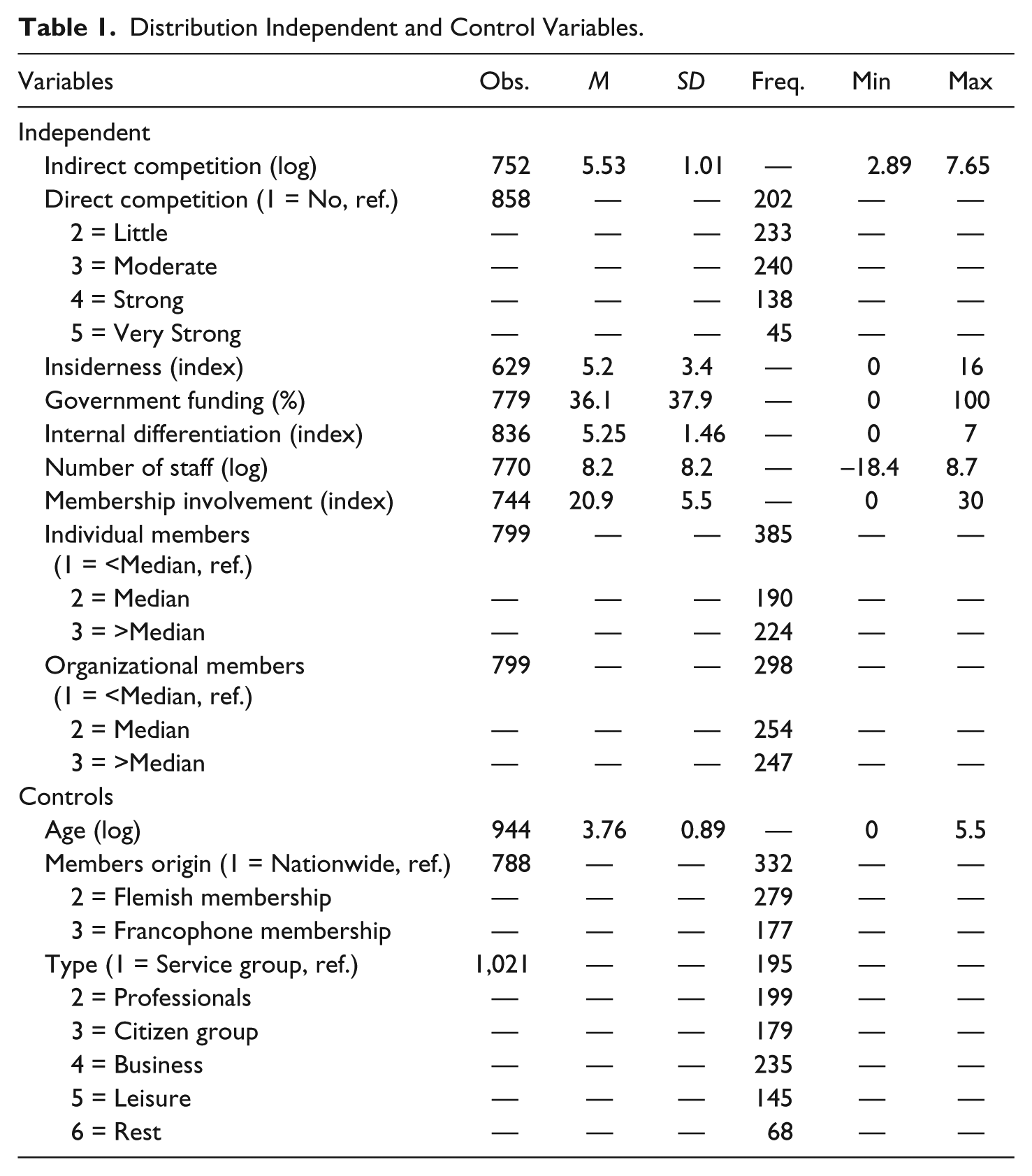
The dependent variable for this article is mortality anxiety, which is the perception by the leadership that the very existence of their organization is challenged. More precisely, we put forward the following question, replicating the question that was first applied by Gray and Lowery (1997) and also used in a later study by Halpin and Thomas (2012): Sometimes the continued existence of an organization is challenged, for instance by societal changes and challenges. Considering the next five years, what is your estimation of the likelihood that the continued existence of your organization will face a serious challenge?
The responses were coded on a 5-point Likert-type scale ranging from “very unlikely” to “very likely.” For the regression model (see below), we collapsed the two highest and the two lowest categories, resulting in a variable consisting of three categories (very unlikely/unlikely, neither likely nor unlikely, likely/very likely).
Group density, our proxy for indirect competition, was measured based on the following question: “Which (policy) areas is your organization involved in?” In total, we identified 26 policy domains and for each domain we established the number of organizations that indicated to be active in these domains; this measure of group density is frequently used as an indicator of competition (Berkhout et al., 2015; Lowery & Gray, 2015). As the distribution of this measure is right-skewed (Pearson’s coefficient of skewness γ1 = 1.00), we logarithmically transformed this measure. To measure the degree of direct competition we asked, “In general, how much competition from like-minded organizations does your organization experience when attracting members, donations and subsidies?” The answer possibilities included five categories on a Likert-type scale, ranging from “no competition” through “very strong competition.” A large number of groups claimed to face “no competition” (24%) or “low competition” (27%), while 28% reported “average competition,” 16% “strong competition,” and 5% “very strong competition.”
The degree to which civil society organizations are political insiders was gauged with the following two questions. First, we asked, “During the last 12 months, how often has your organization been involved in any of the following activities?” The answer options included the following: (1) “responded to open consultations,” (2) “served on advisory commissions or boards,” and (3) “presented research results or technical information to policy-makers.” The second question asked how often policy-makers initiated contact with their organization. For these four variables, respondents could choose between five categories. 2 As the polychoric ordinal α indicates a high reliability score of .85 (Gadermann, Guhn, & Zumbo, 2012), we summed to four variables to create a scale which ranges from 0 to 16. We have considerable variation in insiderness. For instance, 19% of our respondents were “never” contacted by policy-makers, 43% “once per year,” while 23% “once every 3 months,” and 16% were “regularly” contacted (once per month or more).
To measure the dependency on funding from regional, national, and European governments, we included a variable indicating which percentage of the budget originates from public funding. Also with respect to this variable, we observe substantial differences; 39% does not receive any public subsidies, 25% depends for less than half of their budget on government funding, and for 36% of the surveyed organizations public subsidies represent the majority of their financial resources.
As clarified above, we have three hypotheses referring to the internal institutionalization of civil society organizations. The first of these hypotheses (H5) assesses the effect of professionalization, which we examine by taking into account the level of internal differentiation and the amount of staff an organization employs. A first feature involves the internal organizational differentiation and the extent to which organizations install specialized units. For this purpose, we constructed a scale based on the following question: “Does your organizations have any of the following: (1) a president, (2) secretary general/managing director, (3) executive committee, (4) written rules/constitution, (5) committees competent for specific tasks, (6) general assembly, (7) judicial experts?” The different items are dichotomous (polychoric ordinal α = .85). In addition, to measure the number of staff the organization employs, we asked: “How many paid staff (full time equivalent), does your organization employ?” As the quantile-quantile plot reveals that the distribution of this measure is rightly skewed (γ1 = 0.27), the variable was logarithmically transformed.
Second, as for membership size, respondents were asked to indicate the size of the organizational membership (in one of eight categories). 3 However, one cannot simply compare the individual membership of labor unions with the company membership of business associations. Therefore, a categorical indicator was created that classifies membership size for two different membership types, namely, individuals, on the one hand, and, organizations (such as companies, institutions, and other civil society organizations), on the other hand. Specifically, there are two categorical variables with three sets of equally sized categories, distinguishing groups with a low, medium, and high amount of members, taking into account the distribution between these two membership types (see Fraussen & Beyers, 2016 for a similar approach).
Third, to measure membership involvement, we constructed a scale based on the following question: “How important are your members for the following activities?” These activities included the following: (1) “helping to influence public policy,” (2) “providing ideas about your organization’s campaigning strategies,” (3) “identifying problems or providing ideas about your organization’s activities,” (4) “providing evidence of support from affected members or concerned citizens,” (5) “running local groups or branches,” and (6) “generating income for the organization.” The responses were coded on a five-point Likert-type scale, which were added to form a scale (polychoric ordinal α = .71). 4
We add three control variables, organizational age, region, and organization type. 5 As regards age, studies have demonstrated a “liability of newness,” as younger organizations tend to die at a higher rate than older ones (Hung & Ong, 2012; Vermeulen et al., 2016). Younger groups may enjoy less extensive networks with other organizations and public authorities, which makes them more vulnerable to environmental shocks, such as the loss of government funding or a decline in membership subscriptions. The distribution of this variable is left skewed (γ1 = −0.73), we therefore logarithmically transformed this variable.
Next, we control for regional differences within Belgium. Belgian civil society consists of groups that are organized at both the federal and the regional levels (more precisely in two linguistic communities; Flanders and Francophone Belgium). Therefore, it is plausible to presume that a specific socio-economic context in a region might affect the mortality anxiety of groups based in that region. To assess regional differences we used a survey question, which gauges the origin of the organizational members. Based on this, we make a distinction between Flemish, Francophone, and nationwide organizations.
Finally, we control for organization type, distinguishing groups that represent businesses or professions from those that claim to represent citizens, or advocacy for public interests. Generally, business groups experience less severe collective action problems as the size of the potential membership is lower and their potential members exhibit rather specific interests, making it easier to supply selective benefits (Dür & Mateo, 2016; Olson, 1965). Therefore, we expect that business groups face lower level of mortality anxiety compared to non-business groups (Halpin & Thomas, 2012). In addition, we expect that different types of citizen groups will vary in their level of mortality anxiety. Some citizen groups adopt a more outspoken advocacy role (for instance, defending the environment or raising public awareness for rare diseases). Other citizen group organizations, which we label as service-oriented groups, fulfill social tasks such as conducting development projects, supporting volunteering work, or organizing health care. We expect the latter segment to experience more mortality anxiety, as they are often involved in short-term projects and their sources of income are frequently more volatile, especially in times of austerity. To distinguish between organization types, coders were asked to classify groups, based on the organization’s website, in a category typology (see Online Appendix; see Fraussen & Halpin, 2016 for a similar distinction between citizen groups).
Results
Figure 1 gives an overview of the dependent variable. Almost half (47%) of the surveyed groups considers the discontinued existence of their organization unlikely, 24% indicated that they experience considerable levels of mortality anxiety, and another 29% of the groups took a position in the middle. Given the established nature of many sampled organizations (they all have a legal entity and operate at the national or regional level), it is puzzling to observe that almost 1 out of 4 groups experiences considerable organizational stress. Many organizations in the sample have existed for quite some time (mean age is 41), have considerable resources (the modal budget ranges between €100,000 and €500,000), and enjoy institutionalized access on a regular basis (52% are consulted once every 3 months or more by policy-makers). Furthermore, many of these associations receive some government funding (25% get up to half of their budget from the government and 36% more than half), whereas several of them have a substantial amount of members (the modal membership is situated between 100 and 1,000 members). Nonetheless, several of these groups experience high levels of mortality anxiety.
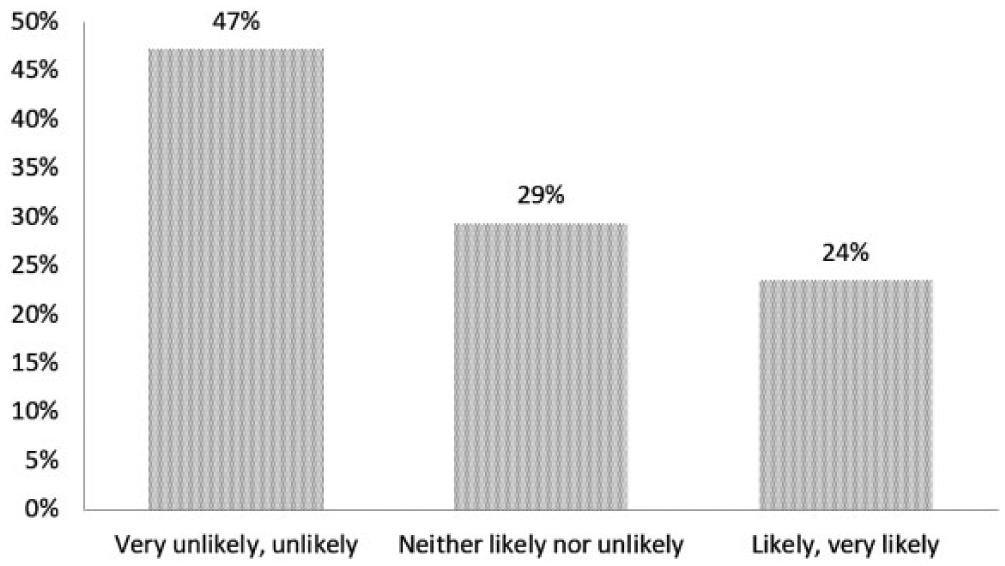
Mortality anxiety (n = 840, percentages).
How do these results compare to earlier research on mortality anxiety? Previous studies have focused on polities that are traditionally seen as more pluralist, such as the United States (Gray & Lowery, 1997) and the United Kingdom (Halpin & Thomas, 2012). Often, group competition is assumed to be rather strong in these pluralist systems, while associational life is seen as more stable and predictable in neo-corporatist political systems (Grote et al., 2008; Schmitter, 1974). Yet, if we consider the results of Halpin and Thomas’ (2012) study, we see that in the case of Scotland 17% of the groups experienced a serious challenge to their survival (compared to 24% in Belgium), while 54% perceived such a challenge as not very likely (compared to 46% of the Belgian groups). For Gray and Lowery (1997), who assessed mortality anxiety among groups in the United States, we observe that, respectively, 14% and 17% considered such an existential crisis “very likely” or “likely,” while 69% did not report any mortality anxiety. Compared to these results, mortality anxiety is rather high in Belgium, contradicting the expectation the neo-corporatist systems would be characterized by a more stable civil society.
Table 2 presents the results of an ordinal logistic regression (proportional odds model) in which we analyze the likelihood that civil society organizations consider the extinction of their organization as “very likely” or “likely” (compared to “unlikely”) within the next 5 years. 6 Given that the answer categories are ordered, an ordinal logistic regression is more appropriate compared to a multinomial logistic regression (Hosmer & Lemeshow, 2000, p. 288). Before looking at our specific hypotheses, we briefly present the effects of the control variables. It is noteworthy to mention that age does not affect mortality anxiety; nor do we find an effect for regional differences. While the liability of newness is often linked to organizational death and Gray and Lowery also confirmed this expectation for mortality anxiety, our results are similar to those of Halpin and Thomas (2012), who demonstrate that age is not an important factor. As regards group type, we find that, compared to service-oriented organizations, citizen groups that focus more on policy advocacy are significantly less likely to experience higher levels of mortality anxiety. As explained above, one reason for this may be that service-oriented organizations are often involved in short-term projects and that their sources of income might therefore be more volatile, even more so in times of austerity.
Predicting Mortality Anxiety (Ordinal Logistic Regression).
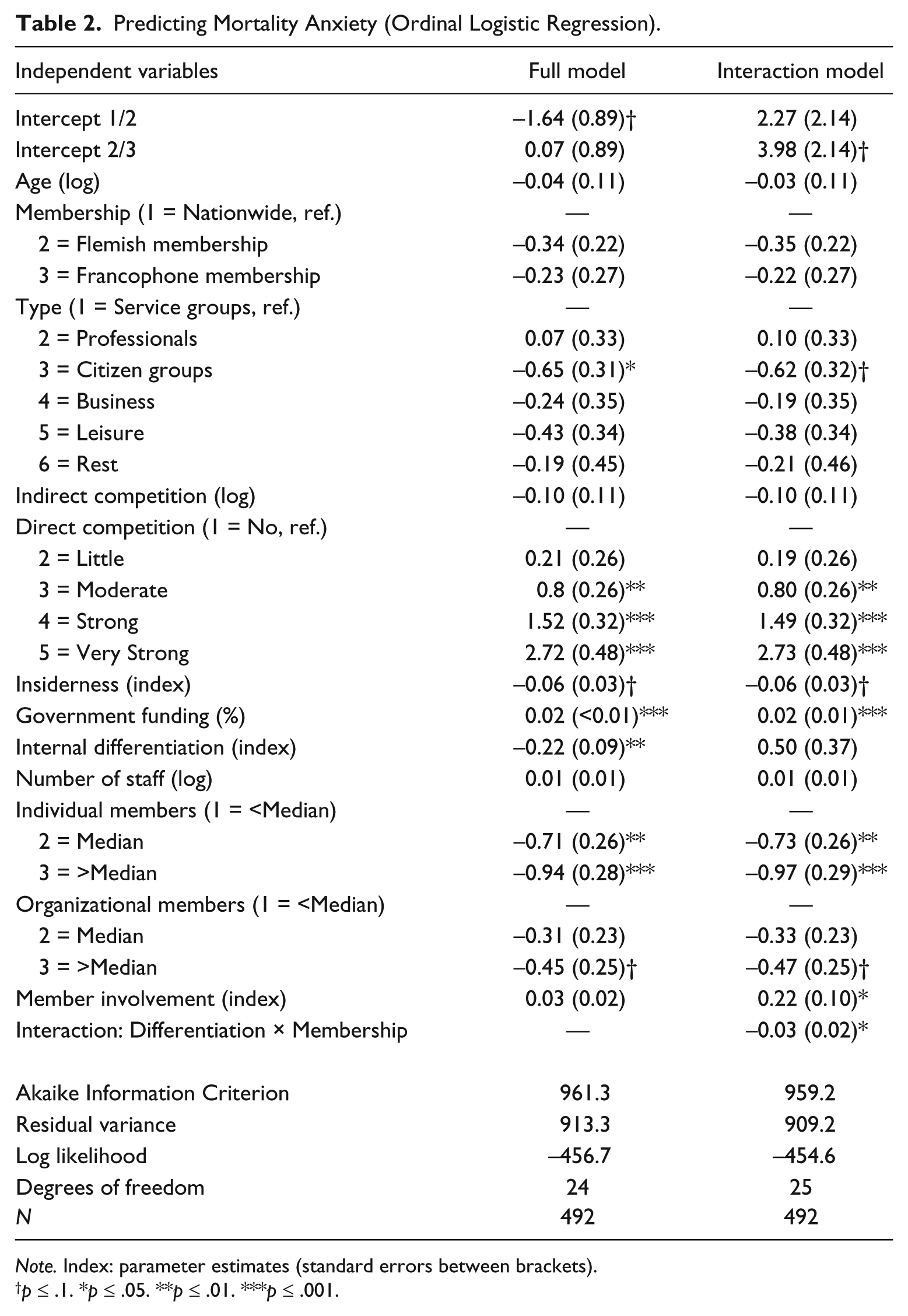
Note. Index: parameter estimates (standard errors between brackets).
p ≤ .1. *p ≤ .05. **p ≤ .01. ***p ≤ .001.
With respect to competition (Hypotheses 1 and 2), the model demonstrates that civil society organizations that are confronted with high levels of mobilization by other groups in their area of interest are not more likely to show mortality anxiety. Note that the correlation between this measure of indirect competition based on density and our indicator of direct competition is significant yet rather low (r = .09, p = <.0171). This means that what population ecologists refer to as indirect competition does not affect mortality anxiety. Yet, the measure of direct competition strongly predicts mortality anxiety, meaning that high levels of perceived competition correspond with increased fear of organizational disbandment. When going from 1 (“no competition”) to 5 (“very strong competition”), the odds of reporting mortality anxiety are 15 times greater, given that all other variables are held constant (see Figure 2). 7
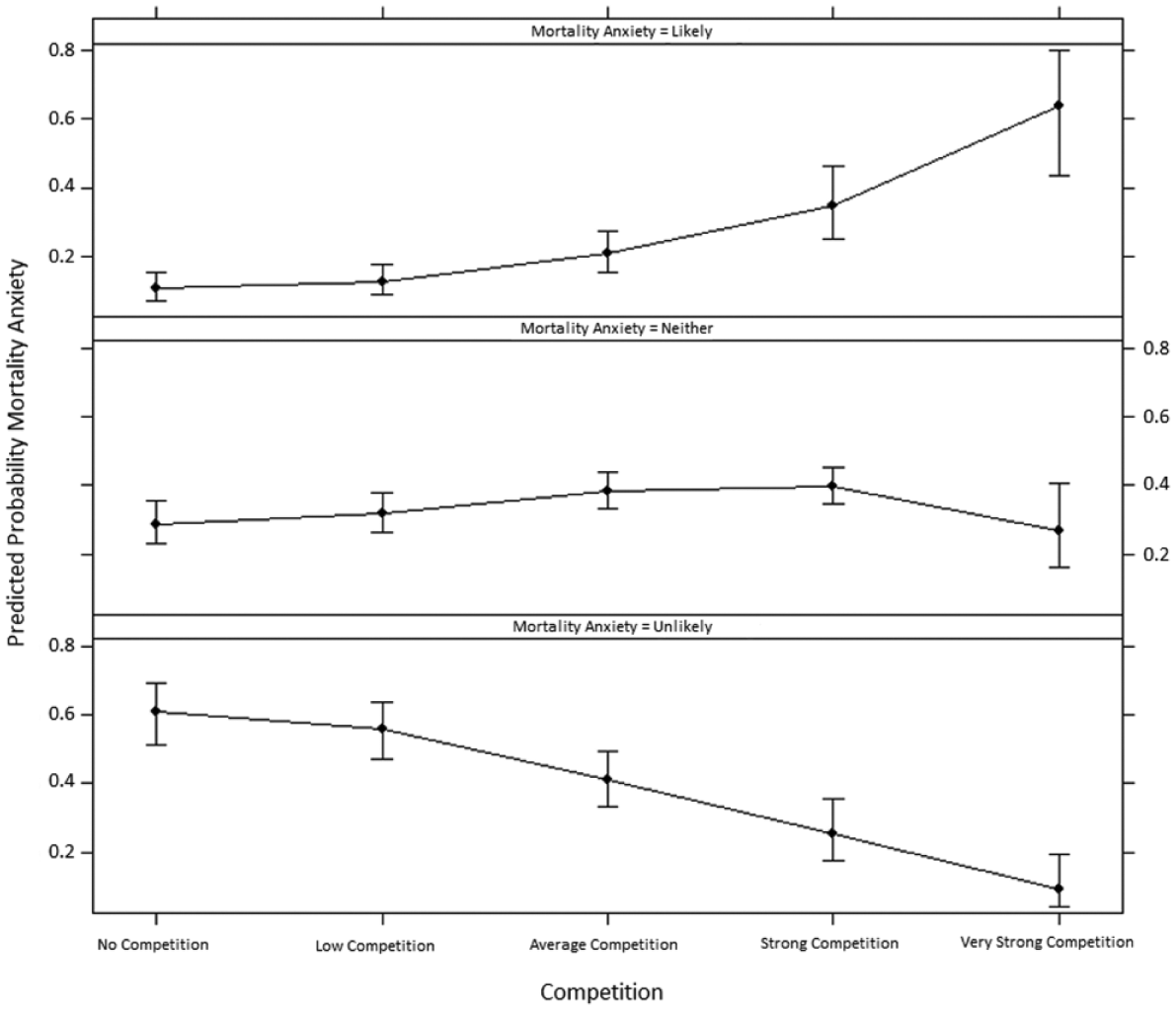
Predicted probability of mortality anxiety for different levels of competition (n = 492).
These results on direct competition demonstrate that mortality anxiety is strongly shaped by how the leadership experiences the broader environment. One key environmental factor for civil society groups are public authorities. To assess the potential effects of ties with public authorities, we focus on the organization’s insiderness and its reliance on government funding (Hypotheses 3 and 4). Civil society groups that develop close relations with policy-makers, and thus are insiders to the political system, do not show substantially lower levels of mortality anxiety, meaning that we have to reject Hypothesis 3. In contrast, a group’s financial dependence on government support has clear implications for mortality anxiety (Hypothesis 4). As Figure 3 shows, at very high levels of government funding (>70% of the budget), the expected probability of facing mortality anxiety is higher than .30. Groups that do not rely on government funding, or for whom this source of income represents only a small portion of their budget, are significantly less likely to experience mortality anxiety. This clearly indicates that the leadership perceives organizational survival as more precarious when the dependence on government funding is high.
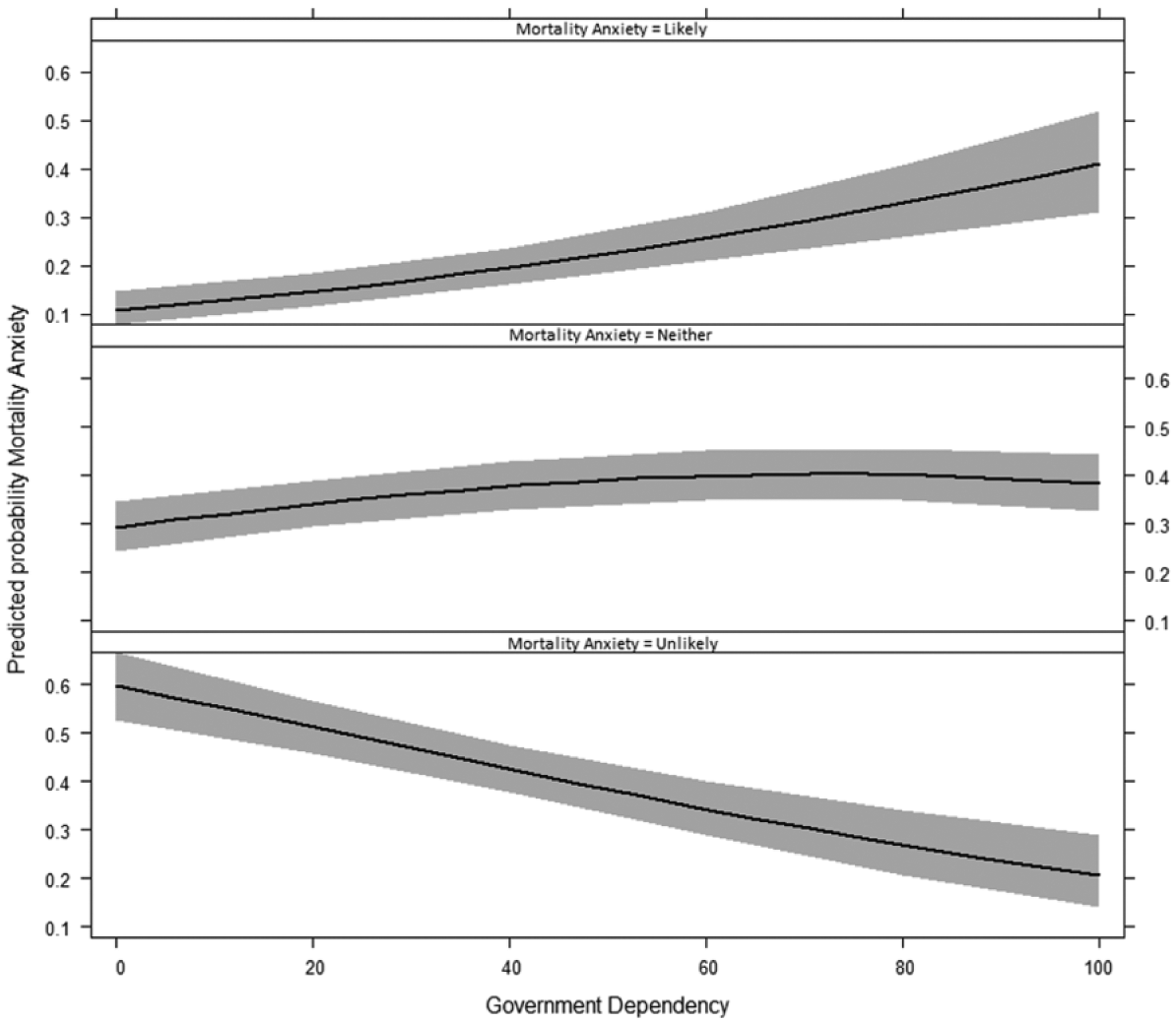
Predicted probability of mortality anxiety for different levels of government funding (n = 492).
Finally, we address the effects of professionalization, membership size, and member involvement (Hypotheses 5, 6, and 7). To begin, organizations that have adopted a differentiated structure—our first indicator to test Hypothesis 5—show lower levels of anxiety. Yet, employing more staff—our second indicator to test Hypothesis 5—does not significantly decrease anxiety. Hence, what seems to matter more for managing mortality anxiety is not so much the absolute number of staff but rather the internal allocation of the available human resources. Next, we observe relevant effects of membership size. In particular, civil society groups with more individual members are less likely to demonstrate mortality anxiety compared to groups that have fewer or no members. While the coefficients indicate a similar effect for civil society groups with organizational members, the differences are not statistically significant. Finally, the membership involvement index does not generate a significant effect, which in itself is a very relevant finding. Although a larger membership seems to decrease mortality anxiety, actively mobilizing, involving, supporting, or informing a constituency appears to have no direct impact on mortality anxiety.
We also examined whether the effect of membership involvement on mortality anxiety varies across different levels of organizational differentiation (Interaction Model in Table 2). Do groups that intensely involve their members need a more differentiated structure in order to adequately manage the organization? If so, groups with high levels of membership involvement that lack a robust organization will demonstrate higher levels of mortality anxiety. Indeed, our analysis indicates that the effect of membership involvement depends on the extent to which a group has adopted a differentiated organizational structure (see Figure 4). In other words, organizations that involve their members more, experience higher levels of mortality anxiety when they do not adopt a differentiated structure. This impact of membership involvement decreases, meaning it generates lower levels of mortality anxiety, if organizations adopt a more differentiated structure. The effect of membership involvement flattens out when organizational differentiation is maximized. This is an interesting observation as it demonstrates that organizations may, to some extent, manage their vulnerability by crafting effective organizational structures. While high levels of membership involvement should not be considered detrimental to organizational survival, it may require an adjustment of internal structures and processes.
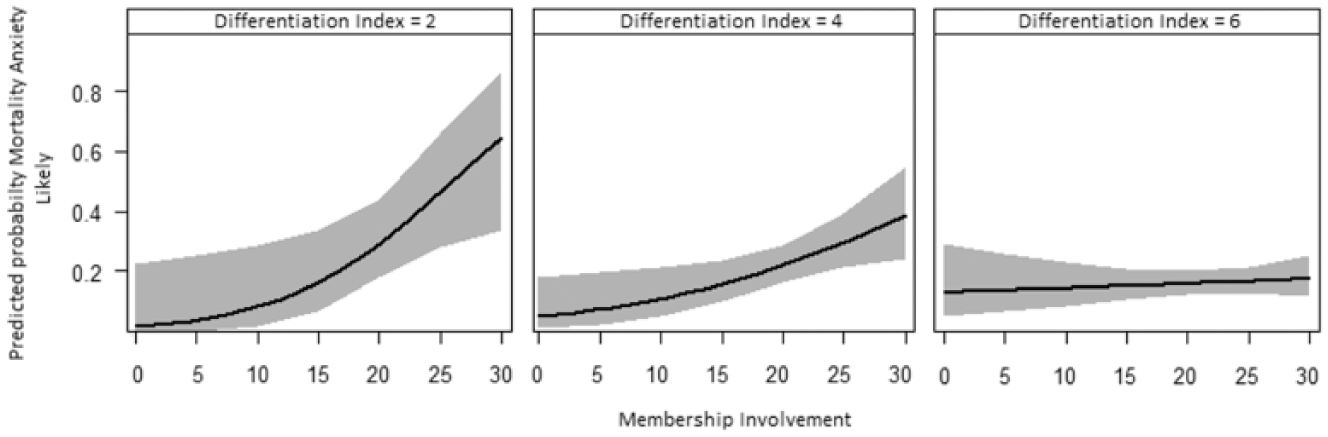
Predicted probability mortality anxiety of the interaction effect between three levels of organizational differentiation and membership involvement (n = 492).
Conclusion
This article started from the observation that there is considerable volatility in populations of civil society groups and addressed the question why some groups experience high levels of mortality anxiety or fear for their continued existence. Understanding mortality anxiety is essential for understanding the dynamics of interest representation. Some work has demonstrated that stress related to organizational maintenance is crucial for explaining the dynamics of organizational populations and advocacy strategies (Dür & Mateo, 2016; Hanegraaff, Beyers, & De Brucyker, 2016). That is, if civil society groups face higher levels of mortality anxiety, indicating their probable disbandment, this may have implications for the balanced or biased nature of interest representation. Furthermore, groups that face high levels of mortality anxiety—and thus fear their continued existence—may adopt less risky advocacy strategies and might spend more energy on organizational matters (such as searching financial resources or prioritizing efforts to maintain their membership), instead of representing the interests of their members in the political arena.
We approached this question from three perspectives, inspired by population ecology, resource dependence theory, and previous work on the internal institutionalization of civil society organizations.
Three results stand out in particular. First, somewhat surprisingly, we found that mortality anxiety among civil society organizations is rather high in Belgium, compared to earlier observations made in pluralist countries (Gray & Lowery, 1997; Halpin & Thomas, 2012). This finding is at odds with the often held—but rarely tested—presumption that inter-organizational competition between civil society groups is lower in neo-corporatist political systems, as government interventions in those countries would lead to a more stable system of interest representation. Our results do not fit well with these expectations and should urge scholars to reconsider the impact of system-level differences on the organizational maintenance of civil society organizations. In that regard, a more direct comparison of mortality anxiety across countries and policy domains would be a promising avenue to take this research agenda forward.
Second, our analysis confirmed that relations with public authorities, more specifically government funding, play an important, albeit ambiguous, role in the well-being of organizations. Although some research has argued that government funding might enhance the survival chances of civil society organizations (Brown & Troutt, 2004; Hager et al., 2004), other work has underlined the perils of financial dependence on public authorities (e.g., Froelich, 1999; Rosenbaum, 1981). The latter findings are in line with our results, as we find that groups that depend strongly on government funding demonstrate higher levels of mortality anxiety. This insecurity is probably even higher in times of austerity, when government funding is more volatile and might be decreased substantially. Another risk connected to government funding is that it may displace private funding from the membership (e.g., the crowding-out hypothesis, see Kim & Van Ryzin, 2014; Nikolova, 2015; Rosenbaum, 1981).
Finally, as regards the internal institutionalization, we find that actively involving members do not decrease mortality anxiety. So echoing the seminal work of Michels (1915) and many others, there could be a tension between internal institutionalization and maintaining a representative nature. However, our findings suggest that a differentiated, more professionalized structure may facilitate membership involvement while also having positive implications for the perceived chances of survival. This is ultimately good news for the representative capacities of civil society organizations.
Our analysis drew theoretical and empirical inspiration from related research on the survival, maintenance, and disbanding of civil society organizations. Although one has to bear in mind possible differences between mortality anxiety and actual organizational disbandment (Hager et al., 2004; Hung & Ong, 2012; Lecy & Searing, 2015; Vermeulen et al., 2016), we believe that analyzing mortality anxiety enables a more fine-grained understanding of organizational stress, as it identifies factors that might not show up on a postmortem examination. For instance, while research shows that larger and older organizations are expected to be less subject to disbandment, our analysis suggests that these factors matter less when organizational leaders themselves assess their survival chances (even though we find significant effects for membership size). In our view, the relation between actual disbanding and mortality anxiety could go in two directions. On the one hand, anxiety could lead to an increased propensity of organizational failure implying a positive relation between anxiety and actual disbandment. However, on the other hand, anxiety could elicit either a “fight” response or a more cautious approach, which could actually prevent disbandment and prolong the life of the organization. To increase our knowledge of the link between mortality anxiety and organizational maintenance, future work would benefit from examining these organizational responses and their relation with survival more closely.
Supplemental Material
Online_Appendix – Supplemental material for Live to Fight Another Day? Organizational Maintenance and Mortality Anxiety of Civil Society Organizations
Supplemental material, Online_Appendix for Live to Fight Another Day? Organizational Maintenance and Mortality Anxiety of Civil Society Organizations by Frederik Heylen, Bert Fraussen and Jan Beyers in Nonprofit and Voluntary Sector Quarterly
Footnotes
Acknowledgements
An earlier version was presented at the 2016 ECPR General Conference in Prague. We would like to thank participants for their feedback and suggestions. We are also grateful to the three anonymous reviewers and the journal editor for their useful comments, which substantially improved our argument.
Declaration of Conflicting Interests
The author(s) declared no potential conflicts of interest with respect to the research, authorship, and/or publication of this article.
Funding
The author(s) disclosed receipt of the following financial support for the research, authorship, and/or publication of this article: The research reported in this paper was funded by grant from the European Research Council (ERC-2013-CoG 616702-iBias) and the Research Foundation-Flanders (G032814N).
Notes
Supplemental Material
Supplemental material for this article is available online.
Author Biographies
 .
.
References
Supplementary Material
Please find the following supplemental material available below.
For Open Access articles published under a Creative Commons License, all supplemental material carries the same license as the article it is associated with.
For non-Open Access articles published, all supplemental material carries a non-exclusive license, and permission requests for re-use of supplemental material or any part of supplemental material shall be sent directly to the copyright owner as specified in the copyright notice associated with the article.
