




Abstract
Objectives
Engagement in learning new skills can potentially foster cognitive and functional growth among low-income Latinos, a population at high risk for developing Alzheimer’s disease and related dementias. However, they may face unique barriers to learning. The present qualitative study identified learning barriers, learning engagement, and learning interests among low-income Latino older adults.
Methods
Twenty Spanish-speaking participants were interviewed utilizing a semi-structured interview protocol. The data were analyzed using a thematic analysis approach.
Results
Some of the identified barriers include lacking good health, finances, learning opportunities, technology, proficiency in English, transportation, and motivation. Participants were most interested in learning technology, English, sewing skills, and culinary arts to primarily improve their financial situation.
Discussion
These findings highlight the privilege of prioritizing leisure activities for novel skill learning in old age for those with more financial resources. Our findings promote the need to provide tailored novel skill learning opportunities for underserved populations.
Introduction
Current cognitive health disparities in the United States between minoritized and majority older adults show that Latinos are 1.5 times more likely than Whites to have Alzheimer’s disease and related dementias (ADRD; Alzheimer’s Association, 2020). Disparities in cognitive health are of particular concern among the Latino population as it is anticipated that, by 2060, they will experience the greatest increase in ADRD in contrast to other races/ethnicities (Matthews et al., 2019). Despite awareness of these disparities, there is a surprising dearth of research investigating how to improve cognitive and functional abilities among Latinos and minoritized adults in general (Tzuang et al., 2018). Therefore, there is an urgent need to address this gap with Latino older adults, especially those with low income. The stress and access limitations (e.g., health care) of having low financial resources may further compromise their cognition and ability to engage in healthy lifestyles (McMaughan et al., 2020).
Engagement in novel skill learning offers a promising route for inducing cognitive and functional development in adulthood (Leanos et al., 2023; Nguyen et al., 2020; Park et al., 2014). Novel skill learning can be understood as the process of gaining content/procedural knowledge regarding any given new skill with the goal of mastering it (Sheffler et al., 2022). Several learning interventions conducted with older adults (primarily middle-to-high income Whites) have demonstrated that learning new skills can increase a range of cognitive abilities (e.g., executive functioning) as well as functional abilities related to the learned skills (Bugos et al., 2007; Bugos & Wang, 2022; Chan et al., 2016; Leanos et al., 2023; Park et al., 2014). For example, Chan et al., (2016) conducted a 3-month intervention where older adults learned to use technological devices (e.g., tablets) and found that, in contrast to 2 comparison control groups (a placebo and social group), those who learned to use tablets demonstrated increases in episodic memory and processing speed. On the functional side, learning technological skills as older adults is useful in facilitating independence in doing day-to-day activities such as accessing online banking and ordering online groceries (Chan et al., 2016; Charness & Boot, 2009).
Based on the benefits associated with learning new skills in older adulthood, Rodriguez et al. (2022) proposed a framework that states how engagement in novel skill learning could serve as a potential pathway to helping low-income minoritized older adults increase their cognitive and functional abilities and, in turn, foster healthy aging. However, this novel pathway has yet to be tested with low-income minoritized adults, partially because there might be learning barriers present among these populations. The framework specifically describes that the potential learning barriers one must consider that individuals could face can be categorized across 3 types of barriers: (1) indirect learning barriers, which indirectly influence a person’s ability to feasibly engage in learning a new skill, such as time and health status; (2) direct learning barriers, which directly relate to learning any given skill, such as materials, tools, and information; and (3) learning motivation barriers, which include mental/psychological reasons and/or perceptions that hamper an individual’s drive to engage in learning (Rodriguez et al., 2022). Learning new skills is considered an important privilege because not everyone has access to the resources that are required to engage in learning new abilities (Wu et al., 2021). Low-income Latino older adults in particular may face unique barriers and challenges, compared with other minoritized groups. For instance, some individuals in this ethnic group might experience language barriers if they primarily speak Spanish and lack proficiency in English, which has been linked with a lower use of services (Barrio et al., 2003). Also, the Latino population has one of the highest immigration rates in the United States (Budiman, 2020; Israel & Batalova, 2020), and as such, they might undergo further resource constraints due to potential immigration challenges (e.g., marginalization, fear of deportation for those undocumented, and acculturation stress; Hacker et al., 2015; Torres et al., 2012). Moreover, Latino individuals have some of the lowest levels of educational attainment compared to other racial/ethnic groups (Budiman, 2020; Duffin, 2021; Schneider et al., 2006). Thus, identifying and addressing their direct and indirect learning barriers and interests is key to encouraging and increasing feasibility and engagement in novel skill learning with the goal of improving cognitive and functional abilities.
The present study identified the resource barriers and perceived challenges to novel skill learning faced by low-income Latino older adults. This study also investigated their learning interests and current engagement in novel skill learning. These objectives are meant to inform ongoing learning programs and help create tailored learning interventions that adequately address resource needs and learning interests in this underserved population. Identifying learning barriers and needs to help generate tailored learning opportunities for older adults at risk of developing ADRD is a crucial step toward mitigating the cognitive health disparities that affect these individuals. As opposed to conducting a comparative study, the presented research takes on a within-group, qualitative approach to better understand potential inequities and diversity of experiences within low-income Latino older adults.
Method
Participants
Participants were recruited via word-of-mouth and English/Spanish flyers, and they were informed about study procedures and screened to qualify. Participants had to (a) identify as Latino, (b) be at least 55 years of age or older (based on qualification for senior benefits), (c) have a low income (calculated using the Pew Research Calculator, which takes into account the cost of living within one’s area and size-adjusted household income to determine one’s income tier; Fry, 2024), (d) be Spanish/English speakers, (e) have no prior diagnosis of cognitive impairment, and (f) have access to an email address (to receive compensation). Participants were compensated with a $60 e-gift card from either Amazon or Target (based on their preference) given that the study was conducted entirely remotely. Notably, university regulations required compensation via Amazon or Target e-gift cards, but participants strongly preferred cards for local, low-cost stores. Ethical approval was granted by the Institutional Review Board (IRB) at the University of California, Riverside (HS 21-121).
Procedure and Materials
Participants completed a semi-structured interview (audio-recorded via Google Voice) and a demographics survey, lasting approximately 1.5 hours. The interviews were conducted by the first author, a Latina student who emigrated from Mexico and whose native language is Spanish. The interview protocol included questions (see Supplementary Appendix A) that prompted participants to discuss their experiences with and access to different (indirect and direct) learning resources, learning engagement and interests, and perceived challenges or impediments to learning new skills, subjective age, and beliefs about the existence of any age caps/limits to learning. The questions were created using the Rodriguez et al., (2022) framework. All 20 interviews were conducted in Spanish due to participants’ preferred language. Data collection concluded once saturation was established (Brod et al., 2009), as there were no more nuances in the participants’ responses by the time we reached 20 interviews.
Qualitative Data Analyses
The audio-recorded semi-structured interviews were transcribed in Microsoft Word by a team of 3 bilingual research assistants who spoke Spanish as their first language. The transcripts were then checked for accuracy by comparing the written documents to the audio recordings by the first author.
The collected qualitative data from the interviews were analyzed primarily utilizing a deductive thematic analysis approach (Bingham & Witkowsky, 2022; Boyatzis, 1998; Braun & Clarke, 2006). Deductive thematic analysis involves developing a set of predetermined coding schemes based on prior theory to identify the presence of such codes in the data when searching for themes. With a deductive approach as the basis, we also used an inductive approach to incorporate new themes/codes that emerged from the data. The data were analyzed via the following steps: (1) familiarization with the data transcripts, (2) generation of codes, (3) formulation of themes and categorization of codes under each theme, (4) revision of the themes, (5) selection of final themes, and (6) production of the final report (Braun & Clarke, 2006).
To address the first part of our study goal (identify resource barriers and perceived challenges to novel skill learning among our sample), we generated a coding scheme using the aforementioned theoretical framework proposed by Rodriguez et al. (2022). Following this framework, we identified the presence/absence of barriers to learning across participant responses. On a spreadsheet, participant answers were organized in individual cells according to each question included in the interview protocol. Cells were color-coded to denote barriers in each of their answers: red for “present barrier” or green for “absent barrier.” Next, we labeled each of our codes to create a codebook of identified barriers, and we categorized each set of barriers by type as defined by our guiding framework (indirect, direct, and motivation barriers; Rodriguez et al., 2022). Found themes were grouped under each category.
To address the second part of our study goal, we focused on responses regarding participants’ current learning engagement, learning interests, reasons for such interests, perceived benefits of learning, and learning format preferences. For current learning engagement, answers were color-coded using the red/green binary coding scheme: red for “not learning” and green for “currently learning.” For the remaining questions related to learning interests/benefits/preferences, a codebook was created based on the common patterns derived from participants’ responses across each topic, and themes were generated accordingly. We provide the percentage of participants with mentions associated with the themes that emerged from our analysis as a guide. The percentages provided should not be interpreted as population estimates.
To ensure reliability of the analyses, the interviewer and three trained research assistants independently analyzed the data using the generated coding scheme. The analysis team discussed their independent analyses and any additional codes/themes found. There was high interrater reliability based on the identified codes/themes (average k = 0.83; Cohen, 1960).
Results
Sample Characteristics
Participants’ Demographic Information.
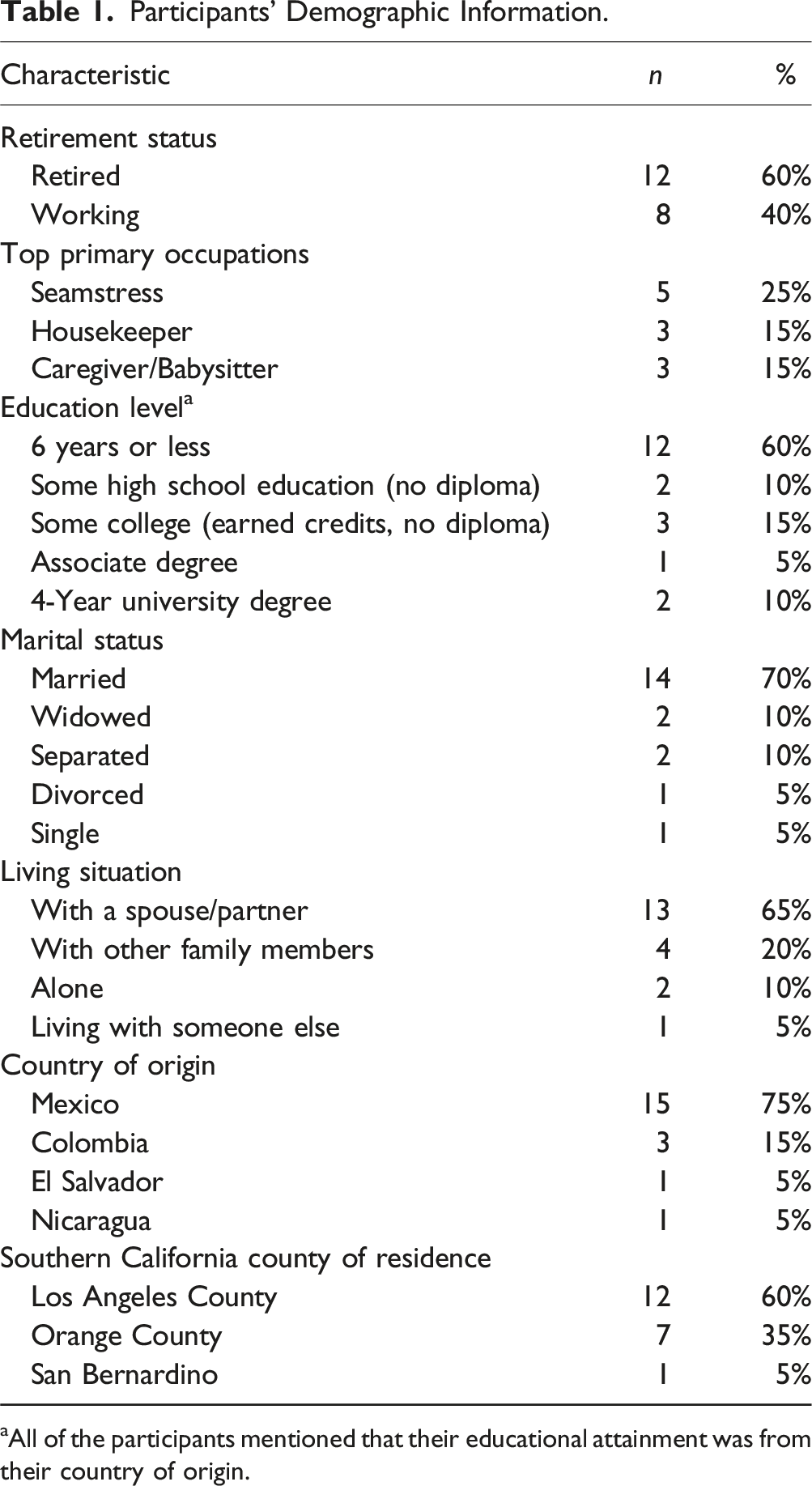
aAll of the participants mentioned that their educational attainment was from their country of origin.
Learning Barriers
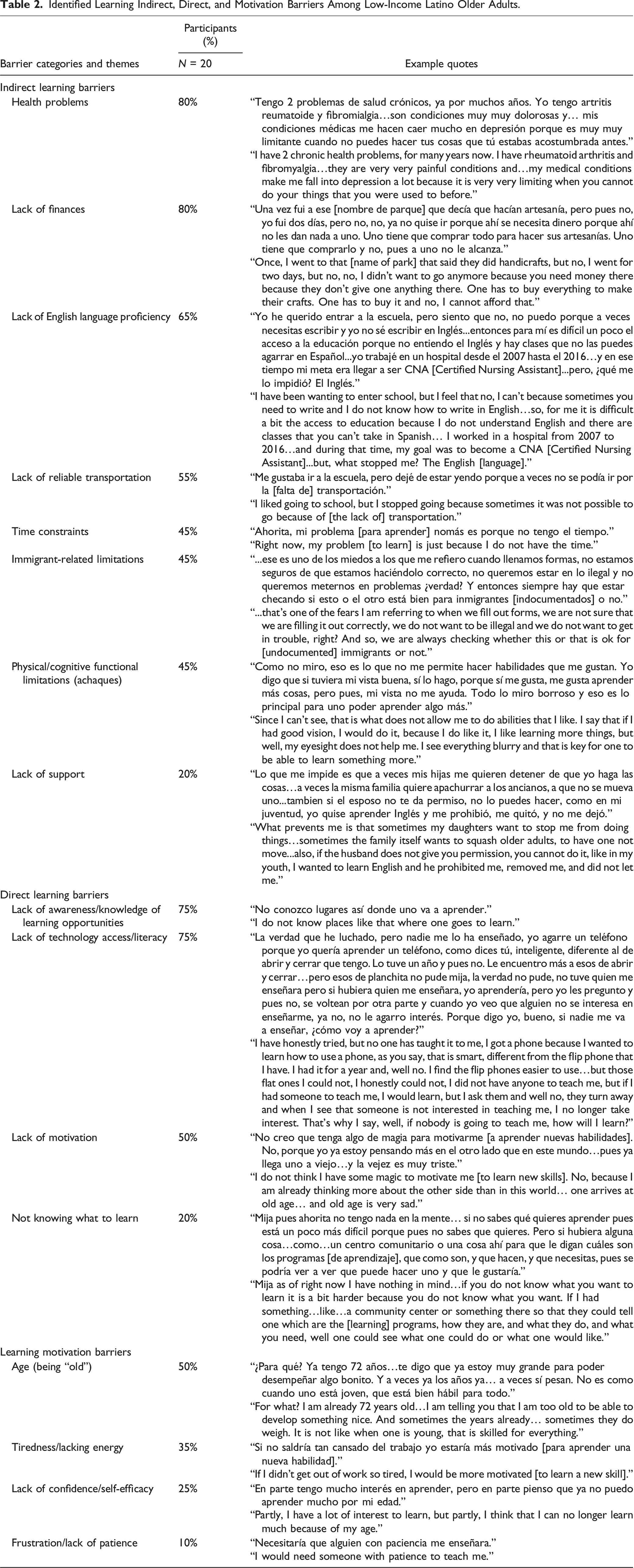
Identified Learning Indirect, Direct, and Motivation Barriers Among Low-Income Latino Older Adults.
Indirect Learning Barriers
Eight indirect learning barriers were identified that can act as precursive impediments to learning engagement.
Health Problems
A large percentage of participants (80%) reported having physical and/or mental health issues. Participants described how some of their conditions negatively affected their daily living due to having pain that physically and mentally constrained them, leaving them with no energy to do other things. Health issues act as a barrier to learning if the physical and mental energy of individuals to engage in learning is compromised as a result of chronic pain and/or mental health problems.
Lack of Finances
Eighty percent of the participants also described facing financial struggles and lacking monetary resources which made it a barrier for them to afford and pay for different basic needs. Indeed, some participants were still working past retirement because they did not have enough money (even when they were receiving social security funds). Participants specifically noted their lack of finances as a barrier to affording materials/tools and class fees for engaging in learning new skills. Some described instances when they wanted to engage in learning a new ability but, because they lacked the money to pay for the required tools and materials, they had to give it up. Another participant noted that they sometimes tried to save money so that they could pay for a class, yet there were always other priorities over learning that led them to spend that money in other ways (e.g., fixing something in their home).
Lack of English Language Proficiency
Language was another common barrier, as several participants (65%) mentioned that not knowing English with enough proficiency had presented challenges to communicating and understanding service providers when attempting to seek information or resources. Participants specifically noted that their lack of English prevented them from partaking in learning programs. A participant shared that not knowing how to write in English was a barrier for them to receive more education and to find a better job.
Lack of Reliable Transportation
Not having reliable transportation was a barrier for 55% of participants in the study. Unreliable transportation was classified as anything other than owning their own vehicle or having reliable access to transportation. Most of the participants who did not have their own vehicle reported that they depended on family members, close friends, or neighbors to drive them around to get groceries, get to their job, go to medical appointments, etc. Alternatives to family members/close friends included walking, bicycling, and taking the bus (or Uber for some). Relying on these methods for transportation was described as difficult and limiting. Some participants shared that not having their own car prevented them from taking classes.
Time Constraints
Forty-five percent of participants expressed facing time constraints due to working, babysitting grandchildren, taking care of their spouse or other family members, completing house chores/duties, and partaking in church-related activities (e.g., reading the Bible, attending mass, and making visits to members of the church). These responsibilities left them with limited time to engage in other activities, and several mentioned it was a primary barrier for them to learning.
Immigrant-Related Limitations
In terms of accessibility of resources in their community, 45% of participants described that being an immigrant (or undocumented) limited them. One participant shared that he and his wife were sometimes scared of seeking resources and filling out paperwork that might not apply to them due to their undocumented status because they did not want to get in any trouble. This immigration-related fear could discourage undocumented Latino older adults from enrolling in learning opportunities even when situations would be safe.
Physical/Cognitive Functional Limitations (“Achaques”)
Aside from the health-related problems described earlier, participants (45%) also expressed experiencing age-related physical and/or cognitive declines, as well as aches and pains (“achaques de la vejez/de la edad” in the Latino culture). This theme differs from the health-related problems theme in that it includes physical/mental declines and pains that are not linked to any particular disease or medical condition but rather related to the normative physiological process of getting older. These declines and achaques were noted as potential challenges to learning new skills, such as memory and vision problems, not being able to walk very well, back pain, and knee pain. In particular, lack of vision seemed to be a common problem that participants felt impeded them from learning.
Lack of Support
Although most participants shared that they would likely receive support from family members, friends, etc., if they wanted to learn new skills, 20% said that they did not think that they would receive support in this way. One participant mentioned that his support network would think that he was too old to engage in learning: “Me dirían ‘no pues ya estás viejo’...por eso, no me apoyarían” (“They would say ‘no, you are already old’...that’s why, they would not support me”). Another participant said that she thought that her daughters would not support her to learn new skills because they tend to stop her from doing things in general due to her being an older adult.
Direct Learning Barriers
Four direct learning barriers were identified relating to knowledge/awareness of available learning opportunities, technology accessibility and/or literacy, motivation to learn, and knowing what to learn.
Lack of Awareness/Knowledge of Learning Opportunities
One of the most frequently described direct barriers to learning was lack of awareness/knowledge of learning opportunities in their community. Altogether, 75% of participants said that they did not know of any places where they could go to learn a new skill.
Lack of Technology Access/Literacy
Another top direct learning barrier was lack of technology access and literacy, as 75% of participants reported not having access to technology (e.g., computers, smartphones, tablets, and internet) or not knowing how to use technological devices even if they had them available at home. For participants with smartphones, they mentioned primarily using them just to make phone calls because they did not understand how to navigate the other features on their phone. A common phrase used across participants was, “Mi teléfono es inteligente, pero yo no” (“My phone is smart, but I am not”). Furthermore, some participants mentioned having a flip phone because they could not afford a smartphone or because they did not feel comfortable having a more advanced phone. One participant indicated that they tried using a smartphone for a while but decided to go back to using a flip phone because she could not learn how to use it and there was no one willing to teach her.
Lack of Motivation
The third most common direct learning barrier found across 50% of participants was lack of motivation to learn a new skill. When participants were prompted to talk about their motivation to learn, several discussed that they did not feel motivated at all or that they had low motivation to do so. Participants gave specific reasons for feeling unmotivated/lacking motivation, which are described and broken down into themes under the learning motivation barriers section further below.
Not Knowing what to Learn
In addition to the aforementioned barrier of not knowing where to go to learn, 20% of participants noted that they did not know what to learn. These participants had trouble thinking about what they would be interested in learning when asked to discuss their learning interests. Some of the participants indicated that they had nothing in mind regarding what they would want to learn and that they would have to see what options are available in order for them to choose what would be interesting for them. One participant mentioned that he would benefit from having a community center where he could go and be provided with guidance on class options he could take.
Learning Motivation Barriers
A total of 4 themes relating to learning motivation barriers were extracted from the data. These themes were derived from participants’ descriptions of what they perceived to be the reasons/barriers that hampered their motivation to engage in learning new skills. Although a lot of the barriers already described can negatively affect learning motivation, participants noted the following barriers as specifically impacting their learning motivation.
Age (Being “Old”)
Half of the participants in the study discussed age as being a reason for their lack of motivation for learning. Some participants stated that at their age, they simply felt that there was no point in learning, and referenced youth as being the life stage to learn. For instance, when asked about their motivation to learn, one participant said: “Tal vez si estuviera un poco más joven, tal vez tendría más motivación” (“Maybe if I was a bit younger, maybe I would have more motivation”).
Tiredness/Lacking Energy
Among those who reported having little to no motivation, 35% stated that being tired and lacking energy to learn new skills contributed to their lack of motivation. Some older adults attributed their tiredness to their age and indicated that they rather rest than engage in learning: “Los viejitos lo que queremos es descansar” (“What we older adults want is to rest”). Those who still worked mentioned that they were too tired from work to have the motivation to learn: “porque trabajo y ya vengo cansada, ya no tengo ánimos de ir a la escuela” (“because I work and I already come home tired, I don’t have the spirit to go to school”).
Lack of Confidence/Self-Efficacy
Lacking motivation to learn was also connected to lacking confidence and having low learning self-efficacy for 25% of the participants. They stated that they did not feel secure/confident in their ability to learn. Some specified that they felt unintelligent or that they simply could not learn easily (e.g., “soy muy burro”/ “I am very dumb”; “no soy fácil de aprender”/ “I cannot learn easily”). Closely related to the theme of age (being “old”), some participants also said they lacked learning self-efficacy due to their age.
Frustration/Lack of Patience
A less frequent but notable barrier mentioned by 10% of participants was experiencing frustration and lacking patience, resulting in reduced motivation to learn. Participants mentioned that they did not have the same patience that they once did and that they get frustrated easily. Participants also mentioned that others were impatient towards them when they wanted to learn. For example, one participant wanted to learn how to use a computer and joined an intergenerational course at a local community college. He felt that he was not patient with himself and that the instructor was not patient with him and with other older adults in the class. The participant expressed feeling demotivated to try again and never went back to any other courses since then.
Learning Engagement and Interests
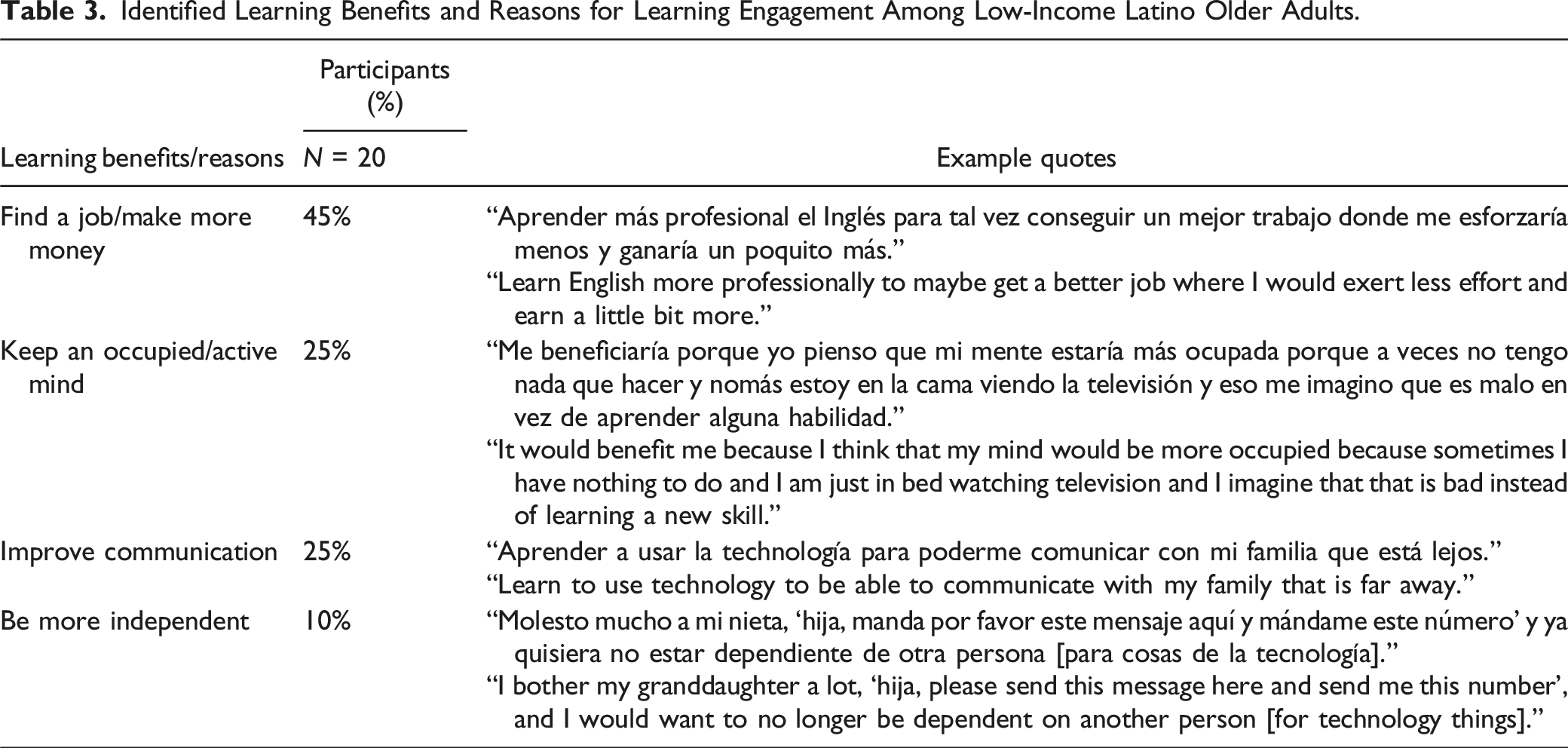
Identified Learning Benefits and Reasons for Learning Engagement Among Low-Income Latino Older Adults.
Skill Learning Interests
Ten skills that participants would have liked to learn were identified. Out of the 10 identified skills, there were 4 main skills of interest that were mentioned by at least 25% of participants. Forty percent of the participants wanted to learn how to use technology, including smartphones, computers, and tablets. The second most frequent skill mentioned by 35% of participants was learning English. Sewing-related skills, such as crocheting and embroidery, were mentioned by 25% of participants, as were culinary skills, including making desserts and gourmet dishes. The other 6 skills were mentioned once each: gardening, floral arts, fixing home appliances, driving, cosmetology, and finance/investing.
Perceived Learning Benefits/Reasons for Learning
Four themes relating to participants’ perceived benefits of/reasons for learning were obtained from the data (see Table 3). Most of the learning reasons described align with the top 4 learning interests (reported in the subsection above).
Find a Job/Make More Money
The main perceived learning benefit/reason indicated by 45% of participants was finding a (better) job and/or making more money. Several participants said that engaging in learning would be something beneficial if it could result in them making more money. For instance, one participant mentioned: “Si yo puedo conseguir algún dinero extra por eso que he aprendido, ¡qué bueno sería!” (“If I can get some extra money because of what I have learned, how good would that be!”). Participants interested in learning to sew mentioned that knowing how to fix or make clothes would be financially rewarding to have “cositas para vender” (“things to sell”). Other participants said that learning English would be advantageous because it would help them find a (better) job, leading to financial gains.
Keep an Active/Occupied Mind
Twenty-five percent of participants said that learning new skills would be overall beneficial for their mind. Participants described that learning would help them have “una mente activa” (“an active mind”) and “la mente más ocupada” (“a more occupied mind”). Some participants said that learning would be great for keeping their mind entertained and not be bored when they have nothing to do: “Aprender sería fabuloso porque está la mente entretenida” (“Learning would be fabulous because the mind is entertained”).
Improve Communication
Another perceived benefit/reason derived specifically from learning English and technology was improved communication, which 25% of participants noted. In terms of learning English, participants said that it would help them communicate better with service providers and medical specialists who only speak English without the need of an interpreter. One participant commented that it would benefit them by enabling them to express themselves and to have “más conversaciones abiertas” (“more open conversations”) with other English speakers. With regards to learning to use technology, participants mentioned that they saw value in learning this skill because it could also improve their long-distance communication with loved ones/family.
Be More Independent
Although less frequent, becoming more independent was also identified as a potential benefit and reason to engage in learning among 10% of participants. In relation to learning English, one participant shared: “Si yo aprendo bien el Inglés, ya no necesito estar con mi hija que me esté ayudando a llevarme al doctor, sería más independiente” (“If I learn English well, I no longer need to have my daughter help take me to the doctor, I would be more independent”). Another participant described that learning technology would also help them not be so dependent on her granddaughter to navigate technology.
Learning Format Preferences
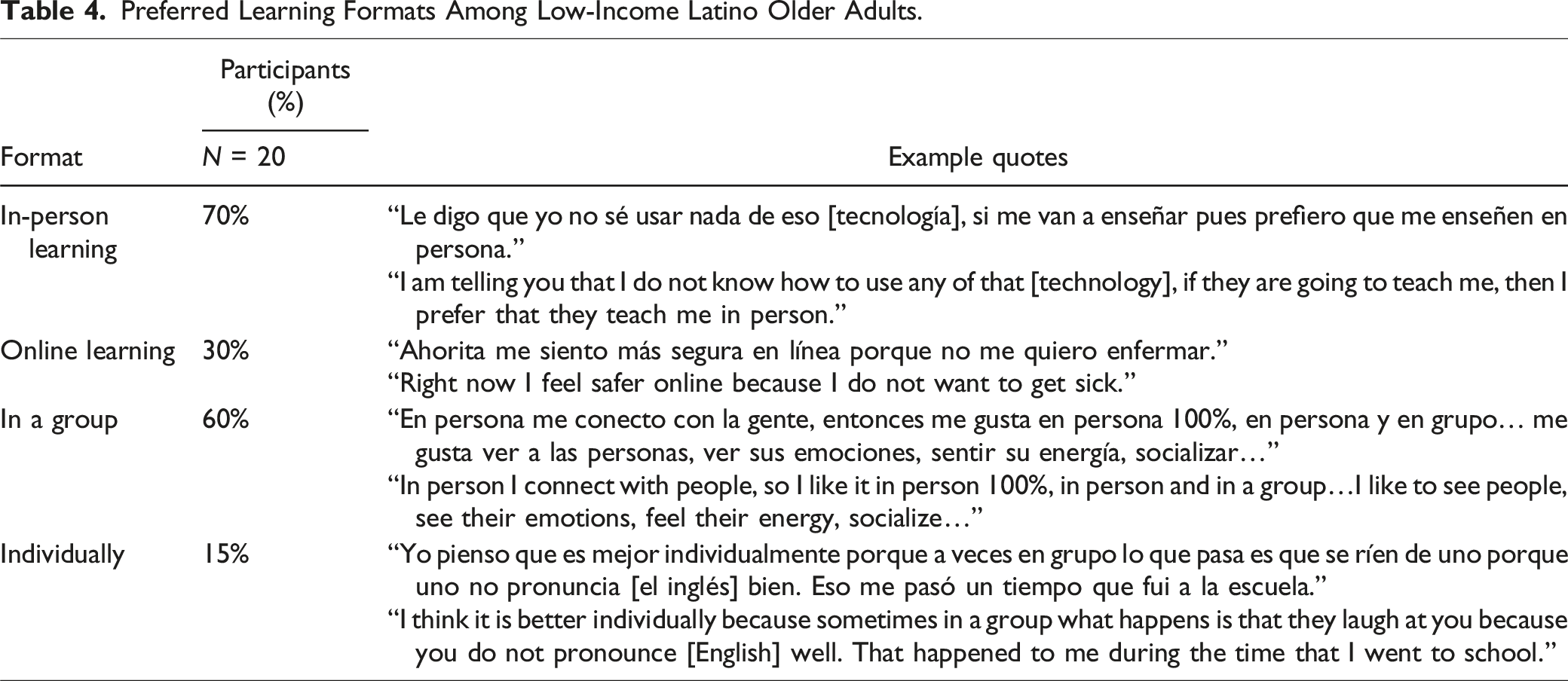
Preferred Learning Formats Among Low-Income Latino Older Adults.
In-Person Learning
Seventy percent of participants said that they preferred learning in person. Participants explained that they generally believed they learn better in person than online (e.g., “En persona se aprende mejor”/ “In person one learns better”; “En línea no aprendes igual”/ “Online you don’t learn the same”; “En línea no entendería nada”/ “I would not understand anything online”). Many participants also lacked technology access/literacy to learn online, which was another key reason for preferring in-person learning.
Online Learning
Online learning was preferred by 30% of participants. Among those who chose this learning format, some participants said that learning online would be the most feasible way they could engage in learning because they have physical limitations, they are homebound, or do not have reliable transportation to go learn somewhere in person (e.g., “En línea puedo hacerlo porque no puedo salir”/ “Online I can do it because I can’t go out”). Two participants also mentioned that they would feel more comfortable and confident learning online (e.g., “Me sentiría mejor y con más confianza”/ “I would feel better and with more confidence”). Another participant mentioned that she felt safer learning online to protect herself from being exposed to COVID-19.
Learning in a Group
Sixty percent of participants indicated that they favored learning in a group. Learning in a group was considered best by many because people can “aprender más de los demás” (“learn more from others”). Participants also described that when people learn in a group, they can ask each other questions if they need help understanding something (e.g., “poder preguntarle a la gente cuando uno no entiende”/ “being able to ask people when one does not understand”). Another popular motive for wanting to learn in a group was being able to socialize and connect with others.
Learning Individually
Only 15% of participants preferred to learn individually rather than in a group. One participant shared that they thought learning individually was better because if you are learning in a group and make friends, they distract you from learning: “Cuando te haces amigos, no te dejan aprender, ya no te dejan estar atento” (“When you make friends, they don’t let you learn, they no longer let you pay attention”). Another participant mentioned that she preferred to learn individually because she had prior negative experiences from when she was going to a class to learn English and her peers made fun of her for mispronouncing some words.
Discussion and Implications
Cognitive health disparities show that low-income Latinos face a higher risk for developing ADRD than majority individuals (Alzheimer’s Association, 2020; Matthews et al., 2019). Surprisingly, there is a lack of research aiming to find new methods to help mitigate such disparities. Learning new skills has been identified as a potential pathway to increasing cognitive and functional abilities among older adults. Nonetheless, this pathway has yet to be tested with low-income Latinos, as they may face barriers to learning engagement that are not properly accounted for. Therefore, this qualitative study investigated and identified important themes on the learning barriers, learning engagement, and learning interests among low-income Latino older adults. Our findings are a first step toward understanding how we can best tailor feasible learning opportunities for this underserved population to improve their cognition and functional abilities with the goal of preventing declines and attenuating the pervasive cognitive health disparities that affect them.
The themes on learning barriers found in this study support the theoretical assumption that low-income Latino older adults have a wide range of barriers to learning engagement (Rodriguez et al., 2022). In terms of indirect learning barriers, we found that health problems, lack of finances, lack of English proficiency, lack of reliable transportation, time constraints, immigrant-related limitations, physical/cognitive limitations, and lack of social support were all perceived as potential challenges or obstacles to engaging in novel skill learning. In terms of direct learning barriers, lack of awareness/knowledge of learning opportunities, lack of technology access/literacy, lack of motivation, and not knowing what to learn were also identified as potential impediments to learning new skills. These results on the barriers to learning engagement closely align with the findings of previous studies that have focused on identifying barriers to research participation and retention among Latinos and other racial/ethnic minoritized groups (e.g., Calderon et al., 2006; George et al., 2014).
Among the participants who reported lacking motivation to learn, we found that age (being “old”), feeling tired/lacking energy, lacking confidence/self-efficacy, and experiencing frustration/lack of patience (either with themselves or from others) were perceived as factors that hindered their learning motivation. The themes found about age (being “old”) and lacking confidence/self-efficacy as demotivators to learning new skills reflect ageist stereotypes that exist in our society and have been internalized by older adults (Achenbaum, 2015; Köttl et al., 2021; Levy et al., 2022). The societal expectations of learning being reserved for younger populations could also have contributed to these themes (Wu et al., 2021). Furthermore, our theme that frustration and lack of patience results in lower motivation is consistent with previous research on barriers to technology use among older adults. Wang et al. (2019) found that experiencing frustration when trying to learn new technology led older adults to lack the motivation to further pursue using and learning technology. Experiencing frustration/lack of patience from instructors (whether formal or informal) when trying to learn a new skill was also found to be demotivating, as described by some of our participants. This finding suggests that when teaching older adults new skills, not only should their frustration be properly addressed to prevent declines in learning motivation but also the instructors themselves should have patience and avoid showing their own frustration toward the older adult learners.
Our results on the learning engagement of the participants in our sample showed that only 35% were currently engaged in learning new skills. However, from that 35%, most were learning informally from a family member and with little-to-no structure. We also found that participants were most interested in learning skills related to technology, English, sewing, and culinary arts. Technology was the top skill of interest among our participants, which contradicts beliefs that older adults are not interested in learning new technologies and that they consider technology to be useless (Wandke et al., 2012).
We also found that the primary motivator/reason for engaging in learning new skills was to find a (better) job and/or make more money, suggesting that our sample might be more extrinsically motivated to learn rather than intrinsically. Importantly, these findings contradict the Socioemotional Selectivity Theory (SST), which states that as individuals become older, they become more intrinsically motivated to engage in things that they view as valuable to their enjoyment and happiness (Carstensen et al., 1999; Kooij et al., 2011). The discrepancy between prior findings that support SST and our findings highlights the privilege of being able to prioritize enjoyment and happiness in old age when one has more financial resources. The individuals in our sample faced monetary struggles and, as a result, they would benefit more from learning practical skills that help better their financial situation rather than learning leisure skills that promote happiness. More research should examine aspects of current theories on aging that are based on privilege. The entire concept of “retirement” may be based on privilege (Ayon et al., 2022). Careful consideration is required when making theory-driven assumptions across individuals of different socioeconomic, cultural, and racial/ethnic backgrounds.
Aside from skill learning interests, we explored learning format preferences and found that the majority of participants had a preference for learning in person and in a group. Many noted lack of technology access/literacy as the main reason for supporting in-person learning. Providing technology access and teaching older adults how to navigate technology could be a primary step to helping these older adults feasibly engage in online learning. Online learning can also help mitigate several of the learning barriers identified in our study (e.g., lack of transportation). Learning with a group was favored because participants described that they could learn and receive help from others, as well as socialize. Socializing has been shown to be a motivating factor for older adults to engage in volunteering opportunities (Warburton et al., 2001), suggesting that this could also be used as a tool to encourage older adults to join a learning program/class, as long as negative aspects of social comparison and ridiculing are minimized.
Based on the findings from this study, future research should design tailored learning interventions for low-income Latino older adults to test whether novel skill learning leads to long-term cognitive and functional improvements in this at-risk population (Rodriguez et al., 2022). Once older adults better understand how to engage in learning opportunities and have reduced learning barriers, perhaps continued learning engagement would drive long-term cognitive and functional growth. Current learning program leaders could also take into consideration the learning barriers and interests in this population. By doing so, learning needs could be better addressed and enrollment may increase. For instance, learning programs could be made more widely available for free or at a low cost, incorporate transportation services, provide individuals with any required learning materials/tools, have flexible meeting times, be offered in Spanish, and make necessary adjustments for those with physical limitations. Policymakers could also implement strategies to mitigate learning barriers among older adults of all backgrounds and raise more awareness about the potential benefits of learning engagement. Funding could be allocated towards learning opportunities that are affordable and accessible for underserved older adult populations, and importantly, based on need. Lastly, future research could study the potential learning barriers and interests of other minoritized populations. These efforts could be essential for mitigating or even preventing cognitive decline in high-risk populations.
Supplemental Material
Supplemental Material - Learning Barriers, Engagement, and Interests Among Low-Income Latino Older Adults: Highlighting the Privilege of Learning and Retirement
Supplemental Material for Learning Barriers, Engagement, and Interests Among Low-Income Latino Older Adults: Highlighting the Privilege of Learning and Retirement by Tania M. Rodriguez, Xitlaly Neri, and Rachel Wu in Journal of Aging and Health.
Footnotes
Acknowledgments
We would like to thank our participants for sharing their perspectives and experiences with us and without whom we would not have been able to conduct the study. We are also grateful for our team of research assistants, Xitlaly Neri, Alicia Perez, and Sabrina Sarmiento, for transcribing and helping with coding the data. Due to the nature of our qualitative data, it is not available to other researchers or to the public to maintain confidentiality of our participants’ responses. This study was not pre-registered.
Declaration of Conflicting Interests
The author(s) declared no potential conflicts of interest with respect to the research, authorship, and/or publication of this article.
Funding
The author(s) disclosed receipt of the following financial support for the research, authorship, and/or publication of this article: This study is supported by the National Institute on Aging at the National Institutes of Health (grant number P30AG059298).

Supplemental Material
Supplemental material for this article is available online.