




Abstract
One might assume nursing students are healthier than the average person because they are exposed to information on health and health promotion. However, due to the competing demands of coursework, clinical experiences, exams, peer relationships, and family responsibilities, nursing students may experience negative stressors that can adversely affect their health. Nurses and nursing students face unique workplace hazards and multiple health, safety, and wellness risks (American Nurses Association [ANA], n.d.-a). To better prepare student nurses to cope with these pressures, the authors first sought to understand the relationship between nursing education and nursing students’ health: “How does the experience of nursing school impact nursing students’ health and well-being?”
The World Health Organization (2022a) defines well-being as a positive state experienced by individuals and societies. The Merriam-Webster (n.d.) dictionary describes well-being as “the state of being happy, healthy, or prosperous.” In the Holistic Nursing Scope and Standards of Practice (American Holistic Nurses Association [AHNA], 2019), well-being is defined as harmonious feelings, self-acceptance, and the ability of persons to reach their optimum capability. There is no consensus around a single definition of well-being. Still, there is general agreement regarding well-being, which includes the presence of positive emotions and moods (e.g., contentment and happiness), the absence of negative emotions (e.g., depression and anxiety), satisfaction with life, fulfillment, and positive functioning (WHO, 2022b). For this study, well-being was conceptualized as the presence of positive emotions.
The Future of Nursing 2020–2030 report identifies well-being among nurses, individuals, and communities as a key area for strengthening nursing (National Academies of Sciences, Engineering and Medicine, 2021). Understanding well-being and factors that impact the well-being of populations is essential, along with the health and well-being of nurses that starts in nursing school. “The health and well-being of nurses influence the quality, safety, and cost of the care they provide, as well as organizations and systems of care” (National Academies of Sciences, Engineering and Medicine, 2021, p. 12). Therefore, nursing programs can provide an environment supportive of the health and well-being of nursing students and implement evidence-based interventions. Nurses begin the journey of health for themselves as they begin the student role and care for others. The need to prioritize health and well-being for nursing students is evident in a recent publication from the American Association of Colleges of Nursing (AACN, 2021).
Recently, the AACN (2020) approved a call to action to promote healthy lifestyle behaviors and the well-being of students, faculty, and staff. In the New AACN Essentials, Domain 10 addresses personal, professional, and leadership development, which includes a competency addressing “healthy, self-care behaviors that promote wellness and resiliency” (AACN, 2021, p. 53). Additionally, the American Nurses Association (ANA, n.d.-c) Provision 5 in the Code of Ethics mandates nurses to promote their health and their patients’ health. The well-being of students is a crucial factor to consider in nursing students (Juanamasta et al., 2022; Martin et al., 2022). Further, a study by Martin et al. (2022) revealed 56% of students reported worsening health since starting nursing school, and targeted interventions to increase self-compassion, happiness, and life satisfaction may be necessary to address well-being. A student's perceptions about health could influence the practice of health-promoting behaviors, and those behaviors influence well-being (Kim & Kim, 2018).
In January 2022, the authors conducted an exploratory search for extant scoping reviews of student well-being in nursing school. While examining search results, a scoping review by Juanamasta et al. with a publication date of March 2022 was discovered. This review adds to the work of Juanamasta et al. (2022) focusing on interventions addressing well-being and healthy lifestyles in nursing students.
Method
Aim
The aim of this scoping review was to identify intervention studies related to well-being and healthy lifestyles in nursing students to identify research gaps in the literature for future research.
Review Method
This review followed the Preferred Reporting Items for Systematic Reviews and Meta-Analyses Extension for Scoping Reviews (PRISMA ScR) checklist (Tricco et al., 2018) and The Joanna Briggs Institute (JBI), JBI Manual for Evidence Synthesis (Aromataris & Munn, 2020).
Search Strategy
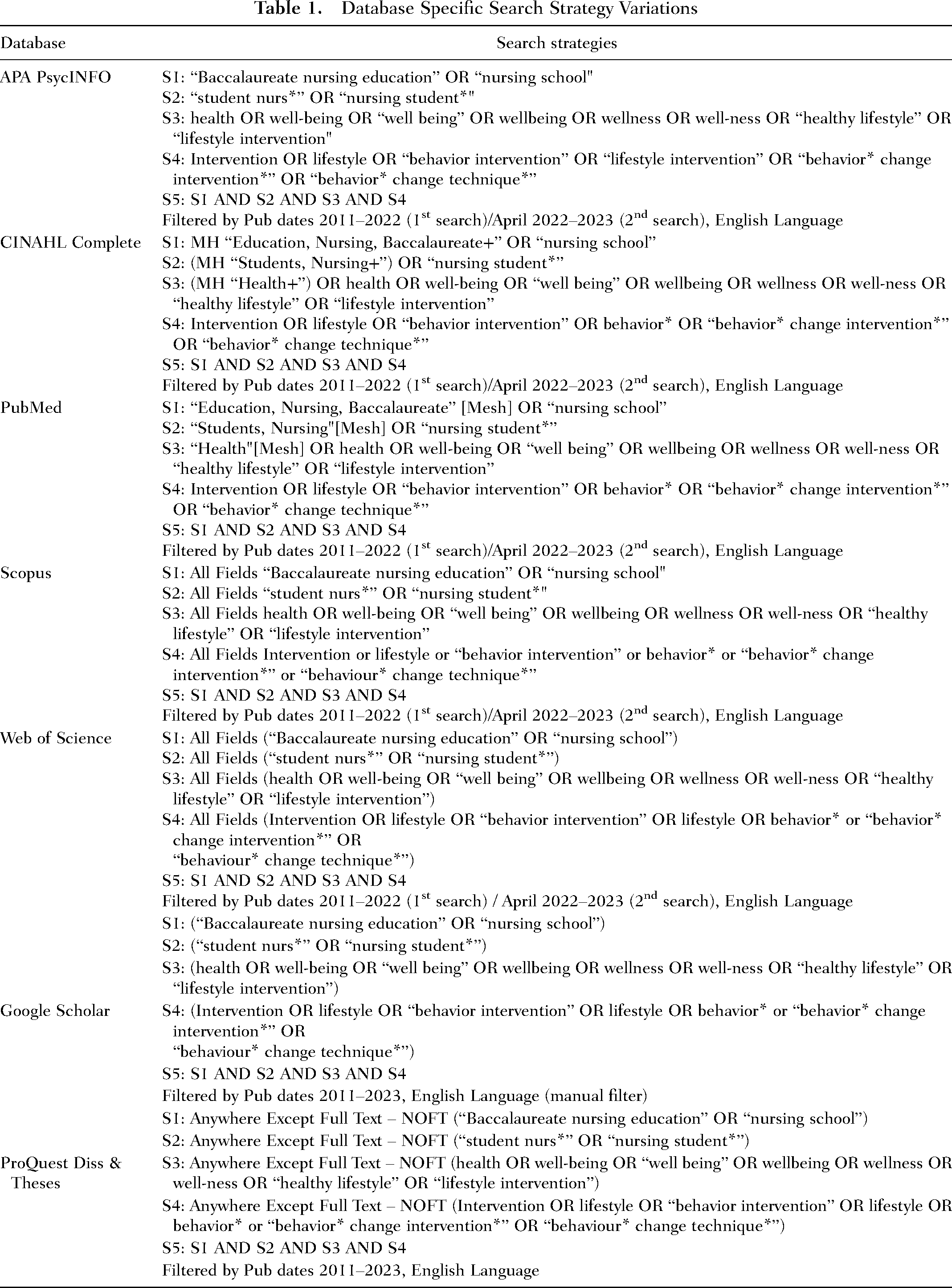
The literature search covered five databases: APA PsycINFO, CINAHL Complete, PubMed, Scopus, and Web of Science. The search strategy employed in all five databases (with context-specific variations in Mesh terms, keyword spelling variations, and related terms) was a four-set strategy consisting of the following base terms, OR-combined with cognate terms in nested search sets, which were then AND-combined to form the strategy: nursing education, nursing students, health and wellness, behavior interventions. Table 1 summarizes the complete range of keyword terms, MeSH, and other subject terms employed in each set. The search was conducted in two phases: the original literature search was performed in late March 2022 (March 22 and March 30, 2022), and a supplemental search of the same strategy was conducted on September 29, 2023 to update the data. All searches included a publication year limit (year 2011–2022 for the first search, and April 2022–2023 for the second search), and language limiter for English language only full text. A subsequent search of Google Scholar, ProQuest Dissertations, and Theses was conducted for gray literature sources employing the same core search strategy (without controlled vocabulary) language and year limits (2011–September 2023).
Database Specific Search Strategy Variations
Inclusion Criteria
Articles were reviewed for inclusion if they had a sample population of nursing students; addressed the wellbeing, wellness, health, or healthy lifestyle(s) of nursing students, tested an intervention(s), lifestyle change, behavioral change interventions, or behavior change technique; and were intervention-based or intervention-focused studies. Posters, abstracts, or editorial publication types were excluded.
Selection of Studies
References were batch exported and uploaded to the Sciwheel reference manager and then exported from Sciwheel and uploaded to the Rayyan systematic review project management software for processing and analysis. After removing duplicates, two reviewers independently performed a title and abstract screening of records, followed by a full-text review of eligible studies. When there were conflicts about whether to accept the article, a third reviewer gave feedback. Both review phases assessed study eligibility based on conformity to established inclusion and exclusion criteria. Conflicts were adjudicated in both screening phases by a third tie-breaking reviewer.
The PRISMA ScR flow diagram (Tricco et al., 2018) below provides the complete breakdown of review activity by phase (see Figure 1). The combined literature searches for this review retrieved 6660 records. Following de-duplication, title and abstract screening, and full-text screening, 24 studies were included in this scoping review.
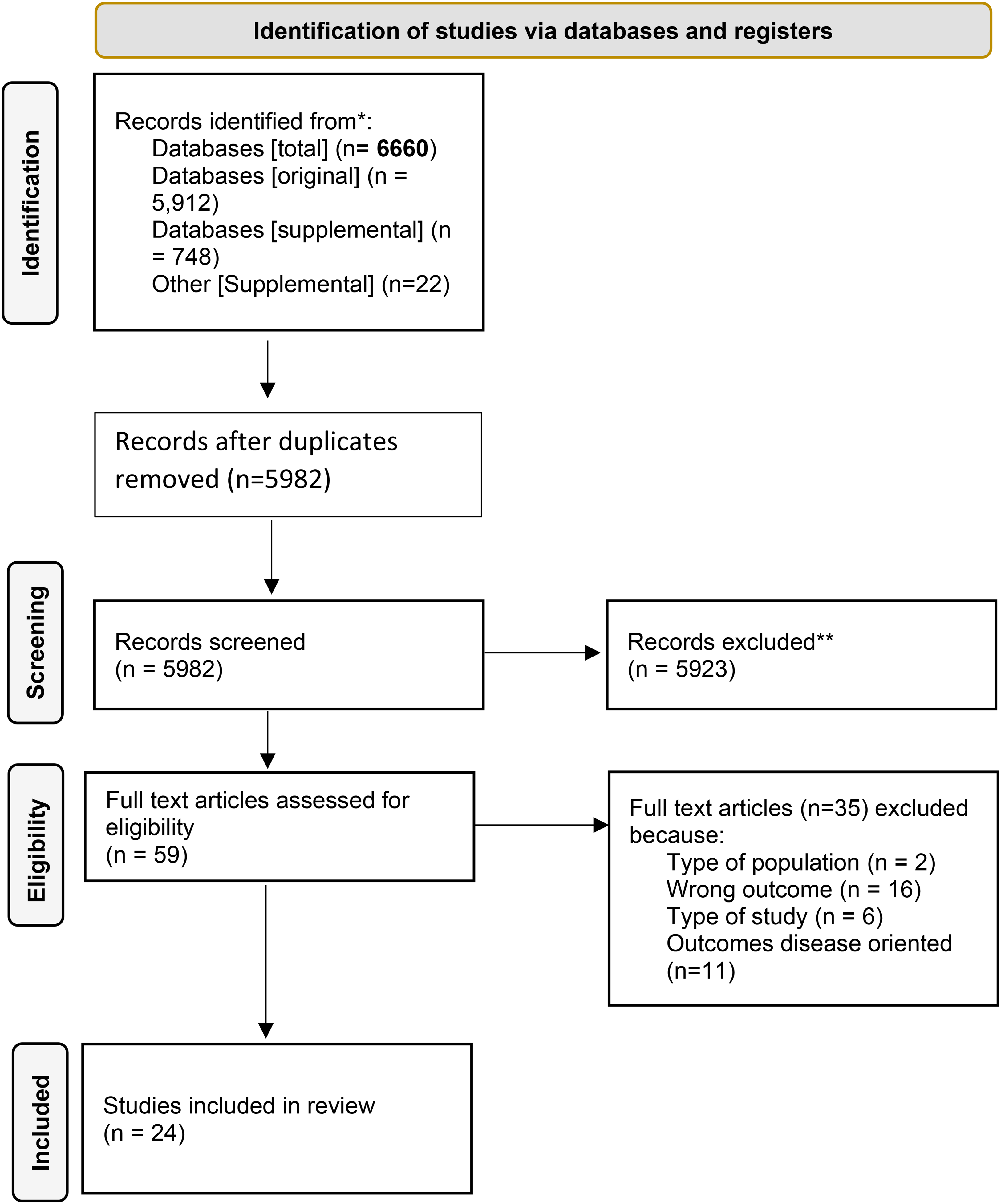
Preferred Reported Items for Systematic Reviews and Meta-Analysis (PRISMA) flow diagram.
Data Analysis:
Figure 1 summarizes the discovery and selection process. The search retrieved 6,660 citations. Combined with the supplemental gray literature results (22 records), 6,682 citations. After eliminating duplicate records, 5982 records remained, and the title and abstract screening excluded 5923. The full text of 59 documents was accessed, and 35 were excluded. The final result included 24 articles in this scoping review.
Results
Results from the 24 studies were extracted in accordance with the JBI Manual and can be found in Figure 2 (Aromataris & Munn, 2020). Studies were published in peer-reviewed journals between 2015 and 2023. Seven studies were conducted in the United States, followed by six studies published from Middle Eastern countries (five in Turkey and one in Iran). Researchers from the United Kingdom and Ireland published three studies, including a study conducted in Spain. China was represented with one study and Taiwan with two published studies. Authors from Canada conducted two studies, and one study was conducted in Australia. The nursing students in the Australia study (Farooq et al., 2021) were from Pakistan.

Evidence matrix by category.
Out of 24 studies, 12 were categorized as curricular interventions related to an educational module as part of a course, eight were categorized as using a psychological intervention, and the remaining four represented supportive environments. Example types of educational interventions included a formal university course (McSharry & Timmins, 2016), self-care, well-being, and healthy life behaviors content (Ashcraft & Gatto, 2018; Farooq et al., 2021; Kara, 2015; Tsai et al., 2019, 2020), online courses (Lothes et al., 2020; Nikolaidou, 2016), a micro-learning course (Gawlik et al., 2021), and other courses of varying time lengths. Wills and Kelly (2017) used educational information and added an accelerometer to record steps and an online personal tracker. Bond et al. (2021) explored the effect of different feedback types on subjective well-being. Pérez-Rivas et al. (2023) aimed to promote healthy lifestyles in student nurses who had risk factors for chronic diseases by using a “learning by doing” intervention based on the nursing process.
Researchers used psychological interventions such as Dialectical Behavior Therapy –Skills Groups (Beanlands et al., 2019), mindfulness training (Karaca & Sisman, 2019; Tolouian et al., 2022), a mindfulness-based mandala activity (Sari Ozturk & Kilicarslan Toruner, 2022), group reflection (Momennasab et al., 2019), the Three Good Things exercise (Wang & Mei, 2022), positive psychotherapy (Güleç Keskin & Gülirmak, 2021) and emotional self-regulation training supported by heart rate variability (HRV) biofeedback (Bauman & Corsentino, 2015). Psychological constructs such as well-being and spiritual well-being, stress, positive psychological traits, and mindfulness were measured in these studies. Improvement in well-being was demonstrated by the studies using psychological interventions.
Supportive environments were represented by Yüksel and Bahadir-Yilmaz (2019) who used a mentoring program with fourth-year students mentoring first-year students, and Wang et al. (2022) who employed a mentoring program using alumni as mentors to enhance professional growth and well-being. Interventions aimed at decreasing stress included a nature-based intervention (Vermeesch et al., 2022) and the presence of an animal therapy dog in a nursing classroom (Bultas & Rittiwong, 2023).
Significant positive differences over time after interventions were found in psychological, spiritual, and emotional well-being as measured by the Ryff Scales of Psychological Well-Being, Health-Promoting Lifestyle Profile-I, and the Health-Promoting Lifestyle Profile-II scores (Bauman & Corsentino, 2015; Kara, 2015; Nikolaidou, 2016). Studies that measured attitudes toward spirituality and spiritual care (Momennasab et al., 2019); problem-focused coping as measured by the Adjustment to University Scale (Yüksel & Bahadir-Yilmaz, 2019); Healthy Lifestyle Beliefs Scale (Gawlik et al., 2021); all dimensions of wellness outcomes using the Travis Wellness Inventory (Lothes et al., 2020) and mental health knowledge and mental health-seeking behavior (Farooq et al., 2021) demonstrated significant findings related to well-being.
Eighteen of the studies were classified as quasi-experimental, and a longitudinal approach was used by four of the quasi-experimental studies. Additionally, researchers conducted four randomized controlled trials, one of which reported a cluster randomized intervention. A virtual “coffee shop” type of educational intervention was determined to be an educational innovation (Tolouian et al., 2022). And an explanatory sequential mixed methods study was included (Wang et al., 2022).
Data were collected through surveys, interviews, focus groups, discussion board postings, and electronic sensor data. Twenty-three of the 24 studies utilized surveys for data collection. One study measured findings by comparing discussion board postings and examining course evaluation data (Tolouian et al., 2022). Qualitative data were collected by a focus group, a brief interview or short answer narratives in three studies (Gawlik et al., 2021; Karaca & Sisman, 2019; Wang et al., 2022), and one study used a group reflection for data collection (Momennasab et al., 2019). Wills and Kelly (2017) used accelerometer data in addition to a survey, and Vermeesch et al., (2022) used the electronic sensor data of exposure to sunlight in a smartphone application, NatureDose TM. Bauman and Corsentino (2015) utilized the HeartMath emWave device to measure HRV in addition to surveys. Pérez-Rivas et al. (2023) implemented a study “learning by doing,” in which anthropometric data and vital sign data were collected to gauge risk factors for chronic disease and improvement after a peer-constructed care plan.
Participants in the studies were predominantly female undergraduate nursing students. Registered Nurse-Bachelor of Science Nursing (RN-BSN) students were the sole participants in two studies and graduate students in a Master of Science program were participants in one study. The largest sample of participants was 370, and the smallest was 24. Eight of the studies included more than 100 participants.
Discussion
In this scoping review, we sought to identify interventions promoting the well-being of nursing students in the current literature, identify intervention studies related to well-being and healthy lifestyles in nursing students, and to identify research gaps in the literature for future research. Thematically, the included studies fall into the following categories: curricular interventions related to an educational module as part of a course, psychological interventions, and supportive environments.
Curricular Educational Interventions and Behavior Change
Educational interventions can effectively promote behavior change (Hwang & Oh, 2020; Jameson, 2014). This review revealed a range of educational interventions, each with varying lengths. Gurusamy et al. (2022) recommended increasing health-promoting behaviors in the curriculum and encouraged physical activity to promote nursing students’ health. Fruh et al. (2021) recommended brief sessions regarding hope, goal-mapping, and a visualization exercise; interventions promoting hope to decrease burnout and improve mental and physical health. However, Stanulewicz et al. (2019), in a systematic review of nurse-focused health promotion interventions reported singular educational interventions without reinforcement were unlikely to be effective. The impact of knowledge on behavior change over time is not clear (Martin et al., 2022), although a foundational understanding of healthy behaviors is needed for improved health outcomes.
Martin et al. (2022) found teaching self-compassion, happiness, and life satisfaction could prevent burnout, suggesting the timing of the training should be just before or at the beginning of nursing school. The researchers recommended resiliency training and mindfulness practices be incorporated into the curriculum to mitigate the stress of nursing school and burnout. Compared to their nonnursing student peers, nursing students do not practice better health-promoting behaviors (Kritsotakis et al., 2020). Nurse educators should include resiliency training to enhance nursing students’ self-care and promote educational interventions such as reflection, positive reframing, problem-based learning, and mindfulness to ways to strengthen the culture of resilience and well-being (Wei et al., 2021).
Additionally, the educational content of the courses such as self-compassion and mindfulness practices align with Watson's (2024) first Caritas process: practicing loving-kindness and compassion with self. Caring for your spirit supports a holistic view, which includes people being whole but having a mind, body, and spirit.
Psychological Interventions
Another significant finding of this review was a correlation between improved self-care behaviors when participants practiced mindfulness (Tolouian et al., 2022). The literature supports the use of mindfulness interventions to enhance nursing students’ well-being (Aloufi et al., 2021; Hughes et al., 2021; Martin et al., 2022; Niedermeier et al., 2022). Niedermeier et al. (2022) also found that when mindfulness was used, students had less depression and anxiety. Promoting mindfulness in nursing students can improve mental health and academic success (Niedermeier et al., 2022; Wei et al., 2021). Although mindfulness interventions are easy to implement and cost-effective, Aloufi et al. (2021) cautions that the literature on the effectiveness of mindfulness practices is limited and needs to be expanded.
Nursing students and nurses can express gratitude as a simple way to frame a positive perspective. Roberts (2018) relates how Three Good Things is a way to focus on the positive instead of the natural tendency to focus on the negative. Nurses wrote down positive things occurring during a shift, and after 2 weeks, 60% of the nurses reported improved work-life balance and resilience (Roberts, 2018). Gold et al. (2023) conducted a randomized control trial with healthcare workers using three text messages a week asking the participants to record Three Good Things. Although the outcomes of depression, gratitude, and life satisfaction scores improved, they were not statistically significant. There was improvement in general affect over the 3 months. More research in this area with student nurses is needed.
Zhou et al. (2023) conducted a constructivist grounded theory study exploring nursing students’ psychological well-being. Social support came from faculty and peers, and those influences promoted focus and a healthy lifestyle, and enhanced well-being. The authors developed the model of thriving psychological well-being for undergraduate nursing students depicting some of the complex factors related to well-being (Zhou et al., 2023).
Biofeedback utilizing HRV can increase well-being in nursing students. HRV, a person's heart rhythm, is associated with mental and emotional health (HeartMath, 2023), The combination of the sympathetic and parasympathetic nervous systems, making up the autonomic nervous system, influences the heart's pacemaker cells to increase the rate to respond to sympathetic activity and decrease the rate in response to parasympathetic activity. Peabody et al. (2023) conducted a systematic review of HRV as a measure of stress in medical professionals. The review’s findings showed the reliability and validity of HRV as an indicator of responses to stress. Peabody et al. (2023) emphasized the importance of HRV for biofeedback training like the strategy in Bauman and Corsentino's (2015) study.
Positive psychological therapies can decrease depression and increase self-efficacy, thereby improving nursing students’ mental health (Guo et al., 2017). Kaplan and Ançel (2020) conducted a randomized control trial where psychotherapy sessions were found to decrease anxiety and improve problem solving capacity in nursing students. There is a dearth of literature documenting the efficacy of psychological therapies as interventions for the well-being of nursing students.
In an integrated review, Charlton and Wofford (2022) noted maladaptive coping behaviors in prelicensure nursing students. Depression, anxiety, and insomnia were identified as maladaptive coping behaviors and are connected to poor mental health and academic performance. Furthermore, Melnyk et al. (2021) found healthy lifestyle behavior differences were identified between disciplines in some instances (e.g., 150 min of exercise weekly), and the overarching theme in this study was that both faculty and students from all participating health science colleges reported suboptimal healthy lifestyle behaviors and elevated levels of stress. Students reported less sleep and higher levels of depression, anxiety, and stress than faculty. To tackle burnout and mental health problems across all healthcare settings, organizations must prioritize wellness cultures within the healthcare industry and look further upstream to how university leadership can create positive, caring learning environments for their health professional faculty and students. Utilizing evidence-based practices, such as cognitive behavioral therapy, sleep hygiene, and universal mental health screenings, should be endorsed and provided (Melnyk et al., 2021).
Supportive Environments
Social support through mentoring shows the potential to support nursing students, decrease stress and enhance self-confidence and coping skills (Wang et al., 2022; Yüksel & Bahadir-Yilmaz, 2019). Mentoring programs increased resilience in nursing students (Huehn et al., 2023), decreased stress and anxiety levels (Kachaturoff et al., 2020), and enhanced overall success for nursing students (Majors et al., 2022). Faculty can also reduce student stress through mentoring by prioritizing trustworthy relationships with students (Wei et al., 2021).
Supportive environments are a strategy illustrated in Pender's (2011) Health Promotion Model. Nursing students are more likely to participate in health-promoting activities if role models demonstrate healthy behaviors. This influence can increase a student's commitment to overall health. Developing and supporting environments to include role models is another way to improve nursing students’ health and well-being.
Technology can support student health in various ways. Kelly et al. (2021) piloted a state-wide text messaging program with messages about self-care and gratitude for nurses over 12 weeks. Positive results included a 93% retention rate and over 80% satisfaction with the messages. None of the studies reviewed included a text-message intervention addressing well-being. However, Rinicker (2016) reported text messages can be effective in increasing physical activity and self-efficacy in undergraduate nursing students. Therefore, similar strategies may be considered to improve student nurse well-being.
Manuscripts examining nature exposure and perceived and physiological stress were included in a systematic review (Shuda et al., 2020). Findings revealed more nature exposure was related to less perceived and physiological stress. Shanahan et al. (2019) conducted a Delphi expert elicitation process with experts from seven countries to determine what nature-based interventions improved health and well-being. Twenty-seven interventions were identified and categorized into interventions that change the environment or behavior. Benefits from nature were identified: cost-effective, mentally restorative, promotes physical activity, and increases physical, mental, and social health. Lack of access to nature and parks in disadvantaged neighborhoods and physical disabilities can be barriers (Shanahan et al., 2019). In a multidisciplinary review, Largo-Wight (2011) recommended allowing animal contact through therapy animals and being in nature to promote the health of individuals. Additionally, time in nature reduced stress in university students (Payne et al., 2020).
Student wellness is of concern for nursing programs and the profession of nursing. Although exercise was not an intervention identified in this scoping review, Juanamasta et al. (2022) reported exercise was related to increased well-being and enhanced academic performance. The timing of the well-being interventions during their prelicensure education was an important consideration.
A multidimensional approach to increase well-being in nurses and nursing students is needed. One such approach is the ANA Healthy Nurse, Healthy Nation program, which promotes six health domains: mental health, nutrition, physical activity, rest, quality of life, and safety (ANA, n.d.-b) and was started in 2017 to address the failing health of the nation's four million RNs nursing workforce. The organization has a multifaceted approach through a comprehensive website, social media platforms, blogs, healthy behavior texts, apps promoting mental health, and collaboration with other nursing organizations like the AACN.
Implications for Holistic Nursing Practice, Education, and Research
The authors explored the current state of interventions aimed at increasing the well-being of nursing students. Well-being results from attention to a holistic perspective that includes the “…mind, body, spirit, and emotion, of the whole person” (AHNA & ANA, 2019, p. 16).
In nursing education, it is imperative to identify the needs of nursing schools to address well-being and healthy lifestyles in nursing students. Nursing students have demands like time to study, class and clinical attendance, outside work responsibilities, and family and social obligations as they strive to be successful in a nursing program. Well-being is a broad and subjective experience; there is no “one size fits all.” However, consistently offering a variety of health-promoting activities that students could participate in as their schedule allows could increase the well-being of nursing students.
Schools can emphasize well-being early when students are admitted to the university and the nursing program. Educational and curricular strategies could equip mentors to encourage healthy behaviors in nursing students. Role models can promote healthy lifestyles regarding self-care, sleep, exercise, and nutrition and shift the culture toward health and well-being. The evidence indicates some interventions have been implemented with some success. Still, there are limitations, and replication of studies is warranted to further strengthen the body of evidence for the interventions identified.
This review adds to the literature by identifying future interventions to address well-being in nursing students. However, additional research is needed with larger sample sizes and more rigorous research design methodology. Additionally, well-being is conceptualized differently in the extant literature, and some consensus on what constitutes well-being is needed.
Limitations
There are several limitations to this scoping review. First, no formal quality assessment was conducted during the review of the articles. Second, the authors restricted their search to articles available only in English. While the review was exhaustive, and several databases were utilized in the search, some relevant studies may be missing. It is possible the positive conceptualization of well-being in this review may have omitted some studies addressing this concept. Additionally, there is a lack of international consensus on well-being. Therefore, well-being can be measured in various ways, and thus, it is difficult to capture fully.
Conclusion
Measuring and attending to nursing students’ well-being is a priority for nursing programs (Juanamasta et al., 2022). This scoping review determined the scope of literature related to interventions for well-being and healthy lifestyles in nursing students. Types of interventions included educational and curricular strategies, psychological-related interventions, and supportive environments.
Nursing school includes many stressors, and students have complex schedules filled with competing demands, making it challenging to prioritize health and well-being. Coping with these demands is essential to meet academic requirements and goals. Furthermore, personal health, resilience, and well-being are included in the AACN Essentials (2021), a significant voice of academic nursing. Therefore, understanding how to address nursing student well-being is vital to the future of the nursing profession. A holistic approach encompassing the mind, body, spirit, and emotion may be the best way to advance nursing student well-being.
While this review identified several effective interventions, nursing students need more than just an intervention to improve their health and well-being. Focusing on health and well-being should not be limited to nursing school but should also be a priority in the workplace for nurses. Nursing students should be equipped with skills to improve their well-being and advocate for systemic change.
