




Abstract
Background:
Varying peritoneal dialysis (PD)-related clinical outcomes have been reported in different countries. As a participant of the Peritoneal Dialysis Outcomes and Practice Patterns Study (PDOPPS), this study investigated the characteristics of Korean PD patients, PD facilities and the incidence rates of clinical outcomes including mortality and PD-related outcomes.
Methods:
From July 2019 to December 2021, a total of 766 Korean PD patients were included for analysis. Poisson regression analysis was used to explore the incidence rates of various clinical events including mortality, modality transfer, exit site or catheter tunnel infection and peritonitis.
Results:
Among the 766 patients (median age 55.5 years, males 59.5%), 276 were incident and 490 were prevalent PD patients. The incidence rates of events were as follows: all-cause mortality (0.048), modality transfer (0.051), exit site or catheter tunnel infection (0.054) and peritonitis (0.136) events per person year. The most common causative organism for exit site or tunnel infection was staphylococcus species (47%) and that for peritonitis was streptococcus (28%) followed by staphylococcus (27%) species.
Conclusions:
Up to now, PDOPPS Korea has recruited 766 Korean PD patients and started documentation of major PD-related outcomes which occurred during the follow-up period. The overall incidence rates of clinical outcomes in Korean PD patients were relatively favourable. There was no statistically significant difference in the incidence rates of clinical outcomes according to both facility and patient factors.
This is a visual representation of the abstract.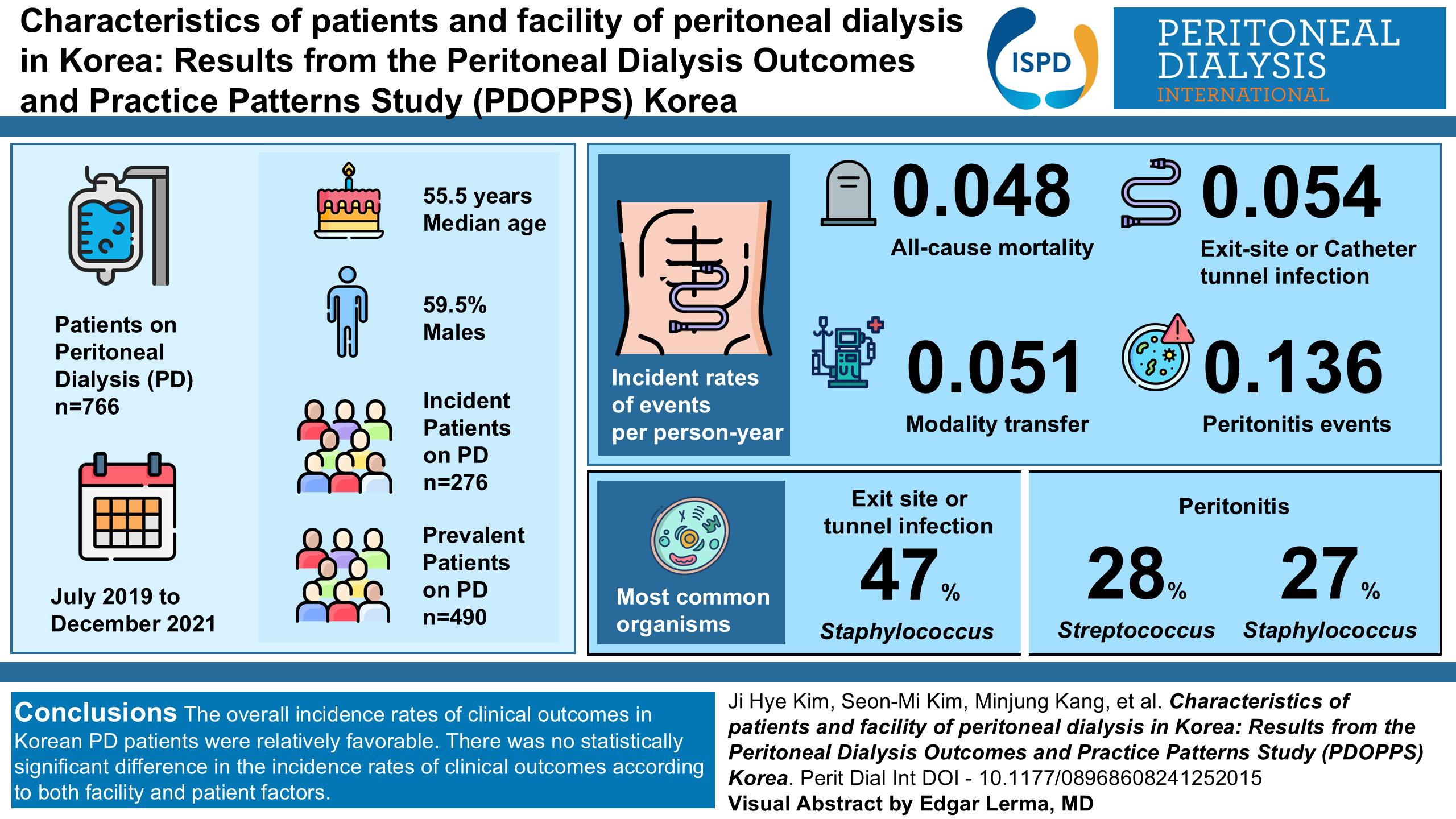
Get full access to this article
View all access options for this article.
References
Supplementary Material
Please find the following supplemental material available below.
For Open Access articles published under a Creative Commons License, all supplemental material carries the same license as the article it is associated with.
For non-Open Access articles published, all supplemental material carries a non-exclusive license, and permission requests for re-use of supplemental material or any part of supplemental material shall be sent directly to the copyright owner as specified in the copyright notice associated with the article.
