



Abstract
Youth in foster care face disproportionate challenges when it comes to education and personal well-being. Many studies use a deficit lens when evaluating these challenges. In contrast, this study is asset-based, centering first-person accounts from five former foster youth college graduates. Using a counter-narrative framework, we conducted semi-structured interviews with participants to reveal key supports in K-12 schooling participants believed helped them achieve academic and life milestones. These were relationships with teachers and coaches, access to extracurricular activities, and literacy-rich environments. We also reviewed 11 relevant federal educational policies to identify provisions and implementation needs that aligned with participant experiences. Finally, we made specific recommendations to better support educational and life outcomes for foster youth. These can generate substantial economic returns through reduced social costs and the increased productivity of this population.
Introduction
In 2013, the Annie E. Casey Foundation reported that “over a 10-year period, more than 300,000 youth left foster care without the support needed to transition to adulthood,” with a cost to taxpayers of “nearly a quarter of a trillion dollars (para 1).” The human and financial consequences of this reality should not be minimized. While the number of children in foster care has slightly declined in recent years, there were approximately 343,000 children in foster care each day in 2023 (U.S. Department of Health and Human Services, 2021, 2025). Research has consistently documented significant poor life and economic outcomes for former foster youth (Courtney et al., 2011; Pecora et al., 2006).
Particularly concerning are the educational outcomes of this group. Compared to the general population, youth in foster care score significantly lower on standardized tests (Berger et al., 2015; Clemens et al., 2017); exhibit greater behavioral problems at school (Nadorff et al., 2021); and have substantially lower high school graduation rates (Okpych & Courtney, 2018, 2021; Romano et al., 2015). The national high school graduation rate is approximately 84%, but only 65% of youth in foster care graduate by age 21 (National Center for Education Statistics, 2018; National Youth in Transition Database, 2016). The disparity widens dramatically at the post-secondary level: 60% of the general population enter higher education, but only 30% to 45% of youth with a foster care history enter higher education (Salazar, 2013; Unrau et al., 2012). Strikingly, only 3% to 4% of former foster youth earn a bachelor’s degree compared to 36% to 46% of the general population (Pecora et al., 2003; Somers et al., 2020).
Social and economic outcomes have compounded these educational disparities. Seventy-one percent of young women exiting foster care are far more likely to become pregnant compared to 34% of women in the general population (Annie E. Casey Foundation, 2013). Nationally, “50% of the homeless population spent time in foster care” (National Foster Youth Institute, 2020, para. 2). Equally alarming, the Juvenile Law Center (2018) reported that “90% of youth with five or more moves will become involved in the justice system” (para. 4), and “by age 17, over half of youth in foster care experienced an arrest, conviction, or overnight stay in a correctional facility” (para. 8). For young men, the economic cost of the foster care-to-prison pipeline exceeds $5 billion annually (Annie E. Casey Foundation, 2013).
Systemic Factors and the Need for Asset-Based Research
Unlike much research that has focused on the deficits of this population, we took a different approach by exploring the beliefs and perceptions of former foster youth who are college graduates. We asked them about their K-12 experiences and related those finding to federal K-12 educational policies that improve outcomes for this population.
Multiple factors contribute to poor outcomes among foster youth, including high placement instability, educational disruption, and systemic barriers (Clemens et al., 2017; Font & Maguire-Jack, 2020). From kindergarten through 12th grade, children in foster care experience an average of 2.4 school changes compared to the general population average of 1.3 (Legal Center for Foster Care & Education, 2008). Each school change is associated with academic losses equivalent to 4 to 6 months of learning (Mehana & Reynolds, 2004). In addition, children in foster care are up to 3.5 times more likely to receive special education services, with many educational accommodations and interventions unmet (Palmieri & LaSalle, 2017).
Growing research has demonstrated, however, that many youth in foster care experience educational success (Kothari et al., 2021; Salazar & Schelbe, 2021; Stevenson & Saulnier, 2024). Unfortunately, research and media have often omitted these counter-narratives because asset-based research into successful outcomes among former foster youth remains limited, with most studies focused on deficits and negative outcomes (Johnson, 2021; Medlin, 2019).
Schools represent a unique intervention opportunity for supporting youth in foster care. Unlike other service systems, all children in foster care must attend school, regardless of placement instability (Crenshaw-Williams, 2023; Geiger et al., 2018). Educational policies thus represent “a viable intervention path” for improving the lives of many of these children and youth (Forsman et al., 2016, p. 61). In addition, recent scholarship across disciplines has shown that educational settings, policies, and systems represent critical opportunities to support this population (Bald et al., 2022; Kothari et al., 2021; Royel, 2021).
Educational policies represent a critical opportunity to support youth in foster care, and several educational policies designed to support the education of youth in foster care are already in place. However, the gap between policy design and policy implementation hinders policy effectiveness (Mildon et al., 2013). Implementation science helps explain why policies that look promising on paper often fail to translate into effective practice at the child-level (Mildon et al., 2013). Factors such as resources, stakeholder collaboration, staff burden, agency culture, data and progress tracking, client resistance, and other barriers can inhibit fidelity to policy intent (Weeks, 2020). These challenges are especially pronounced in systems serving vulnerable populations like youth in foster care. According to Lipsky (2010), contexts with high levels of stress and inadequate resources create dynamics where direct practice staff (teachers, school administrators, case workers, foster parents, etc.), often make decisions about how and whether to implement complex, ambiguous, or under-funded policies. In these contexts, policy intent does not always equal practice realities. This underlines the importance of (1) creating enforcement mechanisms and supports that ensure implementation fidelity at all levels (Weeks, 2020), and (2) exploring individual experiences within the policy environment (Engell et al., 2021).
Purpose and Research Questions
This study challenged the assumption of inevitable poor outcomes by eliciting lived-experience counter-stories from former foster youth who graduated from college. Recognizing the limitations of deficit lens research into this population (Solorzano & Yosso, 2002), we conducted asset-based research into their beliefs and perceptions regarding the impact of their K-12 experiences on their life trajectories. The following research questions guided this investigation:
What current federal policies have the ability to influence outcomes for children in foster care?
In what ways and to what extent do former foster youth college graduates believe K-12 schooling served as a protective factor in their childhood experience and academic trajectories?
Can the stories of former foster youth college graduates be used to inform educational policies that will contribute to positive outcomes for this group?
Theoretical and Methodological Framework
Counter-storying provided both the theoretical and methodological frameworks of this study. Solorzano and Yosso (2002) defined counter-storying as “a method of telling the stories of those people whose experiences are not often told (i.e., those on the margins of society),” which then serves as a “tool for exposing, analyzing, and challenging” dominant narratives (p. 32). By providing alternative perspectives that humanize marginalized populations, counter-stories “can shatter complacency and challenge the status quo” (Delgado, 1989, p. 2414).
Solorzano and Yosso (2001) also identified four functions of counter-storying: (1) it builds community among those at the margins of society by putting a human face to educational theory and practice; (2) it challenges the perceived wisdom of those at society’s center by providing context to understand and transform established belief systems; (3) it opens new windows into reality for marginalized groups by revealing possibilities beyond their current circumstances; and (4) it teaches others to construct richer alternatives by combining elements from both stories and current realities.
Counter-storying is especially relevant for foster care research because it challenges deficit-based narratives that dominate the literature about this population. Delgado (1989) noted that counter-storying provided “psychic self-preservation” for marginalized groups who often internalize negative societal images (p. 2436). Historically underserved people can thereby articulate the compounding events of their lives and identify internalized self-condemnation, and thus ultimately heal through understanding their historic circumstances (Delgado, 1989).
Method
Researcher Positionality
This study combined three perspectives essential to understanding foster care and educational policy. As a former foster youth herself, Amanda Moon conducted the initial research into the lived experience that informed all aspects of data collection and analysis. Kristen Seay contributed 16 years of child protective services research experience and prior practice as a child protective services investigator. Amanda McRell contributed her expertise in research and social work practice, with over a decade of working with children and families, plus lived experience as a foster parent.
Policy Review
A structured internet search conducted from November through December 2024 identified federal policies related to both youth in foster care and K-12 education Using The Federal Register and the National Archives Code of Federal Regulations, the authors worked with a university research librarian to identify relevant federal educational policies.
Included federal policies addressed both youth in foster care and K-12 education. Search terms for education included elementary educat(e, ion, ed); secondary educat(e, ion, ed); educat(e, ion, ed); school(s, ing); or K-12. Search terms for foster care included foster care, foster child(ren), or kinship.
Federal policies on general population youth or reporting requirements, including data reporting and child maltreatment reporting, were excluded. Also excluded, because of their focus on reporting requirements, were the Comprehensive Child Welfare Information System Final Rule of 2016; the Adoption and Foster Care Analysis and Reporting System Regulations Final Rule of 2020; and the subsection of the John H. Chafee Foster Care Independence Act (1999), which required the development of the National Youth in Transition Database.
This search yielded a total of 11 relevant policies: five child welfare policies and six educational policies. We retrieved and reviewed full-text versions of all 11 to develop a comprehensive understanding of the federal policy landscape in relation to youth in foster care and their K-12 educational experiences. We sought to understand (1) what federal policies impact K-12 education of youth in foster care, and (2) how their provisions protect academic and life trajectories. The review provided additional context for and insights into the experiences of study participants, informing our analysis of our in-depth qualitative interviews with participants.
Participants and Data Collection
Currently, there are few communities or spaces for former foster youth college graduates to connect with each other. Therefore, we used the snowball method to recruit participants, whom we found while presenting the study proposal at social work conferences, via social media, or from other contacts connected to foster care. The participants were five former foster youth college graduates, from the ages of 26 to 70 years, who resided in five U.S. states. Of the five, four requested their names be included to increase autonomy over their stories, and one selected a pseudonym. Participants were allowed to select their level of anonymity in an effort to center their voices and give them power over the telling of their stories. Sensitive third-party information, such as names of caregivers and schools, was redacted. Table 1 breaks out the demographic information of the participants: Daniel Harris, Joshaline Douglas, Dillon Forest, Chris Rice, and Robert Mooney.
Participant Demographics and Foster Care Characteristics.
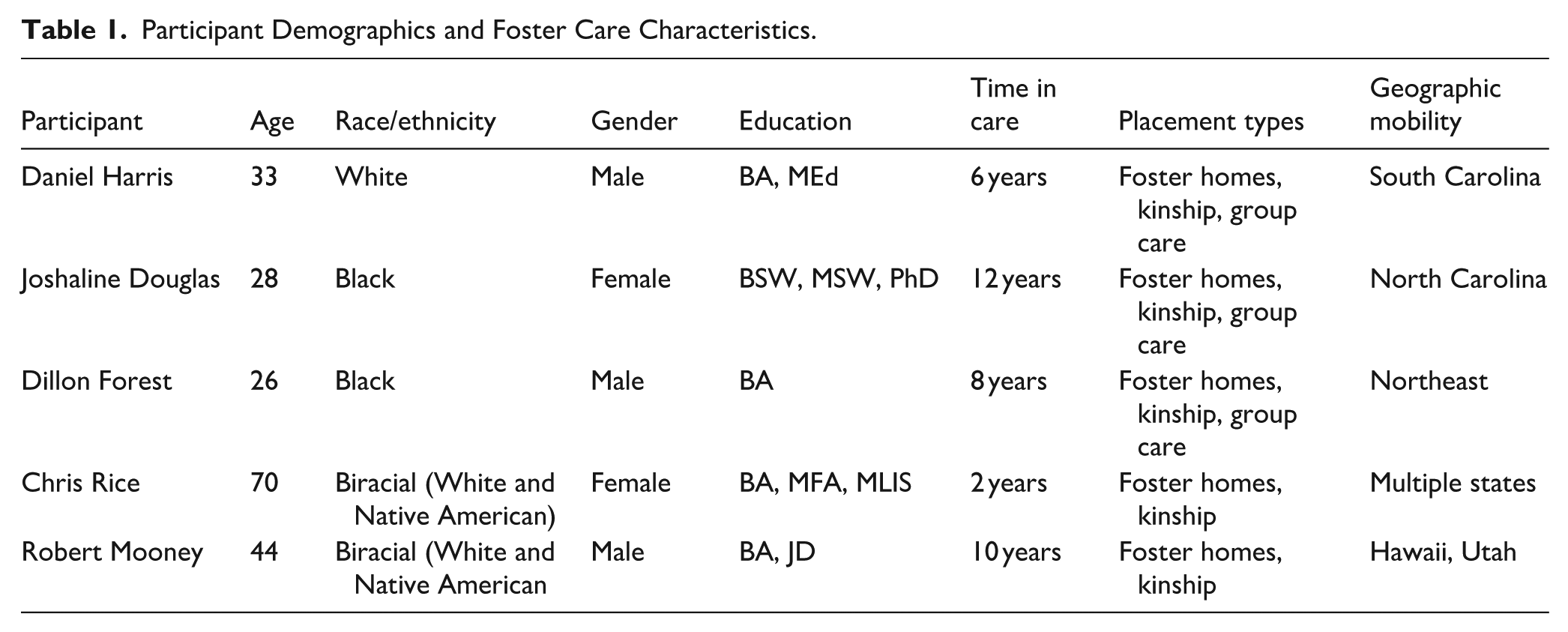
The diversity of participant experiences in this sample strengthened the study’s understanding of protective factors that facilitate educational success for foster youth. Rather than representing exceptional cases, the participants’ varied backgrounds suggested that educational success is possible across different types of foster care experiences when certain supportive conditions are present.
Inclusion Criteria
Participant requirements for this study were (1) experience of foster care in childhood; (2) graduation with a bachelor’s degree from an accredited institution of higher education; and (3) diversity that went beyond traditional concepts, such as race and gender, to include conditions of entering care, experiences while in care, and conditions for exiting care. This diversity of participant experience allowed us to dispute and/or complicate dominant narratives that present former foster youth who successfully graduated from 4-year institutions as special cases or as an exception to the rule of race, gender, or conditions of foster care.
Exclusion Criteria and Selection Process
Nineteen adults volunteered to participate in the study. Of these, four were excluded because they were adopted very early in life and could not genuinely speak about K-12 experiences while in foster care. Another seven were excluded because they did not receive a bachelor’s degree from an accredited institution of higher education; they received an associate degree; they came close to earning a 4-year degree but never graduated; or they earned certificates or degrees other than or less than the bachelor level. Three were excluded because they did not complete the survey. Five participants remained: two women and three men.
Phases of Data Collection
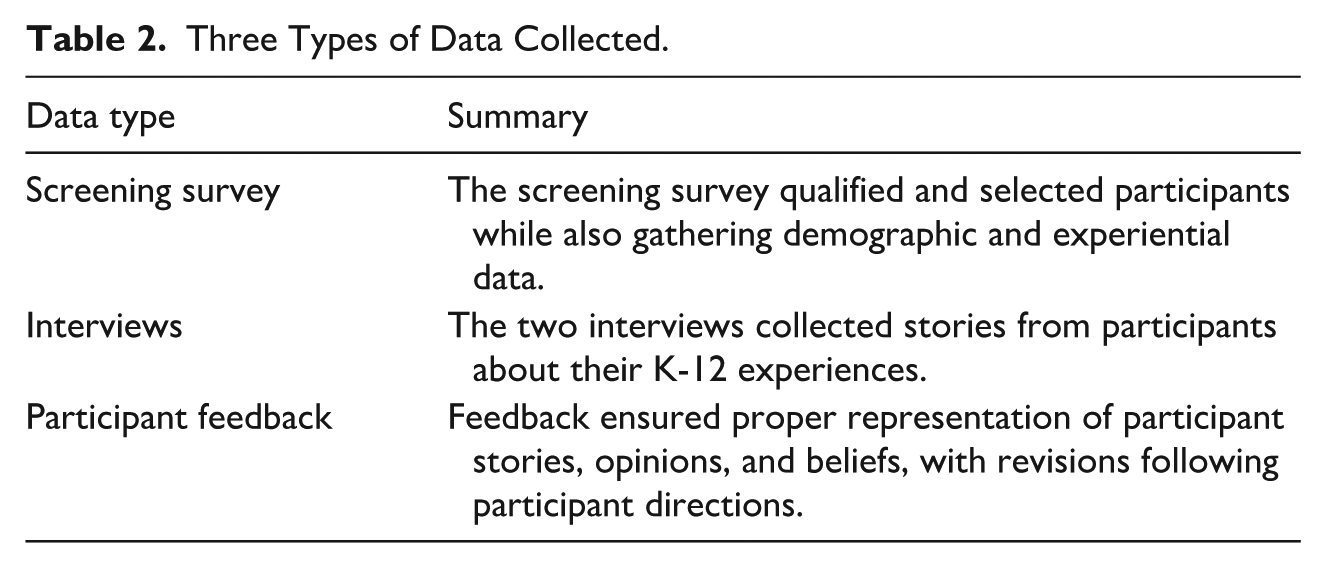
Our three phases of data collection fulfilled University Institutional Review Board (IRB) protocols which included: screening surveys, two semi-structured interviews conducted approximately 1 month apart, and member-checking with participants. Interviews ranged from 45 min to 2.5 hr and were conducted on Zoom (Table 2).
Three Types of Data Collected.
Data Analysis
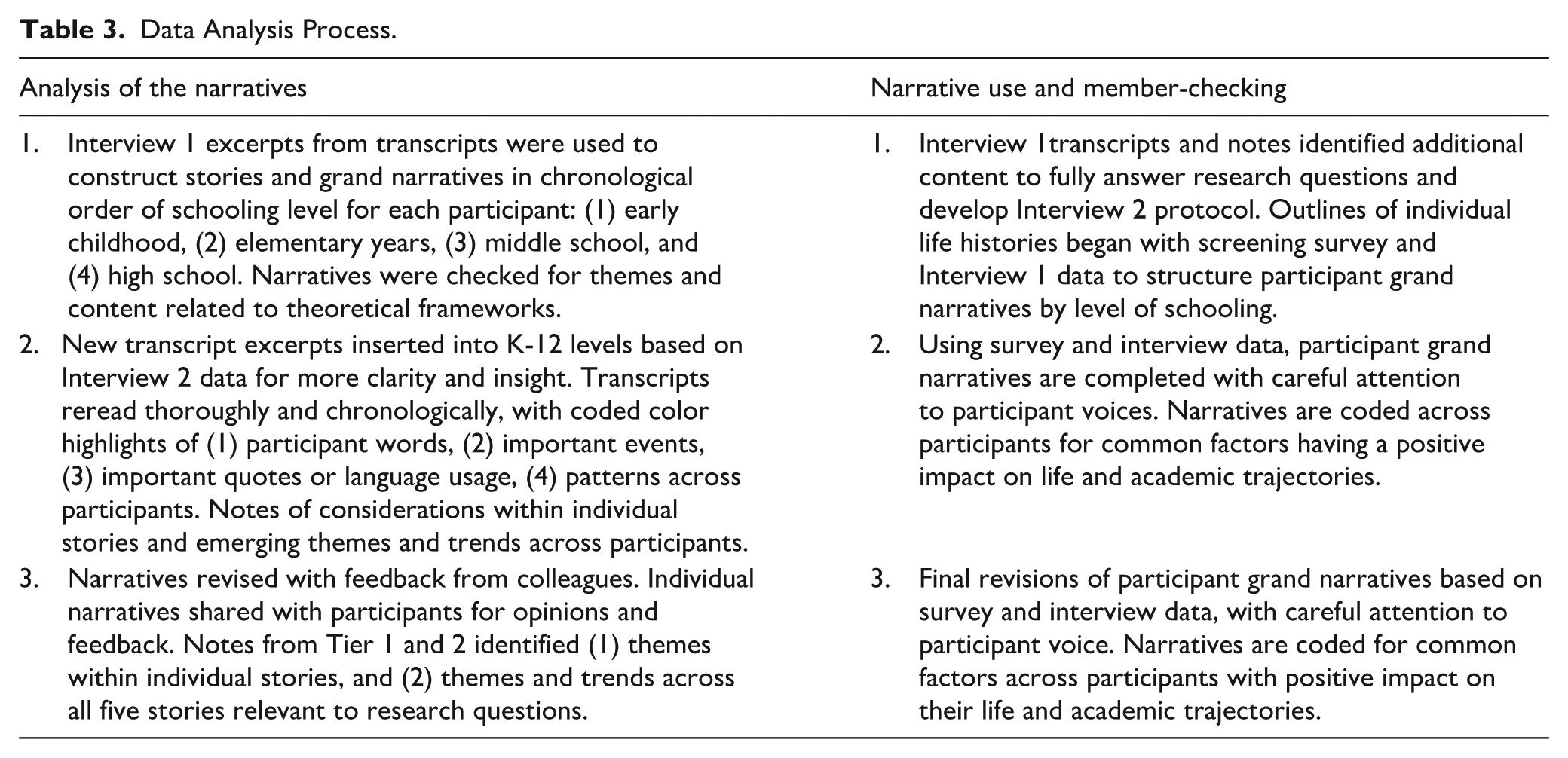
A counter-storying theoretical framework for a three-tier analysis of participant data ensured that participant voices were central to interpretation. Table 3 summarizes the analysis process.
Data Analysis Process.
Results
Review of Current Federal Child Welfare Policies
The policy review revealed federal frameworks that are designed to address the educational needs of children in foster care, although their implementation varies significantly across state and local jurisdictions.
Title IV-E of the Social Security Act and Amendments
Child welfare policies at the federal level have shaped the unique educational experiences of children in foster care. In Social Security Act (1980), the enactment of the Adoption Assistance and Child Welfare Act established a new Title IV-E Foster Care and Adoption Assistance program, which outlined requirements for federal reimbursements to states for foster care system and adoption assistance payments. Within Title IV-E, four amendments outline provisions for children in care: the John H. Chafee Foster Care Independence Act (1999); Fostering Connections to Success and Increasing Adoptions Act (2008); Preventing Sex Trafficking and Strengthening Families Act (2014); and Family First Prevention Services Act (2018).
Amendment to the 1999 John H. Chafee Foster Care Program for Successful Transition to Adulthood (2018)
This program pro2vided various types of funds for older youth in foster care who are transitioning to adulthood in the foster care system and who exit care at the age of adulthood rather than in another way (i.e., reunification, adoption). These include funds for educational assistance, mentoring, and career support and services.
The Fostering Connections to Success and Increasing Adoptions Act
This act required collaboration between schools and the child welfare system for the immediate and efficient enrollment in school of children in care, including the quick processing of school records with an education stability component in the case plan (P.L. 110-351, 2008). This component requires a written plan from child welfare and school officials to keep the child in the “school of origin” or the school the child was in when placed in foster care (P.L. 110-351, 2008). If the school of origin is not in the child’s best interest, then the child can be enrolled in a new school. In addition, transportation to a child’s “school of origin” is a reimbursable expense. This act also requires that children ages 14 and up, including 18-year-olds, have a plan for transitioning to adulthood that includes appropriate services.
The Preventing Sex Trafficking and Strengthening Families Act of 2014
This act gave children and youth in foster care a role in planning elements of their care and promoted age-appropriate normative experiences in and outside of school. Their rights in transitioning and permanency planning must be provided to them in writing in an age-appropriate manner. In addition, the reasonable and prudent parenting standard of this policy gave foster care providers decision-making power and support for these social and extracurricular activities. Caregivers can determine reasonable activities for children in care (e.g., attending a classmate’s birthday party, participating in extracurriculars), rather than request approval from a child protective services agency. This change in perspective and policy allows children and youth in care to more actively participate in normal childhood experiences related to their educational development and well-being.
The Family First Prevention Services Act of 2018
This act expanded the Chafee Foster Care Program to include youth from ages 14 to 23 years old. It also allowed states to extend eligibility for Education and Training Voucher funds until age 26. Last, in order to access Medicaid and other financial supports, state child welfare agencies must provide documentation to children in care verifying their placement in care.
Other Federal Policies
The Child Abuse Prevention and Treatment Act (CAPTA) of 1974
Another fundamental child welfare policy in the United States, CAPTA (1974) established the minimum definitions of child abuse and neglect; required states to develop procedures for the handling of child maltreatment reports to child protective services; and funded states for the prevention and treatment of child abuse and neglect. CAPTA further required that children in care receive early access to education by priority enrollment status in Head Start and Early Head Start programs.
Every Student Succeeds Act of 2015
Because many children in foster care are from families below the poverty line, this act reauthorized the Elementary and Secondary Education Act (1965), designed, as noted above, to improve education for all children, including those in foster care. It supports school stability, whether for the school of origin or the quick transition to a new school, by requiring coordination between educational institutions and child welfare agencies to transfer school records and determine transportation and payment for the same.
McKinney-Vento Homeless Assistance Act (1987/2015)
When the Every Student Succeeds Act (2015) was established, separate provisions were created for children who are in foster care and those who qualify for assistance through McKinney-Vento. This federal act ensures educational rights and protections for children experiencing homelessness. Youth who meet the criteria for homelessness prior to entering foster care qualify for McKinney-Vento support. Support through the McKenney-Vento Homeless Assistance Act includes priority educational enrollment and access, transportation, school meals and supplies, and specialized support personnel.
Higher Education Opportunity Act of 2008
A reauthorization of the 1965 Higher Education Act, this act improved access to financial aid by expanding it to students with disabilities and, in particular, to children in foster care. It also expanded access to TRIO, a set of federally funded higher education programs for students from disadvantaged backgrounds; it also provided housing during school holidays. For youth exiting foster care, it established criteria to identify and confirm their status as independent students, setting criteria to exclude the income of the family of origin in determining financial aid (Higher Education Opportunity Act, 2008).
Uninterrupted Scholars Act of 2013
This act built on the Family Educational Rights and Privacy Act of 1974 (FERPA), which set privacy standards for educational records in the United States. This law protects the privacy of student records while allowing parents to access records for their children under 18 years of age. When children turn 18, the right to educational privacy transfers to the student. When FERPA was first passed, it failed to consider the unique experiences and needs of children in the foster care system. Uninterrupted Scholars Act (2013) allowed schools to provide educational records to child welfare caseworkers for children in care, even when the family of origin does not provide consent.
Individuals with Disabilities Education Act (1975/2004)
IDEA guaranteed free public educational services to all children with disabilities, including those in foster care. Part B of IDEA addressed public school and special education services for children aged 3 to 21, and Part C focused on early intervention services for children from birth to 3 years. Because disagreements among supervising parties of children in care sometimes occur, IDEA required that a specific biological, adoptive, or foster parent, guardian, caseworker or other appointed individual, be made the decision-maker for a child’s educational services (Individuals with Disabilities Education Act, 2004).
Participant Interview Findings
Our analysis of the interviews revealed that participants’ K-12 experiences had profound positive impacts on their academic and life trajectories. Three major trends emerged with consistent patterns across all five participants.
Major Trends
Long-Term Relationships with Teachers and Athletic Coaches
The most significant finding across all participants was the transformative impact of sustained relationships with educators. All five participants reported significant, positive relationships with teachers, athletic coaches, and administrators, to which they attributed to their ability to achieve many traditional life milestones. The depth of these relationships extended beyond typical student-teacher interactions to include transportation, meals, personal conversations, and long-term mentoring. Participants also described teachers and athletic coaches as heroes who provided them emotional support, supplemented their basic needs, and fundamentally changed how they viewed themselves and their possibilities.
Daniel’s experience with Coach W exemplified this pattern:
When I was [in years 11 and 12] in high school, I played football and basketball and met Coach W, who both taught accounting and coached basketball. Even though I was not an experienced basketball player, I became very close with Coach W, who drove me to practices and summer camps and nurtured my athletic ability and emotional health. During those long car rides back and forth we would talk. I saw him first thing every morning for accounting, which was a great way to start my day. . . I would say that the most important teacher or coach overall was Coach W.
Joshaline’s relationship with her first-grade teacher demonstrated the early protective effect of educator relationships upon her life:
My first-grade teacher, Ms. L, was very important to me and was the person to make the report to social services. In private, she would kindly ask me questions about my circumstances. . . . One of my favorite memories was that she always gave me snacks like cheese puffs, because she knew I was hungry. I always felt safe and loved with her. And coincidentally, this kindergarten teacher moved to teaching second grade, so I got to be in her class twice! This stability in school was probably important because in second grade I was in foster care, but at least the teachers at school knew me and gave me extra attention, because they knew what I was going through.
Participants were particularly drawn to male teachers and athletic coaches, with all five reporting especially meaningful relationships with male educators of the same race. These relationships influenced positive identity development because these educators provided counter-narratives to the deficit-based assumptions about foster youth capabilities that dominate much professional and societal discourse (Solorzano & Yosso, 2002). Research has demonstrated the special importance of same-race and male mentors for youth in foster care, especially for boys of color, overrepresented in the system (Hass & Graydon, 2009; Spencer, 2006).
Access to Literacy-Rich Environments
All participants demonstrated exceptionally high literacy levels and identified reading and writing as critical to their success. All participants revealed that they were published authors during the first interview, which frankly stunned the researchers. Participants were not pre-selected for this reason and no attempt was made to recruit participants with any specific connection to literacy. This may be coincidental, or it may indicate a correlation between literacy access and the ability of this population to obtain a 4-year degree. English Language Arts consistently emerged as the favorite subject of participants across educational levels, with creative writing holding particular importance. Remarkably, all five participants have become published autobiographical authors as adults.
Chris articulated the transformative power of literacy in providing him shelter from turmoil:
By this time, I was using reading to escape my life with my father or in foster care. I got lost in my books and would be transported to the settings in the stories. I had three primary coping mechanisms while I was in foster care: sports, reading, and music. With reading, I was able to go into my mind, into fantasy, and escape. That was a big deal for me.
Participant descriptions of reading as a healthy escape method during turbulent times aligns with research which has validated that reading is a critical coping mechanism for traumatized youth (Malchiodi, 2008).
Particularly important to participants was the transformation that occurred when educators recognized their literacy gifts. Chris described it this way:
I had this great English teacher in eighth grade. He saw that I was a good reader and writer, and that is when I recognized that in myself. He took an interest in me and would give me lists of books to get from the library at school, and I would do so and read them. I will never forget that when we read Great Expectations as a class, he had us write a different ending as an assignment.
Participants, however, also identified significant barriers to literacy access after elementary school. Most noted that they had the greatest access to books in elementary school through regular classroom library visits; this access, however, declined dramatically in the secondary grades; because of their dependence upon school buses for after-school transportation, they could no longer visit school libraries after the school day ended. This finding aligns with research documenting decreased literacy engagement among older students in foster care due to systemic barriers rather than to lack of interest or ability among this group (Trout et al., 2008). While teens in the general population report an interest in reading, they may reduce their library use due to a perceived lack of teen programming or teen-supported spaces or disinterest in the types of materials available at the school or public library (Howard, 2011; Snowball, 2008). To add to the barriers, youth in foster care are less likely to have driver’s licenses or access to transportation (Collins et al., 2021) which might help them get to the public library or allow them to stay after school to access the school library.
Participation in Sports and Extracurricular Activities
Counter to expectations, given the high mobility and transportation barriers typically experienced by foster youth, all five participants actively participated in sports and extracurricular activities throughout their K-12 schooling. Sports and extracurriculars provided them access to multiple social groups, peer relationships, and adult mentorship outside the classroom, allowing for the formation of a social identity beyond that of being a foster child. Daniel in particular emphasized the community aspect of sports participation:
Being part of a sports team was important because I was part of something bigger than just myself. Other people were counting on me. I think this taught me how important teamwork is and the power of collaboration.
Sports
All participants reported sustained involvement in athletics across educational levels. Despite moving 29 times, for example, Joshaline participated in sports whenever possible, including making varsity teams without formal training or experience. Robert participated in multiple sports, including baseball, football, basketball, and wrestling, describing these activities as outlets for frustration and a way to form healthy relationships with adults and peers. Even Chris, who graduated from high school before the implementation of Title IX in 1972, engaged in tumbling, baton twirling, and the majorette team.
The Arts
In addition to creative writing, all participants were involved extensively in the visual, performing, and/or media arts. Robert played drums in the high school band, won prestigious debate awards, and wrote for the school newspaper. Dillon participated in journalism and media arts, later becoming a public speaker and author of multiple books. Despite limited opportunities for girls in the 1970s, Chris engaged in drama, creative writing, and visual arts. Daniel was accepted to a prestigious arts magnet school but couldn’t attend due to entering foster care, though he later participated in debate and journalism.
Participant Recommendations
Barriers
Many studies have found that participation in extracurricular activities significantly benefits youth in foster care by providing stability, positive adult relationships, and development of skills that transfer to academic and employment contexts (Akiva et al., 2013; Gardner et al., 2008). Foster youth, however, still face substantial barriers to participation including transportation, fees, equipment costs, and placement instability that can interrupt seasonal activities (Legal Center for Foster Care & Education, 2008).
Participants provided specific recommendations based on their lived experiences and professional work with current foster youth. These recommendations focused on three primary areas: resources, support systems, and systemic changes.
Recommended Resources
All participants emphasized that children in foster care need comprehensive support in order to participate in sports and other extracurriculars, including help with transportation, equipment, fees, and consistent adult supervision. They also recommended unlimited access to books, writing materials, and library resources, plus funding for higher education that extends beyond basic tuition to include living expenses and educational supplies.
Recommendations for Support Systems
Participants emphasized the critical importance of long-term relationships with adults, improved involvement of guidance counselors in educational planning, and mentoring programs that extend beyond high school. Daniel specifically noted that he was misled about state tuition assistance; he learned only upon beginning college that the support he was promised did not exist, which resulted in substantial debt that he could have avoided with proper guidance.
For children in care entering new schools, participants had three specific systemic recommendations: (1) that their emotional well-being be prioritized over immediate academic placement; (2) that all school personnel who serve foster youth receive trauma-informed training; and (3) that children in care be given priority access to all school programs and activities.
Discussion
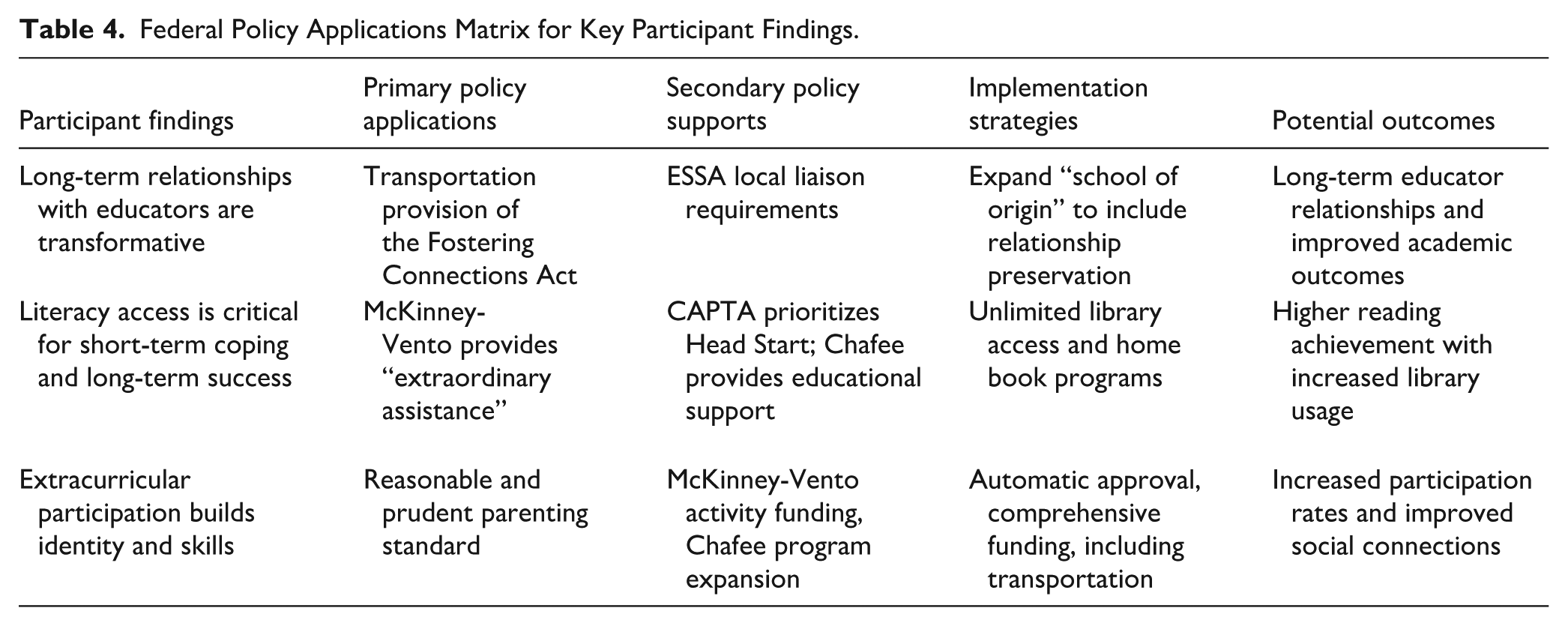
This study revealed three basic K-12 factors that former foster youth college graduates identify as contributing to their personal and academic success: long-term relationships with teachers and athletic coaches, access to literacy-rich environments, and participation in extracurricular activities. Importantly, existing federal policies offer frameworks that support each of these factors. Below are our recommendations about how these policies can be applied, amended and implemented at the systemic level so that youth in foster care can realize their full life and academic potentials. Table 4 breaks out these policies in relation to participant findings, primary policy applications and secondary supports with implementation strategies and potential outcomes.
Federal Policy Applications Matrix for Key Participant Findings.
Recommendations for Federal Policy Implementation
Existing federal policies provide resources, support systems, and institutional guidelines that allow children and youth in foster care to flourish personally and academically. However, the implementation of these remains inconsistent.
School Stability
Current federal policies, if implemented consistently, can promote school stability. The Fostering Connections to Success and Increasing Adoptions Act (2008), for example, required that child welfare agencies and schools collaborate, specifically requiring that the “proximity of the placement to the school [be] considered” in case planning. The Every Student Succeeds Act (2015) also mandated coordination between child welfare and education agencies to keep children in their “school of origin” and also provided federal funding for transportation costs. Research has shown that when properly implemented, these policies reduced school mobility for foster youth by 15% to 20% (Clemens et al., 2017).
Support of Long-Term Relationships with Teachers and Athletic Coaches
Participants unanimously identified educator relationships as the most critical factor in their success; this finding aligned with extensive research that had demonstrated the protective impact of stable adult relationships for youth in foster care (Daining & DePanfilis, 2007; Munson & McMillen, 2009). These relationships serve multiple functions, from emotional support, practical assistance, and academic encouragement to identity affirmation that counters deficit-based societal narratives about foster youth.
To improve outcomes among foster youth, current federal policy on the school of origin should explicitly prioritize long-term educator relationships. Federal guidance should also clarify the use of transportation funding to keep children in the school with established teacher- and athletic coach-mentors when a new school is equidistant to the school of origin. The Fostering Connections to Success and Increasing Adoptions Act (2008), which addressed school proximity, should also be amended to specifically address the continuity of educational relationships, with case plans documenting existing educator relationships and requiring justification for placements that would disrupt these connections.
Schools can also ensure educator continuity for children in care by leveraging existing funding to implement “looping” programs where teachers move with students across grades. Educator continuity is especially beneficial for foster youth who experience multiple care placements. Research has shown that looping significantly improves outcomes for at-risk students (Little & Dacus, 1999).
Promotion of Literacy-Rich Environments
The exceptional literacy levels of the participants in our study and their identification of reading and writing as critical to their success align with research that correlates literacy skills with positive outcomes for this population (Trout et al., 2008). Nonetheless, participants identified systemic barriers to literacy access that existing policies could address more effectively.
Young children benefit from access to preschool which can expose them to early literacy skills. The 1974 Child Abuse and Prevention Act (CAPTA) recommended enrolling foster children in Head Start regardless of income criteria which gave them the opportunity for quality early education programs. Although CAPTA mandated that they have priority access to Head Start, implementation has varied significantly; stronger enforcement provisions at the federal or state level could ensure that all eligible foster children receive priority placement in high-quality early learning programs with intensive literacy components.
In addition, case planning of “access to age-appropriate activities” in Preventing Sex Trafficking and Strengthening Families Act (2014) could expand the definition of literacy materials and library access to include unlimited access to books, writing materials, and library resources as essential developmental supports. Moreover, for children in foster care who qualify for McKinney-Vento services based on housing instability prior to placement, educational agencies should also request comprehensive literacy supports such as home libraries, extended library access, and elimination of library fines.
Partnerships between libraries and foster parent associations may also provide innovative opportunities to increase book and library access for children. Transportation barriers may impede library access for youth in care (Collins et al., 2021) so novel approaches like mobile book delivery, mailing materials, or gifting book collections to youth in care can help increase access (e.g., Griffiths, 2012; Roberts et al., 2017; Skipper, 2019). When opportunities exist to conduct needs assessments, library systems should consider contacting foster parent associations and leadership for any youth group homes to assess the library accessibility for youth in care and their programming needs.
Participation in Extracurricular Activities
The importance and feasibility of sustained involvement in athletic and arts activities, despite commonly assumed barriers, was demonstrated by all five participants. Research had confirmed that extracurricular participation provides critical benefits such as positive identity development, social connection, and transferable skills (Akiva et al., 2013; Eccles & Gootman, 2002).
Bureaucratic barriers to foster caregivers approving participation in extracurriculars were removed by the “reasonable and prudent parenting standard” of the 2014 Preventing Sex Trafficking and Strengthening Families Act. This act built on the McKinney-Vento Homeless Assistance Act (1987/2015), which approved funding for “extracurricular activities (sports equipment, sports uniforms), before and after school and/or summer programs”; and on the John H. Chafee Foster Care Independence Act (1999), which with the Family First Prevention Services Act (2018), expanded funding that could support youth development through extracurricular activities, by expanding eligibility to ages 14 to 23. By strengthening the “reasonable and prudent parenting” standard, approval of extracurricular participation should be the default, with denial requiring specific justification. Research shows that effective implementation increases participation rates in extracurriculars by 30% to 40% (Font & Maguire-Jack, 2020).
Federal clarification should establish that children in foster care are presumptively eligible for McKinney-Vento services, given the high rates of housing instability among children and youth in foster care prior to placement. This change would provide comprehensive funding for extracurricular participation, including equipment, transportation, and fees. Additionally, current Chafee funding for “educational assistance” should explicitly include extracurricular activities, arts supplies, sports equipment, and transportation as educational supports that promote positive development and college readiness.
Limitations
Several limitations should be considered when interpreting these findings. First, this population (former foster youth college graduates) is atypical. Results should not be generalized to the broader population of former foster youth, but instead be viewed as a lens of hope for the future of the broader population when looking at mutual themes which were identified across these successful participants.
Second, the sample size of five participants, while sufficient for qualitative counter-narrative research (Creswell and Poth, 2018), also restricts findings and their applications to the broader foster youth population. The consistency of findings across participants of different ages, races, and geographic regions, however, suggests broader applicability.
Third, participants represented successful outcomes by virtue of college graduation, potentially overlooking the experiences of foster youth who did not achieve traditional educational milestones. While we acknowledge this limitation, the purpose of counter-narrative research is to specifically highlight the untold stories of success that challenge deficit-based assumptions and narratives.
Fourth, participants varied in age, ranging from 26 to 70 years old, which may have had an impact on retrospective recall. While we recognize this possible limitation, we also believe that the mutual findings across participants, regardless of diversity of age, geographic location, and foster care experience, strengthens the implications.
Finally, the policy review focused on federal policies, while implementation occurs primarily at state and local levels where significant variations exist. Future research should include a systematic review of both federal and state-level reporting and data frameworks to more holistically examine policy implementation and outcomes.
Implications
Policy Implications
Our findings suggest that existing federal policies provide a strong foundation for supporting foster youth educational success, but that their implementation requires intentional focus and targeted enhancements. Policymakers should prioritize clarifying existing policy language to explicitly support relationship continuity, literacy access, and extracurricular participation.
Federal agencies should also develop comprehensive guidance documents for state and local implementation, provide technical assistance for effective policy utilization, and establish accountability mechanisms to ensure consistent application across jurisdictions. Training and resource development for educators, child welfare professionals, and foster caregivers would also support effective implementation.
Practice Implications
Rather than viewing foster youth through deficit lenses, educators should recognize them as capable, talented individuals who can thrive with appropriate support. Based on our findings, we recommend a variety of specific practice recommendations for K-12 schools. Schools should develop systems to identify and support of foster youth. Schools should mandate the priority enrollment of foster youth in school programs and extracurriculars, with all school personnel trained in trauma-informed approaches. Mentoring programs should pair foster youth with caring adults. And finally, schools should establish resource banks to pay for educational materials and supplies.
Conclusion
This study revealed that former foster youth college graduates attribute their success primarily to three K-12 factors: relationships with caring educators, access to literacy-rich environments, and participation in extracurricular activities. Federal policies already exist to support these factors, but their implementation requires intentional focus on foster youth needs and targeted policy enhancements.
The counter-narratives shared by this study’s participants challenge pervasive deficit-based assumptions about foster youth capabilities. All five participants became published authors and achieved significant educational and professional success, demonstrating that with appropriate support, children in foster care can achieve exceptional outcomes that benefit both individuals and society.
Schools represent the universal intervention point for supporting foster youth since all children in care must attend school regardless of placement instability. By leveraging existing policies more effectively and implementing trauma-informed, asset-based approaches, educational systems can serve as critical protective factors that promote positive life trajectories for this vulnerable population.
Our most significant finding is that participants did not require extraordinary interventions; instead, they needed consistent, caring adult relationships, access to books and educational activities, and opportunities to develop their interests and talents. These fundamental educational supports, when provided systematically, can transform life outcomes for children in foster care while generating substantial economic returns through reduced social costs and increased productivity.
The voices of these former foster youth college graduates provide a practical roadmap for educational policy that recognizes children in care as capable, resilient individuals who can thrive with appropriate support. Their stories offer both hope and concrete guidance for creating educational environments where all foster youth can succeed, and they ultimately challenge society to move beyond deficit-based narratives toward asset-based approaches that unlock the tremendous potential within this population.
Footnotes

Funding
The authors received no financial support for the research, authorship, and/or publication of this article.
Declaration of Conflicting Interests
The authors declared no potential conflicts of interest with respect to the research, authorship, and/or publication of this article.