



Abstract
The rapid transition to emergency remote teaching in the wake of the COVID-19 pandemic altered public education as schools closed across the United States. Eighty percent of teachers reported interacting with students online, often utilizing free technology like Zoom and Google Workspace for Education. This article provides a comprehensive overview of state education agencies’ recommendations for emergency remote teaching during the COVID-19 school closures in early 2020. Reviewing 337 publicly available documents from 50 state education agencies reveals a fragmented response: state education agencies relied on nongovernmental organizations to do the work of governance.
Introduction
The COVID-19 pandemic forced school systems to shut down in-person instruction: by March 27, 2020 public-school buildings in the United States were closed and all 50 state education agencies had a COVID-19 webpage with guidance for school closures (Reich et al., 2020). By early May, 48 states announced that schools would remained closed for the remainder of the 2019 to 2020 school year, “affecting at least 50.8 million public school students.” (EdWeek, 2020b). Amid nationwide closures, states, districts, and schools scrambled to adopt technologies for emergency remote teaching. Emergency remote teaching refers to a change in instruction modality during a crisis—a temporary pivot from traditional face-to-face instruction to distance or virtual learning (Barbour et al., 2020; Hodges et al., 2020). Eighty percent of teachers reported interacting with students online (EdWeek, 2020a), often utilizing free, for-profit technology like Zoom and Google Workspace for Education. The widespread adoption of for-profit technologies raises critical issues of data privacy: many companies track, analyze, and sell student information (Lindh & Nolin, 2016; Williamson & Hogan, 2020).
This article presents a comprehensive overview of state education agencies’ recommendations for emergency remote teaching in the immediate aftermath of the COVID-19 school closures in spring of 2020. State education agencies (SEA) are responsible for offering local education agencies (LEA) policy options and implementing federal regulations, key components of education governance. What policy options for virtual content and platforms did state education agencies provide? How did state education agencies help school districts adhere to federal regulations and safeguard student privacy? Content analysis of 337 publicly available documents from 50 state education agencies reveals wide variation in recommendations for emergency remote teaching. Clear differences in policy options for instructional content and platforms emerged between states with and without existing virtual infrastructure. Several states (n = 17) leveraged existing virtual infrastructure to help support emergency remote teaching. All 50 SEAs recommended for-profit companies for instructional content and platforms. States also varied in the extent to which they helped local education agencies navigate federal data privacy regulations. Few state education agencies (n = 8) provided comprehensive guidance to help schools and districts safely adopt education technologies and protect student data. During the first few months of emergency remote teaching, local education agencies scrambled to provide devices and high-speed internet access, and teachers reported feeling overworked and under-resourced (Herold, 2020). In addition to these tremendous challenges, district leaders, teachers, and parents likely served as the first line of defense for student privacy.
The article proceeds as follows: first, I discuss emergency remote teaching and student privacy in the context of education governance. Federal laws on technology in education are inadequate to protect children’s data privacy. State education agencies have a responsibility to provide policy options and help districts adhere to federal regulations: yet, wide variation exists in SEA governance capacity. The rapid and unprecedented switch to emergency remote teaching interacts with both of these overlapping issues, putting student data privacy at risk. Next, I describe a novel dataset of state education agency documents to support emergency remote teaching, and review the inductive content analysis approach. I present the results and discuss the findings in the broader context of education governance. The article concludes with reflections for the future of virtual learning.
Emergency Remote Teaching, Student Data Privacy, and Education Governance
In spring of 2020 schools across the United States closed to prevent the spread of COVID-19, and teachers and leadership quickly transitioned to emergency remote teaching. Researchers in education technology have drawn careful distinctions between emergency remote teaching and virtual learning: emergency remote teaching “involves the use of fully remote teaching solutions for instruction or education that would otherwise be delivered face-to-face” (Barbour et al., 2020, p. 10). Successful virtual learning infrastructure require supportive learning communities, co-curricular engagement, social supports (Barbour et al., 2020) and careful instructional design (Branch & Dousay, 2015). In contrast, the primary objective of emergency remote teaching is to provide temporary access to instructional content and a platform to connect students and teachers.
Analyzing state education agency recommendations for emergency remote teaching is important for three reasons. First, emergency remote teaching was supposed to be temporary, but most schools closed from March through the summer of 2020. These closures impacted an estimated 50.8 million public school students (EdWeek, 2020b). In addition, many students experienced school closures during the 2020 to 2021 academic year (Oster et al., 2021; Parks et al., 2021).
Second, emergency remote teaching required widespread adoption of technology. Educators relied on free resources and video-conferencing software to provide curricular materials and to connect students and teachers online. Companies providing free access may have adopted a strategy of “‘support now, sell later’, expanding services now in the hope they might lock schools and parents into long term subscriptions once the pandemic ends.” (Williamson & Hogan, 2020, p. 60). Once a school or district has invested time or money into online platforms, content, or professional development, they are likely to continue using these technology products (Saltman, 2016). The concept of “lock-in” suggests path dependence: early adoption of a technology can result in widespread use across the market (Liebowitz & Margolis, 1995). Temporary technologies may become permanent teaching tools.
Third, schools adopted digital tools for emergency remote teaching with a history of student data privacy violations. Educational technology and video-conferencing software passively collect data on location, device, and individual student behavior online (Boninger et al., 2020; Saltman, 2016). For example, Zoom’s privacy policy states that the company collects individual data, including name, physical address, email address, phone number, job title, and employer. Zoom collects data on the type of device used to sign in and the IP address. While Zoom states that it does not sell personal data, the company does share personal data with third parties for “business purposes.” (Zoom, 2020). Google faces ongoing litigation for violating state and federal regulations protecting children’s privacy (Nieva, 2020; St John, 2020). Data breaches by technology companies like Schoolzilla and Edmodo exposed personal data from educational records for over one million students (El-Khattabi, 2017; Archambault, 2021). A recent study by Fordham University’s Center on Law and Information Policy documents the commercial marketplace for student information and notes the weaknesses of existing provisions to protect student data (Russell et al., 2018). Students pay the cost of using “free” software, platforms, or servers, which harvest sensitive data and communications for profit (Rotenberg & Barnes, 2013).
While temporary, school closures and the switch to emergency remote teaching impacted millions of students over the 2019 to 2020 and 2020 to 2021 school years. Use of technologies, from curricular materials to video-conferencing platforms, may continue beyond the pandemic. Emergency remote teaching tools may be used for future disruptions like natural disasters or inclement weather (Barbour et al., 2020). Yet, many of these technologies violate state and federal regulations regarding student data privacy.
Federal and State Regulations Regarding Student Data Privacy
The existing regulatory framework for student data is weak: federal and state laws are inadequate to protect children’s privacy. State education agencies vary widely in their capacity to provide policy options to aid in emergency remote teaching and their ability to support district adherence to federal regulations on student data privacy. These overlapping issues present a pressing policy issue in education governance.
Current federal regulations are insufficient to protect student data privacy. There are two key federal laws regulating student data: The Family Educational Rights and Privacy Act of 1974 (“FERPA”) and the Children’s Online Privacy Protection Act (“COPPA”). FERPA applies to all schools that receive federal funding. It stipulates that schools must have written permission from the parent or guardian to share information, including official records, files, and data, from a student’s education record (FERPA, 2020). In 2011, the Department of Education amended FERPA, removing protections by reinterpreting the term “school officials” to include a host of non-governmental actors, including “contractors, consultants, volunteers, and other parties.” (FERPA, 2020). The school official exemption allows providers of online educational software access to educational records. This amendment significantly weakened privacy protections by allowing third party organizations access to student data. In addition, FERPA does not regulate the collection of metadata on individual student behavior—for example, technology companies may collect data on how long it takes students to complete a lesson, or perform a task (Cole, 2021). FERPA does not include a private right of action to sue schools for noncompliance, and enforcement is conducted by the federal Education Department’s Student Privacy Policy office (Cole, 2021). To date, the Education Department has never punished a local education agency or school for violation of FERPA (Archambault, 2021).
The Children’s Online Privacy Protection Act prohibits the collection of personal information from children without parental consent. COPPA (1998) applies to websites or online services directed at children that collect personal information. COPPA has several key weaknesses: first, COPPA only covers students under age 13. Second, the Federal Trade Commission (FTC) is responsible for legal violations of COPPA. As a result, the law does not allow a private right of action which leads to fewer reported violations (Fedders, 2018). Without an automated system in place to monitor education technology vendors whose privacy policies violate COPPA, the FTC struggles to audit compliance (Archambault, 2021). Fordham’s Center on Law and Information Policy estimates that only 25% of local education agencies informed parents that they were storing student data in cloud services, violating COPPA requirements (Reidenberg et al., 2013).
Civil society organizations like the Electronic Privacy Information Center (EPIC) and the Electronic Frontier Foundation (EFF) advocate for strong regulations to protect student privacy. The EFF reported on the privacy policies of 152 education technology services: only 77% of companies published privacy policies, and just over half outlined their data retention policies. Without clear privacy policies on data collection, parents cannot provide informed consent per COPPA requirements. Technology companies that violate federal regulations are not likely to be held accountable: a 2018 audit revealed a 2-year backlog in the Department of Education’s processing of FERPA complaints (Boninger & Molnar, 2020). When technology companies are held responsible for breaches of data privacy, the punishment is not sufficient to stop the behavior. In 2019, the FTC (2019) fined Google a record 170 million dollars for collecting personal information through YouTube for children under age 13. Yet, the “fine levied was the equivalent of less than 3 months of the advertising revenue Google makes from children’s videos, prompting critics to note that in effect, Google would not be discouraged from violating COPPA in the future.” (Boninger & Molnar, 2020, p. 43). 1
In 2018, the Federal Bureau of Investigation issued a public service announcement on “the widespread collection of sensitive information by EdTech” warning that it could “present unique exploitation opportunities” (Federal Bureau of Investigations, 2018). A recent national survey of teachers reported that 68% of respondents had not received training on safe adoption of education technology to protect student data. A majority of respondents felt pressured to download some applications without understanding what data the application would collect (Archambault, 2021). Educational technology tools collect personal identifying information like “browsing history, search terms, location data, contact lists, and behavioral information,” often without the awareness or consent of parents and students (Alim et al., 2017, p. 5) . Neither FERPA nor COPPA regulate data that is passively collected when students use third party applications. Despite concerns that existing federal laws are inadequate, there is no consensus on the role the federal government should play in protecting student data (Congressional Research Services, 2019).
Many states have enacted legislation safeguarding student data. Legislative efforts focus on protecting personal identifying information (PII) that local and state education agencies actively collect, from social security numbers, name, address, telephone number, Free or Reduced-Price Lunch eligibility, to standardized assessments score (Boninger et al., 2020; Mann, 2020; National Association of State Boards of Education, 2018). An outlier is California’s Consumer Privacy Act (“CCPA”), which applies to businesses that collect personal information from consumers. Unlike federal statutes, CCPA has an expansive definition of personal information which includes behavioral metadata. Residents of California have the right to know what information is collected and sold, the right to opt out of the sale of personal information, and the right to delete information that has already been collected (CCPA—California, 2018). The law is enforced through private right to action through the California Attorney General. Despite promising legislative efforts in California, recent analysis of legislation across the states from 2019 to 2020 found that “bills related to cyber security and student data privacy issues have decreased significantly” (Miron et al., 2021, p. 86).
In the first year of the pandemic, state legislatures enacted 18 bills related to emergency remote teaching. Legislators focused on short-term solutions to address immediate concerns rather than providing guidance to local education agencies (Miron et al., 2021). Legislation included fund appropriation, access to technology, adjusting state and federal requirements, and orders to implement emergency remote teaching. In some states, funding was used to expand state-wide virtual learning infrastructure and to purchase digital content and curriculum (HB 1038—North Carolina, 2020; SB 704 / SL 2020-3—North Carolina, 2020). Bills in 10 states focused on “adjusting requirements for teacher training, evaluation and professional development” (Miron et al., 2021, p. 108). Overall, state legislatures deferred to local education agencies to define emergency remote teaching and protect student data privacy, and the majority of state legislatures (n = 31) did not propose any legislation to aid in emergency remote teaching (Miron et al., 2021, p. 111). The rapid growth in educational technology outpaces legislation to regulate the industry and protect student data privacy.
State Education Agencies and Governing Capacity
The pandemic presented a difficult challenge for state education agencies, and the rapid switch to emergency remote teaching exacerbated existing governance issues. I focus on two critical components of education governance: decisions on policy options for instructional content and virtual platforms and the implementation of federal regulations focused on student data privacy (Meier & O’Toole, 2006).
Historically, state education agencies’ purview included administration, from taxation and revenue dispersal to managing public school buildings (Moffitt et al., 2021; Steffes, 2011). While state education agencies have formal authority over schools, SEA’s delegated operational decisions to local education agencies (Timar, 1997). However, state education agencies’ governing capacity expanded during the standards-based reform efforts of the 1990s and early 2000s. The 1994 Improving America’s Schools Act (IASA) and 2002 No Child Left Behind Act (NCLB) extended the reach of the federal government and added new responsibilities for the states. SEAs were charged with providing policy options related to standards and assessments, and issuing guidance on academic standards and assessments to meet federal requirements (Brown et al., 2011; Manna, 2006). State education agencies’ roles included support and technical assistance to build local capacity (Rhim et al., 2007).
Increased responsibilities for SEAs did not coincide with expanded financial support to build state capacity (Sunderman & Orfield, 2006), and state education departments lacked the organizational and financial resources to meet federal mandates. As a result, SEAs continued to prioritize compliance over the development of administrative expertise necessary to centralize policy options for districts (Moffitt et al., 2021). After the recession, funding issues constrained state education agencies operating budgets and limited staffing making it difficult to build capacity (Kober & Rentner, 2011). As a result, SEAs deferred to local education agencies to make decisions regarding the quality of instructional materials and content (Moffitt et al., 2018). While state education agencies were given increased responsibility for instructional content, most agencies lacked the capacity to offer policy options to local education agencies.
Standards-based reforms expanded SEA responsibilities to include compliance with federal mandates and monitoring local education agencies progress toward improved student outcomes (Sunderman et al., 2005). Anagnostopoulos et al.’s (2013) research on educational data systems provides further insight into SEA’s role in insuring compliance with federal requirements. To implement test-based accountability, SEAs were tasked with creating data systems to collect, process, and share data to track student achievement. Creating data infrastructure to implement test-based accountability required administrative capacity, and revealed fiscal, organizational, and political challenges.
Prior to the pandemic, virtual learning reflected these governance issues. SEAs are responsible for ensuring the quality of online learning and regulating virtual schools (Natale & Cook, 2012). Effective virtual learning requires centralized policy options for instructional design, standards-aligned curriculum and assessment. It requires infrastructure, ranging from professional development to high-speed internet access (Branch & Dousay, 2015; Miron et al., 2021). Scholars in favor of virtual learning argue that state education agencies are the best option for centralizing K-12 online learning policies (Chubb, 2012). SEAs “bear responsibility for sanctioning and chartering online providers” (Glass & Welner, 2011, p. 1). Regulating virtual schools to assess their quality also falls under the purview of state education agencies (Molnar et al., 2021). Numerous reports highlight weak oversight and accountability (Barbour et al., 2016; Boninger & Molnar, 2020; Molnar et al., 2021; Natale & Cook, 2012). Evaluation policies for virtual schools are decentralized, and states vary wide in their policies on accountability and evaluation (Barbour et al., 2019). Many virtual schools do not report data on student achievement. In 2020, only “28 out of 40 states with virtual and/or blended schools had data on school performance available” (Molnar et al., 2021, p. 12). Among virtual schools that report data on student achievement, performance is weak: during the 2019 to 2020 school year, only 42.8% of virtual schools were rated “acceptable” (Molnar et al., 2021, p. 49). Regulation and strong accountability systems are critical to encourage effective virtual learning (Natale & Cook, 2012), particularly when many virtual learning providers are for-profit.
State education agencies that sponsor virtual learning infrastructure are more likely to provide policy options and aid in the implementation of federal regulations. State-led initiatives are generally run by state education agencies and funded through legislative appropriation (Natale & Cook, 2012). 2 Two examples include Florida Virtual Schools and Michigan Virtual Learning Research Institute. Student performance at Florida Virtual Schools (FLVS) exceeds their peer virtual schools: most FLVS schools were evaluated as “acceptable” (Miron et al., 2021, p. 38). State-funded virtual learning infrastructure, such as the Michigan Virtual Learning Research Institute (MVLRI), tracks enrollments, completion rates, and student impact. While MVLRI releases this data to guide legislation on virtual schools, policymakers in the state fail to enact policies to improve virtual school performance. MLVRI provided significant support to districts during the pandemic school closures (Miron et al., 2021).
Existing research on state education agencies’ response to the COVID-19 pandemic focuses on state recommendations regarding remote learning support, equity and access, statewide assessments, and attention to student needs and special populations (Reich et al., 2020). While “at least 20 state education agencies [included] language reminding LEAs to adhere to [federal] privacy guidelines” (Reich et al., 2020, p. 5), it is unclear whether state education agencies provided comprehensive guidance necessary to insure compliance with FERPA and COPPA. State education agencies are responsible for providing policy options on instructional content and for adherence to federal regulations. Yet, SEAs are often underfunded and lack capacity to fulfill their role in the federalist governance system.
The COVID-19 pandemic brings a new challenge to these recurring governance issues. The following research questions explore variation in state education agencies support for emergency remote teaching during the COVID-19 pandemic through two critical components of governance: decisions on policy options and the implementation of federal regulations (Meier & O’Toole, 2006).
Research Question 1: To what extent did state education agencies offer local education agencies options for instructional content and platforms for emergency remote teaching?
Research Question 2: What guidance did state education agencies offer local education agencies regarding federal regulations on student data privacy?
Data Sources and Data Collection
This article leverages a novel national dataset of state-level recommendations in the wake of the COVID-19 outbreak and subsequent school closures in March 2020. The research questions drive the data sources consulted and collected (VanGronigen & Meyers, 2019). The sampling framework includes data from the population of interest, state education agencies (n = 50), with webpages and downloadable documents from state education agency websites serving as the primary data sources (n = 337).
Data collection focused on each state education agencies’ recommendations for emergency remote teaching during the initial school closures in the COVID-19 pandemic, with primary data sources collected from 3/25/2020 to 5/15/2020. For each state education agency, we visited the main page of the SEA website and identified webpages and downloadable documents related to COVID-19 school closures. As an example, webpages include state recommendations for emergency remote teaching or links to digital curricular tools, and downloadable documents include press releases or spreadsheets of online resources. The primary documents include SEA websites, press releases, and state partner materials. The documents were labeled and categorized into 44 specific types, the most prevalent being Department of Education or state education agency digital learning resources and resource lists (n = 100), SEA COVID-19 FAQs and information (n = 61), SEA partner websites (n = 30), press coverage of SEA plans (n = 20), SEA emergency remote teaching guidance (n = 16), and guidance for districts (n = 9), educators (n = 9), and parents (n = 12). The average number of primary source documents is 6.72 per state. Any document or link posted on a state education agency website related to the COVID-19 pandemic was archived with the Internet Archive, a non-profit digital library that saves content published on the web. Additional information on the primary sources and itemized list of primary documents by category are included in the Supplemental Appendix.
This sampling framework has advantages and disadvantages. Because the data were collected as SEAs made decisions on emergency remote teaching, the sample of primary documents includes a novel overview of recommendations in the spring of 2020. In addition, the sampling framework created a digital repository of documents produced or shared by state education agencies during the first few months of the pandemic. In the 2020 to 2021 school year, state education agency recommendations were likely influenced by the partisan nature of decision-making around school closures (Hartney & Finger, 2022). Focusing on initial recommendations by state agencies in the immediate aftermath of COVID-19 school closures allows for rich description of variation in state education agency capacity, absent the complications of partisanship.
There are disadvantages to relying on data collected from state education agency websites. Most importantly, there may be missing information: state education agencies may have sent comprehensive guidance to districts directly through mail or email. As a result of the selection criteria, the article may portray a partial picture of SEA recommendations. Yet, there are few avenues to get comprehensive data on the actions of state education agencies: as other researchers have noted, there remains “precious little information regarding SEA capacity.” (Brown et al., 2011, p. 11). The selection strategy employed follows best practices in existing research on state education agencies (VanGronigen & Meyers, 2019), collecting the most complete overview of state education agencies’ recommendations for emergency remote teaching possible, given the constraints.
Data Analysis and Coding Scheme
This article examines two key research questions: did state education agencies offer local education agencies options for instructional content and platforms for emergency remote teaching during the COVID-19 pandemic? What guidance did state education agencies offer local education agencies to adhere to federal regulations on student data privacy? I use an inductive content analysis approach, organizing the qualitative data through open coding and then formalizing categories to describe the phenomenon of state education agency guidance on emergency remote teaching (Elo & Kyngäs, 2008). The unit of analysis is state education agencies’ primary data sources, such as webpages and downloadable documents.
To start, my research assistant and I created a dataset of all primary sources, including the author, the web link, the archived stable link, the state, the date published, and date accessed. This data was organized in a spreadsheet, with a row for each primary source. Next, we both read through all the documents for a preliminary open coding. We reviewed our preliminary codes that emerged and created a coding scheme to address the research questions. I outline the coding categories and decision rules below, and the Supplemental Appendix includes additional information.
State education agencies vary widely in their ability to centralize decisions about policy options (Manna, 2012). We examine state education agency primary documents for policy options, specifically recommendations for instructional content and platforms for emergency remote teaching. During the open coding, stark differences emerged between states with existing virtual infrastructure, or statewide virtual school options, and states that did not have virtual infrastructure. State education agencies with existing virtual infrastructure were more likely to offer districts centralized policy options, while SEAs without existing infrastructure were more likely to rely on nongovernmental organizations. Based on this observation, I collected additional data on existing statewide virtual infrastructure. In the document coding database, I included a dummy variable for each primary source document indicating whether or not the SEA managed, directed, or sponsored virtual learning infrastructure for the state. The data were collected from three sources: (1) the Digital Learning Collaborative and Virtual Learning Leadership Alliance’s policy report on State Virtual Schools, published in 2018, (2) The National Education Policy Center (NEPC)’s report on Virtual Schools in the U.S. in 2019, and (3) state education agency websites. For SEAs with virtual infrastructure, I reviewed primary documents for references to existing infrastructure for instructional content and platforms. If the SEA recommended alternative nongovernmental resources, I noted this and included the names of the nongovernmental resources. For states without existing state virtual infrastructure, I reviewed primary documents and noted any specific recommendations for instructional content or platforms, and listed the recommendations.
State education agencies vary in their institutional structure, and this variation leads states to different regulatory interpretations as they carry out federal policies (Junge & Krvaric, 2011; Manna, 2012). The second question explores SEA guidance to LEAs to meet federal regulations on student data privacy. First, I reviewed primary documents and noted whether the document mentioned student data privacy (referring to a specific policy, like FERPA, COPPA, or mentioning the term “privacy”). The initial open coding yielded three distinct approaches to SEA guidance on student data privacy during emergency remote teaching: state education agencies acted as “federalism’s middle managers,” deferred to local education agencies, or referred local education agencies to nongovernmental organizations. I discuss each in turn.
State Education Agencies Acted as “Middle-Managers”
State education agencies shared information on federal and state data privacy regulations with local education agencies. SEAs embraced their role as “federalism’s middle managers” in educational governance (Manna, 2006, p. 638), working with local education agencies to ensure implementation of federal regulations on student data privacy. “Middle managers” provided districts with information to help navigate FERPA, COPPA, and state requirements to safeguard student data in their documents on emergency remote teaching.
State Education Agencies Deferred to Local Education Agencies
State education agencies deferred to local education agencies to interpret and implement federal regulations protecting student data. SEAs deferred to LEAs to comply with federal regulations, placing the burden of compliance on districts. SEAs may defer to local education agencies because they lack regulatory capacity (McDermott, 2003) or favor localism (Hochschild & Scott, 1998). For example, state education agencies that were coded as “deferring” specifically stated that they were not responsible for vetting either student instructional materials or virtual platforms for compliance with FERPA, COPPA, or any applicable state regulation on student data privacy.
State Education Agencies Referred Local Education Agencies to Nongovernmental Organizations
State education agencies referred local education agencies to nongovernmental organizations for guidance in implementing federal regulations on student data privacy. For example, SEAs referred LEAs to nongovernmental organizations to explain federal regulations regarding student data. SEAs have a history of contracting with nongovernmental organizations, although historically not in the domain of compliance and implementation of federal regulations (Bulkley & Burch, 2011).
To sort each state education agency according to the three categories, I reviewed every primary source document that mentioned privacy. If a state education agency had more than one document that mentioned privacy, I reviewed the documents together before assigning the SEA to a category. This empirical approach does not yield coded data that can be compared meaningfully using statistical tests of difference; therefore, the evidence is presented in tables and displayed graphically. I offer exemplars with descriptive evidence from the primary documents.
Findings
Analysis of the primary documents revealed clear differences across state education agencies with, and without, existing state-wide virtual infrastructure. State education agencies with existing state-wide virtual infrastructure were better prepared to offer options for instructional content and platforms for local education agencies in the transition to emergency remote teaching. In contrast, SEAs without existing virtual infrastructure relied on nongovernmental organization for policy options for emergency remote teaching. All 50 state education agencies also recommended nongovernmental resources, specifically for-profit virtual conferencing technology, as policy options during the initial COVID-19 school closures (Table 1).
Overview of Content Analysis of State Education Agency Primary Documents, Collected 3/25/2020 to 5/15/2020 (337 Documents, Analyzed by State).
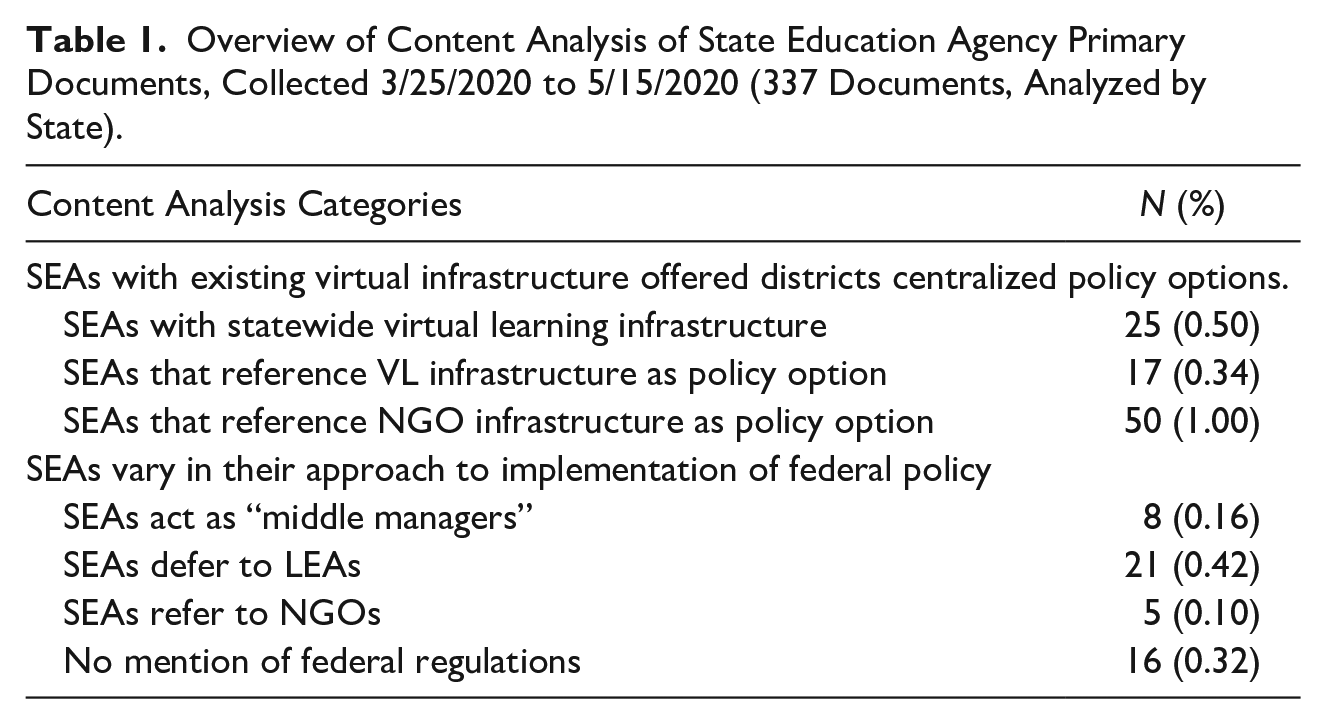
State education agencies with existing virtual infrastructure were more likely to offer local education agencies specific recommendations for state-created or contracted content and platforms. Half of the U.S. states (25) had virtual infrastructure in place prior to the pandemic (Digital Learning Collaborative, 2018). However, the extent to which state education agencies used existing infrastructure to offer policy options varied widely. Figures 1 and 2 illustrate this point: while 25 states have virtual infrastructure, the analysis suggests that only 17 gave local education agencies access to content or platforms from existing public infrastructures during the transition to emergency remote teaching. 3
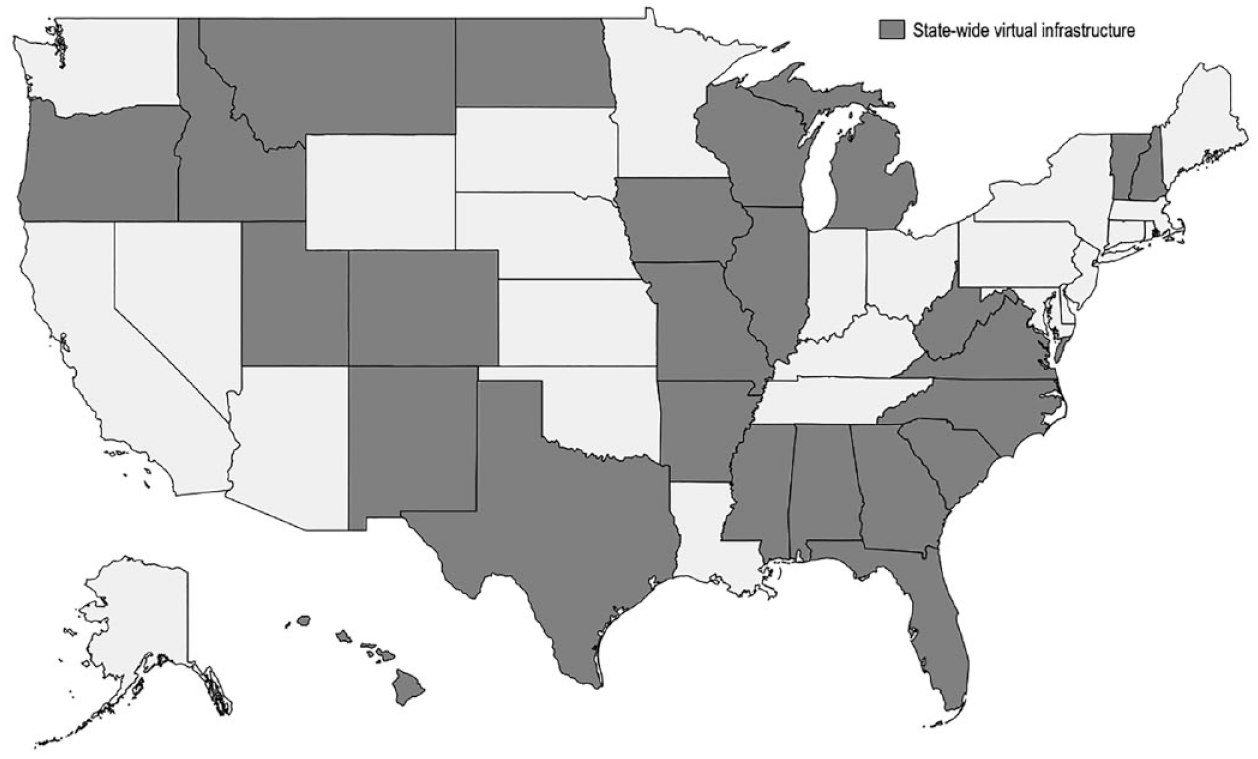
States with state-wide virtual infrastructure.
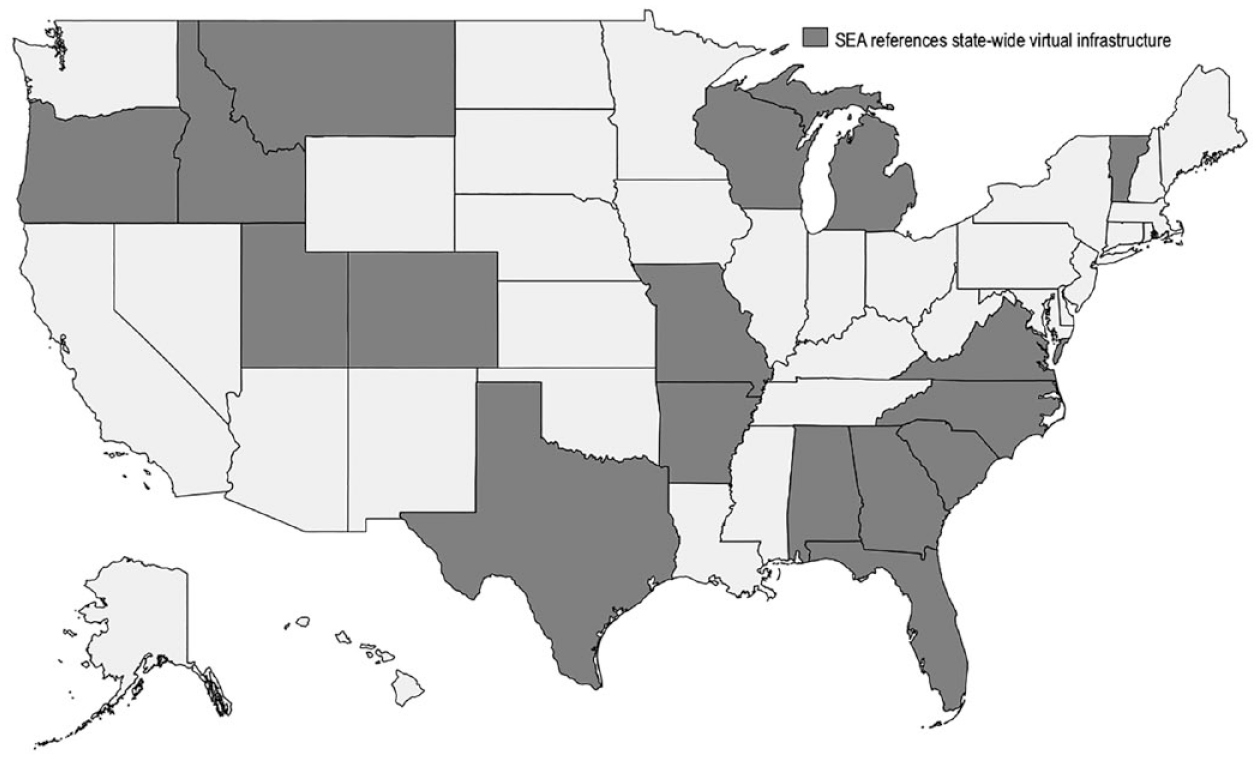
SEAs that reference virtual learning infrastructure.
Several states offered local education agencies access to existing state virtual infrastructure for platforms, learning management systems and instructional content. A few states serve as exemplars of this comprehensive approach: Florida Virtual Schools partnered with Florida Department of Education to “offer all school districts student support and teacher professional development tailored to the online learning environment” in addition to releasing 100 free courses from Florida Virtual Schools (Florida Department of Education, 2020). Virginia’s Department of Education (2020) opened access to Virtual Virginia programming, instructional resources and learning management systems to secondary school students immediately, and opened access to all students in May of 2020. Texas’s SEA opened access to the Texas Home Learning Model for districts and teachers, which includes both content and professional development. The Texas SEA also negotiated a paid contract with a learning management system—Schoology—and offered free access to all school districts (Texas Education Agency, 2020). Florida, Virginia, and Texas utilized their state-wide virtual infrastructure to provide specific policy options for both instructional content and platforms during emergency remote teaching.
Other states took a more piecemeal approach, offering components of their virtual learning infrastructure to local education agencies. For example, Louisiana’s SEA opened enrollment for their virtual supplemental course academy, but LEAs were responsible for financing student enrollment. Other states offered tools developed for virtual learning systems statewide, but did not open enrollment in virtual courses. Montana’s SEA partnered with Montana Digital Learning and EdReady to provide digital tools to districts, including professional development and training resources for online course development. The resources were intended to be a supplemental tool to districts’ own emergency remote teaching plan, the materials did not constitute “a full curriculum” (EdReady Montana, 2020). These SEAs leveraged existing capacity to offer local education agencies centralized policy options, but stopped short of comprehensive guidance on both instructional content and platforms for emergency remote teaching.
Several states (Hawaii, Illinois, Iowa, Mississippi, New Hampshire, New Mexico, North Dakota, West Virginia) with existing virtual infrastructure did not mention it in their public communications in the spring of 2020. Instead, many of these states offered districts a lengthy list of possible platforms and instructional materials without endorsing any of them. For example, despite having a statewide virtual school (Illinois Virtual School), the SEA released lists of instructional materials for emergency remote teaching by grade and content. The Illinois State Board of Education noted that the documents “do not constitute an endorsement of the resource. Prior to relying on any information in a resource, the Illinois State Board of Education (2020) recommends that schools and stakeholders confirm the accuracy of all resources directly”. Many SEAs have existing state-wide infrastructure for virtual learning; yet deferred to districts for content curation. These findings should be interpreted with caution: due to the sampling framework, which relied on publicly available documents, it is possible that states offered specific recommendations to districts in direct communication.
Regardless of whether the state had virtual learning infrastructure in place, all 50 state education agencies recommended or mentioned nongovernmental instructional content, learning management systems or video-conferencing software for emergency remote teaching. Figure 3 lists the most frequently referenced technology companies in state education agencies’ primary documents. Google products, including Google Classroom, Google Hangouts, and Google Documents, were the most prominent: Google was mentioned in 43 documents by 34 state education agencies. Zoom followed close behind, mentioned 35 times by 28 states. Microsoft Teams was mentioned in 22 state education agency documents by 19 states.
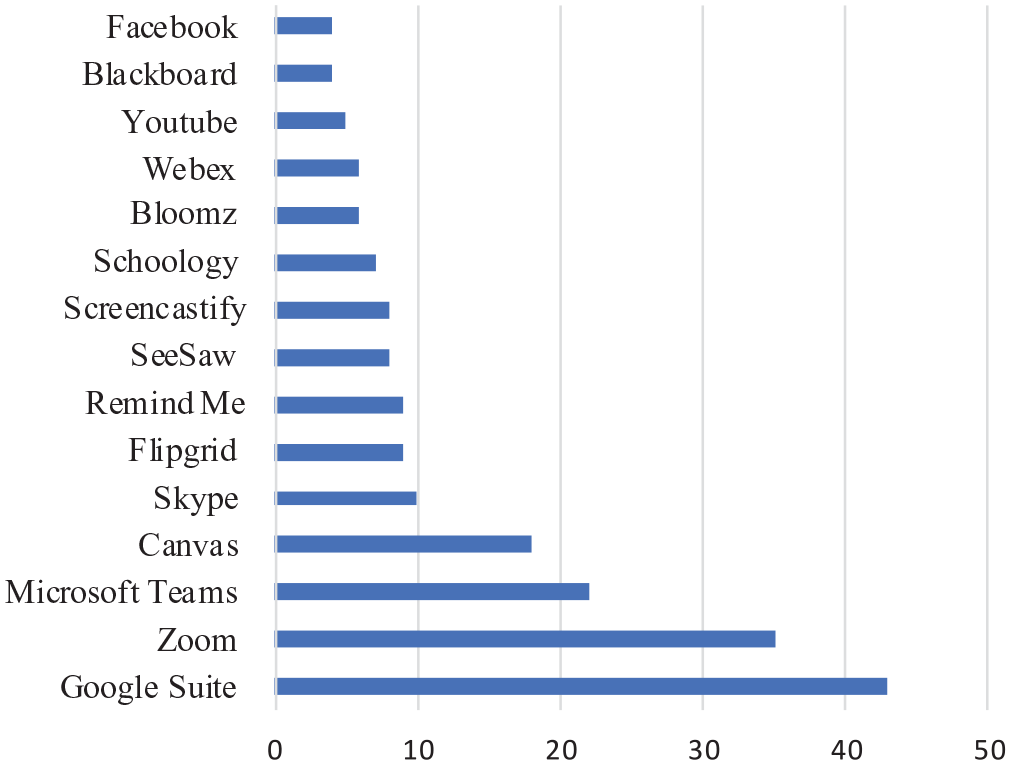
Number of SEA materials that mention a for-profit technology company.
There are several things that are striking about these findings. The most frequently mentioned virtual platform, Google, has a history of violations of student data privacy. Second, the three most frequently referenced platforms (Google, Zoom, and Microsoft Teams) are not educational technology companies. They were not designed for children and are unlikely to have the necessary federal and state data security provisions. As noted in previous research, Google services are free due to the companies well-established business model that involves collecting and selling user data to third parties (Lindh & Nolin, 2016). This practice constitutes 90% of company revenue (Archambault, 2021). Instructional content and platforms delivered by for-profit companies lack accountability mechanisms and democratic avenues for recourse.
State education agencies with existing virtual infrastructure offered districts centralized policy options for instructional content and platforms for classroom communication to aid in the transition to emergency remote teaching. Yet, there was wide variation in the extent to which SEAs curated policy options. Several states (e.g., Florida, Virginia, and Texas) offered ungated access to professional development, standards-aligned curriculum, and platforms for classroom communication. Other SEAs offered links to state managed virtual infrastructure but required districts to pay for students to enroll. Virtual learning infrastructure was mostly limited to webinars focused on professional development, rather than free access to instructional materials and learning management systems. Despite this variation, states with existing online infrastructure were undoubtably better prepared to help local education agencies transition to emergency remote teaching than states without virtual infrastructure.
To what extent did state education agencies help local education agencies meet federal regulations on student data privacy? The preliminary open coding revealed three distinct categories: SEAs served as “middle managers,” sharing information on federal and state data privacy regulations with local education agencies. Second, SEAs deferred to local education agencies to implement federal regulations protecting student data. Third, SEAs referred to nongovernmental organizations to aid in implementing federal policies.
In total, 62 primary documents mention student privacy concerns related to emergency remote teaching. To categorize each state education agency, I considered all primary source documents that mention privacy by state. Sixteen percent of states (n = 8) were categorized as “middle managers.” “Middle managers” focused on explaining the requirements of FERPA and providing information for LEAs to help implement federal policy. An exemplar of a “middle manager” is the Colorado Department of Education; Colorado’s SEA cautioned LEAs to “be mindful of how any eLearning platforms handle student data and personally identifiable information,” referring LEAs to federal regulations as well as Colorado’s Student Data Privacy and Transparency Act (Colorado DOE, 2020b). In addition, the Colorado Department of Education (2020a) provided a guide to assess “the security of online tools,” outlining the privacy concerns of popular platforms, including Microsoft Teams, Google Hangouts, and Zoom. State education agencies that served as “middle managers” explained federal data privacy provisions and provided concrete recommendations for district leadership to adhere to federal regulations during the transition to emergency remote teaching (Table 2).
Variation in State Education Agency Approach to Helping Local Education Agencies Adhere to Student Data Privacy Regulations.
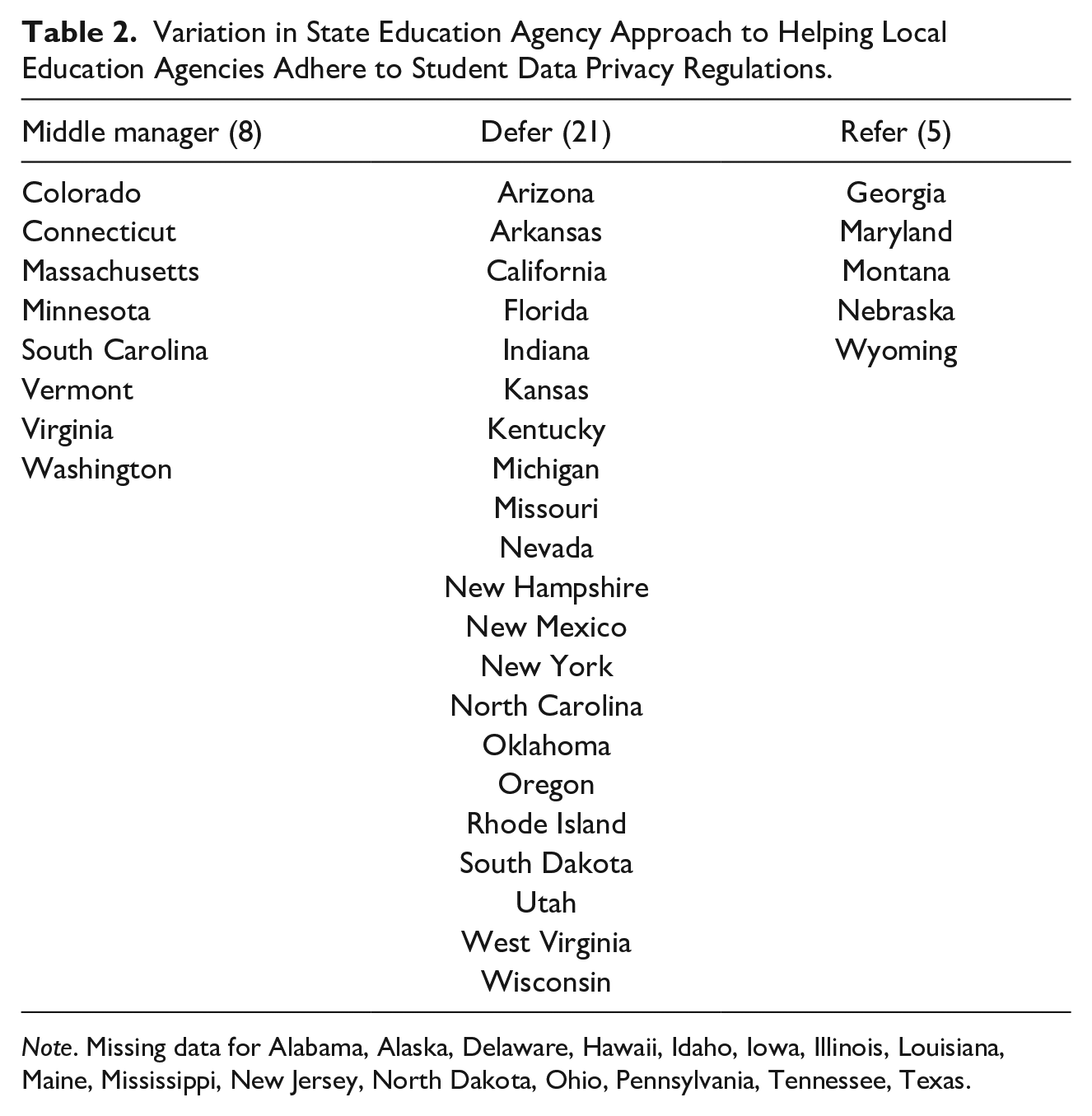
Note. Missing data for Alabama, Alaska, Delaware, Hawaii, Idaho, Iowa, Illinois, Louisiana, Maine, Mississippi, New Jersey, North Dakota, Ohio, Pennsylvania, Tennessee, Texas.
Forty-two percent of SEAs (n = 21) deferred to LEAs to implement federal regulations protecting student data, placing the burden of compliance on local education agencies. Many SEAs abdicated responsibility for vetting materials for compliance with FERPA or COPPA for emergency remote teaching. For example, the New Hampshire Department of Education noted that it did not vet “resources for compliance with New Hampshire minimum standards for privacy and security under RSA 189:66 or any relevant state or federal statutes. . . Schools are advised to review all apps and websites for compliance” (New Hampshire DOE, 2020). In Kentucky, the SEA stated that a list of compiled “resources have not all been vetted by the Kentucky Department of Education, nor should this be considered an endorsement. Educators should be mindful of digital resources that require teachers or students to create online accounts. Please check with district policies and consider HIPPA, FERPA, and COPPA laws . . .” (Kentucky DOE, 2020). These examples illustrate how little guidance state education agencies offered to districts and teachers to navigate federal regulations and protect student privacy.
Finally, 10% (n = 5) of state education agencies referred local education agencies to nongovernmental organizations to help implement federal regulations regarding student data. Several states included links to non-profit organizations to help schools and districts navigate student data privacy. For example, Maryland referenced CommonSense Media, a nonprofit that lists educational applications and websites with strong privacy policies. Several states (n = 3) referenced the Student Privacy Compass guidelines to help “schools, education stakeholders, and policymakers in the U.S. better understand the implications and requirements of the Family Educational Rights and Privacy Act” (The Student Privacy Resource Center, 2021). These non-profit organizations are fulfilling a critical public responsibility: helping teachers, administrators, parents, and politicians understand student privacy concerns during the transition to emergency remote teaching.
In contrast, three states referred schools and districts to for-profit organizations’ security guides. Montana referenced a Zoom blog on cybersecurity measures and a Microsoft Teams security guide (Montana Public Education Center, 2020). Nebraska linked to a Google Classroom program designed to teach kids “the fundamentals of digital citizenship and safety” (Google, 2020). Privacy guidelines from Google, Microsoft Teams, and Zoom inherently have a conflict of interest: for-profit organizations are unlikely to regulate themselves. Lacking the capacity to provide recommendations to local education agencies, several state education agencies relied on for-profit organizations to provide guidance to help protect privacy during emergency remote teaching.
Discussion
State education agencies provided minimal guidance to local education agencies for emergency remote teaching in spring of 2020. State education agencies with existing state-wide virtual infrastructure were better prepared to offer centralized policy options for instructional content and platforms for school districts, yet all 50 states recommended nongovernmental resources for virtual conferencing technology or instructional content. SEAs also did little to help LEAs navigate state and federal regulations on student data privacy. Of the 34 states that referenced student privacy concerns, eight included recommendations to help local education agencies implement and adhere to federal policy, serving as the “middle managers” in the federal education system. The majority of state education agencies (n = 21) deferred to local education agencies to implement federal policy, listing resources for instructional content and platforms for emergency remote teaching but not vetting them for compliance with federal student privacy requirements.
A governance perspective provides insight into state education agencies inaction during the COVID-19 pandemic. Inaction is a political choice which leaves policy decisions and implementation to nongovernmental organizations “when government decides not to decide” (Meier & O’Toole, 2006, p. 16). Nongovernmental organizations include both for-profit and non-profit organizations, each with different motives and relationships to the public sector and market (Mansbridge et al., 2012). By “deciding not to decide,” or failing to provide a public option or contract with a nongovernmental organization for instructional content and platforms during the transition to emergency remote teaching, state education agencies allowed nongovernmental organizations to make decisions on policy options and policy implementation.
State education agencies’ reliance on the nongovernmental organizations brings up critical issues of access, accountability, and capacity. Equitable access to public education is the responsibility of state and local governments. Nongovernmental organizations, both for-profit and non-profit, do not have the same democratic mandate. Reliance on nongovernmental organizations has implications for equitable access to services (Cammett et al., 2014). In the case of emergency remote teaching, nongovernmental organizations provided the digital infrastructure for education through instructional materials and platforms connecting students and teachers. State education agencies cannot ensure equitable access if they rely on nongovernmental organizations to provide critical components of educational infrastructure.
Nongovernmental organizations do not face the same accountability mechanisms as elected leaders or bureaucratic agencies (Cammett et al., 2014). Existing research on virtual learning initiatives underscores the lack of accountability mechanisms prior to the pandemic. Few state education agencies are “equipped to regulate the rapidly growing number of independent for-profit and nonprofit organizations delivering online learning options.” (Natale & Cook, 2012). Many virtual schools remain open despite poor performance, trailing their peers in test scores and graduation rates (Miron et al., 2021). Research on state and local governments’ contracts with nongovernmental organizations exposes examples of corruption and abuse of public trust (Ertas, 2021). Accountability was further weakened with the widespread switch to emergency remote teaching during the pandemic. Students pay the cost of using “free” software, platforms, or servers that use their personal data for profit, and have limited avenues for recourse through state and federal government (Rotenberg and Barnes, 2013).
Finally, state education agencies’ reliance on nongovernmental organizations to do the work of governance may negatively impact SEA capacity to provide public infrastructure and regulate in this policy domain. Capacity requires financial resources, bureaucratic and regulatory structures, and knowledge and expertise (Manna, 2006). In the case of the COVID-19 pandemic, most state education agencies did not have the capacity to guide districts in emergency remote teaching. The for-profit education technology industry was poised to offer immediate help—both in terms of instructional content and platforms (Torchia 2022). As we learn to live with COVID-19 and resume face-to-face instruction, for-profit learning management systems like Google Workspace for Education will remain prevalent in the classroom (Torchia 2022). Continued reliance on nongovernmental organizations to provide policy options for virtual learning means that safe and secure public options are less likely to be developed.
Despite these concerns, nongovernmental partnerships can be beneficial. The nature of the relationship depends on the type of nongovernmental organization and its relationship to the state education agency (Cammett et al., 2014). For example, nonprofit organizations like CommonSense Media actively promote safe technology use and secure resources. In addition, states can create contracts with non-profit and for-profit companies to ensure compliance with federal and state regulations for student data privacy. Several states (for example, Connecticut and California) have stringent requirements for all education technology partners. Formalized partnerships and contracts allow state education agencies to negotiate policies that safeguard student data. However, these partnerships are the exception, not the rule.
Conclusion: Implications for 2020 and Beyond
The COVID-19 pandemic forced school systems across the United States to shut down in-person instruction. The rapid transition to emergency remote teaching exposed socioeconomic fault lines, highlighting a vast digital divide and isolating students who rely on public schools for meals and access to services. Researchers are still uncovering the impact of COVID-19 on public education. Evidence suggests that emergency remote teaching corresponds with significant learning loss (Kuhfeld et al., 2020) and is associated with adverse mental health and behavior (Verlenden et al., 2021). Disparities in access to in-person learning by race and ethnicity may augment gaps in student achievement (Oster et al., 2021). Teachers felt “exhausted and underpaid” (Sainato, 2021). Partisanship impacted decisions about school closures (Hartney & Finger, 2022). These policy problems assure that “FERPA is probably not in anyone’s top 100 concerns right now.” (Cox, 2020). However, the widespread adoption of education technology in a weak regulatory environment contributes to the collection and commercialization of student data. As researchers and policy-makers consider the long-term impacts of COVID-19, insight into variations in governing capacity will help to illuminate the impact of emergency remote teaching on agencies, leadership, teachers, parents and students.
Variation in SEA capacity has clear consequences for the quality of emergency remote teaching, likely impacting stakeholders’ perceptions of virtual learning. Successful virtual learning requires careful instructional design and infrastructure like laptops, high-speed internet, and learning management systems to create an effective learning environment (Ergulec, 2019; Palloff & Pratt, 2013). Virtual learning support systems “take time to identify and build” (Barbour et al., 2020) and require significant investment. Emergency remote teaching, in contrast, is a temporary switch in instruction modality during a crisis (Barbour et al., 2020). States that have virtual infrastructure are able to monitor and regulate the quality of online learning options (Miron et al., 2021; Natale & Cook, 2012). During the pandemic, these states were also better prepared to transition to emergency remote teaching, building on institutional capacity and expertise to help local education agencies. In states that provided policy options and guidance on federal regulations for student data privacy, teachers, parents, and students may be more likely to support virtual instruction in the future.
There is a wide body of research on online learning in education policy, but student data privacy is often overlooked. For example, Arnesen et al.’s (2019) article reviewing 20 years of scholarship on online learning does not reference student data privacy, FERPA, or COPPA in the abstract word analysis and keyword analysis. In fact, the term “privacy” is not mentioned at all in the article. Substantive research briefs by the National Education Policy Center and affiliates, and analysis by journalists, civil society organizations and legal scholars provide insight into issues of student data privacy and commercialization in public education (Barnum, 2017; Boninger et al., 2020; Molnar & Boninger, 2015; Reidenberg et al., 2013; Russell et al., 2018; Archambault, 2021; Zeide, 2016). Research outside of education critically examines the consequences of collection and commercialization of personal data (Benjamin, 2019a, 2019b; Eubanks, 2018; O’Neil, 2016). This article expands on existing research to highlight an important, and understudied, issue in education policy.
Content analysis of state education agencies recommendations for emergency remote teaching reveals a fragmented and piecemeal approach to education governance. The provision of public education is a “quintessential state and local function” (Manna, 3). Yet, most state education agencies’ deferred policy decisions and implementation to nongovernmental organizations in the pivot to emergency remote teaching. Rather than issuing a set of centralized options that complied with regulations at the state or federal level, roughly 13,800 local education agencies and 130,000 public schools were left on their own to meet the challenges of the pandemic (Riser-Kositsky, 2019). Faced with a common enemy in COVID-19, the federal education system was decentralized and disorganized.
Many important questions remain. Absent comprehensive state or federal recommendations, research exploring how schools and districts navigated student data privacy during COVID-19 would help to illustrate policies in practice. Existing research on the use of technology in the classroom highlights how technical tools are heralded as revolutionary and widely adopted, only to fall short of policymakers goals of modernizing education (Cohen, 1987; Cuban, 1986). Evaluations of the impact of virtual education on student outcomes may shed light on the efficacy of personalized learning tools. Finally, COVID-19 is a global challenge, and many countries adopted education technology tools: further research on global education technology partnerships may provide examples of how to protect student privacy when online education is ubiquitous.
The COVID-19 pandemic has exposed inequities across our educational system, including serious concerns about the widespread adoption of online learning tools without careful consideration of who those tools serve. The use of education technologies means that students are the subject of pervasive data mining and commercialization (Boninger et al., 2020; Lindh & Nolin, 2016; Souto-Otero & Beneito-Montagut, 2016; Williamson, 2017). The legal framework governing data privacy is disjointed and ineffective. Existing state and federal regulations are insufficient to protect student data privacy (Russell et al., 2018; Archambault, 2021). Absent comprehensive regulations and guidance from the federal government, state education agencies are responsible for insuring school districts meet the (weak) requirements of FERPA and COPPA. Privacy policies for education technology are complicated by design (Litman-Navarro, 2019), and parents, teachers, and school leaders likely do not have the technical knowledge to protect student data. District and school leadership are ill-equipped to negotiate with large technology companies. Moving forward, the federal government should take a more active role in regulating education technology companies’ data collection processes.
Supplemental Material
sj-docx-1-epx-10.1177_08959048231153609 – Supplemental material for State Education Agency Governance, Virtual Learning, and Student Privacy: Lessons From the COVID-19 Pandemic
Supplemental material, sj-docx-1-epx-10.1177_08959048231153609 for State Education Agency Governance, Virtual Learning, and Student Privacy: Lessons From the COVID-19 Pandemic by Cadence Willse in Educational Policy
Footnotes
Acknowledgements
I am grateful to my colleagues in the Digital Civil Society Lab at Stanford University—Lucy Bernholz, Toussaint Nothias, Rob Reich, Jonathan Pace, and Argyri Panezi. This research was made possible through the careful work of my research assistant Thea Corinne Rossman. I received excellent feedback from the anonymous Educational Policy reviewers.
Declaration of Conflicting Interests
The author declared no potential conflicts of interest with respect to the research, authorship, and/or publication of this article.
Funding
The author received no financial support for the research, authorship, and/or publication of this article.

Supplemental Material
Supplemental material for this article is available online.
Notes
Author Biography
References
Supplementary Material
Please find the following supplemental material available below.
For Open Access articles published under a Creative Commons License, all supplemental material carries the same license as the article it is associated with.
For non-Open Access articles published, all supplemental material carries a non-exclusive license, and permission requests for re-use of supplemental material or any part of supplemental material shall be sent directly to the copyright owner as specified in the copyright notice associated with the article.
