



Abstract
Attention to the emotional aspects of international students’ career development and transition experiences has been overshadowed by education as a pathway for improving future employment. This secondary analysis study aimed to understand the emotional experiences and reactions of international students as they transitioned from university to employment. This study considered the multi-system influences that elicit emotional experiences and ways of coping. Interviews with 35 international students, in their first-year post-graduation, surfaced a range of emotional experiences that they associated with their coping strategies to gain employability and job search skills. The analysis highlighted three main themes related to international students’ emotional experiences and reactions: (a) ‘navigating warning signs and detours without a map;’ (b) ‘adapting to travelling solo and missing travel companions;’ and (c) ‘letting go of the destination and cultivating trust and hopefulness in the journey’. Implications for career support and future research are discussed.
Research on international students has typically focused on common problems of adapting to a new geographical setting, and acculturative stress related to demands for rapid learning in a new environment (Alzukari & Wei, 2024; Sullivan & Kashubeck-West, 2015). However, international student transitions extend well beyond the initial adjustment period and are connected to the motives for pursuing international education, conditions in both the home and destination countries, and post-study challenges (Arthur, 2016; Khanal & Gaulee, 2019). Research has specifically linked international education to plans for improving future employment opportunities (Berquist et al., 2019; Cameron et al., 2019; Gribble et al., 2017; Nunes & Arthur, 2013). International students may feel a constant sense of pressure to increase employability skills that are linked to their long-term career goals (Arthur et al., 2022). Less is known about the emotional experiences and expressions associated with international students’ career development over time.
General career goals, such as securing local employment, may be linked to longer-term plans for improving options in home countries. However, many international students seek local employment experiences to increase their chances for immigration. Therefore, their experiences while studying are tied to actions that are instrumental for building upon experience and improving employment qualifications (Arthur et al., 2022). Such actions are goal-directed and may be considered as indicators of success, as international students evaluate their degree of progress towards their career goals. This ongoing evaluation is accompanied by a myriad of fluid and changing emotions, due to shifting situational demands, new feedback and learning, and emerging challenges (Lee et al., 2018; Olave-Encina et al., 2020). These emotions need to be acknowledged within their educational and post-graduate experiences (Finn, 2017).
The purpose of this article is to focus on emotional experiences and expression in the career transition experiences of international students during the university to employment transition. We highlight specific emotional experiences and the accompanying coping strategies identified in the critical incidents provided by international students regarding their efforts to gain employability skills and secure employment. Our findings illustrate the often-overlooked emotional experiences related to international students’ goal-seeking behaviour during the transition to the labour market. We also provide suggestions for service provision and future research to consider the multiple influences and the emotions that surface during this transition.
Building Career Momentum Amidst Uncertainty
Although some destination countries, such as Canada and Australia, have connected international student recruitment to immigration strategies, there are many uncertainties for international students surrounding the rules for employment hours, labour sector priorities, post-graduation work rights, and criteria for immigration eligibility (Arthur et al., 2022; Berquist et al., 2019). These shifting external policy influences create a context where students unexpectedly experience the derailment of their career plans (Woodend & Arthur, 2018). Additionally, there is no guarantee that international students’ educational and employment experiences will result in offers of employment in their chosen fields post-graduation. Previous research has identified multiple challenges for international students transitioning to employment in destination countries, such as cultural differences in job seeking, language abilities, changing visa regulations, and employer attitudes that prioritize a local labour pool (Dam et al., 2018; Gribble et al., 2017).
Existing research has primarily focused on structural and labour market conditions influencing university-to-work transition, with less consideration of the impact of emotional experience during this transition from education to employment (Healy, 2023; Thies, 2023). Depending on labour market needs, restrictions on working rights for international students may be loosened or tightened, involving sociopolitical decisions that are beyond their control (Arthur, 2023). We raise these contextual influences to consider shifting dynamics and influences on the transition experiences of international students (Balin et al., 2016). Emotions are tied to the contexts of international students’ interactions in their immediate learning environment and perceptions about the relevancy of changing dynamics. Given that the experience and expression of emotions in career development and career transitions has been underexplored generally (Kidd, 2004, 2008), our discussion highlights international students’ emotional experiences as they pursue their career goals.
The Current Study
There are two theoretical strands that inform the current study. First, the Systems Theory Framework (STF; Patton & McMahon, 2021) is a metatheory that can be used in conjunction with other theories and models to investigate people’s career development. STF is particularly suited for this study as it accounts for systemic influences at individual (e.g., personality, values), social (e.g., family, employers), and environmental/societal (e.g., cultural norms, socio-political climate) levels. STF provides a lens for understanding the multiple systems that influence international student transitions and informs an understanding of emotional experiences during transitions (Elliot et al., 2015; Lee et al., 2018). Emotions are experienced as individuals assess their pre-existing capabilities, adapt to conditions in the destination country where they study and conditions in their home country, and navigate changes in immigration policy and services. In other words, the perceptions of international students are based on a reciprocal feedback loop across multi-level assessments of how they are faring, in the local environment, and in relation to expectations that are mediated by opportunities and expectations in both the home and destination countries. The STF also offers a lens to consider shifting macro-influences on international student experiences, ranging from recruitment targets, policies regarding study and work visas, labour market conditions in both destination and home countries, all of which influence the perceived value of international education credentials. The concept of recursiveness in STF is useful for considering the dynamic interactions between individual, environmental and societal systems (Patton & McMahon, 2021). In this study, the focus on emotions is connected to experiences of international students across time, environmental conditions in destination and home countries such as academic demands and social support, and the broader policy contexts and labour market conditions that connect international education and employability (Arthur, 2023; Balin et al., 2016).
The emphasis on contextual influences in STF provides an overarching lens from which to investigate emotions within the career transition experiences of international students. In the current study, we examined how students perceived demands associated with seeking local employment and the emotional experiences that accompanied their coping strategies. Due to the limited focus on emotions in STF, a bridging theory was selected to investigate how emotions emerged as international students pursued their employment goals. For this purpose, we incorporated Lazarus and Folkman’s (1984) transactional framework of stress and coping (Biggs et al., 2017; Folkman, 2008). Based on cognitive appraisal theory, it is generally assumed that perception is the gateway to evaluations of external conditions as benign or relevant for the individual, mediated by secondary appraisal of personal capacity and resources. In a new learning environment, when international students perceive that demands exceed their personal resources, the experience of stress is accompanied by emotions which may be positive, such as excitement, challenge, and anticipation connected to goal achievement, or emotions that are experienced as negative (e.g., anxiety, loneliness).
Appraisal of emerging demands across the three interconnected systems of STF assist in understanding sources of perceived demands on international students (Patton & McMahon, 2021). These include internal pressure for performance and prior preparation, perceived demands in the new learning environment, and/or perceptions about changing labour market conditions in relation to future employment opportunities. Appraisal of shifting situational demands mitigates responses that are generally organized around problem-focused coping and emotion-focused coping (Lazarus & Folkman, 1984). Problem-focused coping is directed at actions that facilitate goal-attainment. Emotion-focused coping involves strategies for regulating emotions, often in response to a perceived lack of direct options for addressing situational demands. Yet, ongoing appraisal and reappraisal of changing demands can prompt application of multiple coping strategies that also shift over time. Researchers have also incorporated cultural context into studies of coping, noting the importance of prior cultural learning and beliefs (e.g., Chun et al., 2006). The transactional framework provided a lens for examining how international students pursued their career goals, while also experiencing a range of emotions that were connected to multiple systems and contextual influences.
To help address the gap in the literature and understand the emotion-related experience of international students in their pathway to employment, the current study was informed by the following overarching question: What role do emotional experiences and expressions play in international students’ transition to employment? We also used two sub-questions to guide our analysis and surface examples of emotion-focused coping: (a) what emotions do international students express in their university to work transition? (b) how do emotional experiences influence international students’ coping in the transition to employment?
Methodology
Researchers’ Positionality
The first author identifies as a White, cisgender, able-bodied woman, 4th generation family in Canada, from rural roots, who pursued education and employment in another province and country. The second author identifies as a White, queer man, second generation to Canada and who has experienced migration across Canada and internationally for employment purposes. The third author identifies as a Mexican-Chinese, able-bodied, cisgender man who immigrated to Canada as an adult, after having been an international student in Canada during high school.
Our personal experiences of studying and working in other countries have been instructive for gaining lived experience about navigating international transitions. Our doctoral studies in counselling psychology, teaching and counselling roles, have shaped our research interests and values in selecting qualitative research approaches that incorporate critical incidents and reflexive analysis to give voice to the experiences of international students. Apart from these commonalities, we have discussed how differences in our public identities may be influential for research with international students, due to age, gender, social class, education levels, and our perceptions as researchers with privileged identities. Consistent with our research paradigm, instead of attempting to set aside potential influences from our positions and experiences, we have acknowledged them as part of transparency in the research process and then leveraged them to inform our interpretations of the data. For example, in constructing the findings we connected participants’ experiences to our broader knowledge of career development theory and career counselling practice.
Research Design
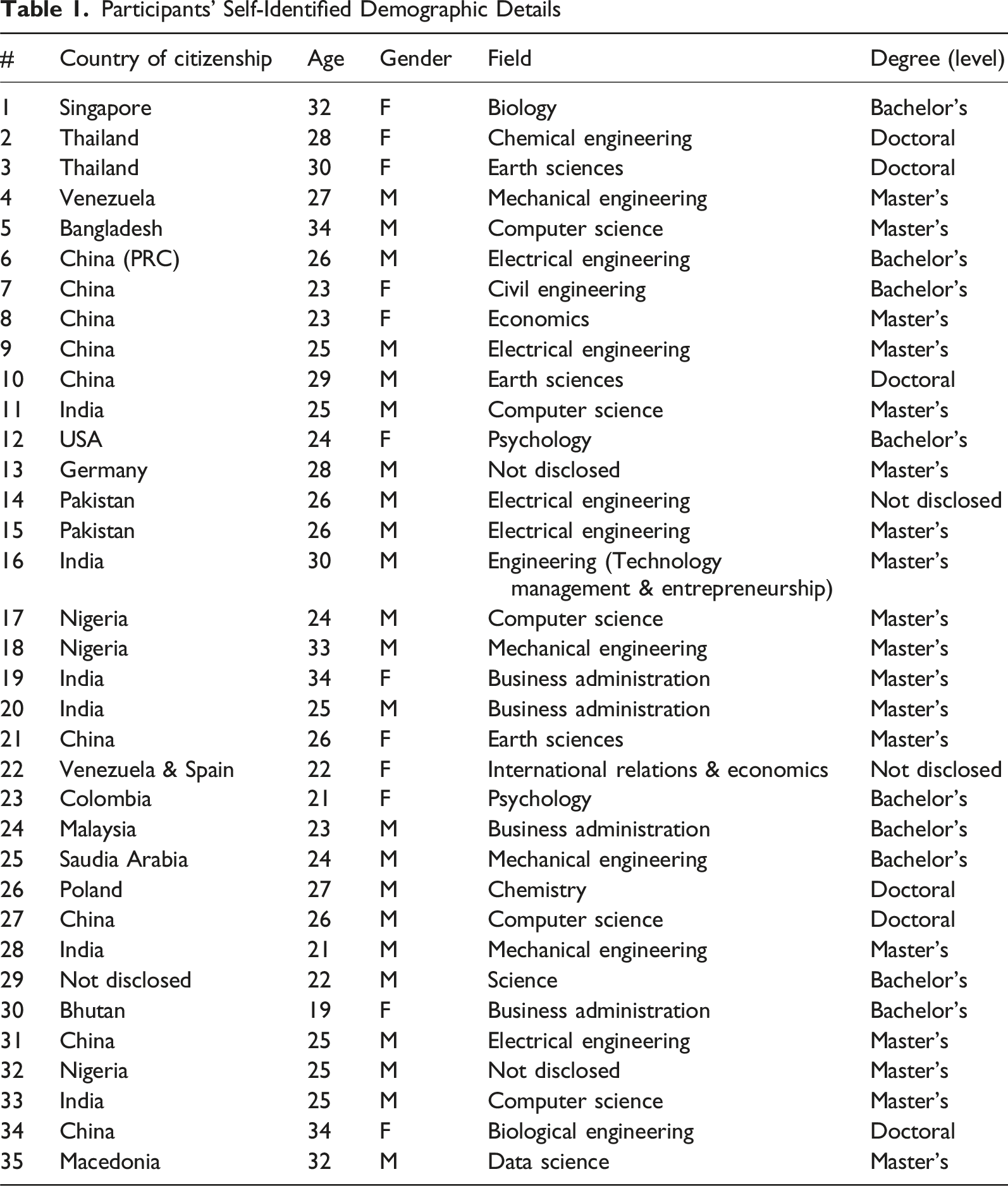
The current study is a secondary qualitative analysis of a subset of data collected for a larger, longitudinal study that tracked international students’ transition to employment, while studying and post-graduation (Arthur et al., 2022). The original project applied the Enhanced Critical Incident Technique (ECIT; Butterfield et al., 2009) through a structured interview protocol designed by the researchers to elicit critical incidents (CIs) about what they found helpful (i.e. helping CIs), what hindered them (i.e. hindering CIs), and what they wish they had had to support them (i.e. wish list items) in making the transition to employment. Ethics approval was obtained from the universities where the research was conducted, at three universities in Canada.
The focus in the original analysis was on the process of transition (e.g. what works/did not work during the transition to employment). In ECIT, there is a greater focus on contextual influences, including the emotional experience (McDaniel et al., 2020). As such, we decided to engage in a secondary analysis, examining a subset of the original critical incidents to focus on the role of emotions.
Participants’ Self-Identified Demographic Details
Secondary Analysis
Secondary analysis of qualitative data is a common and respected research approach aligned with the increased focus on data sharing policies and practices in the social sciences (Ruggiano & Perry, 2019). When done effectively, a secondary analysis provides an opportunity to expand the voice of participants (Chatfield, 2020), as well as explore different units of analysis, go into further depth in an analysis, expand on underexplored data/themes in the primary analysis (Hinds et al., 1997). Although common practice, secondary analyses of qualitative data require careful consideration to ensure rigour in the process and determination of the findings. Thorne (1998) indicated the importance of including audit trails of the secondary analysis process and ensuring convincing interpretations of the data (e.g. reflexive process; closeness to the data). Expanding on Thorne’s ideas, Morrow et al. (2014) noted ethical considerations needed for secondary analyses including the informed consent of the participants as they may not have agreed to the focus of the secondary analysis, potentially changing what they may have chosen to disclose in the interview.
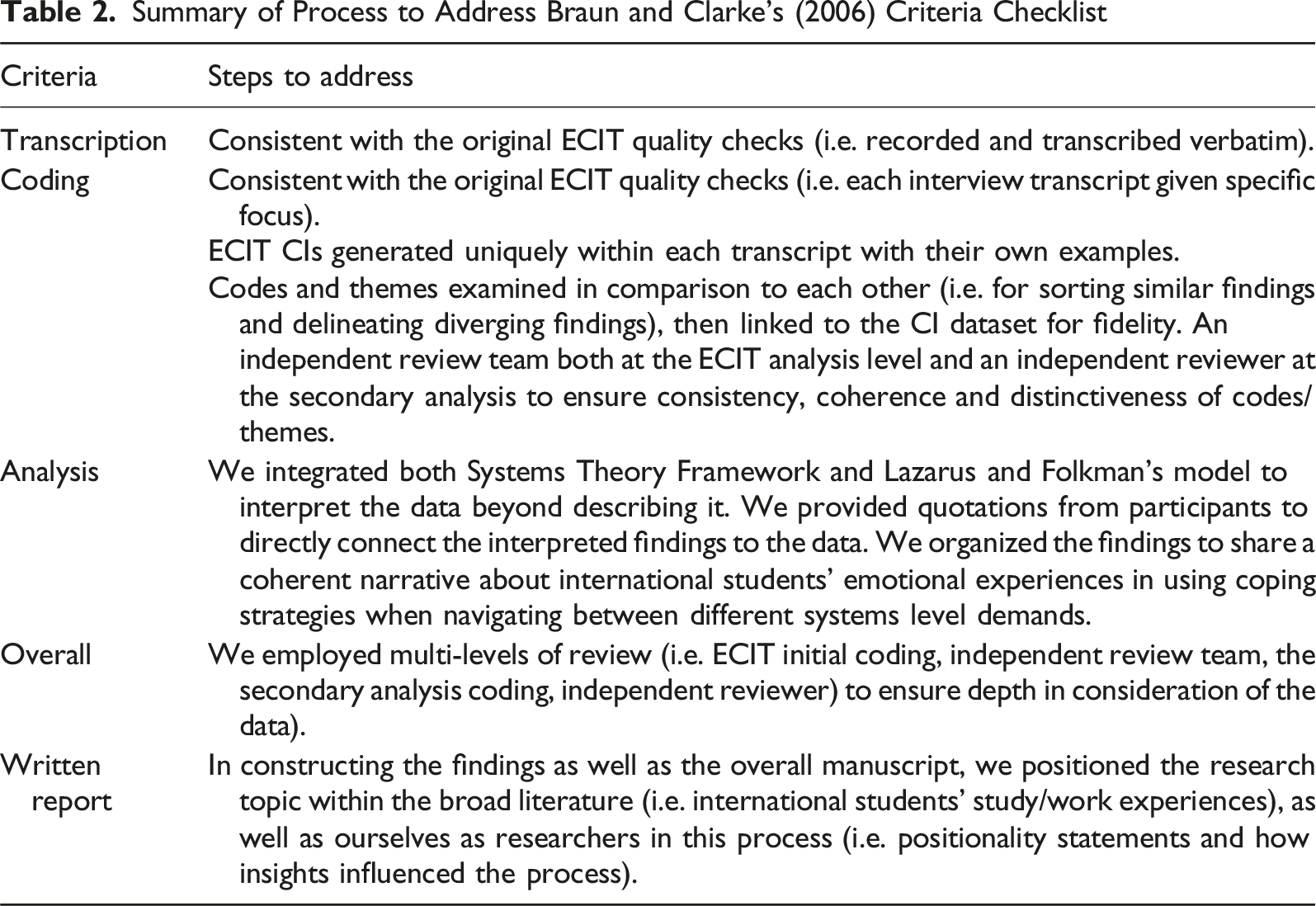
To address these practical and ethical considerations, as well as Ruggiano and Perry’s (2019) recommendations and Chatfield’s (2020) quality process, our secondary analysis of the ECIT data included the following: (a) a supplemental analysis to the original study with a new/revised research question; (b) a focus in the new research question aligned with the original question (i.e. emphasizing emotional experiences in their transition) and reasonably within the purview of the original informed consent process (i.e. participants’ experiences in the transition); (c) the main researchers involved in the original study and ethics approval for continuity across projects; (d) already deidentified data; and (e) an appropriate method (i.e. reflective thematic analysis) for a secondary analysis.
Reflexive Thematic Analysis (RTA)
In this secondary analysis, we employed Braun and Clarke’s (2021) Reflexive Thematic Analysis (RTA), where researchers create interpretations about phenomena based on participants’ accounts of meaning-making from their experiences. In the analysis process (i.e. our audit trail), we (author 1 and 2) engaged in the steps as suggested by Braun et al. (2019). First, we individually read the critical incidents (i.e. helping CIs, then the hindering CIs, then the wish list items) in a general way, and started informal note writing about interpretations (i.e. overarching interpretations across all data). Second, we examined the critical incidents in a more formal way to create codes inductively (i.e. based on the unique semantic and latent meaning in participants’ CIs), and to begin sorting the codes according to commonalities in what participants shared and where they diverged. Third, we refined these preliminary codes and sorting to create a coherent set of candidate themes. At this step, we also engaged with the codes deductively by using both the STF (i.e. interplay between the systems levels that the students shared in their CIs, such as perceived demands from internal/individual, social, and environmental systems that they deemed as relevant) and strategies of Lazarus and Folkman’s (1984) model of coping (i.e. how the themes exemplified different strategies) to inform the process of refining codes and their grouping into themes.
Summary of Process to Address Braun and Clarke’s (2006) Criteria Checklist
Findings
In this section, the overarching research question (i.e. what role do emotional experiences and expression play in international students’ transition to employment?) are represented through the results from the two research sub-questions.
International Students’ Emotions in Their University to Work Transition
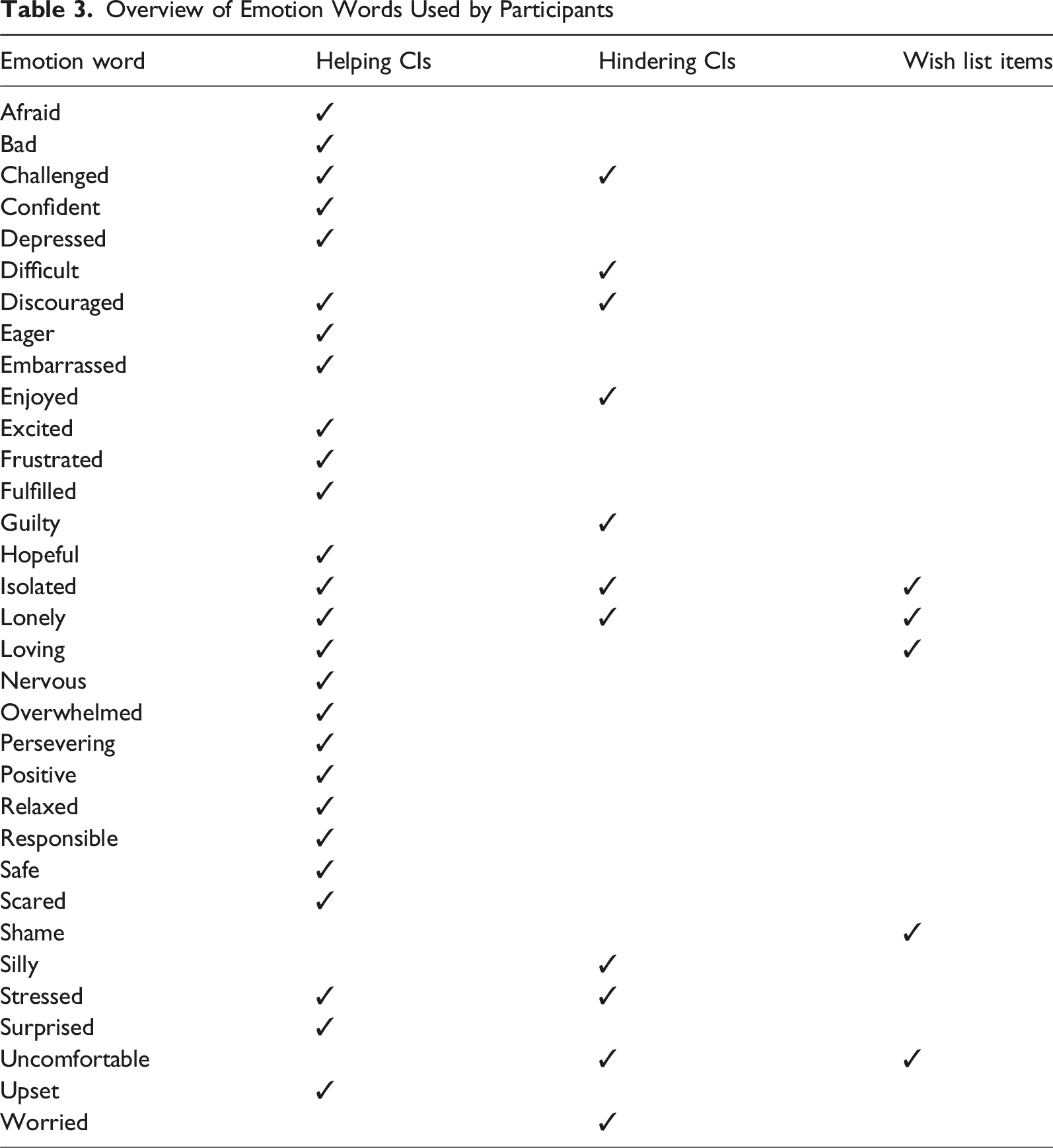
Overview of Emotion Words Used by Participants
Emotional Experiences and Coping with the Transition to Employment
To address the second research sub-question (how do emotional experiences influence international students’ coping in the transition to employment?) we conceptualized participants’ emotional experiences and reactions in an overarching theme as a process of travelling with these emotions on their career pathways. This conceptualization is informed by the STF (Patton & McMahon, 2021), where individuals are influenced by and influencing their social connections and environmental/societal context, across time. According to STF, emotions are part of recursive influences between systems levels, rather than being encapsulated exclusively within the person, and form an emotional experience and reaction. As participants shared their experiences in the original interviews, their journeys included social and environmental demands, and reappraisal of their individual characteristics to respond to these demands. The findings reflect the emotional experiences of participants navigating these recursive influences. We also used Lazarus and Folkman’s (1984) strategies of coping to connect these emotional experiences and participants’ reappraisal (i.e. the interplay between ‘feeling’ and ‘doing). Together, the themes represent tangible examples of how participants experienced emotion and responded to demands across systems through their transitions from university to work.
Based on this overarching interpretation, we created three main themes a) Navigating Warning Signs and Detours without a Map, b) Adapting to Travelling Solo and Missing Travel Companions, and c) Letting go of the Destination and Cultivating Trust and Hopefulness in the Journey. Braun and Clarke (n.d.) indicated that subthemes are to be used sparingly and so, instead, we focused on crafting rich, contextualized narratives for the three themes. We explain each theme with participant quotations integrated throughout to ground our interpretations in their experience. The examples selected demonstrate the emotional experience of the participant, with the focus on the recursive influences across systems, and the coping reaction, which may or may not include explicit naming of an emotion.
Navigating Warning Signs and Detours without a Map
Students engage in formal learning through curriculum, and informal learning, which is the natural, everyday learning through interactions with others and the new environment. In the transition from university to employment, this informal learning creates situations of potential stress, challenge, and opportunity for international students. During navigation of unknown informal learning paths, participants noted that emotions provided warning signs (e.g. ‘nervous’, ‘stress’) that tried to lead them down paths that were not aligned with their goals, but that sought to keep them in known, safe territory. The focus shifted from environmental system responsibility (i.e. the labour market) to individual system characteristics (i.e. being open to growth and proactive about pursuing career goals). In discussing encountering novel and unexpected situations during the transition, Participant 32 (25 years old, male, Nigeria, field not disclosed) explained the importance of keeping yourself ‘on edge’ and ‘[un]comfortable’: I would say the higher you go in life in Canada, the more responsible you need to be, because you have more things to sort out. You have more things to, you know, be responsible on… If you’re not responsible, you see yourself in deep shit. You put yourself in a lot of holes. So yeah, you have to keep yourself on edge, and the best place to be on edge is if you have work here. That’s being responsible… if you don’t have the responsibility outside of the job, in the workplace you would flop.
At times, uncomfortable emotions would direct participants’ attention and behaviours away from their goals, particularly at the social system level (e.g. feeling nervous to talk to others meant that they might avoid networking events despite wanting to learning more about the workforce). Although this influence was not in the direction toward their individual system level career goals, participants were clear that these ‘warning sign’ emotional experiences should not be alarming and were to be expected, even if what they ultimately found helpful was to not heed their warning and instead navigate a pathway toward their career goals (i.e. needing to embrace discomfort as individual system goals interact with social system level requirements; for example, through attending networking events). Participant 4 (27 years old, male, Venezuela, mechanical engineering) shared: I cannot stress the importance of networking enough. Back in my country, networking was not as common or as important as it is here… That's also something very, very important... Don't feel scared to talk to other people. When you go out to the workforce, you’re not going to have that safe circle. You’ve got to get used to talking to new people, to loosen up in this new language, to get acquainted with the culture, the way of speaking in the business world, or in any field that you’re studying in... International students tend to maybe close ranks when they notice that there is a group from their country or from their city, so they feel safe there.
Participants explained that even when attending to warnings signs to remain on the known path, international students still encounter challenges at the social and environmental system levels that require them to make detours in their career pathways. Although these detours created challenges (e.g. feeling challenged, difficulty, stress), their emotion-related experience focused on the discomfort from missing the maps that would have helped them navigate these detours. For instance, there were cultural differences in the workplace that participants were either unaware of or did not know how to address. Moreover, participants shared that in these moments without maps to guide them around these detours to their plans, they felt ‘awkward’ about asking for help or advice around how best to proceed, which was another way that the disconnection between the individual system goals and social/environmental system requirements held them back. Participant 19 (34 years old, female, India, business administration) shared feeling ‘uncomfortable’ being the one to ask others what to do in the workplace: I had to figure out what to say to whom, who should I approach, or should I wait for someone to approach me, and things like that… While the cultures are usually in sync with your values, you still need clarification. Sometimes, you need to ask the right person those questions… Usually, what organizations do, I think they have these employee booklets that employees can read. I see that as pretty common in North America. It’s pretty common in India as well. But just the way we are tuned, we usually don’t read much in India. We expect someone to tell us... I know it sounds silly, but that’s the way we are tuned. One thing that you do here is that you ask less and you kind of read more, and you try to figure it out on your own. It’s only after you’ve read all that and you’ve still not figured it out that you go and clarify.
It was in those moments when the international students advanced their individual system goals, despite the challenging emotional experiences arising as they interacted with the social and environmental levels, that they were able to navigate these detours. Participant 17 (24 years old, male, Nigeria, computer science) explained feeling ‘embarrassed’ to ask questions at work: Not asking a lot of questions was actually one of the biggest problems I had… when my teammates talked, I kind of would just say yeah, yeah. But, in reality, I wasn’t following or I wasn’t picking up what they were saying. I was pretty close to my manager. And there was something I did very well, I was open to him. So when it wasn’t going well, like when I was having difficulty getting their point, I made it clear to him… At first it felt kind of embarrassing, but then yeah. After some time, I was always the one saying no, I don’t understand. So, instead of him saying it... There was not much of a big, big problem as a result of that, because I was able to tackle that quite early.
Participants shared instances of where emotions may have guided them toward more emotion-focused coping, such as avoidance strategies (i.e. choosing paths away from discomfort) in their coping with stressful situations. In the long-term, however, what they found helpful was to shift into more problem-focused coping to validate (i.e. downregulate) their emotional experiences and remain focused on their goals (e.g. strategies of taking direct action by taking responsibility). These informal learning situations shifted from stressors to opportunities as participants learned how to take actions that supported their long-term achievement of goals (i.e. downregulation of emotions) as well as incorporating ways to ‘stay in the game’ while experiencing uncomfortable emotions. Some participants hesitated to ask questions because they did not want to engage in behaviour that would risk making them feel ‘silly’ in their interactions with other people. In these examples, participants noted the complexities of feeling discomfort and uncertainty that they were eventually able to learn to navigate around through using the emotion-focused coping strategy of acceptance (i.e. accepting the discomfort and learning to move forward with it).
Adapting to Travelling Solo and Missing Travel Companions
In participants’ journeys from university to employment, their relationships with others (i.e. the social system level), both those present in the destination country, as well as those ‘missing’ (i.e. not physically present; in the country of origin), influenced their emotional experience. For some, it was that they were travelling solo in many ways on their career pathways; in pursuing their career goals (i.e. individual system), they felt isolated or separated from family in their country of origin, which created loneliness and at times depression. These emotional experiences, resulting from the recursive interplay between the individual and social system levels, made it difficult for participants to engage in their career pathways, particularly when those pathways were already presenting obstacles and detours. There was then a tension between normalizing that being an international student means leaving your social networks, as well as some self-blame for not striking the right balance of pursuing individual goals and maintaining social connections. Participant 10 (29 years old, male, China, earth sciences) shared about the ‘stress’ on learning lessons about finding balance in pursuing career goals and maintain social connections as they moved from being a student to a worker: I think it’s quite important to do your job. I mean, for your own study, you need to work hard and try to get something done on time, and in quality… And that will take a lot of work, and you might need some time to get used to this stress… you need to balance your research and your life… Because I think, sometimes when you spend a lot of time in your study, you do not feel very good. Especially you lose some time that you want to spend with, for example, with my girlfriend. You want to. . . like doing some exercise, having dinner with your friends, and having different activities. And your mood might not be very good all the time. You definitely need to balance that, and try not to get too stressed.
As they were travelling solo, participants found that receiving encouragement from family, even if they are far away, or seeking out local supports (e.g. university counselling services) helped encourage feelings of hopefulness and perseverance toward their goals. The emotional experience related to challenges from travelling solo could be mitigated by emotional support from social system connections both in their country of origin (e.g. family) and the destination country. Participant 34 (34 years old, female, China, biological engineering) shared an experience of their father becoming ill in the country of origin while they were making the transition to employment, feeling ‘guilty’ and ‘isolated’, and relying on the emotional encouragement of their friends and family: …my father had a heart attack, and he is far away. He is not in Canada. He was in China, so that long distance really made me very upset… I actually think that the experience helped me to develop the ability to handle a family crisis. Especially for me as an international student, I was a long distance from home. How to handle that crisis, and then maintain enough emotional stability to work on my own stuff, doing the parallel job… Yeah, so I think it’s very important to have a supportive environment with supervisors, with friends, and with families. Without that stuff, nobody can finish their work.
Living in another country, participants also shared that beyond feeling lonely, they experienced missing people walking alongside them, particularly family. Despite the absence of these people to travel alongside in their day-to-day, participants still felt the presence and influence of their families in each step. For example, participants noted feeling stress and worry as they were thinking about and taking steps at the individual level to make decisions about the type of work they would do, and how this work would translate into the social system level of their living situation with hypothetical futures of extended family being either with them or in another country. As much as family provided emotional support to cope with loneliness, they also needed to fulfill an important instrumental support role with insight around best pathways in their careers and lives. Participant 3 (30 years old, female, Thailand, earth sciences) shared finding it ‘difficult’ to take solo actions toward advancing their career, when their family in the country of origin played a role in the decision-making: …don’t ignore your family or whoever gives you suggestions on where you want to work or what you should do, but try to be yourself …for me, maybe my family... [being] so far. Because they have an influence on my decision as to where I’m going to work. But not what I’m going to do, but basically where I’m going to work. So it’s kind of hard doing the transition… One place that I wanted to work is not the place that they want me to go. So it’s kind of like, I have to talk to them, I have to discuss with them why I want to go there. Kind of like changing opinion? So I get why they want me to go there, or why I want to work in another place. So I think that my family is the most important for the transition.
Another part of this influence from missing travel companions was that the stress, worry, and guilt they were feeling about needing to support themselves but also their families (i.e. to help eventually bring them along on the career pathway) meant that they often took on more demanding work (i.e. at the individual system level). This additional work then spiralled into less time to socialize and creating feelings of isolation and loneliness from people currently near them (i.e. at the social system level). Participants were driven by these emotional experiences to engage in effortful problem-solving so that they could take direct action to find opportunities, with the hope that this would eventually address challenges in their lives. Participant 8 (23 years old, female, China, economics) explained feeling ‘bad’ because they needed to make more money to be successful so they could bring their parents to Canada, and so would take harder shifts at work: [It was a national holiday], right? And nobody wanted to take the night shift, so I took it. Then I was off work at I think 1 p.m. or 2 p.m. or so. No, a.m. It was a late night... everybody was hanging around with their friends or in couples, and only me, wearing a black suit. I was alone, and I was reading a book, and everybody was just laughing and giggling. Only me. At that moment, I really felt so lonely and alone, and so kind of devastated... Part of that is because I was so tired, and I think I really needed someone to hug me or give me a kiss or talk to me, or something like that. And also, it’s just everyone else I see are not alone. Yeah. That is one of the main problems for international students as well I think. Sometimes they feel isolated. Most of us don’t have family here, right? So we can feel lonely sometimes.
Although international students are often travelling on career pathways in the destination country by themselves (i.e. individual system level toward personal career goals), significant others (i.e. social system level including family) play an important role in the international students’ journey. In instances where participants were experiencing loneliness they engaged in emotion-focused coping strategies by either shifting their expectations (i.e. accepting loneliness as part of the international student experience), or being self-aware of what they are doing that is not serving them in making connection (i.e. self-blame for not striking the ‘right’ balance of work and socializing). Other people along the participants’ career pathways, both near and afar, served mainly as supports, which included both emotional-focused coping (i.e. encouraging the student from afar), and problem-focused coping (i.e. providing instrumental support with advice from career services). For participants, challenges in using these coping skills arose when they felt that their families were not along with them on their career path to make the best decisions for their shared future success. In this instance, international students turned to problem-based coping, including effortful problem solving (e.g. considering numerous different and uncertain options), as well as taking direction action (e.g. working more than they need to or that would allow for balance in their life).
Letting Go of the Destination and Cultivating Trust and Hopefulness in the Journey
Participants shared that seeking an international education came with an expectation of arriving at a destination (e.g. graduation), but that as they came closer to reaching this destination, they realized that it was the beginning of the next step in their career development (i.e. transitioning from university to work). As the environmental system changed (i.e. from university to the workplace), they experienced challenging emotional experiences as they once again embarked on an unknown journey. Participant 6 (26 years old, female, China, electrical engineering) shared feeling ‘nervous’ that some of the same challenges during study were not resolved but instead continued into the workforce: …I studied a lot in three years, but I still don’t have a big idea, what… can I do for work. For preparing, I think after I graduate, if I find a job, I will focus on… working and study. But now, I don’t really feel prepared in everything… [I’m] still nervous. Because for the language, it’s a little bit difficult for the job, because… [for] Canadian people, it’s… easier to find a job. Because no barrier language, they can understand everything. For us, it’s a little bit hard.
Although participants had engaged with different people effectively throughout their education, they also found that the shifting social systems brought up emotional experiences that made it challenging to transfer these skills to workforce interactions. Participant 7 (23 years old, female, China, civil engineering) explained it felt ‘hard’ to effectively use their English language skills in an interview setting, versus in one-on-one conversation, because of the need to do well: All of the stuff depends on myself. Yeah, it’s a little bit hard. Like, when I do the interview, faced to a lot of people, I’m nervous… Because sometimes, if you don’t understand, like if it’s just one person, I can ask, what do you mean? But a lot of people, if you ask what do you mean, they just think, oh you don’t have enough benefit to the job.
Participants found it helpful to shift perspectives from the destination (e.g. getting a degree/job) as if they would be fully prepared, to embracing the journey as they made the transition from university to work. The shifting environmental system (i.e. from known university setting to unknown workforce setting) influenced individual system perceptions of self and appraisals of their situation. Participant 4 (27 years old, male, Venezuela, mechanical engineering) shared feeling ‘excited’ to try new things as they moved from the known university setting to the workplace: …I’m very much looking forward to it [transition to work], because I think psychologically I need a change of scenery. This experience [education] has been as rewarding and fulfilling as it has been frustrating and nerve-wracking. Especially during my first year. There were so many things that I left back home… I am mentally prepared, and I think I am not going to give up just because it’s rough for the first couple of months. I feel additional pressure, definitely. But no. I believe that, if I get the opportunity to sit down in an interview, then that’s going to be my edge.
Participants also noted the importance of being hopeful and trusting themselves. These emotional experiences helped them to maintain perseverance in challenging situations (e.g. trusting that it is a matter of time before securing a job, staying persistent and open in the job applications, despite setbacks or no call backs). Although participants could have felt discouraged due to perceptions about their employability or the possibilities available in their local job market (i.e. the environmental systems), they had a felt sense of trust and knowing that hopefulness in appraising these situations would be more helpful in persevering toward their career goals (i.e. individual system). Participant 8 (23 years old, female, China, economics) noted general advice for international students, regardless of the challenge, ‘and when it’s super hard, don’t give up. Just give it a shot... It’s always going to be hard. But you’re getting there. Hope is always good’. Together, this hopefulness and trust kept them moving forward on their career pathways. Participant 15 (26 years old, male, Pakistan, electrical engineering) expanded on this advice through their specific experience being ‘positive’ in the job search process: I have been applying across Canada, from Toronto to Vancouver, and the Atlantic region. There is nothing special I did. It’s just a matter of time I mean, and it’s just a matter of luck that I got a job... It’s like hundreds of jobs. I’ve been applying, and I’ve gotten like five interviews, or ten; I guess it was the experience you know, and consistently applying for jobs... I’m kind of a positive guy. I believe I can do anything in the world.
Some participants understood these emotional experiences as part of what makes them who they are (i.e. experiences with the environmental system such as labour market affirms their perceptions of self/values at the individual system), and for others this is a way of feeling that they worked to cultivate (i.e. appraising the individual system as needing more of these values). Participant 19 (34 years old, female, India, business administration) shared about their experience feeling ‘uncomfortable’ in uncertain situations and persevering: One is your own personal efforts that you have done... It’s important to persevere through that and look at the bright side, also to see what you’ve learned by doing certain things... What happens when you are applying for a lot of jobs. A lot of people say that finding a job is a full-time job, right? It may or may not be a full-time job, but it requires a lot of focus. There is a lot of effort that you put in while actually looking for these jobs. You do need one, but you are going to apply for quite a few before you can get to that one job. Some days, you might feel very demotivated because you didn’t hear back from anyone. Some days, you might think okay, I’ve taken a couple of steps. But you don’t really know because you haven’t arrived at where you need to be.
The focus was on a shift in expectations on the pathway to employment from the destination to the journey along the way. Participants acknowledged that the journey (i.e. pathway to employment) could be uncomfortable and, in reflecting back on their experience (i.e. temporal system of understandings from the past) wished that international students would be reminded that this discomfort is normal and to be expected (i.e. temporal system influencing expectations for the future), with Participant 16 (30 years old, male, India, technology management and entrepreneurship) noting, ‘Just give maybe a reminder thing, to remind students that it is normal if you have these feelings. Do not feel isolation, do not feel shame. It is normal. Everyone would have a lonely feeling’.
Participants engaged in anticipatory and future-oriented coping for emotional experiences with discomfort by providing advice to other international students around letting themselves engage in the journey, to trust that they know the pathway or will be able to find pathways. Participants also indicated that, if they had been able to shift their focus away from the destination (e.g. getting to one ideal work/position) and towards their journey (i.e. temporal system appreciation of moment in time), then they would have felt less uncomfortable when they encountered detours, and then able to pivot to other pathways (i.e. individual system capabilities). Participants emphasized a wish that international students understand that they do not have to put so much expectation on their initial work destination, that they do not have to ‘love’ the work at each moment in the journey but can instead keep travelling down different pathways. Participant 22 (22 years old, female, Venezuela and Spain, international relations and economics) explained not ‘enjoy [ing]’ their first job post-study, but it enabled them to meet their needs and persist: I’ve thought for a lot of time I have to be more adaptable for the job requirements. To be what they are looking for, not to follow what I’m looking for... I mean, I have to keep my options open. Everything changes so fast. I need to be more flexible in transitioning from engineering to IT, if that’s the reality. Instead of finding a job in my field and stick for a long time, and not finding, that’s not a good idea; Yeah. Because for the job, it’s not necessarily the thing you love. It’s just a job. I barely love the job, it’s a thing you do, but sometimes it helps you do that for a living.
Consistent with the emotion-focused strategies of coping, participants were engaging in acceptance of challenging situations (i.e., unknowns in the university to work transition after stability/familiarity while in studies). For international students, there was also emotion-focused coping in terms of the shift in perspective, aligned with the coping strategy of reappraisal, from focusing on, for example, the nervousness around interviews, to excitement and readiness for a new journey. This reappraisal supported them for positive growth and development as a person (i.e. the individual system) and as a professional (i.e. in interaction with the social and environmental systems in the workforce) in the journey along career pathways. International students also engaged in problem-focused coping strategies such as positive reinterpretation and growth (e.g., i.e., cultivating hopefulness in their individual system level abilities to navigate the environmental system level labour market and job search process), which together supported them to stay on the pathways aligned with their career goals.
Discussion
The literature on international students’ career development has often focused on their goal-seeking behavior and what they do to increase their employability. The findings of this study provide insights into the overarching research question, what role do emotional experiences and expressions play in international students’ transition to employment? Specifically, the secondary analysis of critical incidents focused on what they feel, and how emotions were linked to specific contextual influences and coping strategies. Our aim in this analysis was to provide a contextualized understanding of international students’ emotional experiences and reactions during their transition from university to work. As such, RTA provided a process for re-analysing the critical incidents and focus on the recursive influence of emotional experiences and reactions across systems throughout international students’ post-study career transitions.
For the first research sub-question (what emotions do international students express in their university to work transition?), the findings indicated that participants used emotion-related words as landmarks of multi-system emotional experiences and reactions throughout their descriptions of what helped and hindered their transition into the workforce, indicating that this career development process includes emotional expression. As described in Table 3, they expressed a range of emotions associated with their experiences of transitioning to employment, indicating that this often-overlooked aspect of their experience warrants further and in-depth exploration, alongside the behaviours/actions they take to engage in the transition.
For the second research sub-question (how do emotional experiences influence international students’ coping in the transition to employment?), the findings suggest that emotional experiences and expressions are intertwined with systems and the coping strategies that international students use in the attainment of career goals and transition to employment. Indeed, emotions were not something detached from their experiences but were companions on the pathways of their career transitions. The examples provided by the participating international students suggested that when they recognized their emotions, they were also engaged in meaning-making and leveraging their emotions to regain focus and stay motivated. Participants acknowledged strong emotions such as feeling overwhelmed, at times leading them to distance themselves from active problem-solving, until they were able to regain focus and recommit to pursuing their career goals.
Significant others in the lives of international students, from either home or destination countries, were identified as critical sources of social support, during times when international students were feeling overwhelmed. However, social support systems may also be a trigger for strong emotions, due to perceived expectations or lack of access. For some participants who lacked social support, the feeling of ‘doing it alone’ was overwhelming at times and required personal review and recommitment to career goals.
Perceived pressures to do more and to maintain a focus on the pursuit of employment was experienced as stressful and associated with a range of negative emotions. However, when international students were able to acknowledge their emotions as a natural part of their learning experiences, they were able to reappraise their emotions and use them as motivators for personal development and growth. Emotions are not static during transition experiences; rather they ebb and flow, with positive and negative valence, according to perceived demands and appraisals of coping capacity (Folkman, 2008; Lazarus & Folkman, 1984). Notably, international students gave advice to acknowledge emotions as part of the learning journey, to be more accepting of the variability of experiences, and to reframe unexpected events as opportunities for positive challenges.
Implications
General knowledge about international students and adjustment issues must not overshadow the exploration of nuanced experiences of career transitions (Arthur, 2018). STF emphasizes unique contexts and systems of influence, and the interaction of those systems in an individual’s learning experiences (Patton & McMahon, 2021). Career counselling using a narrative approach can be informed by STF, in which international students are encouraged to tell their stories (McMahon & Patton, 2025). The STF can help to structure such exploration, through probing aspects of the individual, environmental, and societal influences that international students perceive are relevant to them. Noting the shifting nature of perceived demands across those systems, we encourage prompts that are focused on an exploration of emotions. For example, we would encourage international students to identify examples or critical incidents in their learning experiences in which they have felt positive emotions, to delineate their experiences of stress, or emotions such as anxiety. This discussion can help international students to identify their strengths, what has shifted for them over time, and connect their emotions to learning experiences and specific areas where they have developed confidence and competence, as well identify areas for additional learning about ways of coping. A focus on emotions can also help students to revisit their overarching goal of transitioning to employment and potentially adjust their expectations and progress, with goal-directed behaviour.
It is prudent for career counsellors to remember that international students come from diverse national and cultural contexts, which may influence the narratives in their career stories and influence the expression of emotions (Arthur, 2024). In strengthening their cultural competencies (Balin et al., 2024) career counsellors and career services personnel are reminded not to assume an understanding about international students’ experiences, including emotions. Rather, it is important to check in with international students about what emotions they are feeling, the expression of emotions in their home country contexts, and any considerations for their current context of living and learning in the destination country (Arthur, 2018).
Career interventions can be designed for skill-building while also acknowledging the emotional experiences that emerge during international student transitions from learning to employment. It may be instructive and normalizing to incorporate role models and stories from former international students about how they coped with perceived transition demands and the accompanying emotions. A key point is for interventions to emphasize specific aspects of the journey, to help international students assess their coping strategies and resources, and how emotions are connected to transition experiences. Helping international students to identify the shifts in their emotions that are associated with tasks that they are managing well could help them to build a sense of efficacy and confidence about new challenges.
Finally, for international students experiencing anxiety or a depressed mood associated with an extended or unsuccessful transition into the labour market, these emotions themselves could become a focus for intervention. This possibility is supported by prior research indicating international students may perceive career difficulties to be a more socially acceptable reason than mental health difficulties for accessing support (Willis-O'Connor et al., 2016). In this situation, counsellors whose scope of practice includes both career and mental health could renegotiate the focus of the work together to prioritize addressing the emotion directly using existing psychotherapy interventions (e.g. cognitive-behavioural, emotion-focused, narrative approaches) as one step along the way to a successful transition to work. It is important to consider cultural influences on intervention methods and engage international students in discussions about approaches that they deem to be appropriate (Arthur, 2018). For counselors whose expertise or organizational mandate excludes working directly to address emotional distress, being willing to discuss the merits of a referral for mental health counselling is a major practice implication of our finding that international students experience a wide range of emotions and capacity to cope during their transition into the workforce.
Delimitations and Future Directions for Research
As the analysis in this article was a secondary one, using a subset of interviews from a larger research project, there are some limitations to the findings. Mainly, the original interviews focused on the international student participants’ experiences in transitioning from university to employment and not specifically on emotions or their role in the transition. Although emotions featured in many participants’ accounts of their experiences, highlighted in this article, not all participants articulated specific emotion words related to their experience. As such, future research about international students’ university to employment experience could use qualitative designs such as ECIT or RTA to explicitly ask participants about the emotion-related aspects of their transition experiences. Additionally, the interviewers did not directly inquire about the cultural expression and understanding of emotions named during the interviews. There is a risk that emotional experiences may be lost in translation between languages and cultural contexts (Arthur, 2024). Moreover, the framework of coping used in this analysis was developed in a specific country context and may not be inclusive of culturally appropriate and preferred strategies for managing emotions from other country contexts (Chun, 2006; Kuo, 2014). Therefore, future qualitative research related to international students’ career transitions could incorporate cultural and societal narratives as identified by international students as relevant for the contexts associated with emotional expression (Arthur, 2024). Additional attention to intersectionality, such as gender, social class, and other societal influences on participants’ experiences could overcome the tendency to treat international students as a homogeneous group. Similarly, it may be beneficial to explore this topic in different national and cultural contexts and engaging translators to facilitate conducting the interviews in the preferred language of the international student participants.
In summary, although research has detailed the types of career transitions for employees in the workforce, there has been a surprising lack of attention paid to the role of emotions in setting future research agendas (Kidd, 2008; Sullivan & Ariss, 2021). Given the exploratory nature of the current study through secondary analysis, future research could prioritize emotions in the experiences of international students as they transition from education to the workforce.
Conclusion
International student transitions are multifaceted and dynamic as they unfold over time, influenced by multiple systems that are relevant for learning and employment. For participants in this research study, emotional experiences and expressions were integral to the contexts in which they were navigating multiple demands and adjusting their coping strategies, connected to their efforts to secure employment and transition to the labour market. International transitions are more than geographical relocations, as there are many contextual influences in both home and destination countries. In the pursuit of employment, international students navigate multiple demands in their efforts to secure employment and transition to the labour market. These are not only specific to job-seeking but need to be considered in a more holistic way, to consider international students’ perceived pressures, challenges, and successes for current and future transitions. As emotions accompany international students on the pathways of their career transition journeys, future research about their emotional experiences will inform strategies for coping with new ways of living, learning, and working.
Footnotes

Funding
The authors disclosed receipt of the following financial support for the research, authorship, and/or publication of this article: This work was supported by the Social Sciences and Humanities Research Council of Canada (Grant No: 435-2014-0529).
Declaration of Conflicting Interests
The authors declared no potential conflicts of interest with respect to the research, authorship, and/or publication of this article.
Author Biographies
*Mailing Address: UniSA Business, University of South Australia, GPO Box 2471, Adelaide SA 5001 Phone: +61 0466861887
*Mailing Address: Counselling Psychology Unit, 3800 Finnerty Rd, Victoria, BC V8P 5C2, Canada Phone: +1 250-721-7827
*Mailing Address: Faculty of Education, Simon Fraser University – Surrey Campus 13450 – 102 Ave. Surrey, BC V3T 0A3 Phone: +1 778-782-4864