



Abstract
The opportunity to construct a career and the prevalence of virtual work are hallmarks of the extant environment that makes career decisions and workforce recruitment increasingly complex. We seek to understand jobseekers’ choices in this context, which allows for great personal control and independence. We draw on the career self-management stream of social-cognitive career theory to inform our examination of the influences of certain applicant work preferences and individual characteristics on preferences for gig or traditional work and related job-seeking behaviors. Findings from this study indicate that a sense of agency and need for affiliation are significantly related to new and transitional job seekers’ willingness to pursue face-to-face versus gig work opportunities. Additionally, this work revealed a positive relationship between a preference for face-to-face and gig work options, indicating that incorporating a combination of the two may be optimal for employees and employers.
Introduction
Career Day at school is changing. No longer is the pertinent question to a child, “What do you want to be when you grow up?” with the anticipation of answers like a businessperson, a nurse, a pilot, a firefighter, a teacher, and so on. Rather, a more appropriate query may be, “Who do you want to be?” The idea that one would choose to do a thing and, therefore, experience a particular career identity (i.e., be that thing) is supplanted by the reality that one’s career choice must be followed by experiences assisting in the creation of a work identity that can be cultivated and realized, over time, in a rapidly evolving context (Karriker et al., 2021; Petriglieri et al., 2019). That context includes shifting intra-career work configurations and modalities that technological advancements and sociocultural pressures are making more prevalent. Work choices reflect intra-career options associated with the growing gig economy and the post-pandemic-aware work culture in which remote work is among options that may offer meaningful nuances in the development of one’s work identity. Recent scholarship notes a dearth of work in the area, largely because the work environment continues to change quickly (Hirschi & Koen, 2021). Following this call, we assert that researchers, educators, and prospective employers, respectively, need an understanding of the dynamism of evolving work preferences and related work identity choices for appropriate scientific inquiry development, for students’ preparation for the world of work, and for employers’ effective recruitment efforts (Hirschi & Dauwalder, 2015).
For many in the working world, it is possible to curate a personal work identity no longer restricted by traditional structure and safety, as they experience one in which individuals,’ and particularly job seekers’ career-related decisions are nearly boundless (Petriglieri et al., 2019). In fact, what prospective workers/employees want from their work experiences and how they will derive what they want to do are questions scholars, practitioners, and educators find interesting. The opportunity to construct a career and the prevalence of virtual work are hallmarks of the extant environment that makes career decisions and workforce recruitment increasingly complex. We seek to understand job seekers’ choices in this context that allows for great personal control and independence. To do so, we draw on the career self-management (CSM; Lim et al., 2016) stream of social-cognitive career theory (SCCT; Lent et al., 1994) to examine the influences of a prospective employee’s sense of agency and need for affiliation on preferences for gig or traditional work and related job-seeking behaviors in this rapidly evolving environment.
Literature Review
Career Self-Management
The Career Self-Management (CSM) stream arose from social-cognitive career theory (Lent et al., 1994), which developed from two perspectives regarding an individual’s career behaviors: content and process (Lim et al., 2016). Based on Bandura’s (1986) social-cognitive theory, earlier SCCT models addressed job content and the work activities an individual would desire to perform within a specific vocational or academic context (e.g., engineering, etc.) (Lent et al., 2000). Later models of SCCT (e.g., Lent & Brown, 2013) augment a job content perspective with explorations that include how individuals make decisions about career behaviors and how they adapt to changes in the world of work. Thus, at its core, SCCT addresses how career interests and choices are made, and how career success develops. Lim et al. (2016) proposed and initially tested the career self-management model defined as “a process by which individuals develop, implement, and monitor career goals and strategies” (Greenhaus et al., 2010, p. 12), to continue this stream with potential application in various career-related contexts. CSM research has since evolved to focus on the centrality of career orientation, such that either a traditional organization/hierarchy or the self is focal in career development (Gerber et al., 2009; Grote & Hall, 2013). In the former, traditional model, the employee relies on the organization to provide for career development and job security. In the latter, individuals are responsible for managing their own careers. Here, we note the rapidly evolving context of changes to the world of work, brought on jointly by the pandemic response and technological advances. Thus, we propose to extend CSM in application of this literature in a background of broader changes, namely, the transformation of the work context brought on by the gig economy’s growth and responses to the realities of heightening threats like global pandemics.
The New World of Work
Hirschi and Dauwalder (2015) and Hirschi and Koen (2021) recognize that the dynamic interaction between an individual and the environment is a key element in career progress. Clearly, context is important to career decisions, and regarding the gig economy, it is highly dynamic. We join other scholars (e.g., Hirschi & Koen, 2021) in noting a dearth of research that looks at CSM in this context. Perhaps this is the case because change in this arena has been so rapid, including large pendulum swings with regard to available work arrangements (i.e., remote, traditional, and hybrid options). We agree with Guan et al. (2019) on the importance of individual and contextual factors; here, we seek to examine relationships between individual attributes and work preferences in the context of the new world of work. Petriglieri et al. (2019), Ashford et al. (2018), Hartman and Karriker, (2020), and Karriker et al. (2021) provide distinctions between traditional and gig work, including whether the work is consistent or ad hoc, and where it falls on the spectrum between direct employment and work that is digitally arranged. The source of social interaction varies from mostly face-to-face encounters to primarily digital exchanges. Traditional work is typically lower than gig work on characteristics of financial instability and job insecurity, autonomy, work transience, and career path uncertainty (Watson et al., 2021). The traditional employee’s work identity is focused on an employing organization, but the gig worker’s work identity exists in a personal holding environment (Petriglieri et al., 2019). That is, organizational identity is salient for the traditional worker, but the level of organizational attachment for a gig worker may be minimal, if it exists.
Interacting with the growing availability of gig work is the relatively sudden prevalence of virtual work, which expanded during the lockdown responses to the COVID-19 pandemic. Much of the work performed in an office setting and in person is now done or can be done remotely. Related interactions have become digitized via virtual meeting platforms and digital applications. As with gig work, people may feel forced due to need or mandate to work in a new configuration (i.e., avoidance motive), and/or they may be excited about this unique opportunity with its potential for flexibility (e.g., approach motive) (Hirschi & Koen, 2021; Hartman & Karriker, 2020; Zimmerman et al., 2012). The correlations and potential antecedents of reactions to the changing array of work options are provocative for their implications for research, practice, and business education. Employable individuals take more opportunistic approaches when finding employment, and their identities are disentangled from working at particular organizations; rather, high self-esteem and the perceived need for social support can be guiding forces in job searches (McArdle et al., 2007). Applying CSM, we focus on two such antecedents, sense of agency and need for affiliation, as influential in the job seeker’s attitudes toward traditional and new work modalities.
Sense of Agency
Ireland and Lent (2018) referenced the decision-making element of CSM, noting recent research involving antecedents in a CSM model (e.g., Lent et al., 2016, 2017). Along this line of thinking, we assert that a prospective worker’s enduring cognition of personal control, or sense of agency, is particularly salient in the current transitional work context (e.g., face-to-face or gig work). Synofzik et al. (2013) define a sense of agency as “the registration that I am the initiator of my actions (p. 1).” Tapal et al. (2017) applied this definition to encompass their measure of a positive sense of agency across time and situations, thus supporting it as a chronic characteristic. As noted, gig work involves uncertainty and instability, while it often offers a high level of autonomy. As such, gig work both requires and rewards a level of personal control and responsibility that traditional work does not. An orientation toward the latter is indicated by a preference for job security and career progression within a focal organization; the former, new career, orientation is seen in a preference for change and career autonomy that may involve nearly fluid transitions between gigs. Applying CSM, we expect individuals with a higher sense of agency will be more likely to prefer gig work over traditional work.
Need for Affiliation
Veroff and Veroff (1980) express the need for affiliation in terms of the gratification an individual experiences from aspects of social contact including belongingness, which Wiesenfeld et al. (2001) assert presents a challenge in gig work, where organizational identification may be amorphous. Ireland and Lent (2018) found support for positive relationships among personality (e.g., self-efficacy), social support, outcome expectations, and exploratory goals. Regarding an expanding array of work configurations, we see the prospective worker’s need for affiliation as another chronic characteristic and an important antecedent for career-related decisions. Here, we note that traditional work provides a greater potential for regular social interactions, and that in a post-pandemic world, many of these exchanges will take place in person or at least synchronously. This expectation contrasts with that of gig work, which is mainly transacted via digital platforms and may involve little to no direct interpersonal contact and accompanying relationships. That is, the gig worker is more likely to experience a sense of separateness. Thus, drawing on CSM, we expect individuals with a higher need for affiliation will prefer traditional work over gig work.
CSM and Work Expectations
Changes in the world of work naturally involve shifting job expectations, which we assert factor largely in an individual’s work modality preferences. Harris and Fink (1987) looked at recruiter influences, and Turban et al. (1998) address job and organizational attributes among other influences on applicant attraction to firms. The latter work supports the positive effects of job and organizational characteristics on work choice in the context of recruiter behaviors during campus recruitment interviews. Applying CSM to this line of research in the context of a changing career landscape, we assert that an individual’s preferences for traditional and gig work will vary based on work expectations that interact with one’s sense of agency and need for affiliation. Two such work expectations are the desire for challenging and interesting work and the desire for work with promotion opportunities, as depicted in Figure 1. Conceptual model.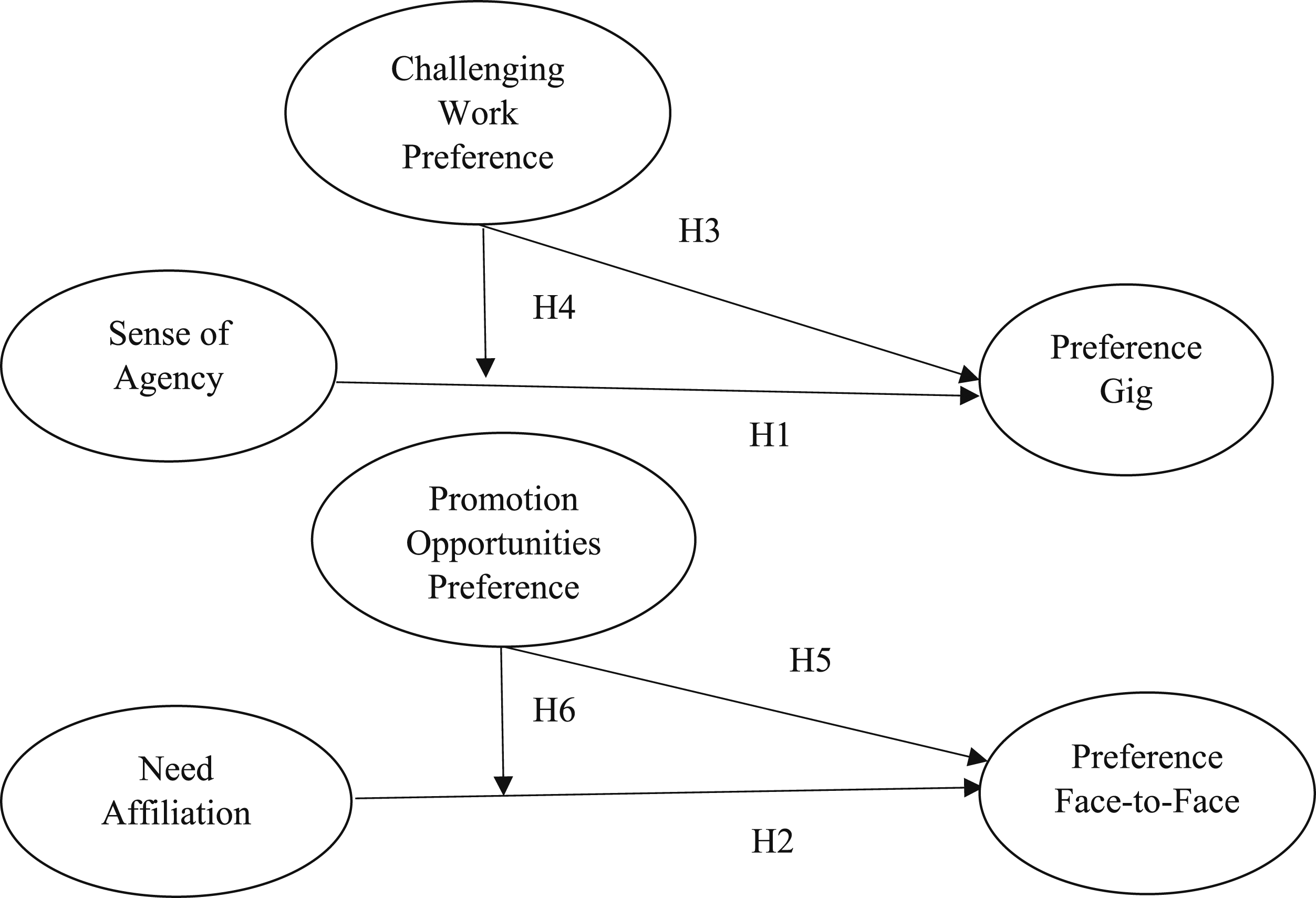
The Desire for Challenging and Interesting Work
We expect job characteristics associated with interest and challenge will be consistent with gig work opportunities. The nature of gig work is such that the worker has the opportunity to create or curate gigs of interest. The relative lack of organizational structure inherent in gig work presents a challenge in and of itself, and the worker may choose particularly challenging gigs. We also expect that the prioritization of interesting and challenging work will interact with the sense of agency of the worker to produce a heightened preference for gig work.
The Desire for Promotion Opportunity
We expect that the job characteristics associated with earnings and advancement will be consistent with traditional work opportunities. Paths of advancement are more conducive to the infrastructure of a traditional organization, which provides hierarchies and parameters one can grow to attain. Affiliation with colleagues within the organization and its constituents helps with the sense-making one uses to conceptualize potential future career trajectories. The ambiguity and absence of at-work colleagues make thoughts on advancement and earnings less specific in the careers of gig workers. Thus, those with strong preferences on this work attribute would be less interested in gig work. We expect that the prioritization of such work characteristics will interact with the need for affiliation to enhance the preference for traditional work.
Method
Sample and Procedure
To examine multiple outcomes among likely new and transitional job seekers (see Ireland & Lent, 2018) and to derive generalizable results regarding the prevalence of construct associations, a sample of prospective new labor market entrants and career advancement seekers who are exposed to recruitment activities from various organizations was selected. The sample, including working adults engaged in career preparation and career enhancing education in masters-level business administration programs, had the opportunity to participate in a scenario-based Qualtrics survey (Boswell et al., 2012; da Motta Veiga & Turban, 2014). Of the 240 participants who started the study, 15 did not complete the questionnaire. The final sample consisted of the 229 who completed the survey; 44.5% were women; the average age was 31.19 years (SD = 8.33); 31.0% were nonwhite. 1.8% had no work experience, and participants averaged 11.88 (SD = 8.42) years of adult work experience. 70.7% worked full-time (15.3.7% part-time; 2.5% self-employed), 39.6% worked in a supervisory role, 76.0% reported reading job ads on online recruitment websites, and 73.6% had recently prepared or revised their resumes. Participants were involved in a geographically dispersed mix of online and face-to-face courses at two United States universities over a period of three semesters
Participants were recruited from graduate business courses. Those preparing to or currently engaging in career-related job searches were given a link to a web-based survey that asked them to read a recruitment flyer (see Appendix) advertising a fictitious job at a Fortune 500 company, “Inspiren.” The advertisement text adapted wording from recruitment websites of several companies. Participants responded to a few items, including their perceived fit with the fictitious company and attraction to a traditional and gig job at the company. We informed all participants that the organization had requested assistance in evaluating their recruitment practices and tasked them to (a) take the role of an active job seeker, (b) evaluate Inspiren as if they were considering the company as a potential employer, and (c) rate their interest in different job descriptions. Participants received a small amount of extra credit (less than 0.05% of their final course grade) if they volunteered to participate, and informed consent was obtained from all participants.
Measures
A composite score for each measure was calculated by averaging the items for each measure. These means were used as scale totals, where higher scores indicated higher levels of a construct.
Sense of Agency
Sense of agency was measured with 10 items (alpha = .80) from Tapal et al.’s (2017) original scale. The work of Gorelik and Eastwood found that the sense of agency scale had good reliability (Cronback’s alpha = 0.82). Items were measured on a 5-point Likert scale (1 – strongly disagree, 5 – strongly agree) and averaged together to form a composite measure of a sense of agency (e.g., Gorelik & Eastwood, 2024). Three items from the original measure were dropped during the confirmatory factor analysis (CFA) due to factor loadings below 0.40, possibly due to their potential perception as double-barreled. Items included: I am in full control of what I do, I am just an instrument in the hands of somebody or something else (r), My actions just happen without my intention (r), I am the author of my actions, The consequences of my actions feel like they don’t logically follow my actions (r), My movements are automatic—my body simply makes them (r), The outcomes of my actions generally surprise me (r), The decision whether and when to act is within my hands, Nothing I do is actually voluntary (r), While I am in action, I feel like I am a remote controlled robot (r).
Need for Affiliation
Following Decker et al. (2012), we derived the need for affiliation measure using 7 items from their positive stimulation dimension of the scale. Items were measured on a 5-point Likert scale (1 – not at all true, 5 – completely true). The work of Decker et al. (2012) showed that this dimension was associated with enjoying close relationships and the opportunity to observe others and had good reliability (Cronback’s alpha = 0.82) scale. Items included: I think I get satisfaction out of contact with others more than most people, I think I get satisfaction out of contact with others more than most people, and Just being around others and finding out about them is one of the most interesting things I can think of doing. In the present study, Cronbach’s alpha of this scale was 0.88.
Preference for Promotion Opportunities
We used 3 items from Carless and Imber’s (2007) promotion opportunities measure originally created as part of a five-construct measure of perceived job and organizational characteristics created by Harris and Fink (1987) and Turban et al. (1998). Each item was answered on a five-point scale in relation to the importance that a job would exhibit this opportunity, rated as 1 = not important to 5 = very important. The work of Carless and Imber (2007) found the measure to have good reliability (Cronbach’s alpha = 0.70 and 0.75). Items included the opportunity for rapid advancement, good career paths, and good promotion opportunities. In the present study, the coefficient alpha was 0.73.
Preferences for Challenging Work
We used four items from Turban et al. (1998), rated as 1 = not important to 5 = very important. The work of Turban et al. (1998) showed that this scale has a good reliability (Cronbach’s alpha = 0.85 and 0.87). Items referenced challenging and interesting work, enjoyable type of work, pleasant work environment, and working in an exciting environment. Cronbach’s alpha of this scale was 0.84.
Work Choice
Following Amain-Smith et al. (2001), we used an adapted four-item job pursuit intentions scale measured on a 5-point Likert scale (1 – strongly disagree, 5 - strongly agree) to measure the attractiveness of traditional (If Inspiren had a traditional face-to-face opening, I would apply and If Inspiren offered me an interview for a traditional face-to-face opening, I would agree to interview with them) versus gig work preferences (If Inspiren had a gig opening, I would apply, and If Inspiren offered me an interview for a gig opening, I would agree to interview with them). The coefficient alpha for these measures was 0.92 (face-to-face) and 0.94 (gig). The work of Amain-Smith et al. (2001) showed that their scale had good reliability (Cronbach’s alpha = 0.91).
Results
Observed Means and Standard Deviations.
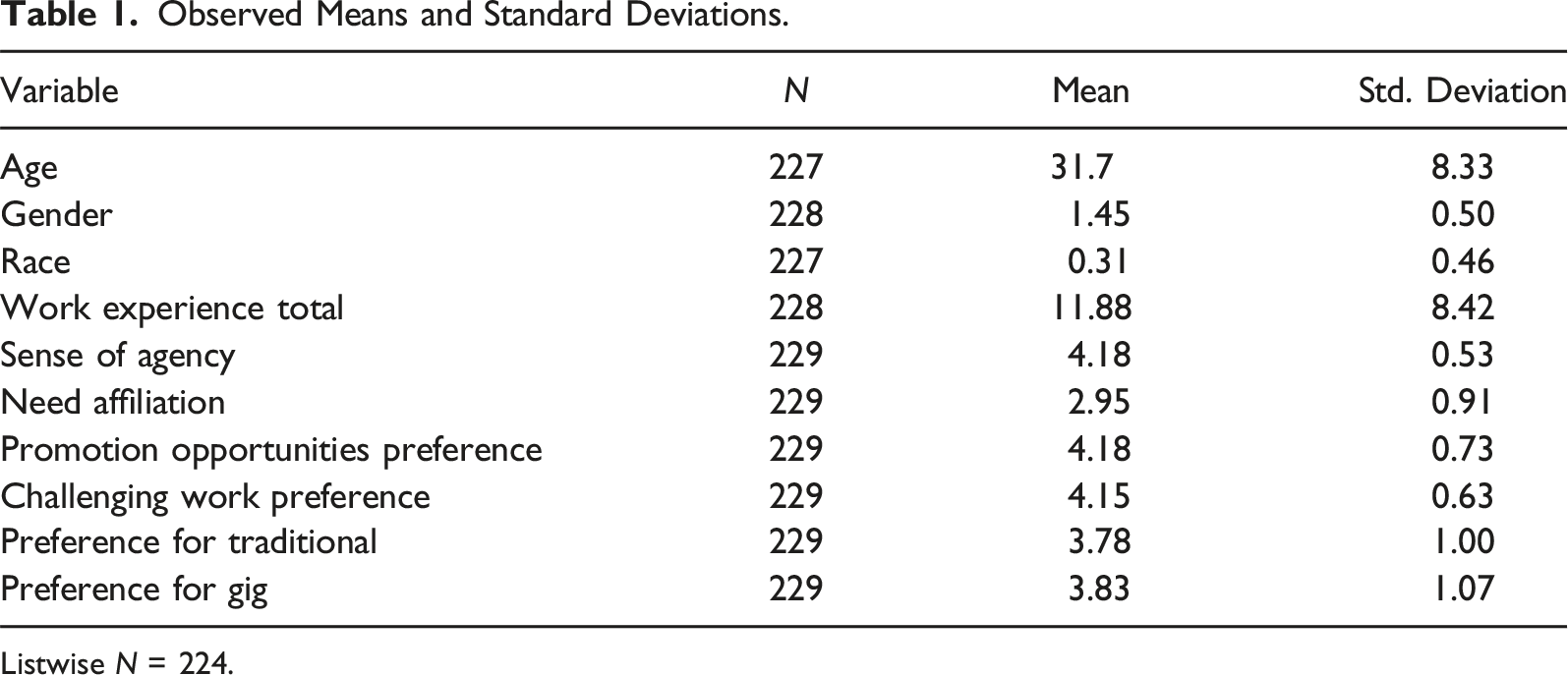
Listwise N = 224.
Correlations and Internal Reliabilities.
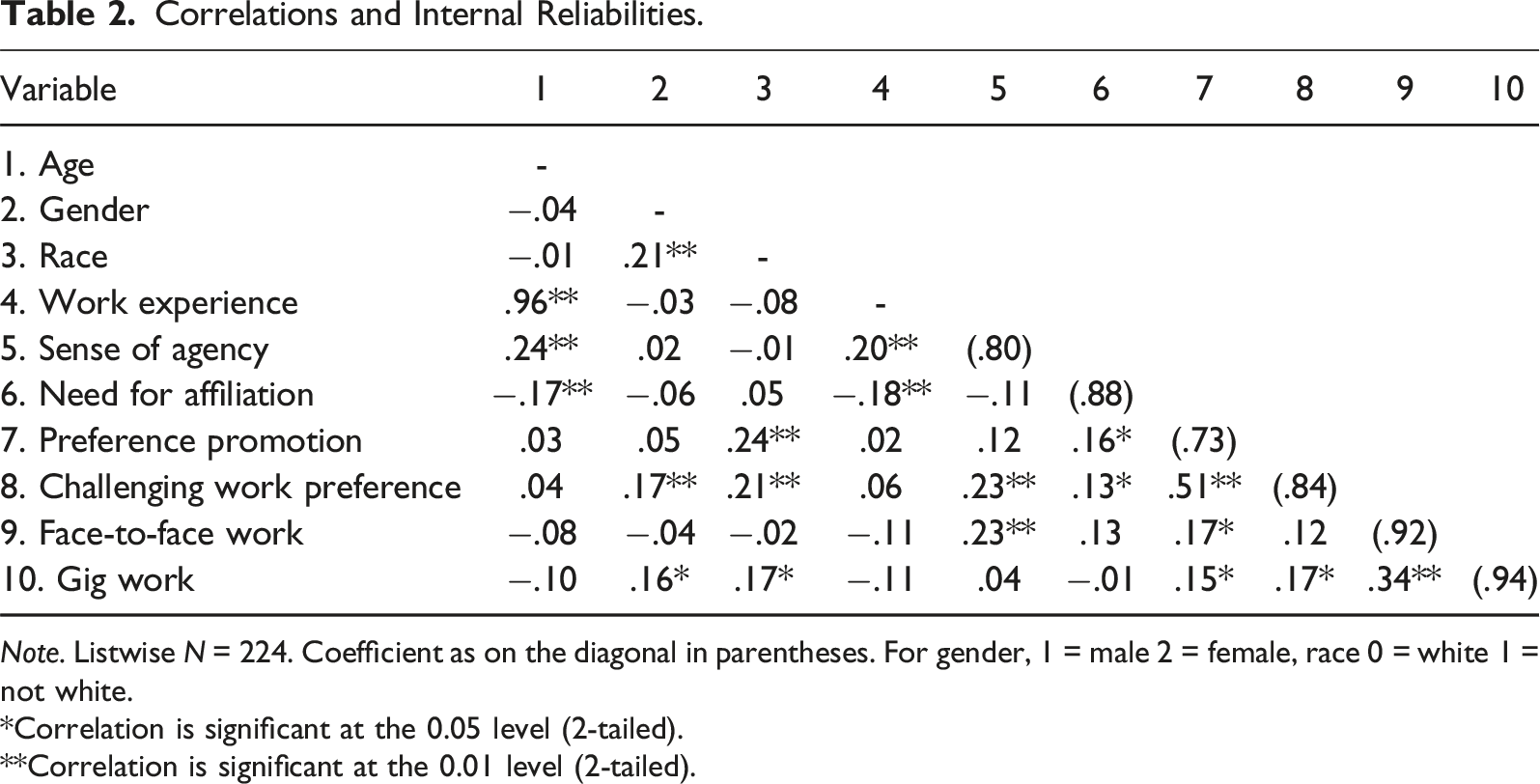
Note. Listwise N = 224. Coefficient as on the diagonal in parentheses. For gender, 1 = male 2 = female, race 0 = white 1 = not white.
*Correlation is significant at the 0.05 level (2-tailed).
**Correlation is significant at the 0.01 level (2-tailed).
Measurement Model
The data were analyzed using Structural Equation Modeling (SEM) and maximum likelihood in AMOS 26. (see Figure 1) Confirmatory Factor Analysis (CFA) was performed using the following variables: Sense of Agency, Need for Affiliation, Preference for Jobs with Promotion Opportunities, Preference for Jobs that are Challenging and Exciting, Preference for a Face-to-Face Job at Inspiron, and Preference for a Gig Job at Inspiron. CFA indicated an acceptable fit (χ2 (479) = 805.425, p < .001, RMSEA = 0.06, CFI = 0.91; SRMR = 0.06; TLI = 0.90; Browne & Cudeck, 1993; Medsker et al., 1994). The discriminant validity analysis results showed that the squared correlations of variables were smaller than the average variance extracted of the items of each measure (Fornell & Larcker, 1981) and distinct concepts.
Structural Model
Structural Model SEM.
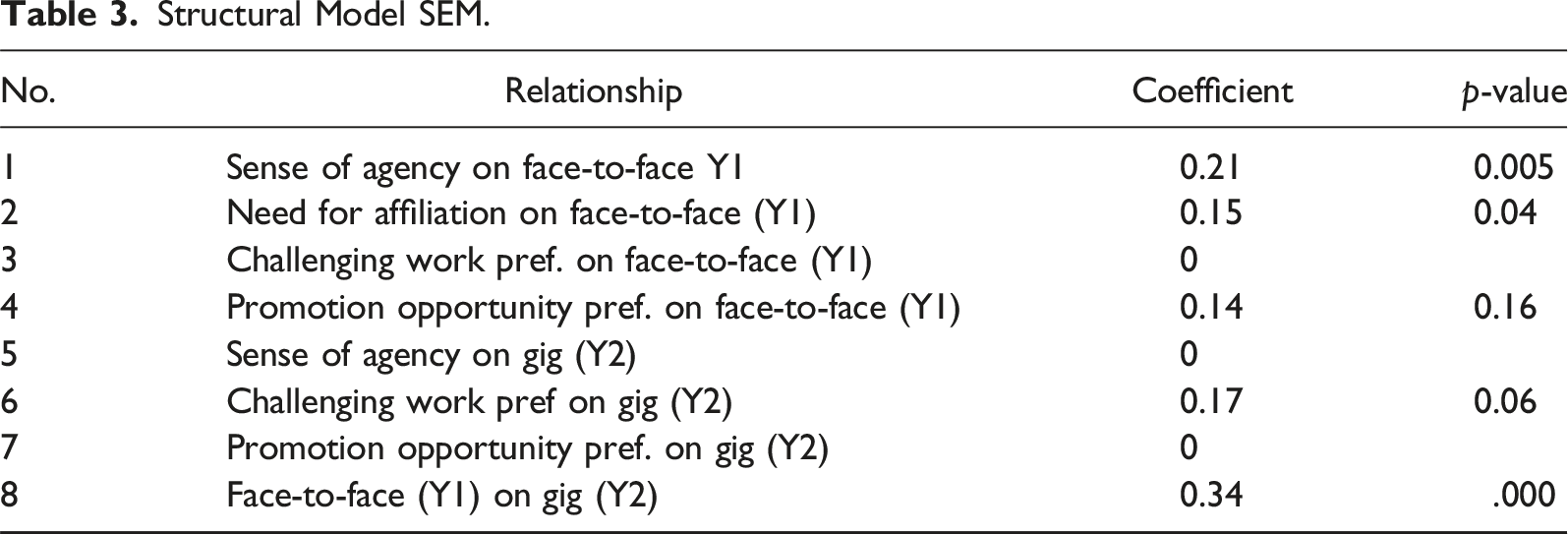
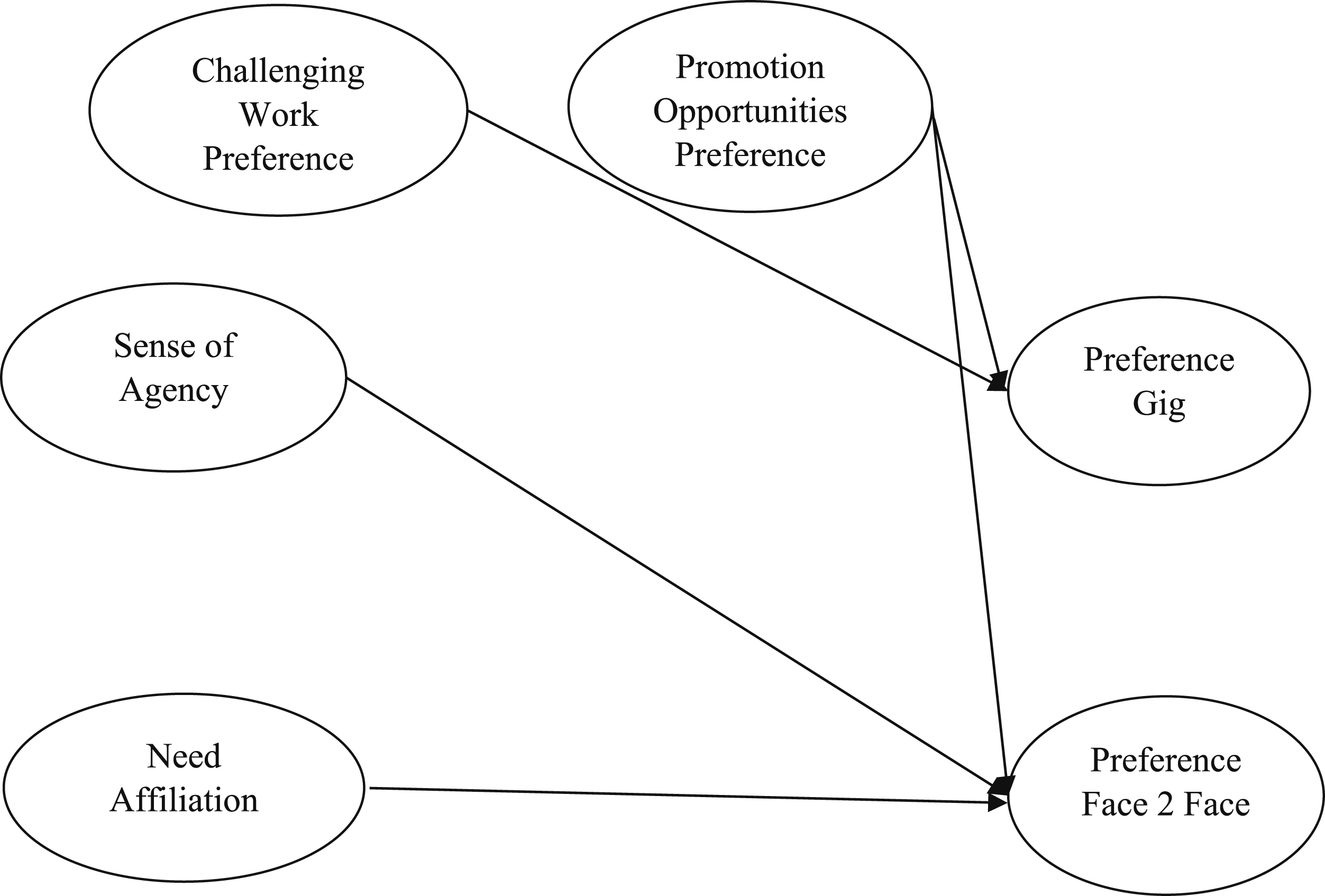
Significant path structural model in SEM.
Moderation
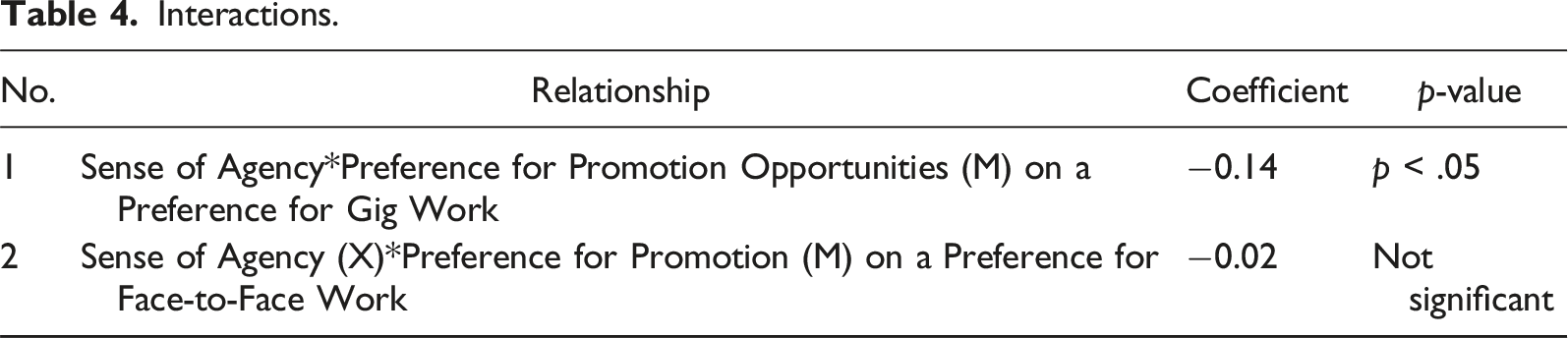
The second part of the SEM analysis was a test of work characteristic direct effects as well as indirect effects on the two work preference dependent variables (see Figure 3). Regarding the direct effect of a sense of agency on the gig and face-to-face work preferences, the structural coefficient value obtained is 0.19, with a p-value <.05 for a sense of agency and face-to-face work. The test of the direct effect of preference for challenging work showed a significant relationship with a preference for gig work with a structural estimate of 0.36. Testing moderation was derived from the interaction effect of a sense of agency and a preference for challenging and interesting work on the dependent variables. The obtained interaction coefficients were not significant. Thus, the hypothesized interaction (H4), where the desire for challenging work would strengthen the relationship between a sense of agency and gig work preference, was not supported. Next, in an SEM analysis testing the direct effects of the preference for promotion opportunities and the need for affiliation on gig and face-to-face work preferences, the structural coefficient value obtained is 0.14 (p < .05) for preference for promotion and face-to-face work and 0.16 (p < .05) with gig work. The need for affiliation and promotion preference interaction variable was not significantly related to either dependent variable. There is no significant direct effect of the need for affiliation on a preference for gig work. Testing moderation was derived from the interaction effect of a need for affiliation and an interest in promotion opportunities on the dependent variables. Hypothesis 6 was not supported because the obtained interaction coefficients were not significant. Supplemental interaction SEM model.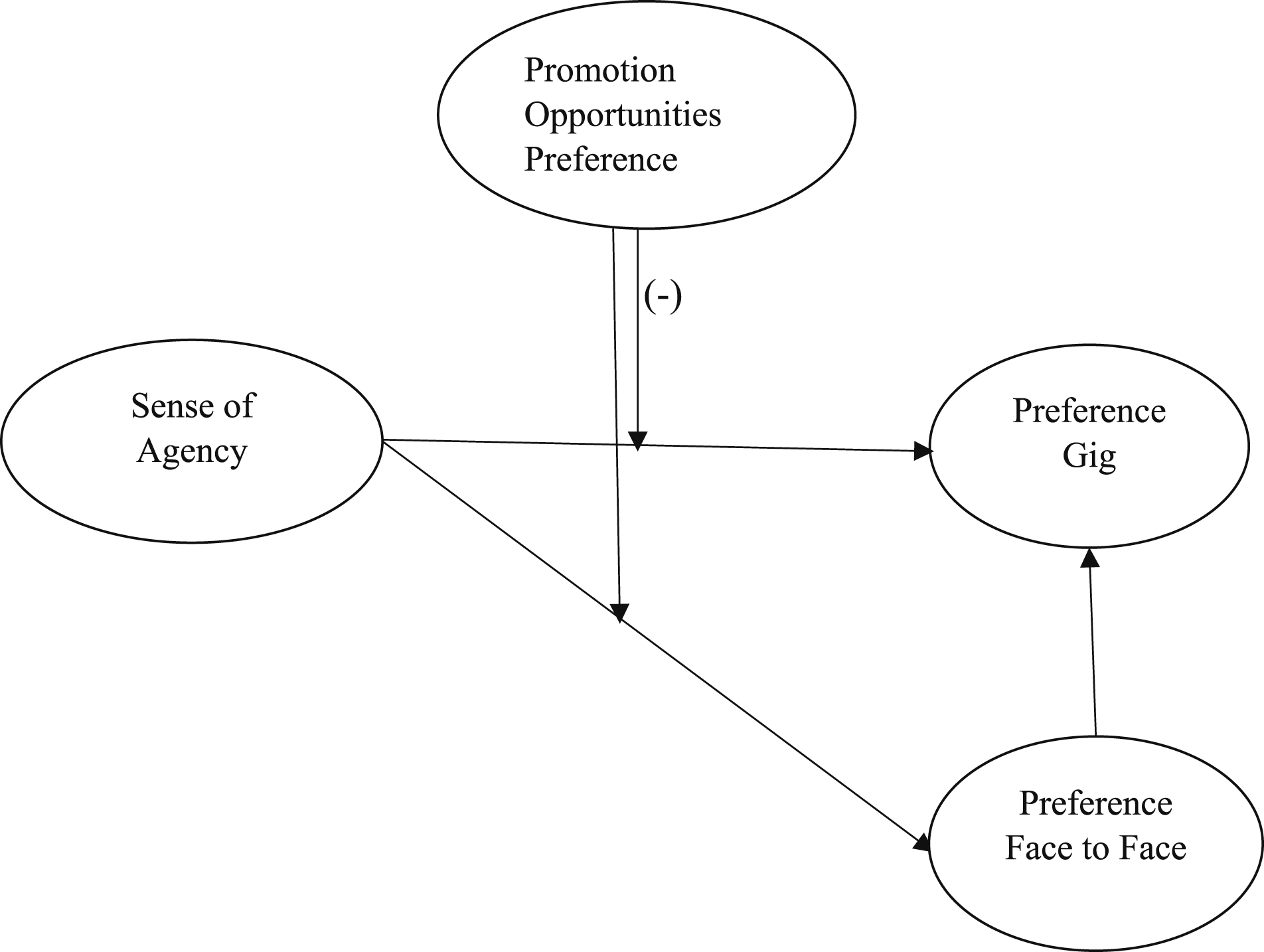
Supplemental Analysis
Interactions.
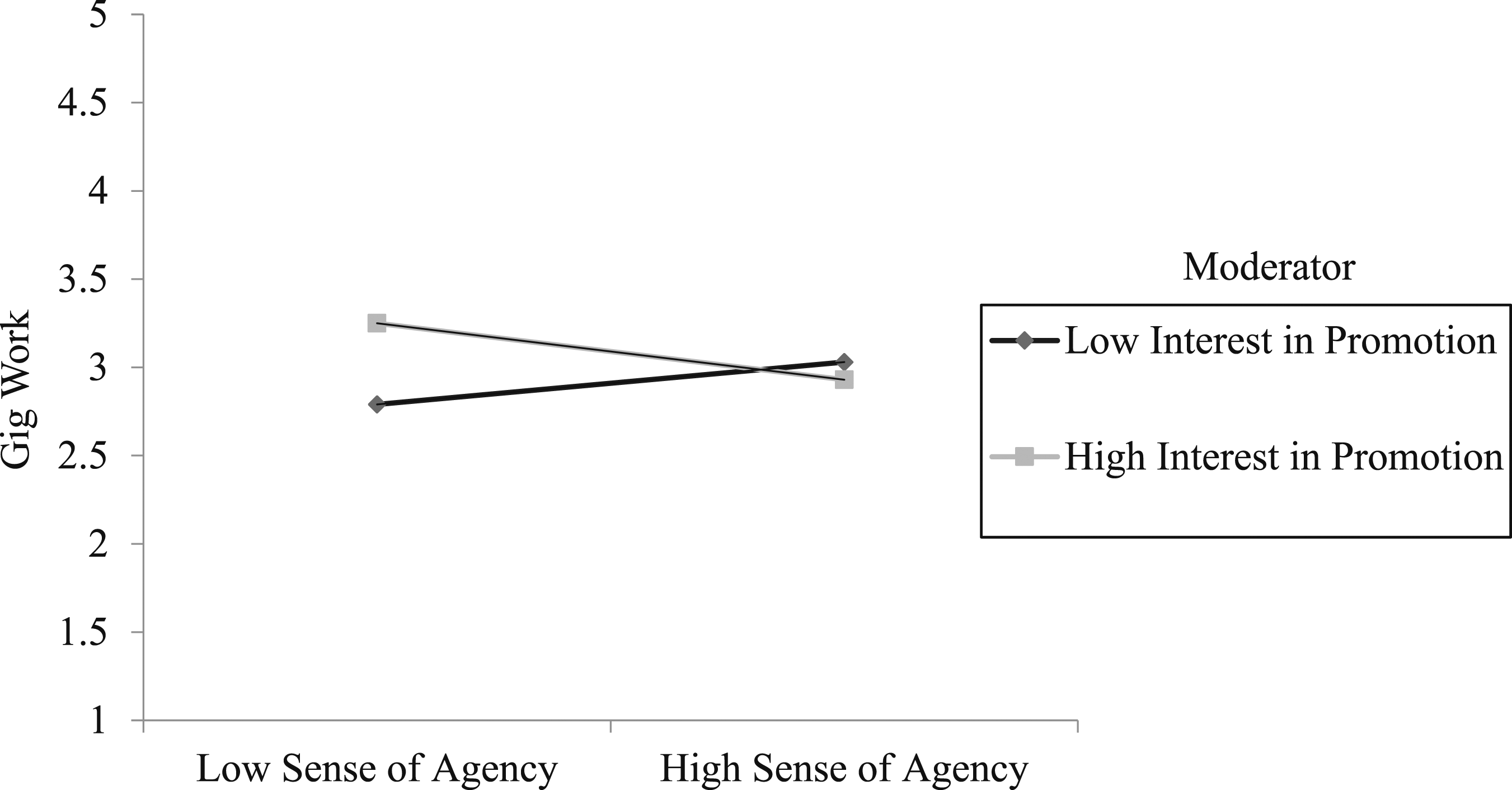
Interest in promotion opportunities moderates the relationship between a sense of agency and a preference for gig work.
Discussion
Gig work and virtual work arrangements are increasingly prevalent alternatives for prospective workers. Moreover, they offer promising avenues for organizations to pursue as they seek to recruit and satisfy a talented workforce. However, knowledge of the characteristics and work preferences of workers choosing various arrangements in this rapidly evolving context is limited. Understanding the underlying characteristics and work preferences of workers attracted to gig work adds to the knowledge related to recruitment in the post-pandemic part of the digital era. In line with the recent CSM model ensconced in SCCT (Lim et al., 2016), which asserts that job applicants make career decisions based on their perceptions of job content and context in relation to their characteristics and work preferences, this study’s findings contribute to our understanding of these relationships. Specifically, and even though the authors suggest the influences of technological and economic trends prior to the major disruption of the recent pandemic, Lent and Brown’s (2019) metanalytic work acts as somewhat of an oracle in its admonition to consider the limitations that trends may impose on chosen work paths (Lent, 2018). The current effort applies this recommendation in addressing the sudden escalation in availability of variations in work modalities as a vital contextual factor in light of recent and unprecedented disruptions.
In our scenario, we operationalized gig work to match closely the Karriker et al. (2021) definition of gig work, proposing a gig work situation in which an organization would pay workers digitally using an app, and in which workers will have the chance to match their work interests on a site designed to match workers with managers who need work completed (similar to the “micro-internship” app of Dewey Parker, e.g.). Overall, our findings are consistent with recommendations for future work in SCCT (e.g., Lent & Brown, 2019), even as they present interesting details for further consideration. Specifically, the results support our expectations that potential applicants with a desire for challenging and interesting work find gig work preferable, while job seekers with a need for affiliation and/or a desire for promotion opportunities find traditional face-to-face work attractive. Our interpretation of these results relates to the inherent promise of gig work, in that it is varied and interesting, and that this potential variety offers a challenge in and of itself, as does the actual work. Further, our findings indicate that job seekers who value challenge and variety perceive gig work as an attractive career option. Correspondingly, a fundamental element of traditional, face-to-face work provides the potential for stability as well as advancement and earnings potential. The inference from our findings supports the idea that such stability and structured advancement opportunity in traditional work is desirable to job seekers who esteem personal interactions and related affiliation, as it is to job seekers who desire the opportunity for promotion.
Contrary to our expectations, the study reveals the impact a strong sense of agency has on the work seeker’s preference for traditional, in-person work. Our anticipation of the relationship between sense of agency and gig work preference was based largely on the idea that gig work is likely to require significant personal risk, responsibility, and accountability and is, therefore, likely to attract individuals with a potent sense of personal control. However, considering our results, we wonder if the job seekers in our study have differing interpretations of their potential to exert agency in different contexts. Where we infer the need for agency for one to be successful in gig work, perhaps the job seekers are attending to the elements and influences in the gig economy that are unpredictable and, literally, uncontrollable by an individual. They may contrast these external forces with the potential to grasp, control, or even manipulate traditional work situations, especially where structure, processes, and rules may be used or leveraged for their purposes. The fact that the interaction between sense of agency and desire for promotion opportunity was significantly, yet negatively, related to gig work choice appears consistent with our interpretation of this perception. It is also interesting in light of Sitzmann and Yeo (2013) conclusion that experience-born self-efficacy drives performance more than does within person self-efficacy. Here, we infer the potential for delineating a sense of agency based on experience or as a within-person construct to provide a more nuanced understanding of its influences on work choice. Perhaps an experience-derived sense of agency may heighten the preference for gig work, where within-person SOA would have a suppressing, or at least neutral, effect. Future work may attend to these distinctions.
One associated concern prevalent in SCCT theory research involves conditions that support and/or deter the exercise of agency in career development (Lent & Brown, 2019). Here, we note that an external influence on work interests and values occurs via career counseling as a planned experience. In this vein, our findings suggest the opportunity for career counselors to assess individual sense of agency and discuss with job seekers their interpretations of their agency in regard to different work modalities. A realistic and current presentation of work contexts, along with associated risks and rewards, will be a helpful tool in a counselor’s repertoire.
Clearly, the employee and gig worker’s careers unfold within organizations, but potentially in different contexts of those organizations. Future research must address the impact of digitization (i.e., gig work) on employability and changing views of what having a career might mean (De Vos et al., 2021). Further, findings from this study imply that certain applicant work preferences and individual characteristics, such as a sense of agency and need for affiliation, will dramatically impact job seekers’ willingness to pursue face-to-face versus gig work opportunities. This contribution may be applied to recruiting employees with appropriate job fit, as this process will become increasingly difficult for organizations as technological advances make it more possible for the same work to be completed through multiple modalities. We assert that employers looking for top talent will need to fashion work arrangements that are attractive to prospective employees in the context of a working world of heightened choice and dynamic parameters.
Limitations
The data in this study was gathered from an online questionnaire, which creates the possibility of common-method bias. This issue may be somewhat mitigated by the scenario-based design, which separated the self-reported preferences of the participant from the ratings on the dependent variables. A significant interaction effect suggests common-method concerns are minimal (Evans, 1985).
As measured, the need for affiliation construct is not specific to the work environment. Perhaps, an individual with a high need for affiliation meets this need via personal relationships, rather than through a work arrangement. Future work should address the need for affiliation from the perspective of work. Additionally, further insights may come from the concepts of work and organizational identities introduced previously. We did not measure work or organizational identity with our sample as work identity is an evolving concept, and organizational identity, in this case, would not be strictly relevant. However, we assert the need to measure the desire for a work or organizational identity. We note the possibility that a strong sense of agency may be compatible with an individual’s ability to construct a work identity with or without the existence of traditional organizational structures. The need for affiliation, however, may be inconsistent with the ability to derive such an ad hoc work identity. Our treatment of the need for affiliation served as a de facto proxy for the desire for work identity, but this should be addressed and measured explicitly to provide enhanced understanding. Additionally, even though our sample consists of likely job [change] seekers, the hypothetical component based on a scenario limits broad applications of implications across various contexts. Future efforts that include longitudinal and/or job search outcome data might prove more fruitful in terms of generalizability.
Practical Implications and Future Research
In addition to extending SCCT in the array of opportunities in the new world of work, this study sheds light for an organization that wishes to cast a wide net and offer attractive job opportunities to prospective employees. With these findings, organizations may see the potential to attract not only employees who are inclined to choose traditional work, but also those who indicate they would tend to select gig work. Recruiting organizations may intentionally enact such a process by signaling appropriately in job postings and on social media (Highhouse et al., 2007). Our supplemental analyses indicate that the organization can also offer job seekers who desire interesting and challenging work the best of both traditional and gig worlds. They can highlight the structure, identity, and advancement prospects of a traditional company, while providing gig work arrangements using technological applications. In this context, if potential applicants rely on job postings, and if these postings are authentic, interesting and challenging characteristics of the job should create the most interest for gig work.
Correspondingly, organizations that emphasize a more personal, friendly, and sociable culture should not be surprised to find applicants who prefer traditional work experiences. Educators and career counselors would do well to prepare students as job seekers by making them aware that the job choices they will encounter may be traditional, gig, or some combination of the two (Hartman & Karriker, 2021). These students and job seekers will also need to develop the abilities to create their own work identities and to exercise great adaptability in a dynamic work modality environment. For those who can continue to grow, technology grants them the potential to work with organizations to curate and even create attractive work arrangements. Career counselors armed with knowledge of current and potential work modalities can greatly enhance the nearly limitless potential for job seekers to work with organizations to curate and even create attractive work.
Future work may explore whether and how employers may benefit by advertising a strong in-person work culture early in the recruitment process where job seekers with a stronger sense of agency, need for affiliation, and/or preference for promotion opportunities can be identified. Applicants with a preference for interesting and challenging jobs, where promotion opportunities and spending time interacting face-to-face with colleagues are less important, may be recruited more effectively through the creation and emphasis of digital interactions representative of a gig work configuration. Future research should also consider incorporating real-world data from actual job seekers who have chosen different work arrangements via longitudinal studies or the analysis of existing data from job-seeking platforms to validate the findings obtained from scenario-based experiments.
A positive relationship between a preference for face-to-face and gig work options suggests a [hybrid] combination of the two may be the best of both worlds for employees and employers. An implication for organizations is that attracting employees to take a face-to-face job may be a successful strategy for transitioning employees to gig work arrangements when the organization determines the virtual environment offers higher levels of productivity. Going forward, research on recruitment equity and applicant job knowledge should be considered to determine the best recruitment practices for attracting the best prospective employees.
This research may also inform career counseling efforts, offering a heightened understanding of potential work arrangements that best meet job seekers’ interests and aptitudes. Indeed, such future investigation will be instructive for employers, educators, counselors, and scholars as they seek to keep pace with and prepare a workforce for a rapidly changing career context.
Footnotes
Declaration of Conflicting Interests
The author(s) declared no potential conflicts of interest with respect to the research, authorship, and/or publication of this article.
Funding
The author(s) received no financial support for the research, authorship, and/or publication of this article.

Appendix
Scenario
Instructions:
You are about to finish your final semester and are considering full-time jobs in your career. Now that you are graduating, you need to search for a job. While you are applying for jobs, your professor announces that they have an ad for an organization named Inspiren, a Fortune 500 company with an alumni connection to your school that would like to hire several graduating students. You are given the job advertisement and need to decide whether you would apply for work at Inspiren. Use the information below when making your decision:
Word of mouth in the class suggests that Inspiren has a good reputation and does provide what the ad describes. Inspiren workers with 0–3 years of experience earn the average amount that would be expected for a recent graduate. This weekly salary is at or above average for graduates with your major and experience level. Inspiren also offers a typical benefits package (health, 401k, etc.). Inspiren provides the typical learning opportunities (virtually) to help advance its workers’ careers and increase their salaries.
Job Ad:
Inspiren is a company offering workers the chance to work full-time in the 100% virtual or gig work economy. Workers create a profile on the Inspiren website, phone app, or both. Every Monday, Inspiren’s work-employer-industry-worker compatibility algorithm offers workers various tasks or projects matching that worker’s profile, training, and salary level. The worker selects the work for that week that is most desirable to them. Managers from all across the organization working with hundreds of different clients offer the work, which are projects from Inspiren’s many clients. Workers can choose the virtual work arrangement that meets their preferences: 1 project that lasts 1–2 weeks, 5 different 8-h projects to fill that week, or any combination that adds up to 30–40 hours (depending on the worker’s preferred workweek).
Workweeks range from 30 to 40 hours of work, and workers are paid through a phone app at the end of each week (Saturday at 8 am central time), and all work is done remotely. Inspiren has grown during the last 5 years and has enough clients to ensure this arrangement can continue for as long as the worker desires.
How it works is managers post different projects to a database, a worker matching the manager’s expectations is notified through the app that a project matching their profile has been posted, and workers bid for projects they are interested in. The worker can work on a variety of different projects for a variety of different managers during the week, month, and year. The manager gets the chance to have workers with a variety of skills compete for a particular project.
Inspiren workers develop a profile on the worker-work matching website, and with each completed project, their profile and updated rating work preferences ensure they continue to get the best available projects for them. Workers, as a result, will continually be provided with an extensive list of gigs in a variety of fields that they have the opportunity to bid for.
According to Inspiren, the best gigs are mutually beneficial. Managers get work done that is the best use of the worker’s time, while identifying and building the skills of the workers. Workers gain experience and can find the right work for them.
Inspiren offers a range of experiences across various disciplines and career paths, from HealthCare to finance and accounting to human resources.
**If you have read all the above information, continue to the next page to complete the survey by indicating your interest in this work opportunity.**