




Abstract
Emerging careers are less linear, safe, and stable and more attentive to the non-professional dimensions of life. People face resistance and obstacles on their careers, namely, regarding gender inequality. The study took an inductive approach with qualitative data collected from ten in-depth semi-structured interviews with leaders in Portuguese organizations, with the aim of understanding the impact of gender on leaders’ career paths and orientations. The thematic analysis identified seven career orientations (school education, challenge, stability, hierarchical progression, own business, people and community, and family), and six gender conditioning (functional segregation, male leadership, sexual and moral assessment of women, resistance to male interest by the family, access and representation mechanisms, and work–family articulation). Our results show a reality not free of gender inequalities, which forces women to give twice to be recognized as having equal value to men. Organizations must ensure equal opportunities and removing any forms of gender-based discrimination.
Introduction
Gender equality has become challenging for organizations and their leaders, whether women or men (Canaan et al., 2022). In Western countries, the participation of women in the labor market and in leadership positions has increased significantly (Hérault & Kalb, 2020); however, career progression is still conditioned by gender (Bilan et al., 2020). In the family context, roles have also changed, women have less availability for the family due to the increased orientation towards work, and men are increasingly interested in deepening their presence and fulfillment as fathers (Avdic & Karimi, 2018; Lappegård et al., 2019). A career is a path that includes a succession of initiatives and adaptations to work, family, and community (Eaton & Bailyn, 2000), which results from the articulation between individual capacities, needs, and aspirations with the environment of opportunities in which the person moves (Super, 1957). Gender influences the vocational choices of men and women (Bubany & Hansen, 2011) and is related to individuals’ cultural context (Fouad, 2002). In their youth, women tend to aspire to functions with a higher social and economic level than men (Wicht et al., 2022), but later tend to occupy positions with less prestige and income than men, indicating the existence of obstacles along the way (Gutman & Akerman, 2008). Well-being at work refers to the general quality of the work experience for the employee (Kazemi, 2017), and in its social dimension, it emphasizes the quality of interactions and relationships, interpersonal skills in the work context (Grant et al., 2007; Khoreva & Wechtler, 2018; Peccei et al., 2013). The promotion of well-being at work requires ethical organizational action characterized by respect, trust (Santos & Lousã, 2022), work–family balance (Edgar et al., 2017), and fair treatment (Guerci et al., 2019). Ethical scrutiny is a critical dimension of well-being at work (Colenberg et al., 2021) and is in line with sustainable development goals No. 5 Gender Equality—which aims to ensure the full and effective participation of women and equal leadership opportunities—and No. 8 Decent Work—which aims the creation of decent and rewarding jobs, with rights and opportunities for people at work (UN, 2015). Non-discriminatory behavior increases well-being at work, intrinsic motivation, and worker performance (Beer, 2009). Gender discrimination penalizes individual well-being, the efficiency and competitiveness of organizations, and the sustainability of society (Kazemi, 2017).
This study aims to deepen knowledge about the career orientations of leaders and identify the main gender conditioning they faced in their paths, and two research questions were formulated: What were the main motivations that justified career choices? | How did gender condition career choices and paths? The relevance of this investigation is supported by recent literature that points to the importance of giving more attention to the study of how the characteristics of personal and cultural differentiation, namely, class, gender, and age, facilitate or hinder the development of careers (Castro et al., 2020; Hirschi et al., 2019). Kossek and Ollier-Malaterre (2020) identify the need for further research to examine the effects of gender characteristics on the development of sustainable careers (Van der Heijden & De Vos, 2015; Wicht et al., 2022). The vision of leaders on the impact of gender on careers needs to be deepened, as their intervention is central and decisive in the organizational context (Straub et al., 2020). Because emerging careers are about individual action, research has focused on what employees can do to create successful careers (Spurk et al., 2019). However, the present study also aims to obtain information that can reinforce organizational efficiency, showing the eventual gender obstacles that condition the improvement of well-being at work. Equity and non-discrimination are one of the social values of well-being at work (Santos & Lousã, 2022) and well-being is assumed as an ethical duty of organizations (Guest, 2017).
Theoretical Framework
Emerging and Sustainable Careers
Career refers to the successive occupation of functions related to each other through a hierarchy of prestige and responsibility, in which employees move along routes with some predictability (Wilensky, 1960). According to Derr’s model (1986), people structure their careers according to five alternative orientations: (1) advancement—progress in the organizational hierarchy; (2) security—stable and lasting contractual relationship with the employer; (3) freedom—being one’s person, with autonomy; (4) challenge—interesting, challenging, and flowing work; (5) balance—long-term balance between work, relationships, and other non-professional dimensions of life. The career tends to be internal and subjective (Derr, 1986) and permanently re-evaluated (Schein, 1971). Each person creates their idea of their career and monitors their path (Driver, 1980). But, in career development, context matters. As postulated by the Social Cognitive Career Theory (Bandura, 1977; Lent et al., 1994), career development is conditioned by internal forces, namely, the sense of self-efficacy, and external forces, namely, contextual factors (Gregor et al., 2023). The environmental context is assumed as the background that frames the ambition of career aspirations, their possibilities of success and the associated interpersonal relationships (McMahon & Patton, 1995). “Career development cannot take place in an interpersonal vacuum” (Xu et al., 2023, p. 596).
The traditional career model has been replaced by emerging careers (protean and borderless) characterized by high autonomy and employee proactivity (Tomlinson et al., 2018). Career has become a broader concept than just pay and status, and work and family are no longer unrelated domains (Emslie & Hunt, 2009). In emerging careers, paths are centered on the interests and values of the employees themselves (Briscoe et al., 2006). Career success criteria are self-established and consider individuals’ ability and willingness to adapt and actively influence the surrounding organizational and cultural environment (Gubler et al., 2014). Although the employee assumes himself as the central agent of his career, he acts conditioned by a broad and diverse environment that imposes norms and guidelines on him and tends to distinguish between acceptable and deviant behaviors (Colakoglu et al., 2006). People attach more and more importance to non-work orientations and need to find an attitude of alignment and support from the organization’s stakeholders (Hirschi et al., 2019). The sustainable career considers that the professional experiences of people at work need to be evaluated in their various social spaces (Van der Heijden & De Vos, 2015). Work intersects with family, leisure, and other non-professional dimensions of contemporary lives in an increasingly delicate articulation given the increase in flexibility, precariousness, and other recent changes in the work context (Hall et al., 2018; Schneider & Harknett, 2019). The sustainability of careers needs a non-normative framework that justifies the idiosyncrasy of career orientations and makes their implementation possible (Van der Heijden, 2005).
Gender Equality at Work
The social representations associated with gender and the family pose numerous challenges that people must deal with at work and in non-professional life (Straub et al., 2020). Careers are influenced by their social environment, and gender discrimination is widespread in different organizational contexts (Bilan et al., 2020). One of the main reasons is pregnancy and maternity, and the resulting reduction in women’s availability for work (Dizaho et al., 2016). Pregnancy and motherhood experiences translate into significant emotional changes in women’s lives, negatively impacting the work context (Staneva & Wigginton. 2018). The penalization of women due to motherhood (Bar-On Shmilovitch et al., 2022) stems from the erroneous understanding that missing work is a lousy worker behavior (Petts & Knoester, 2020) and that women start to mobilize more personal resources (time, vigor, and attention) for the family, penalizing job performance (Heilman & Okimoto, 2008). Women who decide to reduce or stop work due to motherhood are more dissatisfied with their careers than men in the long term (De Vos et al., 2018). As a result of public parenting programs (Canaan et al., 2022), men tend to play a more significant role in family (Blum et al., 2018; Petts et al., 2020). American fathers spend three times more time caring for their children than their fathers, although they still spend much less time than their children’s mothers (Bianchi et al., 2012; McGill, 2014). Reconciling work–family is more difficult for women. While women believe having children hinders success at work, men believe that family growth will not affect or even facilitate success at work (Harrington et al., 2016; Stoppard, 2000). When women occupy a leadership position, the request for availability for work is amplified, and the difficult balance between work and family is heavily penalizing for their well-being (Machín-Rincón et al., 2020).
Method
Research Design
Considering the objectives of this research project, dedicated to investigating the “how” rather than the “what” in the relationship between gender and the leader’s choices and career paths, the use of qualitative methodology was assumed to be the most appropriate approach. When the objective of the investigation is to understand the processes of social construction, it becomes more important to pay attention to the way in which employees construct and understand their experiences in the organizational context than to count or measure the frequency with which a certain action or situation may occur. In fact, as mentioned in the phrase attributed to Einstein: “Not everything that can be counted counts, and not everything that counts can be counted” (Gioia et al., 2013, p. 16). Qualitative research is the appropriate approach for the purpose of this research project because it offers insights into human experiences that are completely different from those obtained through quantitative methods, although equally reliable and rigorous (Braun & Clarke, 2006). But, in the field of career development, the literature shows a significant deficit of qualitative studies, not reaching more than 20% of the quantitative (Mehlhouse et al., 2023) and, sometimes, even below 7% (Stead et al., 2012).
This investigation is part of a broader project that studies gender equality at work and aims to contribute to a greater understanding of the impact of gender issues on the career development of leaders and reduce the lack of qualitative studies in the area. A qualitative study was carried out through semi-structured, in-depth interviews with participants who perform team leadership functions in Portuguese organizations.
Participants
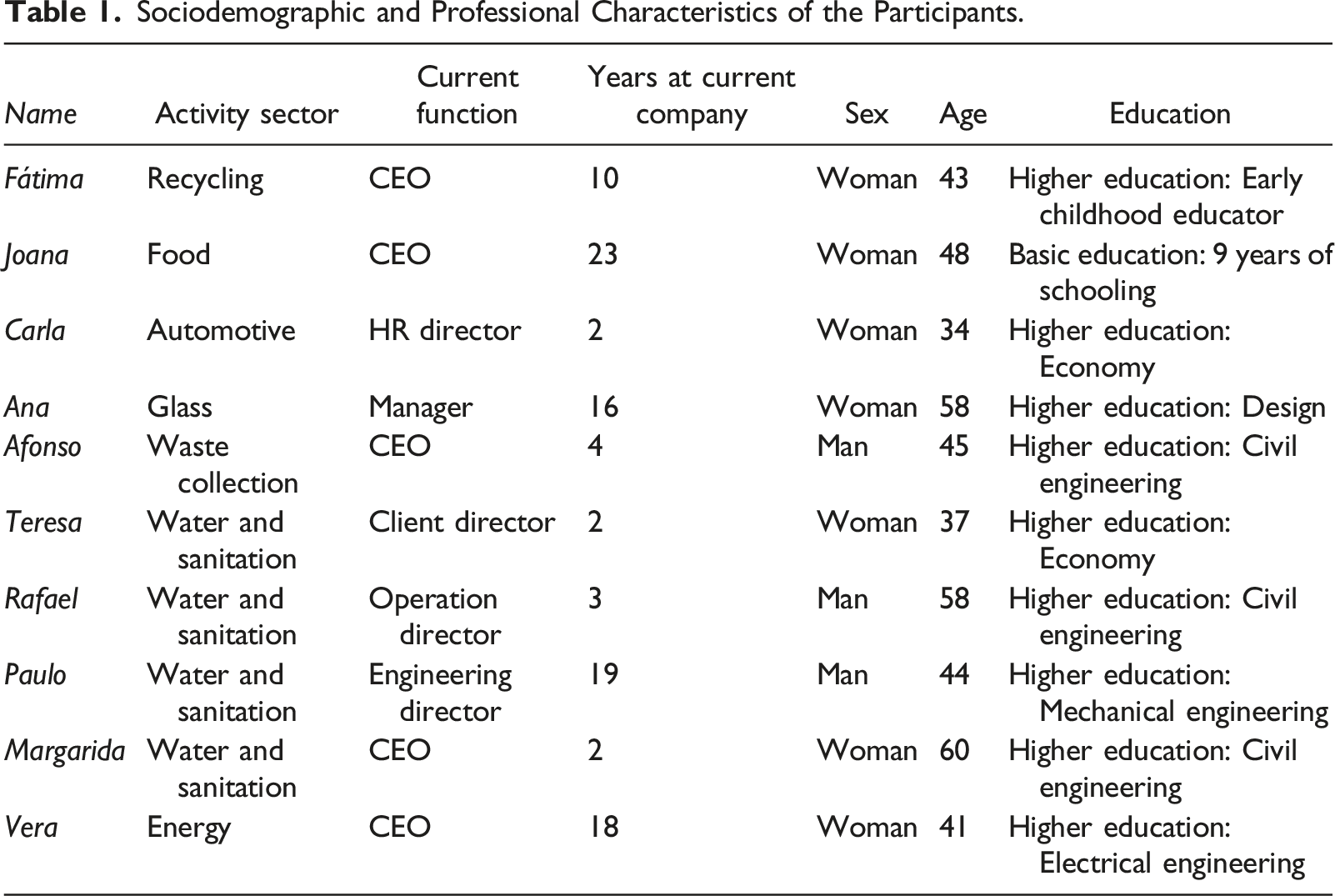
After several contacts with companies (with more than 50 workers) in the Alto-Minho region in Portugal, ten people showed willingness to participate in the present study. Participants were initially approached by the organizations where they work and only after communicating their desire to participate in the study, they begin to interact with the research team. The only inclusion criterion was to hold a leadership role. Participation in the study did not offer any reward to participants. All participants are identified with fictitious names to ensure anonymity, and their sociodemographic and professional characteristics are presented in Table 1.
Instrument and Data Collection Procedures
Between March and May 2022, semi-structured interviews were carried out with the participants. The interviews followed a semi-structured script and had an average duration of more than 60 minutes. The participants were invited to share their experiences and the reality they observed in the different organizations they worked in. The interview guide included four points for reflection and sharing: career motivations, work–life balance, perceptions of gender equality, and organizational practices. The interview began with an open question with a factual answer, to reinforce the participant’s motivation and avoid any initial embarrassment: “What roles and responsibilities have you assumed in your professional career?” At the end of the interview, time was reserved for final shares associated with career development and gender equality, as well as to support the participants’ emotional recovery, when necessary. Benefiting from the flexibility associated with the semi-structured format, it was possible to reconcile compliance with the interview guide with the search for additional information to deepen further the experiences and ideas transmitted. The interviews were carried out through the Zoom electronic platform for the greater convenience of the participants and because, at the time, there were still some restrictions on face-to-face relationships associated with the COVID-19 pandemic. The study involved six researchers, two of whom ensured the procedures associated with conducting and initial coding the interviews. One of the researchers who carried out the interviews has a doctorate in psychology and the other in business sciences, and both have extensive experience in conducting qualitative research. Before creating the script and conducting and coding the interviews, the research team met and discussed their own bias and assumptions about the process of gender influence on career development.
Data Analysis Methodology
The content of the interviews was subject to the application of thematic analysis (Braun & Clarke, 2006). Thematic analysis was applied in its inductive approach, considered the most frequent (Mills et al., 2010), as the identification of themes and codes did not follow any matrix of predefined categories. Each interview was transcribed in full. Before the text was encoded, the researchers performed the data familiarization phase, through repeated reading of the interviews (Braun & Clarke, 2006). The content that stood out due to the high frequency or great relevance to answering the research question was marked and duly coded. The ten interviews proved sufficient because the matrix of themes and codes reached the theoretical saturation point. To reinforce the reliability of the thematic analysis, the identification of relevant excerpts in the interviews and the definition of the initial matrix of themes and codes were carried out separately and, subsequently, discussed between the team of researchers. The research team met and shared the themes and codes that emerged from individual coding and moved forward with a discussion process to reach a group consensus. Bringing together the separately prepared coding matrices forced the redenomination, aggregation, and elimination of some codes. Codes associated with personal and family conditioning were grouped into “gender conditioning.” The codes associated with public policies and organizational practices supporting gender equality were divided and, while public policies were also grouped into “gender conditioning” through the code “Access and representation mechanisms,” organizational practices were removed from the study because its content presented a description of the action of human resources management, with little content about the participants' perception. Career orientations were initially called career motivations because they were frequently referred to by participants but were renamed to career orientations to align with the most frequent term used in scientific literature. After reaching consensus on two central themes and thirteen codes, the team re-analyzed the interview excerpts to ensure their good coding, as well as their relevance to the present study.
Ethic Procedures
The Ethics Committee of the Faculty of Psychology and Educational Sciences of the University of Porto approved the present study (Ref. 2022/04–06). During the interviews, all participants were informed about voluntary adherence and the confidentiality and anonymity of responses. Participants read and signed an individual informed consent form. Qualitative research was conducted under the principles of the Declaration of Helsinki and the GDPR—General Data Protection Regulation.
Results
The application of thematic analysis allowed identifying two themes and several relevant codes to answer the research questions. The results obtained are summarized in Figure 1 in the appendix and shed light on the leaders’ career orientations and the gender conditioning verified in these paths. The matrix of themes and codes was structured around the central organizer—“impact of gender on careers” —and allowed identifying two themes: career orientations and gender conditioning. Within the scope of the career orientations theme, the codes obtained identify the motivations justifying the interviewees’ actual or desired professional paths. The theme of gender conditioning presents several obstacles to the fulfillment of the mentioned career orientations, resulting from the social and historical context that assigns different roles to women and men at work and in the family. Below, we present our analysis of the results in more detail, including illustrative excerpts from the interviews to characterize themes and codes and show their relevance to the research objective.
Careers Orientations
Leaders built their careers pursuing very diverse goals. The results obtained make it possible to identify seven main careers orientations that framed the conscious choices of the participants throughout their professional paths: School education, challenge, stability, hierarchical progression, own business, people and community, and family.
School education
Work in the training area to avoid the perception of wasting the entire accumulated school training process. For example, Rafael stated “As my area of training was hydraulics, when the opportunity arose to come here, I applied and have been doing what I like for thirty years.”
Challenge
Perform functions that allow a constant challenge and combat the routine at work. For example, Vera stated “I manage to add some value to my team, and I think I feel extremely fulfilled with new challenges.”
Stability
Have a contractual and remuneration context that allows fulfilling personal and family obligations and assuming responsibilities in a medium and long-term perspective. For example, Ana stated “I don’t have great aspirations regarding luxuries, but I want stability.”
Hierarchical progression
Perform leadership roles in the organizational structure, assuming increased responsibilities and benefiting from more remuneration, status, and other associated rewards. For example, Paulo stated “I’ve never had problems managing people who are more knowledgeable than I am because I like managing people.”
Own business
Impetus to become an entrepreneur and reconcile team leadership with ownership of the business and the means of work. For example, Fátima stated, “We were young and in need of something of our own. His boss didn’t advance much, and he was afraid. And there was a desire here, and we decided to set up a business.”
People and community
Contribute to the development of the surrounding community and the satisfaction and development of the people with whom it relates in work activities. For example, Teresa stated “What motivated me to leave was to be able to do something more useful for my region in relation to a very important issue such as the environment.”
Family
Reduction of the distance between the workplace and home and greater availability of time and energy to respond to personal and family life demands. For example, Teresa stated “I kept walking until the opportunity to take on a leadership position came up. I made my application, I was the selected candidate and I also got closer to my house.”
Career orientations are also strongly influenced by references from the personal context associated with the area of activity or profession and the search for leadership roles or a career as an entrepreneur. People tend to reproduce the references to careers that surround them. As Vera mentions, integrating and taking over the leadership of the family business has become a natural choice, nurtured over time: “This company was born with me. There is almost a symbiosis and growth here. In a way, throughout my adolescence and childhood, I always had the idea of wanting to come here.”
Gender Conditioning
Participants tend to share that they do not see differences between men and women at work, nor do they consider the issue of gender differentiation to be relevant. For example, Ana said “Here at my company, I see no difference between being a man and a woman. Here it’s more about efficiency, information, about who has more capacity,” and Margarida has the same opinion “I don’t even remember if it’s a man or a woman. For me, he’s a technician, he’s an employee, and I can’t make a distinction.” However, with the deepening of the reflection, it was possible to detect less evident levels of gender conditioning in the evolution of careers. Ana assumed that she considers women more capable leaders and that her colleagues tend not to value women as much: “In leadership, women continue to be superior. They are much more organized.” Margarida, who initially said she did not even remember to distinguish between men and women, recognizes work qualities associated with gender differentiation: “If women are not in an equal position in Portuguese companies, I can tell you that it is because they are not allowed to.” When the participants allowed themselves to go beyond the “politically correct” discourse, it was possible to obtain relevant information to characterize the impact of gender issues on career development.
Functional segregation
Most of the participants easily constructed a differentiated characterization between the profile of women and men at work. For example, Rui defends “Men are much fickle, for better or for worse. Women have a greater sensitivity. Therefore, it is different to speak to a woman and to speak to a man” and Carla reinforces the man-woman dichotomy “I think that sometimes men are much more rational, in the sense of saying this is the goal I want and I have to get there. I think we women have a greater sensitivity, a greater sense of empathy.” The dissemination of a well-differentiated characterization of attributes and competencies between women and men leads to the defense or acceptance of gender-based functional segregation phenomena. Overall, the participants associate women with organizational and human relations functions and men with physically demanding and more competitive functions. Vera considers that physical work legitimizes the preferential choice of men: “I have all-male teams and women cannot compete because they are physical characteristics. Men by definition are stronger, have more muscles, have a different biological composition than women. It’s human biology.” However, the apparent female incapacity for production areas is overcome when men do not apply for these functions because they find more advantageous remuneration offers in other organizations. Faced with unavailability of men, women have been able to take on roles in industrial production, as stated by Joana: “Right now, I don’t have any man in production. Production is a bit closed, and men go to work for multinationals with more flexible schedules and, perhaps, higher wages.” Overall, the participants shared their praise for gender complementarity in the composition of work teams. When formed with both men and women, teams tend to achieve a better balance between a focus on tasks and a focus on people. For example, Afonso associates gender complementarity with better performance: “When teams are more balanced, when there is an interaction between men and women, with their different sensitivities, I clearly think that companies and teams work better.”
Male leadership as a reference
Participants also shared several personal experiences that show widespread resistance to women taking on hierarchical or business leadership positions. The example of Fátima is paradigmatic: “When we go somewhere, the company’s owner is always my husband. He does not mention it, but he is always the owner of the company, his peers always see him as the owner of the company. And my husband and I own the company, we are fully equal partners.” This behavior of overvaluing the role of men in leadership expresses a great distrust in women’s abilities, due to their lesser capacity to assume the complexity of leadership and less availability to their family roles. When women succeed, distrust disappears. Seeing is believing! Success emerges to overcome gender inequalities. And one of the biggest drivers of this success seems to be distrust. The more they feel distrust, the more women create a sense of duty to overcome difficulties and demonstrate individual capacity. The situation and reaction described by Ana are illuminating: “One day I received a letter: ‘It is not an entrepreneur who wants to, only those who can’. He was telling me that I, as a woman, couldn’t be an entrepreneur. That gave me leverage. It was many years ago, but it gave me leverage. ‘You’ll see if I’m not!’.” If there are women who are motivated by mistrust and reach higher levels of performance, there are certainly others for whom this mistrust will be limiting and will reduce performance, progression, and well-being.
Sexual and moral assessment of women
A successful female career can penalize women’s well-being because there is a tendency to justify career advancement in return for some affective or sexual favor. Vera’s statement is paradigmatic: “She’s there because she’s cute. She’s there because she’s with I don’t know who. It’s almost like saying that she only got there because she had an affair with her boss and that kind of thing that, most of the time, is a lie.” Nothing similar was shared regarding the career progression experienced by men. The sexual dimension seems to negatively condition women’s careers. Afonso considers that limiting women’s access to certain functions and contexts aims to protect women’s well-being: “Putting women in the middle of a men’s yard could awaken them to interests other than work?” Social representations of female fragility, maternal instincts, and a vocation for household chores, seem to emerge quickly and prevent equal opportunities at work. Women need to allocate more energy, skills, and effort to achieve similar validation of merit as men. For example, Rafael stated that social scrutiny is more pronounced for women, “It’s not so much the person not being able to do it, it’s also how society sees a woman alone on the street at that time,” and Ana mentioned that she needs to spend twice as much resources to get the same attention or results as men “I give twice as much work to get myself heard and move forward with my ideas. And sometimes use a higher pitch of voice so they can hear me.”
Resistance to male interest in the family
Women face many obstacles during their working careers. A similar phenomenon can be seen given men’s growing interest in the family sphere of their lives. The social representations that considered the family a feminine “feud” become obstacles for men to spend more quality time with their families. The participants shared several situations demonstrating the organizations’ strangeness and resistance to the male desire to enjoy these rights. Afonso’s contribution is very representative: “Our production manager is a woman and one day she came up to me and said: ‘This cannot be, I have two drivers who are going to be parents and want to take parental leave’. She was very uncomfortable. I ended up telling her, with a smile on my lips, that I didn’t understand that sexist comment (laughs).” This statement shows how the work–family balance of male careers is also subject to moral judgments and comparisons with social references built with gender inequality.
Access and representation mechanisms
The conditions of access to work are crucial to overcoming current inequalities and unsubstantiated beliefs about gender incapacities for performing specific functions, namely, regarding the unpreparedness of women to perform leadership roles at work. Fátima considers that doubts about the capabilities of women will be overcome if they have access to functions: “We prove to you that work is equal. But to prove it, we need to hire. (…) If we don’t allow a woman or a man to do a certain thing, we’ll never know if they can do it or not.” Changing the current access conditions is not possible only through the action of organizational agents, who seem committed to reproducing the references that gave them competence and validated their career progression. The participants, for example, Afonso, advance with the need for societies to establish quota systems that accelerate gender equality in the various functional contexts: “It pains me to be like that. Maybe it must be like a measure to force a change in mentality, to show that this is possible to accelerate change.” The female participants are the biggest supporters of the measure, considering that its non-application condemns women to professional frameworks with less challenge and rewards. Margarida said: “I think having these quotas is correct because if there is no such imposition, men will continue to have many more leadership positions than women.” All the men interviewed expressed their reticence or opposition. For example, Rafael stated: “There are no perfect solutions, but this is the best of the worst.” However, it is relevant to note that some participants defend the adoption of quota systems but are very reticent about their application within their teams. And these reticences also arise among women, as is visible in Teresa’s statement: “If now I need a middle manager, I’m going to assess that person’s skills, see if he’s fit and if he corresponds to what we want from him. I would not want that imposition placed on me when determining my team’s leadership.”
Work–Family articulation
If there is a need to choose between work and family, most participants were likelier to choose work. Rafael said: “Once, I was hospitalized for three days and took my computer with me. On the first day I couldn’t connect, but on the others I already did. Work is an addiction.” Even when leaders show empathy for the family needs of employees on their teams, they tend to express the unavoidable importance of protecting performance. First work, then family, as Afonso stated: “I have no problem with my maid taking the child to the pediatrician if she gives me what she has to deliver the day before.” Even the participants who most value the family do not do so in global terms, but in a specific way and associated with certain stages of life, with emphasis on parenting. However, as Joana points out, there is a growing tendency to value the family and to prevent work from being the only space for people to fulfill themselves: “Both men and women look more to the family. Things have evolved a lot since I had my kids. In my company, everyone values family more.” Although managers continue to prioritize work, they are increasingly paying attention to protecting and valuing the family in their career decisions. For example, Teresa said “I got pregnant and started to rethink my priorities, and being closer to home would always be much more favorable for my personal life.” The participants state that the family context is relevant when considering, accepting, or rejecting a new career challenge. Larger family structures withdraw availability for more significant investment in work and, as indicated by Afonso, the possibility of grabbing certain career opportunities is conditioned a priori by the family context: “There are two periods in life to accept an international career. When you’re young, you have a lot to do, and you want to discover the world. And then closer to the end of career when the children are over 18.” The leaders also refer to the impossibility of separating the work and family dimensions. Both influence each other. And with the reinforcement of telework and technological tools at work, the family’s time and space are disputed by work requests, generating some tension in the family context. For example, Paulo stated: “Trying to explain that it's a very important email and that it can’t wait 5 minutes is complicated. There is always tension when there is work from home.” Family conditioning emerges as an indirect gender obstacle on people’s careers at work insofar as the family environment continues to be strongly marked by historically defined roles and responsibilities based on gender. As Fátima states, if there is no gender equality in the family, there can be no gender equality at work. “I’m not on equal terms because one of us must pick up our son from school and be present during homework. One of us is usually the mother. Therefore, there is still no equality.”
Discussion
The present study intends to deepen knowledge about leaders’ career orientations and identify the main gender conditioning they faced in their paths. As a result of qualitative study with leaders of Portuguese companies, we identified seven career orientations and six gender conditioning in career progression. The career orientations proposed by Derr (1986) were fully confirmed by the results obtained and it was possible to add two new orientations. Leaders make their choices, too, to continue the school investment made and to feel like they are an active part in valuing the communities in which they live and the people with whom they relate. Reinforcing the non-material and non-individual dimensions of careers aligns with people’s growing concern to achieve greater fulfillment, meaning, and purpose at work and in life (Huta & Waterman, 2014). Giving to others is an important dimension of well-being and characterizes positive relationships at work (Colbert et al., 2016). The present study shows that roles that offer the possibility of positively impacting people and the community are attractive to employees who perform leadership roles.
The present study demonstrates the existence of a politically correct discourse on gender equality at work, which tends to express an organizational reality based on merit and immune to any undue discrimination. However, this discourse quickly falls apart when the interviewees reflect more carefully on their paths and the realities they observed. People have their careers conditioned by gender, due to biological, psychological, and social characteristics attributed to men and women and also to the socially constructed family roles played by fathers and mothers. However, it is very interesting that, in the first interaction, people tend to say that gender equality is assured, demonstrating that the impact of gender in the organizational context is an underground topic, and requires careful and in-depth analysis.
Women continue to be penalized at work, sometimes because they don’t have enough physical strength to carry out production functions, sometimes because they don’t have the intellectual or psychological strength to make decisions and lead teams, and sometimes because they need to continue to respond to their family roles. Added to this is exposure to moral assessment about what a woman is supposed to do and the fact that men are more sexually stimulated in the presence of women. Diversity management is one of the biggest challenges in people management at work today (Kowalski & Loretto, 2017), with organizations having to create conditions for equal access and representation to all groups of workers. Mistrust of women’s abilities is overcome when the results show similar performance to men, so fears arise upstream of performance, forged in a historical and social vision that associates’ women with family roles and men with work outside the home (Staneva & Wigginton, 2018). To overcome this reality, it is necessary to combine a strengthening of women’s access to leadership roles, which allows showing their ability to perform these functions, with an increasingly gender-neutral cultural and school change (Lee et al., 2020). Our study shows how the appreciation of non-professional dimensions in career progression, as well as legislative changes and public programs that reinforce male intervention in parental activities, makes the family dimension increasingly important for the men. The deepening of the male presence in the family appears to be like the growth of the female presence at work. Both emerging trends break with established social and historical roles, create resistance and obstacles, and prevent men and women from fulfilling their expectations of careers at work and in the family. Our results point to several resistances at work in the face of men’s greater concern with their families, in line with the literature that indicates that men become more insecure, either because they can be considered less “masculine” or because they can be outdone during these absences—“No one wants to be the sissy dad risking his career by taking all of his paternity leave” (McGowan, 2019, p. 1253). On the family side, interesting, albeit contradictory, results also emerge. Public programs to reinforce the presence of parents during parenting aim to contribute to a more egalitarian balance and stabilize couples’ relationships (Blum et al., 2018). However, if there are results that point to the achievement of the defined objectives (Petts & Knoester, 2020), others refer to a greater risk of dissolution of relationships when the time of support for the children is transferred from the mother to the father (Avdic & Karimi, 2018; Lappegård et al., 2019).
The results obtained show widespread acceptance of implementing mechanisms that accelerate the strengthening of gender representation in leadership roles. Men are less enthusiastic about these instruments, but acceptance is not consensual even among women (Dahlerup, 2008). However, the quota system strengthens the parity in access and progression in the leaders’ careers (Dahlerup, 2008). Our study reinforces the need for organizations to create a climate favorable to equal rights, namely, in terms of gender, as a basis for accessing higher levels of well-being at work and performance efficiency (Guest, 2017; Kalleberg, 2009). Leaders must be trained and encouraged to adopt favorable actions to promote gender equality at work (Straub et al., 2020).
Limitations of the Study and Future Research Opportunities
The interviewees in our study work in a Portuguese region legally classified as a low-development territory, with difficulties in retaining population, companies, and qualified people. Participants were defined by voluntary adherence, which may have included only people with more affinity with the theme of gender equality, excluding other profiles capable of emerging new codes. The study did not include any participants under 30 and only included one employee without higher education. Future research could include more diversified profiles, namely, on region, age, and qualification. In addition, our study paid greater attention to the progression of careers at work, but the information collected on the increase in the presence of men in the family makes it relevant to deepen and clarify these motivations and associated challenges. More empirical work is also needed on the organizational management of careers capable of increasing performance and well-being at work, eliminating any forms of discrimination.
Conclusion
The present study shows several gender conditionings arising from traditional and paternalistic conceptions of the role that women and men should play in work and life. Despite the steps taken, there persists stably and uniformly, a rootedness of sexual/gender roles that influence perceptions and stereotypes, whether of men or women, about their or the other gender. Women face a lot of resistance when they seek to channel more energy into work and obtain more recognition and rewards and something similar happens when men seek to reinforce their non-professional career orientations, with emphasis on the role of the father. Both need a legal context that accelerates equal access and gender representation, as well as aligned and motivated organizational contexts to guarantee full rights to the people who make up their teams. Our study, from a theoretical point of view, reinforces the understanding that gender inequality in career development violates people’s rights. The inequality in access to leadership roles, as well as the differentiated scrutiny applied to women and men in leadership positions, make clear a biased conception of who is fit to be a leader. Just like conflict, slow decision-making or lack of innovation, gender inequality is an organizational deficiency, as it creates obstacles that keep people with more capacity and motivation away from the roles in which they can add more value. This topic should deserve more attention in the field of leadership and efficient management of processes and people at work. As implications for professional practice, our results reinforce the need for organizations to join public actions to reinforce gender representation, namely, through the implementation of mechanisms that reinforce access and gender representation in different functional contexts. The increasing attention and implementation of human resources management systems focused on improving well-being at work, in which equal rights are a cornerstone (Guest, 2017), constitutes, more than a hope, a safe and sustainable path for men and women can develop the careers they want.
Footnotes
Declaration of Conflicting Interests
The author(s) declared no potential conflicts of interest with respect to the research, authorship, and/or publication of this article.
Funding
The author(s) disclosed receipt of the following financial support for the research, authorship, and/or publication of this article: This work was part of the “bridGEs - Alto Minho Companies for Gender Equality” project, promoted by the Faculty of Psychology and Sciences of Education of the University of Porto and operated by the Commission for Citizenship and Gender Equality. Is a project of the Work-Life Balance Program of the European Economic Area Financial Mechanism, EEA Grants.

Appendix
Thematic map (from research questions to identified themes and codes). Sociodemographic and Professional Characteristics of the Participants.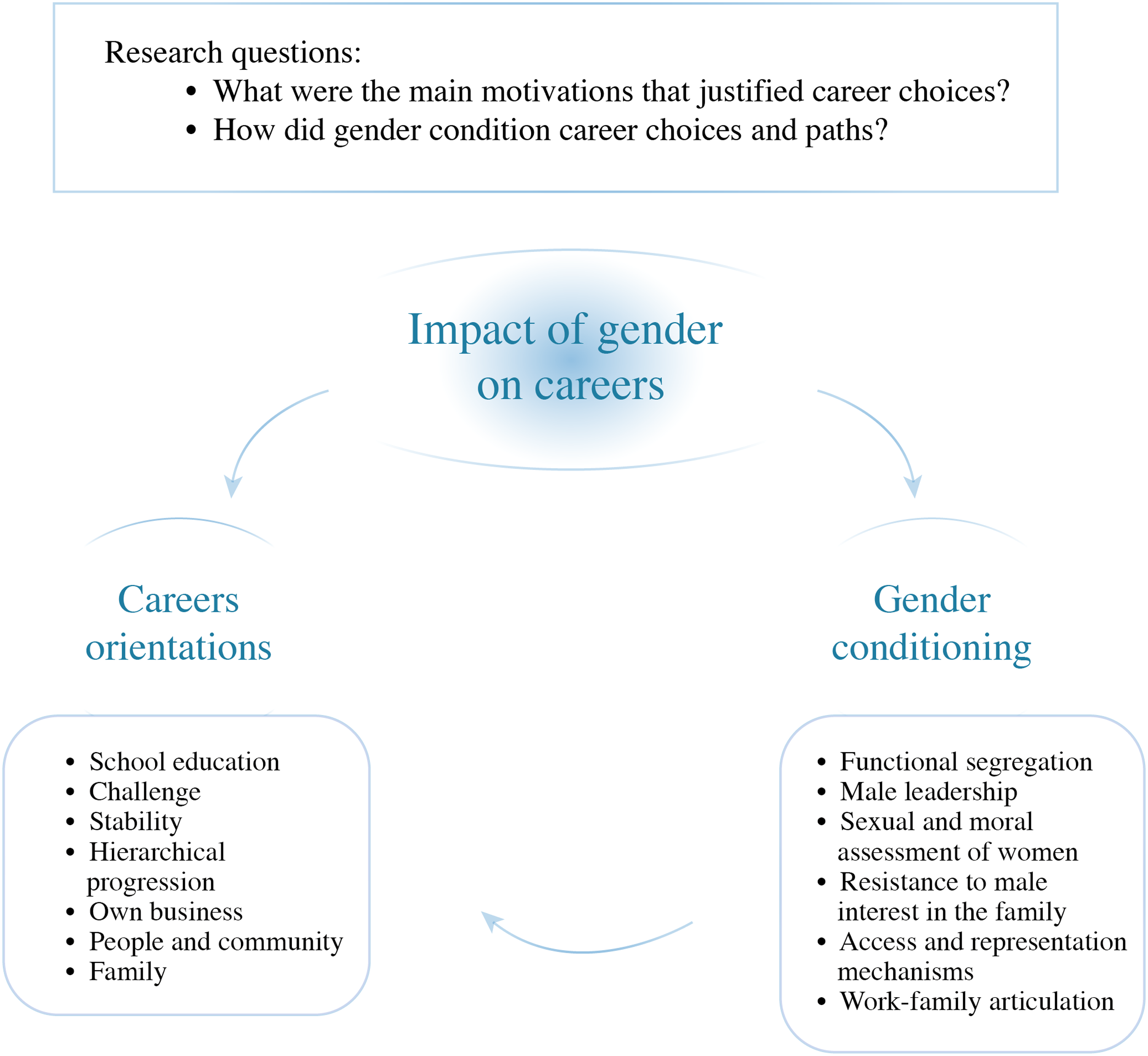
Name
Activity sector
Current function
Years at current company
Sex
Age
Education
Fátima
Recycling
CEO
10
Woman
43
Higher education: Early childhood educator
Joana
Food
CEO
23
Woman
48
Basic education: 9 years of schooling
Carla
Automotive
HR director
2
Woman
34
Higher education: Economy
Ana
Glass
Manager
16
Woman
58
Higher education: Design
Afonso
Waste collection
CEO
4
Man
45
Higher education: Civil engineering
Teresa
Water and sanitation
Client director
2
Woman
37
Higher education: Economy
Rafael
Water and sanitation
Operation director
3
Man
58
Higher education: Civil engineering
Paulo
Water and sanitation
Engineering director
19
Man
44
Higher education: Mechanical engineering
Margarida
Water and sanitation
CEO
2
Woman
60
Higher education: Civil engineering
Vera
Energy
CEO
18
Woman
41
Higher education: Electrical engineering