




Abstract
Multicultural teenagers in South Korea often suffer from psychological difficulties, such as social withdrawal and depression, due to communication difficulties, discrimination, and economic constraints. These emotional problems negatively affect career decision-making. However, little is known about the basic mechanism through which multicultural adolescents’ internalizing problems affect their career decisions. This study expanded prior research by examining the sequential mediating effect of depression and achievement motivation in the relationship between social withdrawal and career decision-making and the moderated mediation effect of parental support in the causal pathway from social withdrawal to career decision-making via depression and achievement motivation. This study used panel data from the Multicultural Adolescents Panel Study (MAPS), a national survey. The results showed a sequential mediating effect of depression and achievement motivation, a moderating effect, and a moderating mediating effect of parental support. The results of this study imply that parental support is an essential factor that helps multicultural adolescents improve their career decision-making by alleviating depression and enhancing achievement motivation.
Keywords
South Korea (henceforth, Korea) is rapidly transforming into a multicultural society, and as a result, the number of multicultural families is also increasing. “Multicultural family” refers to the union between a Korean national and a person of foreign origin. The term “multicultural family” was coined by the non-governmental organization “Hi Family” to refer to families where the parents have an international marriage. This term was officially recognized in the Multicultural Families Support Act, which was enacted by the South Korean government in 2008. The types of multicultural families in Korea can be broadly classified into three types: families with foreign fathers, families with foreign mothers, and families with both foreign parents. Among these types, the form of marriage between a Korean man and a foreign woman, which represents 62.1% of all international marriages, is the most typical structure of a multicultural family in Korea. The reason why this type of family is most typical is due to the international marriages between Korean men residing in rural areas and female immigrants from countries such as Vietnam, China, Philippines, and Thailand (Statistics Korea, 2022).
With the increase in international marriages, the number of multicultural students has also been increasing. According to the definition provided in the “Multicultural Families Support Act,” multicultural students refer to children and students who are members of multicultural families. Additionally, this comprehensive term includes children and adolescents who are raised in multicultural households and experience the influence of two or more cultural domains (Yoo, 2009). As of 2022, the number of multicultural students is 168,645. When compared to 2012, the number of multicultural students has increased by more than threefold in just a decade. Currently, multicultural students account for 3.0% of the total student population in Korea (Ministry of Education, 2022). Therefore, it is crucial to provide support for them to successfully transition into our society as valuable members after graduating from school. To achieve this, facilitating appropriate career and occupational choices is one of the key methods to help multicultural youth adapt to our society.
On the other hand, reviewing prior studies reveals that there are differences in parental education levels and economic status depending on the type of multicultural family (Kim & Kim, 2014), and differences also emerge in the rate of deviant behavior among multicultural adolescents (Kim, 2016). These findings illustrate that the three types of multicultural families are heterogeneous groups, and the difficulties multicultural adolescents face in career development and the types of career development can differ depending on the structure of multicultural families. Therefore, analyzing these heterogeneous groups comprehensively may produce distorted results. Consequently, this study aims to focus on and conduct research on multicultural families where the father is Korean and the mother is a foreigner.
Multicultural Adolescents’ Career Problems
According to a survey on multicultural families conducted by the Ministry of Gender Equality and Family (2019), 48.2% of respondents aged 13 and above expressed concerns regarding their careers, further education, and employment. Additionally, there was a high demand for educational support and career counseling services. These research findings indicate that multicultural adolescents in middle and high schools face difficulties in making career decisions.
Career decision-making represents the final stage of the career development process, indicating the establishment of career direction and the degree to which individuals have determined their desired career and occupation (Sung & Jang, 2020). Lee and Han (1997) defined career decision-making as the process of making decisions on the most suitable career based on the individual’s developed attitudes, abilities, vocational interests, and other resources. Students from multicultural families tend to have lower levels of career decision-making compared to non-multicultural students (Jeon et al., 2012; Kim et al., 2012). The underlying reasons for the lower levels of career determination among multicultural youth compared to non-multicultural youth appear to be related to emotional difficulties, such as internalizing problems, and lower levels of achievement motivation experienced by multicultural youth.
The Effect of Internalizing Problems on Career Decision-Making
As mentioned earlier, the typical form of multicultural families in Korea involves Korean men from rural areas marrying women from Southeast Asian countries who came to Korea for economic reasons. In the case of multicultural families, there is often a lower socioeconomic status and educational level, and they frequently belong to social minority groups within society (Lee & Jang, 2019). Also, children from multicultural families are at a higher risk of experiencing harassment and discrimination due to factors such as their appearance, accent, and cultural differences (Shen, 2020). They may experience psychological and social stress due to feelings of being marginalized, caught between two cultures, and not being seen as a significant presence (Sue & Sue, 2011). Due to these reasons, multicultural adolescents are more likely to experience social withdrawal (Sodowsky & Lai, 2012), which inevitably has a negative effect on their adaptation to school life. Socially withdrawn adolescents find it challenging to make new relationships, experience high levels of tension when faced with social situations, and tend to avoid social situations (Rubin et al., 1995). Difficulties in making appropriate relationships with peers in school, which are experienced by most multicultural adolescents, can worsen social cohesion and lead to feelings of helplessness and inferiority (Kim & Kwak, 2012; Kim & Shin, 2014). Consequently, they are less likely to participate in various activities necessary for the career preparation process, which results in a lack of career and vocational information and it negatively affects career decision-making (Lee et al., 2019).
There is a tendency for higher levels of social withdrawal in adolescents to be associated with higher levels of depression (Park et al., 2017). Social withdrawal makes it difficult to maintain good relationships with peers, enabling them to spend most of their time alone. From a behavioral perspective, social withdrawal can lead to a scarcity of positive reinforcements from the environment (e.g., emotional exchange with peers, approval from significant others, and praise), which may induce depression (Lewinsohn et al., 1984). Furthermore, individuals with depression often experience not only cognitive impairment but also a decrease in interest, pleasure, and feelings of lethargy, which can hinder participation in academic and other activities necessary for career preparation. Research findings suggest that multicultural adolescents, in fact, face increasing difficulty in making career decisions as their level of depression intensifies (Jeon et al., 2019). Furthermore, empirical evidence suggests that higher levels of depression are linked to an increased likelihood of being in a state of career indecision (Jeon et al., 2019; Rottinghaus et al., 2009).
Internalizing Problems, Achievement Motivation, and Career Decision-Making
Considering the influence of emotions on attention, memory, and information processing (Rottinghaus et al., 2009), multicultural adolescents experiencing depression are likely to encounter academic maladjustment and low level of achievement motivation, which in turn will naturally affect their career decision-making. According to previous studies, in fact, a positive correlation was found between achievement motivation and career decision-making among multicultural adolescents (Lee & Jang, 2019; Park & Kim, 2020). Similarly, Busato et al. (2000) reported that achievement motivation is an important predictor of career-related variables, including the level of career decision-making. Examining these prior research findings, it can be inferred that there exists a positive association between achievement motivation and career decision-making, and that achievement motivation is influenced by depression. Hence, the author hypothesizes that depression indirectly affects career decision-making through achievement motivation.
Impact of Parental Support on Internalizing Problems
Duffy et al. (2016) found that the degree to which individuals feel supported by family, friends, and significant others helps them cope with the adversity and stress associated with economic constraints or social alienation. This outcome is consistent with the stress-buffering model proposed by Cohen and Wills (1985) according to which social support protects an individual from the potential effects of negative life events when the individual is in a stressful situation. Among various social support resources, parental support may have the greatest impact on adolescents. Parents’ supportive attitudes reduce the social anxiety and social withdrawal of their children (Kouros et al., 2017). Additionally, parents’ active support can help their children achieve their career goals by giving them confidence and motivation (Guan et al., 2016). Findings from these previous studies suggest that parental support is a variable that should be considered a protective factor for career decision-making in multicultural adolescents. Considering the relationship between parental support and social withdrawal, the effect of social withdrawal on depression is likely to be regulated depending on the level of parental support. Furthermore, if the relationship between social withdrawal and depression is regulated by parental support, it is expected that the indirect effect of social withdrawal on career decision-making through depression and achievement motivation will also be regulated by parental support.
This Study
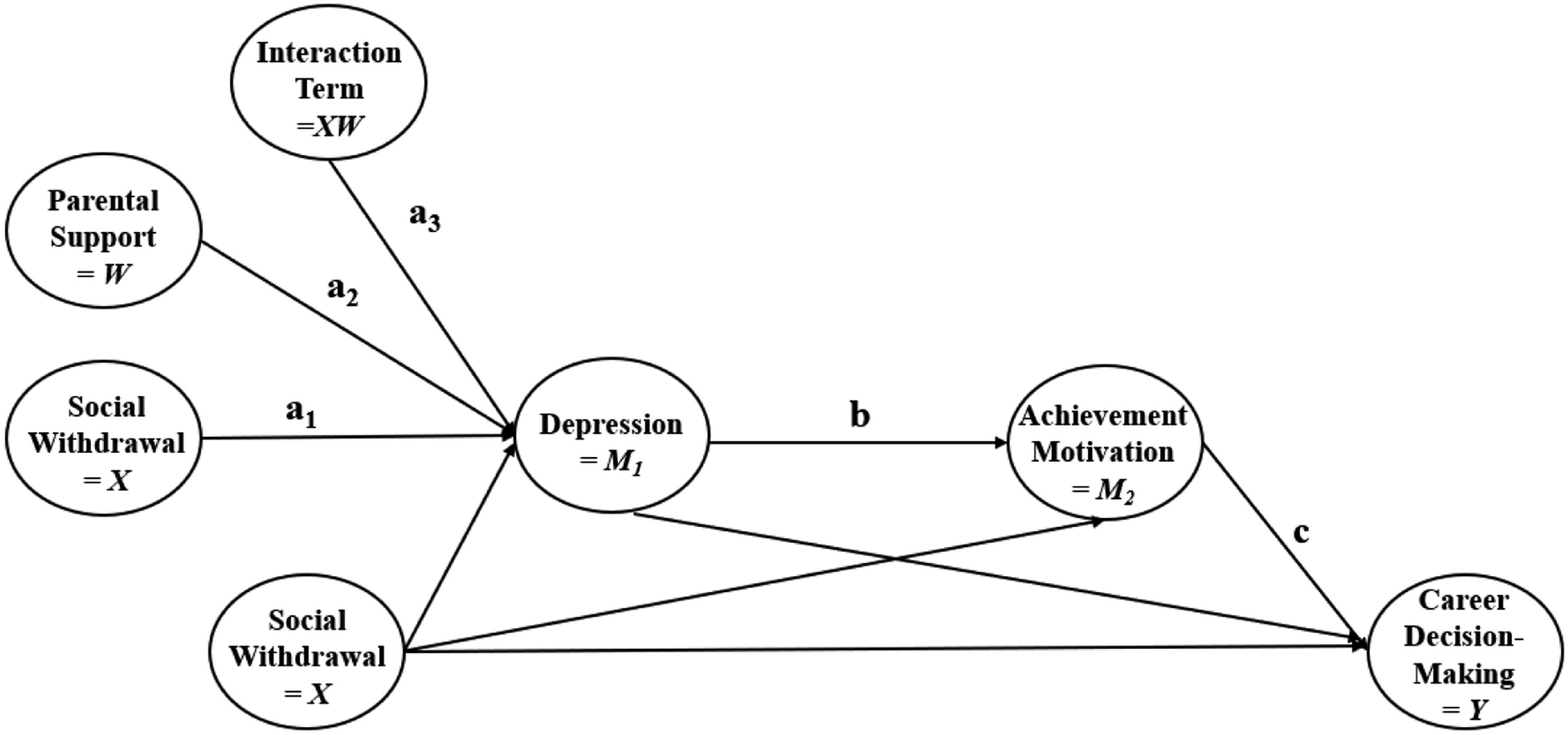
It can be inferred that depression and achievement motivation sequentially mediate the relationship between social withdrawal and career decision-making. Besides, the effect of social withdrawal on depression was moderated by the level of parental support. Therefore, this study aims to establish a research model and empirically verify the moderating effect of parental support perceived by multicultural adolescents on the path that social withdrawal of multicultural adolescents affects career decision-making through depression and achievement motivation. The hypotheses of this study were as follows: (a) social withdrawal and depression would negatively impact career decision-making, (b) depression and achievement motivation would sequentially mediate the relationship between social withdrawal and career decision-making, and (c) parental support would moderate the sequential mediating effect of depression and achievement motivation in the relationship between social withdrawal and career decision-making. The research model is illustrated in Figure 1. Study model.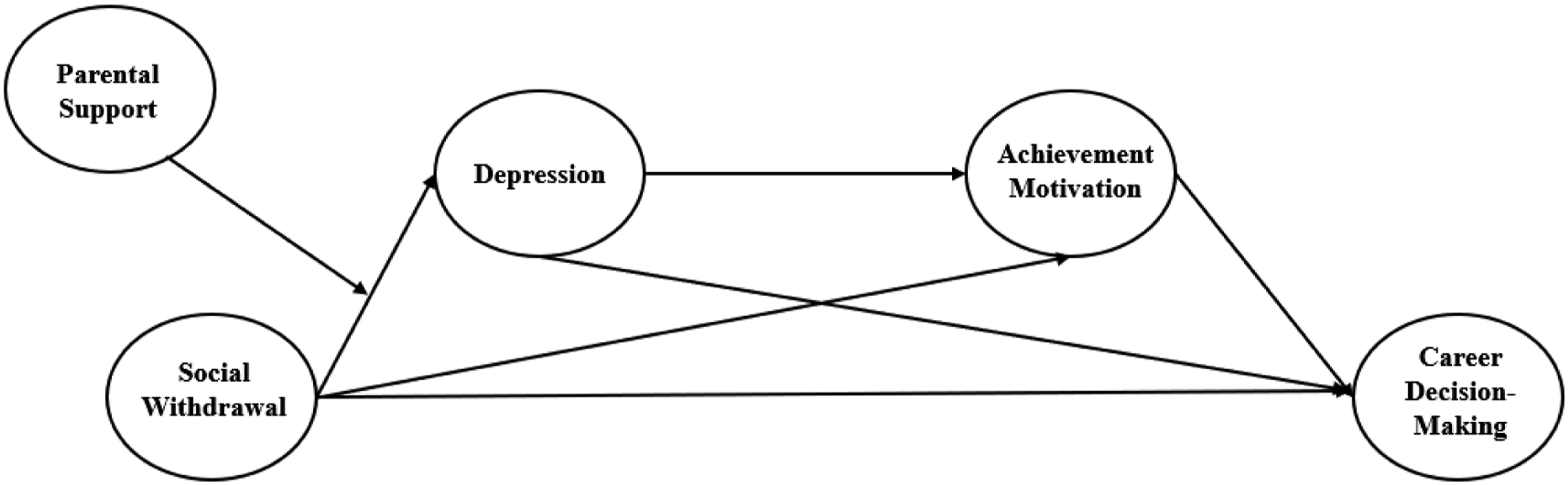
Method
Participants and Procedure
This study used the Multicultural Adolescents Panel Study (MAPS) data collected by the National Youth Policy Institute (NYPI). The data were obtained through trained professionals who conducted in-person surveys with the adolescents in their home environments. Interviewers utilized Computer Assisted Personal Interviewing (CAPI) to amass a wide array of quantifiable data pertaining to these children and their parents (1,635 teenagers and 1,625 parents). The same subjects were followed and surveyed annually from 2011 to 2019. The participant retention rate was 70.4% in 2017 (7th), 63.7% in 2018 (8th), and 59.8% in 2019 (9th). Additional information about the MAPS can be found at https://www.nypi.re.kr/archive.
The author selected the 7th, 8th, and 9th waves because these data coincided with the high school period of multicultural youths participating in the survey. To examine the longitudinal effects of social withdrawal and depression in the first year of high school and search its trajectory, “social withdrawal,” “parental support,” “depression” of the seventh data (2017), “achievement motivation” of the eighth data (2018), and “career decision-making” data of the ninth data (2019) were used.
A total of 1251 multicultural adolescents participated in the survey study (7th); however, prior to data analysis, we excluded 172 adolescents based on the form of family composition and the legal marital status of their parents. This sample was selected based on the fact that over 60% of multicultural adolescents in Korea have a foreign mother and a Korean father. And the legal and institutional support and benefits available to multicultural adolescents can vary depending on their parents' marital status. Consequently, the marital status of parents could potentially exert differential influences on the career development of multicultural adolescents. For this reason, this analysis was conducted specifically on cases where the marital status of parents in multicultural families was “married.”
Additionally, after removing participants who did not partake in the 8th and 9th year surveys, a final sample size of 981 was used for the analysis. Of the total respondents, 49.1% (n = 482) were male and 50.9% (n = 499) were female and their mothers mostly originated from countries including Japan (38.9%), Philippines (25.6%), China (24.2%), Thailand (4.2%), and Vietnam (2.1%).
Measurement
Social Withdrawal
The Social Withdrawal Scale was developed by Kim and Kim (Kim & Kim, 1998), and revised by Lee et al. (2011). It is used to measure the degree of social withdrawal of multicultural youth and it consists of five items assessing emotions, such as shyness and difficulty expressing one’s opinion in interacting with others. The five items were grouped into two factors using item parceling. Factor 1 consisted of items reflecting shyness, while Factor 2 represented discomfort in social situations and being around other people. Both factors captured typical features of social withdrawal. All items were scored on a four-point Likert-type scale, with higher scores indicating a greater level of social withdrawal. In Kim and Kim’s study (1998), the scale demonstrated a Cronbach’s alpha of .79. In this study, the scale reported relatively high internal consistency, with a Cronbach’s α of .88.
Depression
Depression symptoms were evaluated using the revised version of the Symptom Checklist-90-Reversion (Lee et al., 2011). This scale contains 10 items that are answered on a four-point Likert scale and those items were grouped into three factors. Factor 1 measures symptoms such as loss of interest, Factor 2 represents negative expectations for the future, and Factor 3 reflects negative thoughts. These factors corresponded to key symptoms of depression. A higher score on the scale indicated more depression. In prior research conducted by Shon and Choi (2019), Park & Yang (2020) with Korean multicultural adolescents, the scale exhibited reliabilities of .91 and .90, respectively. In this study, Cronbach’s alpha value in this study was .91.
Achievement Motivation
The scale used to assess achievement motivation in this study was extracted, modified, and supplemented by Yu & Yang’s (1994) scale. It consists of eight items measuring the degree of persistence and effort to achieve learning goals, the boldness to try new things, and the autonomy to set goals for oneself. The scale is scored on a five-point Likert-type scale, with higher total scores indicating higher motivation for achievement. The items were grouped into two factors. Factor 1 consisted of items reflecting persistence, while Factor 2 represented autonomy. These two factors also reflect key aspects of achievement motivation, such as autonomous goal setting and the persistence of goal pursuit despite setbacks or difficulties. The Cronbach’s alpha reported in Lee’s (2020a) studies were .87. In this study, the scale also reported high internal consistency, with a Cronbach’s alpha of .89.
Career Decision-Making
Overall, four items related to career decision-making of the Career Attitude Scale were used in this study; it was developed by Lee and Han (1997) and has five subscales. Each question was measured on a four-point Likert scale, and two of them were reverse-scored, with a higher score indicating higher career decision-making. Four items were grouped into two factors. Factor 1 was associated with career commitment after graduation, while Factor 2 reflected the difficulty in making decisions about which career path to choose. The internal consistency reported in the original study was .88. Cronbach’s alpha coefficient in this study was .733, which showed acceptable reliability.
Parental Support
This study used the Parents’ Social Support Scale developed by Kim & Park (1999) to measure parental support. The items were composed of emotional support, understanding and encouragement, provision of advice and information, and economic support. Each item is measured on a five-point Likert scale. The nine items were grouped into three factors and each factor is associated with parental career-related advice, emotional understanding, and economic support. The higher the score on the scale, the more respondents perceived that they received support and care from their parents. In previous studies conducted by Lee (2020b), and Hwang and Joo (2022) with Korean multicultural adolescents, both studies reported a reliability coefficient of .92. In this study, the scale reported good internal consistency, with a Cronbach’s alpha of .825.
Data Analysis
SPSS (Version 26.0) and Mplus (Version 8.8) were used for data analysis. First, descriptive statistics and correlation analyses were performed to examine the characteristics of each measurement variable. Besides, skewness and kurtosis were assessed to verify normality. Subsequently, the author parceled items using a content-based parceling approach, as it improves the fit of the model compared to using individual items (Bandalos, 2002; MacCallum et al., 1999), and it also increases stability in the estimation process (Little, 2002).
Structural equation modeling (SEM) was conducted to verify the mediating, moderating, and moderated mediating effects. Model fit was evaluated using several indicators: χ2 statistic, comparative fit index (CFI), Tucker–Lewis index (TLI), root mean square error of approximation (RMSEA), and standardized root mean square residual (SRMR). TLI and CFI of .95 or higher are considered to be a good fit (Hu & Bentler, 1999), and RMSEA and SRMR are considered to be less than or equal to .05, respectively (Browne & Cudeck, 1993; Byrne, 2012).
Results
Descriptive Statistics and Bivariate Correlations of Major Variables
Descriptive Statistics and Bivariate Correlation Matrix for Major Variables.
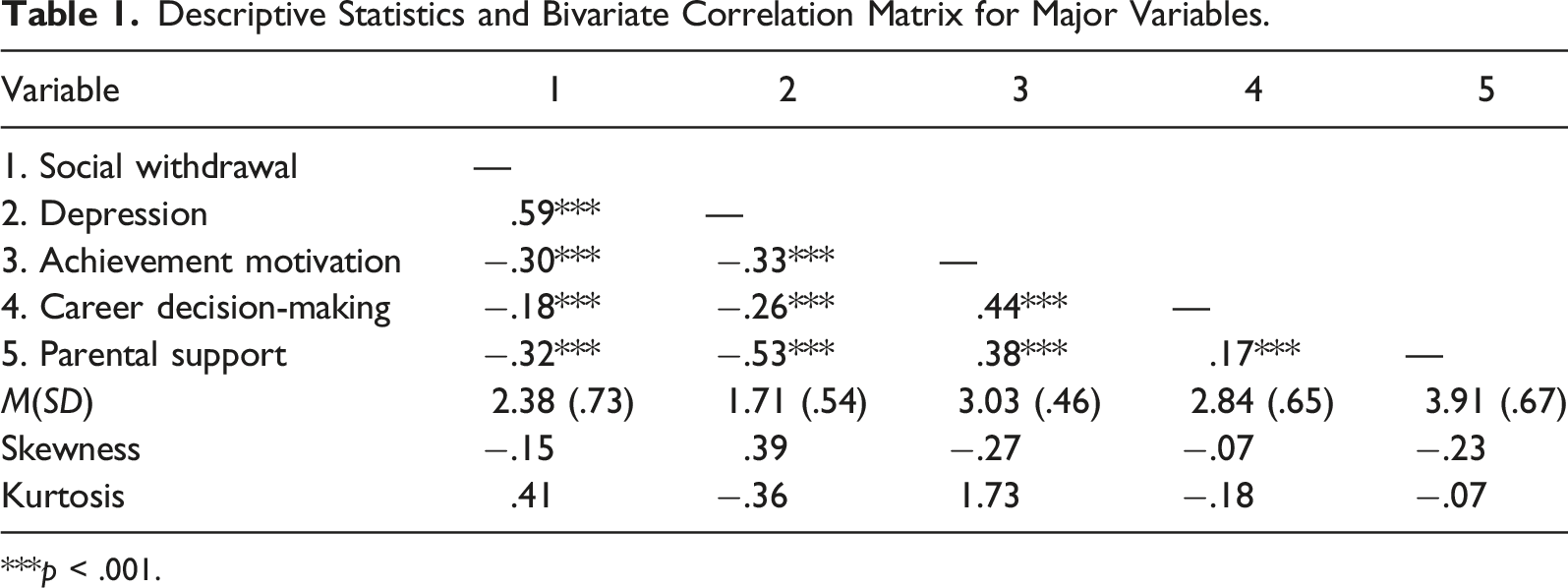
***p < .001.
Verification of the Sequential Mediating Effect of Depression and Achievement Motivation in the Relationship between Social Withdrawal and Career Decision-Making
To verify the indirect associations between social withdrawal and career decision-making via depression and achievement motivation, SEM analysis of the sequential mediating effect excluding the moderating variables was conducted.
The sequential mediation model had a good fit: χ2 = 74.230 (df = 21, n = 981, p = .000); TLI = .981; CFI = .989; RMSEA = .051 (90%CI [.039, .064]); SRMR = .021. The results of the path coefficient analysis of the sequential mediation model are presented in Figure 2. Path coefficients of the sequential mediation model. Note. Standardized path estimates are also reported. The dashed line indicates a non-significant path. *p < .05, **p < .01, ***p < .001.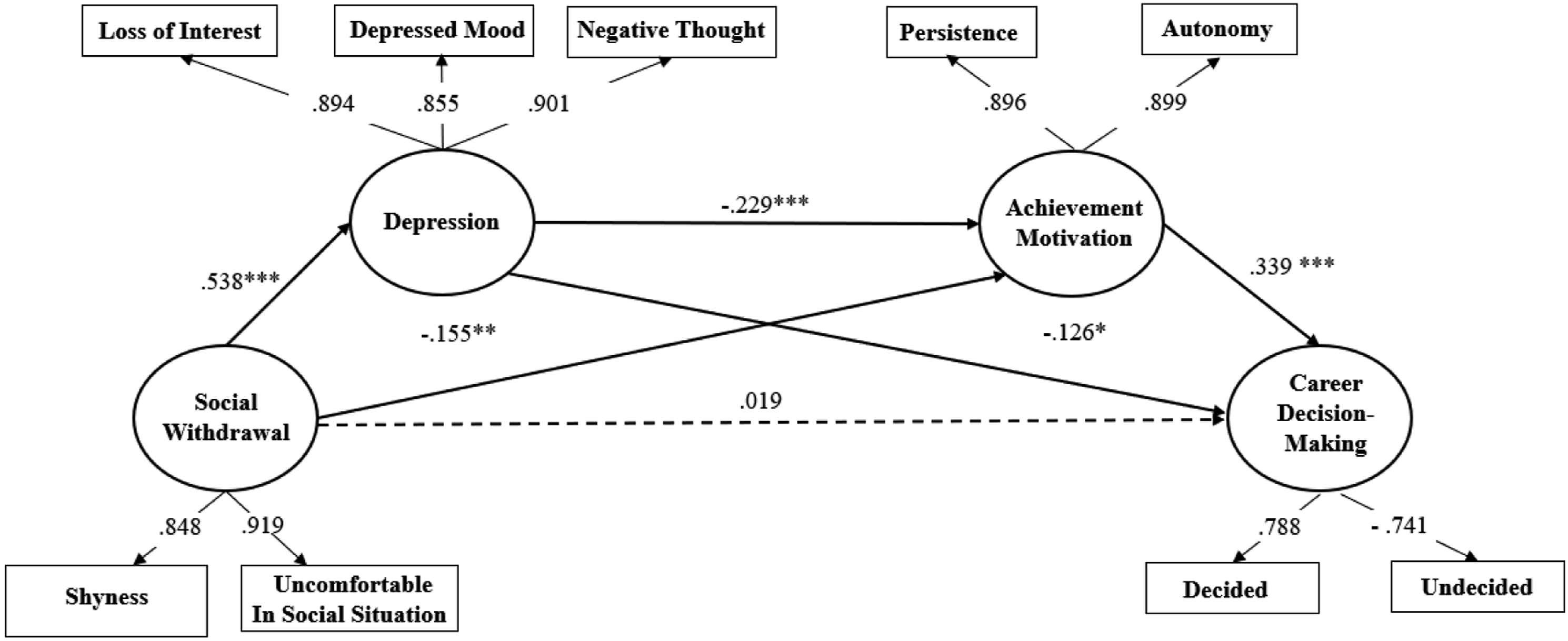
The Effect of Internalizing Problems on Achievement Motivation
Social withdrawal in the first year of high school increased depressive symptoms (β = .538, p < .001, 95% CI [.392, .498]). Furthermore, it negatively affected achievement motivation during the following year (β = −.155, p < .01, 95% CI [−.176, −.042]). The level of depressive symptoms experienced during the first year was found to have a negative impact on achievement motivation during the second year (β = −.229, p < .001, 95% CI [−.275, −.112]). The results indicate that higher levels of social withdrawal are associated with an increase in depressive symptoms. Moreover, these depressive symptoms negatively influence achievement motivation.
The Effect of Achievement Motivation on Career Decision-Making
It was observed that achievement motivation during the second year had a significant positive effect on career decision-making in the following year (β = .339, p < .001, 95% CI [.317, .567]). This means that during the second year of high school, having a higher level of achievement motivation is associated with having clear plans regarding what to do after graduation or the desired direction for career development in the third year.
Verification of Sequential Mediating Effect
Sequential Mediation Model.
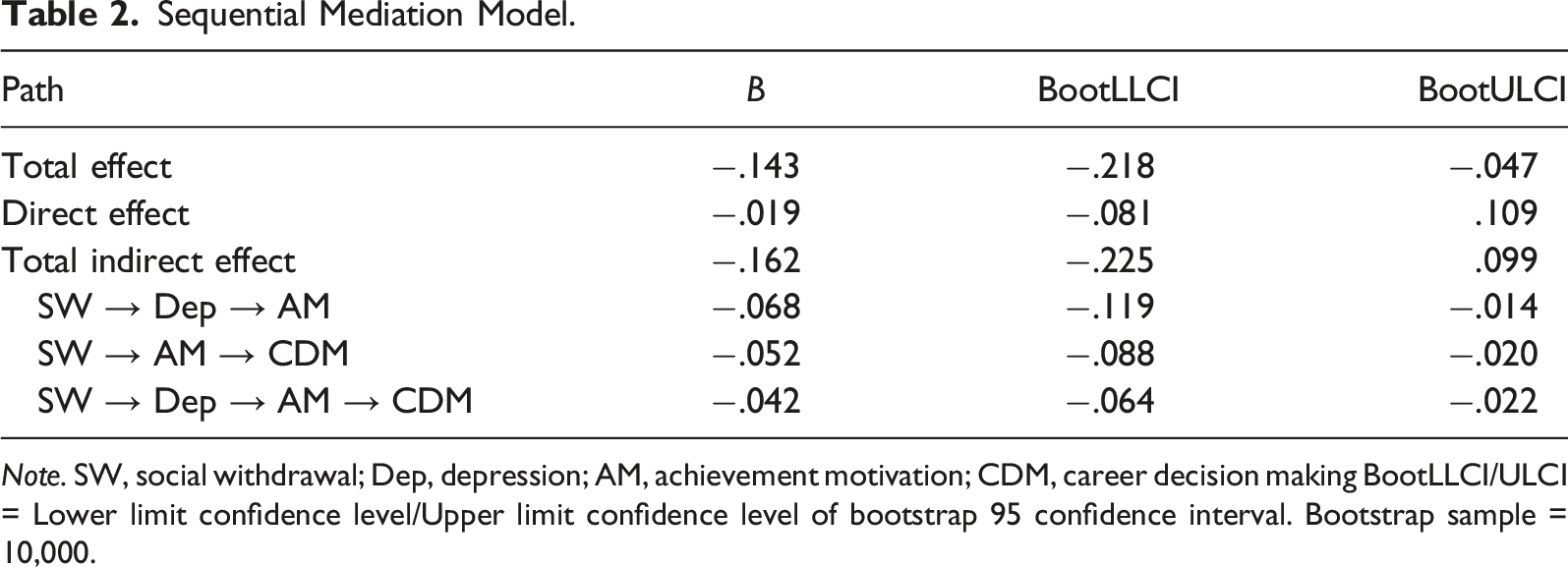
Note. SW, social withdrawal; Dep, depression; AM, achievement motivation; CDM, career decision making BootLLCI/ULCI = Lower limit confidence level/Upper limit confidence level of bootstrap 95 confidence interval. Bootstrap sample = 10,000.
Testing the Moderating Effect of Parental Support on the Relationship between Social Withdrawal and Depression
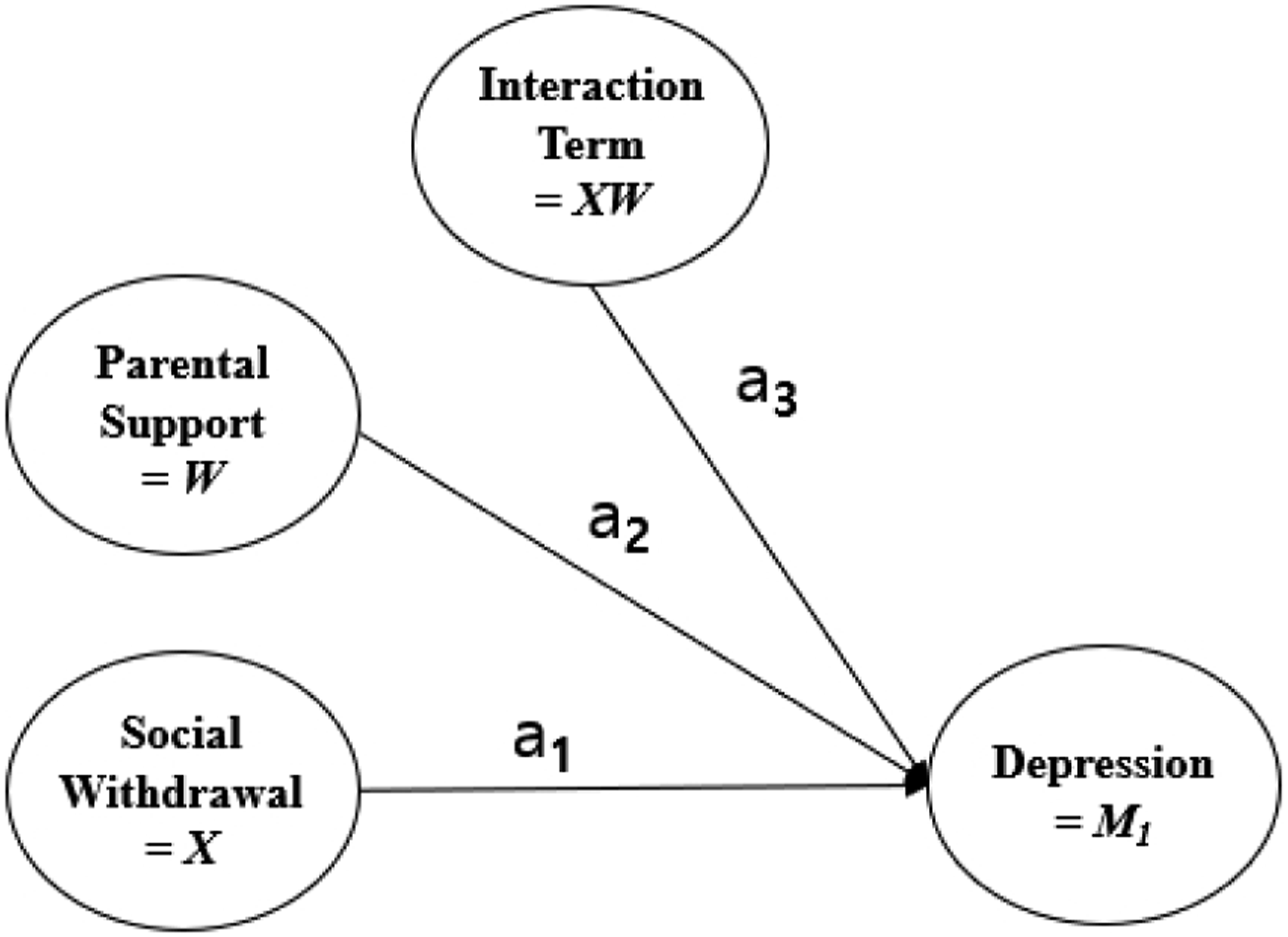
Next, we examined whether parental support moderated the effect of social withdrawal on depression. The statistical model is presented in Figure 3, and regression equation (1) for the moderating effect is as follows Statistical model of moderating effect. Moderating Effect of Parental Support. Note. DV = dependent variable, SW = social withdrawal, PS = parental support. SW × PS = interaction term between the SW and PS. BootLLCI/ULCI = Lower limit confidence level/Upper limit confidence level of bootstrap 95 confidence interval.
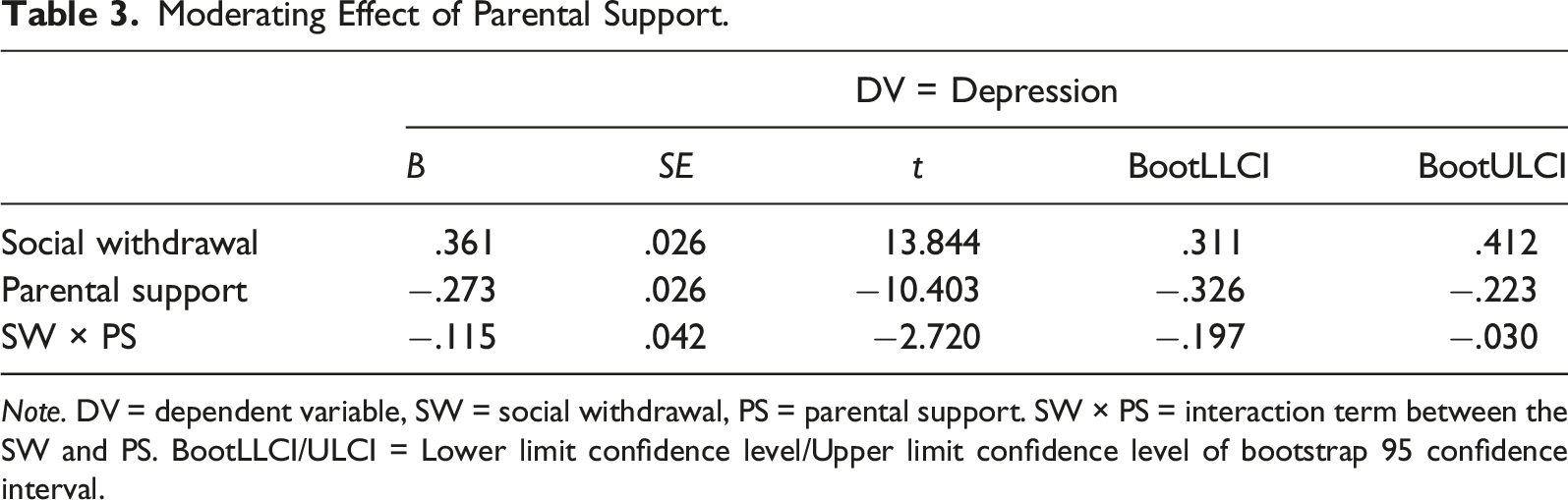
The interactional effect of social withdrawal and parental support was found to have a significant effect on depression (B = −.115, t = −2.720, 95%CI [−.197, −.030]). The effect of social withdrawal on depression was much lower among students who perceived that they received high levels of parental support compared to those who perceived that they received low levels of parental support.
Test of Simple Slopes of Social Withdrawal on Depression at Conditional Values.
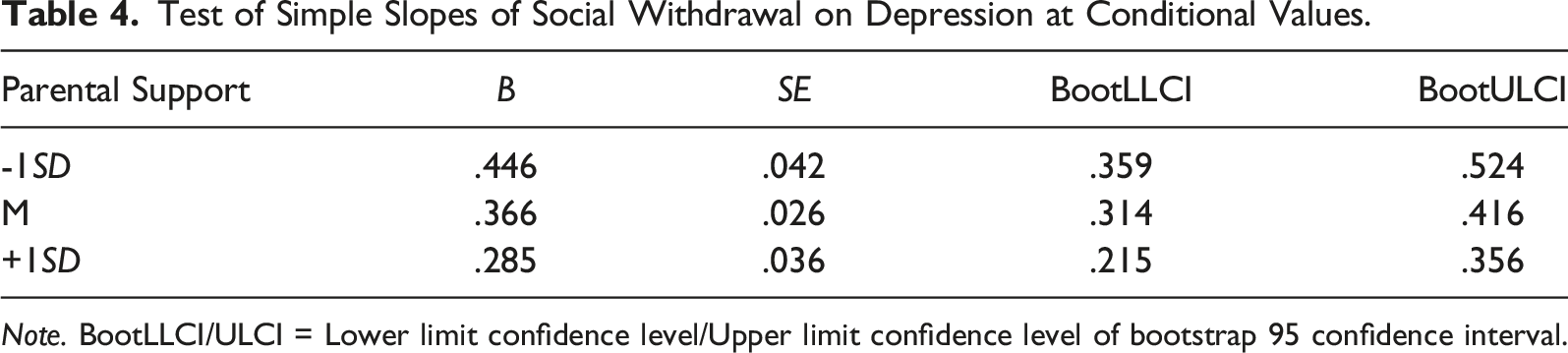
Note. BootLLCI/ULCI = Lower limit confidence level/Upper limit confidence level of bootstrap 95 confidence interval.
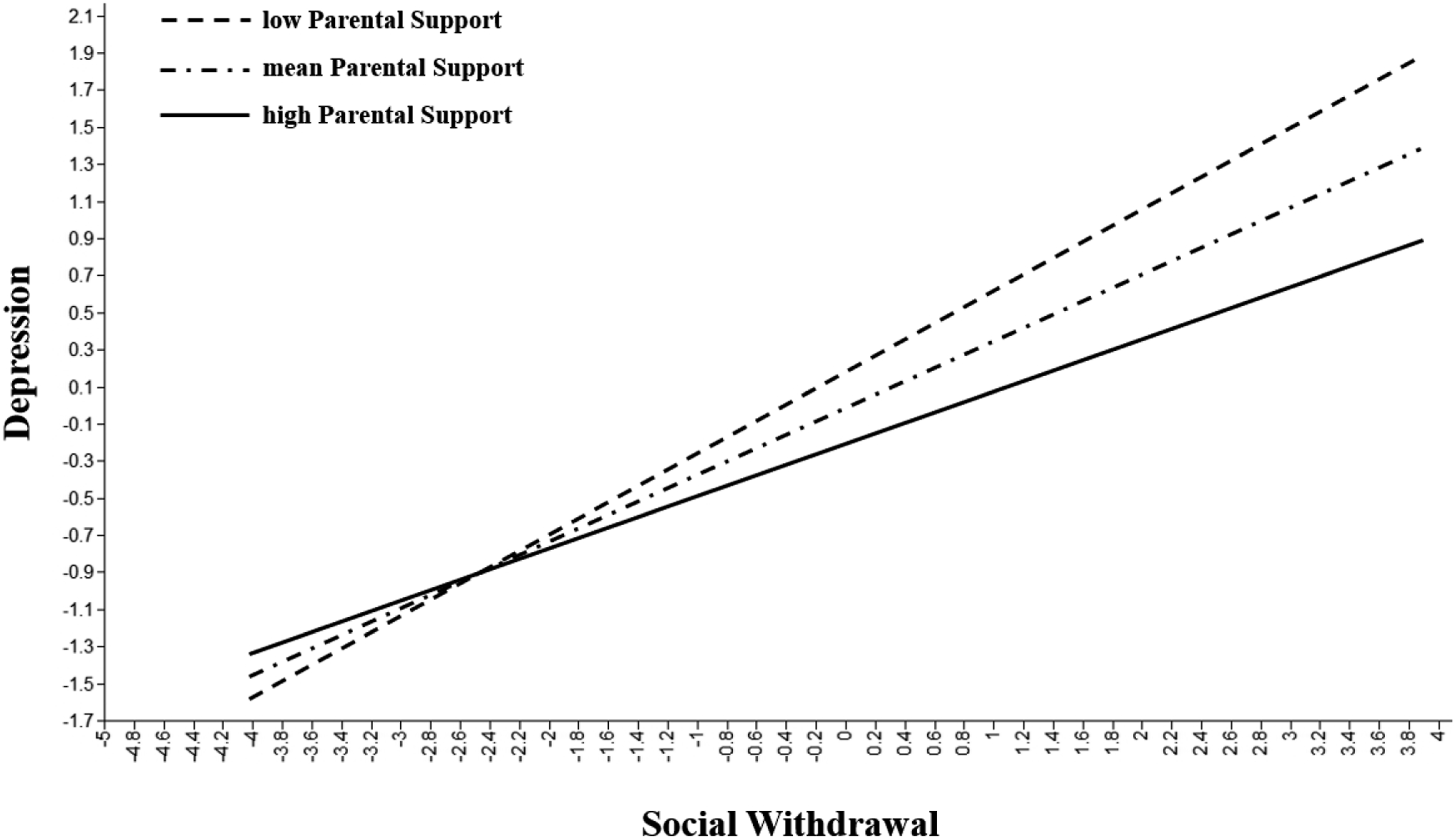
Moderating effect of parental support. Note. Simple slopes for the association of social withdrawal with depression at low levels (M −1SD), mean levels (M), and higher levels of parental support (M +1SD).
Moderated Mediation Effect of Parental Support on the Relationship between Social Withdrawal, Depression, Achievement Motivation, and Career Decision-making
After testing the mediating and moderating effects, the moderating effect of parental support was examined. The statistical model is presented in Figure 5, and the regression equation (2) for the moderated mediation effect is as follows Statistical model of moderated mediation effect.

Moderated Mediation Effect on Conditional Value of Parental Support.
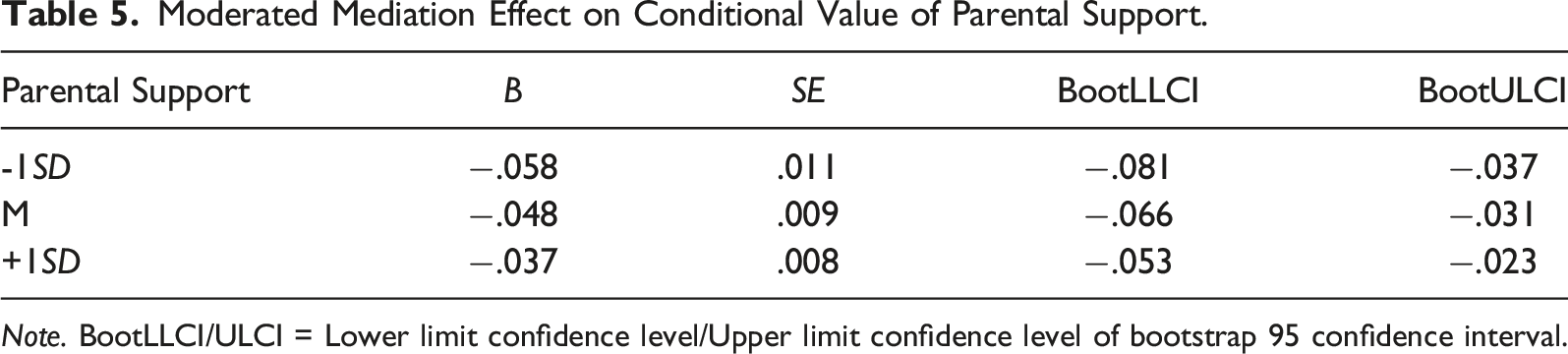
Note. BootLLCI/ULCI = Lower limit confidence level/Upper limit confidence level of bootstrap 95 confidence interval.
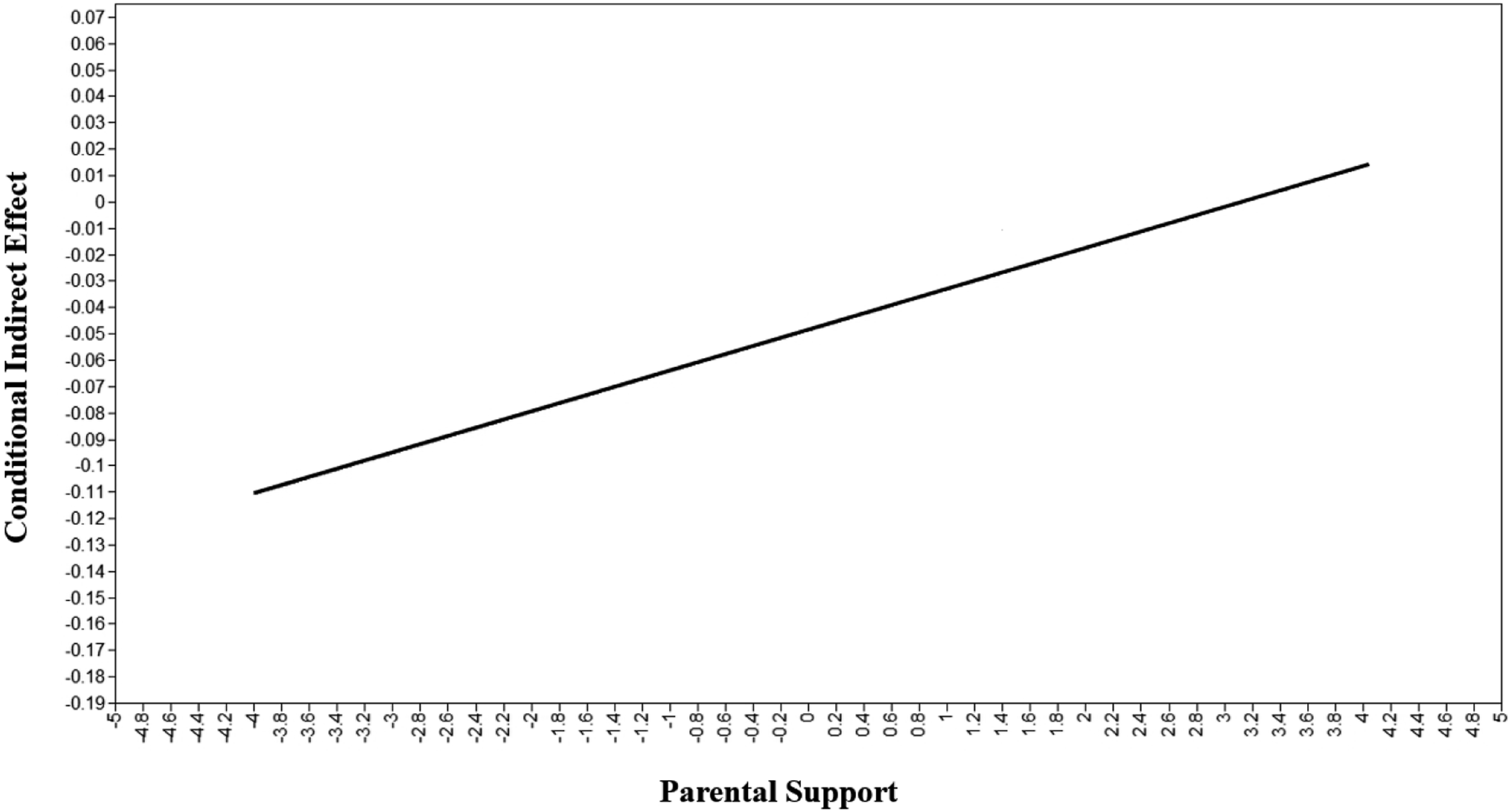
Conditional indirect effect between social withdrawal and career decision-making.
Discussion
The results of this study provide support for the specific links between social withdrawal and career decision-making and reveal some important findings regarding the necessity of early treatment intervention and the function of parental support. The longitudinal study examining the impact of internalizing problems experienced during the first year of high school on career decision-making in the third year of high school is particularly intriguing. This is because the study found that social withdrawal experienced during the first year of high school did not directly influence career decision-making in the third year of high school. This finding contradicts previous research (Kim, 2020; Yoon, 2020; Lee, 2021) that suggests multicultural youth experiencing social withdrawal face more difficulties in the career development process and have a significant impact on career decision-making compared to non-multicultural youth. The reason for the discrepancy with previous studies is likely due to the fact that, unlike previous research, the current study conducted a longitudinal analysis to examine how social withdrawal affects career decision-making over the course of three years of high school. This suggests that social withdrawal may indirectly influence career decision-making through certain pathways rather than directly impacting it. The current study aimed to identify these specific pathways. When examining the indirect pathways through which social withdrawal affects career decision-making, the following pathways were identified:
Multicultural youth with social withdrawal experienced more depression and had low levels of achievement motivation, which made career decision-making more difficult. These findings are in line with previous studies, showing that social withdrawal can lead to depression and behavioral maladjustment (Smith & Betz, 2002), which can also affect school adaptation (Han & Kang, 2019; Lee et al., 2019; Rubin et al., 2009; Song & Choi, 2020; Yu & Hwang, 2018). Other previous studies have also shown that as social withdrawal and depression increase, achievement motivation tends to decrease (Lee et al., 2021; Park & Kim, 2021). This ultimately leads to lower levels of career decision-making and an increased likelihood of being in a state of career indecision (Jeon et al., 2019; Park & Lee, 2008; Saunders et al., 2000). Considering the findings of these previous studies, social withdrawal of multi-cultural adolescents can also negatively affect their achievement motivation in the next year, hindering them from finding job-related information in which they are interested or trying new things, and preventing them from continuing their efforts to achieve their goals. Undoubtedly, such obstacles can exert detrimental effects on the career decision-making process during the pivotal juncture of transitioning into early adulthood, precisely in the final year of high school prior to entering the world of work. The results of this study make a significant contribution by providing a comprehensive understanding, from a longitudinal perspective, of how internalizing problems in multicultural youth specifically impact career decision-making. This study goes beyond the partial support found in previous research (Lee et al., 2021; Park et al., 2017; Park & Lee, 2008), and identifies specific pathways through which internalizing problems affect career decision-making.
Indeed, another important aspect to note in this research is that the role of parental support in mitigating the effects of social withdrawal on depression. Multicultural students who perceive that they receive help and support from their parents are less depressed; consequently, achievement motivation could be improved. These research findings align with previous studies suggesting that perceived supportive relationships can mitigate negative perceptions of career barriers such as economic constraints and social exclusion, acting as a protective factor in career development (Duffy et al., 2016; Lent et al., 2015). Navarro et al. (2014) also stated that social support serves as a protective factor in the career development of adolescents experiencing social exclusion, such as ethnic/racial minority youth or sexual minority individuals. Previous studies have shown that supportive parenting attitudes toward children can reduce their social anxiety, thus decreasing social withdrawal (Choi, 2014; Kouros et al., 2017; Lee, 2020) and helping them achieve their career goals by enhancing their self-confidence and motivation (Guan et al., 2016). The results of this study are consistent with these prior studies.
Implications
As the first year of high school is a transitional period from middle to high school, rapid changes occur in the environment surrounding adolescents. It has been reported that multicultural adolescents experience many more problems, such as anxiety, social withdrawal, and depression, than non-multicultural students (Oh, 2014). As noted above, emotional difficulties experienced by them in the first year continuously harm achievement motivation and career decisions in subsequent years. In this respect, our findings highlight the importance of early therapeutic intervention. However, there is no treatment program for multicultural high school students, let alone early intervention. In a meta-analytic review of treatment programs for multicultural adolescents’ mental health, none of the 12 treatment programs developed in Korea was for high school (Lee & Choi, 2018). Furthermore, the aforementioned programs are all structured group programs. In the case of multicultural adolescents, the causes of the difficulties related to career decision-making each individual experience—such as language difficulties, discrimination due to appearance, and economic constraints—vary greatly. Therefore, differentiated interventions through guidance counselors and homeroom teachers are necessary in addition to group programs. To facilitate this, it is important to reinforce education and training for them to cultivate professionalism in the area of multicultural counseling. Additionally, it is also necessary to support, at the school level, the activation of group counseling or self-help groups where multicultural adolescents can share the issues they are experiencing and alleviate psychological and emotional difficulties.
Second, given that the relationship between social withdrawal and career decision-making is mediated by achievement motivation, interventions to increase the achievement motivation of multicultural adolescents are necessary. This approach has great implications for career counselors and schoolteachers who guide the career paths of multicultural youth. Since high school seniors are about to transition to the early stages of adulthood and the world of work, they may experience a low level of achievement motivation, with the need to prepare for an unspecified future. Therefore, when counseling multicultural adolescents who are in an undecided state, it should not be limited to simply providing career-related information, but they should also consider the psychological difficulties and low level of achievement motivation.
Third, this study confirmed that, as the level of parental support perceived by multicultural adolescents increases, the negative influence of social withdrawal and depression on career decision-making through achievement motivation can be reduced. Therefore, it is necessary to develop programs to enhance parental support, which must be included in the therapeutic intervention process. Phillips (1997) saw parental support, encouragement, and actual help behaviors in adolescent career decision-making, similar to the results of this study, as a positive reinforcement that promotes their career exploration and enhances their understanding of themselves and the occupational world. Therefore, it is important to provide an opportunity to understand how parents influence their children’s careers through the development of parent-involved career group programs. Young and colleagues also emphasize the influence of parents on adolescent career development (Young et al., 2011; Young et al., 2002). Their proposed “contextual action theories” explains how parents and adolescent children perceive areas of career decision-making and agreement and disagreement. Notably, they have developed career counseling techniques that include parents by actually analyzing conversations about careers between parents and youth children. This can be useful in developing culturally sensitive models (Young et al., 2007), so it is necessary to develop parent-involved counseling model and career programs that are modified and enhanced to fit the Korean culture based on their theories.
Unfortunately, multicultural parents have difficulty providing active endeavors and support to their children due to maladjustment caused by acculturative stress (Lim, 2019; Noh, 2020). Furthermore, acculturation stress not only causes psychological and physical problems among immigrant women but also induces problems in the emotional and behavioral development of their children (Berry & Kim, 1988). Thus, psychotherapy interventions and policy support for solving acculturative stress and helping them adapt well to our society are required. To achieve this goal, a systematic and multi-dimensional approach is needed, and parental education should help them understand the function and importance of parental support so that they can ease their children’s psychological problems and clarify career decisions.
Limitations and Future Directions
The limitations of this study and suggestions for follow-up studies are as follows. The author could not include various categories of multicultural adolescents because of the use of secondary data. In particular, an analysis of mid-entry adolescents and students belonging to foreign families could not be conducted. According to research by the Ministry of Education (2021), the number of immigrant and foreign students in 2020 was 33,604, which is approximately 15% of the previous year. Mid-entry and foreign students are bound to experience more difficulties in adapting to Korean society due to difficulties in communication and cultural differences than multicultural adolescents who were born and raised in Korea (Makarova & Birman, 2016). Therefore, the psychological difficulties resulting from academic and acculturative stress may be more serious (Böhlmark, 2008; Schnepf, 2007). Therefore, future research should be conducted with youth from diverse multicultural families, including immigrants who enter the country halfway through their education and foreign students. More specifically, there is a need to include students from various immigration backgrounds, such as children born in Korea from international marriage families, children born overseas from international marriage families, children born in Korea from foreign families, children born overseas from foreign families, teenagers with a North Korean background born in South Korea, teenagers with a North Korean background born in North Korea, and teenagers with a North Korean background born in a third country.
Future research is also needed to verify whether internalization and externalization problems occur differently according to individual characteristics and environmental factors of multicultural adolescents, and how they differently affect school adaptation and career decisions. Future studies should provide school counselors and people working in relevant fields with more specific and individualized therapeutic interventions.
Conclusion
This study is one of the few that longitudinally tracks multicultural adolescents in Korean high schools throughout their entire high school period. Its focus was on investigating the specific relationships between social withdrawal, depression, achievement motivation, and career decision-making, and it successfully validated a sequential mediation model that fully integrates these relationships. Moreover, parental support for multicultural adolescents in their first year of high school had a moderating effect on this longitudinal path. Given the longitudinal influence of social withdrawal and depression on career decisions and the moderating effect of parental support, early therapeutic intervention for multicultural students’ emotional problems and a multidisciplinary approach to improving parental support must be combined.
Footnotes
Author Note
The Multicultural Youth Panel Data used in this study was provided by the National Youth Policy Institute after the author had submitted the research plan to them. Portions of these findings will be presented as a poster at the 2022 International Conference on Education Research, Seoul, Korea. The authors declare no conflicts of interest to disclose.
Declaration of conflicting interests
The author(s) declared no potential conflicts of interest with respect to the research, authorship, and/or publication of this article.
Funding
The author(s) received no financial support for the research, authorship, and/or publication of this article.
