




Abstract
Occupational gender segregation is still a persistent problem in the labor market. This study investigates gender differences in gender typicality and prestige of occupational aspirations in early adolescence, as well as the role of agency and communion in these differences. In total, 2779 adolescents (age 11–15) reported their occupational aspirations, later coded for gender typicality and prestige. Participants also described themselves spontaneously with three attributes, then coded in terms of agency and communion. The results showed significant gender differences in a stereotypical direction for 40% of the occupations named, with boys expressing a clear preference for male-dominated and girls for female-dominated occupations. Conversely, the results revealed higher aspirations among girls regarding occupational prestige. Communion was found to be a significant mediator between gender and aspirations to typically feminine occupations, while agency mediated the relationship between gender and the prestige of aspirations. The findings’ implications for theory and practice are discussed.
Introduction
Adolescence is a major transitional period within the life course, characterized by numerous developmental milestones. In early adolescence, young people become more goal-oriented and focused on their future and begin to form occupational aspirations (Gottfredson, 1981; Nurmi, 2004). Studies have shown occupational aspirations to be important predictors of adult attainment: Adolescents with high occupational aspirations experience greater career success and are more likely to achieve a professional career in their adult years (e.g., Mello, 2008; Schoon & Polek, 2011). Gender has been found to be essential for the formation of occupational aspirations (Hadjar & Aeschlimann, 2015), with gender stereotypes identified as a driving force behind boys’ and girls’ career choices (Van Grootel et al., 2018). Girls are likely to aspire to “feminine” professions in health, elementary education, and domestic fields (HEED), such as being a nurse, teacher, or hairdresser, while boys are more likely to aspire to “masculine” careers in science, technology, engineering, and mathematics (STEM), such as being a mechanic, engineer, or IT specialist (OECD, 2017). Consequently, there is compelling evidence for a consistent underrepresentation of women in STEM fields, as well as in high-status and high-pay occupations (Croft et al., 2015; WEF, 2017). Nevertheless, studies suggest that adolescent girls are more likely than boys to aspire to prestigious jobs (Rani, 2018; Watts et al., 2015), signaling a discrepancy between girls’ occupational aspirations regarding prestige and the realization of those aspirations (Wicht et al., 2021).
As STEM professions and prestigious occupations are typically associated with stereotypically masculine traits (Heilman, 2012; Koenig et al., 2011), scholars have highlighted the importance of gender role identity—agency and communion—in understanding gender differences in occupational aspirations and choices (e.g., Eccles, 2009; Gottfredson, 2002). However, previous studies investigating the role of agency and communion in the gender typicality of occupational aspirations and choices used predetermined item lists such as the Bem Sex Role Inventory (BSRI; Bem, 1974)—an approach that can negatively affect the self-report process (Brinthaupt & Erwin, 1992). Moreover, recent studies reported shifts in gender stereotypes with respect to both gender role identity (Donnelly & Twenge, 2017) and occupations (Lippa et al., 2014). Therefore, this study aims to investigate gender differences in two gendered aspects of occupational aspirations—gender typicality and prestige—and boys’ and girls’ gender role identity as a possible explanatory factor behind these gender differences in early adolescence, using an idiographic approach where participants are asked to name occupations and self-descriptors important to them rather than rating categories set by the researcher.
The Role of Agency and Communion in Occupational Segregation
As individual’s occupation encompasses a large portion of their life and plays a critical role in their perceived success and social position (Weisgram et al., 2010), great attention has been paid to inequalities and potential disadvantages of certain groups in the world of work. One of the most characteristic and enduring aspects of the labor market is its gender segregation, which is patterned both vertically and horizontally (e.g., Lippa et al., 2014). Vertical segregation refers to men’s domination of high-status jobs and managerial positions, whereas horizontal segregation refers to the concentration of men and women in different kinds of jobs. This occupational segregation is based on the communion versus agency differentiation (Eagly et al., 2020). Bakan (1966) conceptualizes agency and communion as two fundamental values in human existence and two pillars of human personality: agency—a focus on the self as an autonomous agent, and communion—a focus on others and social relationships. Thus, agency and communion coincide with societal gender stereotypes in Western societies, where kindness, caring for others, and other communal qualities have traditionally been associated with women more than men, while goal and achievement orientation and other agentic qualities have been associated with men more than women (Abele & Wojciszke, 2007). Consequently, the masculine gender role involves having a successful career, influence over others, and providing for a family, while the feminine gender role involves caring for others and being social and service-oriented. Thus, the gender segregations in the labor market is based on assumed fit of women’s communion in human-centered fields and supportive roles and men’s agency in impersonal and tech-intensive fields and roles of power (Charles & Bradley, 2009; Eagly et al., 2020; Koenig et al., 2011).
In Western cultures, from an early age, children see men in positions of power and women in supportive roles in media as well as their personal surroundings (Mendez & Crawford, 2002). Thus, children learn that agentic qualities are required for prestigious careers such as those in STEM fields, whereas in HEED fields, communal qualities are required (Heilman, 2012). Moreover, in line with gender stereotypes, socialization agents (e.g., parents and teachers) provide boys with learning opportunities in computing and science, attribute them roles of initiative and independence, whereas girls are more encouraged to read and to build social relationships, shaping their self-image and subsequent career choices (Eccles, 2009; Ramaci et al., 2017). Through socialization processes, gender role beliefs are grafted onto boys’ and girls’ self-concept and internalized in gender role identities, acting as personal dispositions (Korlat et al., 2021; Wood & Eagly, 2009). Consequently, studies repeatedly show that adolescent girls report more communal gender role identity (such as being tender-minded, sociable, kind, and oriented toward others), whereas boys report more agentic gender role identity (such as being achievement-oriented, competent, decisive, and competitive; e.g., Klaczynski et al., 2020; Priess et al., 2009). Especially during early adolescence, girls and boys face increased pressure to conform to culturally established gender roles in order to prepare for “adequate” social roles in approaching adulthood (Hill & Lynch, 1983). These gender-differentiated identities translate into gender-differentiated educational pathways and gender-typical occupational aspirations (Eccles, 2009; 2011). A meta-analytic review found that girls tend to prefer people-oriented jobs involving interpersonal tasks (e.g., teaching and helping people), while boys tend to prefer things-oriented occupations involving impersonal tasks such as working with tools and machines (Su et al., 2009). In general, compelling evidence shows that, on average, girls aspire to and expect to pursue female-dominated occupations, while boys aspire to and expect to pursue male-dominated occupations (e.g., OECD, 2017; Ramaci et al., 2017; Wegemer & Eccles, 2019; Wicht et al., 2021). Hence, occupations are evaluated as to whether they match one’s gender role, with gender stereotypes driving a vicious cycle maintaining the stereotypical horizontal division of labor (Croft et al., 2015).
However, evidence related to the vertical dimension of occupational aspiration depicts a reversed pattern. Even though society often links leadership roles and prestigious jobs to men and masculinity (Koenig et al., 2011; Richway & Correll, 2004), evidence from studies with adolescents show that girls aspire to more prestigious occupations compared to their male counterparts (e.g., Rani, 2018; Watts et al., 2015; Wicht et al., 2021). This finding corresponds to a shift in women’s gender role identity that shows an increase in women’s agency over time (Donnelly & Twenge, 2017). With women’s increased participation in the labor force, girls have been encouraged and even required to develop and adopt agentic traits and behaviors (Priess et al., 2009). Conversely, communal traits and behaviors in boys are still not granted the same social acceptance (Kane, 2006; Priess et al., 2009), leading to social repercussions for men who display communal traits, such as being viewed as weak, less likable, and even less hireable (Moss-Racusin et al., 2010; Van Grootel et al., 2018). Consequently, studies find no increase in men’s communion over time (Donnelly & Twenge, 2017).
The Role of Gender Role Identity in Occupational Aspirations
Several theories describe the relevance of gender role identity for adolescents’ occupational aspirations. According to the theory of circumscription and compromise (Gottfredson, 1981), children and adolescents, during their career development, often sacrifice fulfillment of their “internal unique selves” in order to meet expectations for job prestige and gender typicality (Gottfredson, 2005, p. 86). Specifically, individuals identify the occupations they most prefer by evaluating the compatibility of different occupations with their images of themselves. In the process of circumscription, young people progressively eliminate unacceptable alternatives, whereas during the compromise process they adjust their aspirations to fit the real possibilities and potentially abandon their most preferred alternatives for less compatible ones that they perceive as more accessible. The theory postulates that during that process public presentations of masculinity-femininity (gender role identity or self-concept) will be most carefully guarded, followed by the protection of social status, whereas ensuring fulfillment of activity preferences and personality needs via occupation will be of least concern (Gottfredson, 2005). Thus, when developing occupational aspirations, a job with the "wrong" gender typicality will not be considered since it is perceived as threatening to adolescent’s self-concept (Gottfredson, 2002). Gottfredson (2005) argues that occupational preferences are so closely linked with self-concept because occupations are a major signal and constraint in the presentation of self to society.
Eccles’ expectancy value theory (2011) also predicts that agency and communion in one’s self-concept resulting from the socialization process lead boys and girls to have different hierarchies of core personal values, which consequently serve as significant predictors of occupational aspirations and choices. Similarly, goal congruity theory (Diekman et al., 2017) posits that the congruence between one’s communal and agentic goals and the perception that an occupation affords those goals is a key factor in occupational interests. Occupations are chosen based on an assessment about whether a particular job is likely to afford or impede valued agentic or communal goals or values. Diekman et al. (2010) showed that women have higher communal career goals (e.g., wanting to help) than men, and that this partially explains women’s lower interest in STEM careers, which are generally perceived as low in communal goal fulfillment. In line with narrowing the gender gap for agency, recent research has found gender differences only in communal career goals, while there tends to be gender similarity in agentic career goals (see Diekman et al., 2017 for a review).
Scholars have thus focused on agency and communion in one’s self-concept to understand gender differences in career-related aspirations and behavior. However, empirical studies investigating the role of these traits have yielded mixed results. For instance, Dinella et al. (2014) found that young adults’ agency and communion were predictive of career interests in a stereotyped direction, but more consistently for young women than young men. A study with gifted adolescents (11–14 years of age) showed that girls who perceived themselves as possessing higher levels of agentic traits were more likely to aspire to male-dominated careers, whereas boys who perceived themselves as possessing higher levels of communal traits were more attracted to female-dominated careers (Mendez & Crawford, 2002). A recent study with adolescents aged 13 to 16 revealed a similar pattern: Girls who described themselves as low in agency and boys who described themselves as low in communion were somewhat more likely to select gender-typical internships after graduation, whereas agency and communion did not directly contribute to the gender typical choices (Sinclair et al., 2019). Moreover, the effects in this study were weak and did not hold up when we controlled for all the other predictors. Thus, the role of agency and communion in gender typicality of adolescents’ occupational aspirations remained inconclusive. When it comes to prestigious positions, studies focused mainly on the role of perceived agency and communion in others. A recent study examining gender differences in constructs associated with aspirations among undergraduate students found that women expressed lower interest in attaining elite positions (e.g., CEO, senator) and placed higher importance on being a good spouse/parent, experiencing love, and good health (Sheppard, 2018). However, studies on the role of self-perceived agency and communion in aspirations to prestigious jobs, especially among early adolescents, are missing.
Moreover, previous studies investigating role of agency and communion in occupational aspirations and choices used a quantitative measurement approach, such as the BSRI (Bem, 1974) to assess the extent to which individuals ascribe gender-typed personality traits to themselves. This approach has been criticized (e.g., Moradi & Parent, 2013) for failing to reveal dimensions that are truly relevant for one’s self-concept (McGuire & McGuire, 1988), as both predetermined attributes and listed occupations function as cues for participants’ memory search and thus influence their answers, resulting in self-descriptions or reported occupational aspirations participants would not normally report (Brinthaupt & Erwin, 1992). Furthermore, these quantitative approaches often comprise predominantly socially desirable characteristics and ceiling effects are likely to occur (Uchronski, 2008). Therefore, scholars advocate for the use of an idiographic approach, the spontaneous self-descriptions method, that allows participants to describe themselves in their own words (e.g., Diehl et al., 2004; McGuire & Padawer-Singer, 1976; Uchronski, 2008). This approach provides insights into participants’ self-stereotyping unfiltered by researchers’ pre-determined selections (for a more detailed discussion, see Korlat et al., 2021).
Present Study
The goal of the present study is to investigate gender differences in gender typicality and prestige of occupational aspirations, as well as gender role identity—agency and communion—as a possible mechanism behind these gender differences. The study focuses on students in early adolescence (11–15 years of age), since this is the period when occupational aspirations are first formed (Nurmi, 2004). Relying on Gottfredson’s (1981) theory of circumscription and compromise, by this age adolescents should rule out a number of potential occupations that they believe are inconsistent with their gender role, their social class, and valuation, leading to the narrowed options of certain types of future careers (Gottfredson, 2005). Moreover, it is during this time that adolescents adopt communal and agentic roles as part of their own gender role identity due to increased pressure to prepare for stereotypical social roles in adulthood (Hill & Lynch, 1983). Thus, this developmental period is pivotal for investigating gender differences and the role of gender role identity in occupational aspirations.
In line with the theory of circumscription and compromise (Gottfredson, 1981), as well as previous studies (e.g., OECD, 2017; Su et al., 2009), we expect girls to name more typically feminine and boys to name more typically masculine occupations (H1a). As the open question answering format allows for examining gender differences in the specific occupations that girls and boys spontaneously named when asked about their aspirations, gender differences will be analyzed also on the level of individual occupations. We expected the specific occupations named more frequently by girls to be stereotypically feminine and the occupations named more frequently by boys to be stereotypically masculine (H1b). By contrast, in line with studies revealing the opposite pattern for gender differences in aspirations toward prestigious jobs (Watts et al., 2015; Wicht et al., 2021), we expect girls to aspire to more prestigious occupations (H2). In order to investigate potential changes throughout early adolescence, age will be included as a predictor in all analyses.
In line with the Eccles’ expectancy value theory (2011) and the goal congruity theory (Diekman et al., 2017), we expect adolescents with more agentic gender role self-concepts to aspire to more typically masculine occupations (H3a) and prestigious jobs (H3b). In contrast, adolescents with more communal gender role self-concepts are expected to aspire to more typically feminine occupations (H4a) and less prestigious jobs (H4b). Given the increase in girls’ agency (e.g., Donnelly & Twenge, 2017; Priess et al., 2009), we expect agency to partly explain relationship between girls’ higher prestigious aspirations (H5a). Agency is also expected to partially explain boys’ higher aspirations to typically masculine jobs (H5b). Communion, on the other hand, is expected to partially explain girls’ higher aspirations to typically feminine occupations (H5c).
Method
Participants and Procedure
The study sample consisted of 2779 Austrian adolescents (1418 girls, Mage = 12.47, SDage = 1.00; age-range 11–15) from secondary schools predominantly attended by children from middle SES families. The students were 6th (n = 783, Mage = 11.37, SDage = .573), 7th (n = 942, Mage = 12.35, SDage = .577), and 8th (n = 1054, Mage = 13.40, SDage = .588) graders. Thereof, 18.3% of students attended a higher-track (university preparatory) school, whereas 81.7% attended a lower-track school. Among participants, 91.6% were born in Austria, 0.8% in Turkey, 0.6% in Germany, 0.5% in Bosnia and Herzegovina, 0.4% in Serbia or Montenegro, 0.3% in Poland, 0.3% in North Macedonia, 0.1% in Croatia, 0.1% in Slovakia, and 5.2% in other countries (the remaining 0.1% of participants chose the option “I do not know” concerning their place of birth). This generally matches the ethnic composition of Austrian students overall (Statistics Austria, 2015). The data was collected in 2011 as part of a teacher training program (Kollmayer et al., 2020). Teachers were recruited via phone and email and voluntarily participated in data collection with their classes. The participating students answered an online questionnaire via Unipark (Questback Gmbh, 2016) during one school lesson. Written informed consent for students’ participation was obtained from their parents in advance, and students could decide for themselves whether they wanted to participate in the data collection. Anonymity and confidentiality of their data were guaranteed.
Measures and Data Preparation
Occupational Aspirations.
Occupational aspirations were measured with an open-ended question: “Imagine that you could look into the future with a crystal ball and see yourself as an adult in your future career. As what or where do you work?”. In a first step, the data was cleaned so that only the name of the occupation, written in grammatically correct form while keeping the intended meaning intact, was contained in each cell (e.g., “as an astrophysicist” was cleaned to “astrophysicist,” “in a 5-star hotel as a chef!” was cleaned to “chef,” etc.). When more than one occupation was named, only the first one was included in the analysis. In total, 644 cases were deleted from the data set, including all answers in which only a place was named (e.g., “in a hospital”) with several occupations being possible (e.g., doctor or nurse in a hospital), as well as unspecified entries such as “I do not know” or cases without an answer. In a second step, the named occupations were classified based on the International Standard Classification of Occupations 2008 for Austria (Ö-ISCO 08; Statistics Austria, 2008). The cleaned occupation was entered in the online job information system from the Austrian Public Employment Service (AMS) which automatically assigns each occupation to a corresponding ISCO category. All occupations were coded at the most detailed level of classification (4 digits), and broader categories (3 and 2 digits) were derived therefrom. If two or more categories were suggested by the system, the first, second, and last author discussed the provided options and agreed on the final coding blind to the participants’ sex. Although the coding system via AMS information system was principally automatic, in order to assure the reliability of the coding, 100 answers were randomly chosen and coded manually following the ISCO 08 guidelines. Inter-coder agreement showed a significant overlap between the codings (K = .89), indicating high reliability of automatic coding system (Landis & Koch, 1977).
Gender Typicality
The percentage of females working in the field (in broader 2-digit ISCO categories) corresponding to each of the named occupations in Austria was identified from national labor market statistics (Statistics Austria, 2019). Higher values on this continuous variable (ranging from 1.99% for “plumber,” “carpenter,” “chimney sweeper,” and other building trades and related occupations to 88.55% for “domestic cleaners and helpers”) indicated more females employed in the field (typically feminine occupations), whereas lower values indicated more males employed in the field (typically masculine occupations). Middle values on the scale indicate an equal percentage of males and females in the field (e.g., 53.51% female for “announcers on radio, television and other media” or 48.53% female for “accountants”).
Prestige
The latest International Socio-Economic Index of Occupational Status (ISEI) (Ganzeboom et al., 1992; 2010) was used to assign the status and prestige level to each of the named occupations (on 4-digits ISCO level). The ISEI is an established continuous measure of occupational stratification based on information about required educational qualifications and expected income. Ganzeboom (2010) found that the performance of the ISEI scale compares favorably to that of other internationally standardized measures of occupational status, namely, Treiman’s international prestige scale (SIOPS) and Goldthorpe’s class categories (EGP).
Agency and Communion
Participants were asked to spontaneously describe themselves with the instructions: “How would you describe yourself to someone who you do not know yet? Please write down three attributes that describe you best. Please do not describe how you look but describe your personality (an example attribute: honest).” Participants described themselves by writing down three attributes. Two independent coders rated these attributes relying on a definition used in a previous study on spontaneous self-representation in adults (see Appendices A and B in Diehl et al., 2004). Attributes that could not be coded as either agentic or communal were coded as neutral. The raters achieved substantial inter-coder agreement (κ = 0.65; Landis & Koch, 1977). After the initial coding, they discussed all equivocal attributes and agreed on the final coding for each attribute. Agency and Communion scores used in this study are sum scores (for more detailed information on coding procedure see Korlat et al., 2021)
Analytic Strategy
First, in order to test the hypotheses related to gender differences in two aspects of occupational aspirations, two univariate analyses of variance (ANOVAs) were conducted. Gender (boys vs. girls) was used as between-subject factor. The percentage of females in the field (gender typicality) and ISEI score (prestige) served as dependent variables. Age was included as covariate in the analyses.
Second, to further explore the specific occupations to which boys and girls aspire, a configural frequency analysis (CFA; Von Eye, 1990) was conducted. This multivariate approach allows for analyzing the cross-classified, categorical data used in person-oriented research (Von Eye et al., 2008). We applied a two-sample CFA to identify gender differences in the individual occupations named spontaneously by the adolescents. This type of CFA allows researchers to compare two independent groups and identify discrimination types, that is, occupations with higher frequencies in one group than would be expected from the base model (and thus fewer cases than expected in the other group). Thus, CFA is an exploratory analysis with the goal of identifying stand-out cells rather than confirming an existing model (Von Eye et al., 2008). The analysis was carried out using the CFA program developed by (Von Eye 2000). To prevent weakening of the statistical power, only occupations that were named more than 10 times were included in the analysis. For the 57 occupations that met this criterion, the significance of the overall model (sampling distribution) was assessed with a χ2-test, followed by Bonferroni-adjusted alpha significance tests.
Third, the role of agency and communion for occupational aspirations was tested by estimating separate mediation models for each dependent variable using the PROCESS macro (Hayes, 2013). The models included gender as an independent variable, agency and communion as mediators, and gender typicality and prestige of occupational aspirations as the separate outcome variables. Age was included as a covariate in all models. Bootstrapping was applied, with coefficients estimated from 5000 bootstraps, to test the indirect effect.
Results
Descriptive Analysis
In total, the adolescents spontaneously named 190 unique occupations. The final list with gender typicality and prestige scores for each occupation is presented in Table S1 in the supplementary material.
Gender Differences in Occupational Aspirations
Gender Typicality
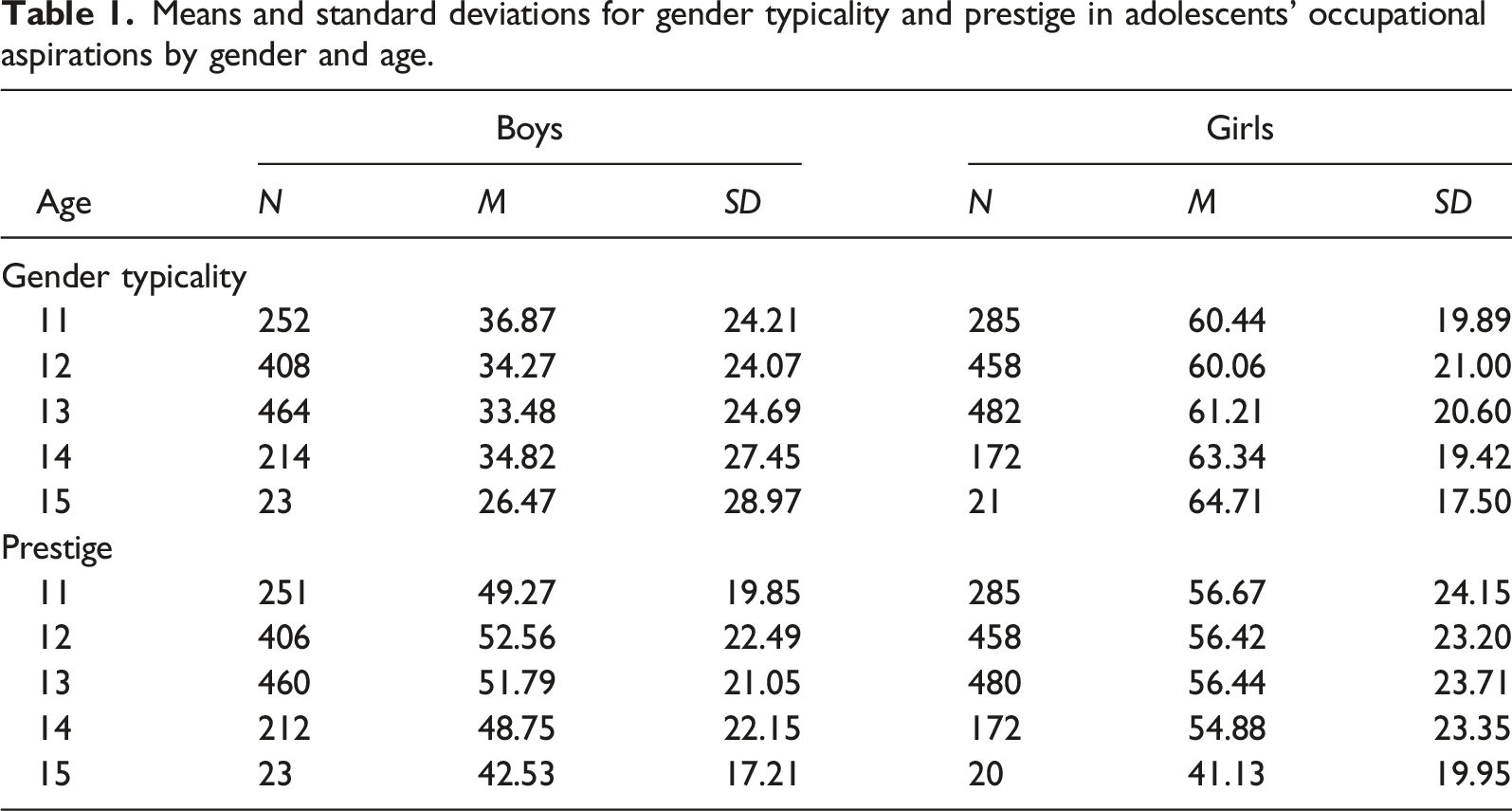
Means and standard deviations for gender typicality and prestige in adolescents’ occupational aspirations by gender and age.
Prestige
Table 1 presents the means and standard deviations for the prestige of the named occupations by gender and age. The results showed a significant main effect of gender, F(l, 2764) = 35.08, p = .000, η 2 p = .013, with girls (M = 56.07, SD = 23.59) naming more prestigious occupations than boys (M = 50.92, SD = 21.45). The effect of age was not significant, F(1, 2764) = 2.79, p = .095.
Gender Differences in Configural Frequency Analysis (Person-Centered Approach)
Frequencies of boys and girls naming occupations for which significant differences were found.
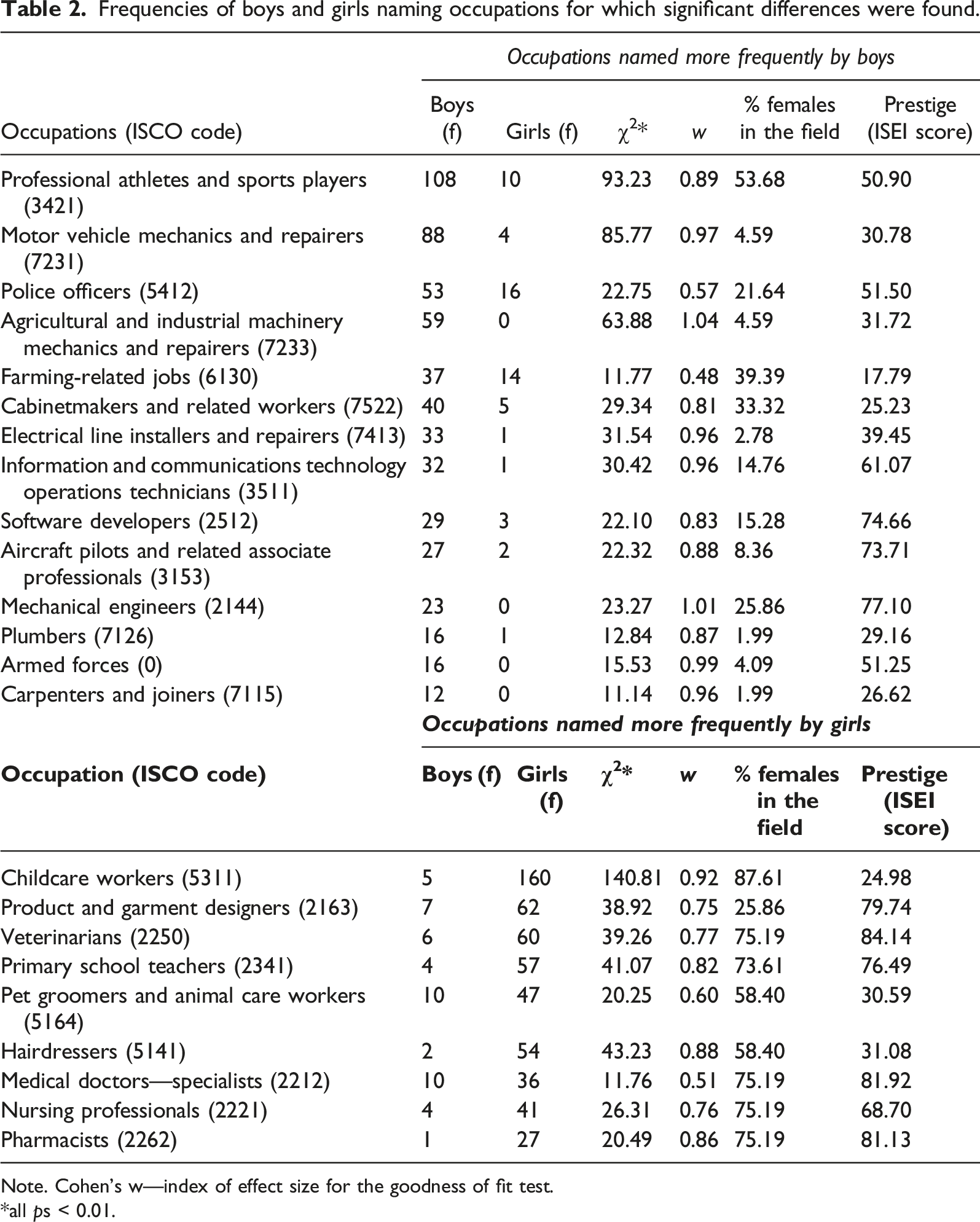
Note. Cohen’s w—index of effect size for the goodness of fit test.
*all ps < 0.01.
Mediating role of agency and communion
Gender Typicality
Figure 1 shows the paths linking gender to the gender typicality of occupational aspirations via agency and communion. The results showed a statistically significant effect of gender on agency (a1: B = 0.147, p = .000) and communion (a2: B = −0.399, p = .000), with girls describing themselves as more communal and boys describing themselves as more agentic. There was also a significant positive effect of communion on the gender typicality of the aspired occupation (b2: B = 1.603, p = .004), but no significant effect of agency (b1: B = 1.023, p = .187). The direct effect of gender on gender typicality of the aspired occupation was significant (c: B = −26.064, p = .000), with girls aspiring more frequently to typically feminine occupations and boys aspiring more frequently to typically masculine occupations. The indirect effect data supported a partial mediation for communion (c’2: B = −0.640, SE = 0.237, 95% CI [−1.110, −0.178]), but not for agency (c’1: B = 0.150, SE = 0.118, 95% CI [−0.073, 0.390]). The relationship between the covariate age and the outcome variable was not significant (B = −0.177, p = .682). Simple mediation diagram: a, b, c, and c’ are path coefficients representing unstandardized regression weights. Note. The c path coefficient represents the direct effect of gender on the gender typicality of aspired occupation (operationalized as percentage of females in the field). The c’ path coefficient refers to the effect of gender on the gender typicality of aspired occupation when the mediator agency (c’1) or communion (c’2) is included in the model. Gender is coded dichotomously (0 = female, 1 = male). All significant paths are marked with ** if p < .01, and with * if p < .05.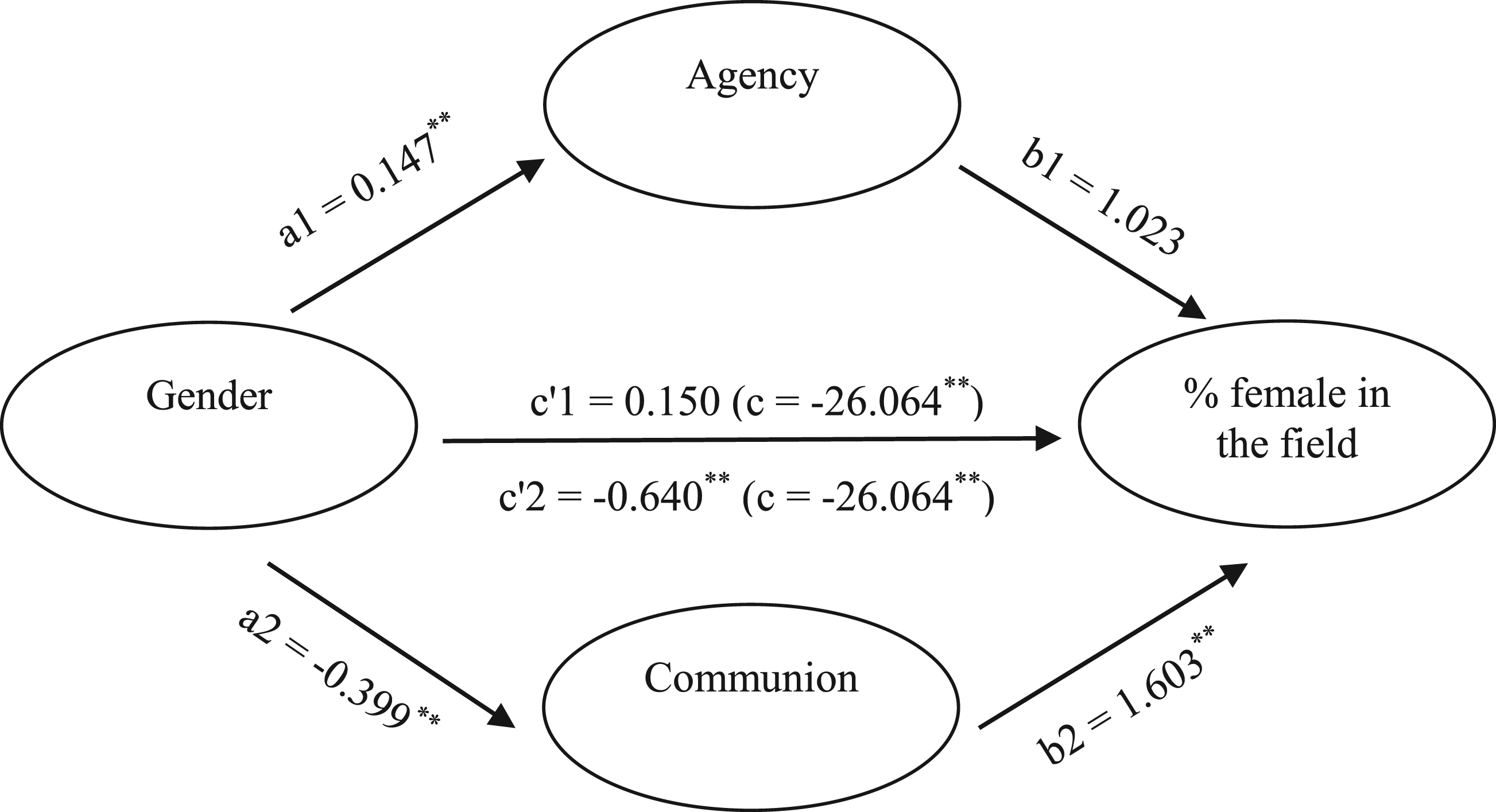
Prestige
Figure 2 shows the paths linking gender to the prestige scores of occupational aspirations via agency and communion. The results showed a statistically significant positive effect of agency on aspired occupational prestige (b1: B = 2.170, p = .005), while the effect of communion was not significant (b2: B = −0.262, p = .634). The direct effect of gender on aspired occupational prestige was also significant (c: B = −5.511, p = .000), with girls aspiring to more prestigious occupations than boys. The indirect effect data supported a partial mediation for agency (c’1: B = 0.319, SE = 0.130, 95% CI (0.089, 0.592)), but with the change of the direction of relationship. The indirect effect for communion was not significant (c’2: B = 0.105, SE = 0.118, 95% CI [−0.344, 0.517]). The relationship between the covariate age and the outcome variable was also not significant (B = −0.701, p = .103). Simple mediation diagram: a, b, c, and c’ are path coefficients representing unstandardized regression weights. Note. The c path coefficient represents the direct effect of gender on prestige of aspired occupation (operationalized as ISEI score). The c’ path coefficient refers to the effect of gender on prestige of aspired occupation when the mediator agency (c’1) or communion (c’2) is included in the model. Gender is coded dichotomously (0 = female, 1 = male). All significant paths are marked with ** if p < .01, and with * if p < .05.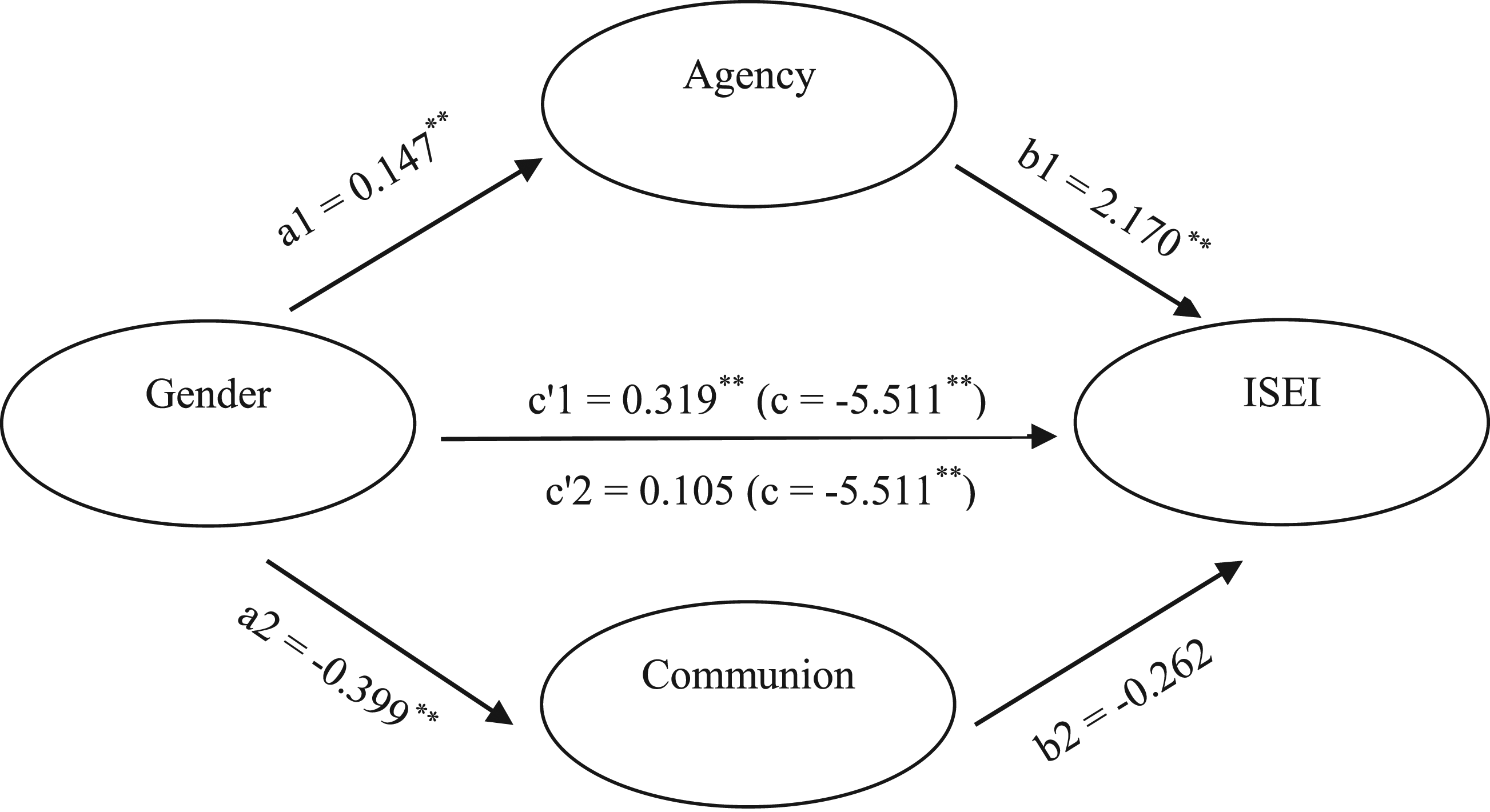
Discussion
The current study tested gender differences in two gendered aspects of occupational aspirations—gender typicality and prestige—and investigated the role of gender role identity—agency and communion—as a possible underlying mechanism. Our results confirmed Gottfredson’s (1981, 2005) theorizing and patterns described in the literature regarding gender differences in occupational aspirations: Girls aspire to typically feminine occupations significantly more than boys do, whereas boys aspire to typically masculine occupations significantly more than girls do (Su et al., 2009; Wegemer & Eccles, 2019; Wicht et al., 2021). This pattern is particularly conspicuous in the CFA results, which allowed us to test differences in specific occupations named by boys and girls. These results showed that the occupations named more frequently by girls are all female-dominated occupations (with the corresponding fields employing more than 55% females), such as childcare, primary school teaching, nursing, and related medical fields. The only exception in which girls outnumbered boys in naming a male-dominated occupation (26% females) was “product and garment designers”. However, product designers and garment designers are two different occupations. In our study, in 76% of the named cases involving this field the specific occupation named was “fashion designer,” whereas only 24% concerned designing other products (such as furniture or cars). Thus, within this “masculine” ISCO occupation in Austria, girls in our sample mostly specified design related to fashion and beauty—domains that are stereotypically feminine (e.g., Nam et al., 2011). In general, the occupations more frequently named by girls were related either to beauty (hairdresser) or to helping people (e.g., medical doctors, nurses, school teaching, and childcare) and other living beings (e.g., animals), in line with a previous meta-analytic review finding that girls tend to prefer people-oriented jobs involving interpersonal tasks (Su et al., 2009). Our results also align with meta-analytic evidence concerning boys’ aspirations—all occupations named significantly more often by boys involved impersonal tasks such as dealing with tools and machines (Su et al., 2009) and were male-dominated (with the corresponding fields employing more than 55% males), involving aspects such as mechanics, electronics, the building trades, and technology-related occupations. The only exception was the occupation “professional athletes and sports players,” which is a gender-balanced occupation in Austria (with 53.68% females). However, in 78.8% of the cases involving this field, the participants named “professional football/soccer player” as their aspired occupation, which is stereotypically masculine in German-speaking countries (Chalabaev et al., 2013). In the remaining 21.2% of cases, other sports were named: basketball, handball, skiing, (ice)skating, boxing, equestrian, tennis, wrestling, track and field, and swimming. Boys also outnumbered girls with respect to STEM occupations related to information and communications technology, software development, and mechanical engineering. This finding is likewise in alignment with previous studies, which have repeatedly shown higher interest and aspirations to these fields among boys (Eccles, 2009; Wegemer & Eccles, 2019).
However, despite boys’ predominance in STEM-related occupations, our results confirmed prior findings showing that, on average, girls aspire to more prestigious occupations than boys (Rani, 2018; Watts et al., 2015; Wicht et al., 2021). The prestige scores of the occupations for which significant differences between boys and girls were found strengthen Wicht et al.’s (2021) argument: Although boys more frequently aspire to STEM-related occupations—which have the highest earning potential and prestige (Diekman et al., 2017)—the occupations associated with social interests preferred by girls are largely found in the middle to upper-middle range of the occupational status hierarchy (such as medical doctors, pharmacists, veterinarians, and teachers). Moreover, boys’ aspirations also involve mechanical jobs such as motor vehicles mechanic, cabinetmakers, carpenter, and plumber, which are located at the lower end of the occupational status hierarchy. Thus, boys’ aspirations in prestigious STEM professions are not strong enough to position their occupational aspirations high on the occupational status hierarchy—especially among adolescents attending lower-track schools. This finding further confirms the need to distinguish between STEM fields in which women are well-represented (health, biological, and medical sciences; HBMS) and those in which women are not well represented (mathematics, physical, engineering, and computer sciences; MPECS; Wegemer & Eccles, 2019), which can be helpful in developing strategies to combat gender segregation in the labor market. However, despite girls’ higher aspirations regarding occupational prestige, women in the labor market are still underrepresented in prestigious positions and earn less compared to men (WEF, 2017). Our results thus underscore the notion that girls probably face occupational barriers that hinder them from realizing their aspirations, which are at least equal to or higher than those of adolescent boys. This emphasizes the need to better understand which (gender-related) factors contribute to the gender division of labor in reality.
In line with these considerations, the second objective of this study focused on the role of agency and communion—which are grafted onto girls’ and boys’ self-concept and identity through gendered socialization—in gendered occupational aspirations (Eccles, 2011). Our results regarding gender differences in gender role identity are aligned with the literature (e.g., Klaczynski et al., 2020), showing a stronger agentic gender role identity in boys and stronger communal gender role identity in girls. However, the effect sizes for gender differences in both agency and communion are moderate to small, and even smaller for agency than for communion, confirming the narrowing of the gender gap for agency (Donnelly & Twenge, 2017). Moreover, the analyses showed that even boys, on average, included more communal than agentic attributes in their self-descriptions. Thus, our results indicate some counter-stereotypical changes in gender role identity in early adolescence (for detailed results, see Korlat et al., 2021). However, despite this change regarding communion, the mediation analysis results show that only in girls, communion partially explains the preference for typically feminine occupations. Social occupational preferences are congruent with girls’ gender role identity, confirming thus theories postulating the importance of gender role identity for gender typical occupational aspirations (Diekman et al., 2017; Eccles, 2011; Gottfredson, 2002)
Agency, on the other hand, was not found to be a significant mediator between gender and the gender typicality of occupational aspirations. One explanation for these finding could be that communal characteristics are currently perceived as more required in typically feminine occupations than agentic qualities are required in typically masculine occupations: In order to work in a people-oriented occupation involving interpersonal tasks, one must perceive and describe the self as a “people person”. Conversely, masculine occupations involving impersonal tasks such as dealing with tools and machines might not require the agentic attributes used in boys’ self-descriptions (e.g., intelligent, strong, sporty). Another explanation could lie in recent findings showing that agency can be subdivided into two facets—ability/competence and volition/assertiveness, and that these two facets can be perceived directly opposite by others—one can be perceived as less assertive, but more competent, and vice versa (e.g., Hauke-Forman et al., 2021). Thus, a similar mechanism might have been at play in the participants’ self-descriptions and their relations to the gender typicality of occupational aspirations: The adolescents who described themselves with agentic attributes might have used attributes indicating either assertiveness or competence, which could have played different roles in the gender typicality of aspirations and canceled out each other’s influence. Further research is needed to examine these different aspects of agency in occupational aspirations and choices. Moreover, the adolescent boys and girls in our study used more communal than agentic words in their self-descriptions in general, which could have contributed to the insignificance of agency in the model.
On the other hand, agency has been found to mediate the relationship between gender and occupational prestige. However, although direct effect between gender and prestige shows girls’ aspirations to more prestigious jobs, when agency is entered in the model as the mediator, results show higher prestige aspirations in boys with agentic gender role self-concept (the indirect effect is positive). This finding shows importance of boys’ agentic qualities for aspirations to higher-status jobs in a society, supporting thus the role congruence theory in this aspirations’ domain (Diekman et al., 2017). Despite girls’ increased acceptance of agentic traits, it might be that the socialization patterns which dominantly ascribe agentic qualities to boys contribute to their high performance and goal orientation, which then translate to aspirations to prestigious positions. The mediating role of agency but not communion indicates potentially that socially prestigious jobs (such as judges, lawyers, and scientists) might require high agency (e.g., seeing oneself as competent, decisive, dominant), but not communion. Moreover, this finding underscores the incompatibleness of girls’ self-concepts for their aspirations to high-status jobs.
Although previous studies have argued that today’s boys and girls might represent new cohorts moving toward a post-gender culture due to their increasingly gender-neutral self-descriptions (Donnelly & Twenge, 2017; Korlat et al., 2021), this study, in line with others from this research field, indicates the continuing presence of gender stereotypes in career-related aspirations. Despite some changes in identities experienced by newer generations of adolescents, one’s professional identity is one’s most visible and public social role, and deviation from societally expected aspirations and choices in this area could be riskier than others. Therefore, changes in gender-typed occupational aspirations and behavior could potentially require larger systematic changes enabling gender similarities in adolescence to persist through adulthood and securing equal work opportunities and life chances for men and women.
Practical Implications
To decrease occupational gender segregation already in adolescents’ aspirations, media targeting young audience should portray both men and women in all types of jobs. Similarly, exposing young girls to role models of women working in high-status and prestigious occupations might help them act on their high aspirations from this life period (in choosing major or school subjects, for instance; Heilemann et al., 2012). In order to reduce the impact of gender stereotypes on occupational aspirations in adolescence, school-based programs could be developed to openly discuss the underlying mechanisms leading to stereotypical occupational aspirations and help adolescents consider careers that match their individual competencies rather than their internalized gender role beliefs (e.g., Kollmayer et al., 2020). Similarly, career counselors working with adolescents should be aware of gender-related career issues (Enns, 2000) and should educate them on counter-stereotypical career opportunities and support them in pursuing their aspirations regardless of their gender category. Moreover, as career counselors facilitate an active decision-making process (Gati & Asher, 2001), they might help both boys and girls to reflect on their aspirations and on factors that could potentially affect their consequent educational and career choices. Mentoring programs targeting, for example, early adolescent girls, could increase their educational and career choices in prestigious or male-dominated fields (e.g., Permoser, 2017). In general, more research regarding the effectiveness of different career counseling measures for the reduction of gender stereotypical aspirations is needed. At a systematic level, all socialization agents should foster both agentic and communal qualities in all children and adolescents in order to assure a broad repertoire of traits and behaviors which could benefit their quality of life (Pauletti et al., 2017) and potentially later career.
Limitations and Future Directions
Although this study has several strengths, including its large dataset and measurement of the mediating roles of agency and communion using the new measurement approach, the present findings are still correlational in nature and do not allow for causal inference. Future studies should investigate the role of agency and communion in adolescents’ self-concepts longitudinally or experimentally in order to draw conclusions on the specific causal relationships between gender-typed personality traits and occupational aspirations. Moreover, in our study, participants were asked to describe themselves using a maximum of three attributes, which might have restricted the scope of our data. Future studies should also expand research on the role of agency and communion in occupational aspirations and choices using the spontaneous self-description method by accounting for different facets of agency and communion. Future studies should also include equal percentages of students from lower and higher academic tracks. Finally, this study was conducted in a Western country and the results should not be generalized to other cultures.
Supplemental Material
Supplemental Material - Gender Typicality and Prestige of Occupational Aspirations in Adolescents: The Relevance of Agency and Communion
Supplemental Material for Gender Typicality and Prestige of Occupational Aspirations in Adolescents: The Relevance of Agency and Communion by Selma Korlat, Marie-Therese Schultes, Barbara Schober, Christiane Spiel, and Marlene Kollmayer in Journal of Career Development
Footnotes
Acknowledgments
Special thanks go to Melanie Schaefer and Nora Foerst for their support in data coding.
Declaration of Conflicting Interests
The author(s) declared no potential conflicts of interest with respect to the research, authorship, and/or publication of this article.
Funding
The author(s) disclosed receipt of the following financial support for the research, authorship, and/or publication of this article: This research was partially supported by the following Austrian federal ministries: Education, the Arts and Culture; Women and Public Service; Transport, Innovation, and Technology; Labor, Social Affairs, and Consumer Protection; and Family and Youth.

Supplemental Material
Supplemental material for this article is available online.
Author Biographies
Current address: Liebiggasse 5, 1010 Vienna, Austria.
References
Supplementary Material
Please find the following supplemental material available below.
For Open Access articles published under a Creative Commons License, all supplemental material carries the same license as the article it is associated with.
For non-Open Access articles published, all supplemental material carries a non-exclusive license, and permission requests for re-use of supplemental material or any part of supplemental material shall be sent directly to the copyright owner as specified in the copyright notice associated with the article.
