




Abstract
Microfoundations research, generally conceptualized as explaining macro concepts and relationships in terms of micro-level behaviors and interactions, has been argued as critical to knowledge-building. Thus, we reviewed the family business literature to assess the state of microfoundations knowledge. Results indicate most research does not examine all microfoundational links. In addition, much of the research lacks a theoretical foundation. To provide structure to guide future inquiry, we offer theoretically-driven directions for family business research for each microfoundation link. This will help prevent microfoundations knowledge from developing in a disjointed manner, and allow future research to build more systematically.
Keywords
As family business research has continued to flourish (De Massis et al., 2012; Neubaum, 2018; Nicholson, 2008), scholars have devoted increasing attention to investigations of family firm heterogeneity (Daspit et al., 2021). One particularly valuable path for such research is through the exploration of microfoundations. Although debate exists regarding the nature of microfoundations for management research (Barney & Felin, 2013), they generally can be conceptualized as the explanation of macro-level concepts and relationships in terms of individual behaviors and interactions (Coleman, 1990; Felin et al., 2015). This differs from more traditional micro-level research in its focus on higher-level outcomes (Felin & Foss, 2005), the incorporation of context (e.g., Krueger et al., 2021), examination of macro- and micro-levels (Barney & Felin, 2013), and consideration of how the interactions of individuals in organizations result in firm-level outcomes (Felin et al., 2015).
The microfoundations movement has surged through the broader management literature (Barney & Felin, 2013; Felin et al., 2015). However, it is only in more recent years that it has begun to gain traction in the family business literature. Given that this line of inquiry is “fundamentally concerned with explaining heterogeneity in social outcomes and differences in competitive advantage” (Felin et al., 2015, p. 601) and can enable scholars “to build more sophisticated and more robust theory” (De Massis & Foss, 2018, p. 386), it is likely to be an area of increasing attention for future family business research. Thus, it is critical to take stock of how family business scholars have incorporated micro-level aspects to inform macro-level phenomena. This will provide structure to guide future inquiry, help prevent knowledge in this domain from developing in a disjointed manner, and allow studies to more effectively build upon one another.
Therefore, the purpose of the present work is to conduct a systematic review of microfoundations research in the family business literature. Using the nodes of the Coleman “boat” (see Figure 1), a popular framework that captures the essence of microfoundations (Abell et al., 2008; Coleman, 1990; De Massis & Foss, 2018; Felin et al., 2012), to organize our review, we catalog existing family business research that incorporates micro-level aspects (e.g., personality traits, interpersonal behaviors). By doing so, we can determine what is known about the interplay of micro- and macro-level family business phenomena, as well as the various theoretical approaches used to explore these relationships, which can be leveraged to enhance our understanding of family firm heterogeneity. A broadened understanding of these relationships is critical, because without the integration of micro-level explanations, which are often the most proximate causes of higher-level phenomena (Felin et al., 2015), theorizing at the macro-level could be incomplete or inaccurate (Coleman, 1990; De Massis & Foss, 2018).
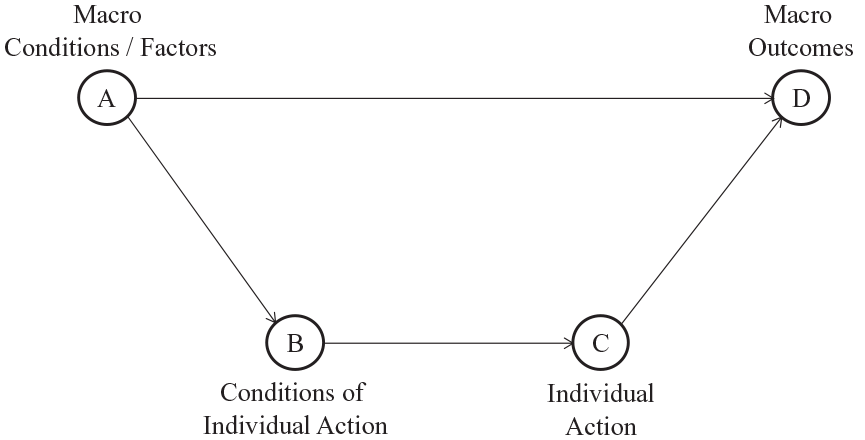
Microfoundations as Depicted by the Coleman “Boat”.
Ultimately, our work contributes to the literature by offering valuable directions for future research that can advance theory as it relates to the heterogeneity of family firms (e.g., Chrisman & Patel, 2012; Daspit et al., 2021). In addition, although we identified many studies that promise an understanding of micro-macro linkages in family business research, many lack appropriate theoretical grounding. Thus, greater theoretical precision is needed so that microfoundations research can more fully contribute to the family business literature. We begin with an overview of our review framework. Then, we detail our search and review methodology. Finally, we discuss the results of our review as well as fruitful avenues for future inquiry that can use a theoretically driven microfoundations approach to advance family business research.
The Coleman Boat as an Organizing Framework
Microfoundations are typically described in terms of stacked layers, with a layer of macro-level (i.e., firm-level) aspects positioned above a layer of micro-level (i.e., individual-level) aspects (Coleman, 1990; Felin et al., 2015). These stacked layers form what is often referred to as the Coleman “boat” (see Figure 1), “a parsimonious meta-theoretical framework for understanding the domain of microfoundations” (Felin et al., 2015, p. 600), which consists of four edges connecting four nodes. Most firm-level research is concerned with providing a direct explanation for relationships between Node A (i.e., macro-level conditions/factors such as institutions or family influence) and Node D (i.e., macro-level outcomes, such as firm performance or strategic change). Conversely, microfoundations research attempts to explain these relationships through Node B (i.e., conditions of individual action such as CEO overconfidence or organizational commitment) and Node C (i.e., individual actions such as employee performance or citizenship behavior).
However, microfoundations research does not need to incorporate all four nodes. For example, some studies have focused primarily on the emergence of macro-level outcomes through the aggregation or interaction of individual actions (i.e., the link between Nodes C and D), whereas other microfoundations studies have also included Node B, the causes of individual action (Node C) that ultimately influence macro-level outcomes (Node D). Thus, the Coleman boat has been described as “highly instructive and flexible,” imposing “few restrictions on theorizing” (Felin et al., 2015, p. 592). This makes it an effective framework through which to review a diverse collection of family business studies that incorporate micro-level aspects.
Review Methodology
To understand the multifaceted and varied nature of microfoundations research, we conducted our review using a three-step approach (e.g., Nordqvist et al., 2013). In the first step, we identified microfoundations-related articles. Following best practices for a systematic, transparent, and replicable review (Siddaway et al., 2019; Snyder, 2019), we employed several search strategies to locate relevant articles. Consistent with prior family business reviews (e.g., Daspit et al., 2016; Kubíček & Machek, 2020; Tabor et al., 2018) and following guidelines for a systematic review (e.g., Short, 2009), we searched for studies based on a list of terms that exemplified micro-level conditions of individual action, 1 microfoundation, and family businesses. Moreover, we constructed search strings of possible combinations of keywords for micro-level conditions of individual action, micro-foundations, and family businesses. Examples are [personality AND “family business”] and [“microfoundations” AND “family enterprise”]. We conducted an electronic search for these strings and abstracts in Scopus and EBSCOhost Business Source Complete databases. We focused on research published or in press in academic journals up to July 2023, without setting a lower boundary to avoid missing relevant papers. (See Appendix A for a complete list of search terms).
Second, we performed a manual search of the titles and abstracts for each article that was cited by (103 articles) and has cited (79 articles as of June 14, 2022) the De Massis and Foss (2018) editorial on microfoundations in family business research. This article has served as a seminal piece for the micro-foundations research in family firms as it argues that understanding family firms is linked to the unobservable mental processes of family and nonfamily members as they are involved in shaping the firms’ strategic and entrepreneurial decisions (Picone et al., 2021). Thus, reviewing these studies allowed us to identify microfoundations research in the family business literature that may not have been captured in our search. Then, following other reviews of the family business literature (e.g., Madison et al., 2016), we searched the family business annotated bibliography (De Massis et al., 2012) for our micro-related keywords to ensure that we did not miss any of the most influential articles in family firm research. This search yielded three additional articles for possible inclusion.
Third, each abstract was reviewed by two authors for possible inclusion, based on whether it (a) captured a micro-level element or utilized the micro-foundations framework, and (b) offered a contribution to family business research (i.e., advanced understanding of family enterprises by explaining how different variables affect the formation, functioning, and outcomes of family firms). Thus, studies such as Abbas (2022), which investigated social network use among a sample of family firm employees, were not included in our review. In addition, reviews (e.g., Daspit et al., 2016; Le Breton-Miller et al., 2004) were not included. A third author adjudicated any discrepancies between coders to make a final decision on inclusion or exclusion.
Ultimately, 291 articles met the criteria for inclusion in our review. Each article was reviewed independently by two authors and coded to indicate the micro- and macro-level constructs studied, which nodes of the Coleman boat these constructs represented, what theory was used, what methodology was implemented, and the findings and contribution to family business research. A third author again adjudicated discrepancies. Finally, the collective body of knowledge was assessed to determine the current state of inquiry for microfoundations in the family business literature and identify fruitful avenues for future research.
Review Results
A summary of our review results is provided in Table 1 and a geographical distribution of empirical studies is provided in Appendix B. Only 17 studies included all four nodes of the Coleman boat. Thus, consistent with prior arguments (i.e., De Massis & Foss, 2018), it seems that explicit investigations of microfoundations are yet to fully take hold in the family business literature. In addition, of these studies, only nine explicitly employed a theoretical perspective (i.e., agency theory, dual theory of values, network theory, parental control theory, self-determination theory, social information processing theory, and sensemaking). For example, Gagné et al. (2021) used self-determination theory (Ryan & Deci, 2017) to explore the link from incumbent trust in successors, through successor perceptions of incumbent support and intrinsic motivation, to the successful transfer of leadership. However, this level of theoretical specification was relatively rare.
Summary of Papers Reviewed.

Note. CEO = chief executive officer; CSR = corporate social responsibility; CWB = counterproductive work behavior; EE =employee; EO = entrepreneurial orientation; ESE = entrepreneurial self-efficacy; FB = family business; FF = family firm; HR = human resource; HRM = human resource management; IPO = initial public offering; LT = long-term; MBTI = Myers-Briggs type indicator; OCB = organizational citizenship behavior; SG&A = selling, general, and administrative; SME = small and medium sized enterprise; ST = short-term; TMT = top management team.
Furthermore, some studies incorporated all four nodes of the Coleman boat but did not specify a link between Node A and Node B. For example, Littunen and Hyrsky (2000) examined factors influencing the survival of manufacturing firms. While they specified a macro condition/factor (i.e., whether or not the firm was family-owned, coded as Node A), this was not identified as an antecedent of a condition of individual action (i.e., managerial competence or personality attributes, coded as Node B). Instead, they examined whether these traits and characteristics were related to strategic choices and firm survival for family-owned versus non-family-owned firms. Thus, although studies like these provide important insight regarding micro-level aspects that influence macro-level outcomes for family firms, they do not fully examine microfoundations in family business.
However, these initial forays do provide a foundation upon which scholars can build to better examine microfoundations in family business research. Consider the theoretical perspectives used in this subset of articles. All but one could be classified as a micro-level perspective typically used to explain individual, rather than firm, behavior. The use of such micro-level theories demonstrates an attempt, even if not explicit, to incorporate a microfoundations approach to family business research. Nevertheless, to advance a microfoundations research agenda for the family business literature, scholars would benefit from a deeper understanding of how these, and related, theoretical perspectives can be used to examine topics of interest to family business researchers. It is with this in mind that we discuss our review results for the remaining studies. That is, although the majority of the studies we reviewed did not specify all aspects of the Coleman boat, there is value in exploring the theoretical perspectives they used to examine various aspects of microfoundations in family firms so that we can propose future research avenues in which other scholars can build a more complete picture of the relationships between micro and macro aspects of family firms.
The remainder of our review systematically assesses the research on different links of the Coleman boat (see Figure 1). To begin, we examine research linking macro conditions/factors (Node A) to conditions of individual action (Node B) within family firms. Next, we review the extant research that has explored the path between individual actions within family firms (Node C) and macro-level outcomes for family firms (Node D). Then, we review research that has examined how conditions of individual action (Node B) directly impact macro-level outcomes (Node D). Finally, we review research that has looked only at the micro-level relationships between conditions of individual action (Node B) and individual action (Node C). 2
How Macro Conditions/Factors Influence Conditions of Individual Action
Among the studies that incorporated macro conditions/factors (Node A) that influence conditions of individual action (Node B), agency theory emerged as the most prevalent. However, there was little overlap in the theoretical underpinnings of the remaining studies. Thus, we present the results of our review in four sections—studies employing agency theory, studies drawing from other theories most commonly employed to examine macro- (i.e., firm-) level relationships, studies drawing from various micro- (i.e., individual-) level) theories, and studies that lacked the use of a theoretical perspective.
Agency Theory
Agency theory is one of the most popular theoretical frameworks used in family business research (Madison et al., 2016). It describes the possible problems arising from conflicts of interest and asymmetric information between two parties of a contract (Jensen & Meckling, 1976), arguing that individuals (agents) tend to behave opportunistically rather than in the interest of the other contract party (principal), creating problems such as adverse selection (Eisenhardt, 1989) and moral hazard (Holmström, 1979). A number of studies in our review used agency theory to investigate the differences between family and non-family firms, with many examining the influence of family firm status on managerial characteristics. For example, in their empirical study, Xiang et al. (2014) examined how family firm status influenced the levels of altruism and self-control of the owners. Similarly, Lubatkin et al. (2005), in their conceptual piece, investigated how the difference between family and non-family firms influences parental altruism, entailing disseminating information regarding the estate and transfer plans of the firm as well as the retirement date. Other studies explored the effect of family firm status on CEO tenure (Tsai et al., 2006; Zahra, 2005), managerial overconfidence (Dick et al., 2021), shareholder commitment (Vilaseca, 2002), and perceived level of risk and management efficacy (Peake & Watson, 2015).
Another theme among these studies was the focus on how institutional practices of the family firm influenced individual constraints. For example, some studies investigated how the level of board monitoring or composition would influence CEO power and education (Voordeckers et al., 2007) or CEO emotional attachment (Frisenna & Rizzotti, 2020). Other studies (e.g., K. Lee et al., 2019) found that family involvement in the top management team influenced the family firm managers’ motivation. Similarly, Ahrens et al. (2018) examined how previous owner involvement with the family firm would impact the CEO’s human capital.
Other Macro (Firm-Level) Theories
Among the studies that adopted other theoretical perspectives to examine the effects of macro-level factors on conditions of individual action, the three most common were the behavioral agency model, stewardship theory, and upper echelons theory. As an extension of agency theory, the behavioral agency model (BAM) focuses on the behavioral component of the principal and the agent (Pepper & Gore, 2015; Wiseman & Gómez-Meíja, 1998). Using this perspective, Campopiano et al. (2020) found that family involvement within the top management team impacted the entrepreneurial orientation of different stakeholders within the family firm. Relatedly, Visintin et al. (2017) found that non-family CEOs were less likely to be dismissed when family ownership concentration was low. Finally, Mazzelli et al. (2020) used BAM to examine the link between family firm status, CEO characteristics (e.g., including family vs. non-family, founder and family, and later-generation CEOs), and exploration and exploitation in family firms.
Other studies drew from stewardship theory (Le Breton-Miller & Miller, 2009; Miller et al., 2011) to examine the influence of macro-level factors on conditions of individual action. For example, Bormann et al. (2021) argued that cultures of stewardship impact whether male (female) behaviors are more (less) affect-driven, whereas Mitter and Emprechtinger (2016) examined the effects of stewardship on risk aversion. Finally, Y. Wang (2016) used stewardship theory to explore how environmental dynamism influenced the trust of family firm staff.
Another group of studies employed upper echelons theory (UET; Hambrick & Mason, 1984). Although UET argues that leader characteristics directly influence firm decision-making and performance (G. Wang et al., 2016), some studies used it to examine whether there was a relationship between family versus non-family firm status and CEO personality traits (Kelleci et al., 2019). This included CEO Machiavellianism (Chandler et al., 2021), the dark triad traits (i.e., Machiavellianism, narcissism, and psychopathy; Paulhus & Williams, 2002) of risk managers (Pelster et al., 2023), and the personal characteristics of the board of directors (including educational background and work experiences; Rossignoli et al., 2021).
Micro (Individual-Level) Theories
Among the studies that employed more micro-level theories (i.e., those typically used to examine individual-level relationships), no dominant perspective was evident. However, three theories emerged as more commonly used to examine the impact of macro-level factors on conditions of individual action: social cognitive theory (SCT; and its derivative as social cognitive career theory [SCCT]), social learning theory, and social identity theory.
SCT (Bandura, 1986) contends that an individual’s cognition influences their perceptions and behaviors via the use of symbols, including language and metaphors, thereby allowing individuals to adapt to various environmental circumstances. Paramita et al. (2022) used this perspective to investigate how the anthropomorphism of the family firm impacted the resilience of entrepreneurs. However, their results indicated that these relationships were only significant for non-family firms. Martin-Cruz et al. (2020) explored how the parents’ learning mechanisms influenced the successor’s dynamic capabilities. Building on this perspective, D. Wang et al. (2018) and D. Wang and Zhang (2022) drew from SCCT (Lent et al., 1994) to explore how operating a family business in China influenced perceived parental entrepreneurial rewards and entrepreneurial self-efficacy.
Social learning theory contends that the individual’s environment influences their behavior, and vice versa (Bandura, 1986). Drawing from social learning theory, Wu et al. (2014) investigated how Chinese culture influences the locus of control and perceived guanxi of Taiwanese managers. Similarly, Hasan et al. (2020) drew from social cognitive and social learning theories to explore how pursuing an entrepreneurship education impacts the self-efficacy of the next generation.
Social identity theory states that a social identity relates to a person’s knowledge that they belong to a group (Abrams & Hogg, 1988). Machek and Hnilica (2020) used this perspective, along with self-determination theory (Roberts & Clement, 2007), to investigate how the achievement of both economic and non-economic goals would impact family versus non-family CEO satisfaction. In addition, in a conceptual piece, Pieper (2010) used social identity theory to examine how the status of the firm as either family or non-family influenced the motivation of managers and employees.
Other studies attempted to explore competency models, which describe how an individual integrates knowledge, skills, and characteristics that are needed to successfully fulfill the tasks needed within a unique organization (Sandberg, 2000; R. S. Williams, 1998). For example, Zhong and Shi (2007) used interviews to explore differences between family firm senior managers in China compared with Western settings. They found that an authority or benevolence orientation was unique to the Chinese culture, while systematic planning, analytical thinking, employee training, and concern for employee welfare were unique to Western culture. Quan et al. (2011) drew from the competency model to explore how the status of the firm as a family or non-family influences the personal characteristics, managerial skills, and interpersonal relations of successors.
The remaining articles examining the effects of macro-level factors on conditions of individual action drew from a variety of theories, often to explore personality in family firms. For instance, Stavrou et al. (2005) drew from Dyer’s cultural framework (Dyer, 1986) and Jungian personality concepts (Jung, 1981) to explore the influence that firm culture, family culture, and board culture have on the personality types of family firm successors. Similarly, Zheng et al. (2017) employed social information processing theory (Salancik & Pfeffer, 1978) to investigate how a family firm operating in China would have a Machiavellian owner. Finally, drawing from trait theory (McClelland, 1961; Rotter, 1966), Littunen and Hyrsky (2000) explored how family firm status influenced managers’ personality attributes and motivation.
Other studies with similar themes, but varied theoretical perspectives, sought to advance the family science literature in family business research (cf. Combs et al., 2020). For example, O’Brien et al. (2018) applied kin selection theory (Buss, 1999; Gaulin & McBurney, 2001) to conduct an experiment evaluating how favorable treatment of family members perpetuates a sense of entitlement from future family firm employees. Similarly, Cirillo et al. (2022) employed generational theory (Mannheim, 1952) to explore the relationship between family members who identified as millennials, and were involved in the family firm, would influence CEO traits, such as family membership and societal generation membership. Finally, Shanine (2015) drew from parental control theory (Baumrind, 1971) to investigate how parenting styles impact successors.
Atheoretical Approaches
Nearly a third of the studies that investigated the relationship between macro factors and conditions of individual action failed to specify a theoretical lens. Interestingly, these studies used similar subthemes as the other studies investigating this link to the Coleman boat. For example, Rovelli and Curnis (2021) found that narcissistic individuals are appointed as CEOs faster than others, regardless of whether the firm is family-owned, demonstrating that succession outcomes may not always be different in family versus nonfamily firms. However, Rovelli and Curnis (2021) failed to specify a theoretical lens in their study, despite this study being similar to others that we examined that drew from agency theory to investigate family firm status (e.g., Lubatkin et al., 2005; Xiang et al., 2014).
Similarly, Minárová et al. (2020) explored whether being a family manager within the family business influenced the managers’ degree of emotional intelligence and found that emotional intelligence is moderately high for family business managers, with female managers having slightly higher emotional intelligence than male managers. Yet, Minárová et al. (2020) did not specify a theoretical lens in their study, although similar studies in our review drew from stewardship theory (i.e., Miller et al., 2011; Le Breton-Miller & Miller, 2009), upper echelons theory (e.g., Chandler et al., 2021), or the behavioral agency model (e.g., Mazzelli et al., 2020) when investigating family firm status and leader characteristics.
Summary
Our review indicates agency theory was the most prevalent theory used to examine the macro conditions (Node A) that influence conditions of individual action (Node B), and that this perspective was primarily used to investigate differences between family and non-family firms. However, scholars also drew from other perspectives to investigate this link, with the behavioral agency model, stewardship theory, upper echelons theory, SCT/social cognitive career theory, social learning theory, and social identity theory arising as predominant. However, the remaining studies were scattered in their application of theory. Finally, many studies did not specify a theoretical framework, despite examining similar subthemes as other studies in our review (e.g., family firm status and institutional practices). Although some of these studies allude to theoretical lenses, the failure to clearly draw from an established theory limits the progress that researchers can make building upon previous work to advance family firm research that explores this microfoundations link.
How Individual Action Influences Macro-Level Outcomes
Of the studies that examined the link between individual action (Node C) and macro-level outcomes (Node D) within family firms, almost half did not specify a theoretical framework. Among the studies that did employ an overarching theory, agency theory was the most prevalent perspective used. There was less overlap in the remaining studies, with some using a combination of other theories often used to examine firm-level outcomes and others using theories more often employed to examine micro- (i.e., individual-) level phenomena.
Agency Theory
Although agency theory is prevalent in the family business literature (Chrisman et al., 2005; Madison et al., 2016), some studies in our review (e.g., Lubatkin, Durand, & Ling, 2007; Lubatkin et al., 2005) criticized its use in family business research, arguing that it provides a narrow view of the complexity of parental influence and the overemphasis of negative outcomes in family business. However, it is still a valuable perspective for family business research. For example, although agency problems are normally assumed to be consistent across individuals, the situation of family firms employing both family and non-family members creates unique agency problems and also is likely to affect perceptions of organizational justice (Baldridge & Schulze, 1999). Given this, HR practices in the family firm aid in the lowering of injustice perceptions and thereby reduce the adverse impact of agency problems in the firm. In this vein, Madison et al. (2018) explored the monitoring practices of managers under the context of bifurcation bias and its relationship with family firm performance.
In addition, agency problems were also explored in terms of board composition for family firms, highlighting the different effects that agency problems can have on family firm board composition. For example, Acero and Alcalde (2016) found that as Type I agency problems increase, firms will increase their percentage of outside directors. However, as Type II agency problems increase, firms will increase the ratio of independent directors. Furthermore, the reciprocal altruism behavior in family firms has also been shown to have an important effect on interfamily branch relationship and governance in the family firm (Meier & Schier, 2016). Similarly, Liu et al. (2015) used agency theory to explore agency conflicts in family firms between controlling and minority shareholders. They found that Chinese family firms are more likely to be expropriated by controlling families because the agency conflict between majority and minority shareholders are exacerbated by the weak protection of minority shareholders.
Other Macro (Firm-Level) Theories
Although there was little overlap in other theoretical perspectives used in this set of studies, two articles in our review employed stakeholder theory (Freeman & McVea, 2005), which argues that managers should actively explore their relationship with all stakeholders to develop business strategies that satisfy stakeholder requests and needs (Shad et al., 2019). In a conceptual piece, Lumpkin and Brigham (2011) argued that this perspective can be used to understand three different, but interconnected, problems: how value is created and traded, connecting ethics and capitalism, and helping managers think about management to solve the first two problems. In addition, Anwar and Clauß (2021) conducted an empirical study to explore the relationship between bricolage as an individual action and sustainable social responsibility as a macro-level outcome in family firms.
Two other studies employed stewardship theory (Davis et al., 1997), which some family business scholars have adopted due to contradictions within agency theory. For example, Li et al. (2021) used this perspective to explain the likelihood of family managers/owners behaving as either agents or stewards. In another study, Niemelä (2004) used resource dependence theory (Pfeffer & Salancik, 1978) to explicate the influence of the use of power on interfirm cooperation and networking. More specifically, this study suggested that owner-managers need to have capabilities, such as knowledge and skills, motivation, and volition (willpower), when using their personal and institutional power as this affects the model of interfirm cooperation capability.
The lack of overlap in theoretical perspectives used in the remaining studies examining the link between individual action and macro-level outcomes also extended to the dependent variables examined. One exception to this was studies that examined succession. This was not surprising, as succession is one of the most researched topics in the family firm literature due to its implications for family firm longevity (K. S. Lee et al., 2003). In a qualitative study, Bloemen-Bekx and colleagues (2021) used effectuation theory to better understand the relation between intuitive planning and succession success. They hypothesized that succession cannot be always understood as a formally planned process and that intuitive forms of planning are essential for dealing with uncertain phases and contingencies. Given this, effectuation theory was argued as particularly useful as it helps us understand the entrepreneurial process of decision-making in uncertain circumstances (Matalamäki, 2017).
In another study on the link between individual actions and succession, Zybura and Ahrens (2015) employed the resource-based view (RBV), which considers the firm as a collection of resources and capabilities (Barney, 1991). This perspective has been extensively used in the management literature as a theory of competitive advantage that allows firms to create unique value. In family firms, this unique value has been highly linked to the development and transfer of specific tacit knowledge and social capital (Habbershon et al., 2003). Zybura and Ahrens (2015) argued that this unique relationship of resources in family firms could create prolonged predecessor activity in the business, which ultimately affects important business processes such as succession and succession planning for the family business.
Micro (Individual-Level) Theories
Multiple theories typically associated with the investigation of individual-level relationships have been used to explore the link between individual action and macro-level outcomes in family firms. Not surprisingly, several of these perspectives involve social aspects, which matches this link of the Coleman boat’s focus on interactions that impact or result in macro-level outcomes. For example, Löhde et al. (2021) considered the dyadic relationship between the owner-manager through the lens of social exchange theory (SET; Blau, 1964), suggesting that these relationships are characterized either by generalized exchange systems or by restricted exchange systems. Löhde et al. (2021) explored this relationship between individual actions of opportunistic behaviors from family firm owners toward non-family firm managers and their impact on corporate governance.
In addition, some studies employed theories from cognitive psychology, including transactive memory systems (TMS), defined as a shared system that people in relationships develop for encoding, storing, and retrieving information about different substantive domains (Ren & Argote, 2011). Essentially TMS acts as a group-level heuristic, or a cognitive shortcut used when information, time, and processing capacity are limited (Newell & Simon, 1972). Under this framework, the communication between family firm individuals has been hypothesized to have important effects on family firm innovation, as they positively associate with the expression of ideas and integration of knowledge (Madison et al., 2021).
Atheoretical Approaches
Although there has been important theoretical work regarding the influence of individual action on macro-level outcomes in family firms, a fair amount of the work in this area did not employ a theoretical framework. For example, Cater and Kidwell (2014) examined the negative impact of excessive competition among successors on group effectiveness as well as the succession process. Relatedly, Leiß and Zehrer (2018) analyzed the impact that intergenerational communication has on the succession process and its outcomes, developing a typology of intergenerational communication processes that affect the entrepreneurial family and the family business.
In addition, a number of studies took atheoretical approaches to examine the effects of conflict, including its impact on supplier relationship satisfaction and performance (Choi et al., 2008) and gross revenue and perceived success (Olson et al., 2003). Similarly, other studies examined the effects of conflict on family outcomes, including familial and organizational tensions (Cunha et al., 2022) as well as family cohesion and anxiety (Smyrnios et al., 2003). Although the latter study also examined these effects across cultures, neither this nor the other studies on conflict and macro-level outcomes adopted a theoretical perspective.
Summary
Our review results show that agency theory has been the primary theory used to explain the relationship between individual actions (Node C) and macro-level outcomes (Node D). Authors employed this theoretical perspective to explore the impact of individual decision-making, control behaviors, monitoring practices, manager-owner conflicts, and reciprocal altruism behaviors on performance, investment, and structural characteristics of the firm. However, several other perspectives (e.g., resource-based view, upper echelons theory, stewardship theory, social exchange theory, and SCT) were also used to investigate the impact of individual behaviors in family firms on macro-level outcomes. Finally, a significant number of studies in this area of the literature did not specify a theoretical framework. In some instances, these studies were qualitative and more exploratory in nature (e.g., Cater & Kidwell, 2014; Leiß & Zehrer, 2018). Although an inductive approach to understanding phenomena can be valuable, the substantial number of studies that lack theoretical grounding hinder knowledge advancement of microfoundations in the family business literature.
How Conditions of Individual Action Influence Macro Outcomes
Our review identified a substantial number of studies that incorporated some aspect of conditions of individual action (Node B) into explanations for macro-level family firm outcomes (Node D), but without specification of individual action (Node C). This link is not specified by the Coleman boat. However, given the extent of the literature that examined these relationships, we included these studies in our review to provide a more complete understanding of knowledge examining micro-macro linkages in the family business literature. Consistent with our findings in the previous sections, the most common theoretical perspective invoked was agency theory (Jensen & Meckling, 1976). Socioemotional wealth (SEW; Gómez-Mejía et al., 2007; Swab et al., 2020) was the second most used, followed by upper echelons theory (UET; Hambrick & Mason, 1984). Although the majority of studies examining this set of relationships incorporated a theoretical perspective, we also review those that did not employ an overarching theory.
Agency Theory
An agency perspective was most often used for explaining how conditions of individual action impacted family firm performance or succession. However, scholars also used it to examine capital structure decisions (e.g., Frisenna & Rizzotti, 2020; Poletti-Hughes & Martínez Garcia, 2022; Salloum et al., 2012; Stacchini & Degasperi, 2015; Steijvers et al., 2010; Steijvers & Niskanen, 2013; Su et al., 2021; Villalonga et al., 2019; Yusof Ali & Ahmad, 2021), diversification (e.g., Chung et al., 2021; Praet, 2013; Singh & Wyrobek, 2013; Singla et al., 2014; Hernández-Trasobares & Galve-Górriz, 2020; Tsai et al., 2009), CEO/executive compensation (e.g., Boon-Leong & Swee-Sim, 2020; Pagliarussi & Costa, 2017; Sánchez-Marín et al., 2020; Schulze et al., 2003), earnings management (e.g., Setia-Atmaja, et al., 2011; Stockmans et al., 2013; Wan et al., 2014; Yang, 2010), and dividends policy (e.g., Briano-Turrent et al., 2020; Sener & Selcuk, 2019; Setia-Atmaja, 2008; Setia-Atmaja et al., 2009). In addition, agency theory was used in combination with other theoretical perspectives to explain greater firm value (e.g., Pukthuanthong et al., 2013; Rubino et al., 2017; Venusita & Agustia, 2021), family firm innovation (e.g., Lazzarotti & Pellegrini, 2015; Scholes et al., 2021; Steeger & Hoffmann, 2016; Xiaoti, 2018; Zulfiqar et al., 2021), risk-taking behavior (e.g., Huybrechts et al., 2013; Poletti-Hughes & Briano-Turrent, 2019; Su & Lee, 2013; Zahra, 2005), and corporate social responsibility (e.g., Segovia et al., 2020; Yeon et al., 2021; B. Yu et al., 2021).
Among the research that examined firm performance, studies have considered the impact of managerial characteristics such as altruism, self-control, familial status, birth order, and duality (Karra et al., 2006; Ong & Gan, 2013; Park & Shin, 2016; Schenkel et al., 2016; Schulze et al., 2002, 2003; Tsai et al., 2006; Xiang et al., 2014; Zhou et al., 2013). In addition, other studies have examined the impact of board composition, size, and family embeddedness (Villanueva & Sapienza, 2009; Wu, 2013) on family firm performance. Still, others have argued that equity retention by the founding shareholder (Vaz Ferreira, 2008), family involvement, gender (Peake & Marshall, 2017; Rachmawati & Suroso, 2022), percentage of outside directors (Salloum et al., 2016), owner emotional intelligence (El-Chaarani, 2013), and family member harmony (Dutot et al., 2021) are also key factors.
Although these lines of inquiry have been fruitful, the incorporation of agency theory with additional theoretical frameworks (e.g., stewardship theory; Davis et al., 1997) to explain family firm performance is also fairly common. This approach has been used to examine how CEO characteristics such as age and human capital (Ahrens et al., 2018; Sciascia & Mazzola, 2008), family CEOs (Venanzi & Morresi, 2010; Westhead & Howorth, 2006), marital leadership (J. Tang et al., 2022), and other aspects such as board structure, board diversity, openness to non-family members, and insider ownership (Wellalage et al., 2012) are positively or negatively linked to firm performance. Other theory integration relied on combining agency with RBV (e.g., Dyer, 2006; Roffia et al., 2022) to link board of director attributes and the “family effect” with enhanced family firm performance, or with UET (Hao et al., 2021), SEW (Villalonga & Amit, 2020), stakeholder theory (Miller et al., 2011), power (Usman et al., 2019), and entrenchment theory (Oswald et al., 2009) to make claims that micro factors impact firm performance.
Many studies in our review also invoked agency theory to examine succession, which is perhaps one of the most relevant outcomes for family firm scholars. For example, Chrisman et al. (1998) investigated multiple individual-level factors and found that personal characteristics such as integrity and commitment to the family firm were the most important attributes of potential successors, whereas gender and birth order were the least critical. Udomkit et al. (2021) replicated many aspects of this research in the context of Thailand with 60 in-depth interviews showing that competence and personality traits were vital characteristics for succession along with current involvement with the family firm. Interestingly, family status and relationships with family members or current leadership were less influential factors. In their conceptual piece, K. S. Lee et al. (2003) argued that appointing family members as successors to family firms may not necessarily be evidence of nepotism but might be a rational response to the risk of appropriation stemming from the agency paradox. Bocatto et al. (2010) combined agency arguments with RBV to demonstrate that firm performance prior to succession does not affect successor nomination in family firms. However, they found that experience does have an impact on the choice.
Socioemotional Wealth
As the second most used theoretical perspective to explore the relationship between conditions of individual action and macro-level outcomes, SEW was most often used to investigate dependent variables other than firm performance. For example, D. S. Jiang and Munyon (2016) used this approach to argue for the impact of affective and cognitive microfoundations of family firm members on firm behavior. They expanded upon this approach (D. S. Jiang, 2016; D. S. Jiang et al., 2018), incorporating affective events theory (Weiss & Cropanzano, 1996) to articulate how emotions influence SEW preservation in family firms. Both Bukalska et al. (2021) and Dick et al. (2021) used SEW to argue that overconfidence of family firm leaders influences the pursuit of corporate financial strategies and corporate social responsibility (CSR) engagement, as well as performance. Similarly, Rojas et al. (2022) argued that SEW considerations impact the life satisfaction of family firm entrepreneurs and their business decisions and firm leadership. Finally, scholars also have used the SEW perspective to explain individuals’ impact on earnings quality (Che-Ahmad et al., 2020), succession (Bövers & Hoon, 2000), and auditor risk assessments (Abdulmalik et al., 2020) in family firms.
Upper Echelons Theory
Other family firm scholars, in alignment with strategic management researchers (e.g., Cannella et al., 2008; Hiller & Hambrick, 2005), have used upper echelon theory (UET; Hambrick & Mason, 1984) to argue that characteristics of top managers, such as personality traits like narcissism or hubris (Chatterjee & Hambrick, 2011; Cragun et al., 2020; Y. Tang et al., 2018; D. H. Zhu & Chen, 2015), can influence family firm decision making and other crucial outcomes. For example, Friedman and Carmeli (2022), Kelleci et al. (2019), and Rossignoli et al. (2021) invoked UET to explore the performance implications for family firms with CEOs who were more comprehensive in their decision-making, were more “strong willed,” and had boards of directors with different personal traits.
Similarly, CEO characteristics (Sánchez Pulido et al., 2022) and academic achievement (Ramón-Llorens et al., 2017) have been show to impact family firm internationalization. Chandler et al. (2021) also used this theoretical lens to argue that Machiavellian family firm CEOs influence strategic alliances, but suggest the sustainability of this macro-level outcome is impacted by the degree of family ownership within the firm. K. Lee et al. (2019) used UET to argue that top management teams in family firms differ from nonfamily firms in the degree to which their psychological ownership influences their willingness to engage in corporate entrepreneurship. Similarly, Goldberg and Wooldridge (1993) used UET to demonstrate that successor self-confidence is an important individual difference needed in an effective succession process. Finally, Shao et al. (2021) blended UET with SEW arguments to demonstrate that top management team diversity (i.e., family versus nonfamily members), as well as preference for control and influence, weakens a positive effect on innovation, while the preferences for status perceptions and social responsibility strengthens the positive relationship.
Other Theoretical Perspectives
Other family firm research examining a direct link between conditions of individual action and macro-level outcomes has used a variety of theoretical lenses. For example, the behavioral agency model (Wiseman & Gómez-Mejía, 1998) has been used to explore firm growth (Campopiano et al., 2020), CEO turnover (Visintin et al., 2017), internationalization (Evert et al., 2018), firm decisions regarding liability insurance (Lai & Tai, 2019), and CSR (Temouri et al., 2022). Stewardship theory (Davis et al., 1997) has been invoked to explain why family firms choose their corporate governance mechanisms (Subramanian, 2018) and how religious values impact succession outcomes (Sanagustín-Fons et al., 2020). Mitter and Emprechtinger (2016) also used stewardship theory to argue that concern for family business continuity may initially lead to cautious and incremental approaches to internationalization because of risk aversion and resource constraints possessed. However, these approaches allow family firms to be more sustainable over time.
Y. G. Lee and Marshall (2013) used basic strategic management theory (e.g., Sharma et al., 1997) to argue that family firm leaders’ goal orientation positively impacts firm performance. Conversely, Hallak et al. (2014) and Sardeshmukh and Corbett (2008) used the more micro self-efficacy theory (Bandura, 1977) to explain how entrepreneurial self-efficacy drives increased firm performance and strategic renewal. Similarly, Franco and Prata (2019) used the Big Five framework to argue that founder extraversion, conscientiousness, and openness to experience have a positive influence on firm performance, while neuroticism has a negative impact.
Relatedly, research examining family firms using systems theories (e.g., Dunn, 1999; Utami et al., 2017; Wade, 1996) has demonstrated that personality systems among family firm stakeholders do not seem to influence firm succession. However, trait activation theory (Tett & Burnett, 2003) and situational strength theory (Mischel, 1977) have been used to argue for the importance of potential successor grit in the willingness of an individual to take control of a family firm (Medina-Craven et al., 2022). Similarly, Sharma and Rao (2000) used attribution theory to argue that individual characteristics such as aggressiveness, creativity, independence, integrity, intelligence, self-confidence, and a willingness to take risks were desirable attributes for family firm successors in India. Stavrou et al. (2005) also examined success in the transition process for succession utilizing personality types from the MBTI personality type framework.
Other succession studies have used more relational theoretical frameworks. For example, generational cohort theory (Mannheim, 1952) has been used to argue that the combination of predecessor and successor characteristics impacts succession success (Hidayati et al., 2021) and that family millennials’ involvement is a factor related to export intensity depending on whether the CEO is a family member and their societal generational membership (Cirillo et al., 2022). Relatedly, the social exchange theory (Blau, 1964) has been used to argue that widowhood (Macleod, 2018) impacts succession outcomes.
Atheoretical Approaches
Our review also noted a number of studies that attempt to demonstrate how conditions of individual action impact the macro-level outcomes of firm performance and succession without employing an overarching theory. For example, Pinho and Sampaio de Sá (2014) showed that the personal characteristics (e.g., intuition for innovation, need for achievement) of firm leaders positively impact family firm performance. Similarly, Welsh et al. (2014) showed that female Japanese family firm leaders are positively related to performance. Santiago and Mateo (2020) used a qualitative design of four pairs of founder-successor Filipino family businesses to argue that emotional intelligence influenced firm performance. Finally, D. Parker (2009) demonstrates that CEO motivations (as understood by their level of CEO shareholding and board independence) were positively related to price increases. However, this effect was not present for family firms, which impacted their degree of firm performance.
Regarding succession, Rovelli and Curnis (2021) found that narcissistic individuals are appointed CEOs faster than others, regardless of whether the firm is family-owned or not. This indicates succession outcomes may not always be different in family firms from nonfamily firms. Murzina et al. (2018) conducted a case study of 90 individuals in Russia, showing that firm owner’s gender impacted succession intentions. Similarly, Ramadani et al. (2017) conducted a qualitative case study of 10 female-led Indian family firms, demonstrating that feminine characteristics and related competencies and experiences were valuable for succession.
Other atheoretical research in this area has examined how family firms’ CEO and board traits reduce the odds of international entrepreneurship (Watkins-Fassler & Rodríguez-Ariza, 2019). Related work has explored family firm entrepreneurial orientation based on configurations of family firm entrepreneurs’ personality characteristics (Pittino et al., 2017). Similarly, Ng et al. (2020) investigated how individual socio-cognitive perspectives among the intergenerational members of the dominant coalition of family firm owners create conflict among the goals pursued, and some other qualitative research (e.g., Danes & Lee, 2004) showed how perceived tension between spouses in family farms can impact firm priorities. (Murphy et al., 2019) argued that individuals are responsible for the creation of socioemotional wealth pursuits due to the development of a greater sense of belonging.
Summary
Consistent with prevailing literature, agency theory was the dominant perspective used to investigate the relationship between conditions of individual action and macro-level outcomes, followed by UET and SEW. Not surprisingly, the most common outcomes explored were succession and performance. Interestingly, a higher proportion of studies in this area of the literature employed a theoretical perspective. However, despite the value these studies have added to the knowledge of family business, this substantial body of literature has missed an opportunity to explore microfoundations explanations for the link between conditions of individual action and macro-level outcomes by failing to incorporate individual outcomes. Thus, an understanding of the more proximate causes of family firm outcomes is missing from this area of the literature (Felin et al., 2015). In the next section, we explore family firm research that has incorporated these elements to provide examples of how research can integrate these approaches to build better microfoundations explanations.
How Conditions of Individual Action Influence Individual Action
Our review identified a number of studies that examined the link between conditions of individual action (Node B) and individual action (Node C) within family firms. Although these studies only examined micro-level aspects, we included them in our review because knowledge of the theories used in these investigations should benefit family business scholars seeking to incorporate micro-level aspects in their explanations of macro-level relationships. Although agency theory was also a popular choice for research in this area, the most-used theoretical perspective for this link of the Coleman boat was SCT (Bandura, 1986) and its offshoot, SCCT (Lent et al., 1994). Stewardship (Davis et al., 1997) and UET (Hambrick & Mason, 1984) also were employed in multiple studies.
Social Cognitive Career Theory
SCT (Bandura, 1986) and SCCT (Davis et al., 1997) were primarily used to examine the effects of conditions of individual action on individual actions related to succession. For example, D. Wang et al. (2018) and D. Wang and Zhang (2022) used SCCT to examine the entrepreneurial and intrapreneurial career intentions of the next generation. Similarly, Chan et al. (2020), Martin-Cruz et al. (2020), and Garcia et al. (2019) used these theoretical approaches to investigate the impact of successor commitment on succession intentions. Finally, Overbeke et al. (2015) used SCT to examine the successor’s willingness to take over the family business.
Agency Theory
Agency theory again emerged as an often-used theoretical perspective. However, there was relatively little overlap in the constructs investigated in these studies. The exceptions to this were examinations of self-control and governance (Lubatkin et al., 2005) and agency problems such as moral hazard and adverse selection (Lubatkin, Durand, & Ling, 2007). Other studies employing agency theory in this area included investigations of moral obligation and prosocial behaviors (Pratono & Han, 2021), CEO overconfidence and investment in research and development (Zulfiqar et al., 2021) as well as the impact of incumbents’ feelings of loss on their resistance to transferring control to successors (Gundolf et al., 2013).
Stewardship Theory
Several studies also employed stewardship theory (Davis et al., 1997) to examine this link. However, as with the studies in this area that used agency theory, there was little overlap of constructs investigated. Not surprisingly, though, the individual actions explored using stewardship theory were more “positive.” For example, Pratono and Han (2021) used stewardship theory to examine the effects of moral obligation on organizational citizenship and prosocial behaviors. Similarly, Davis et al. (2010) explored the link between commitment/trust and stewardship behaviors. Finally, Ramos et al. (2021) examined the link between organizational support and satisfaction with and commitment to the family firm.
Upper Echelons Theory
The final theoretical perspective more often used in this section of the family business literature was upper echelon theory (UET; Hambrick & Mason, 1984). Consistent with other applications of this perspective, these studies leveraged UET through the examination of managerial traits and characteristics. This included investigations of the effects of “dark” personality traits (i.e., Machiavellianism, psychopathy, and narcissism) on risky behavior (Pelster et al., 2023) and the exploration of CEO and top management team (TMT) emotional intelligence on transformational leadership and TMT behavioral integration (Neffe et al., 2022). Finally, Carr et al. (2021) used UET to examine the link between family firm manager risk-taking propensity and strategic decision comprehensiveness.
Other Theoretical Approaches
Although the remaining studies in this area used varied theoretical approaches to study the link between conditions of individual action and individual action, there was some overlap in the topic areas studied. Not surprisingly, many of these studies examined aspects of succession. For example, Huang et al. (2020) used the theory of the double-bind paradox to investigate the impact of incumbents’ narcissism on the coercive control of successors. Three studies (Schröder et al., 2011; Vadnjal & Ljubotina, 2016; F. Zhu & Zhou, 2022) explored the effects on successor employment intentions, including whether to found their own venture, succeed their parents in the family business, or eschew entrepreneurship and become an employee in another firm. Finally, other studies examined successors’ learning and development (Mustafa et al., 2023) and role transition success (Marler et al., 2017).
Atheoretical Approaches
Nearly one-third of the studies examining the relationship between conditions of individual action and individual action did not employ a theoretical framework. In addition, there was relatively little overlap among the topics studied. Some of these studies investigated the effects of personality, in general (Pittino et al., 2017), traits inherited from parents (M. Li & Goetz, 2019), CEO narcissism (Rovelli & Curnis, 2021), and emotional intelligence (Betancourt et al., 2014).
Summary
Consistent with prevailing approaches in family business studies, agency theory, and stewardship theory was commonly used theoretical perspectives for studies examining the link between conditions of individual action and individual action. The benefits of this approach are a common grounding with the broader family business literature, which can provide the opportunity for scholars to pursue microfoundations studies that build on existing knowledge. However, a potential drawback of this reliance on a relatively limited set of theoretical perspectives is a failure to draw from more established, and potentially more appropriate, approaches to the study of individual-level phenomena.
Discussion
Given the promise of microfoundations research to contribute to family business scholarship (De Massis & Foss, 2018), we reviewed the literature to understand how extant research has incorporated microfoundations. We used the Coleman “boat” as a framework for our review, coding studies based on which micro- and macro-level nodes they incorporated. In addition, we documented which theoretical perspectives were used, if applicable, enabling us to offer theoretically-driven insights for future microfoundations research in the family business.
Our overall assessment is that greater theoretical precision is needed if the microfoundations movement (Felin et al., 2015) is to contribute to family business research as it has in other, related disciplines. Nearly one-fourth of the studies in our review did not employ a theoretical perspective. In addition, many studies that did invoke a theory only superficially applied the perspective. That is, although some articles made claims “based on” a particular perspective, they often failed to substantiate their arguments with specific aspects of the theoretical perspective from which they claimed to support their hypotheses and propositions. This abundance of atheoretical examinations that link micro- and macro-level aspects of family business phenomena is problematic, as it prevents a robust and clear understanding of the complex interactions that occur in family firms. That is, although there is value inherent in the understanding of what micro-level and macro-level aspects are linked, it is difficult to build on these studies to advance knowledge without an understanding of why these relationships exist.
Thus, our primary recommendation is for family business scholars to pursue enhanced theoretical development for micro-level explanations of macro-level constructs and relationships. Although prior efforts have provided viable pathways for microfoundations research (e.g., De Massis & Foss, 2018), these have come primarily in the form of topic-based research questions. We seek to extend this line of work and contribute to the literature by providing directions for theoretically-driven research on microfoundations in family business. To that end, the following sections outline several ideas for future inquiry, organized by the links of the Coleman “boat” they incorporate. We begin with a discussion of the ways future research can explain family firm outcomes through individual actions, then move “backward” through the Coleman boat to explain how research can further develop microfoundations explanations by incorporating conditions of individual action and macro-level conditions/factors. We then close with a discussion of the methodological aspects family business scholars will need to consider to appropriately execute microfoundations research.
Future Research on Individual Action and Macro-Level Outcomes
A core concept of microfoundations research is its ability to explain heterogeneity in macro-level outcomes. Thus, we begin our recommendations for future research with the last link in the Coleman boat, as perhaps the greatest potential contribution of the microfoundations movement to family business scholarship is the possibility of explaining family firm heterogeneity (Daspit et al., 2021). A particularly fruitful avenue for this line of inquiry lies in future research that adds to our understanding of family-firm-specific outcomes by considering how they are impacted by and/or manifest from individual actions.
For example, scholars in the broader management literature have developed microfoundations explanations for a number of different topics (e.g., microfoundations of routines; Bapuji et al., 2012). Following these and related examples, family business scholars should generate explanations for the microfoundations of family firm-specific constructs, such as socioemotional wealth (SEW), succession, and intrafamily conflict. Similarly, there is a paucity of work that examines how family members not directly in control of the firm influence firm-level outcomes. The family science literature (e.g., Combs et al., 2020) indicates that family members should have influence on the firm even if they have no formal authority to do so. The actions of these informal authority figures (e.g., political behaviors; Ferris et al., 2019) are likely to influence succession processes, the pursuit of family-centered noneconomic goals, including SEW (Gómez-Mejía et al., 2007), and other relevant factors at the macro level of the firm.
Pursuing these and related lines of inquiry would benefit the family business literature by considering the complex reality of family firms likely to explain these outcomes (as well as others). That is, while differences in family firm performance might be explained through the simple aggregation of individual behaviors to the firm level, SEW, succession, intrafamily conflict, and other more emergent constructs require more nuanced forms of aggregation through the consideration of social interactions. Importantly, there are several theoretical avenues through which to pursue this line of research, including family science (Combs et al., 2020; James et al., 2012) and social exchange (Blau, 1964) theories.
Consider SEW. The endowment derived from the utility of SEW, which extends the behavioral agency model (Wiseman & Gómez-Meíja, 1998), suggests that non-financial reference points are used in individual decision-making. However, few studies take into consideration the individual actions that manifest in these non-financial reference points. Work in this area would enhance our knowledge of the differences between family firms through the explanation of SEW in terms of the actions of individuals within family firms.
Social exchange theory (SET; Blau, 1964; Cropanzano et al., 2017) should be particularly useful in this endeavor, as its basic premise is that the benefits supplied by one party obligates another party (or parties) to reciprocate. Contrary to economic exchange, social exchanges “involve unspecified obligations, the fulfillment of which depends on trust” (Blau, 1964, p. 113). Thus, these benefits and reciprocal responses typically start small and expand over time as the parties involved generate increasing levels of trust.
Relatedly, several of the dimensions of SEW (Berrone et al., 2012) are likely to be explained by the development and maintenance of social exchanges within family firms. More specifically, the binding social ties dimension, which captures the social relationships within family firms, has been described as providing family members with collective benefits like relational trust, a hallmark of high-quality social exchanges (Blau, 1964). Importantly, the “sense of belonging, self, and identity” associated with this dimension of SEW “are often shared by nonfamily employees” (Berrone et al., 2012, p. 263). Thus, SET could be used to explain SEW through both family and non-family relational dynamics. Similarly, these relationships likely contribute to family firm employees’ emotional attachment, the dimension that captures the affective content of SEW, including the intermingling of emotional and business factors (Berrone et al., 2012). Furthermore, because social exchanges can involve the reciprocation of both positive and negative acts (Cropanzano et al., 2017), SET-developed explanations could account for the range of both positive and negative emotions associated with this aspect of SEW.
Future Research on Conditions of Individual Action and Individual Action
Building from the prior section, additional opportunities for future microfoundations research in family business include greater consideration of individual action in studies that examine conditions of individual action. That is, our review noted a substantial number of studies that examined micro-level aspects by using conditions of individual action to explain family firm macro-level outcomes, largely “bypassing” the individual action node of the Coleman boat. In general, this stream of work has been offered as a means to provide explanations for how individual differences, genetics, personality traits, decision-making heuristics, and cognitive biases of family firm stakeholders impact important financial and noneconomic performance outcomes (Picone et al., 2021). However, despite the valuable knowledge generated by studies examining the relationships between conditions of individual action and macro-level outcomes, further research is needed to explicate the specific mediating mechanisms responsible for these relationships.
This can be done by exploring attributes of the “actual judgment and decision processes” (Picone et al., 2021, p. 12) that take place inside family firms, including the factors that influence individual thoughts, emotional responses, behaviors, and outcomes of these actions (De Bondt & Thaler, 1995; Powell et al., 2011). This line of inquiry has often been labeled “psychological foundations” research in the family business literature and has been focused on numerous topics including strategy formulation, implementation, and firm effectiveness (De Massis & Foss, 2018; Picone et al., 2021). Thus, despite the popularity of agency and stewardship theories, family business scholars looking to advance the microfoundations movement through this line of research should consider the use of more psychological theories.
In this vein, Pieper (2010, p. 28) called for the utilization of enhanced psychological foundations research stating, “Given the importance of individual emotions, cognitions, and motives and how they affect others and the organization and vice versa in family business, it makes sense to turn to psychology to study such important categories.” Our review indicated several examples of theoretical perspectives for family business scholars to use in their pursuit of this stream of research. More specifically, self-determination theory (Ryan & Deci, 2017), the theory of planned behavior (Ajzen, 1991), SCT (Bandura, 1986), and SCCT (Davis et al., 1997) all offer avenues for linking conditions of individual action with macro-level outcomes through individual action.
For example, because frameworks like the theory of planned behavior (Ajzen, 1991) and SCT (Bandura, 1986) specify the links between individual differences and behavior, family business scholars can use these perspectives to increase the precision of theoretical explanations for the relationships between manager characteristics (e.g., family firm CEO attitudes or personality) and firm-level outcomes (e.g., family firm performance) through specific managerial actions. Furthermore, past research (e.g., Ellen et al., 2021) has examined the manifestation of personality traits in employee behavior using social exchange theory (Blau, 1964; Cropanzano et al., 2017). Research could similarly use this theoretical perspective to investigate the relationship between conditions of individual action and individual interactions such as relationship quality, including whether these effects differ between family and non-family relationships.
Future Research on Macro-Level Conditions
Of course, more complete examinations of microfoundations would include macro-level conditions and factors. This “explicit recognition of contextual factors” is considered a pillar of microfoundations research (Felin et al., 2015, p. 602). In particular, the incorporation of context into organizational research is important because it can serve to enhance or to constrain behavior (Johns, 2006). Thus, there are substantial avenues for future microfoundations inquiry associated with the consideration of context in family business research.
One such avenue is to explore the cultural differences that exist between nations, as prescribed by Hofstede (1980). As we know, family firms do not exist in a vacuum, with the effects of national culture on conditions of individual action are vastly under-explored as it relates to family firms. While some researchers examined the influence of culture on macro topics, such as corporate social performance (Chen & Liu, 2022), strategic renewal (Au et al., 2018), and firm performance (Dow & McGuire, 2016), holistically, this area is ripe for further exploration. For example, the impact of feminine/masculine elements of national culture for family firms and the influence that these cultural elements have on conditions of individual action (e.g., the presence of male or female family members working in the family firm) is an area of research that has yet to be fully explored.
In addition, although it is understandably difficult to envision family firm characteristics affecting employee personality, aspects of the family itself could have notable effects. Building the increasing body of family science literature (e.g., Combs et al., 2020; James et al., 2012), future microfoundations research can contribute to what we understand about how families impact conditions of individual action. For example, evolutionary psychology research indicates that genetic aspects do not always determine personality (Nicholson, 2008). Thus, developmental circumstances, including being reared in and around a family business, likely impact the personality development of future generations—including likely successors. Other opportunities to extend our understanding in this area of the literature include the application of kin selection theory (O’Brien et al., 2018). Similarly, investigating family heterogeneity elements can also contribute to this body of work (e.g., Jaskiewicz & Dyer, 2017).
Finally, research investigating the unique aspects of family firm environments could use trait activation theory (Tett et al., 2021), which argues that aspects of personality traits manifest in certain behaviors based on situational cues from the work environment. Again, this approach could be applied to investigations of both family employees (e.g., situations that are likely to enhance or suppress the effects of altruism) and non-family employees (e.g., how does SEW importance affects the expression of certain traits; McLarty & Holt, 2019). Relatedly, self-determination theory (Ryan & Deci, 2017) a theory of motivation that argues individual well-being and behavior are influenced by the degree to which innate psychological needs (i.e., autonomy, relatedness, and competence) are met, might serve similar purposes. That is, research could investigate the extent to which family firms, in general, are better able to satisfy these needs, as well as whether family firms differ from each other in their ability to satisfy these needs. By exploring these specific mechanisms, scholars can then explain how family businesses offer unique environments, ultimately advancing our understanding of what makes family firms different from each other as well as from nonfamily firms (Gagné et al., 2014).
Future Research on All Links of the Coleman Boat
Because very little family business research exists that examines the complete microfoundations pathway, there is ample opportunity for scholars to explore the entire causal chain that explains macro-level phenomena through individual characteristics and actions. Such a pursuit would provide the family business literature with explanations that offer greater richness and detail. For instance, future research could integrate macro-level institutional theory (DiMaggio & Powell, 1983) and micro-level ethical leadership theory (Brown et al., 2005) in a novel, yet realistic framework suitable for family business scholarship. Such an approach could examine how the macro-level relationship between institutional-level pressures like government policies (macro conditions/factors) and family-firm corporate social responsibility activities (macro-level outcomes) might be explained by the relationship between family firm CEO characteristics (conditions of individual action) and ethical leadership behaviors.
Moreover, family business scholars might use the full pathway to take a more holistic approach to examining fundamental family firm phenomena, developing more complete explanations of the avenues for future research we outlined above (e.g., the microfoundations of family firm succession). Alternatively, future research could use a microfoundations approach to examine entire family business lifecycles, undertaking longitudinal explorations of family firms. The Coleman boat framework implicitly includes a temporal element (Felin et al., 2015), and research that examines the effects of macro- and micro-level factors over time through the lens of the life cycle of a family firm (e.g., Le Breton-Miller & Miller, 2013) is a particularly compelling prospect for greater understanding of many different family firm phenomena.
Methodological Considerations
Beyond the improved use of theory, pursuing microfoundations investigations in family business research will require scholars to leverage sophisticated research methodologies. More specifically, microfoundations research is inherently multilevel. Thus, family business researchers will need to employ multilevel statistical methods that facilitate the appropriate examination of theorized cross-level effects. For example, scholars could use dynamic structural equation modeling (DSEM; Zhou et al., 2021) to examine longitudinal data and explore how relationships at multiple levels change over time. This technique enables tests of the influence of micro-level factors on panel data and single-subject time-series models, such that research could explore the effects of family member characteristics on trends, cycles, and other firm-level outcomes while incorporating the advantages of measurement models (Eckardt et al., 2021).
Similarly, methodological advances now allow for the examination of dynamic multilevel networks (Amati et al., 2021), such that scholars can investigate how “network characteristics and change patterns at one level of analysis. . .impact network characteristics and change at a different level of analysis” (Eckardt et al., 2021, p. 193). This approach could be used to examine networks both within and between levels and would be beneficial for family business scholars interested in examining how the development of networks within family firms impact family firm positioning within broader community and marketplace networks.
Future designs should also strive to include the use of more sophisticated multilevel survival models (e.g., Tierens et al., 2021) which permit scholars to account for the effects of observations that are removed (either via intended or unintended theoretical consequences) from their data collection efforts. Relatedly, Bayesian multilevel analysis techniques (e.g., Ballard et al., 2021; D’Amato & Michaelides, 2021) are an option that family firm scholars can also implement to examine critical research questions when missing data is problematic at one level of the analysis under investigation. In this process, missing data can be substituted through appropriate computational models (e.g., via Monte Carlo simulations) for comparison purposes such as examining the personality traits of family members and their impact on firm culture.
Furthermore, as research on micro-level aspects of family business continues to grow, a valuable option for data synthesis is a multilevel meta-analysis (e.g., Kilcullen et al., 2023). With this technique, meta-analytic approaches can be used that combine individual factors (i.e., microfoundations) and group- or firm-level variables in a quantitative fashion to help answer broad questions. Thus, researchers can leverage the increasing body of family business literature to enhance our understanding of the accumulating knowledge of elements of the Coleman boat, while accounting for the lack of independence among samples (Gooty et al., 2021).
Finally, from a research design perspective, it is important for family business scholars to understand the statistical limitations of existing multilevel analytic techniques. That is, although the empirical investigation of the influence of lower-level to higher-level constructs is relatively straightforward, examinations of cross-level direct effects from higher- to lower-level constructs is more complicated. More specifically, statistical estimates for seemingly intuitive hypotheses from macro- to micro-levels of the Coleman boat might not be accurate (LoPilato & Vandenberg, 2014). Thus, although we encourage researchers to theorize about these effects, we want to emphasize the importance of designing studies and interpreting results in a manner that accurately depicts the knowledge being generated.
Conclusion
In our review, we uncovered a healthy initial stream of work that indicates family business scholars are seeking, if even implicitly, to explore how microfoundations can contribute to a better understanding of family business phenomena, as well as more robust explanations for family firm heterogeneity (Daspit et al., 2021). However, a substantial amount of this research has been driven by atheoretical and disjointed approaches that do not take into account all links specified by the Coleman “boat.” Thus, we offer suggestions for future research that can serve as a launching point for the pursuit of a more holistic and theoretically-driven approach to examining family firms using a microfoundations perspective.
Footnotes
Appendix A
Appendix B
Geographical Distribution of Studies.
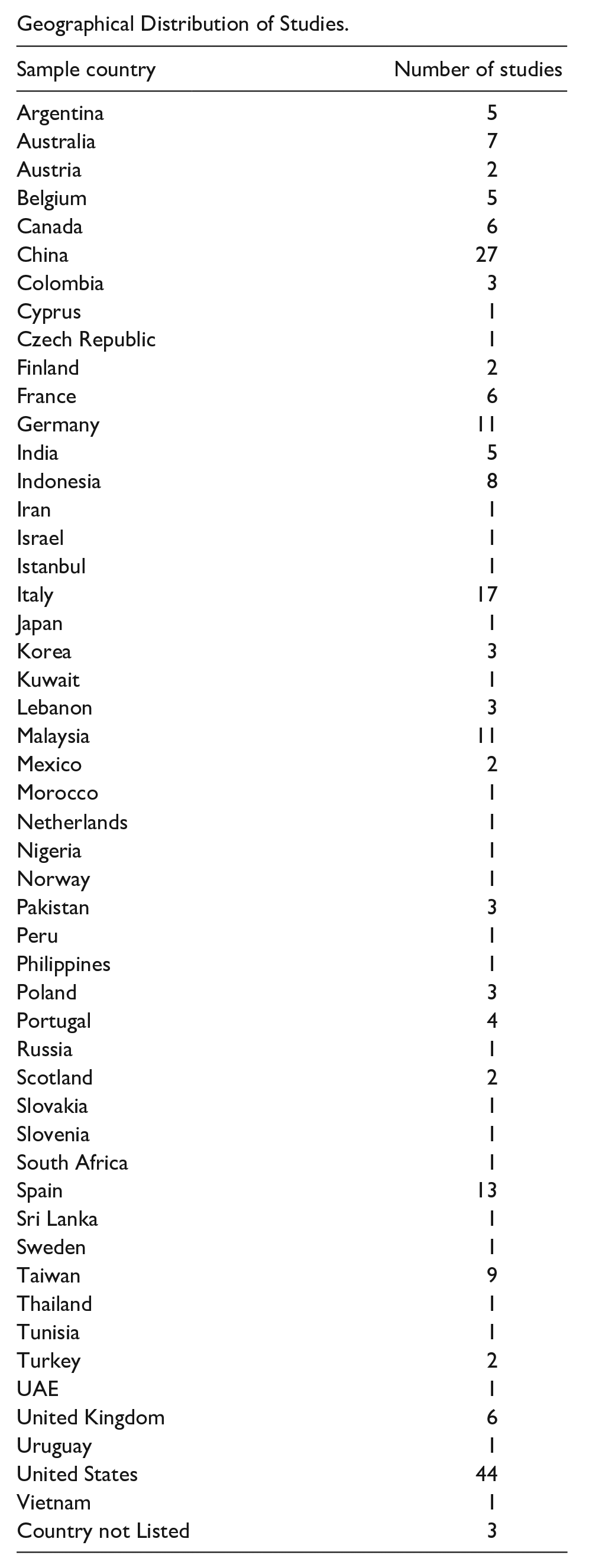
| Sample country | Number of studies |
|---|---|
| Argentina | 5 |
| Australia | 7 |
| Austria | 2 |
| Belgium | 5 |
| Canada | 6 |
| China | 27 |
| Colombia | 3 |
| Cyprus | 1 |
| Czech Republic | 1 |
| Finland | 2 |
| France | 6 |
| Germany | 11 |
| India | 5 |
| Indonesia | 8 |
| Iran | 1 |
| Israel | 1 |
| Istanbul | 1 |
| Italy | 17 |
| Japan | 1 |
| Korea | 3 |
| Kuwait | 1 |
| Lebanon | 3 |
| Malaysia | 11 |
| Mexico | 2 |
| Morocco | 1 |
| Netherlands | 1 |
| Nigeria | 1 |
| Norway | 1 |
| Pakistan | 3 |
| Peru | 1 |
| Philippines | 1 |
| Poland | 3 |
| Portugal | 4 |
| Russia | 1 |
| Scotland | 2 |
| Slovakia | 1 |
| Slovenia | 1 |
| South Africa | 1 |
| Spain | 13 |
| Sri Lanka | 1 |
| Sweden | 1 |
| Taiwan | 9 |
| Thailand | 1 |
| Tunisia | 1 |
| Turkey | 2 |
| UAE | 1 |
| United Kingdom | 6 |
| Uruguay | 1 |
| United States | 44 |
| Vietnam | 1 |
| Country not Listed | 3 |
Declaration of Conflicting Interests
The author(s) declared no potential conflicts of interest with respect to the research, authorship, and/or publication of this article.
Funding
The author(s) received no financial support for the research, authorship, and/or publication of this article.
