



Abstract
Social media has become an integral part of daily life, shaping behaviors, self-perception, and emotional well-being. However, its addictive use raises concerns about its potential to aggravate psychological challenges, particularly in the context of societal expectations of masculinity. The current report presents a study exploring the pathways through which social media addiction contributes to masculine depression, specifically examining the roles of physical appearance comparison, self-esteem, and emotional control among men. By investigating these relationships, it aims to provide insights into the psychological consequences of social media addiction for men. Structured questionnaires were administered to 849 Israeli men aged 18 and older. Employing a moderated sequential mediation model with social media addiction as the independent variable, physical appearance comparison and self-esteem as mediators, and masculine depression as the dependent variable, this study also investigates emotional control as a moderator in the associations between social media addiction, physical appearance comparison, self-esteem, and masculine depression. The analysis, conducted using model 89 PROCESS v4.2 macro, reveals that conforming to the masculine norm of emotional control intensifies men’s vulnerability to distress resulting from maladaptive behaviors such as social media addiction, which can lead to masculine depression. Furthermore, addiction to social media can trigger masculine depression via psychosocial factors such as physical appearance comparison and low self-esteem, which have yet to be explored in the context of masculine depression. These findings underscore the importance of targeted interventions that address the societal pressures of masculinity and the psychological repercussions of excessive social media use among men. They also emphasize the necessity of raising awareness about these issues among both the public and therapists.
Keywords
Introduction
The current study investigates the socio-psychological mechanisms linking social media addiction and masculine depression, a concept reflecting the unique ways men may experience and express depressive symptoms (Dognin & Chen, 2020). Social media addiction has been widely associated with adverse psychological outcomes, including body dissatisfaction and reduced self-esteem, as users are often exposed to idealized portrayals of physical appearance (Faelens et al., 2021; Huang, 2017). For men, these challenges may be further shaped by societal expectations of masculinity, particularly the norm of emotional control, which discourages the expression of vulnerability (Sileo & Kershaw, 2020). Drawing on these frameworks, this study examines how physical appearance comparison and self-esteem act as mediators in the relationship between social media addiction and masculine depression, and how emotional control moderates these pathways. By integrating these variables, the research seeks to address gaps in the literature regarding the intersection of digital behaviors, gender norms, and mental health, providing a nuanced understanding of the psychosocial factors contributing to masculine depression.
Masculine depression
Sex and gender play a significant role in affecting susceptibility to illness, as evidenced in conditions such as cardiovascular diseases. While sex primarily impacts etiopathogenesis, gender is more likely to shape disease manifestations and affect access to and the quality of healthcare (Arora et al., 2019; Den Ruijter, 2020). This interplay is also evident in mental disorders, including depression (Kang et al., 2020). Traditionally, it was widely believed that females had a twofold higher likelihood of developing depression than males (Jacobi et al., 2014). Then again, depression in men often remains concealed, although men complete suicide three to four times more frequently (Von Zimmermann et al., 2022). This phenomenon reflects what Henry Wadsworth Longfellow described in 1839: “Every man has his secret sorrows which the world knows not; and often times we call a man cold when he is only sad.” Longfellow’s observation highlights how men may suppress sadness, emotionally disconnect, and have their depressive symptoms misinterpreted as aloofness or indifference.
Research on masculinities has aimed to uncover the mechanisms by which men may conceal or suppress depression, suggesting that traditional diagnostic criteria may overlook the diverse ways in which gender shapes the expression of negative affect (Dognin & Chen, 2020; Kagan, 2023; Kestler-Peleg et al., 2024). Thus, contemporary research, employing advanced and more specific screening tools, particularly within the scope of investigations into masculine depression, has revealed a similarly elevated prevalence of depression in both genders (Martin et al., 2013; Shi et al., 2021). This suggests that men tend to experience depression in a manner that conforms to the conventional criteria set forth by the DSM-V (American Psychiatric Association, 2013). However, men frequently deny or avoid acknowledging their depression as if it clashes with their masculine identity (Shi et al., 2021).
Traditional masculine norms encompass behaviors such as the pursuit of winning and success, emotional restraint, risk-taking, heterosexual self-presentation, engagement in violence, dominance, and self-reliance (Mahalik et al., 2003). These norms also extend to substance use (Hemsing & Greaves, 2020), prioritization of work, and instances of excessive hard work (Cha & Weeden, 2014), while concurrently emphasizing the reluctance to seek help (Addis & Mahalik, 2003; Kagan et al., 2018). This has led to the emergence of the concept of masculine depression, where men manifest their depressive symptoms in a manner consistent with masculine social norms such as through externalized behaviors: anger, substance abuse, and compulsive work, in addition to internalized expressions of sadness, hopelessness, and helplessness (McDermott et al., 2022). Given the significantly elevated suicide risk among individuals with mental disorders such as depression or substance use disorders (Von Zimmermann et al., 2022), early diagnosis of these conditions in men could play a crucial role in prevention efforts.
In contemporary society, social media has become a pervasive part of daily life, shaping identities and social norms in profound ways (Watson, 2022). For men, these platforms often perpetuate idealized standards of physical appearance and emotional stoicism, which can exacerbate vulnerabilities to masculine depression (Barlett et al., 2008).
Social Media Addiction
The current research focuses on addiction to social media, as in recent decades usage of the Internet has increased exponentially across all age groups, with over four billion global users as of 2021 (Internet World Stats, 2021). Concurrently, there has been a rise in the number of individuals exhibiting problematic internet use, including social media use. In this context, social media addiction can be indicated by poor time management and loss of control over use. It can also be characterized by using social media to regulate negative moods, obsessive thinking, negative impact on social/professional life, and relapse (Stănculescu & Griffiths, 2022). Current research indicates that the prevalence of addictive internet use varies from 20.0% to 44.6% in world distinct regions (e.g., Endomba et al., 2022). These discoveries have amplified concerns regarding the potential adverse effects of problematic social media use on various mental health aspects such as anxiety, loneliness, subjective well-being, and depression (McCrae et al., 2017; Shan et al., 2021).
Importantly, only scant attention has previously been paid to social media addiction and its association with gender, particularly male. Additionally, the existing literature does not agree on the relationship between gender and problematic social media use. While some studies suggest that females are more susceptible to problematic social media use (Kircaburun & Griffiths, 2018), others have failed to establish a relationship or reported males as more vulnerable (Çam & Isbulan, 2012).
Investigation of social media addiction among first-year male university students revealed an association between online usage and depressive symptomatology (Zhang et al., 2021). Notably, this inquiry centered on the youthful male demographic and neglected to consider masculine depression. To our knowledge, the present investigation appears to be the first to tackle this issue.
Physical Appearance Comparison
The inclusion of physical appearance comparison as a factor in our research model draws on sociocultural theories of body image disturbance (Thompson et al., 1999), which hypothesized that habitual physical appearance comparisons with idealized others, such as those seen on social media, would heighten the experience of negative body image. Importantly, this upward physical appearance comparison is associated with decreased self-esteem (Schaefer & Thompson, 2014). Such upward comparisons may remind individuals of a beauty ideal that they do not meet (Watson, 2022). Empirical investigations furnish compelling and coherent corroboration for the posited influence of physical appearance comparisons on unfavorable consequences among both genders (McCreary & Saucier, 2009; Mohsenpour et al., 2023). Moreover, accumulated findings indicate that physical appearance comparisons frequently result in heightened negative affect, such as depressive symptoms (Ridolfi et al., 2011).
Self-Esteem
Self-esteem is an individual’s subjective perception of their worth, which is a relatively stable factor that can be affected by environmental stimuli (Orth & Robins, 2014). Notably, the degree to which self-esteem fluctuates in response to experiences of success or failure is as significant as the baseline level of self-esteem (Van Tuijl et al., 2018). While changes in self-esteem can occur in various everyday settings, online environments, including social media, can also trigger such fluctuations (Cingel et al., 2022). Alfasi’s (2019) research shows that browsing the Facebook news feed can lead to a lower state self-esteem and higher depression levels among participants than that of browsing non-social content Facebook pages. Moreover, it was found that the negative effect on self-esteem was mediated by physical appearance comparisons (Ozimek et al., 2022). Interestingly, some studies suggest that the impact of social media on self-esteem is more pronounced among female users than male users (Twenge & Farley, 2021). Conversely, other studies fail to reveal apparent gender differences (Saiphoo et al., 2020) or suggest distinctions based on specific usage patterns (rather than gender) when evaluating young adult and adult populations (Tibber et al., 2020).
Emotional Control
Emotional control is a facet of emotional regulation defined as the way in which an individual utilizes strategies of cognitive reappraisal and expressive suppression when experiencing difficult emotions, to inhibit their immediate emotional response (Roger & Nesshoever, 1987). Importantly, masculine gender roles require men to display emotional control and, thus, may stigmatize the expression of conventional internalizing depressive symptoms. Instead, such gender roles may promote the outward expression of externalizing symptoms such as anger and substance use (Magovcevic & Addis, 2008). Indeed, a considerable body of research has demonstrated that rigid conformity to masculine norms, including emotional control, is associated with poor mental health outcomes, including depression (see, e.g., Iwamoto et al., 2018). Within the present research context, we posit that adherence to masculine gender roles that require men to exhibit emotional control and inhibit emotional and cognitive processing renders them susceptible to internal stressors, including social media addiction, physical appearance comparison, and low self-esteem, which can detrimentally impact their mental health.
Hypotheses
H11: Emotional control will moderate the positive direct effect of social media addiction on masculine depression, such that this effect will be more pronounced at a higher level of emotional control. H12: Physical appearance comparison will mediate the association between social media addiction and masculine depression, such that social media addiction will be positively correlated with physical appearance comparison, which will in turn be positively associated with masculine depression. Also, emotional control will moderate the positive association between physical appearance comparison and masculine depression, such that this association will be more pronounced at a higher level of emotional control. H13: Self-esteem will mediate the association between social media addiction and masculine depression, such that social media addiction will be negatively correlated with self-esteem, which will in turn be negatively correlated with masculine depression. Also, emotional control will moderate the negative association between self-esteem and masculine depression, such that this association will be more pronounced at lower levels of emotional control. H14: Physical appearance comparison and self-esteem will sequentially mediate the association between social media addiction and masculine depression, such that social media addiction will be positively correlated with physical appearance comparison, which will in turn be negatively correlated with self-esteem, which will then be negatively associated with masculine depression.
Methods
Research Population and Sample
The current study involved a sample of 849 Israeli men aged 18 and older. To ensure adequate statistical power, a power analysis was conducted using G*Power software. Assuming a medium effect size (Cohen’s f2 = 0.15), an alpha level of 0.05, and a power of 0.80, the minimum sample size required to account for the model’s complexity is approximately 576 participants. In the current study, a larger sample of 849 participants was employed, yielding a statistical power of approximately 0.94, which is well above the commonly accepted threshold of 0.80 for adequate power (Cohen, 1992). The mean age of the participants was 29.49 years (SD = 11.51, range = 18–70), with a mean of 13.57 years of education (SD = 2.47). Of the sample, 51.7% were married or in a committed intimate relationship, 68.7% were employed, 15.1% were unemployed, 14.1% were in the midst of performing obligatory military service, and 2.1% were retired. Socioeconomic status was also obtained, with 5.6% of the sample reporting low to very low, 55.3% moderate, and 39.7% high to very high socioeconomic status.
Procedure
The study received ethical approval from the committee for non-clinical research in humans at the university with which the researchers are affiliated. The study used validated English-language questionnaires translated into Hebrew for Hebrew-speaking participants. To ensure translation accuracy, the back-translation method was applied. The authors first translated the questionnaires into Hebrew, and then a professional translator, fluent in both languages, translated the Hebrew version back into English. Any discrepancies between the original and back-translated versions were reviewed and resolved through discussions between the authors and the translator, focusing on ensuring both linguistic accuracy and cultural relevance. Data collection was conducted through a structured online questionnaire distributed via widely used social media platforms, including Facebook and WhatsApp. These platforms were selected due to their accessibility and ability to reach a diverse demographic across Israel, ensuring representation from various geographic and socioeconomic backgrounds. To facilitate the process, well-trained research assistants posted a flyer with an invitation to participate, which included a link to the questionnaire, in various groups on these platforms. The flyer was directed exclusively at adult men (18 and older) and was posted after obtaining approval from group administrators where feasible. The questionnaire was administered using Qualtrics, a survey software, and included preliminary screening questions. Participants who did not identify as male or who reported being under 18 years of age were automatically excluded from proceeding with the survey. Participation was entirely voluntary, and no compensation was offered to respondents. Before completing the survey, all respondents were requested to sign an informed consent form. The questionnaire included no information that could have identified the respondents.
Measurements
Social media addiction was assessed using the Bergen Social Media Addiction Scale (BSMAS) (Andreassen et al., 2016), which consists of six Likert-type items rated on a scale of 1 (very rarely) to 5 (very often). The BSMAS was developed based on the six core characteristics of addiction: salience, mood modification, tolerance, withdrawal, conflict, and relapse (Griffths, 2005). To calculate the total BSMAS score, the responses to all items were summed, with higher scores indicating higher levels of social media addiction. Cronbach’s alpha for this scale in the current study was .891.
Physical appearance comparison: A five-item physical appearance comparison scale assessed the tendency to perform personal physical appearance comparisons with others (PACS5; Thompson et al., 1991). Responses were given on a Likert-type scale, from 1 (never) to 5 (always). A total score was computed by calculating the mean score of the five items, where a higher score indicated a higher level of physical appearance comparison. Cronbach’s alpha for this scale in the current study was .741.
Self-esteem was assessed by the ten-item Rosenberg Self-Esteem Scale (RSES; Rosenberg, 1965). Respondents were asked to indicate their agreement with each item on a 4-point Likert scale ranging from 0 (strongly agree) to 3 (strongly disagree). A total score was computed by summing all items, where a higher score indicated a higher level of self-esteem. Cronbach’s alpha for this scale in the current study was .853.
Emotional control was assessed by a three-item subscale of the 30-item New Short Form of the Conformity to Masculine Norms Inventory (CMNI-30; Levant et al., 2020). Responses were given on a Likert-type scale from 0 (strongly disagree) to 6 (strongly agree). A total emotional control score was computed by calculating the mean score of the three items, where a higher score indicated a higher level of emotional control. Cronbach’s alpha for this scale in the current study was .915.
Masculine depression was assessed by the 18-item Masculine Depression Scale (Tarsuslu & Durat, 2020). Responses were given on a Likert-type scale from 1 (none or some of the time) to 4 (all of the time). The scale was composed of two subscales: internalizing symptoms and externalizing symptoms. A total masculine depression score was computed by summing the responses to all items, where a higher score indicated a higher level of masculine depression. Cronbach’s alpha for this scale in the current study was .862.
In addition, with the aim of portraying the sample`s general demographic characteristics, the respondents were asked to note their age and years of education, as well as their relationship, employment, and socioeconomic status.
Data Analysis
Means, Standard Deviations, and Pearson Correlations of the Research Variables (n = 849).
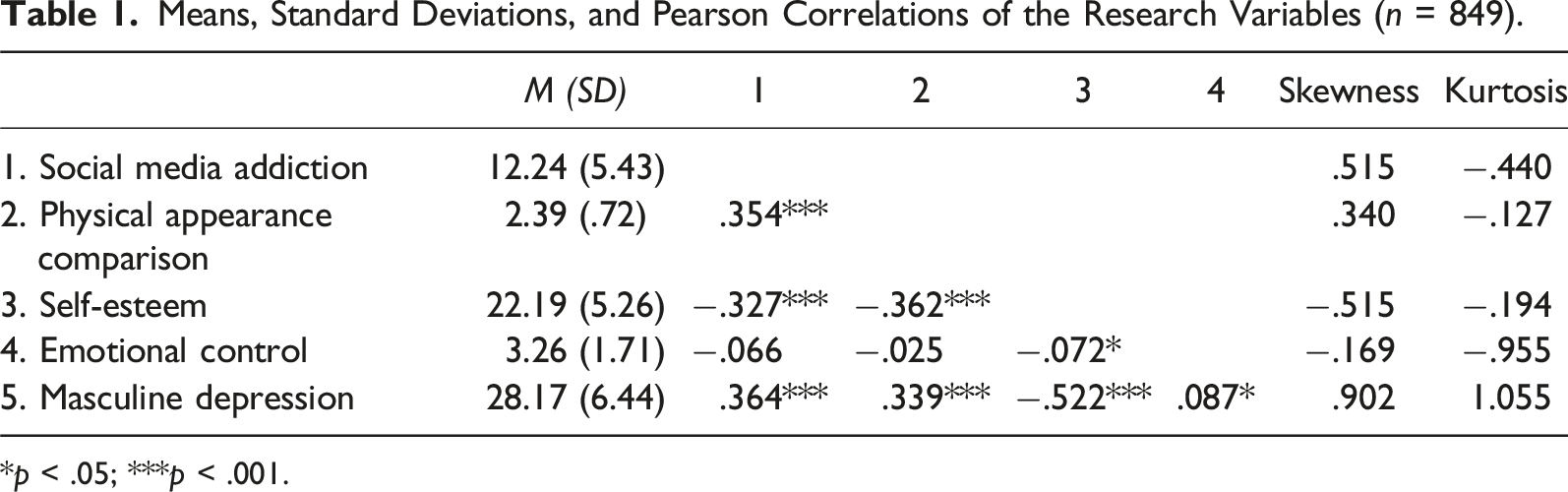
*p < .05; ***p < .001.
Moderated sequential mediation model was tested using model 89 PROCESS v4.2 macro for SPSS (Hayes, 2022), with social media addiction as the independent variable, physical appearance comparison and self-esteem as mediators, masculine depression as the dependent variable, and emotional control as a moderator in the association between social media addiction, physical appearance comparison, and self-esteem, and the dependent variable (for hypothetical model, see Figure 1). In addition to the p-value approach, we also calculated the 95% CI, based on 10,000 percentile bootstrap samples for each path in the model. The variables were first centered. Moderation was probed by estimating the conditional direct and indirect effects at one standard deviation (SD) above the mean, at the mean, and at one SD below the mean. A hypothetical research model.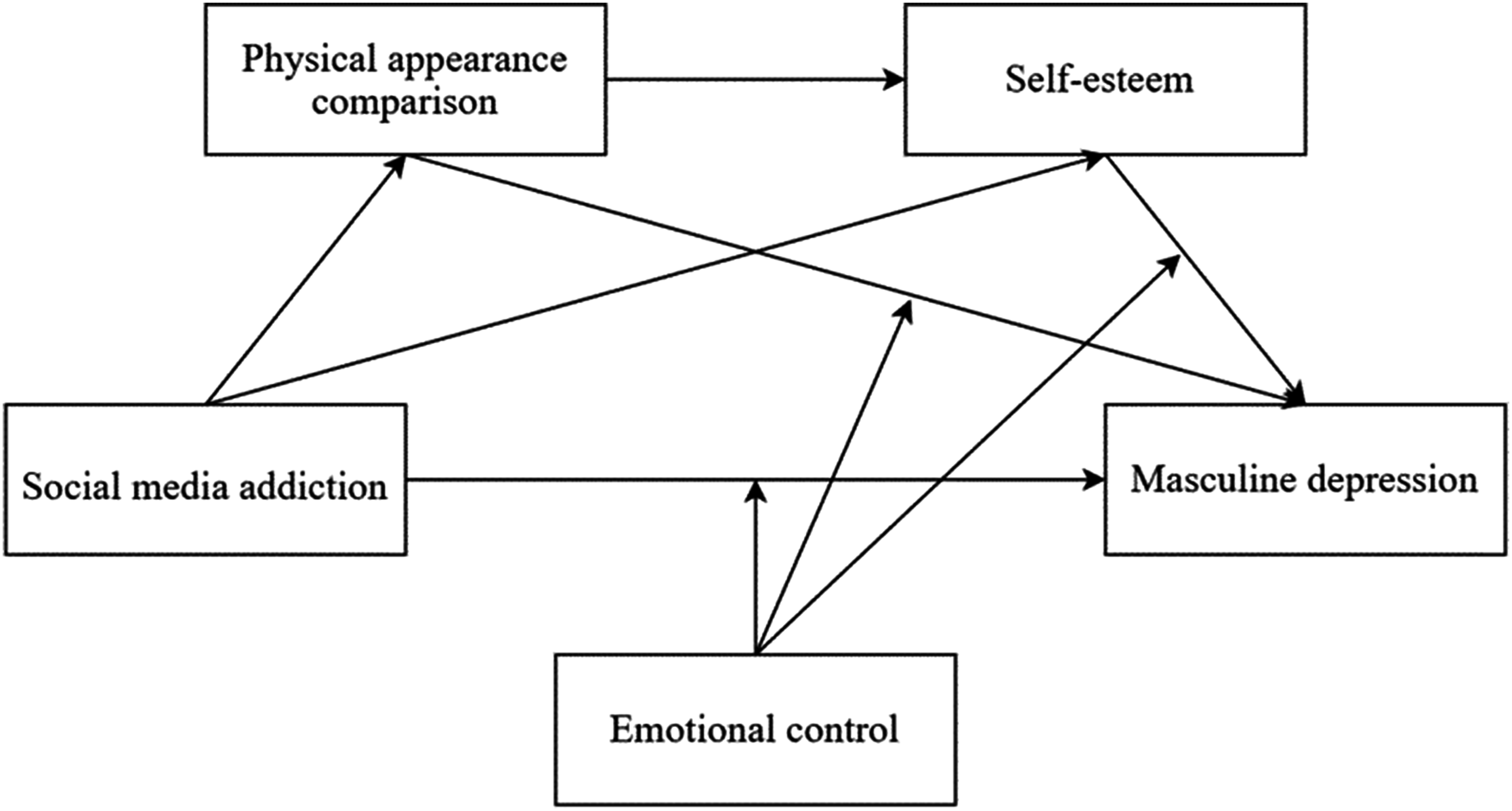
Results
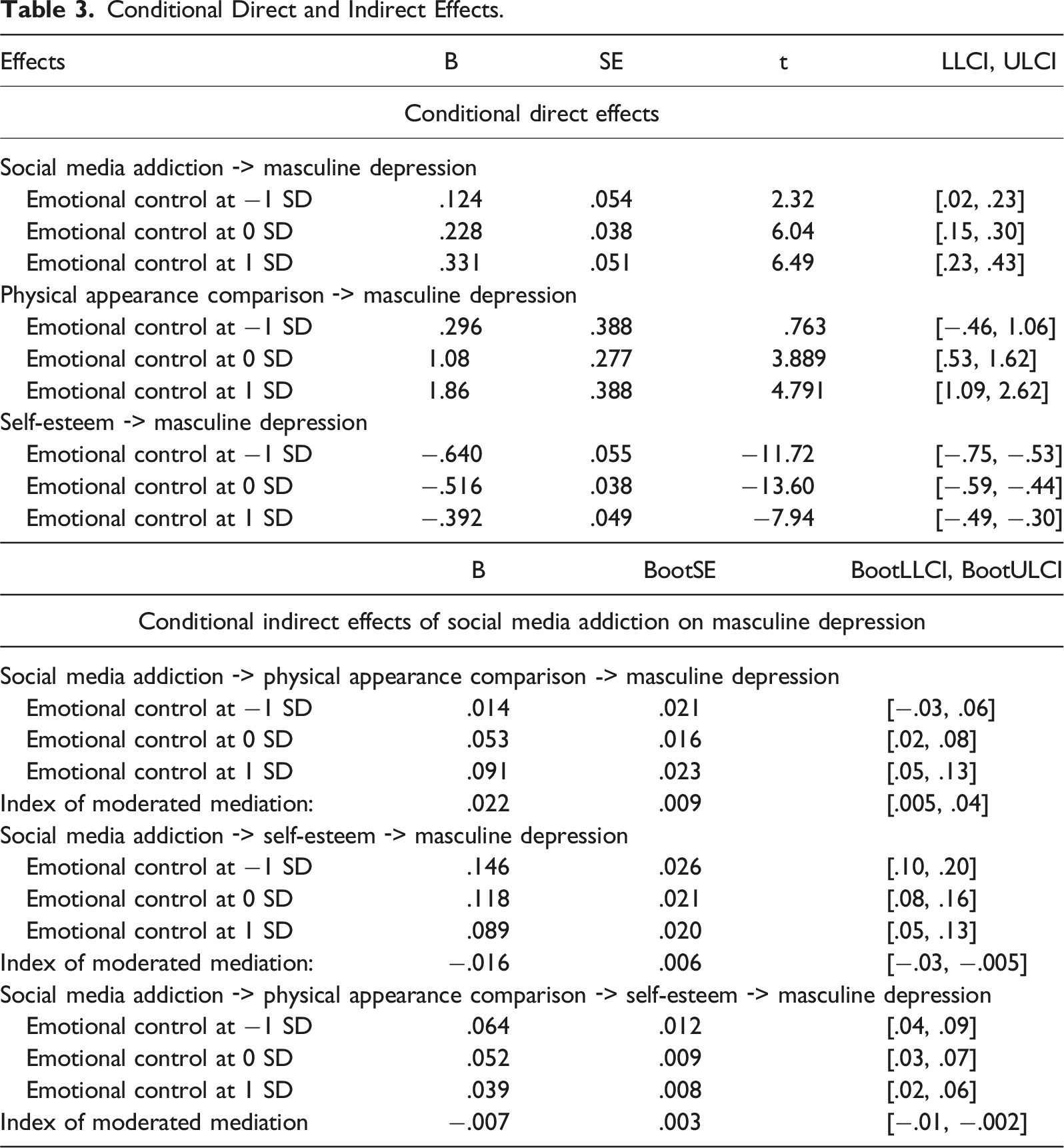
The current findings indicate that emotional control moderates the positive direct association between social media addiction and masculine depression (H11; b = .228, t = 6.04, p < .001). A breakdown of the interaction to the conditional effects of social media addiction on masculine depression at different levels of emotional control (SD below the mean, mean, and SD above the mean) demonstrates that the positive association between social media addiction and masculine depression is more pronounced at a higher level of emotional control.
Also, the results revealed that the indirect relationship between media addiction and masculine depression via physical appearance comparison was moderated by emotional control (H12; Index = .022, 95% CI [.005, .04]). Social media addiction was positively correlated with physical appearance comparison (b = .049, t = 11.01, p < .001), which in turn was found to have a positive correlation with masculine depression (b = 1.077, t = 3.89, p < .001). Emotional control moderated the effect of physical appearance comparison on masculine depression. A breakdown of the interaction to the conditional effects of physical appearance comparison on masculine depression at different levels of emotional control (SD below the mean, mean, SD above the mean) demonstrates that the positive association between physical appearance comparison and masculine depression is more pronounced at a higher level of emotional control, yet was not significant at the lower level (SD below the mean) of emotional control.
Additionally, the results revealed that the indirect relationship between media addiction and masculine depression via self-esteem was moderated by emotional control (H13; Index = −.016, 95% CI [−.03, −.005]). Social media addiction was negatively correlated with self-esteem (b = − .229, t = −6.82, p < .001), which in turn was found to have a negative correlation with masculine depression (b = −.516, t = −13.60, p < .001). Emotional control moderated the effect of self-esteem on masculine depression. A breakdown of the interaction to the conditional effects of self-esteem on masculine depression at different levels of emotional control (SD below the mean, mean, and SD above the mean) demonstrates that the negative association between self-esteem and masculine depression is more pronounced at a lower level of emotional control.
Finally, the current findings showed that physical appearance comparison and self-esteem sequentially mediated the association between social media addiction and masculine depression (H14). Social media addiction was positively correlated with physical appearance comparison (b = .049, t = 11.01, p < .001), which in turn was negatively correlated with self-esteem (b = − 2.051, t = −8. 44 p < .001), which was negatively associated with masculine depression (b = − .516, t = −13.60, p < .001). This sequential mediation was moderated by emotional control (Index = −.007, 95% CI [−.01, −.002]).
To conclude, all research hypotheses (H11–H14) were fully supported. Emotional control was found to moderate the relationship between social media addiction and masculine depression. Specifically, the positive association between social media addiction and masculine depression was more pronounced at higher levels of emotional control (H11). Social media addiction was positively linked to physical appearance comparison, which, in turn, was positively associated with masculine depression. Emotional control moderated the relationship between physical appearance comparison and masculine depression, such that this association was stronger at higher levels of emotional control and non-significant at lower levels (H12).
Additionally, social media addiction was negatively associated with self-esteem, which, in turn, was negatively associated with masculine depression. Emotional control moderated the negative relationship between self-esteem and masculine depression, such that this association was stronger at lower levels of emotional control (H13). Finally, the findings showed that physical appearance comparison and self-esteem sequentially mediated the association between social media addiction and masculine depression, such that social media addiction was positively associated with physical appearance comparison, which was negatively associated with self-esteem, and self-esteem was negatively associated with masculine depression (H14).
Regression Coefficients and Standard Errors in the Moderated Mediation Model (n = 849).
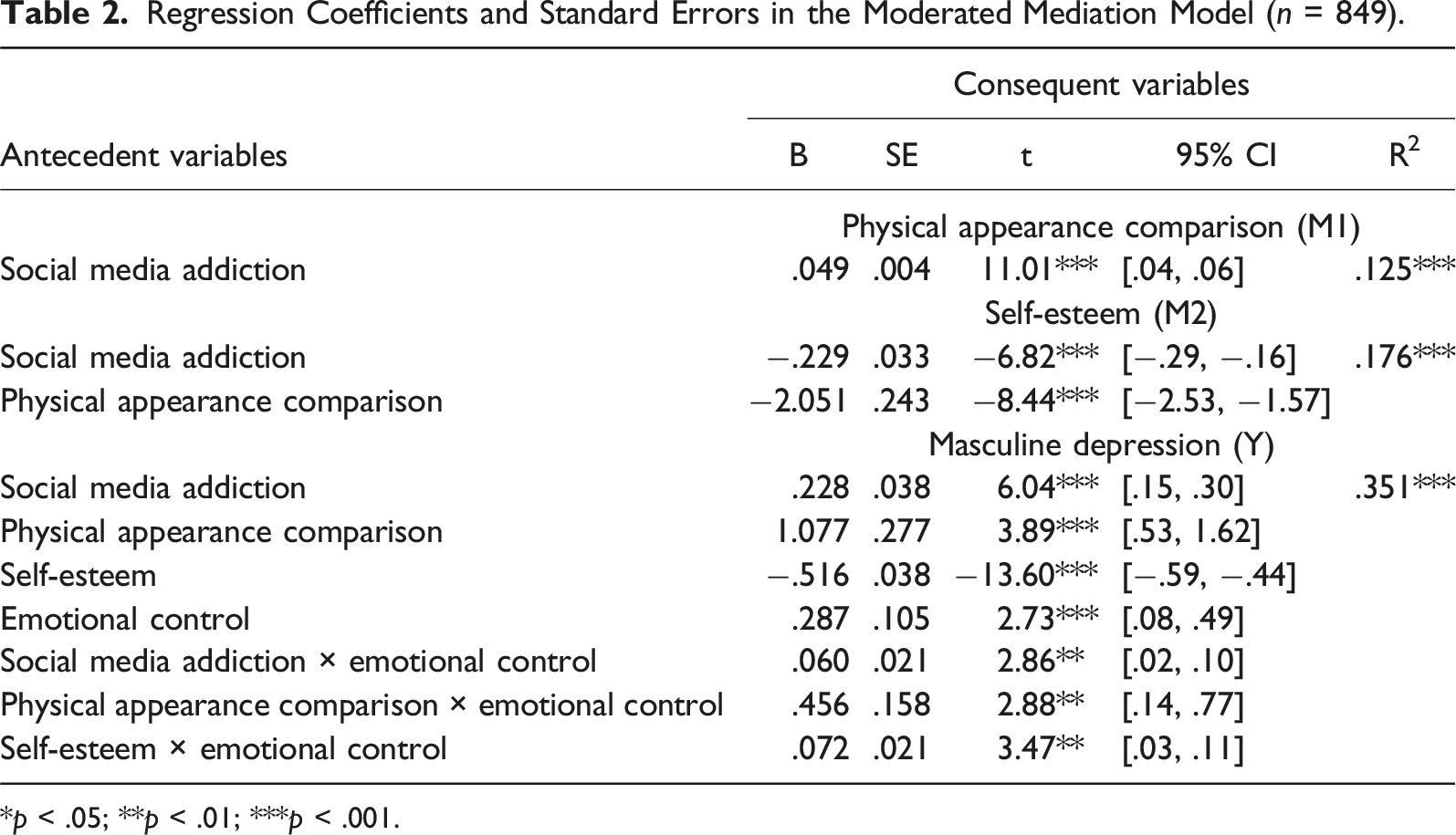
*p < .05; **p < .01; ***p < .001.
Conditional Direct and Indirect Effects.
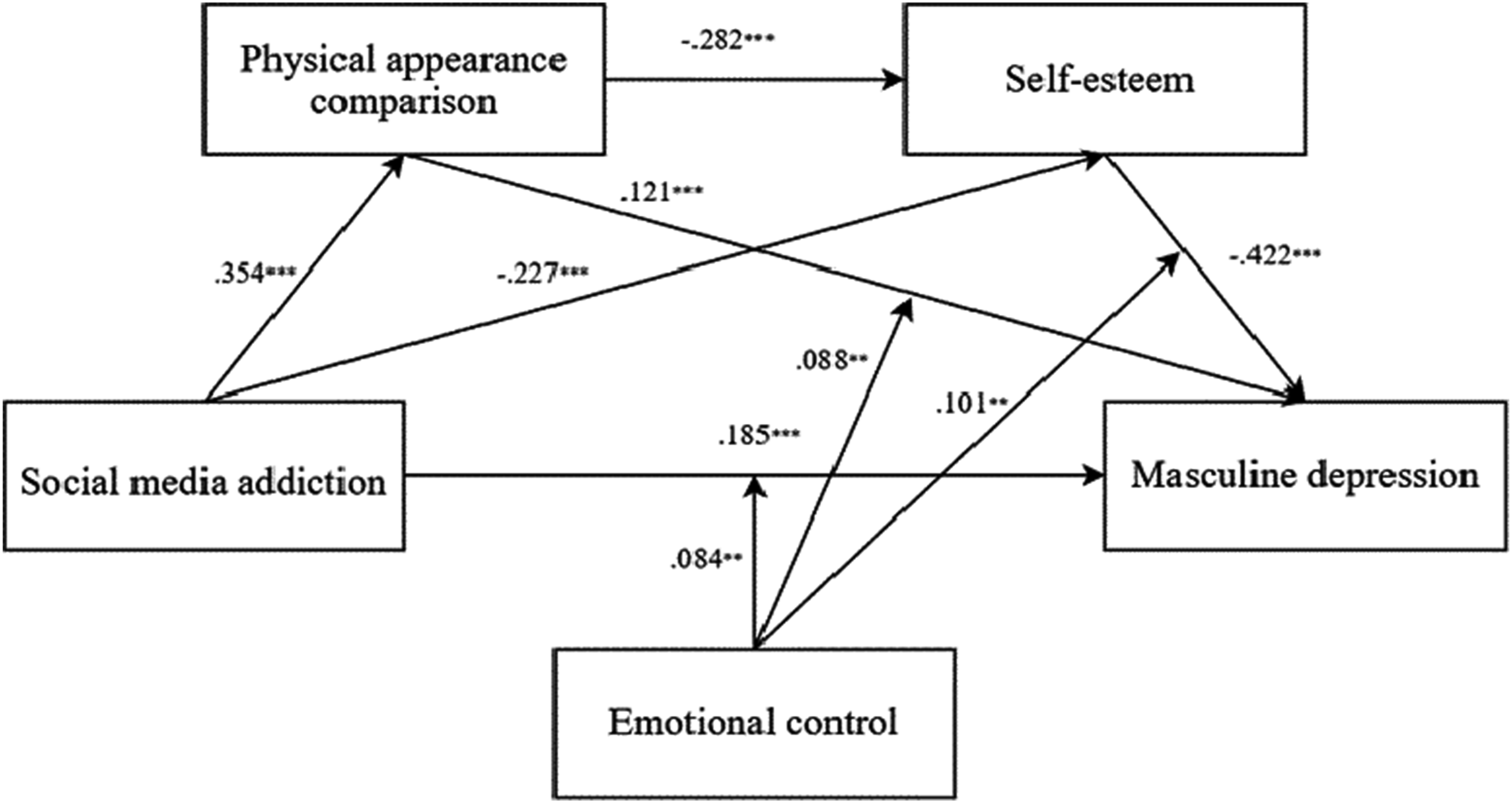
Empirical research model. Note: This model presents standardized coefficients (β).
Discussion
The current study demonstrated the significant moderating effect of emotional control in the association between all the antecedent variables included in the moderating mediation model and masculine depression. It is widely recognized that men who strictly conform to masculine norms emphasizing the significance of emotional control may tend to suppress their emotions and exhibit less propensity to employ alternative—often adaptive—coping mechanisms in response to emotional distress (Iwamoto et al., 2018). In fact, our present research findings indicate that pronounced adherence to the masculine norm of emotional control accentuates men’s susceptibility to distress stemming from maladaptive behaviors and probably other everyday behaviors as well, such as addiction to social media (McCrae et al., 2017). The implication is that they are prone to psychologically relevant challenges and, more specifically, masculine depression. Furthermore, the current research illustrates that addiction to social media can engender masculine depression through psychosocial factors such as physical appearance comparison and low self-esteem. Both latter factors are known to induce heightened adverse effects, including depressive symptoms, when co-occurring with social media addiction (Alfasi, 2019; Ridolfi et al., 2011). However, until now, these factors have not been explored in the context of masculine depression, a finding that adds to the existing knowledge base.
Recognizing the profound effect of conformity to the masculine norm of emotional control on the mental health of men who struggle with social media addiction holds clinical significance. This highlights the need for mental healthcare professionals to consider masculinity, and specifically the issue of emotional control, when treating men with social media addiction, and to be aware of its possible implications for their clients and for the intervention process. Considering adherence to male gender norms underscores the need for interventions that target obsessive emotional control and adaptive coping mechanisms among men who struggle with social media addiction and masculine depression. Moreover, efforts should be made to challenge traditional masculine norms that discourage emotional expression and encourage harmful coping behaviors. By allowing different attitudes towards emotions and coping strategies, it may be possible to reduce the prevalence of depressive symptoms and improve the well-being of men who struggle with these issues. In addition, this study emphasizes the necessity of public policy responses to combat the adverse effects of social media addiction on mental health, particularly masculine depression. It advocates for interventions aimed at raising awareness of the risks of excessive social media use and promoting healthier online behaviors, especially among men. By addressing gender-specific factors such as emotional expression and self-esteem, policymakers can develop initiatives that effectively mitigate the psychosocial contributors to masculine depression associated with social media addiction.
It is noteworthy that the current study has certain limitations that need to be considered. First, the data were collected online from a convenience sample of men in Israel and only in Hebrew. Therefore, although Israeli culture is a Westernized culture with close economic, social, and cultural contacts to Western Europe and especially to the United States (Werczberger & Huss, 2014), the generalizability of the findings may be limited to populations with similar Western characteristics and may not be representative of the general male population, particularly those who have limited access to online platforms or have low literacy levels in Hebrew. Second, the study focused on a limited number of research variables, and it is essential to expand the scope of research to include other traditional masculine norms, personality traits, and psychosocial contexts that may affect the relationship between social media addiction and masculine depression. Third, the study was conducted in a specific cultural context and the findings may not be generalizable to other cultures. However, since Israel shares similarities with developed Western countries, it may provide a useful context for further research. Therefore, future research should address these limitations to enhance the validity and generalizability of the findings.
Footnotes
Declaration of Conflicting Interests
The author(s) declared no potential conflicts of interest with respect to the research, authorship, and/or publication of this article.
Funding
The author(s) received no financial support for the research, authorship, and/or publication of this article.

Author Biographies