



Abstract
Research extensively explores how social media influences online political participation, yet there is limited focus on the cognitive factors that shape user interactions on these platforms. Moreover, most of this research centers around Western democracies, leaving a gap in understanding its applicability in more conservative, non-Western settings. This study builds upon the communication mediation model to enhance theoretical insights into social media’s role, particularly focusing on concerns about online privacy. By analyzing survey data from the United States (US), China, Singapore, Malaysia, and Vietnam, we find that the use of social media for news is positively associated with engaging in political discussions on social media (both heterogeneous/diverse and homogeneous/similar) and online political participation across all contexts. Nonetheless, except for Singapore, our observations indicate a negative relationship between privacy concerns and participation in all contexts. Further, moderated mediation analysis reveals that in Asian countries, the tendency of social media news to facilitate online political participation through political discussion is significantly reduced for those more concerned about online privacy. This pattern is consistent in the US for heterogeneous but not for homogenous discussions. The theoretical implications of the findings are discussed, including the differential findings from the US.
Keywords
With rising digital connectivity and social media penetration, many citizens worldwide consume their news via social media (Newman et al., 2018). Information is now copious because of widespread digital platforms that have given citizens a greater choice over their news diet (Martin, 2018). Studies show that the proliferation of news on social media has also facilitated greater civic and political engagement, such as online political participation (Boulianne, 2015; Skoric, Zhu, Goh, & Pang, 2016). This is because exposure to political information increases knowledge and interest in civic and political issues, which subsequently encourages participatory behaviors (Delli Carpini & Keeter, 1996; Lemert, 1984; Scheufele, 2002). Social media have also substantially reduced the costs of some civic activities (Bennett & Segerberg, 2012; Boulianne, 2015; Quintelier & Vissers, 2007; Skoric, Zhu, Goh, & Pang, 2016). For instance, joining a political group, contacting a politician, or singing a petition is just a matter of a few clicks. In short, social media have altered how politics is communicated to the public and how they interact.
Several studies have highlighted the importance of political discussion in explaining why media use facilitates political participation (Jung et al., 2011; Lee, 2012; Mcleod et al., 1999). More specifically, it is argued that communicative processes with both politically homogenous and heterogeneous groups facilitate political participation (Eveland & Hively, 2009; Lee et al., 2015; Yoo & Gil de Zúñiga, 2019). These findings are not surprising, considering decades of research have evidenced and established the critical role of political discussion in this process—a phenomenon theorized as the communication mediation model (CMM) (Shah et al., 2007, 2017). Many democratic theorists state that interpersonal conversations on politics as a result of news use foster mutual understanding, encourage reflection on pressing societal issues, and increase information about the call for mobilization, among many other democratic benefits of political discussions (Mutz, 2006; Sotirovic & McLeod, 2001; Valenzuela et al., 2011). Delli Carpini et al. (2004) argue that political discussion offers “the opportunity for individuals to develop and express views, learn the positions of others, identify shared concerns and preferences, and understand and reach judgments about matters of public concern” (p. 319). In short, the CMM suggests that frequent news use leads to more political participation as a result of political discussion. Thus, the critical supplementary role of political discussion in the news-participation mechanism is central to CMM scholarship.
While numerous studies have also applied CMM to the social media environment (e.g., Borah et al., 2021; Gil de Zúñiga et al., 2019), much of the attention has been on advanced Western democracies with relatively free public social media spheres. Nevertheless, how these relations would play out in more conservative non-Western societies with restricted internet and media freedom remains comparatively less known. Furthermore, although several studies suggest that social media news use facilitates online participatory behaviors, there also needs to be a focus on CMM from a differential gain perspective. More specifically, it remains to be explored whether individual-level factors germane to certain societies (e.g., non-Western societies) moderate the relationships between social media news use, political discussion, and online political participation.
Realizing these existing gaps in the literature, we adopt a cross-cultural comparative approach to CMM (social media news use—heterogeneous and homogeneous political discussion—online political participation) in the context of four Asian countries, namely, China, Singapore, Malaysia, and Vietnam, and compare the findings to the United States (US). Next, we investigate the effect of privacy concerns on the CMM relationships, especially by examining whether individuals’ online privacy concerns disrupt the positive impact of social media news use on online political participation through two types of political discussions. According to some, the four Asian countries can be characterized as rigid societies with restricted press freedom compared to more frequently investigated liberal Western democracies (e.g., the US) (see Freedom House rankings). Moreover, they can be described as societies that are influenced by Confucianism in the socio-political lives of citizens (Dalton & Ong, 2005; Park & Shin, 2006). Hence, against the well-established CMM, it is timely to explore the role of individuals’ cognitive dispositions central to user engagements on social media, such as online privacy concerns (Hoffmann & Lutz, 2019; Stoycheff, 2016), in the contexts of societies with shared cultural backgrounds, such as Confucianism. At the same time, including the US also offers a Western comparative perspective.
Our study contributes to prior research on the classic CMM scholarship (e.g., Borah et al., 2021; Gil de Zúñiga et al., 2019; Shah et al., 2005, 2007, 2017) in two key ways. First, we test the generalizability of the theorized model across four less free (see Freedom House rankings) and Confucian societies while comparing the findings to the US. Second, focusing on how individuals’ online privacy concerns conditionally shape (or deter) the effect of social media news use on online political participation via political discussion allows us to draw nuanced cross-comparative insights into the participatory benefits offered by social media platforms.
In the following sections, we briefly present the study background, then we discuss the relationships between social media news use, political discussion on social media (with both homogeneous and heterogeneous networks), and online political participation against classic CMM. Next, we review the literature on online privacy concerns, theorize the potential moderating role of online privacy concerns in influencing the CMM, and propose our research question. Then, we present the method, data analysis, and results, respectively. Finally, we discuss our findings with possible limitations and recommendations for future studies.
Study Background
According to the Economist Intelligence Unit (EIU Report, 2022), China and Vietnam are authoritarian political systems with a democracy index of 1.94 and 2.73, respectively. The US, Malaysia, and Singapore have flawed democratic systems, with a democracy index of 7.85, 7.30, and 6.22, respectively. Regarding internet freedom, China ranks lowest (i.e., a score of ten and not free status), and Vietnam ranks fifth (i.e., a score of 22 and not free status) in the list of 70 countries. Singapore (a score of 54) and Malaysia (a score of 58) are partly free, whereas the US has the highest score of 76 compared to other contexts under study (Countries, 2022). The internet scores reflect the degree to which obstacles to internet access, limits on internet content to its users, and violations of internet user rights exist in different countries (Countries, 2022). Several studies have reported the role of country-level factors, such as freedom of the press and expression, in hampering the effect of social media news use on political engagement (e.g., Borah et al., 2021; Gil de Zúñiga et al., 2019). Specifically, scholars have theorized that the significant restrictions on the freedom of expression and the press in Asian countries, such as China, Singapore, and Malaysia, influence their citizens’ social media use and its political outcomes (Chan et al., 2018; Skoric, Zhu, & Pang, 2016).
Furthermore, the four Asian countries under study can be described as societies influenced by Confucianism, which places a great emphasis on social etiquette, social duty, collective welfare, respect for authority, and other moral philosophies (Dalton & Ong, 2005; Park & Shin, 2006; Zakaria & Yew, 1994). These societies are also known for their loyalty to social harmony and commitment to cultivating virtue and morality. This moral tradition that qualitatively focuses more on social obligations and collective good is distinct (Park & Shin, 2006). In contrast, Western societies emphasize individual rights and autonomy, which are consistent with the competitive nature of democracy (Dalton & Ong, 2005). Nevertheless, for example, it is essential to note that although Singapore and Malaysia are described as Confucius societies by some prior studies (e.g., Chan et al., 2018; Kuo & Sun, 2023), Singapore is an ethnically and religiously highly diverse nation, while the large majority of Malaysians practice Islam. It suggests that while Confucious societies share cultural similarities, they differ in many aspects. Therefore, the interplay of how Confucianism, ethnic and religious distribution may influence social media use and political engagement in Singapore and Malaysia should also be noted (Chan et al., 2018; Chang, 2020; Kuo & Sun, 2023).
In sum, in less free and Confucian countries, the political as well as cultural climate may affect how social media is used and its outcomes, including the form and intensity (Chan et al., 2018; Skoric, Zhu, & Pang, 2016). Whereas social media users in liberal Western democracies (e.g., the US) are likely to enjoy greater online freedom of expression because of constitutional and institutional support/protection for overall political expression (e.g., Theil, 2022). However, despite the increasing importance of social media in facilitating participatory politics, there has been limited attention to systematic cross-national empirical research on the CMM and factors that could condition this framework. Much research has shown that social media use facilitates political engagement (Boulianne, 2015, 2017; Skoric, Zhu, Goh, & Pang, 2016), even in Confucian societies (Skoric, Zhu, & Pang, 2016). However, the influence of cognitive factors that could hinder social media’s impact in less liberal political environments, especially in contexts with distinct cultural heritages like those in Asian countries with Confucian traditions (Liang & Lu, 2010; Mou et al., 2011), has been minimally explored, especially when contrasted with studies focused on Western liberal democracies. Therefore, to fill the gap in the literature, we test the CMM and the conditioning role of online privacy concerns in the context of four Asian countries and compare them to the US.
Social Media News Use and Online Political Participation
The effect of news consumption on political participation has long been acknowledged (Delli Carpini & Keeter, 1996; Lemert, 1984; Scheufele, 2002). News consumption online promotes political participation through similar mechanisms as observed in the offline environment—by developing political interest, exposing individuals to mobilizing information (Lemert, 1984), and advancing political knowledge (Delli Carpini & Keeter, 1996). Social media, in particular, has developed into a resourceful medium of news about politics and public affairs for the citizenry (Martin, 2018; Newman et al., 2018). For instance, there are many ways to get news on social media, such as from connected friends, journalists, and news outlets on the networks (Weeks & Holbert, 2013). Moreover, the accessibility of social media significantly lowers the costs of political information engagement, facilitating the development of informed citizens and encouraging participatory behaviors (e.g., Bennett & Segerberg, 2012; Quintelier & Vissers, 2007).
The extant scholarship demonstrates that social media news use is positively associated with online political participation (Boulianne, 2015; Boulianne & Theocharis, 2020; Gil de Zúñiga et al., 2012; Skoric, Zhu, Goh, & Pang, 2016; Strömbäck et al., 2017). More specifically, in a meta-analysis, Boulianne (2017) argues that the effect of informational use of social media is more likely to be a stronger predictor of political participation in political systems without a free press than in political systems with a free press. This may be because, in the latter case, by supplementing social media use, citizens also get informed about politics and public affairs via traditional news media outlets that encourage political participation. In sum, grounded in a wealth of theoretical and empirical foundations, most of the literature shows that the relationship between social media news use and online political participation is positive. We expect the same to play out in the contexts investigated here. We thus propose the following confirmatory hypothesis:
H1: Social media news use will be positively associated with online political participation.
Political Discussion: Mediating Role of Heterogeneous and Homogeneous Political Discussion
Political discussion is understood as “the soul of democracy” (Kim et al., 1999, p. 362). The importance of citizens’ political discussion in the political process has been widely demonstrated (De Tocqueville, 1863; Yoo & Gil de Zúñiga, 2019). Today, social media is a notable channel for learning and discussing politics (Bode, 2016). For instance, news exposure on social media offers opportunities for political discussion because users can spontaneously give feedback and exchange thoughts about the news they get exposed to (Bae et al., 2013).
With social media applications installed on smartphones, citizens could overcome the limitations of time and space associated with offline political discussion (Yoo & Gil de Zúñiga, 2019) and engage in various political conversations on social media asynchronously or in real-time without being confined by physical limits (Camaj, 2021; Wells et al., 2016). The convenience of online political discussion significantly impacts how people react to the news on social media, including political discussion with those who share similar and opposing views and opinions. Furthermore, individuals who participate in political discussions online are also more likely to participate in political actions online or offline (Shah et al., 2005; Yoo & Gil de Zúñiga, 2019). Several prior studies have evidenced the role of political discussion in mediating the effect of news use on political participation (Shah et al., 2005, 2007, 2017). As mentioned before, this phenomenon is theorized as the CMM in the communication literature, strongly arguing the role of political discussion as a critical mediator between news use and participatory behaviors (Shah et al., 2005, 2007, 2017).
Despite the prevalence of news consumption and political conversation, the relationship between the two and political participation is not always simple (see Yoo & Gil de Zúñiga, 2019). We distinguish between heterogeneous and homogeneous political discussions using a parallel mediation approach to understand this connection better. Heterogeneous political discussions occur when individuals engage in political conversations with opposing political views (Klofstad et al., 2012; Yoo & Gil de Zúñiga, 2019). Conversely, homogeneous ones occur when individuals talk with those with similar political views (Mutz, 2006; Yoo & Gil de Zúñiga, 2019). Some studies reported that heterogeneous political discussion encourages participation because it exposes discussants to multiple points of view, helps reflection and perspective-taking through which people can learn about different arguments and ultimately engage in political activities, such as voting (Lee et al., 2013; Scheufele et al., 2004; Sokhey & McClurg, 2012). For instance, in a cross-cultural study, Chan et al. (2018) found that disagreement during political discussions on social media increases online political participation in China, Hong Kong, and Taiwan. It is also worth mentioning, however, that several studies have shown that political disagreement, which is characteristic of heterogeneous political discussion, hinders participation (e.g., Huckfeldt et al., 2004; Jang, 2009; Mutz, 2006) by increasing ambivalence (e.g., Priester & Petty, 2001; Visser & Mirabile, 2004).
On the other hand, other scholars reported that harmony in one’s political talks—homogeneous discussion—also encourages political participation. For example, Mutz (2006) contended that “the best social environment for cultivating political activism is one in which people are surrounded by those who agree with them, people who reinforce the sense that their own political views are the only right and proper way to proceed” (p. 3). Additionally, political dialogue among like-minded individuals inspires them to come together to find common causes and fight for social issues. Mutz (2006) argues that heterogeneous and homogeneous political conversations are associated with deliberative and participatory democracy. For example, political talks with people with different views and values encourage citizens from diverse backgrounds to agree to disagree, ideally focusing on specific problems.
Nevertheless, it is essential to note that individuals with whom one has political agreements or disagreements may belong to one’s strong or weak tie networks (Valenzuela et al., 2018). It indicates that the heterogeneous and homogeneous political discussion networks do not certainly correlate with the strength of one’s social network (or interpersonal) ties. Moreover, heterogeneity in people’s political discussion network is not necessarily limited to how they see their discussants as having different perspectives than their own but potentially extends to partisanship—political penetration (e.g., Klofstad et al., 2012; Lee et al., 2013). Similarly, heterogeneity in political discussion networks also refers to political discussion with people from different sexual, racial, ethnic, and socio-economic backgrounds (Scheufele et al., 2004). For this study, we refer to heterogeneous and homogeneous political discussion as the degree to which people engage in conversation about politics or public affairs with people they agree and disagree with, respectively.
Social media platforms allow for both homogeneous and heterogeneous political discussions, especially on social networking sites like Facebook and Twitter, where people can enjoy large and diverse interpersonal social networks. Conversing with weak ties is much easier on social media, which does not enable users to transcend strong-tie relationships but potentially exposes them to different political views (Yoo & Gil de Zúñiga, 2019). Thus, social media platforms are also an excellent venue for political conversation with those who hold like-minded and differing views. This study treats heterogeneous and homogeneous political discussions on social media separately as two independent mediators fostering online political participation. Drawing on the CMM framework, a large body of literature has explored the participatory implications of exposure to news through political discussion (Eveland & Hively, 2009; Lee et al., 2015). However, less attention has been given to exploring the similar parallel mediating role of online heterogeneous and homogeneous political discussions (see Yoo & Gil de Zúñiga, 2019). Following the above discussion and the empirical evidence on the positive roles of heterogeneous and homogeneous political discussions, it is plausible to suggest that the positive relationship between social media use for news consumption and online participatory behaviors will be independently mediated by heterogeneous and homogeneous political discussions. Therefore, we postulate the following hypothesis.
H2: Heterogeneous (a) and homogeneous (b) political discussions will positively mediate the relationship between social media news and online political participation.
Cognitive Dispositions: the Moderating Role of Online Privacy Concerns
Online political participation is becoming increasingly important in our digital age. However, in many political discussion and participation platforms, structural factors or social media’s participatory affordances may also inhibit and discourage users from engaging in online political activities. We refer to online privacy concerns as internet users’ understanding of the adverse effects of disclosing personal information on social media, such as those involving security-related details (Baruh et al., 2017; Cho et al., 2010; Zhou & Li, 2014).
This issue has received limited attention, as most studies are conducted in liberal Western democracies where concerns about online privacy are likely less prevalent. Thus, it is critical to understand how online privacy concerns can impact online political participation across both Western and non-Western societies. For example, some cross-national studies have examined the role of press censorship in political participation (e.g., Borah et al., 2021; Gil de Zúñiga et al., 2019). A few studies have also focused on how governments use social media for propaganda and gatekeeping (Gunitsky, 2015; Kyriakopoulou, 2011; Qin et al., 2017). Social media platforms offer benefits beyond propaganda, as some regimes apply them to surveil and censor their citizens (Deibert, 2003; Stoycheff, 2016). This situation is particularly concerning in less free countries, where state surveillance may hamper citizens’ online expression out of fear of imprisonment or other legal charges (Countries, 2022; Mak et al., 2022; Oz & Yanik, 2022). Ultimately, this fear can hinder the potential of social media for digital democracy. Thus, understanding the impact of online privacy concerns on online political participation in less researched contexts is essential to advancing our knowledge of digital democracy. In other words, online privacy concerns are detrimental to the promises of digital democracy. For example, Stoycheff (2016) found that awareness about the state’s online surveillance practices discourages Americans from expressing online political opinions.
Against this setting, a few cross-national studies based on the CMM framework have examined the country-level factors in investigating the role of political culture and structural conditions in hampering political participation (see Borah et al., 2021; Gil de Zúñiga et al., 2019). However, these studies have some limitations. First, only country-level variables are examined (computed through external data). Still, individual-level factors that could strengthen or weaken the effect of news use on political participation have not yet been considered. Second, these studies did not investigate online political participation as an outcome variable, which is theoretically more likely to be associated with one’s perceived online privacy concerns.
The focus on online political participation is critical because when people leave a trace in cyberspace (e.g., by liking, commenting, and posting on social media), the shared content becomes available to others and sometimes reaches a larger audience than expected. While this is the unique feature of digital platforms, including the internet and social media, the potential downside is that these online traces can enable others, including state actors, to access and, more importantly, exploit a user’s private information (e.g., Boulianne, 2017). Therefore, online political participation and discussion are unique compared to offline involvement in the context of online privacy concerns. In sum, social media use for politics allows governments to monitor their populace, the cost of which may be high for average citizens (Boulianne, 2017). Thus, online privacy concerns of individuals are likely to restrict the scope of social media news consumption and discussion on online political participation in the countries under study, namely, the US, China, Singapore, Malaysia, and Vietnam.
Therefore, to expand the framework, we argue that it is essential to consider the effect of individuals’ online privacy concerns when examining the relationship between social media use and online political participation through political discussions. More specifically, this study attempts to contribute to the scholarship by highlighting that the seemingly positive relationship between social media news use online political participation may be hampered by user concerns about online privacy. Therefore, even though we expect the above-discussed findings, given the lack of attention to these relationships in the literature, we propose a research question instead of a hypothesis:
R1: How do online privacy concerns conditionally influence the positive mediated relationship between social media news use and online political participation via (a) heterogeneous and (b) homogeneous political discussions? The conceptual model is illustrated in Figure 1.
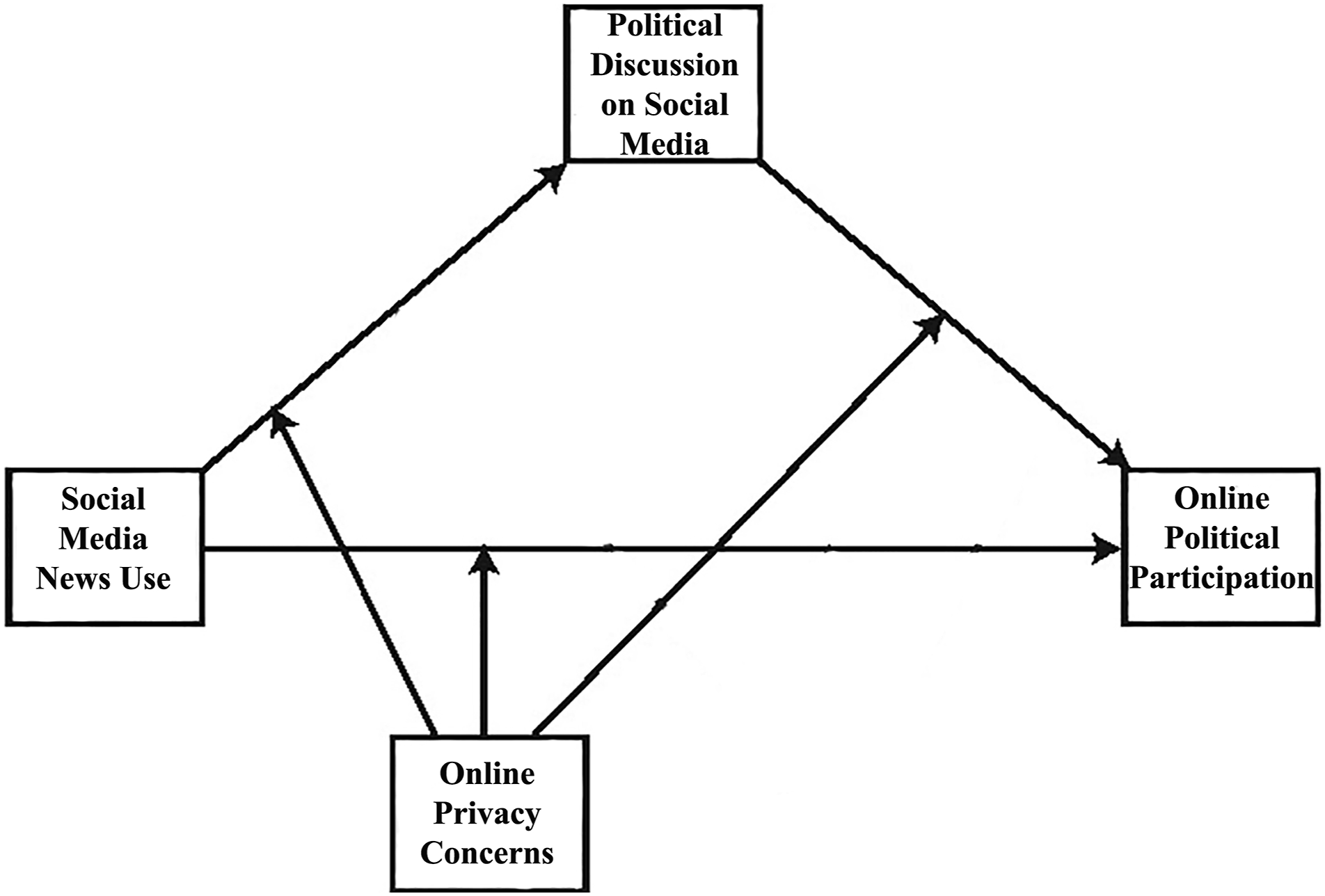
Illustration of the conceptual model.
Method
Sample
We employed Qualtrics to conduct a survey in the US (n = 1010), China (n = 1010), Singapore (n = 1008), Malaysia (n = 1002), and Vietnam (n = 1010) in June 2022. Qualtrics maintains an online panel of respondents in these countries and is frequently employed in survey studies. The surveys were translated into regional languages, and the sample characteristics were matched to population parameters of age and gender quotas. Such a quota sampling approach is commonly adopted to increase the generalizability of the findings (Min, 2021; Nelson et al., 2021). The overall response rate was 68%. The study was approved by the Institutional Review Board.
Measures
Online Political Participation
We used a previously validated scale to measure online political participation (Gil de Zúñiga et al., 2017; Jung et al., 2011; Valenzuela et al., 2011). Six items were asked on a 5-point scale (1 = never to 5 = always) to measure participatory behavior in all countries. The items include how often respondents engaged in (a) participating in any online demonstrations, (b) donating money online to a campaign or political cause, (c) signing or sharing an online petition, (d) posting about politics, public affairs, or social issues on your blog or social media page, (e) joining a social media group devoted to social or political issues, (f) contacting a politician or public official online. The responses to all items were averaged to create a scale of online political participation.
Social Media News Use
We used a previously validated scale to measure social media news use (Ahmed et al., 2022; Wang et al., 2023). We asked respondents to indicate how often (1 = never to 5 = always) they use social media sites concerning political news: (a) post in their timeline, (b) comment on posts, (c) share posts, (d) read their news feed, (e) read the timelines of friends. The responses to all the items were averaged to create an index of social media news use.
Homogeneous and Heterogeneous Political Discussion
We asked respondents on a 5-point scale (1 = never to 5 = daily) how often they talk about politics or public affairs with the following groups of people on social media sites such as Facebook, Twitter, Instagram, YouTube, etc.? (a) People who agree with my opinion, (b) people who are similar to my political views, (c) support a politician or political party I also support, (d) people who disagree with my opinion, (e) people who are dissimilar to my political views, (f) support a politician or political party I oppose. The first three measured homogeneous political discussion, and the last three measured heterogeneous political discussion. These measures have been validated in previous literature (Yoo & Gil de Zúñiga, 2019).
Online Privacy Concerns
Using an existing measure of privacy concerns (Wu et al., 2012), we asked respondents on a 7-point scale (1 = strongly disagree to 7 = strongly agree) to what extent they agree or disagree with the following three items, including (a) online tech companies (e.g., Facebook, Google, Twitter, etc.) are obligated to protect the privacy of users, (b) online tech companies (e.g., Facebook, Google, Twitter, etc.) should not reveal personal information of users to a third party, (c) online tech companies (e.g., Facebook, Google, Twitter, etc.) should be transparent in revealing privacy policy to users.
Motivational Controls
Mean, Standard Deviation of all Variables Under Study.
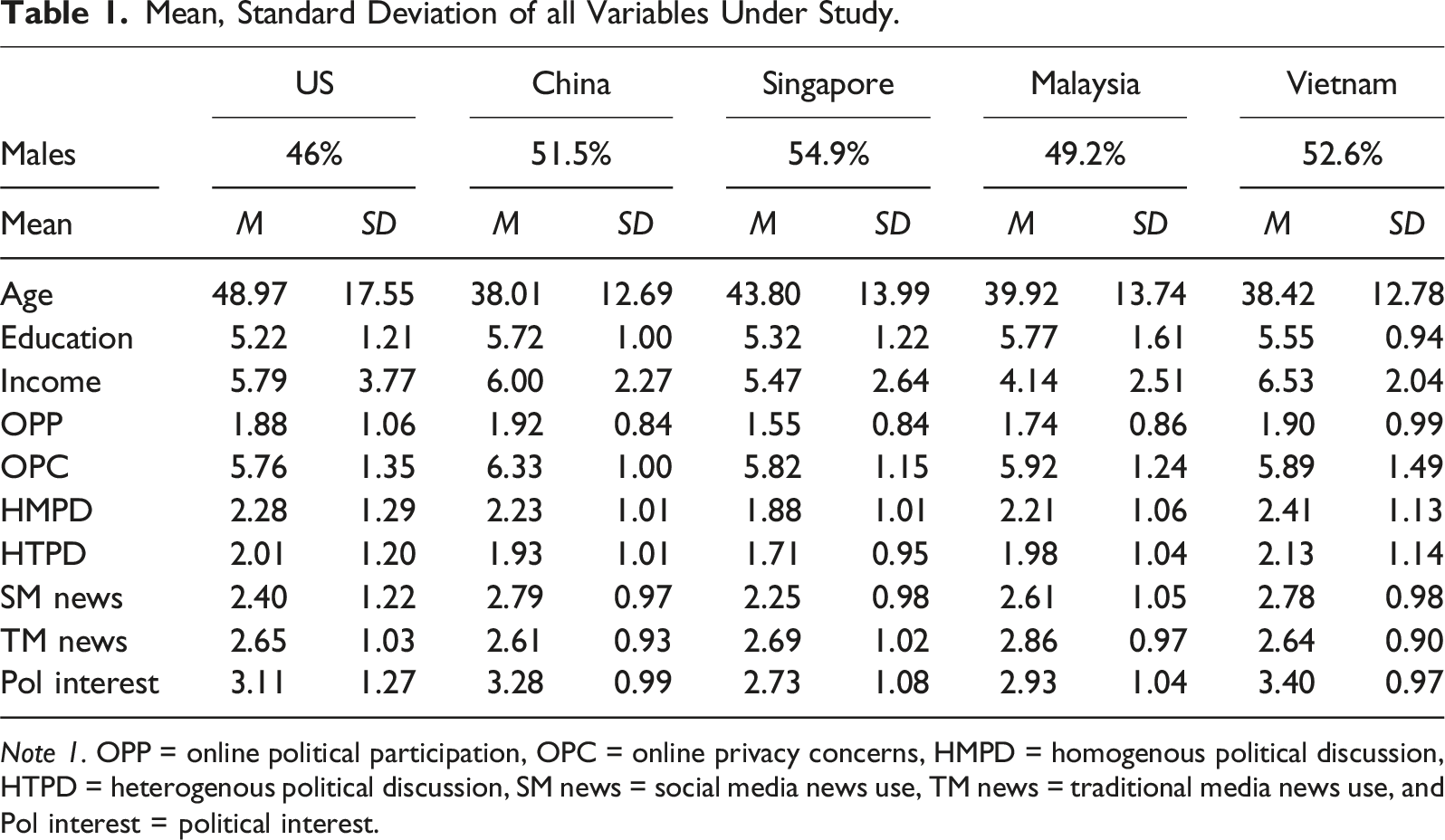
Note 1. OPP = online political participation, OPC = online privacy concerns, HMPD = homogenous political discussion, HTPD = heterogenous political discussion, SM news = social media news use, TM news = traditional media news use, and Pol interest = political interest.
Cronbach’s Alpha of all Variables Under Study.
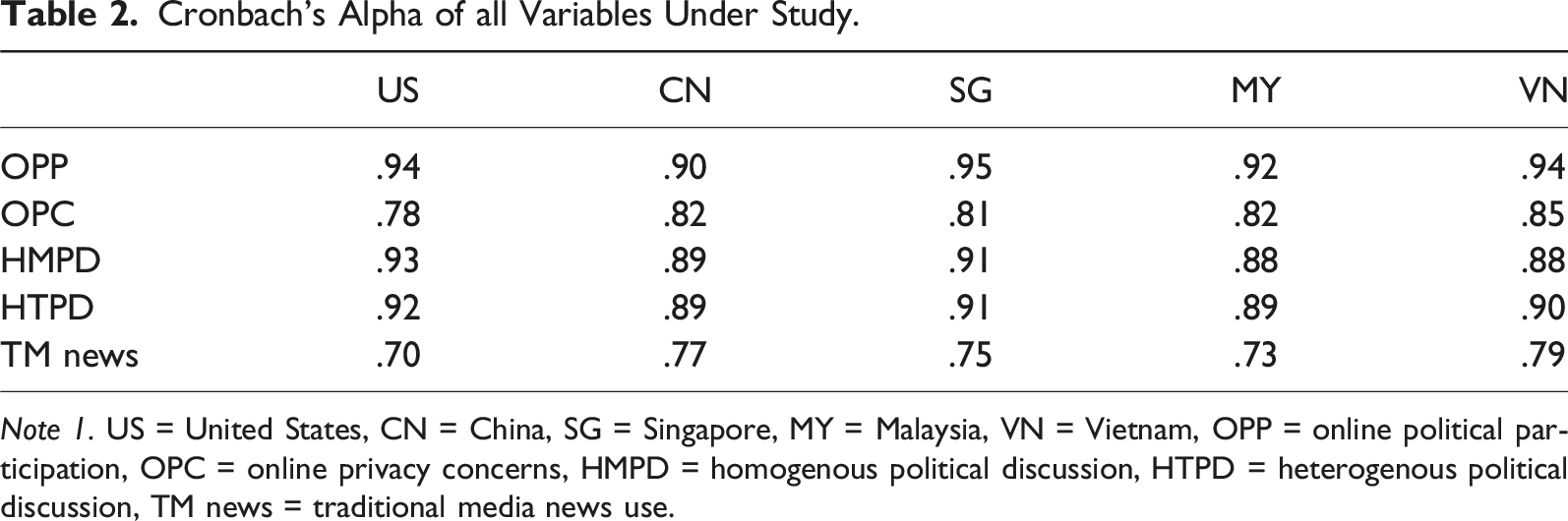
Note 1. US = United States, CN = China, SG = Singapore, MY = Malaysia, VN = Vietnam, OPP = online political participation, OPC = online privacy concerns, HMPD = homogenous political discussion, HTPD = heterogenous political discussion, TM news = traditional media news use.
Analysis
We use the PROCESS macro (Hayes, 2017) to test for mediation and moderated mediation models. PROCESS is particularly well-suited for our analysis due to its capability to perform conditional process analyses, which enables us to examine variations in the strength and direction of mediation effects across different levels of a moderator, shedding light on the conditions under which specific effects occur (Hayes, 2017). Additionally, PROCESS supports the incorporation of multiple mediators and moderators within a single model. This functionality is essential for exploring intricate theoretical models that propose various pathways and conditions, as is relevant to our study.
Results
Predicting Online Political Participation for all Countries.
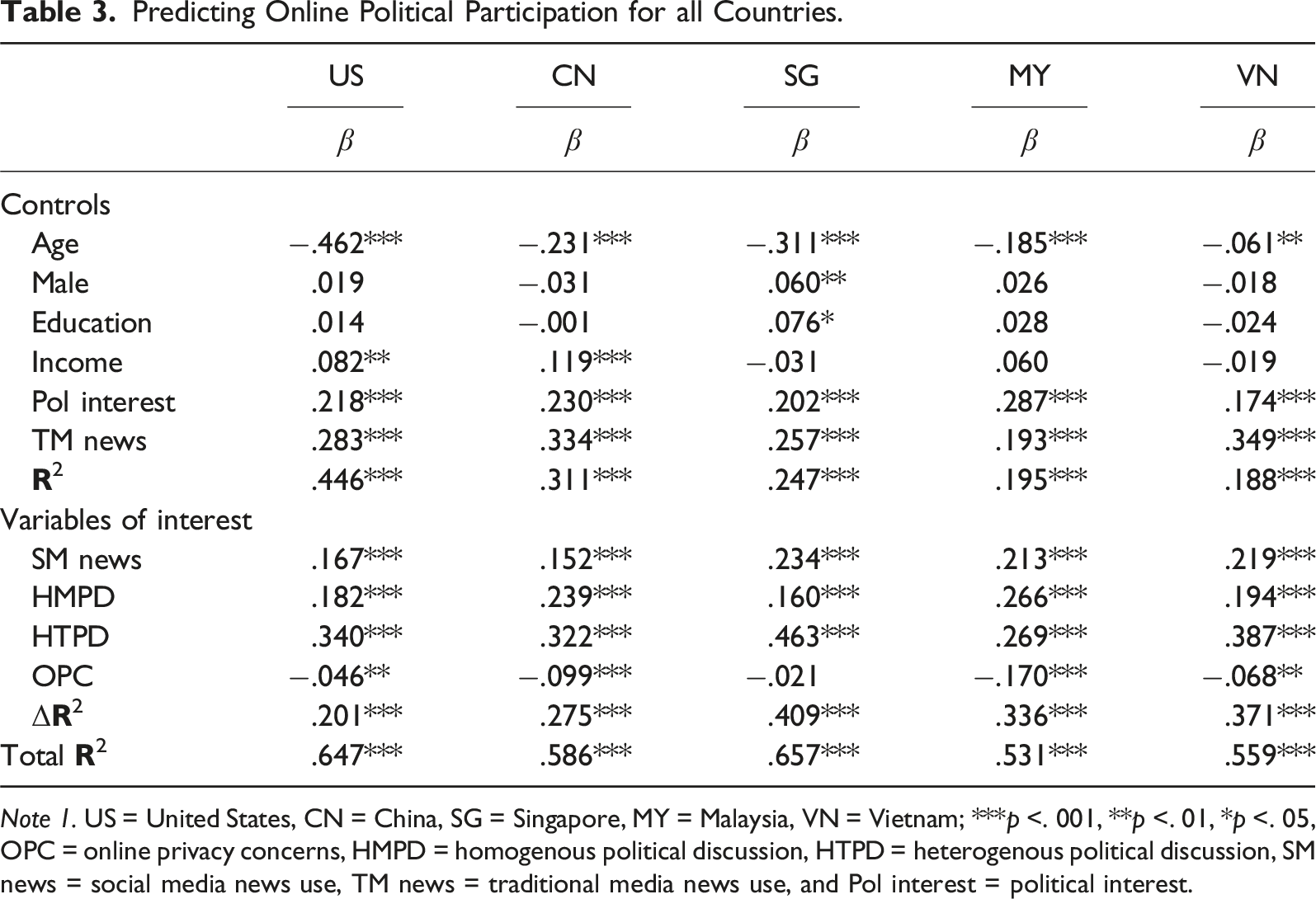
Note 1. US = United States, CN = China, SG = Singapore, MY = Malaysia, VN = Vietnam; ***p <. 001, **p <. 01, *p <. 05, OPC = online privacy concerns, HMPD = homogenous political discussion, HTPD = heterogenous political discussion, SM news = social media news use, TM news = traditional media news use, and Pol interest = political interest.
Our H1 stated that social media news use will be positively associated with online political participation. In the second block, accordingly, we find that those with higher social media news use were more likely to engage in online political participation across all contexts (US: β = .167, p < .001; CN: β = .152, p < .001; SG: β = .234, p < .001; MY: β = .213, p < .001 and VN: β = .219, p < .001). It shows that frequent use of social media for news is associated with greater engagement in online political activities. Therefore, H1 is supported.
Next, it is also observed that frequent homogenous (US: β = .182, p < .001; CN: β = .239, p < .001; SG: β = .160, p < .001; MY: β = .266, p < .001 and VN: β = .194, p < .001) and heterogenous political discussions (US: β = .340, p < .001; CN: β = .322, p < .001; SG: β = .463, p < .001; MY: β = .269, p < .001 and VN: β = .387, p < .001) are positively associated with online political participation. It suggests frequent homogenous and heterogenous political discussions on social media are associated with greater engagement in online political activities.
Mediation Results: Indirect Effects for all Countries.
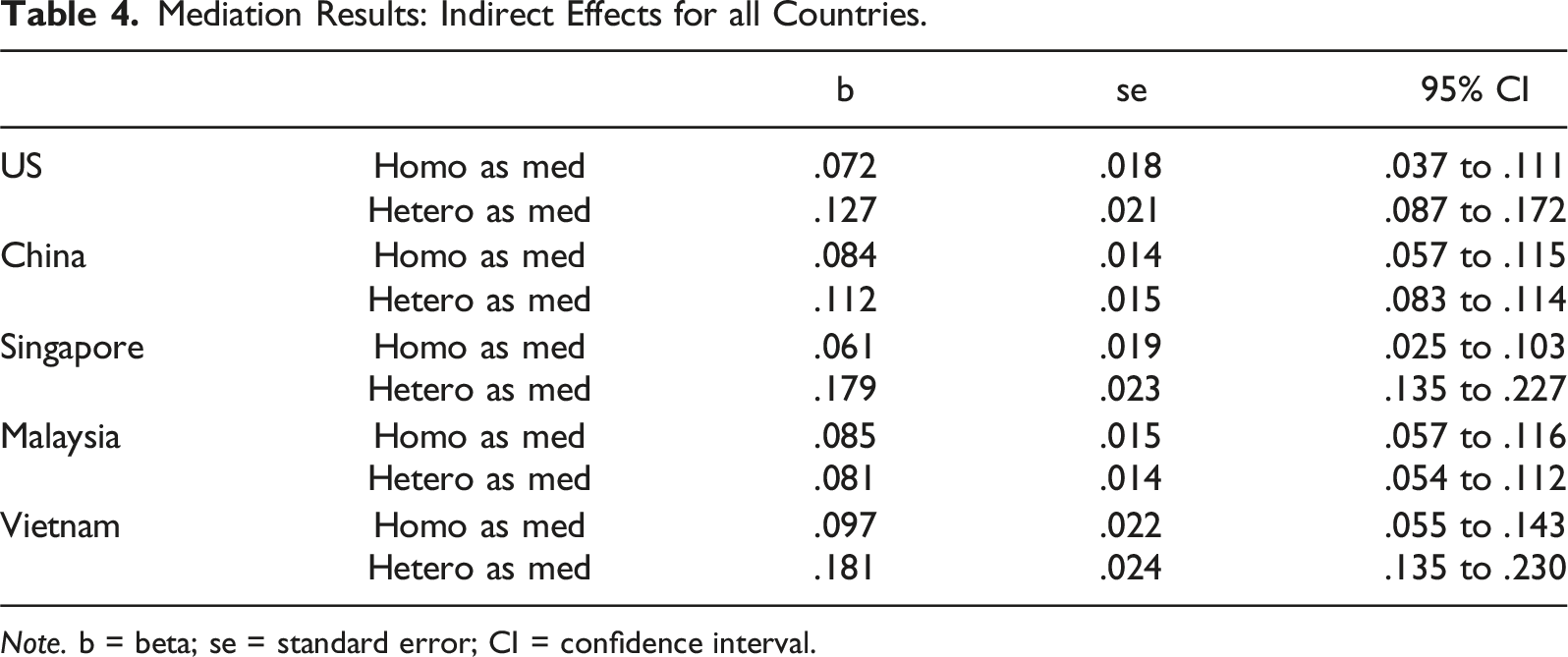
Note. b = beta; se = standard error; CI = confidence interval.
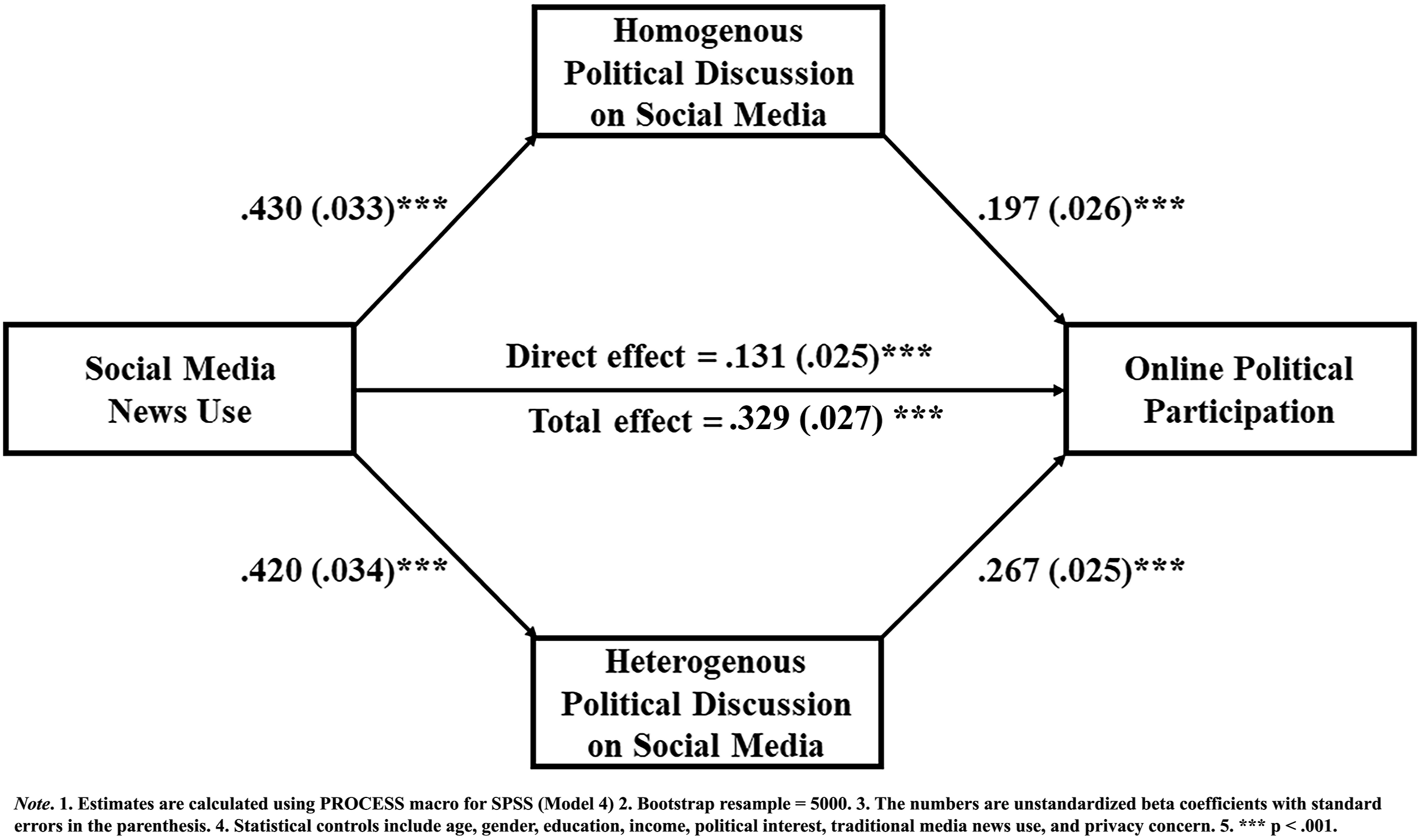
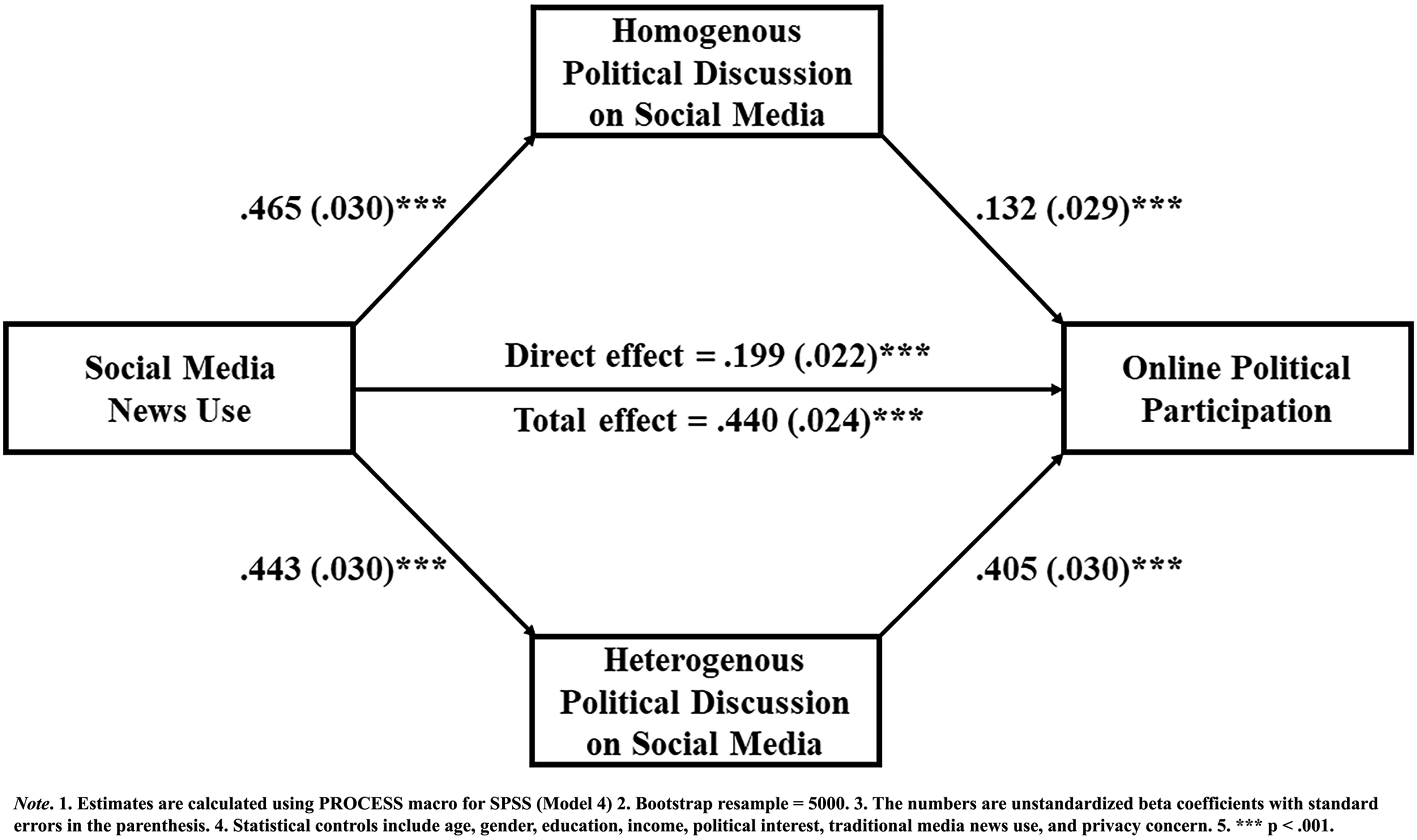
The relationships between social media news use, homogenous and heterogenous political discussion, and online political participation are visually illustrated in Figures 2–6 for each country. We observe that social media news use is positively associated with both forms of political discussion, which are, in turn, positively associated with online political participation. Hence, the results for the indirect effects provide support for H2. Visualization of the direct and indirect effects of social media news use on online political participation through homogenous and heterogenous political discussions in the US. Visualization of the direct and indirect effects of social media news use on online political participation through homogenous and heterogenous political discussions in China. Visualization of the direct and indirect effects of social media news use on online political participation through homogenous and heterogenous political discussions in Singapore. Visualization of the direct and indirect effects of social media news use on online political participation through homogenous and heterogenous political discussions in Malaysia. Visualization of the direct and indirect effects of social media news use on online political participation through homogenous and heterogenous political discussions in Vietnam.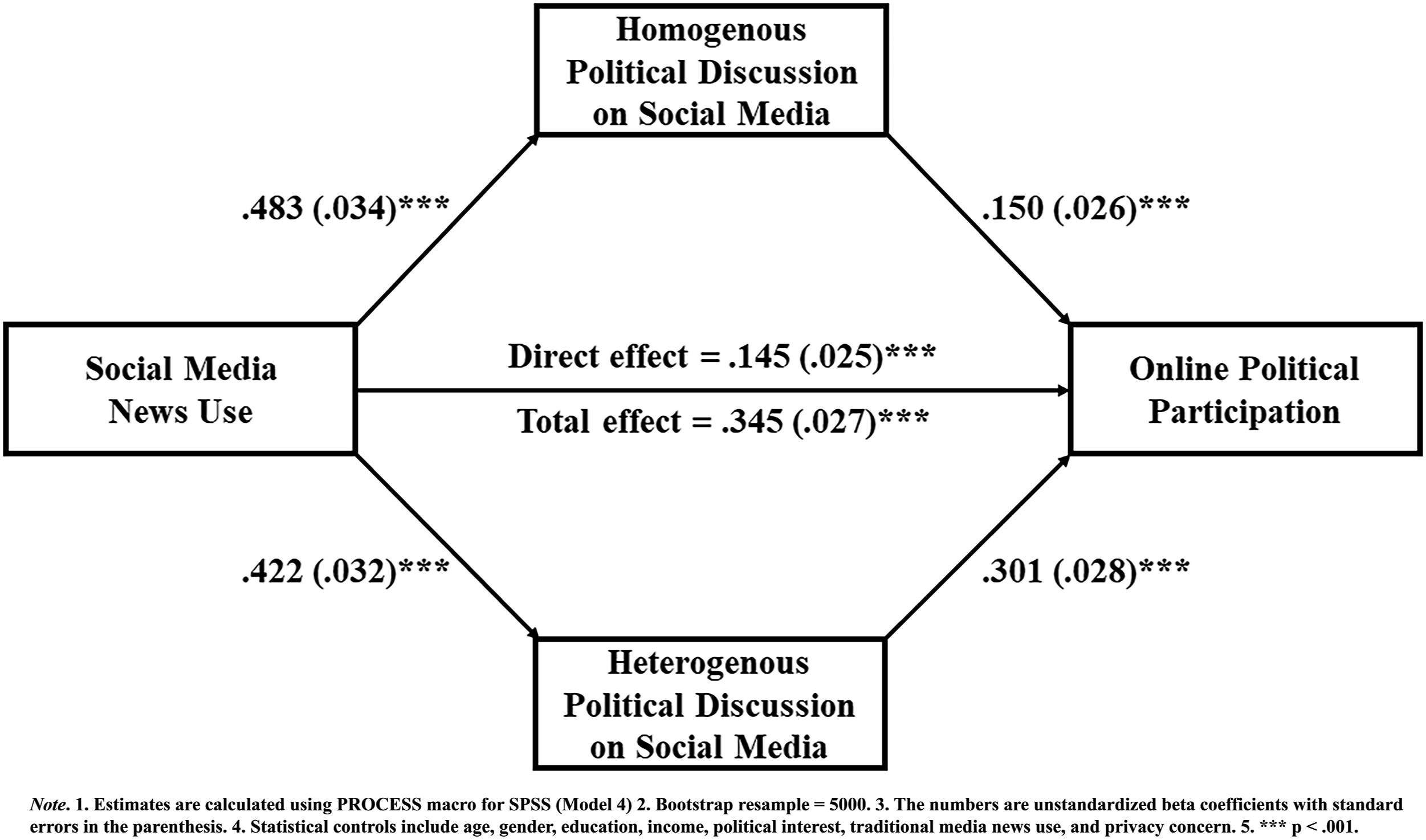
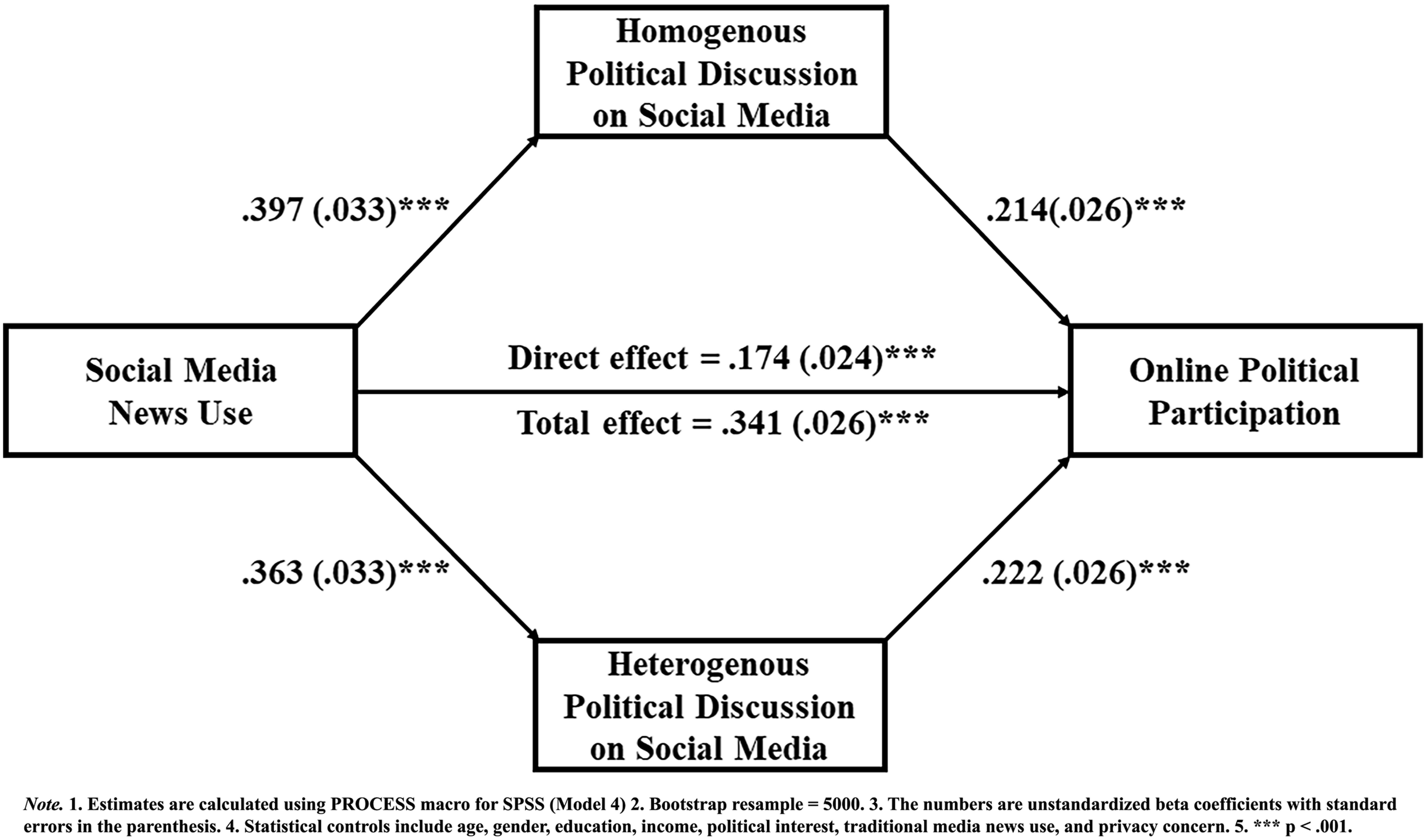
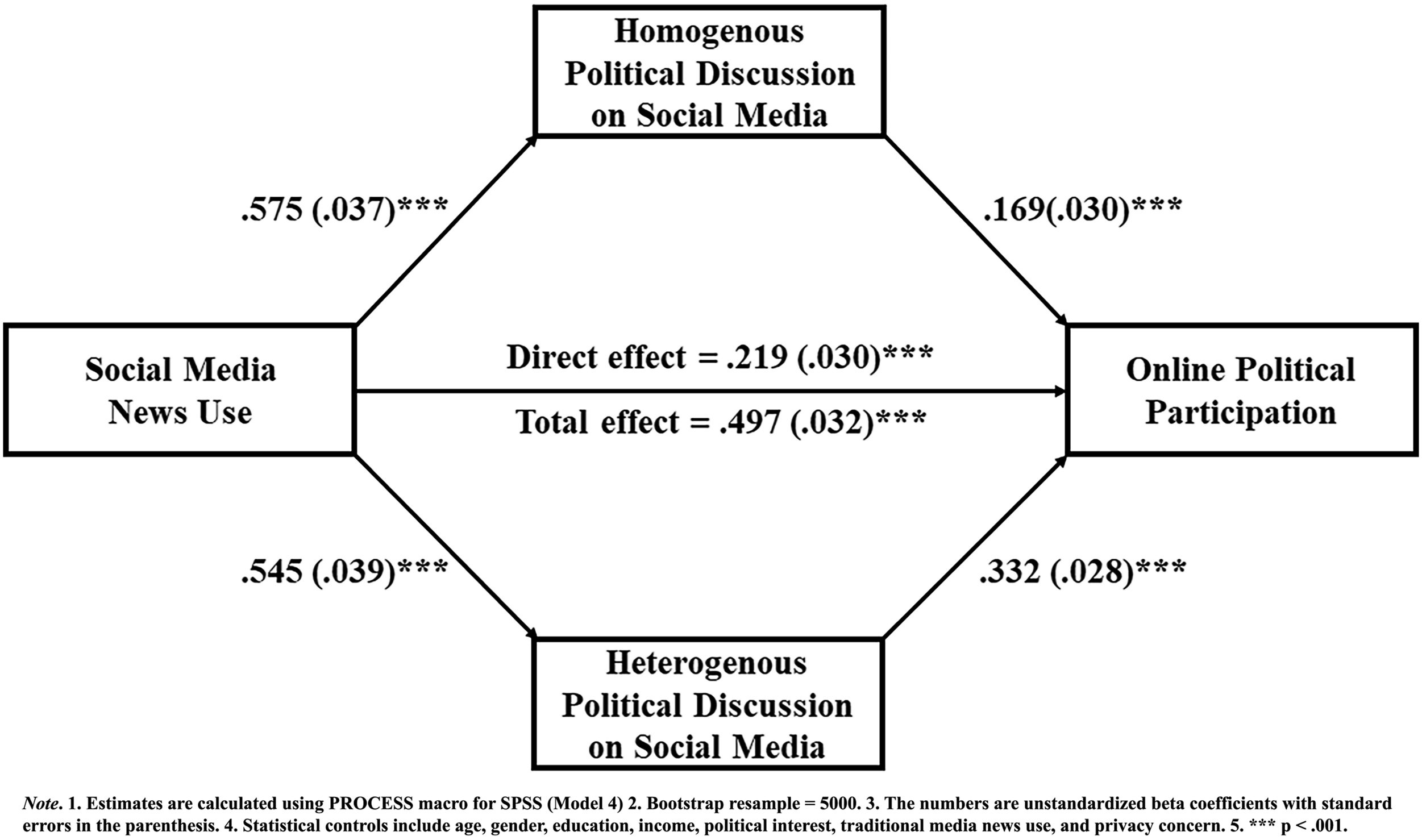
Moderated Mediation Results: Indirect Effects for all Countries at Three Levels of Privacy Concern.
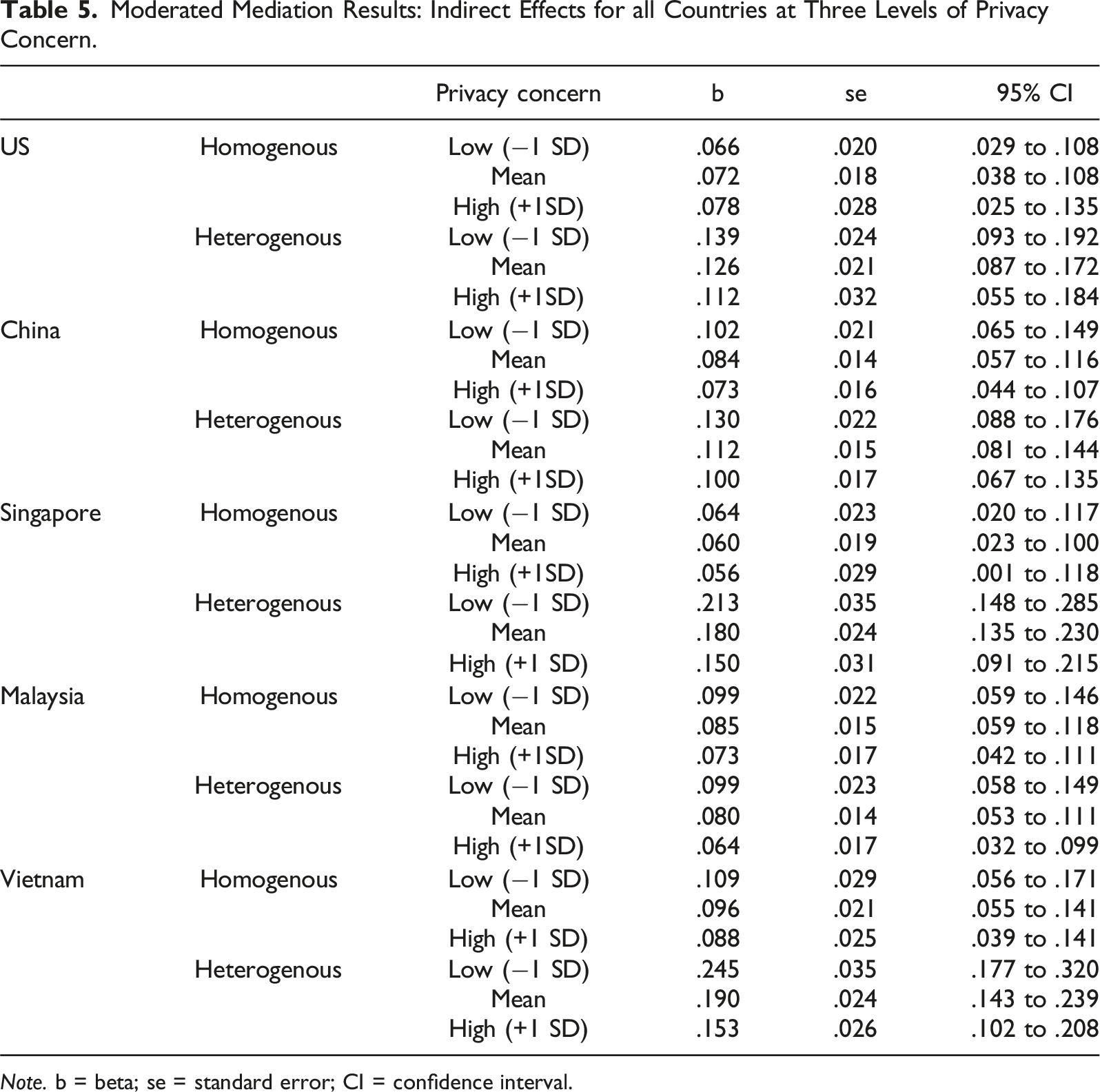
Note. b = beta; se = standard error; CI = confidence interval.
While in Asian contexts (China, Singapore, Malaysia, and Vietnam), the findings suggest that the mediation relationships across both heterogenous and homogenous political discussions are substantially weaker for individuals with high online privacy concerns, followed by individuals with mean and low levels of online privacy concerns, respectively.
In the US, consistent with the result from Asian contexts, the mediation relationship between social media news use and online political participation through heterogeneous political discussions on social media is substantially weaker for individuals with high online privacy concerns, followed by individuals with mean and low levels of online privacy concerns, respectively. However, for homogenous political discussions on social media, the mediation relationship is substantially stronger for individuals with high online privacy concerns, followed by individuals with mean and low levels of online privacy concerns, respectively. In other words, for individuals with higher online privacy concerns, greater social media news use is associated with more homogeneous political discussions on social media, which is, in turn, related to frequent engagement in online political activities.
Discussion
Numerous studies have examined the effect of social media use on participatory behaviors paying attention to political discussions (Chan et al., 2018; Ji, 2017; Velasquez, 2012), online (Gil de Zúñiga et al., 2012; Strömbäck et al., 2017; Valenzuela et al., 2011), and offline political participation (Boulianne, 2015; Leyva, 2016; Skoric, Zhu, Goh, & Pang, 2016; Towner, 2013). Few have also conducted cross-national comparative works exploring the participatory benefits of social media, primarily employing the CMM framework (Borah et al., 2021; Gil de Zúñiga et al., 2019). However, most of the attention has been on Western liberal democracies, and attention to cognitive dispositions central to user engagements on social media is rare. In contrast, this study examines the effects of social media news use on social media political discussion and online political participation across four Asian countries characterized as less free and Confucianist cultures and compared with a Western context—the US. Importantly, it also explored how online privacy concerns of individuals in these societies weaken the effects of social media news use. Our examination reveals critical insights that add to the existing literature on social media and online political participation. These are discussed below.
First, we hypothesized that social media news use will positively predict online political participation in all countries. Our findings provide evidence that the positive effects of social media for online political participation extend beyond the frequently investigated Western liberal democracies. Even in political settings characterized by internet censorship, controlled press freedom, and higher traditional costs of political engagement, we find that social media news use facilitates online political participation. The second hypothesis expected that heterogeneous and homogeneous political discussions would positively mediate the effect of social media news on online political participation. Our findings also provide evidence that both pathways (heterogeneous and homogeneous political discussions) mediate the positive effects of social media on online political participation. The support for both hypotheses confirms the validity of the CMM framework across different political and cultural systems in the world, particularly the democratic role of social media in more restricted Confucianist cultures is optimistic.
Moreover, we find that the relationship between social media news use and online political participation through heterogeneous political discussion on social media is more substantial across four countries as compared to through homogeneous political discussion—except for Malaysia, in which the effect size of homogeneous political discussion is marginally larger than heterogeneous political discussion. This pattern of findings suggests the more substantial supplementary role of heterogeneous political discussion in facilitating participation.
Second, we also observe that high privacy concerns are negatively associated with online political participation in the US, China, Malaysia, and Vietnam. This is particularly interesting as the negative effect is consistent across the US and three Asian countries, meaning that regardless of the political system, concerns over online privacy hamper online political participation of the citizens. Previous studies have found that for most individuals, privacy concerns are related to others than the self (Jeong & Kim, 2017), and users do not necessarily restrict their online socialization (Dwyer et al., 2007). However, we observe that those with high privacy concerns restrict their online participatory behaviors. This may be because the social and personal costs of political participation are greater than simply socialization. Those with high privacy concerns may limit their online political participation because of the potential for surveillance and monitoring by authorities and third parties. The awareness of being surveilled and data privacy risks could restrict individuals’ political engagement. Additionally, it is also likely that those with more significant privacy concerns would refrain from online political participation because of the distress that their personal information, including political preferences or ideologies, could be disclosed to third parties by social media companies. However, it is important to note that privacy concerns are unrelated to online political participation in Singapore. A possible explanation could be that Singaporeans are less vocal in their views on the role of online technology companies in maintaining users’ privacy than people in other nations (e.g., Lim, 2021). For instance, a report by PEW shows that 76% of Singaporeans think social media is a “good thing” for democracy (Wike et al., 2022). This could be because of strict laws introduced by the state to protect citizens by preventing firms from violating and misusing users’ data. Due to such contextual factors, Singaporeans’ concerns about online privacy may not be associated with online political participation.
Beyond the direct effect of privacy concerns on online political participation, we also find the strength of the indirect effect of social media news use on political participation through political discussion (both homogenous and heterogenous) is weaker for those with high privacy concerns in all four Asian countries under study. These patterns can be explained through several motivations.
First, those with high privacy concerns would likely engage in self-censorship on social media platforms when consuming information and engaging in political discussions. Recent research confirms that social media users are less likely to express their political opinions in Southeast Asian countries, especially within contexts where online repression is severe (Ong, 2019). Such self-censorship could further curtail the participatory benefits of frequent political discussions on social media.
Second, individuals with high privacy concerns may also be selective in their news consumption and political discussions. Individuals may choose to consume news only through specific sources that seem trustworthy or engage in political discussions with selected individuals whom they can trust with their information (including their political preferences). This approach could curb the quality of information consumption and discussion networks, further weakening the effects on online political participation. Although we examined political discussion with both heterogeneous and homogeneous networks in our model, it does not necessarily correlate with one’s strength of the tie (Valenzuela et al., 2018). Therefore, considering the importance of trustworthiness among political discussants, integrating political discussion with strong ties (such as friends and family) and weak ties distinctly may extend the CMM framework in less democratic contexts where fear of online surveillance is likely to be relatively high.
Third, it is also likely that those with high privacy concerns may be anxious about the social consequences of online political discussions. Such individuals may believe that their political expression may be harshly evaluated within discussion networks or may not align with the majoritarian expectation. This could force them to limit their political discussions on social media, weakening the association with online political participation. This thesis is supported by recent evidence from Kobayashi and others (2021), who found that political demonstrators in collectivist countries (e.g., China) are socially avoided as they threaten harmonious interpersonal relationships. Thus, a fear of social avoidance can also result in weaker relationships between social media news use, political discussion, and participation.
However, it is essential to note that for the US, the indirect effect of social media news use on online political participation through homogenous political discussion does not follow the pattern seen in other countries. Unlike the four Asian countries, the effect is most significant for individuals with high privacy concerns, followed by those with mean and low online privacy concerns. An explanation can be offered in the fact that the social understanding of political participation is differently evaluated in the US compared to the other four contexts in this study. Those with high privacy concerns may still engage in online political engagement due to the support of ideologically aligned individuals or groups (characteristic of homogenous political discussion). Such social support for political participation from like-minded individuals may alleviate existing privacy concerns. However, these are post hoc inferences, and future empirical testing is necessary to come to definite conclusions.
Most of the literature on CMM, including the focus on social media news use and online political participation, has been based in Western democracies. However, as political and cultural systems vary across Western and Asian societies, we observe that online privacy concerns differently shape the effects of social media on participation when supplemented by homogenous political discussion across Western (the US) and Asian societies. In other words, while most of the findings align across contexts, we also observe some differences between the US and other countries. Therefore, the effects of social media on political participation should not be generalized across differing socio-political and cultural contexts. Instead, empirical frameworks should consider how extrinsic factors influence individual motivations.
As we conclude, it is essential to acknowledge some of the limitations of this study. First, the cross-sectional nature of the data limits any causal inferences. However, the broad support for the causality of the tested CMM in prior literature (e.g., Eveland et al., 2005; McLeod et al., 1996) can soften some concerns. Second, while we offer a cross-comparative study of the US and four Asian countries with political and cultural differences, it remains to be seen how these findings would apply to other Asian contexts that culturally and historically differ (e.g., India or Pakistan) compared to the studied countries. Third, while we pay attention to online privacy concerns, we do not consider privacy protection behaviors in our framework. Those with high privacy concerns may still manage to protect their privacy. Under such settings, how privacy concerns would impact participatory actions remains unknown. Fourth, our operationalization of online privacy issues does not consider all the aspects of online privacy, such as the fear of being controlled and the fear of expressing one’s views publicly. Considering additional and novel aspects of online privacy concerns in future studies would also greatly expand the scope of the current research. Lastly, concerns about online privacy relate to authorities’ control over what is posted online and cultural considerations. For example, in Confucian societies, public expression of opinions is not encouraged, and potentially contentious discussions, such as about politics, are sometimes avoided to maintain social harmony. These critical cultural aspects can also be incorporated into future research. Finally, our operationalization of online political participation included political posting (similar to our measure of social media news use). To address this, we conducted a reanalysis by developing a new measure for online political participation, excluding the item related to posting political content. This revised measure maintained its reliability. Crucially, all models tested and showcased in this study retained their significance.
Despite the limitations, from a cross-national perspective, this study adds to the existing literature on the effects of social media news use on online political participation supplemented by two types of political discussions and highlights the conditioning role of online privacy concerns.
Supplemental Material
Supplemental Material - Assessing the Effects of Privacy Concerns on Social Media-Driven Political Discussions and Participation: A Comparative Study of Asian and Western Contexts
Supplemental Material for Assessing the Effects of Privacy Concerns on Social Media-Driven Political Discussions and Participation: A Comparative Study of Asian and Western Contexts by Saifuddin Ahmed and Muhammad Masood in Social Science Computer Review.
Footnotes
Declaration of Conflicting Interests
The author(s) declared no potential conflicts of interest with respect to the research, authorship, and/or publication of this article.
Funding
The author(s) disclosed receipt of the following financial support for the research, authorship, and/or publication of this article. This work was supported by the Nanyang Technological University.

Supplemental Material
Supplemental material for this article is available online.
Author Biographies
References
Supplementary Material
Please find the following supplemental material available below.
For Open Access articles published under a Creative Commons License, all supplemental material carries the same license as the article it is associated with.
For non-Open Access articles published, all supplemental material carries a non-exclusive license, and permission requests for re-use of supplemental material or any part of supplemental material shall be sent directly to the copyright owner as specified in the copyright notice associated with the article.
