




Abstract
This study investigates how workers enact occupational identities that reinforce institutional Discourses through mechanisms of unobtrusive occupational control. Through a phronetic iterative analysis of interview and Photovoice data from 27 circus aerial acrobats, we identify three identity enactments through which workers reproduce and sustain occupational norms: complicit masking, complicit risk-taking, and complicit anonymity and exploitation. These findings contribute to our understanding of identification and control processes by demonstrating how discursive and bodily identity enactments—framed as small “d” discourses—function recursively to uphold dominant institutional ideologies. The study expands upon a d/Discourse framework by illustrating the embodied dimensions of identity enactment, highlighting the value of arts-based elicitation methods in accessing lived experiences of body workers. Photovoice images revealed how performers engage identity enactments in the front-facing and backstage work sites, revealing how workers sustain harmful practices, simultaneously acknowledge the dangers of these practices, and refrain from challenging the status quo.
In 2018, Yann Arnaud, a 15-year veteran of Cirque du Soleil, died tragically when his hand slipped during a live performance of the show Volta. Former President and CEO of Cirque du Soleil, Daniel Lamarre, was quoted as saying, “We were very surprised, considering his experience, that something like that would have happened” (Reuters, 2018). Lamarre’s comment implies that Arnaud’s professional experience should have prevented him from releasing the apparatus, thus shifting the prevention of the accident to the worker rather than Cirque du Soleil. This framing deflected from other considerations such as how the organization could have provided more adequate safety measures 1 to protect workers. A systematic review of injuries among circus workers documented 38 incidents resulting in 39 catastrophic injuries, 20 of which were fatal, and most of which resulted from falling directly onto the ground (Stuckey & Coelho Bortoleto, 2024). Aerial acrobats (i.e., acrobats who perform gymnastic feats in the air while suspended from an apparatus; Tait, 2005), such as Arnaud, sustained most of these injuries.
It is important to address why workers are willing to accept significant material occupational risks with unintended, at times fatal, consequences as a regular part of the job 2 . Scholarship on the constitutive relationship between d/Discourse and materiality may illuminate this phenomenon (Ashcraft et al., 2009). Here, discourse (with a small d) is everyday talk, whereas Discourse (with a capital D) refers to ways of talking that indicate ways of thinking or implicit ideologies about social reality (Alvesson & Kärreman, 2000). Moreover, Tompkins and Cheney (1985) identify unobtrusive control as the process through which organizations influence employee behaviors to act in the organizations’ interests without overt direction, which can further elucidate the reasons behind circus workers’ willingness to risk their lives for their jobs.
Workers enact their occupational identity through the reproduction of d/Discourses (Ashforth et al., 2008). Whereas scholarship has focused on symbolic enactments of identity (Ashcraft et al., 2009), these works ignore the material, embodied enactments required of workers to fulfill their occupational roles (Harris, 2017; Wolkowitz, 2006). When members are inculcated with d/Discourses that create premises about identity enactments (e.g., “people think I’m Superman for hanging off one arm”), they make decisions that demonstrate their identification with particular identity targets (e.g., an acrobat may feel the need to achieve a certain skill to match that identity) (Tompkins & Cheney, 1985). However, bodies vary in abilities and limitations, rendering certain identity enactments (e.g., the ability to hang from one arm) inaccessible to some workers (Ashcraft et al., 2009; Kuhn et al., 2017).
Guided by unobtrusive control theory (Tompkins & Cheney, 1985) and a d/Discourse framework (Alvesson & Kärreman, 2000, 2011), this study aims to analyze how workers enact occupational identities that may sabotage their well-being to reinforce institutional goals. To provide a comprehensive view of workers’ occupational identities, we draw upon the arts-based elicitation method of Photovoice (Wang & Burris, 1997) to illustrate the front-facing (i.e., when they perform in front of an audience) and backstage (i.e., behind the scene and out of view of the audience) aspects of aerialists’ work lives. We contribute to theorizing of unobtrusive control beyond the internalization of organizational values that guide employee actions to include workers’ occupational identity enactments that reinforce institutional (e.g., circus as an institutional entity) identification even when workers are aware of these mechanisms of control. Furthermore, we introduce bodily identity enactment as a contribution to d/Discourse, situating workers’ bodily self-disciplinary acts as small “d” discourses.
In the following section, we overview the guiding conceptual framework for this study by considering (a) unobtrusive control theory (Tompkins & Cheney, 1985), (b) d/Discourse (Alvesson & Kärreman, 2000) and identity enactment, and (c) how circus bodies reflect circus Discourses. The section concludes with the research question that guided our study.
Unobtrusive Control Theory and Identification
Developed by Tompkins and Cheney (1985), unobtrusive control theory (UCT) posits that organizations exercise control over workers implicitly as workers are inculcated through organizational d/Discourse, which in turn influence processes of identification. In short, UCT explains why highly identified members make decisions that benefit the organization. Identification has been conceptualized as an interactive, discursive process that shapes identity, in which organizational members “claim oneness” with an organization by acting in organizationally valued ways (Dutton et al., 1994; Kuhn & Nelson, 2002). For example, if an organizational d/Discourse is “the customer is always right,” then a worker might decide to offer a refund to a customer for a damaged product, even if this decision violates company policies. While identity is understood as a communicative, dynamic, socially constructed process that reflects how individuals understand and present themselves in relation to others (Hecht, 1993; Tracy & Trethewey, 2005), occupational identification refers to the communicative process through which workers define themselves in relation to their profession (Tracy & Trethewey, 2005). Workers perform their occupational identities through identity enactment (Tracy & Tretheway, 2005), such as an educator placing a teacher’s union bumper sticker on their car or a coach showing his players his scars from his former athletic career (see Zanin, 2018). While these examples of occupational identity enactment may occur within and through organizations, few unobtrusive control studies have considered how occupational d/Discourse may affect members identification and control beyond the boundaries of one organization.
Moreover, highlighting the constitutive relationship between communication and control, UCT explains how workers self-regulate their behaviors to align with organizational goals given their salient identity as organizational members (Barker, 1993; Tompkins & Cheney, 1985). Given that unobtrusive control functions through the inculcation of organizational Discourse and workers’ own self-subordination, this type of control is particularly challenging to resist, given that members often believe their organizationally-relevant decisions and actions are agentic (see Zanin, 2018; Zanin & Bisel, 2020). In applying the framework of UCT, the current study seeks to understand how and why aerialists engage in occupational identity enactments that result in obtrusive pain and harm (e.g., actions detrimental to workplace safety, accepting compensation below a livable wage; Stephens, 2015; Walby & Stuart, 2021); yet they remain strongly identified with their occupation. To aid in this analysis, we provide an overview of d/Discourse in relation to workers’ identity enactments.
d/Discourse and Identity Enactment
Dominant ideologies and taken-for-granted assumptions are illustrated through d/Discourse. Alvesson and Kärreman’s (2000) conceptualization of d/Discourse assumes the discursive construction of organizations, positing d/Discourse as “the very foundation upon which organizational life is built” (Fairhurst & Putnam, 2004, p. 6). While this conceptualization of d/Discourse has been contested for framing a reductionist, rigid binary with an over-reliance on language (Mumby, 2011) to explore organizational life, Alvesson and Kärreman (2011) urge researchers to avoid oversimplification that attributes organizational phenomena to discourse alone. In response to the call to ground analysis of d/Discourse in situ—and recognizing other factors that shape organizational realities—we draw upon this framework to situate identity enactments as observable behaviors guided by unobtrusive control. These efforts are supported by previous literature analyzing identification processes through a lens of d/Discourse. For example, Gascoigne et al. (2015) found that workers engage identity enactments that reproduce a discourse of “personal choice,” reinforcing dominant Discourses of gendered disadvantages. In a study of creative workers, Alacovska and Kärreman (2022) analyzed the identity work of these performers that reinforced discourses of “tortured artists,” ultimately shaping occupational identity.
Furthermore, d/Discourse affects how organizational members experience and imbue meaning onto material aspects of organizing like bodies, sites, and objects. Concerning the body, scholars have argued that the body is experienced and transformed through communication and interaction with other bodies (Ashcraft et al., 2009; Ellingson, 2017). For example, Johansson et al. (2017) found that corporate elites enacted identities through having athletic bodies that reinforced Discourses of “perfecting the body, advocating against non-fit bodies, and becoming a role model” (p. 1150). This example of a body work occupation—where the body is perceived as a resource of the organization (Wolkowitz, 2002)—affirms how Discourses frame occupational expectations for workers, establishing markers of identification that rely on expectations of bodily performance (Lopez, 2010). When members are unable to enact positive occupational identities, they may become frustrated with the organization, less engaged, less committed, and less identified as organizational members (Michel, 2011).
For example, Zanin (2018) detailed how injured collegiate football players struggled to enact positive organizational identities due to their inability to contribute to team goals. As a result, the organizational d/Discourse of body commodification became more salient to the injured athletes. In other words, everyday talk (i.e., “They buy you as an investment”) (re)produced a Discourse which framed athletes as “bodies that could be used and exploited for the betterment of the organization,” (Zanin, 2018, p. 279). The salience of this Discourse resulted in injured athletes’ reduced identification with the team. Thus, d/Discourses specific to body work contexts can exacerbate workers’ feelings of inadequacy and reduced identification (see also Zanin, 2019).
This (re)production of Discourses plays an important role in how body work is constructed for an occupation. Circus performers are body workers (i.e., their occupational roles center the body as the primary site of work) and as such are limited in fulfilling occupational expectations by the material properties of their bodies, which simultaneously influences their ability to enact their occupational identity. However, the very “essence of circus” (Davis, 2018) is defined in part by pushing these material boundaries, tasking aerialists with artistry that combines “physical prowess and innovation, challenging boundaries of gender, disability, ethnicity, and race” (Calver, 2020, p. 308). Like its athletic organizational counterparts (Zanin, 2018, 2019), Discourses that set expectations for circus bodies inherently challenge and purposely upend the material limitations of the body (see Legendre, 2016), which are then reflected in workers’ identity enactments. The dominant Discourses of circus are explored in the following section.
Circus Bodies and Circus Discourses
Circus has transformed how bodies are perceived (Jacob, 2018). Circus sideshows displaying oddities, curiosities, and people whose bodies deviated from what was considered “normal,” (e.g., the “bearded lady”, “the ugliest woman in the world”) expanded perceptions of the human body, situating circus as an avenue to witness “the ultimate exploitation that results from human exhibition” (The Ringling Circus Museum, 2022). Concerning aerialists, Tait (2005) argues that these workers are tasked with “the performance of cultural identity [of circus]” (p. 7), thereby situating these roles as symbolic representations of circus through bodily identity enactment. The cultural identity of circus is framed by three key Discourses: (a) freedom—circus challenges the constraints of materiality and social norms, (b) risk—danger is exciting to watch and participate in, and (c) spectacle—circus is extravagant and grandiose (Daniel, 2021; Tait, 2005, 2006; Usborne, 2018).
First, circus conveys larger social ideas of freedom from the constraints of everyday life. Aerialists defy bodily social norms, as “circus communicates ideas of freedom through bodily experience” (Tait, 2006, p. 5). Through their bird-like exuberance and effortless movements, aerialists evoke a sense of liberation that conflates physicality and risk. This performance of “bodily freedom is sensory visceral risky action in circus” (p. 5), emphasizing the interplay between workers’ occupational identity enactments and audience’s expectations for circus performance.
Second, risk is documented as an underlying feature of circus, with aerialists accepting a higher level of occupational risk compared to other circus performers (Legendre, 2016; Stoddart, 2016; Walby & Stuart, 2021). Tait (2016) contends that circus bolsters the audience’s paradoxical desire of both expecting and avoiding witnessing an accident. Performers may reaffirm this tension based on their descriptions of safety measures as intrusive or annoying (Gross, 2015). For highly identified workers, these precautions may undermine their identity as risk-takers (see Zoller, 2003). In fact, Cirque du Soleil’s success depends on performers’ willingness to risk their lives (Gross, 2015), normalizing the precarity of these roles and often undercompensating workers (Stephens, 2015; Walby & Stuart, 2021).
Lastly, circus is considered the “parent spectacle,” emphasizing its reliance on real, demonstrable skills in contrast to actors in theatre productions (e.g., an actor performing the role of a doctor is not expected to possess medical knowledge; Coxe, 1980b). As Coxe (1980a) explains, “the actor says he will ‘play his part,’ the circus artiste tells you he will ‘work his act’” (pp. 24–25). Positioning circus as a “spectacle of actuality,” performers are held accountable for possessing the grandiose skills necessary for stage performance (Stoddart, 2016, p. 16). Despite its authenticity, however, circus performers are not precluded from enacting pretense to fulfill occupational expectations, particularly in how these relate to bodily identity enactments. In light of these Discourses and the physical demands placed on aerialists, it is critical to examine how these workers internalize institutional norms and enact occupational identities amid physical strain, risk-taking, and expectations of performance.
Guiding Research Question
Given the conceptualization of identification as a social, co-constructed process of identity enactment, a study of the aerialist occupational identity from a lens of unobtrusive control and d/Discourse can explore the interdependent relationship between occupational expectations and member behaviors. As aerialists are expected to perform extraordinary physical ability, circus Discourses may help bolster—rather than undermine—self-efficacy, adequacy, and drive identification. Aerial acrobats experience material limitations when training circus skills (e.g., sustaining pain or injury). Rather than viewing injuries as productive failures (Butler, 1993) guiding a more attainable version of the circus performer, workers often instead equate them with hurdles and proof that they are not good enough. In this context, we argue that workers are reinforcing Discourses through their everyday actions (e.g., training through pain, portraying effortlessness) and talk about embodied action (e.g., “you have to accept the risk”), which in turn operate as mechanism(s) of unobtrusive occupational control. To explore the identity enactments reinforcing these Discourses, the following research question was proposed:
Method
This research study utilized a phronetic, iterative qualitative approach (Tracy, 2020), allowing the researcher to consult “existing theories and predefined questions” as well as examine “emergent qualitative findings” (Tracy, 2018, p. 63). The original data collection was motivated by occupational pain socialization of circus performers. After the initial analysis, the multiple types of data collected (i.e., interview data, arts-based elicitation data), conceptual framework, input of the co-authors, and emergent findings illuminated elements of occupational identity enactment beyond pain. These factors prompted a wider scope of analysis that rendered a layered understanding of the interplay between performers’ identity enactments and the institutional Discourses of the research context.
After completing the necessary procedures for approval implemented by a university Institutional Review Board (IRB), participants were recruited through representative and snowball sampling. As an aerialist, the first author drew upon convenience sampling for recruitment. Inclusion criteria for this study required that participants (a) be at least 18 years old, (b) have a minimum of two years’ experience in aerial acrobatics, (c) participate in a circus organization for learning circus skills (i.e., not self-taught), and (d) have coaching or performing experience with a circus organization. Participants completed a Qualtrics survey to record their consent to participate and their demographic information. Participants then completed primary and secondary interviews. Both interviews were conducted primarily via Zoom, with two participants opting to interview in person. Most primary and secondary interviews were conducted within one week of each other. Participants received compensation for participating in each interview portion (i.e., the equivalent of $25 USD for each interview).
Participants
Self-Reported Demographic Characteristics of Study Participants
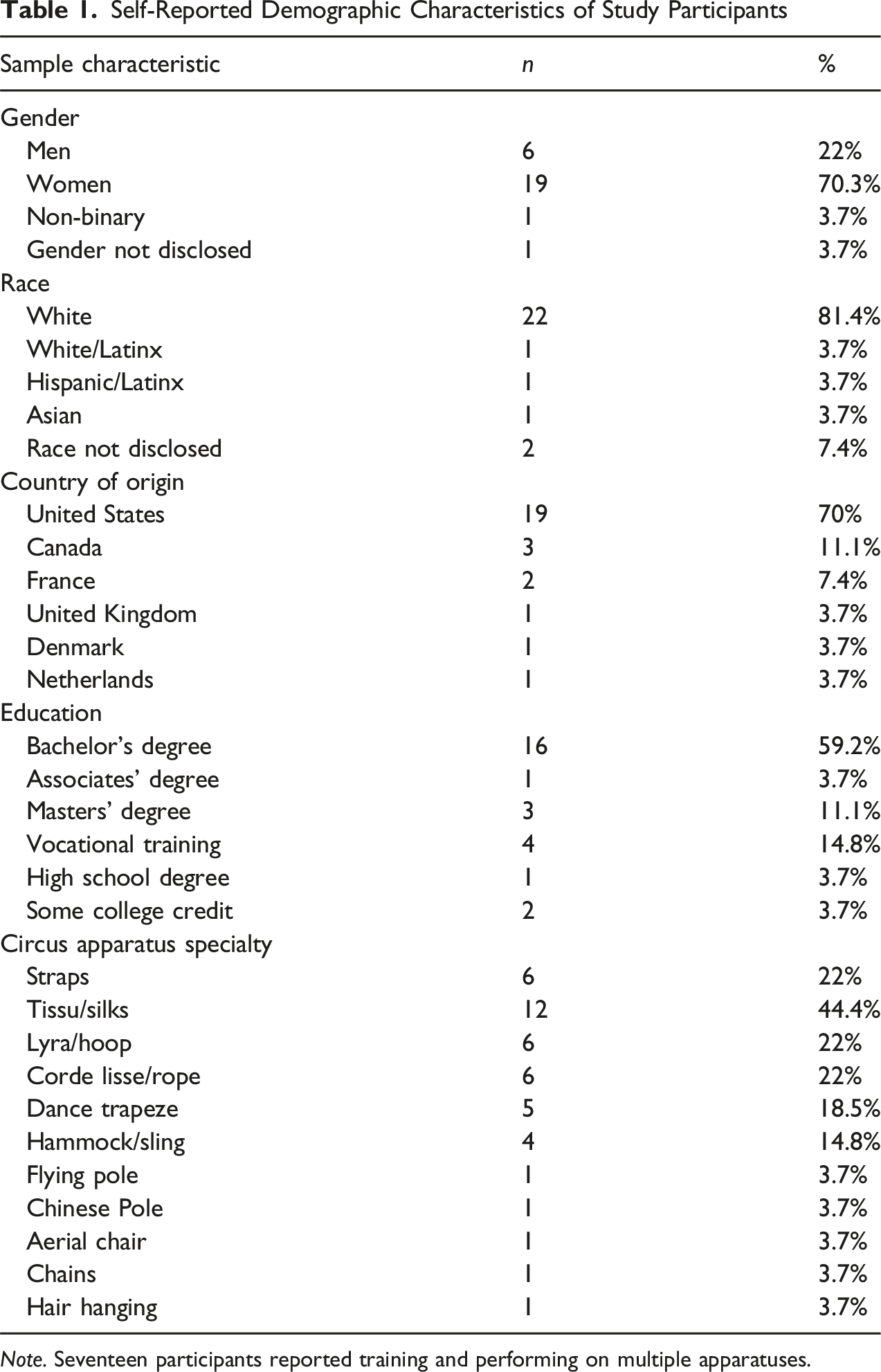
Note. Seventeen participants reported training and performing on multiple apparatuses.
Semi-Structured Interviews and Photovoice Elicitation
All 27 participants completed the survey and both interviews. In total, the first author conducted over 60 hours of interviews broken up into primary and secondary interviews. Primary interviews ranged from 45 to 88 minutes (M = 60.70, SD = 12.6) and resulted in 683 pages of transcripts. The primary interview design elicited retrospective recollection of participants’ experiences with pain, performance, and identity negotiation in aerial acrobatics. Example questions included: “In what ways, if at all, do you mask pain? What does that look like?” and “Can you tell me about a time when something went wrong while you were performing?” At the end of the primary interview, participants were verbally given instructions for the Photovoice component of the study (i.e., a type of arts-based elicitation aimed at providing participants multiple means for expressing their lived experiences; see Wang & Burris, 1997). Participants were asked to: (a) “provide an image that portrays how you would like the audience to see you,” and (b) “provide an image that represents the reality of being an aerialist.” They were invited to provide photos of themselves, objects, or publicly available images of other individuals. Participants consented to the use of their photos in presentations and publications related to this project.
During the second interview, the first author used arts-based elicitation questions (i.e., using a visual aid to drive discussion), to “spark creativity, moving respondents from solely textual information to considering the visual, material, and embodied feelings that can be difficult to articulate in words alone” (Tracy, 2020, p. 199). Example questions included: “What is happening in this image?” and “How do you feel when you see this image?” These questions were posed to elicit responses through which participants could speak to occupational identity enactment and how these mirrored—or failed to mirror—institutional Discourse enactments. Although prompted to include only two images, several participants shared more than two. In total, 66 images were collected from 27 participants. Secondary interviews ranged from 46 to 99 minutes (M = 67.12, SD = 17.12) and resulted in 708 pages of single-spaced typed transcripts.
Data Analysis
The authors used an abductive approach to examine the data per the posed research question (Charmaz, 2014), by continuing a back-and-forth iterative analytic process between the research questions, emergent data, and guiding literature (Tracy, 2020). To begin, the first author engaged in open primary-cycle coding for the entirety of the data set. Emergent codes that did not align within the scope of the research question were stored for future research projects. A secondary-coding cycle was completed by focusing on identifying patterns between codes that appeared frequently in the data. During these phases the authors met to discuss emergent codes. Next, the first author engaged in a process of hierarchical coding; a coding practice that groups emergent codes that can be nested into larger umbrella categories (Tracy, 2020).
Through this process, categories were created to interpret the micro-level discourses (see Alvesson & Kärreman, 2000) that reflected the dominant circus Discourses. For example, “The show must go on” was an emergent code that included everyday discourse that (re)produced the macro institutional Discourse of risk by performing through instances of physical danger. This phase of coding resulted in emergent codes that reflected the (re)production of multiple d/Discourses. Next, through an abductive process, the authors interpreted the emergent identity enactment codes of front-stage and backstage identity performances through the visual representations provided by participants’ images. The arts-based elicitation approach (detailed below) and corresponding interview data as participants described their images allowed for “direct access to participants’ first-person viewpoints…[and] insight into overlaps between people’s stories/viewpoints and what materially exists in the world” (Tracy, 2020, p. 82).
Identity Enactment Strategies
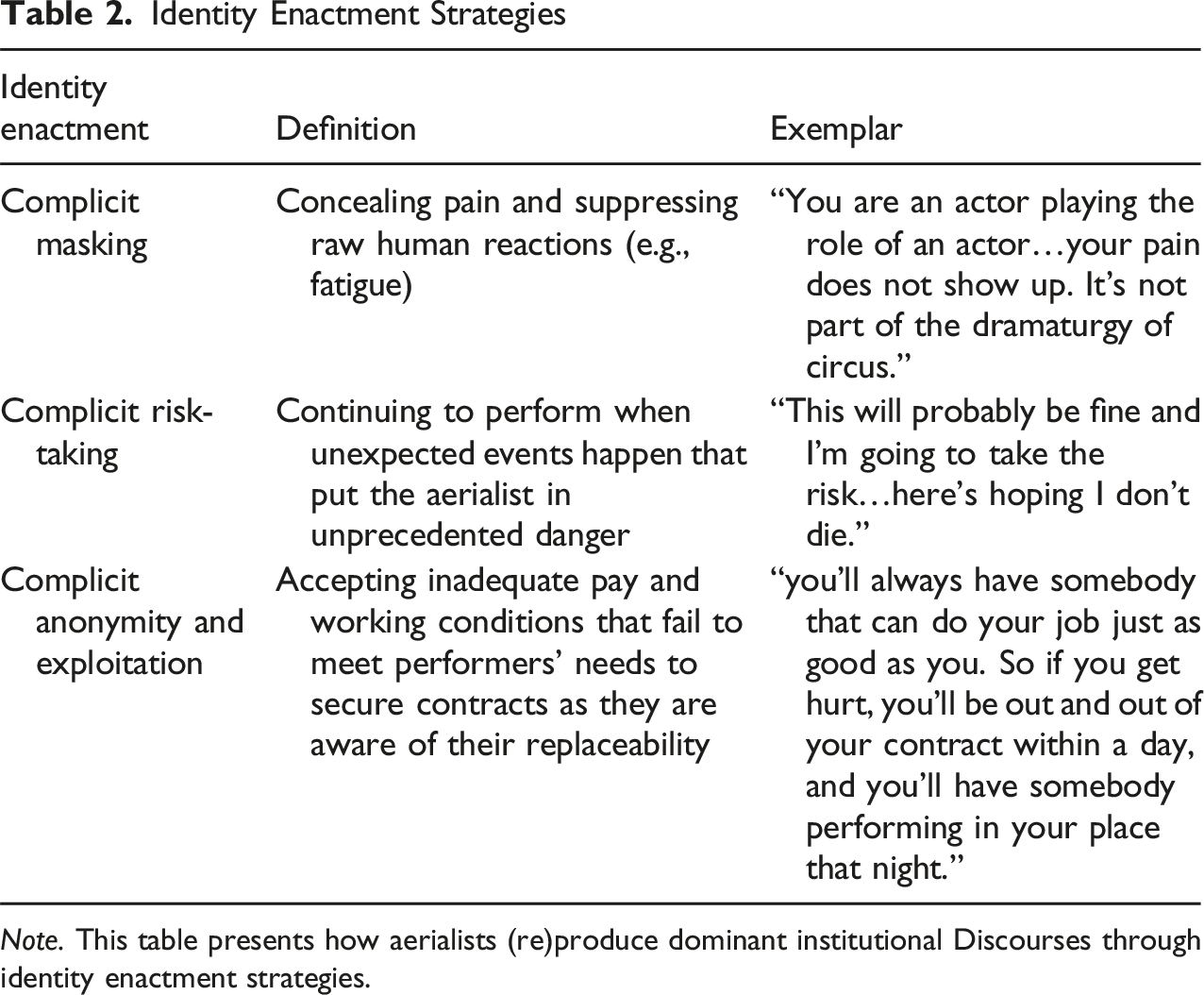
Note. This table presents how aerialists (re)produce dominant institutional Discourses through identity enactment strategies.
Findings
An in-depth phronetic iterative analysis of interviewee responses and Photovoice images revealed three distinct identity enactments of aerial acrobats that (re)produce circus Discourses as mechanisms of unobtrusive occupational control: (a) complicit masking, (b) complicit risk-taking, and (c) complicit anonymity and exploitation (see Table 2). We emphasize the notion of performers’ complicity in their own subordination (see Knowles, 2021) as workers comply with questionable occupational expectations and simultaneously reproduce d/Discourses of identification that influence others’ identity enactments (e.g., “you set higher expectations of yourself based on where other people are with their practice and strength”). The following provides a detailed description of these identity enactments and the respective Discourses that are (re)produced.
Complicit Masking as the Cost of Performing Freedom
The freedom Discourse, which glorifies freedom from everyday human limitations, challenges the materiality and social norms of the human body. One of the ways that circus artists reproduce this Discourse is by portraying effortlessness in their performance. For example, straps artist Marcel shared, “You are an actor playing the role of an actor … your pain does not show up. It’s not part of the dramaturgy of circus.” Marcel’s statement describes how although pain is a feature of being an aerialist, expressing pain is not (thereby rendering the concealment of pain as a positive identity enactment). We define this identity enactment as complicit masking, which occurs when body workers repress their embodied responses to pain, fatigue, etc., and convey effortlessness to uphold occupational expectations. This action is complicit because it is the desire to uphold an institutional Discourse—a mechanism of unobtrusive occupational control—that guides identity enactment behaviors, which simultaneously increases performers’ identification.
As an example, fabrics artist Diana shared, “There’s a lot of masking to look and appear strong or appear a certain way to get through it.” Even after an arduous performance, the performer needs to exude an air of confidence that shows, “that [performance] did nothing to me,” as shared by silks artist Natalie: You have to make everything look effortless and like it doesn’t affect you at all …You got to look like you could do this like a million times in a row if you wanted. When in reality, you really can’t—like a three-and-a-half to four-minute act is incredibly exhausting … But you can’t show that you’re exhausted until you are off that stage.
Expressing, “You have to make everything look effortless,” alongside Natalie’s embodied action of effortless movement in spite of exhaustion (small “d” discourse), (re)produces the Discourse of freedom, which is then observable by other organizational members as a positive identity enactment. Natalie’s bodily identity enactment is portrayed by her image of herself performing at an aerial competition for which she won first place as her front stage image. In her image, Natalie portrays a graceful demeanor while wrapped at the top of her apparatus even though she described the act as arduous and exhausting (see Figure 1). Front Stage Image: Displaying Effortless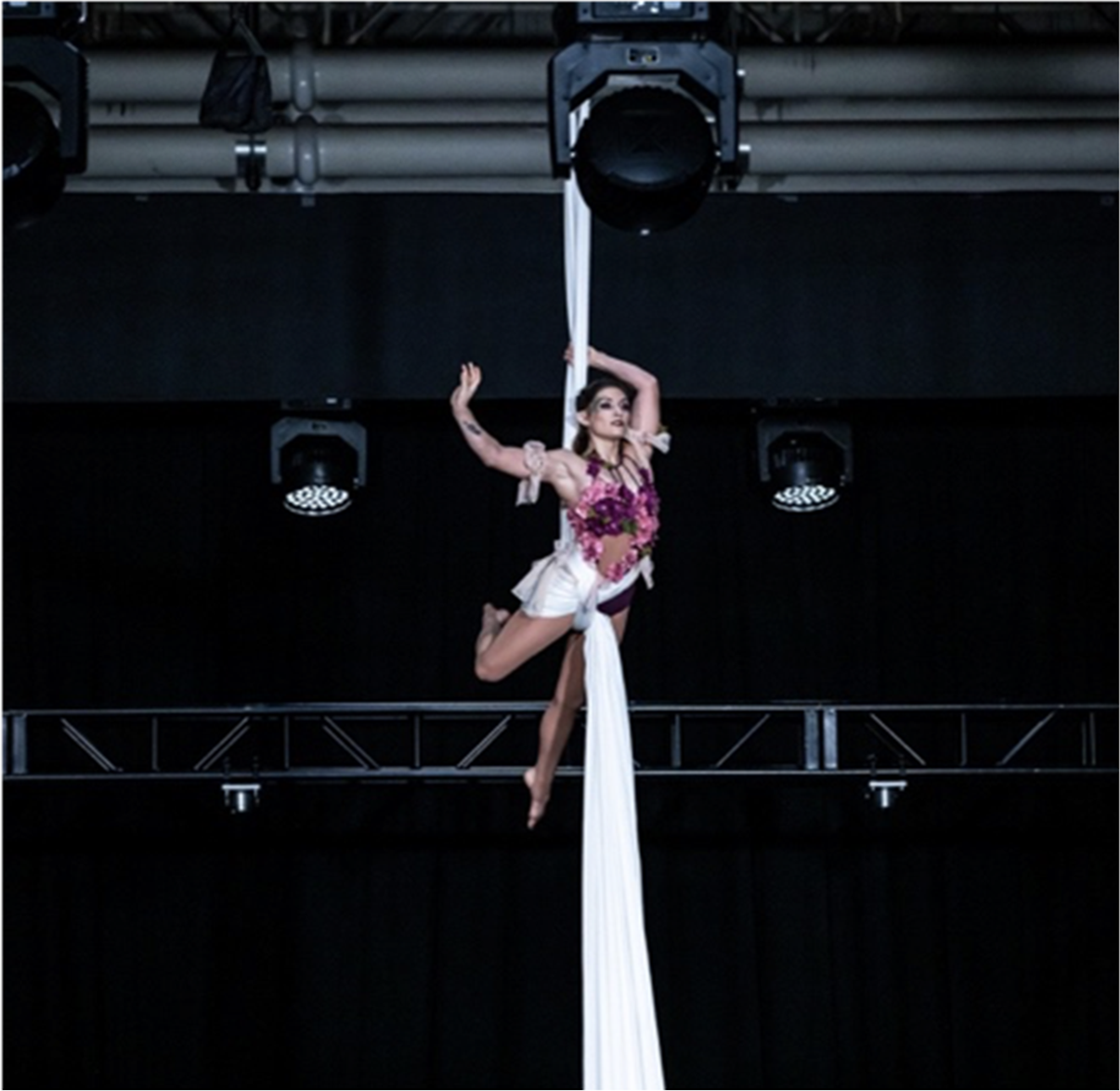
The effortlessness performers convey transcends basic expectations of aerial artistry into instances when workers are actively in pain or performing with injury. Silks artist JaJa shared, “[We need] to be able to work through some of those times when we’re in so much pain and we’ve crashed and we bruised and we blistered … you have to get out there and pretend like none of it hurts anymore.” JaJa’s comment demonstrates that she knows to pretend none of the pain she has sustained “exists,” suggesting an awareness of occupational control. Rather than resisting this control (see Bisel et al., 2007), JaJa reinforces it both in the ways she talks about “having to pretend like none of it hurts anymore” and her bodily action of masking pain. As her front stage image, JaJa provided an image performing during a street festival (see Figure 2). In this photo we see her near the top of her silks apparatus, smiling while holding her entire body weight in her hands. Below her, a crowd of spectators excitedly watches with awe. Front Stage Image: Street Festival Silks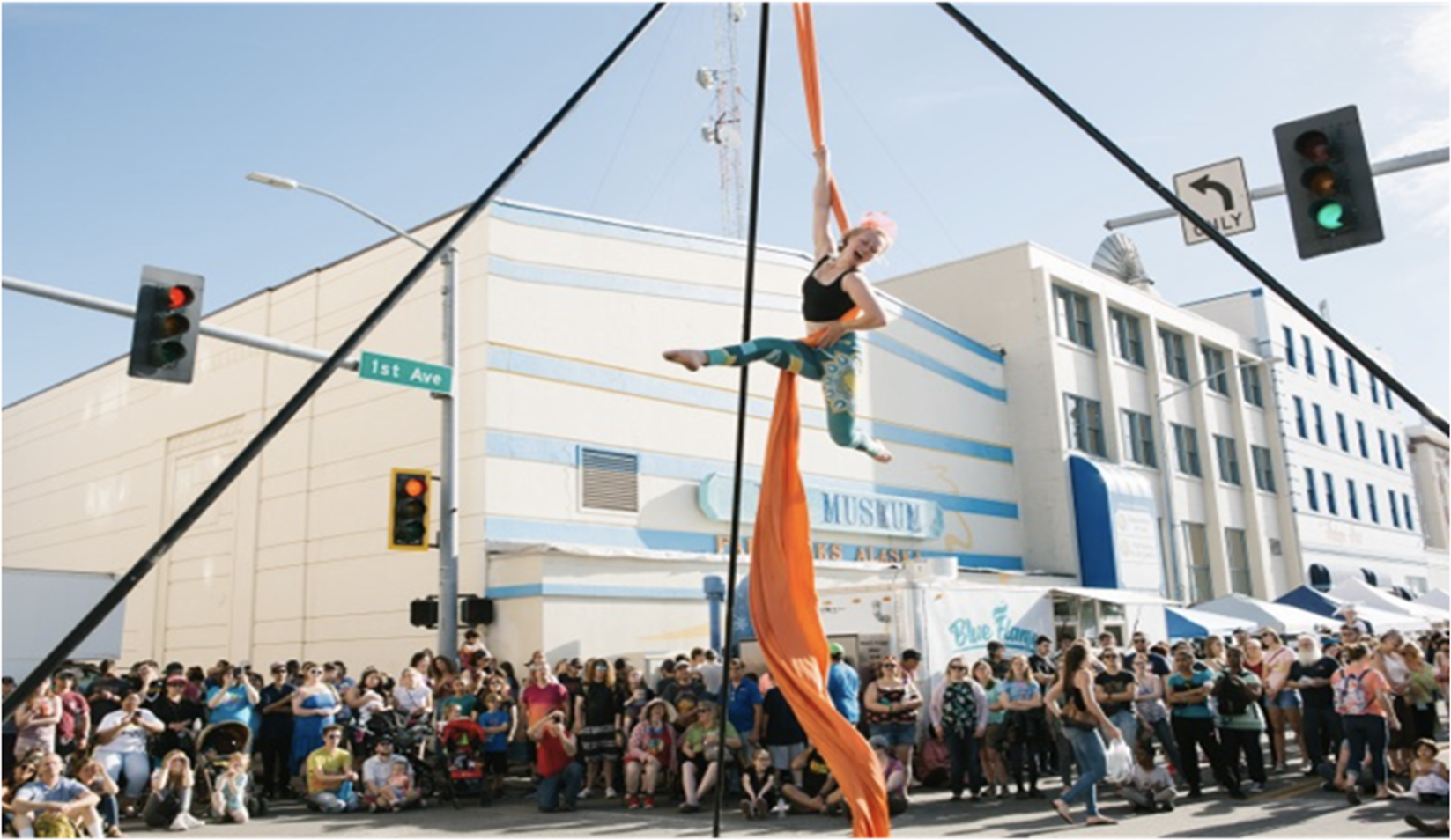
Routine pain occurs due to the physical exertions expected of aerialist feats (Walby & Stuart, 2021), but participants also shared experiences of needing to mask pain after sustaining severe injuries during a performance. Silks artist Barbara shared: My friend was doing a corporate event and they had to hang out at the top of their silks wrapped for a double star
3
for half an hour … She came out of her wrap because it had started to cut circulation so she was readjusting. And she ended up falling from like 24 feet and broke her heels. And this happened in front of the clients and everything. She had to walk off like nothing happened.
Barbara’s friend masked her pain despite her significant injury (i.e., a positive identity enactment). Adding that she had to “just get through it and get off the stage” indicates that she upheld occupational norms until she exited the front stage. This example also suggests Barbara’s friend succumbed to both explicit (i.e., being asked to “hang out at the top of their silks”) and unobtrusive control (i.e., “she had to walk off like nothing happened”).
In a similar vein, rope artist Megan chose a picture of her performing on chains loops as her front stage image (see Figure 3). Her backstage photo (see Figure 3) shows her calloused hands. In response to why she chose this photo, she said, “Your hands may be bleeding and the sweat will sting, but you still grip that bar and go as hard as you can until you leave for the night.” As her backstage image shows the physical reality of her glove-covered hands, her bodily harm is hidden from the audience. Front Stage and Backstage Images Pairing: Covered and Calloused Hands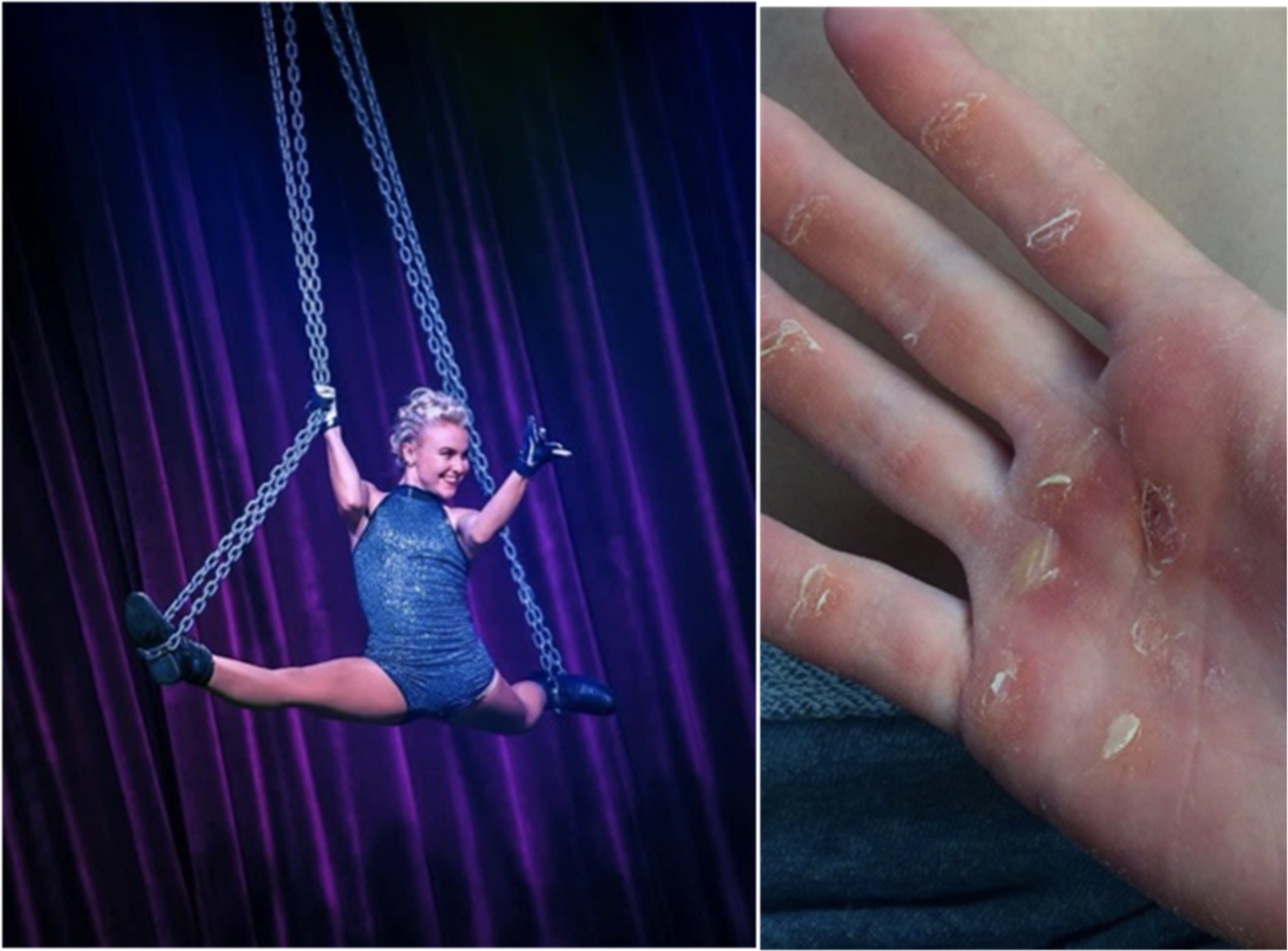
These findings suggest that performers participate in identity enactments of complicit masking by meeting occupational expectations even when they are not explicitly directed to do so (e.g., “ you have to get out there and pretend like none of it hurts anymore”). However, given the Discourse of freedom, participants recognized that aerial artistry should convey effortlessness and they fulfilled these occupational expectations through their discursive/embodied action (i.e., bodily identity enactment). In doing so, they simultaneously bolstered their identification (i.e., a mechanism of unobtrusive control) and reinforced occupational parameters for others.
Whereas participants were steadfast in their masking efforts, they also spoke to the physical exertion involved. Straps artist Ellie shared, “the appearance of being effortless … takes 110% of your effort.” However, there is no room to demonstrate effort in the front stage region, rather, expressing effort is left to backstage spaces. Straps artist Marcel provided a photo of himself passed out backstage while lying on the concrete, a leg up on a foldable chair, and an empty takeout box resting on his chest (see Figure 4). This image depicts the exhaustion that artists experience during a performance and the collapse that follows exiting the stage. Marcel’s image exemplifies how the body resists the demands of the occupation but takes what it needs (i.e., rest) only after the performance is done, giving into its material constraints. In this way, performers may also challenge the freedom Discourse. However, this resistance is reserved for backstage spaces where it is only observable by other workers, thereby reinforcing the unobtrusive occupational control implicitly guiding their behaviors. In summary, aerialists use the identity enactment of complicit masking to bolster their occupational identification, which is observable and replicated by other workers. Backstage Image: Post-performance Collapse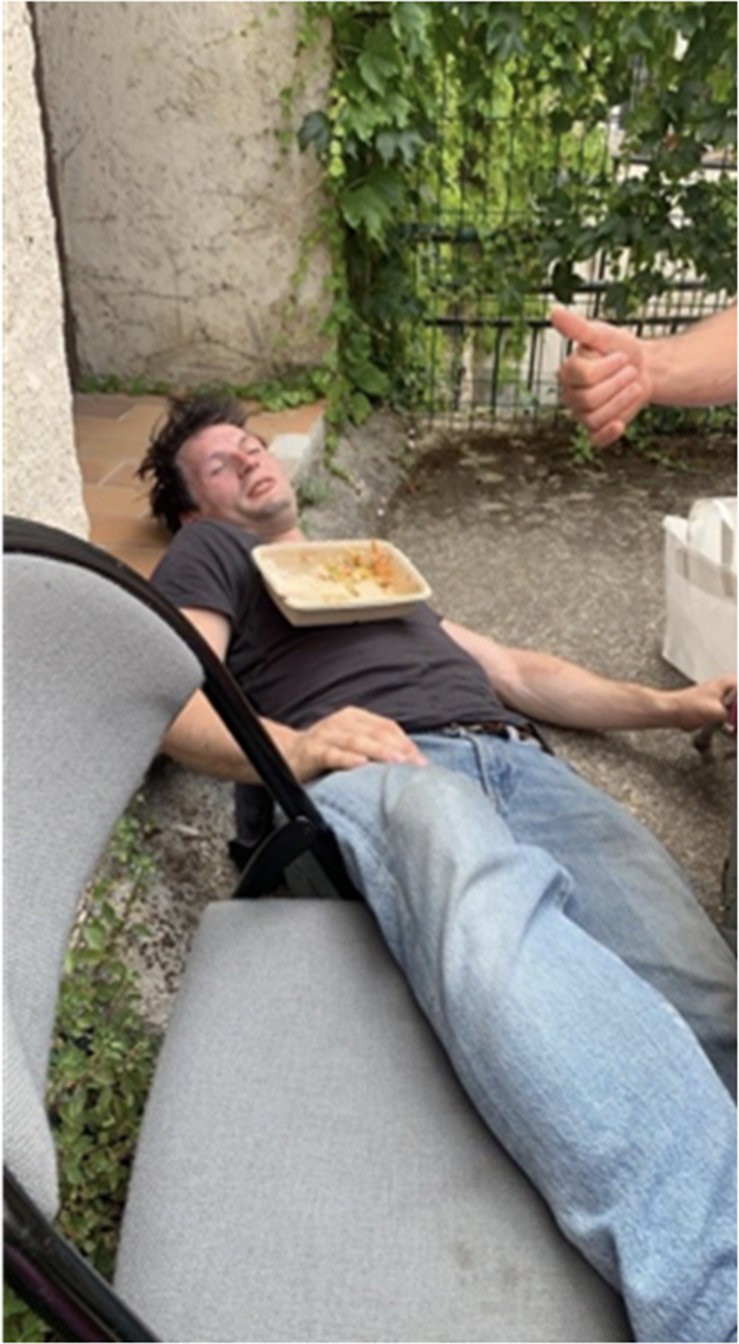
Complicit Risk-Taking as the Cost of Perceived and Embodied Risk
Participants also reproduced the Discourse of risk, which refers to the idea that danger is exciting to watch and participate in. We accentuate that aerialists not only accept risk as a feature of their jobs (see Walby & Stuart, 2021), but also perform and talk about risky behaviors as an identity enactment. We describe this identity enactment as complicit risk-taking, which occurs when workers uphold Discourses and increase identification—for themselves and for others—by engaging in risky behaviors. Participants described experiences where they were aware of potential risks during a performance (e.g., apparatus malfunction, miscalculation of distance to the ground) but asserted that “the show must go on.” The phrase “the show must go on”—a small “d” discourse given the repeated use of the phrase in everyday talk and in interactions with peers—surfaced when participants discussed instances when unexpected rigging, apparatus, or human-error issues occurred and conveyed that they would not consider stopping a performance if something went wrong. Silks artist Lauren shared, “I’ve never stopped in the middle of a performance.” On one occasion, Lauren could feel something was wrong with the rigging but did not consider the option to “stop and get down.” In the moment, both she and her partner absorbed the risk they were in and chose to “kick off and keep going.” Another example comes from trapeze and sling artist Margaux, who recalled an experience when her fabric apparatus did not open as extensively as she needed to safely execute a drop. Knowing she did not have enough fabric available, but “needing to hit the music,” she shared, “It was enough where I was—this will probably be fine and I’m going to take the risk … here’s hoping I don’t die.” Margaux suggests she was cognizant of her potentially fatal decision-making (i.e., “here’s hoping I don’t die”), but continued the maneuver (i.e., through bodily identity enactment) as she was constrained by the performance’s sonic requirements.
Participants expressed how audiences see aerialists as “daredevils,” “risk taker[s],” and “somebody who’s willing to do stuff that other people might think is really terrifying,” reinforcing the Discourse of risk in circus. Trapeze artist Lucy shared “You have to accept the risk. You have to embrace this as part of what you’re doing.” Dance trapeze artist Leo repeated this notion, “You’re basically a gymnast in the air, right? You’re figuring out your dynamic movement, and how you’re going to flip, turn, twist, rotate, and not die in the process.” Aerialists also appear to engage in a form of gallows humor through statements such as “not die in the process” and “here’s hoping I don’t die” as a way of “communicating shocking statements in a more socially acceptable way” (Lambert South et al., 2022, p. 857). Through this everyday talk and bodily action (i.e., small “d” discourses), aerialists demonstrate an internalization of occupational norms (i.e., unobtrusive occupational control) and convey risks are not only acceptable, but expected, resulting in these actions being reproduced by peers.
Complicit risk-taking also emerges backstage as aerialists train diligently, creating a body work double bind. A double bind refers to a tension or contradiction that feels impossible to navigate because attending to one pole negates attention to the other (Tracy, 2004). At one pole, professional aerialists must maintain performance-ready physical shape. At the opposite pole, they need to properly care for and rest their bodies. When aerialists are injured or tired, resting for recovery/healing impedes their ability to perform. However, not resting also impedes their ability to perform, putting workers at risk of missing out on future career opportunities if they are injured. Rope artist Megan shared, “Working in this field, your hands are going to be exhausted, and your mind’s gonna be exhausted, because you’re constantly using your body to make a living and push forward.” Participants shared that they would continue to train even if they were injured and would skip “rest days” to remain in top shape to perform, accentuating behaviors that put them at risk for injury and establishing occupational norms for other workers to observe and follow.
Silks artist Bailey chose a picture of himself performing bicep roll-ups (i.e., an upward somersault where the apparatus wraps around the biceps; see Figure 5) for his front stage image. When asked why this image was chosen, he answered, “I feel that’s kind of an iconic move of mine … it’s something that I worked on for a really long time to create this particular shape.” Bicep roll-ups are infamously challenging, as the aerialist’s entire body weight is sustained by the arms. Bailey’s backstage image shows him coaching other students on how to do roll-ups (see Figure 5). In this picture, he is shown using the marks and bruises on his arms as guides to indicate where the fabric should be for roll-ups. He shared, “When I’m doing the roll-ups in the routine it’s this flawless finished product, this polished skill, but even as I’m teaching and training them, my body is still enduring all this stress.” Bailey’s explanations for choosing these images illustrate the wear and tear he endures when training and teaching to execute a “polished” and “flawless finished product.” What the audience does not see is how Bailey’s backstage identity enactment allows him to perform in the front stage. Front Stage and Backstage Images Pairing: Bicep Roll-Ups.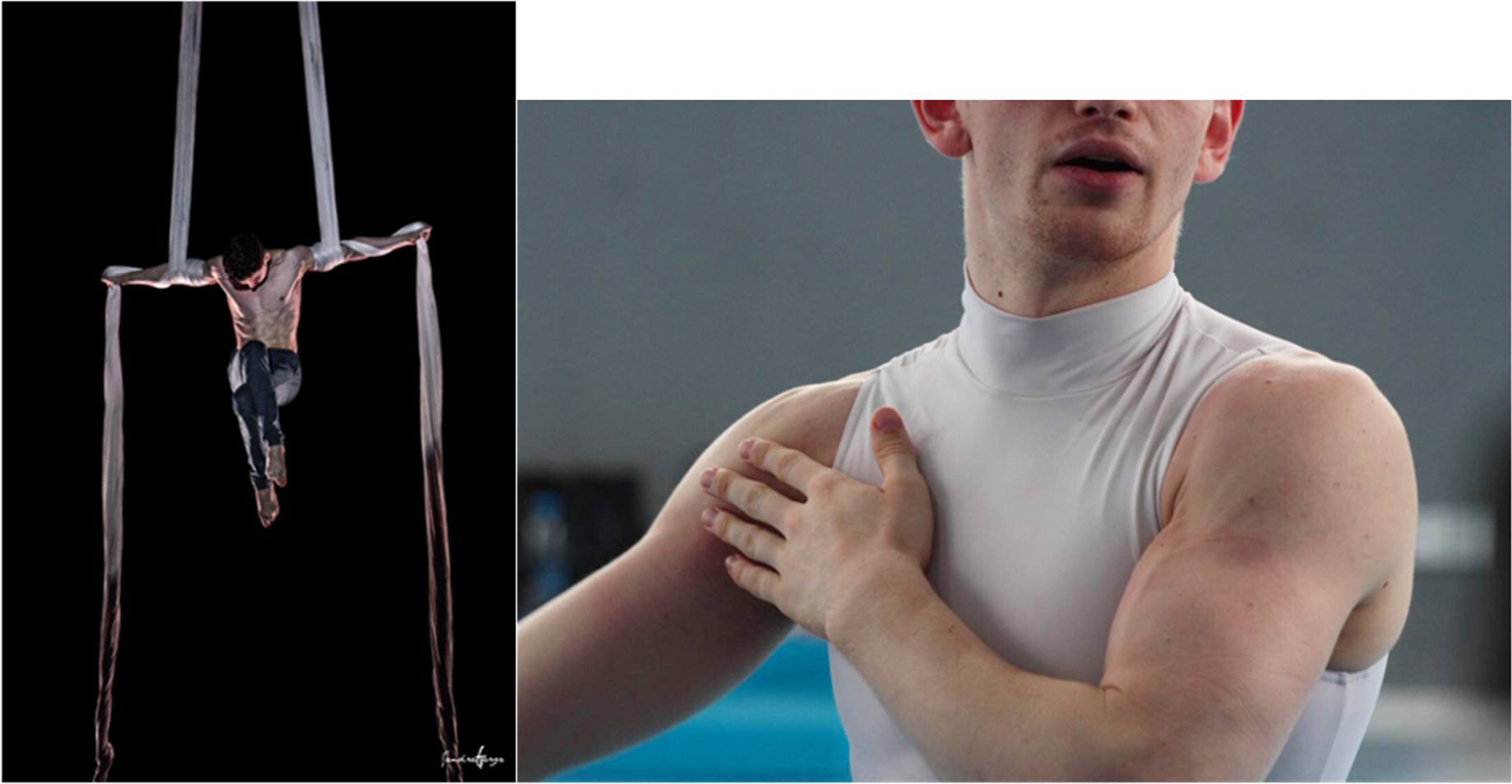
Another example of this double bind comes from trapeze artist Frodo, who chose a front stage image performing a trapeze act as part of an art exhibit (see Figure 6) because it depicted “the closeness with the audience.” In contrast, her backstage image (see Figure 6) shows her lying on a hospital bed after breaking her leg during a performance. Frodo shared, [M]y body is my tool … I’m a circus artist, a thing like that would change my life like this (snaps fingers) … And then at the same time, the fact that I am actually an aerialist also gives me some freedom to move while my leg is not functioning 100% right, like the possibility to actually hang from my arms and to really feel like I am able to move even though parts of me are not yet recovered. Front Stage and Backstage Images Pairing: Flying and Falling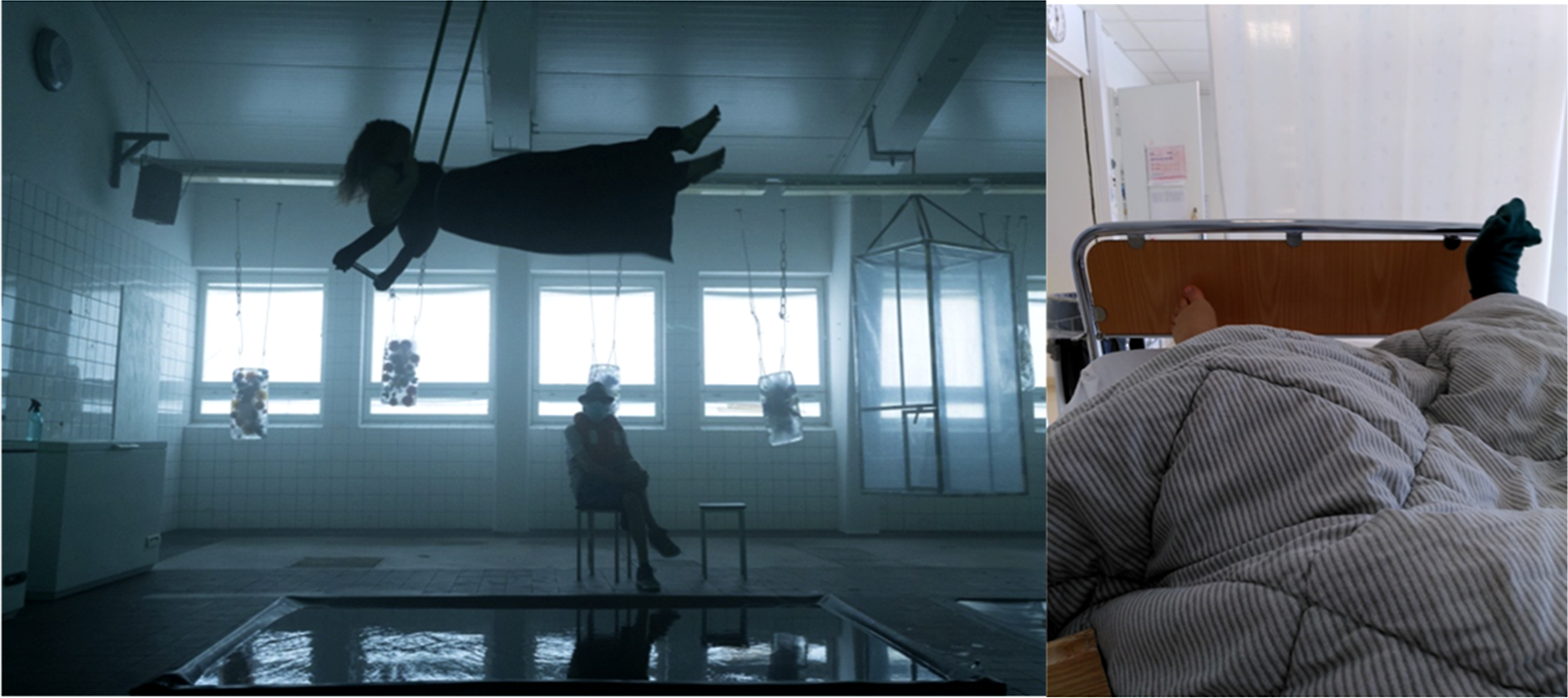
As a way of identity enactment, Frodo finds ways to train the “parts” of her that are not injured. When asked when she planned to resume training, she turned her Zoom camera around to show a trapeze hanging from her living room ceiling and said, “I am already … It took me three days … it wasn’t really like my body’s rotting, at least I can still use my arms.” Even after sustaining a significant injury, Frodo resists recovery attempts by pushing her body to the limits. In summary, the analysis revealed how aerialists engage in complicit risk-taking. Relying on their bodies as tools, aerialists (re)produce a risk Discourse that results in highly identified occupational members training diligently regardless of how much pain and injury they endure as well as participate in risky behaviors that endanger their lives.
Complicit Anonymity and Exploitation as the Cost of Spectacle
Participants (re)produced a spectacle Discourse which suggests that the circus is mesmerizing, grandiose, and over the top (Jacob, 2018). Spectacles require collective production of coordinated circus performances (Wall, 2013); as a result, contemporary circus does not typically exalt individual performers. Aerialists worry about their ability to secure work as many performers are freelance contractors and are not usually employed by a single organization. Cirque du Soleil’s website (2024) claims artists are typically offered “one- or two-year contracts at a very competitive salary” with the expectation that they train an average of 12 hours a week (not accounting for the, on average, ten shows a week they perform). George Caceres, a former trapeze artist for Ringling, claims that circus is “not a highly lucrative profession. Nothing really in the circus is” (Leonhardt, 2023). This same article notes the average annual salary in the United States for a trapeze performer to be $39,000. Unfortunately, the circus industry is largely unregulated and lacks transparency regarding performers’ payment. One participant noted he wished performers were more vocal about their pay, with several suggesting circus artists unionize to demand more regulation in payment. Participants also expressed the need to take on supplemental work to make ends meet (e.g., “I was doing aerial but I was figure modeling up to 30 hours a week, which is insane and I would never recommend to anyone ever”).
For performers, securing contracts in a competitive market can both affirm and threaten their occupational identity, driving them to take risks, exceed physical limits, and deliver a true spectacle. Because circus contracts are “few and far between,” aerialists engage in complicit anonymity and exploitation with producers by (a) participating in a type of deindividualization where they are not recognized by name, (b) echoing Discourses of replaceability, and (c) accepting inadequate pay and working conditions to secure contracts as positive identity enactments. Complicity surfaces when workers accept poor working conditions and these working conditions are sustained and repeated by observing colleagues, rather than challenged.
Unlike traditional circuses that historically gave top billing to named performers (e.g., Dainty Miss Leitzel, the World’s Most Marvelous Lady Gymnast
4
; Jacob, 2018), Cirque du Soleil performers’ names are typically unknown to the audience and they “work behind a veil of anonymity” (Gross, 2015). Flying pole artist Markus suggested that in a theater setting, a certain performer (e.g., Al Pacino) could be the draw for the audience, but “that’s not really the idea of circus.” Bringing too much attention to a single performer would jeopardize the draw of the show if the performer were absent. While casting departments are always on the lookout for new acts, performers cannot be so unique that they are irreplaceable (Belkin, 2007); this creates a risky investment for a circus if the performer were injured. Aerialists are aware that “the idea of circus” is not about exalting individual performers, so they are also aware that their anonymity enhances their replaceability. Trapeze artist Margaux shared, [T]hey’re looking for a performer who can perform five or more acts so they don’t have to hire and pay more performers … you’ll always have somebody that can do your job just as good as you. So if you get hurt, you’ll be out and out of your contract within a day, and you’ll have somebody performing in your place that night.
Margaux also highlighted the degree of deindividualization of the performer and the commodification of workers’ bodies. For her front stage photo, Margaux chose a picture of herself doing the splits during a performance on sling (see Figure 7). She shared, “In order to be hired as a performer you need to have this aesthetic” but also believed that she would never be hired by Cirque du Soleil specifically, because “there are 200 tiny Russian 20-year-old gymnasts that can do what I do, and more.” For her backstage photo (see Figure 7) she presented an image she submitted to Cirque du Soleil as part of the audition process, sharing, “We are bodies trying to be aesthetic and pleasing constantly … It does feel dehumanizing in some ways, and to send them in like, ‘Okay, here’s my body.’” Margaux’s “dehumanizing” experience illustrates how the Discourse of spectacle is upheld as priority over the individual workers that contribute to this spectacle, reinforcing elements of body commodification in body work organizations. Front Stage and Backstage Images Pairing: Aesthetic and Audition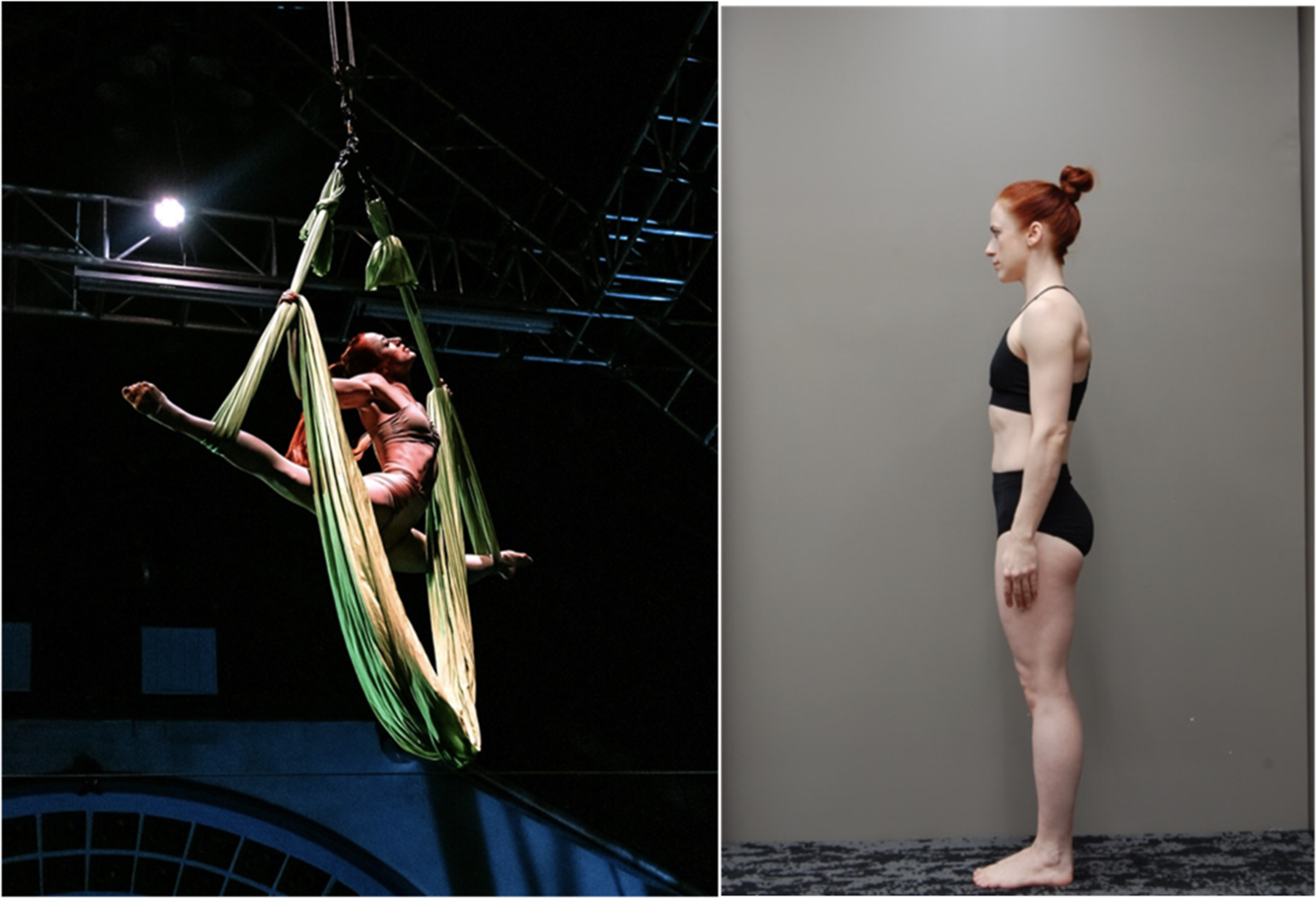
When organizations treat occupational roles as fulfilled by bodies stripped of their individual subjectivity, they (re)produce Discourses that ignore material needs of workers. For example, as freelance contractors, aerialists stipulate in their contracts that they have access to preparation/training facilities before their formal performance gigs because producers often fail to provide these services. As their front stage image, lyra artist and contortionist Jo shared a picture in a backbend while doing the splits on the stage of a production (see Figure 8). They chose this photo because it is an image they use for marketing. In contrast, their backstage photo shows them doing the splits using a foldable chair for support and making an obscene gesture to the camera (see Figure 8). They chose this image because it is representative of the conditions of their backstage preparation area. Jo added: I am really tired and sore and I have to go in and train because I have to continue to get this choreography ready for this show. It’s not going to pay me enough money to even pay the studio fees for the time that I’ve been rehearsing but I’m hoping I get the photos so that I can use it for promos so I can get more gigs with that act. Front Stage and Backstage Images: Marketing Materials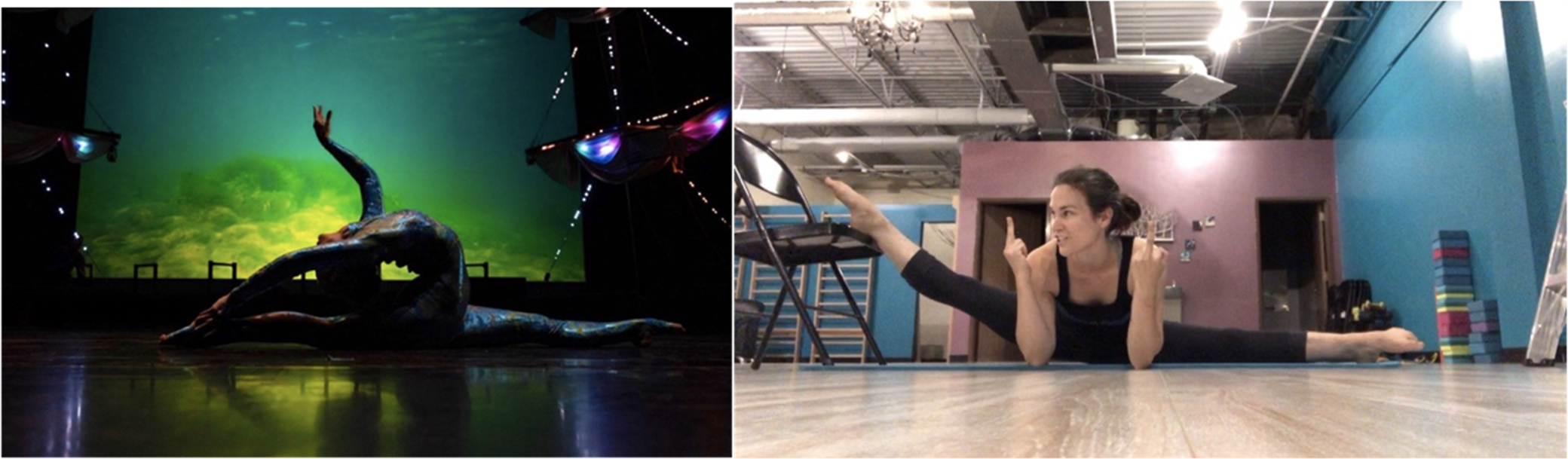
Jo explained that many gigs fail to offer a salary that would cover the cost of preparation for the gig itself. In such cases, performers hope to, at minimum, walk away with marketing materials that can be used to secure future jobs. Not given access to basic needs to fulfill their occupational role, Jo’s comments highlights the identity enactment of anonymity. Jo’s gesture may also indicate how this backstage space is a site of resistance, one in which workers may express frustrations with their complicity (or at least may be made more aware that this complicity exists).
In summary, the findings demonstrate how aerialists engage occupational identity enactments that (re)produce institutional Discourses, demonstrated by their language use in specific, situated contexts (i.e., little “d” discourse) and bodily enactments (e.g., through observable actions such as risky behaviors). In response to the guiding research question, we find that workers are complicit in reproducing recurrent organizational practices that drive identification as mechanisms of unobtrusive occupational control—for themselves and for other workers who observe and imitate behaviors—via masking, risk-taking, and engagement in exploitative practices that anonymize performers.
Discussion
This study explored how workers engage identity enactments that reproduce circus Discourses as mechanisms of unobtrusive occupational control. A phronetic iterative analysis of interview and Photovoice data revealed three occupational identity enactments aerialists engage: (a) complicit masking, (b) complicit risk-taking, and (c) complicit anonymity and exploitation. Taken together, the findings of this study contribute to (a) unobtrusive control theory and identification, (b) d/Discourse and bodily identity enactment, and (c) the value of arts-based elicitation as a method of revealing underlying/hidden features of identity enactment.
First, this study introduces the theoretical term of complicity to how workers enact their occupational identities and uphold institutional Discourses. We include complicity in a subcategory of unobtrusive control (Bullis, 1991; Tompkins & Cheney, 1985) in which workers reproduce recursive organizational practices that reify identification at the cost of the workers’ agency and well-being. Organizational communication scholarship has a long history of examining strategic subordination, a similar yet distinct phenomenon (see Deetz, 1998; Tracy, 2016). Complicity differs from strategic subordination in that workers are not only engaging in questionable, often dangerous identity enactments for themselves, they are also engaging in recursive reinforcement of unobtrusive organizational control through front- and back-stage enactments of identity. Complicity occurs through workers’ bodily and discursive reinforcement of valued occupational identities. These identity enactments are observable by other workers, which they in turn replicate, sustaining and legitimizing circus Discourses.
Importantly, participants recognized their identity enactments as questionable, thus affirming their complicity (e.g., “it’s kind of insane when you think about it because that is incredibly dangerous”). This phenomenon of complicity is unique in that workers were aware of the absurdity and irony of their enactments, but were often not willing or able to engage in structural change to occupational practices and norms. As such, the theoretical use of the term complicit denotes the recursive power of body workers’ identity enactments to sustain organizational ideologies, but does not denote culpability in workers. Rather, this study illuminates the broader ideological systems that juxtapose workers’ agency with their conformity to institutional expectations. While previous literature suggests workers engage in self-subordination in alignment with organizational goals (Barker, 1993; Deetz, 1998) and are aware of the unobtrusive control within the organization (Bullis, 1991), we find that workers internalize institutional norms and are aware of ideological systems of control without engaging in resistance or meaningful change. Rather, they participate in the reinforcement of these ideologies with complicity functioning as a socialization mechanism for newcomer identification (e.g., “If people can’t deal with pain, circus isn’t probably for them”) and highly identified members performing as instruments of complicit control.
Second, we situate bodily identity enactment as a small “d” discourse in relation to Alvesson and Kärreman’s (2000) d/Discourse framework. The findings of this study underscore how identity enactments are both/and discursive/embodied 5 and imbued with meaning. For example, workers discursively reproduce that masking pain is “part of the magic that makes circus people” and experience the pain itself through bodily enactment (e.g., “it was probably one of the most painful gig experiences of my life … but I just went out there and put a smile on my face”). These bodily identity enactments as small “d” discourses are observable through the integration of Photovoice into our analysis, revealing how these enactments manifest across multiple occupational contexts (i.e., front-facing and backstage work sites). For example, the embodied action of “your pain does not show up. It’s not part of the dramaturgy of circus” is observable through Megan’s beaming smile in her front-facing role, revealing in her backstage image how the pain does in fact “show up” as depicted by her calloused hands (Figure 3). Therefore, future scholarship building upon Alvesson and Kärreman’s (2000, 2011) d/Discourse framework should explore how bodily enactments function as small “d” discourses across a range of occupations and industries beyond athletic-performative contexts.
Our findings underscore the (re)production of d/Discourse as foundational to occupational identification by means of unobtrusive occupational control for aerial acrobats in the circus industry. As the “essence of circus” (Davis, 2018) is forged through representations of freedom, risk, and spectacle (Tait, 2005, 2006), workers’ identity enactments reinforce expectations of extraordinary physical abilities that reproduce these Discourses. Granted, organizations are allowed to set occupational expectations for employees. However, workers should be equipped with adequate resources and protocols in place that do not work to sabotage their performance. By perceiving dangerous and painful actions as positive identity enactments, these actions become valorized (Ruston et al., 2018), urging highly-identified workers to train harder and riskier. As a result, workers may see themselves as specialized athletes, reinforcing an elite occupational identity that deepens their identification while simultaneously reflecting larger institutional ideologies (i.e., complicity). It would behoove organizations to implement systems that foster open and inclusive dialogue about phenomena that actively incorporate workers’ perspectives. Such dialogue could reframe these tensions in ways that strengthen organizational structures. For instance, heightened attention to safety may provide stability (e.g., performers may experience reduced risk of injury and need to call out of work, thereby compromising the show), increase employee commitment and trust (Hällgren et al., 2018), and reduce workers’ compensation claims.
Lastly, the incorporation of Photovoice (Wang & Burris, 1997) allowed unique access and articulation of backstage lived experiences of aerial acrobats. As arts-based approaches can “access emotion, tacit assumptions, and collective sensemaking” (Tracy, 2020, p. 70), this method allowed for participants’ images to reveal hidden or underlying features of identity enactment. While beyond the scope of this study, the experiences highlighted by participants’ backstage images may reveal that these identity enactments go beyond occupational identity to affirm individuals’ holistic identity. Given that these workers are willing to risk their lives for their occupations, they may not conceptualize their occupational identity as separate from their overall identity. Future scholarship should investigate the overlap of workers’ occupational identity and overall identity enactments in high-risk jobs beyond the circus industry.
Conclusion
This study reveals how aerial acrobats in the circus industry engage in identity enactments that actively reproduce dominant institutional Discourses through mechanisms of unobtrusive control. By introducing the theoretical term of complicity, this research advances organizational communication theory by illustrating how workers knowingly reinforce institutional ideologies, often at the expense of their own well-being and the well-being of their peers. The inclusion of Photovoice as a method of inquiry highlights the ways in which bodily performance functions as a small “d” discourse within occupational contexts. Ultimately, these findings invite future scholarship into the recursive nature of occupational identity, particularly in high-risk professions. This work contributes to theoretical understandings of occupational identification and control processes as well as practical implications for institutional accountability to better promote worker agency, safety, and well-being.
Footnotes
Acknowledgements
We would like to thank Dr. Boris H. J. M. Brummans, Dr. François Cooren, and Dr. Emma Frances Bloomfield for their dedicated efforts in reviewing previous iterations of this manuscript. We would also like to give our heartfelt gratitude to the participants of our study. Without their time, candor, and steadfast courage, this study would not exist.

Funding
The authors received no financial support for the research, authorship, and/or publication of this article.
Declaration of Conflicting Interests
The authors declared no potential conflicts of interest with respect to the research, authorship, and/or publication of this article.