




Abstract
This paper reports on the development and validation of a communication measure designed to assess how military veterans feel toward civilian communication. Specifically, we theorize that some veterans experience a mild negative moral emotion (i.e., contempt) toward civilians’ communication habits. The emotion is likely a consequence of intense professional socialization and membership in a totalistic organization. Veterans who served in the military since September 11, 2001 (N = 215) responded to items, which were factor analyzed. Then, in a second study, the scale was validated using another sample of post-9/11 veterans (N = 466). Together, these studies contribute an original communication measure that could help identify whether a veteran will have difficulty reintegrating into civilian work life. The scale could be useful in developing interventions to aid veterans in successful reintegration. Ultimately, the measure holds the potential to promote workplace diversity through the successful inclusion of more veterans in the workforce.
Contempt refers to the emotion of “cool disregard” and feelings of superiority over another; it contrasts with the “hot” emotions of anger and rage (Bell, 2013). Relationship scientists have determined that contempt can be expressed communicatively among individuals and, when present, has problematic outcomes for communicators and their relationships (McNelis & Segrin, 2019). These fundamental insights about human relationships are leveraged in this paper to begin a process of investigating whether some military veterans experience generalized and targeted contempt for civilian communication norms and habits. Such a phenomenon might explain why some veterans have trouble reintegrating into the workforce after active service (Senecal et al., 2018). Veteran reintegration is a communicatively-constituted process and the presence of contempt towards others’ communication behaviors may disrupt its healthy progression. This paper reports on the development and validation of an original measure of veteran contempt for civilian communication (i.e., the VCCC scale).
Exploring the issue of veteran contempt of civilian communication is a suitable matter for organizational communication inquiry. Military members are socialized into a strong culture, with its own professional and organizational communication norms (Howe & Hinderaker, 2018). Those norms are inculcated by military leadership throughout the organizational chart as well as by group-level concertive control (Brooks & Grewal, 2022). As a result of the professional socialization created by the military’s management communication, some veterans depart service with contempt for civilian communication. In turn, veterans who experience contempt for civilian communication may find social reintegration difficult, including reintegration into workplaces where they must interact with civilian bosses, coworkers, and customers. With the conclusions of the wars in Iraq and Afghanistan, leaders and managers are likely to interact with military veterans more frequently. The VCCC holds the promise and potential of helping identify veterans who may have difficulty communicating in the workplace. This could aid managers, practitioners, and researchers in developing interventions to both help veterans learn more about the civilian workplace and help civilians understand the communicative expectations of military veterans. Such interventions could help bolster an inclusive workplace for military veterans and allow their important contributions to be realized.
Currently, no validated communication measure exists to assess successful military-to-civilian reintegration. The purpose of this study is to develop such a measure in order to help practitioners and researchers identify veterans who are most at risk of failed reintegration upon military exit (Koenig et al., 2014). If such a measure can be created, early treatment or communication training can hopefully be provided. The military socialization process tends to create a deeply embedded military identity, which members often adopt as a personal identity (Orazem et al., 2017). If some military veterans perceive they cannot enact their identity in the civilian world, they may withdraw. In turn, veterans may experience social isolation and reintegration difficulty when identity needs are not satiated (Stein & Tuval-Mashiach, 2015).
Social isolation is a contributor to mental health issues, such as anxiety and depression (Fried, et al., 2016), which increase the likelihood of harm against self or others (Neacsiu, et al., 2017). Norman and colleagues (2015) found that veteran reintegration difficulty was positively associated with post-traumatic stress (PTS), anxiety, and depression while negatively associated with quality of life. The current project is the first to propose that a communication-related moral emotion (i.e., contempt) could be a root cause of the reintegration difficulties some veterans face.
This project takes on three goals designed to aid researchers, practitioners, and managers in their support for military veterans’ transition into civilian work life: (1) To develop and validate a measure to identify military veterans who feel contempt toward civilian communication. Such contempt is theorized, supported empirically, and shown to be associated with loneliness and reintegration difficulties. The measure could be used for future interventional studies and provide a model for examining moral emotions in workplace communication patterns more broadly (Kintzle & Castro, 2018). (2) To begin to redress the problem of veterans as an understudied form of workplace diversity (Vanderschuere & Birdsall, 2018). The scale developed here can help organizational communication scholars understand, measure, and research issues relevant to veterans in order to improve knowledge of workplace diversity, equity, and inclusion (Gonzalez & Simpson, 2021). (3) To provide new insight to supervising managers about a unique struggle experienced by some military veterans during reintegration into the modern workplace. Hammer and colleagues (2021) stated: “Supervisors are key in supporting and recognizing the unique knowledge, skills, and abilities that … service members bring to the workplace, enhancing … business outcomes, [and] social relationships within organizations” (p. 218). Thus, a deeper understanding of veterans’ attitudes regarding civilian communication could help managers better support them.
This piece begins to accomplish these goals from an organizational communication perspective by examining how military communication norms can influence the ways veterans experience civilian communication norms in the workplace and elsewhere. The following section discusses military professional socialization, the contempt-anger-disgust triad (Rozin, et al., 1999), and how these issues may relate to veteran reintegration difficulties.
Professional Military Socialization and Potential Reintegration Difficulty
Professional socialization into the military is intense—and for good reason. Military personnel must perform safely, reliably, and ethically (Weick & Sutcliffe, 2015). If they fail to do so, their own and others’ lives could be endangered and national security itself could be threatened. Thus, it is not surprising that militaries commit significant resources to training and reinforcing prescribed behaviors, self-concepts, and habits. Such intensive socialization, however, may ultimately (and inadvertently) leave some veterans feeling that it is difficult to relate to workplace communication partners who do not share their experiences and mindset.
Socialization into the U.S. military is not serene. The intense constitutive communication of drill sergeants instills a value-laden military identity (Shpeer & Howe, 2020). The process is especially challenging for those unaccustomed to military communication (Van Gilder, 2018). Members memorize and recite creeds, songs, jargon, cadences, and facts that help guide their military indoctrination and make sense of the new role (Shpeer & Howe, 2020). Although branches and units differ in the specific actions performed during training, they all center around the Uniform Code of Military Justice (UCMJ) and focus on normalizing military norms (Howe & Bisel, 2020; Howe & Hinderaker, 2018).
Hinderaker (2015) argued that exiting totalistic organizations is often an especially difficult and emotionally-jarring experience. Totalistic organizations “require complete member loyalty, often public [ly] declared upon induction into the organization” (p. 93). The exit experience is difficult because these organizations inculcate cultural norms, which may make functioning after organizational membership difficult when interacting with individuals who do not share these norms. In a study of military veteran reintegration, Koenig et al. (2014) found “veterans’ experiences resulted from an underlying tension between military and civilian identities consistent with reverse culture shock” (p. 414). The U.S. military is a totalistic organization and exit from these organizations tends to be difficult because members’ identities become intertwined with that of the meaning of organizational membership (Hinderaker, 2015). Howe and Shpeer (2019) found support for this idea when they interviewed military veterans who were beginning college; many veterans described communication with fellow students, instructors, and coworkers to be challenging due to differences between military and civilian cultures.
The military employs rigorous training and socialization to inculcate accepted and expected behaviors (i.e., norms); in doing so, it creates a distinct and strong culture for members (Howe & Hinderaker, 2018). Inculcated norms in military culture produce a shared system of meaning that is reinforced by group members (Shpeer & Howe, 2020) and which can result in difficulty during exit (Koenig et al., 2014). Indeed, the norms that were strongly reinforced via professional military socialization may have the unintended consequence of arousing negative feelings for some veterans when they attempt to interact with civilian organizational members who do not share those norms or who have competing ones.
A recent study by Brooks and Grewal (2022) explored how military culture can lead to veterans’ contempt of civilians and especially of civilian oversight. The authors acknowledge that as early as 1997 researchers documented military members, in this case Marines, as having “contempt for American society in which civilian life is seen as dissolute and morally dubious, while military life is disciplined and honorable” (p. 624). To move beyond this limited evidence, the authors conducted a survey of 770 West Point cadets and concluded that “the relationship between contempt for civilian society and disregard for civilian control … stems from cultural beliefs about the military and society” (p. 634). Likewise, Senecal and colleagues (2018) note that “the data show that American soldiers struggle to reintegrate at a much higher rate than soldiers from other nations” (p. 54) and found that “many soldiers in this study experienced a high level of distrust for civilians at large. However, in some soldiers, this distrust was articulated as a form of contempt and disrespect for civilians” (p. 60). Some civilian organizational forms have cultures similar to the military, such as totalistic organizations and high-reliability organizations, but many traditional organizations may approach workplace communication in a more indirect and less rigid manner than what veterans were socialized into during their military service. These discrepancies could lead military veterans to feel disconnected when communicating in traditional organizations or to seek out workplaces more like their previous experiences (e.g., totalistic and high reliability organizations). This may help explain why researchers have found that some veterans felt disconnected from civilian ways of being while “some participants went further, expressing an open disrespect and contempt towards civilians” (Senecal et al., 2018, p. 67).
Contempt, Anger, and Disgust Triad
All individuals experience moral emotions frequently. Contempt is a moral emotion and is “similar to disgust, cool disregard, or amused dismissiveness” (Bell, 2013, p. 27). Contempt is a mild emotion and contrasts with the hot emotion of anger. Contempt is one of three moral emotions that form the contempt, anger, and disgust (CAD) triad (Rozin et al., 1999). Rozin and colleagues (1999) stated the reason many psychologists are interested in moral emotions is because “[a]uthors in a variety of fields have begun to argue that emotions are themselves a kind of perception or rationality” (p. 574), which, in turn, shape decision making and behavior.
The CAD triad hypothesis argues that although contempt, anger, and disgust have much in common, differences stem from the stimulation of each emotion. These researchers argue anger is linked to autonomy threats, disgust to divinity threats, and contempt to community threats. Because identity is often rooted in the groups to which individuals claim oneness or belongingness, when a group or community is under threat, it drives members to reaffirm the (supposed) superiority of the group (Ploeger & Bisel, 2013). Such actions result in mental models of the other as inferior and unworthy of interactions (Bell, 2013).
In everyday language-use, “contempt” may describe an extreme form of anger, but that is not the case for its usage here. Contempt is much “cooler” than anger and tends to manifest itself in eye-rolling, mocking, sarcasm, derision, minimizing, sardonic belittling, and patronizing humor. Veterans’ service and commitment to their fellow national civilian citizens might make it seem unlikely that they would feel this cool negative emotion toward those they are sworn to protect. However, the extreme rigors, experiences, and camaraderie-of-mission experienced by military members could invite some veterans into a perception and rationality of superiority over civilian others who do not share in that community.
Moral emotions are both biological and cultural (Bisel, 2018), and the intense socialization of the military is likely to exert considerable influence on felt moral emotions. Shpeer and Howe (2020) found drill sergeants reframed morally charged ideas about killing, honor, trustworthiness, and suicide when addressing recruits. Of interest to this study was the contempt drill sergeants showed toward recruits as they laughed at them, degraded them, and punished them. In the tightly controlled entry phase of the U.S. military, the communication acts of non-commissioned officers—the managers of the military—shape military culture. Their actions likely result in organizational culture influencing feelings of contempt toward non-members. Shpeer and Howe (2020) detailed how new recruits glorified and sought to imitate the communication of drill sergeants. Therefore, military recruits may develop a predilection for an attitude of contempt, as the communication emerging from this moral emotion has been modeled and normalized.
Considering the research on socialization and moral emotions, measuring veterans’ beliefs about civilian communication holds the potential to illuminate a root cause of some veterans’ reintegration difficulties. If civilian communication violates communal military norms, it may trigger contempt from some military veterans. Veterans may communicate this contempt or refuse to interact, both of which can result in reintegration difficulty in both work life and the college classroom (Howe & Shpeer, 2019). If military veterans experience contempt toward civilians, this may lead to isolation, feelings of exclusion, or missing familiar camaraderie (Smith & True, 2014). Therefore, a scale measuring the amount of contempt veterans feel toward civilian communication could prove useful in assessing the ability of military members to reintegrate into civilian work life successfully and in assessing communication interventions designed to improve veterans’ reintegration efforts.
Step One: Theoretical Concept and Item Generation
Scale development followed Carpenter’s (2018) 10-step process. Scale validation followed Hinkin’s (1998) methods, as well as best practices for quantitative analysis (e.g., Hemphill, 2003; Hu & Bentler, 1999; Kline, 2013).
Theoretical Concept Defined
This scale is designed to measure the degree of contempt military veterans feel toward civilian communication. Prior research was used as a guide for developing the “intended meaning and breadth of the theoretical concept” (Carpenter, 2018, p. 26). The intention of this measure is to gauge the amount of underlying contempt, or cool dismissiveness, which military veterans feel toward civilian communication norms. During scale development, the authors initially thought the concept to be unidimensional. A review of qualitative studies of military veterans helped generate initial items (e.g., Howe & Bisel, 2020; Howe & Shpeer, 2019; Van Gilder, 2018). The lead author crafted five items for each of 12 verbal and non-verbal communication categories (physical appearance, paralinguistics, body movement, gestures, posture, facial expression, eye contact, proxemics, haptics, chronemics, artifacts, and environment).
Expert Academic and Provider Review
After the initial generation of 60 items, expert peer review bolstered face and content validity (Worthington & Whittaker, 2006). One expert had worked as an academic for over 15 years, holds a doctorate degree in organizational communication, and is a full professor at a research university. The expert noticed that no items used military language (e.g., jargon, acronyms). Because of the desire to capture language familiar to participants (Wilmoth et al., 2017), the first author developed items which used military jargon, resulting in 46 additional items (a total of 106 items). Anchors of “Hell No” and “Hell Yes” were also set, as such language is normative in veteran communication (Shpeer & Howe, 2020). Strict criteria wording was applied to capture the theoretical concept. Specifically, each item had to: (a) emphasize communication, (b) arouse contempt, and (c) conjure a mental model of a prototypical civilian. The first author reworded items that did not meet these criteria and six reverse-coded items were added for a total of 112 items. Two administrators and one clinician who specialize in working with veterans supplied item feedback. The suggestions of these experts resulted in deletions, edits, and additions and a final pool of 126 items.
Veteran Open-Ended Questioning and Item Review
Six veterans, recruited via snowball sampling and representing the Army, Navy, and Coast Guard, also provided feedback to help refine the scale and increase content validity (Worthington & Whittaker, 2006). Veterans responded to an open-ended questionnaire which had institutional review board (IRB) approval. The questionnaire asked: “What civilian communication do you find contemptuous?” and “What civilian communication do you appreciate?” All participants described how civilian’s indirect communication aroused contempt. Three veterans then reviewed all scale items (Worthington & Whittaker, 2006). The veterans suggested minimal changes and affirmed that the scale items resonated with their past experiences.
Determination of Items Included for Analysis
The authors noticed items represented two categories: general assessments and assessments of specific communication acts. General communication items assessed broad characterizations, such as “Civilian talk is stupid.” Specific items referred to unique situational communication, such as “Civilians should not walk and talk on the cell phone.” General communication items (61 items) were kept as they were theorized to be more likely to capture generalized contempt among veterans, whereas specific communication acts may be too exact and therefore measure a different emotional construct (see Rozin et al., 1999). Thus, these specific items were eliminated.
Method Study 1: Developing and Analyzing the VCCC
In the first study (which received IRB approval), participants completed an online survey which contained the final 61 scale items. The lead author used exploratory factor analysis to refine the scale. The next sections detail the participants, procedures, data cleaning, and data analysis used in this study.
Step Two: Sampling and Participants
Two-hundred 50 respondents (N = 250) completed the survey. To participate, respondents must have served in the military after September 11, 2001 and be between the ages of 18 and 50. Of the 250 responses, 21 failed military or age verifications in the survey, and 14 failed one or more attention checks. The number of valid responses retained was 215, a “fair” sample size in terms of statistical power (Comrey & Lee, 1992). Most participants indicated that they were men (67.9%) and White (68.4%). Reported racial/ethnic identifications included Black (11.6%), multiracial (9.8%), Asian (1.9%), Spanish (1.4%), indigenous person (0.9%), and other (0.9%). Respondent ages ranged from 19 to 50 (M = 35.26, SD = 7.00). Participants reported serving in the Army (46.5%), Air Force (20.0%), Navy (17.7%), Marines (10.2%), and Coast Guard (0.9%). Many participants reported service in a combat area (50.7%). Others were stationed overseas at non-combat locations (14.0%) or stationed in the United States (29.3%); some did not disclose (6.0%). Deployment times ranged from 1 to 55 months (M = 7.12, SD = 9.30); participants reported leaving the military 85.19 months ago (SD = 67.20) on average.
Procedure
Once participants accessed the study, they completed a survey hosted by Qualtrics. The first page included an online consent document which informed participants of their rights, told them they could withdraw from the study at any time, and supplied clear information about compensation. After participants agreed to take part in the study, they were directed to a new page where they were asked eligibility questions (i.e., military service and age). Those who passed eligibility questions continued to the study. Scale items were presented randomly to spread participant fatigue across items. Demographic questions were presented after survey items. Participants were compensated $1.00 for approximately 5 minutes of work, or $12.00 an hour. Attention checks, reverse coded items, custom prescreens, and unique survey codes were employed to increase the dependability of online responses (Downs et al., 2010).
Step Three: Data Cleaning
The first step was to analyze missing data and assess if absent responses were systematic (Kline, 2013). Little’s test was non-significant [χ2 (64, N = 215) = 59.236, p = .694]; therefore, data were not likely systematically missing. Mahalonobis D2 results showed some multivariate outliers. We examined 12 responses and only one had implausible demographic answers; this respondent’s data was removed. The total percent of scale item missing data was <2.0%; missing data were imputed in IBM’s SPSS v. 26 using the expectation-maximization (EM) function in the missing values analysis (MVA).
Step Four: Data Factorability
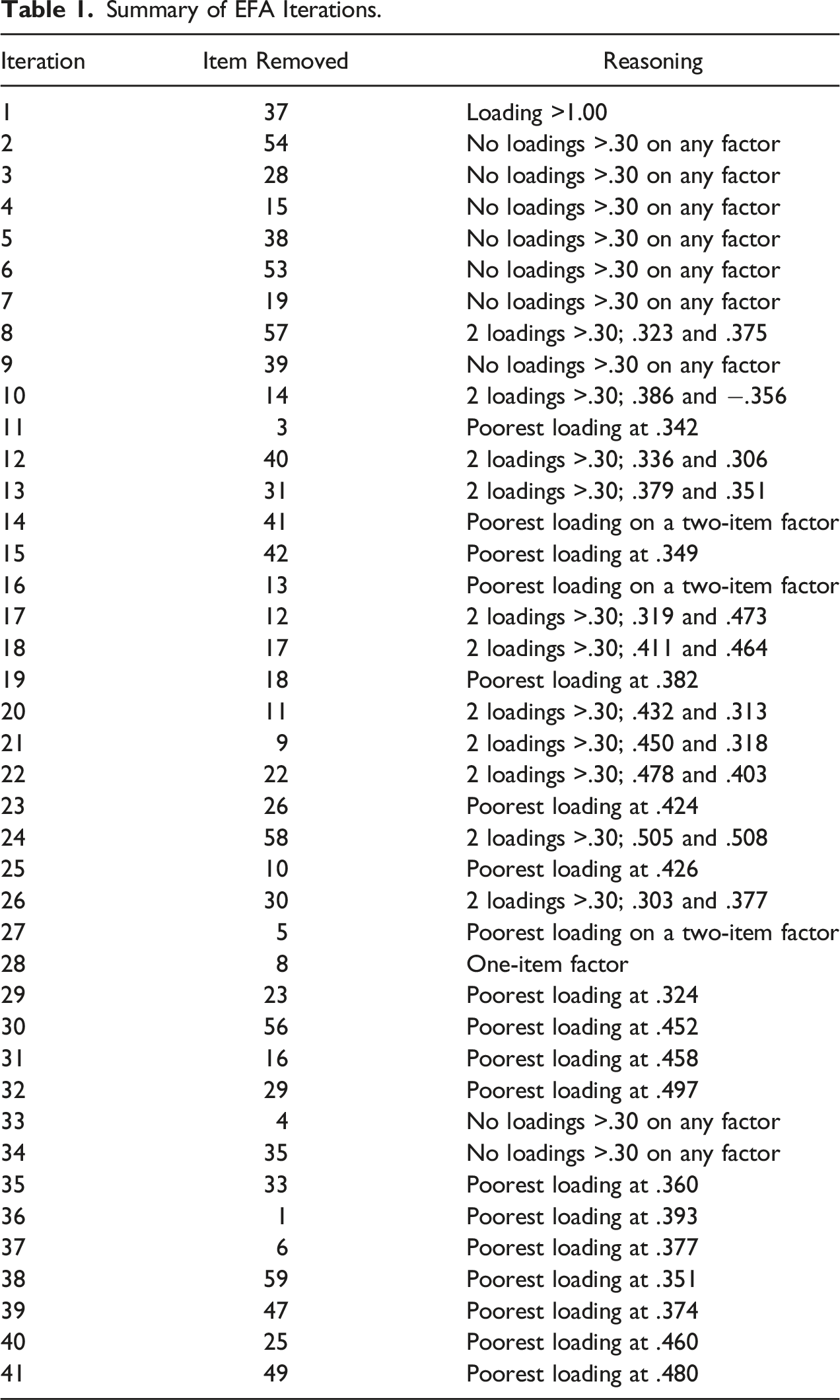
An exploratory factor analysis (EFA) using the maximum likelihood method was conducted (Worthington & Whittaker, 2006). Factors were based on eigenvalues >1.00, with items sorted by size and any loadings <.30 suppressed. The EFA utilized oblique Promax rotation (Carpenter, 2018). The authors examined the correlation matrix of all scale items; most items had a relationship of .20 or higher. Kaiser-Meyer-Olkin (KMO) score was .938. Bartlett’s test of sphericity showed the items were suitable for factor analysis [χ2 (1770, N = 215) = 8130.84, p < .001]. Therefore, examination of EFA results began.
Steps Five-Ten: Exploratory Factor Analysis
Summary of EFA Iterations.
Study 1: Results
Final Two-Factor EFA Results.
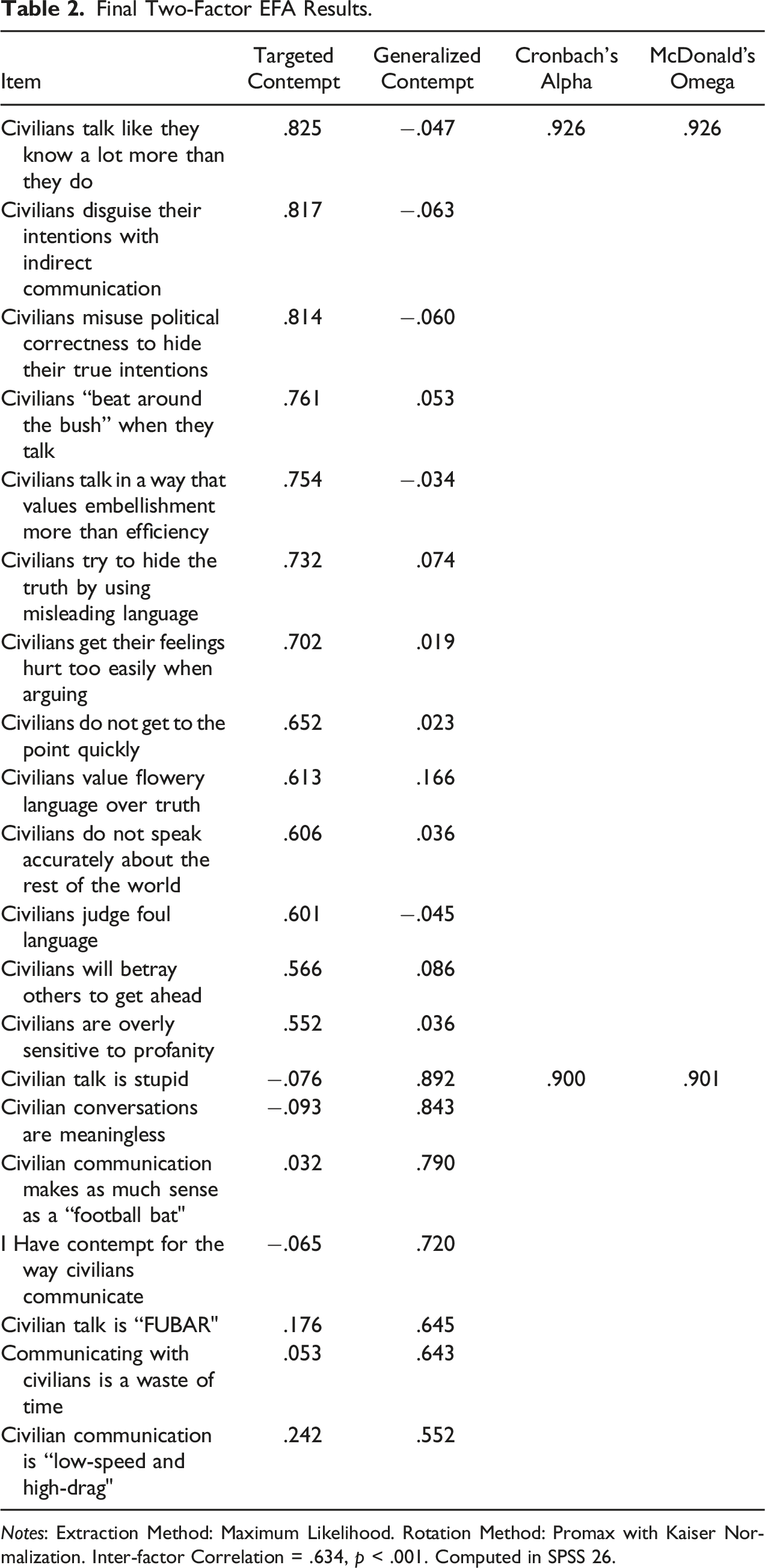
Notes: Extraction Method: Maximum Likelihood. Rotation Method: Promax with Kaiser Normalization. Inter-factor Correlation = .634, p < .001. Computed in SPSS 26.
Study 1: Discussion
Final Two-Factor CFA Results.
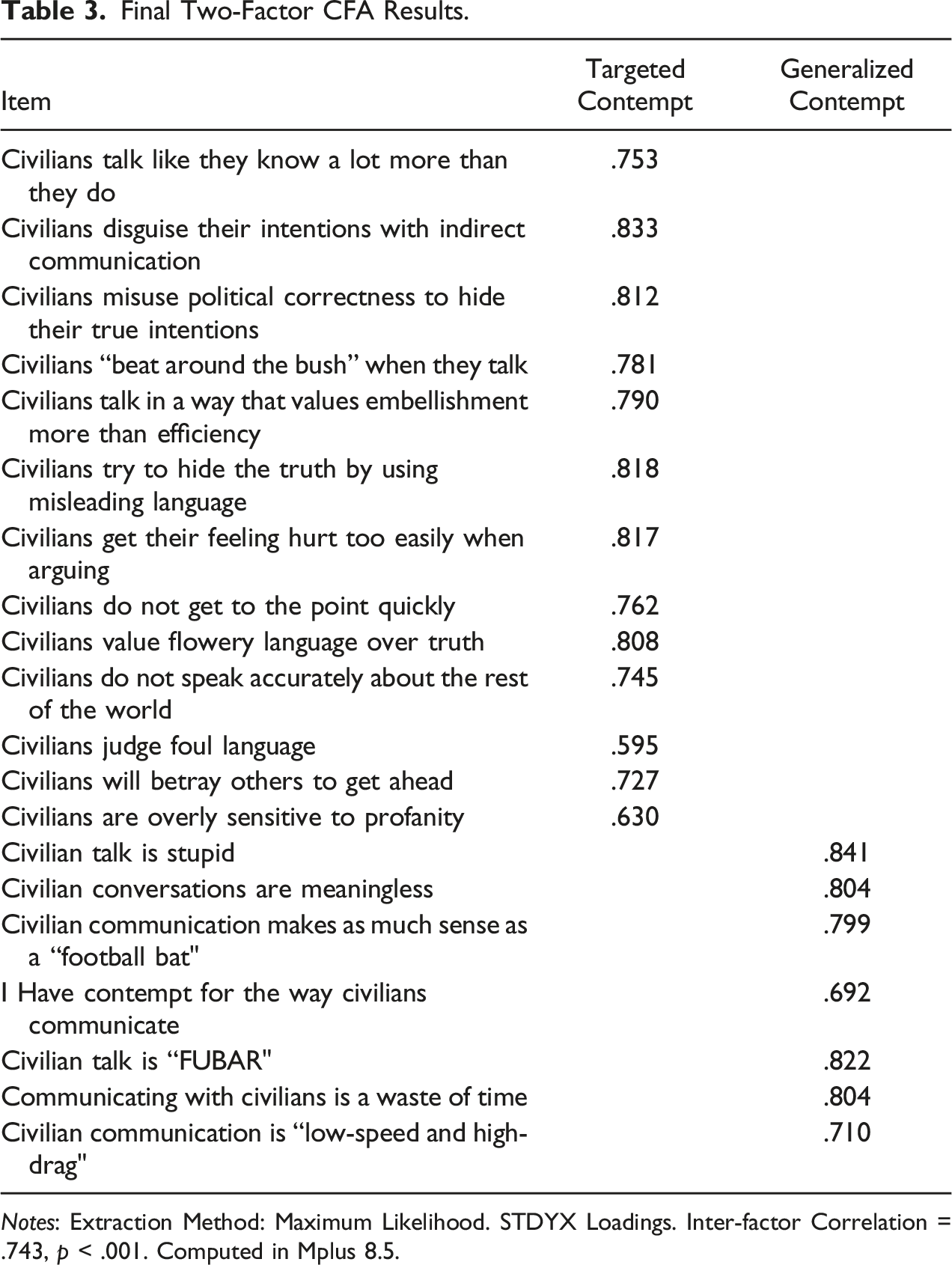
Notes: Extraction Method: Maximum Likelihood. STDYX Loadings. Inter-factor Correlation = .743, p < .001. Computed in Mplus 8.5.
Study 2: Validating the VCCC
A first factor was labeled “targeted contempt” because it included items with explicit reasons for feeling superior to civilians, considering their (supposed) communication habits. Example targeted contempt items include, “Civilians talk like they know a lot more than they do” and “Civilians get their feelings hurt too easily when arguing.” If veterans affirm these negative attributions of civilians over time, their felt contempt may complicate communication with civilians and lead to greater self-monitoring behaviors, such as self-silencing. Therefore, targeted contempt may reveal a problematic mindset about communication with civilians. A second factor was labeled, “generalized contempt” because it included more global negative assessments of civilians’ communication without necessarily identifying explicit reasons for disdain. Example generalized contempt items include, “I have contempt for the way civilians communicate” and “Communicating with civilians is a waste of time.” Items in this factor include the words “stupid,” “meaningless,” and “FUBAR.” These words belittle and minimize civilian communication. We questioned how these newly formed factors were related to established scales of communication and wellbeing and therefore ask the following:
How is the VCCC [(a) targeted and (b) generalized] related to (1a,b) willingness to communicate, (2a,b) communication apprehension, (3a,b) M2CQ, (4a,b) loneliness, and (5a,b) military identity? Veterans do not have the same experiences during their service, although the entry process is similar for most. Certain aspects of military training and experiences may influence how much contempt they report. This acknowledgement raises the following questions.
Do participants of different branches (6a,b), sexes (7a,b), or deployment statuses (8a,b) score differently on the VCCC [(a) targeted and (b) generalized]? In addition to general experiences, time of exposure to combat or the military and time since the veteran left the military may also be related to the amount of contempt veterans feel, therefore:
Is the VCCC [(a) targeted and (b) generalized] associated with months of deployment (9a,b), time in the military (10a,b), or time since the military (11a,b)?
Study 2: Method
After receiving IRB approval, the first author recruited participants to complete the study. Participants were compensated $3.00 for approximately 12 minutes of work, or $15.00 an hour. Strategies to increase the dependability of online responses were used, as described above in the Study 1 methods.
Participants
Of the 587 participants who began the study, 88 failed the military or age verification questions embedded in the survey. Additionally, 33 failed one or more attention check verification question. The number of valid responses was 466, a “good” sample size in terms of statistical power (Comrey & Lee, 1992). Most participants were men (67.8%) and White (62.0%). Participants also reported being Black (14.4%), multiracial (14.4%), Asian (2.4%), Latina/o/x (1.9%), indigenous person (1.1%), and other (1.5%). Participants’ age ranged from 19 to 50 (M = 34.76, SD = 6.68). Participants reported serving in the Army (46.3%), Navy (23.0%), Air Force (20.4%), Marines (10.2%), and Coast Guard (0.6%). Most participants reported being stationed in the United States (44.6%), followed by an active combat zone (35.4%), and stationed overseas at a non-combat location (17.4%). Participant deployment times averaged 7.65 months (SD = 10.18). Participants served in the military for 82.81 months (SD = 113.74) and reported leaving the military 87.06 months ago (SD = 71.36) on average.
Procedure
Study 2 followed the same survey and filtering procedures as described in Study 1. The first scale presented was the newly created 20-item VCCC. Participants then completed five scales: willingness to communicate, communication apprehension, military to civilian questionnaire, UCLA loneliness scale, and temporal satisfaction with life. Scale items were presented randomly to enhance reliability by spreading participant fatigue across items.
A confirmatory factor analysis (CFA) of scale variables was computed using Mplus v. 8.2. Data were imported from SPSS to Mplus and maximum likelihood modeling was used for all analyses. Hu and Bentler’s (1999) recommendations guided determination of model fit.
Veteran Contempt of Civilian Communication
Correlation Matrix of Veteran Contempt of Civilian Communication and other Scale Variables.
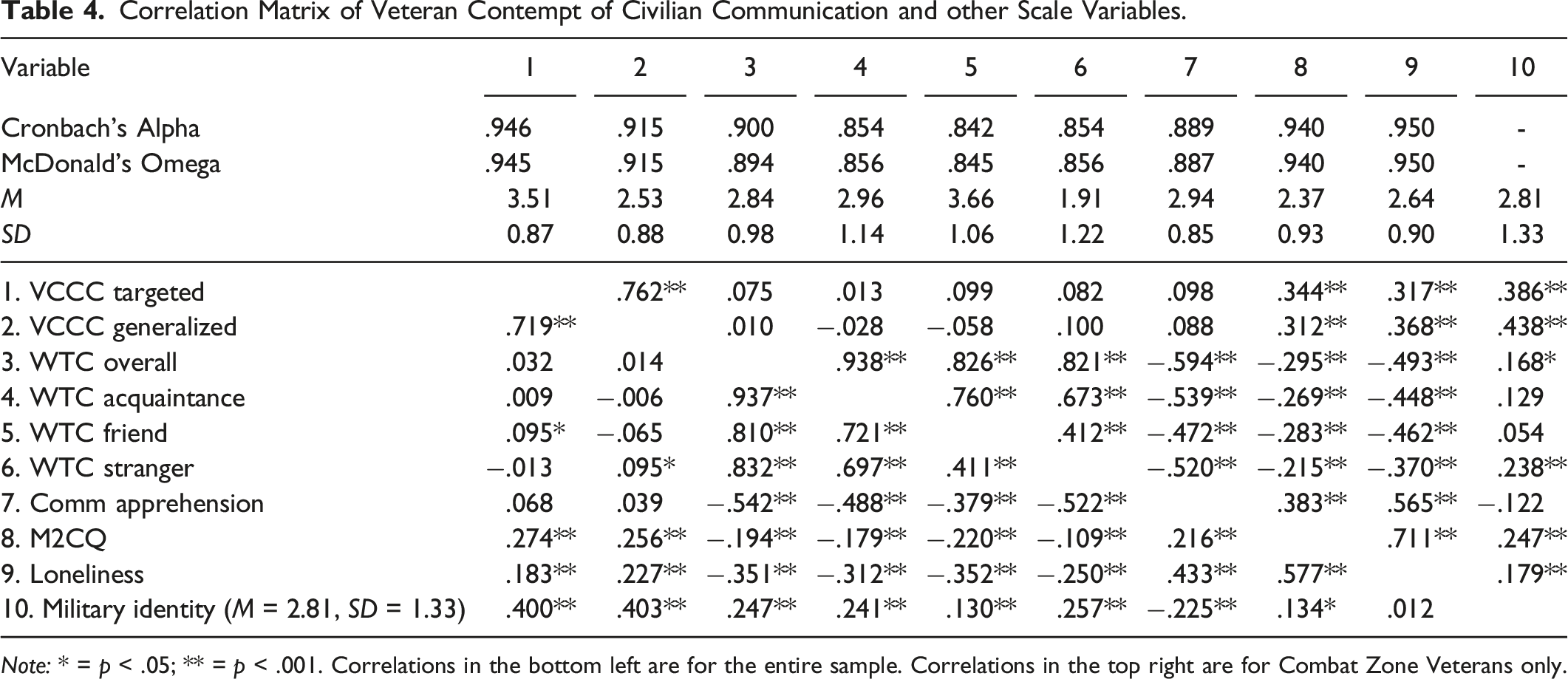
Note: * = p < .05; ** = p < .001. Correlations in the bottom left are for the entire sample. Correlations in the top right are for Combat Zone Veterans only.
Willingness to Communicate
McCroskey’s (1992) scale asks participants to rate how often they are likely to engage in various communicative acts on a scale where 0 = never and 100 = always. A sample item includes: “[I] Talk with a stranger while standing in line.” Item scores were divided by 20 for comparability with five-point Likert-type scales.
Communication Apprehension
The short form of communication apprehension scale (McCroskey, 1978) measures the overall communication apprehension of individuals. This scale was administered using a five-point Likert-type scale (1 = strongly disagree and 5 = strongly agree). A sample item is “I’m afraid to speak up in conversations.”
Military to Civilian Questionnaire
Participants also completed the M2CQ (Sayer et al., 2011). The scale asked participants to rate how much difficulty they had, over the past 30 days, with 16 different scenarios such as “Getting along with your child or children (such as communicating, doing things together, enjoying his or her company)?” and “Finding or keeping a job (paid or nonpaid or self-employment)?”. Participants were asked to respond on a five-point Likert-type scale where 1 = no difficulty and 5 = extreme difficulty.
UCLA Loneliness
Participants completed the loneliness scale (Russell et al., 1978) to see how the VCCC was related to feelings of loneliness, an indicator of social isolation. This 20-item scale asked participants to rate frequency of feeling lonely on a five-point Likert-type scale where 1 = never and 5 = always. Sample items include: “I lack companionship” and “I feel left out.”
Military Identity
Participants answered the question “With what identity do you identify more strongly?” by placing their cursor on a sliding scale where 0 = civilian and 100 = military. This assessment had an average response of 56.18 (SD = 26.66).
Study 2: Data Cleaning
Study 2 followed the same steps reported in Study 1. According to Little’s MCAR test data were not missing systematically [χ2 (6497, N = 466) = 6365.75, p = .876]. The MVA EM function in SPSS was used to save a new file with values imputed from the MVA analysis. Multivariate outliers, according to Mahalonobis D2, were found (N = 27) and examined. Two of these responses reported more months in combat than months of service in the military and were removed. Other cases had no impossible values reported and were not adjusted. Items were not skewed greater than absolute 1.
Study 2: Results
The research questions asked in this study were relational and therefore testable via bivariate correlations. See Table 4 for correlation matrix. RQ1 asked how the VCCC (a) targeted and (b) generalized was related to willingness to communicate (WTC). No relationship was found to WTC overall, although some sub-dimensions were significantly related. VCCC targeted was positively related to WTC friend [r (466) = .10, p < .05] and VCCC generalized was positively related to WTC stranger [r (466) = .10, p < .05]. This indicates that the higher veterans scored on the VCCC the more willing they were to communicate in these situations.
RQ2 asked if the VCCC would relate to communication apprehension (CA). Correlational data did not reveal any significant relationships. As the values were close to 0 a post-hoc nonlinear analysis was conducted to see if a curvilinear relationship existed. VCCC targeted was found to have a significant curvilinear relationship with CA where those who scored lower and higher on VCCC targeted scored lower on CA. This suggests veterans may have differential communication expectations of civilian partners and may therefore be more confident communicating with civilians when they experience contempt (see Figure 1 for more details). Testing revealed no significant curvilinear relationship for VCCC generalized. Curvilinear Relationship Between VCCC Targeted and Communication Apprehension.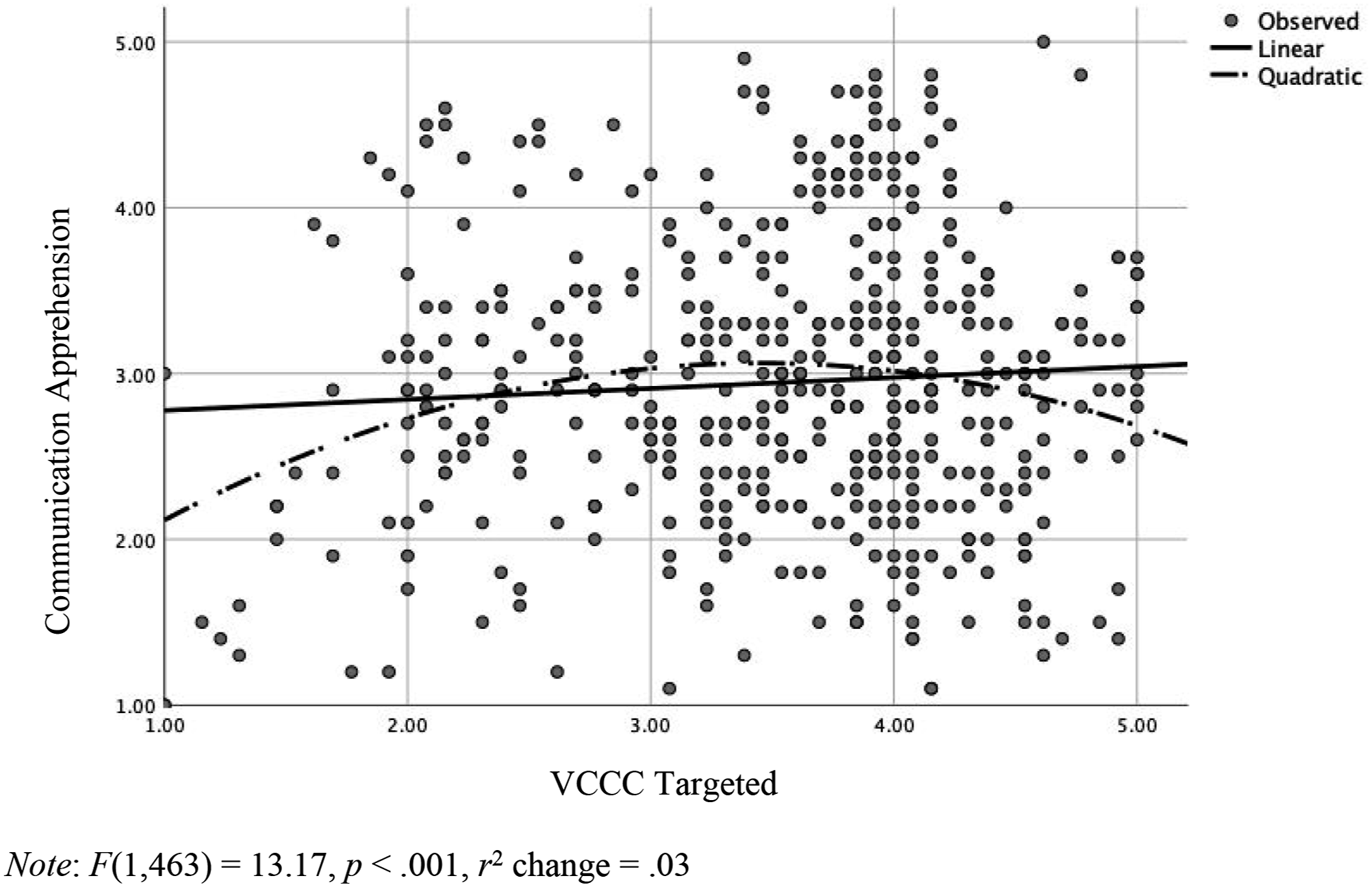
RQ3 asked if the VCCC would be associated with the M2CQ. Results showed it was. VCCC (a) targeted [r(466) = .27, p < .001] and (b) generalized [r(466) = .26, p < .001] were positively related to the M2CQ, with moderate-sized relationships. Results also showed the VCCC was positively associated with loneliness (RQ4). VCCC (a) targeted [r(466) = .18, p < .001] and (b) generalized [r(466) = .23, p < .001] were both positively associated with loneliness.
RQ5 asked if the VCCC was associated with military identity. Results revealed that VCCC (a) targeted [r(466) = .40, p < .001] and (b) generalized [r(466) = .40, p < .001] were positively associated with military identity. Notably, military identity was related to WTC acquaintance [r(466) = .24, p < .001], friend [r(466) = .13, p < .001], stranger [r(466) = .26, p < .001], and CA [r(466) = −.23, p < .001].
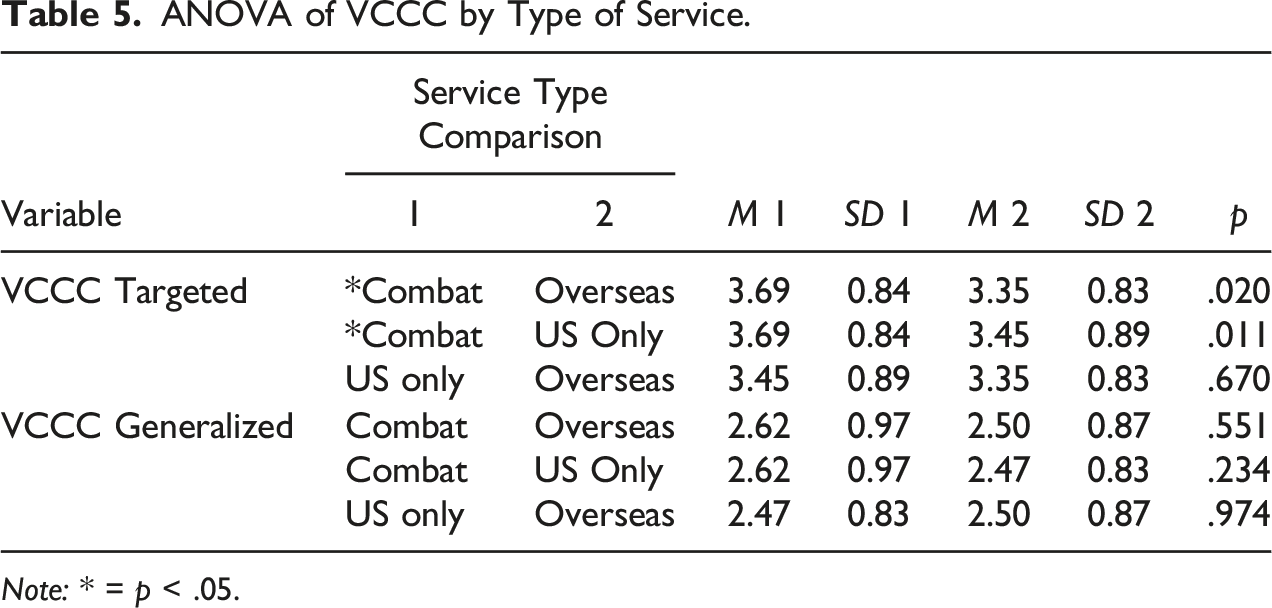
ANOVA of VCCC by Type of Service.
Note: * = p < .05.
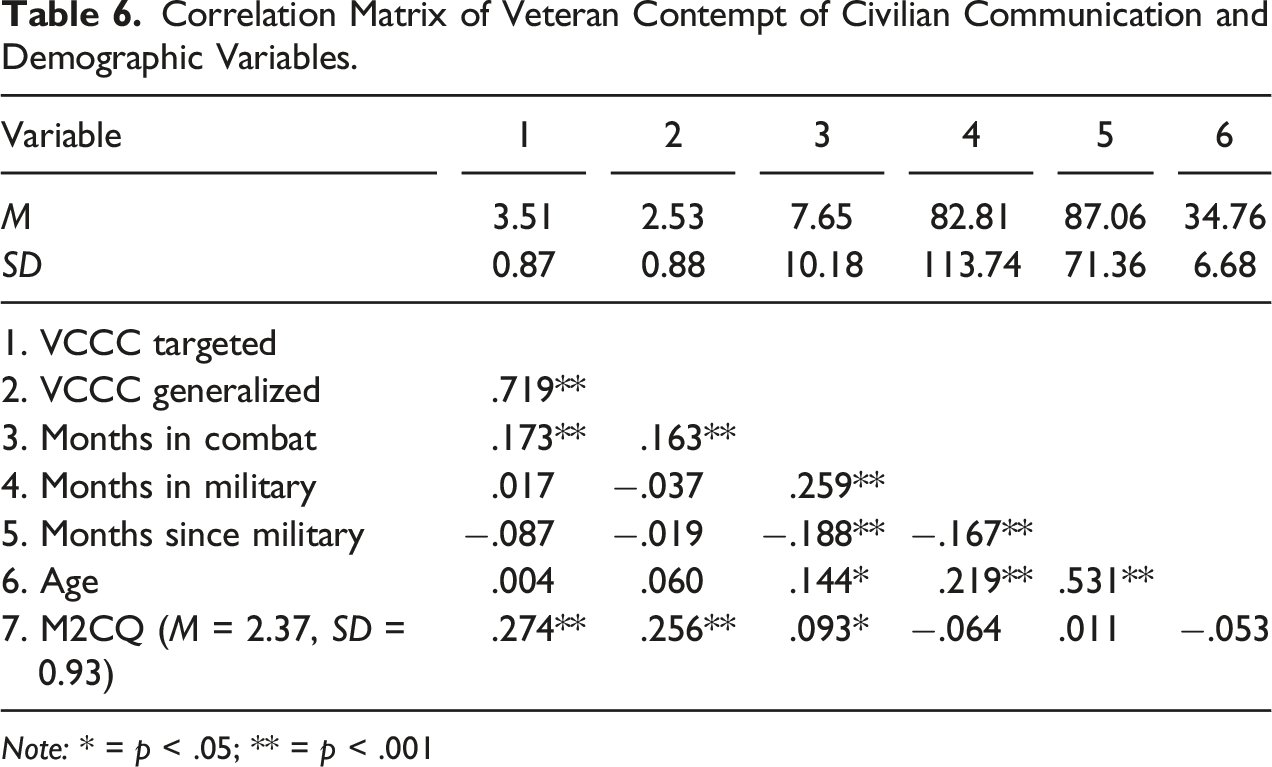
Correlation Matrix of Veteran Contempt of Civilian Communication and Demographic Variables.
Note: * = p < .05; ** = p < .001
Because combat zone veterans scored differently than non-combat zone veterans and months of combat were significantly associated with scores on the VCCC, a correlational analysis was performed to examine the relationships of key study variables for combat zone veterans only. Results of this analysis were consistent with findings presented previously for WTC, CA, M2CQ, loneliness, and identity. See Table 6 for full correlation matrix.
Discussion
A goal of these studies was to develop and validate a scale to measure the contempt military veterans feel toward civilian communication. The project argued some veterans of the U.S. military may feel contempt toward civilian communication. Researchers observed an association between the mild, negative emotion of contempt (Rozin et al., 1999) and social isolation (Fried et al., 2016), as well as negative psychological, relational, health, and communication outcomes. Thus, a measure of contempt veterans feel toward civilian communication could supply researchers, practitioners, and managers an innovative direction for exploring which veterans may have trouble entering the civilian workplace. Those insights could help practitioners provide treatment to veterans before negative outcomes occur and aid managers in promoting greater inclusion of military veterans in modern organizations. The following summarizes these studies and their contributions to theory and practice.
Results Summary
Development of the VCCC scale followed guidelines outlined by Carpenter (2018). At the end of Study 1, 20 items remained. The inclusion of multiple sources (academic experts, veteran experts, and veterans themselves) strengthened the likelihood that items achieved both content and ecological validity. Two studies revealed empirical support for the statistical reliability of the scale through both exploratory and confirmatory factor analyses (Hinkin, 1998). In the second study, a two-factor model was found to have superior fit compared to a one-factor model. In both studies, alpha and omega coefficients were above .90, suggesting strong reliability of both subdimensions. Thus, this study contributes the first, original measure of veteran contempt for civilian communication (VCCC).
VCCC targeted and generalized correlated positively with each other, the M2CQ, loneliness, and military identity. The subdimensions, generalized and targeted contempt, had similar relationships with other study variables. However, some differences were found. Generalized contempt had a lower mean than targeted contempt. Participants might be more willing to rate the targeted items higher as they describe typical civilian communication norms, use less moralized language, and are more hedged than generalized items; indeed, communication research indicated that individuals tend to avoid using explicitly moralized language, even when they experience morally-charged emotions and cognitions (Bisel, 2018). Furthermore, many correlations between VCCC targeted or generalized and markers of identity and reintegration had medium to large effect sizes. VCCC targeted and generalized each had a medium effect size in relation to the M2CQ, a medium effect size in relation to loneliness, and a large effect size in relation to military identity, according to the guidelines set forth by Hemphill (2003). Therefore, both VCCC dimensions were significantly associated with the M2CQ, loneliness, and military identity, and these relationships were meaningful.
The size of relationships noted between the VCCC and several convergent constructs suggest criterion validity. Results were consistent with scholarship on the relationship between military identity (Orazem et al., 2017), social isolation, and loneliness (Stein & Tuval-Mashiach, 2015). Research linked loneliness to anxiety and depression (Fried et al., 2016) and such outcomes can lead to harm against the self (Neacsiu et al., 2017). Results revealed significant relationships between VCCC targeted and willingness to communicate (WTC) with friends and VCCC generalized and WTC with strangers, although effect sizes were small. As predicted, the VCCC was positively and meaningfully associated with the M2CQ, loneliness, and military identity, supplying criterion validity for this scale as a measure of veteran contempt of civilian communication. VCCC targeted was also found to have a significant curvilinear relationship with communication apprehension (CA). The significant and meaningful relationships found begin to supply a research footing on veteran reintegration from a communication perspective.
Implications for the Workplace
This research begins to address the problem of veterans as an understudied form of workplace diversity (Vanderschuere & Birdsall, 2018). The scale developed here can help organizational communication scholars understand, measure, and research the experiences of veterans to improve knowledge of workplace diversity, equity, and inclusion in both organizations (Gonzalez & Simpson, 2021) and teams (Ruge-Jones et al., 2023). Organizational communication scholars could explore how the VCCC relates to communication competence, satisfaction, ostracism, loneliness, retention, wellbeing, and other variables of interest in the workplace. Such studies could contribute critical knowledge and provide practical advice (Tracy, 2016) for improving civilian-veteran relationships in the workplace.
An understanding of military socialization and its resultant communication-related contempt can assist managers in better recognizing and responding to the unique struggles experienced by some military veterans during reintegration into the modern workplace. Given that many veterans will spend a large portion of their waking hours in the workplace, managers may serve as essential forms of social support for this population (Hammer et al., 2021). Realizing that veterans prefer direct communication could help managers foster positive communication interactions between the manager and the veteran as well as between the veteran and other employees. Such support may aid veterans in their reintegration efforts and continued employability, which could help reduce veteran unemployment and associated homelessness. Future interventional studies using the VCCC are needed before firm recommendations can be made. We strongly suspect that advising veterans to cease contempt will be unfruitful. However, we recommend future studies both help supervisors and coworkers show appreciation for veterans’ communication norms and help veterans grow in their appreciation of civilians’ communication norms. These interventions may serve as revelatory cases in building theory related to membership negotiation (Endacott & Myers, 2019).
A Moral Emotion Approach to Theorizing and Measuring Communication
This study also contributes more broadly to the field of communication by providing a research model for investigating the role played by moral emotions in communication theorizing. The measures of willingness to communicate (WTC), communication apprehension (CA), and communication competence (CC) are some of the most enduring and fundamental tools of knowledge generation in the field. These scales emphasize communication as a state (i.e., WTC; McCroskey, 1992), trait (i.e., CA; McCroskey, 1978), or skill (i.e., CC McCroskey & McCroskey, 1988). The present study supplements these traditions by investigating moral emotions—which can emerge from professional and organizational socialization (Hinderaker, 2015)—as drivers of communication patterns. This moral emotion approach can add new avenues for scholars to theorize and measure communication. We recommend beginning with paramilitary (e.g., law enforcement) and other high-reliability organizations and professions (e.g., first responders), given the socially pressing nature of mental illness and social isolation in these health and crisis domains.
This study offers early indications of how the VCCC scale specifically—and a moral emotion approach generally—can contribute to communication theorizing and testing. Results indicated that combat zone veterans scored higher on the VCCC targeted than those stationed solely in the United States or overseas, but not in a combat zone. Combat service is related to moral injury, or a psychosocial wound that occurs as the result of one or more ethical violations (Zerach & Levi-Belz, 2018). Researchers have shown moral injury is one of the negative consequences of combat (Zerach & Levi-Belz, 2018). The nature of combat means some veterans might, at times, need to shift their moral frameworks to cope psychologically with the horrors of war and the moral injury those experiences can produce. Shifted moral frameworks could result in both a heightened protection of the newly adopted moral stance and a more salient military identity. The current study found months of deployment is positively associated with military identity. Veterans who serve in combat zones must enact military identity in a salient setting, and performance of combat duties may create an altered morality in combat zone veterans.
This research found similar behavioral patterns to previous research in other areas. Specifically, the VCCC was significantly associated with the M2CQ, which has been linked to anxiety, depression, and social isolation (Sayer et al., 2011). Importantly, however, the two variables were not so highly correlated as to suggest they are the same variable. The VCCC was also associated with loneliness. Additionally, results show that the VCCC is positively related to a communal military identity, and Rozin and colleagues (1999) theorized community is linked to the emotion of contempt rather than anger or disgust.
Results revealed no significant linear relationships between the VCCC and either willingness to communicate (WTC) or communication apprehension (CA), although a curvilinear relationship was found with CA. Notably, military identity was positively associated with all forms of WTC and negatively with CA. Therefore, although the VCCC had no direct relationship with WTC and CA, future research could investigate whether the VCCC may have an indirect relationship, through military identity, with WTC and CA.
Consideration of other external factors, such as social support, may help explain why some veterans reported being willing to communicate and having low communication apprehension even if they reported strong contempt. If a veteran has a strong social support network of homogenous relationships, it could bolster a veteran’s WTC and decrease CA. Veterans who surround themselves with other veterans may report being willing to communicate and not experiencing communication apprehension. Future research could explore this possibility.
Limitations and Future Research
This study developed and validated a new communication measure. The design does not support causal claims. Also, participants who completed this study did so outside of a controlled environment and therefore may not have focused on the survey. Furthermore, a longitudinal study of veterans could help determine if the VCCC has predictive value. The greatest threat to validity, however, is the historical event of COVID-19. Although data collection occurred over a period of weeks at the onset of the pandemic in the United States, it is possible participants near the end of data collection responded in significantly different ways than participants at the beginning.
This study supplies scholars with a new tool, the VCCC, to assess the communication of military veterans. This study also contributes to scientific literature the idea that understanding moral emotions individuals experience may lead to an enhanced understanding of communication patterns. This study is only the first step in a line of research on communication and the military that could prove fruitful for understanding veteran communication. Funding from the Department of Defense could aid researchers in these endeavors. Further study is needed to see how these moral communication concepts transfer to military veterans from other countries. Initial evidence suggests the VCCC may be a new way for providers, employers, places of higher education, and even the military itself to assess the ability of veterans to reintegrate successfully to society. Understanding the moral emotions of veterans and how they are demonstrated through communication could also aid researchers and managers in understanding what type of communication many veterans prefer.
Footnotes
Acknowledgment
We would like to thank the editors and reviewers for their feedback and advice on how to improve this manuscript.
Declaration of Conflicting Interests
The author(s) declared no potential conflicts of interest with respect to the research, authorship, and/or publication of this article.
Funding
The author(s) disclosed receipt of the following financial support for the research, authorship, and/or publication of this article: Funding for conducting this research was provided by the University of Oklahoma’s Graduate Student Senate and Robberson Research Grant. Funding for the open access publication of this research was provided by Texas Tech University’s VPR and Department of Communication Studies.
