




Abstract
In the pursuit of advanced materials with enhanced thermo-mechanical properties, unidirectional short glass fiber (USGF)-reinforced polyethylene composites incorporating alumina nanoparticles can represent a potentially promising development. This study shows the constructive interplay between the multiscale agents, nanofiller/polymer interphase and the overall composite performance, employing the concept of representative volume element (RVE) and the finite element analysis. First, an RVE is created with spherical alumina nanoparticles dispersed randomly within the polyethylene matrix. Next, a different RVE is formed where USGFs are incorporated into the nanoparticle-filled polymer, which serves as the base material. By analyzing the RVEs via the finite element method (FEM), the elastic moduli and coefficients of thermal expansion (CTEs) of the ternary composites are predicted. The validity of the numerical model is assessed by comparison with previous literature, providing an acceptable agreement. The effects of volume fraction and geometry of alumina nanoscale particles and glass microscale fibers on the thermo-elastic constants are investigated. The findings indicate that dispersing alumina nanoparticles into the polyethylene can improve the thermo-elastic properties of the ternary composites. The elastic modulus and CTE in the transverse direction is significantly improved by reducing the diameter of alumina nanoparticles. It is found that nanofiller/polymer interphase region affects mostly the transverse thermo-elastic properties.
Keywords
Introduction
Short fiber-reinforced polymer composites (SFRPCs) are increasingly sought after as structural materials across various engineering applications.1–3 Hybrid SFRPCs consist of a polymer matrix reinforced with both nano- and micro-scale fillers. These reinforcements, whether nanofillers or micron-sized fibers, enhance the physical and mechanical properties of the polymer composites.4–6 In nanoparticle-filled composites, the interphase region formed between the nanofiller and the polymer is crucial in determining the composite’s properties, as it facilitates stress transfer, influences mechanical characteristics, and may improve the thermal stability. Optimizing such an interphase is essential for developing high-performance composites for diverse applications.7–10 The in-plane properties of SFRPCs are primarily influenced by the high-strength and stiff fibers, whereas the out-of-plane properties are governed by the low-strength, ductile, and thermally insulating polymer matrix,11,12 which can limit the applications of SFRPC materials.
Polymeric materials such as polyethylene a widely produced and versatile thermoplastic polymer available in various forms, are often selected as the matrix phase for composites due to their ease of processing and use, without requiring sophisticated equipment, and because their properties can be easily modified by adding fillers.13–17 To selectively enhance polymer properties, reinforcements are incorporated as a dispersed phase.16–20 Inorganic fillers may offer superior mechanical and thermal properties compared to organic ones, typically adhering better to the matrix and enhancing the structural stability of polymers. Adding alumina (Al2O3) into the polymers improves their basic engineering constants and thermal stability effectively, whether in micrometric or nanometric sizes.21–25 The benefits of such fillers are influenced by their size, with smaller particles generally yielding better properties.21,23,26 When a more improvement in mechanical properties of polymer composites is desired, fibers as the second reinforcement with various aspect ratios can be used which support higher loads.4–6,13,19,27–29 Different types of glass fibers are the most commonly used fibers in the composite industry, thanks to its excellent mechanical properties, ease of use, and low cost. When added to a thermoplastic matrix, these fibers are recognized for enhancing the strength, stiffness, and thermal stability, while reducing ductility. 30 In this context, polyethylene matrix composites reinforced by alumina nanoparticles and short glass fibers may be an attractive choice for various industries, including automotive, aerospace and aviation, construction, electronics, and sports equipment.31–33
Mortazavi et al. 7 numerically examined how the interphase affects the elastic modulus and thermal conductivity of polymer nanocomposites using a 3D FEM. They considered various filler geometries, including cylinders, spheres, and thin discs, as well as the influence of volume fraction and property contrasts. They found that the interphase effect on the thermal and mechanical properties is important for the composite containing spherical fillers but it decreases as the filler shape deviates from spherical geometry. These insights suggest that a better understanding of the interphase can inform the design of nanocomposite materials with improved elastic and thermal properties. Shahrokh and Fakhrabadi 34 studied the mechanical and thermal properties of polymer nanocomposites reinforced with metallic nanoparticles. They determined the characteristics of the interphase zone using molecular dynamics. Then, the FEM was employed to predict the elastic modulus and thermal conductivity of the nanocomposites in terms of various geometries, orientations, and percentages of nanoparticles. Rasana et al. 35 reported experimentally and numerically the tensile properties of the polypropylene composites containing glass fiber/carbon nanotube hybrids.
In addition to elastic constants, predicting the coefficient of thermal expansion (CTE) is crucial in designing composites subjected to thermal loads.36–38 Hine et al. 37 employed a numerical procedure to calculate Young’s moduli, Poisson’s ratios, and CTEs of short fiber-reinforced composites and investigated the impact of various parameters such as fiber volume fraction and aspect ratio. Their findings indicated that increasing the volume fraction and aspect ratio of fibers improves the composite’s engineering constants. Safi et al. 38 examined how nano-sized SiC particles influence the thermal expansion properties of short SiC fiber-aluminum composites. Their study shows that adding these nanoparticles significantly reduces the CTE, thereby enhancing the material’s dimensional stability. Pan et al. 39 utilized a micromechanical approach to determine the elastic and thermal expansion properties of nanoparticle-reinforced composites. They studied the influence of the percentage, size, and agglomeration of nanoparticles, as well as the size and properties of the interfacial region in detail. Mahmoodi et al. 40 developed a unit cell micromechanics model to evaluate the CTE of silica nanoparticle-filled shape memory polymer nanocomposites. The role of thickness and material properties of the interfacial region in the thermal expanding behavior was micromechanically investigated. A comprehensive model was proposed in Ref. 41 to study the CTE of unidirectional fiber-reinforced composites which indicated a good agreement with the experiments and outcomes of analytical solutions. Yao et al. 42 developed a micromechanical model for unidirectional epoxy composites, utilizing a novel RVE generation algorithm to address challenges such as large fiber aspect ratios and non-uniform fiber distributions. The effects of fiber aspect ratio, spatial distribution, and interfacial properties on the composite’s longitudinal modulus and strength are analyzed. Notably, they observed that the longitudinal strength of epoxy composites initially increased with fiber aspect ratio, reaching a saturation point at an aspect ratio of 25, beyond which further increases did not significantly enhance strength.
Historically, analytical approaches such as the Halpin–Tsai equations have been widely used to predict the effective moduli of nanocomposites, particularly at low nanoparticle volume fractions. 43 Such models often assume perfect interfacial bonding, uniform filler dispersion, and ideal geometries, which can lead to overpredictions of properties if these conditions are not met in practice. 43 Other analytical tools, including the Mori–Tanaka method and effective medium approximations, extend these predictions by incorporating the shape, orientation, and aspect ratio of the reinforcements. 44 These methods rely on Eshelby’s tensor solutions to estimate stress and strain fields within the inclusions, providing a continuum representation that is capable of bridging the microscale and macroscale properties. 44
FEM has also gained prominence due to their ability to model the detailed microstructure of ternary composites; microstructural features such as fiber distributions, nanoparticle agglomeration, and the interphase region can be captured explicitly. 45 In these improved models, the use of sophisticated RVEs combined with subcell discretization has shown promise in predicting local stress concentrations and damage evolution under various loading conditions. 46 Multiscale methods that couple molecular dynamics simulations with continuum finite element approaches have been developed to address the limitations of classical micromechanics when nanoscale phenomena like size effects and interfacial nanostructure play a significant role in governing the composite behavior. 47 Thus, the state-of-the-art modeling frameworks for ternary composites integrate homogenization methods, shear lag analysis, and multiscale numerical simulations to predict the thermomechanical responses of such materials. 48
To the best of the authors’ knowledge, there is a lack of literature on elastic moduli and CTEs data for USGF composites with an alumina nanoparticle-filled polyethylene matrix. In addition to elastic properties, the CTE is a critical material property, especially when composite structures are exposed to changing temperatures. The existing literature indicates numerous efforts to validate the beneficial effects of nanoparticles like alumina, silica, and CNTs, regarding the physical and mechanical properties of composites and hybrid composites.35,38–40 This study aims to provide a micromechanics-based FEM for obtaining the thermo-elastic constants of USGF-reinforced polyethylene composites incorporating alumina nanoparticles. This approach allows for the incorporation of more realistic microstructural features, including random distributions of nanofillers and fibers, as well as varying degrees of interfacial bonding. Some important microstructures related to the nanoparticle-filled composites are incorporated in the numerical modeling. These results could guide the design of SFRPCs containing nanoparticles, improving their thermo-elastic properties.
Micromechanical methodology
For analysis of the composite system studied herein, a three-dimensional RVE is created, consisting of polyethylene and randomly distributed spherical alumina nanoparticles with interphase zone first. This RVE related to the alumina nanoparticle-filled polyethylene nanocomposite is analyzed using FEM. The random dispersion of spherical nanoparticles within the polymer matrix results in uniform properties across all main directions, leading to isotropic behavior. After calculating the CTE and elastic properties of nanocomposite, these properties are assigned to the matrix of ternary composites. The short glass fibers in the ternary composite are distributed in a highly irregular manner across the cross-section.
By applying a consistent axial traction (

Considering that unconstrained free expansions do not impose the mechanical stress, the CTE quantifies the variation in volume of a heated material as49–51

According to equation (2), which provides the basis for assessing the thermoelastic response using FEM, the RVE undergoes a specified temperature change (ΔT = 1 K). By measuring the displacement due to the volume expansion along the desired axis
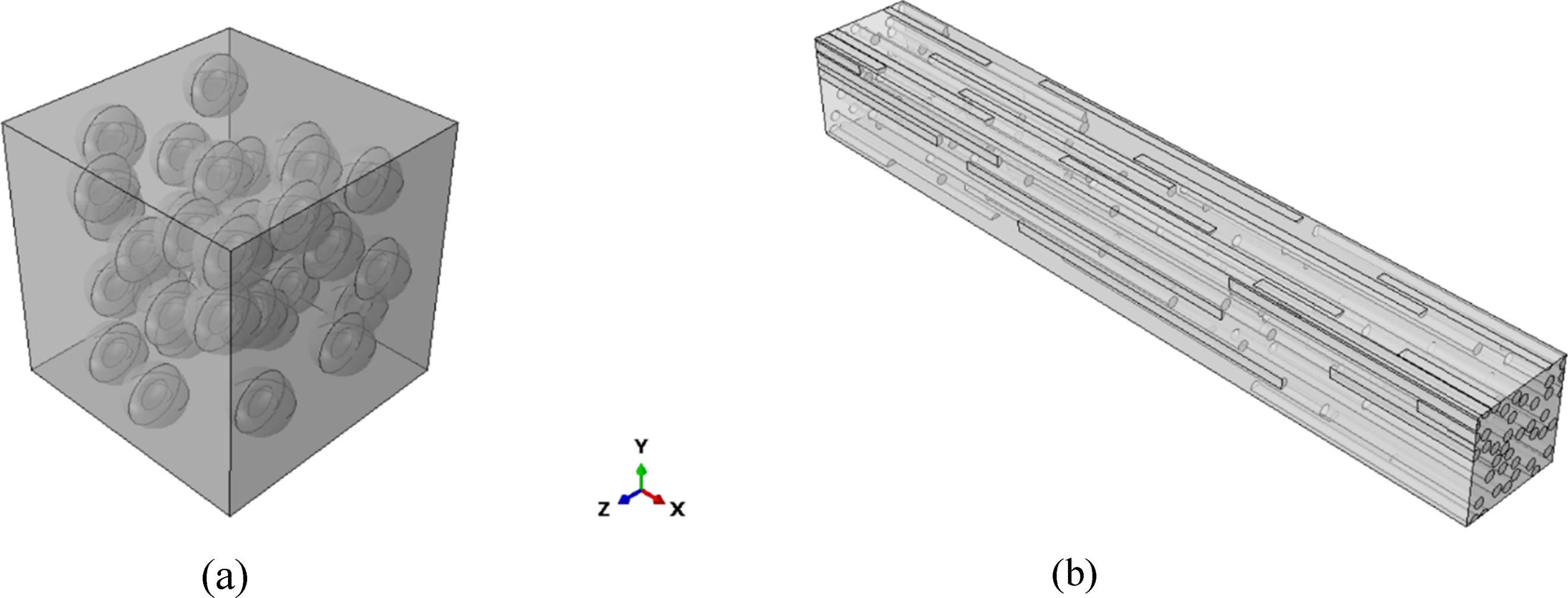
Many micromechanical models presume that fibers are arranged periodically, which is conceivable to be simplified into a unit cell or RVE for easier analysis.50,52,54,55 A flow chart outlining the overall steps involved in the composite simulation process is presented in Figure 1. Using a micromechanical model based on the FEM, the nanocomposite RVE is generated considering the required volume fraction, as well as the diameter of the nanofillers and interphase. As shown in Figure 2(a), the cubic RVE contains randomly distributed spherical alumina nanoparticles with an interphase and a polyethylene matrix. The generated RVE shown in Figure 2(b) is cuboidal in shape, with dimensions of 75 mm × 10 mm × 10 mm, consisting of a matrix with randomly distributed USGFs. It is important to note that, unlike nanocomposites that include numerous nano-fillers, composites containing microfillers rely on only a few reinforcement phases to achieve the desired properties. To model the current ternary composite, and minimize errors due to the RVE size, the cubes are selected to ensure a good amount of nanofillers scattered within the matrix.50–52,56 In current study, the properties of the individual components and phases are assumed to be isotropic and elastic. The mechanical characteristics of the alumina nanoparticles are a Young’s modulus of 400 GPa, a Poisson’s ratio of 0.21, and a CTE of 7.4 × 10⁻⁶/K.38,57,58 Bulk polyethylene, with a density of 0.875 g/cm3, is considered to have a Young’s modulus of 0.875 GPa, a Poisson’s ratio of 0.46, and a CTE of 260 × 10−6/K.34,59 The accurate determination of interphase properties, such as thickness and mechanical characteristics, is crucial for precise modeling. These properties are typically obtained through experimental techniques like thermal gravimetric analysis (TGA), scanning electron microscopy (SEM) and transmission electron microscopy (TEM), which provide detailed insights into the interfacial morphology and composition, while the mechanical characteristics are obtained from molecular dynamics method, which provide detailed insights into the interfacial characteristics. In the absence of such experimental data for our specific material system, reported values in the literature are considered and sensitivity analyses are conducted to assess the impact of interphase properties on the overall composite behavior.9,34,46,60–64 Thus, various elastic moduli are evaluated for the interphase region, with 8.75 GPa selected as the baseline value, with a Poisson’s ratio of 0.46, identical to that of the matrix, and an averaged CTE based on the properties of alumina and polyethylene. After determining the elastic modulus, CTE, and Poisson’s ratio of the alumina-filled polyethylene nanocomposite, the USGF-reinforced composite will be analyzed by applying these calculated properties to the matrix. The Young’s modulus, Poisson’s ratio, and CTE of the glass fiber are 72.5 GPa, 0.2, and 4.9 × 10⁻⁶/K, respectively.
37
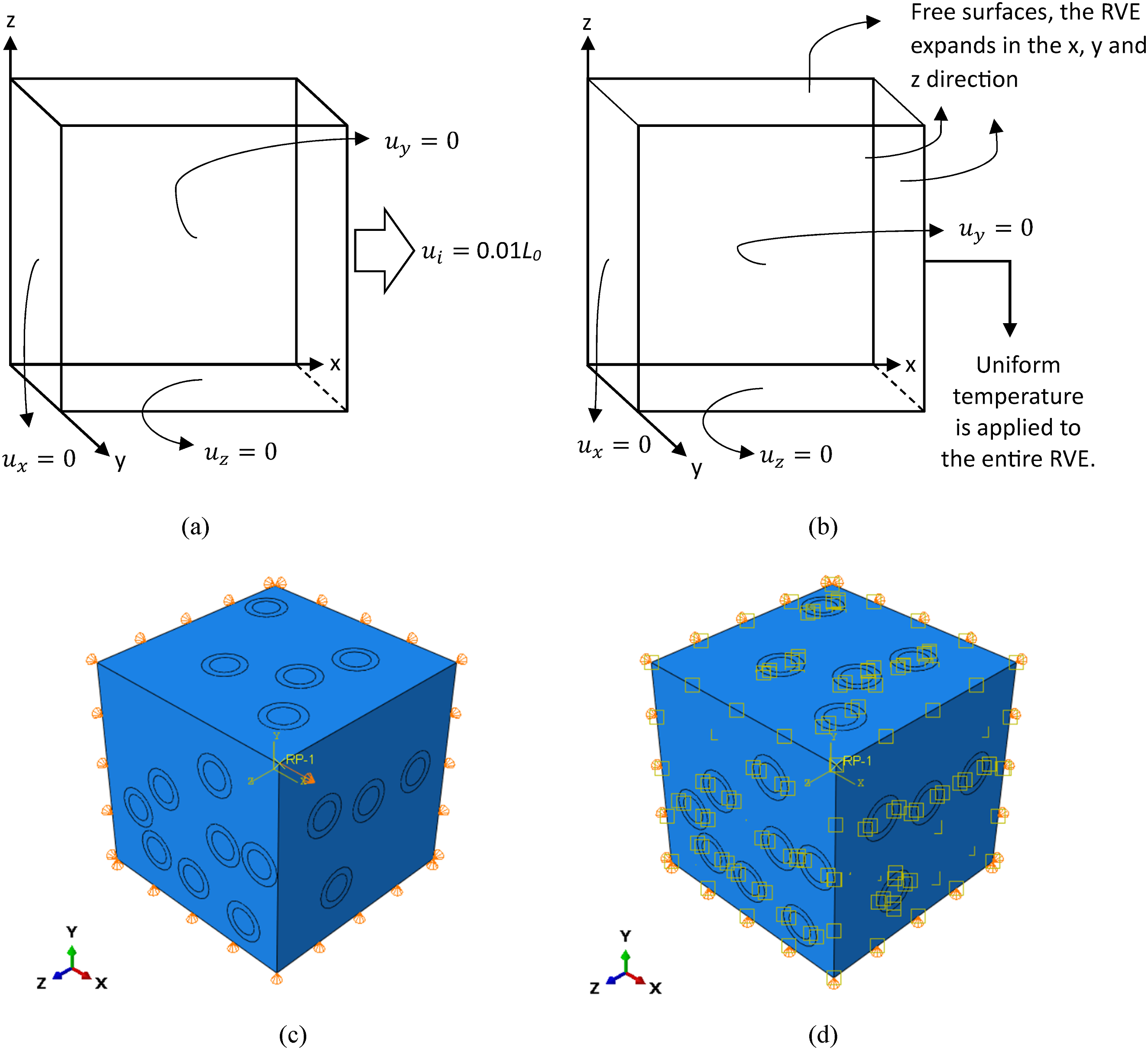
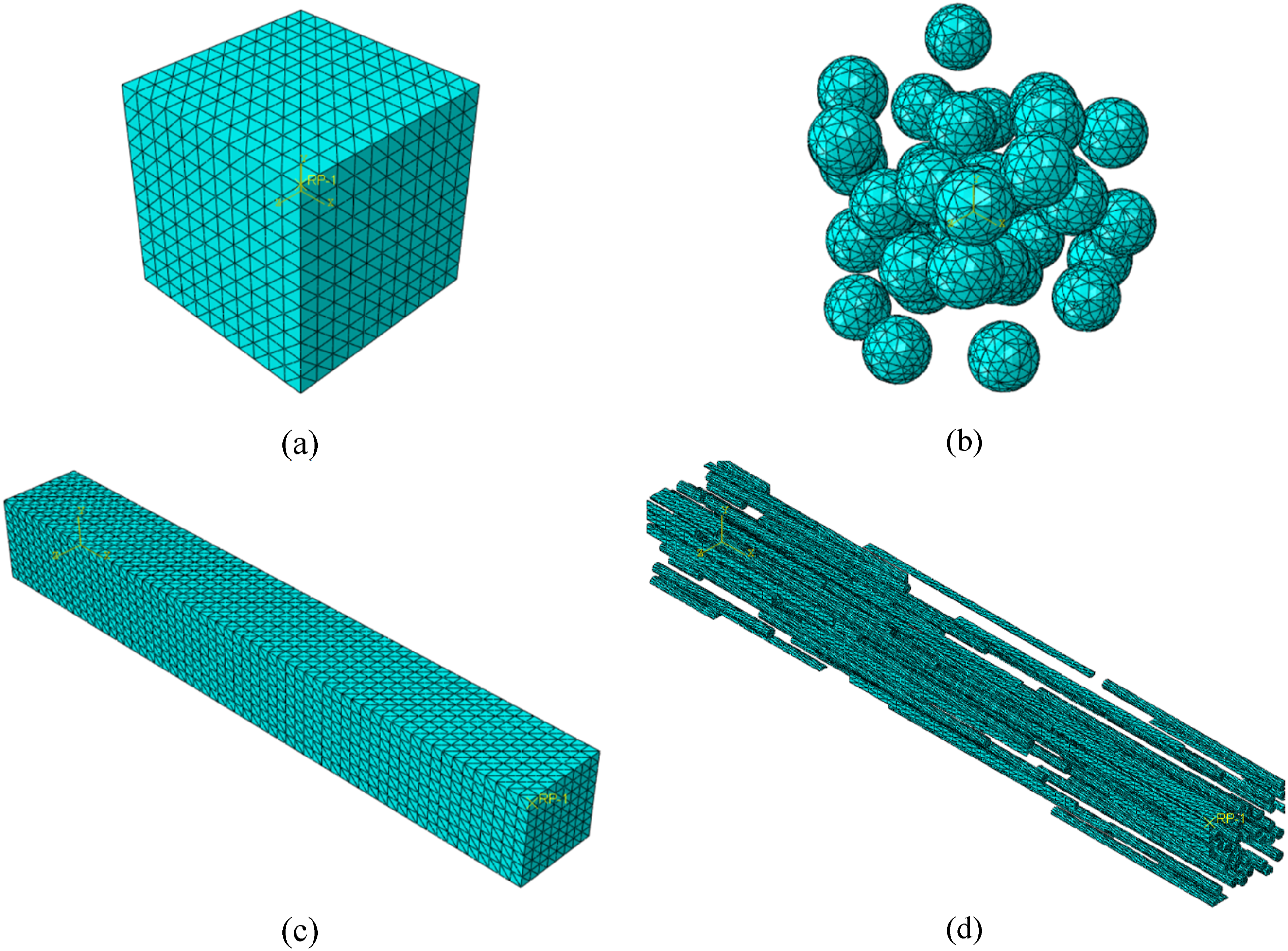
To determine the engineering constants of composites using the RVE approach, the boundary conditions and loadings are defined for the micromechanics-based finite element simulations, based on PBCs as considered in several studies in the literature.51,53 In the 3D RVEs, as depicted in Figure 3, the faces are restrained from left, bottom and back, along their respective axes, with the intersection point of these faces pinned. To investigate the elastic properties under different conditions, a displacement is applied to a reference point constrained to the front faces of the RVE. For SFRPCs, both longitudinal and transverse displacements are applied to measure the reaction forces needed for calculating the elastic moduli. Regarding thermal expansion properties, thermal diffusion is assumed to create uniform temperature fields throughout the entire volume. Under the assumption of small deformations, the thermal strain depends on determining the displacements resulting from temperature changes. For meshing the composite materials studied herein, C3D10 elements (10-node quadratic tetrahedral element) are considered. To improve computational accuracy, the mesh density increases around the nanoparticles, with elements shrinking near their surfaces. The meshed RVEs are presented in Figure 4. The flow chart of taken steps in simulation of ternary composites. Transparent view of the (a) cubic RVE for the nanoparticle-filled polymer and (b) cuboid RVE for the USGF-reinforced composite. Schematic view of the applied boundary and loading conditions on the RVE for obtaining (a) elastic and (b) thermal expansion properties and the applied PBCs in the model for obtaining (c) elastic and (d) thermal expansion properties. The mesh elements used for the considered RVEs (a) cubic RVE, (b) alumina nanoparticles, (c) cuboid RVE and (d) glass fiber.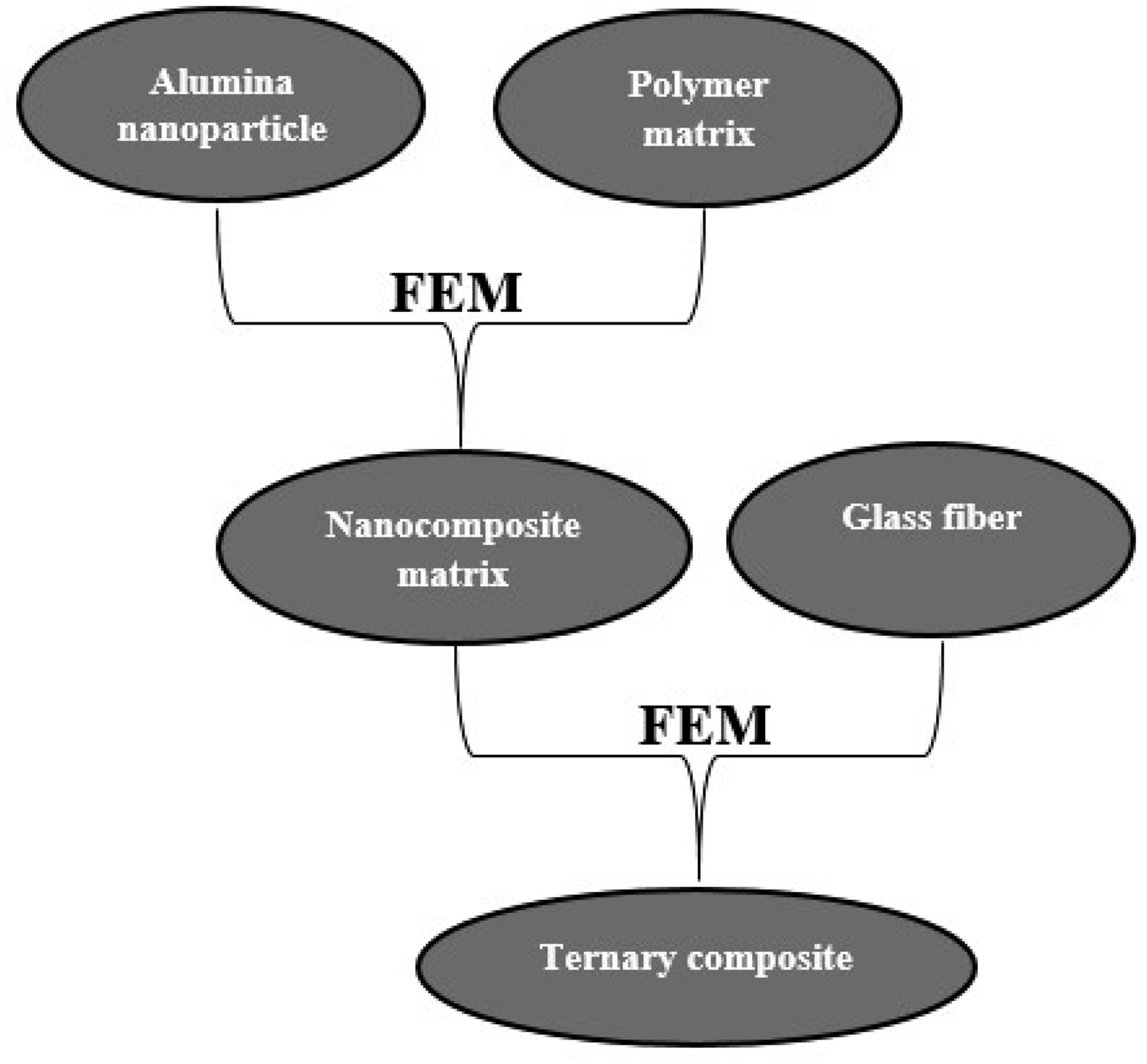
Results and discussion
Validation
To validate the developed finite element framework, a comparison is carried out between the results of the current model and a numerical study of copper nanoparticle-filled polyethylene nanocomposite reported by Shahrokh and Fakhrabadi.
34
Figure 5 displays the normalized elastic modulus of nanocomposite with respect to the matrix elastic modulus with nanoparticles volume fraction. The current FEM results align closely with the numerical data from Ref. 34, showing a good agreement. Comparison between results of the current numerical study and previous study
34
for the elastic modulus ratio of the copper nanoparticle-filled polyethylene nanocomposite considering the interphase.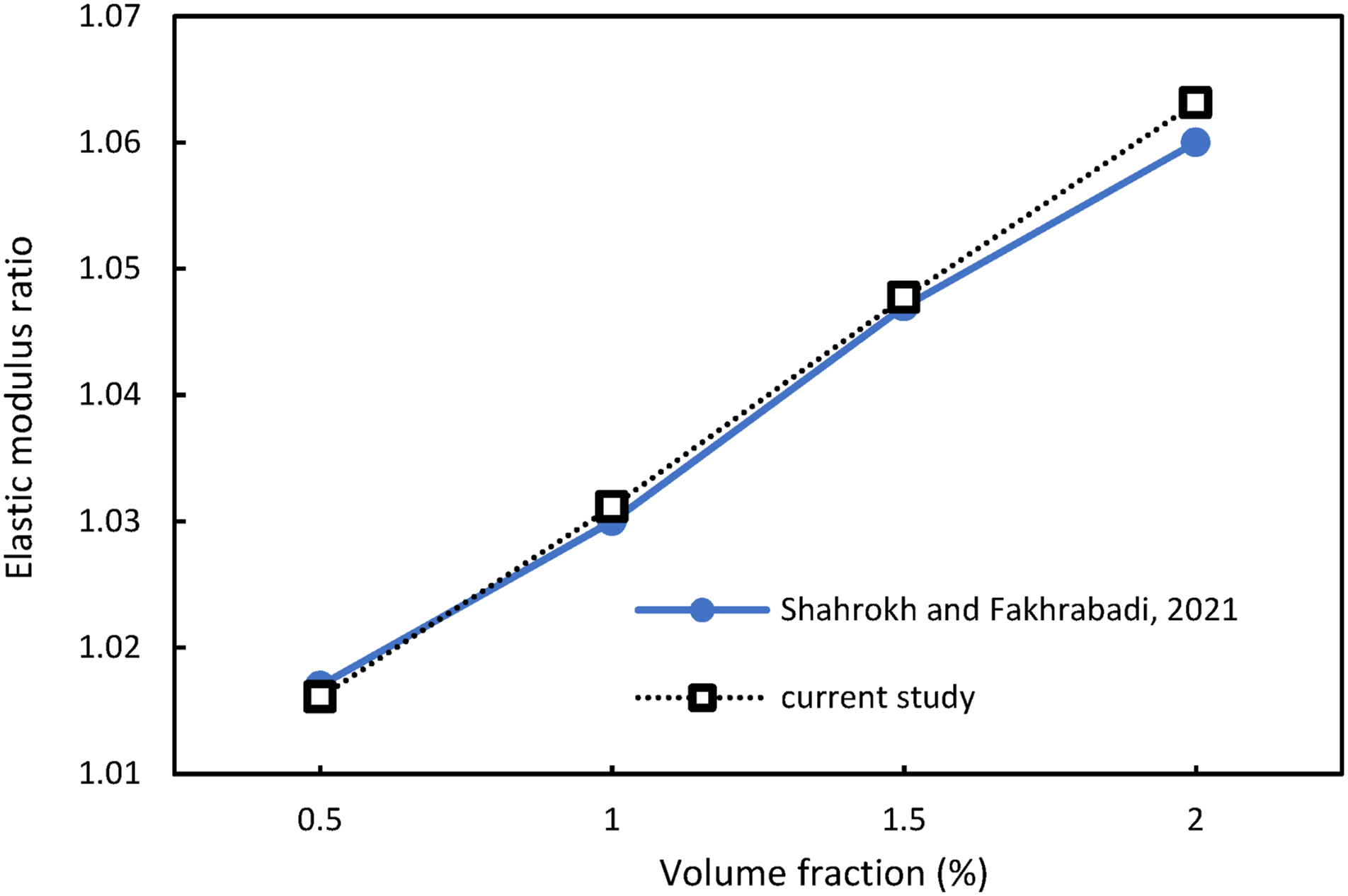
Another comparison is conducted between the current predictions and other results available in the literature reported by Hine et al.
37
Figure 6(a)–(d) show the longitudinal elastic modulus, transverse elastic modulus, longitudinal CTE and transverse CTE of the USGF-reinforced polymer composite versus fiber volume fraction. The FEM accurately predicts the elastic moduli as well as the CTEs of the USGF-reinforced polymer composite in longitudinal and transverse directions for various fiber volume fractions. The aspect ratio of short glass fibers is 30, and the polymer matrix properties are a Young’s modulus of 2.28 GPa, a Poisson’s ratio of 0.335, and a CTE of 117 × 10−6/K. Comparison between results of the current numerical study and previous study
37
for (a) longitudinal elastic modulus and (b) transverse elastic modulus, (c) longitudinal CTE and (d) transverse CTE of the USGF-reinforced polymer composite.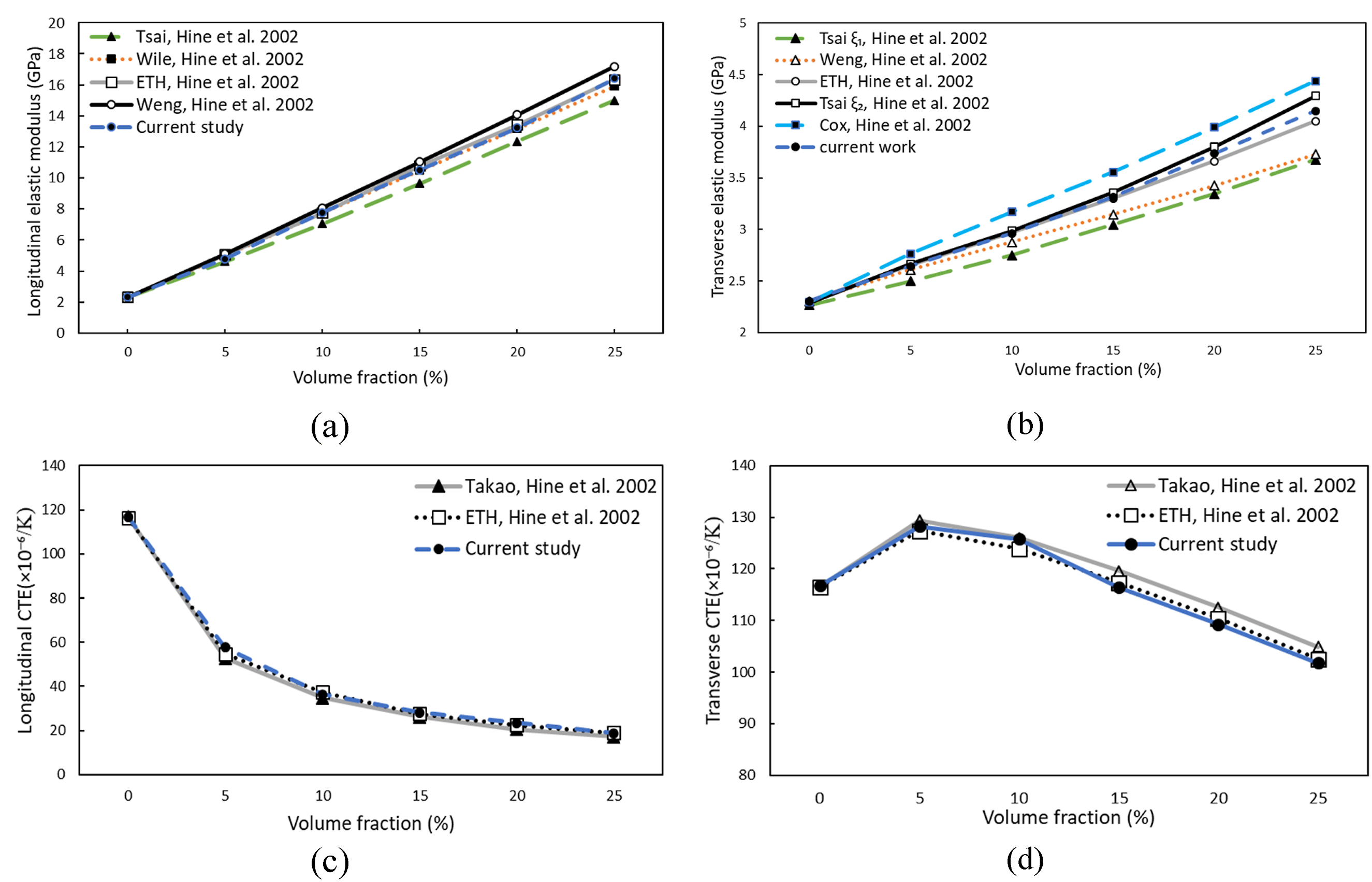
Mesh convergence analysis
To ensure the accuracy of the FEM, a mesh convergence study is conducted for both the nanoscale and microscale RVEs. For the nanoscale analysis involving alumina nanoparticles, simulations are performed using meshes ranging from 32,404 to 477,356 elements. As illustrated in Figure 7, the effective elastic modulus stabilized when the mesh contained approximately 350,000 elements, indicating convergence. Similarly, for the microscale RVE containing USGF, the number of elements is varied from 22,814 to 401,362. The results showed convergence in the calculated longitudinal elastic modulus beyond 210,000 elements. Mesh convergence studies for evaluating the elastic moduli in composite systems: (a) Alumina nanoparticle-reinforced composite (b) USGF-reinforced composite assessing longitudinal elastic modulus.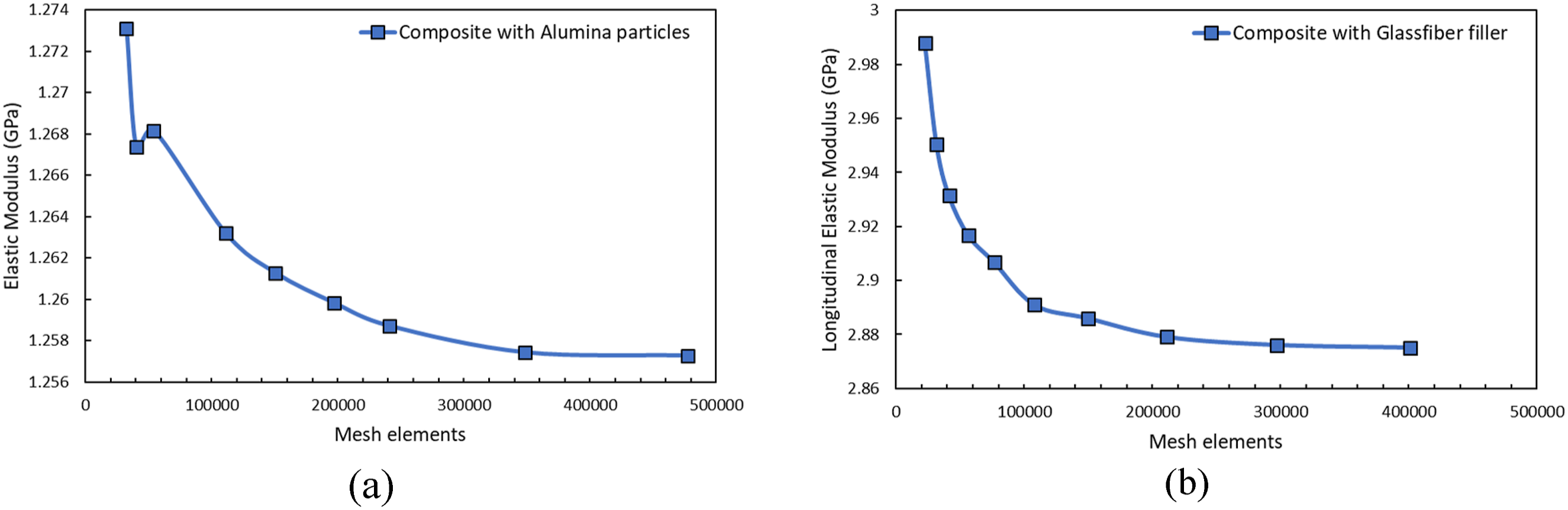
In both cases, mesh refinement is concentrated around the reinforcing inclusions—spherical alumina particles in the nanoscale model and cylindrical fibers in the microscale model. This localized refinement improved the resolution of stress and strain fields near the interfaces, which are critical regions for accurate evaluation of the effective properties. The converged mesh densities are therefore adopted in all subsequent simulations to ensure both computational efficiency and result fidelity.
To assess the impact of geometric periodicity on the effective elastic properties of the composite, a comparative analysis is performed using FEM. The study evaluated the elastic modulus in both longitudinal and transverse directions for models with and without imposed geometric periodicity. The results, illustrated in Figure 8, reveal that the differences in calculated elastic moduli are minimal. This indicates that the absence of geometric periodicity does not significantly affect the accuracy of the simulations for the composite system under investigation. Comparison between results of RVEs with and without consideration of periodic geometry for (a) longitudinal elastic modulus and (b) transverse elastic modulus, and meshed view of the considered (c) RVE and (d) alumina nanoparticles with consideration of periodic geometry.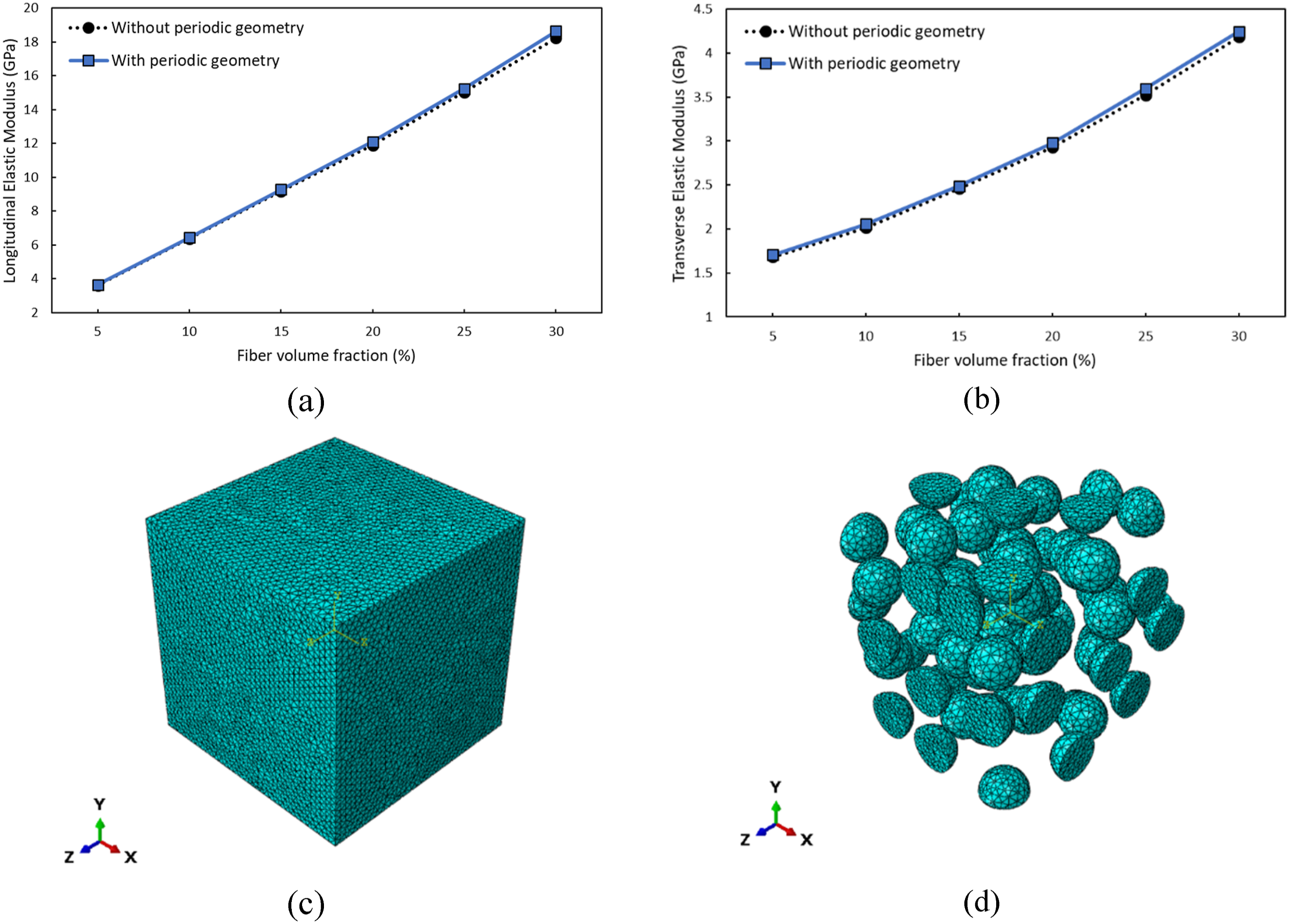
The decision to use geometric non-periodicity is primarily driven by the objective of simplifying the meshing process. Implementing periodic geometries can complicate mesh generation, especially in complex composite geometries. By avoiding these constraints, the meshing process becomes more straightforward, enhancing computational efficiency without compromising the fidelity of the simulation results.
Parametric studies
In this part, the impact of various parameters on the elastic moduli and CTEs of the USGF-reinforced polyethylene composite filled with nano-alumina spheres has been studied. Regarding this, four different parameters are considered: the presence and absence of alumina nanoparticles, the presence and absence of interphase, different volume fractions of nanoparticles, and different aspect ratios of fibers. To investigate the engineering constants of the hybrid composite, a volume ratio of 2% alumina spheres distributed randomly in the polymer matrix is considered. The diameter of the spherical alumina particles is considered 25 nm and the thickness of interphase zone is considered 12.5 nm.
Figure 9 shows the obtained properties of the USGF/alumina/polyethylene composite that are compared to those of the USGF/polyethylene composite. The engineering constants are plotted as a function of glass fiber volume fraction. It is found that by adding the alumina nanoparticles into the polymer matrix, both elastic moduli of the ternary composite are enhanced. Also, Figure 9 a and b elucidate that with increase in volume fraction of glass fibers, the longitudinal and transverse elastic moduli are increased. As compared to the specimen without alumina nanoparticles, the longitudinal elastic modulus of alumina nanoparticle-filled ternary composite with 5% and 30% glass fiber has an increase of 22.8% and 12.8%, respectively. These increases for transverse elastic modulus are 43.7% and 53.3%, respectively. It can be seen that the presence of alumina nanoparticles in the polymer matrix shows less importance at high fiber volume fractions for the longitudinal elastic modulus though for the transverse modulus, the results show an increasing trend. Figure 9(c) and (d) depict the effect of alumina nanoparticles on the longitudinal and transverse CTEs of the ternary composite, respectively. Addition of spherical nanoparticles insignificantly affects the thermal expanding properties of the USGF-reinforced ternary composite in the longitudinal direction. The transverse CTE of the USGF-polymer composites with alumina is less than that of traditional USGF-polymer composite which may lead to an improvement in thermal stability. Both composites exhibit a downward trend in CTEs as the fiber volume fraction increases. This indicates that higher fiber content in the USGF/alumina nanoparticle/polymer composite leads to a lower thermal expansion in the longitudinal and transverse directions though the slopes are not the same. Effects of alumina nanoparticles on the (a) longitudinal and (b) transverse elastic moduli, (c) longitudinal and (d) transverse CTEs of USGF-reinforced composites.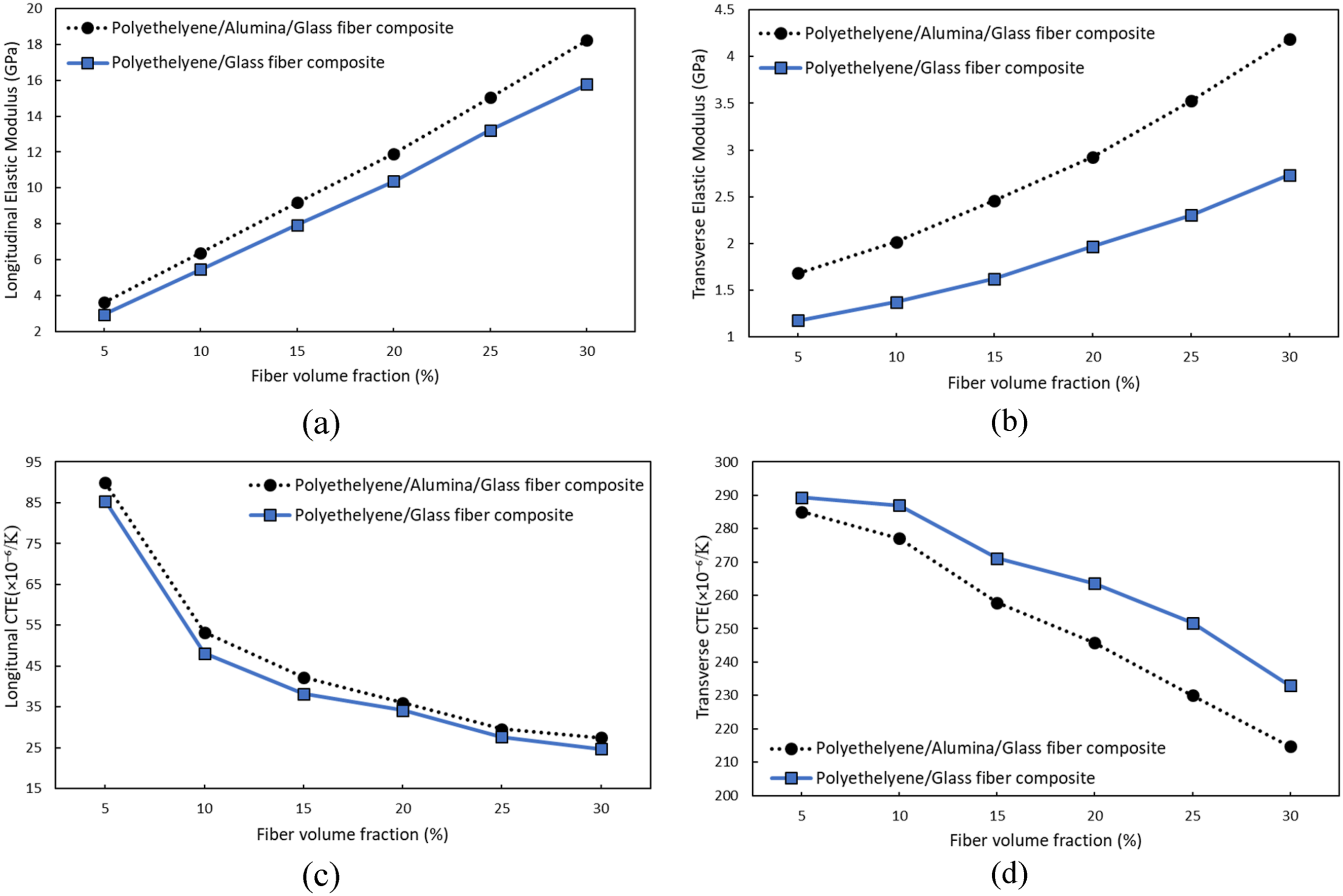
The role of interfacial region between the alumina nanoparticles and polymer matrix in the engineering constants of the ternary composites is illustrated in Figure 10. According to the results of Figure 10(a) and (b), the ternary composites with an interphase consistently exhibit higher elastic moduli in longitudinal and transverse directions as compared to those without an interphase. This suggests that the presence of an interphase significantly improves the load transfer efficiency between the matrix and the nanoparticles, resulting in a more robust composite material. As can be seen in Figure 10(c), the interphase has a negligible effect on the longitudinal thermal expansion. The USGF/alumina/polymer composites with an interphase show less CTE values as compared to those without an interphase. This suggests that the interphase plays a significant role in enhancing the thermal stability of the ternary composite in the transverse direction. Effects of interphase zone on (a) longitudinal and (b) transverse elastic moduli, (c) longitudinal and (d) transverse CTEs for USGF-reinforced composites containing alumina nanoparticles.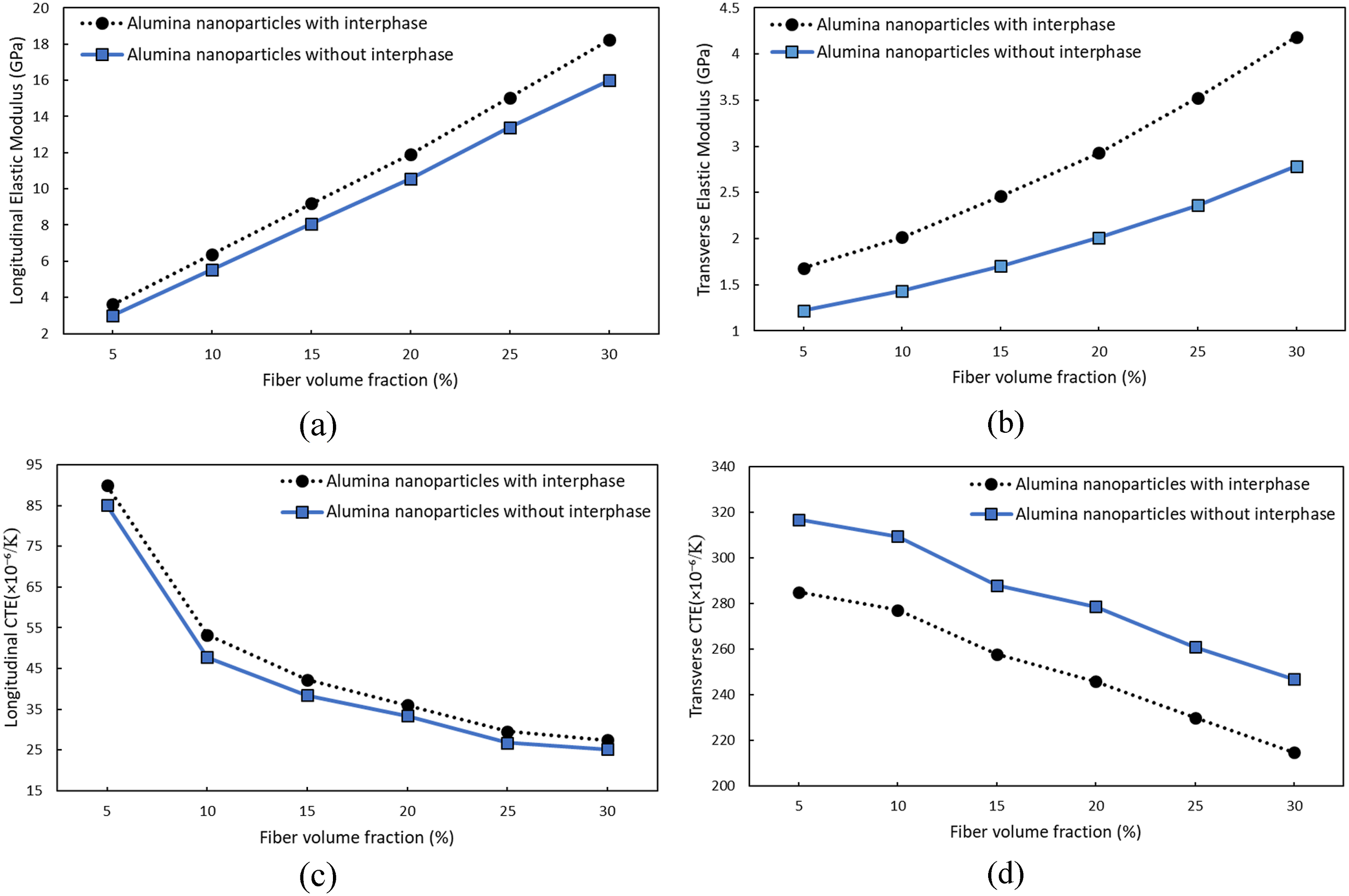
Figure 11 shows the effect of nanoparticle volume fraction on the engineering constants of the USGF-reinforced ternary composites. Three different values of volume fraction including 1%, 2% and 2.5% are selected. The results clearly indicate that the increase of alumina nanoparticle content significantly improves the elastic modulus and CTE of the ternary composite material in transverse direction. Effects of volume fraction of alumina nanoparticles on (a) longitudinal and (b) transverse elastic moduli, (c) longitudinal and (d) transverse CTEs for USGF-reinforced composites containing alumina nanoparticles.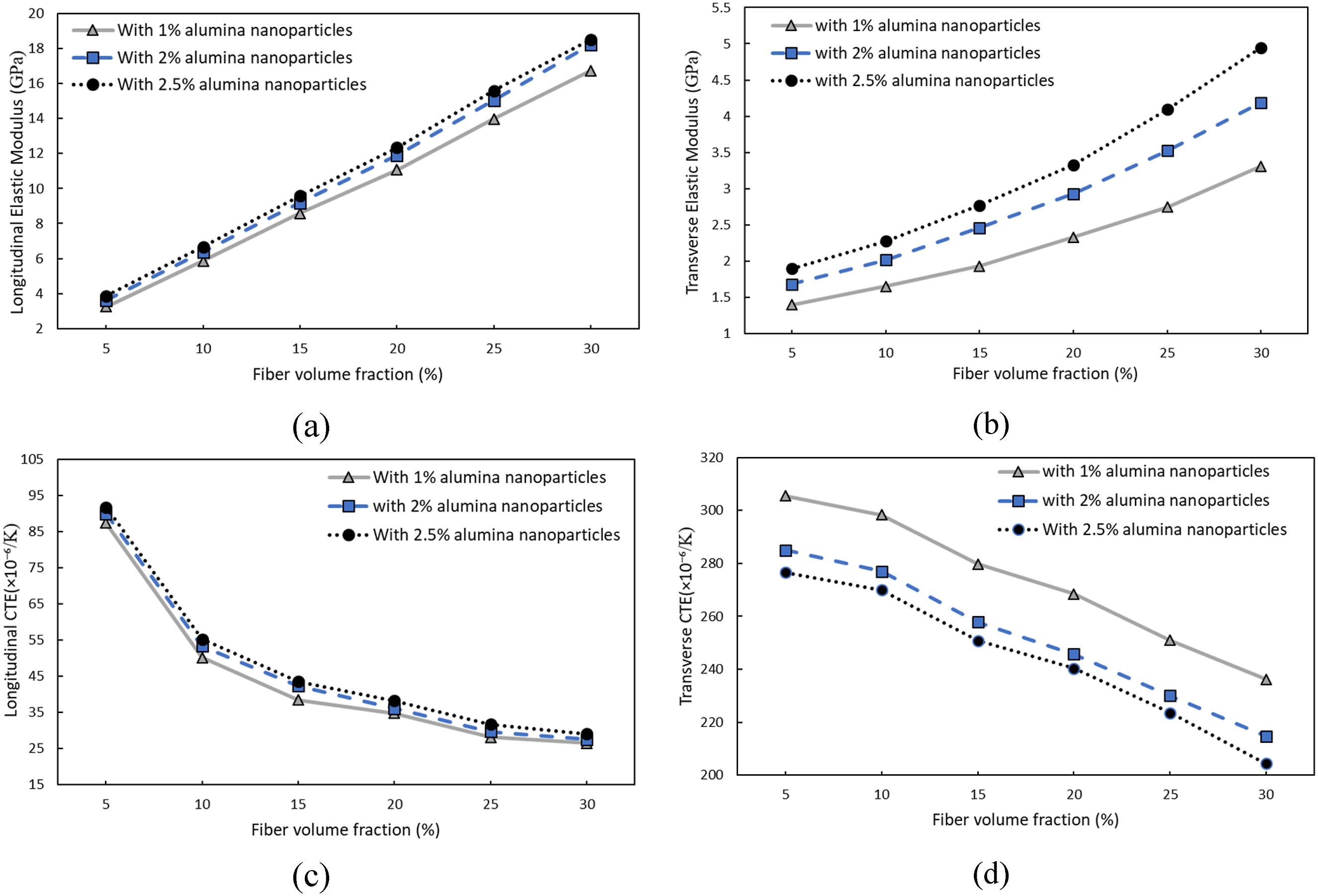
The variation of engineering constants of the USGF/alumina nanoparticle/polyethylene composite with the glass fiber volume fraction at different values of fiber aspect ratio namely 10, 20, 30, 100, 600 and 1000 is indicated in Figure 12(a)–(d). Based on the results of Figure 12(a), longer fibers contribute significantly to the stiffness of the ternary composite along the longitudinal direction, making the material more resistant to deformation under mechanical loadings. However, this enhancement in longitudinal elastic modulus gradually approaches a plateau as the aspect ratio increases beyond 100. The elastic modulus and CTE in transverse direction are insignificantly affected by the glass fiber aspect ratio as shown in Figure 12(b) and (d). But, the longitudinal CTE of the ternary composite shows less value by increasing the aspect ratio of the short glass fibers and reaching a plateau in the high volume fraction of higher aspect ratios (Figure 12(c)). As a result, using the high aspect ratio fibers can be more favorable in improving the longitudinal performance of USGF/alumina nanoparticle-reinforced composite structures. Effects of aspect ratio of short glass fibers on (a) longitudinal and (b) transverse elastic moduli, (c) longitudinal and (d) transverse CTEs for USGF-reinforced composites containing alumina nanoparticles.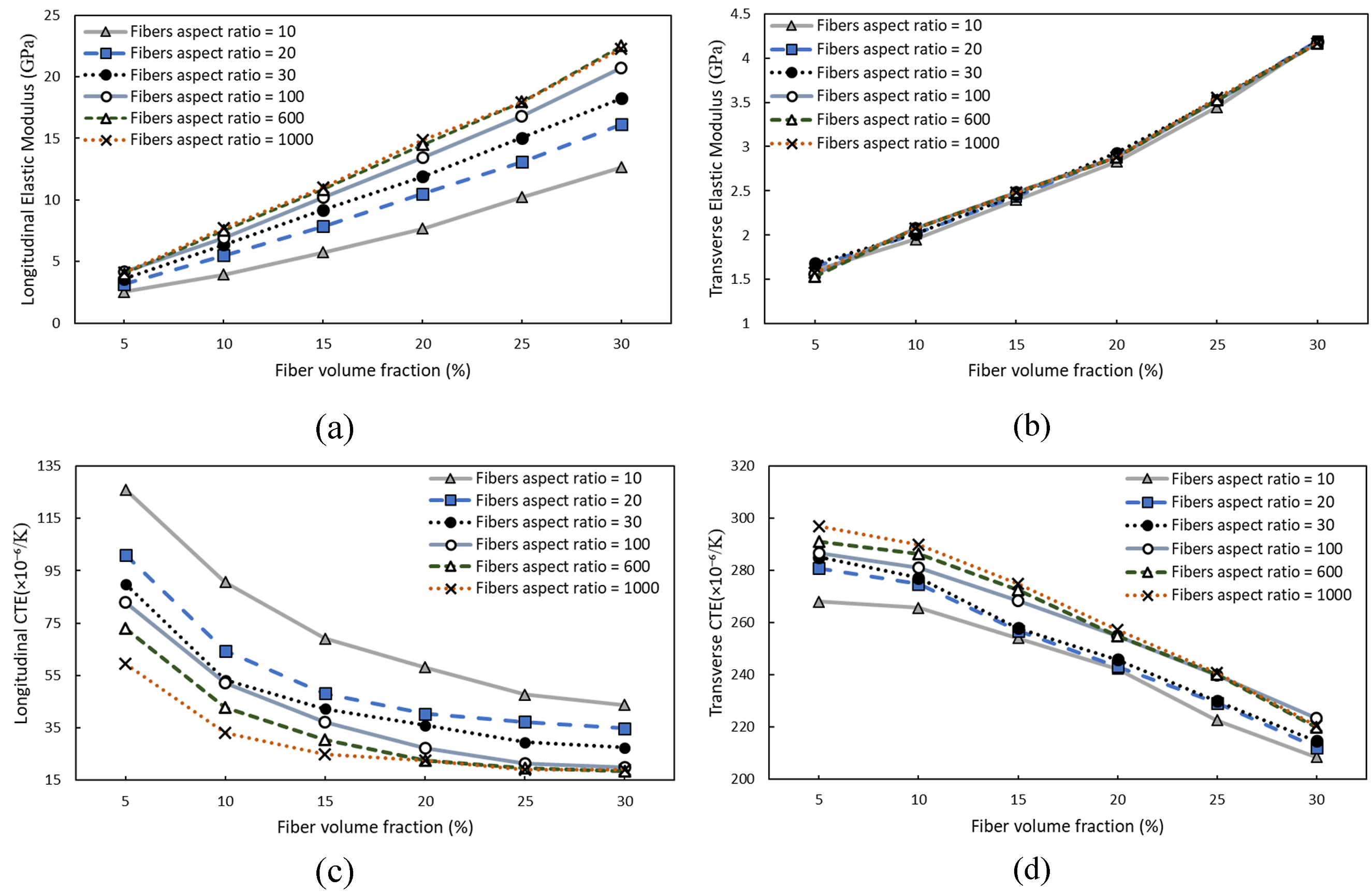
Figure 13 shows the results of considering various elastic moduli of the interphase zone for the engineering constants of the USGF/alumina nanoparticle/polyethylene composite. The elastic modulus for the interphase zone are considered 10, 25 and 50 times the elastic modulus of the matrix. The elastic modulus of the interphase zone proved to be an affecting parameter on the transverse elastic modulus. Effects of elastic modulus of the interphase on (a) longitudinal and (b) transverse elastic moduli, (c) longitudinal and (d) transverse CTEs for USGF-reinforced composites containing alumina nanoparticles.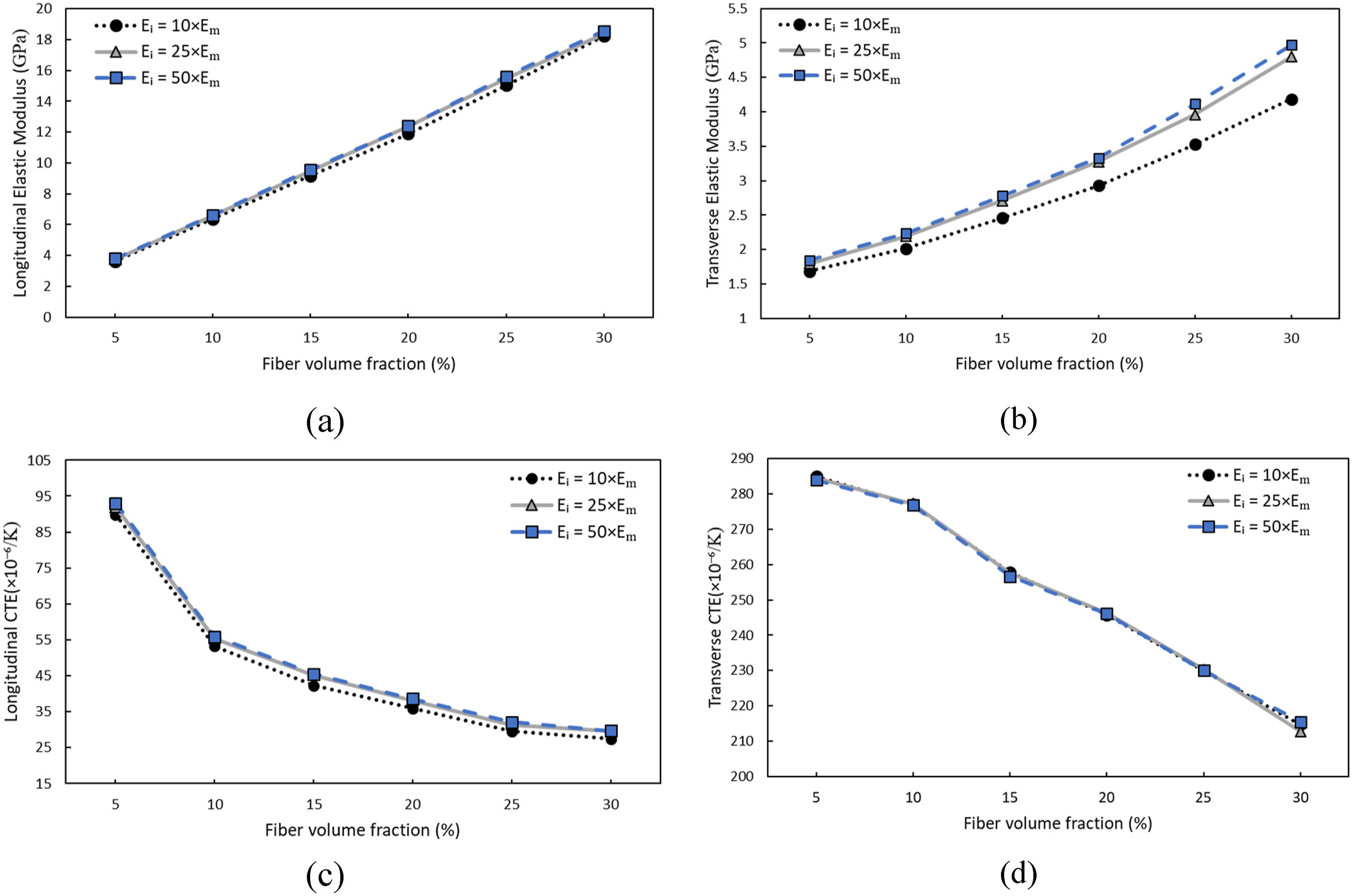
The influences of interphase thickness on the engineering constants of the USGF-reinforced composites with an alumina nanoparticle-filled polyethylene matrix in longitudinal and transverse directions are depicted in Figure 14. It is found that the interphase thickness has an important contribution to the transverse engineering properties of the ternary composites. The increase of interphase thickness leads to an increase in the elastic modulus and a decrease in the CTE along the transverse direction. Effects of thickness of the interphase zone on (a) longitudinal and (b) transverse elastic moduli, (c) longitudinal and (d) transverse CTEs for USGF-reinforced composites containing alumina nanoparticles.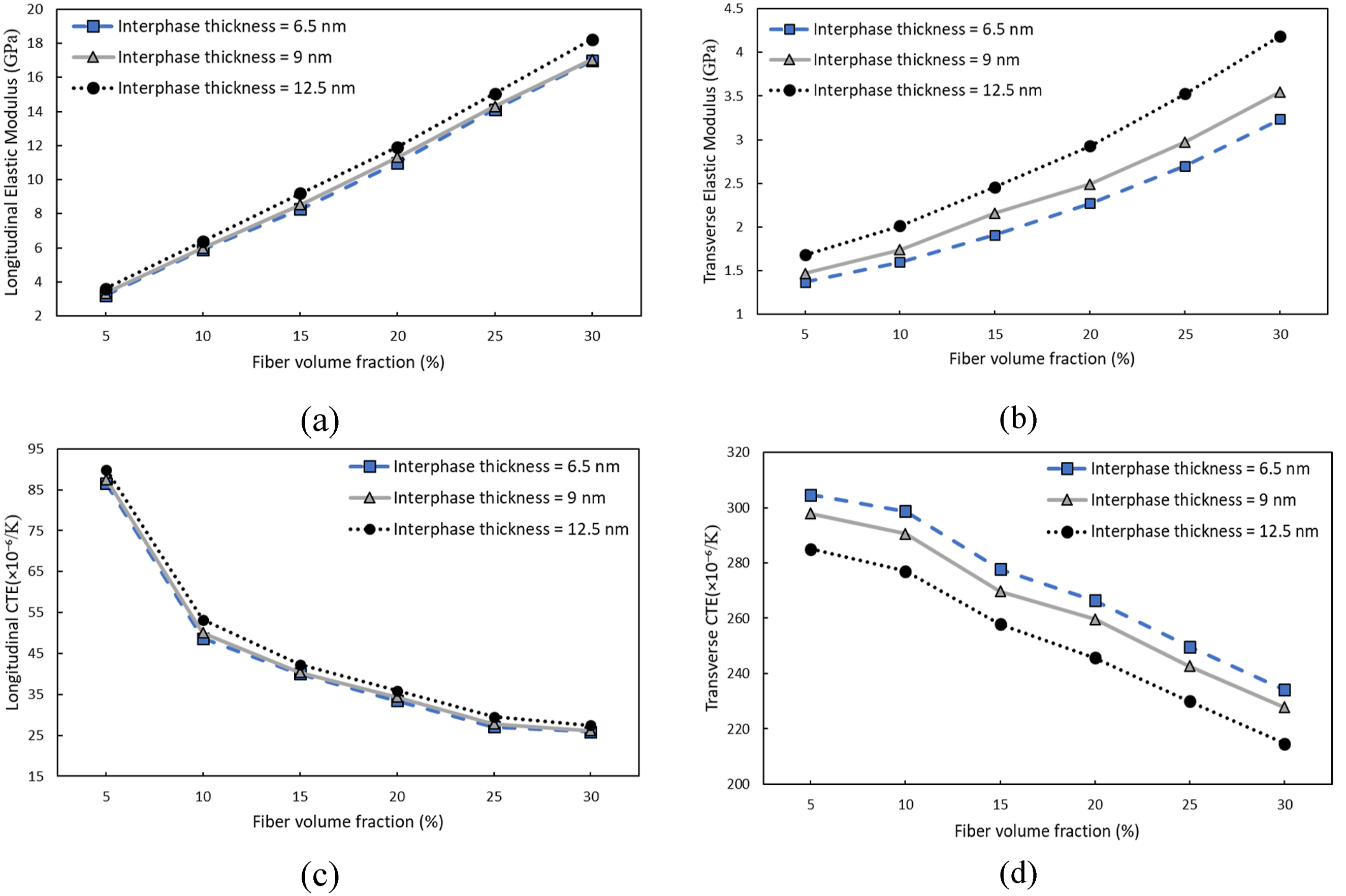
Figure 15 shows the engineering constants of the USGF/alumina nanoparticle/polyethylene composite for various diameters of alumina nanoparticles. In the current part the diameter of the spherical nanoparticles is considered to be 25, 50 and 100 nm with a constant interphase thickness. As depicted in Figure 15(b) and (d), it is apparent that nanoparticle diameter significantly influences the thermo-elastic properties of the ternary composites in the transverse direction. Smaller nanoparticles lead to better reinforcement capabilities compared to larger counterparts, as they can more effectively enhance the elastic modulus and decrease the CTE. Effects of alumina nanoparticles diameter on (a) longitudinal and (b) transverse elastic moduli, (c) longitudinal and (d) transverse CTEs for USGF-reinforced composites containing alumina nanoparticles.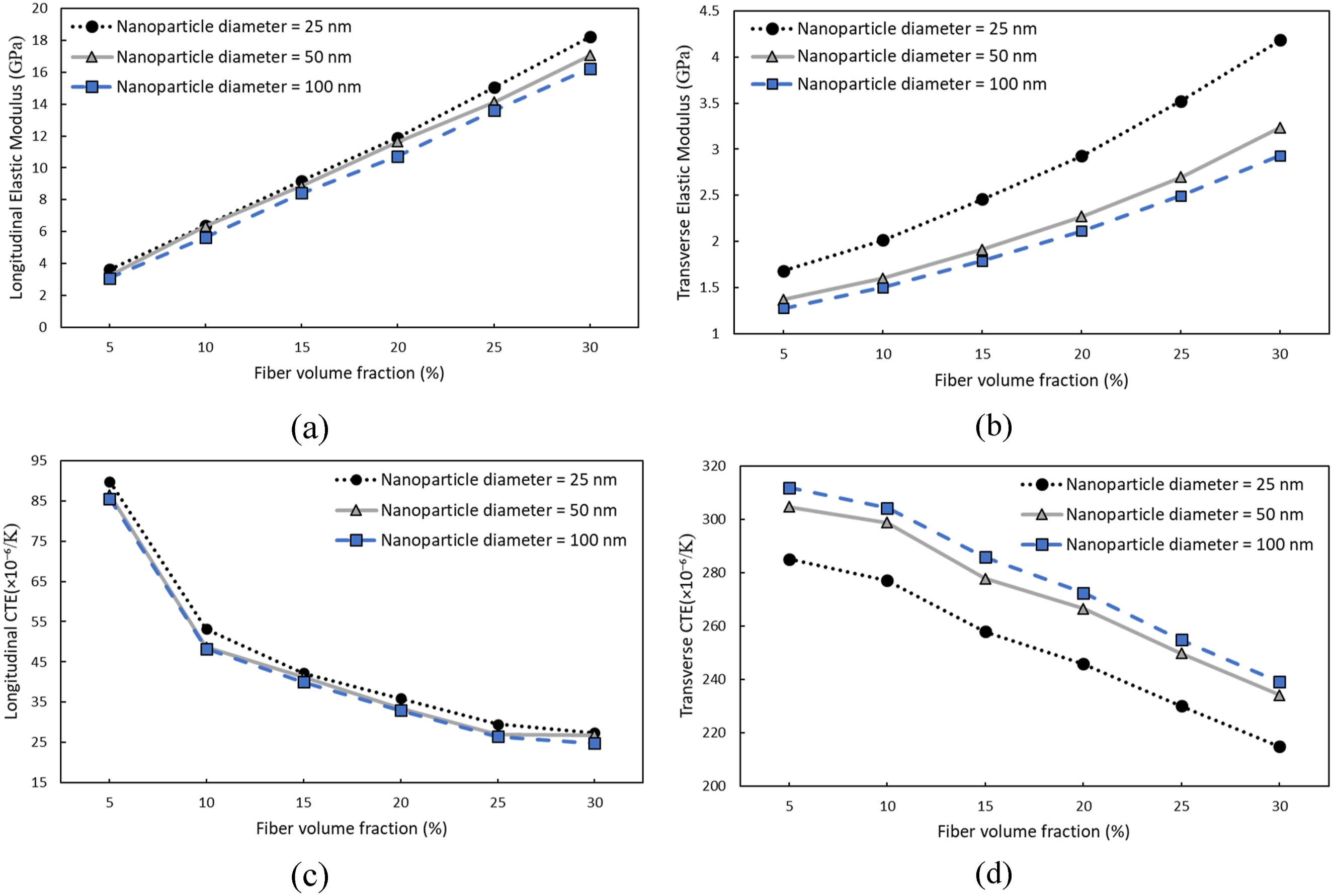
Conclusion
This work was aimed at investigating the engineering constants of USGF-reinforced composites with an alumina nanoparticle-filled polyethylene matrix. The finite element modeling was conducted utilizing two different RVEs, one captures alumina nanoparticles, interphase and polymer and the other captures the short glass fiber as reinforcement and the nanocomposite as the matrix. The interphase was considered as a layer covering the alumina nanoparticles embedded in the polymer matrix. An attempt was made to include some important microstructural parameters in the continuum modeling. It was found that the introducing the alumina nanoparticles into the polyethylene generally resulted in the improvement of the elastic and thermal expanding properties of USGF-reinforced ternary composites. Also, the increase of the glass fiber volume fraction enhanced the elastic moduli and reduced the CTEs in both longitudinal and transverse directions. Furthermore, the engineering constants in the longitudinal direction could be more improved using higher glass fiber aspect ratios. The decrease of nanoparticle size and the increase of interphase thickness improved the elastic modulus and CTE of USGF-reinforced ternary composite in the transverse direction. These insights are essential for developing advanced composite materials with superior thermo-mechanical stability, making them suitable for high-performance applications in various engineering fields.
Footnotes
Declaration of conflicting interests
The authors declared no potential conflicts of interest with respect to the research, authorship, and/or publication of this article.
Funding
The authors received no financial support for the research, authorship, and/or publication of this article.
Declaration of generative AI and AI-assisted technologies in the writing process
During the preparation of this work the authors used ChatGPT in order to improve the readability and language of the manuscript. After using this tool/service, the authors reviewed and edited the content as needed and take full responsibility for the content of the published article.

Data Availability Statement
Data will be made available on request.