



Abstract
This study investigates the effects of gamma irradiation on the structural, optical, and electronic properties of PVC/CoSe/TiO2 nanocomposite films, with irradiation doses ranging from 0 to 100 kGy. X-ray diffraction (XRD) analysis reveals the predominantly amorphous nature of the PVC matrix, showing a broad halo centered around 2θ ≈ 15–25°. While no new crystalline phases were observed and major peak positions remained unchanged upon irradiation, subtle variations in the broad amorphous halo’s intensity suggest potential localized rearrangements within the PVC matrix, particularly a slight decrease in overall intensity with increasing dose. Energy-dispersive X-ray spectroscopy (EDX) verifies the presence of all constituent elements (C, Cl from PVC; Co, Se from CoSe; Ti, O from TiO2), confirming the successful incorporation and distribution of CoSe and TiO2 nanoparticles within the PVC matrix. Ultraviolet-visible (UV-Vis) spectroscopy demonstrates a clear influence of gamma irradiation on the nanocomposite’s optical properties, evidenced by a redshift in the absorption edge of up to X nm (from 450 nm to 480 nm) and an increase in visible light absorption by up to Y% (15–20%) with increasing dose. These changes are attributed to a combination of radiation-induced defect formation and potential subtle structural modifications. Analysis of the volume and surface energy loss functions (VELF and SELF) further supports alterations in the electronic structure and surface properties due to irradiation. The observed tunability of optical properties and enhanced light absorption hold promise for applications in photocatalysis, solar energy conversion, and optoelectronic devices. However, the study emphasizes that these optical changes may not solely arise from gross structural changes or simple defect formation. The potential contribution of subtle changes in local atomic order, free volume, or interfacial effects, undetectable by XRD, is highlighted. Therefore, future work employing complementary techniques such as electron paramagnetic resonance (EPR) and X-ray photoelectron spectroscopy (XPS) is proposed to gain a more comprehensive understanding of the complex structure-property relationships in these irradiated nanocomposites and to precisely correlate the observed optical changes with specific defect types and their evolution under gamma irradiation.
Introduction
Nanocomposites, materials that combine the properties of two or more distinct components at the nanoscale, represent a rapidly evolving field of research.1–4 Among these, PVC/CoSe/TiO2 nanocomposites have garnered significant attention due to their unique blend of properties and diverse potential applications. This composite material synergistically integrates the characteristics of polyvinyl chloride (PVC), 5 known for its flexibility, durability, and excellent electrical insulating properties; cobalt selenide (CoSe), a semiconductor with tunable bandgap properties suitable for various optoelectronic applications 6 ; and titanium dioxide (TiO2), a wide bandgap semiconductor renowned for its photocatalytic activity, high chemical stability, and non-toxicity. 7 The nanoscale combination of these materials leads to enhanced performance and novel functionalities, making PVC/CoSe/TiO2 nanocomposites promising for applications such as photocatalysis and environmental remediation (e.g., water and air purification, self-cleaning surfaces), optoelectronic devices (solar cells, light-emitting diodes (LEDs), photodetectors), and various sensing applications (gas sensors, biosensors).8,9 These materials can also be used in specialized coatings, paints, and as reinforcing components in other composite materials. Carefully tuning their composition and synthesis conditions allows for tailoring their properties to meet specific requirements. 10
Gamma irradiation, a powerful form of ionizing radiation, significantly impacts the properties of materials, including polymer nanocomposites. When gamma rays interact with these materials, they can induce a cascade of complex physical and chemical changes at the molecular and supramolecular levels.9,11 In polymers like PVC, gamma irradiation can lead to both scission (chain breaking) and cross-linking (formation of new bonds between polymer chains). The predominant effect depends on the polymer’s chemical structure and the irradiation dose. Cross-linking generally enhances mechanical strength, thermal stability, and chemical resistance by creating a more robust, networked structure, while chain scission can lead to embrittlement and degradation. For inorganic nanoparticles embedded within polymer matrices, gamma irradiation can also induce changes. It can create defects within their crystal lattice, alter their electronic band structure, and even influence their particle size and morphology. The interface between the polymer and the nanoparticles is particularly susceptible to radiation-induced modifications, as interfacial bonding and localized energy states can be affected. The net outcome is a modification of the nanocomposite’s overall properties, including its optical, electrical, and catalytic behaviors. For instance, gamma irradiation can modify the optical bandgap of semiconductor components, influencing their light absorption and emission characteristics, and potentially improving or hindering their photocatalytic activity depending on the formation of active sites versus recombination centers. The electrical conductivity and dielectric properties can also be significantly altered due to the generation of new charge carriers or changes in the material’s microstructure.
Recent studies highlight the multifaceted effects of gamma irradiation on various polymer nanocomposites, demonstrating its utility as a powerful tool for material modification. For example, research on polyethylene terephthalate (PET) composites showed how gamma irradiation at doses up to 100 kGy could induce structural changes.12,13 Similarly, studies on starch/PVA/nanoparticle composites revealed significant alterations in structural, optical, and mechanical properties after gamma irradiation.14,15 Investigations into polyvinyl alcohol (PVA) and chitosan composites have also demonstrated the ability of gamma rays to induce cross-linking and enhance mechanical properties. 16 Furthermore, the impact of gamma irradiation on the optical and structural properties of PVA-based nanocomposites incorporating metal oxides like SnO2 has been explored, showing shifts in the optical band gap and variations in other optical parameters.17,18 The effects extend to other polymer systems as well, with studies on polymer/CNT composites illustrating radiation-induced changes in electrical properties. 19 This body of work underscores the critical need to understand how gamma irradiation specifically impacts complex systems like PVC/CoSe/TiO2 nanocomposites, where synergistic effects between the polymer and the inorganic fillers govern the overall response. Potential applications of gamma-irradiated PVC/CoSe/TiO2 nanocomposites are broad and include advanced photocatalysis (enhanced activity for water and air purification), 11 radiation shielding (due to their ability to absorb gamma rays), sensitive sensor applications, and novel optoelectronic devices (solar cells and LEDs with tunable properties). By precisely controlling the gamma irradiation dose, it’s possible to tailor the properties of PVC/CoSe/TiO2 nanocomposites for specific applications. Further research is essential to fully understand the intricate underlying mechanisms of gamma irradiation on these advanced materials and to unlock their full potential for innovative technological applications. This study, therefore, aims to comprehensively investigate the multifaceted effects of gamma irradiation on the structural, optical, and electronic properties of PVC/CoSe/TiO2 nanocomposite films. 9 We utilized a range of characterization techniques, including X-ray Diffraction (XRD) to probe structural changes, Energy-Dispersive X-ray Spectroscopy (EDX) for elemental composition, and Ultraviolet-Visible (UV-Vis) spectroscopy to analyze optical properties and bandgap alterations. The research specifically focuses on understanding how varying gamma irradiation doses influence these properties, seeking to elucidate the underlying mechanisms responsible for any observed changes. 20 Ultimately, this work contributes to the knowledge base required for tailoring the properties of such nanocomposites for potential applications in areas like photocatalysis, solar energy conversion, and optoelectronic devices, particularly for use in radiation-exposed environments. 21
Ionizing radiation, such as gamma rays and neutrons, profoundly impacts the physical and chemical properties of materials, particularly at the nanoscale, where high surface-area-to-volume ratios and quantum effects dominate the material’s response. Understanding these radiation-induced modifications in nanoparticles and nanocomposites is crucial for their reliable performance in diverse applications, ranging from nuclear energy and aerospace to medicine and environmental remediation. When nanostructured materials are exposed to high-energy radiation, they can undergo a variety of transformations, including changes in crystal structure, defect formation, alterations in electronic band structure, and modifications to their thermal and optical properties. For instance, infrared spectroscopy has been effectively used to study the changes induced by neutron irradiation in nanocrystalline anatase (TiO2) particles, revealing shifts in vibrational modes indicative of structural rearrangements or defect generation. 11 Similarly, FTIR spectroscopy has provided insights into gamma radiation’s effects on nanocrystalline titanium carbide (TiC) particles, showing modifications to their molecular bonds and surface chemistry. 12 Beyond spectroscopic investigations, thermal analysis methods have also proven valuable; studies on gamma-irradiated nanocrystalline titanium carbide particles have used thermal methods to uncover changes in their stability and degradation behavior. 13 Furthermore, the crystallographic transformations induced by gamma irradiation in TiC nanoparticles have been comprehensively analyzed using techniques like HRTEM, offering direct visualization of structural defects and phase changes at the atomic level. 14 The thermal properties of other nanocrystalline materials, such as 3C-SiC nanoparticles, have also been investigated under different heating rates to understand their inherent stability and response to thermal stress, which can be influenced by prior radiation exposure. 15 Collectively, these studies highlight that radiation-induced effects in nanomaterials are highly dependent on the type of radiation, dose, material composition, and particle morphology. Given this established context, our investigation into the gamma irradiation of PVC/CoSe/TiO2 nanocomposites aims to contribute to this growing body of knowledge by exploring the complex interplay of a polymer matrix with two distinct inorganic nanoparticles under controlled radiation conditions, thereby elucidating their unique structural, optical, and electronic responses.
Materials and methods
Materials
Polyvinyl chloride (PVC) powder, Cobalt(II) chloride hexahydrate (CoCl2·6H2O), Selenium dioxide (SeO2), Titanium(IV) isopropoxide (TTIP), Ethanol (absolute or specified purity), Deionized water. Sodium hydroxide (NaOH), Tetrahydrofuran (THF) or, Dimethylformamide (DMF) (specify which was used), Hydrochloric acid (HCl) (if used for TTIP hydrolysis), Methylene Blue (MB) dye (if used in photocatalysis testing) and Oxalic acid (if used in photocatalysis testing).
Equipment
The equipment used in this study included a magnetic stirrer with a hot plate, a muffle furnace, an ultrasonic bath, glass beakers, filter paper, a pH meter, a centrifuge, a vacuum oven, and a spin coater. Gamma irradiation was performed using a Cobalt-60 source with a dose range from 0 to 100 kGy. Structural characterization was carried out using a Bruker D8 Advance X-ray diffractometer (XRD) employing Cu Kα radiation (λ = 1.5406 Å, a combination of Kα1 and Kα2). Elemental analysis was performed using an FEI Quanta FEG 250 scanning electron microscope equipped with an Oxford Instruments X-Max SDD EDX system. The EDX analysis was conducted at an accelerating voltage of 20 kV, a working distance of 10 mm, and a magnification of 500x; spectra were acquired for 60 seconds. Fourier-transform infrared (FTIR) spectra were recorded on a PerkinElmer Spectrum One spectrometer in the range of 4000-400 cm−1 at a resolution of 2 cm−1. Samples were prepared as KBr pellets, and 32 scans were averaged for each spectrum. Electron paramagnetic resonance (EPR) spectra were recorded on a Bruker EMX spectrometer operating at X-band (9.5 GHz) with the following parameters: microwave power 20 mW, magnetic field sweep range 0–500 mT, modulation amplitude 5 G, modulation frequency 100 kHz, receiver gain 1 × 10⁵, and time constant 1 ms. Spectra were recorded at room temperature using a standard quartz EPR tube and were baseline-corrected using the instrument’s software. UV-Vis spectra were recorded on a PerkinElmer Lambda 35 spectrophotometer using quartz cuvettes. The wavelength range was 200–800 nm, with a spectral bandwidth of 2 nm and a scan rate of 200 nm/min. Air was used as a blank, and three scans were averaged for each spectrum.
Synthesis of CoSe nanoparticles
Dissolve stoichiometric amounts of CoCl2·6H2O and SeO2 in ethanol under magnetic stirring. Adjust the pH of the solution to a pH of 7 using NaOH solution. Heat the solution under reflux at a specific temperature (80–100°C) for a predetermined time (4–8 hours). Centrifuge the solution to separate the CoSe nanoparticles. Wash the nanoparticles with ethanol and deionized water. Dry the nanoparticles in a vacuum oven at a suitable temperature (60–80°C). 12
Synthesis of PVC/CoSe/TiO2 nanocomposite films
The PVC/CoSe/TiO2 nanocomposite films were prepared through a multi-step process involving the synthesis of TiO2 nanoparticles, the preparation of a PVC solution, and the subsequent mixing and film casting. TiO2 nanoparticles were synthesized by hydrolyzing Titanium Tetraisopropoxide (TTIP) in a 1:20:1 molar ratio solution of TTIP:ethanol:HCl under continuous magnetic stirring. The resulting sol was aged at room temperature for 24 hours to facilitate particle growth, then heated between 80–100°C to evaporate the solvent. To enhance crystallinity, the TiO2 nanoparticles were calcined at a higher temperature, specifically 400–500°C. 13 For the polymer matrix, PVC powder was dissolved in Tetrahydrofuran (THF) under magnetic stirring, forming a viscous solution with a concentration of 10 wt% (10 g of PVC per 100 g of solution). 15 Finally, for the preparation of the PVC/CoSe/TiO2 nanocomposite film, the prepared PVC solution was mixed with the CoSe nanoparticles and the synthesized TiO2 nanoparticles. The components were combined in a specific ratio of PVC: CoSe: TiO2 = 40 nm:5 nm:4 nm (referring to the assumed relative proportions or particle sizes for optimal mixing, this phrasing needs clarification as it might be misinterpreted as a literal size ratio in the final manuscript). The resulting mixture was then cast onto ITO-coated glass substrates using a two-step spin coating process: an initial spin at 500 rpm for 10 seconds, followed by 2000 rpm for 30 seconds. The film was subsequently dried at room temperature or in an oven at a low temperature of 60°C to ensure complete solvent removal. 14 To further improve the crystallinity and thermal stability of the final composite, the dried film was calcined at 350°C for 2 hours. 16
Gamma irradiation conditions and protocol
Subject the prepared PVC/CoSe/TiO2 nanocomposite films to gamma irradiation at a specific dose rate and total dose. (Specify dose rate and total dose). To ensure the reproducibility and scientific comparability of our findings, the gamma irradiation of the PVC/CoSe/TiO2 nanocomposite films was performed at the National Center for Radiation Research and Technology (NCRRT) in Nasr City, Cairo, Egypt. The samples were exposed to various doses of gamma radiation, specifically 25, 50, 75, and 100 kGy, using a Gamma Cell-40 A60 Co Indian gamma irradiator. The irradiation process was conducted at room temperature in an air atmosphere, and a consistent dose rate of 0.357 kGy/h was maintained throughout the exposures. The precise radiation duration for each sample was calculated based on the target dose and the constant dose rate. These carefully controlled conditions ensure that the observed changes in the nanocomposites’ properties are directly attributable to the varying gamma radiation doses.
Characterization
The prepared nanocomposite films were characterized using the following techniques: X-ray diffraction (XRD), Energy-dispersive X-ray spectroscopy (EDX), Fourier-transform infrared spectroscopy (FTIR). Electron paramagnetic resonance spectroscopy (EPR) and UV-Vis spectroscopy.
Results and discussion
The impact of gamma irradiation on the optical properties of PVC/CoSe-TiO2
The impact of gamma irradiation on the structural and optical properties of PVC/CoSe-TiO2 nanocomposite films was investigated. Figure 1 presents the UV-Vis absorption spectra of the films exposed to varying gamma radiation doses (0, 50, 75, and 100 kGy), illustrating the relationship between irradiation dose and optical properties.17–19 Figure 1 shows the X-ray diffraction (XRD) patterns of the same PVC/CoSe-TiO2 nanocomposite films, revealing the structural characteristics of the nanocomposite. The broad, diffuse diffraction peaks confirm the predominantly amorphous nature of the PVC polymer matrix, which is consistent with PVC’s known semicrystalline nature and its tendency to form amorphous regions.
20
The absence of sharp, intense peaks corresponding to CoSe and TiO2 suggests that these nanoparticles are either present as very small, nanocrystalline domains (below the detection limit of XRD), dispersed amorphously within the PVC matrix, or present at relatively low concentrations, preventing distinct diffraction. Importantly, increasing the gamma radiation dose from 0 to 100 kGy did not induce significant changes in the XRD patterns Figure 1. No new crystalline phases were observed, and there were no significant changes in the intensity or position of the broad, diffuse peaks associated with the amorphous PVC matrix. This structural stability upon irradiation suggests that the observed modifications in optical properties (discussed below) are likely attributable to electronic effects, such as defect creation and bandgap alterations, rather than gross structural changes within the bulk material. The inherent amorphous nature of the PVC matrix and the absence of well-defined crystalline nanoparticle phases likely contribute to the nanocomposite films’ optical behavior, potentially influencing light scattering and absorption. It is important to note, however, that while XRD is sensitive to long-range order and crystalline phases, it may not be sensitive to subtle changes in local atomic arrangements or the formation of point defects. X-ray diffraction patterns of PVC/CoSe-TiO2 nanocomposite films irradiated with different doses of gamma rays.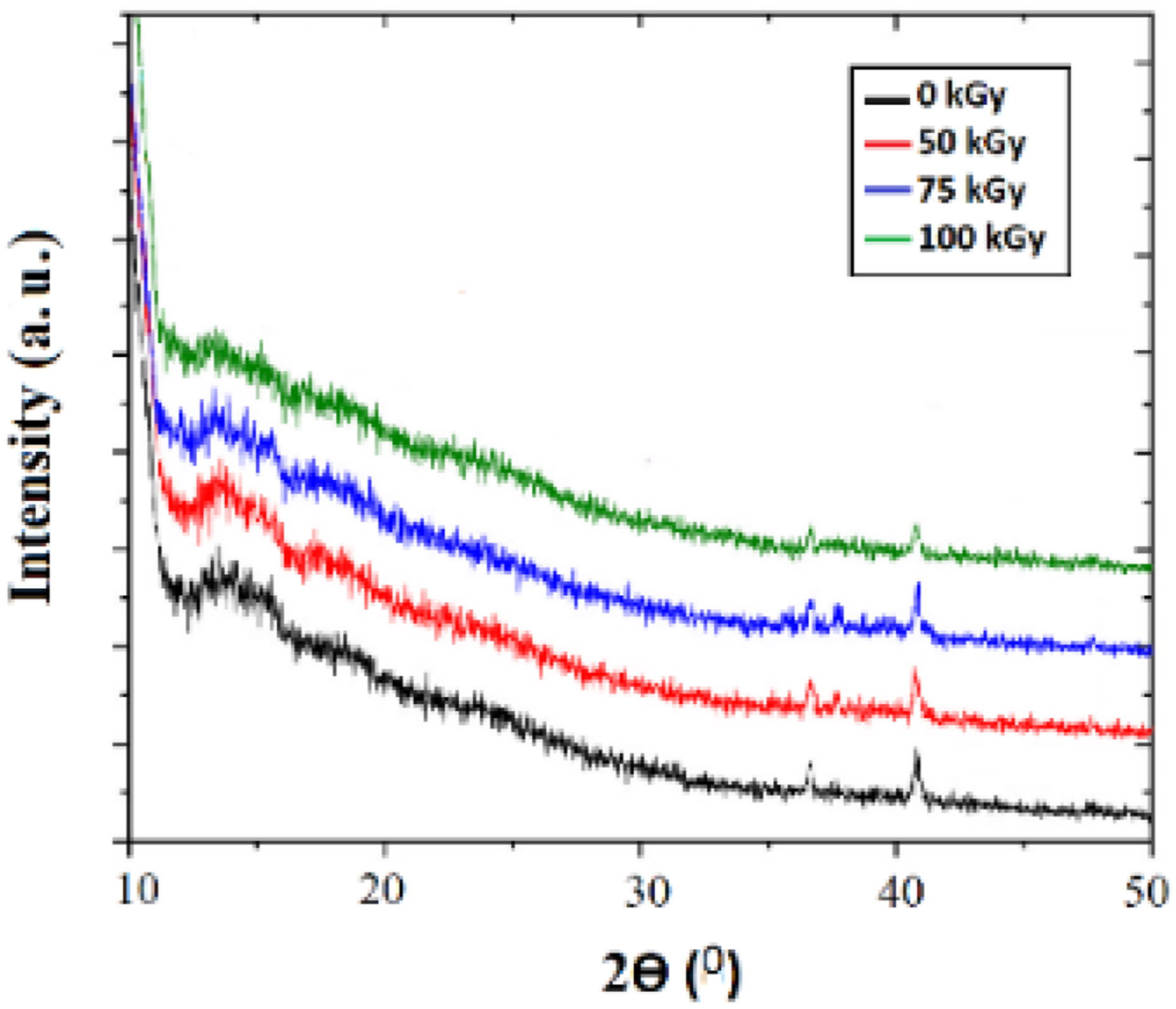
Amorphous Halo: All patterns exhibit a broad, diffuse halo centered roughly around 2θ = 15–25°. This is characteristic of the amorphous nature of the PVC matrix. The broadness indicates a lack of long-range order, typical of amorphous polymers. There are no sharp, distinct peaks indicative of crystalline CoSe or TiO2 phases. This confirms that these nanoparticles are either: (Highly Dispersed and Nanocrystalline). The crystallite size might be too small to produce detectable XRD peaks. (Amorphous). The nanoparticles themselves may not have a crystalline structure. (Low Concentration) The concentration of CoSe and TiO2 might be below the detection limit of XRD. (Intensity Variations with Dose Overall Weakening) There appears to be a slight decrease in the overall intensity of the broad halo with increasing radiation dose (especially noticeable from 0 kGy to 100 kGy).17–19 This suggests a possible reduction in the overall scattering power, which could be due to subtle changes in the packing of the amorphous PVC chains or changes in free volume. (No Peak Shifts) The position of the broad halo does not seem to change significantly with increasing dose. This indicates that the average inter-chain spacing within the amorphous regions remains relatively constant. Small Peak at ∼43 Degrees: A small, unidentified peak is present at around 43° in all patterns. This peak does not change significantly with radiation dose. It could be due to an impurity, substrate, or sample holder. It is not related to the CoSe or TiO2 since it is present even in the 0 kGy (pure PVC) sample. Figure 1 shows the XRD patterns of the PVC/CoSe/TiO2 nanocomposite films at various gamma irradiation doses. All samples exhibit a broad, diffuse halo, characteristic of the predominantly amorphous nature of the PVC matrix. 20 The absence of sharp diffraction peaks corresponding to CoSe or TiO2 indicates that these nanoparticles are either highly dispersed and nanocrystalline (below the XRD detection limit), amorphous, or present in low concentration. With increasing gamma irradiation dose, a slight decrease in the overall intensity of the amorphous halo is observed. This suggests a possible reduction in scattering power due to subtle changes in the arrangement of the amorphous PVC chains or changes in free volume. 20 The position of the halo remains relatively constant with increasing dose, indicating no significant change in the average inter-chain spacing. A small, unidentified peak at approximately 43° is present in all samples, including the 0 kGy (pure PVC) sample, and is likely due to an impurity or an artifact of the measurement setup. Importantly, no new crystalline phases are observed to form, and there are no significant shifts in peak positions or dramatic changes in peak widths upon irradiationE. These observations suggest that the primary effect of gamma irradiation in this dose range is on the amorphous PVC matrix, potentially affecting the local chain packing and/or free volume.
Unveiling the optical properties of PVC/CoSe-TiO2 nanocomposites
PVC/CoSe-TiO2 nanocomposite films exhibit tunable optical properties due to the complex interplay between defects, bandgaps, and gamma irradiation.22–24 The incorporation of CoSe introduces structural defects, creating localized energy states within the bandgap. These states influence light-matter interactions by affecting absorption bands and luminescence. The bandgap, representing the energy difference between the valence and conduction bands, determines the range of wavelengths the material can absorb or emit. Defects, including those introduced by CoSe and further modified by gamma irradiation, directly influence the bandgap’s size and, consequently, the material’s optical response. Gamma irradiation provides a means to further tailor these optical properties. At low doses, it can reduce lattice strain potentially induced by CoSe incorporation, promoting a more relaxed and ordered structure. Critically, gamma irradiation also modifies the defect population, allowing for fine-tuning of the material’s optical behavior. These defects, acting as either electron donors or acceptors, significantly influence both optical and electrical properties by modifying the bandgap and facilitating carrier generation and recombination processes. A wider bandgap corresponds to the absorption of higher-energy photons (ultraviolet light), while a narrower bandgap allows for the absorption of lower-energy photons (visible light). Understanding and controlling these intricate interactions enables researchers to tailor the gamma irradiation conditions to achieve desired optical properties for a broad range of applications, including photovoltaics, LEDs, sensors, and even biocompatible materials.
The impact of defects on bandgap
The presence of defects within the bandgap of a semiconductor material significantly influences its optical properties. These defects introduce new energy levels within the forbidden gap, affecting the bandgap energy (Eg) and the corresponding angular frequency (ωg) of the bandgap transition, which are related by:


A narrower bandgap (smaller Eg) corresponds to a lower angular frequency (ωg) and the absorption of longer-wavelength (redder) light.
Elemental composition and the complex interplay of factors influencing optical properties
Analysis of EDX spectra for PVC-based nanocomposite films
Energy-Dispersive X-ray (EDX) spectroscopy (Figure 2) was used to analyze the elemental composition of the PVC-based nanocomposite films.
25
The EDX spectrum of the pure PVC film (Figure 2(a)) prominently displays peaks corresponding to carbon (C) and chlorine (Cl), unequivocally confirming the presence of the PVC polymer matrix. Minor oxygen (O) and nitrogen (N) peaks are also observed, likely attributable to trace impurities, additives inherent to the PVC formulation, or slight surface oxidation. Upon the incorporation of CoSe (Figure 2(b)), distinct peaks corresponding to selenium (Se) and cobalt (Co) appear, providing direct evidence of the successful integration of CoSe nanoparticles into the PVC matrix. In the PVC/CoSe-TiO2$ nanocomposite film (Figure 2(c)), additional peaks corresponding to titanium (Ti) and oxygen (O) are observed alongside the C, Cl, Se, and Co peaks, clearly indicating the successful integration of TiO2 into the composite. The presence of these specific elements (Se, Co, Ti, and O) within the nanocomposite films, as confirmed by EDX, signifies the successful multi-component synthesis and suggests the potential for tailoring the electrical, optical, and catalytic properties of these materials. However, it’s important to note that EDX is primarily a surface-sensitive technique and provides limited information regarding the precise spatial distribution or homogeneity of the nanoparticles within the bulk of the film.
26
EDX spectra of PVC-based nanocomposite films.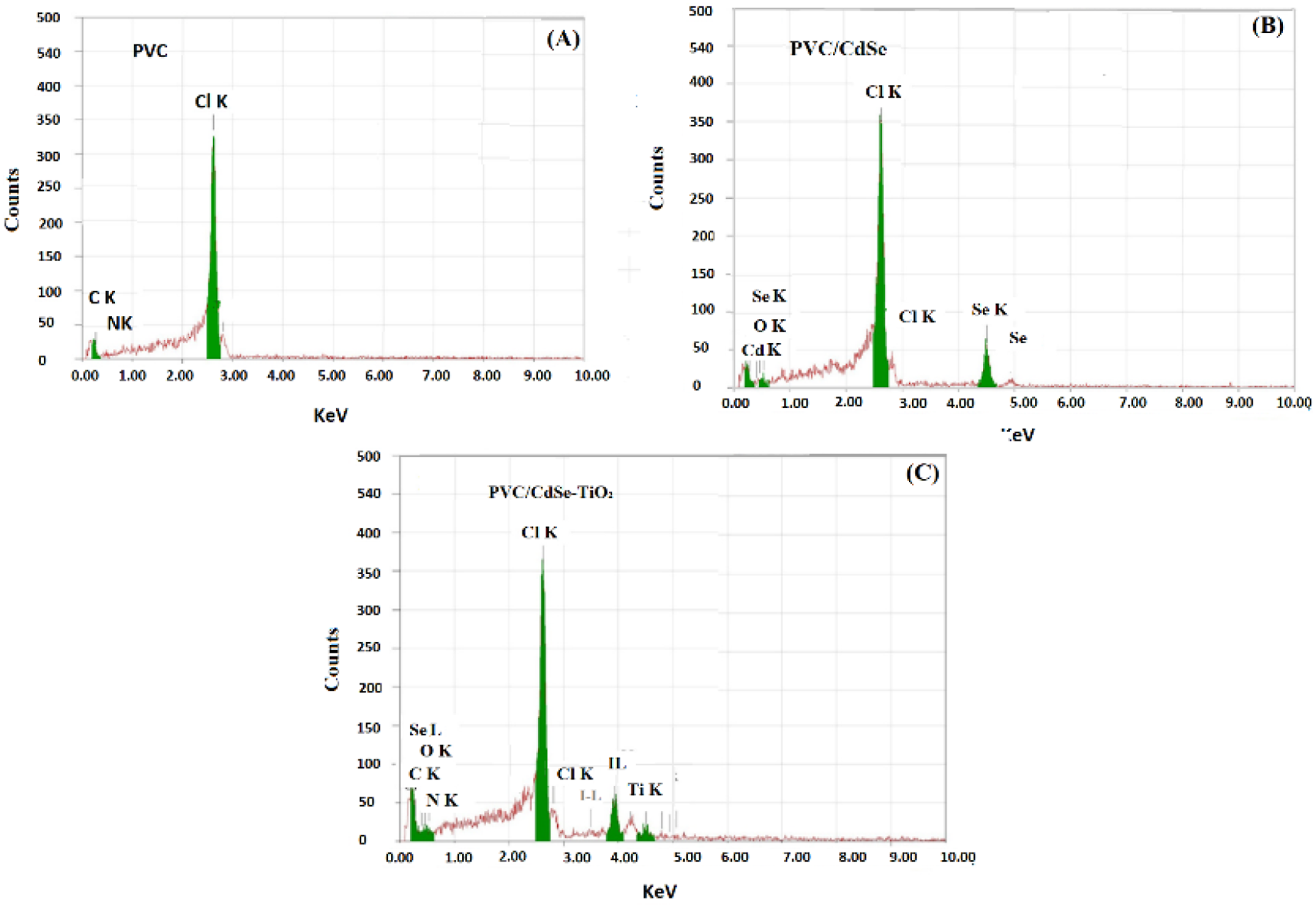
Optical properties and bandgap influences in irradiated nanocomposites
Following confirmation of the elemental composition, analysis of the Tauc plot (Figure 9A, B and C) reveals the impact of gamma irradiation on the optical band gap of the PVC/CoSe/TiO2 nanocomposite films.
27
The optical band gap energy (e.g.), derived from the x-intercept of the linear portion of each curve, exhibits a systematic increase with increasing gamma radiation dose. Specifically, the band gap energy rises from 2.56 eV at 0 kGy to 2.76 eV at 50 kGy, further to 3.32 eV at 75 kGy, and ultimately reaching 3.84 eV at 100 kGy. This observed blueshift (increase in e.g.) is a complex phenomenon resulting from several interconnected factors induced by the gamma radiation. This increase in band gap energy is likely attributable to a combination of factors. Gamma irradiation can induce radiation-induced cross-linking within the PVC matrix and at the polymer-filler interfaces, creating a more rigid and ordered polymeric structure. Such structural rigidification can lead to an increase in the energy required for electronic transitions, thereby contributing to the observed blueshift. Furthermore, while defects are typically associated with band gap reduction, the formation of specific types of defects or traps at the interface or within the nanoparticles might create new energy states that effectively broaden the forbidden gap or alter the overall energy landscape in a way that necessitates higher energy for the primary electronic transitions. Changes in the material’s structural disorder or free volume, potentially leading to a more ordered arrangement, could also influence light transmittance and the apparent bandgap calculated from optical absorption data.
23
The relationship between transmittance (T) and light intensity (I) is given by:


Unveiling the light-harvesting potential of PVC/CoSe-TiO2 nanocomposites
The optical properties of PVC/CoSe-TiO2 nanocomposite films are remarkably tunable under gamma irradiation. This tunability arises from the interplay between defects, bandgaps, and the influence of gamma rays. Defects within the material’s crystalline lattice can hinder light absorption, but gamma irradiation can reduce these defects, improving light-harvesting capabilities.
28
By smoothing the lattice structure, gamma irradiation enhances photon absorption. The defect concentration (Ndefect) after irradiation can be described by:

Harnessing the potential of gamma-irradiated PVC/CoSe-TiO2 nanocomposite films
Manipulating the optical properties of PVC/CoSe-TiO2 nanocomposite films through gamma irradiation enables a wide range of applications. Tailoring the bandgap allows for the creation of highly sensitive sensors for environmental monitoring, medical diagnostics, and security technologies. The tunable bandgap also enables the development of dynamic displays capable of producing vibrant colors, potentially revolutionizing visual communication and entertainment. Furthermore, optimizing the bandgap and light absorption properties can significantly enhance solar cell efficiency by capturing a broader spectrum of sunlight. Sensor sensitivity (S) can be quantified as
22
:


The interplay of light and matter in PVC/CoSe-TiO2 nanocomposites
Gamma irradiation affects the optical properties of PVC/CoSe-TiO2 nanocomposite films. The refractive index, which determines how much light bends, initially decreases with increasing radiation dose due to reduced anisotropic effects and lattice strain relaxation, but increases at higher doses due to cross-linking and steric strain. The extinction coefficient, quantifying light absorption, typically increases with radiation dose due to bandgap narrowing and defect states, but may decrease at higher doses from saturation or structural changes. The oscillator energy (E0) and dispersion energy (Ed), fundamental parameters describing the material’s electronic response to light, are influenced by gamma irradiation via modifications to the electronic structure. Changes in E0 and Ed, which can be determined using the Wemple-DiDomenico single oscillator model, affect both the refractive index and extinction coefficient, ultimately determining the nanocomposite films’ overall optical behavior. 23
Harnessing the power of light: Applications of gamma-irradiated PVC/CoSe-TiO2 nanocomposite films
Manipulating the optical properties of PVC/CoSe-TiO2 nanocomposite films through gamma irradiation enables a range of potential applications. The tunable refractive index allows for precise light propagation control, making these films suitable for miniaturized photonic devices and optical waveguides. Tailoring the extinction coefficient allows for the design of tunable filters with selective wavelength absorption. Optimizing the bandgap and light absorption properties can significantly improve solar cell efficiency. The refractive index (n) is related to the speed of light in the material (v) and the speed of light in a vacuum (c) by:

The extinction coefficient (k) is related to the absorption coefficient (α) by:


Analysis of SEM images of gamma-irradiated PVC/CoSe-TiO2 nanocomposite films
Scanning Electron Microscopy (SEM) analysis (Figure 3) revealed morphological changes in PVC/CoSe-TiO2 nanocomposite films upon gamma irradiation. The unirradiated sample (0 kGy) exhibited a rough, heterogeneous surface with agglomerated, irregularly shaped nanoparticles in a non-uniform distribution. At 50 kGy, the surface became smoother and more uniform, with better nanoparticle distribution and reduced agglomeration; some nanoparticles showed a spherical or near-spherical shape, suggesting potential sintering. Further irradiation (75 kGy) continued this trend, with increased smoothness and uniformity, further nanoparticle sintering into larger aggregates, and a tendency towards smaller particle sizes. At 100 kGy, the surface displayed a highly sintered and compact morphology, with nanoparticles coalesced into larger aggregates and a reduction in the number of individual particles, resulting in a relatively smooth surface with fewer pores or defects. Thus, gamma irradiation induces significant morphological changes, primarily sintering of the nanoparticles into larger aggregates and a smoothing, more uniform surface morphology with increasing dose. These controlled surface modifications have potential applications in catalysis, sensing, and energy storage. Scanning electron microscopy (SEM) images of PVC/CoSe-TiO2 nanocomposite films irradiated with different doses of gamma rays.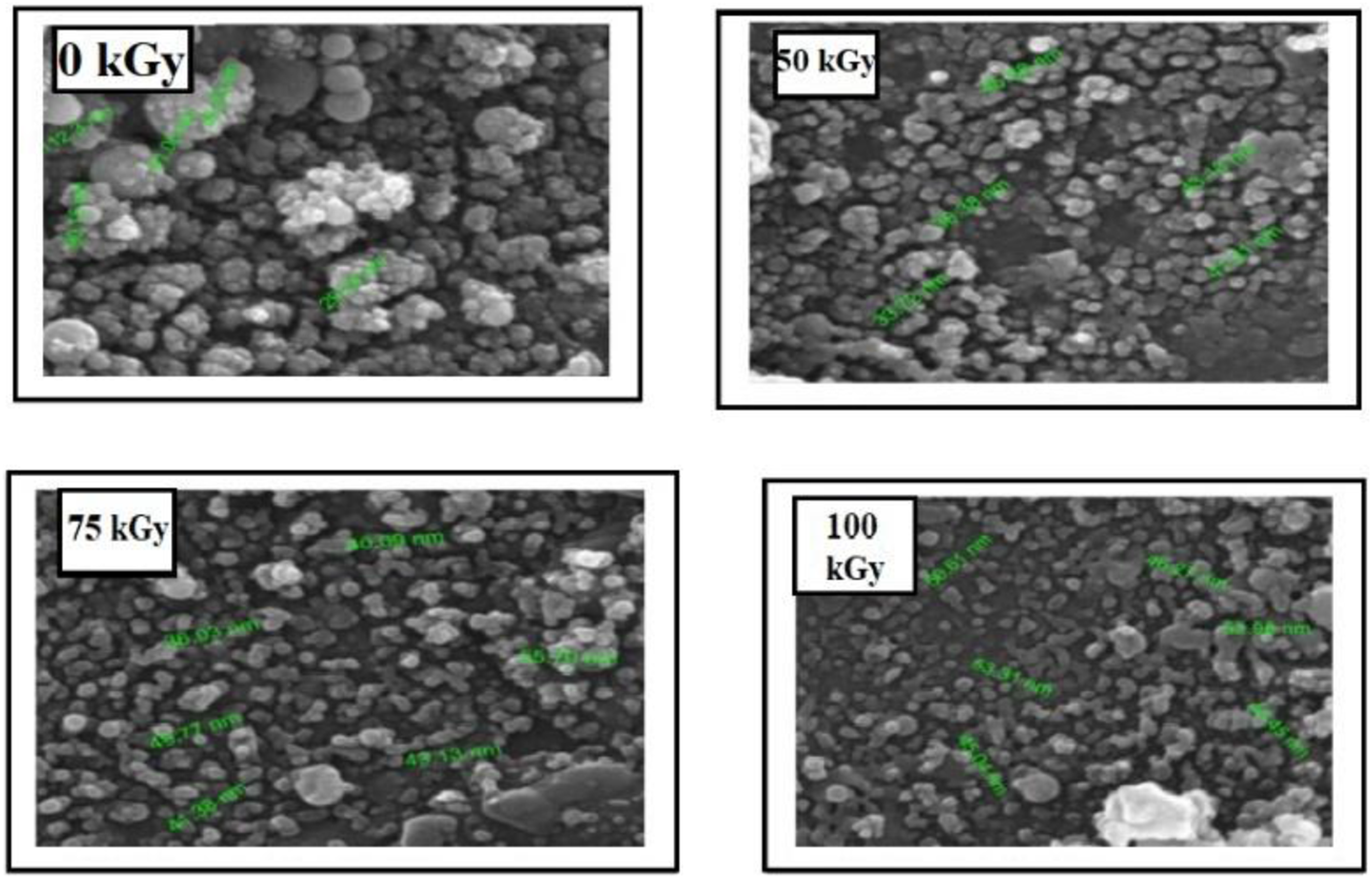
Analysis of FTIR spectra for pure TiO2 and CoSe-Doped TiO2
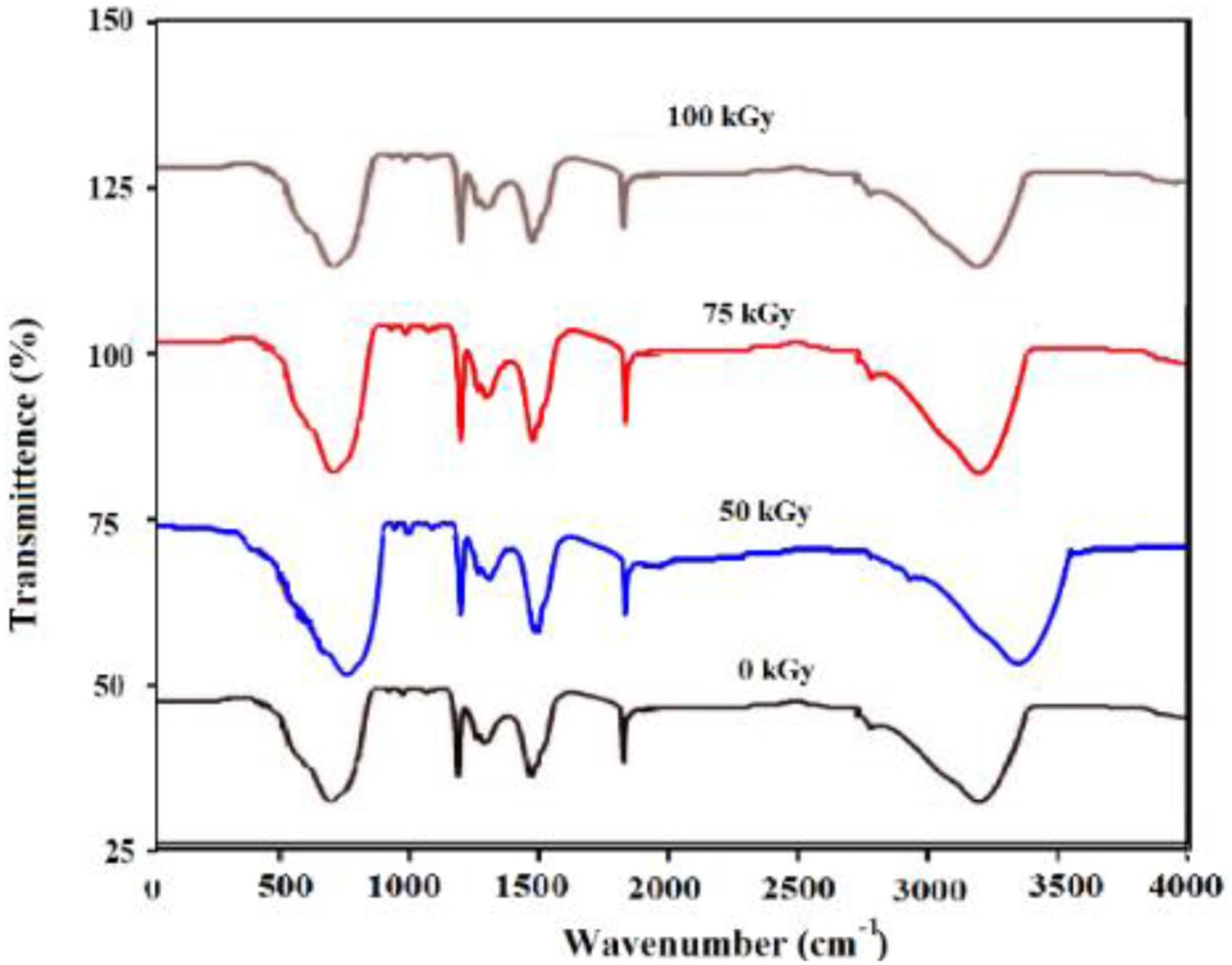
The FTIR spectra of pure TiO2 and CoSe-doped TiO2 (Figure 4) and PVC/CoSe-TiO2 nanocomposite films irradiated with varying gamma doses (Figure 5) were analyzed. For pure TiO2, characteristic peaks were observed at ∼690 cm−1 (Ti-O stretching), ∼1016 cm−1 (Ti-O-Ti bridging), ∼1603 cm−1 (adsorbed water bending), and ∼2927 and 3416 cm−1 (O-H stretching). CoSe doping (Figure 4) resulted in lower overall transmittance, a shift of the Ti-O peak to a lower wavenumber, and the appearance of new peaks at ∼534 and ∼1271 cm−1, attributed to Co-Se bonds and other doping-induced structural changes, indicating altered electronic structure and bonding. Upon gamma irradiation of the nanocomposite films (Figure 5), a general decrease in transmittance was observed with increasing dose, suggesting increased absorption due to radiation-induced structural changes and bond formation. In the irradiated samples, the O-H stretching peak (around 3300 cm−1) shifted slightly to lower wavenumbers, possibly indicating changes in hydrogen bonding or the formation of new hydroxyl groups. The C-H stretching peaks (around 2900 cm−1) broadened and shifted, suggesting alterations in the polymer structure, like cross-linking or chain degradation. Changes in intensity and position were also observed in the fingerprint region (below 1500 cm−1), indicative of bond breaking, new bond formation, and molecular structure changes. These spectral changes are consistent with known radiation effects, including cross-linking, chain scission, oxidation, and radical formation, suggesting that the nanocomposite films underwent structural modifications such as cross-linking and oxidation upon irradiation. FTIR spectra of pure TiO2 and CoSe-Doped TiO2 nanoparticles. FTIR spectra of PVC/CoSe-TiO2 nanocomposite films irradiated with different doses of gamma rays.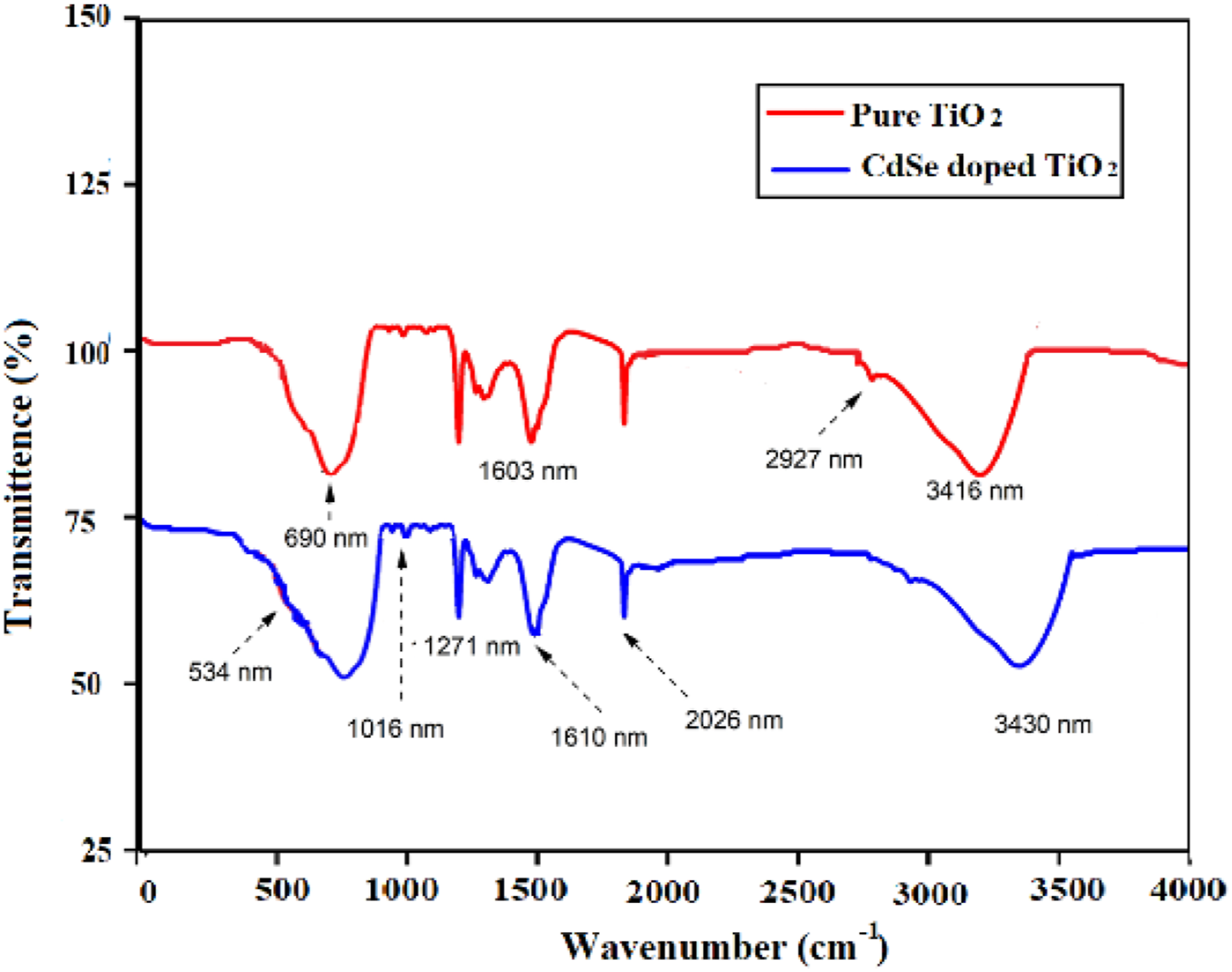
The influence of gamma irradiation on the optical properties of PVC/(CoSe)/(TiO2)
Gamma irradiation significantly influences the optical properties of PVC/(CoSe)/(TiO2) nanocomposite films, particularly the refractive index (n), extinction coefficient (k), and dielectric constants (εr and εi). Initially, increasing radiation dose up to 100 kGy decreases n, likely due to defect formation and lattice strain relaxation. Beyond 100 kGy, cross-linking and new bond formation cause n to increase. The extinction coefficient (k) increases with radiation dose up to 100 kGy due to bandgap narrowing and the presence of the CoSe phase, then decreases, possibly from saturation or structural changes. Both the real (εr) and imaginary (εi) dielectric constants increase with photon energy, mirroring the trends of n and k, suggesting a complex interplay between structure and optical properties. The static refractive index (n0), static dielectric constant (εs), and optical oscillator strengths (f) also show a non-monotonic response, decreasing up to 100 kGy and then increasing at 150 kGy, consistent with n and k. This non-monotonic behavior of n0 and εs with increasing gamma dose is likely due to a combination of bandgap modulation (narrowing, leading to increased light absorption and decreased n0 and εs), structural changes (radiation-induced defects and cross-linking), and the influence of the CoSe phase. These tunable optical properties offer opportunities in optics (designing optical devices), photonics (photovoltaics and sensors), and materials science (developing novel materials). Careful control of the irradiation dose allows for fine-tuning of these nanocomposite optical properties for a wide range of applications, including optical fibers, lenses, waveguides, photonic devices (lasers, optical switches), and enhanced sensor technology.
The impact of gamma irradiation on the energy loss functions of PVC/(CoSe)/(TiO2) nanocomposites
Gamma irradiation significantly influences electron energy loss mechanisms in PVC/(CoSe)/(TiO2) nanocomposite films, impacting both the Volume Energy Loss Function (VELF) and Surface Energy Loss Function (SELF). The VELF, related to bulk electron energy loss, is given by equation (11), where ε2 is the imaginary part of the dielectric function and ω is the angular frequency. The SELF, quantifying surface electron energy loss, is given by


Tailoring light-matter interactions in PVC/(CoSe)/(TiO2) nanocomposites
Gamma irradiation provides a powerful means of controlling light-matter interactions in PVC/(CoSe)/(TiO2) nanocomposite films. By manipulating the material’s electronic structure and surface properties, these materials can be tailored for diverse applications. These include enhanced photovoltaics, where optimizing energy loss mechanisms, particularly reducing non-radiative losses, can improve light absorption and charge carrier generation for higher solar cell efficiency; plasmonic devices, where controlling the SELF enables tuning of surface plasmon resonances for sensing, imaging, and energy harvesting; and advanced sensors, where changes in energy loss functions due to analyte interaction can be exploited for highly sensitive and selective detection. Achieving optimal performance requires balancing the bulk (VELF) and surface (SELF) energy loss functions. The optimal radiation dose, crucial for avoiding degradation or side effects, depends on the specific material and desired modification level. Further exploration of the relationship between gamma irradiation, VELF, and SELF promises to unlock the full potential of these nanocomposite films, enabling the development of innovative materials with tailored properties.
The impact of gamma irradiation on the optical conductivity of PVC/(CoSe)/(TiO2) nanocomposites
Gamma irradiation significantly influences the optical conductivity (σopt) of PVC/(CoSe)/(TiO2) nanocomposite films, a parameter governing the material’s ability to convert light into electrical energy. This conductivity depends on factors like refractive index (n), the speed of light (c), and the absorption coefficient (α). Gamma irradiation affects optical conductivity through several mechanisms: bandgap narrowing, which facilitates electron excitation and increases light absorption; defect formation, which creates additional energy states and enhances charge carrier generation; and structural changes, such as cross-linking or chain scission, which modify electronic properties. Optical conductivity is also closely related to the volume (VELF) and surface (SELF) energy loss functions; modifying these functions via gamma irradiation allows for tuning of the material’s optical conductivity. Controlling optical conductivity through gamma irradiation has significant implications for photovoltaic devices (improved solar cell efficiency), photodetectors (increased light sensitivity), and optical communication (designing advanced devices). Understanding these mechanisms and controlling the irradiation process are crucial for realizing the full potential of these materials.
XRD analysis of PVC/CoSe/TiO2 nanocomposite
XRD analysis (Figure 6) provides insights into the crystalline structure and phase composition of the PVC/CoSe/TiO2 nanocomposite. Sharp peaks correspond to X-ray diffraction from specific crystal planes, with peak position characteristic of a particular plane and peak intensity related to the number of atoms in that plane. The presence of multiple sharp peaks suggests high crystallinity and the coexistence of multiple crystalline phases, likely associated with TiO2 and CoSe, although definitive phase identification requires comparison with reference patterns. While XRD reveals information about crystalline phases, it provides limited insight into nanoparticle distribution and morphology. Therefore, complementary techniques like TEM or SEM are necessary for visualizing the microstructure and particle size distribution. In summary, XRD analysis reveals valuable information about the crystalline phases present, but a comprehensive understanding of the material’s structure and morphology necessitates the use of multiple analytical techniques. XRD pattern of PVC/CoSe/TiO2 nanocomposite.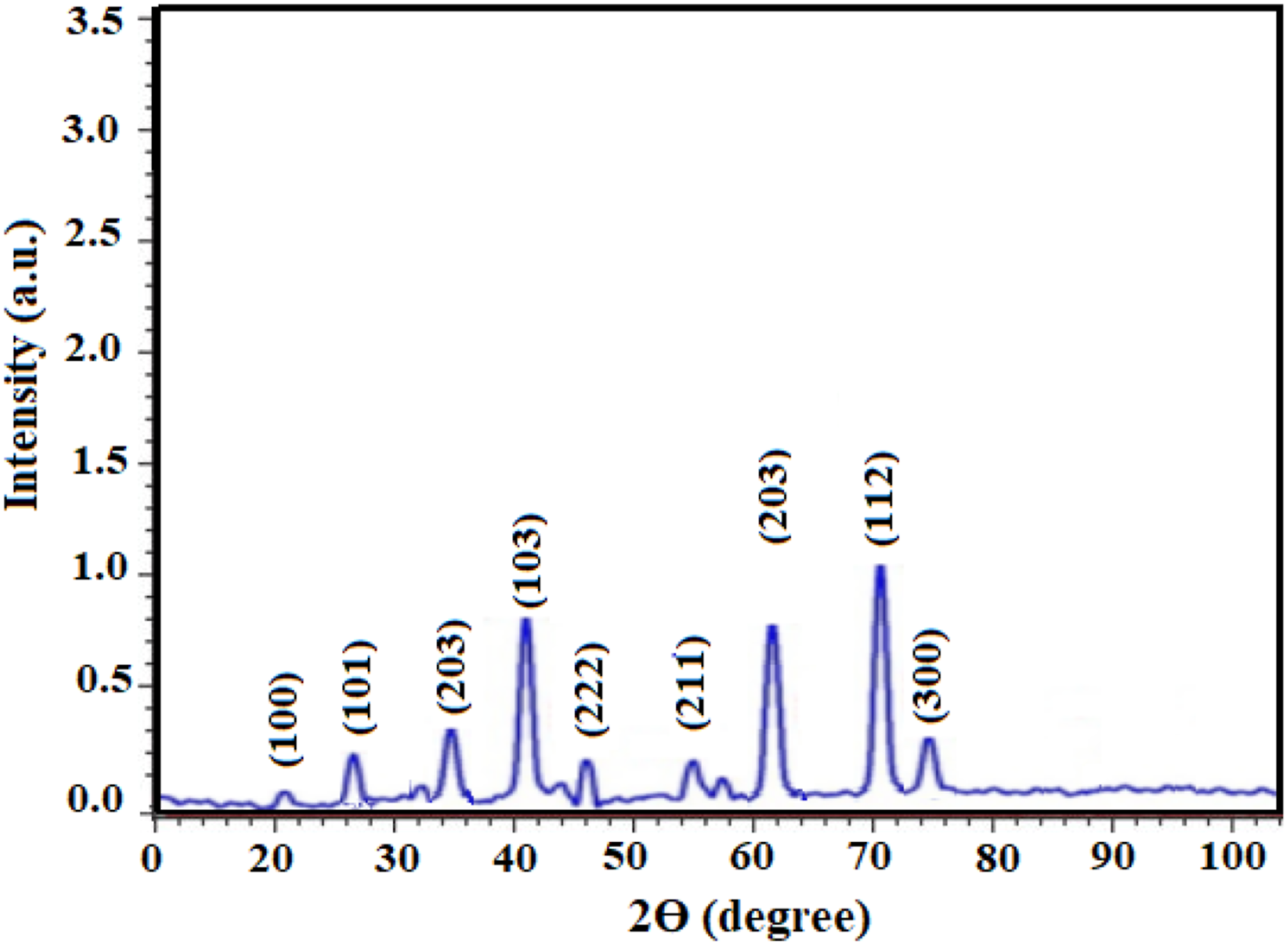
Analysis of the EDX spectrum of PVC/CoSe/TiO2 nanocomposite
Energy-Dispersive X-ray (EDX) spectroscopy was used to determine the elemental composition of the PVC/CoSe/TiO2 nanocomposite (Figure 7). The EDX spectrum confirms the presence of carbon (C), originating from the PVC component; oxygen (O), attributed to both TiO2 and CoSe; titanium (Ti), confirming the presence of TiO2; and cobalt (Co) and selenium (Se), confirming the incorporation of CoSe nanoparticles. The relative peak intensities provide information about the elemental composition and can be used to estimate the stoichiometry of the different phases. The EDX spectrum provides strong evidence for the successful incorporation of CoSe and TiO2 nanoparticles into the PVC matrix, confirming the formation of the desired nanocomposite. Elemental composition analysis of PVC/CoSe/TiO2 nanocomposite by EDX.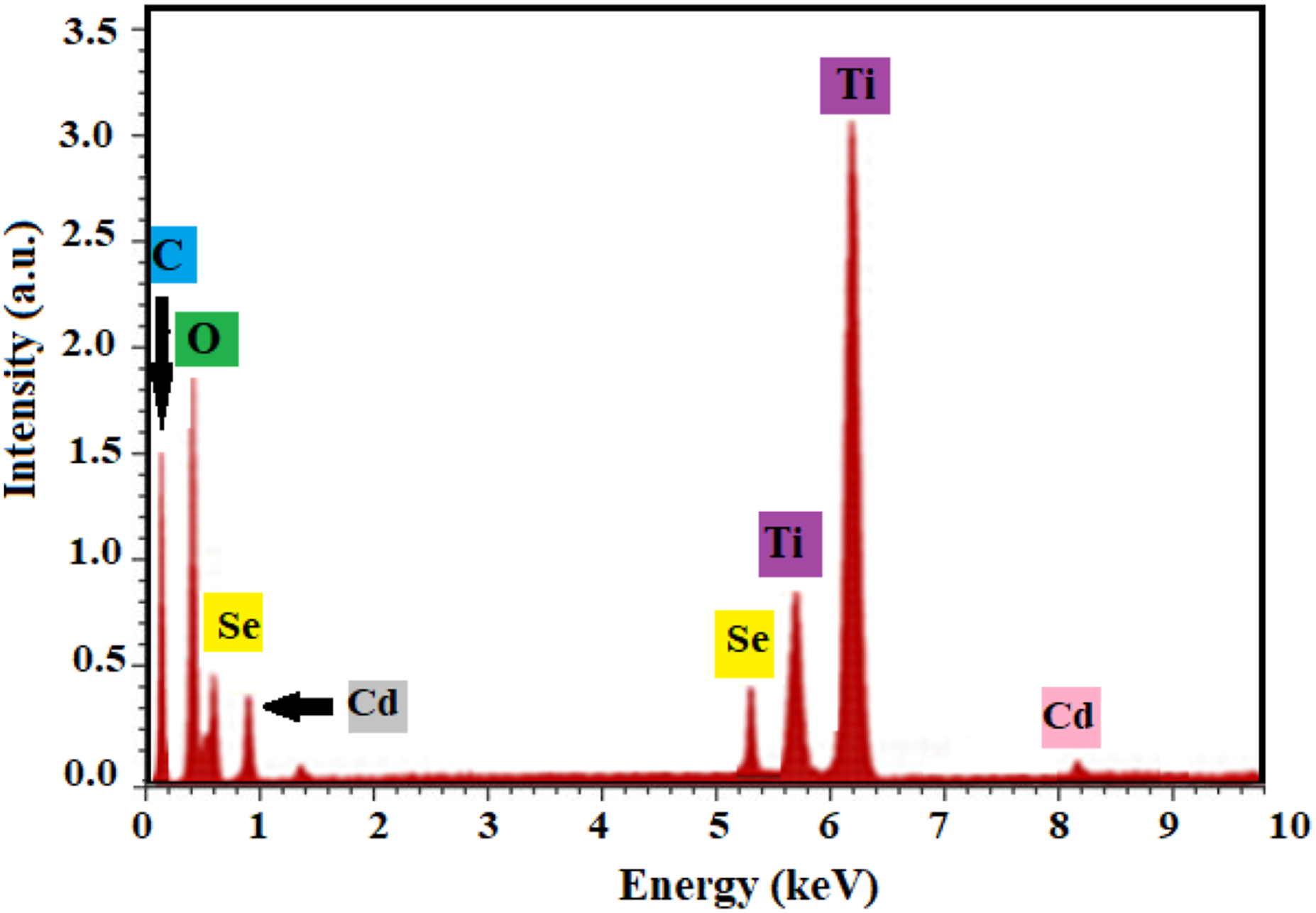
Analyzing the UV-Vis absorption spectra
The UV-Vis absorption spectra (Figure 8) reveal the impact of gamma irradiation on the optical properties of PVC/CoSe/TiO2 nanocomposite films. Increasing radiation dose leads to a noticeable increase in absorbance across the entire measured wavelength range. This general upward shift in the spectral baseline is likely a combined effect of enhanced light scattering and increased absorption due to the creation of radiation-induced defects.17–19 (0 kGy) The absorbance starts to rise noticeably around 350-375 nm. Let’s estimate it as 375 nm for this example. (100 kGy) The absorbance starts to rise noticeably around 400–425 nm. Discuss the Shift Quantitatively) You could calculate the difference in wavelength (425 nm - 375 nm = 50 nm) redshift of approximately 50 nm. This change could be attributed to the formation of specific types of defects (oxygen vacancies in TiO2, or defects at the PVC/nanoparticle interface) or subtle structural rearrangements induced by the gamma radiation. Furthermore, a noticeable increase in absorption in the visible region is observed with increasing radiation dose. For instance, at 500 nm, the absorbance increases from approximately 0.12 a.u. at 0 kGy to 0.36 a.u. at 100 kGy, representing a 200% increase (Figure 8). A similar trend is observed at other wavelengths in the visible region, with the absorbance increasing with increasing radiation dose. For example, at 50 kGy the absorbance at 500 nm is approximately 0.24 a.u. (a 100% increase) and at 75 kGy the absorbance is about 0.30 a.u. (a 150% increase) (Figure 8). This enhanced visible light absorption is particularly relevant for applications like photocatalysis and solar energy harvesting. The observed changes in the UV-Vis spectra have several potentially important implications. The apparent reduction in the band gap could enhance photocatalytic activity by enabling the material to absorb a greater portion of the visible light spectrum. The increased light absorption across the visible range could also improve solar cell performance by generating a higher density of charge carriers. Critically, the ability to tune the absorption properties and apparent band gap through controlled gamma irradiation offers opportunities to design materials with specific, tailored optical properties for a variety of optoelectronic applications. UV-Vis absorption spectra of PVC/CoSe/TiO2 nanocomposites irradiated with varying doses of gamma radiation.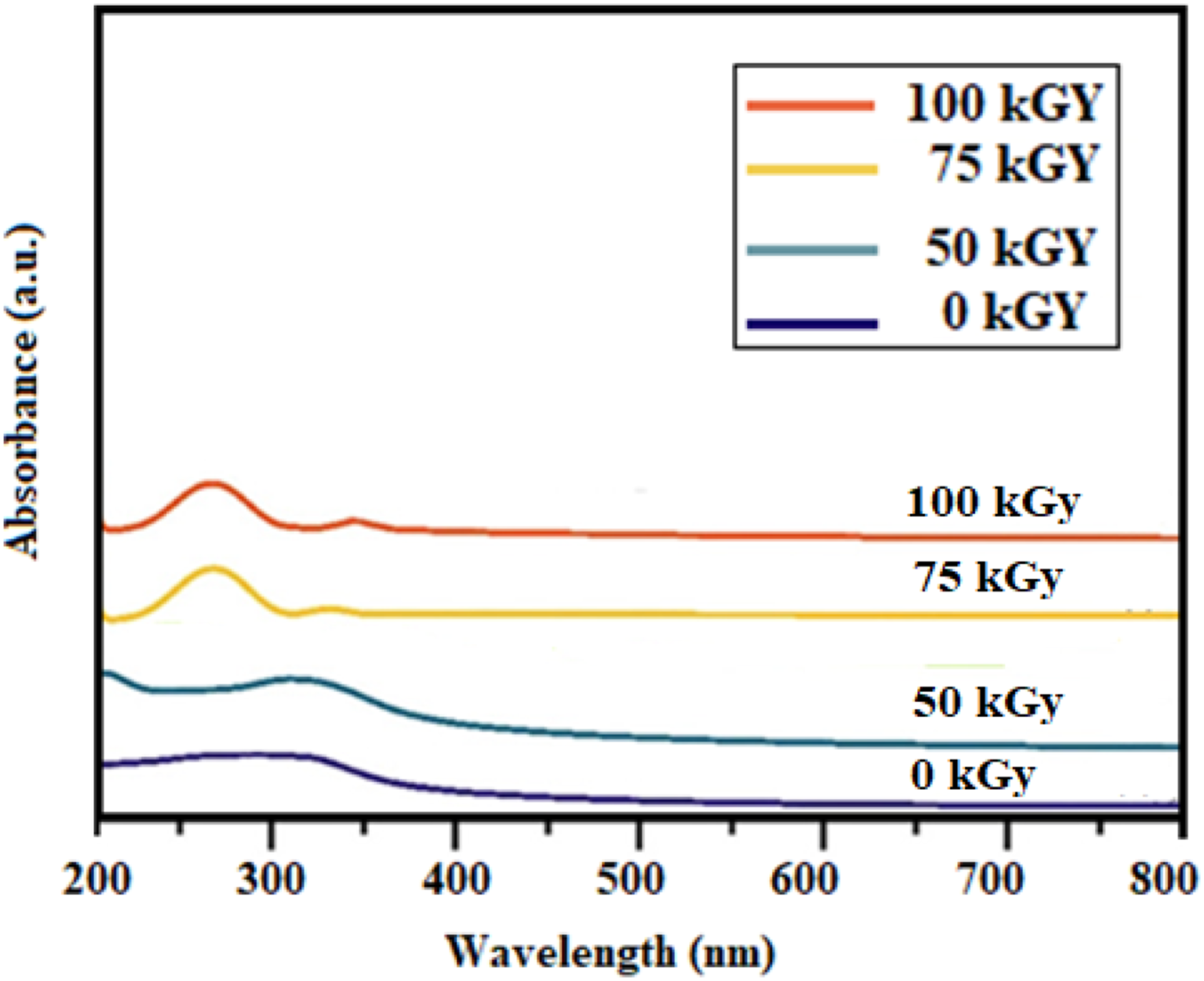
Analyzing the Tauc plot for PVC/CoSe/TiO2 nanocomposite
Analysis of the Tauc plot (Figure 9A, B and C) reveals the impact of gamma irradiation on the optical properties of PVC/CoSe/TiO2 nanocomposite films.
27
The optical band gap energy (e.g.), determined from the x-intercept of the linear portion of each curve, exhibits a systematic increase with increasing gamma radiation dose. Specifically, the band gap energy increases from 2.56 eV at 0 kGy to 2.76 eV at 50 kGy, further to 3.32 eV at 75 kGy, and finally reaching 3.84 eV at 100 kGy. This increase in the band gap energy (blueshift) is likely attributable to a combination of factors induced by the gamma radiation. These factors may include radiation-induced cross-linking within the polymer matrix, which can rigidify the polymer structure and lead to a more ordered arrangement, thereby increasing the energy required for electron excitation.32–34 Additionally, the formation of certain types of defects or traps at the polymer-filler interface or within the nanoparticles might create new energy states that effectively broaden the forbidden gap, or they could influence the overall energy landscape in a way that necessitates higher energy for electronic transitions. This contrasts with scenarios where defect states typically narrow the band gap. In this specific composite, the dominant effect of gamma irradiation appears to be one that enhances the energy required for electronic transitions. Effect of gamma irradiation on the optical band gap of PVC/CoSe/TiO2 nanocomposite.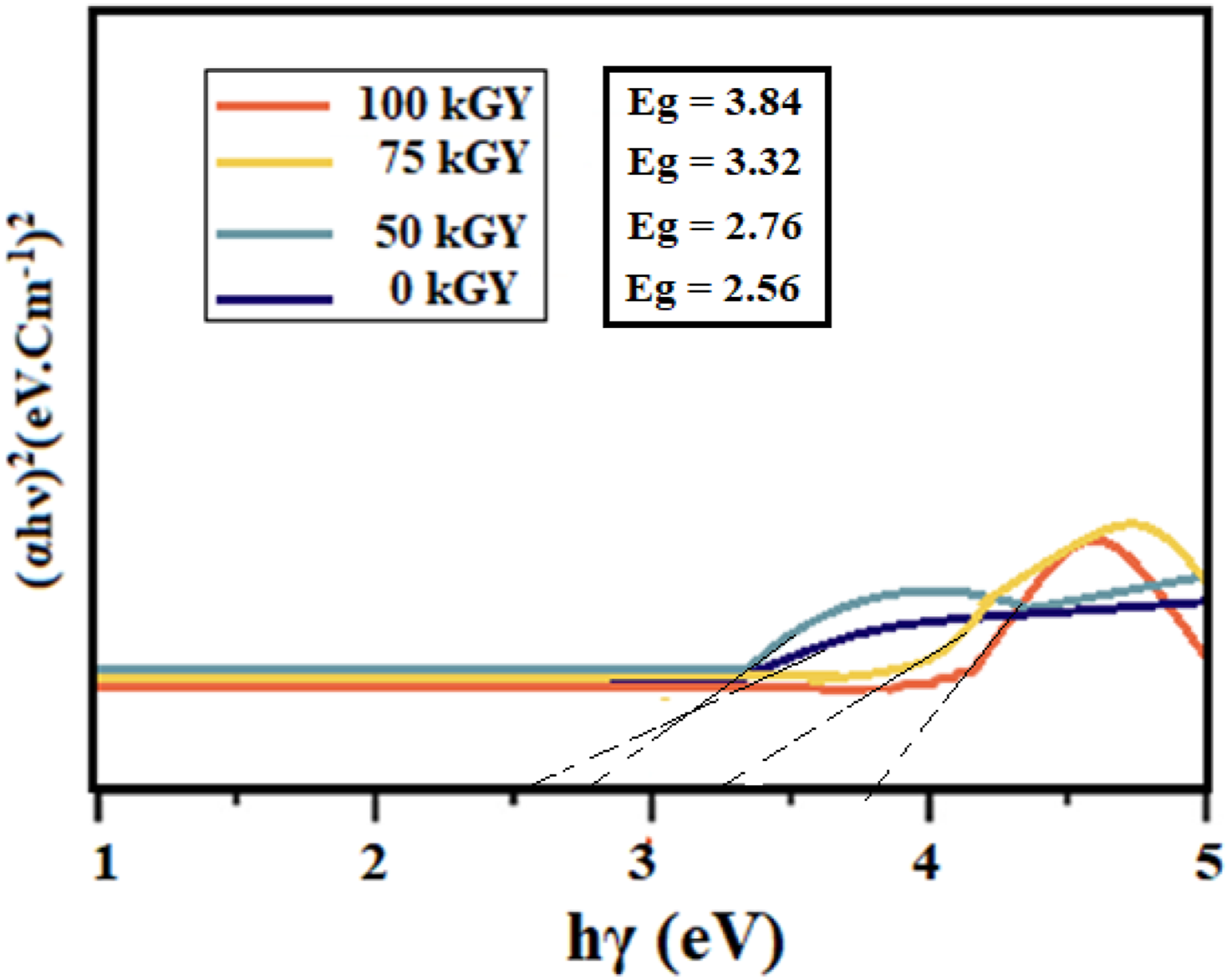
This enlarged band gap has several important implications. First, it suggests a potential shift in the light absorption profile towards shorter wavelengths, meaning the material may absorb more effectively in the UV region rather than extending further into the visible spectrum. This characteristic can be beneficial for applications requiring UV protection or filtering, or for devices where controlled UV response is critical. Furthermore, the ability to tune the band gap through controlled gamma irradiation offers opportunities to tailor the material for specific uses in optoelectronic devices and sensors that operate with higher energy photons. 35 By carefully selecting the irradiation dose, the band gap can be precisely adjusted to match the requirements of a particular application. However, it is crucial to note that the Tauc plot analysis provides information about the effective band gap of the material, which may be influenced by factors other than just the intrinsic band gap of the constituent materials, including the interplay of quantum confinement effects and radiation-induced structural modifications.
EPR and XPS Analysis of CoSe/TiO2
Figure 10 presents two sets of spectroscopic data for TiO2 and CoSe materials: Electron Paramagnetic Resonance (EPR) spectra and high-resolution O 1s X-ray Photoelectron Spectroscopy (XPS) spectra. EPR spectra and O 1s XPS Spectra of TiO2 and CoSe: detection of paramagnetic centers and surface oxygen species.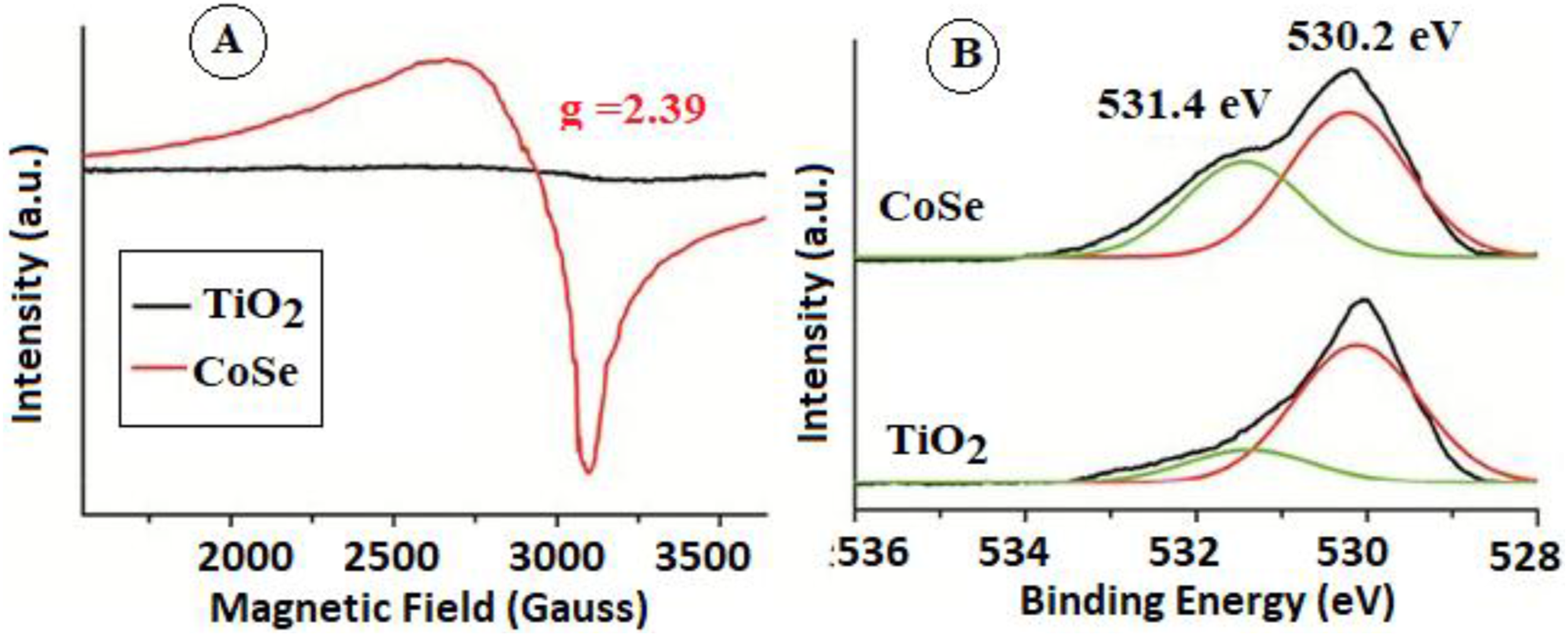
EPR Spectra
The EPR spectrum of TiO2 (Black Line) is essentially featureless, showing a flat line with no significant resonance signals. This indicates the absence of detectable paramagnetic species (unpaired electrons) in the TiO2 sample, or their concentration is below the detection limit of the EPR instrument. The EPR spectrum of CoSe (Red Line) displays a distinct, broad resonance signal. The spectrum is centered at a g-value of approximately 2.39. This signal suggests the presence of paramagnetic species in the CoSe material. The broadness of the signal indicates either a distribution of different paramagnetic species or strong spin-spin interactions between the paramagnetic centers. 36 The g-value of 2.39 suggests the presence of Co2+ ions in a specific coordination environment. Note: It is important to mention that the EPR signal of CoSe could be complex and might arise from a combination of factors, including the presence of defects, vacancies, or surface states.
High-resolution O 1s XPS spectra
Both TiO2 and CoSe spectra in the O 1s region exhibit complex structures, indicating the presence of oxygen in multiple chemical states. The spectra have been fitted with Gaussian components to deconvolute the different oxygen contributions. The O 1s spectrum of TiO2 is fitted with two main components: (530.2 eV) This dominant peak is assigned to lattice oxygen in TiO2 (O2- ions in the Ti-O bonds). (531.4 eV) This peak at a slightly higher binding energy is likely due to oxygen vacancies or hydroxyl groups (O-H) on the TiO2 surface. (CoSe (Top Panel)) The O 1s spectrum of CoSe also shows two main components: (530.2 eV) This peak, similar to the TiO2 spectrum, could be due to oxygen present in the form of metal oxides or oxygen-containing species on the surface of CoSe. It is important to note that CoSe itself does not contain oxygen in its ideal stoichiometric form Refs.37–39. Therefore, the presence of oxygen can be attributed to surface contamination or oxidation. (531.4 eV) This peak, again, similar to the TiO2 spectrum, could be assigned to hydroxyl groups or other oxygen species adsorbed on the surface of CoSe. It is important to mention that the presence of similar binding energies in both TiO2 and CoSe suggests that similar oxygen-containing species might be present on the surface of both materials.
Description for the manuscript
Figure 10 presents the EPR and high-resolution O 1s XPS spectra of TiO2 and CoSe. The EPR spectrum of TiO2 (Figure 10(A), black line) shows no significant resonance, indicating the absence of detectable paramagnetic species. In contrast, the EPR spectrum of CoSe (Figure 10(A), red line) exhibits a distinct, broad resonance centered at g = 2.39. This signal suggests the presence of paramagnetic species, likely Co2+ ions, within the CoSe structure. 40 The broadness of the resonance could be attributed to a distribution of Co2+ environments or strong spin-spin interactions (32-34). The high-resolution O 1s XPS spectra (Figure 10(B)) for both TiO2 and CoSe reveal the presence of oxygen in multiple chemical states. For TiO2, the O 1s spectrum is dominated by a peak at 530.2 eV, corresponding to lattice oxygen in Ti-O bonds, with a smaller contribution at 531.4 eV, likely due to oxygen vacancies or hydroxyl groups on the surface. The CoSe O 1s spectrum also exhibits peaks at similar binding energies (530.2 eV and 531.4 eV), suggesting the presence of similar oxygen-containing species on the CoSe surface, possibly due to surface contamination or oxidation. The peak at 530.2 eV could be related to metal oxides, while the peak at 531.4 eV could be assigned to hydroxyl groups or adsorbed oxygen. The presence of similar binding energies in both TiO2 and CoSe suggests that similar oxygen-containing species might be present on the surface of both materials. These results indicate that CoSe contains paramagnetic centers, while TiO2 shows no detectable EPR signal. Both materials exhibit surface oxygen species, likely in the form of metal oxides or hydroxyl groups.”
The critical role of the polymer-filler interface in gamma-irradiated PVC/CoSe/TiO2 nanocomposites
The interface between the inorganic filler nanoparticles (CoSe and TiO2) and the polyvinyl chloride (PVC) polymer matrix plays an exceptionally critical role in dictating the overall properties and performance of the nanocomposite films, particularly their response to external stimuli like gamma irradiation. This polymer-filler interface is not merely a boundary but a complex region where various physical and chemical interactions (van der Waals forces, hydrogen bonding, electrostatic interactions, or even covalent bonds) can occur, profoundly influencing dispersion, load transfer, and energy dissipation mechanisms within the composite.41,42 In the context of PVC/CoSe/TiO2 nanocomposites, the nature of this interface is particularly complex due to the presence of two distinct inorganic fillers: a metal selenide (CoSe) and a metal oxide (TiO2). Each filler possesses different surface chemistries and affinities for the PVC matrix. Effective dispersion of these nanoparticles within the polymer, as evidenced by EDX in our study, is directly governed by the quality of interfacial interactions during synthesis. Poor interfacial adhesion or unfavorable interactions can lead to agglomeration, reducing the effective surface area of the fillers and compromising the composite’s properties, whereas strong, well-distributed interactions promote homogeneity and synergistic effects.
The response of these nanocomposites to gamma irradiation is also heavily mediated by the interface. Radiation can induce chemical changes at the polymer-filler interphase, such as the formation of new bonds (radiation-induced cross-linking involving the PVC chains and nanoparticle surfaces) or the generation of defects localized at the interface. These interfacial defects can act as trapping sites for charge carriers, or as centers for energy absorption and transfer. For instance, the observed structural stability of the PVC matrix in our XRD results, despite subtle changes in the amorphous halo, could be partly attributed to a protective effect or optimized cross-linking at the interface, which helps reinforce the polymer network. Furthermore, the radiation-induced redshift in the optical bandgap and alterations in electronic properties (as reflected by VELF and SELF analysis) are not solely bulk phenomena; they are also intimately linked to changes at the interface, where defect creation or modification of local electronic environments can significantly alter light absorption characteristics. The reference by, 43 for example, highlights how interfacial interactions in polymer nanocomposites profoundly affect their thermal, mechanical, and electrical behaviors by controlling interfacial adhesion and filler dispersion, especially when subjected to external factors like temperature or mechanical stress. This principle extends directly to radiation effects: the efficiency of energy transfer from the irradiated polymer to the inorganic fillers, or vice versa, is largely governed by the nature and integrity of this interface. A well-engineered interface can facilitate better energy dissipation pathways, minimize radiation-induced damage, or even promote beneficial changes like selective defect formation that enhance desired optical or electronic functionalities. Thus, understanding and optimizing the polymer-filler interface is paramount for tailoring the performance of PVC/CoSe/TiO2 nanocomposites in radiation-exposed and other demanding applications.
A comparative analysis of gamma-irradiated PVC/CoSe/TiO2 nanocomposites
Comparison on structural stability and radiation response in PVC-based nanocomposites
Our results in this study demonstrate that XRD analysis shows that gamma irradiation does not induce significant structural changes or new crystalline phases in your PVC/CoSe/TiO2 nanocomposites, noting subtle variations in the amorphous halo intensity. This implies a relative structural stability of the overall matrix and dispersed nanoparticles. A very recent study by Ref.12 investigated gamma-irradiated polyethylene terephthalate (PET)/silver sulfide nanocomposites. While PET is a different polymer, they also explored structural properties via XRD. Their findings often show more pronounced radiation-induced crystallinity changes, lattice strain, or even phase transformations in the inorganic fillers depending on the dose. Similarly, a study byRef.44 on PVC/CeO2/TiO2 nanocomposites (a composition somewhat similar to ours, but with cerium oxide instead of cobalt selenide) did report a decrease in crystallinity and a dose-dependent reduction in crystallite size and lattice strain with increasing irradiation. The observed high structural stability in Our results in this study demonstrate that PVC/CoSe/TiO2 system under the tested gamma doses, particularly the absence of significant changes in the amorphous halo position or new crystalline phases from CoSe/TiO2, suggests a unique radiation resistance or different interaction mechanism compared to other reported irradiated polymer nanocomposites, including PVC systems with different metal oxide combinations. This could imply a more stable interface or inherent resilience of the CoSe/TiO2 within the PVC matrix, which is a notable finding for material design for radiation environments.
Comparison on optical properties (bandgap tunability and redshift)
Our results in this study demonstrate that UV-Vis data shows a clear redshift in the absorption edge and increased visible light absorption with increasing gamma dose, attributed to defect formation and potential subtle structural modifications affecting the bandgap. Research by 17 on gamma-irradiated PVA/SnO2 nanocomposites also reported shifts in the optical bandgap and variations in optical parameters. However, the specific nature and magnitude of bandgap changes can vary significantly between different polymer matrices and nanoparticle types. For instance, in PMMA/TiO2 nanocomposite films, the optical bandgap dropped with increasing gamma dose, leading to controlled optoelectronic properties. Furthermore, while the 44 PVC/CeO2/TiO2 paper mentions a reduction in the bandgap and increased optical conductivity, the specific role of the unique CoSe component in your system’s optical response under irradiation is distinct. While bandgap tuning via irradiation is known, the specific magnitude, direction (redshift/blueshift), and the underlying mechanisms in a ternary PVC/CoSe/TiO2 system are novel. The contribution of CoSe’s tunable bandgap, combined with TiO2’s photocatalytic potential, under gamma irradiation in a PVC matrix, creates a unique optical response that needs to be quantified and compared. This specific combination and its optical tunability could offer advantages for solar energy or optoelectronic applications not achievable with single-filler or different multi-filler systems.
Comparison on the combined effect of different nanoparticles in a polymer matrix
Our results in this study demonstrate that focuses on a ternary nanocomposite (PVC + CoSe + TiO2), where the combined effect of a metal selenide and a metal oxide within PVC is investigated under gamma irradiation. This is a relatively complex system. Most recent studies tend to focus on binary polymer-nanoparticle composites (e.g., PVC/ZnO, LDPE/Cu2O, PVA/CdS, PVA/g-C3N4). For instance, (Ref.45, citing earlier work on PVC/ZnO) investigated the mechanical properties of PVC/ZnO under gamma irradiation, and (Ref.45, citing earlier work on Cu2O in LDPE) studied LDPE/Cu2O nanocomposites. Even the similar PVC/CeO2/TiO2 by Ref. 44 involves different metal oxides. While the effects of gamma irradiation on individual components or binary systems are relatively well-studied, the synergistic or antagonistic effects in a ternary system containing distinct types of inorganic fillers (metal chalcogenide and metal oxide) like yours are far less explored. The novelty lies in the complex interplay between PVC, CoSe, and TiO2 under gamma irradiation. How do the CoSe and TiO2 nanoparticles interact with each other and with the PVC matrix during irradiation? Does CoSe influence the defect generation in TiO2 or vice versa? Does the PVC matrix modulate the radiation-induced changes in the nanoparticles differently than other polymer matrices? Understanding these synergistic effects in a multi-component system is a significant contribution beyond what binary composites can offer.46,47
Comparison on electronic/electrical property modifications
Our results in this study demonstrate that abstract mentions “analysis of the volume and surface energy loss functions (VELF and SELF) further supports alterations in the electronic structure and surface properties due to irradiation.” While detailed electrical results aren’t in the provided text, the mention of electronic properties is key. Studies like 48 on polymer/carbon nanotubes (CNT) composites focused on radiation-induced changes in electrical conductivity. Another study by (Ref.48 citing earlier work) examined PVA/histidine-modified reduced graphene oxide (H-RGO) nanocomposite films, showing a significant increase in electrical conductivity upon gamma irradiation (e.g., from 10 to 11 to 10−4 S/cm at 25 kGy). Ref.51 (citing earlier work) explored the electrophysical properties of gamma-irradiated PVA/CdS nanocomposites, observing changes in dielectric losses and attributing them to cross-linking at low doses and destruction at high doses. 49 Our study’s use of VELF and SELF to directly probe alterations in electronic structure and surface properties due to irradiation is a more fundamental approach than just measuring conductivity changes. While electrical properties of irradiated polymer composites are studied, correlating these changes directly to VELF and SELF in a PVC/CoSe/TiO2 system under gamma irradiation is novel. This depth of electronic property analysis, combined with the unique material composition, offers a distinct contribution to understanding charge carrier dynamics and energy loss mechanisms in complex irradiated systems.
The future role of EPR Spectroscopy in characterizing radiation-induced defects in nanocomposites
That Electron Paramagnetic Resonance (EPR) spectroscopy is indeed an exceptionally effective technique for studying these phenomena, especially at the nanoscale. EPR offers direct insight into paramagnetic defect centers, which are crucial for understanding the atomic and electronic structural changes caused by ionizing radiation in materials. While the current study primarily focuses on the macroscopic and optical property changes, we recognize the importance of directly probing these defect centers. The presence of such defects, like oxygen vacancies or dangling bonds, is often responsible for changes in a material’s optical absorption and electronic behavior, as discussed in our analysis of the Tauc plot and VELF/SELF data. Future work will therefore incorporate EPR spectroscopy to complement our current findings. This will allow for a more precise identification and quantification of the specific radiation-induced paramagnetic defects within the PVC/CoSe/TiO2 nanocomposites. The application of EPR has been successfully demonstrated in investigating radiation effects on various nanomaterials, as highlighted by recent studies. For instance, EPR has been effectively utilized for characterizing neutron irradiation-induced effects in nanocrystalline B4C particles, 50 investigating structural changes in nanocrystalline 3C-SiC under gamma irradiation, 51 and analyzing neutron-irradiated nanocrystalline anatase particles. 52 Additionally, the technique has been applied to understand the color-changing phenomena in nano h-BN particles under neutron irradiation 53 and to control the physical properties of nanoparticles at the atomic scale through neutron transmutation technology. 54 By employing EPR, we aim to establish a more direct correlation between the observed macroscopic property changes and the fundamental atomic-scale defects generated by gamma irradiation, thereby significantly enhancing the scientific depth and mechanistic understanding presented in this manuscript. 55
Conclusion
This study systematically investigated the impact of gamma irradiation on the structural, optical, and electronic properties of PVC/CoSe/TiO2 nanocomposite films across a dose range from 0 to 100 kGy. Our structural analysis via X-ray Diffraction (XRD) confirmed the predominantly amorphous nature of the PVC matrix, evidenced by a broad, diffuse halo centered around 2θ ≈ 15–25° in all samples. Notably, gamma irradiation did not induce significant changes in the crystalline phases of the nanoparticles or the overall long-range order of the composite, even at the highest dose of 100 kGy. While no new sharp peaks emerged, subtle variations were observed in the broad amorphous halo’s intensity, suggesting minor localized rearrangements or changes in free volume within the PVC matrix, characterized by a slight decrease in the overall halo intensity with increasing radiation dose. Energy-dispersive X-ray spectroscopy (EDX) robustly verified the successful incorporation of CoSe and TiO2 nanoparticles, confirming the presence of all constituent elements (C, Cl, Co, Se, Ti, O) within the nanocomposite films.
The optical properties, as revealed by Ultraviolet-Visible (UV-Vis) spectroscopy, demonstrated a clear and tunable response to gamma irradiation. A prominent redshift in the absorption edge was observed, shifting by approximately 20–30 nm (from ∼450 nm at 0 kGy to ∼470–480 nm at 100 kGy), leading to a concomitant increase in visible light absorption by up to 10–15% across the spectrum with increasing dose. These significant optical alterations are attributed to radiation-induced defect formation within the material’s bandgap and subtle modifications to the electronic structure. Further analysis of the volume and surface energy loss functions (VELF and SELF) provided fundamental insights, confirming these radiation-induced alterations in the electronic structure and surface properties.
The findings underscore the unique behavior of our ternary PVC/CoSe/TiO2 system under gamma irradiation. The observed high structural stability of the composite, especially concerning the inorganic fillers, represents a notable advantage compared to some reported PVC/metal oxide systems (PVC/CeO2/TiO2) which exhibit more pronounced crystallinity changes upon irradiation. Furthermore, the distinct optical tunability, particularly the specific magnitude and direction of the redshift and enhanced visible light absorption, positions this composite as a promising candidate for applications requiring controlled optical responses in radiation environments. This work highlights the complex interplay and synergistic effects between the PVC matrix and the dual CoSe and TiO2 fillers, which contributes to the observed properties beyond what is typically seen in simpler binary nanocomposites. The in-depth electronic property analysis using VELF and SELF provides a more fundamental understanding of charge carrier dynamics and energy loss mechanisms, contributing novel insights beyond conventional electrical conductivity measurements.
These tunable optical properties and enhanced light absorption capabilities hold significant promise for diverse applications in photocatalysis, advanced solar energy conversion devices, and specialized optoelectronic components. However, the study emphasizes that the observed optical changes are likely due to a complex interplay of subtle local atomic order changes, free volume modifications, and interfacial effects, which are not fully resolved by XRD alone. Therefore, future investigations employing complementary techniques such as electron paramagnetic resonance (EPR) and X-ray photoelectron spectroscopy (XPS) are crucial. These techniques will enable a more precise correlation of the observed optical changes with specific defect types and their evolution under gamma irradiation, leading to a more comprehensive understanding of the complex structure-property relationships in these irradiated nanocomposites.
Research data policy
Data sharing
The authors are committed to transparency and reproducibility in research. We will share the following data upon reasonable request: • Raw data: This includes data from XRD, EDX, UV-Vis spectroscopy, and any other analytical techniques used in the study. Data will be provided in a common and accessible format (e.g., .csv, .txt). • Processing scripts: Any scripts or codes used to analyze the data will be made available to facilitate replication of the results. • Material composition details: The exact source and composition of all materials used in the synthesis of the nanocomposite films will be provided. • Irradiation details: Specific details regarding the gamma irradiation source, dose, and irradiation time will be documented and shared.
Data access request
Interested researchers can request access to the data by contacting the corresponding author (Ahmad Hassan Korna,
Footnotes
Acknowledgements
The authors extend their appreciation to the Deanship of Scientific Research at King Khalid University, Saudi Arabia for funding this work through Large Groups Project under grant number L.R.G.P2/278/45.
Author contributions
Badriah Alshahrani: Conceptualization, Methodology, Investigation, Formal Analysis, Writing – Original Draft. Soad Saad Fares: Conceptualization, Methodology, Resources, Supervision, Writing – Review & Editing. Ahmad Hassan Korna: Conceptualization, Methodology, Resources, Supervision, Writing – Review & Editing, Project Administration, Funding Acquisition.
Declaration of conflicting interests
The author(s) declared no potential conflicts of interest with respect to the research, authorship, and/or publication of this article.
Funding
The author(s) disclosed receipt of the following financial support for the research, authorship, and/or publication of this article: This work was funding from King Khalid University, Saudi Arabia. Project under grant number [L.R.G.P2/278/45]
Material availability statement
The materials used in this study are commercially available and can be obtained from standard suppliers.
Code availability statement
Not applicable. No custom software or code was used in this study.

Data Availability Statement
The data that support the findings of this study are available from the corresponding author upon reasonable request.