



Abstract
The adoption of polyimide-based materials for high temperature related applications is receiving increased attention from the research community, particularly for high-temperature capacitive energy storage. Polyimide matrix material has illustrated its effectiveness in the design and manufacturing of polymer-based dielectric capacitors, owing to its intrinsic characteristics. However, in modifying the structure and characteristics of polyimide-based matrix material for its widespread high-temperature dielectric capacitive applications using inorganic filler. The present study reviewed the recent advances on the enhancement of polyimide-based nanocomposite properties using boron nitride fillers for high-temperature energy storage. From the reviewed literature, it is worth noting that boron nitride fillers remain promising on improving the dielectric, breakdown strength, thermal conductivity, and thermal stability response of polyimide nanocomposites favourable for high-temperature dielectric capacitors and application. Additionally, the energy storage density and charge-discharge efficiency of the boron nitride-reinforced polyimide nanocomposites in relation to breakdown strength and thermal conductivity were thoroughly discussed. In conclusion, the current challenges, which are associated with the fabrication and characterization of boron nitride-reinforced polyimide nanocomposites for high-temperature energy storage were presented, as well as recommendation for future research directions for this developing field.
Keywords
Introduction
In recent years, dielectric capacitors remain a critical energy storage and control component in power systems like grid-connected renewable energy systems, aerospace power systems, and hybrid electric vehicles. Owing to their superior energy storage density and high charge-discharge speed.1,2 In the design of capacitors, polymers have proven to be promising dielectric material because of their inherent behaviours, such as lightweight, flexibility, low power loss, high breakdown strength, chemical resistance, great reliability and sustainability, and ease of processability, as well as low cost.3–7 However, the low thermal stability of polymers and their rapid degradation behaviour under high-temperature conditions have reportedly limited their candidature and usage in the design and fabrication of high-temperature energy storage dielectric capacitors.2,8–10 For instance, the temperature of inverters, which are much near to the combustion engines in hybrid electrical vehicles posits to exceed 140°C, 11 meanwhile, the optimum operating temperature of the most used polymer (biaxially oriented polypropylene) dielectric capacitor today is 105°C. 12 In addition, the application of polymer-based dielectrics as materials of choice for high-temperature storage dielectric capacitors by virtue of their high breakdown strength and ease of fabrication is also limited due to their low energy density.13–16 For example, biaxially oriented polypropylene as the most widely used commercial polymer dielectric depicts an energy storage density of about 1 – 2 J/cm3,4,17,18 especially when applied under high-temperature conditions and/or systems. All these constrained the widespread use of polymer dielectric capacitors in various fields. 3 However, as the mainstream technologies of renewable energy, electrified transportations, and advanced power systems are in demand of polymer dielectric capacitors, which can operate stably under harsh temperature environments ranging widely from 150°C to over 250°C.8,19 Engineering polymers, such as polycarbonates, polyetherimides, and polyimides with high glass transition temperatures and thermal resistant properties are being found favourable in the design and fabrication of high-performance dielectric capacitors with excellent discharge and stability under temperature fluctuations.4,20–22 Herein, among these mentioned polymers, polyimides (PIs) remain the most high-performance polymer that is increasingly used in thermal management operations.23,24 It is a high temperature insulation material with a high glass transition temperature up to 400°C.2,18,23–27 Additionally, PIs are reportedly linear polymers characterized with good dielectric properties including their capability of yielding a high energy storage density, as well as excellent charge-discharge efficiency.28,29 Although, its low dielectric constant and low thermal coefficient with comparable high thermal expansivity remain a challenge that could influence its energy storage density and efficiency during long-term applications.27,30 Nonetheless, based on the intrinsic properties of polyimide and its candidature as an effective polymer matrix material in preparing nanocomposites for high-temperature dielectric capacitors, numerous research has been carried out in enhancing the characteristics of PI-based materials for high-temperature energy storage with the incorporation of nanofillers via different fabrication methods.31–33 And in the studies, interfacial interaction between the reinforcement fillers and the polyimide matrix reportedly contributes to the results of the fabricated resultant composites by improving their breakdown strength and energy density. Hence, the present review study aims to deliberate mainly on the recent progress of improving the dielectric, energy density and efficiency, and thermal characteristics of PI-based nanocomposites using boron nitride (BN) nanofillers for high-temperature energy storage dielectric capacitors. As such study could provide much insight into the adoption of ceramic boron nitride nanofillers, and the extent ceramic nitride nanofillers prove beneficial in the development of PI-based nanocomposite materials for high-temperature energy storage and their expansion in different fields. Thus, the paper covers the overview of boron nitride as inorganic fillers, the effects of BN nanofillers reinforcement on the performance of PI-based nanocomposites for high-temperature energy storage capacitors, and the challenges associated with the fabrication and characterization of BN reinforced PI-based nanocomposites for high-temperature dielectric applications, as well as recommendation for future advancements.
Overview of boron nitride as an inorganic ceramic filler material in producing polymer-based dielectrics for high temperature capacitive energy storage
Currently, advanced materials development involves the application of inorganic ceramic filler materials as reinforcement in producing composite component materials used in electronics, circuits, and energy storage devices. However, composite material as one of the new emerging advanced materials is composed of matrix phase and reinforcement phase, as well as interface phase.34,35 And the characteristics and performance of composites (metal composites, ceramic composites, and polymer composites) are directly affected or determined by the interaction and composition of its phases.35,36 In the fabrication of polymer matrix-based dielectric composites for high-temperature energy storage capacitors, BN has widely been utilized as the most promising reinforcement phase material as a result of its good electrical insulation, thermal conductivity, and high temperature resistance characteristics.37–39 BN refers to a chemical compound, which is isoelectronic and isostructural to carbon with equal chemistry or composition of boron and nitrogen atoms. Like carbon, BN is manufactured in crystalline and amorphous forms. In its crystalline formation, BN exists in three major allotropes, namely, hexagonal BN resembling graphite, sphalerite BN resembling graphite, and wurtzite BN resembling the hexagonal diamond form. 40 Herein, it is worth knowing that hexagonal BN possesses a structure like that of graphene and it is a two-dimensional (2D) material with intrinsic band gap of 5.9 eV in comparison with highly conductive graphene. 41 BN as a thermally conductive material reportedly the state of the art for several electronic applications for the fact that it could be employed as electrically insulating micro or nanofiller material in fabricating ceramic or polymer composites.42,43 And these BN unique properties including high thermal and chemical stability have resulted in its use in reducing the dielectric loss of polymer composites, as well as improving their energy density and discharge efficiency.44,45 BN reportedly stable without any decomposition at temperatures of over 1000°C in air, 1400°C in vacuum, and up to 2850°C in an inert atmosphere, especially the hexagonal BN type.43,46,47 Additionally, with the mentioned usage of BN, its fabrication and additional applications including nanoelectronics, composites, and biomedicine can be found in the study presented by Shtansky et al. 48 However, with the overview, electrical, and thermal behaviour of BN, the next section of the study is basically on the effects of BN on the characteristic’s performance of PI-based nanocomposites for high-temperature energy storage.
Literature review on boron nitride reinforced polyimide-based nanocomposites for high-temperature dielectric capacitors
Boron nitride nanosheet usually obtained by mechanical exfoliation, chemical exfoliation, chemical vapour deposition, and pulsed laser deposition, are generally employed as reinforcing phase filler in producing polymer nanocomposites, where it could bring both technological and economic advantages and progressively utilized in fabrication of components for mechanical, thermal, insulation, and energy storage applications. And for better efficient thermal management of PI, as well as improving its energy density and thermal conductivity that could quickly eliminate the heat induced by energy loss. The incorporation of BN nanofillers in its matrix employing different processing techniques remains the state-of-the-art in developing enhanced PI-based nanocomposites for high-temperature energy storage performance.
37
Knowing that BN nanoparticle size in polymers improves its thermal conductivity and energy storage properties through several mechanism. For instance, Dai et al.
49
examined the high-temperature capacitive energy storage of PI-PAA copolymer nanocomposites filled with boron nitride nanosheets (BNNS) of thickness 21 nm and diameter 200 nm at varied volume fractions (0, 0.05, 0.1, 0.2, and 0.3 vol%) using solvent casting. The results show that the dielectric constants of the resultant nanocomposites increase from 3.8 to 4.5 with increasing BNNS concentration. Ascertaining the energy storage density and the breakdown strength in connection with maximum recovery energy density,

Zhang et al.
56
investigated the mechanical, thermal, and dielectric characteristics of PI nanocomposites filled with polyhedral oligosilsesquioxane-modified h-BN nanosheets prepared by spin-coating and thermal imidization process. The h-BN was modified with the polyhedral oligosilsesquioxane (POSS) and KH550 for better dispersion into the PI matrix network. The nanocomposites were produced at different concentrations of the h-BN (0, 0.25, 0.3, 0.5, and 1 wt%). With the modification of the h-BN nanosheet employing KH550, its (h-BN) distribution into the PI matrix was improved when compared with the unmodified h-BN/PI sample as could be viewed in the scanning electron microscopy (SEM) images (Figure 1). In the PI nanocomposites with unmodified h-BN, the h-BN films were granular and relatively large and there exist interface detachment, demonstrating relatively poor compatibility between the h-BN phases and the PI matrix, meanwhile such is not the case in the PI nanocomposites filled with the modified h-BN (Figure 1(c)). The SEM images of virgin PI (a), PI nanocomposite with unmodified h-BN (b), and PI nanocomposite with modified h-BN (c).
56
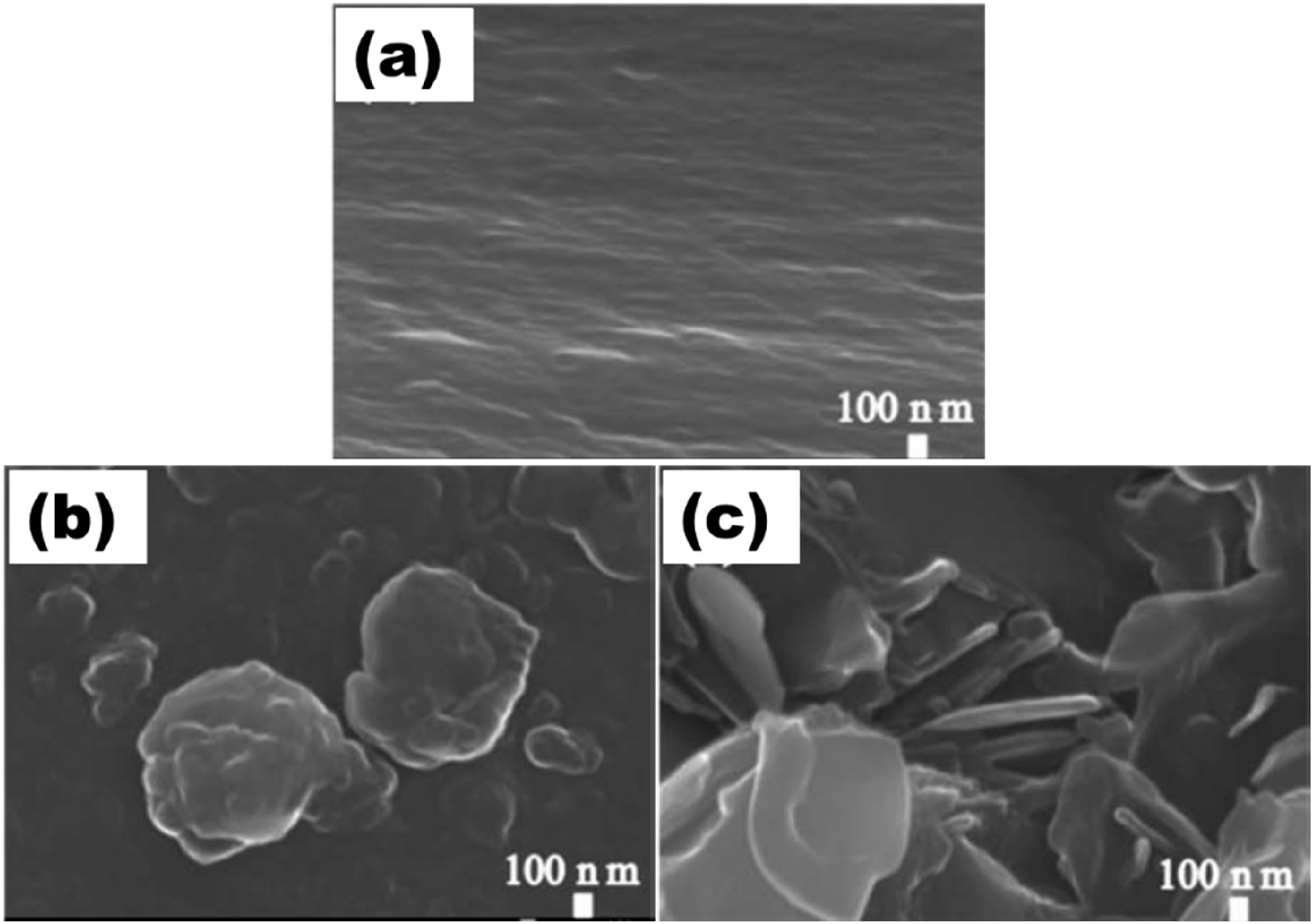
The agglomeration of modified h-BN within the polymer matrix was reduced and sheet-like grafted/modified h-BN was noticed. Hence, the structural interface of the modified h-BN/PI film is observed to be densely branched, and as such promoting the film to hinder crack propagation through energy absorption.
55
Thus, the h-BN/PI nanocomposites filled with 0.3 wt% h-BN displayed improved mechanical, dielectric, thermal conductivity, and thermal stability characteristics compared to those of the virgin PI and other reinforcements. The resultant 0.3 wt% h-BN/PI nanocomposite depicted the highest mechanical strength of about 114 MPa (40% improvement) compared to the pure PI (81 MPa), and the PI storage modulus was reportedly improved by more than 30%. The thermal conductivity of the nanocomposite film was recorded to be 0.36 W/mK, which is 9.1% higher than that of pure PI (0.33 W/mK). Here, the improved dispersion of the h-BN, better interfacial interaction of the modified h-BN and polymer matrix, as well as the effective load transfer mechanism in the nanocomposites loaded with 0.3 wt% h-BN attributed in its enhanced properties. Therefore, with the reduced dielectric loss and improved mechanical and thermal conductivity characteristics, as well as the thermal stability behaviour of the nanocomposites, the produced modified-h-BN/PI nanocomposites at 0.3 wt% h-BN loading could be effective for high-temperature energy storage when considering the wide bandgap and high breakdown strength of h-BN.40,56,57 As study by4,58,59 evidenced that high mechanical strength and improved Young’s modulus mitigates electromechanical breakdown of a polymer-based material. This indicates that the greater the Young’s modulus of a polymer-based dielectric, the higher the breakdown strength and study by Qiao et al.
4
agrees with this considering Stalk-Garton model (see equation (2)). However, from the findings of,4,58,59 it can be concluded that one of the criteria of choosing good polymer dielectric capacitors remains high breakdown strength. Though, stating that better interfacial interaction plays a vital role in the composite properties could further be ascertained by characterizing the microstructure evolution of the nanocomposites using transition electron microscopy (TEM) analyser. Hence, the need for further research.
4

Cheng et al.
2
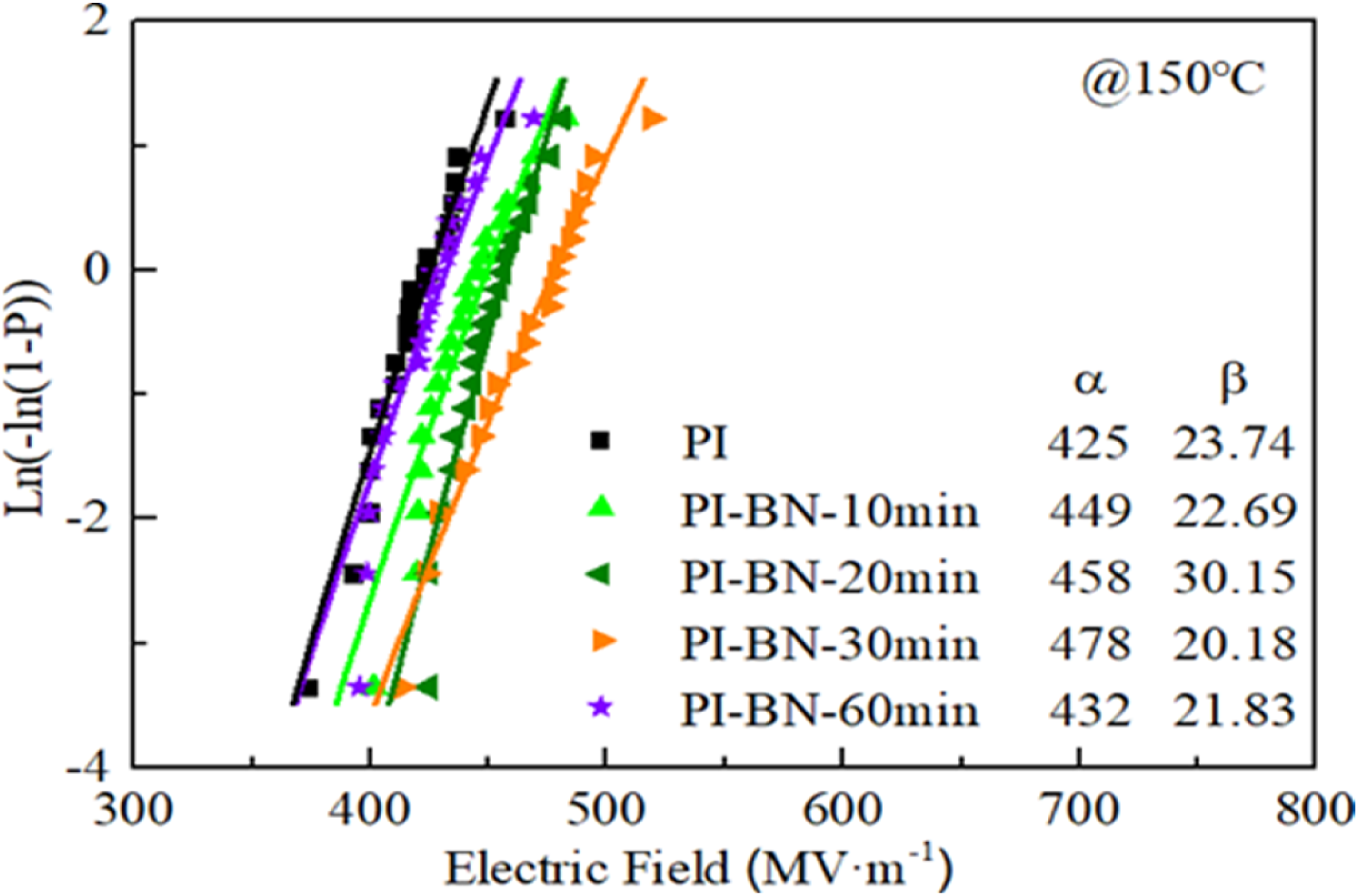
examined the dielectric, insulation, and high-temperature energy storage performance of PI films coated with BN via magnetron sputtering. The scanning electron microscope results of the deposited films presented in the study illustrate that BN layers were dense and homogeneous without any visible defects. And the BN thickness with deposition time of 10, 20, 30, and 60 min were about 56, 91, 142, and 254 nm, respectively. From the experimental results, the dielectric loss of BN/PI samples with different thickness of BN was recorded to be lower in comparison with that of the pure PI. However, with an optimized coating thickness of 142 nm under 30 min deposition time, the pure PI leakage current was reduced from 1.6 × 10⁻⁶ A to 3.45 × 10⁻⁷ A. Herein, it is believed that Schottky emission remains the conduction factor/mechanism basically occurring under relatively high-electric fields at high-temperatures in which electrons acquire enough energy via thermal activation to overcome energy barrier at the dielectric/electrode interface and passed through the interface. Thus, the Schottky emission can be expressed as:

Furthermore, analysing the energy density and breakdown strength of the dielectrics at 150°C applying two-parameter Weibull statistics (see Figure 2), which is expressed as: The Weibull graphs of pure PI and BN/PI sample at 150°C conducted under min.
2

Observing that the current electronics and electrical systems demand efficient operation of polymer-based capacitors at high electric fields and high temperature conditions, Ai et al.
33
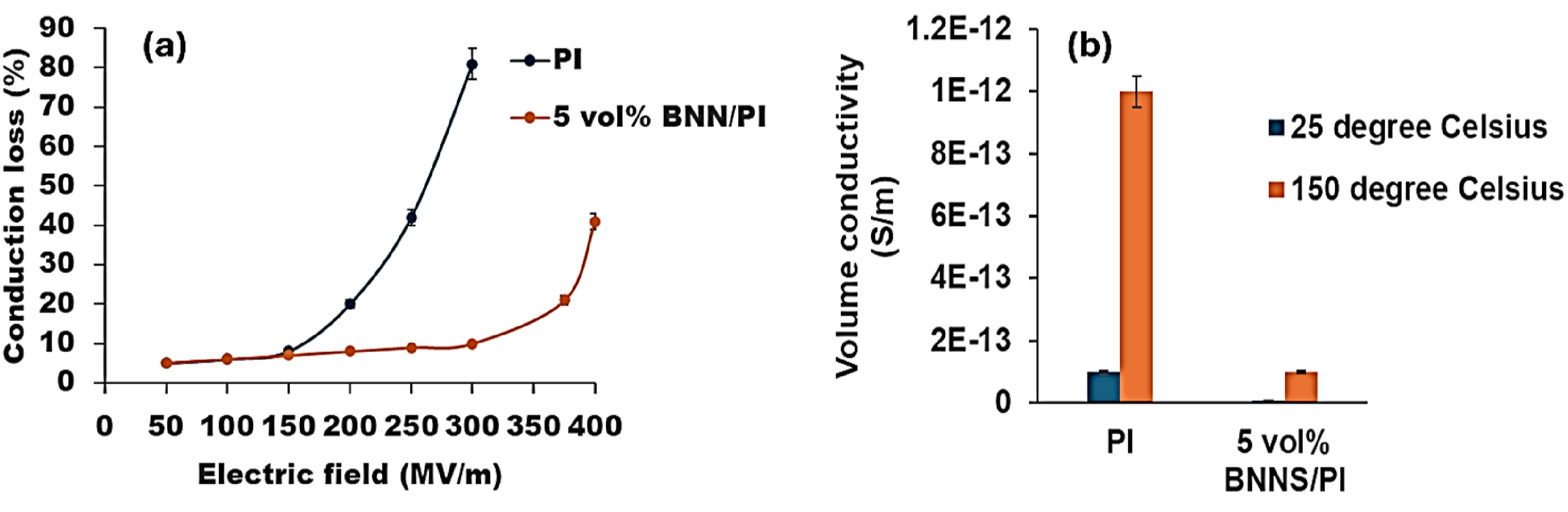
studied the effect of BNNS on the characteristics of PI-based nanocomposites produced via in situ polymerization for high-temperature capacitive energy storage. The examined microstructure of the resultant nanocomposite using the scanning electron microscope, revealed that the BNNS fillers were uniformly distributed within the PI matrix structure. Furthermore, results depict improved dielectric constant of the PI-based nanocomposites at 5 vol% BNNS incorporation from 3.33 (pure PI) to 3.46 (BNN/PI) at 1 kHz. Analysing the breakdown strength of the polymer nanocomposite at 150°C with a two-parameter Weibull distribution function, the breakdown strength (a) Conduction loss of PI and its nanocomposites at 150°C and (b) volume conductivity under 100 MV/m of PI and its nanocomposites at 25°C and 150°C.
33
In another study, Zhang et al.
46
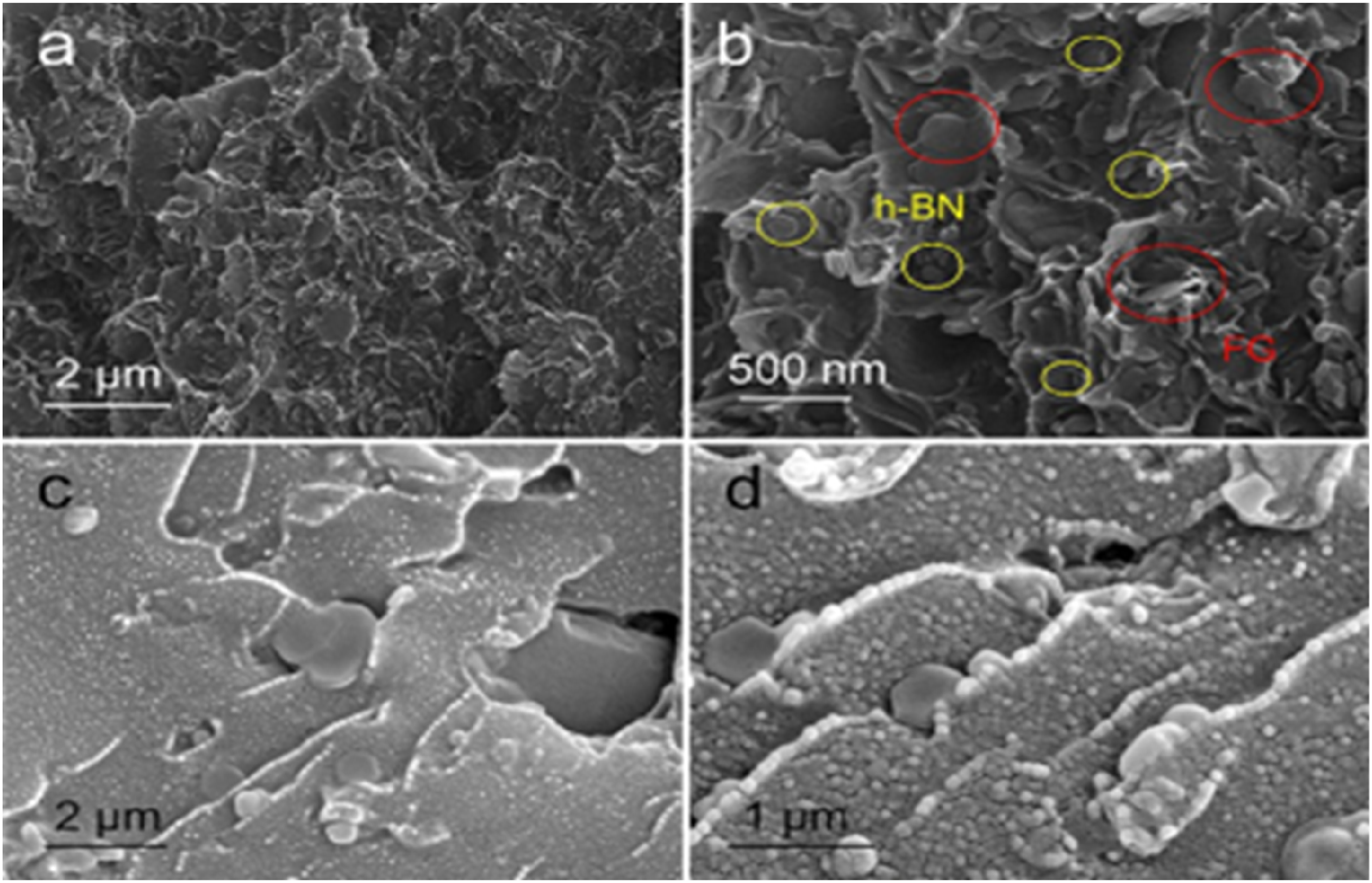
conducted a study on the fabrication and characterization of PI composites filled with fluorinated graphene (f-G) and functionalized BNNS for heat dissipation and performance. The authors focused their characterization on microstructure, thermal conductivity, dielectric, mechanical behaviour. The modification of the BNNS of thickness 2.4 nm was performed employing polydopamine (PDA) to obtain PDA@BNNS. However, the resultant PI nanocomposites were prepared with different loading of f-G and PDA@BNNS via solution casting method. Characterizing the microstructure of the composites using SEM, results demonstrated that the PI composites with f-G and h-BN (f-G/h-BN/PI) are more in an aggregated state and disordered form, which leads to many voids and extractions. Meanwhile, PI composites filled with f-G/PDA@BNNS depict a lubricity and homogeneous lamellar structure, and distributed uniformly into the PI matrix as can be seen in Figure 4. Herein, the catechol structure in PDA, as well as its intrinsic serviceable compatibility contributes to the interaction between the PI matrix and the hybrid fillers.
63
The dielectric constant of the f-G/h-BN/PI and f-G/PDA@BNNS/PI decreases as the frequency increases as their dipole polarization could not keep up with the change of the applied dielectric field. PI, f-G/h-BN/PI, and f-G/PDA@BNNS/PI depicting a dielectric constant of 3.14, 1.97, and 1.67, respectively, under 1 MHz, the breakdown strength of the f-G/PDA@BNNS/PI was recorded to be higher with low dielectric loss of 0.013 when compared to that of f-G/h-BN/PI (0.21), though lower than that of the pure PI. The coating of the BNNS with PDA layer improves the interfacial interaction bonding of the BNNS and the polymer matrix, hence impedes the mobility of the PI chain segments, as well as suppressing the polarization of the nanocomposites,
64
thus the enhanced properties of the functionalised BNNS/PI compared to the pure PI. The SEM micrographs of the cross section of the samples: (a, b) f-G/h-BN/PI and (c, d) f-G/PDA@BNNS/P composites.
46
Additionally, the f-G/PDA@BNNS/PI composites depicted improved thermal conductivity of about 2.46 W/mK higher than that of the pure PI (0.16 W/mK), although this is expected owing to the high thermal conductivity of the BNNS filler. However, the major challenge in the developed nanocomposites was degradation in the mechanical strength of both f-G/h-BN and f-G/PDA@BNNS reinforced PI (Figure 5). Thus, to ascertain or conclude the candidature of the f-G/PDA@BNNS/PI-based nanocomposites as choice of material in high-temperature energy storage, there is a need for further research to improve its breakdown strength, mechanical strength and modulus without comprising other properties. (a) The stress-strain graphs of the neat PI and PI-based composites and (b) The tensile strength of the neat PI and PI-based composites
46
; FG: f-G.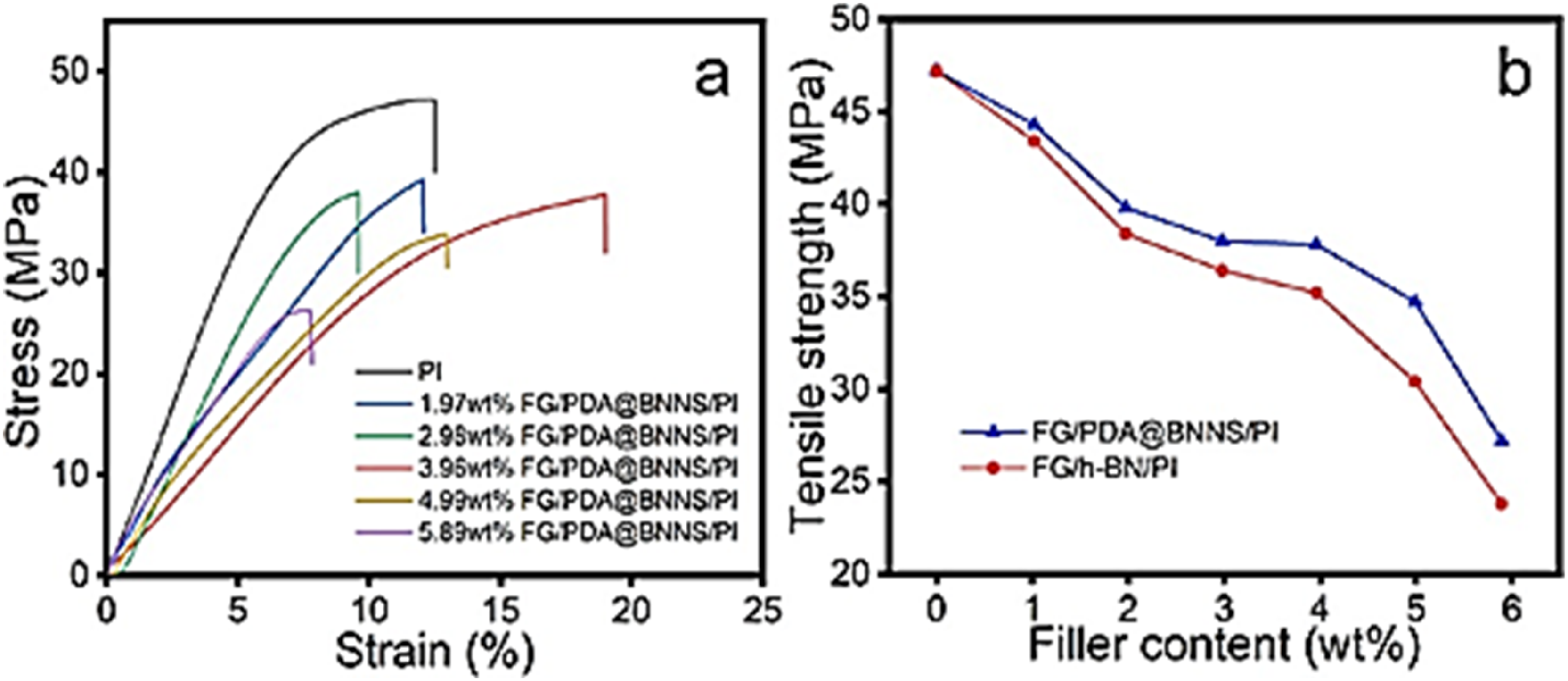
Zhang et al.
64
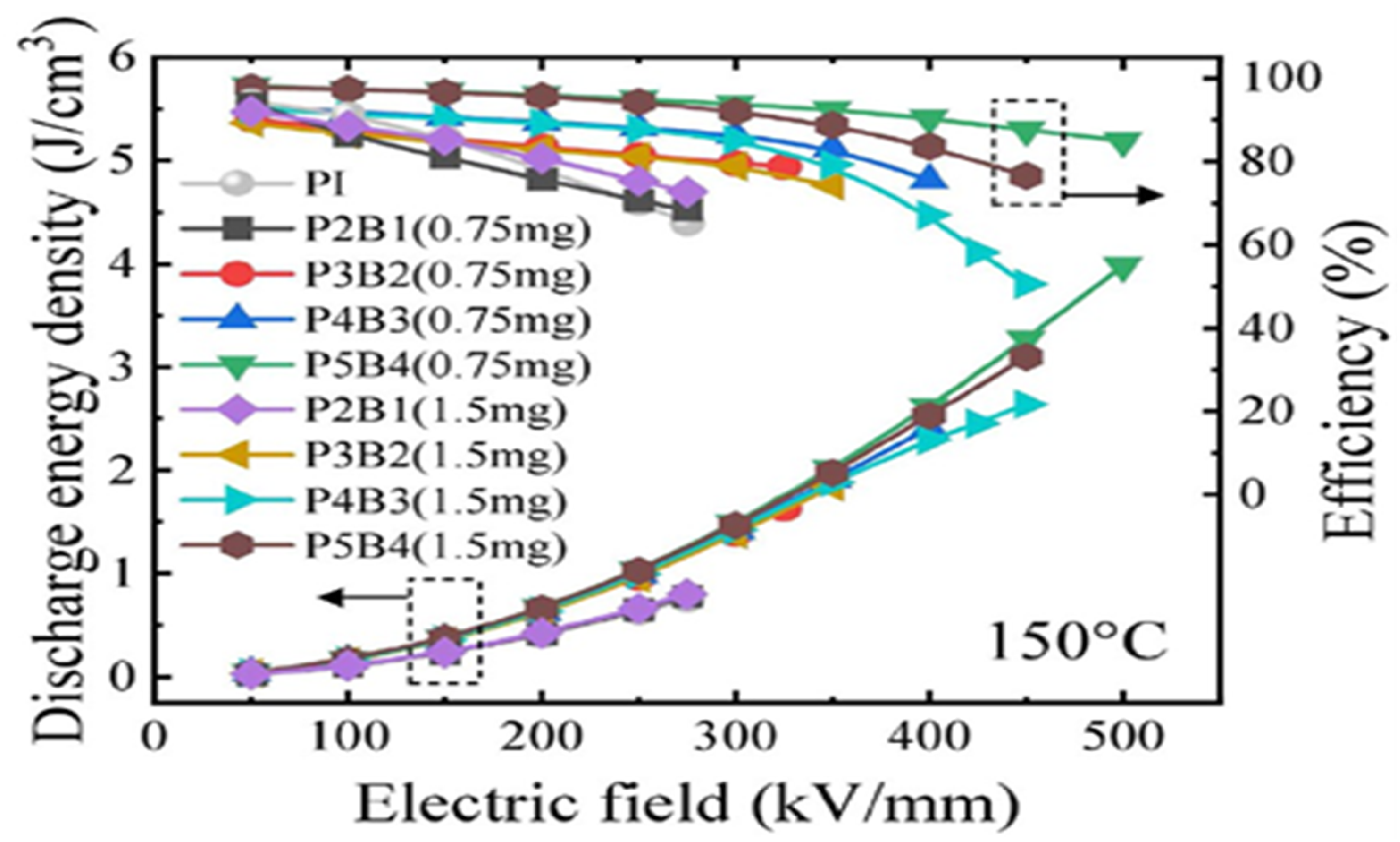
investigated the discharge energy density of polyimide nanocomposites containing BNNS (2.87 nm thickness) for high-temperature dielectric capacitors. The nanocomposite films were prepared at two different mass content of BNNS (0.75 mg and 1.5 mg) and BNNS layers represented as P2B1 (0.75 mg), P2B1 (1.5 mg), P3B2 (0.75 mg), P3B2 (1.5 mg), P4B3 (0.75 mg), P4B3 (1.5 mg), P5B4 (0.75 mg), and P5B4 (1.5 mg) using ultrasonic dispersion and casting process. In the study, the numbers stand for the layer number of PI or BNNS. Analysing the eight-alternating multilayer structured nanocomposite films, uniform dispersion of the BNNS in the PI matrix was evidenced in the SEM and XRD results. As such, there exists effective conduction loss reduction in the resultant PI nanocomposites. Addition of the BNNS into the PI matrix reportedly improved its breakdown strength, discharge energy density, and charge-discharge efficiency, though an increase in dielectric constant with less power dissipation was observed. In addition, the thermal stability of the pure PI also improved with the BNNS incorporation. Here, reduced leakage current and the conduction loss reduction in the nanocomposites at different layers of BNNS ascribed to the factors,
66
which contributed to their improved discharge energy density and efficiency performance over neat PI under 150°C temperature condition (Figure 6). However, the nanocomposite with four BNNS layers depicted the maximum energy stored density of about 3.980 J/cm3, which is 530% greater than that of neat PI (0.631 J/cm3). The optimized discharge energy density and efficiency performance of the nanocomposites with four layers of BNNS could be due to the better interfacial interaction mechanism, which must have existed in the resultant nanocomposites. From the improved energy storage efficiency of the nanocomposites as the number of BNNS layers increase as could be seen in Figure 6, it can be concluded that BNNS layer has a positive effect on improving polarization and reducing conduction loss, hence should be considered as a future reinforcement choice material in producing polymer-based dielectrics for high-temperature energy storage. Discharge energy density and efficiency of the pure PI and BNNS/PI nanocomposites at different BNNS layers.
65
In addition, Zhang et al. 67 conducted a study on improving the high-temperature energy storage performance of PI dielectric capacitor films via BNNS interlayer prepared by simple layer-by-layer casting technique. The BNNS used in the study was of thickness 20 nm and diameter of range 100 – 500 nm. Therein, the experimental results with computational simulations demonstrate that sequential boron nitride interlayers induce a good effect on suppressing leakage current density of the whole resultant material. Furthermore, based on experimental data, it was recorded that the leakage current density of the neat PI was reduced by an order of magnitude. Thus, energy storage density of 2.6 J/cm3 at a charge-discharge efficiency of 90% occurred in the nanocomposites, which is notably better than that of the neat PI of 0.75 J/cm3 energy density and 65% charge-discharge efficiency at 275 kV/mm under 150°C temperature. Herein, the observed better performance of the nanocomposite over the neat PI ascribed to the interfacial polarization initiated at filler-matrix interface and the nanocomposite increased dielectric constant68,69 in addition with inhibitory influence on the growth of breakdown phased because of the boron nitride interlayer.70,71 This suggests that the BN interlayer basically functions as an electron scattering site and charge barrier.
Establishing that the embedment of boron nitride particles in polymer matrix composites is a promising technique to effectively improve their thermal conductivity, as well as reducing the resultant material dielectric loss tangent value. Gu et al. 72 in their work investigated the effect of BN fillers on the dielectric and thermal characteristics of PI-based composites prepared through in-situ polymerization-electrospinning-thermal imidization and hot-pressing method. The experimental results showed dielectric thermally conductive BN reinforced PI-based material with outstanding thermal stability. Therein, good dispersion of the BN fillers and their interfacial interaction with the PI matrix as evidenced in the SEM remains the mechanism that could result in the outstanding thermal stability behaviour of the nanocomposites. 73 Thermal conductivity of 0.696 W/mK, dielectric constant of 3.77, dielectric loss tangent of 0.007, heat resistance of 297°C, and glass transition temperature of 240°C were recorded of the BN/PI composites containing 30 wt% BN particles. Therein, it could be ascertained that improved interfacial interaction occurred between the BN filler and PI matrix, as well as the BN occupying part free volume of PI matrix. Thus impede the motion of the PI molecular chain, in favour of improvement of the glass transition temperature of the composites. Based on the author’s findings and in addition with the study conducted by Akinyi and Iroh, 34 it can be confirmed that the PI matrix remains a choice matrix material for fabricating polymer nanocomposites for high-temperature energy storage and application, owing to the easy modification of its characteristics.
Saysouk et al.,
74
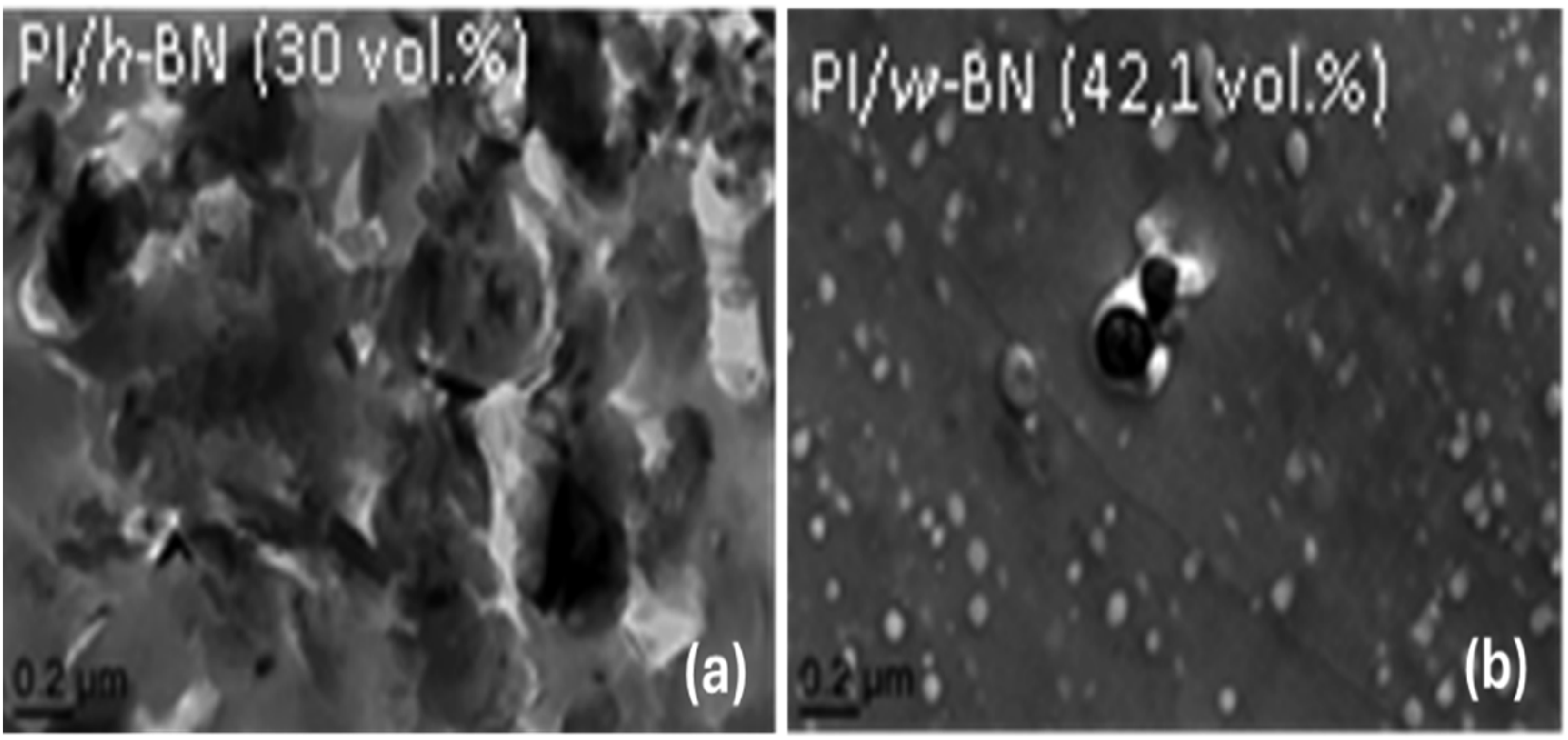
studied the high-temperature dielectric characteristics of BN/PI nanocomposites in correlation with nanoparticle size and filler content effects. In the study, different content of BN particles (h-BN and w-BN type) from 0 to 60 vol% of an average size diameter (35 nm and 120 nm) were added into the PI matrix. Herein, the BN nanoparticles were dispersed in the PI precursors dissolved in N-methyl-pyrrolidone (NMP) solvent through the sonication process. To eliminate agglomeration, the mixed solution was centrifuged. However, the obtained BN/PI nano-dispersed solutions were placed on the stainless-steel substrates via spin coating at 3000 rpm for 30 s. Afterwards, the resultant nanocomposites were cured at 100°C for 1 min, 175°C for 3 min, 200°C for 20 min, and 400°C for 1 h. in N2. The dielectric behaviour of the samples was measured via broadband dielectric spectroscopy employing a Novocontrol Alpha-A spectrometer. High temperature characterizations were conducted under a nitrogen gas flow from room temperature to 350°C. From the TEM results, at h-BN/PI-30 vol% and w-BN/PI-42.1 vol% improved dispersion of the nanoparticles appeared more in the w-BN/PI sample (Figure 7). Characterizing the breakdown strength and leakage current of the samples up to 350°C temperature exposure, both the h-BN/PI and w-BN/PI displayed reduced electrical conductivity and leakage current with improved breakdown strength compared to the pristine PI. The mechanism responsible for this refers to the strong interfacial interaction of the nanoparticles and the polymer matrix. However, computing the activation energy of the conduction phenomenon employing Arrhenius equation, which could be represented as: TEM images of reinforced PI-based nanocomposites; (a) h-BN/PI and (b) w-BN/PI.
74

In another study, Li et al. 42 conducted a study on the high performance of BNNS reinforced PI nanocomposites through integrative interfacial decoration strategy. The investigators’ properties characterization was on microstructural evolution, mechanical, dielectric, thermal, and energy storage. The BNNS of lateral size 3.39 µm and average height of 5.61 nm was used in the study. SEM results depicted improved uniform dispersion of the BNNS in the PI matrix without serious form of agglomeration under 120°C thermal imidization. As such the glass transition temperature (Tg) of the PI was reportedly improved from 345.7°C to 367.2°C, which is about 21.5°C greater than that of the neat PI. Additionally, the improved Tg noted in the study could be ascribed to the interfacial bonding between the host matrix and the fillers, knowing fully that the covalent bond between the matrix and the fillers on one side impedes the mobility of the PI molecular chains in turn resulting to the higher glass transition temperature of the nanocomposites. 73 Furthermore, the BNNS/PI nanocomposite depicted a thermal conductivity of 0.356 Wm−1K−1, which is more than 100% improvement when compared to that of the pure PI (0.172 Wm−1K−1). This improvement in thermal conductivity was also noticed even in increasing temperature and such performance validates the potential of the BNNS/PI nanocomposites in high-temperature application. Examining the mechanical and dielectric behaviour of the samples prepared under 120°C thermal imidization, results show improved tensile strength and improved dielectric constant with acceptable dielectric loss of the nanocomposites, as well as their low conductivity characteristics. Herein, intrinsic insulation of the BNNS and restriction of the PI chain structure contributed to the mechanical and insulative properties improvements of the nanocomposites. The less dielectric loss of the nanocomposites after imidization compared to that without any form of imidization as stated by the authors could be the existence of insulated polymer interlayer between the matrix and the BNNS fillers, which markedly restricts the charge carrier’s mobility and leakage current under an electric field.42,75 As such, the PI nanocomposite under 120°C imidization depicted a discharge energy density of 3.67 J/cm3 at the electric field of 300 MV/m, which is about 203% increment when compared to that of PI nanocomposites (1.21 J/cm3) without a polyamide precursor and thermal imidization. From the findings, it can be concluded that thermal imidization of BNNS reinforced PI is a strategy of improving their properties that could be favourable for efficient high-temperature energy storage.
As polymer PI-based composites with high thermal conductivity, better mechanical and electrical insulating behaviour are urgently demanded in dielectric capacitors and electronics, as well as microelectronic devices. Gao et al.
76
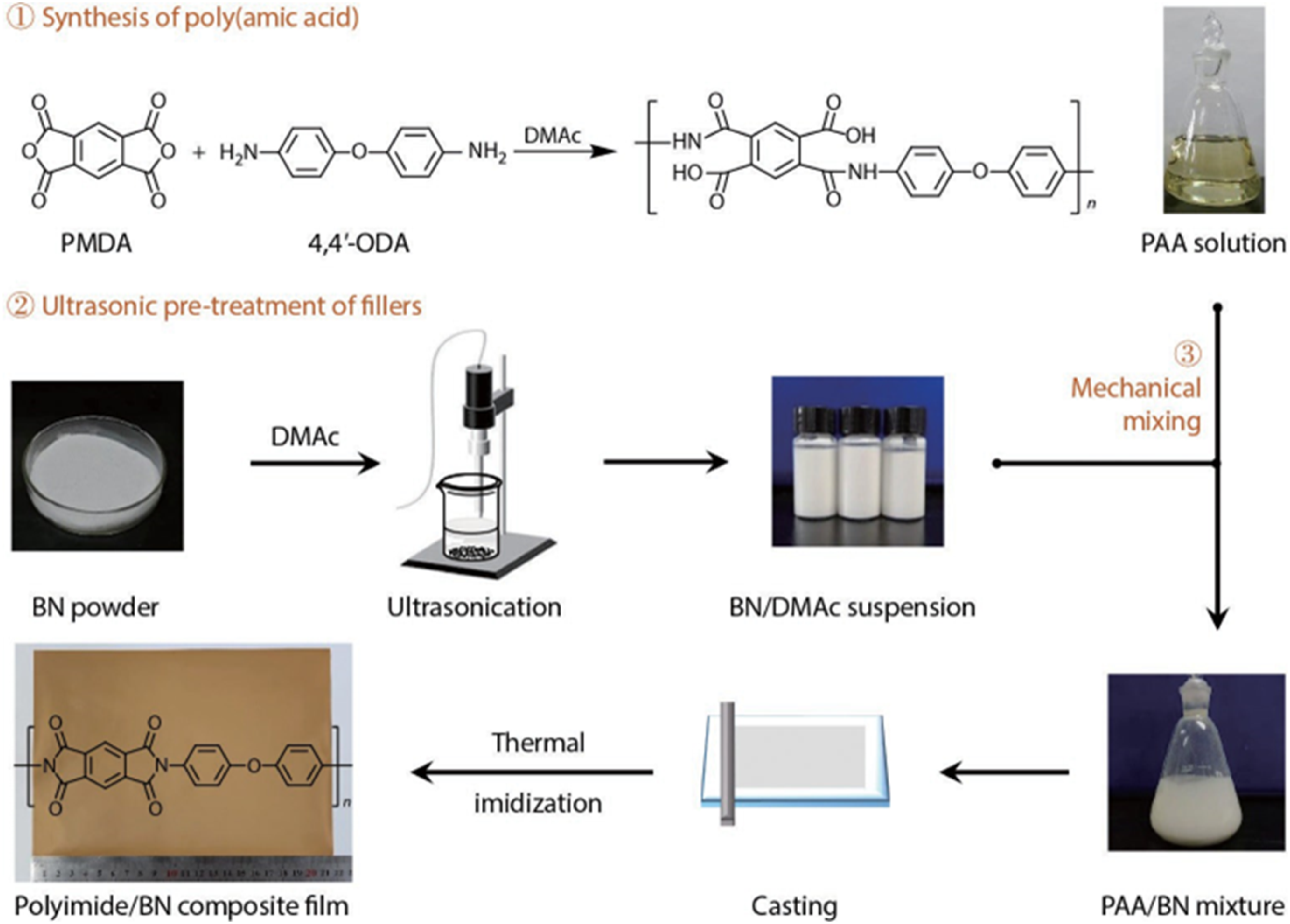
reported on the mechanical and thermal conductivity of PI-based composites filled with BN. In the study, BN was modified via grafting PI brushes using a two-step process. Herein, prior to the grafting of the BN with PI brushes, the virgin BN was pe-treated employing a silane coupling agent of KH-550 in the mixture of deionized water and ethanol and the reaction was carried out with stirring and heating process in an oil bath. The obtained precipitates after centrifugation were washed three times with anhydrous ethanol to remove excess KH-550 followed by drying. Further, for the chemical grafting of the pre-treated BN fillers with PI brushes, the dried BN was introduced into N, N-dimethylacetamide (DMAc) and homogenized by ultrasonication process for 20 min to achieve a homogeneous suspension solution. The produced DMAc/BN solution was incorporated in the PAA solution, and the mixture was stirred vigorously to ascertain a well dispersed solution. The obtained DMAc/BN/PAA solution was coated on the glass substrate by a surgical blade employing an automated casting machine. The films were put in an oven followed by heating to remove the solvent. Afterwards, complete thermal imidization was conducted at 80, 250, and 350°C for 1 h, respectively (see Figure 8). BN/PI composite film preparation diagram.
76
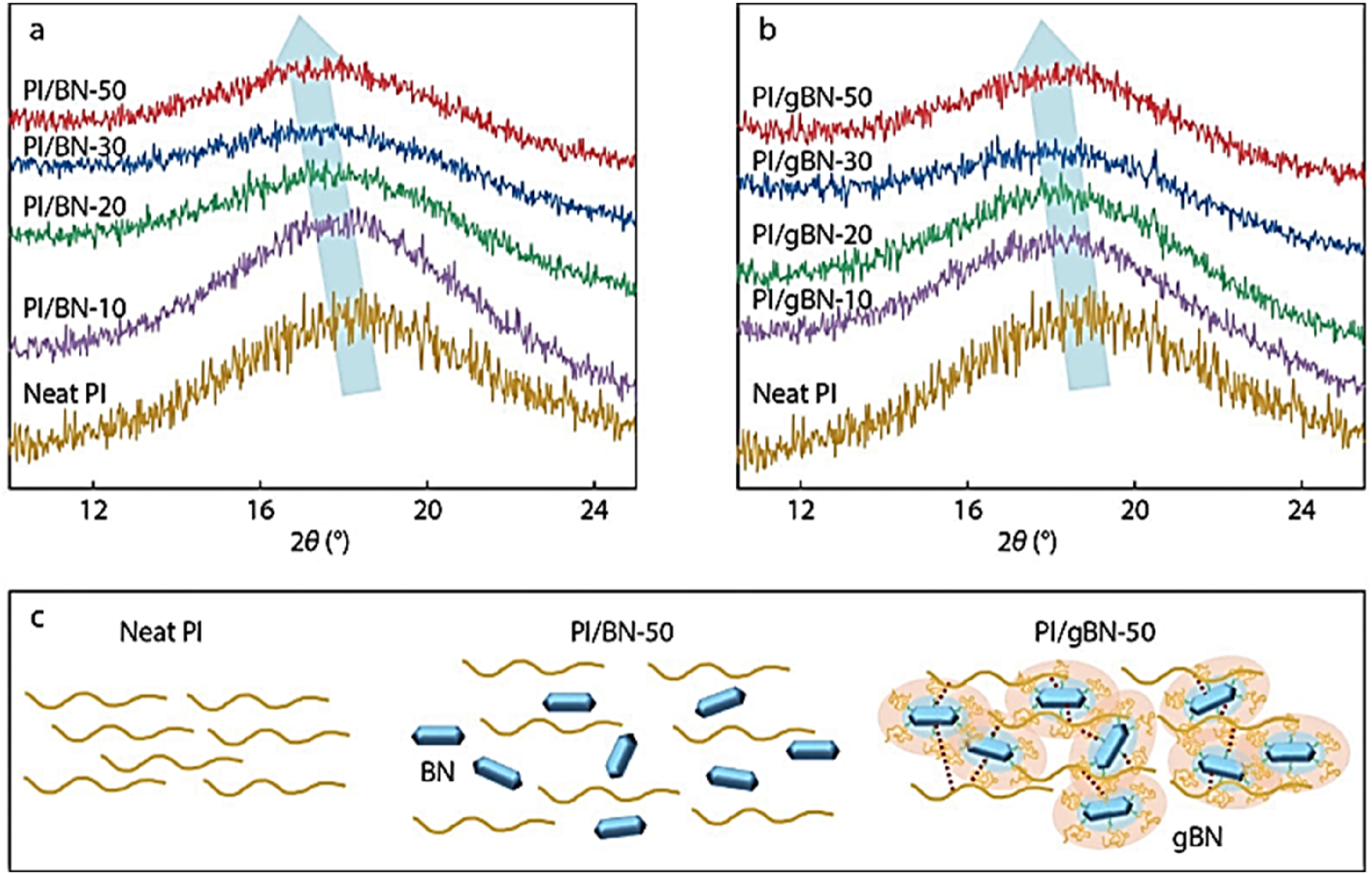
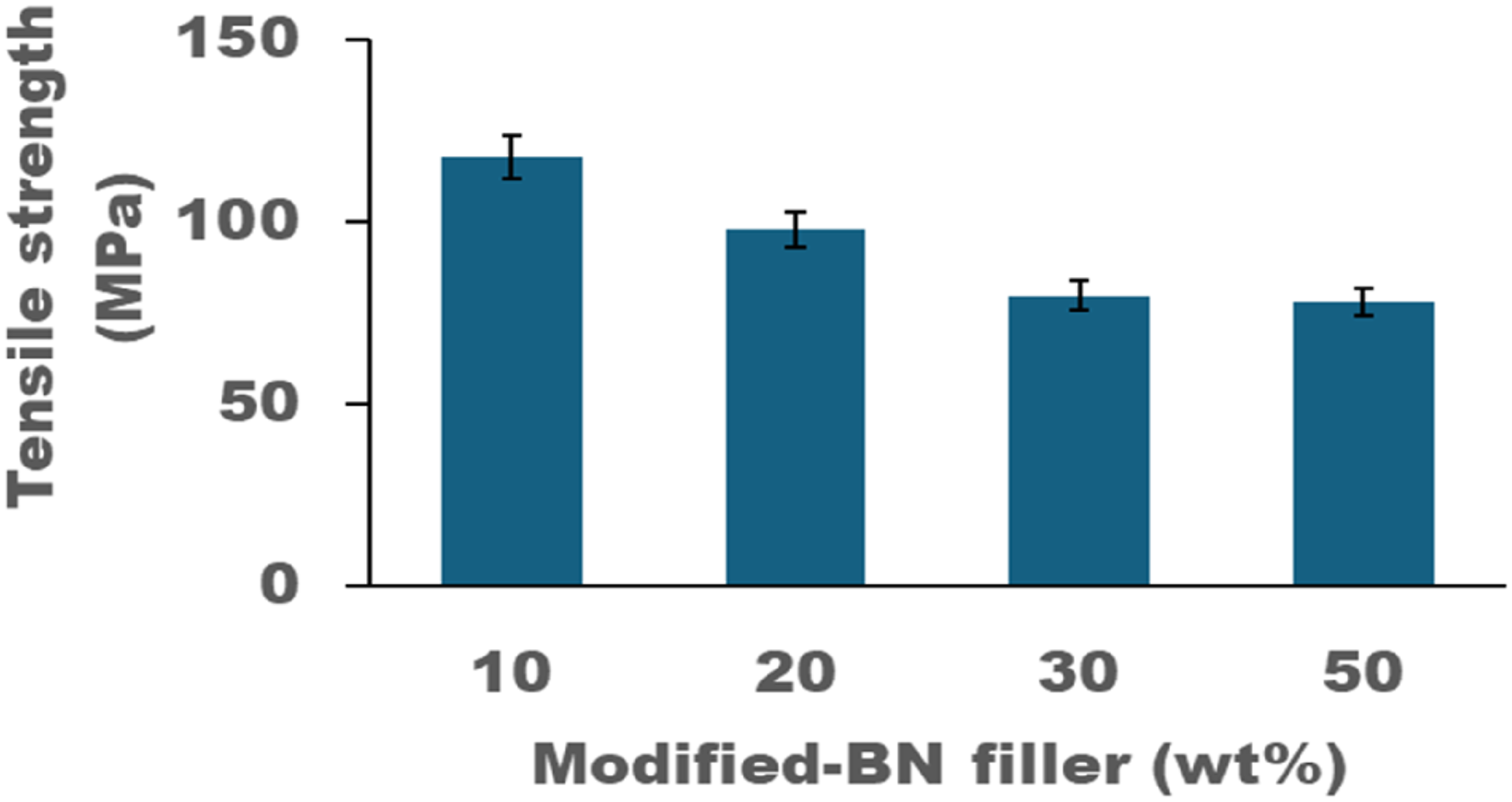
Characterizing the morphology of samples using scanning electron microscope, results indicated uniform dispersion of the modified-BN into the PI matrix and no obvious phase interface or voids in the resultant composites, which illustrate effective interaction of the fillers and the matrix. This improved dispersion of the grafted BN (gBN) even at 50 wt% loading within the PI matrix was also evidenced in the XRD results compared to that of non-grafted BN sample even though their XRD patterns look similar (Figure 9(a) and (b)). However, from the fillers and PI chains interaction as presented by the authors, low d-spacing could be ascertained in the gBN reinforced composite compared with the non-grafted BN reinforced sample (Figure 9(c)). This on the other hand validates that interfacial compatibility of the fillers and polymer matrix phases was greatly enhanced after the BN modification with PI brushes. Therefore, the addition of the modified BN particles into the PI matrix notably improved its mechanical, thermal conductivity, thermal stability, and dielectric characteristics. The mechanical strength of the grafted BN/PI composite reportedly reached up to 80 MPa even at the BN filler content of 50 wt%. Furthermore, the out-of-plan and in-plane thermal conductivity of the composite film was observed to increase to 0.841 and 0.850 W/mK, respectively. The improved thermal stability and thermal conductivity of the composite films is expected owing to the inherent thermal stability and thermal conductivity of the inorganic BN fillers.76–79 In addition, good interfacial interaction between the polymer matrix and the fillers on the other hand ascribed to the enhanced thermal properties of the composites over the neat PI.
80
The produced modified-BN/PI composites could be utilized for high-temperature dielectric capacitors considering their thermal conductivity behaviour and less dielectric loss demonstrated in the study. Though further study needs to be conducted for proper optimization of the BN filler loading based with the fact that degradation in tensile strength was recorded as the filler content increase (Figure 10) and such could be due to less effective load transfer mechanism, which must have existed in the resultant nanocomposites. XRD curves of the samples; (a) non-grafted BN/PI, (b) grafted BN/PI, and (c) schematic diagram of interaction between the fillers and PI chains at 50 wt% BN loadings.
76
Optimal tensile strength of the composite films at various filler concentrations.
76
In another study, Peng et al.
81
reported on the thermal conductivity and dielectric properties of PI nanocomposites utilizing diamine-assisted mechanochemical exfoliation BN and in-situ polymerization under pressure. With the use of the in-situ polymerization process under pressure, excellent distribution of the functionalized BNNS (f-BN) into the PI matrix was evidenced in the scanning electron microscope characterization (Figure 11(b)). SEM image of brittle cross section of (a) 40 wt% h-BN/POSS/PI and (b) 40 wt% f-BN/POSS/PI.
81
POSS: polyhedral oligomeric silsesquioxanes.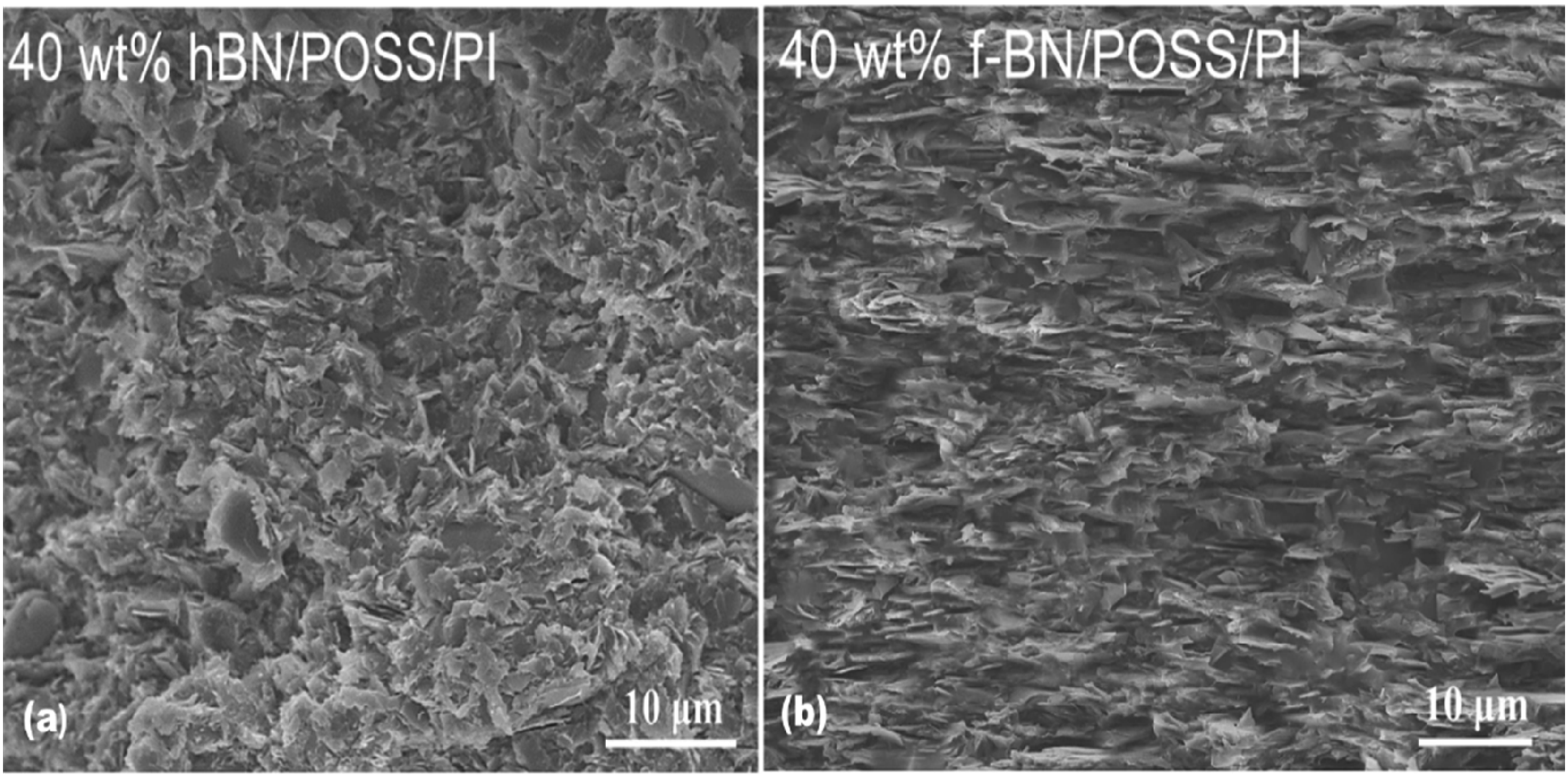
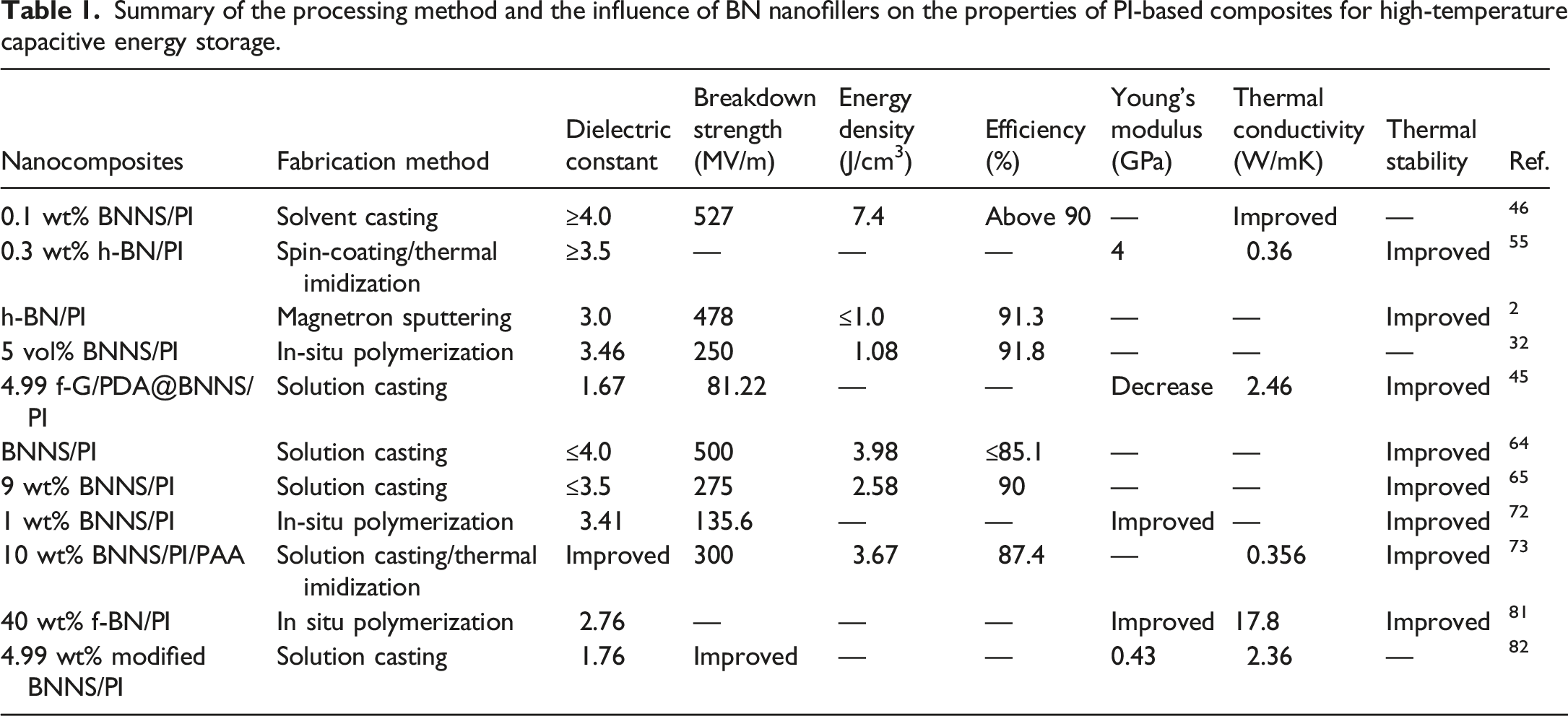
Summary of the processing method and the influence of BN nanofillers on the properties of PI-based composites for high-temperature capacitive energy storage.
Challenges and recommendation
Researchers and industries have accomplished some advancements in the development of boron nitride reinforced polyimide-based nanocomposite materials for high-temperature energy storage. With the characterized properties of the PI-based nanocomposites filled with boron nitride fillers, the BN/PI nanocomposite found to outperform the biaxially oriented polypropylene (BOPP), which is the most widely used commercial polymer-based dielectric material for both low and high-temperature energy storage application. However, there are still some challenges associated with the development and characterization of the BN/PI nanocomposites for high-temperature capacitive energy storage using in situ polymerization, thermal imidization, and casting processes. For instance, agglomeration of the BNNS fillers in the PI matrix reportedly occurs at its high content loading,48,66,83 and as such result to less load transfer from the PI matrix to the BN fillers in protecting the resultant nanocomposites from external stresses including electrical, thermal, and mechanical stress.75,81 For polymer nanocomposites to depict better breakdown strength and energy storage density, improved elastic modulus is needed.4,41,42 Few studies reported reduction in the mechanical properties of BN/PI composites utilizing the mentioned processes75,79,82 and such remains a challenge. Surface modification of the BN prior to its dispersion into the PI matrix has been adopted by different researchers, but the flexibility of the BN/PI composite is still not remarkable, and functionalization of BN remains expensive. However, as to achieve superior practical application of PI-based nanocomposites, it is crucial to explore more on the fabrication method that will yield a high-performance PI nanocomposite dielectric capacitor with improved discharge energy density and stability under temperature fluctuations. To achieve this, the authors recommend the application of spark plasma sintering technique with Taguchi design of experiment and optimization in the fabrication of boron nitride reinforced PI-based nanocomposites for high-temperature dielectric capacitors. Spark plasma sintering (SPS) is a pressure sintering method that used on-off direct current pulse energizer, where mechanical pressure of 20 – 100 MPa is being applied through a graphite die mould along the vertical axis and a pulse electric current of low voltage of about 4 – 20 V and high current (0.5 – 40 kA) is passed through the die.84,85 SPS provides uniform diffusion of nanofillers, rapid densification of powders to near net shape with minimal grain growth and pores with good interfacial bonding. It utilizes low sintering temperature and short sintering time to achieve homogeneity in composites, and it is cost effective. 86 However, the fabrication of boron nitride reinforced PI-based nanocomposites for high-temperature capacitive energy storage adopting SPS will serve as a novel method in producing polymer-based nanocomposites with reduced thermal-induced deterioration in electrical insulation and mechanical strength when exposed to high temperatures. With the SPS processing method, there is the possibility of producing PI-based nanocomposites with good mechanical, thermal, reduced conduction loss, better breakdown strength, and improved energy storage density performance. One can agree with this owing to the study presented by Ogbonna et al., 87 Lv et al., 88 and Adesina et al. 89 In addition, incorporation of modelling and simulation using COMSOL Multiphysics and some micromechanics like Mori-Tanaka and Lewis’s model90,91 could be a breakthrough in examining the microstructural evolution and interfacial phenomenon of PI-based nanocomposites filled with BN nanofillers, as well as predicting the dielectric and thermal behaviour of the resultant BN/PI-based nanocomposites for favourable high-temperature dielectric capacitors even during the production process of the polyimide-based nanocomposites.
Conclusions
In the review study, exciting developments in the field of high-temperature energy storage employing boron nitride reinforced PI-based nanocomposite materials were noted. Different fabrication methods have been used in the development of BN/PI nanocomposites, including in situ polymerization, solution casting, layer-by-layer casting, sputtering, spin-coating, and thermal imidization method. And the produced nanocomposite films have displays unique high-temperature capacitive energy storage performance, which could effectively meet the requirements of practical harsh environment applications. However, noting that great efforts have been made, there is still some gap to bridge due to the reported challenges facing the fabrication and characterization of PI nanocomposites filled with boron nitride nanofillers, such as poor dispersion and nanofiller agglomeration and weak interfacial interactions of the BN fillers and PI matrix, which in turn results to reduction of breakdown strength, energy storage density and charge-discharge efficiency, especially at high filler content loading. Hence, future developments of high-temperature BN reinforced PI nanocomposite dielectrics should be considered via the use of spark plasma sintering technique with suitable optimization and design of experiment such as Taguchi design of experiment for proper understanding of process parameters on the process-structure-properties and performance of BN/PI nanocomposites. This is because structural optimization followed simulation of high-temperature polymer-based nanocomposite dielectrics might strike a balance in thermal stability, dielectric, and mechanical flexibility response of polyimide nanocomposite films processability involving the addition of boron nitride nanofiller reinforcement for high-temperature energy storage.
Footnotes
Declaration of conflicting interests
The author(s) declared no potential conflicts of interest with respect to the research, authorship, and/or publication of this article.
Funding
The author(s) disclosed receipt of the following financial support for the research, authorship, and/or publication of this article: This work is based on the research supported wholly/in part by the NRF of South Africa (Grant Numbers: 150574); and Faculty of Engineering and the Built Environment and Centre for Energy and Electric Power, Tshwane University of Technology.
