




Abstract
More than 1.3 billion tons of foodstuffs are wasted each year because of their storage, handling, transportation or sale, resulting in the world suffering from famine and food shortages. This means that huge amounts of the resources utilized in food production are wasted. Greenhouse gas emissions caused by food degradation that gets wasted results in serious environmental and human health impacts. Food losses could be caused by microbes, temperature, humidity, UV-lights, or other factors related to the current pandemics, that have serious jeopardy impacts on the food security and the environment. Thus, smart packaging-based 2D-nanomaterials (2DMs) including sensors and pH-responsive tags have developed for achieving the quality and prolong the shelf-life of foodstuffs. Because they are capable to detect, sense, record internal or external changes in the product’s area. They also can give a prompt message or color changing to the producer or consumer to decide about the shelf lives and expiration dates for consuming the foodstuffs without deteriorating food and packaging. This study reviews the recent advancements in 2DMs regarding preparation, characterization, and applications including active/intelligent food packaging industries. Facile and green functionalization of 2DMs-based graphene oxide (GO) by folic acid or natural dyes enabling them be used in several sensor/artificial intelligence disciplines are discussed. Future insights on the challenges towards the potential outbreak prevention in foodstuffs and their control in long-term use and risk management of these materials are also discussed.
Introduction
During the processing stages of the foodstuffs supply chain such as storage, handling, transportation, foods can be attacked by microbes and enzymes leading to their corruption quickly. Humidity, temperature, and gas are considered as a resource of vexation and have severe impacts on the food spoilage because they aid the microorganisms and parasites to grow in the food media, resulting in foodborne diseases which affect human health.1,2 In 2022, World Health Organization (WHO) claimed that approximately 600 million people in the world fallen ill after eating polluted food, resulting in acute poisoning or long-term illnesses like cancer [WHO, 2022]. It was found that the major reasons of food losses-based contamination are mostly connected to technical limitations in storage and cooling facilities in different climatic conditions, packaging, and marketing. Consequently, these limitations are critical and should be controlled, not only in food industrial region, but in the final consumption, to restrict or prevent their risk of short-term damage. To outdo these deficiencies, smart packaging films-based sensors or pH-sensitive strips for freshness (i.e., meat, fish, and dairy products) have used to control the food products through their production-to-processing stages. Because they possess the super ability to detect the food spoilage and shelf life monitoring via giving a rapid message or color changing (i.e., self-examination by naked eye) to inform the producer or consumer about the time to deplete the food products, thanks for innovative packaging sensors. 3 Smart packaging sensors-based 2DMs have nowadays introduced as an emerging technology to monitor the food products shelf life in terms of food security and quality surveillance property. 4 Other sensors can also be used in several practical applications such as sports, healthcare, human-computer interaction, greenhouse climate, and metrological monitoring.5–8 However, all these sensors should meet certain requirements like prompt response and recovery, good linearity, long-term stability, repeatability, small hysteresis, and flexibility. 9 To fulfill these features, various types of sensing materials comprising metal oxides and carbon-based nanomaterials like graphite, GO, and carbon dots (C-dots) should be incorporated with the polymer matrices for improving the sensor conductivity.10–13 Several efforts1,14–16 have conducted to explore 2DMs as a viable and cost-effective nanofiller in nanocomposites. 2DMs not limited to graphene, graphene oxide, layered double hydroxides (LDHs), transition metal dichalcogenides (TMDs), 2D-quantum dots (2DQDs), etc, that are ultrathin platelets from atomically thick single sheet or few sheets. 17 It is worth mentioning that 2DMs are considered as innovative substances and dubbed “materials of the future” due to their fascinating properties including excellent mechanical properties,18,19 high barrier and flame retardancy, easy functionalization, and high electrical conductivity.20,21 Addition to such amazing 2DMs properties, they are offering nanoscale surfaces with large surface area for diverse functional materials. These features open glorious chances for their use in several potential applications such as nanomembranes for water remediation. Food-safe packaging, touchscreen displays, humidity sensors, drug delivery, and other advanced industries related to electronic fields. 22
Of our particular studies, GO nanoplatelets which synthesized from graphite flacks by Hummers’ avenue, have integrated inside the polyvinyl chloride (PVC) in presence its plasticizer (i.e. dubbed tricresyl phosphate) by In-situ approach to create flexible PPVC/GO film as an intelligent humidity sensor for food packaging.
11
The gotten outcomes showcased that flexible PVC/GO-3% sensor had higher sensitivity with ultra-response speed (∼4 s) and recovery time (∼6 s). Notwithstanding, when GO nanoplatelets functionalized with hydrophilic folic acid (FA) to produce eco-friendly and high-efficient humidity sensing material (GO-FA) (Figure 1). The obtained data from humidity sensing revealed that the sensitivity of the sensor-based GO-FA was significantly enhanced and the response/recovery times found to be 2.6 s and 3.5 s, respectively.
1
Schematic depicting the functionalization of GO-FA and the synthesis stages of CS/PVA sensors-based GO-FA (adapted from Moustafa et al. 2023) Elsevier, 2023.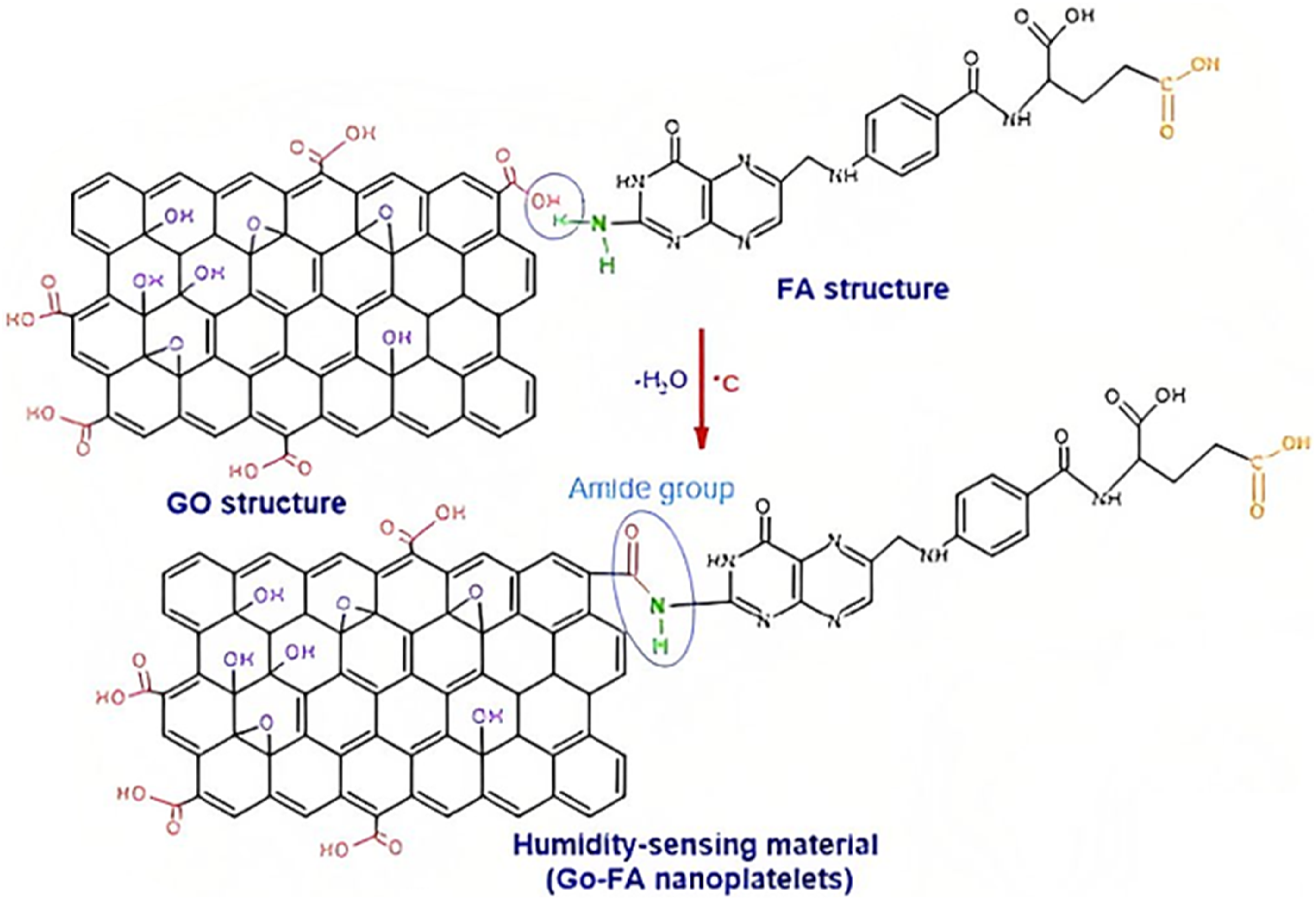
Consequently, it can be summarized based on nanoscience point of view that the humidity-sensing substance played a vital role not only for improving the sensor conductivity, but for creating new-fashion sensor applications. This can drive us to give a short overview on 2DMs for outstanding their role in sensor designing to be used in right application including intelligent food-safe packaging and other disciplines. Thus, the present review is aimed to summarize the scientific bases on which 2D nanomaterials are chosen as excellent candidates to improve food safety and quality control in food products. Their mode of action is also explained in several examples including humidity/gas sensors and pH-indicators. Current and future modifications on 2D carbon-based nanomaterials to open new fields of development in the industrial, medicine, and agricultural fields. Suggestions to overcome obstacles of mass production of those materials and out looks on new green modification methods to improve sensing capability and safety issues concerned with such materials.
An overview on 2DMs
2DMs have received substantial interest in various of industrial sectors and considered to be the forerunners for future applications including intelligent food packaging, agro-industrial and artificial intelligence because of their unique properties comparable with traditional materials.
Graphene and go nanoplatelets
Graphene is artlessly one atomic layer of graphite-a layer of sp2 linked carbon atoms to each other in a repeating pattern of hexagons or honeycomb lattice
16
(see Figure 2(a)). In other words, graphite is consisted of many layers of graphene. Graphene is recognized to be the mother for all carbon-based materials because it can transfer certain of its impressive behaviors to its relative carbonaceous substances. Graphene can be prepared from hydrocarbon resource as a carbon feedstock using chemical vapor deposition (CVD) approach with aiding the heat and catalyst.
20
The obtained graphene exists in 2D sheets form (i.e., 2D hexagonal lattice).
23
This advantage allowed graphene surface to functionalize or modify with desirable functional active sites to be used in electrochemical sensors and other industrial polymer-based composites. For the latter, it was found that the benefit of graphene compared to classical fillers is that it permits for huge changes in the properties of composite materials at very low concentrations, due to the ultrahigh aspect ratio of graphene. Another interesting graphene derivatives is GO that can be synthesized by two consecutive oxidation steps of graphite flacks as mentioned above, resulting in high oxygenated functional sites (i.e., epoxy, carboxylic and hydroxyl groups).
24
(a) Schematic models of certain 2D and layered nanomaterials (Godínez-García et al. 2023) Wiley 2023, and (b) Oxidation step of graphite to GO and its reduced derivatives.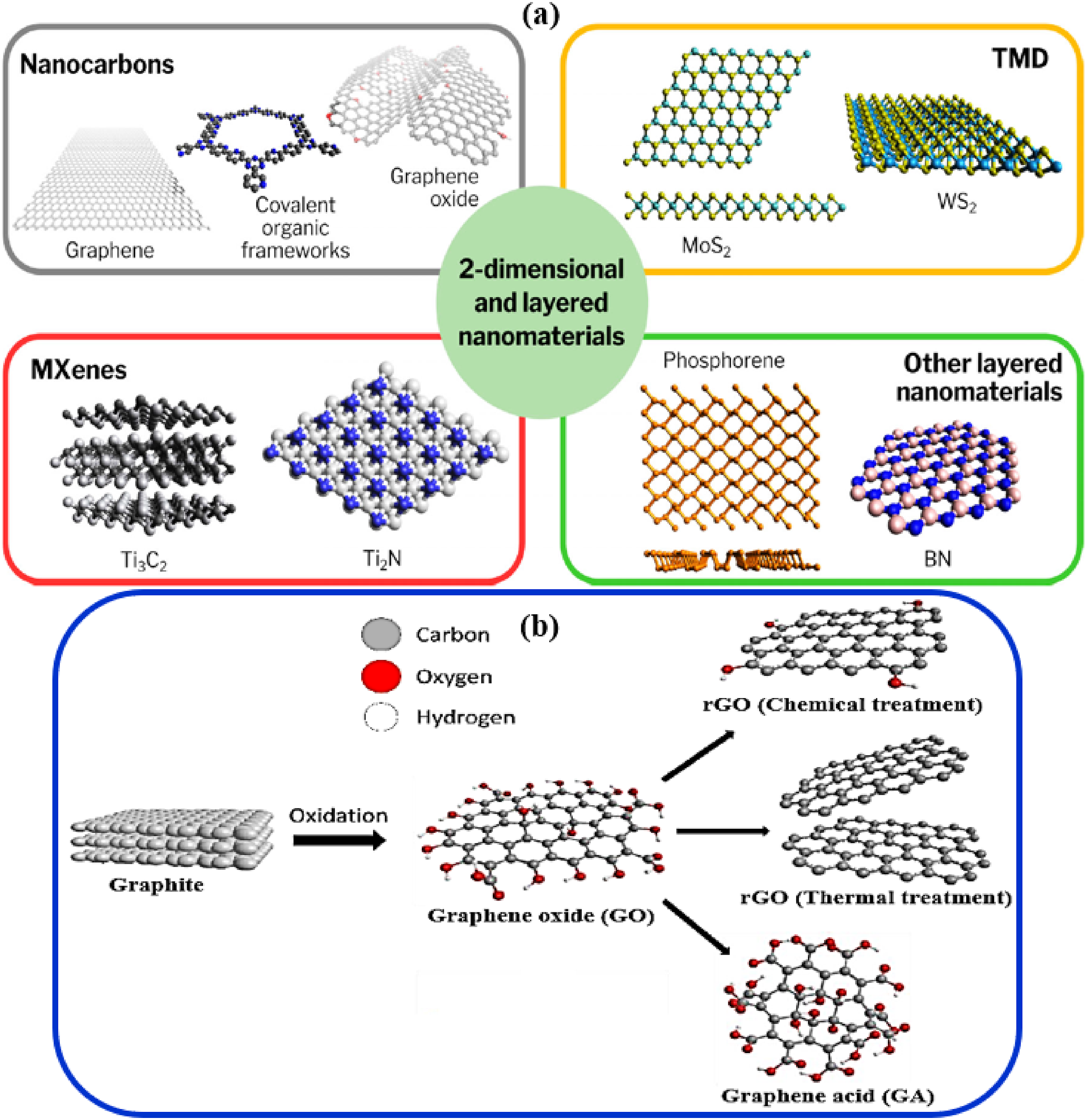
Doubtless, graphene or GO is superb material and is the most studied substance globally because it has a positive impact on various applications that touch our everyday lives including intelligent (bio) sensors for food packaging, water remediation, agriculture, and medical purposes.25–27 Thus, thanks to GO unusual structures and properties. However, their nanosheets tend to be stacked especially in the polymer matrix, forming irreversible agglomerates via van der Waals forces.
28
This issue has encountered in all preceding efforts targeted at large-scale production of graphene via chemical modification or thermal reduction.
29
Because most of graphene/GO unique properties are solely correlated with individual nanosheets. For this reason, GO nanosheets can be modified or functionalized by other compounds not only to produce efficacious material to conduct electricity and heat efficiently, but also to promote their dispersibility within the polymer matrices, therefore creating high-performance composites for end use products.30,31 In addition to this, hybrid GO has strong adsorption capability for different harmful gases like carbon dioxide (CO2), acetone, and ammonia.32–34 Regarding the aggregation reduction, GO can also be reduced chemically or thermally to get reduced GO (rGO) for using as rGO-based nanocomposites in specific advanced purposes35–37 (Figure 2(b)). Many techniques have provided us with evidence the functionalization/decoration process of GO by other compounds. Among them, X-ray diffraction, Raman spectroscopy, and FT-IR analysis, as reported previously in our literature.
1
General speaking, it has noticed from XRD that the diffraction peak (i.e., indexed as the basal plane (d001)) has shifted to lower 2ϴ° from 11.97° (for native GO) to 9.45° (for GO-FA), correlated with an increment in the d-spacing distance from 7.39 Å to 9.36 Å (Figure 3(a)). Also, Raman spectra showed two large peaks centered at 1573 cm−1 and 1346 cm−1 which attributed to the G (sp2 C-atoms) and D (sp3 C-atoms) for native GO. Nevertheless, the G peak of GO-FA in CS/PVA blend has altered to 1598 cm−1. Meantime, their intensities (G and D bands) were reduced when compared to native GO, confirming the formation of individual GO-FA nanoplatelets inside the matrix achieved, thus enhancing the sensitivity of the material towards the moisture and gases from the surrounding. Where, the main idea for chemical sensors works principally based on the change in capacitance, resistance, or certain other measurable property when a humid air or gas gets adsorbed on a hydrophilic material.20,38 Consequently, this prospective avenue-based GO decoration can open many opportunities to promote sensors-based nanocomposites for quality monitoring in food products, thereby limiting the human and environmental hazards resulting from foodstuffs deterioration. (a) XRD patterns, (b) FT-IR spectra for native GO and functionalized GO-FA, as well as (c) Raman spectra for GO-FA in CS/PVA composites (Mouatafa et al., 2023) Elsevier, 2023.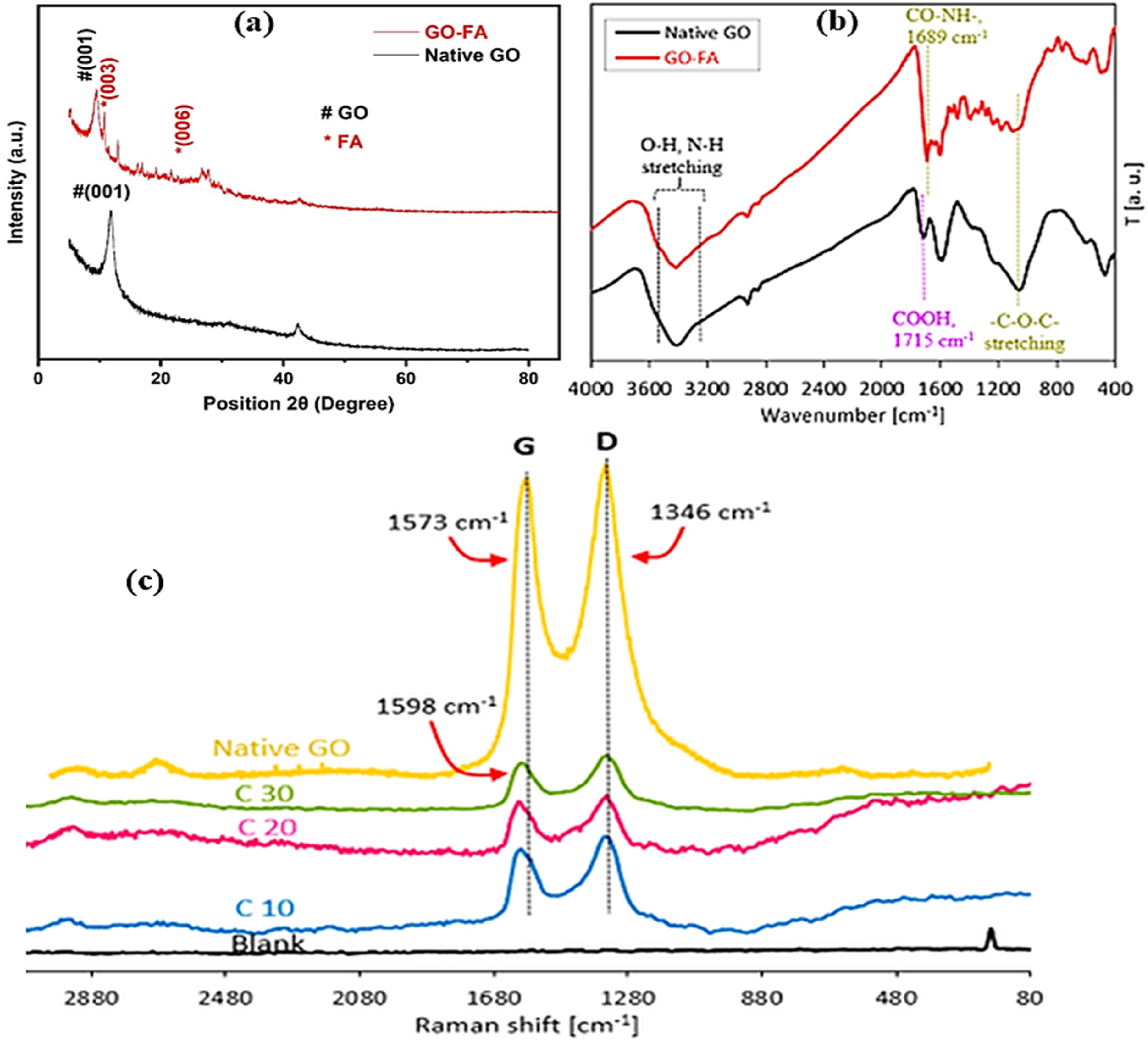
MXenes
As a product of massive research on 2DMs, a new kind of laminar nanoscale has developed from a specific kind of ceramic components called “MAX phase” which are considered as a family of 2DMs. 39 They are composed of thin couches of metal carbides and nitrides separated by aluminum atoms that can remove from the structure by a special acid treatment, resulting in exfoliated planar nanostructures with an empirical formula Mn+1 Xn, where M represents a transition metal and X represents a carbon or nitrogen atom. Titanium carbide (Ti3C2) and titanium nitride (Ti2N) are example models for MXenes (Figure 2(a)). The major studies on MXenes compounds have showed beneficial and tuneable optical, electronic, mechanical, and electrochemical properties, besides energy storage and conversion. 40 Based on large number of studies, MXenes have significantly contributed in renewable energy resources, besides advanced electronic fields that can be applied in a wide spectrum uses. However, their synthesis procedures require specialized chemical reactions including strong acid reactions, that in principle could restrict their mass-production level, thereby hindering their use in emerging applications including intelligent food-safe packaging. 41
Other 2DMs categories
There are other 2D inorganic materials include 2DQDs, hexagonal boron nitride (h-BN), metal chalcogenides, and layered double hydroxides (LDHs). Currently, these materials have also started to emerge in several engineering applications, particularly in the polymer composite electrolytes because of their exceptional chemical, electrical, and biological properties.42,43 Additionally, they could easily be functionalized with other metals/compounds to promote their use in suitable many applications like nanomedicine, UV absorbers, gas adsorbents, and flame retardancy. For instance, LDHs as referred as anionic clays is classified as a host-guest layered substance that can bonded with divalent and trivalent metal cations like Zn+2 and Al+3 to obtain hydrophilic Zn/Al-LDHs that has a good flammability
44
and strong antibacterial activities.
15
However, the hydrophilic character of Zn/Al-LDHs limits its dispersibility in the most hydrophobic polymer compounds.
45
For this cause, its treatment by organomodifier is required not only to get hydrophobic matter with high d-spacing distance, but to enhance its compatibility inside the polymer matrices (Figure 4(a)–(b)). Additional information regarding the LDHs preparation can be reported elsewhere.
46
On the other hand, carbon-based quantum dots (C-dots) comprising of graphene quantum dots and carbon quantum dots (CQDs) which are a new precursors of carbon nanoparticles with dimensions less than 10 nm.
47
Further, their structure contains a large number of functional active sites like hydroxyl, amine, and carboxylic groups.
48
In 2004, 2DQDs have firstly gotten during the synthesis of single-walls carbon nanotubes via preparative electrophoresis,
49
after that through laser ablation of graphite powder and cement in 2006.
50
2DQDs have progressively become a rising star not only to be easily doped or hybridized with other metals/compounds for enhancing their properties, but also due to their abundant, benign, and cheapest (Figure 4(c)). Intensive efforts51–53 towards the preparation, functionalization, and the use of QDs have conducted. Liu et al. fabricated photoluminescent sensor-based hybrid C-dots, whereas Mao et al.
54
developed florescence sensor from hybrid C-dots using sol-gel approach to detect dopamine in aquatic solution. Unlike, other researchers55–58 focused recently on the decoration of C-dots by biomaterials which then consolidated within the polymer matrices to be safe for usage in various food packaging purposes.
59
From above, if we focus mostly on the common applications of 2DMs, we will observe abundant examples of advanced electronic instruments, superconductors, batteries, advanced sensors, and composite materials. Nevertheless, the impact of 2DMs based composites in specific area associated to smart food-safe packaging still remains under investigation. (a) Schematic representation of hybrid Zn/Al-LDHs by dodecyl sulfate (DS) and dodecyl benzene sulfate (DBS), (b) Antimicrobial activity of hybrid Zn/Al-LDHs within polyaniline matrix (Youssef et al., 2017) Wiley 2017, and (c) Hybrid C-dots by surfactant-treated silica spheres to produce photoluminescent C-dots (Liu et al., 2009) Wiley 2009.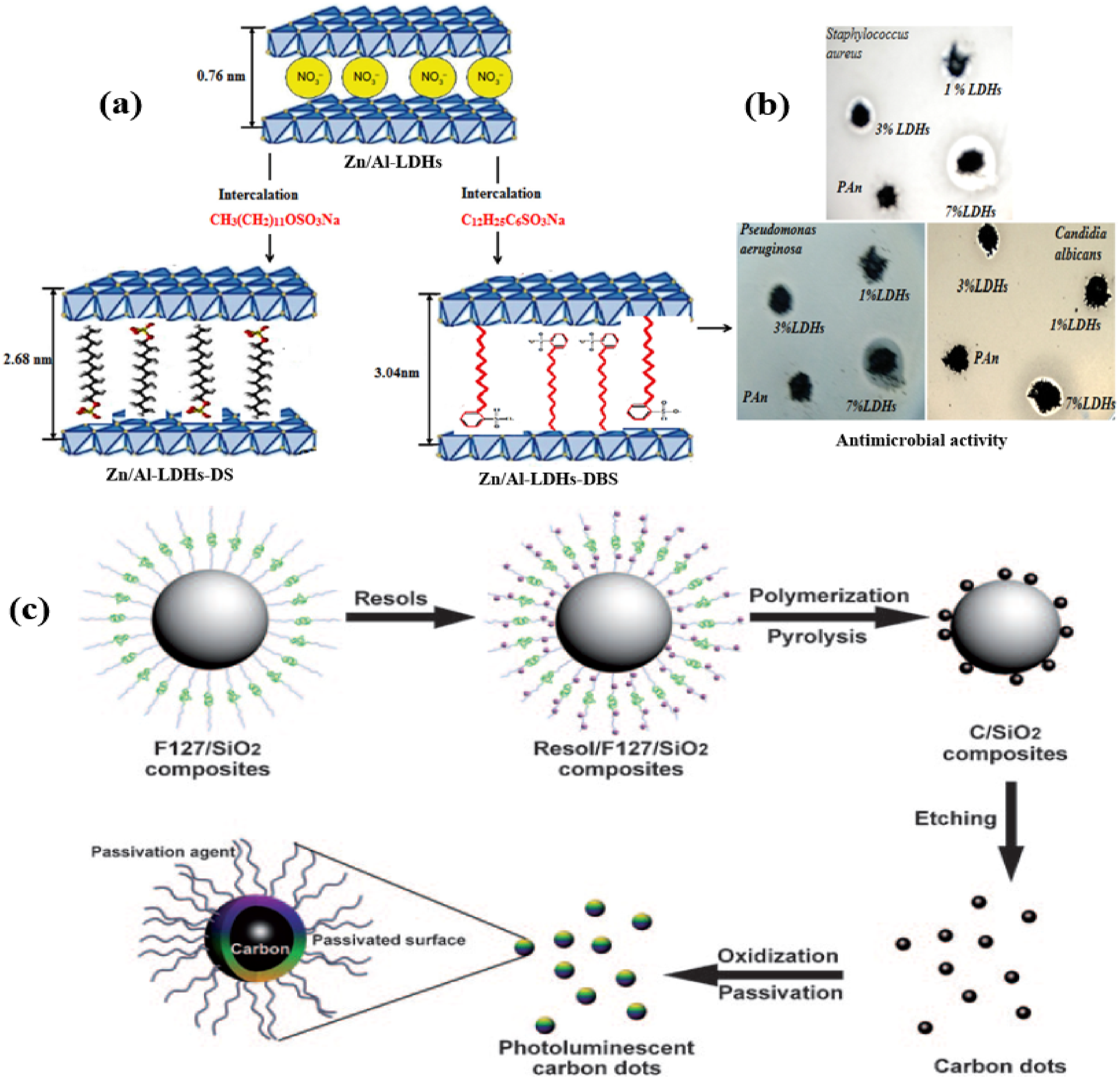
Trends in 2DMs applied in food industries and others
As noted above, 2DMs with their fascinating properties have extremely explored for many applications. But this review summarized current advances regarding the applications of 2DMs (focusing on graphene, GO and C-dots) in smart packaging technologies (such as humidity, gas, and temperature sensors, as well as pH-responsive labels), and in active packaging (like enhancing the mechanical, barrier, and thermal properties, besides antimicrobial activity. Functionalization and biocompatibility of sensors-based 2DMs are key factors for developing of such sensors for monitoring the perishable of packaged foodstuffs including freshness foods during the whole of supply chain. Thus, the intelligent or smart packaging for food safety and quality monitoring can be classified depending on the food types techniques used. In other words, specific sensors-based packaging can detect or adsorb the humidity, gas, or temperature on their surface in the surrounding during food production and storage periods.60,61 This kind of sensors-based interdigital capacitance (IDC) used as transducers, need special design and electrical circuits providing with digital display for quality monitoring in food production area as example.62,63 Whereas, smart packaging films-based pH sensitive are effectively able to monitoring foodstuffs, especially the freshness in a timely manner depending mainly on color-changing film properties over a wide range of pH values. This type of intelligent films mainly based on colorimetric indicators that widely developed in food industry because they can provide readily visible and straightforward information about the quality and safety of the packaged foods to the producers or consumers.64,65 Besides their safety, naturally abundant, renewability, and delivering serviceable health effects. 66 Another advantage regarding these intelligent films, the consumers could expediently differentiate the quality of food without opening the packing. Therefore, this can lead us to describe new insights about the types of sensors-based 2DMs including preparation and applications in food area.
Smart packaging-based humidity/gas sensors
Regarding the global warming, environmental parameters like humid air, temperature and gas are a source of nuisance and have a negative impact on many potential disciplinaries including foodstuffs preservation, pharmaceutical products, agricultural crops, metrological area, and electronic instruments (Figure 5(b)). Besides, their risky as greenhouse gases on ozone layer.
56
Generally, these parameters impact all forms of life-style, including human beings, and are now pressing concerns globally.
5
Accordingly, their control and monitoring are critical in such applications to limit or prevent their risk of short-term harm. Moisture in terms of the relative humidity (RH) and other greenhouses should be detected even at very trace levels by specific equipment. Such equipment, smart sensors have now become the first priority and focus of scientists not only because of their exceptional properties for monitoring the environmental parameters, but for their use in multiple fields.
67
However, each sensor has designated to measure a specific parameter like gas, temperature or humidity separately. On other words, the sensor manufacturing should include a specific sensing material that contributes to render it high sensitive, low hysteresis, biocompatibility, and fast response with affordable cost.
68
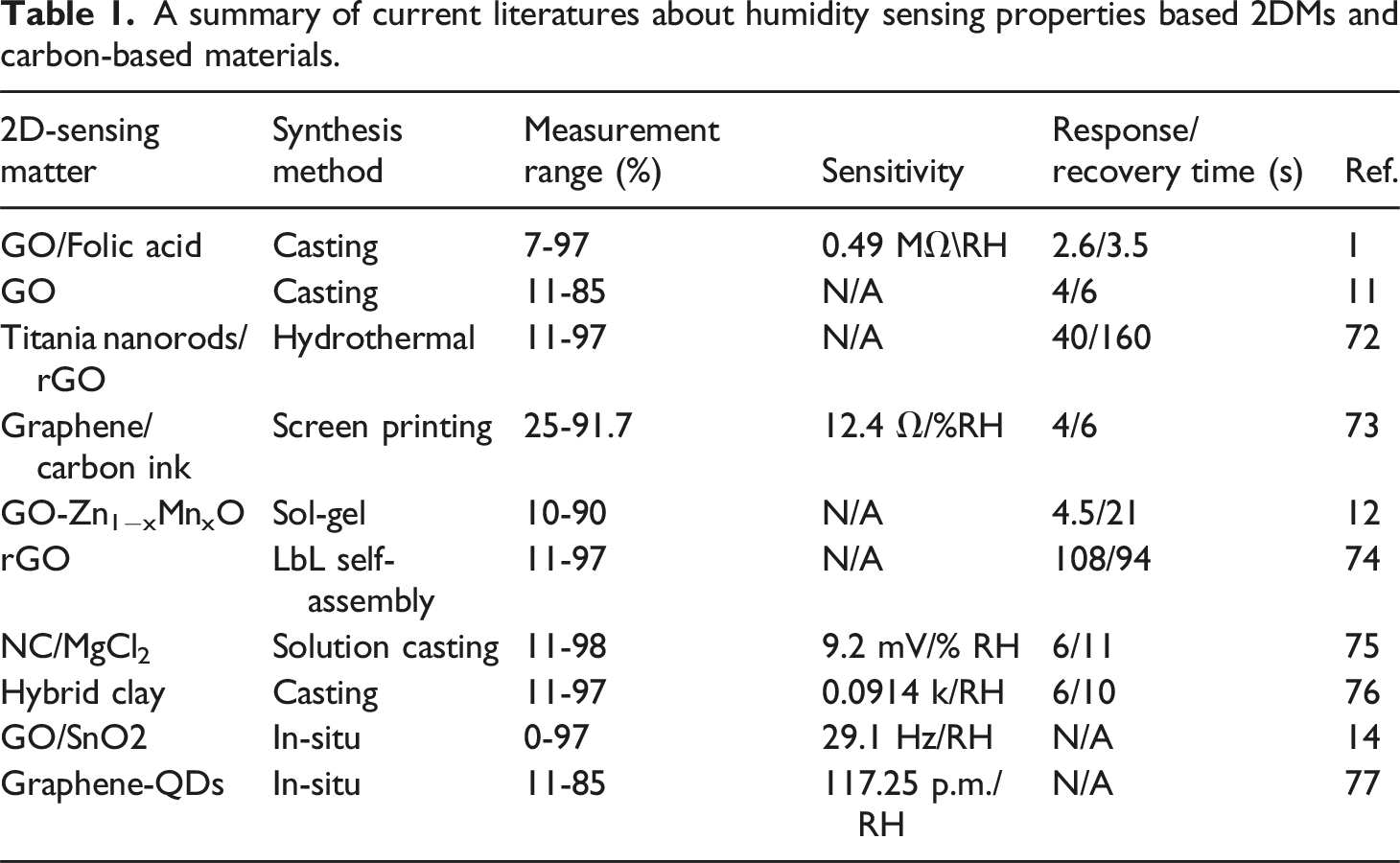
Among the sensing materials, 2DMs-based sensors are considered as favorable candidate for detecting the environmental factors even at trace levels, because they possess attractive properties like easily functionalization, nanoscale, hygroscopic, long-term stability, etc. Thus, wide range studies on sensors-2DMs development for controlling environmental parameters in diverse fields including human health and metrological monitoring can be found in69–71 (Figure 5(b)). By considering all these applications, however, we intended in this review to explore the smart sensors-based diverse forms of graphene/GO embedment in polymer matrices to create ultrafast flexible humidity sensors for food safety and monitoring during their storage. Herein, we epitomize recent literatures about graphene/GO-based humidity sensors detection in a broad range of RH (i.e., 7%–97%) regarding the fabrication techniques or synthesis methods, as showcased in Table 1. It found from the table that the comparative data highlighted that the fabricated humidity sensor based on integrated hybrid GO by hydrophilic FA inside CS/PVA matrix by solvent-casting route demonstrated superior response/recovery times to be 2.6 s and 3.5 s, respectively, compared to other comparable sensors-based humidity regardless the sensor composition and the synthesis techniques
1
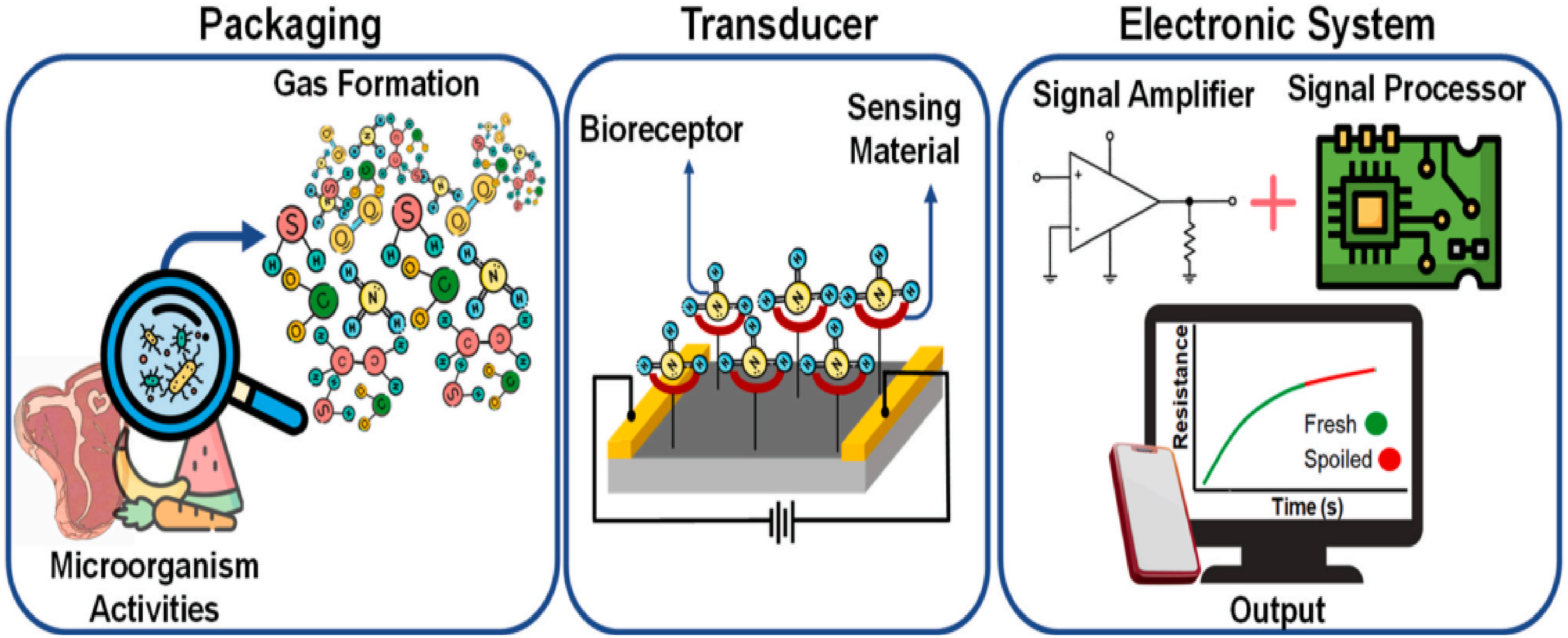
(Figure 5(b)). Likewise, work by Nami et al.
78
reported that gas sensors-based 2DMs considered to be a valuable technique for accurate and safe food quality control in real-time (Figure 6). Thus, the key factors that play a vital role in the enhancement of the sensor response would be interpreted in humidity/gas sensing mechanism. (a) Schematic diagram of humidity sensing test, (b) Humidity sensors applications (adapted from Moustafa et al. 2023 & Guo et al. 2023) Elsevier, 2023. A summary of current literatures about humidity sensing properties based 2DMs and carbon-based materials. Clarification of gas sensing process for foodstuffs quality monitoring (Nami et al., 2024) Elsevier 2024.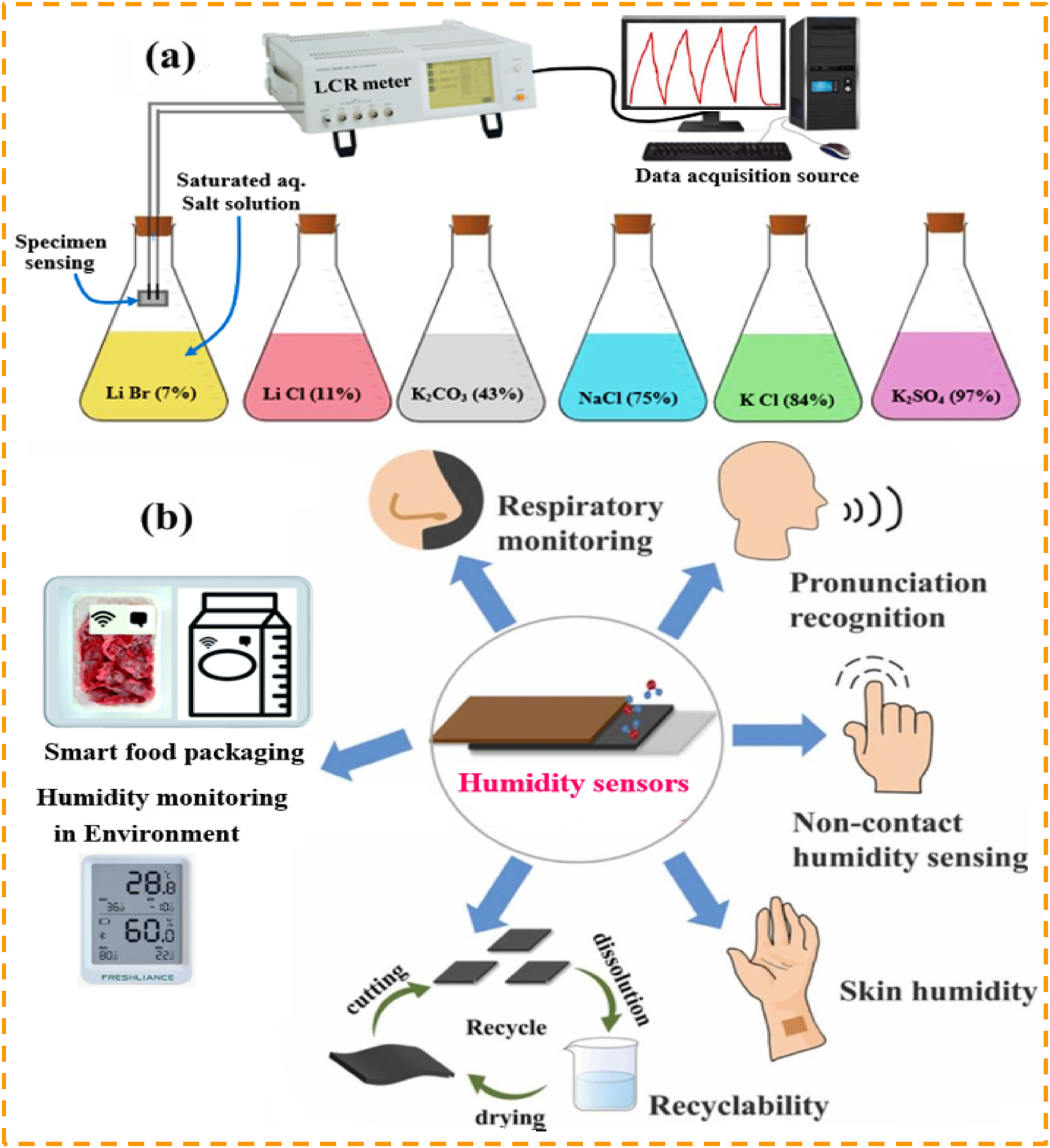
Humidity/gas sensing mechanism
As known, CIS is the one of the most valuable approaches for assessing the humidity sensing mechanism. Hence, any change in resistance complex impedance spectroscopy, CIS) due to humid air is caused by the adsorption of water (H2O) molecules on the surface of sensing material (i.e., GO), and the absorption of H2O molecules between the GO nanolayers. Naik and Krishnaswamy
79
reported that the resistance decreased for adsorption process due to proton-exchange between GO and adsorbed H2O molecules, whereas the resistance largely increased for absorption process due to the increase of interlayer spacing distance of GO in which more bonding between the associated H2O molecules and the functional oxygenated sites in GO layers, leading to the achievement of sensitivity. This outcome confirmed that the functionalization of 2DMs in terms of GO is necessary to promote the sensor response towards humidity, temperature or gas. Meanwhile, that data are consistent with that done by
1
(Table 1). Other works80,81 suggested RH-sensing mechanism-based Grotthus that associated with the hopping of generated protons between adjacent H2O molecules. Where, at low RH value the H2O molecules are physically adsorbed through hydrogen bonding on the surface of sensor. At high RH levels, multiple layers of H2O molecules adsorbed on the surface of the sensing material via its functional sites. Moreover, the extra adsorbed H2O molecules have ionized under the influence of electrostatic field to create hydronium ion (H3O+) which acted as a major charge carrier
82
(Figure 7(a)). At this step, H2O molecules behave such as bulk liquid, thereby more protons generated and move freely between adjacent H2O molecules, thus promoting the sensor response. (a) The suggested humidity sensing mechanism (Ali et al., 2021) MDPI, 2021, (b) Response/recovery times for CS/PVA-GO/FA sensor (Moustafa et al., 2023) Elsevier, 2023.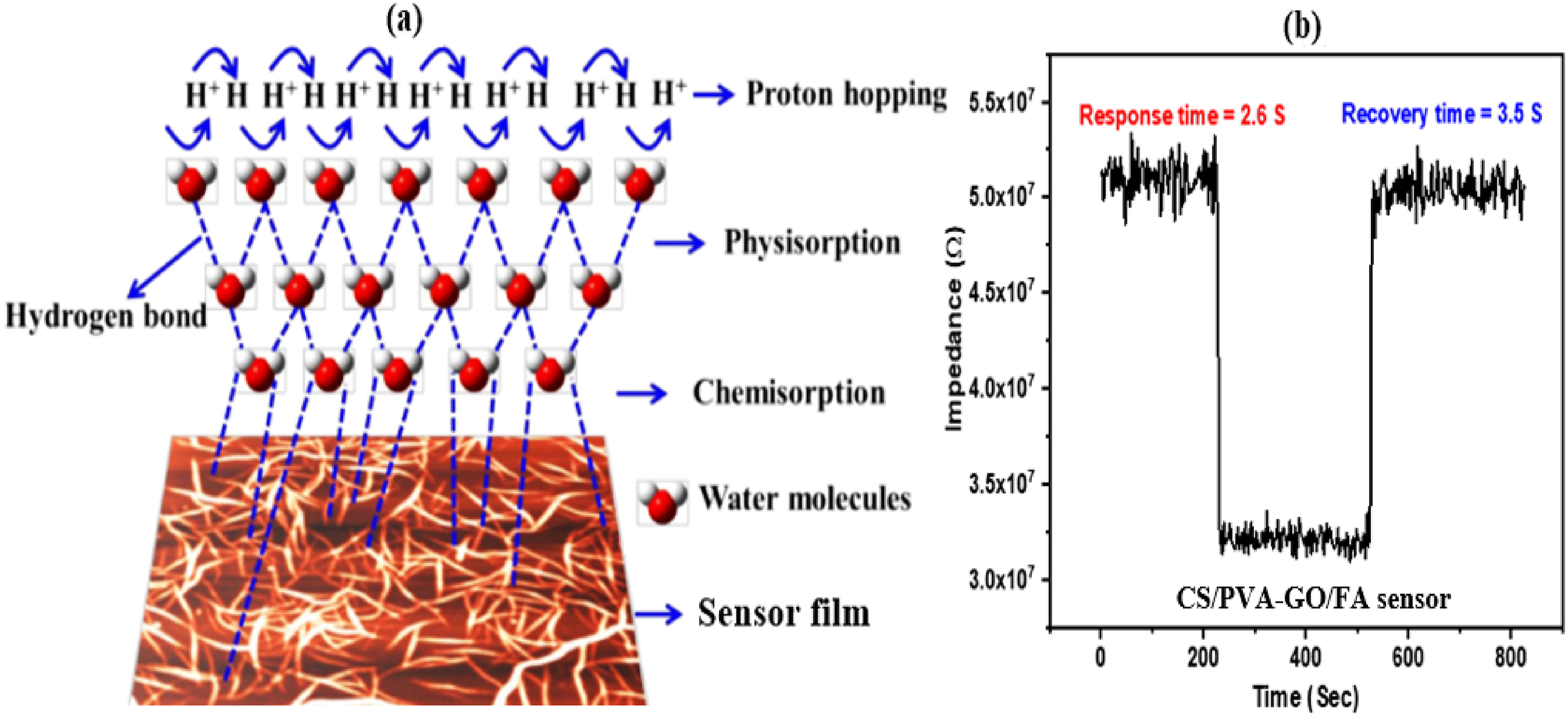
Smart pH-indicators-based sensors
Because of the lack of a fast, simple, and accurate procedure to identify food freshness, foodstuffs might be compromised. To tackle this deficiency, smart tags-based films or pH-indicators have developed to detect the food spoiling without requiring an analysis.
83
These types of indicator films are consisted of two important constituents, namely solid part or substrate and sensitive dye, that are ticklish to pH change based acid or alkaline environment.
84
These types are usually highly preferable in “chemical barcodes-based color”. Otherwise, the dyes can be integrated inside the polymer matrix using solvent-casting avenue to create a high-sensitive indicator film.
85
All of them can detect the color changes based on the chemical reactions related to microbial growth (i.e. either acid or alkaline environment) during food damage.86,87 Numerous studies88,89 have conducted on different dyes with polymer matrices to produce visual smart pH-indicator for visual monitoring the real-time changes of the food freshness during their storage or consumption. Among chemosynthetic dyes, methyl red, bromophenol, and bromocresol green (BCG). BCG dye as example is often used as a pH-sensitive and has a pH-value ranging from below 3.8 (yellow) to 5.4 (blue).
84
Kuswandi et al.
90
have developed a new colorimetric film label-based polyaniline for detecting the fish spoilage. However, owing to the safety and eco-friendly of the indicators and solid matrices, most scholars64,91,92 focused on dyes extracted from environment friendly resources as an alternative of chemosynthetic dyes, which could be migrated into foods, causing a carcinogenicity. In some cases, certain dyes-based natural plant extraction have used as a microbiological quality monitoring for crude milk depending on the changing color.
93
In reality, however, these are a need to utilize a reinforcing material with dye inside the polymer matrix to render the smart indicator-based film high durable under any severe conditions with improving the mechanical properties and prolonging the shelf-life period of the indicator film. Work by Ezati et al. developed a smart pH-indicator strips from C-dots in presence tangerine peel (Tan) and resazurin (Res) as a sensitive dye for controlling the real-time of shrimp freshness spoilage (Figure 8). They found that the sensitivity of indicator film-based C-dots incorporated with Tan/Res remarkably improved and the color indicator film changed from yellow to brown during the shrimp spoilage time within 24 h (Figure 8). Moreover, active and smart packaging films have fabricated from zinc-doped C-dots with natural anthocyanin extracted from purple Kohlrabi lacing.
55
Additionally, Song et al.
94
developed a ratiormetric fluorescence amine sensor-based C-QDs for controlling of food freshness. The obtained outcomes presented a significant achievement regarding the reduction of foods degradability with increasing their shelf-life extension.
95
Consequently, it can be concluded that these types of indicator films-based 2DMs and natural colorants will offer wide directions for ensuring safety and prolonging shelf lives to meet the quickening demand for packaging food products. (a) pH ranges of tangerine (Tan) and resazurin (Res) natural dyes, (b) Tan/Res-C-dots interaction under NH3, (c) Photograph of shrimp fresh sample monitoring by Tan/Res-C-dots indicator (Ezati et al., 2023) Elsevier, 2023.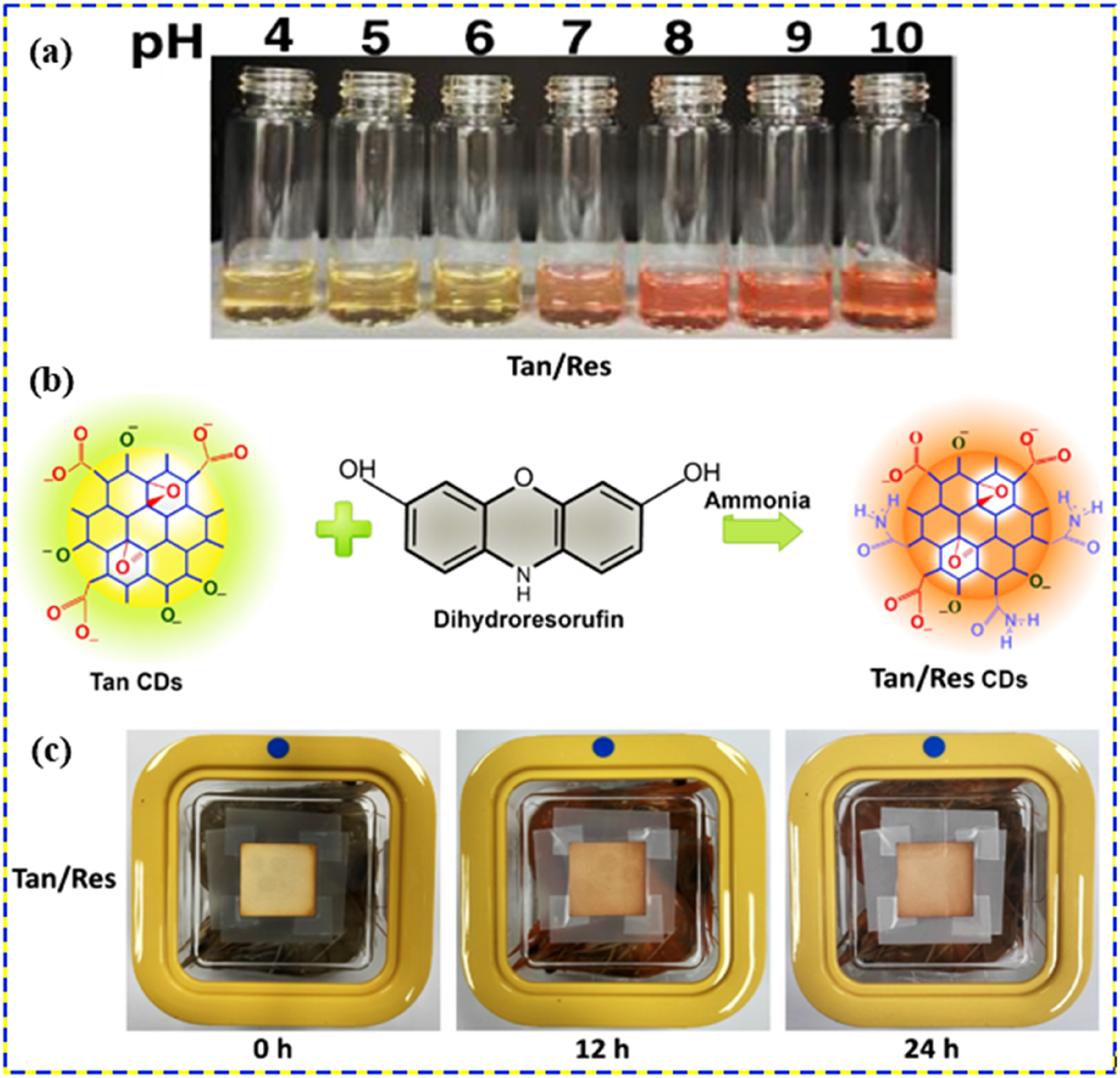
Sustainability of 2DMs in agricultural area
Based on functionalized or doped of 2DMs by bio-compounds or metal oxides, 2DMs could be utilized as a natural fertilizer or compost in terms of an efficacious carrier for releasing of folic acid, cupper, or zinc that are considered to be bio-micronutrients for many types of crops, comparable with conventional compost-based chemicals.96,97 Specific studies have conducted on 2DMs for their use as nano-sprays, injections, or in hydrogel forms for plants and crops. For instance, Park et al.
98
developed a nano-sprays-based GO nanoplatelets for accelerating watermelon plants growth, besides increasing their survival. In,
96
GO hybridized by ZnSO4/CuSO4 salts to produce slow release solid bio-compost-based GO-Zn/GO-Cu in beads forms in order to maximize the crop productivity with controlling fungal diseases (Figure 9). Thereby minimizing environmental pollution and human health with cost-effective. The authors also highlighted that the exciting enhancements for use hybrid GO as a slow-release bio-composts were due to their unique properties. Whereas, Song et al.
99
developed a pesticide delivery-based Ti3C2 (2D-MXenes) as an agro-chemical agent for controlling the pests during the crop growth. Moreover, cytotoxicity of certain nanomaterials like graphene and CuO NPs to different crops have also studied in.100,101 Consequently, the obtained outcomes generally reveal potential possibilities for 2DMs combined with bio-materials that could contribute to augment the control on their release to the soil and water. Schematic showing hybrid GO as a slow release bio-micronutrients compost for plants (Kabiri et al., 2017) American Chemical Society, 2017.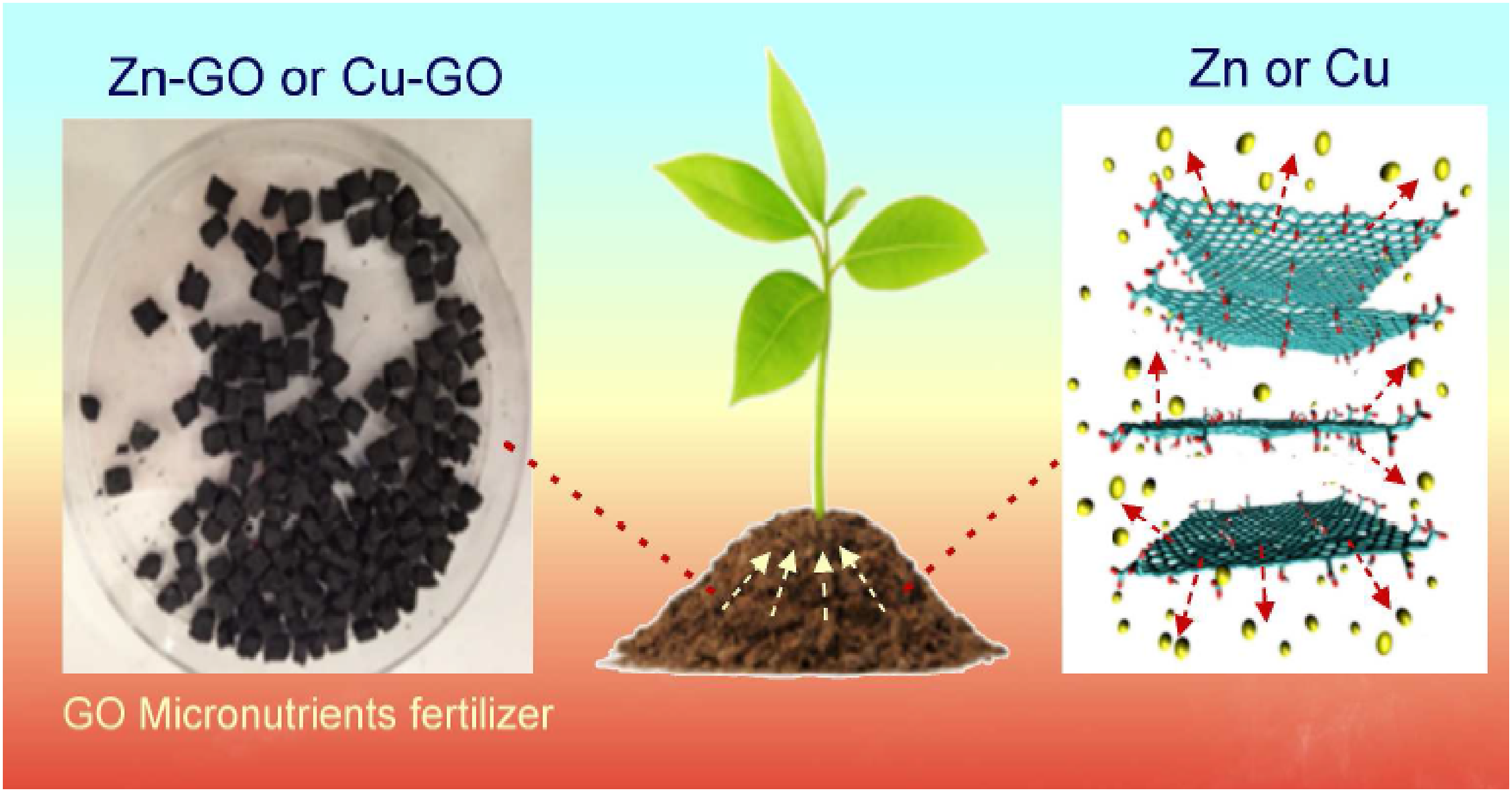
2DMs in water remediation and biomedical sectors
Doubtless, huge progress has made in 2DMs in diverse areas from their isolation in 2004. Among these areas, they illustrated great potential for high-efficient bio-nano-adsorbents for heavy metal removal from various water resources.26,102,103 For instance, GO/CS nanocomposite has used as absorbent for removal of Cu+2, Cd+2 and Pd+2 from polluted water with absorption capacity of ∼32.3-60.7 mg/g. 104 Shahawy et al. 105 prepared a removal absorbent-based CS/GO/Ag-NPs for eliminating Cr+6 and Fe+3 from wastewater, they found that the removal efficiency was of 88.8% and 92.9%, respectively. However, fabricating superior removal bio-absorbent-based magnetic characteristics and active spots can promptly be able to capture lots of heavy metals from contaminated water, even at trace concentrations. Following this, Moustafa et al. 25 developed a high-efficient bio-nanomembrane from hybrid magnetic GO by Ni-ferrite (GO-Ni-Fe3O4) integrated inside PVA matrix for eliminating lots of heavy metals (i.e., 13 metal ions). They found that the removal efficiency of the nanomembrane reached 87%–98% lying on the type of metal ion. This achievement was due to the challenges between the chemisorption (active spots of GO) and physisorption (magnetic Ni-ferrite) mechanisms, resulting in promoting the uptake of several metals on the absorbent surface.
Another promising application for 2DMs, since they also have a big contribution as novel technology solutions in biomedical applications like drug delivery, biosensors for digital healthcare, bioelectronic diagnostic/or therapeutic devices, sensors-based brain-computer interfaces, etc.106–108 Fahad et al. 109 have fabricated a new drug delivery from 2D-zinc carbide for nitrosourea anticancer therapy. Work by Tan et al. 110 evolved photo-electrochemical biosensors-based 2D carbon materials for diagnosing cancer at earlier stages. On the other hand, regarding the toxicity of 2DMs to be used as carrier for drug delivery or other safe applications, some toxicological researches of these materials also highlighted in 111 .
Future insights and conclusions
Since the successful isolation of graphene in 2004, a variety of 2DMs have discovered as noted previously. Consequently, a bright future insight may be anticipated for use 2DMs in numerous application prospects including smart food packaging, agro-industries, water remediation, and biomedicines because of their fascinating properties. Among the numerous attractive and unique properties of 2DMs, the functionalization of 2DMs by bio-compounds played a pivoted role in processing, biocompatibility, consolidation, and performance for their promising applications. It found that the functionalized GO by FA has boosted RH sensor response to be 2.6 s with recovery time of 3.5 s comparable with unhybridized GO (i.e., 4/6 s). Since the hybridized GO contributed to achieve exfoliation structure inside the polymer matrices, hence improving the sensor conductivity. Regarding the advanced sensing technologies, the use of intelligent packaging-based 2DMs in food industries will likely become more widespread as more technologies make their route to the global market, innovative packaging-based films in active/intelligent systems will become more prevalent to ensure the produce a better and safe foods.
pH-sensitive tags in terms of smart indicator packaging significantly provide novel innovations and amazing opportunities for detecting and monitoring the damage, freshness, and the quality of packaged foodstuffs during the whole supply chain without requiring an analysis. Because they are able to give the manufacturer or consumer a prompt message-based color changing about the food deterioration, thanks to these novel technologies. It also noted that 2DMs have manifested tremendous potential in improving plant growth, crop yield (via slow-release bio-micronutrients compost), and water purification that could open the avenues in offering technologies for ensuring food quality. Another major feature of 2DMs-based innovations is their use in artificial intelligence and biosensors for diagnosing chronic diseases like cancer at earlier stages in medical sector.
Overall, the 2DMs hold a significant role in promoting food sustainability goals for outlook generations to be more safely with greener environment. Besides, they are highly recommended as a sensing material in smart/active packaging because of their exceptional behaviors. However, the practical 2DMs synthesis in terms of large-scale production and the meticulous evaluation for their potential toxicity hazards are still under intense studies from academic scientists for supporting the positive prospective of the benign applications of 2DMs in intelligent packaging, agricultural, water purification, and biomedicine. Thus, it could affect the food safety and their export because it fails to comply with European Union (EU) legislations.
Footnotes
Declaration of conflicting interests
The author(s) declared no potential conflicts of interest with respect to the research, authorship, and/or publication of this article.
Funding
The author(s) received no financial support for the research, authorship, and/or publication of this article.
