



Abstract
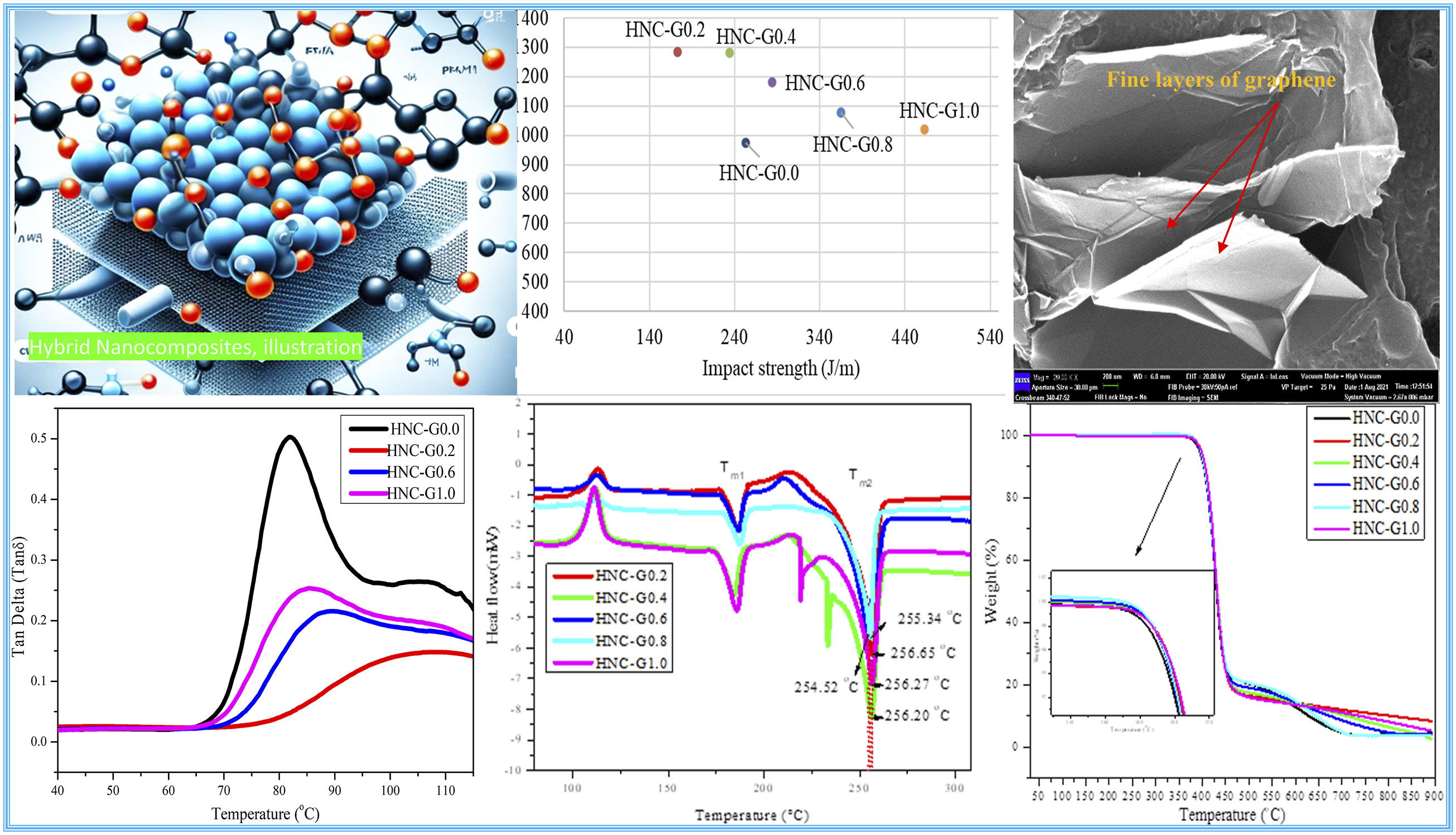
This research delves into the novel development of hybrid nanocomposites using recycled polyethylene terephthalate (rPET)/polyamide (PA11) with sepiolite, enhanced by the integration of Graphene Nanoplatelets (GNP). Five different formulations were produced using co-rotating twin-screw extrusion and injection moulding techniques. The optimal blend, which includes equal amounts of sepiolite and graphene nanoplatelets (phr, 1 part per hundred resin each), exhibited a tensile strength of 54.5 MPa, representing an increase in tensile strength by 46.5% and an increase in percent strain by 59% as the GNP content increased from 0.2 to 1 phr, replacing sepiolite. Young’s modulus of hybrid nanocomposites varied between 1020 and 1285 MPa, indicating a significant enhancement. Flexural strength in the best-performing hybrid nanocomposite containing 1 phr of sepiolite and 1 phr of GNP (HNC-G1.0) increased by 61.65% to 76.46 MPa from 47.3 MPa (HNC-G0.0). In contrast, its flexural modulus reached 2668 MPa from HNC-G0.0 (1730 MPa), demonstrating substantial improvements. The impact strength also showed a notable 83% rise from HNC-G0.0 (252.97 J/m) to 463.18 J/m (HNC-G1.0). Despite these mechanical enhancements, Thermo Gravimetric Analysis (TGA) demonstrated the thermal stability of the nanocomposites. At the same time, Differential Scanning Calorimetry (DSC) confirmed that the melting temperature remained stable, ensuring consistent processing conditions. This innovative research paves the way for advanced applications of rPET, particularly in the automotive industry. It marks a significant advancement in polymer science, promoting sustainable solutions and high-performance hybrid nanocomposites.
Keywords
Introduction
Polymer nano and hybrid nanocomposites are characterized by incorporating organic or inorganic fillers, uniformly dispersed at the nanoscale (typically within the 10 to 100 nm range in at least one dimension). These nanofillers can include particles, fibres, layered materials, or clusters embedded in various polymers through physical mixing or chemical polymerization processes. 1 Due to the enhanced properties provided by the fillers, the resulting composites find extensive applications across diverse sectors. Notably, they are increasingly utilized in aerospace, automotive, construction (specifically cement), electronics, medical devices, consumer goods, and packaging. 2 Various micro and nanofillers, such as graphene, carbon nanotubes (CNTs), montmorillonite (MMT), nanoclays, organic fillers, titanium oxide (TiO2), silicon dioxide (SiO2) and sepiolite, have been successfully incorporated into polymer matrices like high-density polyethylene (HDPE), polyethylene terephthalate (PET), polystyrene (PS), polypropylene (PP), polycarbonate (PC), and polyamide 6 (PA6). Incorporating these fillers has been thoroughly researched and demonstrated to increase the polymers’ performance.3–6 The latest development in polymer and polymer blends is the revival of recycled-based and nanocomposites, challenging traditional resins such as epoxies and polyurethanes in terms of cost and performance. The European Plastic Division’s report demonstrates that a substantial proportion, about 80%, of plastics originate from packaging sources, and PET cover a significant portion of this segment. 7 The shift to eco-friendly materials indicates a dynamic evolution and innovations in polymer research development.
Thermoplastics, which are chosen instead of thermosets based on recyclability and thermoforming productivity, pose difficulty when recycling polyethylene terephthalate in the thermoplastic state with such issues as thermomechanical degradation and hydrolytic chain scission during polymer processing. Recycling can result in a reduction of melt viscosity and mean molecular weight, in addition to reducing PET’s thermal and mechanical performance. 8 Addressing the challenges of PET recycling, strategies like blending with neat PET, incorporating fillers or other additives, or employing an assortment of these methods were explored.4,9,10 The research investigated by Shahrajabian et al. focused on an innovative nanocomposite. The material combined recycled polyethylene terephthalate (rPET) with high-density polyethylene (HDPE), maleic anhydride polyethylene (MAPE), and alumina, creating a unique blend that they referred to as rPET/HDPE/MAPE/alumina, 11 achieved a peak tensile strength of 33.5 MPa and succeeded a strain percentage of 5%. However, the tensile strength fell short for several automotive applications, leading to further investigations into blends of PET and rPET with polyamide 6 (PA6).12,13 The challenges with polyamide 6 (PA6), such as its high moisture absorption, limited impact strength, and hydrophilic nature, contrast with the characteristics of polyamide 11 (PA11), which lack these drawbacks. The longer carbon-carbon chains in PA11, as compared to PA6, contribute to its superior properties. As a result, the combination of recycled PET with PA11 has garnered attention as a promising approach to mitigate the degradation issues commonly encountered in recycled PET.
Blends and nanocomposites of rPET/PA11 were developed, with notable efforts by Khan and his team, who utilized Joncryl® as a compatibilizer and sepiolite nanofillers.1,14,15 Despite these advancements, the mechanical properties of sepiolite nanocomposites still fell short for numerous applications, indicating a need for further enhancement. To optimise the balanced mechanical, thermomechanical, and thermal properties in nanocomposites, a novel approach was undertaken by partially substituting sepiolite with graphene. This innovative strategy was driven by graphene’s extraordinary characteristics. As elucidated by researchers, graphene is an allotrope of carbon in its two-dimensional hexagonal lattice structure commercially available in the form of Graphene Nanoplatelets (GNPs), assertion elastic properties, and a breaking strength that is 110 times stronger than steel, significantly enhancing mechanical, thermal, and electrical properties. 16 This research is the first to combine sepiolite and GNP in rPET/PA11 matrices, attaining unique synergistic effects that significantly enhanced mechanical properties. Furthermore, this research optimized the blended ratios of rPET, PA11, sepiolite, and GNP to reach an optimal balance of mechanical and thermal properties, adding a new dimension to existing knowledge. Besides using recycled PET, it contributes to the rise of work on sustainable materials, addressing environmental concerns linked with plastic waste. This novel approach to managing hybrid nanocomposites by incorporating hybrid nanofillers graphene with sepiolite is aimed to push the boundaries of research and innovations and open new ways of polymer recycling and hybrid nanocomposites.
This research marks a significant breakthrough in polymer science with the debut of rPET/PA11 hybrid nanocomposites, innovatively integrated with a sepiolite/graphene hybrid filler. The current research represents a significant development in polymer science, presenting rPET/PA11-based hybrid nanocomposites incorporated with a sepiolite/graphene hybrid filler for the first time. These formulations robustly enhance the mechanical properties of the thermoplastic nanocomposites while preserving the constancy of thermal properties, which is critical for many applications. The study assesses mechanical properties such as flexural and tensile strength, Izod impact strength and Young’s modulus. In analyzing the thermomechanical behaviour, the research utilized a Dynamic Mechanical Analyser (DMA) to assess the storage and loss modulus and the tan delta, providing a wide-ranging understanding regarding the response of materials. The thermal properties of this ground-breaking research were explored using DSC and TGA techniques. Furthermore, the thorough characterization via Fourier-transform infrared spectroscopy and morphological analyses is also presented in the work. Overall, this work outlines a significant breakthrough in thermoplastic polymer hybrid nanocomposites, presenting a novel benchmark for material development with very bright prospects for elaborating novel applications within numerous industries.
Experiments and procedures
Materials and method
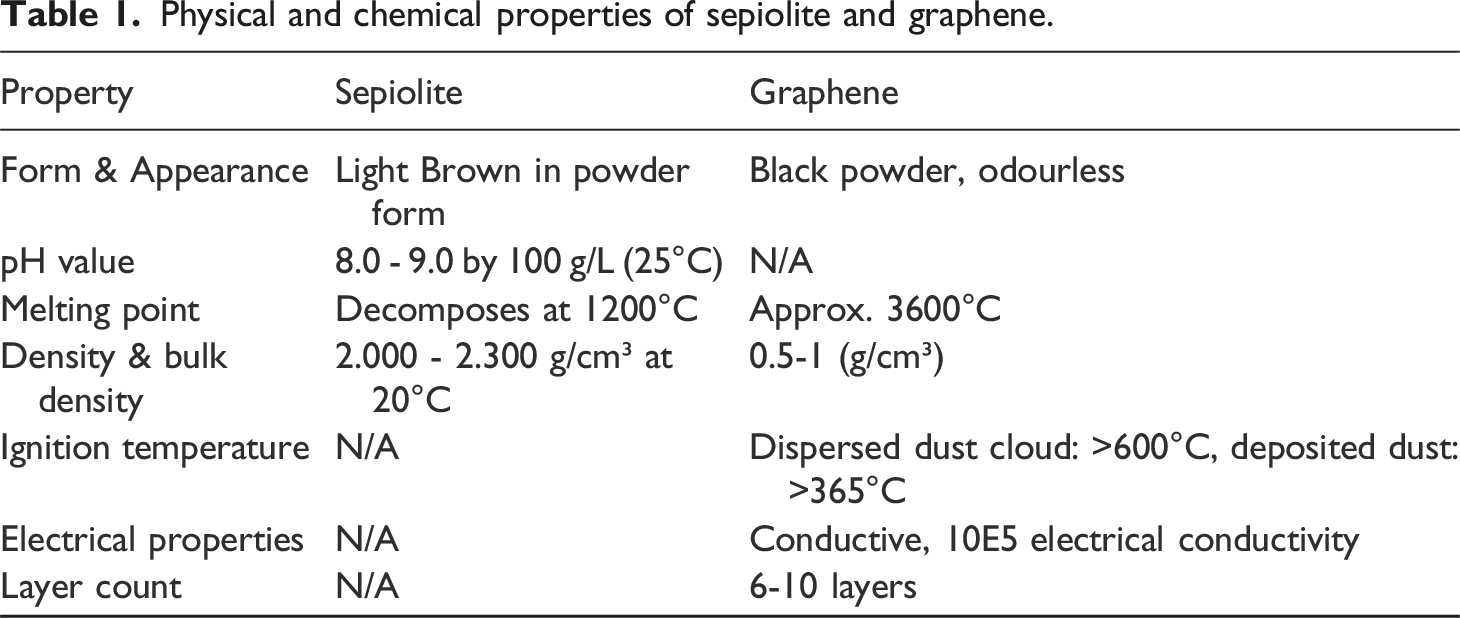
Physical and chemical properties of sepiolite and graphene.
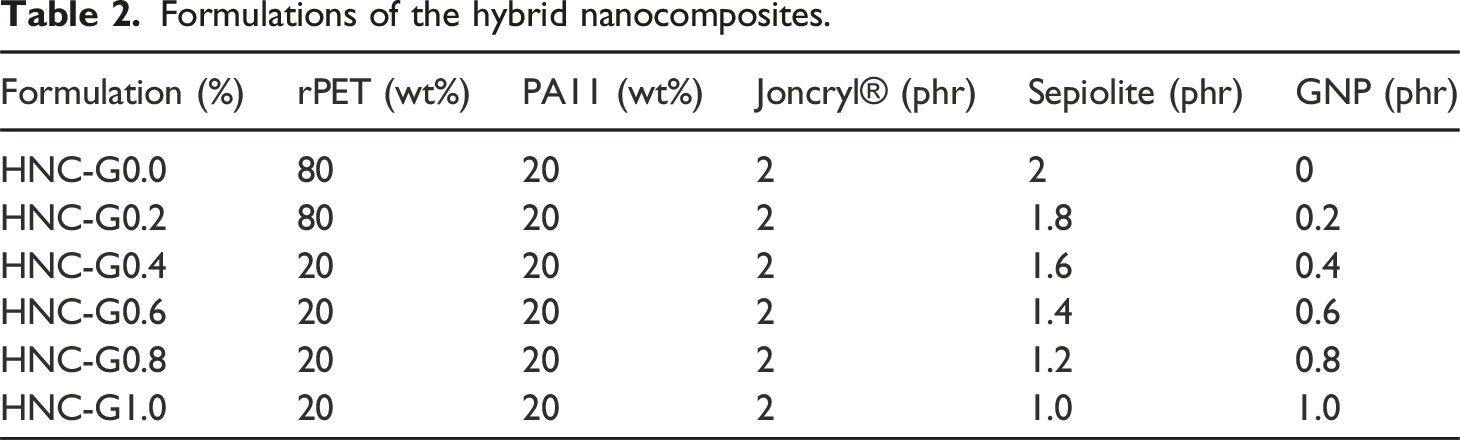
Formulations of the hybrid nanocomposites.
Testing procedures
We assessed the tensile strength of hybrid nanocomposites in line with the ASTM D-638 standard. This involved applying a pre-load of 0.01 MPa and testing at a 10 mm/min speed. For the mechanical properties evaluation, including both tensile and flexural tests, we used the Zwick/Roell Z020 universal testing machine. Flexural tests were conducted according to the ASTM D790 standard, with a 1 mm/min cross-head speed and a pre-load of 0.1 MPa. We used a 20 kN load cell for both tests, and the flexural samples were sized at 127 mm by 12.3 mm by 5 mm. Impact resistance was tested using the Zwick Roell/HIT25P machine, set to 11 joules, following the ASTM D256-10 standard. For thermal analysis, we employed DSC using a Perkin-Elmer instrument to observe glass transition (Tg) and melting temperatures (Tm) in an inert nitrogen atmosphere. The heating rate was set at 10°C/min. Furthermore, we analyzed thermal stability through TGA using a Perkin TGA 7 instrument. Here, samples were heated from 30°C to 800°C at a rate of 10°C/min under a nitrogen flow of 50 mL/min, allowing us to determine the onset and maximum decomposition temperatures (Tmax). The interaction of polymer and fillers was evaluated through Fourier transformation Infrared (FTIR). Perkin Elmer 1600 spectrometer was utilized with the attenuated total reflectance (ATR) technique. The morphology was assessed using Carl Zeiss Microscopy (GmbH 73,447) Oberkochen, Germany, Field Emission Scanning Electron Microscopy (FESEM). The aperture size of 20 µm to 200 nm was used with a magnification range of 20KX to 50KX, an energy level of 20 kV, and a high vacuum of 6.04-006 mbar. The Quorum sputter coater (Q150 R) was used for platinum coating before FESEM.
Findings and analysis
FTIR analysis
The interaction and structural changes in hybrid nanocomposites with varying amounts of GNP were analyzed using Fourier-transform infrared (FTIR) Spectroscopy, as described in Figure 1. The figure illustrates the FTIR spectra for hybrid nanocomposites containing different concentrations of GNP, specifically 0, 0.2, 0.4, 0.6, 0.8, and 1 parts per hundred resin (phr). The spectra revealed absorption signals in the 3281 to 3405 cm−1 range, representing the presence of -NH and OH groups, particularly in the HNC-G0.0 nanocomposites. These nanocomposites displayed less intense and broader peaks when compared to those without GNP (containing 2 phr sepiolite). A notable observation was the diminishing peak intensity with increasing GNP content and a reduction in sepiolite content in the hybrid nanocomposites. This is attributed to the higher silanol and hydroxyl content in sepiolite, which intensifies the absorbance around 3281 cm−1. Graphene, on the other hand, is believed to enhance chain extension significantly compared to sepiolite. Consequently, the intensity of the peaks in the 3281 to 3405 cm−1 range for the hybrid nanocomposites was reduced, indicating the involvement of OH groups in additional bonding mechanisms. This trend of enhanced interaction coinciding with peak reduction is supported by previous research findings.
14
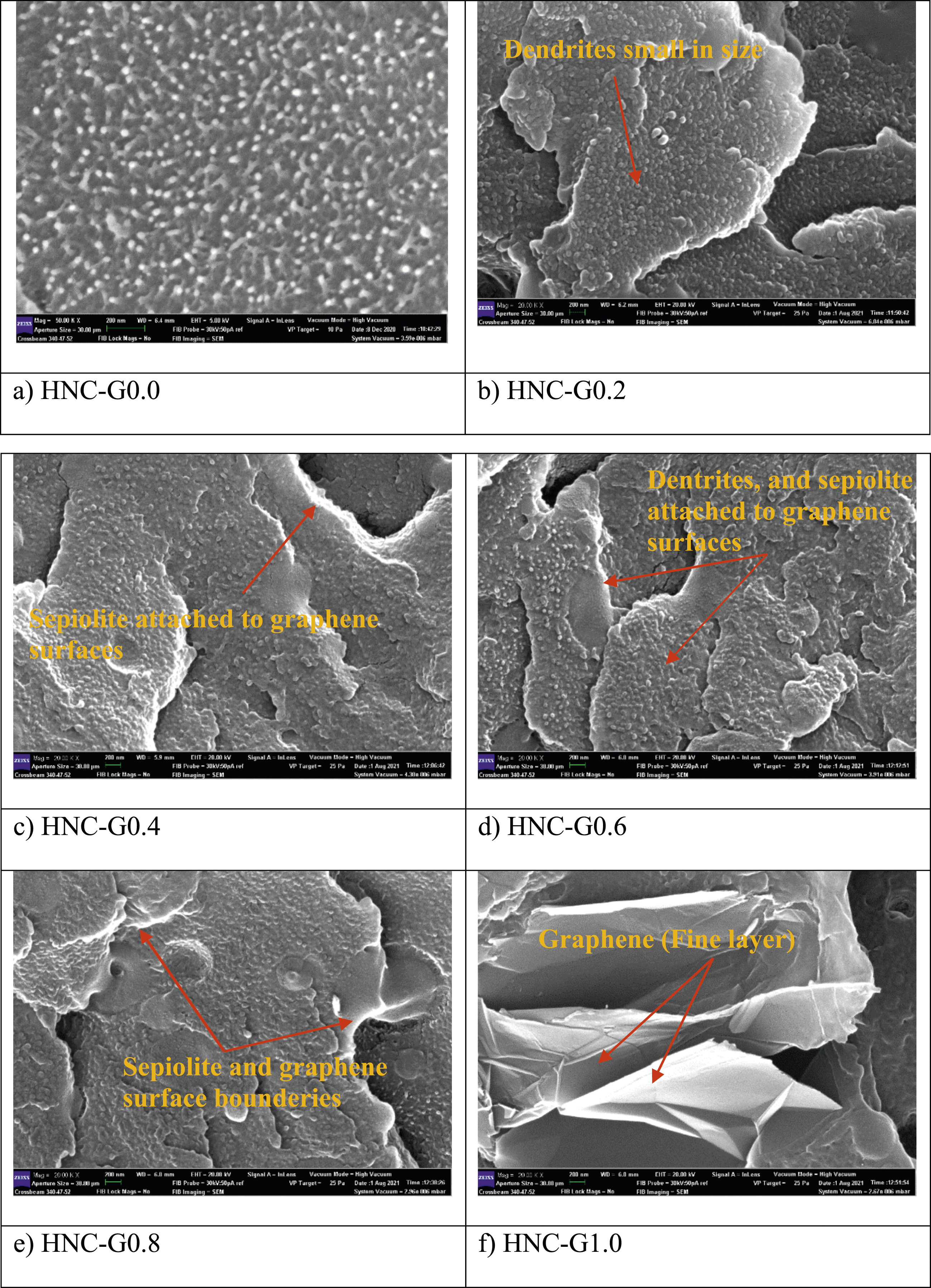
The GNP nanofillers are believed to exhibit strong interaction with the compatibilized nanocomposites, attributed to their similar polarities. The admirable distribution and dispersion of sepiolite/GNP in the hybrid nanocomposites, as shown in Figure 2, further corroborate the robust interaction among all components in the hybrid nanocomposites. However, it’s important to note that this interaction is not readily discernible in the FTIR spectra due to the overlapping of NH and OH groups. The reduction in peak intensity with increasing GNP content suggests that the OH groups are participating in additional bonding mechanisms with GNP, leading to enhanced interfacial adhesion and better dispersion within the polymer matrix. This interaction is crucial for the observed improvements in the mechanical properties of the hybrid nanocomposites. Infrared insights: Analyzing hybrid nanocomposites with FTIR. FESEM micrographs a) HNC-G0.0, b) HNC-G0.2, c) HNC-G0.4, d) HNC-G0.6, e) HNC-G0.8, f) HNC-G1.0.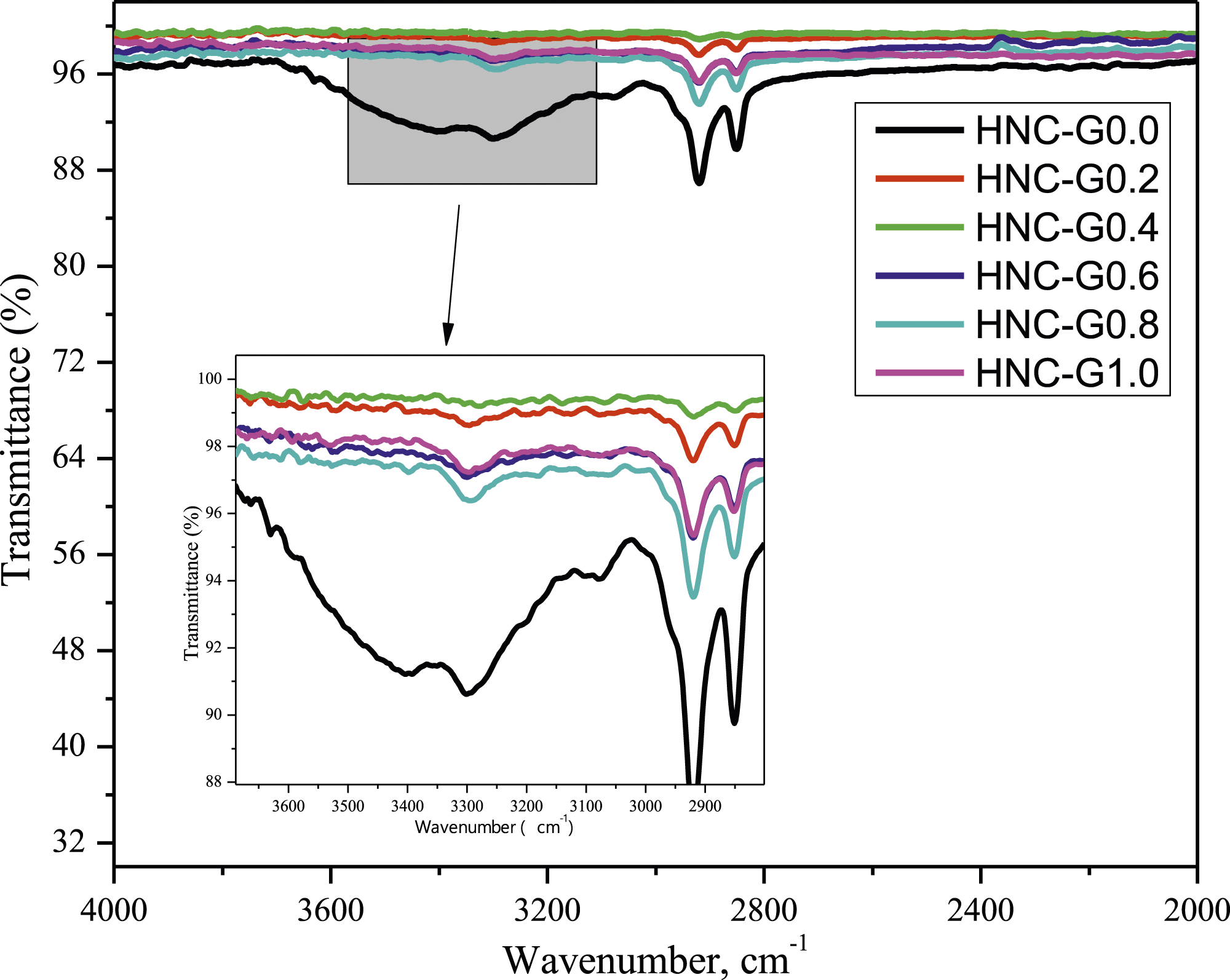
Morphological analysis of hybrid nanocomposites
The structure of hybrid nanocomposites, crucial for the mechanical strength, was examined using FESEM. The analysis specifically focused on the morphology of tensile fractured surfaces of composites containing varying amounts of graphene, ranging from 0.2 to 1 parts per hundred resin (phr). Figure 2 presents micrographs of the hybrid nanocomposites composed of an 80:20 weight percent ratio of recycled polyethylene terephthalate (rPET) and Polyamide 11 (PA11), with 2 phr of Joncryl® ADR 4468 and 2 phr of sepiolite, which is partially substituted by Graphene Nano Platelets (GNP). The micrographs, captured at an imposing magnification of 20,000x, reveal fascinating details about the hybrid nanocomposites. We observed that the sepiolite particles were uniformly distributed and closely adhered to the GNP within the continuous rPET/PA11/joncryl® matrix. This uniform dispersion indicates a strong interaction and adhesion between the matrix and the fillers. Precisely, in the HNC-G0.0 nanocomposite, which contains 2 phr of sepiolite, the dispersion was particularly even, as depicted in Figure 2(a). However, the introduction of graphene brought about a noticeable transformation in the morphology of the hybrid nanocomposites. Figures 2(b)-(f) showcase this change, highlighting the structure of graphene at 20KX magnification. In these images, we can see the sepiolite particles well-distributed with the graphene’s surface. This uniform dispersion of sepiolite and the evident strong interfacial adhesion between the graphene and the matrix are clearly observable in Figures 2(b)-(e).
The results showed that substituting sepiolite with GNP, up to a level of 1 phr, enhances various mechanical properties of the nanocomposites, including tensile, flexural, and impact strength. However, it was noticed that when the sepiolite content is higher and GNP content lower, there’s a tendency for agglomeration, resembling dendritic structures (as seen in Figure 2(b)-(c)). This can lead to increased brittleness in the hybrid nanocomposites. Consequently, the percentage of tensile strain and impact strength in these polymer hybrid nanocomposites diminishes, primarily due to inefficient load transfer between the matrix and the hybrid nanofiller. Interestingly, as the sepiolite is increasingly replaced by GNP, the structure of the composites becomes finer. Remarkably, at 1 phr of GNP, precise and finely layered graphene within the matrix was observed. This composition resulted in the hybrid composite being both stiffer and tougher. The results of tensile strength, flexural strength, and impact toughness support this conclusion. Further analysis, especially in Figure 2(f), shows that a blend of 1 phr sepiolite and 1 phr GNP achieves a balanced distribution, effectively allowing the hybrid composite to integrate both sepiolite and graphene at higher contents.
Tensile analysis
Figure 3 displays the correlation between tensile strength and tensile strain percentage across various hybrid nanocomposites. We observed a notable trend: as the GNP concentration increased, starting particularly from 0.6 phr, tensile strength had a corresponding rise. For GNP contents below 0.6 phr, the load transfer during the tensile tests appeared less compelling. This could be linked to the previously mentioned clustering of sepiolite on the surface of GNP, as detailed in the morphology analysis (refer to Figure 2(b)-(c)). Remarkably, the tensile strength significantly improved with the increase in GNP content. The measured strengths for the hybrid nanocomposites with different GNP formulations, specifically HNC-G0.2, HNC-G0.4, HNC-G0.6, HNC-G0.8, and HNC-G1.0 were 37.16 MPa, 39.16 MPa, 43.7 MPa, 46.78 MPa, and 54.5 MPa, respectively. These results underscore the effectiveness of GNP as a reinforcing nanofiller in various polymer matrices.
17
Tensile strength and strain (%) of hybrid nanocomposites.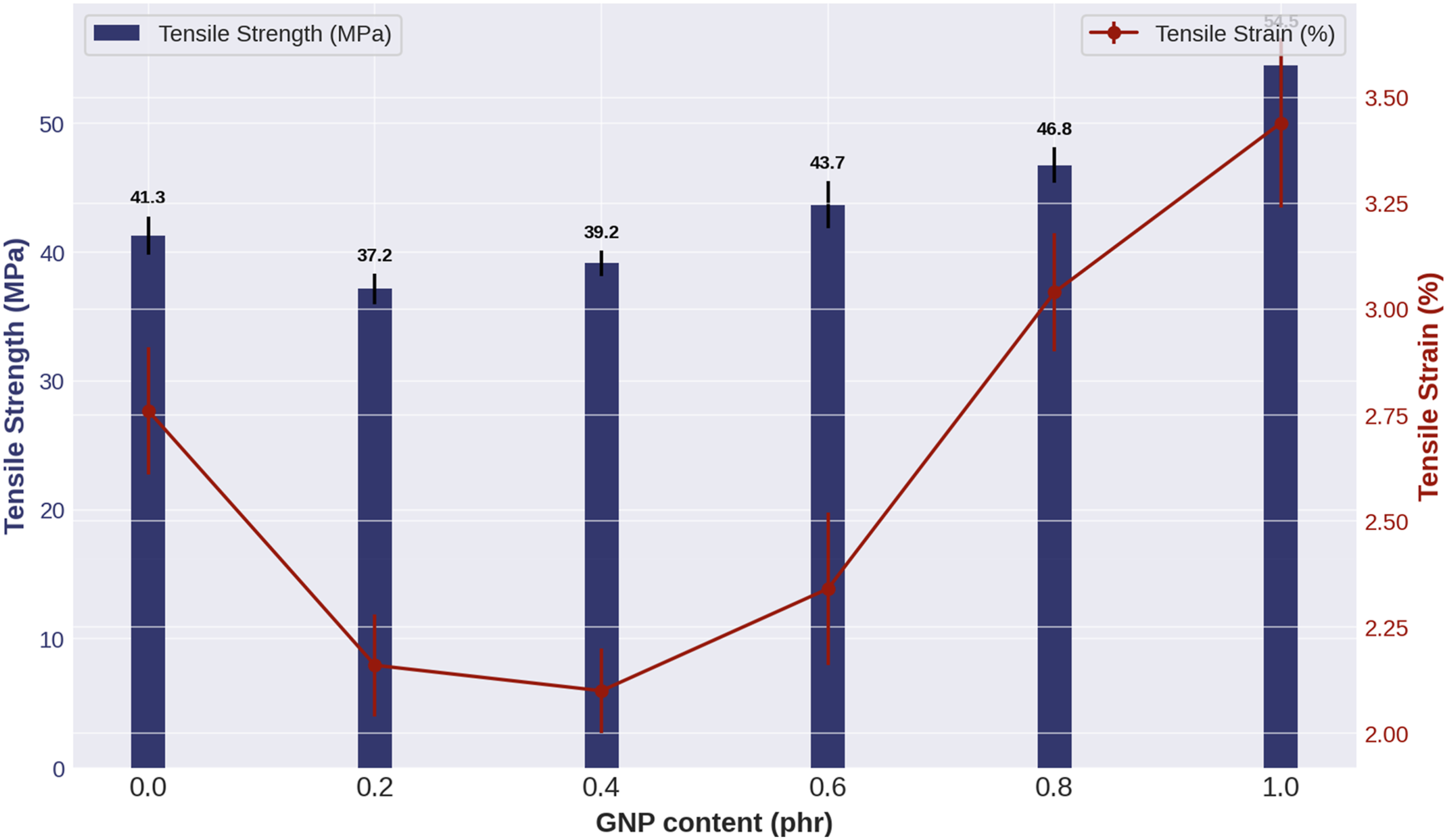
Figure 3 highlights the tensile strength and delves into the tensile strain across different formulations of hybrid nanocomposites. A fascinating pattern was found: as the number of GNP replacing sepiolite increased, there was a simultaneous boost in both tensile strength and tensile strain. Specifically, the tensile strain showed a remarkable 59% increase for the hybrid composite when the GNP content varied from 0.2 to 1 phr. Additionally, the graph outlines a clear trend line for the tensile strain in these composites. A key observation, illustrated in Figure 2(f), is the superior dispersion of sepiolite and the adequate interfacial adhesion between graphene and the matrix. This superiority is thought to facilitate the movement of graphene layers, contributing to greater elongation at break, as reported by researchers. 18 They investigated the improvement in the damping properties of fibre-reinforced polymer composites by interfacial sliding of oriented multilayer graphene. Their studies show that the Vander Waals interactions among graphene sheets are relatively weaker than the bond between the filler and matrix. As a result, the interface deformation in the filler/matrix can activate slippage in multilayer graphene. This slippage, along with the extensive filler/matrix interface area, leads to significant energy dissipation, as explained by other researchers , 19 the slippage of multilayer graphene (GNP) through the representation of the pull-out toughening by the slip-stick mechanism in graphene-alumina composites. This mechanism enhances the elongation at break, making the material tougher and more flexible. 20
Interestingly, the hybrid nanocomposite with 1 phr of GNP displayed the most balanced blend of stiffness and toughness. These properties are crucial in determining the practical applications of hybrid nanocomposites. The morphological examination further corroborated the superior properties of this particular hybrid nanocomposite variant. The nanocomposite with 1 phr GNP stood out, showcasing the highest tensile strength and strain.
Figure 4 compares Young’s modulus and impact strength across different ratios of hybrid nanocomposites. Notably, Young’s modulus of these composites is consistently higher than those made solely with sepiolite. This increase is attributed to the incorporation of stiffer graphene into the hybrid systems. Interestingly, the sepiolite nanocomposite with 2 phr of sepiolite, designated as HNC-G0.0, showed the highest modulus at 974 MPa. However, there’s a significant shift when GNP begin to replace sepiolite. The resulting Young’s moduli for the hybrid nanocomposites HNC-G0.2, HNC-G0.4, HNC-G0.6, HNC-G0.8, and HNC-G1.0 were recorded at 1285 MPa, 1280 MPa, 1180 MPa, 1078 MPa, and 1020 MPa, respectively. As more GNP was introduced, Young’s modulus showed a noticeable downward trend, likely due to an increase in the material’s toughness, as evidenced by the impact toughness shown in Figure 7. The hybrid nanocomposite containing 1 phr GNP and 1 phr sepiolite (HNC-G1.0) emerged as the most well-balanced in terms of both stiffness and toughness. These properties are essential in determining the practical applications of these hybrid nanocomposites, demonstrating their versatility and potential in various fields. The enhanced properties of the newly developed hybrid nanocomposites having 1 phr of GNP have also been confirmed by the excellent dispersion and distribution of sepiolite/GNP in tensile fracture specimens’ studies through FESEM examination in Figure 2(f). Comparative analysis: Young’s modulus and Izod impact strength.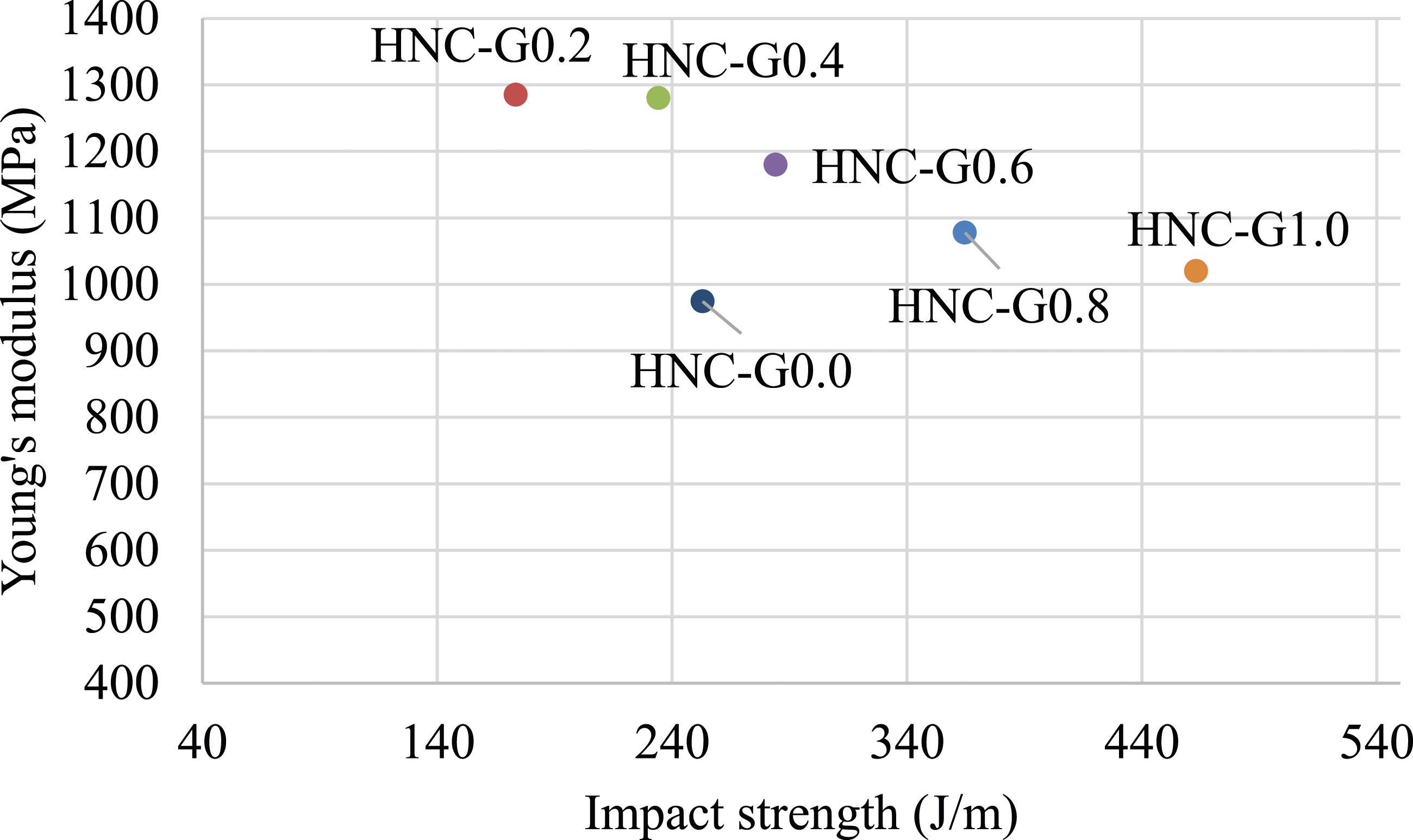
Flexural analysis
Figures 5 and 6 showcase the changes in flexural strength, flexural modulus, and the relationship between flexural modulus and impact strength for various ratios of hybrid nanocomposites. We replaced the 2 phr sepiolite nanofiller in these composites with varying amounts of GNP, specifically 0.2, 0.4, 0.6, 0.8, and 1 phr in a rPET/PA11(80:20) Joncryl® matrix. These formulations are denoted as HNC-G0.2 through HNC-G1.0. For the baseline, the HNC-G0.0 nanocomposite, containing 2 phr of sepiolite and no GNP, demonstrated a flexural strength of 47.3 MPa. However, when GNP partially replaced sepiolite, flexural strength showed a noticeable increase. The strengths recorded for HNC-G0.2, HNC-G0.4, HNC-G0.6, HNC-G0.8, and HNC-G1.0 were 47.5 MPa, 48.275 MPa, 57.88 MPa, 70.76 MPa, and 76.46 MPa, respectively. This indicates a significant enhancement in flexural strength from 47.3 MPa to 76.46 MPa, marking a 61.65% increase when the composite was formulated with 1 phr each of sepiolite and GNP. The trend suggests that increasing the GNP content from 0.2 to 1 phr while decreasing the sepiolite content from 2 to 1 phr consistently boosts the flexural strength. The GNP’s superior mechanical reinforcement properties and more efficient stress transfer at the nanofiller-matrix interface are critical factors in this improvement. Essentially, the GNP sheets facilitate effective load distribution during bending, contributing significantly to the enhanced flexural strength of these hybrid nanocomposites. Assessing flexural strength and modulus in hybrid nanocomposites. Correlation between flexural modulus and Izod impact strength.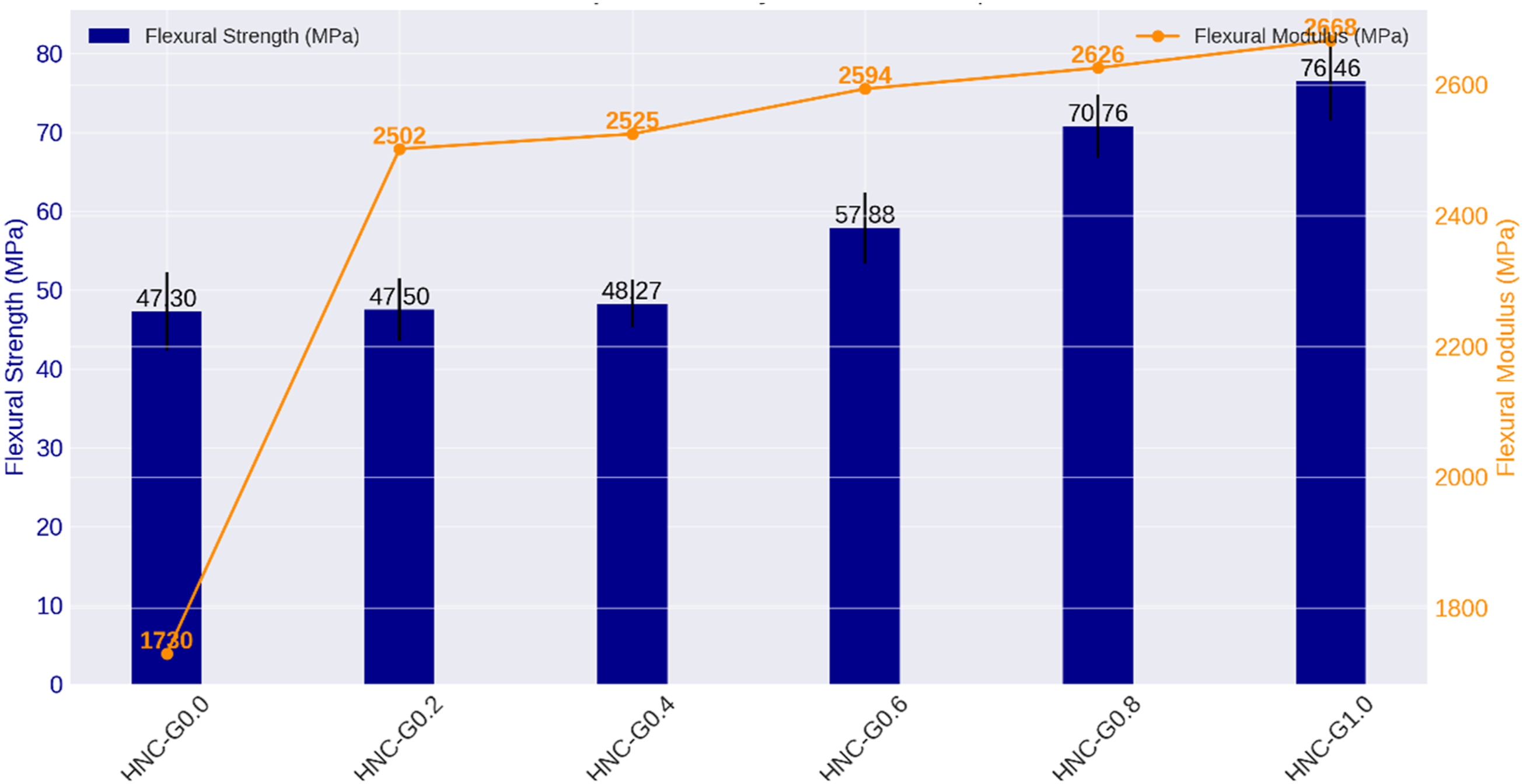
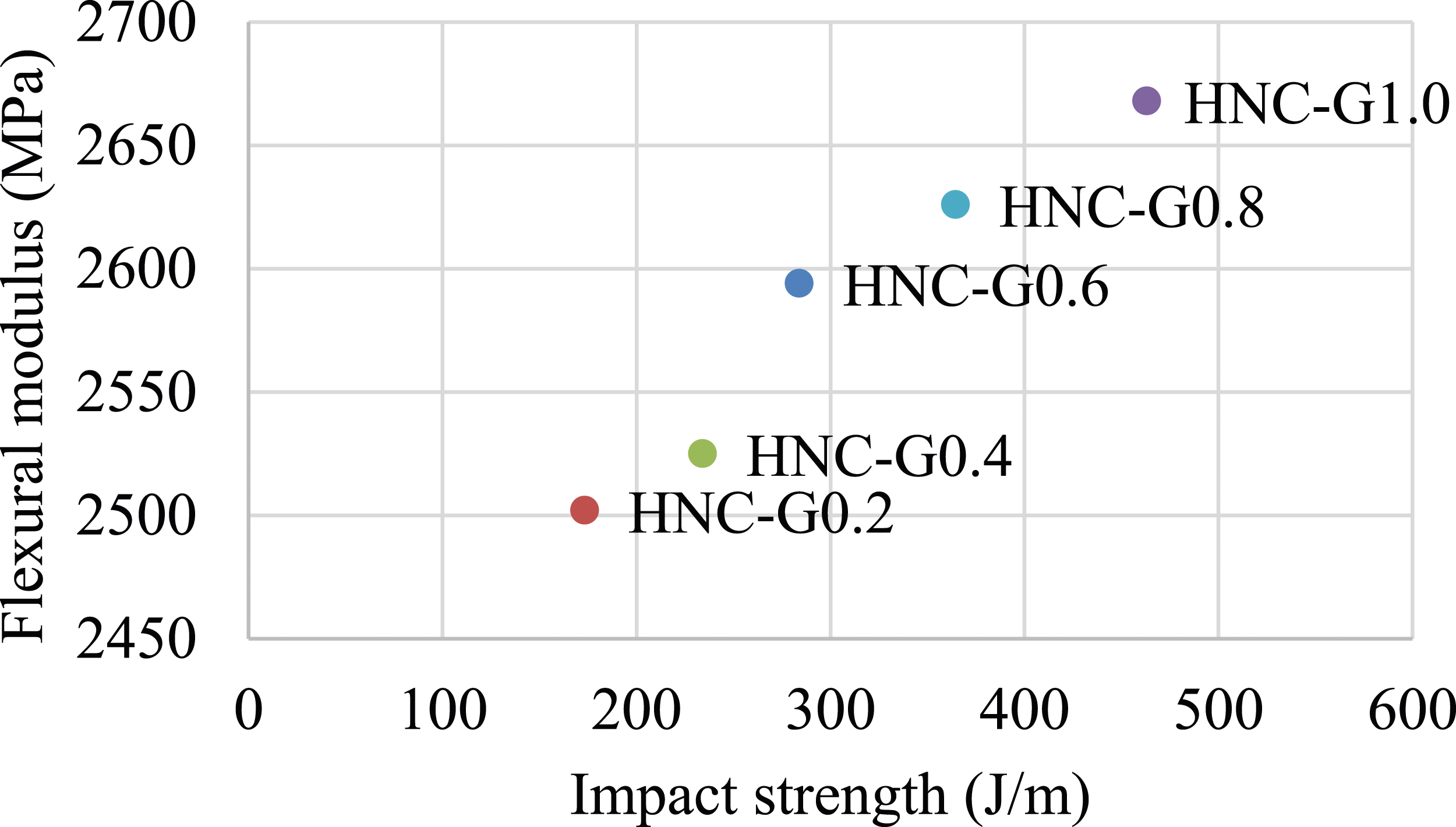
Figure 5 highlights an interesting trend; the flexural modulus of the hybrid nanocomposites increases as the sepiolite is incrementally replaced by GNP from 0.2 to 1 phr, in the case of the HNC-G0.0 nanocomposite, which contained 2 phr of sepiolite and no GNP, the flexural modulus was recorded at 1730 MPa. This value saw a significant uplift with the introduction GNP into the composite. It was observed that the flexural modulus for the HNC-G0.2, HNC-0.4, HNC-0.6, HNC-0.8, and HNC-1.0 hybrid nanocomposites were measured at 2502 MPa, 2525 MPa, 2594 MPa, 2626 MPa, and 2668 MPa, respectively. This represents a substantial enhancement in the flexural modulus, rising from 1730 MPa to 2668 MPa, an increase of 54.22%. Such an increase demonstrates the reinforcing effect of GNP within these nanocomposites, significantly bolstering their structural integrity and resilience under flexural stress. Incorporating GNP into the rPET/PA11/Joncryl® matrix improves the flexural modulus. GNPs provide a higher aspect ratio and stiffness than sepiolite, leading to a composite that better resists deformation under load.
Figure 6 delves into the relationship between flexural modulus and impact strength across the spectrum of hybrid nanocomposites. The data represents a clear picture: as the amount of sepiolite is progressively replaced by GNP filler, these nanocomposites’ flexural modulus and impact strength show an upward trend. The performance of the HNC-G1.0 hybrid nanocomposites stands out among all ratios. This ratio exhibited the highest values for flexural modulus and impact strength. This finding positions the HNC-G1.0 composition as a prime candidate for applications requiring robust and balanced mechanical properties, demonstrating its potential as a superior material choice in various fields.
Impact resistance analysis
Figure 7 presents the impact strength measurements of hybrid nanocomposites, ranging from the HNC-G0.0 to HNC-G1.0 formulations, with GNP content varying from 0 to 1 phr. Initially, the HNC-G0.0 variant, which contains no GNP, showed an impact strength of 253 J/m. However, this value experienced a drop to 173 J/m upon introducing 0.2 phr of GNP in the HNC-G0.2 formulation. Similar to the tensile strength results, it was noticed that the effectiveness of load transfer during impact tests was not as high for GNP contents below 0.6 phr. A possible explanation for this observation could be the clustering of sepiolite on the surface of GNP, as was previously discussed in the analysis of morphology (referenced in Figure 2(b)-(c)). The initial decrease in impact strength with the introduction of 0.2 phr GNP could be attributed to insufficient dispersion and potential agglomeration of GNPs, which creates stress concentration points and hinders energy absorption. As the GNP content increases beyond this threshold, better dispersion and stronger interfacial bonding likely contribute to improved load transfer and impact resistance. Figure 7 shows a progressive increase in the impact strength of our hybrid nanocomposites as we moved from the HNC-G0.4 to the HNC-G1.0 formulations, correlating with increasing amounts of GNP. Specifically, the impact strengths for HNC-G0.4, HNC-G0.6, HNC-G0.8, and HNC-G1.0 were measured at 234.23 J/m, 284.08 J/m, 364.67 J/m, and 463.18 J/m, respectively. This marks an impressive overall rise of 167.10% in impact strength from the HNC-G0.2 to the HNC-G1.0 formulation. One of the factors contributing to this improvement is the role of graphene in the matrix. It’s thought to act as a bridge, bonding cracks during fracture and thus enhancing the load transfer in the nanocomposites, leading to increased impact strength.
21
The observed trend in impact strength echoes the enhancements seen in tensile and flexural strengths, where increasing the GNP content while reducing sepiolite leads to better performance. Figure 6 compares the flexural modulus and impact strength, underscoring the balanced properties of the HNC-G1.0 hybrid nanocomposites, comprising 1 phr of sepiolite and GNP filler. The standout performance of the HNC-G1.0 variant is attributed to the complete dispersion and distribution of fillers, the superior compatibility of GNP with the rPET/PA11 blend compared to sepiolite, and the inherently enhanced properties of GNP. Notably, the R2 value in Figure 7 is close to unity (0.96), signifying these results’ high significance and reliability. Impact strength of hybrid nanocomposites.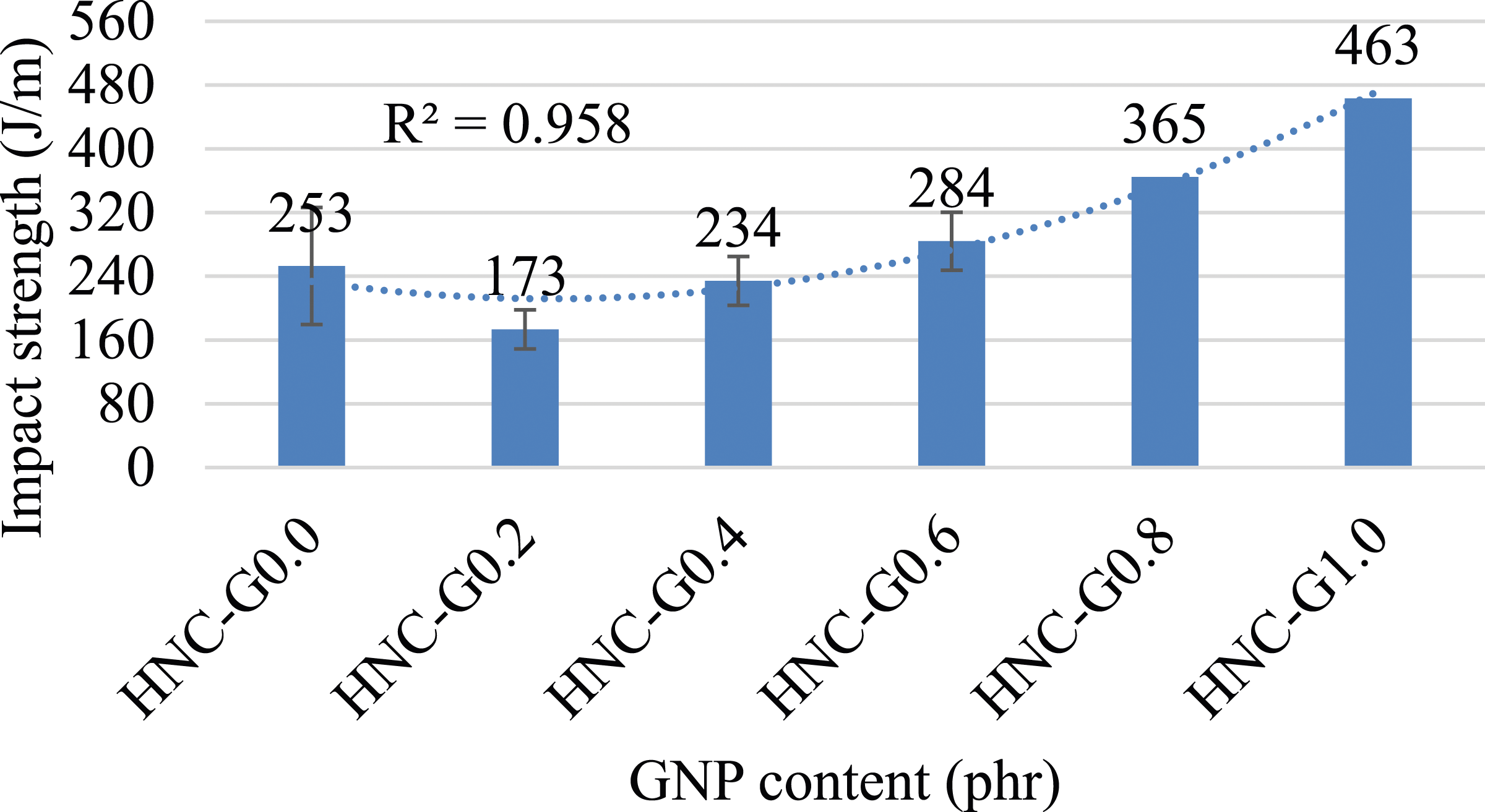
DMA of hybrid nanocomposites
This section explains the storage modulus, loss modulus, and tan delta results of hybrid nanocomposites obtained through dynamic mechanical analysis.
Storage modulus analysis
Figure 8 displays the storage modulus values for a range of hybrid nanocomposites. Initially, the nanocomposite with 0 phr of GNP exhibited a storage modulus of 1242.55 MPa. However, a downward trend in the storage modulus was observed as the proportion of GNP increased from 0.2 to 1 phr, partially replacing the sepiolite filler. Specifically, the storage moduli for HNC-G0.2, HNC-G0.6, and HNC-G1.0, which represent partial replacements of 2 phr of sepiolite with 0.2, 0.6, and 1.0 phr of GNP, were 1019.62 MPa, 1151.96 MPa, and 1128.75 MPa, respectively. This decrease in storage modulus echoes the trend observed with Young’s modulus, suggesting a shift in the material properties. As the nanocomposites become less stiff, as is evident from the trends in Figure 3, they gain in toughness, as shown in Figure 7. This means that while the hybrid nanocomposites become more pliable, they also grow more robust. This increase in toughness relative to stiffness is further corroborated by the impact toughness tests, which also demonstrated an increase in resilience with partial replacement of sepiolite by GNP. The decline in storage modulus can be associated with the GNP-induced disruption of the nanocomposite’s network structure, which reduces stiffness but enhances the material’s toughness, as evidenced by the increasing trend in impact toughness. This structural change is further indicated by the broadened tan δ peaks (Figure 10), suggesting that GNPs create a more heterogeneous segmental environment within the matrix. Broader damping peaks indicate microheterogeneity in the segmental climate, which may reflect differences in the chemical composition of GNP. This phenomenon in the nanocomposites suggests an increase in crosslinking densities and a robust contact between the nanofiller and the polymer matrix. Such interactions are evident from the observed decrease in storage modulus in composites with GNP, showcasing the complex interplay between the structural elements of these materials. Evaluating storage modulus Variations in hybrid nanocomposites.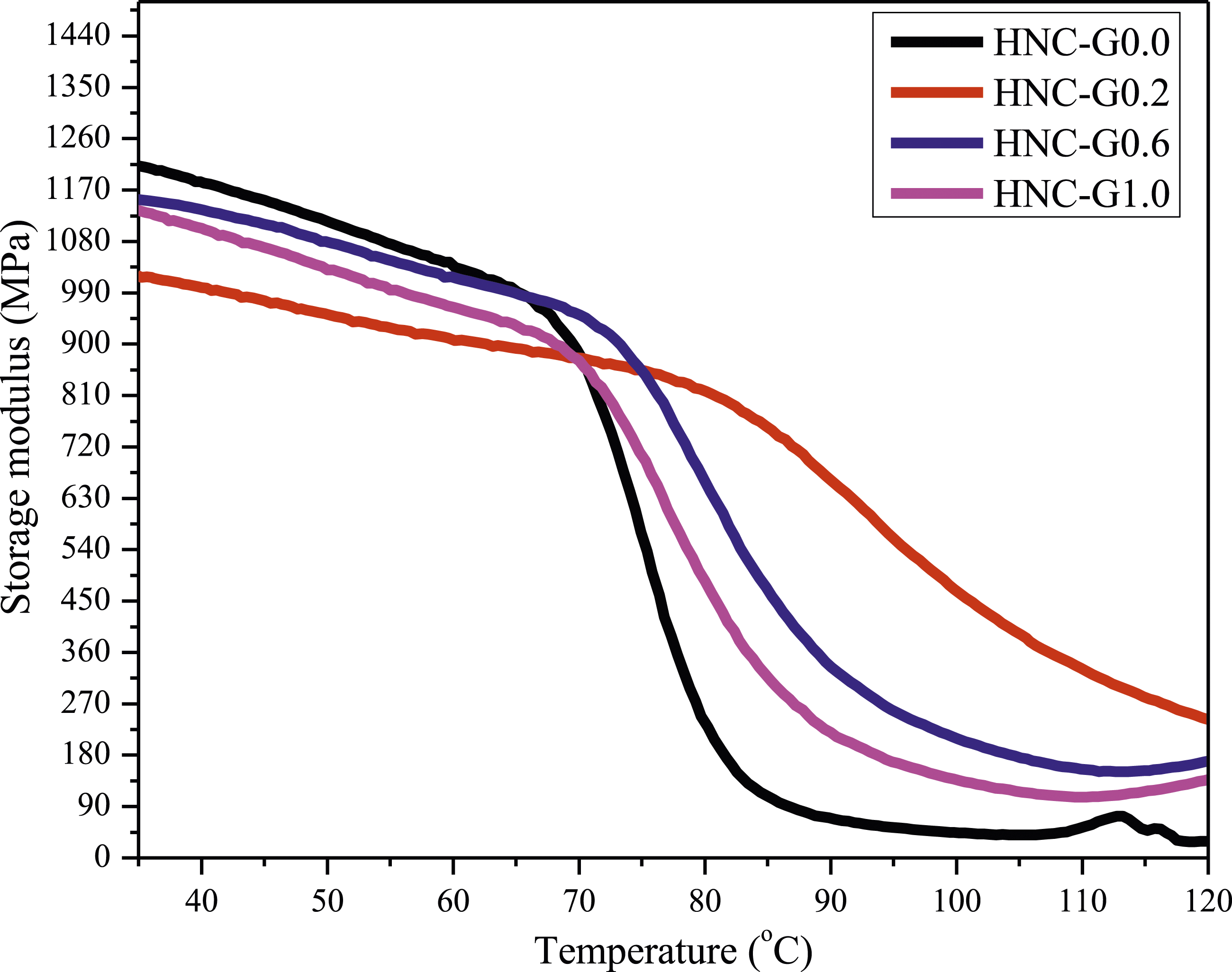
The improved interaction between the GNP nanofillers and the polymer matrix reflects the enhancement in compatibility within the hybrid nanocomposites. This leads to a trade-off where stiffness is sacrificed for increased toughness and impact strength. The wider tan δ peaks further validate this synergistic effect, indicating a more complex segmental motion due to the heterogeneous distribution of GNP within the matrix.
Loss Modulus Analysis
Figure 9 illustrates the loss modulus in various hybrid nanocomposites, which integrate different amounts of GNP filler, ranging from 0 to 1 phr, thereby partially substituting the sepiolite filler. Intriguingly, as the GNP content increased, the peak loss modulus of the nanocomposites tended to decrease. The nanocomposite with 0.2 phr of GNP exhibited the lowest loss modulus among all. In terms of specific values, the loss modulus for the nanocomposite with 0 phr GNP stood at 147.82, whereas for HNC-G0.2, HNC-G0.6, and HNC-G1.0, the loss modulus was recorded at 67.25 MPa, 96.35 MPa, and 104.68 MPa, respectively. Notably, the peak of loss modulus in the hybrid nanocomposites shifted to higher temperatures compared to those with just sepiolite, with the 0.2 phr GNP hybrid showing the highest shift. This phenomenon indicates that introducing GNP, even in small quantities, significantly restricts the mobility of polymer chains. A combination of sepiolite and GNP, especially with a higher proportion of sepiolite, further constrains this mobility. The reduced mobility of the matrix chain, attributed to the joint effect of both GNP and sepiolite fillers, effectively limits the movement of the rPET and PA11 chains within the composite. Evaluating loss modulus Variations in hybrid nanocomposites.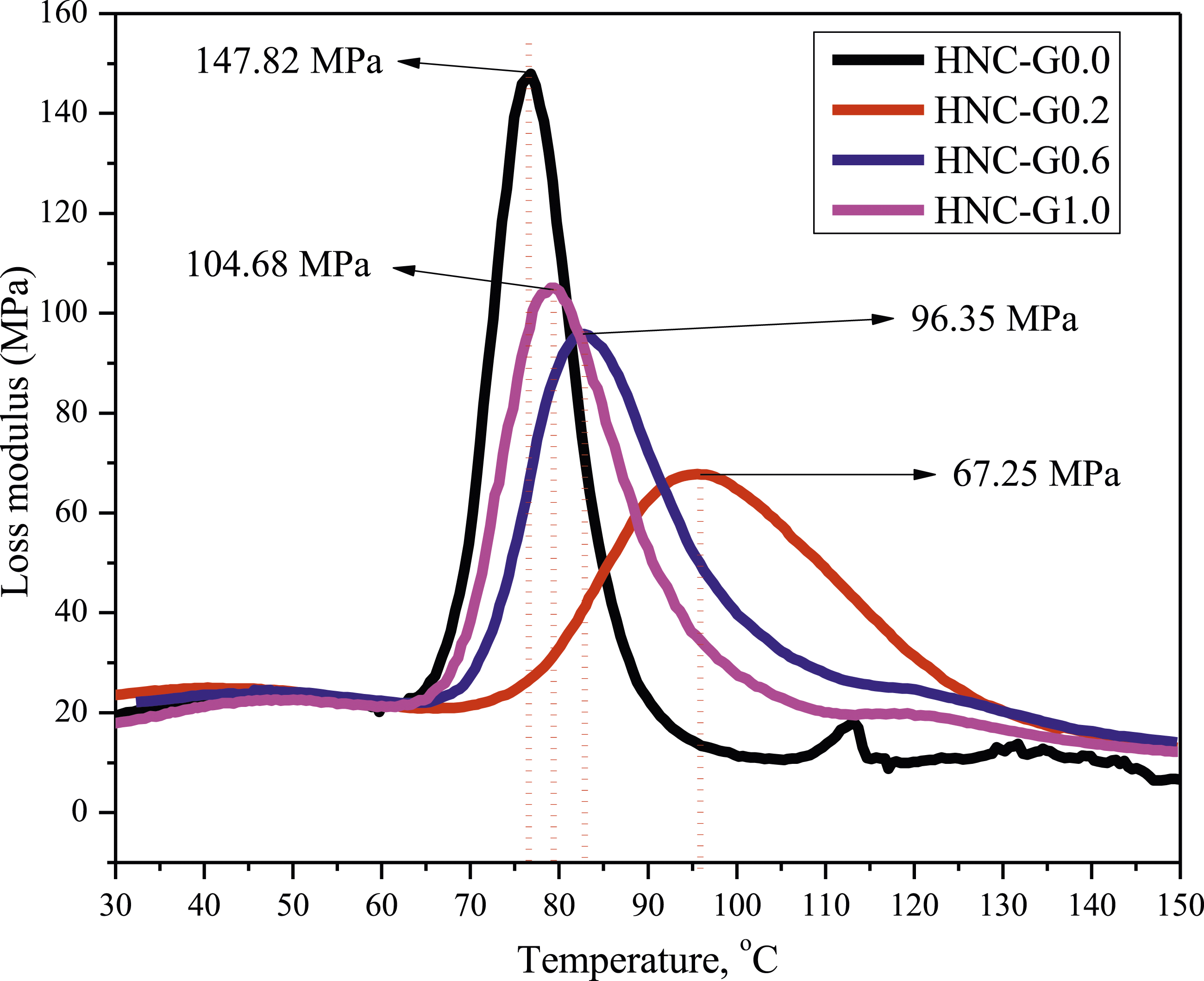
The nanocomposites exhibit a notable decrease in stiffness, particularly evident as the storage modulus sharply drops within the glass transition temperature (Tg) region. Figure 10 highlights an interesting shift: with the incorporation of GNP, the peak of tan δ moves towards higher temperatures. This shift proposes that adding GNP increases crosslinking within the nanocomposites, elevating the Tg. In essence, the crosslinking effect strengthens the barrier that GNP introduces to the matrix chains’ segmental mobility. This phenomenon is also similar to the observation by Jin et al. ,
22
who investigated the impact of incorporating carbon nanotubes into a matrix of poly (methyl methacrylate) (PMMA) and discovered similar effects on the material’s characteristics. Illustrates Tan δ values of Hybrid Nanocomposites.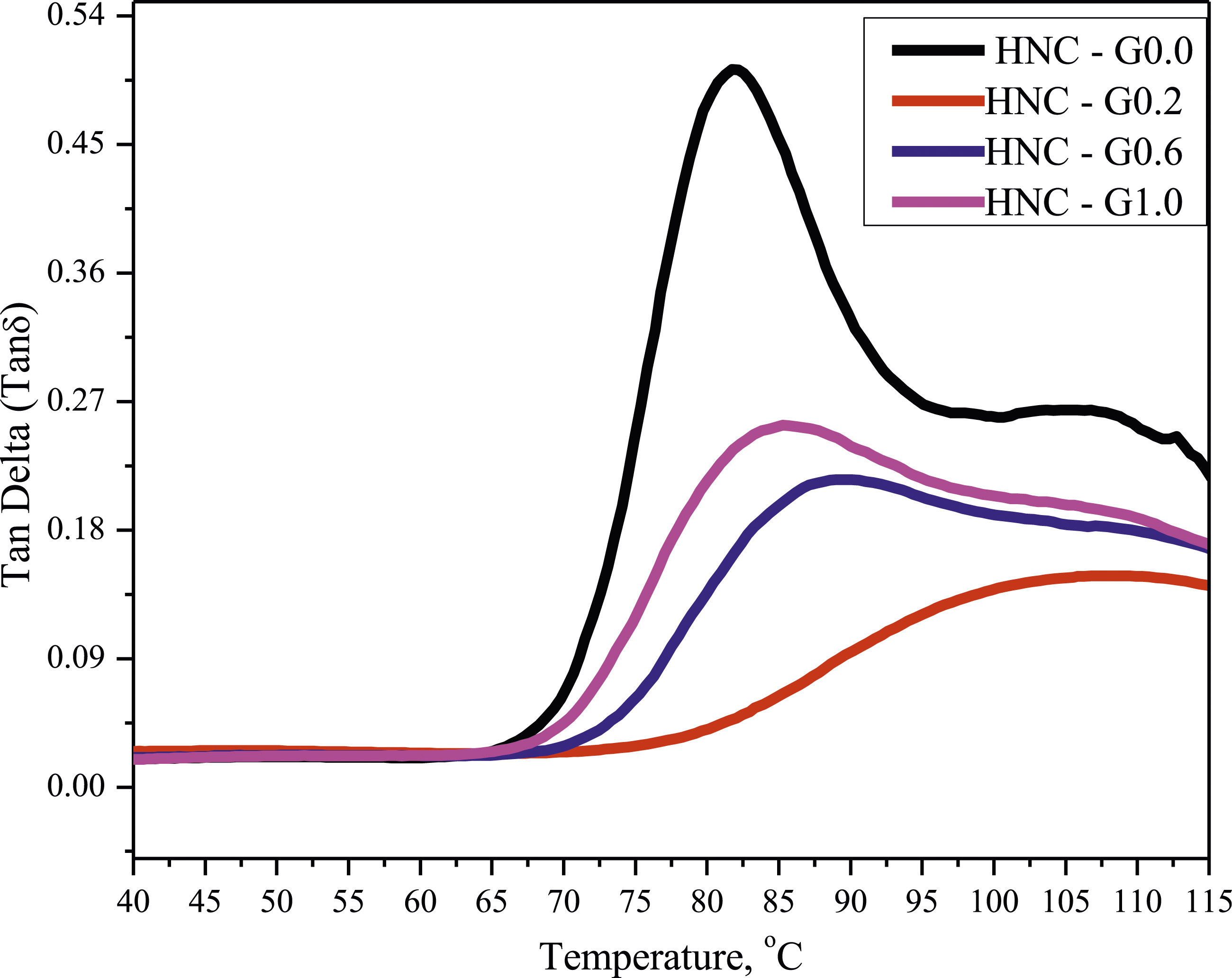
A significant drop in loss modulus has been observed in the sepiolite-based hybrid nanocomposites with the addition of GNP, suggesting a decrease in energy dissipation under cyclic stress. Because of the GNP’s interaction with the matrix, this trend, particularly noticeable in the HNC-G0.2 variation with the lowest loss modulus, suggests a more limited polymer chain mobility. Furthermore, as the GNP concentration increases, the loss modulus peaks migrate to higher temperatures, reflecting improved thermal stability and segmental chain limitation. This behaviour indicates that GNPs increase the crosslinking within the matrix, boosting the glass transition temperature (Tg) and enhancing the nanocomposites’ overall thermal and mechanical stability. It also reflects observations in other polymer-carbon nanotube systems.
Tan delta analysis
One of the most important methods for assessing the molecular-level interfacial bonding in hybrid nanocomposites is dynamic mechanical analysis, or DMA. 23 Figure 10 illustrates the tan δ values of hybrid nanocomposites, with numerous formulations incorporating 0, 0.2, 0.6, and 1 phr of GNP, partially replacing sepiolite. The glass transition temperature (Tg) of polymers is connected to the mobility of the matrix chains, enhanced by increased interfacial bonding and chain entanglement. Particularly, in hybrid nanocomposites with GNP replacing sepiolite filler, the tan δ peak shifts to a higher temperature, indicating higher Tg values. This increase in Tg can be ascribed to the effective interaction between GNP and the polymer matrix and the resulting crosslinking within the hybrid nanocomposite.
As a consequence, there’s an apparent restriction in polymer chain mobility. This effect is even more obvious when the hybrid nanofiller comprises a higher proportion of sepiolite, leading to greater constraints on the polymer chain movement, as suggested earlier. The results agreed with the investigation of Ornaghi et al. 24 and Swaminathan et al. 25 Panwar and Pal’s studied the enhanced interactions between the large surface areas of layered nanofillers and polymer chains, improving filler dispersion within the matrix. This effect is established in various ways, such as reducing the damping factor, a broader tan δ peak, and a rise in the glass transition temperature (Tg). The underlying reason for these changes is the expansive surface area per unit volume of the reinforcing layered fillers. This characteristic significantly upsurges the friction among the composite’s components. A uniform dispersion of an appropriate filler augments the E″ value and pushes the peak point to a higher temperature. This shift is indicative of an improvement in the composite’s Tg. Such alterations in the material properties underscore filler dispersion’s critical role in enhancing the composite’s overall performance and thermal characteristics. 26
The enhanced interfacial bonding and chain entanglement attained by incorporating GNP into the sepiolite-rPET/PA11/Joncryl® matrix is proved by the higher glass transition temperatures (Tg) and the shift of the tan δ peak to higher temperatures in DMA analysis. This improvement indicates reduced polymer chain mobility and better filler dispersion due to GNP’s large surface area, leading to a more stable and effective load-transferring hybrid composite material.
DSC analysis
The DSC results of hybrid nanocomposites are illustrated in Figure 11 and Table 3. The results show that the glass transition temperature (Tg) is nearly the same with the addition of graphene nanoplatelets (GNP) in replacing sepiolite, as shown in Table 3. Researchers reported a slight improvement in Tg by incorporating sepiolite in rPET/PA66.
27
The increase in the melting temperature (Tm1) of cold crystallization, which rose by around 10°C when sepiolite was partially replaced with GNP, is shown in Table 3. The phenomena of cold crystallization followed by cold crystallization melting (Tm1) for different polymer composites, i.e. poly (lactic acid) (PLA)/poly (ethylene oxide) (PEO) having carbon nanotubes were reported by other researchers.
28
However, adding GNP replacing sepiolite did not substantially change the hybrid nanocomposites’ second melting temperature (Tm2). This consistency is obvious in both Figure 11 and Table 3. The stability of Tm2 in the existence of the hybrid nanofiller is mainly advantageous. This implies that while the hybrid nanocomposite benefits from enhanced mechanical properties, its processing temperature remains unaffected, upholding the ease of manufacture and application. DSC analysis: Thermal behaviour of hybrid nanocomposites. DSC results of hybrid nanocomposites.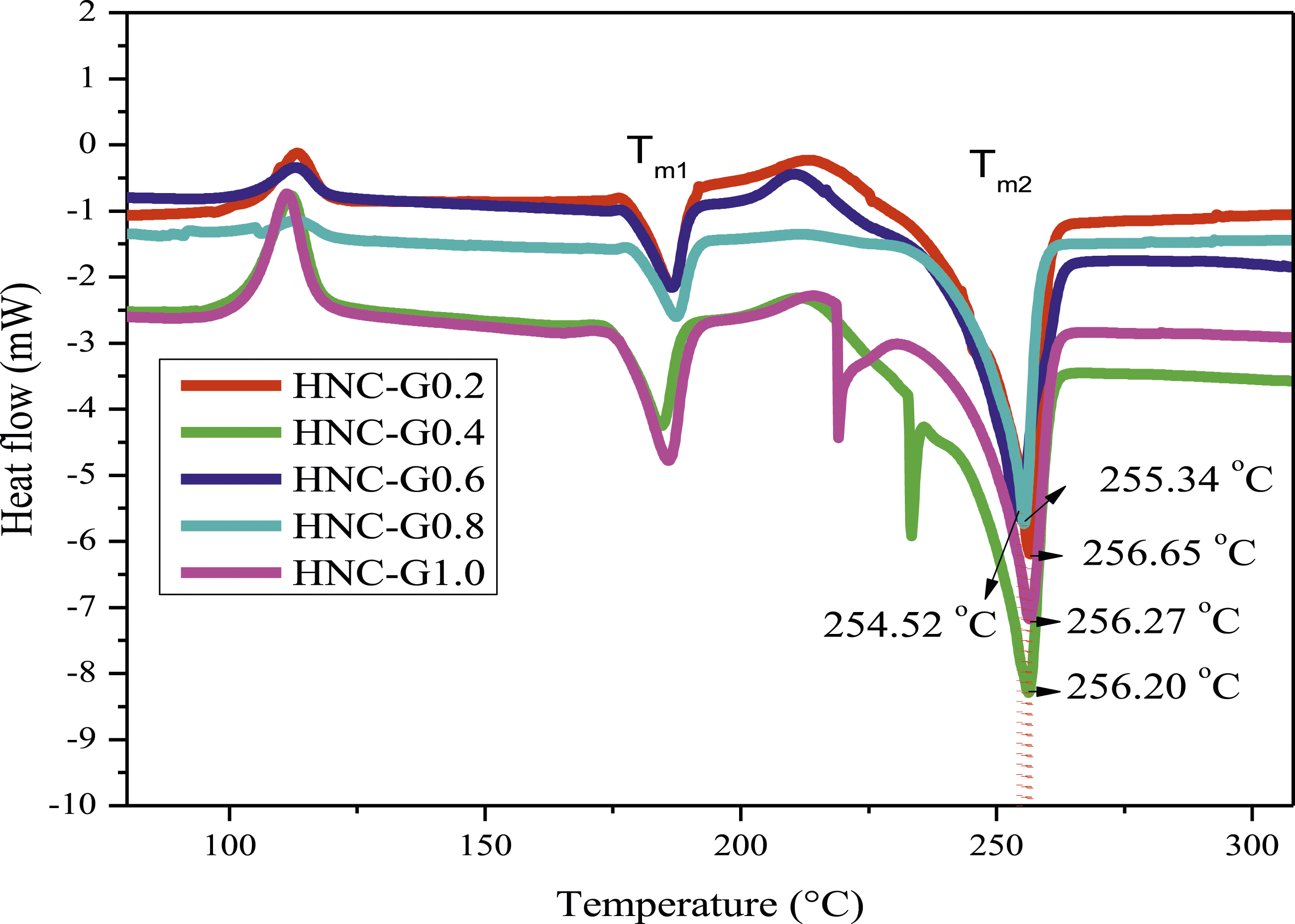
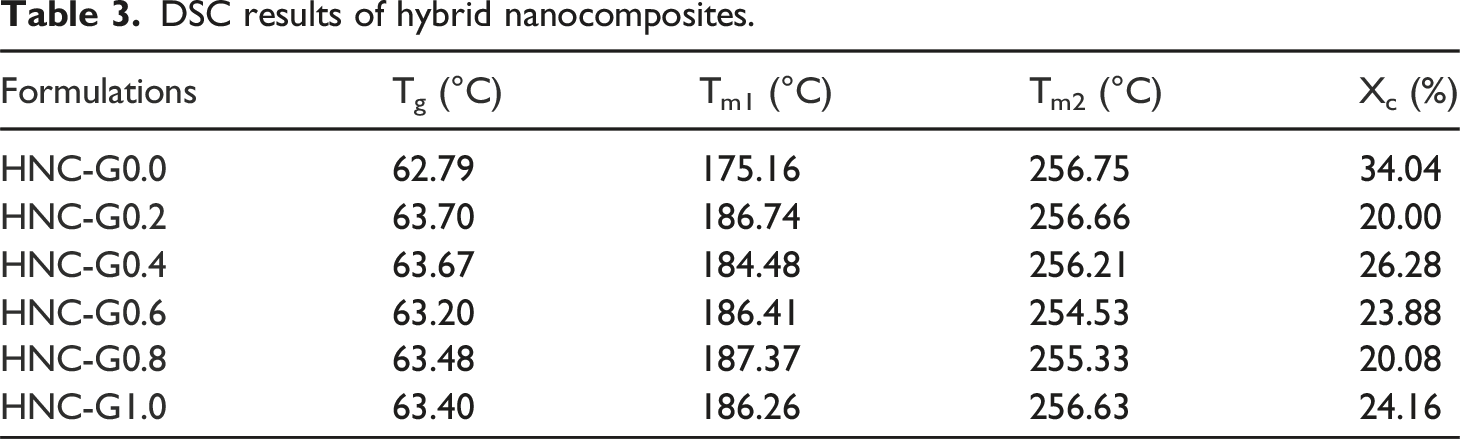
The gradual rise in the hybrid nanocomposites’ first melting temperature (Tm1) with increasing GNP content specifies enhanced thermal stability and crystallization behaviour. This is likely due to the influential role of GNPs in enabling nucleation, leading to more thermally stable and organized crystalline structures within the hybrid nanocomposite. The comparatively stable second melting temperature (Tm2) across various formulations indicates that the fundamental melting point of the matrix remains unaffected by the inclusion of GNP. This consistency in Tm2, alongside the increased Tm1, highlights the successful integration of GNPs in enhancing the thermal properties without compromising the intrinsic melting performance of the base material.
Crystallinity (Xc) plays a vital role in influencing the mechanical properties of polymer composites. Crystallinity (Xc) is calculated from the crystallinity peak of the DSC cooling curve using the formula: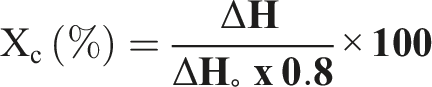
TGA analysis
Figures 12 and 13 demonstrate the TGA and Derivative Thermo Gravimetric analysis (DTG) results of the hybrid nanocomposites through the onset of decomposition temperature, weight loss, and maximum degradation temperature, each with varying degrees of GNP incorporations. Figure 12 focuses on the onset of decomposition temperatures and the corresponding weight loss percentages as temperature escalates. Interestingly, the onset decomposition temperatures across the different nanocomposites with GNP content ranging from 0.2 to 1 phr display remarkable consistency, indicating a stable thermal decomposition profile irrespective of the GNP concentration. This uniformity extends to the rate of weight loss experienced by the nanocomposites at elevated temperatures, further underscoring their consistent thermal behaviour. The TGA results for sepiolite filler nanocomposites without GNP, as well as for the compatibilized blend (rPET/PA11 (80:20) with 2 phr Joncryl® compatibilizer), were previously published in our article.
1
Thermal stability: TGA profiles of hybrid nanocomposites. Peak thermal degradation: Tmax in hybrid nanocomposites.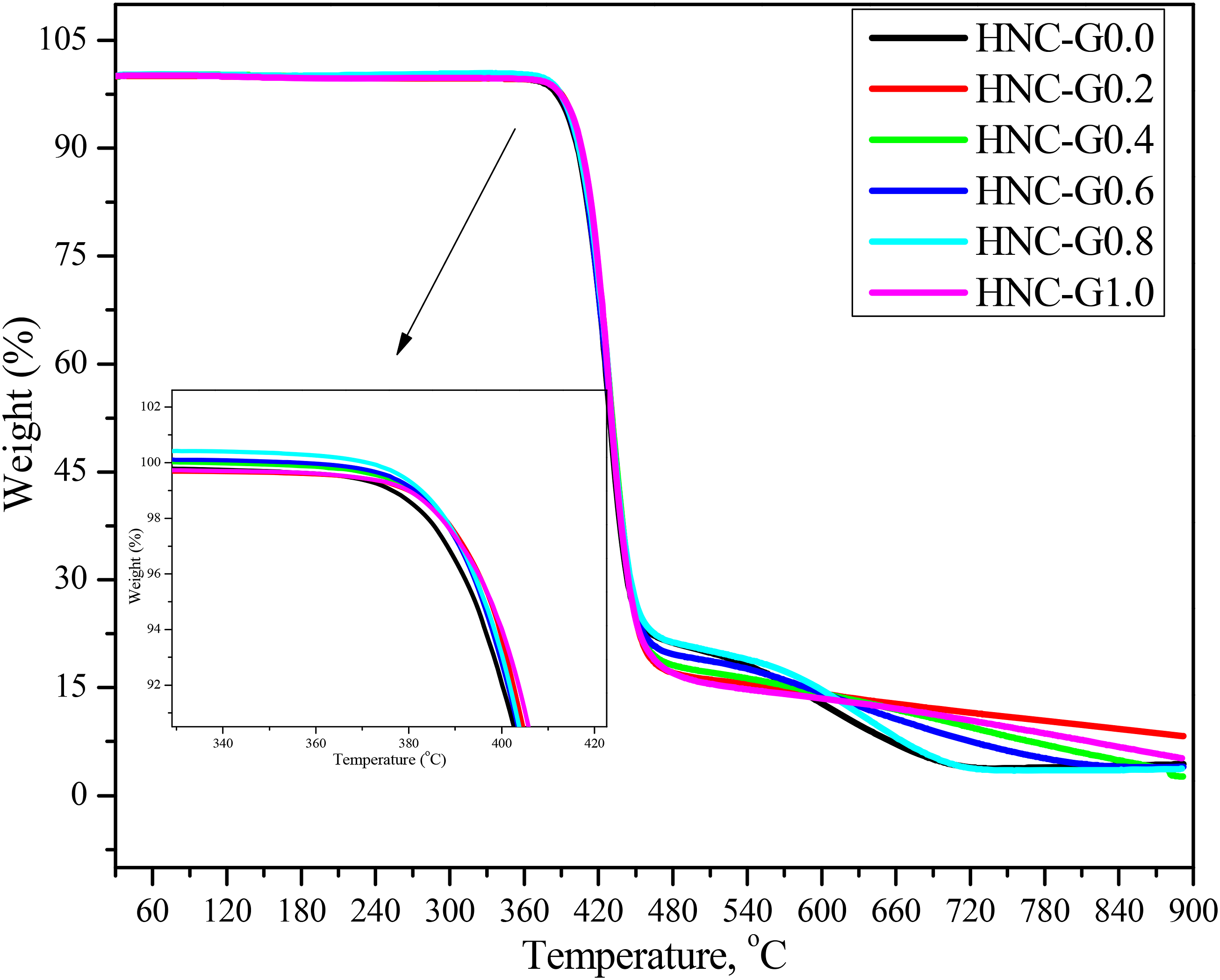
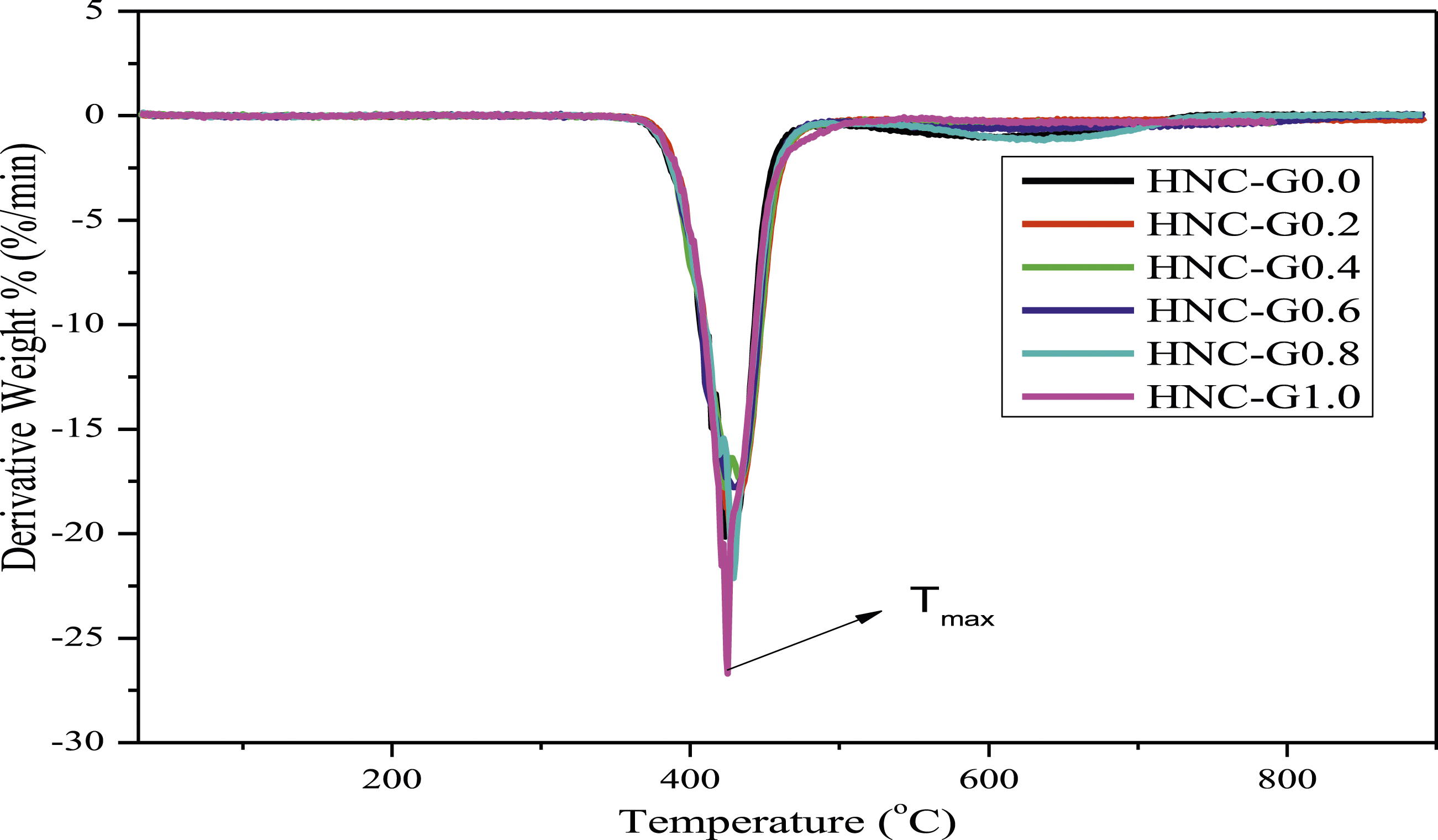
Figure 13 delves into the specifics of the maximum decomposition temperature (Tmax). This parameter is crucial as it signifies the peak point of thermal breakdown. Here, the trend mirrors the observations from Figure 12; all the nanocomposites, regardless of their specific GNP content, show a similar Tmax. This consistency in thermal decomposition, both at the onset and at the peak, highlights the robustness of the hybrid nanocomposite’s thermal properties, suggesting that the partial replacement of sepiolite with GNP does not significantly alter their inherent thermal stability, a vital aspect for applications demanding high-temperature endurance. The thermal stability results are consistent with previous studies on Polystyrene-Sepiolite Clay Nanocomposites. 30
Conclusions
The current research demonstrates the innovative development of hybrid nanocomposites utilizing recycled polyethylene terephthalate (rPET) and polyamide 11 (PA11) reinforced with sepiolite and graphene nanoplatelets (GNP). The research signifies improvements in mechanical and thermal properties through the synergetic effects of hybrid fillers. The optimal blend, containing an equal amount of sepiolite and GNP, i.e. 1 phr each, demonstrated remarkable enhancements in tensile strength, flexural strength, and impact resistance. Specifically, the tensile strength increased by 46.5% to 54.5 MPa, and the percent strain increased by 59%, as the GNP content rose from 0.2 to 1 phr, replacing sepiolite. These improvements are attributed to the effective dispersion and interaction of the fillers within the polymer matrix. Notably, an impressive 61.65% increase in flexural strength and an 83% rise in impact strength were recorded, underscoring the effectiveness of the hybrid filler approach.
Thermo Gravimetric Analysis (TGA) and Differential Scanning Calorimetry (DSC) results confirmed the hybrid nanocomposites’ thermal stability and consistent melting temperatures, crucial for maintaining processing stability. The glass transition temperature (Tg) data provided insights into the thermodynamic compatibility of the polymers, supporting the observed mechanical enhancements. The DSC analysis further demonstrated the role of GNPs in elevating the first melting temperature (Tm1), suggesting a delicate degree of thermal stability. Meanwhile, the stability of the second melting temperature (Tm2) across various formulations indicates that the fundamental melting properties of the composite materials remain intact despite the GNP inclusion. The decrease in crystallinity suggests that the addition of GNP interrupts the crystalline structure of the rPET/PA11 matrix, leading to improved mechanical properties such as flexibility and toughness.
Moreover, DMA analysis reveals that the higher glass transition temperatures and the upward shift of the tan δ peak indicate reduced chain mobility and enhanced filler dispersion, a direct consequence of the GNPs’ expansive surface area. These results mirror the TGA findings, where the maximum decomposition temperature (Tmax) remained consistent across different GNP contents, reinforcing the thermal robustness of these materials.
This innovative approach augments the composite properties and endorses sustainability using recycled PET. The subsequent hybrid nanocomposites display a balanced combination of stiffness, toughness, and thermal stability, suitable for advanced applications in the automotive industry, packaging, and consumer goods. Overall, this research marks a significant step forward in developing high-performance, sustainable polymer composites, proving the way for future innovations in polymer engineering.
Research significance
This research explores significant implications for the development of materials science, mainly in developing hybrid nanocomposites. By exploring novel blends of recycled polyethylene terephthalate and polyamide 11 with various nanofillers, this study contributes to the growing field of sustainable materials. The blending of rPET/PA11 in our research aims to address numerous challenges and potential applications. Combining rPET with PA11 enhanced the overall properties by leveraging the strengths. PA11 is known for its excellent mechanical properties, low density, and good chemical resistance. Therefore, a small addition of PA11 20 wt% can recover the degradation of recycled PET. With the blending of rPET/PA11 having joncryl® compatibilizer and hybrid nanofillers, we aim to produce a composite with superior mechanical properties, thermal stability, and chemical resistance. This hybrid nanocomposite mainly benefits the automotive industry, where materials must withstand high temperatures and mechanical stress. The enhanced barrier properties and strength make it appropriate for packaging applications with better product protection and extended shelf life. The balanced flexibility, strength, and sustainability properties also make it ideal for consumer goods like electronics, sporting equipment, and household items. Using recycled PET contributes to environmental sustainability and cost-effectiveness, offering a compelling alternative to conventional polymers.
Furthermore, this research offers insights into the interaction between different fillers and polymer matrices, shedding light on how these interactions can affect mechanical properties such as tensile strength, flexural modulus, and impact resistance. Understanding these dynamics is crucial for engineering materials that meet specific requirements, including enhanced toughness, improved elasticity, and excellent thermal stability. The work also underscores the value of integrating recycled materials into new composites, promoting sustainability and reducing environmental impact. This study paves the way for future research and industrial applications emphasising performance and environmental accountability by demonstrating that recycled polyethene terephthalate can be successfully blended with other polymers and reinforced with nanofillers. This innovative approach enhances material performance and supports circular economy initiatives by promoting the reuse of plastic waste.
Footnotes
Declaration of conflicting interests
The author(s) declared no potential conflicts of interest with respect to the research, authorship, and/or publication of this article.
Funding
The author(s) disclosed receipt of the following financial support for the research, authorship, and/or publication of this article: The authors would like to acknowledge the financial support from the Ministry of Higher Education Malaysia under Fundamental Research Grant Scheme (FRGS) (FRGS/1/2019/TK05/UTM/02/17) and Zahid Ikbal Khan is a Postdoctoral Fellow of Universiti Teknologi Malaysia under Postdoctoral Fellowship Scheme for the Project “Novel recycled polyethylene terephthalate/polyamide 11 blends filled with nanofillers” Q.J130000.21A2.06E98 (06E98).

Data availability statement
At present, the raw and processed data crucial for replicating these findings are not available for public sharing, as they are integral to an ongoing postdoctoral project. This makes the data confidential in nature until the completion and publication of the project.