



Abstract
This study investigates the influence of a combined thermal heat flux and a flexural loading on the interlaminar shear behavior of quasi-isotropic carbon fibers reinforced PPS and Epoxy laminates. Regardless the intensity of the heat flux (ranging from 20 to 50 kW/m2), the maximum surface temperature is higher than the onset of thermal decomposition
Introduction
The applications of laminated composites are limited by delamination, which can be introduced during the fabrication process or later in the service life (typically under low velocity impacts 1 or fire conditions 2 ). The existence of delamination degrades the stiffness, strength and fatigue properties of laminated composite structures and affects the structures’ dynamic response, and it also has a potential to cause catastrophic failure of the structures. 2 It is well known that weak interlaminar properties may lead to premature failure of composite structures. As a result the interlaminar shear strength (ILSS) is a key factor ruling the delamination of fibers reinforced polymer matrix composite (PMC) laminates. When it comes to very temperature service conditions, it is utmost important to know what is the influence of phase transition on the changes in the ILSS of polymer-based laminates because the polymer matrix undergoes a significant decrease in it load bearing capabilities. The thermal resistance properties are due to a combination of low thermal conductivity, good structural integrity and significantly, the endothermic decomposition of the matrix, which slows down the heat transmission through the laminate. Most of the studies available in the literature focus on the influence of temperature or fire exposure on the residual mechanical properties.3–7
When it comes to thermal decomposition Td of matrix and oxidation of fibers, there are even less references. Grigoriou et al have studied the effect of the stacking sequence on the structural properties in fire of carbon-epoxy laminates. 8 Based on small-scale tests, laminates with different quasi-isotropic stacking sequences were subjected to a combined mechanical loading (tension or compression) and a one-side 50 kW/m2 incident radiant heat flux. They have observed that composites with 0° mid-plane plies have superior fire-performance under mechanical loading. In the case of tensile loadings, the stacking sequence has a strong influence on the time to failure particularly at low applied stress. Under compressive loading, the mechanical response under heat flux is less influenced by the stacking sequence, due in part to their much shorter failure times.9–12 It appears that the load-bearing capability of composite laminates significantly and rapidly decreases under the effect of one-side heat flux.13–17
Given the growing utilization of polymer matrix composites (PMCs) in aeronautics, understanding their combustion behaviors becomes crucial due to their inherent flammability. In their review, Quan et al offer guidance for the development of fire-safe polymer composites by exploring polymer combustion behaviors in the cone calorimeter under various key operating parameters and setup geometries, encompassing external heat flux, ventilation conditions, ignition source, and sample geometry. 18 The cone calorimeter serves as an effective tool for assessing the reaction-to-fire properties of materials by simulating a forced combustion bench-scale fire scenario. Tests conducted at varying incident heat fluxes are relevant to estimate critical heat flux for ignition and the corresponding ignition temperature, establishing correlations between heat fluxes and time to ignition. 19 The understanding of the high-temperature behavior of PMCs is a key issue for ensuring passenger safety in aeronautics. Indeed, thermal aggressions at temperature levels higher than the thermal decomposition temperature of the polymer matrix can degrade the mechanical and physical properties of PMC materials, impacting their load-bearing capacity.20–23 Different matrix systems, particularly thermoset (TS) and thermoplastic (TP) matrices, are considered for aeronautical purposes. While TS matrices have been widely used for 50 years, TP matrix-based composites have gained interest due to their shorter autoclave cycle and ease of manufacturing, along with improved damage tolerance and impact resistance. 24 However, the fire resistance of TP composites compared to TS composites remains an open question. Despite numerous studies in the last thirty years, the fire resistance of PMC materials is still actively researched due to complex thermal and mechanical interactions. 25 Authors have focused on studying post-fire mechanical behavior to better understand the thermomechanical response of PMC materials under fire conditions.26,27 Sorathia conducted experiments exposing thermoplastic (TP) and thermoset (TS)-based composites to low heat fluxes, comparing their post-fire mechanical properties. 28 Carbon/PEEK and carbon/phenolic composites exhibited the highest retention of flexural strength, attributed to their high aromatic ring content. Levchik linked this chemical structure to the ability to generate significant char during thermal decomposition. 29 Vieille et al studied carbon/epoxy and carbon/PPS composites exposed to various heat fluxes, noting differences. Carbon/PPS laminates showed superior post-fire tensile properties compared to carbon/epoxy, correlating with a higher char yield. Variations in char structure were also observed between carbon/epoxy and carbon/PPS composites.30,31 The char formation in carbon/PPS (C/PPS) composites after fire exposure results in a network of re-melted matrix, while in carbon/epoxy (C/Epoxy), the char is more porous due to gas outflow during decomposition, leading to voids and significant delamination in the mesostructure of laminates. The compressive behavior of C/PPS after fire exposure has been studied at temperatures above the glass transition temperature. 32 Fire-induced damages in thermoset-based composites promote micro-buckling, while a highly ductile matrix contributes to the formation of plastic kink bands. The literature review suggests that high-temperature thermoplastic composites may be suitable for standard applications where composites might be exposed to fire. However, there is a limited number of studies addressing the mechanical behavior of thermoplastic-based composites subjected to both fire and mechanical loadings.33,34 Most references available in the literature have primarily concentrated on unidirectional thermoset-based composites, including glass/vinylester and carbon/epoxy.35,36 Studies, particularly on the compression failure, have been prevalent as it is a critical aspect for long fiber-reinforced polymer composites. Various models have been proposed to predict the time-to-failure, with Boyd et al. investigating the behavior of glass/vinylester under low heat fluxes up to 30 kW/m2, considering reversible thermal effects.37,38 While glass fibers only undergo thermal softening, carbon fibers experience oxidation beyond 500°C, a temperature typical in fire exposure.39,40 The use of PMCs, especially for high-temperature applications, has induced new challenges in evaluating their mechanical properties in the case of UD laminates41–45 and in woven-ply composites.46,47 These references showed that temperature had a visible impact on the inter-laminar shear strength (ILSS), deformation modes, and failure mechanism. The ILSS decreased as temperature increased, which results from the degradation of the matrix properties and fiber/matrix interface properties at high temperature. In woven-ply composites, the changes in failure modes was put down to thermal softening of the epoxy resin caused by high temperature and the undulation of the yarns. 46 As was shown by Kim et al in C/PEI thermoplastic composites, interlaminar shear testing at elevated temperatures emphasizes the role played by PEI matrix at the plies interface on the transverse mechanical properties.48,49 Under high temperature testing, the ILSS is narrowly associated with the interlaminar fracture toughness of composites materials.50–52 More recently, Aspinall et al. have quantified the thermomechanical behaviour of different carbon fibers reinforced plastics (CFRP) at a small scale. They showed that the carbon fibers orientation and the incident heat flux affect the displacement, temperature distribution, failure time, and failure modes of load-bearing CFRP. 53 Finally, Vetter et al have characterized the one-sided thermal damage (with a heat flux of 50 kW/m2) of CFRP by means of microCT analyses. 54 They examined the residual mechanical behaviour in tension, compression, and interlaminar shear testing taken from from different depth of the degraded specimens. They concluded that the compressive strength and ILSS is found to be more sensitive towards thermal damage than tensile strength, as they are most influenced by formed delamination at higher thermal loads.
Most of the references in the literature focus on testing temperatures lower than 300°C. As a result, there is a scarcity of studies addressing the evolution of the interlaminar shear behavior under severe thermal aggression. Consequently, there is a need for comprehensive investigations to fully understand the mechanical behavior of TP- and TS-based composites. 55 The current study aims to investigate the interlaminar shear behavior in C/PPS and C/Epoxy laminates subjected to flexural loadings and severe thermal aggressions.
Material and Methods
Materials and Specimens
The composite materials studied in this work consist of 7 plies carbon fabric-reinforced PPS or epoxy prepreg laminate plates.
31
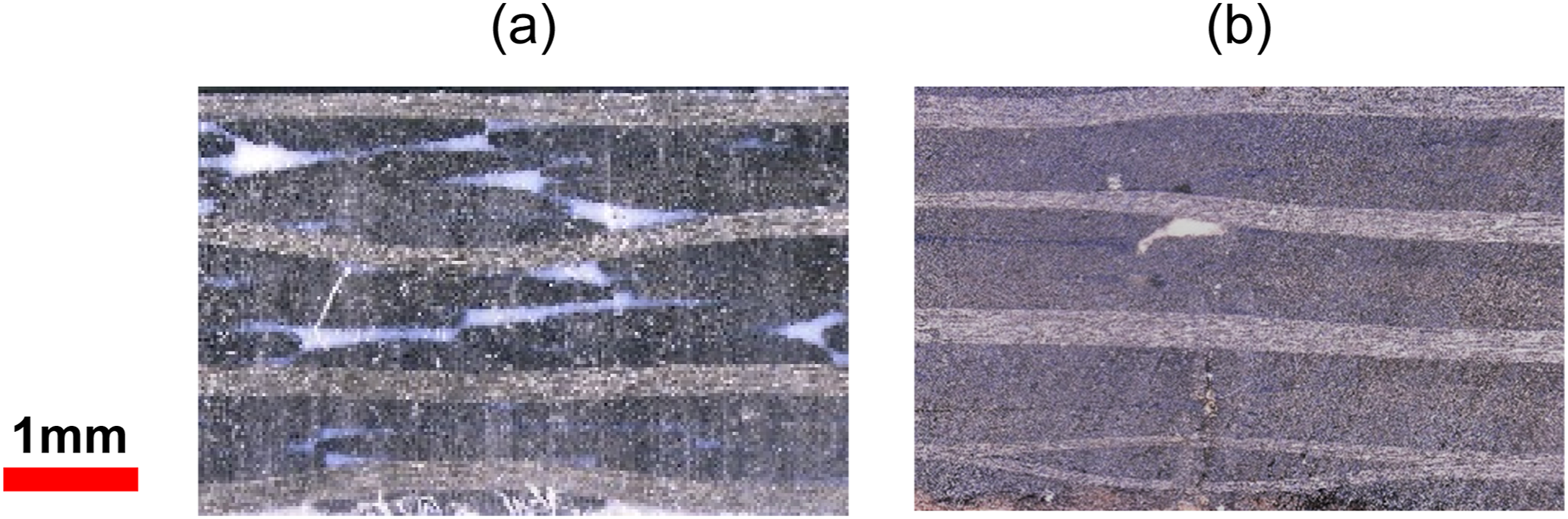
The semi-crystalline PPS resin (Fortron 0214) and the epoxy resin (914) are respectively supplied by the Ticona and by the Hexcel Companies. The woven-ply prepreg, supplied by the SOFICAR Company, consists of 5-harness satin weave carbon fiber fabrics (T300 3K 5HS). The surface weight of the carbon fabric is 285 ± 12 g/m2. The mass fraction of fibers is 58% in both materials. The consolidated laminates were obtained from hot pressed prepreg plates according to cycles presented in Figure 1. Figure 2 shows the spatial distribution of woven plies in laminates with a quasi-isotropic stacking sequence: [(0/90), (±45), (0/90), (±45), (0/90), (±45), (0/90)]. The average thickness (calculated from five measurements each) of specimens is virtually constant in both materials: 2.22 ± 0.2 mm in C/PPS laminates and 2.20 ± 0.1 mm in C/Epoxy laminates. The porosity content of laminates as manufactured with a consolidation process is 0.52%.
31
Consolidation cycles – temperature and pressure versus time: (a) C/PPS – (b) C/Epoxy. Through-the-thickness microscopic observations of quasi-isotropic laminates: (a) C/PPS – (b) C/Epoxy.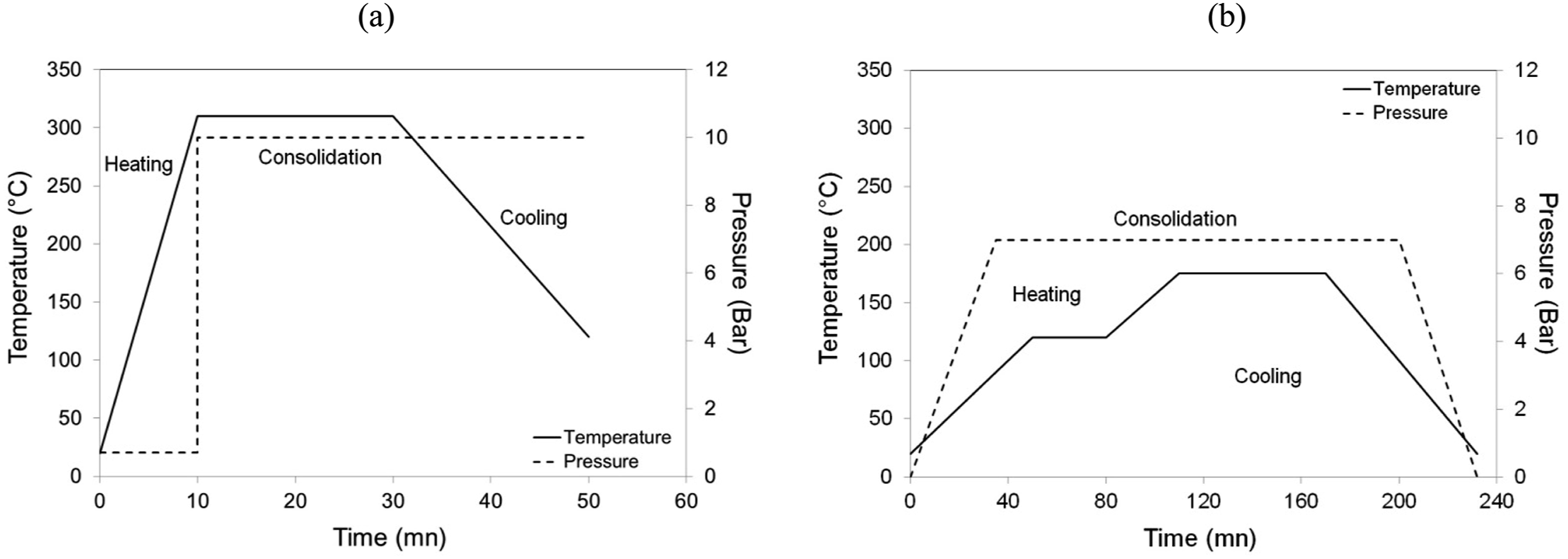
Experimental Set-Up
Thermal Aggression by a Cone Calorimeter
Electrical radiant heat sources, specifically the radiant element from a cone calorimeter, are classically used to apply a controlled heat flux for reproducing thermal effects similar to those from a fire.
55
This heat source has an adjustable power supply connected to a control device, allowing for variable heat flux density. The experimental set up of thermal aggression by means of a cone calorimeter is shown in Figure 3(a)
30
Experimental set-up showing the cone calorimeter adapted to be used with a hydraulic testing machine. (a) picture of the testing bench - (b) schematic of the Short Beam testing for Interlaminar Shear Stress assessment.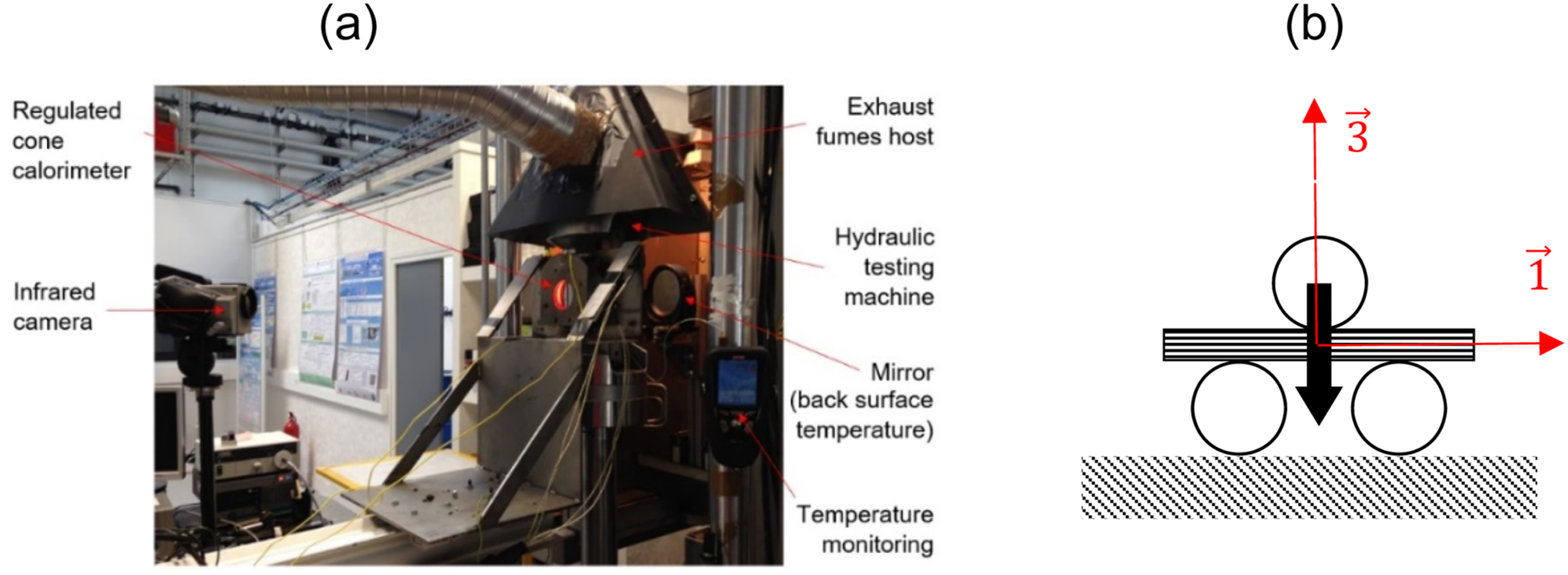
Four heat fluxes (20 – 30 – 40 – 50 kW/m2) were applied to the materials for the same exposure time (200 s) to insure a homogenous temperature distribution in the specimens. To characterize the heat flux density on the surface of the specimens, a Gardon fluxmeter is used. The latter is part of the tangential gradient fluxmeters in which the measurement of a temperature gradient in the plane (induced by a radiation in the case of the Gardon fluxmeter) leads to the assessment of the heat flux density. To carry out these measurements, the fluxmeter is positioned in the centre of the specimen, and the heat flux is measured in relation to the set point temperature. For each set point temperature, the flow densities thus measured are normalized to the value at the centre of the specimen. The measurement is repeated 3 times. Over the length of the useful area, it appears that the heat flux varies between 85 and 100% of its central value (Figure 4). Heat flux density mapping: distribution of heat flux density on short beam specimens.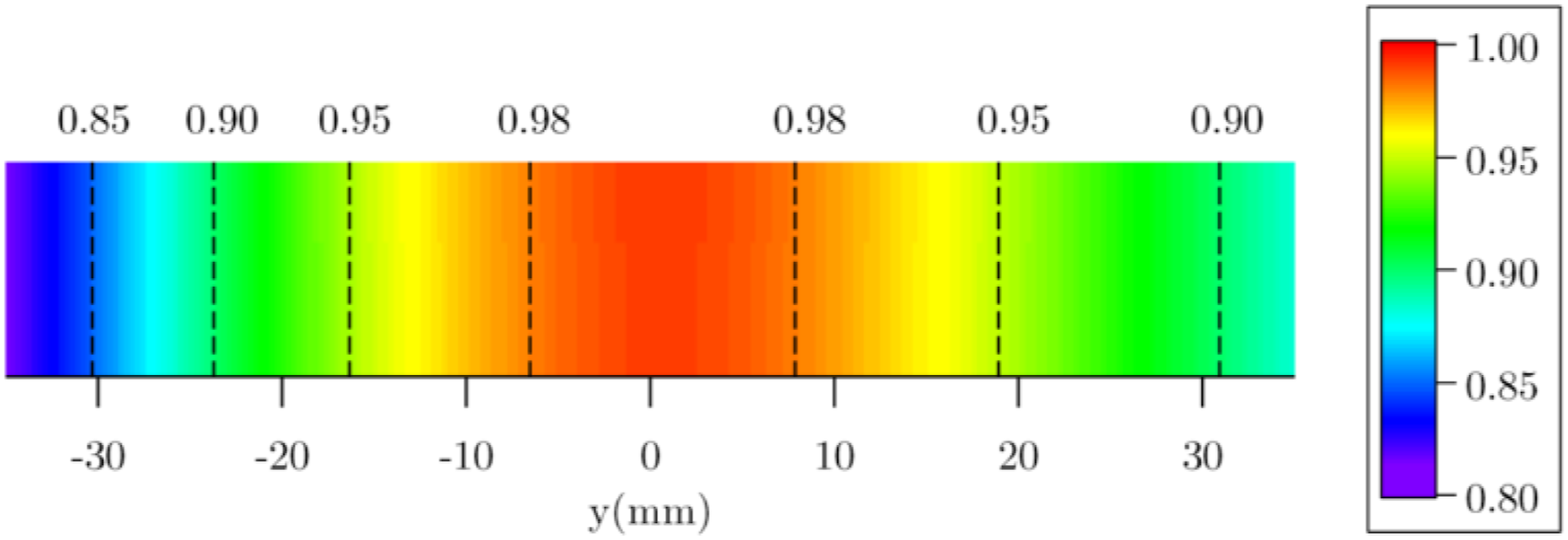
The measurements of temperature (obtained from IR camera) on one edge of the laminates exposed to different heat fluxes are shown in Figure 5. To estimate the temperature, the camera requires the knowledge of the material emissivity. The value was set at 0.90 according to the value frequently used in the literature for composite materials with carbon fibres.
56
The “virgin” state chosen for comparison purposes represents the state of specimens exposed to no prior thermal aggression. Three specimens were tested in each configuration. Distribution of temperature (obtained from IR camera measurements) on the edges of laminates exposed to different heat fluxes: (a) 20 – (b) 30 – (c) 40 – (d) 50 kW/m2.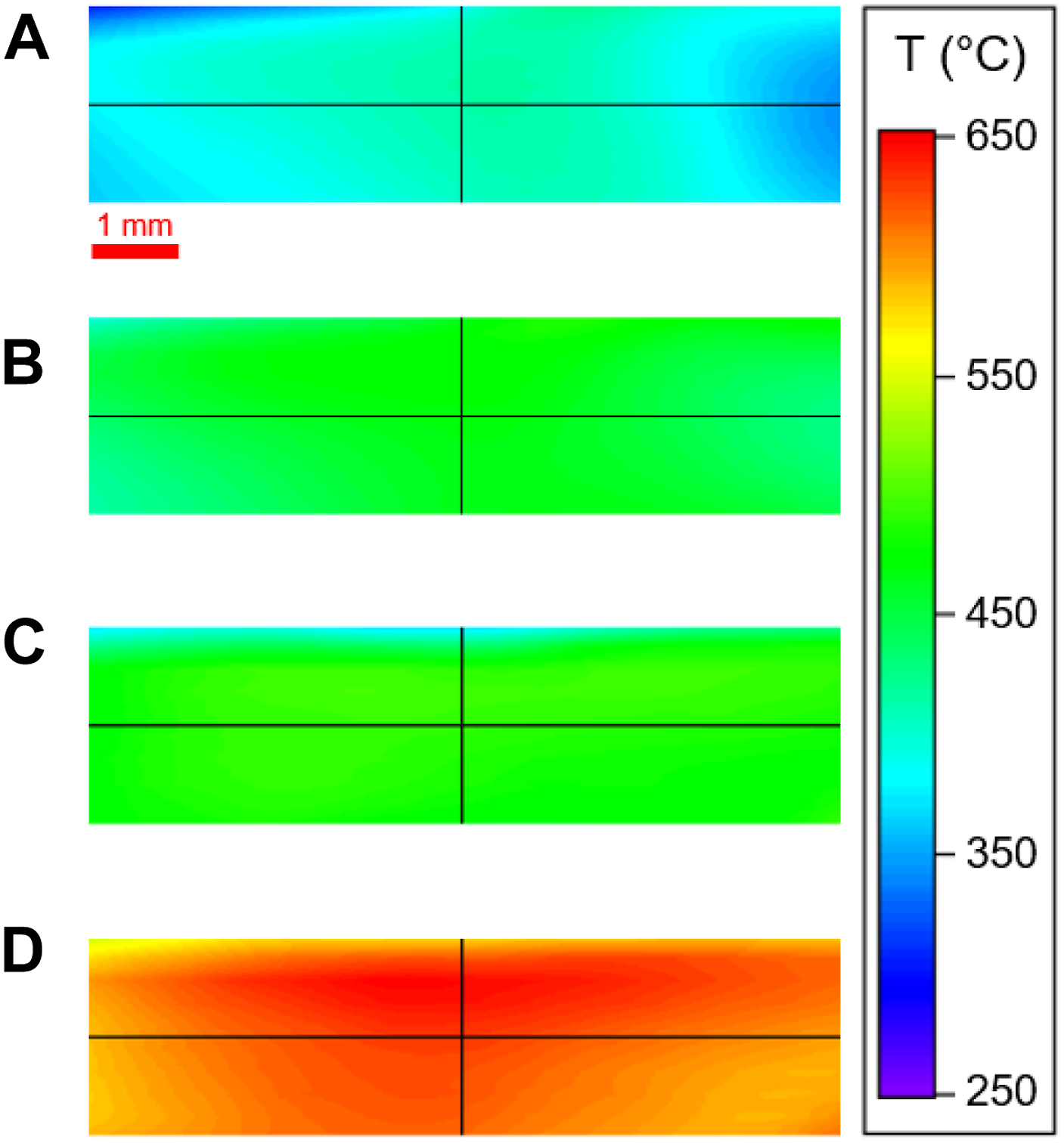
In Situ Interlaminar Shear Testing under Heat Flux
Interlaminar Shear Strength (ILSS) is an important material property for design of laminated composites subjected to transverse loads. The ASTM test standards D2344 is defined to measure ILSS of laminated polymeric composites from short beam shear tests (Figure 3(b)). The ILSS is computed from the data collected from short beam tests by using the maximum value of the interlaminar shear
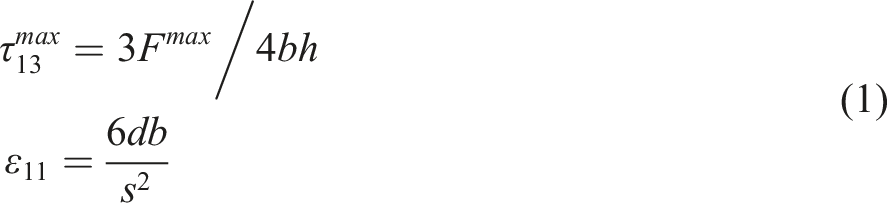
On the one hand, the ILSS computed from this definition is known as the apparent ILSS because the short beam shear test does not only imply pure shear.
42
In addition, the beam theory is not exactly valid for short beams made of very ductile composite materials.58,59 As a result, the maximum value
On the other hand, the bending modulus

Fractographic Analyses
Microscopic observations have been carried out by means of a numerical optical microscope Keyence VHX-5000 to build 3D pictures of damaged areas. Fractographic analysis was conducted on samples after thermal aggression and mechanical loading. Scanning Electron Microscope (SEM) investigations were also performed on a LEO 1530 SEM microscope.
Results and Discussion
Thermogravimetric Analyses
Thermal decomposition of plain polymers and reinforced composites. 31

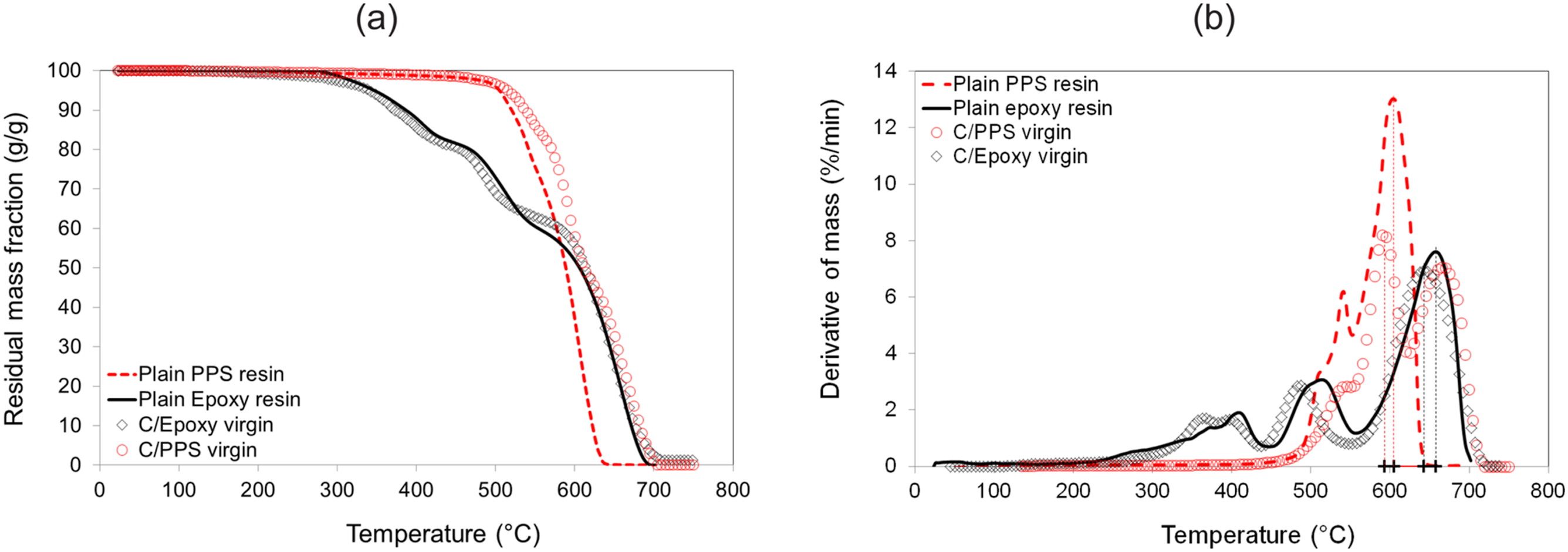
Thermal decomposition of studied materials under nitrogen: (a) residual mass fraction versus temperature – (b) derivative of residual mass versus temperature 31 .
The onset of thermal decomposition under nitrogen occurs at Td ≈ 510°C in plain PPS resin and C/PPS specimens (Table 1), and significant mass loss occurs (about 20%) between 510 and 600°C (Figure 6(a)). These results are in good agreement with the literature results obtained for the same material.60,61 Figure 6(b) shows the derivative of residual mass versus temperature, providing indication on the thermal decomposition mechanisms occurring within each type of specimen, depending on matrix nature. 62 Thermal degradation of polymers is a complex process that may involve random scission, depolymerization, and side group elimination leading to changes in polymer molecular weight and loss of physical properties. Three peaks corresponding to each decomposition mechanism are observed in plain Epoxy and C/Epoxy specimens, whereas plain PPS resin and C/PPS specimens are characterized by only two peaks (random scission and side group elimination).
Correlation Between Heat Flux and Temperature Changes
Before delving into the interlaminar shear behavior of C/Epoxy and C/PPS laminates, temperature was monitored as a function of exposure time by means of an IR camera (Figure 5) on the edges of specimens to know the state of the polymer matrix depending in the applied heat flux (Figure 7). From the curves shown in Figure 7(a) and the values shown in Figure 7(b), one can conclude that the changes in temperature is virtually the same in C/Epoxy and C/PPS laminates. However, for reasons of its low pyrolysis temperature, C/Epoxy specimens exceed the onset of thermal decomposition for all heat fluxes after a 200s exposure (Figure 7(a)). In C/PPS laminates, the pyrolysis temperature is only reached in specimens subjected to 40 and 50 kW/m2 after a 200s exposure. These differences are expected to reflect on both the interlaminar shear behavior and the Inter-Laminar Shear Strength (ILSS) values. One may also notice that the temperature difference between the 20 and 50 kW/m2 cases is about 270°C, regardless the nature of the polymer matrix (Epoxy or PPS). It suggests that the thermal decomposition of the matrix does not influence the temperature values on the edges of the specimens. This conclusion is confirmed by the very good correlation between the applied heat fluxes and the maximum surface temperature after a 200s exposure (Figure 7(b)). Evolution of laminates’ surface temperature as a function of exposure time to different heat fluxes: (a) C/PPS versus C/Epoxy – (b) Correlation between heat flux and maximum surface temperature.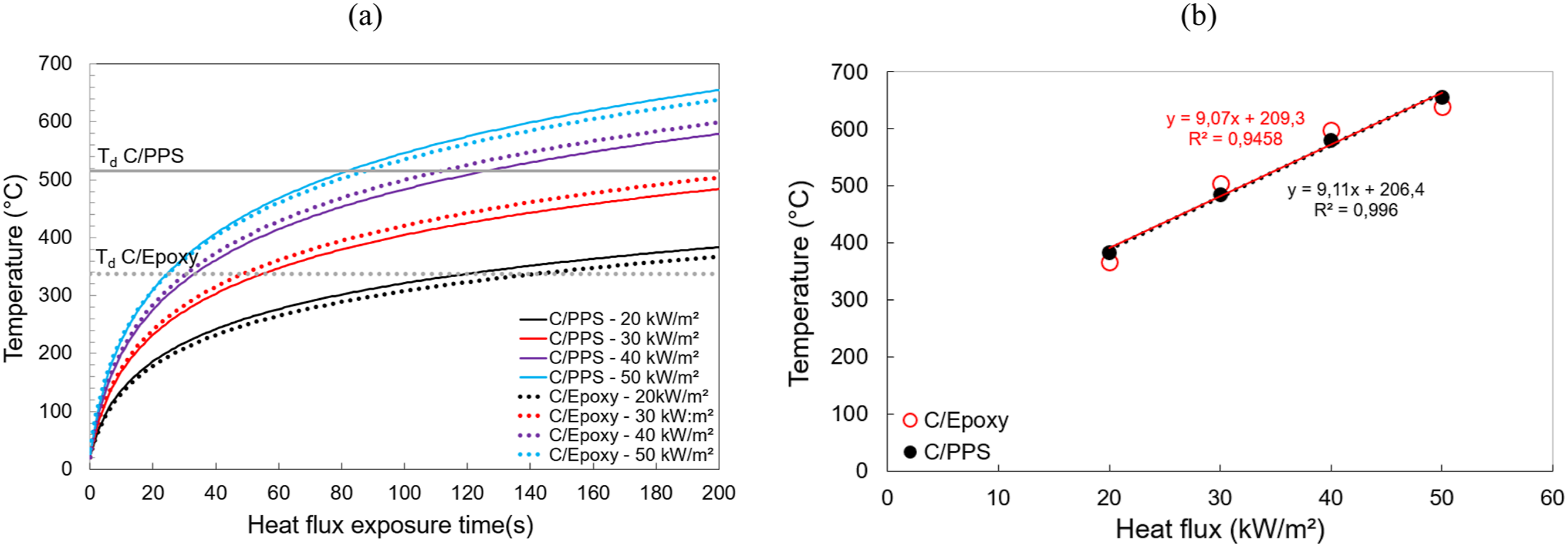
Influence of Thermal Aggression on Laminates Micro- and Meso-Structures
The literature discusses the unresolved issues surrounding the highly thermally-decomposed mesostructure and its impact on the mechanical properties of polymer-based composites.
31
When polymer matrix composites are exposed to a severe thermal aggression, the matrix and organic fibers decompose, producing volatile gases, solid carbonaceous char, and smoke. As temperature gradually increases in the different plies of quasi-isotropic laminates, the different orientations of fibers within each ply exacerbates thermal strain gradients, leading to the thermal degradation of micro (intra bundle damages) and meso-structures (interlaminar damages). Depending on matrix nature (and more specifically the temperature at the onset of pyrolysis), the highest applied heat flux (40 kW/m2) results in different thermally-induced damages within the laminates meso-structure after a 2 min exposure (this heat flux was considered to exacerbate the differences between C/Epoxy and C/PPS laminates). Figure 8(a) shows that C/Epoxy laminates are characterized by the complete pyrolysis of the epoxy matrix, resulting in an extensive fiber/matrix debonding and an extensive delamination. Figure 8(b) shows that C/PPS laminates undergo totally different damage mechanisms as the PPS matrix has partly pyrolyzed but most of the PPS matrix has melted at inter-laminar scale and delamination is moderate. There is no fiber/matrix debonding at the intra-bundle scale. These differences in the thermally-induced damages at the inter-laminar scale are expected to reflect on the interlaminar shear behaviour once a three-point bending is applied to C/PPS and C/Epoxy specimens. SEM Observations (x70) of thermally-induced damages induced by a 40 kW/m2 heat flux applied to quasi-isotropic laminates for 2 min: (a) C/Epoxy– (b) C/PPS.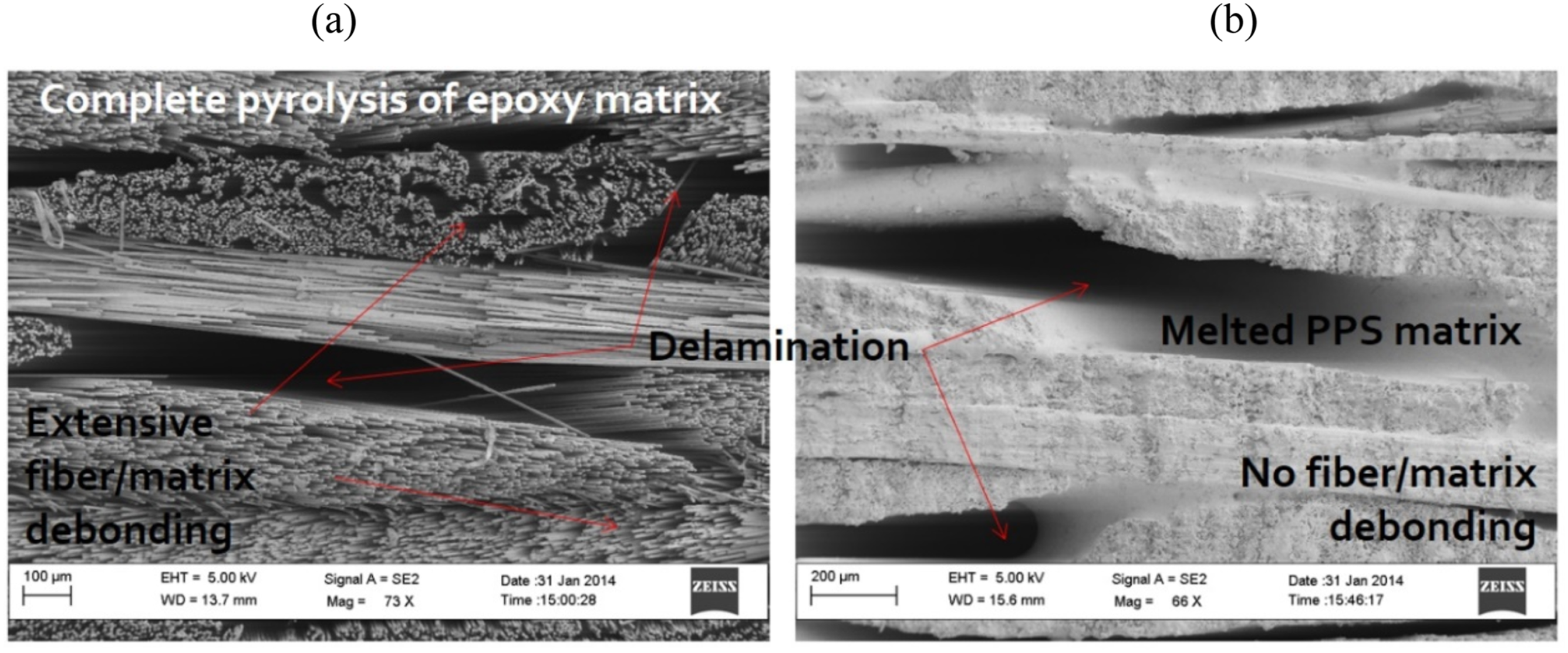
Interlaminar Shear Testing
In the virgin state (without a prior thermal aggression by a heat flux), the mechanical response of C/PPS and C/Epoxy laminates are very different due to the ductile behavior of the PPS matrix. C/PPS laminates are characterized by an elastic-plastic behavior whereas C/Epoxy laminates show an elastic quasi-brittle behavior when they are subjected to a three-point bending (Figure 9). When it comes to a flexural loading under a thermal aggression, the interlaminar shear behavior is significantly influenced by the applied heat flux (hence the temperature). In agreement with the temperature changes shown in Figure 5, C/PPS laminates gradually become very soft and ductile as PPS matrix goes successively from the vitreous to the rubbery, the viscous and pyrolyzed states (Figure 9(a)). The large displacements (up to 2 mm for a 2.2 mm thick specimen) undergone by C/PPS specimens may be attributed to the highly viscous behavior of the PPS matrix at high temperature allowing the matrix in the interlaminar area to undergo large deformations. One may consider these deformation and damage mechanisms as the results of a material effect (the viscous behavior of the PPS matrix). Macroscopic responses of laminates subjected to a flexural loading and severe thermal aggressions: (a) C/PPS – (b) C/Epoxy.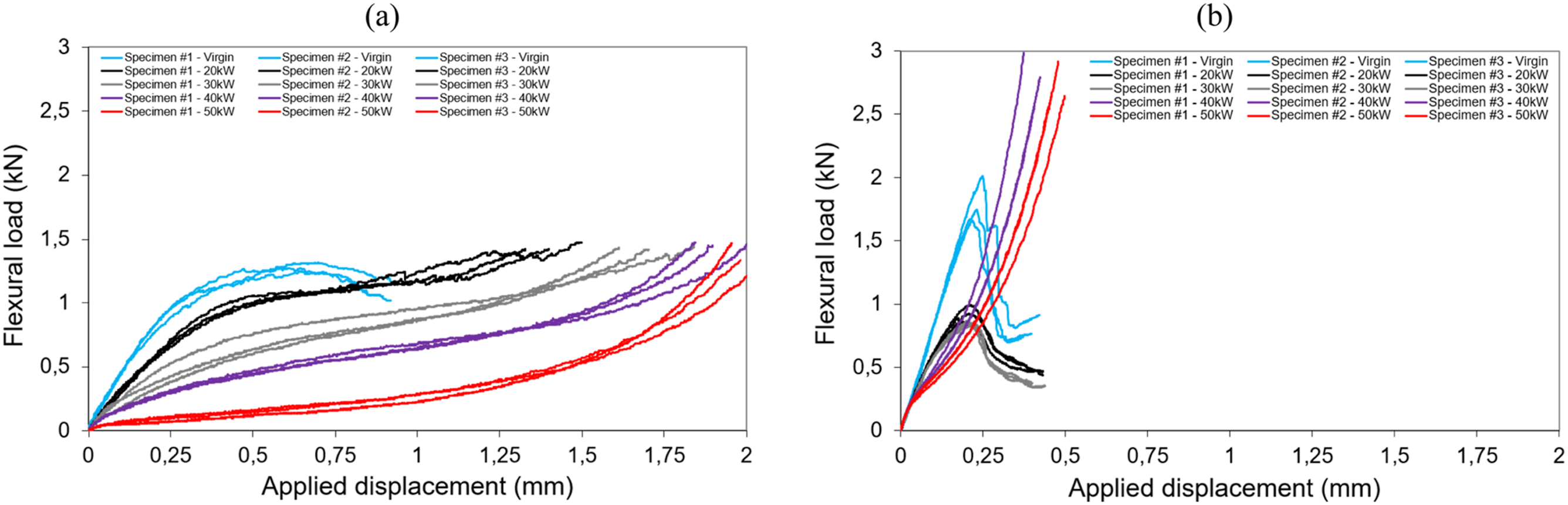
In C/Epoxy laminates, the Epoxy matrix behavior goes from vitreous in the virgin state to a rubbery and a totally pyrolyzed state. The load-displacement curve remains elastic quasi-brittle up to a 30 kW/m2 heat flux, from which the specimen response becomes pseudo-ductile. 63 It is speculated that the complete pyrolysis of the Epoxy matrix and the extensive delamination allows the different plies of the laminates to stretch individually, therefore explaining the very high levels of flexural load borne by the specimens at the end of the test (Figure 9(b)). One may consider these deformation and damage mechanisms as the results of a structural effect (the sliding of each individual ply in relation to one another).
Mechanical properties of C/PPS and C/Epoxy quasi-isotropic laminates resulting from interlaminar shear testing under different heat fluxes.
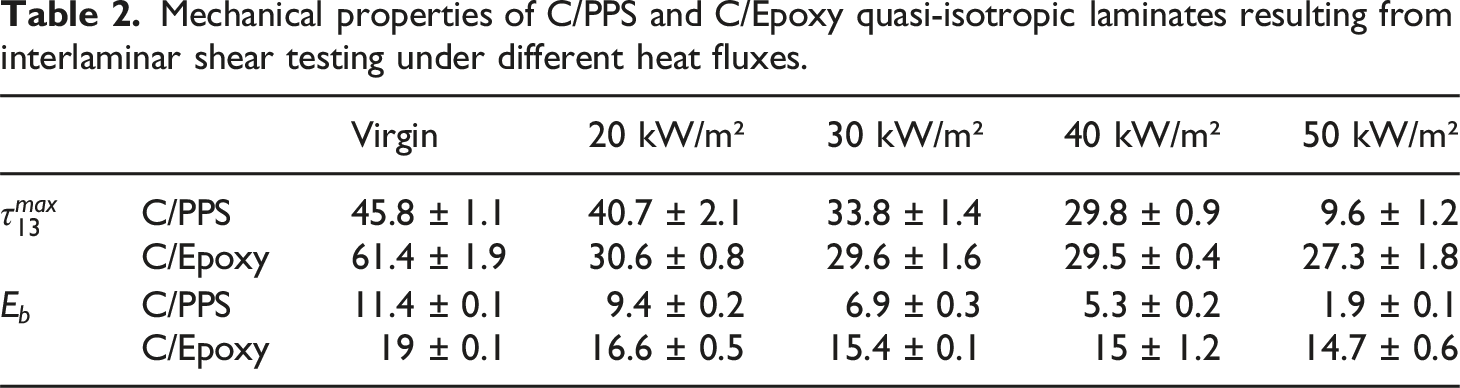
In the present study, to evaluate the influence of the heat flux on the mechanical properties, it was decided to compute the values of Comparison of the flexural modulus (a) and the interlaminar shear strength (b) as a function of the temperature resulting from different heat fluxes: C/PPS versus C/Epoxy laminates.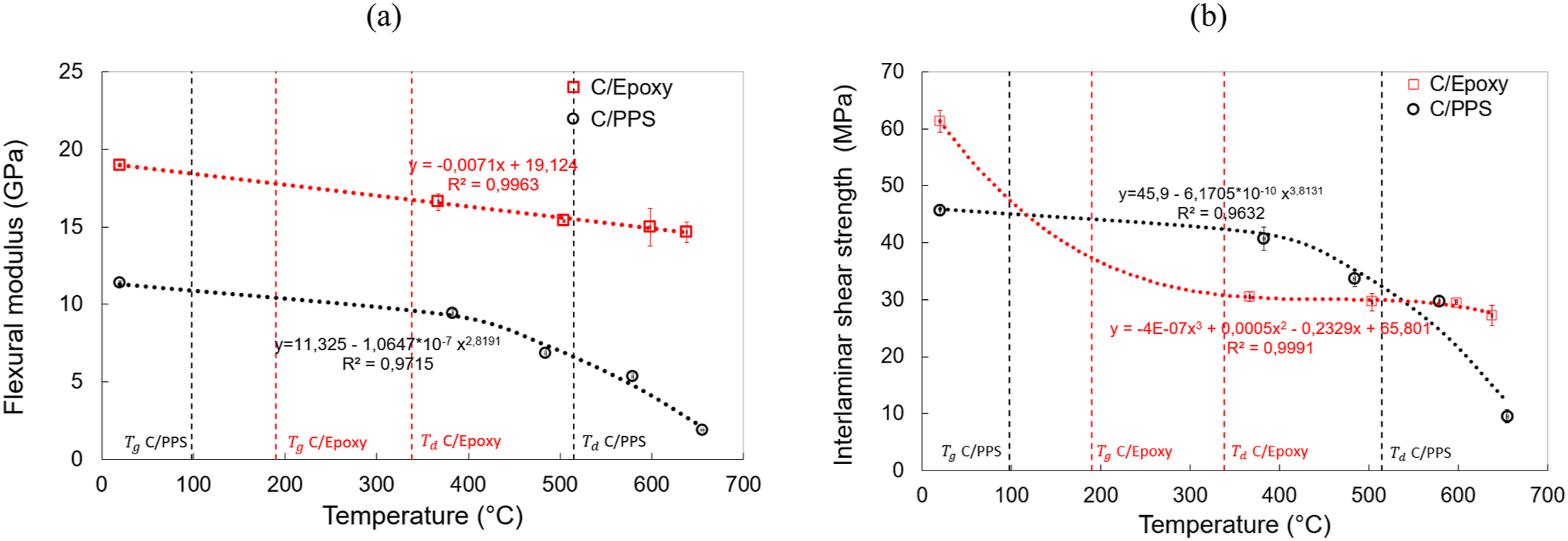
In C/PPS laminates, with respect to the reference values (as received or virgin state), the flexural modulus and the apparent ILSS (under 50 kW/m2) decreases by about 80% (Figure 10). The flexural modulus and the interlaminar shear strength decrease linearly up to the onset of the pyrolysis temperature (at about 515°C - Table 1). In C/Epoxy laminates, with respect to the reference values (as received or virgin state), the flexural modulus and the apparent ILSS (under 50 kW/m2) decreases by about 20% and 50%, respectively. The changes in the mechanical properties with temperature differ from the trends followed by C/PPS laminates. Indeed, the flexural modulus decreases linearly as temperature increases (Figure 10(a)). There is no apparent drop once the Tg and the Td of the material are reached. As far the ILSS strength is concerned, as the onset of the pyrolysis temperature is rapidly reached (at about 340°C - Table 1), the ability of C/Epoxy laminates to bear shear loading is impaired due to the pyrolysis of the Epoxy matrix in the interplay areas of the laminates (Figure 10(b)). For all testing conditions, it appears that the flexural modulus is always higher in C/Epoxy laminates with respect to C/PPS ones. Ultimately, it is difficult to compare the values of ILSS for both materials as their macroscopic responses are ruled by different behaviors, a material effect (the viscous behavior of the PPS matrix) in C/PPS laminates, and a structural effect (the sliding of each individual ply in relation to one another) in C/Epoxy laminates.
One also might expect the strain rate to be utmost important for the ILSS. However, the strain rate dependence (which is a thermally activated mechanism) has not been addressed in the present work but it would be definitely relevant to investigate the time dependent behavior, particularly in the case of thermoplastic based laminates. The melting of the PPS matrix makes very viscous the interlaminar behavior of the laminates, as was pointed out in the previous comment. When it comes to higher heat fluxes (and therefore higher temperature distribution within the laminates), the thermal decomposition of the PPS matrix emphasizes the delamination of the specimen. As a result, the curvature of the specimen observed on the force displacement curves is more pronounced at 40-50 kW/m2. The differences in the macroscopic flexural responses depending on the applied heat flux (Figure 9(a)) suggest that the state of the PPS matrix is instrumental in influencing the interlaminar behavior. In C/Epoxy laminates, there is a noticeable transition for temperatures higher than the pyrolysis temperature (Figure 9(b)).
To further discuss the influence of matrix state changes (from vitreous to pyrolyzed or viscous states) on the interlaminar shear behavior, fractographic analyses were conducted on failed specimens (Figure 11). In C/PPS laminates, in agreement with the macroscopic responses shown in Figure 9, the microscopic observations of specimens’ edges reveal large residual deformation for all testing conditions, confirming that PPS matrix undergoes plastic and viscous deformation during flexural loading. The higher the heat flux, the higher the interlaminar crack density (Figure 11(b)). During exposure to low heat fluxes (from 20 to 30 kW/m2), PPS-based laminates exhibit are-melted matrix that shields carbon fibers from oxidation, resulting in a more preserved cohesion of the carbon fibers network. The influence of thermal aggression on the meso-structure remains consistent up to a 40 kW/m2 heat flux. Interlaminar and intra-bundle matrix cracking become more extensive as temperature increases, due to the gradients in the thermal strains between the plies (Figure 11(b)). Damages induced by a three-point bending under different heat fluxes applied to quasi-isotropic laminates: (a) C/Epoxy– (b) C/PPS.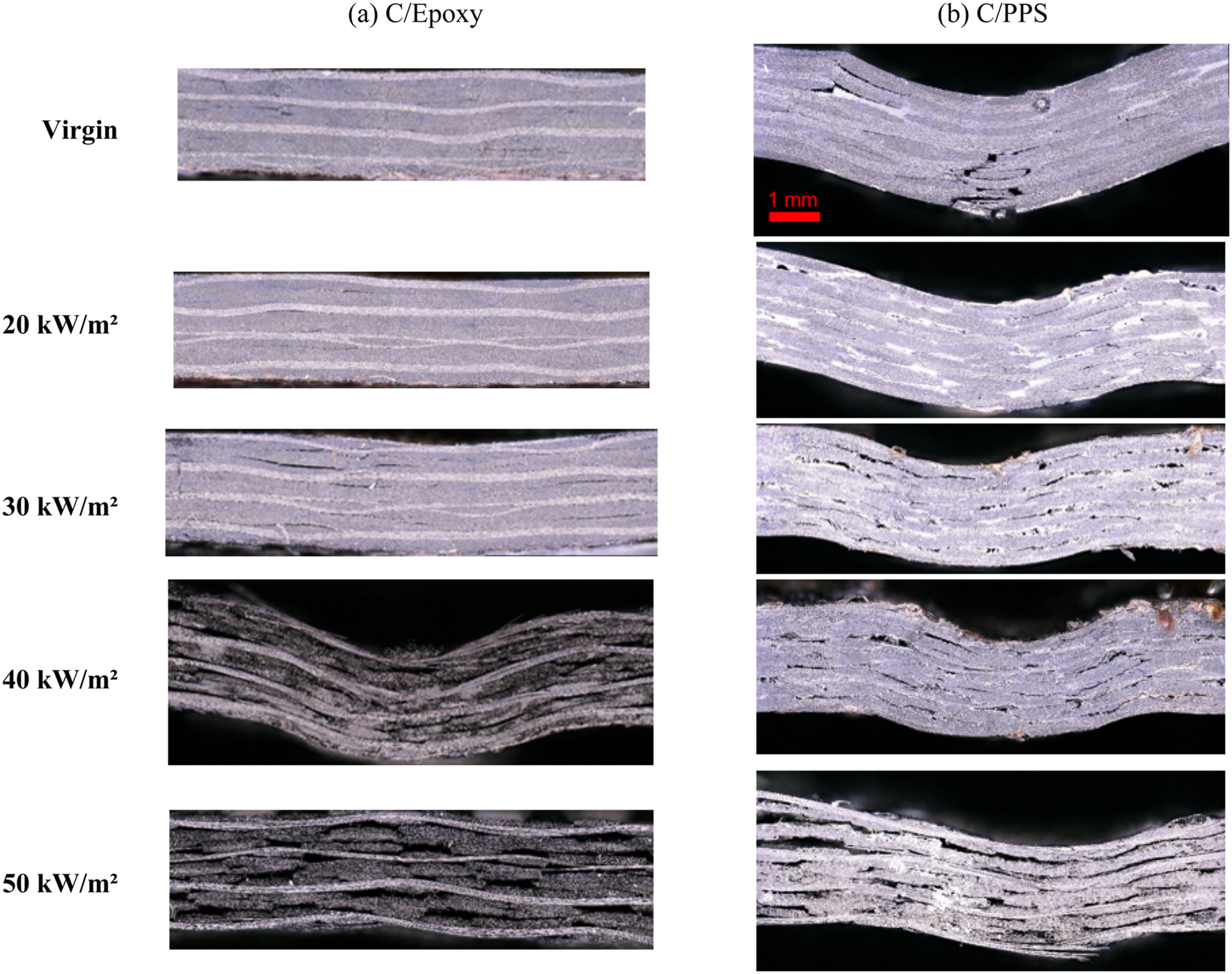
The thermal decomposition of the PPS matrix during exposure to severe heat fluxes creates intra- and inter-laminar voids along the edges of the exposed areas, potentially facilitating delamination. However, once the melting temperature is reached, the melted PPS matrix redistributes within the carbon fiber network, maintaining good cohesion of the fibrous reinforcement unlike C/Epoxy laminates. This redistribution, occurring at the resin’s decomposition temperature, preserves the structural properties of the composites under combined flexural loading and heat flux exposure. At 50 kW/m2, the pyrolysis of the PPS matrix has started between the plies and delamination is extensive (Figure 11(b)).
In C/Epoxy laminates under low heat fluxes (from 20 to 30 kW/m2), the microscopic observations reveal that at low heat fluxes, the epoxy matrix undergoes interlaminar cracking (Figure 11(a)). This cracking is attributed to internal pressure build-up from volatile formation and, sometimes, vaporization of trapped moisture. Delamination, along with matrix cracking, significantly influences the interlaminar shear behavior due to debonded interfaces between plies (Figure 11(a)). As the heat flux increases up to 40 kW/m2, the thermal composition of the epoxy matrix becomes critical. The meso-structure is characterized by a complete matrix pyrolysis and high void content (Figure 11(a)), indicating a dry meso-structure according to SEM observations (Figure 8). At 40 kW/m2 and above, the fiber network appears dry, indicating the disappearance of the epoxy matrix within and between plies and within exposed fiber bundles (Figure 11(a)). In carbon fiber-reinforced polymer materials, the matrix is crucial for holding the fiber reinforcement together, a role that seems compromised in C/Epoxy laminates under high heat flux conditions, once the pyrolysis of the matrix has severely degraded the interlaminar properties of the material. The consequences of the exposure to severe heat fluxes are three-fold: (i) the fibrous network loses cohesion due to the absence of matrix, (ii) load transfer between fibers within bundles becomes impossible, and (iii) load transfer between plies is hindered.
Limits of the ASTM Standards to Evaluate the ILSS
The first study dealing with the resistance of polymer composites to interlaminar shear at high temperatures was proposed by Kudryavtsev in the late eighties. 64 With rising temperature the adhesive and cohesive properties of the polymer matrix deteriorated more intensely than the longitudinal failure strength of the 0° oriented plies in quasi-isotropic specimens. The thermo-mechanical conditions, closest to the SBS tests at T>Tm, are the ones encountered during the forming processes of high-performance thermoplastic composites during which interlaminar friction occurs at temperatures higher than the melting temperature of a thermoplastic matrix. 65 As was pointed out by Sherer et al, during thermoforming of continuous fibre-reinforced thermoplastics, the individual plies of a laminate have to slip relative to one another to follow the prescribed tool geometry. 66 The sliding is mainly influenced by the material parameters such as polymeric matrix and fibre lay-up, and by external processing conditions, e.g. forming speed, temperature and pressure applied. Due to its viscosity at T>Tm, a layer of thermoplastic matrix is formed between the different plies of the stack, implying a viscous-driven friction behavior. They also observed that the shear stress increases with increasing pulling rate while increasing the temperature reduces the slip resistance due to the thermoplastic viscosity reduction. It was also observed that the resistance was proportional to the pressure and that it depended on the orientation of the relative fibers.
Though it is simple to conduct, the short beam shear testing as a measure of the ILSS of a composite material does not imply pure shearing. Attaining the state of pure shear in tests of laminated polymer composites is not a simple matter and represents a problem of its own.
64
The short beam shear testing is based on a three points bending test. In addition to an interlaminar shear stress
The use of short beam shear testing as a measure of the interlaminar shear strength of a composite material has been critically examined by O’ Brien. 67 In particular, it is argued that the apparent ILSS as typically measured is inconsistent with the original definition of shear fracture. Indeed, it is shown that interlaminar shear failure actually consists of tension failures in the resin rich layers between plies followed by the coalescence of ligaments created by these failures and not the sliding of two planes relative to one another that is not considered by the classical laminates theory. Thus, the SBS can be adopted but its drawback is that the test data from this test cannot be regarded as material shear properties, as failure can be induced by the multiaxial stress state resulting from tension, compression and shear stresses in a beam loaded by bending. 68 Gibson et al reported elevated temperature tensile and compressive properties measurements on woven glass fibre/polypropylene composites. 69 Stress rupture measurements were made on thick laminate exposed to 50 kW/m2 heat flux. Behaviour was qualitatively similar to that of thermosetting laminates, but compressive behaviour was significantly inferior, due to a poorer resin–matrix bond, and to the loss of compressive properties at temperatures above the melting point. In spite of these drawbacks, the ILSS is usually considered for evaluating the ability of composite laminates and components to resist delamination for sake of simplicity. Although the apparent ILSS measurements may prove useful for completeness of generating materials design database, the accuracy of these measurements proves to be limited when it comes to very ductile PMCs. Thermoplastic composites, especially their matrix dominated mechanical properties, show a significant dependence on the temperature. 70 This is clearly one of the limits of the ASTM standards. The short beam test was initially designed to determine the ILSS of composite laminates at temperatures lower than the melting temperature. When it comes to very high temperatures, the viscosity of the PPS matrix makes the interlaminar shear response primarily driven by the 0 oriented plies. In other words, the load transfer between the plies is not insured via matrix shearing and the laminates behavior is equivalent to the behavior of an extensively delaminated specimen. This might explain the flexural response of the C/PPS laminates showing an inflexion of the curve resulting from the gradual curvature of the laminates plies.
Finally, regarding the accuracy of the ASTM equation to compute the interlaminar shear strength, it is not possible to conclude as this equation usually refers to materials whose fracture behavior is elastic-brittle or slightly plastic. In the present situation, the equation is valid for c/epoxy laminates but it cannot be used for design purposes for C/PPS specimens whose mechanical response is highly ductile under heat fluxes leading to temperature higher than the material’s Tg. In other words, it provides a rough estimate on the influence of the heat flux on the ILSS. More thorough investigation of both deformation and failure mechanisms of the polymer interlayer in thermoplastic composites under different test conditions and types of loading, especially in interlaminar shear, is bound to point up ways of improving the characterization of the interlaminar behaviour of thermoplastic composites at T>Tmelting.
Conclusions
This works was aimed at investigating how the combination of thermal heat flux and flexural loading affects the interlaminar shear behavior of quasi-isotropic carbon fiber-reinforced PPS and Epoxy laminates. Regardless of the heat flux intensity (ranging from 20 to 50 kW/m2), the maximum surface temperature exceeds the thermal decomposition onset temperature (Td ≈ 340°C) for C/Epoxy laminates, while thermal decomposition occurs only for heat fluxes of 40-50 kW/m2 in C/PPS laminates (Td ≈ 515°C). A specialized mechanical bench was devised to investigate the interlaminar shear behavior of polymer-based laminates under thermal aggression imposed by a cone calorimeter. Although with the chosen conditions of testing, the state of stress within the specimens does not correspond fully to the state of pure shear, the method is nevertheless useful because it ensures that laboratory tests for technological purposes can be carried out with relatively simple specimens and testing conditions.
In C/PPS laminates, the flexural modulus and apparent ILSS (under 50 kW/m2) decrease by approximately 80% compared to reference values in the as-received state. In C/Epoxy laminates, the flexural modulus and apparent ILSS (under 50 kW/m2) decrease by around 20% and 50%, respectively, compared to reference values in the as-received or virgin state. In carbon fiber-reinforced polymer materials, the matrix condition plays a crucial role in maintaining the cohesion of the fiber network and the bonding of plies. This role appears compromised in C/Epoxy and C/PPS laminates under high heat flux conditions, as the pyrolysis of the matrix significantly degrades the interlaminar properties of the material. However, the comparison of the values of ILSS for both materials is not straightforward as their macroscopic responses are ruled by different behaviors, a material effect (the viscous behavior of the PPS matrix) in C/PPS laminates, and a structural effect (the sliding of each individual ply in relation to one another) in C/Epoxy laminates.
By mimicking critical service conditions representative of fire conditions, the present work is useful for engineers willing to design composite parts for applications in structural parts in the environment of an engine aircraft for which the fire certification requirements are strict. From a practical standpoint, this study provides an insight into the changes in the interlaminar properties of C/Epoxy laminates to be replaced by carbon fibers reinforced PPS laminates for aeronautical purposes.
Footnotes
Declaration of conflicting interests
The author(s) declared no potential conflicts of interest with respect to the research, authorship, and/or publication of this article.
Funding
The author(s) received no financial support for the research, authorship, and/or publication of this article.
