



Abstract
In the present work, the effects of various filler types and content on the characteristics and properties of styrene-butadiene rubber (SBR) were studied. This study prepared SBR filled with different fillers: kaolin, metakaolinite, synthetic zeolite Na-A, alumina (Al2O3) nanoparticles, and hybrid filler (synthetic zeolite Na-A/Al2O3). The silane coupling agent 3-aminopropyltriethoxysilane (APTES) was employed to treat the surface with fillers. Scanning electron microscope (SEM) and X-ray diffraction (XRD) were used to determine the surface morphology. The results demonstrated that fillers improved the physicomechanical properties. Tensile strength and elongation at break (%) in composites containing synthetic zeolite Na-A increased by up to 158.6% at 3 phr and 100% at 2 phr, respectively. The results showed that the surface properties displayed by SEM analysis indicated a good distribution of filler particles. Also, the rubber compound’s resistance to organic solvents such as toluene was improved, as evidenced by swelling properties; the swelling ratio decreased by 17.5% while the crosslink density increased by 42.6% at 5 phr Al2O3/synthetic zeolite Na-A
Introduction
Particle-filled elastomeric composites have gained popularity due to their inexpensive cost and widespread industrial uses. Generally, kaolin, carbon black, metals, and metal oxides are used as reinforcing fillers. Adding filler to rubbers inevitably alters their physical qualities while lowering production costs.1–3 Styrene-butadiene rubber (SBR) is a common type of elastomer in structural and industrial applications, such as tires, conveying belts, tubes, seals, wire, and cable applications,4–6 because of its characteristics such as high elongation at break (%), high tear strength, improved abrasion resistance, high weather resistance, and lower heat build-up behavior. This material is also resistant to UV light and oxygen. Despite its benefits, SBR has poor mechanical characteristics, oil and ozone resistance, and electrical and thermal conductivity.7–9 Rubber–filler interaction is a key parameter in the reinforcement of rubber composites. Direct loading with such inorganic particles usually results in mechanical property loss and other problems in composites. Because of its applicability to industrial production, much research is still being expended to improve the interaction between filler and rubber; several surface modification procedures were used, that is, including a silane coupling agent. The silane improves the dispersion of the filler by reducing the filler–filler interactions and increasing the compatibility of the filler with the rubber. Various filler treatments have been developed to improve organic compound intercalation and polymer compatibility. Surface treatment of fillers used in plastic composites can also increase mechanical properties.10–13
In the rubber industry, kaolin clay, also known as kaolinite, is suitable for use as a filler to enhance rubber properties because of its low heat, layered structure, and electrical conductivity.14,15 The OH groups on the kaolin surface, like those on silica, make it water-absorbent and polar. As kaolinite is readily available, has a unique layered structure, and is light in color, it can be used as a useful rubber filler. 16 Because of its simple chemical composition and high reactivity, calcined kaolinite, or metakaolinite, is widely utilized. Many researchers have studied kaolin and metakaolin’s effect on polymer materials’ properties.14–17 Yinmin Zhang et al. 15 investigated the impact of kaolinite content on the vulcanization and mechanical properties of kaolinite-filled SBR rubber. The results demonstrated that the improved mechanical properties of the composite enhanced the dispersion of the filler by reducing the filler–filler interactions and increasing the compatibility of the filler with SBR rubber. S.H. El-Sabbagh et al. 17 studied the rheological and physicomechanical properties of SBR composites using core-shell kaolin covered with different metal oxides (CaO, MgO, and CaOMgO). The results indicated that the newly produced pigments have a considerable effect on SBR characteristics, with the optimum pigment loading being 40 phr for CaO/kaolin and 2.5 phr for MgO/kaolin.
Zeolites are an inorganic, crystalline material family. The structure of zeolites consists of 3-dimensional frameworks comprising SiO4 and AlO4 tetrahedra. Due to the remarkable properties of zeolite, particularly its conductivity, thermal stability, porosity, and large surface area, incorporating zeolite into rubber to form a zeolite/rubber composite is expected to enhance its mechanical, thermal, and conductivity properties.18–20 The two primary types of zeolites are natural and synthetic zeolites, which have been widely used to improve the properties of several polymeric material classes. There are numerous advantages to using synthetic zeolites. Synthetic zeolite, for example, is synthesized in an exceedingly pure form and uniform size, with improved ion exchange capacities. As a result of their high flexibility and adaptability, synthesized zeolites have piqued the curiosity of academics and scientists. Jincheng Wang et al. 20 studied the effects of zeolite loading on the cure parameters, tensile characteristics, and cross-linking density of NR composites. The results demonstrated that adding zeolite to NR composites enhanced their cure, tensile, and cross-linking density. Al2O3 has received much attention among ceramic fillers because of its adequate hardness, chemical inertness, good mechanical and thermal capabilities, and reasonable pricing.12,21 However, Al2O3 powder has such low compatibility with rubber that it disperses irregularly in the organic matrix. Noraiham Mohamad et al. 22 investigated the impact of Al2O3 nanoparticle surface treatment on the physical properties of epoxidized natural rubber (ENR). The Al2O3 nanoparticles are compatible with the ENR matrix and the ENR matrix’s uniformly distributed alumina particles.
The use of computers in structural analysis, specifically finite element analysis (FEA), enables computer simulation of how a part will behave to loads and forces in its application environment. In other words, it is utilized to forecast the effectiveness of elastomeric component design principles.23–26
To our knowledge, no systematic research has been published on the impact of different filler types and loadings on the curing, physicomechanical, and morphological properties of SBR rubber. As a result, the primary goal of this study was to explore the impacts of adding 1–5 phr of different fillers [kaolin, metakaolinite, synthetic zeolite Na-A, alumina (Al2O3) nanoparticles and hybrid filler (synthetic zeolite Na-A/Al2O3)] on the curing, mechanical properties, morphological features of SBR rubber and to select the optimum samples whose possessing the best physicomechanical properties. The constants of different hyperelastic models for the composites studied here are extracted. The findings of this study will be useful in developing SBR rubber goods for applications such as tire manufacturing, conveyor belts, dampers, wire and cable applications, and other rubber parts.
Experimental
Materials
Chemical analysis of Egyptian kaolin sample and loss on ignition (LOI).

Synthesis of metakaolinite and zeolite Na-A from Kaolinite revisited
Egyptian kaolin was calcined for 120 min at 600°C in a muffle furnace to produce the metakaolinite. Dehydroxylation of kaolinite during calcination results in an amorphous phase (metakaolinite), as shown in equation (1)
27
:
A technique similar to that described in reference 28 was used to produce zeolite Na-A. Portions of metakaolinite (200 g) were treated with NaOH solution, and 200 g of NaSiO3 were allowed to react for 120 min at 600°C in a muffle furnace. Aging for 24 h separated the liquid and solid phases. The solid phases were washed twice with water, centrifuged, and dried at 100 °C–110°C for 8 h.
Surface treatment by APTES coupling agent
Silane coupling agents modify the surface of fillers. As previously stated, APTES was used as a chemical surface modifier to modify the surface of fillers.11,12 The probable mechanism of surface modification of filler particles with silane coupling agents is represented in Figure 1. Schematic representation of the formation of the proposed rubber composite material.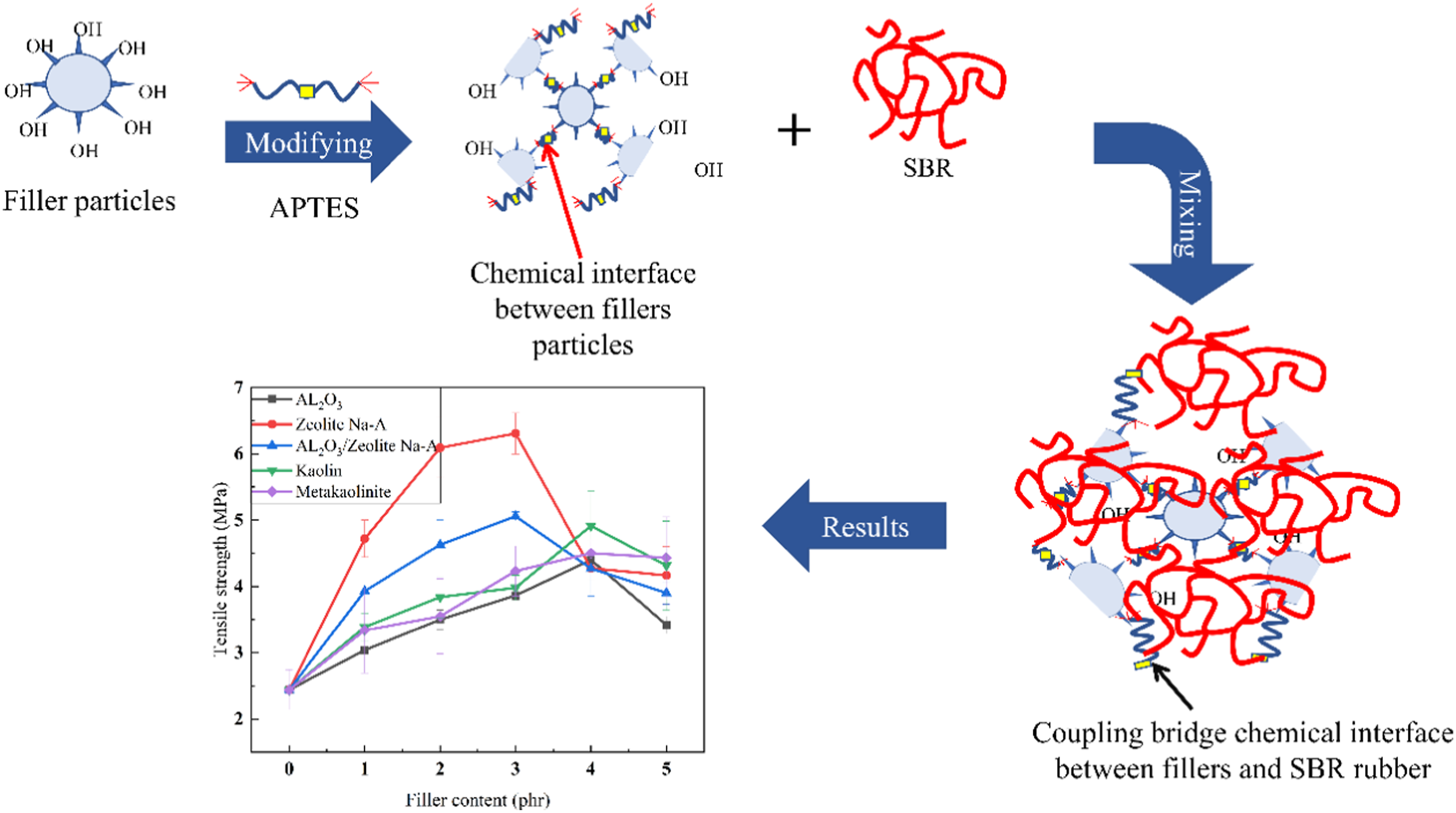
Sample preparation
Formulations of modified fillers/SBR compounds (phr).
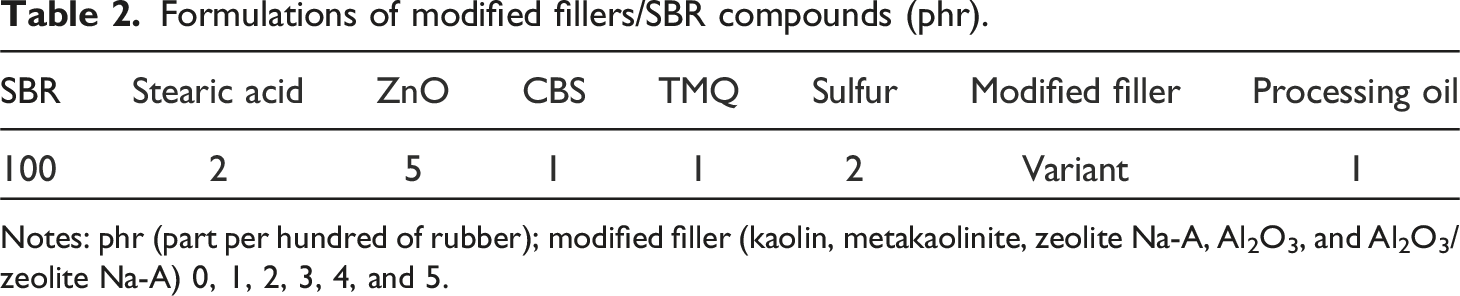
Notes: phr (part per hundred of rubber); modified filler (kaolin, metakaolinite, zeolite Na-A, Al2O3, and Al2O3/zeolite Na-A) 0, 1, 2, 3, 4, and 5.
Characterization of modified fillers/SBR composites
X-ray diffraction (XRD) was conducted using a Pan-Alytical Emprean diffractometer with Cu-Kα radiation at a generator voltage of 35 kV and wavelength of 0.154 nm; the diffraction curves were obtained. Cure characteristics using an oscillating disk rheometer (Monsanto 100, USA) according to ASTM D 2084-01.
29
The physicomechanical properties of the rubber compounds were determined according to ASTM D 412-16
30
using an electronic Zwick 1425 testing machine (Germany). Hardness was measured according to ASTM D 2240
31
standards using the Shore A durometer (Bareiss, Oberdischingen, Germany). The swelling was determined according to ASTM D471 – 12a.
32
Toluene was used to measure the swelling of the specimens. The cured specimen was weighed after it had been covered with toluene for 48 h to achieve the state of equilibrium swelling. The swollen samples were weighed and then oven-dried to get a constant weight. The final weight was used to determine the correct weight of the sample without dissolved components. The swelling ratio (ζ%) of the composites was calculated as follows in equation (2):
The soluble fraction (S.F.) % is as follows in equation (3):


To study the rubber-filler interaction, the Lorenz and Park equations Eq. Six were applied
34
:
Qfiller is the filler’s swelling value, and Qgum is the swelling value of the gum. z is the filler weight ratio in the vulcanizate, whereas a and b are constants. The swelling ratio (Qfiller/Qgum) is lower when the filler and rubber matrix interact properly. The Flory-Huggins equation can be used to calculate the change in elastic Gibbs free energy from equation (7)
33
:

The morphology of the samples was studied using a scanning electron microscope (SEM) (JEOL, JSM 6360LA, Tokyo, Japan) was working at 25 V of excitation potential.
Results and discussions
X-ray diffraction for modified fillers characterization and composite
Figure 2 depicts the XRD pattern of modified filler with APTES and modified fillers/SBR composites. Figure 2 shows the modified kaoline’s characteristic diffraction peak at 2θ = 12.13° and 26.50°. Other modified kaolinite reflections at 2θ = 20.64°, 24.66°, 37.8°, 38.14°, and 39.18° were also found.35–37 At roughly 2θ = 20°, the blank sample exhibited an amorphous reflection. Also, zinc oxide has diffractions at 2θ = 32.38°, 36.86°, and 56.95°.
15
Additionally, Figure 2 for the composite SBR/modified kaoline (4 phr) provides strong evidence of the insertion of the SBR into the filler, disrupting the regular stacked-layer structure of the organoclay and giving rise to an exfoliated structure. XRD patterns of blank, modified kaoline, 4 phr of modified kaoline/SBR vulcanizate, metakaolinite, and 4 phr of modified metakaolinite/SBR vulcanizate, modified zeolite Na-A, 3 phr of modified zeolite Na-A/SBR vulcanizate, alumina, 4 phr of modified alumina/SBR vulcanizate, and 3 phr of modified alumina/zeolite Na-A/SBR vulcanizate.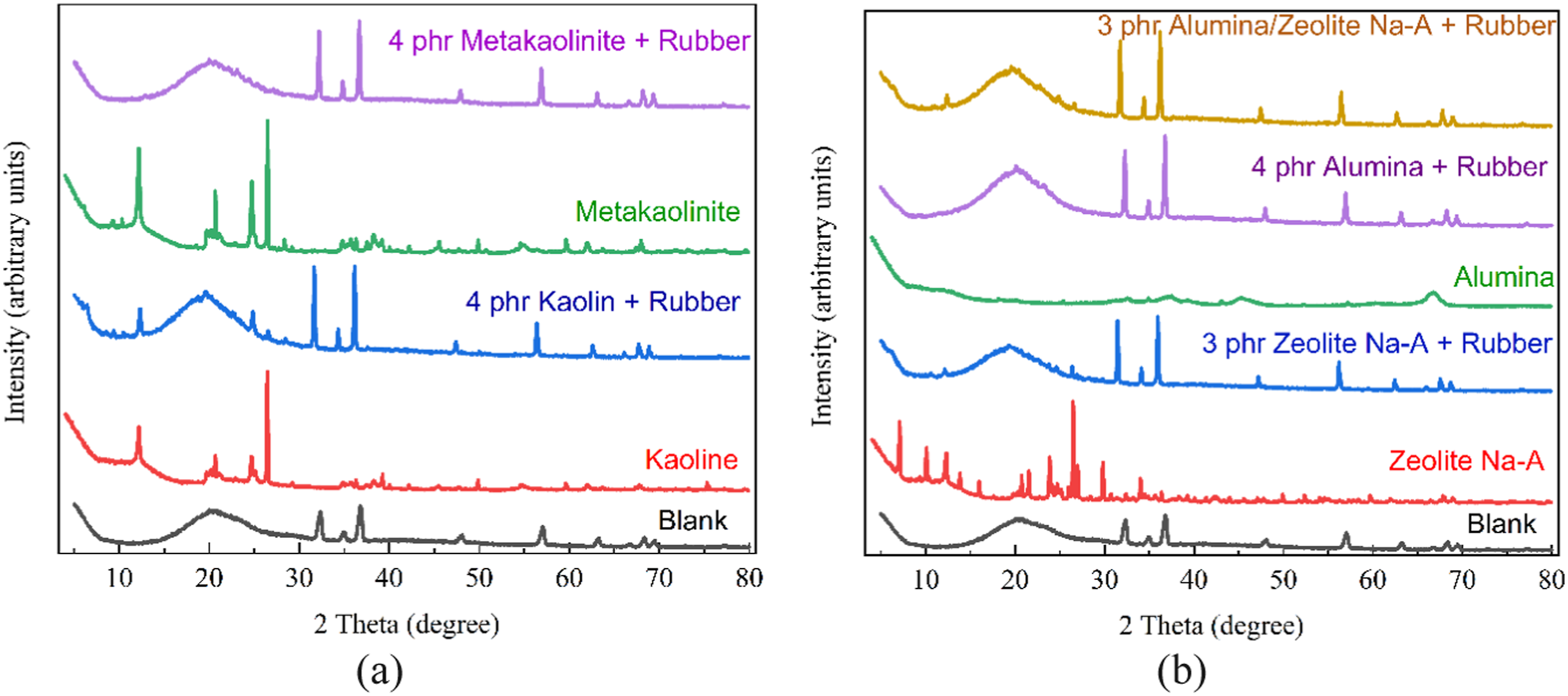
When polymer chains are placed into the clay layers’ gallery gap, the interlayer spacing rises, and the diffraction peaks move to a lower angle. For exfoliated formations, when clay layers are entirely and uniformly scattered in the matrix, diffraction peaks disappear. 37 After calcined kaolinite by the thermal treatments, the modified metakaolinite showed reflections at 2θ = 26.35°, 49.84°, 62.04°, and 67.77° were also present. After 120 min of treatment for metakaolinite with NaOH solution and NaSiO3, the XRD traces of the crystalline products are typical of zeolite Na-A. The modified zeolite Na-A showed reflections at 2θ = 6.89°, 9.82°, 11.98°,13.68°, 15.99°, 20.79°, 21.56°, 23.72°, 26.65°, 29.90°, 34.08°, 59.89°, and 68.07° were also present. 28
Cure characteristics
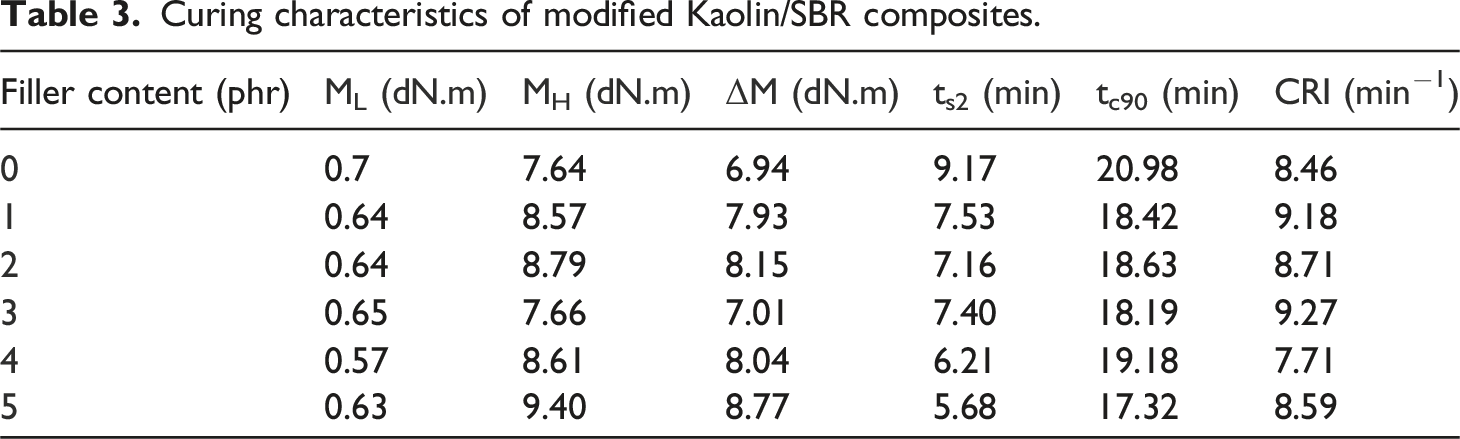
Curing characteristics of modified Kaolin/SBR composites.
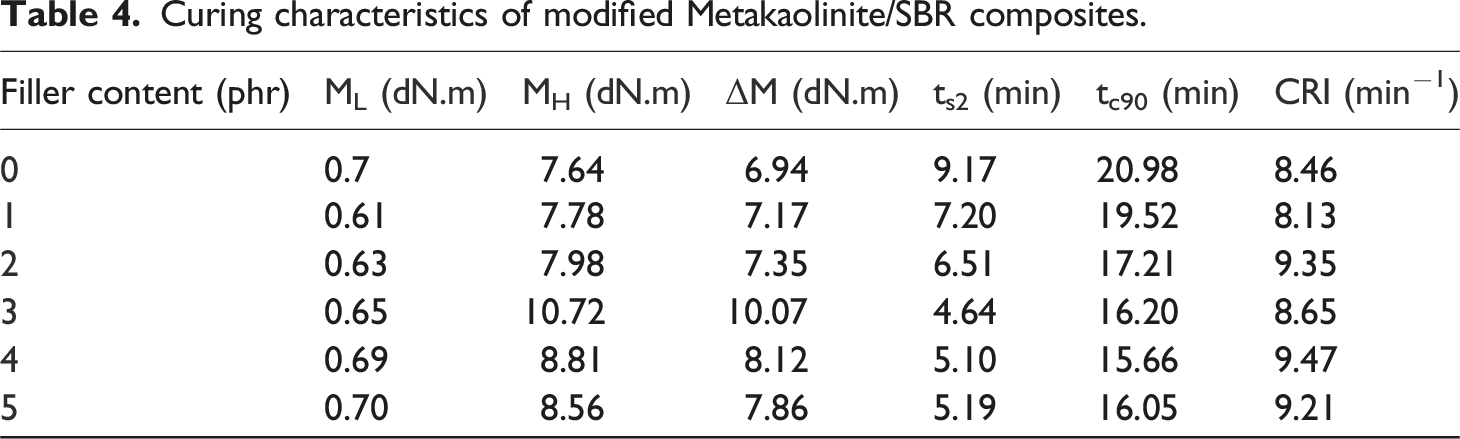
Curing characteristics of modified Metakaolinite/SBR composites.
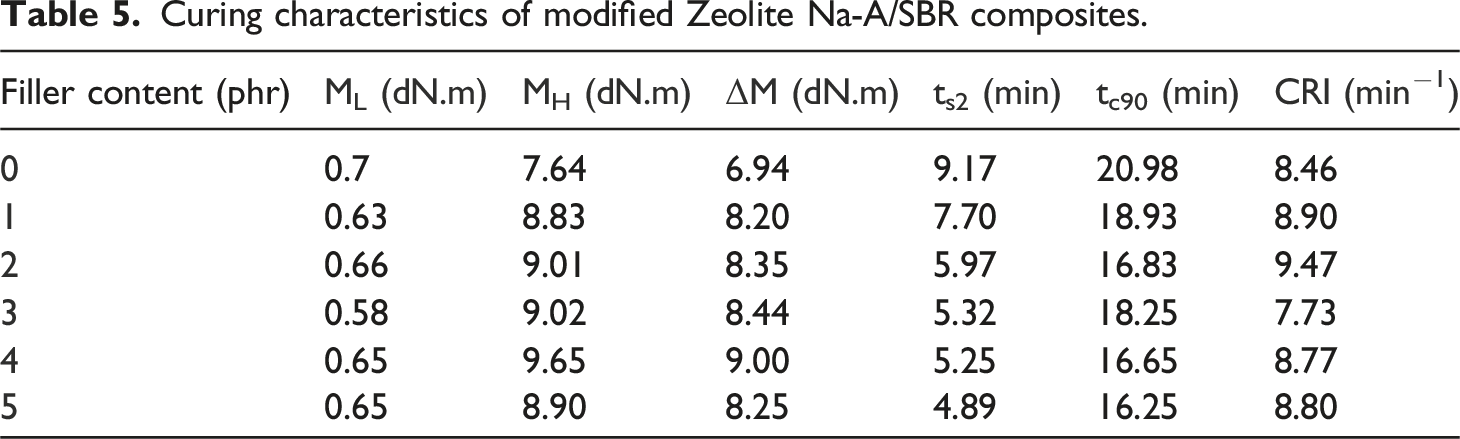
Curing characteristics of modified Zeolite Na-A/SBR composites.
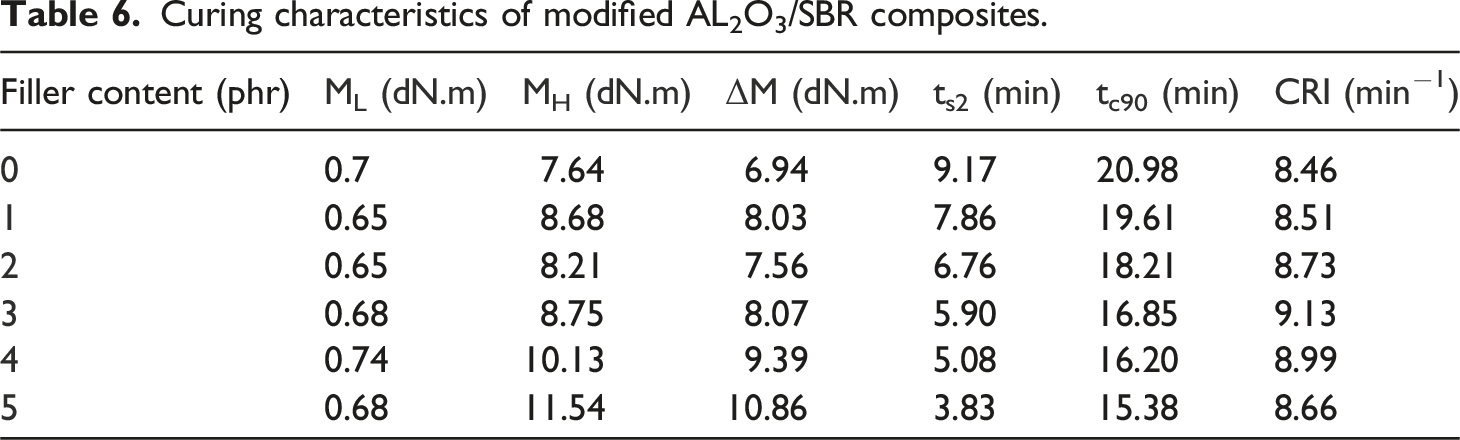
Curing characteristics of modified AL2O3/SBR composites.
Curing characteristics of modified AL2O3/Zeolite Na-A/SBR composites.
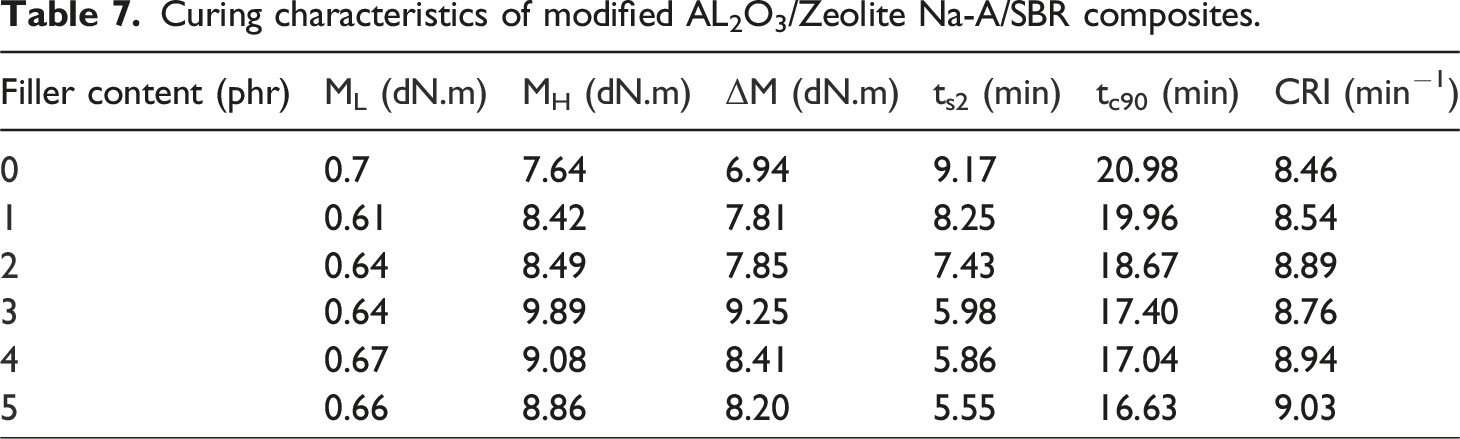
The filler type, concentration, and surface features of a composite all significantly impacted its cure characteristics.10–13 The higher MH for the modified filled rubber matrix indicates that stronger interactions between the filler and SBR rubber matrix are obtained.2,40 The torque differences (ΔM) between its MH and ML values rose as the modified filler content increased, as illustrated in Tables 3–7; this is because this filler functions as a co-activator during the chemical vulcanization process, resulting in additional connections between the sulfur and rubber molecular chains, as well as enhanced crosslinking density and torque differences and shorter curing durations for composites. 38 A similar effect was also observed by other researchers when they used horsetail modified as a filler for natural rubber 41 and also when APTES was used to modify graphene oxide (GO) and silica (SiO2) to reinforce the SBR matrix. 7
Furthermore, as demonstrated in Tables 3–7, the ts2 and tc90 of the samples dropped as the filler concentrations increased. For example, the composites with modified Al2O3 at 5 phr decreased the ts2 of the SBR rubber matrix by 58.23 %, and it decreased by 46.67 % at 5 phr modified zeolite Na-A. The lower ts2 of the sample represented better processing ability.2,13
The optimum curing time (tc90) was determined to be the shortest time required to achieve a maximum torque of roughly 90%. It calculates the time required for the rubber compound to cure completely. The obtained results confirm their accelerating effect on the vulcanization process. The similar effect of the use of coupling agents on the cross-linking kinetics of elastomeric materials was also confirmed by other researchers. 41
The included treated filler particles decreased the optimum curing time for varied treated fillers ratio-cured SBR matrix. The considerable decline in the ts2 and tc90 values was attributed to the quick crosslinking reaction between the modified filler and the SBR rubber matrix.12,38 In other words, incorporating modified filler into the SBR rubber matrix accelerates vulcanization. This is due to the increased reactive sites for the crosslinking reaction on the rubber molecules.
Mechanical properties
Figure 3 depicts the mechanical characteristics of modified filler in an SBR rubber matrix with varying filler content and concentrations at room temperature. The presence of modified fillers improved the tensile strength of the SBR rubber matrix. They are, nevertheless, significantly better in all situations than the comparable unfilled matrices, indicating a lack of weak spots or homogeneities in the filled rubbers.
42
Mechanical qualities of SBR can be significantly improved, particularly for modified zeolite Na-A-filled SBR. At 3 phr of modified zeolite Na-A, the maximum tensile strength rose by 158.6%, rising from 2.44 MPa to 6.31 MPa. The tensile strength of modified kaolin increased by 101.2% at 4 phr, rising from 2.44 MPa to 4.91 MPa with a minor drop. A similar effect was also observed in previous studies when it used kaolinite as a filler for SBR.15,37,39,43,44 This strong reinforcement, attributable to the presence of modified kaolin, might be linked to the unique activity of the interface’s solid surface, its fineness, and the flaky character of the particles.14,15 investigations. Tensile properties of the modified fillers/SBR composites.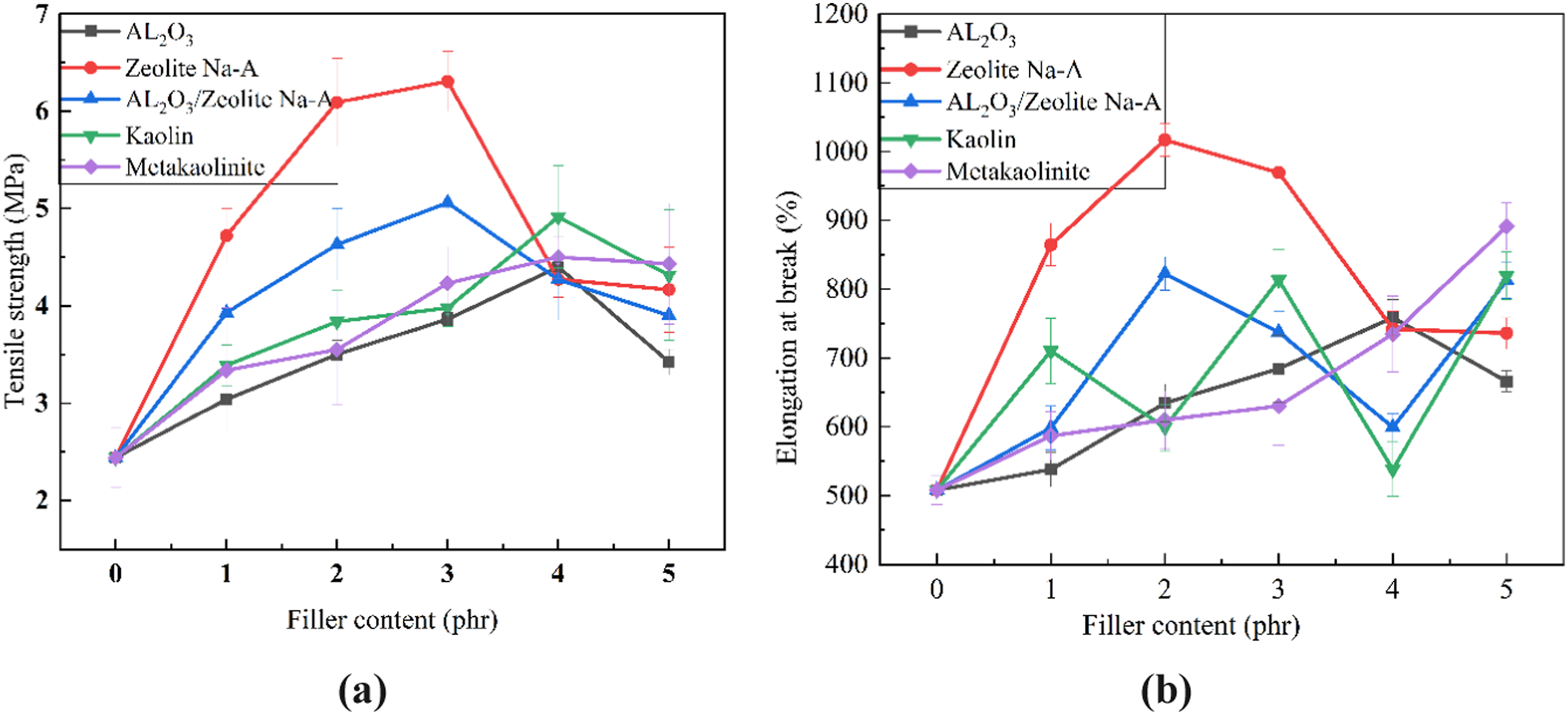
Tensile strength increased for modified Al2O3 up to a maximum at 4 phr. The strength of a modified Al2O3/Zeolite Na-A-filled SBR rose from 1 to 3 phr, after which it began to erode. The tensile strength of modified metakaolinite-filled SBR increased with increasing filler loading until 4 phr. The initial improvement in strength for modified filler-filled SBR composites was mostly owing to good filler-matrix interactions, which were facilitated by the platy character of the fillers. During external loading, increased filler-matrix interactions transmit greater stress from the matrix to the fillers. 14
Figure 3 depicts the influence of filler loading on the elongation at break (%) of various types of filled SBR composites. Regarding elongation at break (%), the composites with all fillers exceeded those with the SBR rubber matrix. Compared to those with the SBR rubber matrix, the composite at 2 phr of zeolite Na-A improved by around 100%, while composites at 4 phr of Al2O3 improved by 49%. This result was particularly promising for fillers since it did not degrade their flexibility in addition to reinforcing rubber composites, as is typical of traditional fillers such as carbon black and silica. 45 The rise in elongation at break (%) indicates good interfacial adhesion and appropriate filler wetting. Styrene-butadiene rubber deformability is reduced due to excessive filler agglomeration, which results in insufficient homogeneity and hardness of particle fillers. Some researchers gave the same explanation14,42; this implies that the content and type of modified fillers are the primary determinants of rubber mechanical characteristics improvement. These increases in tensile properties can be attributed to beneficial interactions at the phase boundaries caused by the dispersion of filler. 42
The possibility of developing a filler network increased as loading increased due to a smaller distance between aggregates in the rubber matrix and a greater filler-filler interaction. In the rubber industry, filler-filler interaction is the primary reinforcing process, particularly at high filler loading; rising degrees of filler-filler interaction, as well as the polar nature of filler, have a negative impact on composite final properties. The lack of a well-distributed phase in the matrix leads to crack propagation and lower tensile strength.12,15,46,47 As demonstrated in Figure 3, the further loaded modified fillers could stiffen rubber by substituting the rubber with rigid and nondeformable particles, resulting in a greater modulus. The occluded polymer that was generated with increased loading improved rubber stiffness by acting as an additional filler loading. The tensile properties of composites containing modified zeolite are often greater than those of other fillers at the same loading ratio of up to 4 phr.
The fillers and rubber used in compounding and dispersing significantly improved the tensile characteristics. The effective strong bonding would improve if the rubber filler dispersion was homogeneous. Aggregation of the filler and its rubber matrix may occur as the filler content increases, resulting in vulcanizate degradation. As a result, SEM analysis must be used to evaluate the filler morphology in SBR. Al2O3 has lower mechanical qualities than hybrid and single fillers (Al2O3 or zeolite). Zeolite, on the other hand, produces a greater mechanical property. According to the tensile properties investigation, the presence of APTES can improve the dispersion of fillers and their interfacial interaction with the SBR matrix. 2
Figure 4 depicts the tensile strength at strain 300% (M 300) of modified fillers/SBR composites. The M 300 of the vulcanizates increased as the filler content increased; this correlated well with the delta torque results, which demonstrated that increasing the stiffness of the rubber composites resulted in greater resistance to higher stress at low elongation.
38
In contrast to the SBR rubber matrix, the composite at 3 phr of kaolin had the highest M 300 value, with the modulus increasing by 93.94%. As demonstrated in Figure 4, the maximum modulus values were observed at 3 phr (55% increase) when Al2O3 was combined with zeolite filler. Prior research demonstrated that silane coupling agents successfully increased the mechanical characteristics of filler-based SBR rubber. Tensile strength at strain 300% and Hardness of the modified fillers/SBR composites.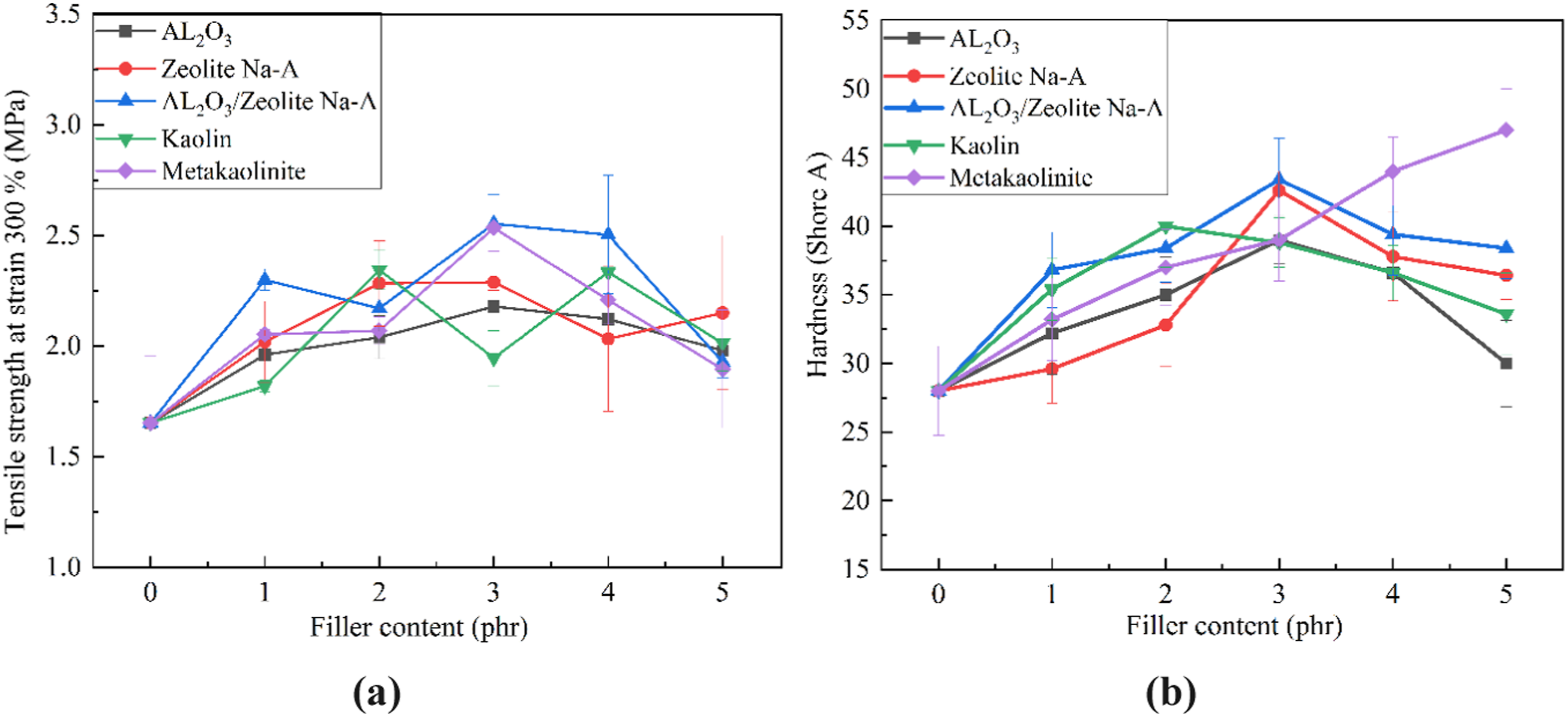
Surface modification of filler particles by a silane coupling agent (APTES) significantly improves the mechanical properties of particle-reinforced vulcanizates.10–13 These results in the 300 % modulus match the trends of other studies of different fillers (graphene oxide and silica) with silane coupling agent, 7 where the modulus improved because the presence of the coupling agent allowed a more uniform dispersion in the rubber matrix allowing a strong interfacial bonding with filler. The tensile properties were decreased by increasing the modified filler content. This decrease could be attributed to the filler aggregation at high concentrations. The formation of aggregates restricts the contact area between the matrix and filler, resulting in stress concentration weak areas in the matrix and, as a result, low mechanical strength.10,11
Different models exist in the literature to describe the behavior of hyperplastic materials, such as the ones investigated here. The deviatoric strain potential is considered for the description of these models.23–25,48–50 They are mainly invariant-based or stretch-based models, where they are defined in terms of invariants (I
i
) and principal stretch ratios (λ
i
), respectively. Polynomial models are considered to be in the first group. The generalized Rivlin hyperelastic model describes the deviatoric strain energy potential as follows:

In this short form, when
The generalized form of the stretch-based type of deviatoric strain energy, the Ogden potential, is given below:
In the next, the material constants of these models are identified using Abaqus software. In essence, ABAQUS reanalyzes the experimentally obtained data, producing the material coefficients and plotting the stress-strain curve using different models. Figure 5 presents the respective stress-strain curves with the experimentally obtained one for 3 phr of zeolite Na-A. It is observed that the general trends of all the curves are in line with that of the experimental one. However, especially the curves obtained using Neo-Hooke, Yeoh and Ogden with N = 1 models are deviating from the experimental one more than the others. Table 8 presents the identified constants and obtained least square errors during data fitting for all the models. It was noticed that the worst fit was obtained for the Neo-Hooke model with 65.19 least square error, followed by Yeoh and Ogden (N = 1) models with 43.13 and 42.99 least square errors, respectively. The stress-strain relationship of 3 phr of zeolite Na-A was obtained experimentally and using different theoretical models. The comparison of several hyperelastic models with respect to how they deviate from the stress-strain curves observed experimentally and the constants found for various composites studied here.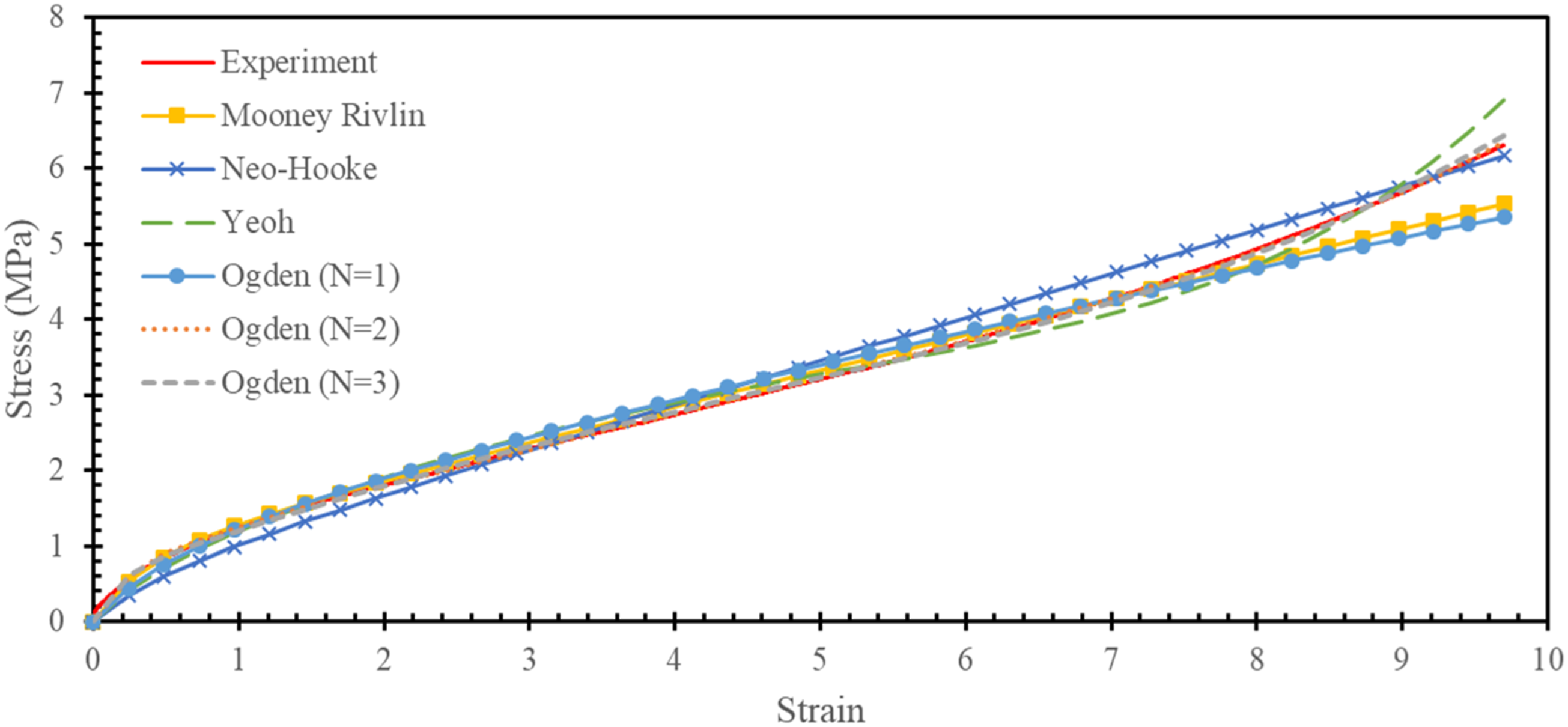
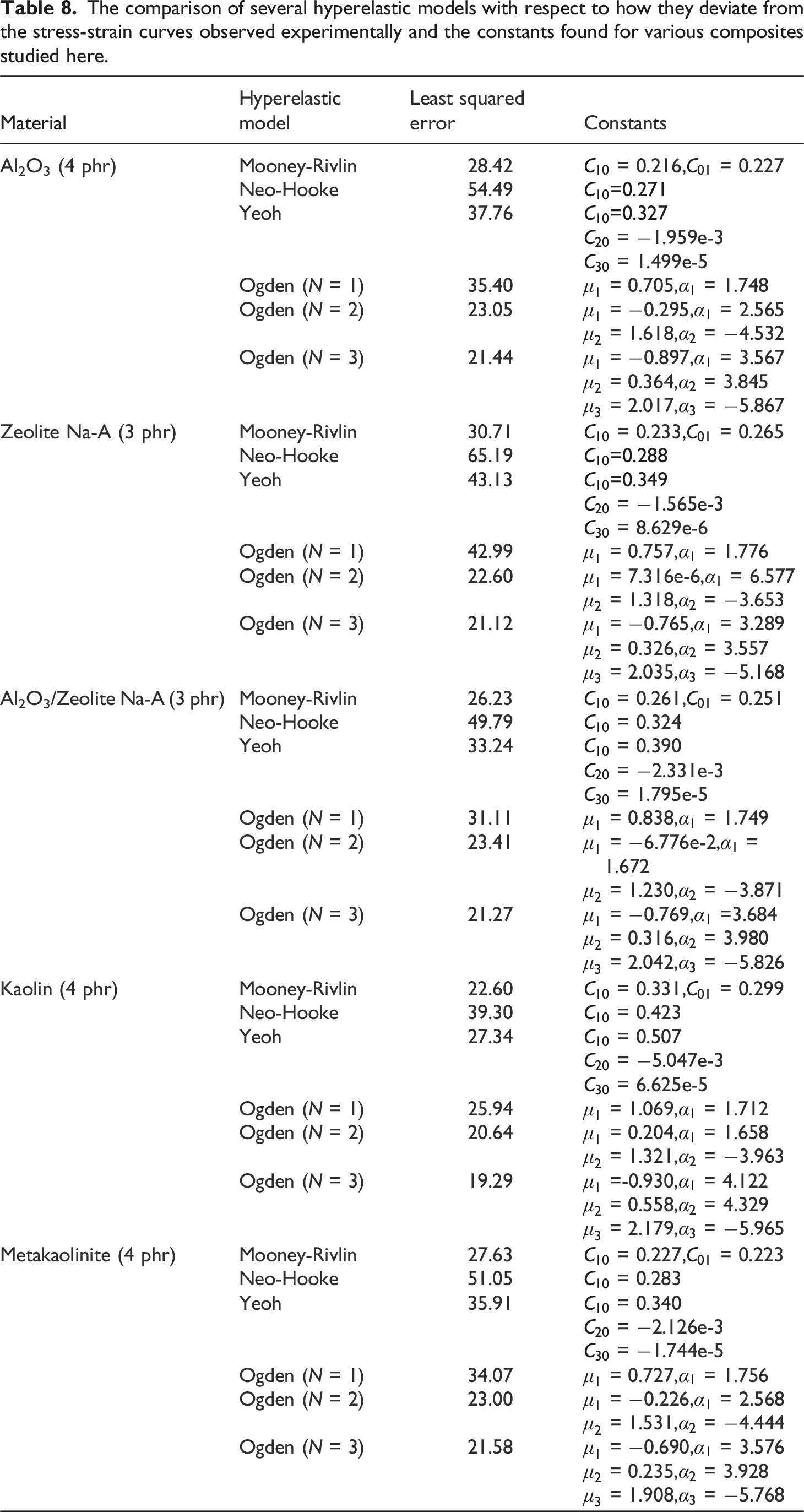
On the other hand, the Mooney Rivlin model predicted the stress-strain curve more reasonably with a 30.71 error. The best fits were achieved using Ogden models with N equal to 2 and 3, where the concerned errors were closer and equaled to 22.60 and 21.12, respectively. Considering two fewer constants for Ogden (N = 2) when compared to that of Ogden (N = 3), the former model one could be considered as the more suitable for 3 phr of zeolite Na-A composite. It is worth underlining that the Yeoh model with 3 constants predicted the test data worse than the Mooney-Rivlin model with just 2 constants. Similar observations were done for other composites presented in Table 8. The presented composites were selected as they were the strongest type with the highest tensile strength of their kind (see Figure 3(a)).
Hardness tests
The hardness properties of the modified fillers/SBR composites are depicted in Figure 4. It is observed that the increase in the filler content increases the hardness. Because of the high stiffness of modified filler in SBR rubber and the increase in torque differences, the hardness values (Shore A) of fillers/SBR composites increase as filler content increases, as illustrated in Figure 4. In contrast to the modified filler/SBR composites, the maximum hardness value was obtained in the composite at 5 phr of modified metakaolinite, where the modulus increased by 67.86%. The enhancement in the hardness suggests a strong interaction between the modified filler and the SBR matrix. 52 The positive effect of the use of kaolin on the hardness and mechanical properties of rubber composites has also been confirmed by other researchers.53,54
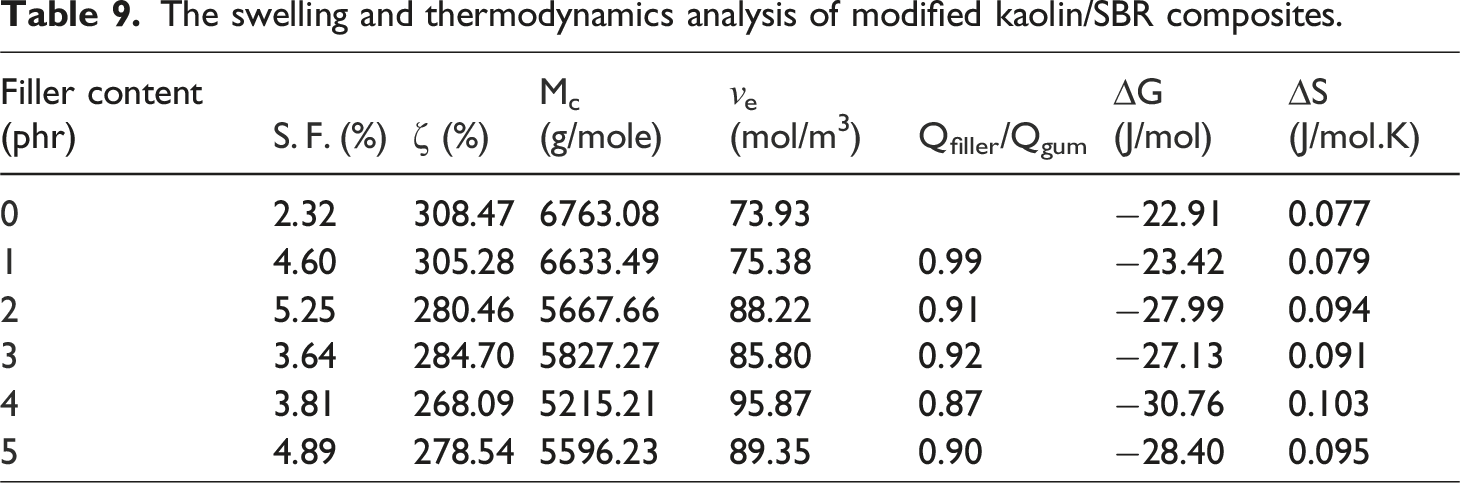
The swelling and thermodynamics analysis of modified kaolin/SBR composites.
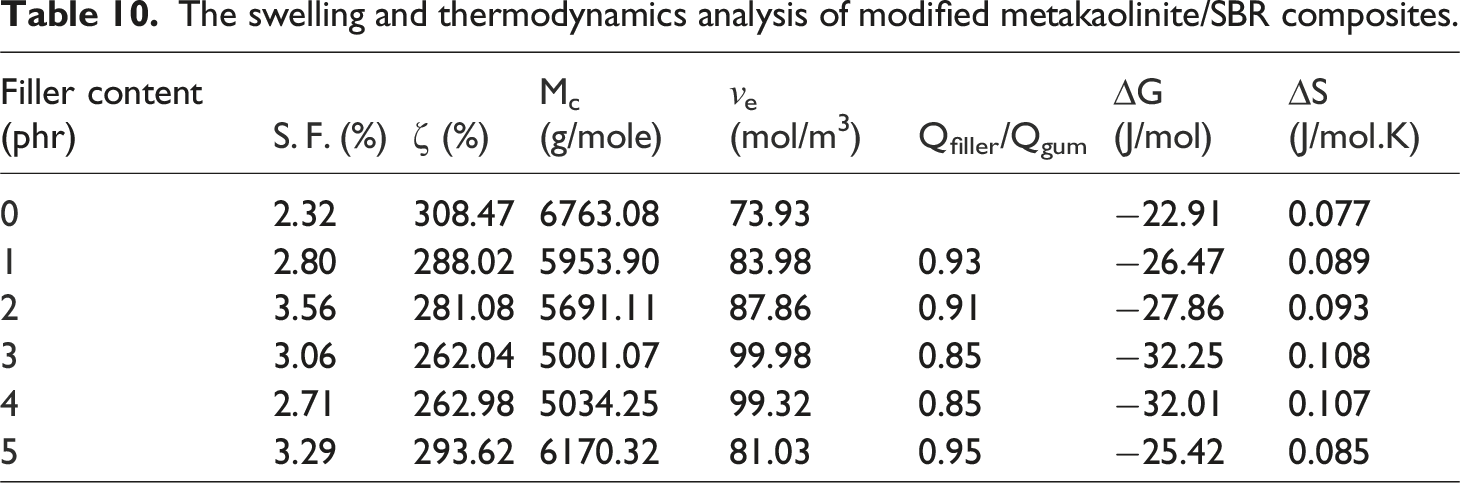
The swelling and thermodynamics analysis of modified metakaolinite/SBR composites.
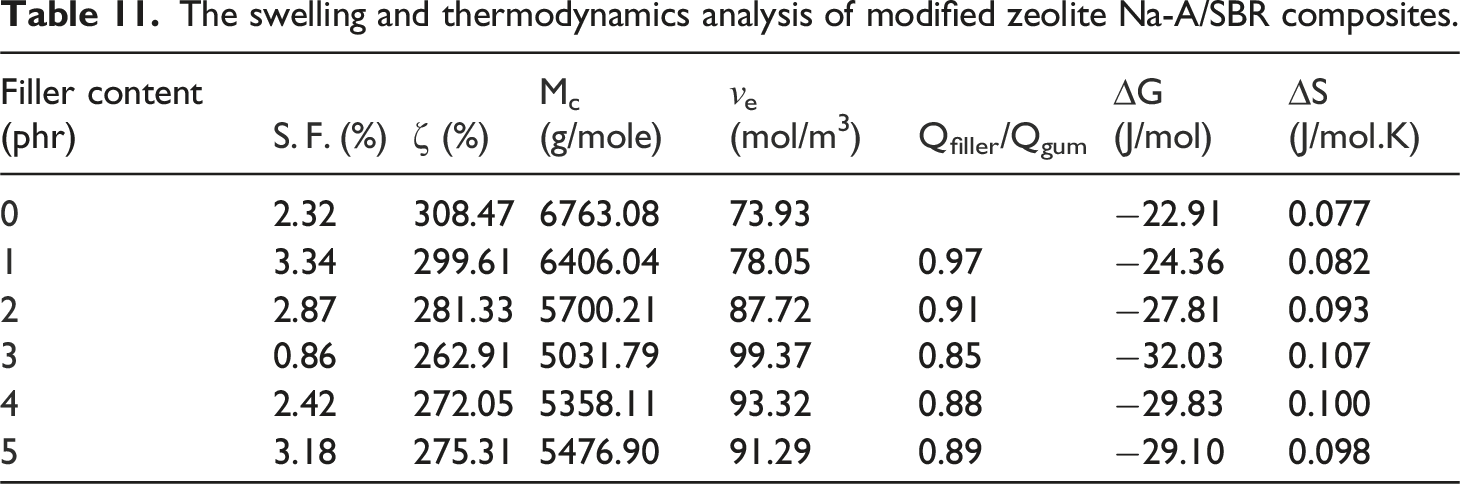
The swelling and thermodynamics analysis of modified zeolite Na-A/SBR composites.
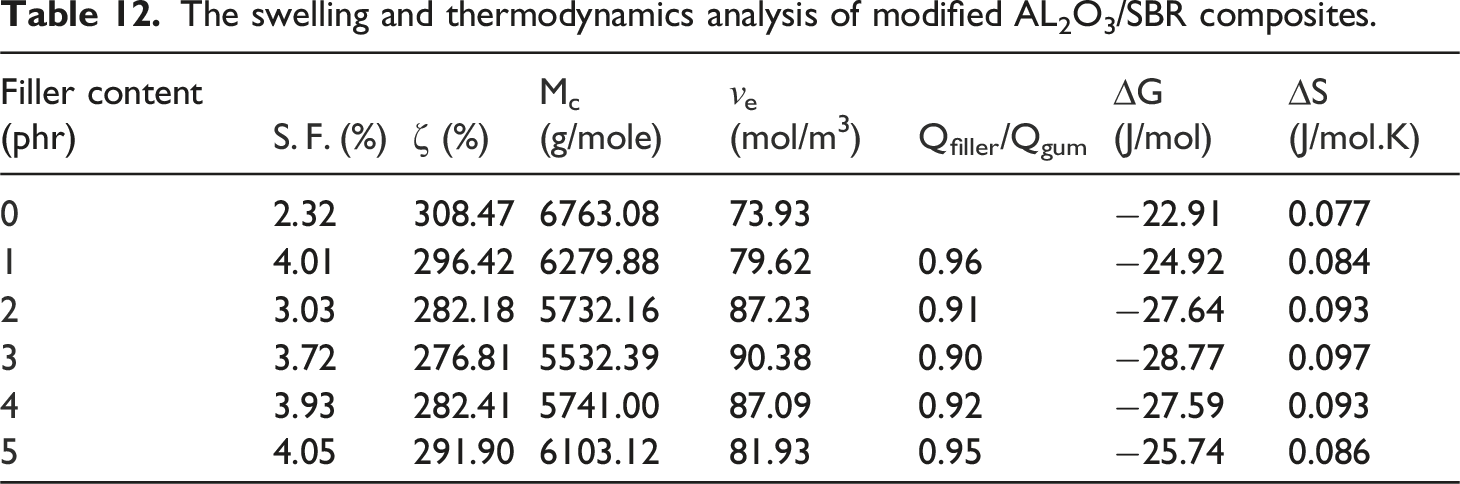
The swelling and thermodynamics analysis of modified AL2O3/SBR composites.
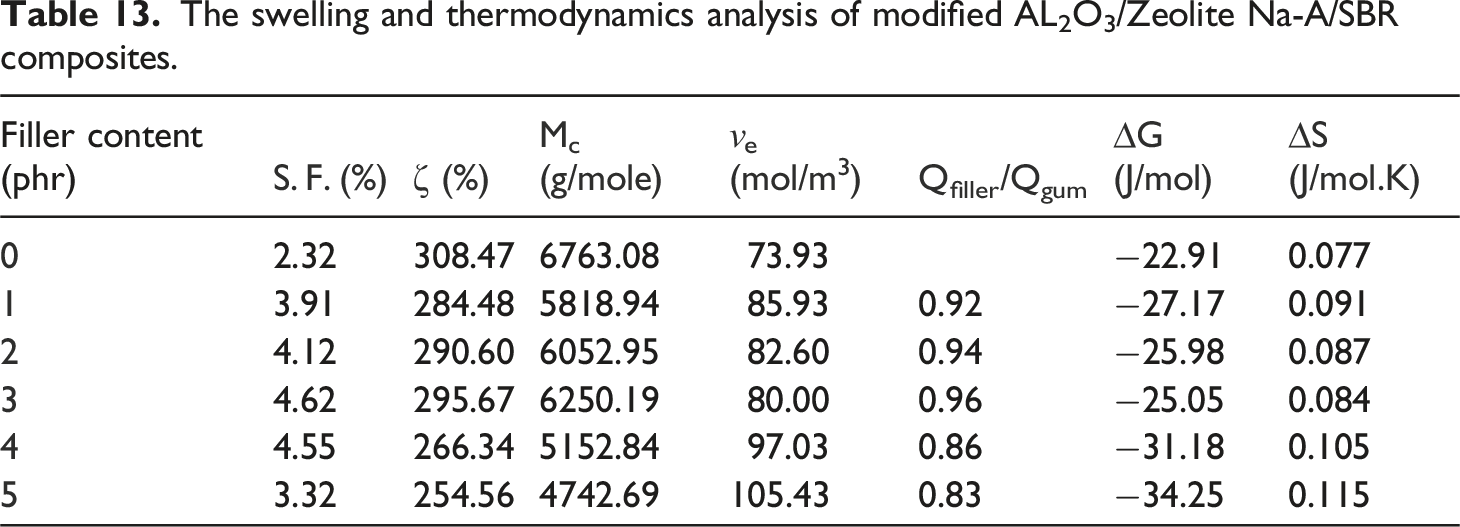
The swelling and thermodynamics analysis of modified AL2O3/Zeolite Na-A/SBR composites.
Swelling and thermodynamics analysis
In some applications, such as gasoline hoses, the interaction of elastomers with oil causes critical challenges. Styrene-butadiene rubbers are non-polar rubbers that dissolve easily in oil or nonpolar solvents and have poor oil resistance. As stated in the Experimental Section, the swelling properties of modified fillers/SBR composites were determined by immersing them in toluene. The swelling test was carried out to investigate the interaction of the modified filler and rubber matrix. Tables 9–13 on modified fillers/SBR composites show the impact of filler type on swelling coefficient. For all samples, as filler loading increases, the swelling ratio (ζ) drops while the cross-linking density (νe) grows until a particular ratio is attained. It was discovered that adding the filler reduced the penetration of toluene into the filler-filled SBR rubber composites. This suggests that a larger filler loading prevented toluene penetration in filled SBR rubber composites.9,11 The crosslink density in the SBR rubber compound increases linearly with the filler quantity; this indicates more crosslinks could be created between modified fillers and the SBR matrix, resulting in strong physical crosslinks. 42 Tables 9–13 show that the swelling ratio (Qfiller/Qgum) decreases dramatically when filler content increases. The lower the swelling ratio (Qfiller/Qgum), the better the filler-to-rubber matrix interaction.11,12,58
Tables 9–13 depict the thermodynamics study of modified filler/SBR rubber composites. These graphs clearly show that the greater the negative shift in free energy values (ΔG), the greater the compatibility between the composites. When ΔG <0, a thermodynamically stable system is generated. ΔG values in the current investigation decrease as the modified filler content increases. Because the modified filler influences the decrease in dispersed phase size, the interfacial area increases to a specific level when the filler loading increases. The ΔS values grow as the filler powder content increases. The increase in entropy indicates the system’s chaos, which improves compatibility. Including filler powder in the SBR rubber matrix increases the system’s disorder. 33
Scanning electron microscope
Figure 6 illustrates SEM images of the morphology of composites reinforced with various modified filler materials. Figure 6 illustrates a micrograph of SBR, which appears to have a smooth and clear profile. The dispersion of the modified filler is good, and there are no big voids between the particles and the matrix. The surface of the modified kaolin-filled composites was rougher and had tear pathways than the other modified fillers. The modified kaolin particles consider the observable tear lines to be prevented or diverted. Kaolin/natural rubber vulcanizate nanocomposites have yielded comparable results.
37
Adding the silane (APTES) decreased the filler-filler interactions and improved filler-rubber interactions, resulting in greater dispersion of treated fillers in the SBR rubber matrix. These findings confirm earlier research.
59
Silane modification is widely used to improve filler dispersion and filler-polymer interface interaction. APTES minimizes friction among filler particles.2,60 SEM images of rubber composites (a) blank sample (without filler), (b) 4 phr modified kaolin/SBR, (c) 4 phr modified metakaolinite/SBR, (d) 3 phr modified zeolite Na-A/SBR, (e) 4 phr modified Al2O3/SBR, and (f) 3 phr modified AL2O3/Zeolite Na-A/SBR.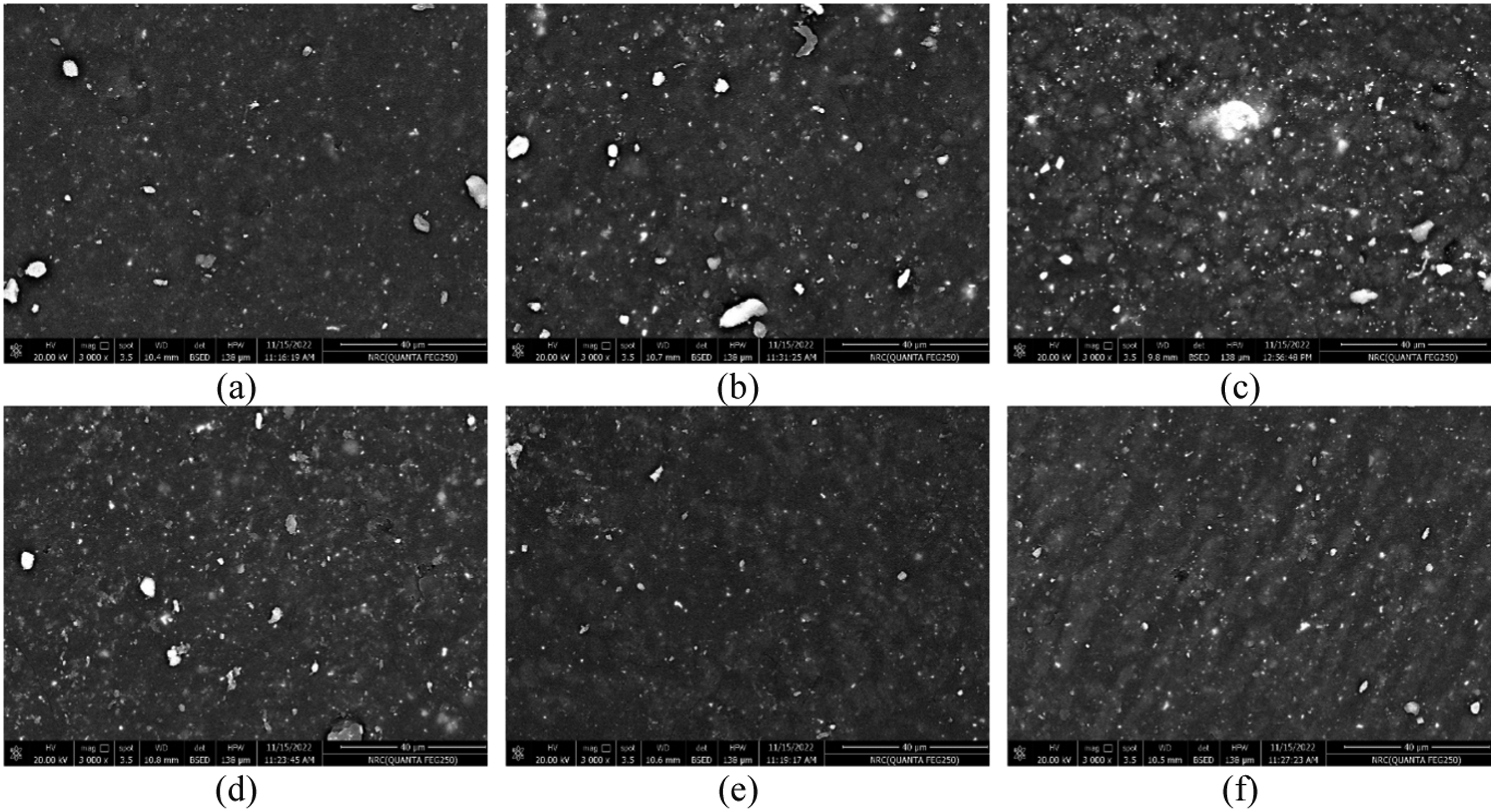
Conclusion
In the current study, we prepared modified filler/SBR composites by introducing different modified fillers into the SBR matrix. The curing parameters, tensile properties, and microstructure aspects of modified filler/SBR composites were compared using a silane coupling agent (APTES). Silane-treated fillers significantly increased the maximum rheometric torque (MH) of SBR composites. Rheological investigations revealed that the modified kaolin particles had improved mechanical characteristics. The tensile properties of the modified filler/SBR composites increased as the filler material amount rose. Increasing the filler content raised the hardness values. The crosslink density increases as the filler quantity increases because of the greater filler-rubber interaction. Due to their efficient dispersion in the rubber matrix, the type and content of particle fillers are the major factors determining the enhancement of rubber mechanical properties. As the modified filler content rose, the thermodynamic parameters (ΔG and ΔS) increased until a particular content for each filler type was reached. Scanning electron microscope studies revealed that the rubber-filler interaction played a strong role in determining the failure mechanism of the vulcanizates. The Ogden hyperplastic model with N = 2 was found to best fit in describing the behavior of the composites studied here. Morphology studies of the samples indicate the improvement of interfacial adhesion between modified filler and SBR. SBR composites with improved overall mechanical, thermal, and dynamic mechanical properties for zeolite Na-A.
Footnotes
Acknowledgements
The authors thank the Polymers and Pigments Department, National Research Centre, Cairo, Egypt. Also, the authors thank the Mechanical Engineering Department, Benha Faculty of Engineering, Benha University, Benha, Egypt.
Declaration of conflicting interests
The author(s) declared no potential conflicts of interest with respect to the research, authorship, and/or publication of this article.
Funding
The author(s) received no financial support for the research, authorship, and/or publication of this article.
