




Abstract
Damages are inevitable in structures and effective damage detection techniques are important for maintaining their health. Many weight-sensitive engineering applications use composite materials, especially fiber-reinforced laminates. Common damages of these materials include delamination, fiber breakage, fiber pull-out, etc. Various non-destructive testing (NDT) techniques are reported in the literature for damage detection in composites, such as ultrasonic testing, vibration-based techniques, acoustic emission technique, optical NDT and imagining techniques. However, due to the complex properties of composite materials, conventional techniques for analyzing NDT data are difficult to implement. In this context, artificial neural network (ANN) technique is a promising alternative for analyzing NDT data for damage detection. In this study, an attempt is made to explore the state-of-the-art of damage detection in composites using NDT aided by ANN. The work discusses the pros and cons of different methods and is expected to help in identifying the appropriate method for damage detection in composites.
Keywords
Introduction
Structures are prone to damage. A precise definition of damage can be stated as an imperfection, or defect that hampers or impairs engineering structures' healthy functioning. In the context of system analysis, structures can be modelled as input excitations and output measurable signals. With this reference, damages are these external excitations that result in energy flow and modification of system characteristics, and finally acquiring the output signals. Important engineering structures are often subjected to different types and sources of damage. A few simple and common types of damage are chemical attack, overloading, dynamic loads, fire, fatigue, cracking, scaling, explosive spalling, and temperature gradients, which are discussed in detail by Kovler and Chernov. 1 These damages, if overlooked, can cause alteration of mechanical properties, resulting in the structure’s overall failure. At the same time, it will result in significant economic and life losses, will hamper intended serviceability, and cause functional disruption. Early detection of the damage and appropriate corrective measures are required to keep the structure in operational condition throughout its design life.
In this context, it may be mentioned that many engineering applications involve the use of composite materials, which offers additional challenge to the engineering and research community in terms of detection and characterization of damages. A composite material is constructed with the combinations of two or more constituents, with enhanced properties than those of its individual constituents.
2
The different types of composites as reported in the literature are presented in Figure 1. Some of the special features of composites, that are advantageous over conventional materials, are lower weight to strength ratio, high stiffness, enhanced fatigue life, superior corrosion resistance and wear resistance. As a result, composite materials, especially fibre reinforced composites (FRC), are traditionally in high demand for applications such as aerospace, naval and automobile industry.
3
In recent times, the acceptability of such composites has expanded to newer field of applications like civil engineering (e.g., modular buildings) also.
4
Classification of composites.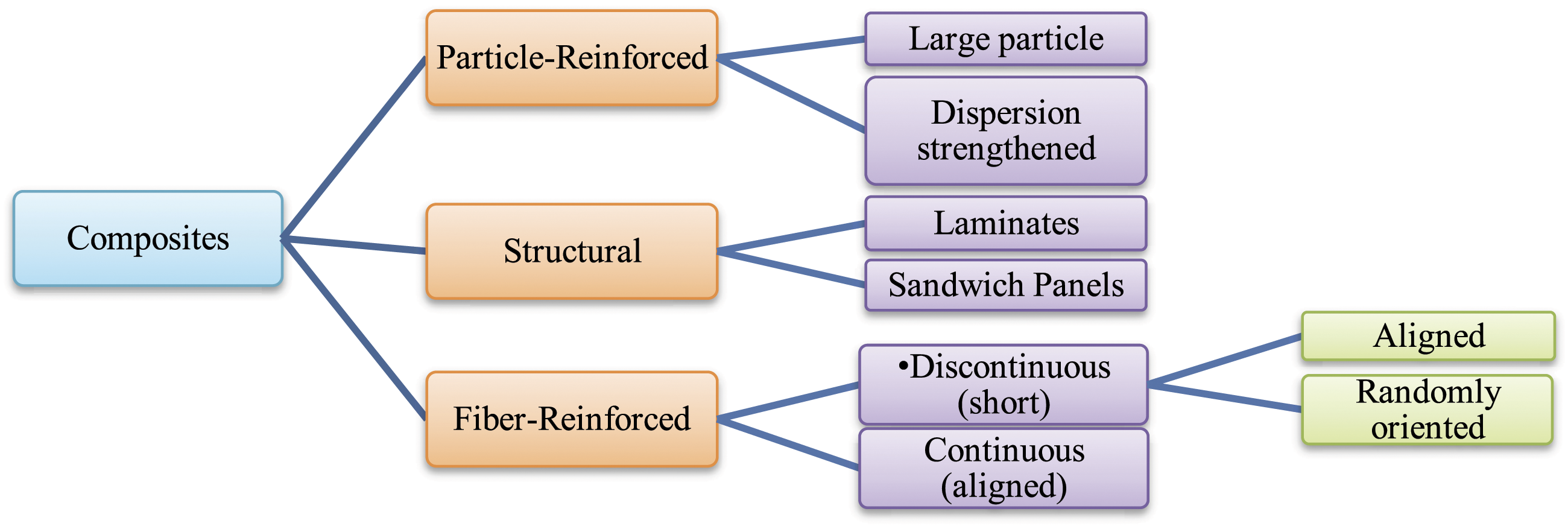
It may be mentioned here that some of the engineering applications as above, require composite materials possessing good moldability and recyclability in addition to being light weight. 5 Thermoplastic composites are useful for this purpose. It is a ductile material that becomes mouldable at a certain elevated temperature and solidify upon cooling. Hence, thermoplastics can be heat-moulded and reshaped again and again, making them recyclable and environmentally friendly. 6 Some major applications of thermoplastic composites are found in aerospace industry, e.g., in aircraft wings and fuselage 7 and civil engineering applications e.g., storage tanks, door and window frames. 4
Composite structures are often subjected to impact loads, fatigue, chemical attack, fire, and lightning strikes 8 depending on the relevant operating conditions. As a result, serious damages may occur which significantly reduce the structural integrity and mechanical properties. The common types of damage in composite structures are delamination, fatigue failure, matrix-cracking, fiber pull-out, fiber breakage, fiber debonding, fiber waviness etc.9,10 Timely detection of such damages is of utmost importance for safety and prolonged service life of the concerned structures.
In general, detection of damage is classified as global damage detection and local damage detection. 11 While global damage detection techniques are useful for identifying presence of damages in a structure, local damage detection techniques help in detecting the damage locations more precisely. 11 However, it must be ensured that the detection procedures should not contribute to any further deterioration of the existing structures. Non-destructive testing (NDT) techniques are extremely relevant and useful for this purpose. Some of the very commonly available NDT techniques for detection of damages in composites are vibration-based techniques, ultrasonic techniques, acoustic emission (AE) technique, infrared thermography (IRT), and endoscopic NDT. All the above techniques help in obtaining relevant test data from the damaged structure, mostly in the form of electronic signal obtained from sensors and images captured through electronic devices. However, a successful detection of the damages depends on effective processing of these signals/images; this procedure is commonly known as post processing. It may be mentioned here that the quality of the obtained signals/images as well as the methods used for extracting the necessary features of the signals/images play a crucial role in successfully predicting the structural damages. Some of the limitations with reference to signals/images and their processing by conventional methods are mentioned below.
Vibration-based NDTs use vibration signals captured by vibration sensors/accelerometers placed at critical locations. 12 However due to presence of noise in the operational environment, these signals are often corrupted. Accordingly, prediction of the presence/extent of damages is prone to be erroneous especially if the damage is small compared to the size of the structure. 13 The ultrasonic and acoustic emission-based NDTs depend on the velocity of wave propagation inside the material of the structure and time of arrival of ultrasonic/AE waves at sensors. Wave velocity inside a structure, especially when it is operational, is difficult to obtain. The problem worsens when material properties change from one place to another inside the structure as wave velocity is dependent on the material properties. On the other hand, precisely measuring the time of arrival of waves at sensors is also a challenging task. 12 Image processing-based NDTs involve capturing images of the structure at selected locations. However, noise, low contrast and variation in pixel intensity of the images are some of the factors that tend to hamper the accuracy of damage detection/localization using these methods.14,15
All the above issues, associated with processing the NDT data using the conventional signal/image processing techniques, are liable to become even more complex when the structure under study is made of composite materials. It is because material properties vary from one place to another in composites. In addition, processing of NDT data using conventional methods is often time consuming and it requires advanced knowledge of signal processing.
In light of the above, an alternative approach for processing the NDT data for detection of damages in composite structures is of great necessity. In this context, ANN is a promising technique in the above direction. Influenced by the biological nervous system, the ANN technique has been developed for solving scientific and engineering problems.
15
Additionally, because of the network’s self-organizing abilities, it can be built directly from experimental data. A typical ANN model consists of input layers, hidden layers and output layer. The processing is done inside the hidden layer(s) which utilizes the assigned weight functions and bias. A representative ANN model is presented diagrammatically in Figure 2.
16
A typical ANN model.
16
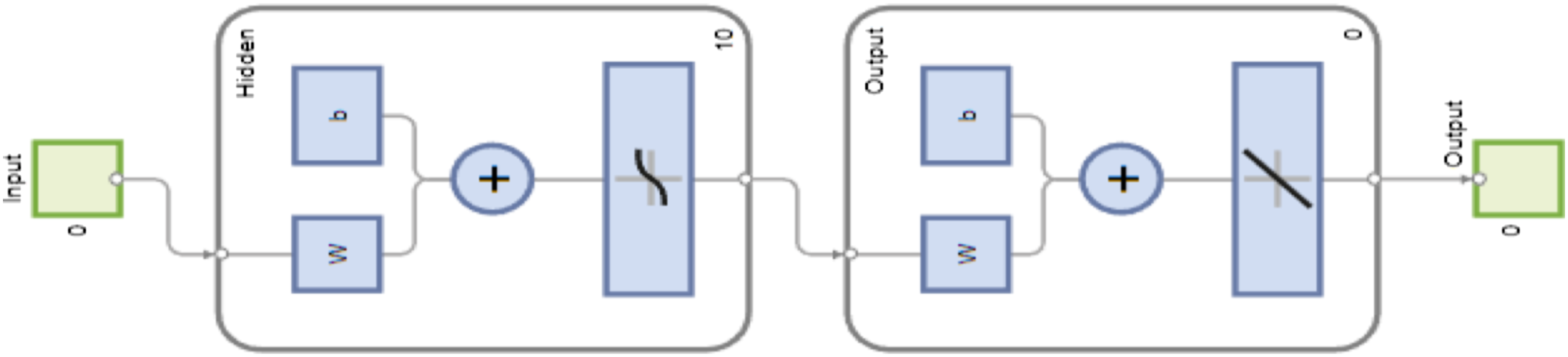
ANN technique is capable of processing large dataset within a very short period of time. Moreover, a developed ANN model can be used by practicing engineers/technicians and no background of signal processing approaches is required for the purpose. Accordingly, the ANN method has a good potential to be used for processing NDT data related to detection of damages in composites. Hence, the present study makes an attempt to find out the state-of-the-art of damage detection in composites using NDT aided by ANN.
Types of damages in composites
The damage mechanism of composite structures is complex, and it is yet a subject of concern for the research community. Composites are widely used for various engineering purposes due to various advantages, like good corrosive resistance, high strength-to-weight ratio, and easier fabrication. Damages in these structures might happen during the manufacturing process or in their service life. Common types of damage in composites are delamination, fiber breakage, and fiber pull-out. Several online health monitoring techniques have been developed from time to time for damage detection in composites.
Manufacturing defects are inevitable and have a great potential of causing damage. These defects can be controlled to not jeopardize the safe performance but can’t be eliminated completely. Voids are defects that drastically degrade the mechanical properties of composite structures. Improper curing during the process of prepreg gives rise to void formation. Some research work has suggested that ineffective moisture curing leads to void formation. 17 The effect of moisture was examined to clarify the cause of voids in composite structures. 18 A further reason for damage during the production process is the presence of foreign substances.
When exposed to service conditions, the most common cause of damage is due to impact loadings. Delamination is an important damage mechanism because of interlaminar stresses due to impact loadings which are very common in fiber-reinforced composites. The delamination may not degrade in-plane tensile behaviour but steadily degrades the compressive behaviour as demonstrated. 19 The root cause is poor interlaminar stiffness. The other associated damage mechanisms because of impact loading or severe dynamic loadings are matrix cracking, fiber pull-out, and fiber breakage. Matrix cracking is an important cause of composite structure failure. In composite systems when matrix cracks, the fiber strength is large enough to support loads, and as a result, a crack develops separating out the fibers while they are intact. The stress generated during matrix cracking is an important parameter to detect the associated damage mechanism. 20 Pre-existing defects often cause matrix cracking as reported in the work. 21 The fracture mechanics approach in conjugation with approximate stress analysis was implied to state a theory of progressive matrix cracking in orthotropic composite laminates. 22
Composite structures are often subjected to temperature variations and high stresses, and this causes tensile failure of the composite resulting in fiber breakage, as reported. 23 Fiber breakage and fiber pull-out induce a loss in stiffness, crack closure, hysteresis loop, and anelastic strains. 24
Fiber waviness is a material defect very common in thermoplastic composites which result due to improper fabrication and severely effects the mechanical properties.25,29 When a thermoplastic composite structure is loaded under compression, fiber waviness can cause micro-buckling failure, also known as the development of kink bands, which ultimately results in an early failure. 26 Therefore, NDT technique is extremely important for detecting such damages for the sustainable performance of the structure in the long run. Inspite of the lower strength of thermoplastic matrix, aviation companies are more willing to use them. The main advantages are their almost infinite shelf life and multiple processing of the same material into different elements. 27 Defects occurring during its manufacturing process significantly reduce their efficiency. Non-destructive testing is extremely important to evaluate their quality and suitability. Although thermoplastic materials have low volume of defects, but monitoring these defects are also vital. The very common defects are void content, porosity and blister. Ultrasonic testing technique is often used to detect the defects trapped in the material. 28 Hassen et al., studied the various defects in thermoplastic composite, namely glass fiber/PP subjected to various foreign object inclusion (FOI). 29 The study used two different NDT technique, namely ultrasonic testing, and radiography. The ultrasonic testing detected all the FOI in the thermoplastic composite specimen.
Fatigue, high temperature and lightning strikes cause severe sudden unpredictable damage to composite structures. The growing use of CFRP composites in aircraft industries has sought attention for studies on damage detection due to lightning strikes. The low conductivity of CFRP composites adds to the major disadvantage. Aircraft are regularly exposed to lightning strikes which are of two dissimilar magnitudes, a concentrated catastrophic high current followed by a low voltage direct current that spreads along. This low voltage direct current causes material degradation, as reported. 8 Aktas et al. 30 studied the impact behaviour of glass/epoxy laminated composite plates subjected to elevated temperatures. The effect of carbon nanotubes for protection against lightning strikes was studied by. 31 Damage due to lightning strikes was reported by. 32 The study involved artificially simulating relatively low-magnitude current impulses which were discharged through the composite coupons. Low-velocity impact damages for FRP composites with and without open holes were studied by.33,34 Post-impact evaluation using x-ray computed tomography results showed severe damage around the impact area and matrix cracking and delamination are the principal associated damage mechanisms. The consequent effect of damage development can be mitigated through effective inspection and monitoring through different NDTS. Alternatively, continuous monitoring can be achieved through in-situ SHM systems. These advanced in-situ monitoring systems are coupled with highly sensitive sensing devices and post-processing methodologies for the purpose of continuous real-time monitoring. Damage detection in composite structures is done using active and passive approaches. Active approaches are those NDTs that include external excitations and then measure the excitations, whereas passive techniques involve no actuators, and instead require sensors to sense hidden damages. 35
Experimental techniques to acquire damage related data
For the detection of damage in composite structures, a variety of experimental procedures are available in literature and practice. Each of these procedures generates huge data using sensors and data acquisition systems. Important and relevant features are extracted from these experimental data for further analysis to detect the damage. The frequently used experimental techniques are briefly discussed below.
In this section the NDTs that are been reported in the literature for the purpose of damage detection in composites structures are briefly discussed. The discussion includes the brief description of the typical types of equipment for each of the techniques, brief description of the methodology and a few examples of their applications in the various field of engineering.
Vibration-based NDT
The application of the vibration-based damage detection method was initiated in the late 1970s in the sectors of aerospace and offshore engineering. Since then, it has been rapidly expanding its applications in other fields of engineering. The fundamental of the method is that the physical properties of the structure (e.g., mass, stiffness, and damping) influence the modal properties of the structure (e.g., frequencies, modal shapes, modal damping), which means that the changes in these physical parameters are indicative of the consequent changes in the modal parameters. Thus, tracking these variations is important for the purpose of damage detection. Although the vibration-based damage detection method is an emergent technique but can be classified as a traditional vibration-based damage detection method and a modern vibration-based damage detection method. The traditional type utilizes mechanical properties like modal frequencies, modal damping, modal shapes, or strain energy and is not suitable for online monitoring. However, the modern method uses intelligent approach like ANN, genetic algorithm (GA), and signal processing approach like wavelet transform (WT) for the purpose of damage diagnostic studies. Various review works on vibration-based damage detection are published in the literature.
Doebling et al. 36 overviewed the methods for the detection of damages and their location by measuring the changes in the vibration responses. The review paper limited the study to the global vibration-based damage detection techniques, that use the modal properties to infer the changes in the mechanical parameters. The study included both methods that are based on the changes in the measured data and the method that uses a finite element model (FEM) for the purpose of damage detection. All the above reviews are based on damage detection, localization, and severity and did not cover the review on the prediction of the remaining useful life of structures.
Yan et al. 37 presented a review of vibration-based structural damage detection based on dynamic characteristic parameters. Various intelligent damage detection methods using modern signal-processing methods and artificial intelligence have been presented.
Wang and Chan 38 presented a review on vibration-based damage detection (VBDD) in bridge structures. The present review on VBDD methods is based on the changes in natural frequencies, strain modes, modal strain energy (MSE), ANN and signal processing approach like wavelet transform/9WT), Hilbert spectrum methods, and empirical mode decomposition (EMD).
Moughty and Casas39,40 reviewed the developments in vibration-based damage detection methods in bridges with a focus on the utilization of advanced computational methods. Das et al. 41 presented a comparative study on the available vibration-based damage detection methods; modal examination, local diagnostic method, non-probabilistic methodology, and time-series methods. The authors concluded that out of all the available methods, the time-series method is more effective for damage detection studies. Kong et al. 42 reviewed the vibration-based damage detection method including the prediction study for the remaining life of a structure. The framework of the paper consisted of various sections which include, damage detection using response-based methods, selecting damage parameters, and constructing objecting functions, adopting optimization approaches, prediction of remaining useful life, and decision-making for the next actions.
Vibration-based damage detection technique involves the study of the modal parameters, primarily natural frequencies, mode shapes, damping, strain energy, etc. Advanced composites offer several advantages for structures that require the combination of high strength and low weight.
Pardoen 43 presented the effect on the natural frequencies due to delamination in composite laminates. A substantial reduction in frequency values only in the higher frequency modes was observed in each laminate after the impact. The conclusion drawn reported that in the area of high shear force, the maximum degradation of frequency is observed. Cawley and Adams 44 presented a vibration-based study on unidirectional and multi-directional plates and on honeycomb composite structures similar to those used in the aerospace industry. The authors implied a variety of damages like holes, local heating, saw cuts, and impact, and subsequently, the variations of results in the damping and frequency values were noted. It was concluded that changes in dynamic stiffness were easier to measure than changes in damping.
Accelerometers are used for the purpose of condition-based monitoring, which allows the monitoring of vibrations produced in various engineering structures. The common method of acquiring vibration data involves connecting accelerometers to the structures and configuring them to a data acquisition system that can deliver high-resolution data. When mounted on structures, accelerometers accordingly convert mechanical energy to electrical energy. There are mainly three types of accelerometers that are used for vibration tests: 1. Piezoelectric accelerometers i. Charge mode piezoelectric accelerometers ii. Voltage mode internal electronic piezoelectric accelerometers 2. Variable capacitance MEMS (micro-electro-mechanical systems) accelerometers 3. Piezoresistive accelerometers
Overall, the vibration-based damage detection technique is an efficient technique for the purpose of structural health monitoring. Additionally, more work should be focused on testing real-life complex structures in real-time, rather than representative laboratory tests.
Based on the above discussions it is found that the conventional methodologies are time-consuming and less cost-effective. The following sections cover the overview of ANN-based damage detection techniques available for composite structures.
Ultrasonic Testing (UT)
Ultrasonic testing (UT) involves the application of ultrasound, which is a too high pitch sound to be detected by the human ear, i.e., frequencies above 18 kHz. UT has a wide range of application in the aerospace and nuclear industries. The method of UT involves the propagation of mechanical low-amplitude stress waves through the structure under examination and then measuring the time of travel and, if any, change in the intensity of these waves for a given distance. Application of UT involves distance gauging, damage detection and measuring parameters (such as elastic moduli and grain size) that are related to material structural characteristics.
The typical UT equipment consists of the following functional units: 1. The pulser or the receiver: Produces high voltage electrical pulses within the material under study. 2. The transducer: With the help of the pulser, the transducer generates high frequency ultrasonic sound energy. In the presence of any flaws, this energy is reflected from the damaged surface. The transducer helps to convert the reflected wave signal into an electrical signal. 3. Display device: The display device displays the converted reflected electrical signal.
In late 1880, the application of UT as an NDT was first made by the discovery of the piezoelectric effect by the brothers Pierre and Jacques Curie. Later Firestone, in the USA, and Sproule in the UK, working independently developed a pulse-echo ultrasonic flaw detector, which is still one of the most frequently used UT methods. 45 The method involves detecting echoes produced as the result of the reflection of an ultrasonic pulse generated by a transducer, from a discontinuity or a flaw inside the medium.
Ultrasonics is probably the most frequently used technique for health monitoring of composite structures. 46 Researchers have used UT for detecting damages, such as delamination, impact damage, etc., in composites. In the late 1990s, a study was conducted that examined delamination and matrix cracking in composites caused due to low-energy impacts. 47 The approach considered different means of pulse-echo techniques, namely time-of-flight, amplitude C-scans and backscattering C-scans. Another promising approach is the ultrasonic harmonic eave method, where wave phase characteristics is applied and is suitable for determining changes in composite materials with irregular structures. 48 Wooh and Wei 49 used an ultrasonic pulse-echo scheme for detecting delamination. Scarponi and Briotti 50 evaluated delamination-based damage on different composite materials using UT. Harizi et al. 51 proposed a method for simultaneous measurement of thickness and density for GFRP plates with UT C-scan mode in the form of maps, which is useful for assessing and evaluating damage in composite structures.
Acoustic Emission (AE) Technique
Acoustic Emission (AE) is a naturally occurring phenomenon within a wide range of structures because of built-up stresses due to cracks and deformations. This phenomenon causes the release of transient elastic stress waves in the ultrasound band. These stress waves are referred to as Acoustic Emissions (AE). Acoustic emissions are natural phenomena.
In the 1930s and 1940s, in the United States of America, Obert and Duvall attempted to predict rock bursts from the sub-audible noises due to microseismic activity. 52 The first significant work in this field was carried out by Kaiser 53 where he obtained the emissions by loading polycrystalline copper, zinc, copper, lead, steel, and aluminium. Kaiser formulated an important conclusion that the AE is an irreversible process. Once a material is loaded to a certain level, acoustic emission will not be generated on the subsequent reloading at that stress level [Kaiser, 1950]. This is lately formulated as the “Kaiser effect”. However, if sufficient time lapse is given for the material recovery, then AE activity reoccurs due to the application of stress.
Greene et al. 54 reported the first major successful application of AE technology at Aerojet for the inspection of Polaris missile chambers in the late 1960s. Additionally, they implemented AE technique on pressure vessels, tanks and nuclear plants. Spanner and McElroy 55 and Shiotani 56 reviewed the applications of secondary AE activity for damage assessments in infrastructures. In a work published in Sandia report by Rumsey et al., 57 they compared AE technique with other NDTs for health monitoring of wind turbine blades.
Acoustic emission signals are of two types: continuous type and burst type. 58 Leakages and defects arising from frictions results in continuous emissions. Whereas sudden discrete acoustic emissions resulting from cracks, jumps and fracture falls under burst type emissions. Acoustic emission waves are broadly categorized as surface and body waves. Further classifications of surface waves are Rayleigh waves and Love waves, and that of body waves: P-waves and S-waves.
AE technique involves the recording and analysing the AE signals captured from the mounted AE sensors on the surface of the structure. To conduct AE monitoring, following functional units are required: 4. Network of sensors: Capture the indiscernible AE waves of the structure under the supervision and hence convert them to analog signals. 5. Preamplifiers: Magnify the analogue signals. 6. Recording and acquisition section: Acquisitioning the amplified signals and converting from analogue to digital signals. 7. Data processing unit: Analysing the recorded AE signals. The system should be able to distinguish and filter the noises (friction, impact, electromagnetic interferences) from the required signals.
The AE inspection technology allows the detection of continuous emissions or detectable burst-type emissions. The signals are thereby analysed using certain signal parameters extracted from AE waveforms. The most common and widely used signal features are: 8. Amplitude: The peak voltage attained by the AE waveform. It is a vital feature which determines the magnitude of the source event. The measured unit is in decibels (dB). 9. Threshold: The AE signals exceeding the threshold value are the only ones that is to be reported. Measured units are in dB. 10. Duration: The interval of time that passes between the first and last threshold crossings. It can be useful for noise filtering. Measured unit is in microsecond (µsecs). 11. Rise Time: The time elapsed since the peak signal crosses the first threshold. The measuring unit in microseconds. (µsecs). 12. Counts: Within the waveform’s duration, the number of times the waveform crosses the threshold in a rising direction. 13. Energy: The area below the squared waveform within the duration of the waveform. The unit is Attojoule (aJ), (1aI = 10−18 Joule).
The AE technique offers an enhanced and efficient methodology for the purpose of health monitoring of an entire system of structure effectively. Moreover, in complex structures, like composites where the wave speed varies greatly with the direction, errors are more evident. The AE technique, therefore, is a suitable option for the purpose of monitoring these complex structures. On the other hand, one of its major advantages lies in the fact that the technique is independent of the size and shape of the defect to be detected, and hence it is possible to detect even the minute kinks and flaws. To make practical use of this technique and to detect minute displacements, sensors are placed to record the AE signal data which are later stored and post-processed in a data acquisition system. The obtained AE data has to be postprocessed, which evidently is achieved using the ANN, to develop a network that can capture and process complex input information without using complex analytical functions.
In general, the SHM has two broad aspects: diagnosis part and prognosis part. With the help of the AE technique one can perform multiple aspects of the diagnosis part, starting with the first step i.e., damage detection, then the second step i.e., localization59,61–66 of the damage source, and finally the classification of the damage. 60 The process of locating the acoustic sources, by recording the signals and analysing them is termed as acoustic source localization. Complex structures made of composites need to be thoroughly monitored not only for impact damages, matrix cracking, delamination and fiber breakage but also for locating these sources. The prognosis part deals with the prediction study of the remaining useful life of a structure, 66 which too can be achieved using AE data effectively. Inspite of the several advantages that the technique yield, Nesvijski 67 in his work reported the disadvantages the AE technique for 3D source localization. Focus was laid for analysing the developed mathematical algorithm of 3D acoustic source locations using direct geometric arrays algorithm approach.
The AE sensors which are used to capture the AE waves are very expensive and instead of using multiple numbers of sensors, the use of an optimal number of sensors would be more efficient and efficacious. Lately, multiple works are being conducted on the optimal location of AE sensors 68 to simplify the entire methodology. It can be further noted that future studies related to the optimal placement of sensors may be of much importance considering the risen economic constraints.
Optical NDT
Optical NDT has gained increased attention in the past few years, due to its non-destructive imaging properties with high intensity and precision. The recent development of optical NDT eases signal multiplexing and resistance to electromagnetic interference. The main types of optical NDT are fiber optics, electronic speckle, infrared thermography, endoscopic, and terahertz technology.
Fiber Optics
Fiber optic NDT uses optical fiber to collect and sense light from the object under test (OUT). This test is resistant to electromagnetic interference and corrosion; hence it can be applied to monitor structures in extreme conditions. The optical fibers are lightweight and can be placed and attached to the surface or within the structure under observation without hampering its working conditions. Multiple types of sensor designs have been reported in the literature, including fiber Bragg grating sensor, IFPI (intrinsic Fabry Perot Interferometer), and EFPI (Extrinsic Fabry Perot Interferometer). 69 Fiber Bragg gratings have been conveniently used to measure dynamic and static loads on bridge decks, and also for the rehabilitation purpose of composite repairs. Optical NDT has been successfully used in the field of civil engineering over the last 20 years. Tennyson et al. 70 studied the efficiency of the incorporation of fiber optic sensors to monitor the health of bridges in Canada. Lin et al. 71 studied the effectiveness of fiber Bragg grating (FBG) sensors to monitor the response of highway bridges during the process of their construction and service life. Chan et al. 72 investigated the feasibility of FBG sensors for the purpose of SHM via monitoring the strain data. These FBG sensors are installed on the Tsing Ma bridge (TMB), Hong Kong, which is the world’s longest (1377m) suspension bridge that carry both traffic and railway loads.
Similarly, enough research work has been carried out on optical fiber NDT for composite materials, where the fibers are either attached on the surface or within to measure the strain variations and damage detection. Thursby et al. 73 employed optical fiber polarization sensors, implanted within the structure and attached to the surface, to identify holes using Lamb waves.
Optical fiber NDT is used for the purpose of long-time health monitoring. Real-time parameters like temperature and strain are obtained by these sensors and transferred to the data acquisition system through an optical transmission network. Hence, optical fiber sensing technology is a popular emergent research area for the purpose of damage detection.
Electronic speckle
Laser speckle interferometry is an efficient NDT that is widely used in many industries. The major advantages of this technology include, high sensitivity, higher detection rate, and the surface of illumination need not be uniform. The technology, as reported, accurately measures surface stresses, which infers its efficient application in the field of aerospace, automotive, marine, civil, and high-tech engineering applications.
The two most important technologies in the field of speckle interferometry are ESPI (Electronic Speckle Pattern Interferometry) and ESPSI (Electronic Speckle pattern Shearing Interferometry). ESPSI also known as digital shearography, is a non-destructive optical technique that is used to measure field displacement derivatives. Hung et al. 74 established a variety of practical speckle shearing interferometry instruments. Huang et al. 75 proposed a novel impulsive thermal stressing method using a shearographic setup. The proposed technique offered both qualitative and quantitative measurements. Multiple experiments were conducted on samples with cracks and debonds.
In recent years, a combination of speckle pattern interferometry and Digital Image Correlation (DIC), is an emerging research topic. The DIC method measures the grey values of the structure under maintenance before and after strain or deformation. With the help of the iteration method, it thereby calculates the correlation coefficient, the maximum correlation coefficient measures the corresponding displacement and strain. 76
Digital speckle image measurement has become a useful new technique in the field of modern photo mechanics. It will play an important role in the field of materials’ mechanical properties for the purpose of health monitoring of structures.
Infrared thermography
Infrared thermography (IRT) is a mature discipline in the field of NDT. 77 It has several advantages, including the real-time and non-contact monitoring of large areas. 78 Many countries have implemented the IRT technique to detect and characterize internal defects and for the purpose of quality performance monitoring. 79
For a long time, there has been interest in employing IRT to inspect composite materials. For instance, Katunin et al. conducted research to identify deterioration in composite aircraft components. 80 Fatigue behaviour of composite using infrared thermographic approach have shown promising results. 81 Porosity, a very common manufacturing defect, often degrades the performance of composite structures. IR thermography has been successfully used to study these underlying defects. 82 The technique involves of heating one part of the sample with high power laser and obtaining the thermal response on the other part as the heat is transferred through the sample. Samples with high porosity temperature rise showed lesser rise in temperature with longer time to reach the other fact. 83 Impact damage is a frequent source of defect that aircraft composite components are often subjected to. Boccardi et al. conducted an experimental study on impacted carbon/epoxy specimens to present the suitability of IRT as an efficient NDT. 84
IRT is an infrared imaging system that, thanks to the help of external apparatus, converts surface dissimilarities in infrared radiation from the surface into a 2D image.
85
The thermal surface variations are unveiled in a range of false colors linked to a temperature scale.
86
The thermal image is the output obtained by an infrared camera, that after image processing takes the name of thermogram.
87
Figure 3 shows various approaches of IR thermography, which is classified according to the modes, configuration of the experimental procedure, the origin of the source of excitation, and the temperature difference of the constituents.
88
Active thermography and passive thermography are the two basic classification on the basis of the experimental procedure. Active thermography where an external excitation additionally is needed can be further classified as, PT, VT, SHT and LIT based on the source of the excitation.
89
Péronnet et al. explored the use of infrared thermography (IRT) to discover flaws. Three infrared thermographic techniques—IRT, Lock-in IRT, and Pulse IRT—were employed in this experiment to examine various composite materials used in the aviation sector.
90
Furthermore, Montanini used pulse phase and lock-in infrared thermography to measure subsurface flaws in a Plexiglas reference specimen. After post-processing, thermal pictures taken in the frequency domain at various frequencies, it was possible to directly assess the thermal diffusivity of the material.
91
For the NDT&E of aircraft composites, Findeis et al. conducted a comparative results examination between IRT and Electronic Speckle Pattern Interferometry (ESPI).
92
Another comparison study employing pulsed thermography, lock-in thermography, and vibrothermography was conducted by Castanedo et al. for the inspection of aerospace materials.
93
Bendada et al. also used the pulsed thermography approach to assess the composites used in aircraft.
94
Non uniformity of non-planar object inspection like carbon fiber plastic makes their analysis challenging. Tao et al. in their work evaluated the use of recurrent neural network and ANN in pulsed thermography for an automated inspection of carbon fiber plastic samples.
95
Classification of various approaches of infrared thermography.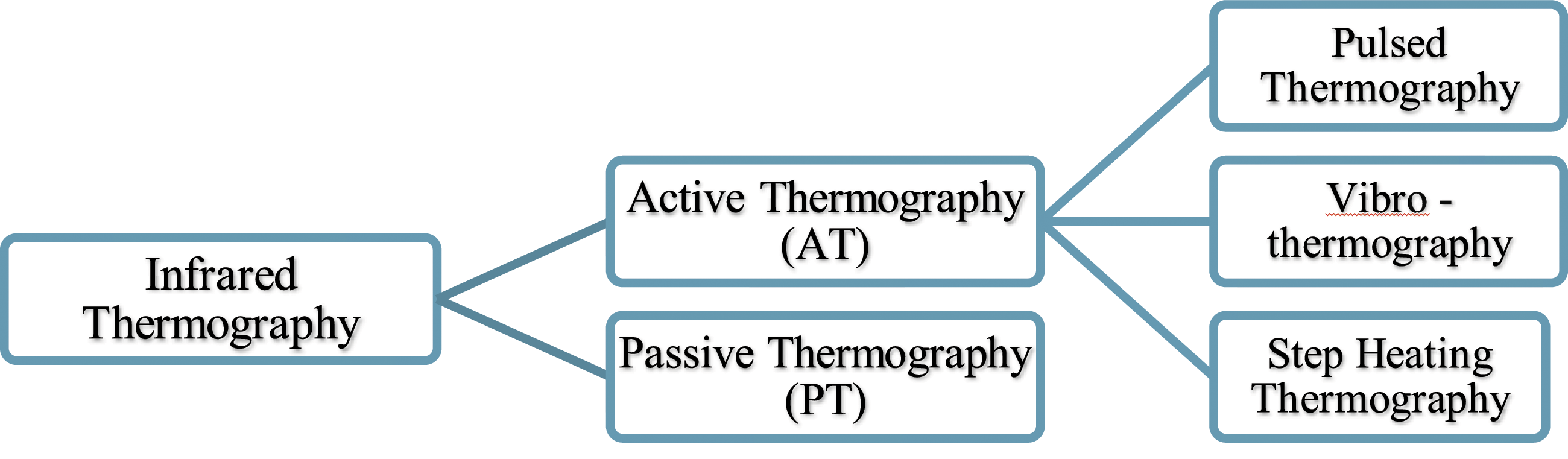
Rantala et al. 96 in their study conducted the heating of the carbon fiber composite board sample using modulated ultrasonic excitation and thermography; by analysing the phase of the thermal wave, material information from combined heat and mechanical stimulation is obtained. This method can detect smaller collision and lamination faults than individual methods because it has a stronger signal and a deeper detection depth. A carbon fiber composite board [(45/0/90) s] of 0.125 mm thickness was put to the test in eight distinct orientations. Seven of these influences visual damage. Dattoma et al. 97 applied the thermographic technique for the purpose of damage detection in a wind-turbine blade made of a sandwich composite structure. The latest developments in IR NDT techniques involve the incorporation of infrared and other available NDT testing methods.
Endoscopic NDT
The endoscopic NDT technique involves optical measurement through a hole to evaluate the internal structural properties of a sealed object. The notable advantage of the technique is that it allows visual inspection, with the flexibility to change the direction of sight for better detection through visual inspection. Since it is an NDT, there is little damage caused to the object under inspection. Schuth et al. 98 presented a study on the development of a shearographic endoscope for the purpose of inspection of both external and internal surfaces of the object under inspection. Macedo et al. 99 studied the development of endoscopic shearography for the purpose of damage inspection of composite materials in inner cylindrical surfaces, like pipelines.
The three main approaches of development in endoscopic NDT, are in-situ endoscopic NDT, 3D, and automated. Endoscope automation can be divided into two categories: wired probes with auto-tracking capabilities and remote control via wireless image transmission. The most recent 3D endoscopic display technology was created in the US and is called Real-Depth. It doesn’t need any additional display equipment. In-situ endoscopic NDT has a very high application value since it can save a lot of time and money, particularly in situations like real-time aircraft diagnostics.
Terahertz technology
The electromagnetic waves with frequencies between 0.1 THz and 10 THz are known as terahertz (THz) waves. The methodology involves using the THz radiation to illuminate the object, and then capturing the radiation after its interaction with the object. Detection of internal flaws and damages are assessed by inspecting the changes in the THz signal before and after the interaction with the discontinuities within the object.
The THz technology nowadays has found its application in the field of aerospace engineering. Karpowicz et al. 100 reported the success of the THz technique in damage detection, such as debonding, in the tile adhesive layer in the thermal protection layer of the Orbiter spacecraft. Anatasi and Madaras 101 used the THz technique to identify corrosion under painted surfaces.
Although the THz technique has not been studied thoroughly unlike the commonly established NDTs, it has a high application potential. The object, modeling, and analysis of the THz technique will have efficient practical applications for the purpose of damage detection.
Damage detection in composites using ANN
Composites are versatile engineering material having their consistent application in various fields of engineering. Owing to their high stiffness-to-weight ratio, durability, corrosion resistance, and low life cycle maintenance cost, composites are used in the automobile industry, the construction of aircraft structures and turbojet aircraft engines, and both for the purpose of rehabilitation and new construction of civil engineering infrastructure. However, when subjected to overloading, environmental impacts and even due to manufacturing anomalies, composite material undergoes degradation. To improve the serviceability and durability of composite structures, localization and detection of damages are essential. The ANN based damage detection approach is an efficient health monitoring tool.
As already mentioned earlier that ANN is a highly potential approach for the purpose of damage detection in composite structures, the present section discusses existing works in this area as available in the literature. One of the earlier works in damage detection of the composite structure is found in the work of Islam and Craig. 102 The study reported damage detection in composite structures using the ANN approach applying modal analysis, whereby both piezoceramic sensors and actuators were used for exciting and measuring responses respectively. The piezoceramic patches were used as both sensors and actuators to carry out the modal analysis. The NN developed was trained with the frequency data as the input. Although the study concentrated on delamination but can be applied to other damages.
A representative table on different major type of work that has been found in literature is placed below.
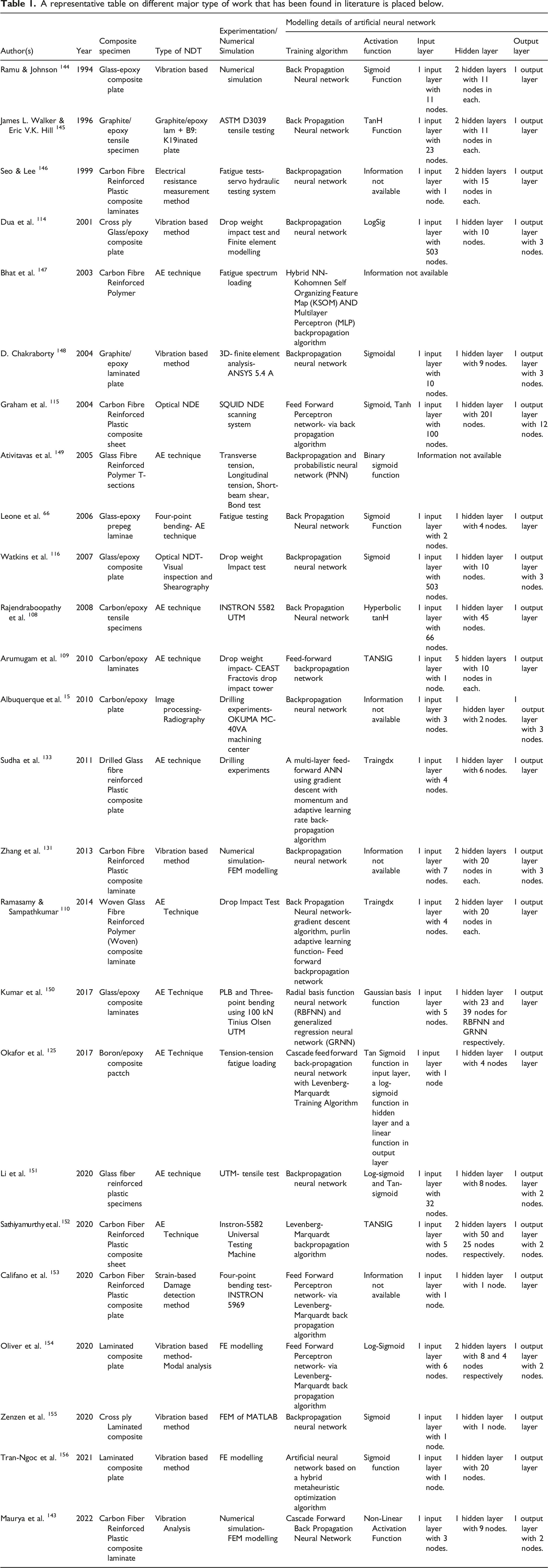
Damage due to impact
Fiber-reinforced composites are widely being deployed in the wide field of engineering. One of the major areas of concern is the effects of these structures due to impact loadings. Fatigue life prediction study have been always under viewpoint, but most of the studies were based on mathematical relationship. In absence of a well-defined failure criterion for fatigue life prediction, experiments must be performed thoroughly. Lee et al. 104 in their study trained the ANNs to model the constant-stress fatigue behaviour of fiber composites. It was found that the trained network could provide accurate representation of stress ratio for carbon-fiber composites. Assaf and Kadi 105 studies fatigue failure prediction based on feedforward NN for a glass fiber/epoxy laminate composite under tension-tension and tension-compression loading. Reduction of tensile and compression strength has been noted as a result impact loading. These modes of damage lead to premature catastrophic failures. In the early 1970s and 1980s, Cantwell and Morton 106 and Dorey 107 studied the fracture growth process and the residual strength in composite structures due to high-velocity impact loading. It is necessary to study and find out effective means of quantifying and assessing the resulting damage modes due to the effects of both high and low-velocity impact loadings.
Fibers are the primary load bearers in fiber/matrix composites, structural integrity is affected as soon as these fibers begin to break off. As of now it is yet not clear whether proof load test lowers the actual failure load. Backpropagation was used to develop a neural network to predict the failure load of composite tensile specimen. 108 Fiber-reinforced composites have the potential to reduce the weight of high-performing structures, like those used in aerospace engineering. However, they are often subjected to low energy impact loadings which may cause serious structural failures. These damages are termed as “barely visible impact damage” (BVID) and is a potential threat to sensitive structures like those use in aerospace, naval and nuclear industries. Arumugam et al. 109 used counts, energy, duration, rise time and amplitude as the AE signal parameters to carry out ultimate strength prediction in carbon/epoxy composite specimens from AE data by developing ANN. Ramasamy and Sampathkumar 110 studied the effect of drop impact damages which also give rise to BVID in composite materials by using the AE technique. the study used significant AR parameters, root mean square value, signal strength and counts to peak. An ANN model was developed by training the network using AE signal parameters as an input and impact damage tolerance as output. High velocity impact in comparison with low velocity impact results in damages which makes the structures often irreplaceable, whereas low-velocity impacts results in damages which in the long run may cause catastrophic failures. Raut et al. 111 discussed methods of detect low-velocity impact-based damages in composite structures. The paper dealt with the SHM techniques based upon pattern recognition, signal processing, vibration-based methods, ANN, optimization methods, and inverse problems.
Impact damages are unpredictable in nature unlike damages due to corrosion or fatigue and are a subject of concern specifically for fiber composite structures, which are widely used in the aircraft industry. Liu et al. 112 studied the drop-weight impact test of Carbon fiber reinforced Polymer (CFRP) composite, whereby back propagation NN model was developed. The model was used to interpret huge dataset of AE transient waveform signals, which was thereafter used as an impact damage indicator. Sung et al. 113 conducted similar study for impact-based damage assessment using time frequency analysis like Wavelet Transform to measure the changing frequencies of the AE waves and improved neural network concepts. To improve the reliability of the NN-based approach, the author used the Levenberg-Marquardt algorithm. Dua et al. 114 further studied for the detection and classification of impact-induced damages on composite plates employing ANN with the backpropagation algorithm. The authors additionally implied finite element analysis (FEA) to simulate the impact-induced strain profile due to the impact on the composite plates. The study was carried out experimentally, whereby strain sensors were placed on the composite structure. The developed ANN was thereby applied to characterize, detect, and localize the damage using the strain data. Graham et al. 115 proposed a feed-forward NN- based NDT setup using HTS SQUID gradiometers and double-D excitation coils to evaluate the impact of damaged CFRP composites.
Watkins et al. 116 coupled ANN with other damage detection mechanisms to classify impact-induced damages on thirteen glass/epoxy laminated plates, where backpropagation NN is based on the kinetic energy of the impact and uses limited strain signatures for damage classification.
To meet the targeted engineering application, composites are designed using the appropriate manufacturing process and the correct material composition.
Damage due to fatigue
Owing to the superior mechanical properties of composites, they are being widely used in the wide field of engineering. It is imperative to detect and monitor these structures in real time. Fatigue damage in composite structures is a complex phenomenon involving different complicated mechanisms. The fatigue damage can be represented by the changes in the mechanical and material properties of the structure, and reduction in stiffness and strength. From the phenomenological viewpoint, fatigue damage can be monitored, in the global sense, by the degradation of strength and stiffness in composites and thermoplastic nanocomposites.117,118
The carbon fibers in CFRP laminates are electrical conductors, hence electrical resistance has been used as an indicative parameter for the purpose of damage detection. Lee et al. 104 established a relationship between electrical resistance with fatigue life and stiffness reduction with the help of the NN model.
A study based on ANN for predicting fatigue behaviour of unidirectional glass fiber/epoxy composite laminae with different geometrical orientation and stress ratios have been reported by Kadi and Assaf. 119 Strain energy-based fatigue has also been used for fatigue life prediction in the context that the strain energy variation is directly proportional to damage growths. Strain energy when considered as a factor gives a complete context of the stress-strain behaviour due to fatigue failure. Kadi and Assaf 120 attempted to successfully imply strain energy as the only input parameter to train an ANN for fatigue life prediction for fiberglass/epoxy composite. Vassilopoulos et al.121,122 conducted an experimental investigation on multidirectional glass Fiber Reinforced Plastic (GFRP) composite for modeling fatigue life based on the developed ANN model under constant amplitude loading patterns. Applying the ANN, the authors developed constant life diagrams (CLDs) which can be useful for the design of structures loaded under variable amplitudes. A noteworthy conclusion was made by the authors i.e., efficient modeling of fatigue life can be achieved from a small portion of the entire collected dataset.
Fatigue is a complex problem for composites and their failure mechanism is still under rigorous study. Mathur et al. 123 applied the intelligent health monitoring tool, ANN to study the fatigue life of carbon fiber reinforced composites. A pre-processing program, the damage relativity assessment technique (DRAT) was coupled with ANN for determining the damage location and its extent, Kesavan et al. 124 Okafor et al., in their work, studied fatigue crack propagation in elliptical boron/epoxy composite subjected to tension-tension fatigue loading. the study show that the AE signals can can be distinguished for different damage type such as matrix cracking, fiber breakage, and shear of the composite patch. 125 The authors used three backpropagation feed-forward neural network for post processing the output signal data to predict fatigue crack propagation. Fatigue cycle and AE events as the input parameter showed promising results to predict fatigue growth.
The stress ratio was taken as a parameter by Assadi et al. 126 in their study of fatigue life prediction using different NNs in FRP composites. The study included rigorous training of the NNs on a set of composites, whereas the prediction study was validated using another set of composite samples. The results of the conducted study were within acceptable limits. Fatigue damage results in various classes of damage mechanisms, such as fiber breakage, matrix cracking, and delamination.
Damage due to delamination
Advanced composites are being extensively used in aerospace, naval, civil, and mechanical engineering constructions. They have the advantages of high strength, longer durability, and flexible design. The damage mechanism in these advanced composites is complex and difficult to detect. Delamination is potentially a serious damage mechanism that has been investigated thoroughly over the years. These defects cause structural failures at loads below the design load. A significant reduction of natural frequencies has been observed as a result of delamination growth.127,128 The reduction of natural frequencies leads to a reduction in the stiffness values which thereafter affects the structural integrity. Delamination behaviour study is vital for composite design and application. Impact loads, imperfect bonding, cracks, fiber debonding, broken fibers, and fatigue loading promotes delamination.
Okafor et al. 129 studied to predict the delamination size in composite laminates with the help of back propagation neural network models. The NN model was developed and trained based on the data of the modal frequencies. A similar study was carried out by Jiang, 130 whereby AE signatures were used to detect delamination and thereafter back propagation neural network was used to predict the size of the damage using strain signals for a composite plate. Zhang et al., 131 in their study presented a quantitative prediction of the delamination-based damage growth in FRP composite structure. Three different inverse algorithms were used to predict the location and extent of delamination: a graphical method, ANN, and surrogate-based optimization. Delamination significantly affects strain signatures within the composite structures. Therefore, the measurement of strain distribution is an important parameter for damage detection. Kesavan al. 132 utilized strain distribution as a parameter to study damage detection in composites. A program that uses multiple ANNs is developed-the Global Neural network Algorithm for Sequential Processing of Internal Sub Networks (GNAISPIN) which can detect delamination.
In the drilling of composite structures, AET can be used to understand the associated damage mechanisms. Delamination is one of the distinct damages that occurs during the drilling process. Sudha et al. 133 concentrated on developing an ANN model to study one of the key damages in composites, delamination using AET (acoustic emission technique). Four AE signal parameters were used to carry out delamination damage prediction, RMS voltage, AE count, peak amplitude and energy and was then used to develop feedforward ANN.
Fotouhi et al., investigated different time-to-failure delamination mechanism in glass/epoxy composite laminates. The specimens were subjected to the double cantilever beam, end notch flexure, and mixed mode bending tests. AE source classification were performed using wavelet packet transform (WPT) and fuzzy clustering method (FCM). Additionally, scanning electron microscopic (SEM) examination was used to examine the damaged mechanisms. It was found that the presented methodologies can be used to enhance the characterization and distinction of damage mechanisms in the actual occurring modes of delamination in composite structures. 134
Su and Ye135,136 proposed a lamb-wave based quantitative delamination identification study for CF/EP composite structure by using an Intelligent Signal Processing and Pattern Recognition (ISPPR) package. The approach included a multi-layer ANN supervised by error backpropagation which was trained from the spectrographic dataset obtained from the Lamb wave signals. The later work by the authors consisted of a damage identification scheme using the ANN methodology, where Wavelet Transform was performed to extract the signal characteristics with Signal Processing and Interpretation package (SPIP). A damage parameter database (DPD) was constructed to train the NN. The composite plate was the same as reported in their work in the year 2004. In the year 2005, another work was reported in, 137 where they introduced the concept of “digital damage fingerprints” which is used to construct a damage parameters database (DPD) for the purpose of offline training of a multilayer feedforward NN for Carbon-fiber Epoxy (CF-EP) composites. Su and Ye, 138 in their work studied the efficiency of genetic algorithms (GA) and ANN for delamination-based damage detection. Crivelli et al. 139 used an unsupervised neural network to detect, locate and classify two damage mechanisms, matrix cracking and delamination, in a carbon fiber panel.
Albuquerque et al.15,140 in their article studied delamination as a result of drilling mechanisms in carbon/epoxy composite structures from radiographic images. To obtain their objective, a novel methodology based on ANN was employed for analysing the radiographic images. Hein and Feklistova141,142 presented an integrated vibration-based method for delamination detection in a fiber-reinforced composite beam. The methodology used Haar wavelets and the ANN approach. A set of 68 databases was constructed using Haar wavelet using Chen-Hsiao method (CHM) and frequency-based approaches and was thereby used to train the neural network model. Maurya et al. 143 investigated delamination prediction in CFRP composite structures using both vibration-based NDT and then applied ANN to postprocess the obtained vibration data. To train the neural network, natural frequencies and mode shapes obtained from finite element analysis (FEA) were used.
Summary and conclusion
Studies on structural damage detection are an active area of research among the structural engineering community. The present work discusses the importance of damage detection in composites along with various NDTs used for this purpose where the NDT data are processed through ANN approach.
Composites are important structural components that are being lately used in the wide field of engineering applications. The properties that have aided their wide acceptance are low weight-to-strength ratio, light weight, resistance to corrosion, flexibility, mouldability and higher durability. However, when exposed to working condition, composite structures are often subjected to adverse loadings and harsh environmental conditions. As a result, damages like delamination, fiber breakage, matrix cracking, fiber-debonding, fiber waviness etc occur. Hence, detecting damages early in composite structures is extremely important. Various NDT techniques for this purpose are reviewed. Specific attention is given to studies that use ANN approach for processing NDT test data.
The ANN methodology is particularly preferred because it neither involves computationally challenging mathematical/numerical modelling of composite structures nor mathematically tedious signal processing procedure. Instead, this technique utilizes the experimental/test data, and it is found to be fast and highly efficient tool to identify damages. Accordingly, different NDT techniques aided by ANN are studied under a few broad categories as follows: • Ultrasonic testing for damage detection has been studied for many years and it is potentially an efficient method that has high penetrating power for the purpose of detection of internal flaws. Compared to other NDTs it has a superior advantage for determining the depth of internal flaws. However, most of the reported work in the literature using ultrasonic testing involves conventional structures and a very few works on composite structures are available. It could be due to the complex geometry, anisotropy and inhomogeneity that is involved with composite structures. Hence, it’s a challenge to the research community to address these issues. In this context, ANN is expected to be very helpful in capturing the effect of variation in geometry and material property inside the structure as the method is based on extensive data collected from all parts of the sample. • Vibration-based damage detection technique has been studied for the last few decades and many studies, aided by ANN, are also available for composites. Most of these works are based on plate-like structures having laminated/sandwich construction. Investigations are mainly focused on finding out whether damage(s) are present in the structure; however, studies are rare where location and characterization of such damages are involved. • Optical NDT is a comparatively new technique in comparison to the conventional ones, used for the purpose of damage detection in engineering structures. This method is extremely useful to monitor the inaccessible areas of a structure. Further, it provides a wide range of advantages such as its resistance to electromagnetic interference, non-contact, and real-time results. However, only a limited work has been reported on its application on composite structures. Moreover, the application of ANN on the data obtained by this method is rare. • AE technique is found to be an effective NDT method for damage detection. Many studies are available for damage detection in composites using AE technique aided by ANN. These works are mainly carried out on laminated FRP plates and sandwich plates including those having honeycomb cores. Many such works have investigated the presence of damages and/or their possible location. Some of the studies have shown that the appropriate analysis of AE signal using ANN helps in differentiating/classifying the damages. However, there is scope for further research in this area so as to identify, localize and characterize damages based on acquired AE signals. Moreover, investigating the above for an entire composite structure, rather than only structural components, is a further challenge. • It may further be added that most of the reported work has used a supervised training algorithm for ANN. It would be interesting to further carry out research work using an unsupervised training algorithm, which can operate on minimal data obtained from various NDTs.
Future Scope
Based on the findings of the present work, it may be stated that there is adequate scope for further research in the area of damage detection in composites using NDT where the testing data are processed through ANN. Some of the possible areas in this context are mentioned below:
While many work is available on detection and characterisation of damages in composites, there is scope for more rigorous studies on localisation of damages using NDTs of all types. Potential for extensive research exists in large scale engineering structures involving composites like modular buildings and thermoplastic applications like pipes, tanks, etc. Terahertz NDT, optical NDT and endoscopic NDT are comparatively new in the area of damage detection, hence there is a lot of scope for use of these techniques for detection of damages in composite structures through ANN. It may further be added that most of the reported works have used a supervised training algorithm for ANN. It would be interesting to further carry out research work using an unsupervised training algorithm, which can operate on minimal data obtained from various NDTs. This will be particularly useful in cases where many parts of the structure may not be easily accessible for carrying out NDTs. On a final note, it is worthwhile to mention that detection, localisation and characterisation of all the possible damages in an entire structure, rather than in certain components of it, is a challenge to the engineering community. A combination of more than one NDT techniques may be suitable for the above purpose. To process the huge dataset, thus generated, ANN technique would be extremely helpful. This entire exercise, especially when automated, would be tremendously conducive from the view point of maintenance and management of important and strategic structures.
Footnotes
Acknowledgements
The authors are thankful to the Department of Civil Engineering, National Institute of Technology, Durgapur for providing the infrastructure to carry out the present study.
Declaration of conflicting interests
The author(s) declared no potential conflicts of interest with respect to the research, authorship, and/or publication of this article.
Funding
The author(s) received no financial support for the research, authorship, and/or publication of this article.
