




Abstract
To evaluate the severity of thermal degradation on the impact response of carbon (C) and glass (G) fibers reinforced PolyEther Ether Ketone (PEEK) laminates, low velocity impact tests were conducted at a temperature higher than the glass transition temperature Tg (150°C) and after exposure to a kerosene flame (5-10-15′). The first important effect resulting from temperature increase was a reduction of the impact energy required to induce BVID (Barely Visible Impact Damage). The second effect was that matrix ductility (enhanced at T>Tg) contributes to significantly modify the permanent indentation. Not surprisingly, the plastic and viscoplastic deformation mechanisms being ruled by the PEEK matrix behavior at high temperature, the permanent indentation increases by almost 40% for all impact energies. Contrary to the external damage represented by permanent indentation, temperature has a tremendous influence on the internal damage as there was virtually no delamination in the CG/PEEK laminates impacted at Room Temperature (RT) and 150°C. At last, impact tests conducted on specimens exposed to a kerosene flame implied that the impact bearing capabilities of CG/PEEK laminates dramatically decreased after a 5′ exposure and became even critical after 10′ as perforation was observed. For 40 J impacts, the permanent indentation was multiplied by 3–9 with respect to the as-received specimens.
Introduction
The impact behaviour and damage tolerance of thermoplastic-based composites have been thoroughly investigated over the past 30 years but most references available in the literature focus on impact testing by means of a drop tower.1–19 Pendulum impact testing machines and drop towers are both critical to validating the low velocity impact performance and damage tolerance of materials.20–22 Standard Charpy calibration specimens designed for verification of pendulum impact machines were tested on a vertical drop tower impact machine.20,23,24
Influence of temperature on the impact behaviour of polymer matrix composites
Thermoplastic (denoted TP) composites have gained increasing attention for their higher toughness and better damage tolerance than thermoset (denoted TS) composites.7,25–29 A few references compared the low-velocity impact behaviors of thermosetting and thermoplastic laminates at Room Temperature (RT)1,2,30,31 and at low4,32–34 and high temperatures.21,24,34,35 TP laminates usually demonstrate lower structural loss up to 200%, lower contact force by 14%, and lower absorbed energy by 48% compared to those of TS counterparts. They were characterized by a highly ductile behavior resulting in an extended plasticity in the interlaminar region and in matrix-rich regions.36,37 Wang et al. specifically addressed the low velocity impact behavior of woven C/PPS laminates at room temperature and high-temperature (95–125°C). By means of macro- and microscopic observations and C-scan inspections, they investigated the relationships of impact response and damage with temperature. 35 They concluded that a temperature increase at temperatures higher than glass transition temperature results in decreasing the stiffness, the delamination area, and the permanent indentation. For instance, with specimens impacted at 15 J and 125°C, the permanent indentation and delamination were increased/decreased by 40 and 57%, respectively. The temperature influence on impact responses was closely associated with the plastic deformation of matrix and its coupling effect with the resin-rich regions and fiber-bridging mechanism that induced by the specific weave architecture. They also concluded that temperature promotes the failure mechanisms to change from brittle to ductile, as was suggested by the disappearance of intra-and inter-laminar cracks at high temperature. By considering impact tests conducted with a Charpy pendulum, Hunain et al. observed that the temperature (ranging from 30 to 70°C) affects the impact performance and the failure mechanism of E-glass/unsaturated polyester composite materials. 38 The failure mechanism appears to be temperature-dependent as fibre breakage and delamination occurred at high temperature whereas matrix cracking was observed at room temperature. Most of the studies available in the literature focus on the thermomechanical coupling in polymer-based laminates under temperature conditions lower than 200°C. To reproduce in-situ service conditions, Apisnall et al. developed an approach for quantifying the thermomechanical bending behaviour of seven plies of woven bi-directional carbon fibre fabric bonded with bisphenol-based epoxy resin laminates. 39 The proposed test method enables the coupled thermomechanical behaviour, relating the mechanical performance degradation with the temperature gradient and hence the gradient in mechanical properties inside a composite material to be investigated. From the obtained results, they concluded that the failure was dominated by a large proportion of the specimen reaching the glass transition temperature at low heat fluxes (10 kW/m2). At higher heat fluxes (up to 40 kW/m2), the failure was dominated by the pyrolysis and the oxidation of the CFRP at the locally exposed surface, resulting in a more brittle failure.
In addition to the nature of the matrix, as was recently shown by Zhang et al., the reinforcement architecture also plays significant roles in the mechanical behavior of composite materials.29,40 A satin weave reinforcement is a relatively complex form compared with common unidirectional laminates, plain or twill composite materials. Each weave form is associated with specific deformation and damage mechanisms within the laminates. When it comes to impact behavior, conclusions from 41 also show that woven fabric reinforced composites exhibited more bending stiffness, contact stiffness and energy absorption capacity than unidirectional ones thanks to fibre alignments throughout the longitudinal and transverse directions. Moreover, resin material has favourable effects on the damage mechanisms. It was concluded that use of the thermoplastic resin enabled the composite specimens to exhibit less delamination. The reinforcement weave structure limits extensive growth of delamination, but fiber breakages were more common and appear at lower impact energies because of fiber crimps.1,2 The features and advantageous failure mechanisms were identified: inherent toughness of the fabric; the availability of matrix-rich regions at the fiber bundles crimp where plastic deformation can develop (in C/PPS and C/PEEK laminates); crack propagation along the undulating pattern of the yarns creating a large fracture surface area; and multiple crack delamination on the impacted side (particularly in epoxy-based laminates).
Residual impact behavior after fire exposure
To dissociate the damages and effects induced by temperature exposure and impact loadings, an intermediate approach consists in conducting low velocity impact tests after the specimens were thermally degraded. When it comes to test the impact behavior after severe thermal degradation, there are very few studies available in the literature. Different methodologies and technical means were considered to induce thermal damages within composite laminates: cone calorimeter, 42 flame-throwing gun device, 43 small-scale fire apparatus. 44 Ulven et al. used a propane torch apparatus based on a Burn-Through Test set-up to conduct small-scale fire exposure tests producing a steady flame normal to a plate surface. 44 Chapple et al. designed and developed a novel laboratory scale testing equipment, which combines impact and heat/fire conditions to enable the testing of composite laminates, including the ability to capture debris/particles released during the test. 42 This incorporates a pendulum impactor to create impact whilst the sample was exposed to a cone heater at a particular heat flux for a specified period of time. A carbon fiber-reinforced epoxy composite was impacted whilst being exposed to different heat fluxes for a range of time periods. A loss of stiffness related to the heating exposure time was found to affect the damage type. Similarly, damage to composite laminates in a fire will significantly affect their structural integrity and post-fire performance. 43 A linear char front develops through the thickness of laminated composites because of the decomposition of the matrix within the laminates, which commonly results in two well defined regions 44 : a charred one with significant delamination near the exposed surface and a less degraded one near the back surface. The residual char is very porous, brittle, and does not provide structural integrity to the fibers. As a result, most of the mechanical load was borne by the second one. A rule-of-mixtures model that estimates the post-fire mechanical properties were combined with an impact response model that was based on classical plate theory to predict the post-fire loss in impact stiffness for Polymer Matrix Composites subjected to low velocity impacts. More recently, Kim et al. studied the post-fire impact properties of flax fibre reinforced (epoxy and polypropylene matrix) composites containing intumescent flame retardants by means of a cone calorimeter. 45 An instrumented drop-weight impact testing demonstrates that an increase in heat exposure time led a gradual decrease in impact properties of the composites resulting from fire-induced damages on fibres and polymers. However, pre-melting and re-consolidation of PP were beneficial to have higher impact energy and force of the flax-PP composite over those of the flax-epoxy counterpart. In addition, the char formation of composites associated with intumescent flame retardant enhances the fire reaction properties of composites, whereas there was no significant influence on the post-fire impact characteristics because of highly brittle nature of carbonaceous char.
Objectives of the study
From the brief literature review, it appears that the influence of temperature on the impact behavior of thermoplastic-based laminates significantly depends on the temperature testing conditions, and more specifically the thermally-induced damages. In other words, depending on the physico-chemical phenomena taking place within polymer-based laminates, it was expected that the PEEK matrix will experience various thermal degradation and decomposition mechanisms that will change their capabilities to transfer the mechanical loading when laminates were subjected to low velocity impacts at high temperature or after fire exposure. By means of in-situ impacts tests at temperatures higher than Tg, the first objective of this work was precisely to show the roles played by matrix thermal degradation on the impact behavior and damage mechanisms. The purpose is also to quantify the influence of testing temperature on the permanent indentation. Finally, by conducting impact tests on specimens exposed to a kerosene flame exposure, the third objective was to show the residual impact behavior in the worst-case scenario to determine the criticality of fire exposure.
Materials and methods
Materials
The laminates used in this study were obtained by thermo-compression.18,19 They consisted of a PEEK thermoplastic matrix reinforced with a 5-harness satin weave carbon (C) fiber fabric (Tenax® - E HTA40 3K). They had two outer glass fiber (G) fabric (5-harness satin weave) reinforced PEEK plies denoted (0/90)G. 16 plies laminates with a quasi-isotropic lay-up [(0/90)G, (0/90), (±45), (0/90), (±45), (0/90), (±45), (0/90)]S were tested (Figure 1). This material was intended to be used in aeronautical parts for high temperature service conditions (typically in aircraft engine’s nacelles) for which the fire scenario is a certification requirement. CG/PEEK laminates average thickness was about 4.5 mm. Woven ply Carbon/Glass reinforced PEEK hybrid laminates: (a) Outer surface macroscopic observation – (b) Through-the-thickness microscopic observation.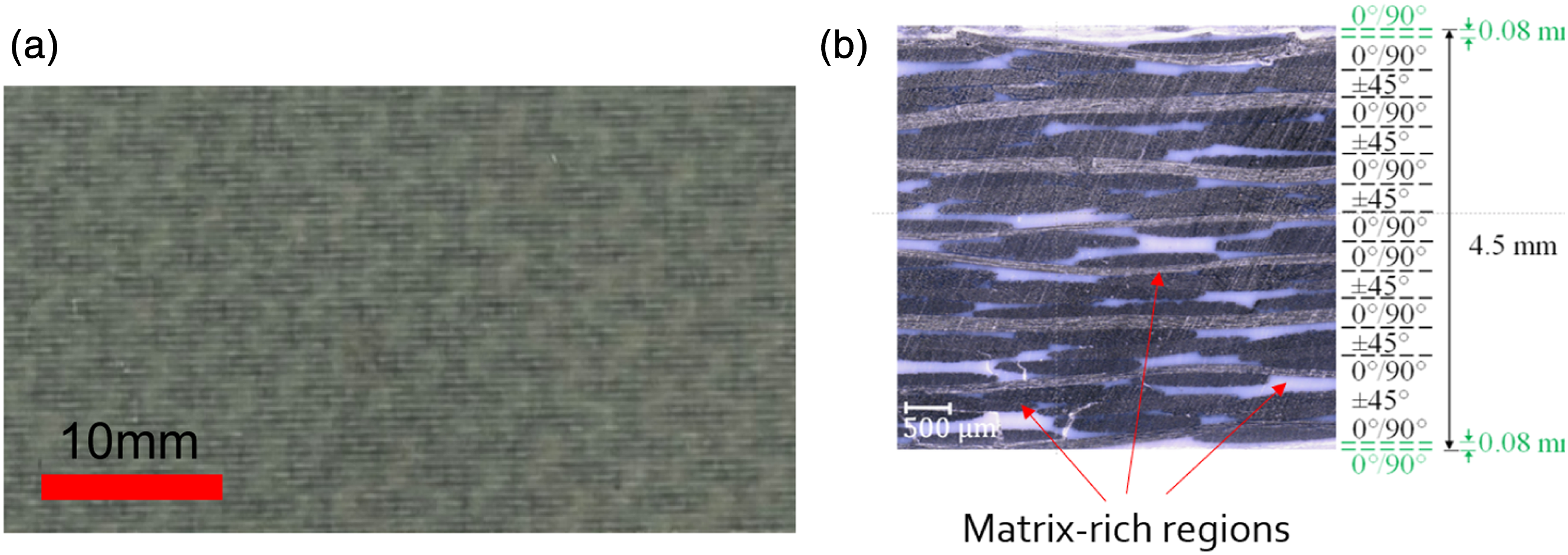
Characteristic temperatures of CG/PEEK laminates.

Methods
Charpy pendulum impact testing
Specimens were impacted by a swinging pendulum hammer equipped with a hemispherical indentor whose diameter was 16 mm (Figure 2). This testing device was an improvement in the Charpy pendulum initial design. This instrumented Charpy pendulum was tested and validated by comparison with a Drop Tower impact device in a previous work.
18
An in-situ heating device was integrated to the Charpy pendulum to allow low velocity impact tests to be performed at temperatures higher than the laminates’ Tg. Low velocity impact testing: (a) Charpy pendulum design and measurement devices – (b) In-situ heating device with temperature measurements.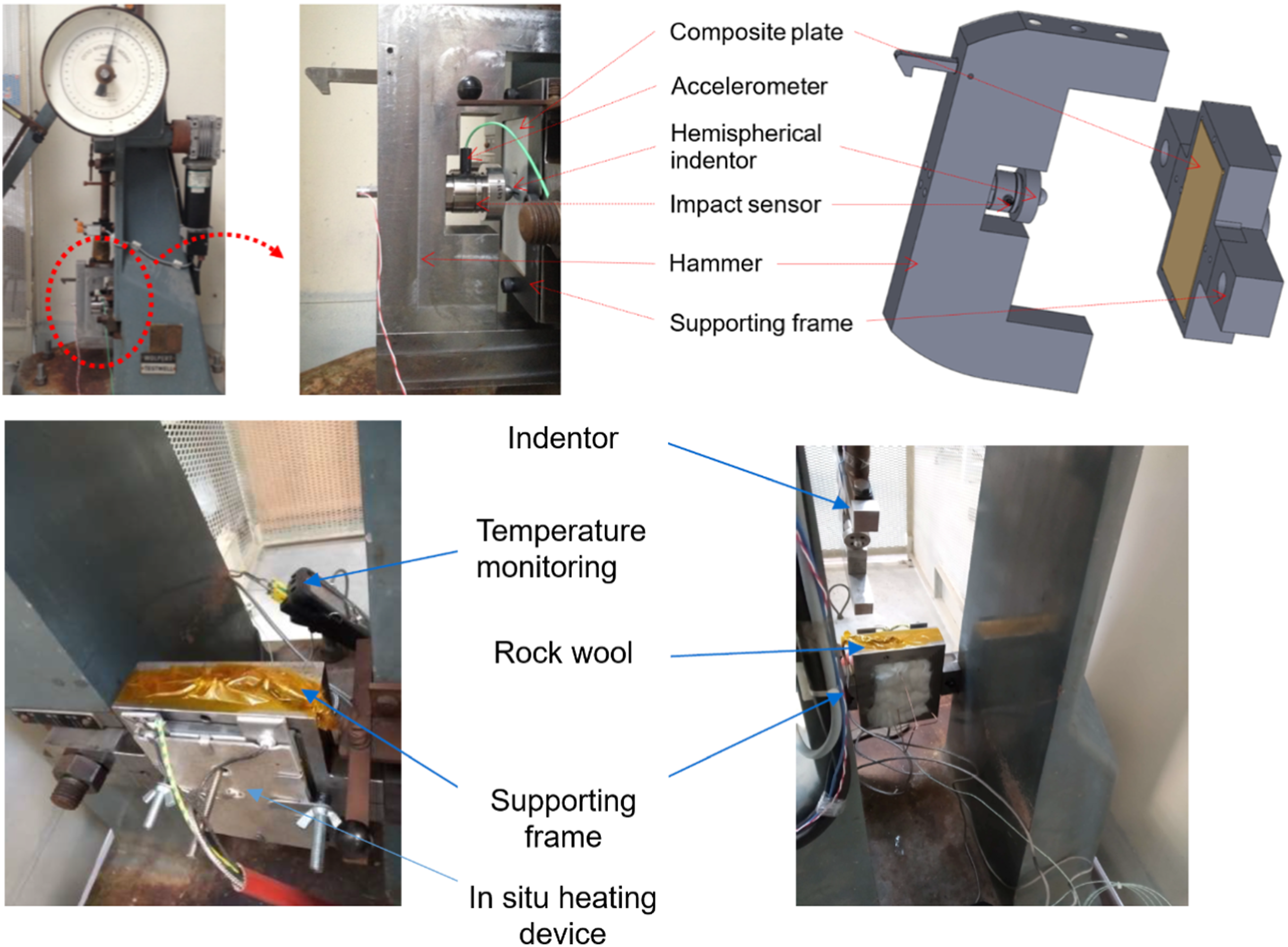
150*100 mm2 impact specimens were cut by water jet from 600 × 600 mm2 plates. The impact specimen meets the requirements of the Airbus Industries Test Method AITM 1-0010.
46
The in-situ heating device provides a constant temperature distribution in the center of the specimen and through-the-thickness of the laminates (Figure 3). Four specimens were impacted at room temperature and 150°C with four different impact energies ranging from 25 to 40J. Evolution of surface temperature as a function of thermocouples location on the back surface of CG/PEEK hybrid laminates impact specimens.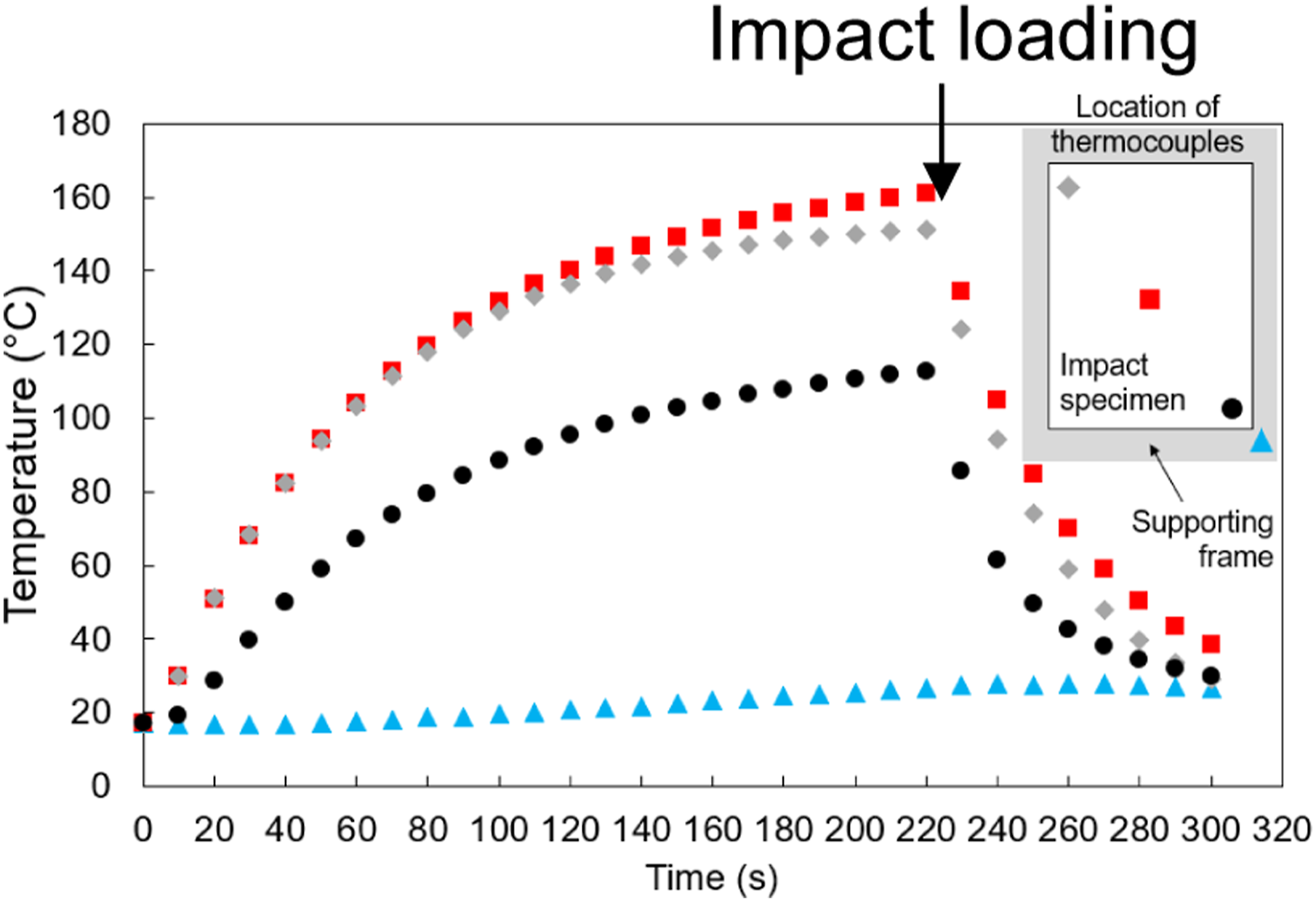
Quasi-static indentation tests
All the quasi-static indentation tests were performed using a 100 kN capacity load cell of a MTS 810 servo-hydraulic testing machine in displacement-controlled mode. The testing machine was equipped with a thermal chamber allowing a controlled temperature to be applied during the mechanical testing. These tests were conducted with the same supporting frame, and the same hemispherical indentor. The applied displacement loading rate was 1 mm/min (1.67 × 10⁻⁵ m/s).
Kerosene flame exposure
A fire bench consisting of a kerosene burner was designed and instrumented at small-scale47,48 to evaluate the residual properties in tension and in compression of the CG/PEEK laminates studied in this study.
49
The kerosene burner shown in Figure 4(a) was a domestic device (Cuenod manufacturer). The kerosene was injected in a nozzle generating a hollow cone spray with an angle equal to 80° and a maximum flow rate of 0.3 g/s. This flow rate was controlled with a mass flow meter (MINI CORI-FLOW™ - Bronkhorst). Airflow was also controlled with a mass flow meter (EL-FLOW® Prestige - Bronkhorst). The air to fuel ratio was selected at 0.85 of the stoichiometric value, to obtain heat flux and temperatures values close to the standard values (116 kW/m2 and 1100°C) at the sample location. The flame at the exit of the turbulator was a wide and turbulent jet. Therefore, a 50 mm diameter steel tube was installed after the turbulator to channel the hot combustion gases on the exposed area of the impact specimen. A protective shield consisting of an insulating material was used to limit the thermal decomposition on the face exposed to a fire to a square of 50*50 mm2 (Figure 4(b)). Kerosene flame bench: (a) description of the experimental set-up – (b) thermal decomposition of a CG/PEEK hybrid laminates impact specimen during flame exposure.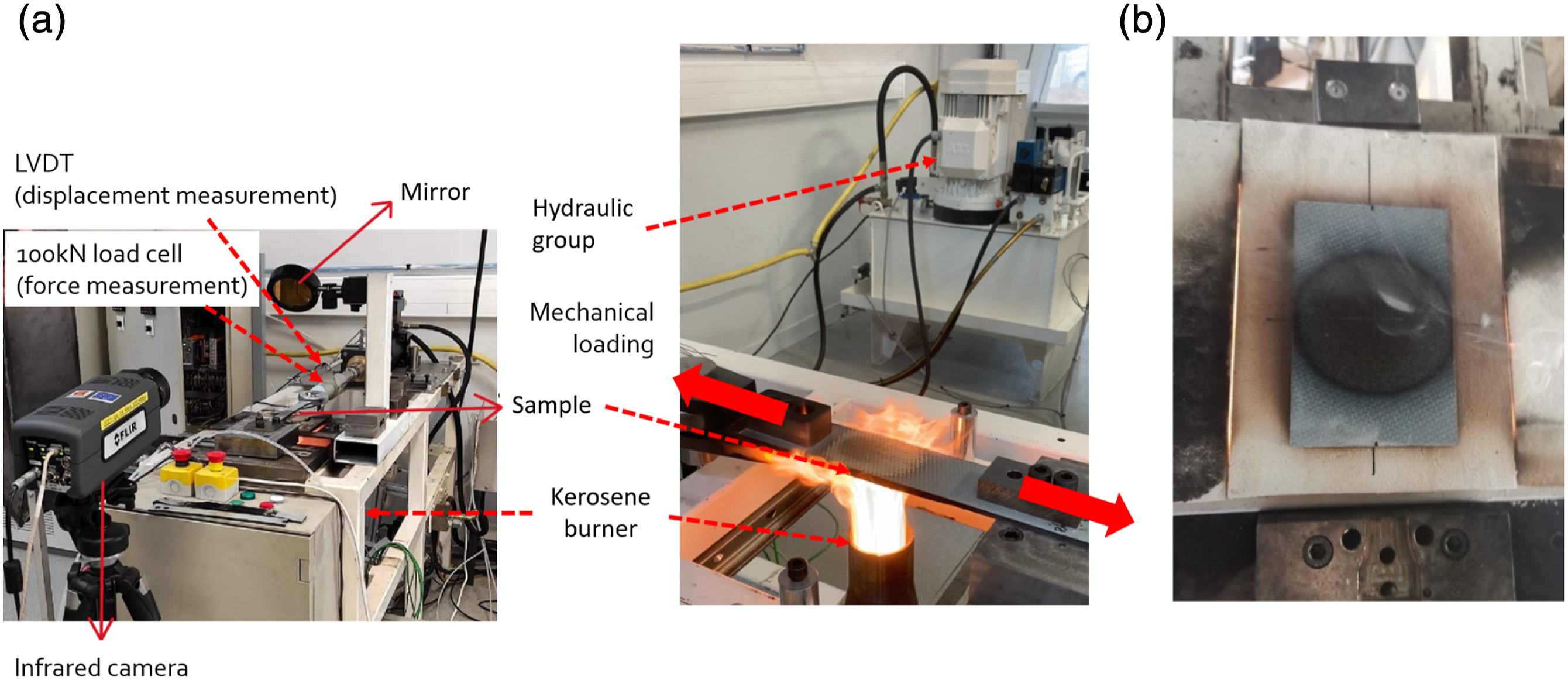
Permanent indentation measurement
The measurement of the specimen’s permanent indentation was typically used to assess the severity of impact damage. According to AITM 1-0010 Airbus standard, 46 the BVID (Barely Visible Impact Damage) was typically defined by 0.6 mm of indentation after relaxation of the structure and without being exposed to any humidity. 1 The permanent indentation was measured using a 3D Keyence optical microscope VHX 5000.
Results and discussion
Influence of testing temperature on the macroscopic response
The impact response of composite laminates is associated with a local complex stress state induced by the contact between the hemispherical indentor and the outer surface of the plate. It results in an out-of-plane displacement of the laminates and a local biaxial stress state. The impacted surface was mostly under compressive loading whereas the opposed surface was primarily in tensile loading. It is widely admitted that the laminated nature of the material and its mechanical behaviour anisotropy were associated with significant out-of-plane shearing stress between the plies ultimately causing extensive delamination. However, the literature review shows that impact-induced damage mechanisms strongly depend on the ductility and toughness of the polymer matrix. Hence the temperature was expected to play significant roles in the load transfer from one ply to another during impact. It should also reflect on the damage mechanisms.
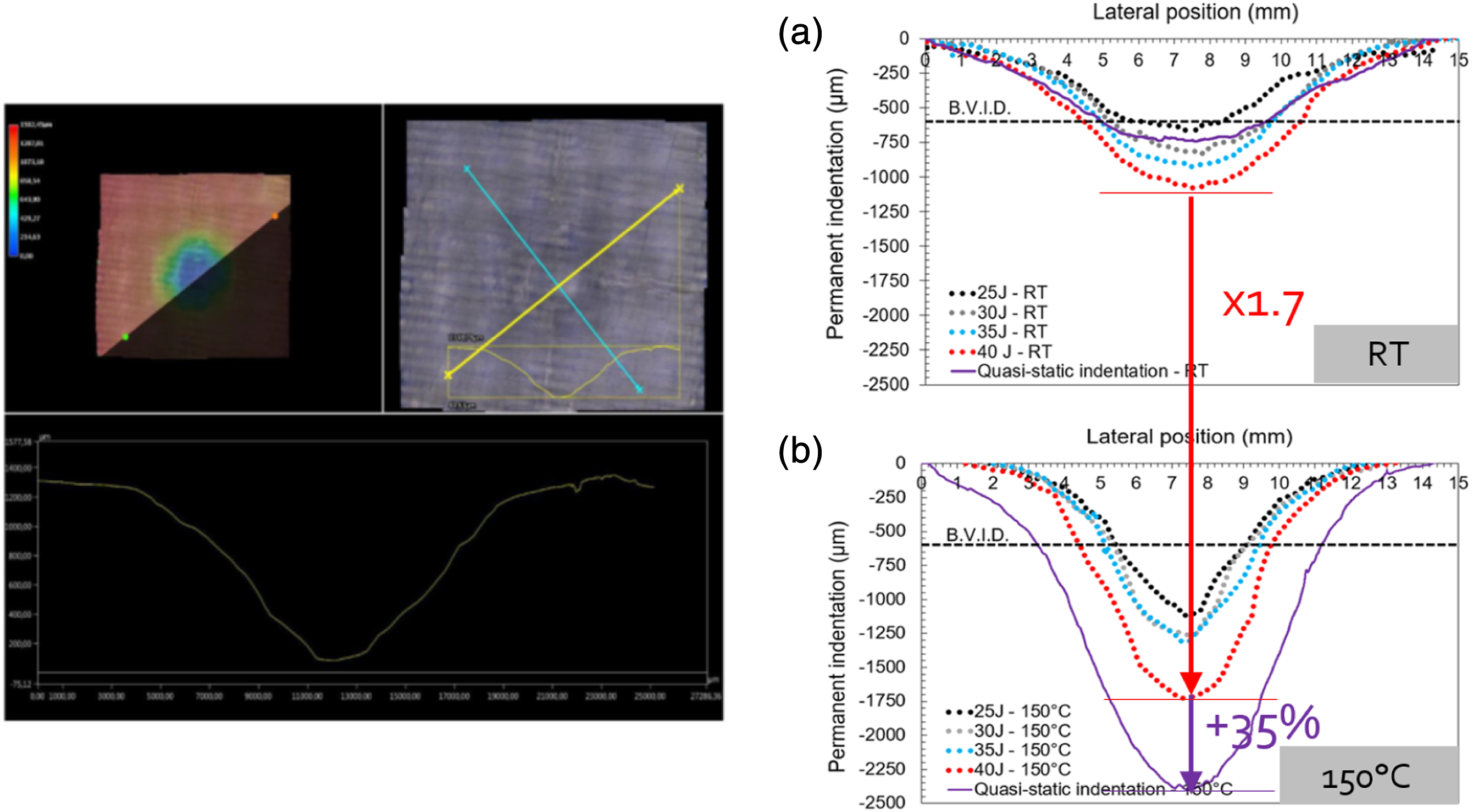
From the macroscopic mechanical responses of laminates subjected to low velocity impact tests at RT and 150°C shown in Figure 5, it appears that for all the impact energies, the load-displacement curves were characterized by a rebound of the indentor after the impact, allowing the dissipated impact energy to be quantified. This rebound also emphasized the viscoelastic-viscoplastic response of the material during unloading. For a given impact energy, the maximum displacement during impact was always higher at 150°C (about 7.5 mm vs 6.5 mm at 40J), suggesting that the laminates undergo a more extensive impact damage at high temperature. The macroscopic observations of the fracture surfaces should confirm it or not. The permanent indentation was correlated to higher values of maximum displacement at high temperature. For all the impact energies, the permanent indentation was about 1.7 as high at 150°C as at RT (Figures 6(b) and 7). For a given impact energy, the permanent indentation value increases as testing temperature increases from RT to 150°C. One may speculate that the matrix ductility that was enhanced at T>Tg may explain the increase in the permanent indentation. Permanent indentation usually results from both the non-reversible deformation mechanisms coming along with impact-induced damages. Influence of testing temperature on the low velocity impact response of CG/PEEK hybrid laminates: (a) RT – (b) 150°C>Tg. Influence of testing temperature on the low velocity impact response of CG/PEEK hybrid laminates: (a) fraction of dissipated energy as a function of impact velocity – (b) Permanent indentation as a function of impact energy. Influence of testing temperature on the permanent indentation after low velocity impact testing of CG/PEEK hybrid laminates. The indentation profile was measured from 3D microscope observations (Keyence VHX 5000): (a) Room temperature – (b) 150°C>Tg.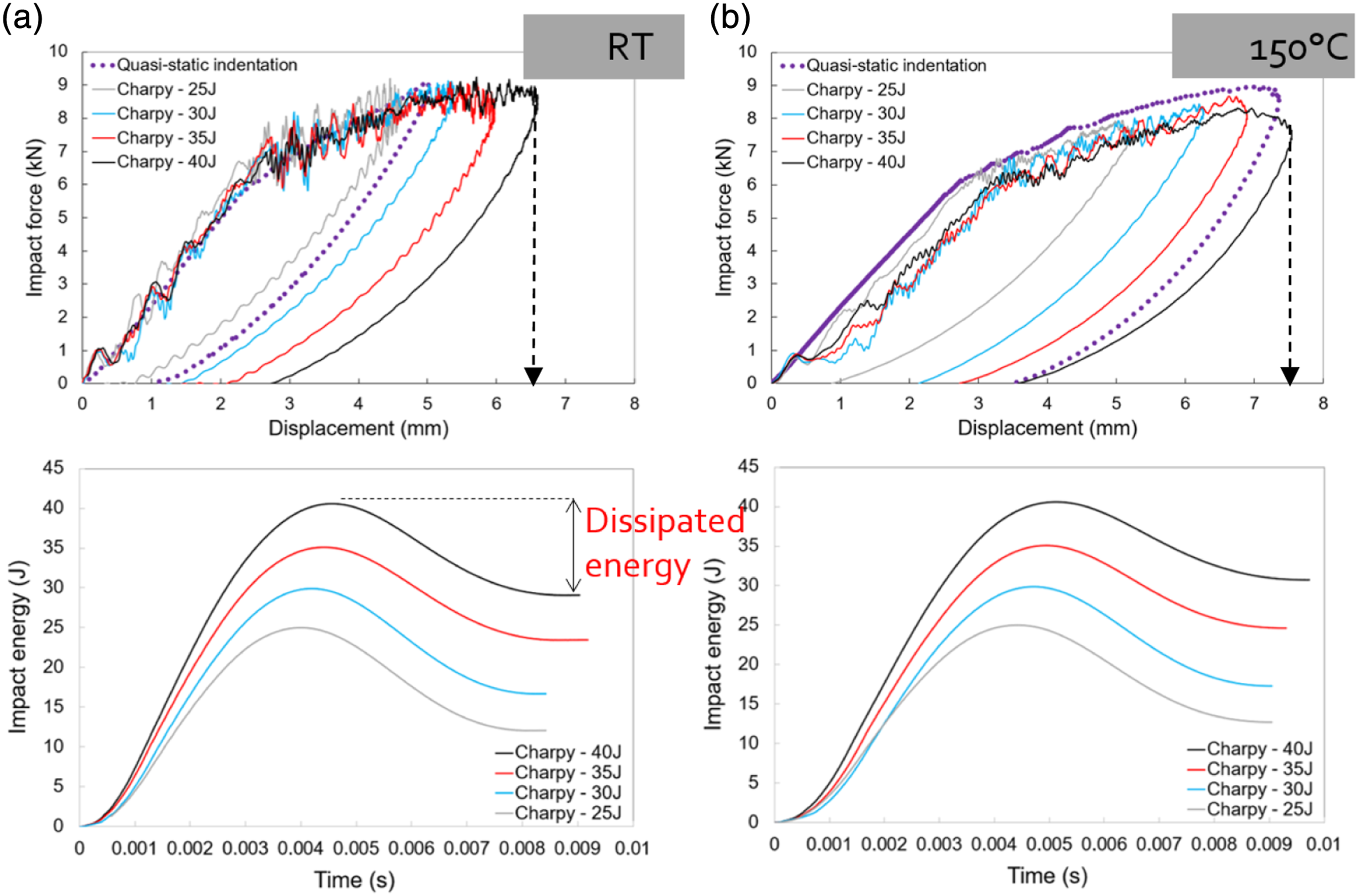
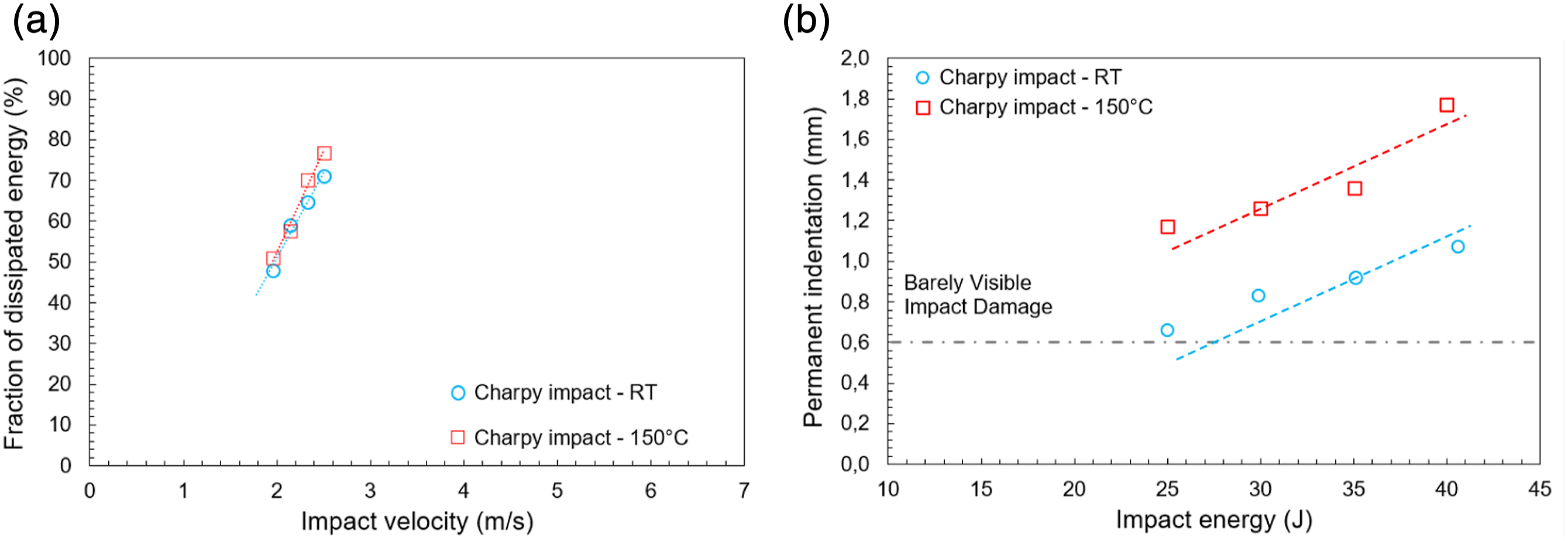
The quasi-static indentation response was similar to the 25J and 40J impact responses at RT and 150°C, respectively. It suggests that higher values of impact energy (and therefore impact velocities) were required at high temperature to have a macroscopic response similar to quasi-static loading conditions. This result was counter-intuitive as one may expect lower impact velocities to tends to the quasi-static case in composite materials whose matrix behaviour is time-dependent at temperatures higher its Tg. In addition, for each impact energy, the comparison of the fraction of dissipated energies shows that it was virtually not correlated to testing temperature (Figure 6(a)). Once again, this result was surprising because larger displacement and permanent indentation should result in higher fractions of dissipated energy. The dissipative mechanisms were primarily damage and local deformation of the PEEK matrix. It was expected that high temperature impact conditions should also lead to more energy dissipation within the laminates, as was suggested by higher permanent indentation values at 150°C. From Figure 6(b), it also appears that the permanent indentation increases linearly as a function of impact energy. The gradual increase from one impact energy to another was the same, regardless the testing temperature. At last, the barely visible impact damage was reached for all the impact tests.,
Comparison of indentation profiles as a function of testing temperature
The indentation profiles were drawn from 3D microscopic observations of both quasi-static and impact-tested specimens. The shape of the indentor being hemispherical, it was assumed that the profile was similar regardless the position of the line chosen to draw the profile (yellow and blue lines on Figure 7. These profiles provide a good overview of deformation mechanisms and damage extent within the laminates. Figure 7 shows the influence of testing temperature on the profile of the permanent indentation (PI) depending on the impact energy.
The profiles were compared to the ones obtained under quasi-static loading conditions. At RT, the impact profiles were very similar with a moderate increase in the maximum value as a function of impact energy. The quasi-static case was very close to the 25J impact as was observed on the load-displacement curve (Figure 5(a)). The trend was very different at 150°C as the PI was 35% higher than the 40J impact value. Higher impact energies also contribute to more extended profiles with respect to the profiles observed at RT for a given impact energy. It was assumed that the more ductile behaviour of the PEEK matrix at T>Tg enables the indentor to penetrate more deeply through-the-thickness of the laminates.
Fractographic analyses
To better understand the roles played by testing temperature on both local deformation mechanism (depending on matrix ductility) and impact-induced damages, fractographic analyses were conducted on specimens subjected to impact and quasi-static loadings. The present discussion was focused on the most severe case corresponding to a 40 J impact as it enables the deformation and damages to be amplified and more relevant to be discussed. According to literature, it is widely admitted that the first damage to be triggered in composite laminates subjected to impacts is usually matrix cracking; matrix cracking is itself classically separated into two types:50–52 (i) vertical cracking, i.e. cracking along the direction normal to the interfaces, resulting mainly from transverse tensile stresses σtt that develop in the lower part of the plate – (ii) Cracking at 45° to the direction normal to the interfaces, resulting mainly from out-of-plane shear stresses τtz that develop in the central part of the plate. These different cracks may cause the initiation of interlaminar cracking at the upper and lower interfaces of the considered ply; interlaminar cracking which may cause delamination during impact. In other words, there is a clear coupling between matrix cracking and interlaminar cracking, even if in practice it is difficult to define which of the two phenomena is the precursor of the other.
At RT, the observations of impacted and back surfaces show that damage on the impacted surface was classically associated with the local crushing of the outer plies resulting from the compressive loading in the contact area (Figure 8(a)). The back surface was typically characterized by a cross pattern damage along the 0/90° directions. Contrary to what is usually observed in carbon fiber reinforced polymer-based laminates subjected to low velocity impacts, the microscopic observations of the through-the-thickness laminates along the 0 and 90° directions show impact-induced damages were characterized by very little interlaminar cracking and the failure of 0/90° fibers (Figure 8(b)). These microscopic observations also confirm that fracture was ductile as was suggested by the load-displacement curves. They also tell that that the permanent indentation was primarily associated with the viscoelastic-viscoplastic-plastic deformation of the PEEK matrix in matrix-rich regions located between the plies (Figure 1(b)). More surprisingly, there was virtually no delamination. This localized and non-extensive damages was already observed in PEEK-based laminates, consisting of a 5H-satin weave reinforcement, and subjected to impact loadings at RT.
1
It was primarily attributed to the very high fracture toughness of PEEK matrix combined with the impact resistance of woven plies. Fractographic observations of impact-induced damages in CG/PEEK hybrid laminates subjected to a 40J impact at RT: (a) impacted and back surfaces – (b) through-the-thickness laminates along the 0 and 90° directions.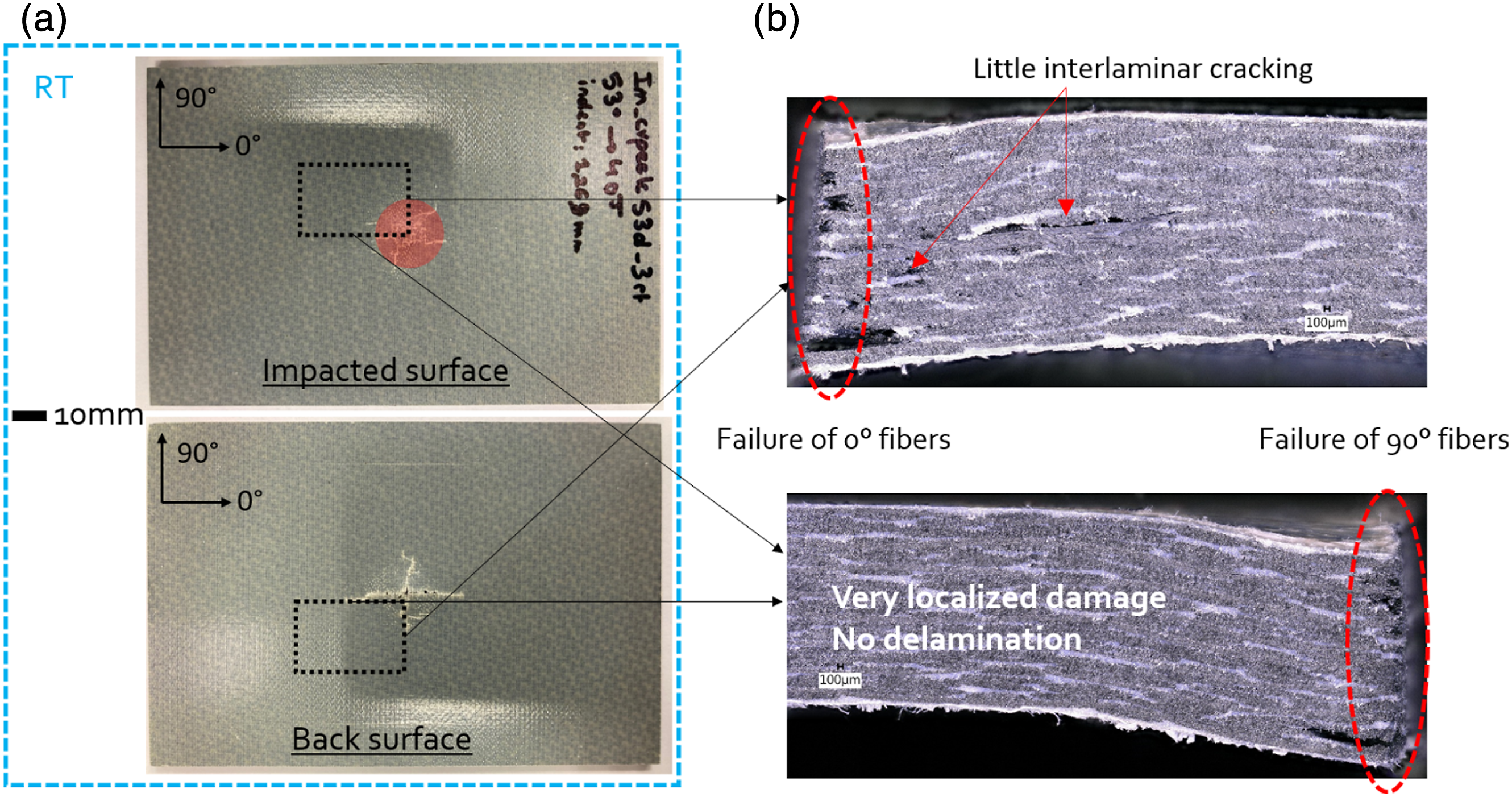
At 150°C, the occurrence of damages was even scarcer compared to what was observed at RT (Figure 9). On the impacted surface, there was virtually no failure of 0° fibers. On the back surface, the cross-pattern damage was less obvious as well. The through-the-thickness microscopic observations of the laminates clearly show that damage was even more localized than it was at RT. The fracture surface was qualified as ductile as impact loading comes along with significant deformation of the PEEK matrix resulting from its exacerbated viscoelastic-viscoplastic behaviors at T>Tg. Quite surprisingly, there was no delamination at all in this case, which was totally unusual in laminates subjected to impact loadings. Fractographic observations of impact-induced damages in CG/PEEK hybrid laminates subjected to a 40J impact at 150°C: (a) impacted and back surfaces – (b) through-the-thickness along the 0 and 90° directions.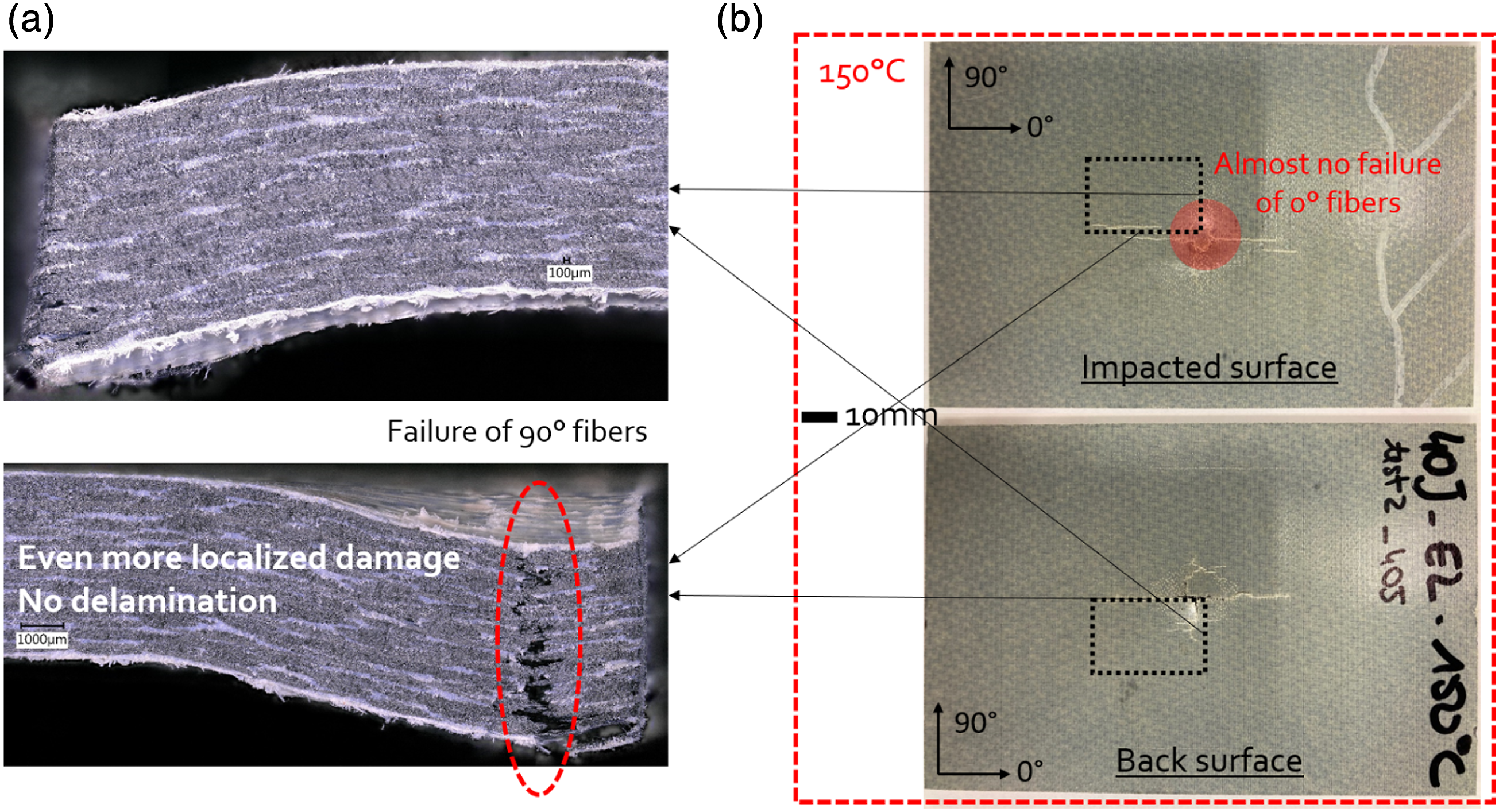
Impact testing after fire exposure
The study of thermally-induced degradation on the in-situ impact behavior of CG/PEEK laminates was the first step towards the understanding of thermo-mechanical coupling within composite materials consisting of a brittle fibers and very ductile/tough polymer matrix. As was observed in Figures 8 and 9, a temperature increase at temperatures higher than material’s Tg contributes to the modification of impact-induced damages and the increase in permanent indentation resulting from large plastic-viscoplastic deformations and the very high toughness of CG/PEEK at T>Tg.36,37 Localized fire exposure occurred when the composite laminates was subjected to a constant intensity thermal loading on the laminates exposed face.
49
This type of loading led to through-thickness and in-plane temperature gradients in the laminates (Figure 10). Temperature distribution on the back surface of CG/PEEK laminates exposed to a kerosene flame: (a) location of thermocouples – (b) Changes in temperature as a function of exposure time depending on thermocouple location.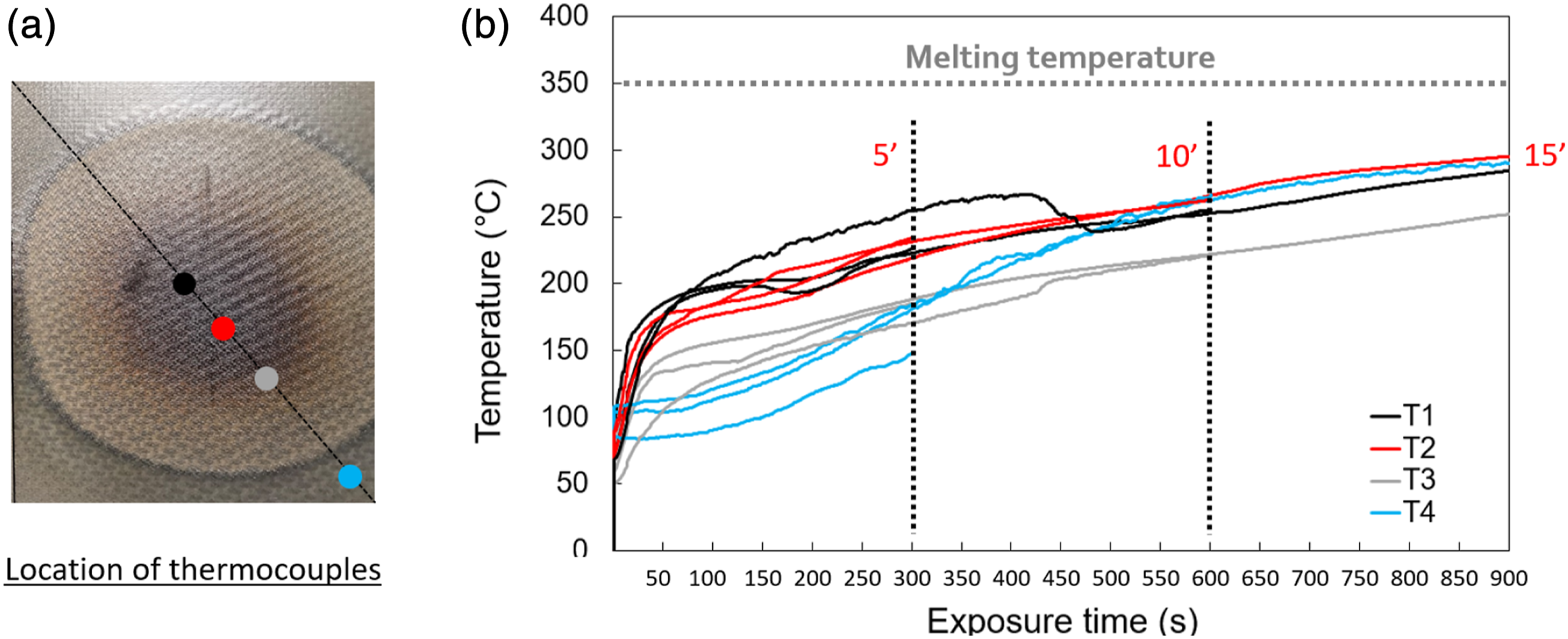
As was pointed out in,
41
these temperature gradients result in degradation and mechanical gradients in CG/PEEK laminates (Figure 11). These temperature gradients also contribute to specific deformation mechanism to occur within the laminates’ plies depending on the mechanical loading conditions (tension or compression). Ultimately, along with local thermal loading, laminates experience atypical failure modes. The purpose of the present section was to investigate the failure mechanisms associated with local fire exposure to correlate these damages with the structural integrity of CG/PEEK laminates when they were subjected to post-fire impacts. Through-thickness microscopic observations of laminates (longitudinal cuts in the middle sections) subjected to kerosene flame for different exposure times: (a) 300 s – (b) 600 s – (c) 900 s.
From different thermocouples located on the back surfaces of the laminates (Figure 10(a)), the changes in temperature was monitored as a function of exposure time (Figure 10(b)). The wall temperature that is the temperature on the flame-exposed surface was about 700–750°C > T onset , meaning that the temperature distribution through-the-thickness was heterogenous.48,53 The estimated temperature gradient was about 400–450°C. Therefore, it means that after a 15′ exposure the thermal decomposition started on the exposed surface whereas the melting temperature was not even reached on the back surface. It was also expected that convective heat transfers with the ambient air on the back surface contribute to significantly cool down the back surface, hence proving that the melting temperature was not reached after a 15′ flame exposure.
To better understand the influence of temperature within the laminates, longitudinal cuts were achieved to carry out microscopic observations in the middle section of the plates (Figure 11). Of course, the thermal gradients within the laminates contribute to the modification of the composite material meso-structure depending on the plies position with respect to the flame side and the flame exposure time. From Figure 11(a), the formation of porosities resulting from PEEK matrix pyrolysis was observed after 300 s primarily in/between the plies near the flame exposed surface. After 600 and 900 s, the through-the-thickness microscopic observations clearly show two-well defined areas (with different colors) whose thickness was about the same (Figure 11(b) and (c)). Some delamination was observed between these two areas. The main difference was that the plies near the opposed surface were characterized by porosities formation and interlaminar cracks suggesting that: (i) the temperature at the onset of thermal decomposition (583°C) was reached in these plies – (ii) the differences in thermal expansions were at the origin of damages within the laminates. The thermally-induced damages (porosities, interlaminar cracks and delamination) were expected to adversely affect the impact behavior of CG/PEEK laminates.
Thus, 40 J impact tests were conducted at RT to determine the criticality of a prior fire exposure on the impact response in terms of impact force and permanent indentation. The results were compared to the ones obtained in as-received specimens. Figure 12 shows that the impact force significantly decreases (about −30% and −65%) after flame exposure for 5′ and 10-15′, respectively. It suggests that the load bearing capabilities of the laminates was significantly degraded after fire exposure. The oscillations observed after the peak force reveal the failure of laminates’ plies. In the case corresponding to a 5′ flame exposure time, the displacement decreases after reaching a maximum value of about 7 mm, indicating the rebound of the hammer after impact. In the cases corresponding to 10′ flame exposure time, the maximum displacement was about 13 mm, a small rebound was observed as the displacement slightly decreases. In the case corresponding to a 15′ flame exposure time, the perforation of the plate was observed during impact as the displacement gradually increases when impact force decreases. Of course, these force-displacement curves should be discussed along with the damage mechanisms occurring during impact. The initial fire-induced damages (shown in Figure 11) were expected to reflect on the impact-induced damages shown in Figure 13. Influence of prior kerosene flame exposure on the impact macroscopic response of CG/PEEK hybrid laminates subjected to low velocity impacts at 40 J and RT. Evolution of damages of CG/PEEK hybrid laminates subjected to low velocity impacts after kerosene flame exposure for: (a) 300s – (b) 600s – (c) 900s.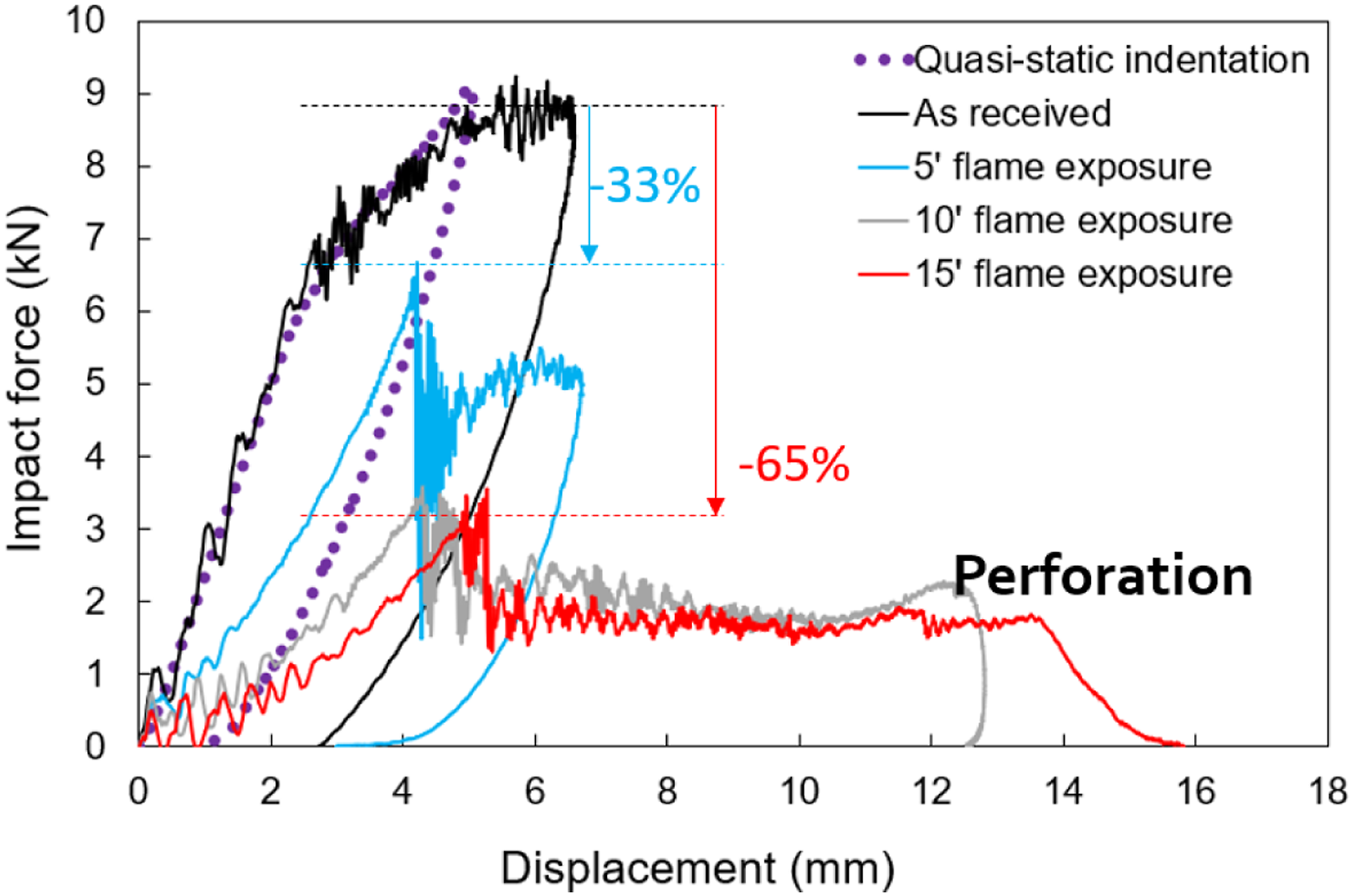
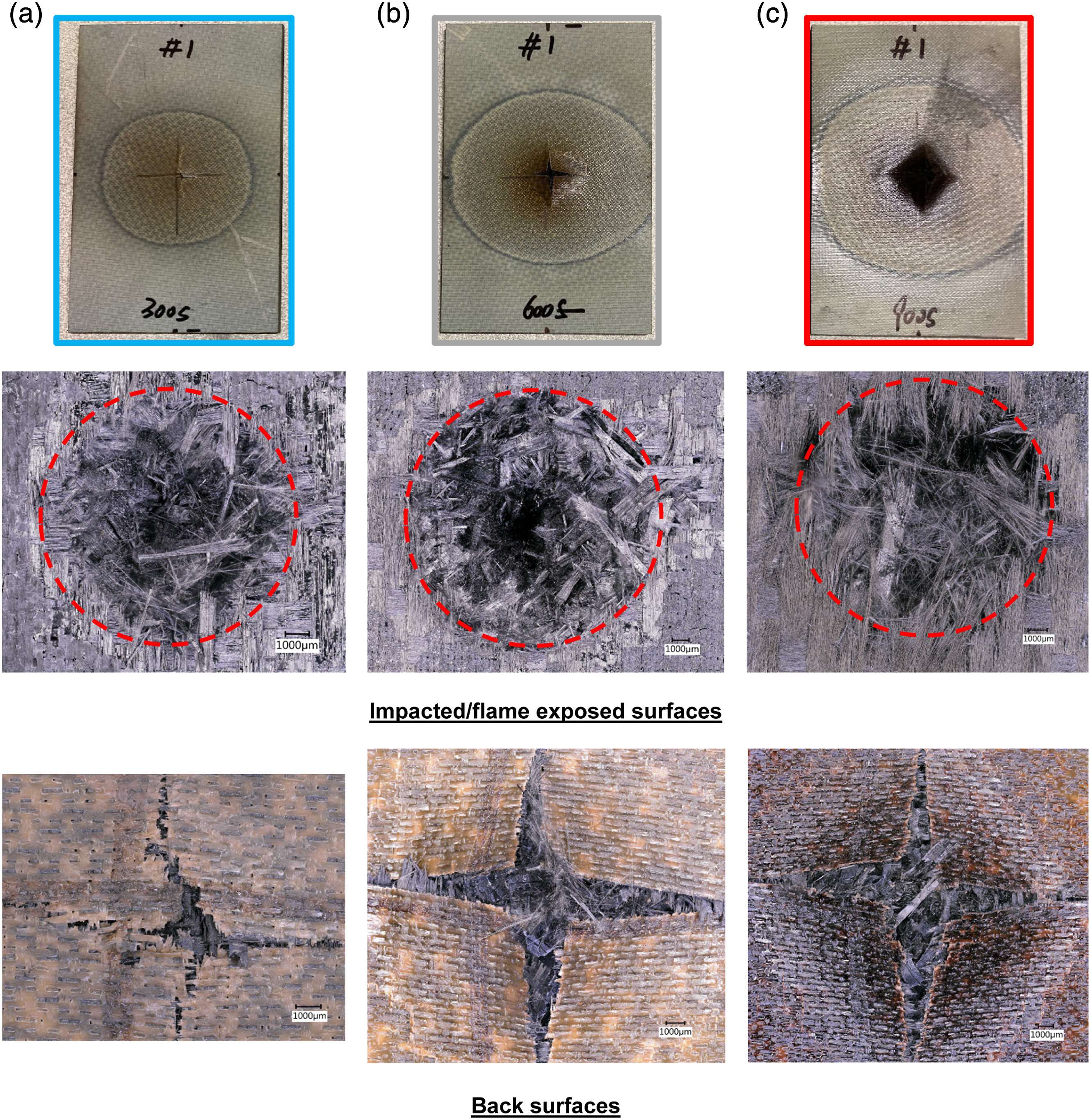
First of all, the macroscopic and microscopic observations of the back surfaces of specimens impacted at 40 J after 5-10-15′ show many relevant features (Figure 13): (i) the diameter of the thermally-degraded area gradually increases with exposure time to ultimately expand on the laminates edges – (ii) the impact failure on the flame exposed surfaces has the shape of the hemispherical indentor with tufts of dry fibers - (iii) the impact failure on the back surface has a typical cross pattern. The opening of the crack along the 0 and 90° directions results from the failure of 0° and 90° glass and carbon fibers on the back surface. In the 10′ and 15′ cases, the breakage of glass fibers on the back surface occurred according to a straight line along the 0° and 90° directions, whereas a sawtooth cracking was observed in the 5′ case.
Finally, the permanent indentation was obtained from the profile of the impacted areas measured by means of a 3D microscope (Figure 14). With respect to the profiles measured in the case of specimens impacted at RT, it appeared that the permanent indentation after 40 J impacts on fire-degraded specimens was much higher. It was 3-5-9 times as high as the 40 J impacted specimen at RT, after 5-10-15′ fire exposure, respectively. Longer flame exposure times (e.g. 15′) resulted in the perforation of the laminates and very high values of permanent indentation (about 10 mm). In addition, the permanent indentation values were always higher than the BVID (0.6 mm). One may speculate that the fire-induced damages (Figure 11) were associated with a significant degradation of mechanical properties of the elementary ply (in terms of stiffness and strength) and the properties of the laminates (in terms of interlaminar fracture toughness). The interfaces between plies being severely degraded by fire exposure (porosities, interlaminar cracks and onset of delaminated areas), the load transfer from one ply to another during impact testing was adversely affected by thermally-induced damages. Ultimately, as higher permanent indentation values were usually correlated to lower damage tolerances, it should reflect on the Compression After Impact (CAI) strengths. These CAI tests will be conducted in a forthcoming work. Influence of prior kerosene flame exposure on the permanent indentation of CG/PEEK hybrid laminates subjected to low velocity impacts at 40 J and RT.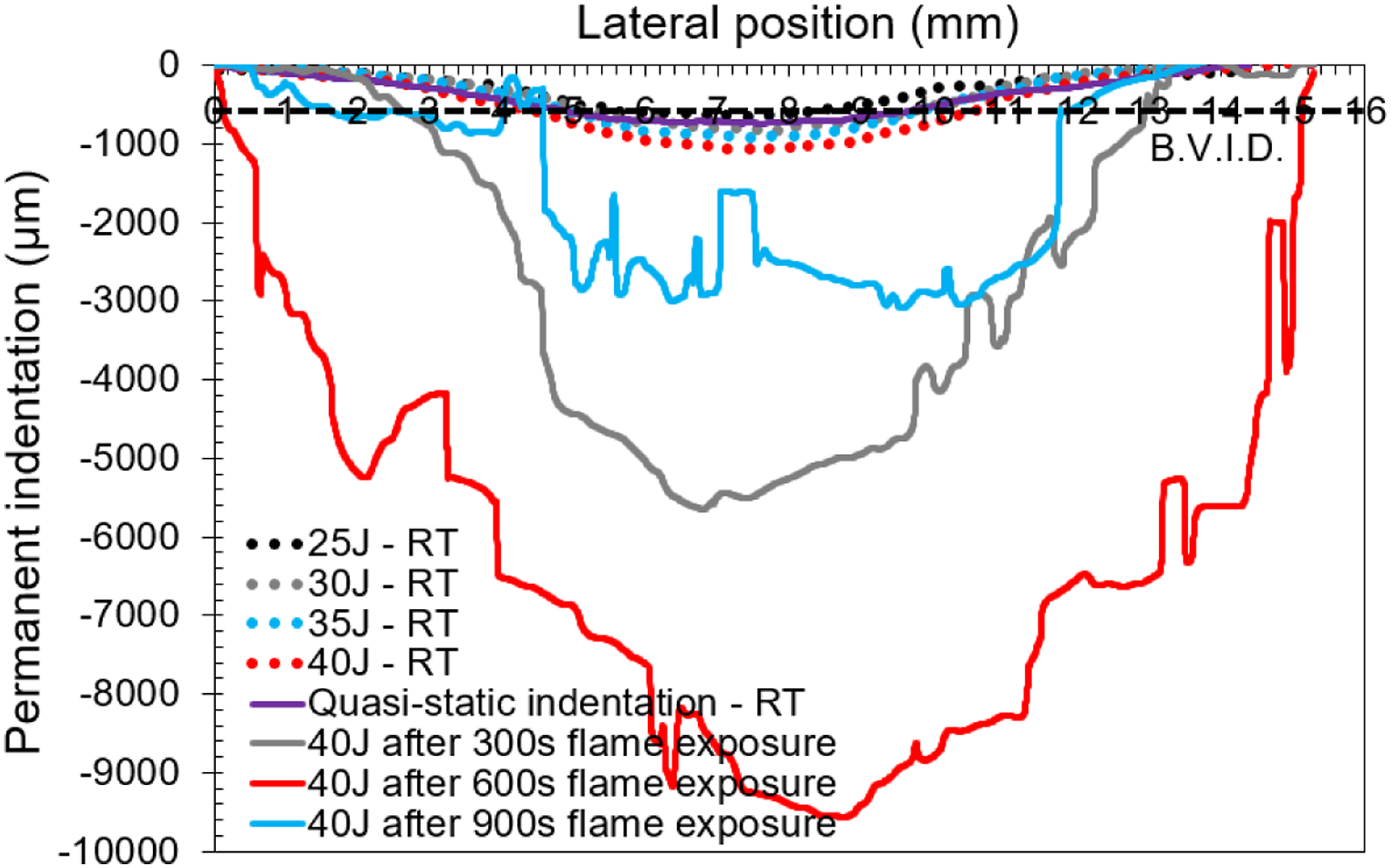
Conclusions
High temperature conditions are known to adversely affect the mechanical behaviour and properties of Polymer Matrix Composites. The knowledge on the influence of temperature on the impact behaviour of thermoplastic-based laminates is usually limited to typical service conditions (e.g. 200°C). Therefore, it was necessary to better understand the roles played by a thermoplastic matrix on the impact response when it undergoes thermo-physical changes up to thermal decomposition. This work was focused on CG/PEEK laminates with a quasi-isotropic lay-up to be used in high temperature (up to 150°C) or critical service conditions (fire scenario) for aeronautical applications purposes. With these objectives in mind, the following conclusions were drawn from this study: • Because of its ductile nature and its inherent fracture toughness both depending on the testing conditions (temperature and loading rates), the PEEK matrix significantly influences the impact behavior in terms of permanent indentation (deformation along with damage mechanisms), fraction of dissipated energy. • The second important effect resulting from temperature increase was a reduction of the impact energy required to induce BVID. Matrix ductility (enhanced at T>Tg) contributes to significantly modify the permanent indentation. Not surprisingly, the plastic and viscoplastic deformation mechanisms being ruled by the PEEK matrix behavior at high temperature, the permanent indentation increases by almost 40% for all impact energies. • The low velocity impact behaviour of CG/PEEK laminates was severely affected by a prior kerosene flame exposure as the peak force decreases by 65% with respect to the as received specimens. • Longer flame exposure times (e.g. 15′) resulted in the perforation of the laminates and very high values of permanent indentation (about 10 mm).
Finally, the damage tolerance, which was directly associated with the impact damage detectability (BVID) in CG/PEEK laminates impacted in different thermally-degraded states, will be investigated by means of Compression After Impact tests in a forthcoming work.
Footnotes
Declaration of conflicting interests
The author(s) declared no potential conflicts of interest with respect to the research, authorship, and/or publication of this article.
Funding
The author(s) received no financial support for the research, authorship, and/or publication of this article.
