



Abstract
The environment friendly cellulose nanofibrils obtained from natural cellulose presents unique opportunity for developing a sustainable end product. The beneficial characteristics of cellulose nanofibrils are biocompatibility, low toxicity, suitable surface chemistry and useful physical properties. In the current study, the polybutylene succinate (PBS) with five levels of cellulose nanofibril (NFC) is being developed by using twin extruder. The differential scanning calorimeter results demonstrate that the addition of NFC has insignificant effect on the thermal behavior but it improves the tensile mechanical properties of thermoplastic PBS. The tensile strength reaches upto 30.81 MPA and elastic modulus increases upto 1.5 GPa with the addition of 10% cellulose nanofibril in polybutylene succinate. The rheological analysis shows that the complex viscosity η* of NFC/PBS presents the shear thinning behavior. The decrease in contact angle upto 70.7o with the addition of NFC in PBS matrix is related to its hydrophilic behavior which is also proved by the higher diffusion coefficient. Dynamic mechanical analysis was employed to characterize storage modulus G’ which increased by 1470 MPa due to the rise in PBS stiffness when 10% NFC was added. Finally, the interaction of cellulose nanofibrils in the polybutylene succinate matrix is evaluated by using fracture surface and X-ray photoelectron spectroscopy.
Keywords
Introduction
The substitutions of synthetic polymer with natural polymer in today’s world have become a priority as the reduction in pollution and plastic waste is needed. The naturally sourced poly(butylene succinate) (PBS), poly (butylenesadipate-co-terephthalate) (PBSA), and poly(lactic acid) (PLA) are found to be an appropriate choice when developing sustainable products as these polymers are biodegradable and biocompatible.1–4 The commercially available PBS can also be manufactured by using succinic acid and 1, 4-butanediol together. The thermoplastic aliphatic polyester PBS is biodegradable with suitable toughness for packaging. Additionally, the PBS has low glass transition temperature and high elongation at break. Meanwhile, the PBS with the low molecular weight, melting point (94oC), stiffness, and strength greatly limits the potential applications. 2
Natural fibers when used as reinforcement aid in developing green composite because of their low density, renewability, biodegradability, and cost effectiveness. The already available Kenaf and Flex natural fibers can be used for their excellent properties such as tensile strength upto 280±15 MPa and modulus upto 40 ±5 GPa. There are several disadvantages of using natural fibers when compared to synthetic fiber such as carbon, aramid, and glass fiber. These disadvantages include moisture sensitivity, high coefficients of thermal expansion, processing temperature, and low tensile strength. 5 The cellulose derived from plants useable as nano reinforcement can be nanocrystalline cellulose (NCC) and cellulose nanofibril (NFC).6–8 The cellulose nanofibril (NFC) has shown to be an excellent reinforcing fiber when used in polymer composites. The environmentally friendly NFC is cost effective when used in manufacturing. There are promising results obtained in some studies which substituted glass and carbon fiber with natural fiber fibers. 9 The use of reinforcements in nano scale proves to be a better alternative in developing sustainable bio nano composites. The beneficial attributes of cellulose nanofiber are biodegrability, high stiffness, strength, and low density. The nanocellulose fibril is low density, high strength, and widely available making them suitable candidate for development of biodegradable composites. 10 Also, when nanocellulose are added in smaller quantities act as sufficient reinforcement because of excellent modulus elasticity, large surface area, high aspect ratio, and smaller thermal expansion coefficient. 11
The blending of PBS with polymers, natural fibers, and inorganic particles improves the processing criteria and mechanical properties. Currently, numerous PBS blends have been researched considerably, such as polylactic acid/polybutylene suiccanate, 12 polybutylene succinate/polyethylene oxide,13,14 polybutylene succinate/poly(ethylene succinate, 15 polybutylene succinate/poly(hydroxybutyrate, 16 polybutylene succinate/poly(butylene carbonate), 17 polybutylene succinate/polypropylene carbonate.18,19 The dispersion and adhesion of fiber in polymer matrix influences properties of PBS composite. Furthermore, PBS composites reinforced with natural fiber such as silk fiber reinforced polybutylene succinate, 20 sisal fiber reinforced polybutylene succinate, 21 coir fiber reinforced polybutylene succinate, 22 jute fiber reinforced polybutylene succinate, 23 and cotton fiber reinforced polybutylene succinate 24 is used to enhance the characteristics of PBS while keeping their biodegradable behavior. Researchers in the past created PBS composites with agro flour, 25 PBS grafting, 26 and modified cellulose. 27 The studies also showed promising result for storage modulus by DMA, elastic modulus, and tensile strength with the PBS grafting and addition of modified cellulose. 28 It is also demonstrated that using bio based filler such as cellulose in PBS matrix accelerates disintegration. 24 The benefits to the packaging industry are also shown as using nanocellulose in PBS matrix creates packaging materials which has effective barrier properties. 29 The thermal stability of PBS composite increased by addition of cellulose fiber; however, there is decrease of temperature occur from 400°C to 350°C for thermal degradation. 30 When cellulose are added to PBS in concentration range of 2%–15% the tensile strength increases from 13% to 52%. 26 The influential characteristics of nanocellulose composite are based on distribution of nanocellulose in matrix and interfacial adhesion between fiber and matrix. There is not much research has been published in regards to using NFC in PBS matrix as reinforcement therefore a study of cellulose nanofibril reinforced PBS will provide potential new opportunities for creating better functioning eco-friendly composite.
In the study presented, the NFC is used in varying concentrations to develop PBS/NFC composites. The thermal, rheological, dynamic mechanical, and water absorption characteristics were studied for thermoplastic PBS when NFC content is increased incrementally.
Materials and method
Preparation
Polybutylene succinate-3001MD having MFI of 3 g/10 min was obtained from Showa Denko K.K. Japan. The softwood kraft cellulose nanofibrils (NFC) are water based with diameter between 20–50 nm and over one micron length was obtained from Maine University (USA). The dilution of NFC was required to produce transparent and stable dispersion. For dilution, the Mill-Q water was used to gain NFC of 1.67 g/L. The solution with an ultrasonic microtip was stirred for 10 min at 25% amplitude setting to create the suspension. The fibril aggregates were removed by centrifuging in an ultracentrifuge (Optima L-90K18, Beckman Coulter, USA) at 10,400 r/min for 15 min.
The PBS in five increasing increments of NFC (2%–10%) is being mixed by mechanical mixer (Aysa Instruments, Turkey) without the use of heat. The blends were extruded by using twin-screw extruder (Liestritz model ZSE27) at 130oC with 90 r/min. The samples produced were first cooled in a bath of water then pelletized by using grinder. Furthermore, 70 C for 24 h was used to dry pellets in an oven. The dried pellets were compression molded at 130oC with pressure of 2 tons for 2 min. The hot compression molding (Carver Press, Germany) provided the specimen for tensile test according to ASTM 638 31 and also specimen sheets having dimensions of 40 mm × 12 mm × 5 mm. The obtained PBS/NFC composite samples were cooled under pressure to room temperature and left it for 24 h before testing. Finally, the samples were used to examine the mechanical and thermal properties.
Characterization
The differential scanning calorimeter (DSC Netzch 200 F3) was used to study thermal behavior. The heating and cooling were carried out at 10oC min −1 from 20°C to 150 C. The obtained thermogram was employed to examine crystallization temperature, melting temperature, degree of crystallinity (Xc %), and melting enthalpy. The crystallinity (Xc %) of the composite was evaluated by utilizing equation (1)

The ARES-G2 (Rotational Rheometer, TA instrument) was used with parallel plate geometry (25 mm diameter) having 1 mm gap to characterize frequency sweep test from 0.1 rad/s to 80 rad/s. The temperature during the test was maintained at 130 C.
The drop shape analyzer (DSA 100, KRUSS, Germany) was utilized to determine the surface contact angle by sessile drop of water on NFC/PBS composite under static state at the room temperature. The image of the water drop on composite was captured and the contact angle was analyzed through the profile of the drop by the software. The final contact angle θ is achieved by utilizing average of five measurements.
The water absorption test was executed according to the GB/T 1034-2008 standard.
32
The test samples were obtained by slicing PBS-NFC sheets. The samples were dried for 24 h at 45°C. Furthermore, the test samples were rubbed softly for removal of water from the surface and weighed immediately. The water absorption of the samples was recorded for 100 h and each sample was tested three times. The following equation was employed to analyze the water absorption (W

The Fick’s law helps to predict the water absorption in composites by considering the water molecules diffusivity. The Fick’s law equation (3) can be used to calculate the average diffusion coefficient (DA)
33

The 50 KN Instron Tensile Testing Machine was utilized for performing tensile tests in which each sample had geometry of ASTM D638 type IV. The mechanical test was carried out at 25oC with cross-head speed of 5 mm/min and 0.500 N preload.
The storage modulus G’ and the loss factor (tan delta) of NFC/PBS composites were analyzed by DMA 242 (Netszch, USA). The DMA operates with dual cantilever method with specimen dimensions of 40 mm × 12 mm × 5 mm. The tests were carried out at the frequency of 1 Hz, strain rate of 0.1% and heating rate of 2°C/min in nitrogen environment. Also, the temperature was kept in the range of 30°C−120°C.
The SPECS GmbH (Germany) spectrometer was employed to make XPS measurement at pressure of 1 × 10⁻⁸ mbar. The sample surface was irradiated with 13.5 kV and 150 W by using non monochromatic dual anode Mg-Kα X-ray source. The sample was set at a take-off angle of 90o in the direction of photoelectrons and the sample surface. The XPS data were gained by using PHOIBOS 150 MCD-9 hemispherical energy analyzer by operating in analyzer transmission mode
The electron microscope, (JEOL JSM 7600F, MA) having an accelerating voltage of 10 kV was utilized to investigate the fracture surface of PBS/NFC composites. Each sample of NFC/PBS composite of varying composition was tested three times in all characterization techniques to confirm the tested results.
Results and discussion
Thermal properties
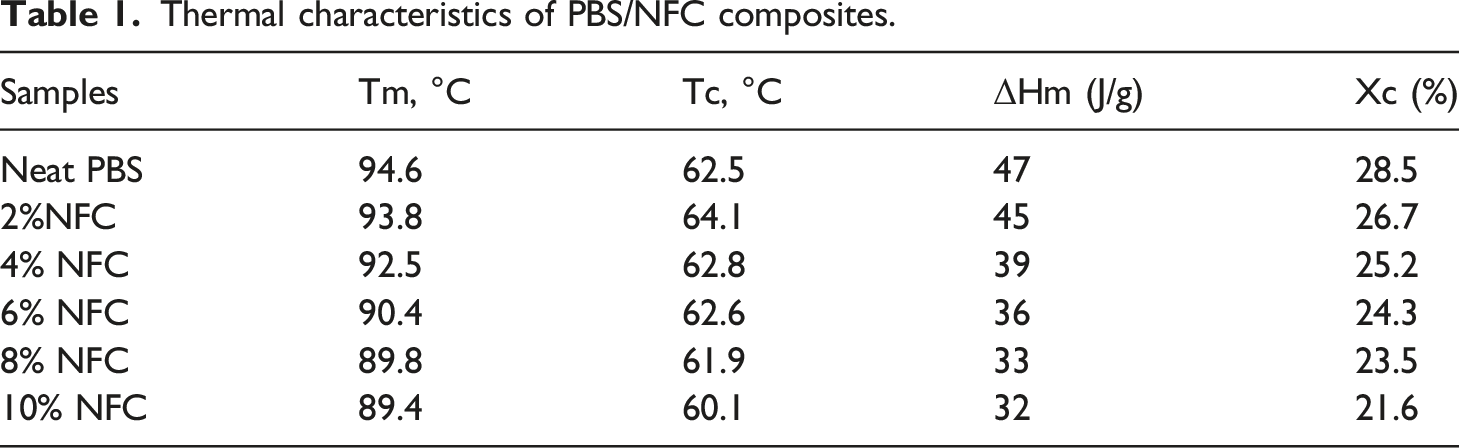
The Figures 1(a) and (b) present the heating and cooling curves of PBS/NFC composites. The figures determine the crystallization and shows the melting behavior of PBS/NFC. Table 1 demonstrates the crystallization temperature (Tc), melting enthalpy (ΔHm), melting temperature (Tm), and crystallinity (Xc %) of pure PBS and NFC/PBS composites. The peak maximum was used to evaluate the DSC thermogram. The obtained heating thermogram presents the melting temperature Tm of PBS at 94.6oC. The Tm decreases with the increasing amount of NFC, as shown in Table 1. The NFC reduces the interaction between PBS polymer chains and therefore the Tm of NFC/PBS composite is reduced compared to PBS. The decrease in Tm might have occurred because the NFC does not act as a heterogeneous nucleation site in PBS/NFC composite. The melting enthalpy ΔHm, of PBS is 47 J/g and when there is an increase in NFC content it decreases the melting enthalpy up to 32 J/g. As shown in Figure 1(b) and Table 1 the Tc of PBS varies from 62.5 C to 61.8 C with the addition of NFC. The Tc variation is indicating that the nucleation effect of NFC in PBS is minimal. Moreover, the calculated crystallinity (Xc%) of the PBS by using equation (1) is slightly decreased from 28.5% to 21.6% with the increased of NFC content. Table 1 show that the minor decrease in Xc % is implying that the NFC is not acting as nucleating agent. Oskars also investigated Xc % upto 35% for neat PBS and presented 5% decrease in crystallinity as cellulose nanofibrils hinders the mobility of PBS chain.
34
The addition of NFC shows that it does not create hindrance for mobility and diffusion of PBS chains. However, it is observed that the NFC specimen does not provide a new crystalline phase in polymer matrix, which is compatible with the previous studies for PLA/NFC composites
35
DSC thermogram of PBS/NFC composite (a) Heating (b) Cooling. Thermal characteristics of PBS/NFC composites.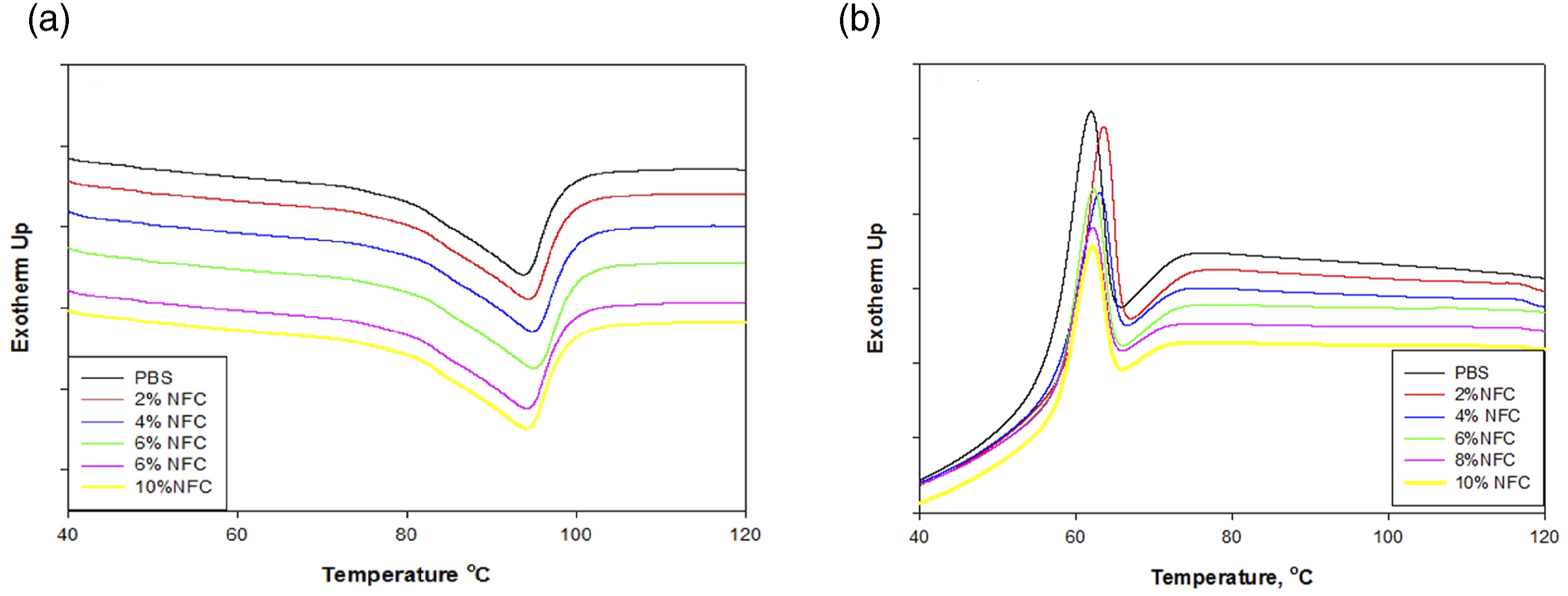
Rheological analysis
Figure 2(a) shows the storage modulus G’ with respect to frequency at 130o C for pure PBS and PBS/NFC composites. It is evident that when frequency is increased then the G’ increases simultaneously. The G’ of PBS/NFC rises with the increase of NFC content. The similarity in behavior of G’ was found in 8% NFC/PBS and 10% NFC/PBS that might be due to the irregular dispersion of NFC in the PBS matrix. The variation in G’ values relate to energy change (loss or stored) occurring during the dynamic process and are highly dependent on the interaction between the PBS matrix and NFC. Also, the results demonstrates that there is an increase in G’ for PBS and PBS/NFS composites at low frequencies. The variation in G’ for PBS/NFS composite corresponds to solid like behavior because of the structuration of NFC in the PBS matrix. Moreover, the obtained results demonstrates that there is a negligible difference in G’ for the PBS/NFC composite at high frequencies which corresponds to the polymer chain movement. The Figure 2(b) illustrates the complex viscosity η* with respect to frequency at 130oC for pure PBS and NFC/PBS composite. The addition of NFC raises the viscosity of PBS matrix. The increase in viscosity indicates the entanglement between fibrils as they are packed densely which proves that the addition of NFC hinders the mobility of chain. Also, the PBS and NFC/PBS composites follow the non-Newtonian behavior and illustrate the shear thinning at frequency of 10 rad/s. As the shear rate increases the molecules shift rapidly in harmony to each other which reduces the chain density. The orientation and disentanglement between PBS chain and NFC effect the flow direction by reducing viscous resistance influencing shear thinning behavior. Anju et al.
36
also obtain the similar results when the nanocellulose fibrils are included in polymer matrix . Furthermore, the decrease of chain entanglement in remaining PBS chains also declines the complex viscosity η*. The resemblance in the results of complex viscosity η* of PBS/10%NFC and PBS/8% NFC might be due to the irregular dispersion and agglomeration of 10% NFC in PBS matrix. Rheological Characteristics (a) Storage Modulus, G’, of PBS/NFC at 130 C (b) Complex Viscosity, η*, of PBS/NFC at 130 C.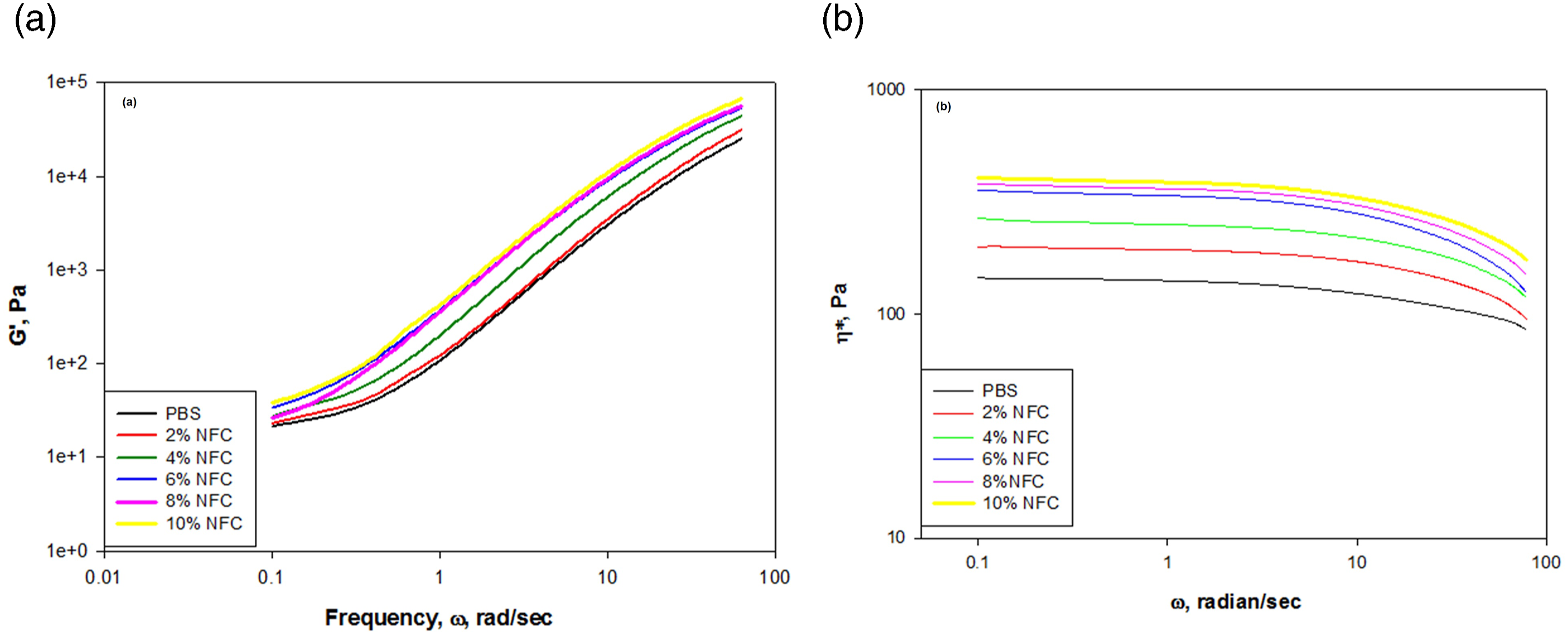
Water absorption
The evaluated contact angle of water on NFC/PBS surface is shown in Figure 3(a). The neat PBS has a contact angle of 76.9±0.3°. The contact angle decreases upto 70.7±0.35° with the addition of NFC demonstrating the increase in hydrophilic behavior. This means that the increase of NFC in PBS leads to a generation of hydroxyl compounds which enhances the hydrophilic nature of PBS/NFC composite. It is also noticeable that inclusion of NFC in the PBS matrix generates hydrophilic substance on the surface of NFC/PBS composites affecting the water contact angle. The water contact angle decreases as surface roughness increases due to the presence of hydrophilic substances. (a) Contact angle of PBS/NFC composite (b) Water absorption of PBS/NFC composite.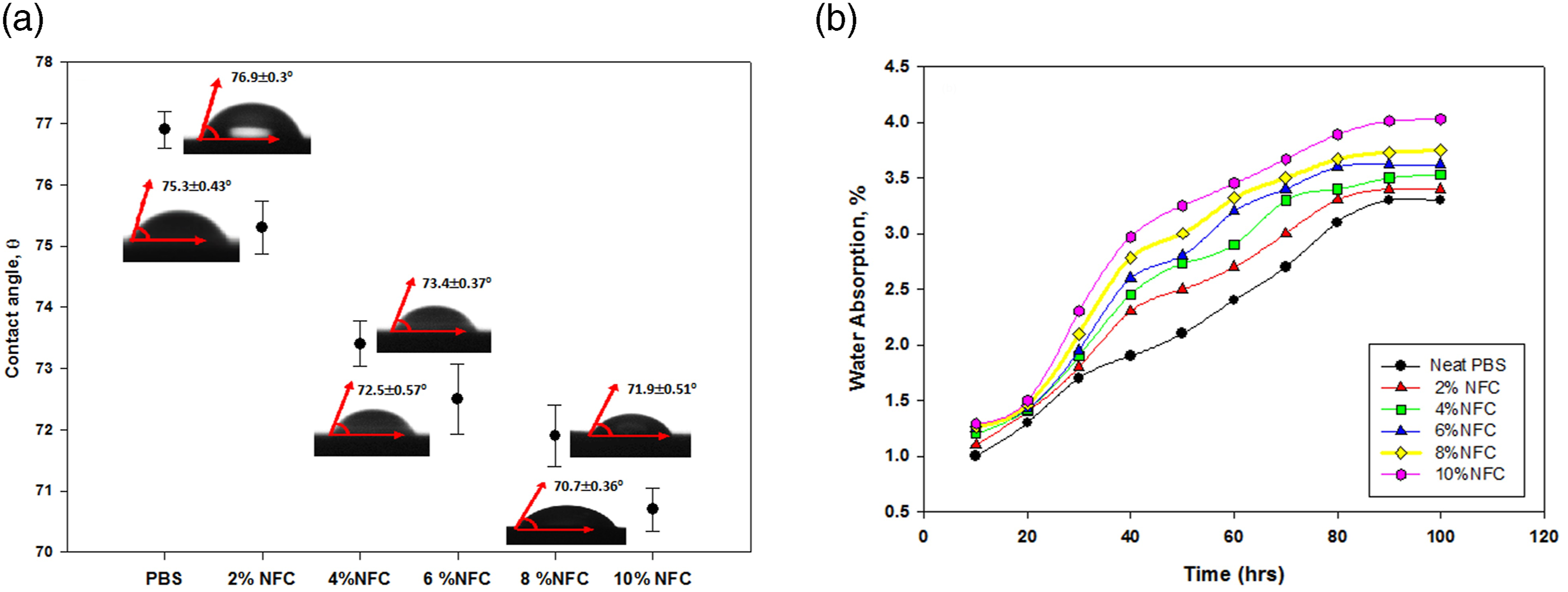
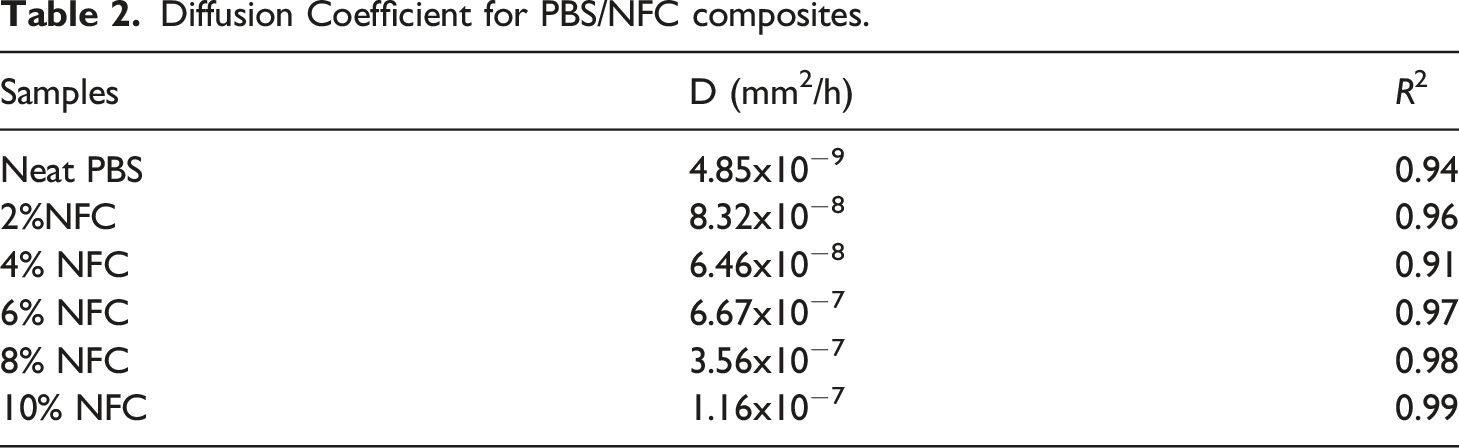
The Figure 3(b) shows the water absorption of PBS/NFC composite is higher than that of neat PBS which can be a result of hydroxyl bond creation between PBS and NFC. The hydrogen bonding sites cause absorption of water due to presence of NFC in PBS. Therefore, the water absorption of PBS increases with the increasing amount of NFC and reaches up to 4.07% which is higher than neat PBS value of 3.30%. The akund fiber Calotropis cellulose in PBS matrix also showed the similar characteristics for water absorption. 37 The enhancement of water absorption with the increase of NFC in PBS matrix is coherent with the results of contact angle.
Diffusion Coefficient for PBS/NFC composites.
Storage modulus, G’, Tanδ and Glass Transition Temperature, Tg of PBS/NFC composite.
Mechanical characteristics
The tensile strength of NFC/PBS composite with varying concentrations of NFC is shown in Figure 4(a). It was found that the tensile strength of neat PBS is 22.5±0.5 MPa. The tensile strength of NFC/PBS composites raises up to 30.81 ±0.8 MPa with the increasing concentration of NFC in PBS matrix. Similarly, the modulus of elasticity was also enhanced upto 1.5 GPa with the inclusion of NFC as presented in Figure 4(b). Table 1 shows that there is minor change occurred in PBS crystallinity with the addition of NFC demonstrating that the crystallinity has negligible impact on the strength of the PBS/NFC composites. The outcome shows that the increase in elastic modulus and strength of PBS/NFC composite is due to the dispersion and interfacial bond between PBS and NFC. The tensile strength is being enhanced with the increase in NFC content which increases bonding interactions. Also, the improved tensile strength shows that the load is being uniformly transferred from matrix to NFC. Moreover, the tensile strength of the 10%NFC/PBS drops upto 29.1 MPa that might be due to the agglomeration of NFC in the matrix which act as defect and exhibit the reduction of load transfer from matrix to NFC. Xu et al. also found that addition of 1 wt.% to 5 wt.% of cellulose fibril increased the tensile strength upto 33.9 MPa which is a 45% increase but did not find changes in the elastic modulus.
29
Also, studies have found that 6 wt.% of NFC in polypropylene increases elastic modulus by 20%, decrease in elongation by 30% and no changes were found in tensile strength.
40
Mechanical characteristics of PBS/NFC composite (a) Tensile strength (b) Elastic modulus (c) % Elongation at fracture.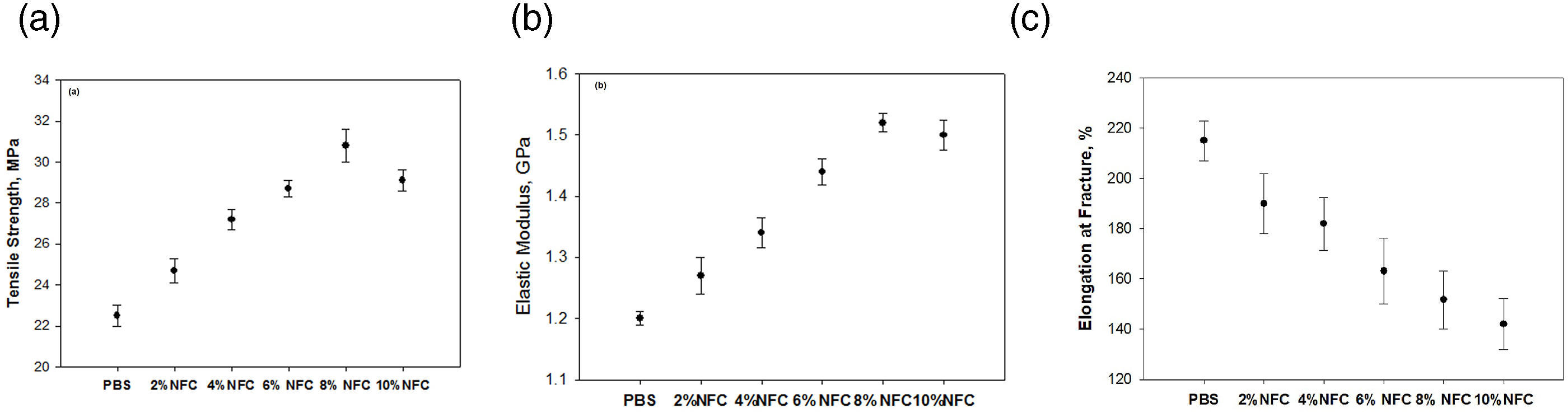
Figure 4(c) reveals the % elongation at break for PBS when the amount of NFC is being increased. The neat PBS has 215% elongation and decreases upto 142% with the increasing amount of NFC in the PBS matrix. The 34% reduction was achieved in NFC/PBS composite. Xu et al. 29 reported 30% reduction of % elongation with the NFC in PBS matrix. It means that there is a decrease in ductility upto 32% with the addition of NFC. The decrease in ductility presents that the elongation at break is due to the volume fraction, dispersion and lack of interaction between NFC and PBS matrix. Also, % elongation at break decreases with higher concentration of cellulose fibrils because NFC is stiff in nature which hinders the polymer chain mobility. 41
Dynamic mechanical characteristics
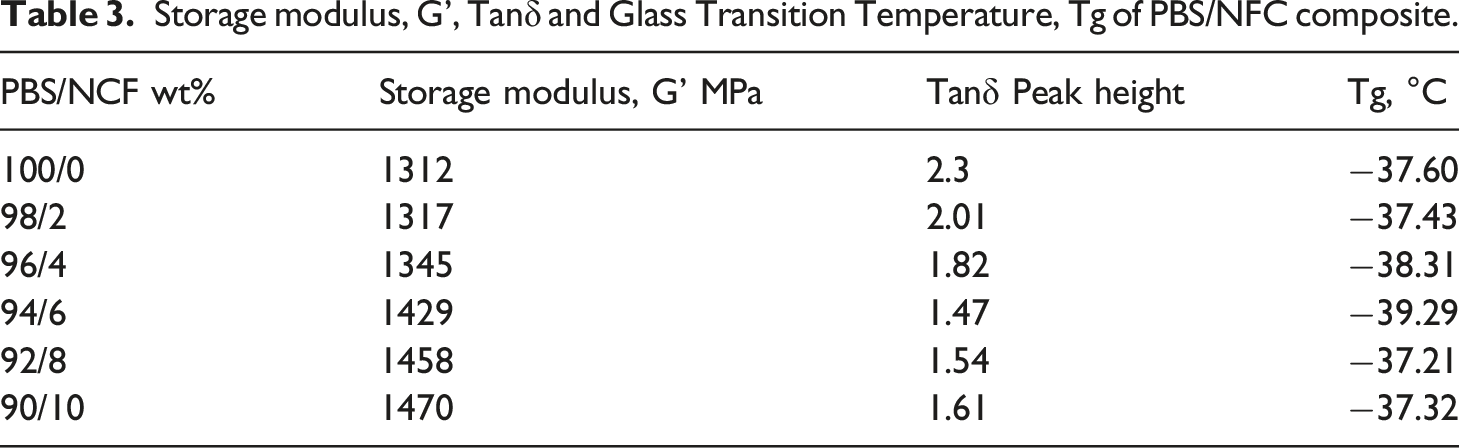
The storage modulus (G’) of the PBS/NFC composite is shown in Figure 5(a) with a function of temperature. The neat PBS has storage modulus G’ of 1312 MPa and there is increase upto 1470 MPa with the addition of NFC. The 11% increase in storage modulus occurs due to the rise in stiffness of polymer matrix as the cellulose nanofibril implements the reinforcement.42–44 Oskars found 23% rise in storage modulus with the addition of 7% nanocellulose fibrils and 3% nanocrystal in PBS matrix. The rise of glass transition temperature in segment consequences the rapid drop of storage modulus G’ for PBS/NFC composite. The drop in the storage modulus G’ can be explained by the PBS chain molecular mobility above the glass transition temperature (Tg).
44
Meanwhile, the analysis shows that neat PBS is reinforced by cellulose nano fibers. The study of comparison between glassy and rubbery state of storage moduli shows the effect of reinforcement in neat PBS and PBS/NFC composite. The improvement in storage modulus G’ for PBS/NFC composite occurs because of interfacial adhesion between NFC and PBS matrix. Also, the improvement in storage modulus can be results from continuous network form by NFC in polymer matrix.
45
Furthermore, molecular mobility at the interfaces is reduced due to increase in interfacial adhesion between NFC and PBS. Additionally, it was found that the storage modulus of 10% NFC is comparable to 8% NFC which might be due to the inadequate dispersion of NFC that act as defect and reduces the adhesion between fiber and matrix. DMA (a) Storage Modulus G’ of PBS/NFC composite (b) Tan δ of PBS/NFC composite.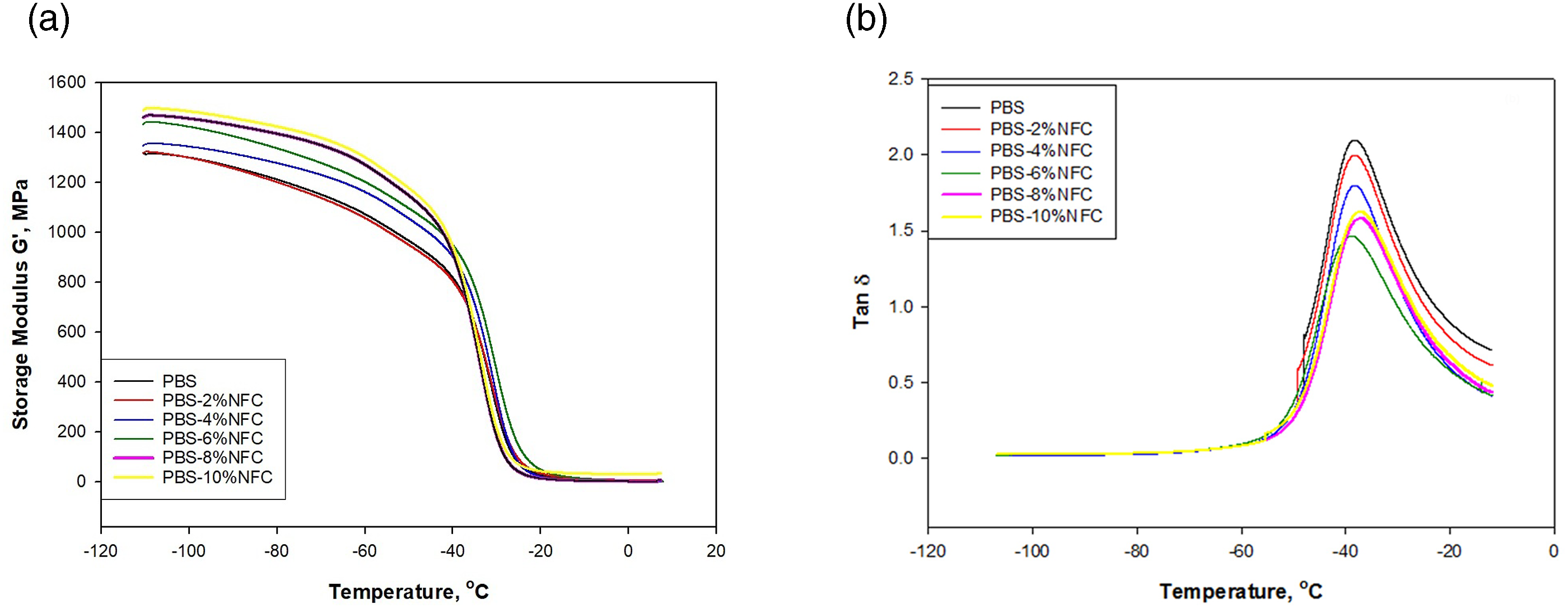
Figure 5(b) illustrates that the mechanical damping tan δ of the neat PBS is higher than the PBS/NFC composite. The values show that the tan δ varies as the amount of NFC rises in the PBS/NFC composite. The PBS/NFC composites turn more rigid as the NFC rises due to the decline in tan δ. 46 The addition of NFC in PBS matrix decreases the tan δ which in turn improves the elastic characteristic and decrease the dissipation of energy for NFC-PBS composites in comparison to neat PBS. Figure 5(b) shows the tan δ peak for the determination of glass transition temperature. It is noticeable that glass transition temperature is considerably increased upto −29°C for 10%NFC-PBS composite in comparison to neat PBS having glass transition temperature of −35oC. Similarly, corresponding results were obtained by Oskars. 34 The alteration in glass transition temperature might have occurred because of hindrance in chain movement influencing rearrangements of segments during the transition of phase. Also, the volume fraction of polymer matrix can be studied by damping curve which becomes lower by the addition of NFC. The molecular relaxation increases due to the decrease in tan δ which assist excessive amount of energy absorption in PBS/NFC composite. It can be observed that the peak height of neat PBS is 2.31, 6% NFC/PBS composite has 1.47 and 10% NFC/PBS has 1.61. This means that the best molecular relaxation and absorption of higher amount of energy can be achieved by 6%NFC in the PBS matrix. The presence of strong interfacial adhesion not only improves the absorption behavior but also assist in decreasing energy dissipation in PBS/NFC composite. The summary of results is shown in Table 3.
Structure
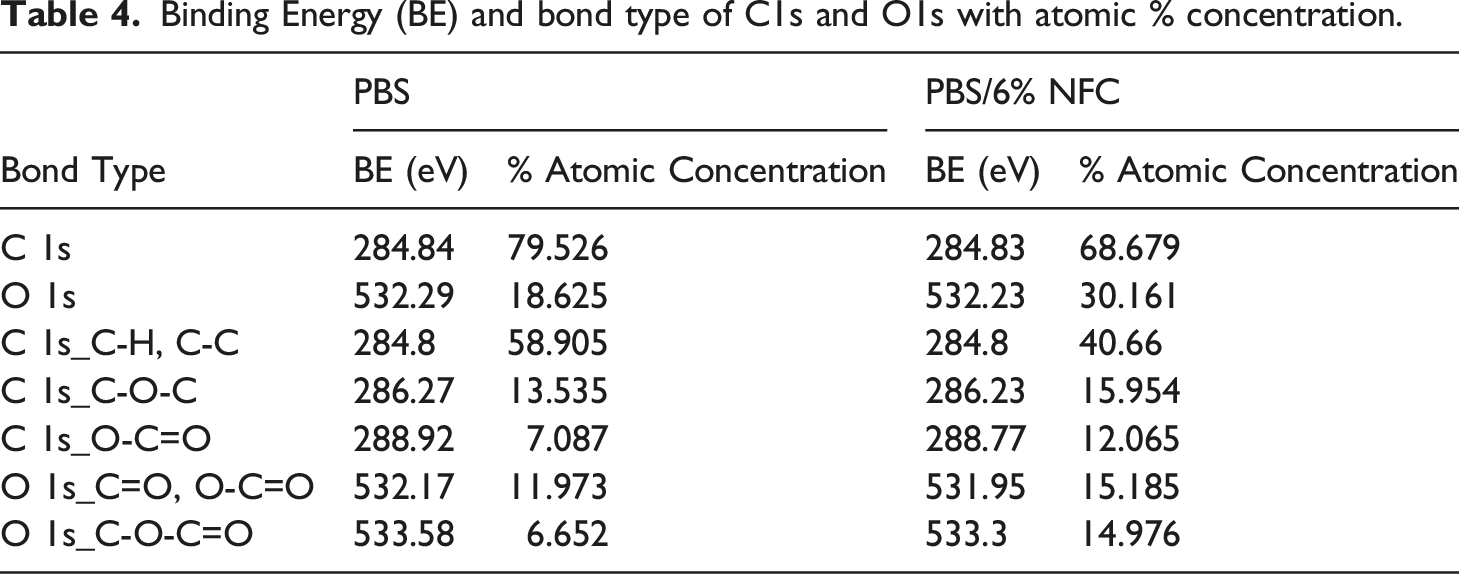
Binding Energy (BE) and bond type of C1s and O1s with atomic % concentration.
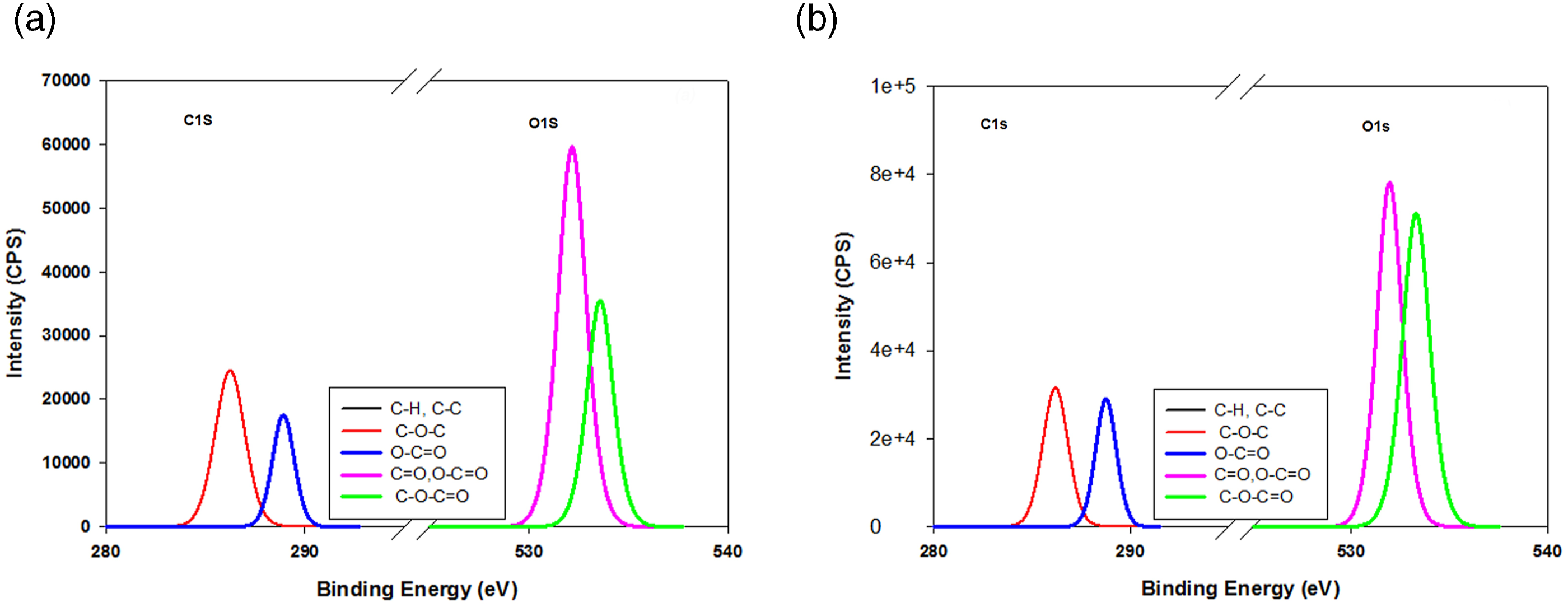
XPS peaks in C1s and O1s orbitals (a) PBS (b) PBS/6%NFC composite.
Figure 7 presents the tensile facture surface of NFC/PBS composite. The PBS with 10% NFC (Figure 7(b)) has rough and irregular fracture surface in comparison to 2% NFC (Figure 7(a)). Furthermore, the voids in the PBS matrix might be generated due to pulling effect of nanofibrils. Meanwhile, the presence of large voids in 10% NFC is due to the agglomeration of nanofibrils in PBS matrix which occurs due to the inadequate dispersion of NFC. The presence of irregular surface and agglomeration is the evidence of decrease in mechanical properties of PBS/10%NFC in PBS/NFC composite. The previous studies reported that the increase in amount of NFC cause agglomeration in polymer matrix which is consistent with our results of 10% NFC in PBS.
34
Fracture surface of (a) PBS/2%NFC (b) PBS/10% NFC.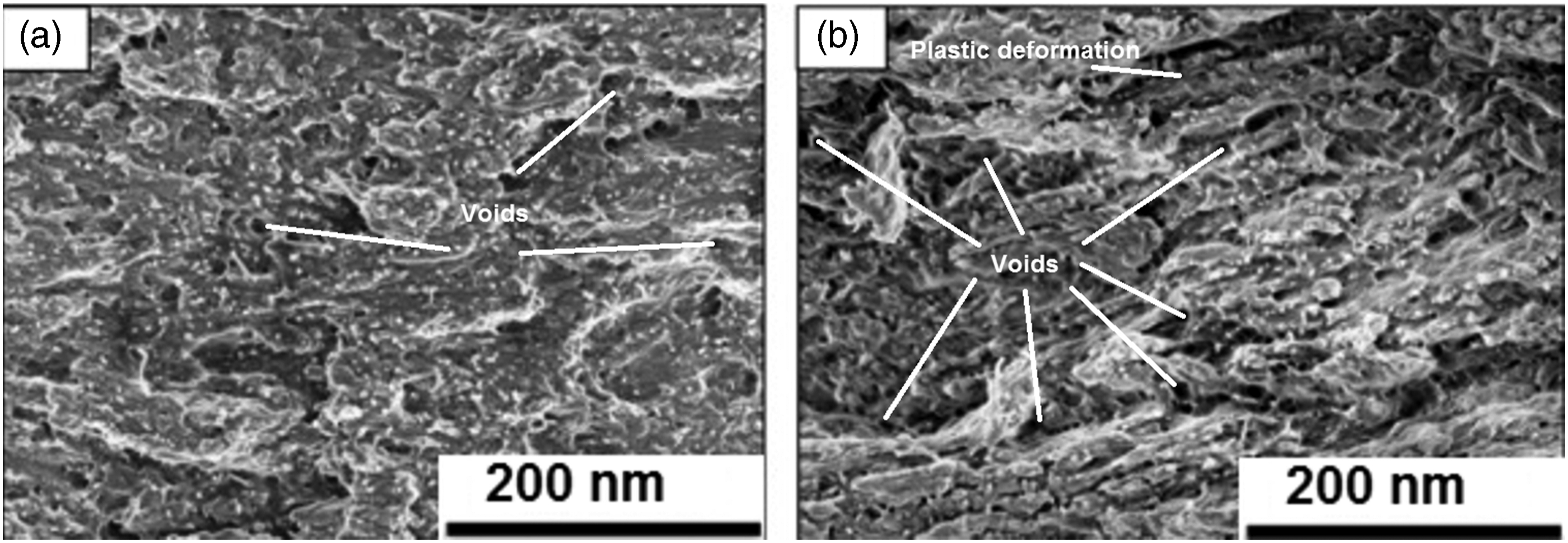
Conclusions
The PBS/NFC composite is being successfully studied which was developed by the twin extruder. The addition of NFC to PBS in different concentrations showed negligible decrease in crystallinity showing that NFC do not initiates nucleation PBS matrix. The rise in complex viscosity demonstrates that the cellulose nanofibrils entangle when they are densely packed and hinder the mobility of PBS chain. Also, the addition of NFC in PBS matrix form OH groups at the interface of NFC and PBS resulting in increased hydrophilicity of composite. The increase in tensile strength and elastic modulus can be attributed to the increase in concentration of NFC upto 8% in PBS matrix which effectively transfers load uniformly. The inclusion of 8% NFC in PBS increases the storage modulus and decreases tan δ resulting in improvement of molecular relaxation.
Furthermore, the decline in tan δ peak improves molecular relaxation and assists PBS/NFC composites in absorption of increased quantity of energy. The presence of irregular surface and agglomeration is the evidence of decrease in mechanical properties of PBS/10%NFC in PBS/NFC composite. The larger surface area of NFC and high concentration in PBS matrix results in formation of strong hydrogen bond leading to generation of agglomerates and uneven distribution of NFC.
Footnotes
Acknowledgments
The Authors would like to extend their gratitude to Chemical and Materials Engineering Department, King Abdulaziz University Jeddah and University of Maine, Orono (USA) for supporting this research project.
Declaration of conflicting interests
The author(s) declared no potential conflicts of interest with respect to the research, authorship, and/or publication of this article.
Funding
The author(s) received no financial support for the research, authorship, and/or publication of this article.
