



Abstract
This study utilized 1D carbon nanotubes (CNTs) and 2D graphene nanosheets (GNs) in preparation of 3D microstructured polypropylene (PP) nanocomposites with improved anti-wear and nanomechanical responses. The nanocomposites fabricated through melt compounding using Haake Rheomixer showed well dispersed nanoparticles in the matrix due to the aid of PP grafted maleic anhydride (PP-g-MA) coupling agent. The developed PP-CNTs-GNs hybrid nanocomposite showed lower coefficient of friction compared to the pure PP and its nanocomposites containing individual CNTs and GNs. PP-1CNTs-1GNs hybrid nanocomposite had lower wear rate of about 1.01 × 10⁻⁵ mm3/mN compared to 8.9 × 10⁻⁵ mm3/mN, 4.2 × 10⁻⁵ mm3/mN, and 4.8 × 10⁻⁵ mm3/mN measured for the pure PP, PP-3CNTs and PP-3GNs nanocomposites, respectively. The PP-1CNTs-1GNs nanocomposite respectively showed reduction in mass loss of about 78.7%, 62.2%, and 69.1% when related to the pure PP, PP-3CNTs and PP-3GNs nanocomposites. Maximum hardness and elastic modulus of about 153 MPa and 2.7 GPa were measured for PP-3CNTs-1GNs hybrid nanocomposite, while about 86.4 MPa and 1.5 GPa were recorded for the pure PP, respectively. The enhanced properties of the hybrid nanocomposites are due to the good synergetic effect of CNTs-GNs and the formation of 3D microstructures in the PP matrix with relaxed molecular chains and network hardening of the PP matrix.
Introduction
Polypropylene (PP) is a thermoplastic polymer readily available and widely used in various engineering applications due to its desired properties, easy processability, suitable for industrial production, low density, thermal stability, cost effectiveness and ability to be colored.1–3 The nanotechnological era has open more windows for further advancement of PP properties to meet various engineering demand using nano-reinforcements such as carbon nanotubes (CNTs) and graphene nanosheets (GNs). The CNTs/GNs have been used to tailor properties of PP matrix in meeting various engineering applicational demands.4–7 Various reported superior properties of PP nanocomposites reinforced with CNTs/GNs are due to the excellent properties of such carbon-based nanofillers in modification of physical properties of polymer matrix at low content. 8 The nanostructure, large electrical, thermal, and mechanical properties of the CNTs/GNs have significant contribution on the enhancement of engineering properties of other materials in which they are incorporated.9–11 One of the major challenges facing the polymer-CNTs/GNs nanocomposites is high degree of agglomeration and incompatibility of the nanofillers in polymer matrix.12–14 Notwithstanding, some studies have reported good dispersion of such nanofillers in the polymer matrix via the aid of surface functionalization and/or the use of coupling agent.7,15,16 Various studies have presented enhanced properties of polymer nanocomposites containing CNTs or GNs. For instance, the following engineering properties of polymers have been significantly enhanced using such carbon-based nanofillers; thermal responses,17,18 mechanical properties,19,20 wear properties,21,22 dielectric and electrical properties.23,24
However, studies have also shown that hybridization of CNTs and GNs in a polymer matrix can result to better mechanical and thermal properties compared to their individual nanocomposites. This is often credited to good synergy between CNTs and GNs and the ability of GNs in promoting dispersion of CNTs in the polymer matrix.25–27 In addition, the hybrid of CNTs and GNs can form 3D microstructures in a polymer matrix with good mechanical interlocking of the polymer molecular chains for high mechanical properties 28 and thermal conductivity. 27 3D nanofillers can be formed either by stacking of 2D nanofillers 29 or interpenetrating networks of 1D and 2D nanofillers. 30 The 3D microstructural configurations of polymer matrix often shows dense network structures with improved properties.31,32 Although individual CNTs or GNs also improve properties of polymer nanocomposites, their hybrid can show more enhancement on mechanical properties,28,33 thermal behavior,27,32 and wear resistance.25,34 Such hybrid nanocomposites often reveal high thermal conductivity through formation of efficient conductive paths in the matrix, 27 which is vital in protecting the nanocomposites from thermal degradation during frictional wear. 22
However, to the best of our knowledge, limited works have been presented on the use of CNTs-GNs hybridization for the enhancement of wear and nanomechanical behaviors of PP matrix for wider engineering applications. Therefore, this study investigated the effect on CNTs-GNs hybrid on anti-wear and nanomechanical responses of PP nanocomposites. Nanocomposites containing individual CNTs and GNs were also developed for comparison. The nanocomposites were developed via melt compounding. Prior to the melt compounding, PP grafted maleic anhydride (PP-g-MA)/CNTs-GNs masterbatch was prepared via solvent-melting to ensure good dispersion and compatibility of the nanoparticles with the PP matrix. It has been previously reported that the use of PP-g-MA has positive influence on the enhancement of wear resistance of PP composites reinforced with chopped Jute fiber. 35 This study showcased the synergetic effect of CNTs-GNs hybrid on enhancement of wear resistance and nanomechanical properties of PP matrix for advanced engineering applications, especially in frictional environments.
Experimental section
Materials
Polypropylene (PP) (melt index—4 g/10 min, 230°C/2.16 kg, density—0.9 g/mL), polypropylene grafted maleic anhydride (PP-g-MA) (0.5%, density—0.92 g/mL), slightly oxidized graphene nanosheets (GNs) (C—>95%, O—<3%, diameter—2–3 μm, few nano thickness) and xylene plus ethylbenzene basis (ACS reagent, essay > 98.5%) were supplied from Sigma-Aldrich, South Africa. Hongwu International Group, China supplied the multi-walled carbon nanotubes (CNTs) (purity—>98%, diameter—10–30 nm, length—5–20 μm). The specification of the individual material was based on the data sheet provided by the suppliers.
Nanocomposites fabrication
The nanoparticles were prepared by hybrid solution mixing prior to melt compounding of the nanocomposites. Typically, desired amount of CNTs and GNs (used in this study) were dispersed in xylene and ultrasonicate for 3 h to ensure proper mixing and interpenetration of the nanoparticles. The CNTs-GNs suspension was slowly added into pre-dissolved PP-g-MA in xylene at 135°C in preparation of the masterbatch. The masterbatch was stirred for 1 h to ensure well distributed CNTs-GNs in the PP-g-MA. It was later cast on a clean glass substrate and dry in an air circulating oven until the weight became invariant. The weight ratio of xylene to nanoparticles was maintained at 4:1. The PP-g-MA/CNTs-GNs masterbatch was grinded and diluted with pure PP via melt compounding using Haak Rheomix 600 OS at temperature of 190°C and screw rotating speed of 100 rpm for 10 min. Nanocomposites with dimension of 0.15 cm thickness and 2.5 cm diameter were obtained using carver press moulder at 200°C and 10 MPa for 10 min. The fabricated nanocomposites are denoted as xCNTs-xGNs, where x represents the nanoparticles’ weight percentage in the PP matrix. Nanocomposites containing individual CNTs and GNs at 3 wt% each and pure PP were also fabricated for comparison.
Characterization of materials
1D, 2D and 3D interconnected network structures of CNTs, GNs and CNTs-GNs respectively were investigated using transmission electron microscope (TEM) (JME-2100 electron microscope). Morphological study of the fabricated nanocomposites was conducted using VEGA 3 TESCAN scanning electron microscope (SEM). The wear behaviors of the nanocomposites were investigated using tribometer (Anton Paar, TRB 3 ) in accordance with ASTM G99-95 standard. Dry sliding rotating module with pin-on-disc configuration was used for the wear test at ambient temperature. The wear test was conducted at a speed of 300 rpm and load of 10 N for 15 min. The range of the parameters used for the frictional test have been previously reported.1,25,26 The counterface used was a stainless-steel ball of 0.3 cm radius and 0.03 µm roughness (Ra). Coefficient of friction of the nanocomposites was recorded. The wear rate was directly obtained using a profilometer (Surtronic S128) attached to the tribometer. This process determined the wear rate by measuring the profiles of the wear tracks caused by plastic deformation. The mass loss was obtained as the difference in mass of the samples before and after the frictional test. Average of three tests for the wear rate and mass loss are presented in this study. The nanomechanical properties were determined using nanoindenter (Anton Paar, TTX-NHT3) in accordance with ASTM D785 standard. The nanoindenter was operated at applied load of 100 mN, penetration time of 25 sec, holding time of 10 sec and releasing time of 25 sec. Average of five nanoindentation tests per sample is presented in this study. The nanoindentation instrument uses vital parameters from loading – unloading curves and Oliver & Pharr method in calculating hardness (MPa) and elastic modulus (MPa) of a material under test using appropriate equations as illustrated in Shokrieh et al. 36 and Sreeram et al. 37
Results and discussion
Microstructural study
The TEM images of the nanoparticles are presented in Figure 1. Large surface of the GNs can be clearly seen in Figure 1(a). The GNs image depicts 2D or plate-like structure with wrinkled surface and large in-plane dimension. The large in-plane dimension of GNs aids in large surface area platform for the sliding counterface with reduction in detachment of bulk material under wear test. 38 While the wrinkled rough surface of GNs and the contained oxygen functional group aids in good interlocking of the polymer molecular chains and interfacial bonding with the polymer matrix. 34 On the other hand, Figure 1(b) shows high aspect ratio of CNTs in 1D or rod-like structure. The image also shows long in-plane dimension of CNTs entangled with one another. This feature enables formation of good conductive mesh-like structures in the polymer matrix, which aids in dissipation of heat generated during frictional test to avoid thermal damage. 22 Figure 1(c) shows the hybrid mixture of CNTs-GNs. The image shows 1D CNTs onto the surface of 2D GNs in formation of 3D CNTs-GNs network configurations. The layers and walls interpenetration or interconnection of 2D and 1D materials in information of 3D structures is schematically represented in Figure 1(d). Such 3D microstructure aids in optimal mechanical interlocking of the polymer molecular chains with improved mechanical properties. In addition, the interpenetration of CNTs-GNs leads to reduction in contact between GNs layers and CNTs walls, resulting to good dispersion in the polymer matrix. 25
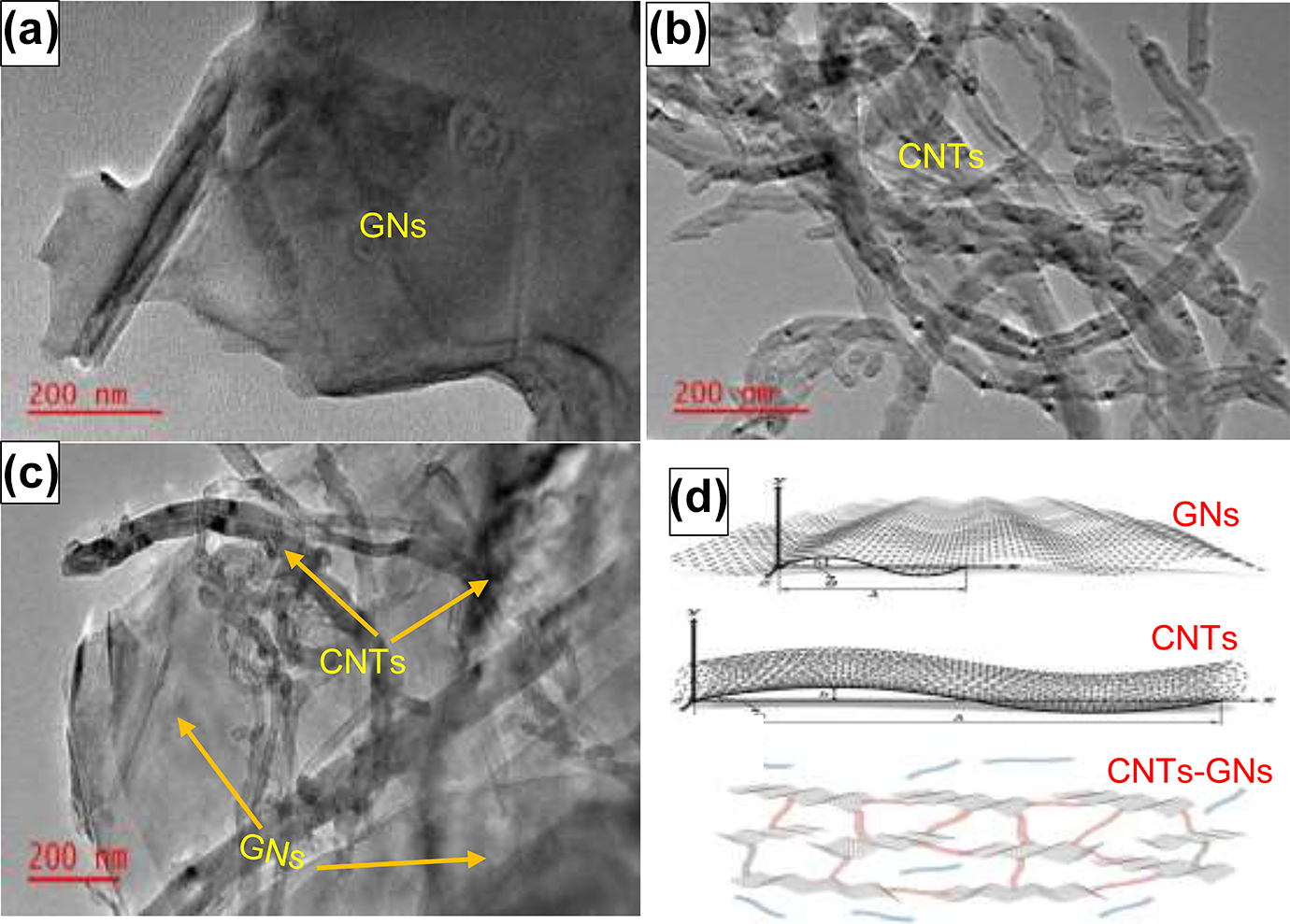
TEM images of (a) GNs (b) CNTs (c) CNTs-GNs hybrid and (d) schematic demonstration of 2D, 1D and 3D network structures formation by the interpenetration of 2D-1D Hybrid. 27
The morphological structures of the nanocomposites are presented in Figure 2. The pure PP showed smooth surface due to its homogeneity and absence of foreign constituents (Figure 2(a)). However, the microstructure significantly changed with addition of the nanoparticles. Nanocomposites containing 1CNTs-1GNs without PP-g-MA showed high level of agglomeration of the nanoparticles in the PP matrix as shown in Figure 2(b). This is due to the poor interfacial relationship between the carbon-based nanoparticles with the matrix. Where the Van der Waals force of attraction between individual nanoparticles prevented them from uniform distribution in the polymer matrix. However, by first dispersing the nanoparticles in the PP-g-MA via solution method before melt compounding, they showed appreciable dispersion in the PP matrix (Figure 2(c) to (f)). This confirms the positive influence of PP-g-MA as a compatibilizer in uniform dispersion of nanoparticles in a polymer matrix. 7 The PP-g-MA served as intermediary in anchoring the polymer matrix and the nanoparticles in promoting their distribution and compatibility with the polymer matrix. 39 The CNTs and GNs distribution in the PP matrix can be clearly seen for 3CNTs and 3GNs nanocomposites as shown in Figure 2(c) and (d), respectively. While the hybrid nanocomposites of 1CNTs-3GNs and 3CNTs-1GNs are respectively presented in Figure 2(e) and (f). In general, the developed CNTs-GNs hybrid nanocomposites showed good distribution of the nanoparticles in the PP matrix.
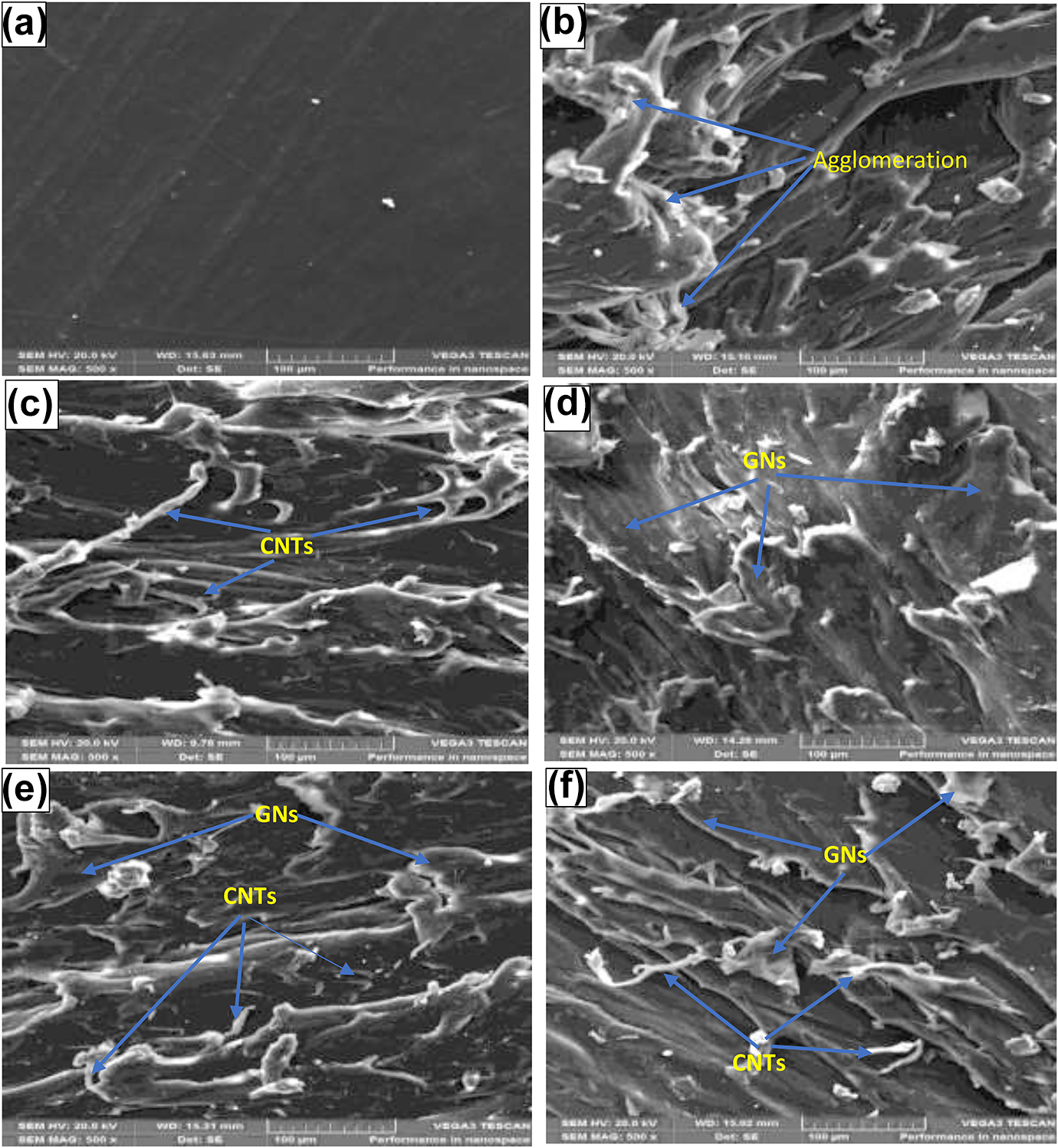
SEM images of (a) Pure PP (b) 1CNTs-1GNs without PP-g-MA (c) 3CNTs (d) 3GNs (e) 1CNTs-3GNs and (f) 3CNTs-1GNs nanocomposites.
Coefficient of friction of the nanocomposites
The pure PP depicted higher coefficient of friction compared to the nanocomposites as presented in Figure 3. A polymeric material under friction often experiences both abrasive (brittle) and adhesive (ductile) wear mechanism. 40 The high frictional coefficient of the pure PP might be due to abrasive wear, which allows direct contact of materials with bared sliding counterface over a long duration resulting from poor films adhesion. On the other hand, the decrease in frictional coefficient of the nanocomposites can be attributed to adhesive wear, 1 which allows protection of materials due to the transferred films on the sliding counterface. It is known that when two surfaces are in contact and move over each other, heat is generated due to friction. For the case of polymeric materials, the frictional generated heat often softens them and makes their film to glue on the sliding counterface, resulting to adhesive wear process.26,41 The glued polymer film on the sliding counterface often decrease frictional coefficient and protect further detachment of polymer from the bulk material. The reduction in frictional coefficient was more pronounced for the CNTs-GNs hybrid nanocomposites compared to their respective binary counterparts. Similar observation in decrease of frictional coefficient with addition of graphene oxide (GO) and CNTs in epoxy matrix has been reported. 34 This can be credited to the good synergy between the two carbon-based nanoparticles in dispersion, formation of 3D network structures 28 and enhancement of anti-wear properties of polymer matrix. 25 With the formation of 3D conductive networks configuration by the interpenetration of CNTs and GNs in the PP matrix, the generated frictional heat is quickly dissipated through the formed conductive paths. This averted the quick softening of polymer and bulk detachment of material under the wear test. Mertens and Senthilvelan 22 previously demonstrated improvement in wear resistance of PP matrix using CNTs as a result of enhanced thermal conductivity of the nanocomposites. In addition, the low coefficient of friction of CNTs-GNs hybrid nanocomposites as depicted in Figure 3 is not only due to film transfer protection (adhesive wear) mechanism, but self-lubrication offered by the hybrid nanoparticles also contributed to that. This is because during frictional test on such nanocomposites, the fractured and pulled out CNTs forms debris on the large surface of GNs, which roll between the metallic sliding counterface and the bulk nanocomposite in reduction of friction.1,25,40
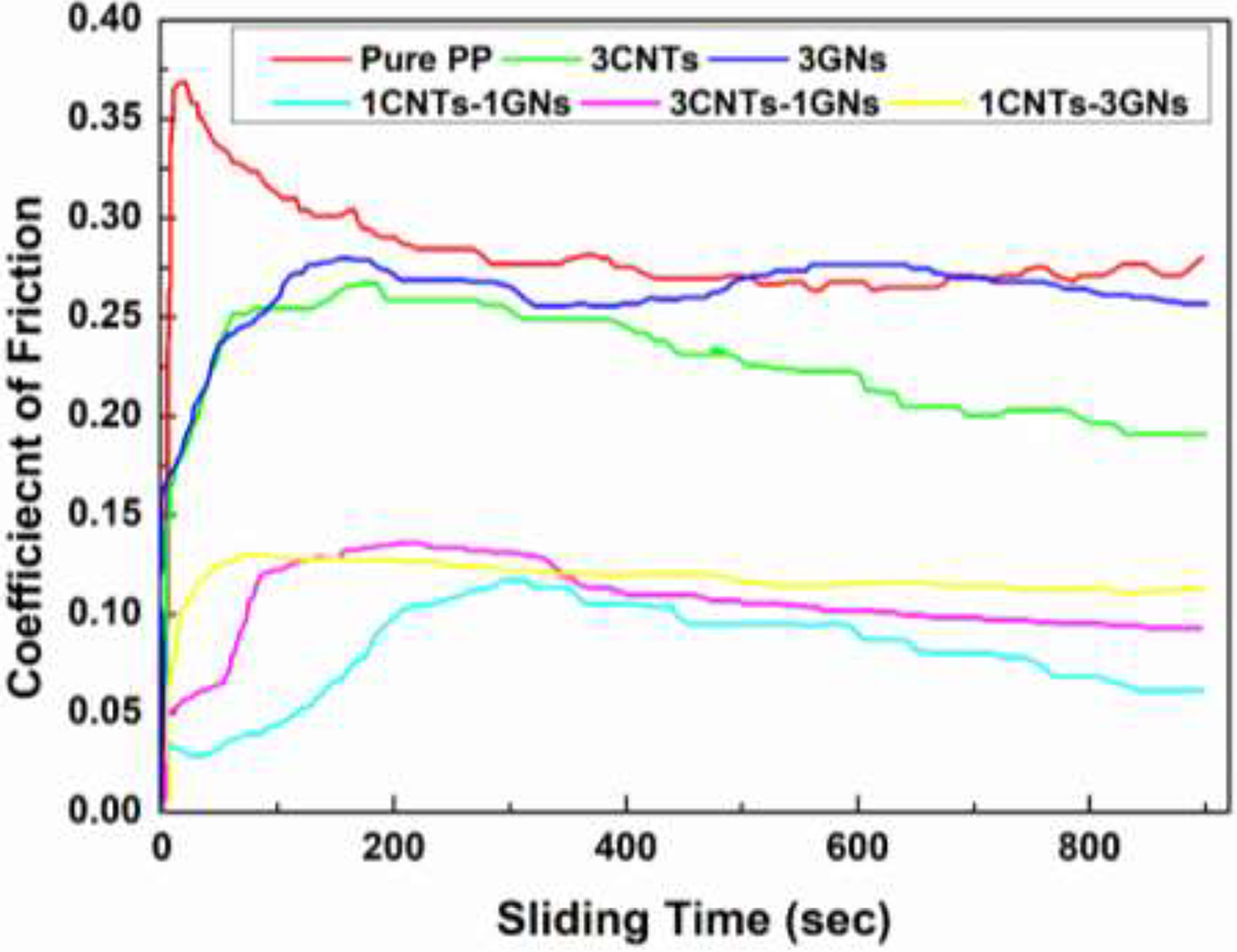
Coefficient of friction of the nanocomposites.
The optical micrographs of the wear tracks on the nanocomposites are shown in Figure 4. The wear track of the pure PP revealed irregular shapes of films, which peeled from the glued films on the counterface as sliding was going on (Figure 4(a)). The peeled films are in lumps, which also showed that the PP transfer film was poorly glued on the sliding counterface. Thangavel et al. 42 has previously reported microcracking and delamination in the wear track of pure poly(vinylidene fluoride) film, which was not observed when reinforced with GO. In this study, the pure PP also revealed larger wear groove compared to the nanocomposites, which agrees with a study by Dike et al. 43 The 1CNTs-1GNs hybrid nanocomposite (Figure 4(d)) showed smaller width of worn scar as well as coefficient of friction, which indicates high anti-wear behavior. While the increase in worn scar of other nanocomposites can be due to formation of small bundles of the nanoparticles in the PP matrix. This often leads to early microcracks initiation and propagation as agglomeration of such nanoparticles serves as stress concentration sites on application of load.44,45 In general, all the CNTs-GNs hybrid nanocomposites showed smaller worn scar when compared with the pure PP and their CNTs and GNs binary counterparts. This is in line with previous study, where GO-CNTs-polyimide showed lesser wear groove and abrasive loss compared to pure polyimide, GO-polyimide and CNTs-polyimide. 25
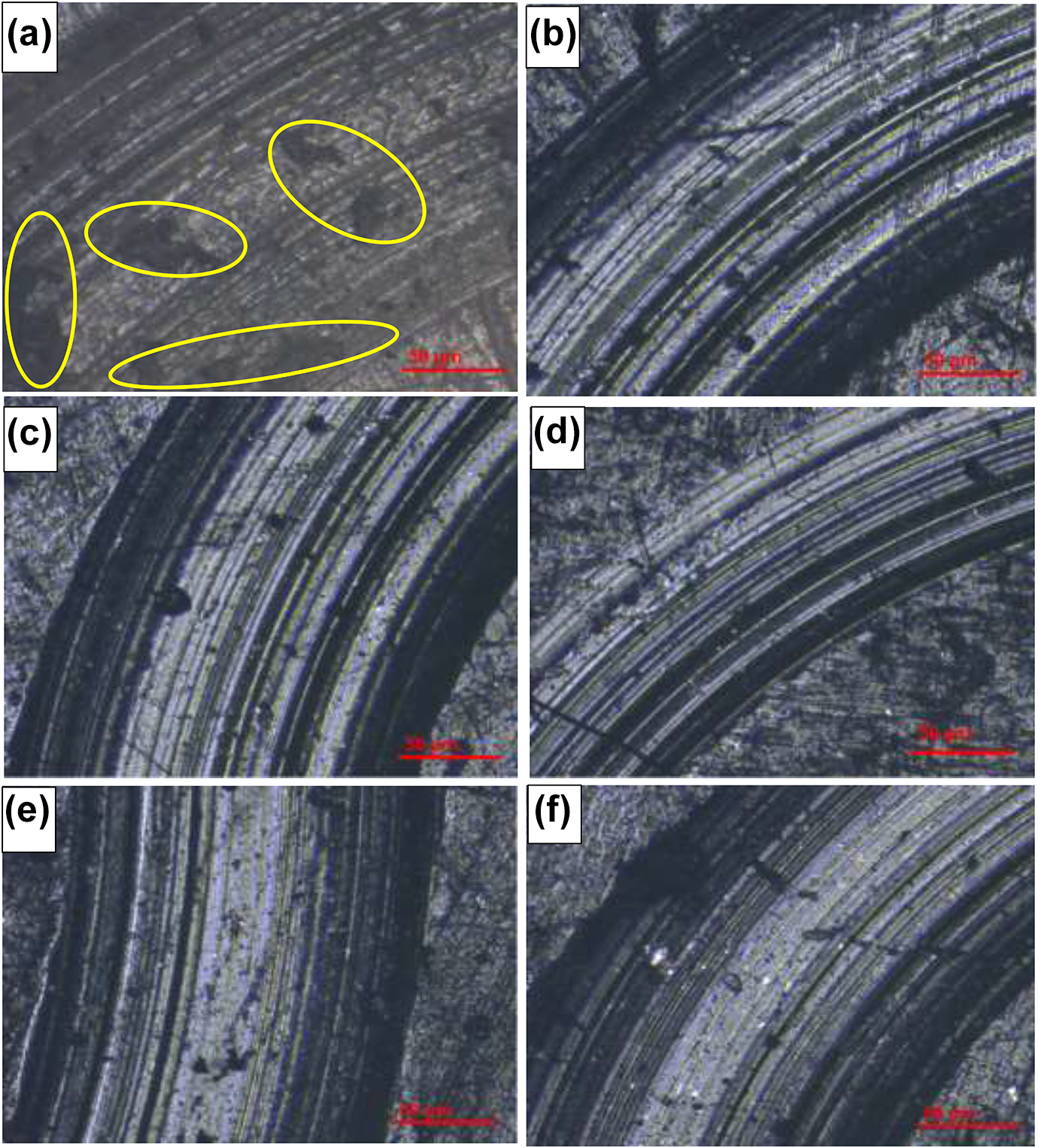
Optical micrographs of worn scar on (a) Pure PP (b) 3CNTs (c) 3GNs (d) 1CNTs-1GNs (e) 1CNTs-3GNs and (f) 3CNTs-1GNs nanocomposites.
Wear rate of the nanocomposites
The wear rate of the nanocomposites is presented in Figure 5(a). All the developed nanocomposites showed significant reduction in wear rate compared to the pure PP. Nanocomposites containing individual 3CNTs and 3GNs respectively showed decrease in wear rate to about 4.15 × 10⁻⁵ mm3/mN and 4.83 × 10⁻⁵ mm3/mN from 8.93 × 10⁻⁵ mm3/mN for the pure PP. Previous studies have also demonstrated enhancement of anti-wear property of polymers using CNTs 43 and GO. 42 However, the combination of CNTs and GNs in this study showed further reduction in wear rate compared to their binary nanocomposites’ counterparts. This indicates high load bearing capacity of the 3D network structured CNTs-GNs in the PP matrix. It implies that higher force is required to detach the 3D networks configuration in the PP matrix compared to when used in their individual form. In addition, the 3D conductive structural paths in the PP matrix promoted the distribution and dissipation of frictional generated heat within the hybrid nanocomposites. Hence, it minimized the softening of the PP matrix and thick detachment of the bulk material. According to Gandhi, Palanikumar, 1 wear failure mechanisms of such nanocomposites can include fillers’ fracture, pull-out, formation of debris and microcracking. These can also be accounted to fillers’ debonding from the matrix and matrix or fillers’ failure. 46 However, fillers’ pull-out mainly occur when the bonding strength between them and the matrix is weak or when the applied load exceeds the force holding the matrix and fillers with microcracks along their boundaries.
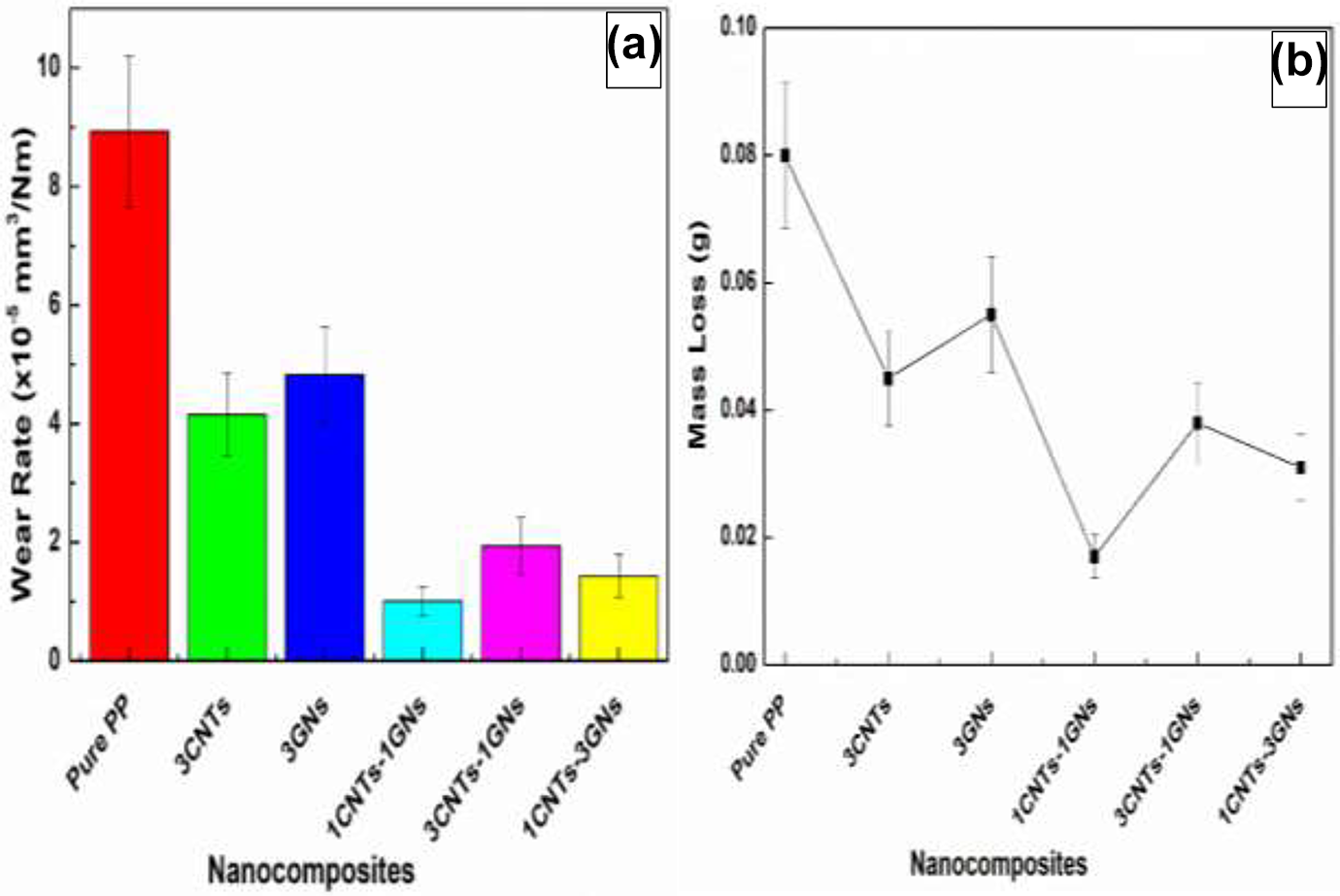
(a) Wear rate and (b) Mass loss of the nanocomposites.
In this study, it is believed that the CNTs debris formed during the frictional test prevented direct contact of the sliding counterface with the bulk polymer nanocomposites since the CNTs debris can roll between them. 25 Hence, the CNTs-GNs hybrid nanocomposites revealed more wear resistance compared to other fabricated nanocomposites in this study. For instance, the addition of 1CNTs-1GNs showed decrease in wear rate of about 88.7%, 75.7% and 79.1% compared to the pure PP, 3CNTs and 3GNs based nanocomposites, respectively. In addition to the reasons for the enhanced wear resistance recorded for the hybrid nanocomposites, good interfacial bonding between the matrix and the nanoparticles contributed to the observation.38,47 This was achieved using PP-g-MA in preparation of the masterbatch, which promoted dispersion and interfacial bonding of the nanocomposites’ constituents as shown by the SEM images in Figure 2. This must have resulted to efficient load transfer from the matrix to the nanoparticles, possibly thin and uniform transfer of film to the sliding counterface. These had positive influence on the reduction of wear rate of the CNTs-GNs hybrid nanocomposites. The use of PP-g-MA in the improvement of wear response of PP matrix has been previously demonstrated, 35 as the PP-g-MA introduces polar groups that anchor the polymer matrix and the reinforcements. 41 However, the hybrid nanocomposites containing 1CNTs-3GNs and 1CNTs-3GNs indicated slightly higher wear rate compared to 1CNTs-GNs but were still significantly lower compared to the pure PP and their binary counterparts. This might be due to increase in agglomeration with increase in the nanoparticles content, which can easily form load concentration zones with early microcracks formation and propagation. Also, the mass loss obtained as the difference in mass before and after the frictional test showed that the pure PP lost more mass compared to the nanocomposites as represented in Figure 5(b). The mass loss decreased from about 0.08 g for the pure PP to 0.045 g and 0.055 g for the 3CNTs and 3GNs binary nanocomposites, respectively. The hybrid ternary nanocomposites showed further reduction in the mass loss, which was more pronounced for the nanocomposite containing 1CNTs-1GNs with only about 0.017 g worn out material. The reduction in the mass loss of the hybrid CNTs-GNs nanocomposites relative to the pure PP and their binary counterparts agrees with their lower coefficient of friction and wear rate. Hence, it can be said that efficient network structural interlocking of the PP chains against detachment during the frictional test was achieved with the hybrid ternary nanoparticles. This resulted to the lesser removal of materials from the bulk hybrid nanocomposites compared to their binary counterparts.
Hardness and elastic modulus of the nanocomposites
The hardness and elastic modulus of the nanocomposites measured using nanoindentation instrument are shown in Figure 6. All the nanocomposites showed significant enhancement in hardness and elastic modulus compared to the pure PP. This is due to the introduction of hard phase carbon-based nanoparticles in the PP matrix. These nanoparticles are percolative nanomaterials with high aspect ratio and high capability of impeding polymer molecular chains against mobility when load is applied, which can be otherwise called mechanical interlocking. 48 This is likely the major reason for the enhancement in hardness and elastic modulus of the nanocomposites. Although there was no large difference in the observed nanomechanical properties among the developed nanocomposites, the CNTs-GNs hybrid nanocomposite showed slightly higher properties compared to the binary nanocomposites. This indicates that with the formation of 3D network structures in the matrix, more force was required by the indenter to deform the nanocomposites. Hence, the incorporation of CNTs-GNs in the PP matrix led to network hardening with improved hardness and elastic modulus. 49 Quantitatively, the hardness and elastic modulus increase from 86.4 MPa and 1.5 GPa for the pure PP to optimal of 153 MPa and 2.7 GPa for 3CNTs-1GNs nanocomposites. Other nanocomposites also showed meaningful compromise between the hardness and elastic modulus. The CNTs and GNs was capable of increasing the stiffness of the nanocomposites by bridging microcracks propagation on application of load. 50 However, large agglomeration of such nanoparticles often results to stress concentration sites, microcracks initiation and propagation with decrease in the nanomechanical properties.44,45 With no observable reduction in the nanomechanical responses of the nanocomposites compared to the pure PP, it indicates that agglomeration of the nanoparticles in the matrix was not significant. This can be credited to the use of the PP-g-MA in the nanocomposites’ preparation, which introduced polar groups and enhanced interfacial relationships among the nanocomposites’ constituents.
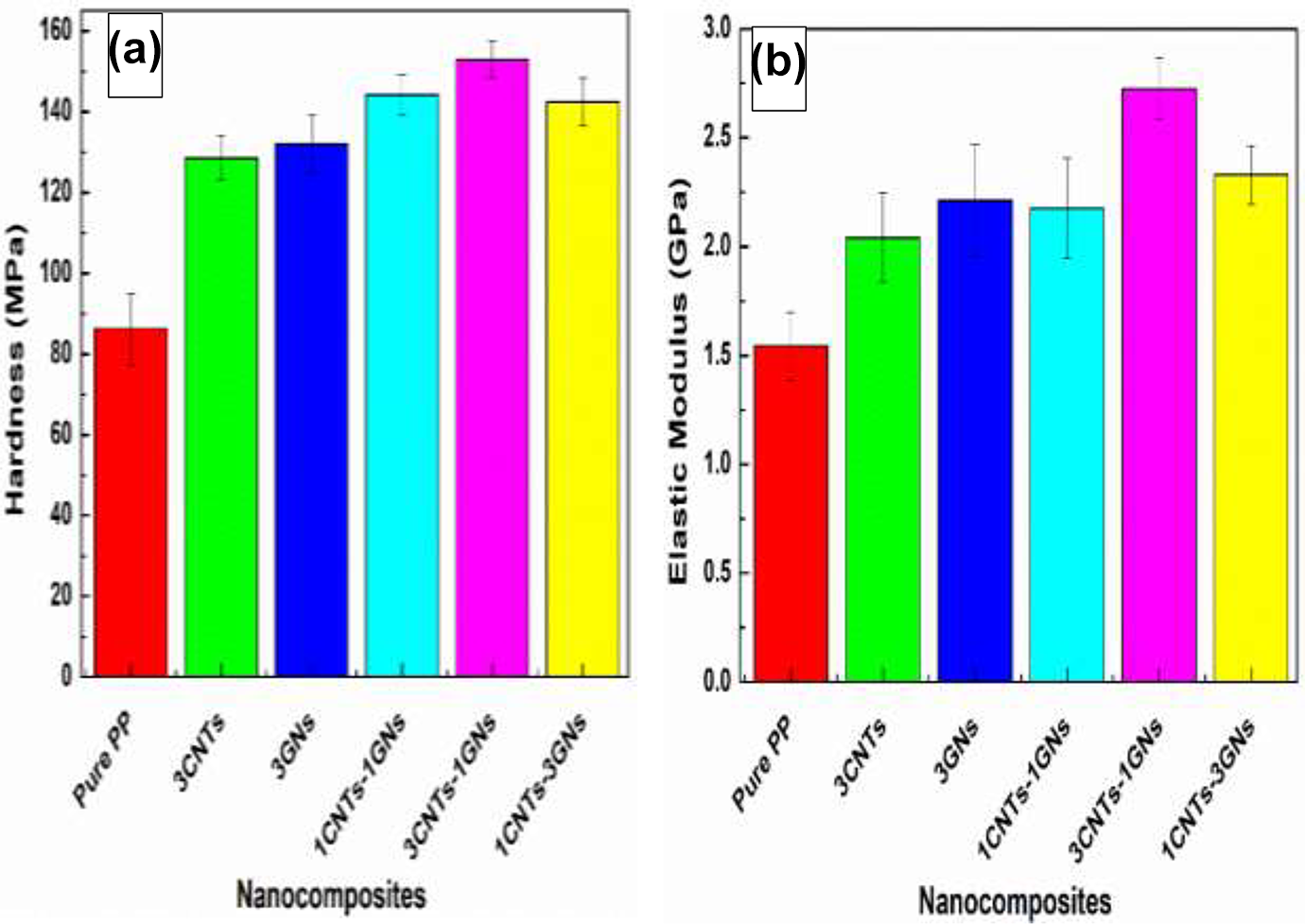
(a) Hardness and (b) Elastic modulus of the nanocomposites.
Rigidity and plastic deformation resistance of the nanocomposites estimated by hardness (H) to elastic modulus (E) ratios
The ratios of the hardness (H) to elastic modulus (E); (H/E) and (H3/E2) are important quantities in the respectively estimation of rigidity and plastic deformation resistance of materials according to theory of fracture mechanics. 42 They are useful in the estimation of wear behaviors of wide range of materials. 51 The ratios of H/E and H3/E2 are respectively depicted in Figure 7(a) and (b). It follows that materials with high hardness will give high wear resistance. 1 However, striking balance between the hardness and elastic modulus can give better anti-wear behavior, since elastic modulus is also a contributing factor. All the developed nanocomposites showed higher rigidity (H/E ratio) compared to the pure PP except in the case of 3CNTs-1GNs nanocomposite, which has almost similar H/E ratio with that of the pure PP due its high elastic modulus. However, the 3CNTs-1GNs nanocomposite has higher resistance to plastic deformation (H3/E2) as well as other nanocomposites when compared with the pure PP. The high H/E and H3/E2 ratios were more pronounced for 1CNTs-1GNs hybrid nanocomposite, which is the likely reason for its higher anti-wear responses compared to others. In this study, it is believed that optimal 3D network structures were formed in the matrix at 1CNTs-1GNs loading.
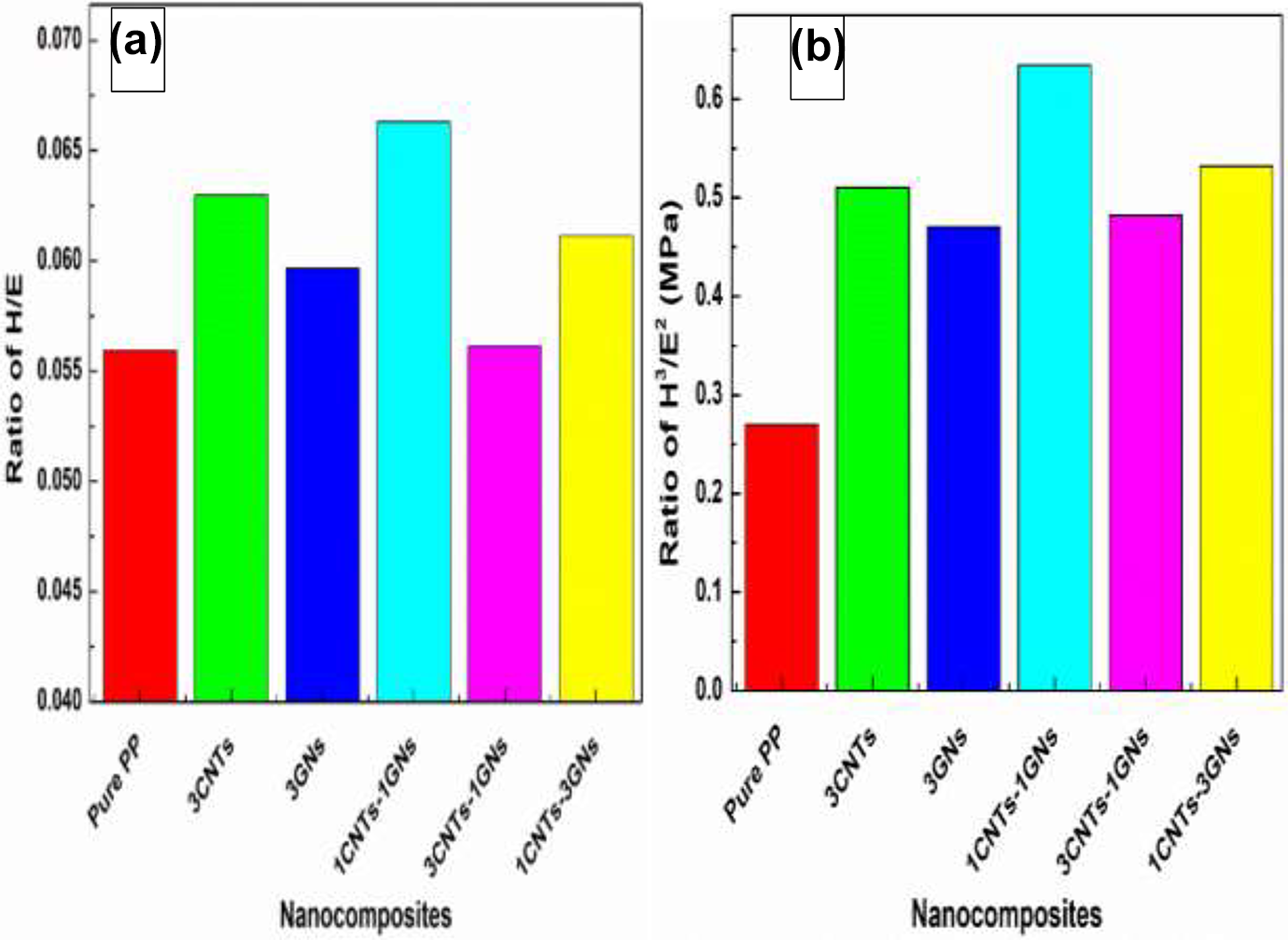
(a) Rigidity (ratio of average H to E) and (b) Plastic deformation resistance (ratio of average H3 to E2) of the nanocomposites.
Force-displacement profile of the nanocomposites
The loading-unloading curves obtained from the nanoindentation test are shown in Figure 8(a). The curves show that with addition of the nanoparticles in the PP matrix, all the nanocomposites shifted to the left. This is an indication of reduction in the maximum indentation depth, that is resistance to penetration of the indenter offered by the nanoparticles in the PP matrix. The CNTs-GNs hybrid nanocomposites also showed higher resistance to the penetration of the indenter’s tip due to the formation of 3D networks configuration in the matrix. The lower indentation depth of the hybrid nanocomposites confirms their increase in hardness, elastic modulus, and stiffness. Network hardening and mobility restriction of the PP molecular chains by the interpenetrated CNTs and GNs are some of the reasons for the higher resistance to change in dimension possessed by the nanocomposites as shown in Figure 8(b). The figure shows that on application of 100 mN load by the nanoindenter, the pure PP reached higher penetration depth compared to the nanocomposites containing CNTs, GNs or CNTs-GNs. Such carbon-based nanofillers have excellent potentials in enhancing wear, nanomechanical properties and deformation resistance of PP matrix.
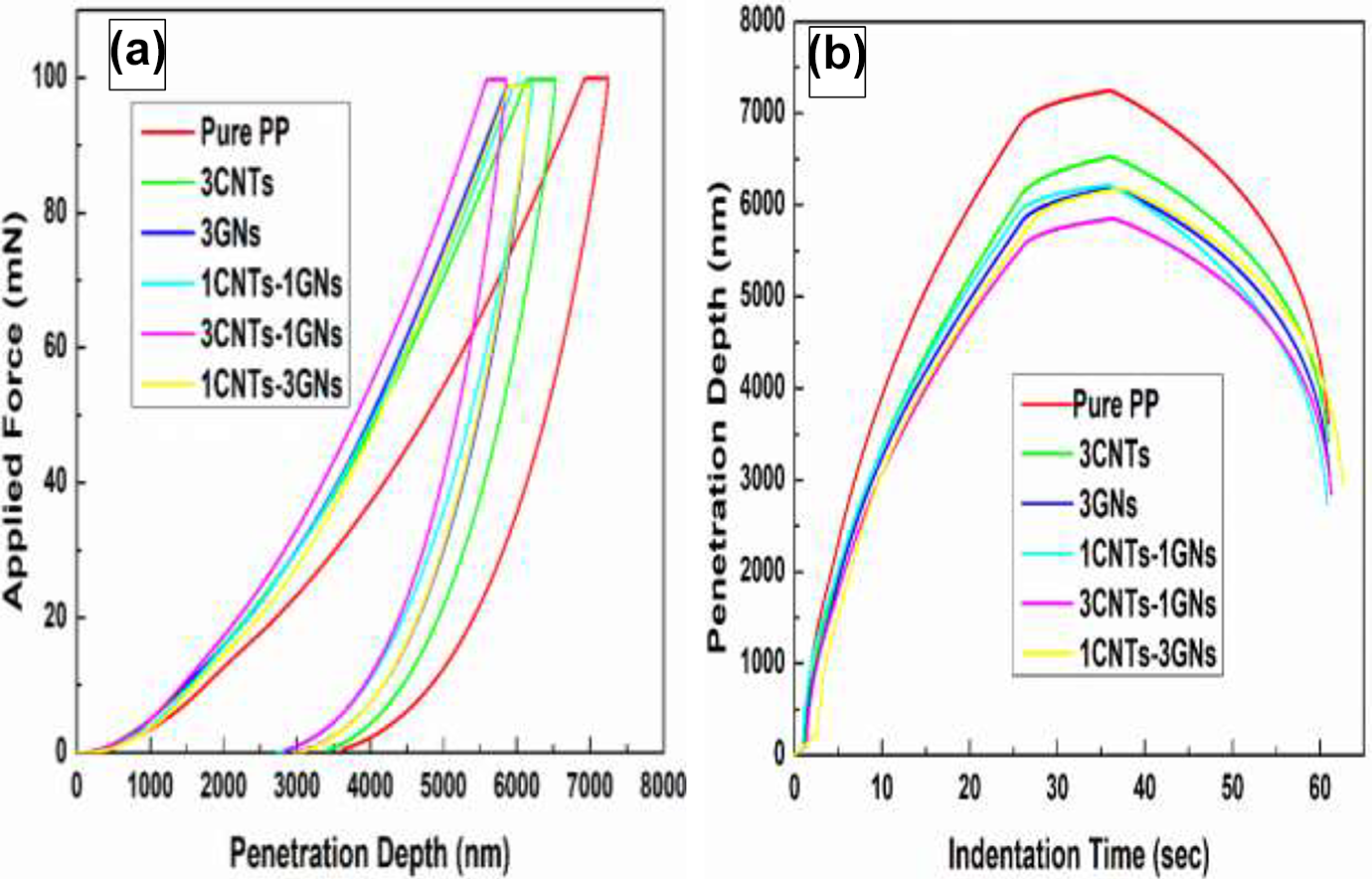
Curves of (a) applied load versus penetration depth and (b) penetration depth versus indentation time.
Conclusion
This study enhanced wear resistance and nanomechanical properties of PP matrix using hybrid CNTs-GNs nanoparticles. The nanocomposites were prepared via melt compounding technique using PP-g-MA to promote dispersion and bonding of the nanoparticles with the PP matrix. TEM analysis revealed interpenetration and interconnection of CNTs-GNs. On the other hand, the SEM analysis showed well dispersed nanoparticles in the PP matrix. All the fabricated nanocomposites revealed enhanced anti-wear and nanomechanical responses compared to the pure PP. However, the enhancement was higher with PP nanocomposites containing hybrid CNTs-GNs than their individual CNTs and GNs. For instance, wear rate decreased from about 8.9 × 10⁻⁵ mm3/mN for the pure PP to 4.2 × 10⁻⁵ mm3/mN and 4.8 × 10⁻⁵ mm3/mN for 3CNTs and 3GNs binary nanocomposites, respectively. While 1CNTs-1GNs hybrid nanocomposite showed further reduction to about 1.01 × 10⁻⁵ mm3/mN. In addition, optimal hardness, and elastic modulus of about 153 MPa and 2.7 GPa were measured for the PP-3CNTs-1GNs nanocomposite, compared to about 86.4 MPa and 1.5 GPa for the pure PP accordingly. These results were attributed to the good synergy between the two carbon-based nanoparticles in promoting dispersion, formation of 3D network structures and network hardening of the PP matrix via mechanical interlocking of the polymer molecular chains. With addition of the CNTs and GNs in the PP matrix, the nanocomposites showed decrease in maximum penetration depth due to their resistance to change in dimension and restriction to PP chains mobility offered by the nanoparticles.
Footnotes
Acknowledgements
We appreciate the Faculty of Engineering and the Built Environment and the Centre for Energy and Electric Power, Tshwane University of Technology, South Africa for their supports.
Funding
The author(s) received no financial support for the research, authorship, and/or publication of this article.
