




Abstract
In recent years, advancements on improving the mechanical and tribological properties of polyimide nanocomposites have remarkably increased, owing to the fact that polyimide nanocomposites exhibits lightweight, high strength, thermal stability as well as anti-wear and solvent resistance. The polyimide nanocomposites are described as material of polyimide matrix reinforced with certain volume or weight percent concentration of nanofillers. Researchers have demonstrated the importance of thermoplastic polyimide nanocomposites in mechanical, thermal, and tribological applications. However, the nanocomposites are reportedly facing interfacial adhesion issues and surface properties degradation, which have affected their mechanical, friction, and abrasive wear resistance for tribological applications. Although, much advancements on improving the mechanical, thermal, and wear resistance properties of polyimide nanocomposites has been reported. However, this review summarizes the effects of nanofillers, such as carbon nanotubes (CNTs), graphene (GN), graphene oxide (GO), boron nitride (BN), molybdenum disulfide (MoS2), silica (SiO2), titania (TiO2), alumina (Al2O3), carbon fibres (CF), aramid fibre (AF), glass fibre (GF), zinc dioxide (ZnO2), zirconium dioxide (ZrO2), silicon nitride (Si2N4), and carbon nitride (C3N4) on the mechanical, thermal, and wear properties of polyimide nanocomposites for tribological applications. The authors concluded the review study with advancement, challenges and suggestions for future improvement of polyimide nanocomposites as friction component material. Thus, the review offers an insight into the improvement and selection of polyimide nanocomposites material for mechanical, thermal, and tribological applications. More so, the review will also give away for further research.
Keywords
Introduction
In the field of engineering and technology, polymer composites have in many ways attracted the attention of researchers and industries as a promising material in the design of components widely used in aerospace, automobile, composites and so on. As such, polymer composites have been widely adopted in developing structural components for mechanical, tribological, and thermal applications due to their excellent properties, which include high strength, lightweight, excellent thermal stability as well as antiwear and solvent or chemical resistance.1,2 The attractive advantages of polymeric composites, such as self-lubrication and superior neatness have been reported as its beneficial effect when used in tribological applications.3,4 Furthermore, with the steady development of industries, the used of polymer composites as a structural material have received considerable attention due to its strength and modulus of rigidity (stiffness), high mechanical load-bearing capacity, wear resistance, and cost effectiveness.5–7 In addition, research shows that the composite structures during service usually encounters different mechanical loads either in the form of static or dynamic 8 and polymer composites have found suitable in this area recently. The features, which also attributed to the use of polymer composites as a candidate material for industrial and engineering applications are the opportunities in modifying their properties with special additives or fillers, such as inorganic micro/nano particles and fibres. Moreover, recent studies revealed that incorporation of rigid particulates into polymer matrix results to significant increase in strength and toughness over pristine polymers. 9 As such, reinforcement of polymer matrix composites with fillers has been noted as the key factor to improve their mechanical, thermal, and tribological properties. In recent years, various types of micro/nanoparticles, for example, alumina, silica, titanium dioxide, glass fibre, titanate nanotubes, carbon nanotubes, calcium carbonate, nano-clay, and graphite/graphene have been employed in the development of nanocomposites, such as polyimide nanocomposites, epoxy nanocomposites, polyester nanocomposites, and polypropylene composites, and so on for thermal, mechanical, tribological, and electrical applications.9–32 Among these entire polymer based matrices, thermoplastic polyimide matrix has gained more attention as polymer matrix material in preparing composites for tribological, mechanical, and thermal application, owing to its good wear resistance, corrosion resistance, high strength to weight ratio, good interfacial bonding, better thermal stability, and had great applications in the field of aerospace and advance equipments.33–37 As a result of this reported properties, polyimides (PIs) are widely accepted as a new generation of polymers with naturally rigid chains, which is of high commercial importance in the design of frictional components, such as soft seal, piston ring, gear, bear, and other tribological and/or constructive parts in demanding applications38,39 as can been seen in Figure 1. Also, it has been established that polyimides and its composites were widely employed as excellent electrical and thermal insulation material, and this is as a result of its low dielectric constant, break down strength, and operation temperature of about 350 oC 40 when compared to other polymer matrices, for example epoxy. Thus, polyimide and its composites are been preferred as an insulating material in motors and transformers41–43 due to its behaviour as organic dielectric with acceptable thermal and mechanical characteristics. In respect to this, the utilization of polyimide composites material for the fabrication of components for thermal, mechanical, and tribological applications significantly become beneficial to entire industries, including aerospace, marine, electrical, corrosion-resistance and automotive and transportation. To enhanced the performances of polyimide nanocomposites for engineering applications, the incorporation of nanofillers, such as inorganic oxides (SiO2, Al2O3, TiO2, ZnO2, ZrO2), carbon nanotubes (CNTs), graphene (GN), graphene oxide (GO), boron nitride (BN), molybdenum disulfide (MoS2), ionic liquids (ILs), carbon fibres (CF), aramid fibre (AF), glass fibre (GF), silicon nitride (Si2N4), and carbon nitride (C3N4) into the polyimide matrix has widely been explored. However, the current review focuses on the recent advances on the thermal, mechanical, and tribological properties of polyimide reinforced nanocomposites for tribological system, as well as it processing, challenges and recommendation for future improvement.
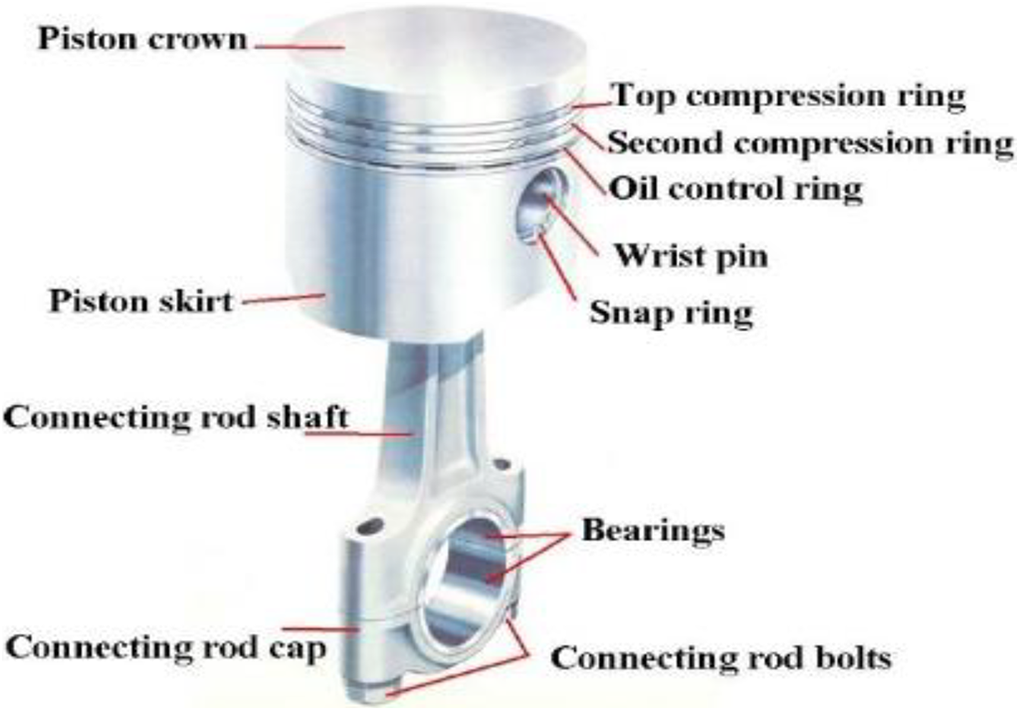
Piston ring parts. 44
Overview of polyimide matrix material for thermal, mechanical and tribological applications
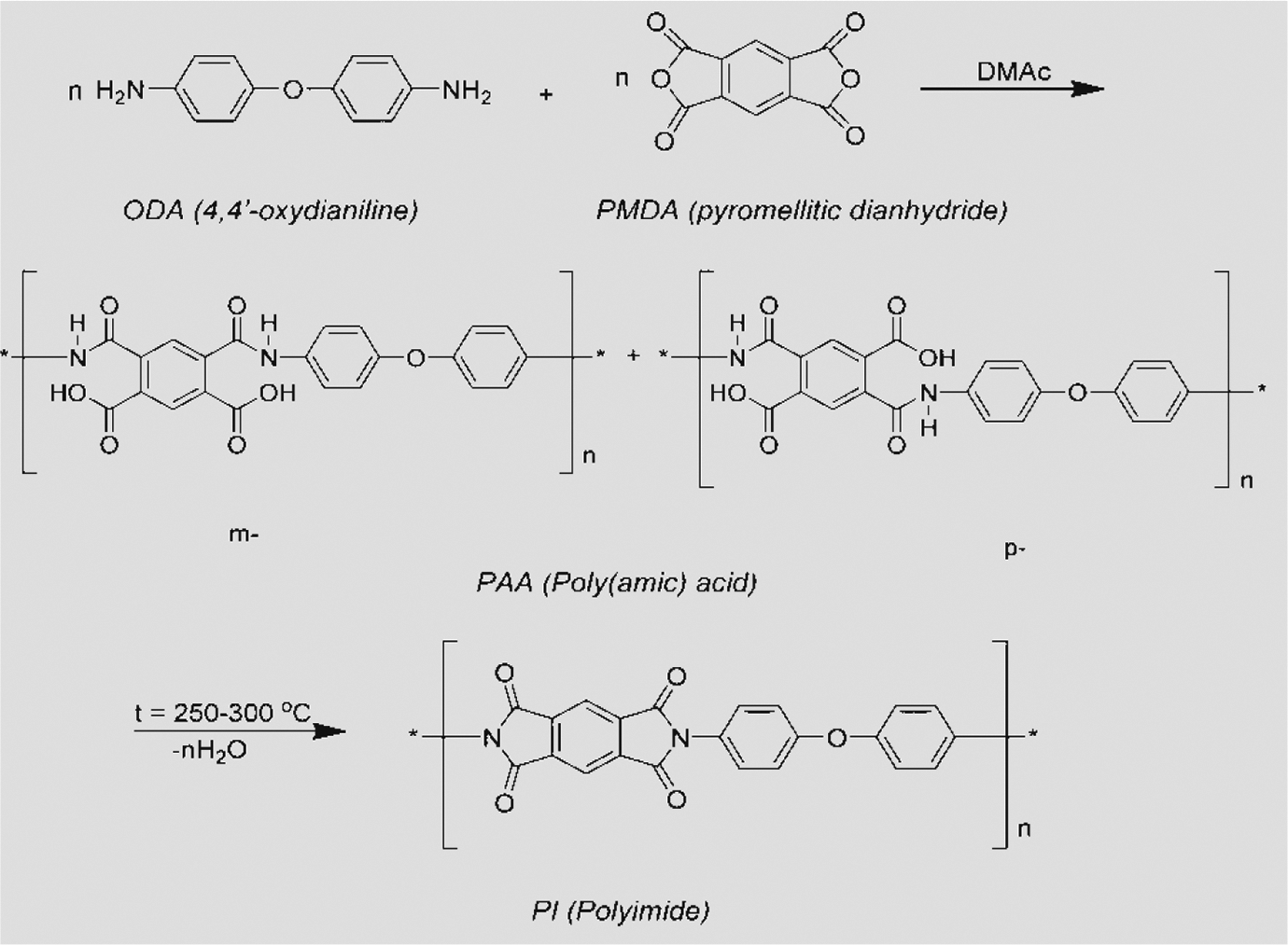
Polyimides are polymers, which contain imide groups in their main chain with unique physical and chemical properties. The chain in polyimide can be linear or aromatic chain and its classification as thermoplastic or thermosetting polymer depends on the chain formation and reaction. Several processing method could be used to synthesize polyimide, which may involve addition polymerization and condensation reaction. 45 Polyimides are normally processed from solution or converted into polymer from salt monomers or monomers in situ 46 and the chemical reaction for such process can be seen in Figure 2. Polyimides, which are form from this process, can be shape into different form by grounding into powder or broken into granules. Polyimides as a type of thermoplastic polymer, is known to exist as amorphous and semi-crystalline polymer. In addition, polyimide (PI) as engineering thermoplastics have been presented to be a promising material where excellent thermal, electrical, mechanical, and chemical properties are of options for certain applications, for example high temperature operation devices.37,47,48 In recent time, polyimide materials are extensively utilized as mechanical and tribo-materials based on their excellent performance properties, such as low density, high strength, good thermal stability as well as anti-wear, chemical/solvent resistance.49–51 Also, its application is found across all the engineering fields, such as automobile, thermal insulators, semiconductors. 52 Although, one problem of polyimide is that polyimide always depicts unfinished imidization due to the formation of poly (amic acid). 53 But notwithstanding, polyimide has been reported to be a leading engineering polymer material as a result of its noticeable combination of performance and ease of manufacturing.54–56 In some applications, it has replaced traditional steel that is of great importance considering the decreasing availability of steel material. 57 Rigid-rod-like polyimide like poly(biphenyl dianhydrite-p-phenylenediamine) (BPDA-PDA) has proven to be a candidate material for numerous applications as a result of its useful characteristics, such as excellent thermal stability, high mechanical properties, chemical resistance, and moisture resistance.57–62 And this type of polyimide is known to be the third generation of polyimide with low thermal expansion, low dielectric constant, and excellent toughness for electrical and mechanical applications. Second generation polyimides came into existence as a means of simple processing and improve planarity. Furthermore, polyimides, such as poly(pyromellitic dianhydride-oxydianiline) (PMDA-ODA), poly(benzophenone tetra-carboxylic acid dianhydride-oxydianiline-m-phenylenediamine) (BTDA-ODA-MPD), and PIQ (isoindoloquinazoline diamine), belong to first generation of polyimide used for film technology and high temperature insulation. 60 In today material selection, polyimide is a type of potential material for high technological friction systems, for example aerospace 63 and in advanced car friction material. In addition, good interfacial bonding behaviour, thermal stability as well as low wear rate of polyimide, has made polyimide an acceptable polymer matrix for composites when superior mechanical and tribological properties are so paramount in fabricating a component that could possesses low coefficient of friction with excellent wear resistance. For instance, Figure 3 shows a typical break assembly, whereby polyimide was adopted as friction material in the brake pad. More so, the thermal stability, improved mechanical properties, and unreactive behaviour of polyimide to chemical substances remain its usage in corrosive and high temperature environment. 64
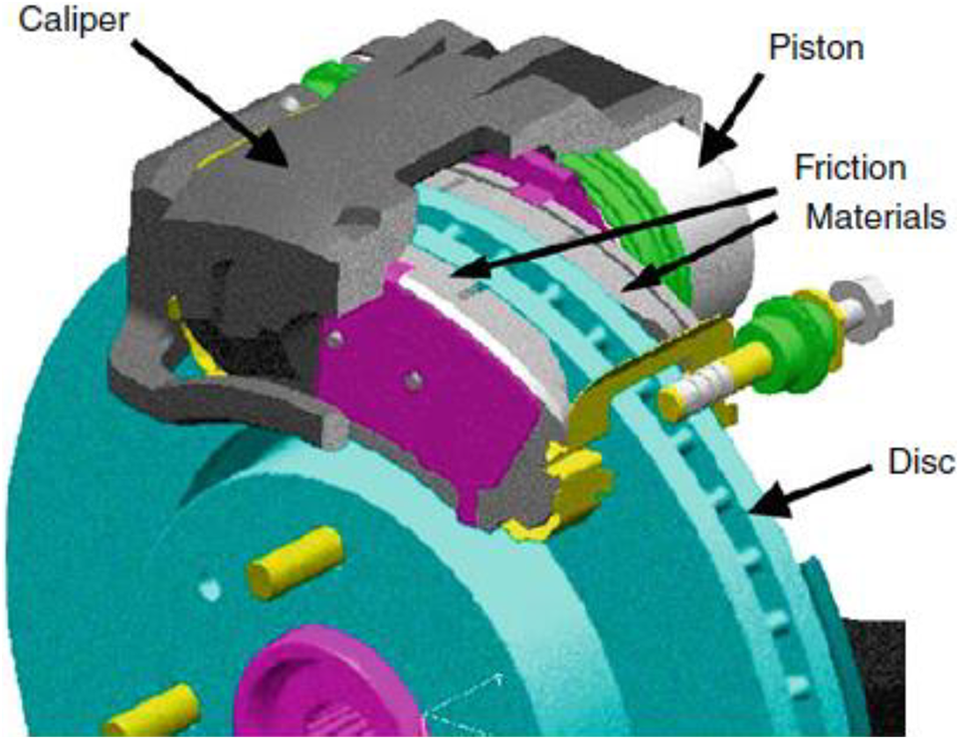
A brake assembly showing a pair of brake pads inside a caliper. 66
Other studies on polyimide materials have also been reported in the literature. For instance, Changzi et al. 67 investigated the effect of ultraviolet (UV) radiation on the surface morphology and mechanical properties of polyimide (PI) films employing atomic force microscope (AFM). The results showed that the surface roughness of the radiated samples increased with exposure time and as such a decrease in elastic modulus and young’s modulus was recorded due to the increasing radiation time. More so, authors like Schwertz et al. 68 ; Sava et al. 69 ; Maxime et al. 70 ; Choi et al., 71 also reported widely on the mechanical and thermal properties of polyimide material. Liaw et al. 72 also reported on the study of advanced polyimide materials and application. However, the present review focused on the recent improvements on the thermal, mechanical and tribological properties of polyimide matrix reinforced with nanofillers, as well as it processing method, challenges and recommendation for future improvement for the fact that tribo-system is concern.
Improvement of the mechanical, thermal, and tribological properties of polyimide matrix nanocomposites for tribological applications using nano-inorganic oxides, nitrides, nanotubes, graphene’s and fibres
Recently, polymer materials have attracted the attention of researchers as a matrix material in the development of micro or nanocomposites. For mechanical and tribomaterial, researches have showed that polyimide materials exhibits the properties needed in the design of components for wear applications, owing to its light weight, high strength, and anti-wear characteristics. 1 Among all the polymer matrices, polyimide has been reported as a matrix material with good interfacial bonding properties. However, due to the high mechanical strength, good thermal stability, high stability under vacuum, good anti-radiation, better solvent resistance, and wear resistance behaviour of polyimide (PI) and its composites under certain conditions, have made the tribological scientists worldwide to show more extensive concern on polyimide based materials because of its properties.44,73 Over the decades, thermoplastic polyimide as one of the high performance engineering polymers have received considerable attention due to its extraordinary performance when used as a material in mechanical moving parts of a space systems. Song et al. 74 observed that space exploitation and development, demand high performance polymer based matrix tribo-materials for weight reduction purpose, which could also serve in improving the reliability of mechanical moving parts. In respect to this, the authors studied the anti irradiation as well as the wear resistance of polyimide composites. In the study, the polyimide (PI) composites, which were reinforced with aramid fibre (AF), filled with polytetrafluoroethylene (PTFE) and Al2O3 nano particles were processed using hot press sintering. The tribological properties of the PI composites were fully determined against Si3N4 ball on a ball-on-disk test rig under simulating space environment condition. The coefficient of friction and the specific wear rate results of PTFE-AF /PI after irradiation increases when compared to the samples without irradiation. The irradiation of the PI composites on exposure to atomic oxygen and proton for understanding the friction and wear behaviour demonstrated that atomic oxygen could attribute to the changes, which greatly alter the chemical composition and surface structure of the material. However, to improve the wear resistance of the composites under irradiation condition by the authors, Al2O3 as inorganic oxide was incorporated into the composite of AF/PI composite to have AF/Al2O3/PI nanocomposites. In comparing the behaviour of the AF-PTFE/PI composites and that of AF-Al2O3/PI nanocomposites under atomic oxygen and proton, it is so clear that Al2O3 exhibited excellent anti-irradiation and wear resistance as can been seen in Figure 4. It was reported that Al2O3 particles were exposed on the surface after certain irradiation time and as such could protect the polyimide matrix and prevent it from further irradiation. Again individual or sequential atomic oxygen (AO) and proton (Pr) irradiation showed little effect on the friction coefficient of the AF-Al2O3/PI nanocomposites. It was concluded that introducing inorganic oxides into polyimide matrix, effectively improves it irradiation resistance and wear resistance. But considering Al2O3, PTFE depicted low wear rate without irradiation. The outcome of the authors findings indicated that AF-Al2O3/PI nanocomposites can be find useful in aerospace field when high performance polymer composites are been considered. In a certain study, it was discovered that fibre reinforced PI composites, as a typical aerospace tribomaterial, do suffer from AO irradiation from the point of low earth orbit. In line with that, Zhao et al. 75 employed MoS2/Al2O3 particles as a reinforcing phase material in PI nanocomposites in order to ascertain the effect of atomic oxygen irradiation on the structural and tribological characteristics of the MoS2(molybdenum disulfide)/Al2O3/PI nanocomposites. The nanocomposites were prepared by hot press moulding method. The friction and wear properties of the polyimide nanocomposites after irradiation were examined on a ball-on-disc tribometer at room temperature. The results showed that the AO irradiation affected the composition of the PI composites, as such the coefficient of friction of PI composites increases after irradiation process. But to finalize on the wear rate of the MoS2/Al2O3/PI composites and that of the pure PI, it is clear that the PI composites depicted better irradiation and wear resistance when compared to pure PI. Besides a particular research noted that Al2O3 is a good anti-irradiation material76,77 and hence could attribute to the improved wear resistance behaviour of the composites.
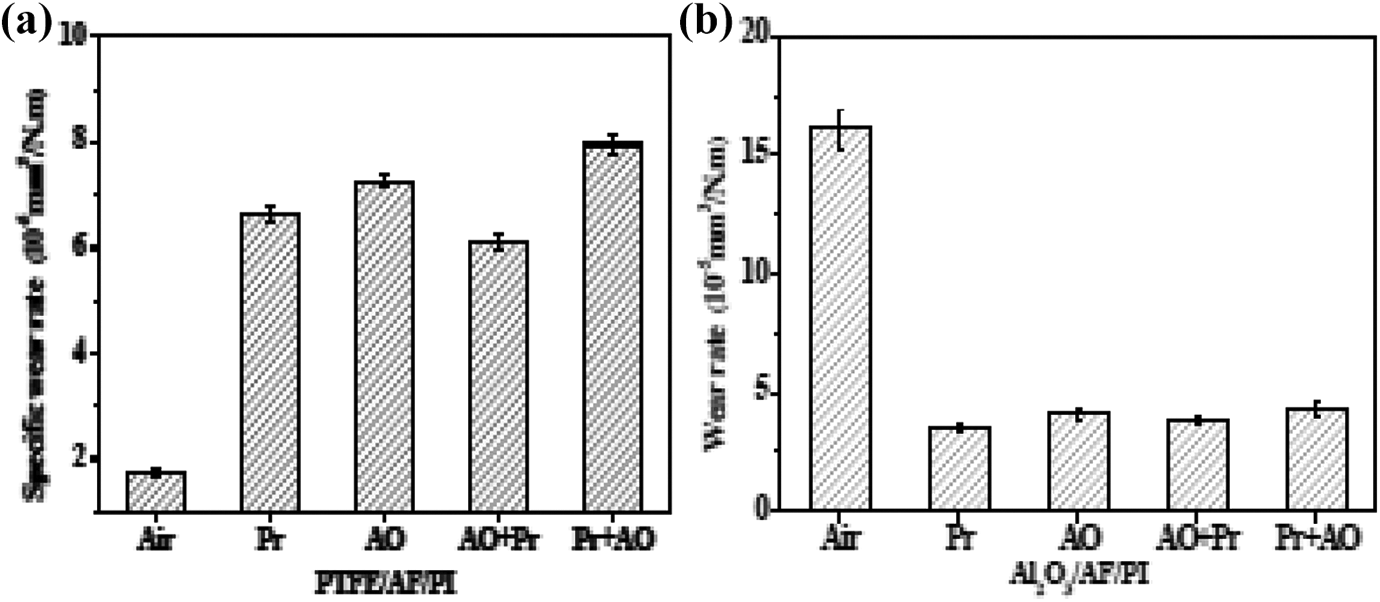
Specific wear rate of PI composites: (a) AF/PTFE/PI and (b) AF/Al2O3/PI after atomic oxygen (AO) and proton (Pr) irradiation. 74
Li 78 discovered that polymeric composites have been commonly used as dry sliding materials particularly as light weight material, which are alternatives to metal materials with self lubrication performance. 79 However, Li 78 conducted a study on the tribological properties of PI composites reinforced with carbon fibre and titanium dioxide (TiO2) particles. The composites were prepared by impregnation method followed by compression moulding. The friction and wear evaluations were carried out on block-on-wheel friction and wear tester under dry sliding conditions. GCr15 bearing steel wheel with a bulk hardness of HRC65 ± 5 was employed as the counterpart. Scan electron microscope was adopted in analysing the wear mechanism for the synergistic effect of the TiO2 particle additive and carbon fibre on PI nanocomposites. The results showed that at 5 w% filler i.e. 5 w% TiO2 particles and 5 w% carbon fibre, low friction coefficient and wear rate was recorded for TiO2/PI nanocomposite when compared to CF/PI composite as well as pure PI. Furthermore, the study showed that CF/TiO2/PI composites exhibited low specific wear rate than CF/PI composites and pure PI as can be seen in Figure 5 in consideration with sliding speed (m/s).
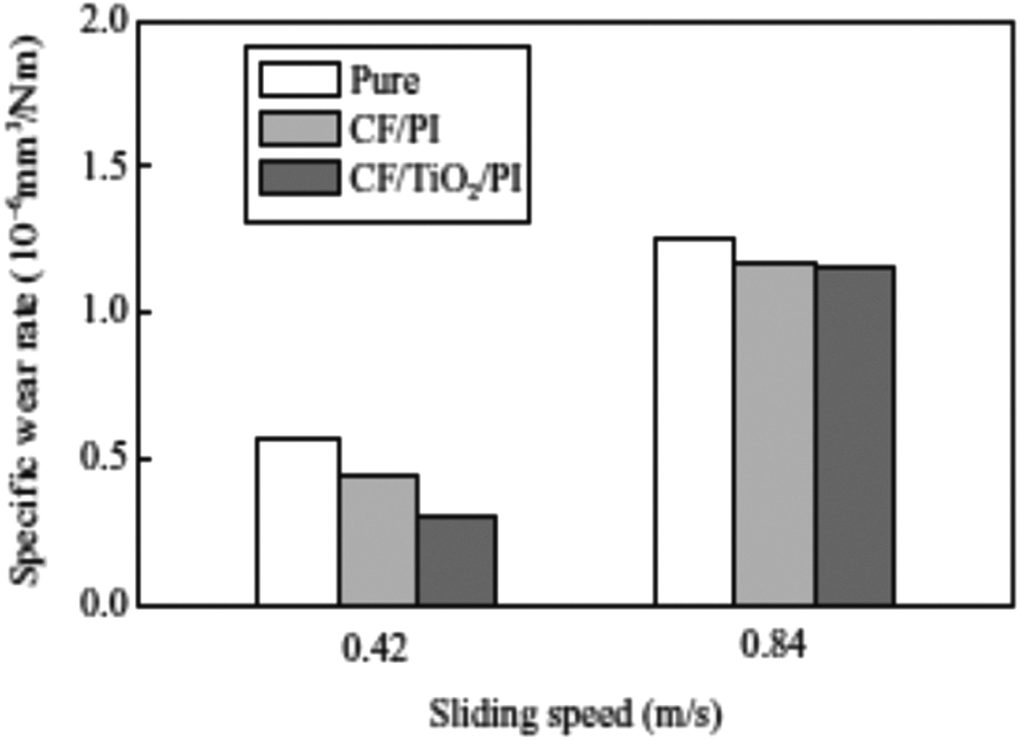
Variation in specific wear rate with sliding speed of PI and its composites. 78
From the scan results, the authors reported that more scratches are found at the worn surface of composites but for the CF/PI composites reinforced with TiO2, considerable reduced scratches were noticed. The outcome of this experiment revealed that CF/TiO2/PI composites could be used in fabricating friction component, which could be used in automobile and aerospace. Furthermore, Li et al. 9 carried a study on the tribological properties of TiO2 reinforced PI based composites and additional incorporation of short carbon nanotubes (CNTs) on block-on-wheel friction and wear tester under different sliding conditions and the counterpart was GCr15 bearing steel wheel. The results showed that the introduction of TiO2 and CNTs into PI matrix resulted to a positive synergistic effect on the composites tribological behaviour. In addition, the PI matrix composites containing 4 wt% TiO2 and 6 wt% short CNTs depicted lower wear rate and coefficient of friction when compared to pure PI, TiO2/PI and CNTs/PI composites. It was concluded that CNTs mainly improves surface hardness while TiO2 acted as lubricant. The research findings shows that, as tribology is considered as one of the main factor when designing mechanical system of spacecraft, which is of vital importance for the operation of moving parts, PI composites remain a candidate material. And to achieve excellent tribological and temperature performance of PI based material, a study demonstrated that chlorine-containing silicon oil (CPSO)-lubricated PI 80 and lubricated inorganic fillers or graphite/PI could depicts chemical stability over a temperature range with good friction-reducing and anti-wear characteristics. Along this line, Zhang et al. 81 carried out a study on friction and wear behaviour of 8%vol graphite (Gr)/PI composite bearing retainer under point contact condition, which was produced by hot pressing method. The results indicated that the coefficient of friction decreased as the sliding speed increases. More so, with increase in sliding speed the wear rate of the composites decreases. In addition, as the normal load increases, the wear rate increases. The study showed that flash temperature which occurred due to friction at the contact point could have softened the contact layer and as such degraded the mechanical properties of the PI composites. Also, the tribological properties of PI matrix reinforced expanded graphite nanocomposites prepared via using the technology of microwave radiation was investigated by Jia et al. 82 The research results showed that with 15 wt% of nano expanded graphite, there is low coefficient of friction and wear rate as reported by the authors. The unique self-lubricating of nano-expanded graphite improves the antifriction of the composites. Meanwhile, good mechanical properties of the PI also contributed to the relative high strength and hardness of the composites. 83 However, above 15 wt% of the reinforcing phase material (nano-expanded graphite), the wear rate decreases and then increases in a smaller range as can be seen in Figure 6. Although, the findings indicated that the nanocomposites depicted a better tribological properties when compared to pure PI and a closer look at Figure 6 and 7 made this observation more clear.
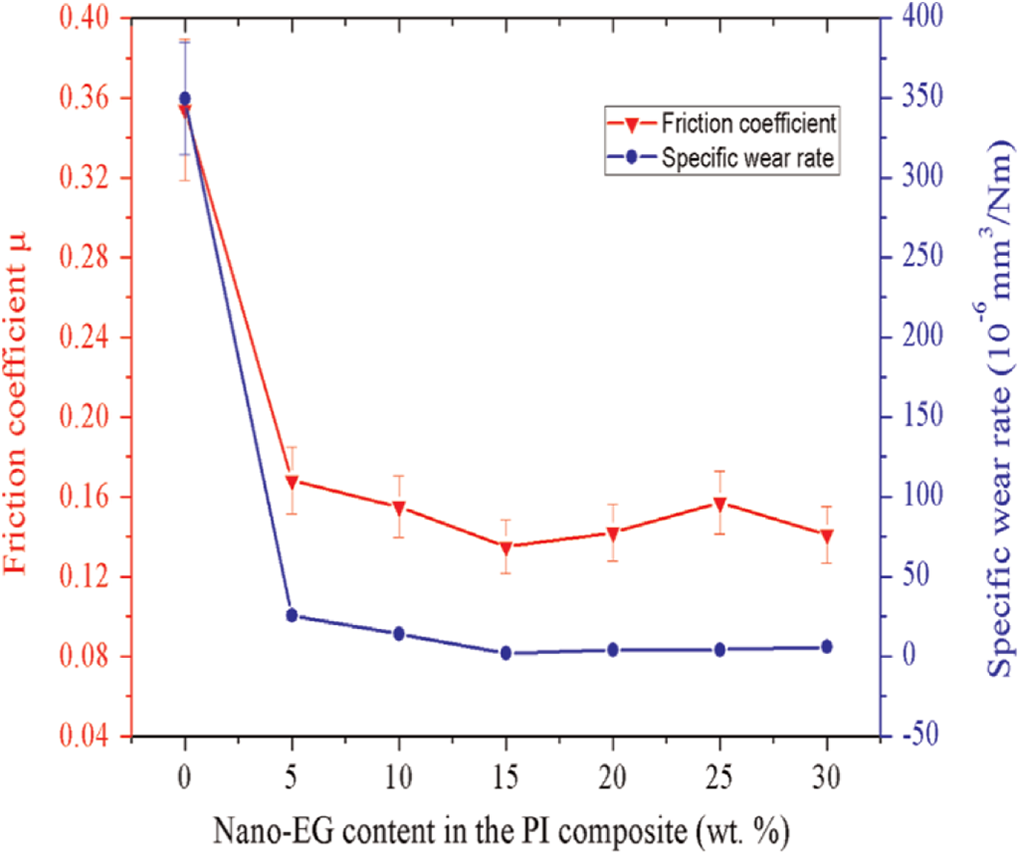
A representation of frictional coefficient and wear rate of nano-EG/PI composites. 82
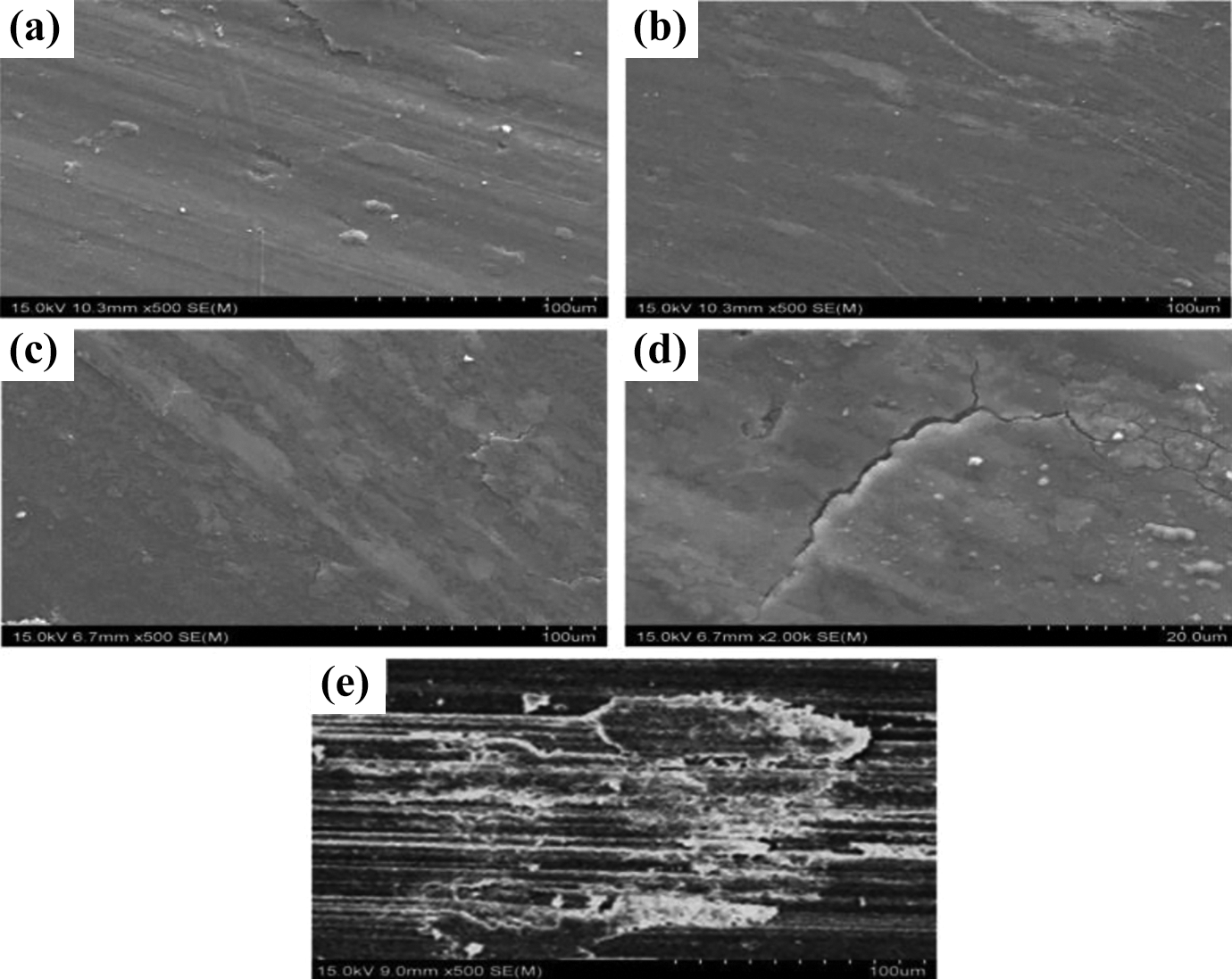
SEM image of worn surfaces for the pure PI and nano-expanded graphite/PI composites: a, b, c and d denotes the percentages of the nano-expanded graphite and e denotes pure PI. 82
More so Li et al. 84 investigated the effect of graphene sheets (GNs) and perylene-3, 4, 9, 10-tetracarboxylic dianhydride (PTCDA) on the tribological and mechanical behaviour of PI matrix composites. The GNs/PTCDA/PI based composites were prepared employing the blending method as showed in Figure 8. The results showed that introducing GNs/PTCDA into PI matrix reduces the friction coefficient and wear rates of the composites under dry sliding, deionized water lubrication, and kerosene lubrication when compared to GNs/PI, PTCDA/PI, and pristine PI. These improvements attributed to the introduction of PTCDA into GNs surface by pi-pi stacking, which could have ensure the structural integrity of the GNs, hence, results to good adhesion to the PI matrix and as such improved the mechanical properties of composite. In considering the replacement of metal with polymer in fabrication of moving parts for aerospace and high speed/mechanical bearing surfaces, Roy et al. 85 examined the tribological properties of polyimide reinforced graphene composites coating at elevated temperatures. The results of the tribological test showed that the incorporation of graphene into the PI matrix composites, effectively improves the friction reduction and wear resistant behaviour of the PI as result of the excellent lubricating properties of graphene. Additionally, 3 wt% of graphene content into the PI composites was reported to be the optimum loading for the lowest coefficient of friction and wear rate, and also with the highest decomposition temperature over other wt% graphene in PI composites and neat PI. From the study, the authors reported that the residual weight of the graphene reinforced polyimide composites at high temperatures is larger when compared to that of pristine PI, which proves that the thermal resistance of graphene/PI composite is superior. In conclusion, the study demonstrated that incorporation of graphene into PI matrix at optimum loading, improves its thermal resistance. According to Zhu et al. 86 the excellent friction and wear properties of polymer composites have recently been reported as an interesting material towards the fabrication of high tribological properties composites. Due to this enhancement over the demand of polymer composites, evaluation of tribological behaviour of graphitic carbon nitride (g-C3N4) reinforced polyimide composite was carried by. 86 The PI based composites (g-C3N4/PI) were developed using mechanical process and hot compression moulding process. Friction and wear tests were performed using UMT-2 reciprocating tribo-tester against stainless steel ball under dry friction. From the study, results indicated that the PI composites decomposition temperature was increased from 387 to 420.8oC and as such improved the thermal resistance of the PI (see Figure 9). This evidenced that the addition of inorganic fillers can improve the thermal properties of polymer composites. 86 Also, at 10 wt% g-C3N4 into the PI matrix composite, results indicated that the composite exhibited improved tribological properties when compared to neat PI. However, above 10 wt% g-C3N4, the tribological performances in terms of wear resistance were slightly deteriorated. It can be deduced that g-C3N4 as filler in PI matrix could play a role in reducing the wear loss of PI composites at low concentration while high threshold loading of g-C3N4 as reinforcement phase in PI composites will increase the loss of the PI composite. However, optimizing the loading content of g-C3N4 into PI matrix to obtain the optimum hardness and wear should be considered for future study.
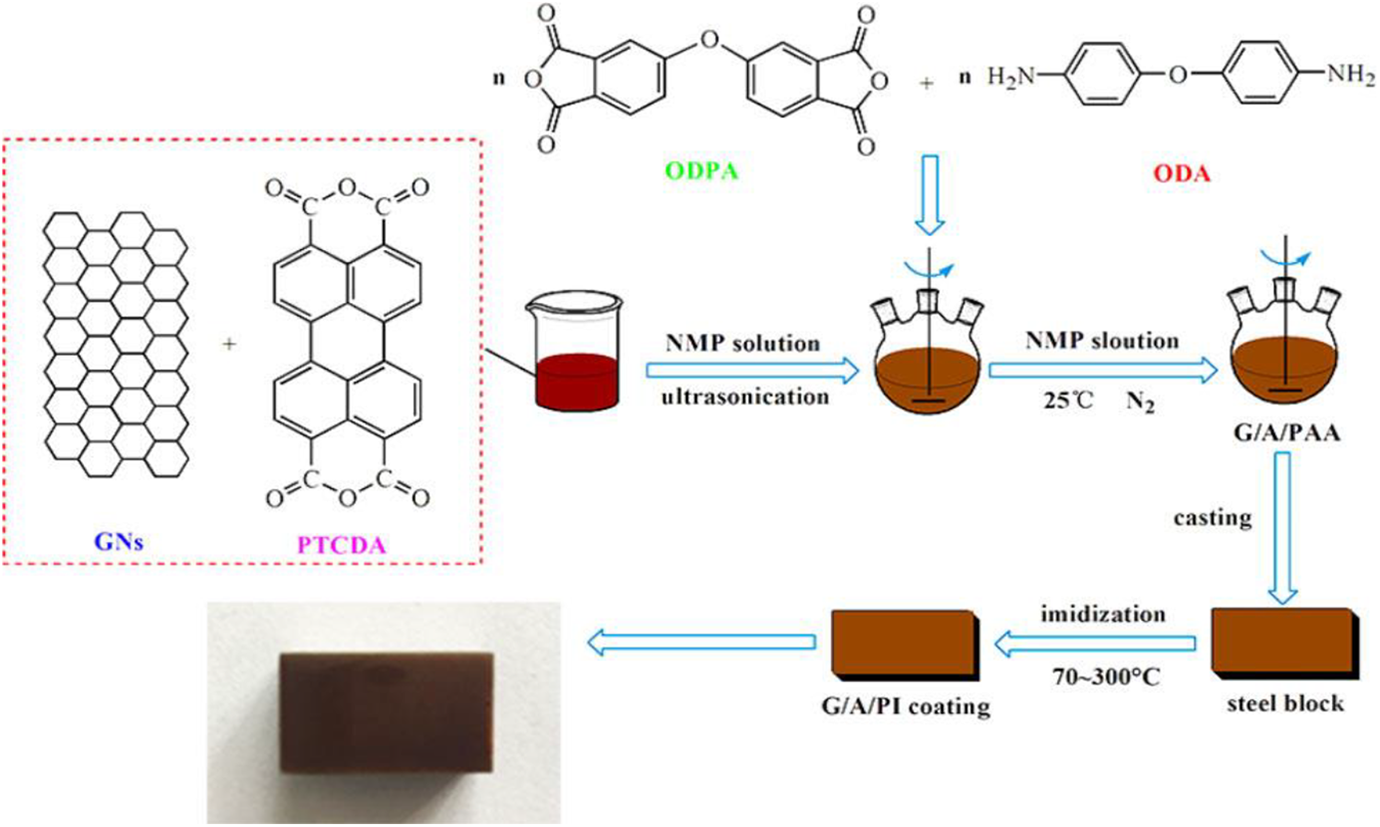
The schematic preparation of PI matrix reinforced GNs/PTCDA composites. 84
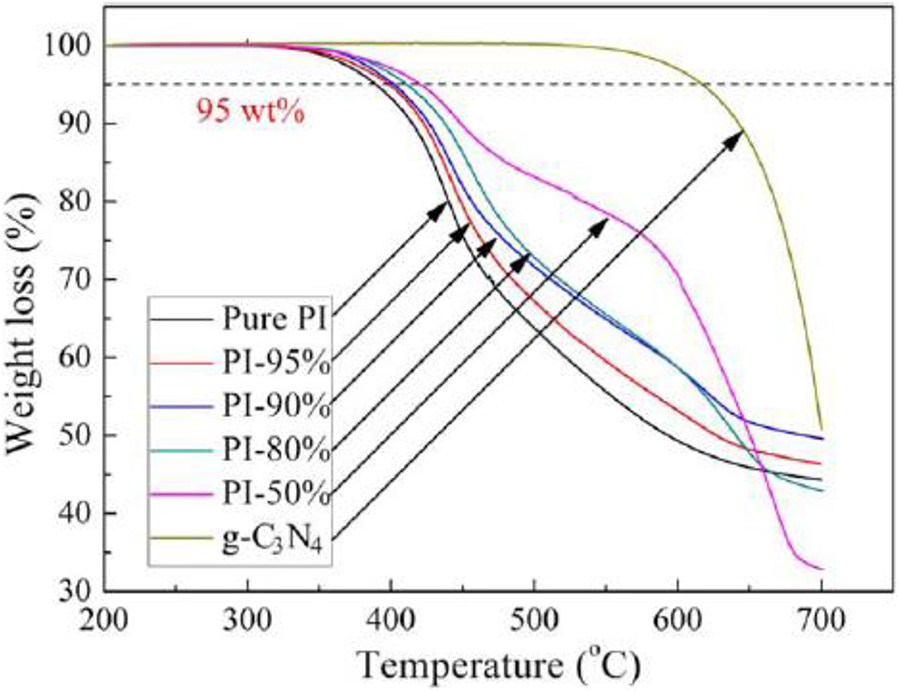
TGA curves of pure g-C3N4, neat PI, and g-C3N4/PI composites with varied g-C3N4 concentrations. 86
On the other hand, for improving the tribological properties of PI matrix nanocomposites, Chen et al. 87 incorporated carbon fibre-carbon nanotube (CF-CNT) into PI phase to obtain CF-CNT/PI nanocomposites. The PI nanocomposites were prepared adopting hot pressing method. The friction and wear properties of the nanocomposites were investigated by utilizing universal micro-tribo tester in a reciprocating sliding system. The counter pattern/balance was a GCr15 ball. The experimental results specified that reinforcing the PI matrix with CF-CNT, resulted to excellent friction and wear properties of the nanocomposites. The authors reported that the coefficient of friction and wear rate of the CF-CNT/PI nanocomposite were 0.213 and 1.79 × 10⁻⁶ mm3/Nm of a decrease of 22 and 72% respectively when compared to unreinforced PI. In addition, Chen et al. 88 employed MoS2 nanosheets as a reinforcing phase in CF/PI composite due to its notable impact in improving the mechanical and thermal properties of polymer nanocomposites. 89 According to Chen et al., 88 the MoS2 nanosheets, which were decorated onto the CF surface improves the interfacial bonding between CF and PI matrix. Thus, it was noted that this bonding improved the hardness and thermal stability of the CF-MoS2/PI nanocomposites. Also, results showed that the CF-MoS2/PI nanocomposites depicted outstanding tribological properties under try friction on a counterpart of GCr15 ball with a 4 mm diameter. The incorporation of CF-MoS2 into the PI matrix resulted to a coefficient of friction and wear rate, which was lower than those of PI, CF/PI, and MoS2/PI according to the authors. This indicated that CF-MoS2 hybrid is promising filler for enhancing the tribological properties of polymers. More so, Chen et al. 90 studied the enhancement effect of CF-SiO2 hybrid on the mechanical, tribological, and thermal properties of PI. The results showed that the incorporation of CF-SiO2 hybrid into the PI matrix, the hardness and elastic modulus of the CF-SiO2/PI composites reached 0.411 Gpa and 4.904 Gpa, which indicated an improvement of 22% and 12.2%, respectively when compared to the neat PI. Accordingly, 0.32 and 5.35 × 10⁻⁵ mm3/Nm of coefficient of friction and wear rate respectively were recorded. This evidence that much lower value of friction coefficient and wear rate are observed of the CF-SiO2/PI composite in comparison with PI or CF/PI material (see Figure 10) under a dry condition on a counterpart of 440C stainless steel ball. It was inferred that SiO2 could not only enhanced the mechanical and thermal properties of the composites but effectively promote the load transferring during the friction and wear process by enhancing the interfacial effect between PI and CF. Besides studies have shown that effective interfacial bonding exist between SiO2-PI material than most PI/fillers in designing a component for thermal, mechanical and tribological applications.91,92 Zhao et al. 93 performed a comparative study on the friction and wear of PIs reinforced with glass fibre (GF), aramid fibre (AF), and carbon fibre (CF) under dry friction against silicon carbide sand paper and steel rig in addition with three-body abrasive conditions. Hot pressing moulding method was employed to develop both the reinforced composites and unreinforced PI. From the experimental results, the reported hardness and elastic modulus value of GF/PI, AF/PI, and CF/PI composites were recorded to be 32.1 Mpa and 18.54 Gpa, 28.1 Mpa and 7.93 Gpa, 31.4 Mpa and 9.39 respectively. In the evaluation of the tribological behaviour of the composites, the results showed that the CF/PI sample has a low coefficient of friction, hence demonstrated better wear resistance followed by GF/PI sample when compared to AF/PI and neat PI. The reported reduced wear rate of the CF/PI and GF/PI composites under dry sliding as showed in Figure 11 could be ascribed to the reduced ability of ploughing, tearing, and some other non adhesive components of wear. Besides from the morphologies results, as presented by the authors, the neat PI and AF/PI showed more worn off surface during the wear process due to a repeated ploughing. Comparing the mechanical and wear behaviour of the composites, CF/PI and GF/PI composites stand to be a suitable material in the design of mechanical moving parts under sliding condition. Looking at the behaviour of the samples under three-body abrasive condition with varying loads, reverse is the case i.e. at abrasive condition, the neat PI and AF/PI sample exhibited low wear rate in comparison with CF/PI and GF/PI as can be seen in Figure 11b as characterized by the authors. However, the only challenge in all the PI composites remains poor interfacial bonding, which contributed on the surface worn out. Thus, to address this, further research need to be carried out especially during the fabrication process, because the fillers influences the coefficient of friction, wear mechanism, and wear rates, hence, serving as indicator for adopting of PI composites for specific applications.
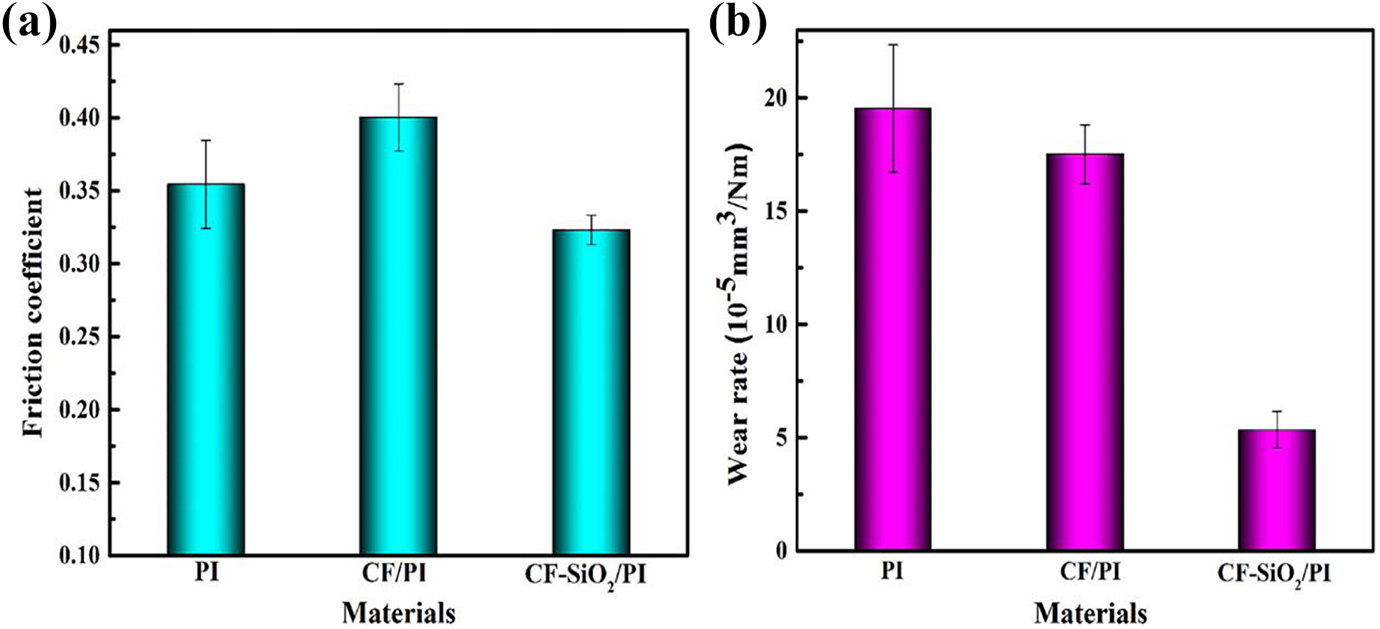
The tribological properties of PI and it composites from SiO2 perspective: (a) Friction coefficient, and (b) wear rate of PI and it composites sliding against stainless steel ball (load: 5 N, sliding speed: 0.105 m/s, duration: 30 min). 90
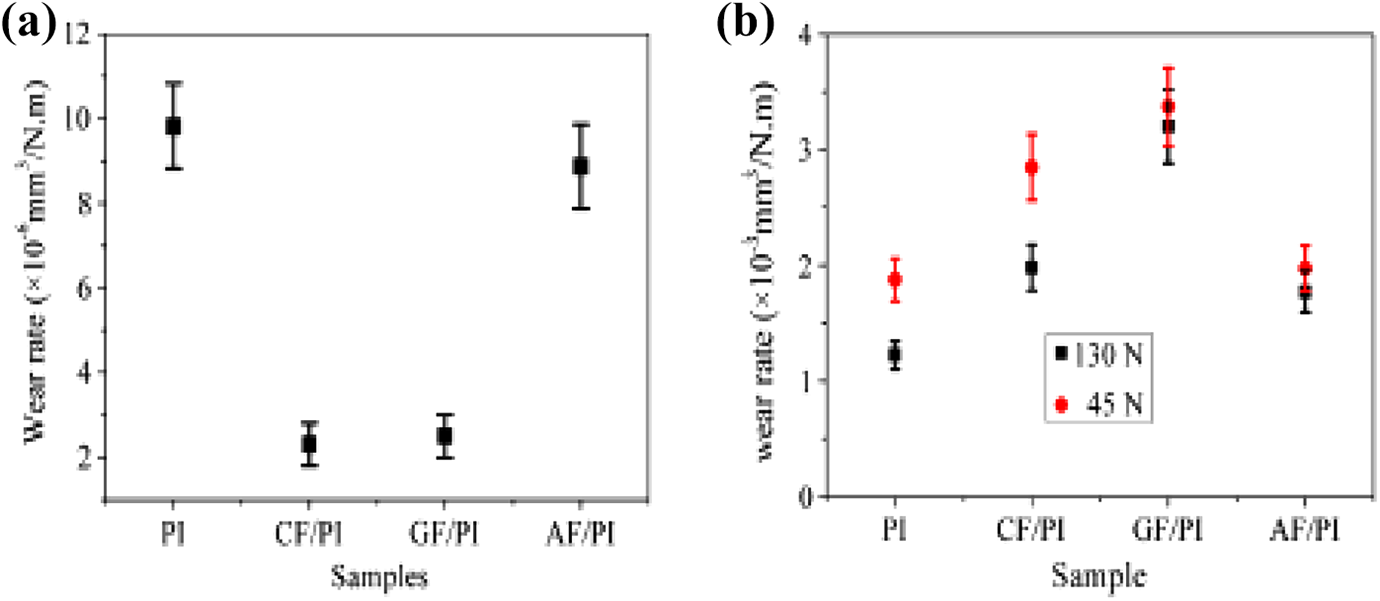
Wear rates of the PI and it composites: (a) under dry sliding against steel ring and (b) under three-body abrasive conditions. 93
As lubricants are known to be essential for increasing the service of moving parts, it was observed that single liquid or solid lubricant hardly meet the potential properties required to operate moving mechanical assemblies in high-vacuum environment more especially for extended operational cycles. However, Solid-liquid composite lubricating material has shown to be a material of interest to researchers in designing mechanical moving parts.94,95 In line with this, Lv et al. 96 investigate the structural properties and tribological performance of polyimide based reinforced ionic liquid composite films using a ball-on-disk tribometer in high-vacuum environment. The incorporation of the ionic liquid (1-Butyl-3-methylimidazolium tetrafluoroborate) into the PI composite was achieved using solution casting process. In changing the content of the ionic liquid (IL), varying novel IL/PI (0, 1, 5, 10 wt%) composites were developed. The results showed that 1 wt% IL/PI composite exhibited improved mechanical strength with low coefficient of friction (0.36) and wear rate (12.13 × 10⁻⁴) over other wt% IL in the PI composites. Along this line, Ruan et al. 97 examined the effects of ionic liquid functionalized graphene (ILFG) on the tribological, mechanical, and thermal characteristics of PI matrix. The ILFG/PI composites were prepared by solution blending and thermal imidization. Varied wt% of ILGF (0.08, 0.24, 0.4, and 0.56 wt%) were introduced into the PI matrix composite. The experimental test for the composites tribological properties were carried out with a plate-on-ring apparatus under dry sliding conditions. The characterization results of the composites indicated that at 0.4 wt% ILFG, improvements in mechanical, thermal, and tribological performance of the ILFG/PI composites was noticed compared to pure PI as can be seen in graphical abstract of the study (see Figure 12). The finding demonstrated that synergistic effect between graphene and ionic liquid attributed to the enhanced properties performance of the PI matrix as a result of strong adhesion, which occurred between PI matrix and ILFG.
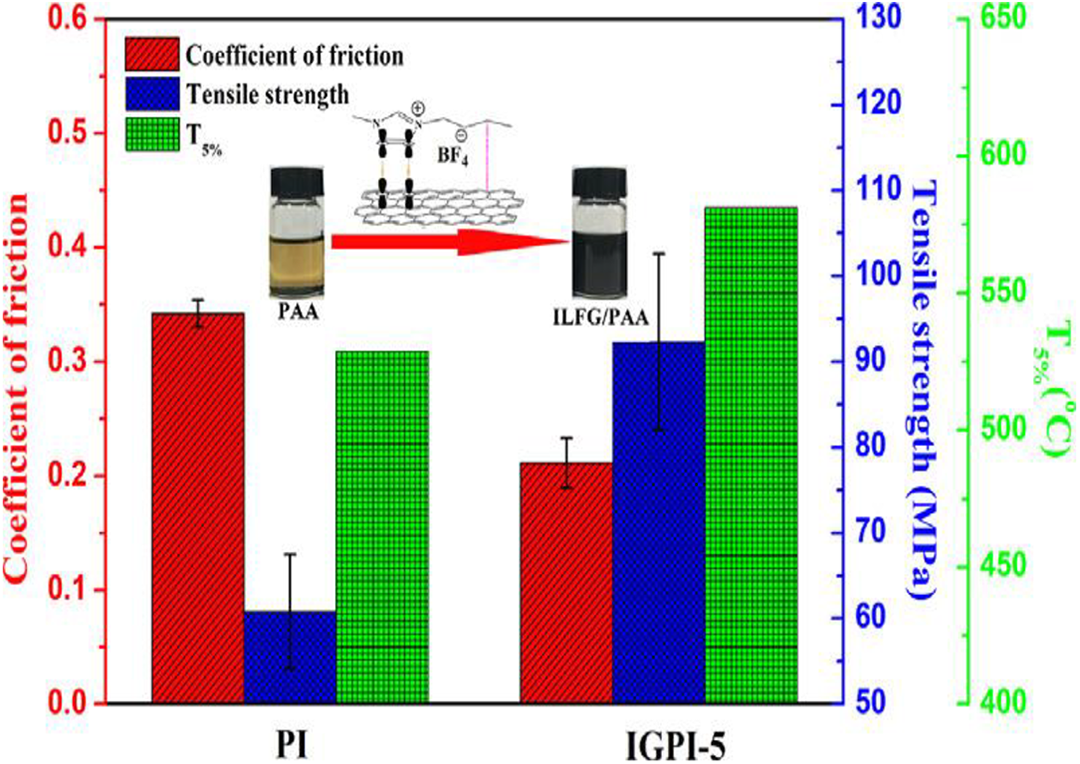
The graphical abstract showing the processing, tribological, mechanical, and thermal properties of the PI and its composite. PI: polyimide, IGPI-5: 0.4 we% ionic liquid functionalized graphene reinforced polyimide. 97
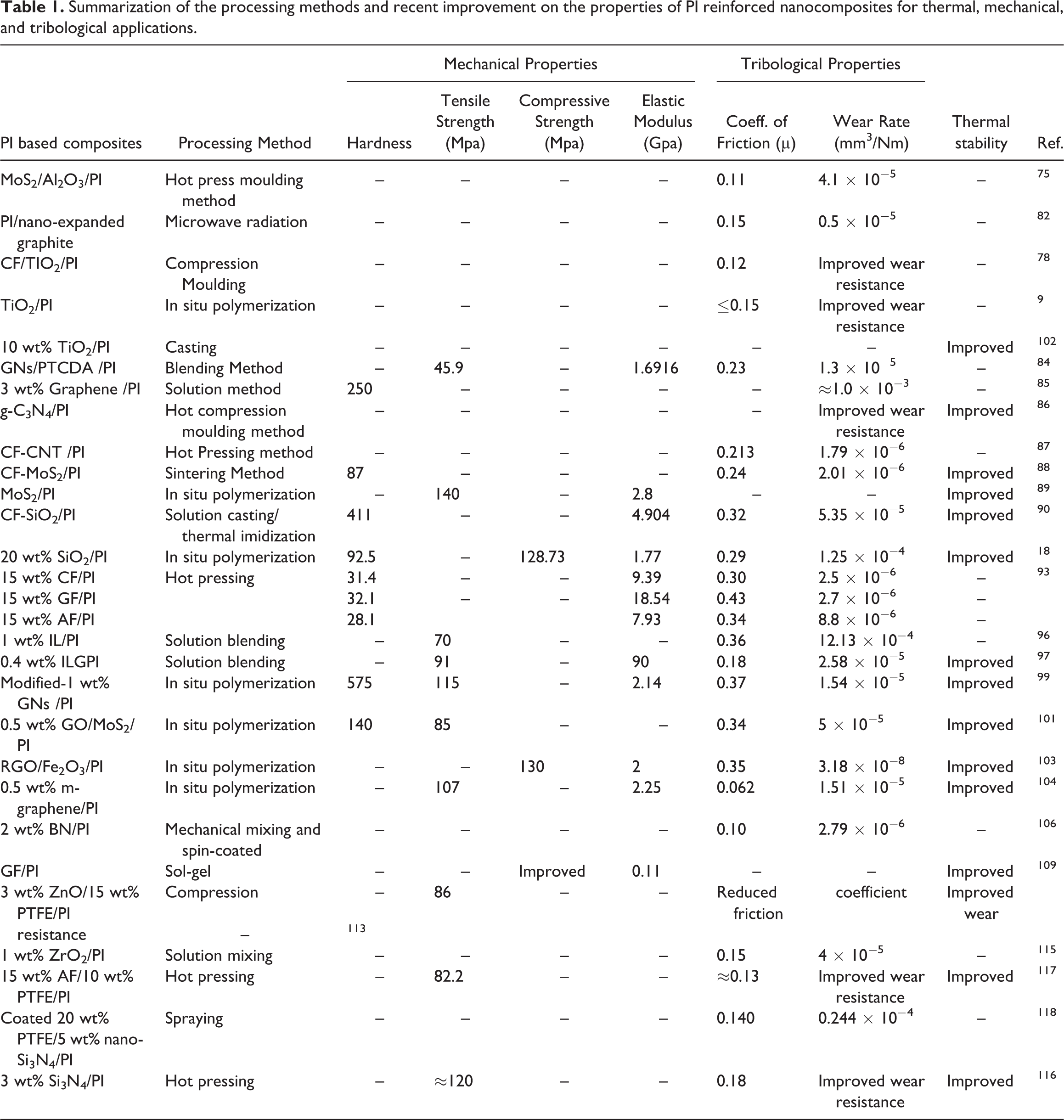
More so, Min et al. 98 studied the tribological behaviour of graphene oxide (GO)/PI under try friction, pure water lubrication, and seawater lubrication. Here, the author adopted steel ball counterpart. The GO/PI nanocomposites were developed using in-situ polymerization process. The results showed that the GO/PI nanocomposite depicted better tribological properties when it comes to seawater lubricated condition over other lubrication conditions and this as result of outstanding lubricating effect of seawater. Also, the studies showed that the wear resistance of the PI was greatly increased by introducing GO under seawater lubrication and the top increment in wear resistance of the PI matrix occurred at 0.5 wt% GO content. The reason for such improvement was reported to take place due to interfacial adhesion between PI matrix and GO nanofillers, which could transfer load effectively between the contact surfaces. On other hands, a means of bursting the use of GO as a reinforcement phase in PI matrix in order to enhanced it properties is by exploring the surface modification of GO. For instance, the wear rate of modified-1 wt% GOPI nanocomposite showed 88% reduction, 99 while in comparison with unmodified-GO/PI composite, the unmodified exhibited only 14% reduction. 100 Another study prepared GO/nano-MoS2 (GMS) hybrid as a novel multidimensional assembly and was incorporated into PI matrix by in situ polymerization to obtain GMS/PI nanocomposites. 101 From the study, prepared GMS/PI composites exhibited better mechanical, thermodynamic, and surface properties when compared with the neat PI. Where the nano-MoS2 particles and GO sheets show a synergistic effect with respect to micro hardness and tensile strength with a complementary effect in relation to elongation at break and storage modulus. Analysing the tribological aspect, results showed that 0.5 wt% GMS loading resulted in a 25% reduction in the coefficient of friction and 64% reduction in the wear rate. Liu et al. 103 examined the effects of Fe2O3 decorated reduced graphene oxide (RGO) on the tribological performance, thermal, and compression resistance behaviour of PI matrix. It was reported that the RGO/Fe2O3/PI composite, which was prepared by in situ polymerization exhibited better thermal stability and much higher compression resistance in comparison with pure PI. In addition, ultra-wear resistance behaviour of the RGO/Fe2O3/PI nanocomposites was noticed under high load condition than the unreinforced PI. The outcome of the reported results indicated that the PI nanocomposites could be favourable in material selection for designing multifunctional composites with good mechanical, thermal, and tribological properties by considering RGO/Fe2O3 reinforcement phase material. More so, authors like Min et al., 104 Luong et al. 105 and Ji et al. 107 reported widely on the use of graphene 2-dimensional material 108 as reinforcement in enhancing the properties of polymer composites due to it high modulus of elasticity, high strength, and ultralow friction. Having pointed out the use of nanofillers such as carbon nanotubes, graphene and graphene oxide, silica, alumina, titania, boron nitride, carbon fibres, aramid fibres, and glass fibre as a reinforcement in improving the PI nanocomposite as presented in Table 1, recent researches have also utilized nanofillers such as Zinc oxide (ZnO), 110 Zirconium oxide (ZrO2) 111 and silicon nitride (Si3N4) 112 in enhancing the thermal, mechanical, and tribological properties of polymer composite. For instance Mu et al. 113 reported on the effects of nano-ZnO loading on the mechanical and tribological properties of polytetrafluoroethylene (PTFE)/polyimide composite. Results showed that the nanocomposites reinforced with 3 wt% ZnO nanoparticles possess the optimum mechanical and tribological properties. Incorporation of 3 wt% ZnO also resulted to the decrease in wear rate of the ZnO/PTFE/PI nanocomposite when compared with unreinforced PTFE/PI. In addition, the microstructure analysis revealed that ZnO nanoparticles attributed to the formation of continuous, uniform, and smooth transfer films and as such reduced the adhesive wear of PTFE/PI. In the usage of ZrO2, Hsu et al. 114 also reported that incorporation of ZrO2 into PI matrix improved the wear resistance and thermal stability of the composite. Lv et al. 115 studied the tribological performance of nano-ZrO2 reinforced polyimide composite on exposure to atomic oxygen condition and it was observed that introducing 1 wt% nano-ZrO2 into the PI matrix, contributed to the lowest coefficient of friction and wear rate of the nanocomposites before and after exposure to atomic oxygen. From the study, it can be deduced that the nanocomposites could find useful as tribological material for practical aerospace application. In addition Yang et al. 116 reported on the effects of graphite, Si3N4, SiO2, and MoS2 on the thermal, mechanical, and wear resistance properties of PI composites. From the study, the incorporation of the Si3N4, SiO2 and MoS2 into the PI composite, apparently improves the thermal, mechanical, and the wear resistance properties of the composites. From the study, one can deduced that the type of PI nanocomposites, which has been discussed in the present study found much useful in the automobile and aerospace application with respect to their thermal, mechanical, and tribological properties as can be seen in Table 1. The reported properties were basically on tribo-system. More so, past researches has showed that the thermal resistance of PI improves by the incorporation of inorganic fillers into its matrix network, which has attributed to its better thermal stability,18,86,88,101,116 for instance, a closer look at Figure 13 revealed such an improvement although, the review study emphasizes more on tribological system. Hence, for future enhancement of PI properties, adopting inorganic fillers as reinforcing phase material into its matrix with suitable structure design remain a way forward.
Summarization of the processing methods and recent improvement on the properties of PI reinforced nanocomposites for thermal, mechanical, and tribological applications.
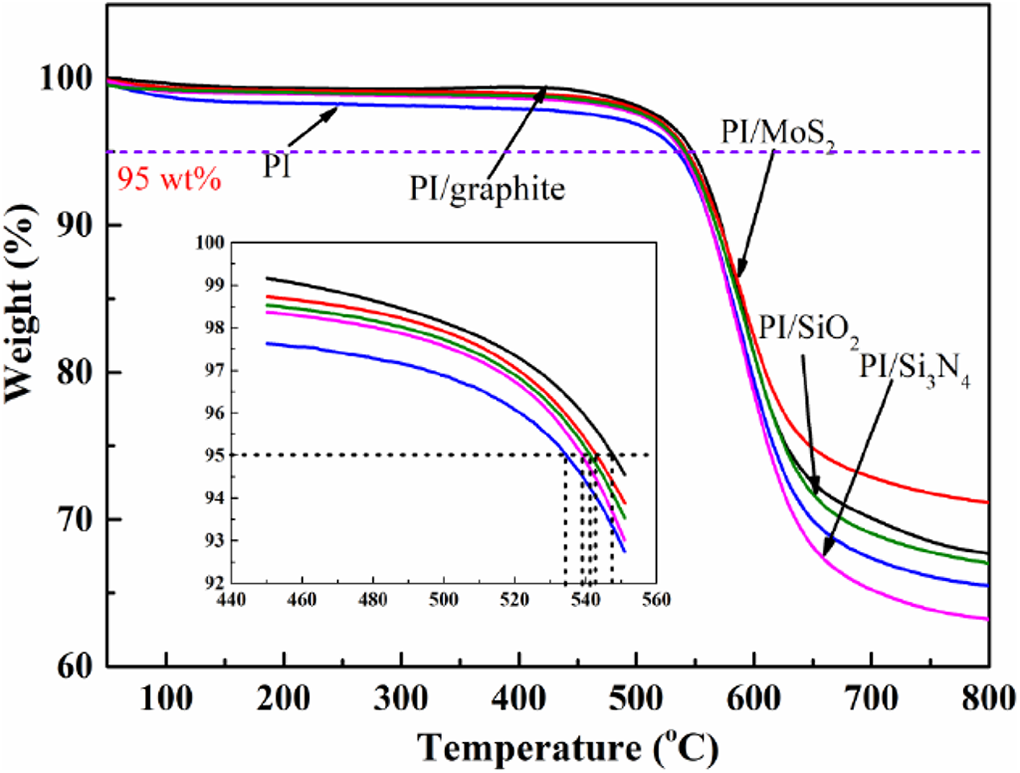
TGA curves of neat PI and it composites with different fillers at the optimum loading content at a heating rate of 10 oC/min under nitrogen atmosphere. 116
Challenges of PI reinforced nanocomposites for mechanical and tribological applications, and recommendation for future improvement
In the design and fabrication of mechanical moving parts, which is mostly used in aerospace, automobile, and marine, polyimide matrix composites have widely been utilized as an acceptable material for such applications. From the literature, several researchers have broadly reported on the properties improvement of PI reinforced composites for thermal, mechanical, and tribological applications using both nanofillers, such as carbon nanotubes, carbon fibres, glass fibre, graphene, molybdenum disulfide, boron nitride, silicon nitride, and most inorganic ceramics, for example alumina, silica, titania, zinc dioxide, zirconium dioxide and so on as can been seen in Table 1. However, polyimide reinforced nanocomposites were still observed to be facing some challenges such as interfacial bonding defects93,119,120 and surface characteristic deterioration, 78 which have affected its thermal, mechanical and tribological performances, hence limits it application. Despite the numerous efforts that is been made so far and advancement of improving the thermal stability, mechanical, and tribological application of polyimide nanocomposites, there is still a gap that needed to be bridge between the poor interfacial interaction and surface worn out of polyimide nanocomposites during wear operation. Several researches have embraced the surface modification of additive material using ionic liquid lubricant and coupling agent to inculcate proper interfacial bonding between the matrix and reinforcing phase using in situ polymerization, hot pressing, sol-gel method in processing of PI reinforced composites as can be seen in Table 1, but that could not put a stop to the aforementioned challenges. However, further studies needs to be conducted on improving the temperature behaviour, interfacial adhesion, and surface properties of the PI nanocomposites. More so, the processing of polymer nanocomposites using hot pressing and in situ polymerization have widely been reported, however, their drawback remain high cost equipment requirement. 121 In considering the cost effectiveness and recent observed improved interfacial bonding of polymer composites processed using spark plasma sintering (SPS) technique, the poor interfacial bonding interaction of polyimide nanocomposites, which has affected its mechanical and tribological performance can be improved even without much surface modification of the reinforcement particulates as mostly performed during in situ polymerization, sol gel method and so on using SPS development system design. Besides, research has showed that SPS offers rapid densification with negligible grain growth, better interfacial bonding of the matrix and reinforcing phases, it required short dwell time to achieve effective homogeneity in composite, it is cost effective and energy efficient technique.68,122,123 And researchers like Schwertz et al., 122 Adesina et al., 124 Adesina et al., 125 Tanaka et al. 10 have reported widely on the consolidation of polymers and polymer composites using SPS technique as can been seen in Figure 14 126 and Figure 15, 10 though optimizing the PI nanocomposites properties using SPS have rarely been reported. The Spark plasma sintering (SPS) also known as pulsed electric current sintering (PECS) 123 is a sintering technique, which utilizes uniaxial force and a pulsed (on-off) direct electrical current (DC) under low atmospheric pressure to perform high speed consolidation of powder. Thus, its direct way of heating allows the application of heating and cooling rates hence enhances densification over grain growth by promoting diffusion mechanisms that maintain the intrinsic properties of nano-powders in their fully dense products. However, future improvement of the interfacial interaction bonding density of PI nanocomposites and its thermal, mechanical, and tribological properties could be achieved by proper optimization process using a method like Taguchi design of experiment in determining the effects of sintering parameters on the thermal, mechanical, and tribological properties. In addition, introduction of nano-inorganic oxide, such as niobium pentoxide (Nb2O5) into polyimide based composites could also be a breakthrough in the area of thermal, mechanical, and tribological applications. Besides, it has been employed in various applications as a result of it surface degradation resistance, wear resistance, creep strength, hardness and so on.127–130 However, adopting nano-Nb2O5 as a reinforcing phase in polyimide composites remains a point for future study, which could address most issues by improving the properties of polyimide nanocomposites material either by nano-modification or surface modification for thermal, mechanical, and tribological applications. Thus, this present study recommend the use of SPS technique and Taguchi design model in processing polyimide composites in order to achieve a better bonding and properties. Beside, improving the properties of thermoplastic polymer composites, the fabrication process parameters need to be optimized. 131
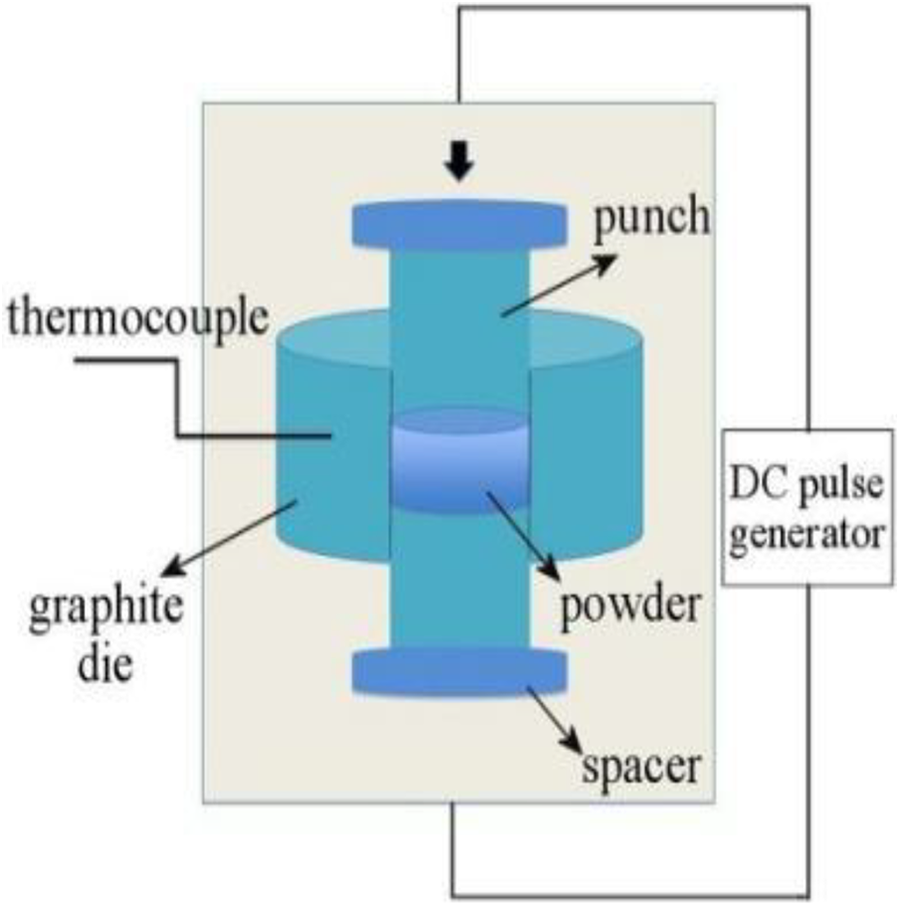
Schematic representation of spark plasma sintering. 126
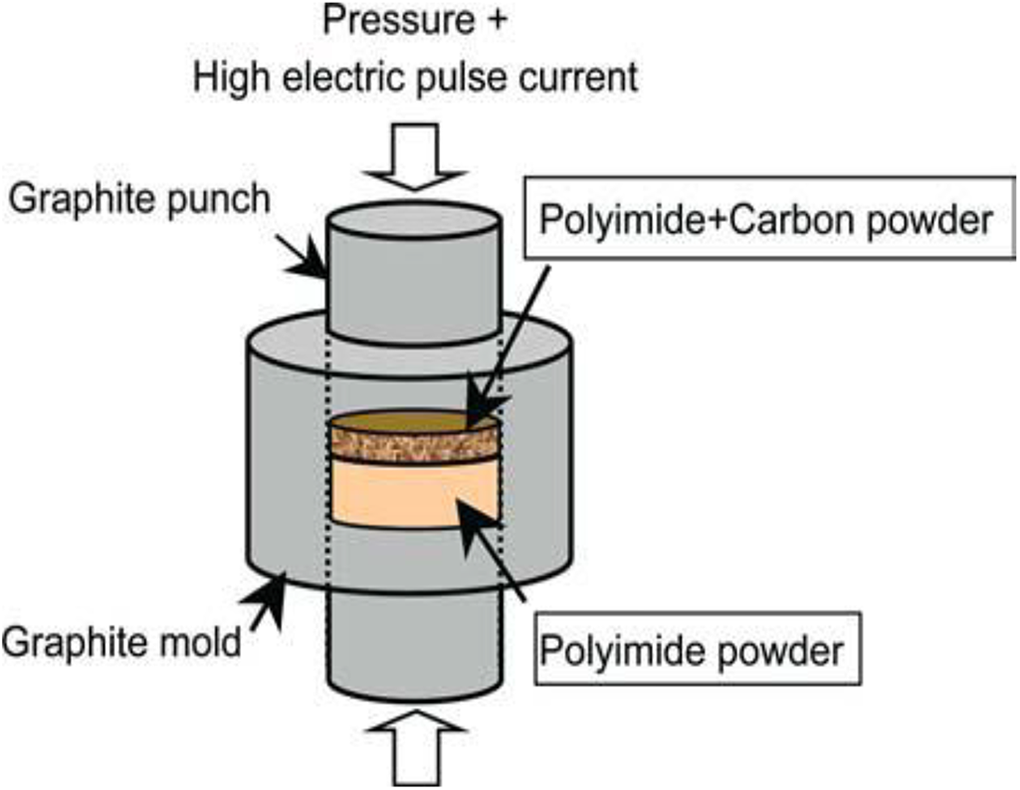
Schematic illustration of processing polyimide composites using spark plasma sintering process. 10
Conclusion
In material selection for the engineering design of friction component for mechanical, thermal, and tribological application, researches have demonstrated that polyimide has widely been considered as a promising material in such area. As such, researchers and industries have noticed more advancement in polyimide nanocomposites application. Enhancements of polyimide composites properties performance using nano-particulates or nanofillers for thermal, mechanical, and tribological (friction and wear) application have been reported over the literature. However, it was noticed that polyimide nanocomposites as a material for mechanical and tribological application still face some challenges, such as poor interfacial adhesion, surface degradation, which has reportedly resulted to its mechanical properties degradation and high wear volume loss. In line with this, its tribological performance were been affected. Thus, the improvements of polyimide composites properties for mechanical, thermal, and tribological application are still needed so that their usage remains in this field of application. However, this present review has been able to summarize the previous research on the processing and recent advances on the effects of ionic liquid lubricant and inorganic compound material on the mechanical, thermal, and tribological properties of polyimide matrix for friction and wear applications. Generally, polyimide reinforced composites often exhibits worn out surface and as such led to high wear rate under dry friction condition. Various efforts have been made on the wear resistance of polyimide nanocomposites. Surface modification of fillers and incorporation of fillers/lubricant additive into polyimide nanocomposites as means of improving its thermal, mechanical, and tribological properties were presented in this study. More so, recommended research to further enhance the thermal, mechanical, and tribological properties of polyimide nanocomposites was stated. Adopting of novel processing polymer composite method, such as SPS method in producing polyimide nanocomposites with superior interfacial bonding can be the next hope on enhancements of polyimide nanocomposites properties. Also, incorporation of nano-Nb2O3 as reinforcing phase material with suitable optimization process can be a total breakthrough in the advancement of polyimide nanocomposites for tribology.
Footnotes
Acknowledgement
The authors wish to thank the centre for tribology (CT) and Tshwane University of Technology (TUT) South Africa for their financial support in the course of this work.
Funding
The author(s) received no financial support for the research, authorship, and/or publication of this article.
