




Abstract
Polypropylene (PP) composites were prepared by reinforcing with suitable hybrid fillers such as short sisal fibers treated with an alkali and high-intensity ultrasound (HIU) and halloysite nanotubes (HNTs) modified with 3-aminopropyltriethoxysilane. The synergistic effect of surface-treated short sisal fibers and silane-grafted HNTs were systematically evaluated through morphological, mechanical, dynamic mechanical, and thermal characterization. Alkali and HIU treatments of short sisal fibers drastically enhanced the interaction between sisal fibers and silane-grafted HNTs, which improved the interfacial adhesion between the filler system and the PP matrix. Scanning electron microscopic images indicated the continuity and smoothness of the hybrid composite surfaces. Dynamic mechanical analysis confirmed improved interactions between the hybrid filler system and the matrix, leading to significantly enhanced storage modulus in the hybrid composites. Therefore, the interfacial adhesion between the fillers and the matrix plays a significant role in improving the mechanical, dynamic mechanical, and thermal properties of polymer composites.
Keywords
Introduction
Polypropylene (PP) is one of the economical, recyclable, and easily processable thermoplastic polymers and hence widely used in packaging, automotive applications, construction, and home appliances. 1 Currently, plastic waste management is a major global issue because of the widespread usage of synthetic as well as petroleum-based polymers. 2 Researchers and technologists across the world are focusing on finding out alternatives for synthetic nonbiodegradable polymers or reducing their content in final products. 3 To this end, naturally available fibers are used as reinforcing materials in polymers such as PP, which are ecofriendly and recyclable; thus, the polymer content can be reduced by incorporating natural fibers into polymers.2–4
There are more than 1000 types of natural fibers reported so far.
5
Among them, sisal fibers have attracted considerable attention as they contain 50–74% cellulose. They possess high mechanical properties, low density, and high specific resistance; moreover, they are biodegradable, easily available, and most importantly, they are inexpensive, priced at 0.36 US$ kg−1 compared to glass fibers, priced at 3.25 US$ kg−1.
6
All these characteristics of sisal fibers clearly indicate their potential as effective reinforcing materials for producing new environmentally friendly polymer composites. Cellulose is a crystalline biopolymer and comprises repeating units with 1,4-β-
In recent years, hybrid filler systems are more extensively used than single filler systems as they impart enhanced thermal and mechanical properties to PP composites. 10 Many researchers have used hybrid filler materials for preparing composites, leading to the development of commercially viable and highly reinforced polymer composites.11–13 Few reports are claiming that multifiller systems have drastically increased the thermal and mechanical properties of hybrid polymer composites.14–16 Furthermore, incorporating halloysite nanotubes (HNTs) in natural fiber filler systems drastically increases the thermal and mechanical properties of hybrid polymer composites compared to incorporating two or more types of short natural fibers. This is mainly due to the addition of HNTs, which act as intercalated or exfoliated nanosystems within the polymer matrix. The intercalation or exfoliation of HNTs entirely depends on the compatibility between HNTs and polymer matrices. 17 Owing to the intercalation of HNTs, polymer macromolecules can be inserted between nanoclay layers, thereby significantly enhancing the bonding between the polymer matrix and clay. 10 Ribeiro Filho et al. 15 explained the enhancement in dynamic properties when a hybrid filler system is incorporated in a polymer composite and reported that the composite possesses a storage modulus of 51% and glass transition temperature (Tg) of 17°C. Roy et al. 18 studied the variation in the mechanical and thermal properties of natural rubber hybrid composites upon adding single and double (sisal fibers and stearic acid) fillers. They reported that adding 10 phr of short sisal fibers and 2.5 phr of HNTs enhanced the tensile strength by 38%.
Further, high-intensity ultrasound (HIU) treatment is effective in removing amorphous components from the surface of natural fibers. Moreover, HIU treatment separates cellulose nanofibers from their bundles; this enhances the fiber surface area and leads to better interfacial adhesion between the fibers and the polymer matrices in fiber-reinforced composites. 19
It is well-known that the combination of natural organic fibers and natural nanofillers has a high potential for improving the mechanical performances of polymer matrices, thereby expanding the scope of their applications. Recently, various inorganic nanofillers have been studied for incorporation with biofibers in polymer matrices to form nanobiocomposites; these nanofillers are reported to improve the biodegradability of the composites and interfacial bonding between the biofibers and the polymers. 3 Hence, considering all the above factors, in the present study, chemically modified and alkali-treated HNTs were subjected to HIU treatment. Then, treated short sisal fibers (10 wt%) and different proportions of treated HNTs were melt mixed with PP to prepare hybrid PP composites. The composites were characterized through mechanical, thermal, and dynamic mechanical tests to determine the influence of the hybrid filler system on the properties of the composites.
Materials and methods
Materials
PP with a melt flow index of 14 g/10 min and a density of 0.9 g cm−3 (Titanpro 6331 general purpose injection molding grade, supplied by Lotta Chemical Titan (M) Sdn Bhd, Malaysia) was used. Sisal fibers were purchased from Vibrant Nature (Chennai, Tamil Nadu, India). Analytical-grade sodium hydroxide (NaOH) and acetic acid were purchased from R&M Chemicals, Kumpulan Saintifik F.E. Sdn Bhd, Malaysia. HNTs and 3-aminopropyltriethoxysilane (APTES) were obtained from Sigma-Aldrich and Fisher Scientific, Malaysia, respectively.
Surface treatments of sisal fibers and HNTs
Alkali treatment was performed by the following procedure described in our previous work.17,20 Cleaned and dried sisal fibers were first soaked in 7% NaOH (w/v) and stirred continuously for 24 h at room temperature; the resulting fibers were washed with distilled water containing 1% acetic acid to neutralize the remaining NaOH and dried in a hot air oven at 100°C for 24 h.
The treated sisal fibers were subjected to HIU treatment for 1.5 h using a Hielscher UIP1000hd ultrasound processor. The ultrasound irradiation parameters, including the output power time and frequency, were obtained from the literature.17,18 The fiber-to-water weight ratio was maintained at 1:20 (w/v). The temperature was maintained at 25–30°C using an ice or a water bath. The HIU-treated fibers were washed with distilled water and dried in a hot air oven at 100°C for 24 h and used for morphological and thermal studies.
Functionalization of HNTs was carried out using APTES, a silane coupling agent, according to the procedure used in an earlier study. 19 The APTES solution (2 mL) was mixed with 25 mL of toluene, followed by the addition of 0.6 g of HNTs and ultrasonic dispersion (ultrasound horn, Cole-Parmer, Vernon Hills, Illinois, USA) for 30 min. The resultant mixture was then refluxed at 120°C for 20 h with continuous stirring using a magnetic stirrer. To create a dry environment, a drying tube containing calcium chloride was attached to the refluxing flask. The solid phase was filtered through this tube, and to remove excess APTES, it was washed several times with toluene and dried overnight at 120°C for further curing. Figure 1 shows the functionalization of HNTs with APTES as the coupling agent.
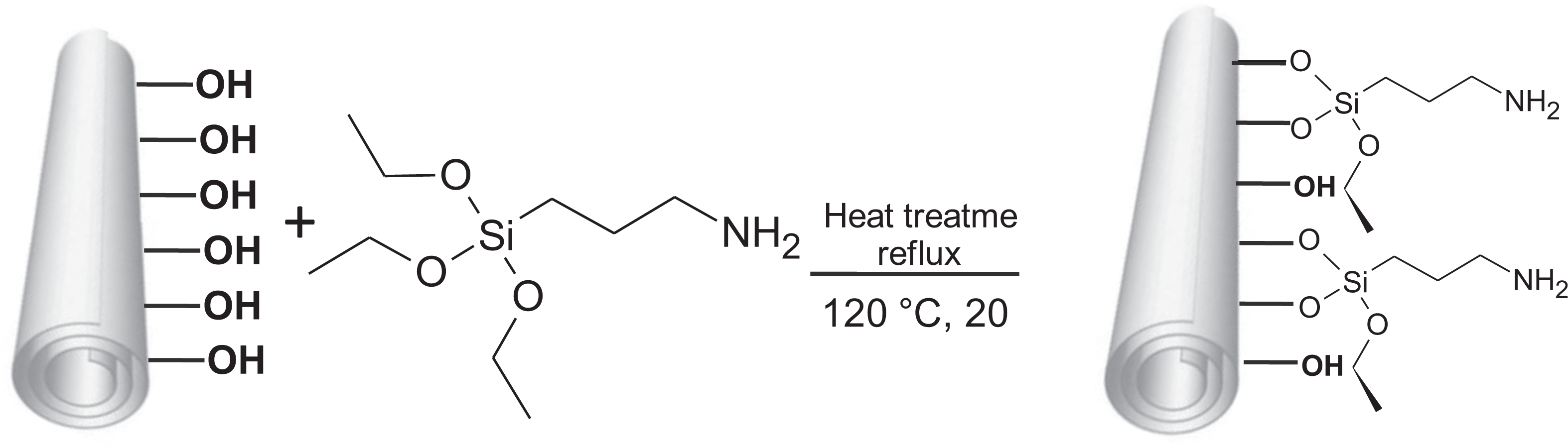
Surface functionalization of HNTs with APTES.
Hybrid composite preparation
PP was first melt mixed in an internal mixer (Brabender Plasticoder PL2000-6, Duisburg, Germany) equipped with corotating blades and a mixing head with a volumetric capacity of 69 cm3, and the samples obtained were referred to pure PP. The hybrid composites were prepared using alkali-treated (10 wt%) and HIU-treated sisal fibers (taken reference from our previous work 17 ) and different proportions of APTES-treated HNTs, as presented in Table 1.
Formulations of PP hybrid composites.
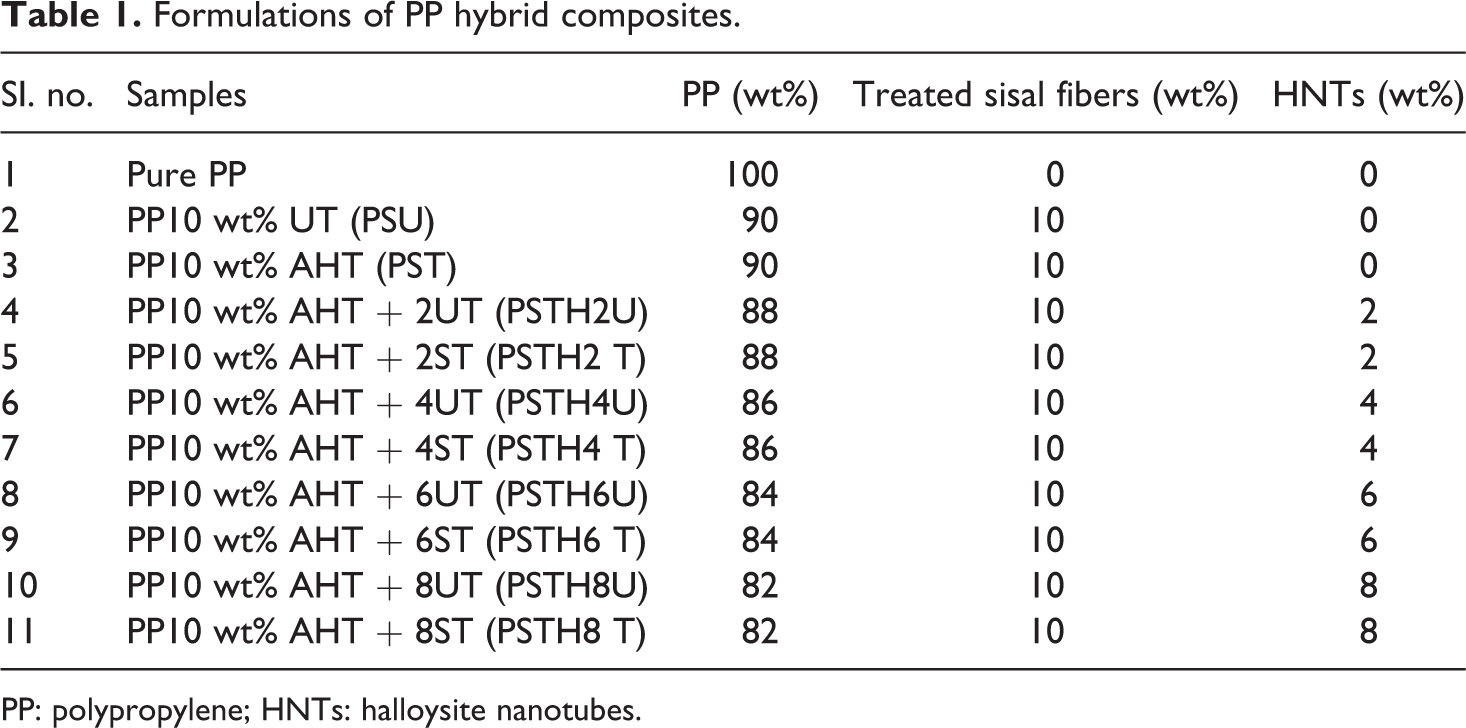
PP: polypropylene; HNTs: halloysite nanotubes.
The temperature in the internal mixer was set at 180°C with 60 r min−1. The final composites were pelletized after cooling them to room temperature and compression molded at 180°C for 2 min using a molding machine (LP-S-50 Scientific Hot and Cold Press).
Characterization methods
The morphology, physical, and thermal properties of sisal fibers before and after surface treatment, Brunauer–Emmett–Teller analysis, and thermal properties of silane-grafted HNTs are described in our previous work. 17
Morphology evaluation
The dispersion of fibers and HNTs in PP hybrid composites was assessed using field-emission scanning electron microscopy (FESEM, Quanta 400, ThermoFischer scientific, USA).
Mechanical testing
Tensile tests were carried out for pure PP and its hybrid composites using five specimens each of pure PP and the hybrid composite according to ASTM D638 on a universal testing machine (Instron 5980, Instron Corporation, Massachusetts, USA) at a crosshead speed of 5 mm min−1 and with a 5-kN load cell. Impact tests of pure PP and hybrid composites were carried out according to the ASTM D 256-10 on an impact testing machine (Ceast Model CE UM-636). Five specimens each of neat PP and the hybrid composites measuring 64 × 12 × 3 mm3 were tested. The impact velocity was maintained at 3.5 m s−1, and the hammer weight was 4 J. A V-type saw blade was used to notch the specimens, and the length-to-width ratio (a/w) of the Charpy impact specimens was kept constant. Dynamic mechanical analysis (DMA) was performed using a PerkinElmer DMA8000 analyzer. The PP hybrid composite samples were subjected to cyclic tensile strain with a force amplitude of 0.1 N at a frequency of 1.0 Hz. The storage modulus, loss modulus, and tan δ were evaluated from −50 to 120°C at a heating rate of 3°C min−1.
Thermal testing
The thermal decomposition of hybrid composites was determined through thermogravimetric analysis (TGA) using a PerkinElmer STA6000 TA, PerkinElmer, Massachusetts, USA. Approximately 20 mg of the pure PP and hybrid composite samples were heated at 10°C min−1 from room temperature to 600°C under nitrogen atmosphere.
Results and discussion
Morphological properties
The hybrid PP composites samples were examined using SEM to assess the fiber and HNT dispersion and their interfacial adhesion with the polymer matrix. Figure 2 shows the surface morphology of the impact-fractured pure PP and hybrid composites comprising untreated and treated (alkali and HIU treatment) sisal fibers (10 wt%) and unmodified and surface-modified HNTs (6 wt%). Figure 2(a) clearly shows that the surface morphology of pure PP is uniform and smooth. Further, untreated sisal fibers show good dispersion in the PP matrix (Figure 2(b)). However, cracks and voids exist, which can be attributed to the incompatibility between the filler and the matrix.
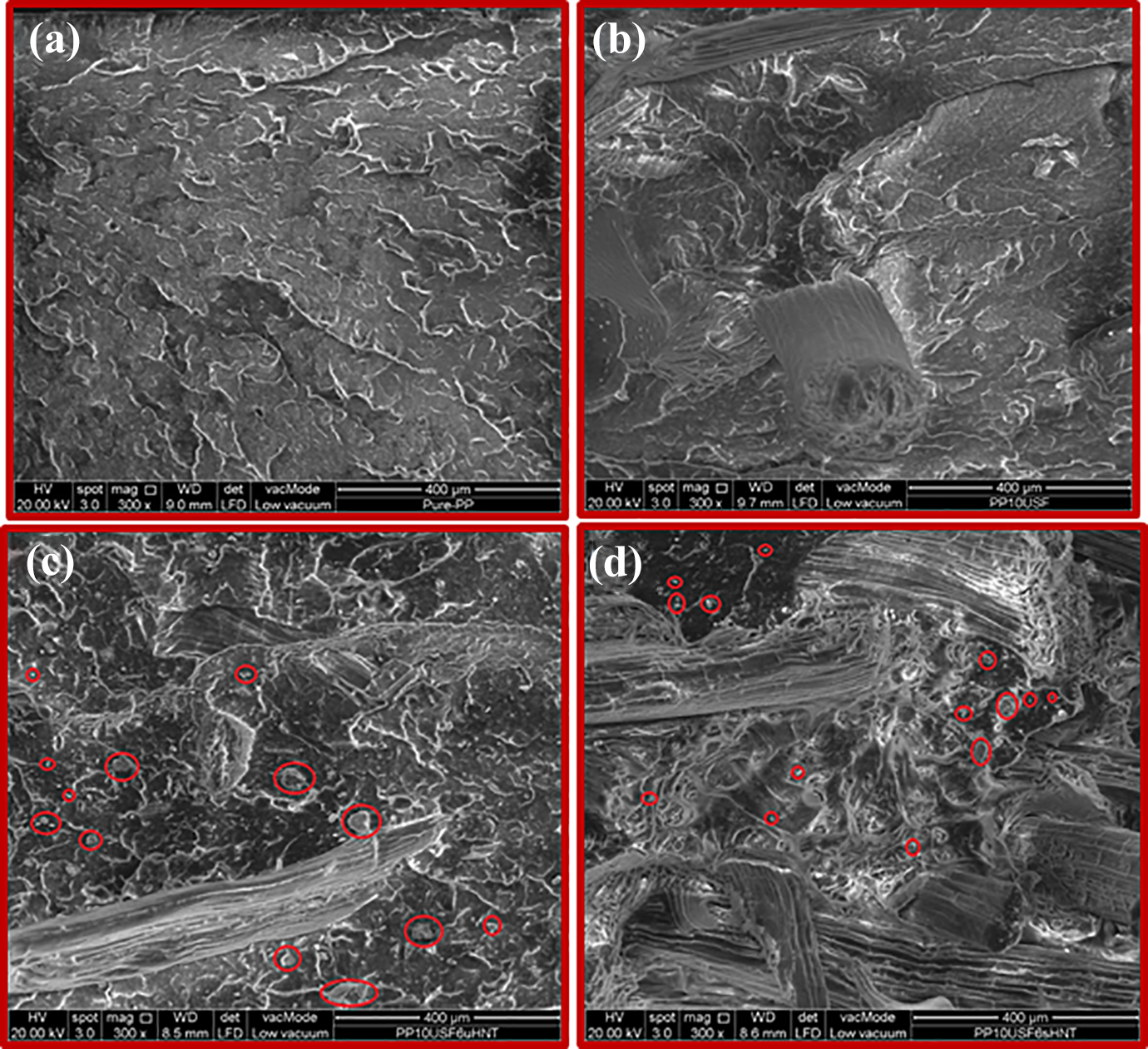
(a) FESEM images of pure PP and PP composites with untreated sisal fibers (10 wt%), (b) surface-treated sisal fibers (10 wt%) and unmodified/modified HNTs (6 wt%), (c) surface-treated sisal fibers (10 wt%), and (d) APTES-modified HNTs (6 wt%).
The surface-treated sisal fibers and untreated HNTs are very well dispersed in the PP matrix (Figure 2(c)), with no cracks and voids. This confirms the enhanced compatibility between the fibers and the matrix following surface treatments, owing to the removal of amorphous materials from the surfaces of the sisal fibers. However, several agglomerates of untreated HNTs are also observed. In contrast, such agglomerates are not observed in hybrid composites incorporated with APTES-modified HNTs (Figure 2(d)). Pasbakhsh et al. 21 stated that HNTs are well dispersed throughout the polymer matrix after modification with a silane coupling agent such as γ-methacryloxypropyl trimethoxysilane. This improved dispersion results from better interactions among the functionalized HNTs, sisal fibers, and PP matrix. Other researchers have also reported similar results.22,23
Mechanical properties
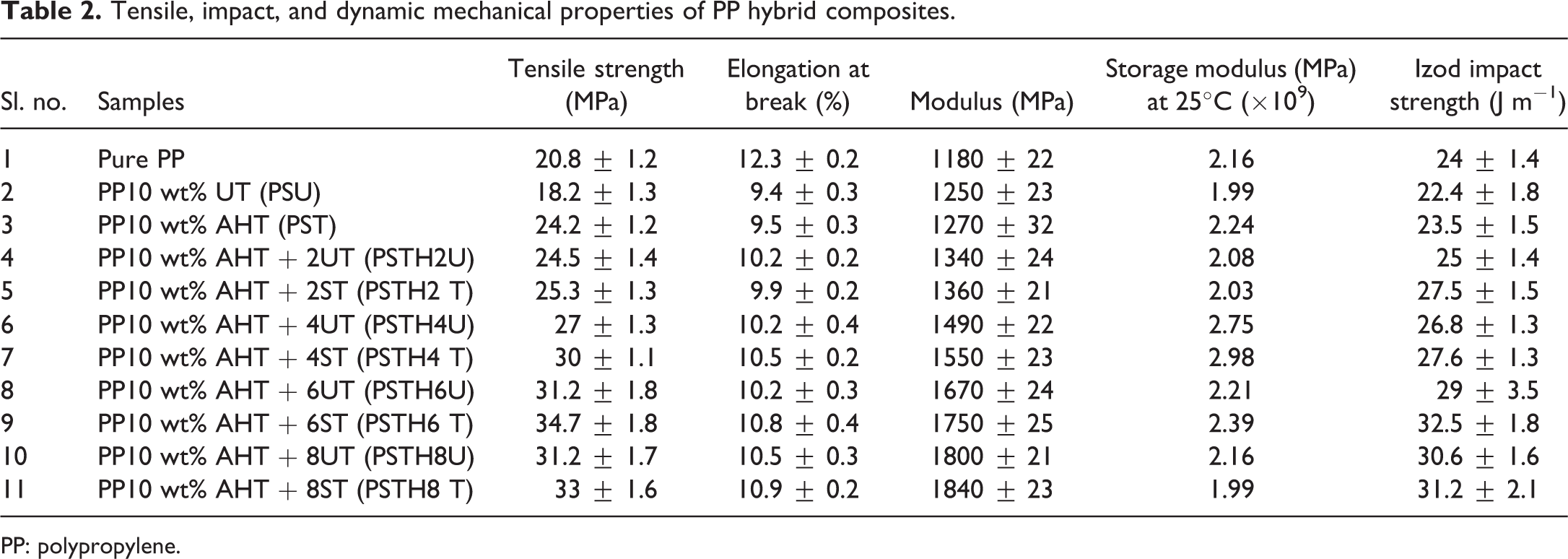
Table 2 demonstrates the mechanical properties of PP hybrid composites containing untreated and treated sisal fibers (10 wt%) and different weight percentages of the unmodified and modified HNTs along with sisal fibers. The tensile strength slightly decreased on adding untreated sisal fibers compared to that of neat PP. But, upon addition of treated fiber, a slight increase in the tensile strength was observed. Further, the addition of treated HNTs has shown a significant increase in the tensile strength as compared to untreated ones in the hybrid system.
Tensile, impact, and dynamic mechanical properties of PP hybrid composites.
PP: polypropylene.
However, the tensile moduli of the PP composites incorporated with treated HNTs and sisal fibers improved gradually with an increase in the weight percentages of the treated HNTs that were added into the PP matrix. On the other hand, the trend was reversed for its elongation at break values for the hybrid composites of polypropylene. The tensile properties indicate the existence of a synergistic effect between the silane-grafted HNTs and surface-treated (alkali and HIU treatment) sisal fibers in the hybrid composites.
The tensile strength dramatically improved on adding HNTs and the maximum increment in the tensile strength from 20.8 MPa (pure PP) to 34.7 MPa was found at 6 wt% loading of silane-grafted HNTs. The tensile modulus was 1.8 GPa, that is, it increased by 55% at 8 wt% loading of treated HNTs. According to the literature, the required tensile strength and modulus are 25–28 MPa and is 1.7–3.0 GPa, respectively, for composites to be used in any automotive applications.24–26
The tensile strength and modulus of the prepared composites are much higher than the requirement for automotive applications, clearly indicating that these hybrid PP composites can be used for not only automotive but also other structural applications. Another reason for the enhanced properties of these hybrid composites is the synergistic effect of the alkali and HIU surface treatments on the sisal fibers that eliminated amorphous materials such as pectin, lignin, and hemicellulose, and other impurities from the fiber surfaces. Removal of these materials enhances the effective stress transfer from the matrix to the fillers owing to the improved compatibility after eliminating the micro voids at the filler/matrix interface.
Similar results have been obtained by other researchers indicating that improvement in tensile properties depends on the interfacial adhesion between the matrix and the fibers. 21 Moreover, the addition of HNTs significantly enhances the tensile modulus of the hybrid composites owing to the incorporation of highly rigid inorganic nanoparticles and always proved to be more rigid than that of fibers and organic polymers. Another reason for the modulus increment was that silane grafting of the HNTs enhanced the dispersion of HNTs within the polymer matrix, which influences the tensile modulus. 27
Table 2 displays the values of the elongation at break for the pure PP and its hybrid composites. The values obtained for the hybrid composites are lower than that obtained for pure PP. This decrease occurred as the addition of filler system increased the brittleness of the composites.
The impact properties of the PP hybrid composites presented in Table 2 demonstrate that adding short sisal fibers into PP matrix decreases the impact resistance owing to the increased brittleness of the composites. However, the impact strength significantly increased with the addition of surface-modified sisal fibers and HNTs. This indicates that surface modification promotes interaction between the polymer matrix and the filler, thereby leading to effective dispersion of the hybrid fillers throughout the matrix.
Dynamic mechanical properties
The dynamic mechanical properties of pure PP and its hybrid composites with the optimized loading of sisal fibers (10 wt%) and different proportions of HNTs were studied in the temperature range from −50°C to +100°C at a constant frequency (1.0 Hz). The variations in the storage modulus, loss factor (tan δ), and loss modulus with respect to temperature are shown in Figures 3, 4, and 5, respectively.
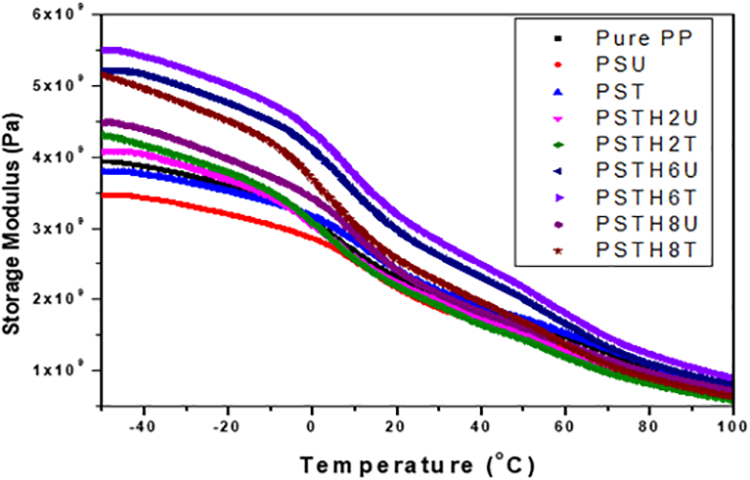
Variations in the storage moduli observed in PP hybrid composites.
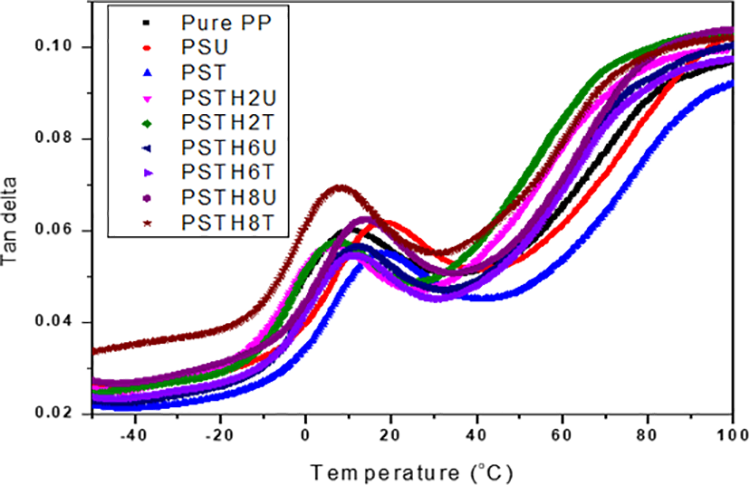
Variations in tan δ in the PP hybrid composites.
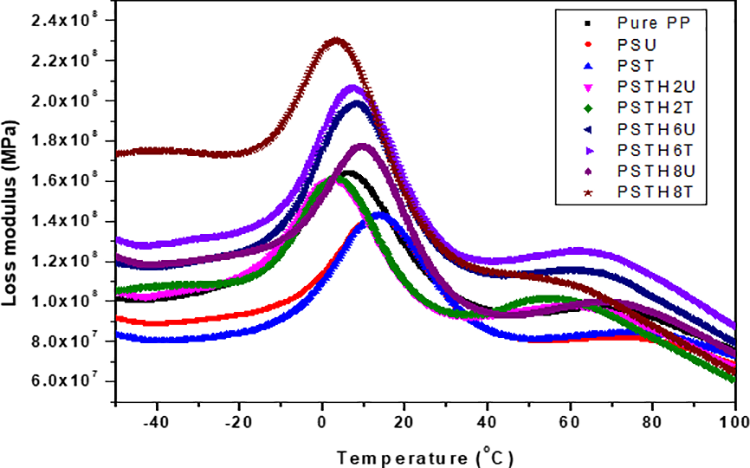
Loss moduli of PP hybrid composites.
As observed in Figure 3, a sudden drop in the storage modulus occurs near the Tg (−20°C to +20°C). The storage moduli of the hybrid composites improved significantly by 27% and 57%, respectively, at 6 wt% of silane-rafted HNTs compared to that of pure PP and PP composites with untreated sisal fibers (10 wt%). This increase could be attributed to the enhanced compatibility between the hybrid filler system and the polymer matrix. Additionally, the increased stress transfer from the polymer matrix to the fillers resulted in superior reinforcement effects. 23
Moreover, these DMA results show correlations with the tensile properties (Table 2). The synergistic effect of sisal fibers and HNTs was prominent in the hybrid composites. The amalgamation of 6 wt% of silane-grafted HNTs filler and 10 wt% surface-treated sisal fibers led to significant enhancement in the storage modulus of the PP hybrid composites because of the increased stiffening effect of the hybrid fillers on the hybrid matrix composite. However, at high HNT loadings above 6 wt%, the storage modulus dropped significantly. The storage moduli of the PP hybrid composites reinforced with different fillers with and without surface modification are given in Table 2. It is evident that the storage modulus decreases with the addition of 10 wt% unmodified short sisal fibers into the PP matrix compared to pure PP. However, the storage modulus significantly increased with the addition of surface-modified hybrid fillers into the PP matrix.
Pure PP exhibited the maximum loss modulus at Tg, followed by a gradual decrease. At Tg, the moduli values were higher for the hybrid composites, indicating improved interfacial adhesion between the matrix and the fillers confirmed through SEM investigations. The higher loss moduli of the hybrid composites compared to that of pure PP demonstrates the enhanced energy dissipation and superior mechanical properties of these hybrid composites. Figure 4 shows the variations in the mechanical damping factor (tan δ) versus temperature for pure PP and hybrid composites. Tan δ is an indicator of the viscoelastic nature of polymers. The key parameters affecting the damping factor are the filler content, interfacial adhesion between the matrix and filler, and relaxation of fillers. 28 Further, Figure 5 shows that the loss modulus increases significantly and reaches its maximum in the range of the Tg. For the hybrid composites, tan δ decreased, and Tg shifted to higher temperatures, evidencing restricted polymer chain movements at higher temperatures and improved interfacial adhesion between the matrix and the fillers. 29
Thermal properties
The thermal stability of pure PP, composites containing sisal fibers (10 wt%) with and without surface treatments, and hybrid composites (10:6) was investigated using TGA, and the thermal degradation curves are shown in Figure 6. Pure PP exhibits single-step degradation at 420°C. However, the PP composites with untreated sisal fibers (10 wt%) show two-step degradation; the first one is an approximately 20 wt% degradation at 270–380°C, and the second one is complete degradation at 380–480°C. The first step could involve degradation of the amorphous materials in the sisal fibers, but this was not observed in the composites with surface-treated sisal fibers, thereby confirming the effective elimination of amorphous materials through alkali and HIU treatments.
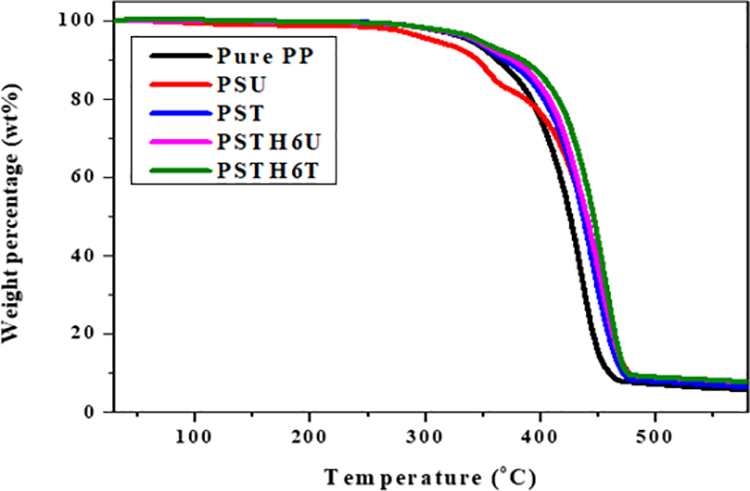
Thermal stability of PP hybrid composites.
The thermal stability increased for the hybrid composites (10:6). Figure 7 (derivative weight loss curves) shows an enhancement of 40°C in the thermal stability upon addition of HNTs compared to the composites with sisal fibers, thus emphasizing the effectiveness of using the hybrid filler system in preparing high-performance PP composites. The thermal stability was enhanced further by 20°C and 60°C, respectively, with the incorporation of silane-grafted HNTs into the PP composite containing treated sisal fibers, compared to the composites containing untreated HNTs and sisal fibers. These results agree with the tensile and DMA results obtained in this study and with those obtained in some other studies.30,31
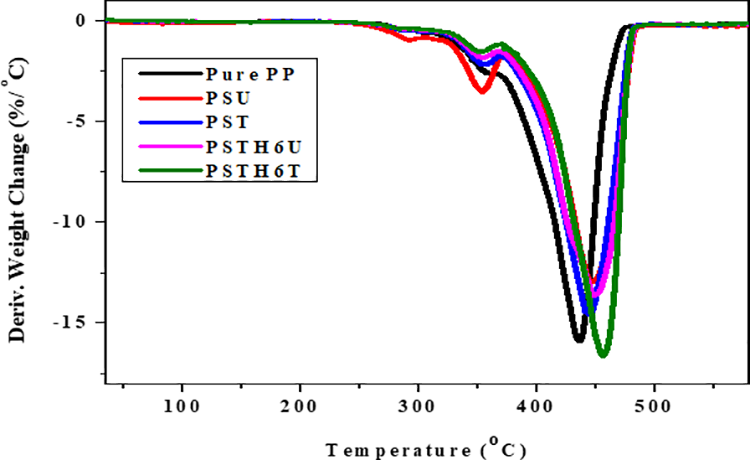
Derivative weight loss curves of PP hybrid composites.
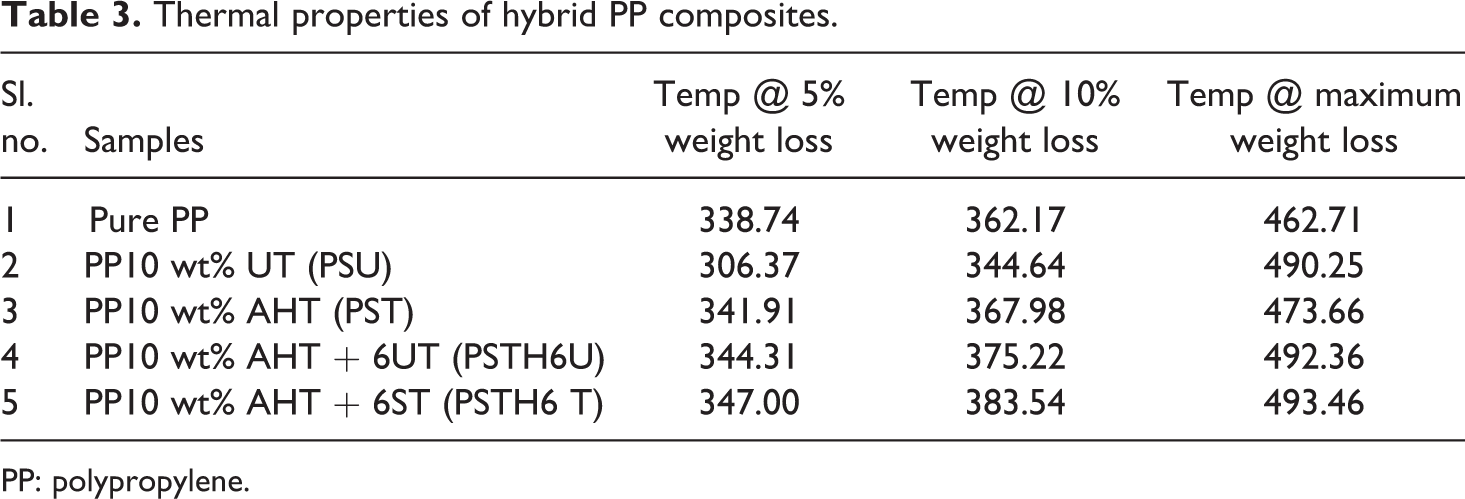
Table 3 presents the weight losses of different hybrid PP composites with respect to different temperatures. It is evident that the thermal stability significantly increased for hybrid PP composites with the addition of surface-modified HNTs and treated short sisal fibers compared to that of pure PP. This may be attributed to effective filler dispersion and compatibility between the polymer matrix and the surface-treated hybrid filler system. Similar results have been reported by other researchers.32–38
Thermal properties of hybrid PP composites.
PP: polypropylene.
Conclusions
We explored the potential of using hybrid fillers as reinforcements for producing high-performance nanobiocomposites through melt extrusion. PP hybrid composites were successfully prepared by incorporating untreated and surface-treated sisal fibers with pure and silane-grafted HNTs. The properties of the composites were enhanced through the amalgamation of surface-treated sisal fibers and silane-grafted HNTs. Surface morphology examinations of the impact-fractured hybrid composite samples confirmed the effectiveness of the surface treatments performed for both the fillers; surface treatment improved the compatibility between the matrix and the fillers and facilitated uniform filler dispersion throughout the polymer matrix. Further, the mechanical properties of the composites containing surface-treated hybrid fillers showed significant improvements compared to those of pure PP and the composites prepared using untreated fillers. The tensile strength and modulus increased by 55% and 50%, respectively, compared to that of pure PP. The dynamic moduli also increased drastically for the composites containing surface-treated sisal fibers and hybrid composites incorporated with HNTs. TGA results showed that the thermal stability of the hybrid composites with surface-treated fillers increased by 60°C compared to that of the composites containing untreated HNTs, which was only 20°C higher than that of pure PP. Overall, the mechanical and thermal characterization results show that using hybrid filler systems as well as surface-treated fillers can significantly impact the mechanical and thermal properties of hybrid polymer composites.
