




Abstract
The main goal of this work was to assess the technical feasibility of palm rachis (PR) as a reinforcing agent in the production of wood–plastic composites. Recycled linear low-density polyethylene/PR fiber composites were prepared at constant content (3 phc (per hundred compounds)) of maleic anhydride-grafted polyethylene as compatibilizer by melt blending method utilizing a two-roll mill and compression molding. The effect of nanosilica (NS), nanoclay (NC), and hybrid nanoparticles (NSNC) at different concentrations (2, 4, and 6 phc) on mechanical, physical, thermal, and morphological properties was investigated. The results of mechanical properties measurements demonstrated that when 6 phc NS, 4 phc NC, and 4 phc NSNC were added, tensile, modulus strength, and hardness reached their optimum values. At a high level of NC loading (6 phc), the increased populace of NC layers led to agglomeration and stress transfer gets restricted. Elongation at break and Izod impact strength were decreased by the incorporation of different nanoparticles. Water absorption and thickness swelling of prepared composites were found to decrease on the incorporation of NS and NC. In addition, the thermal stability showed slightly improved by the addition of nanoparticles, but there are no perceptible changes in the values of melting temperature by increasing the content of NS and NC or NSNC. Scanning electron microscopy study approved the good interaction of the PR fibers with the polymer matrix as well as the effectiveness of NS and NC in the improvement of the interaction. The finding indicated that wood–plastic composite treated by NS had the highest properties than other composites.
Introduction
Nowadays, the utilization of natural fibers within the place of artificial fillers in the manufacture of thermoplastic composites has become a lot of commonplace. Natural fibers have many advantages, such as density, high tensile strength and modulus, ease of fiber surface modification, less expensive, and wide availability. 1 Wood–plastic composite (WPC) is a hybrid of natural fibers and polymer matrix, which usually can be taken into consideration to be environmentally friendly and needs low maintenance compared to the wood.2,3 With the increasing world utilization of WPCs within the market and increasing wood prices and competition of wood resources from ancient wood sectors, seeking different fiber sources for WPCs producing is desperately required. The helpful options of this composite embrace low wetness absorption, resistance to reaction, resistance to diffusion and destruction by insects, low weight, high durability, high dimensional stability, fascinating physical and mechanical properties, simple cutting, and talent to use ornamental coatings. These composites would resolve environmental problems and provide the likelihood of producing products having a variety of various physical properties and functions. 4 Studies are also underway on the possibility of utilizing cellulosic natural fibers as reinforcing fibers in place of synthetic fibers or inorganic fillers. Since composites prepared utilizing natural fibers are inexpensive and will minimize environmental pollution thanks to their characteristic biodegradability, they might play an enormous role in solving the environmental problems that we might otherwise need to face within the future.5,6
But, one of the main disadvantages of WPC is that the poor surface adhesion between natural fibers and organic polymer matrix. 7 This ends up in poor miscibility among the constituents and hence decreases the properties of the formed composites. To enhance the compatibility between inorganic and organic phases, certain compatibilizers such as maleic anhydride-grafted polyethylene (MAPE) are used. The compatibilizer enhances the interaction between hydrophilic natural fibers and hydrophobic polymer matrix and at an equivalent time improves the surface adhesion among completely different thermoplastic materials.8,9
Palm tree residues are one among the fascinating sources of natural fibers that they are renewable and wide availability. The palm tree has eight types of residues (Leaflets, Rachis, Petiole, Fibrillium, Spathe, Bunch, Pedicels, and Thorns) gathered from the seasonal pruning process as a significant agricultural. The quantity of palm trees exceeds 25 million in Egypt regarding 19.6% of the world’s dates. A survey carried out among farmers and agricultural corporations in Egypt has expected that about 48.5 kg of palm residues is obtained per tree annually.10,11
There is a proliferation of WPCs factories in the Middle East district. The proprietors of these industrial facilities need to increase the added value of this industry by increasing the loading of natural fibers used to reach more than twice the rate of plastic loading, but challenges are confronting us such as increased water absorption and a significant decrease in mechanical properties and the use of the coupling agent has become insufficient. In recent years, nanoscience and nanotechnology have spread out a brand new approach of developing WPC. 12 By utilizing nanomaterials, the composite properties presently achieved within the industry can be improved, making it doable to provide new products with high-added value and additional potency improving the mechanical, physical, and thermal properties of WPC by using nanofillers. In nanocomposite materials, the nanoparticles are dispersed through the polymer matrix within the nanometer range at least in one dimension. The fundamental nanofillers used nowadays are nanosilica (NS) and nanoclay (NC) that are extensively used for these purposes. These are nontoxic, stable, and extremely thermostable inorganic fillers, relatively inexpensive and commercially available, exhibit a layered morphology with a high aspect ratio and large specific surface area, and cause enhancements within the mechanical and physical properties of polymer matrix. Using small amounts of those nanoparticles is sufficient to improve the overall properties of WPCs at a comparatively low value.13,14
Recently, WPC has an improving a wide range of applications. The main application of WPCs includes decking, siding, railing, fences, door frames, skirting, door board, foam board, automotive, wall panel, air cleaner, insulation mat manufacturing, and so on. These outdoor applications disclose WPCs to moisture, fungi, and ultraviolet light in sunlight. The presence of the hydrophobic polymer matrix in WPC improves the durability in terms of protection from water absorption and biological decay contrasted with it of solid wood.15,16 The main objective of this study was to examine the potential of palm rachis (PR) as reinforcing filler for WPCs so as to evaluate their quality. The effects of incorporation of NS to recycled linear low-density polyethylene (R-LLDPE)/PR composites and comparison of the resulting with prepared composites based on NC on the physical and mechanical properties of WPCs were investigated.
Experiment
Materials
R-LLDPE was obtained from Prima Plast Egypt Company for plastic (Cairo, Egypt). Its melt flow index is 0.9 g (10 min)−1 at 190°C, a density of 0.922 g cm−3, and melting temperature at 122.3°C. MAPE compatibilizing agent with a melt flow index of 1.5 g (10 min)−1 at 190°C, density of 0.954 g cm−3, and melting temperature at 134°C was supplied by BYK Additives & Instruments (German). PR was collected locally from the date palm tree in Alexandria (Egypt). Particles manually screened to pick 60–80 mesh and the chemical composition of PR fibers were analyzed by TAPPI test method, Chlorination method, and Kurschner–Hoffner method as presented in Table 1. NS (silicon dioxide) modified by triethoxyvinylsilane with density 2.2 g cm−3 was obtained from Jiangsu XFNANO Materials (China). NC (sodium montmorillonite) modified with a quaternary ammonium salt with density 1.66 g cm−3 was supplied from Nanoshel LLC (Wilmington, Delaware, USA). The specifications of the NS and NC are presented in Table 2.
Chemical composition of the PR.

PR: palm rachis.
Basic characteristics of NS and NC.
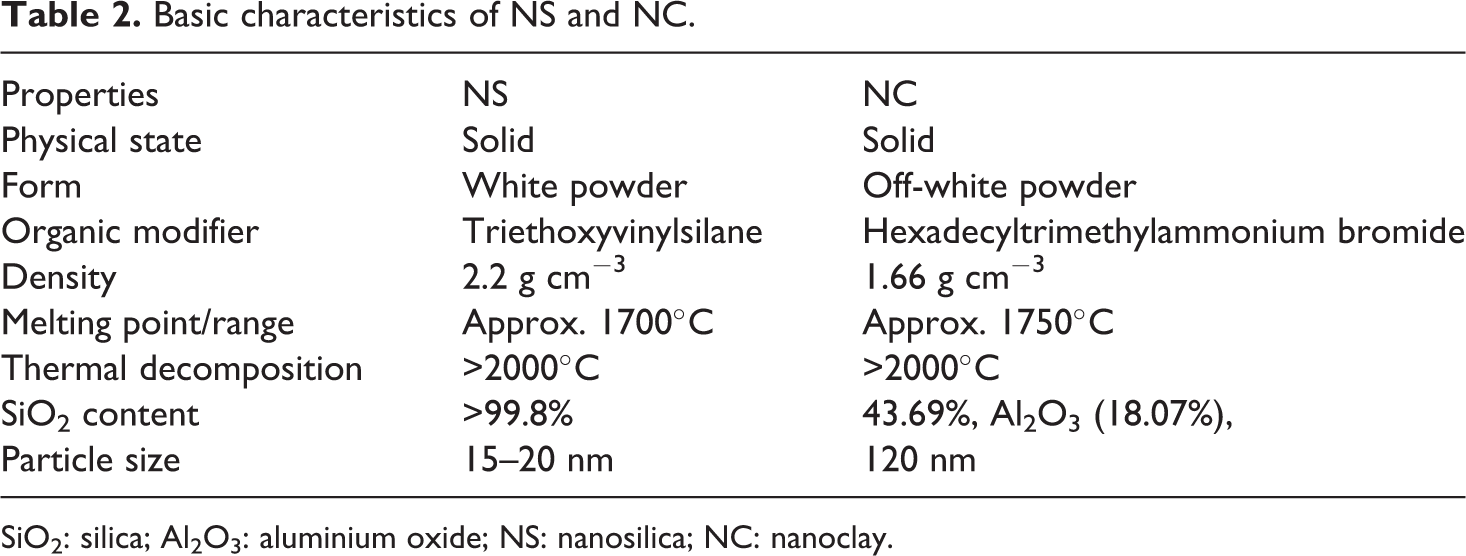
SiO2: silica; Al2O3: aluminium oxide; NS: nanosilica; NC: nanoclay.
Preparation of PR fibers
PR was collected locally from the date palm tree. Small fibers were cut into an average length between 6 and 8 mm, and then cleaned by immersing in distilled water for 1 day to remove any surface impurities. Ground fibers with high speed mixer were oven dried at 80°C for 24 h to adjust the moisture content less than 7%, and then stored in sealed polyethylene bags before compounding.
Compounding and sheet preparation
R-LLDPE, PR, and MAPE were fixed at 35 wt%, 65 wt%, and 3 phc (per hundred compounds), respectively. These values were designated as a result of typical of the many industrial formulations and represent a superb balance between performance and cost. In the melt blending method, R-LLDPE and MAPE were mixed in a two-roll mill with a roll diameter of 110 mm (Shaw Robinson Model 2799) at 160°C and 30 r min−1 for 3 min. Then, PR with various NS and NC contents was added to the melted mixtures for 10 min according to the formulations given in Table 3. The mixtures were then used for the preparation of sheets (25 × 25 × 4 mm3) by compression molding (AUMYA) at 160°C and 80 bar for 10 min.
Composition of the studied formulations.
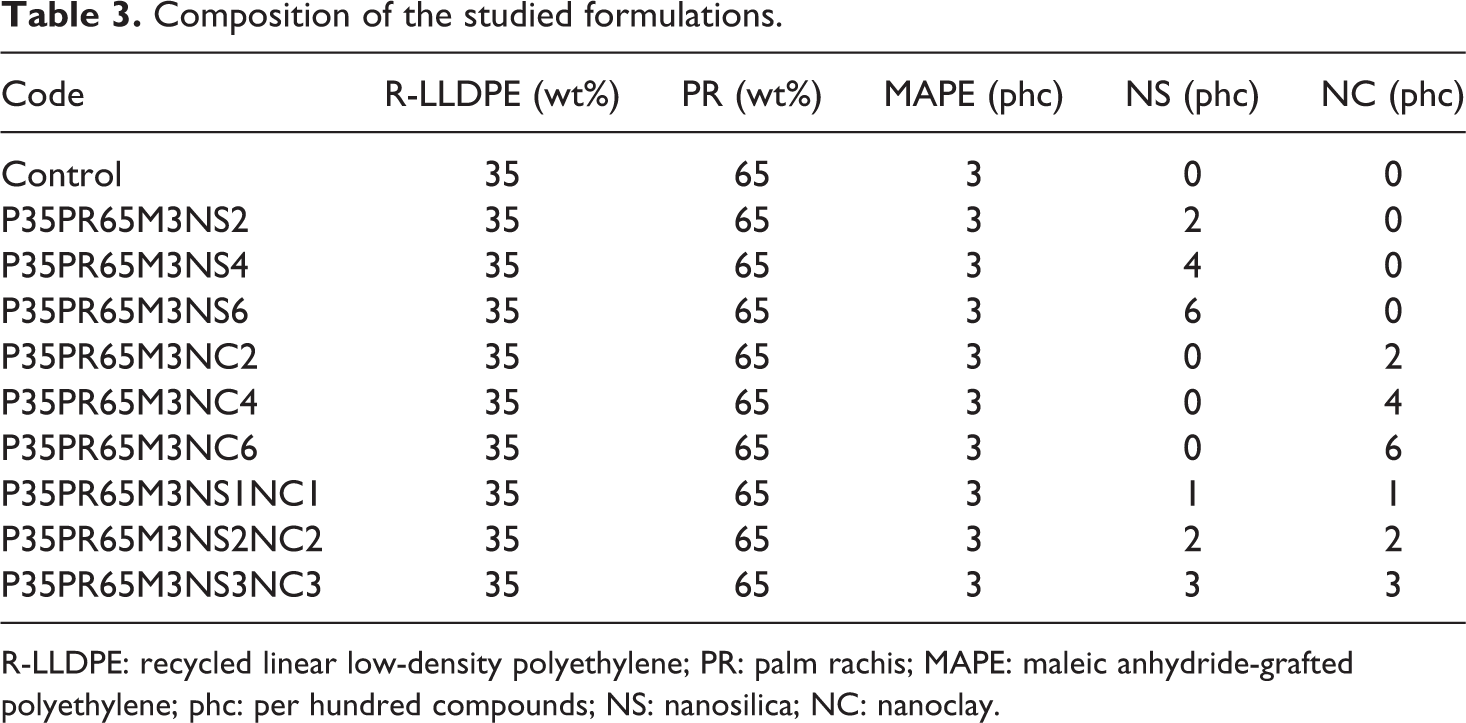
R-LLDPE: recycled linear low-density polyethylene; PR: palm rachis; MAPE: maleic anhydride-grafted polyethylene; phc: per hundred compounds; NS: nanosilica; NC: nanoclay.
Characterization
Scanning electron microscopy
Scanning electron microscopy (SEM) was carried out by using the JEOL instrument (JSM-5300, Japan) operated in the range of 15 and 30 keV. The samples were frozen under liquid nitrogen, fractured, mounted, and finally sputter-coated with gold to a thickness of 400 Å in a sputter-coating unit (JFC-1100 E) prior to imaging by SEM.
Fourier transform infrared spectroscopy
Fourier transform infrared spectroscopy (FTIR) spectra were determined utilizing PerkinElmer FTIR spectrometer (Waltham, Massachusetts, USA), all through the range from 4000 cm−1 to 400 cm−1 utilizing a 4 cm−1 resolution. The samples were prepared utilizing the potassium bromide (KBr) pellet procedure in which the powdered samples were compressed with KBr under hydraulic pressure to form disk.
Mechanical tests
The tensile properties of both the polymer and the composite samples were estimated by ASTM D 638-03 (type IV) utilizing the universal test machine (Instron 4204, Norwood, Massachusetts, USA) at an ambient temperature. Dumbbell-shaped test samples were prepared by press cutting from material in sheet. The stress and the tensile modulus, as well as the tensile strength and the elongation at break were obtained from the stress versus strain curves. The tensile strength was determined as the extreme load divided by the initial cross-sectional area of the sample. Tensile modulus was resolved from the slope of the stress–strain curves. The elongation at break of the tensile test was recorded as percent elongation. At least five specimens were tested for each composition, and the mean values are obtained.
Izod impact strength was determined according to the ASTM D 256 standard utilizing a Zwick Universal Test Machine (model 5102). The dimensions of the samples for the notched Izod impact tests were 60 × 12 × 6 mm3 (length × width × thickness). For each composition, five replicates were determined for each property and the average values were obtained. The hardness of the specimens was determined according to ASTM D2240 method utilizing a durometer (model RR12) and expressed as shore D hardness.
Thermogravimetric analysis
The thermal stability of the formed composite was investigated by a thermogravimetric analyzer (Shimadzu TGA-Q 50, Japan). Samples with weights in the range of 5–8 mg were heated under a flowing nitrogen atmosphere (20 ml min−1) from room temperature to 650°C at a heating rate of 20°C min−1, and the corresponding weight loss was recorded. The rate of weight loss versus temperature was determined utilizing derivative thermogravimetric (DTG) curve and the software associated to the analyzer.
Differential scanning calorimetry
Differential scanning calorimetric (DSC) analyses were performed using the DSC differential scanning calorimeter (Shimadzu-60 A). Each sample of 5–8 mg of weight was sealed in an aluminum pan and heated under nitrogen flow (20 ml min−1) from 40°C to 200°C at a heating rate of 10°C min−1, kept at this temperature for 1 min to eliminate the thermal history of the specimens.
Water absorption and thickness swelling tests
Water absorption and thickness swelling tests were operated by ASTM D 570-98 method. The dried samples (24 h, 105°C) were weighed and immersed in distilled water. At the finish of the immersion periods, the samples were removed from the distilled water and the surface water was cleaned off utilizing blotting paper, and wet weight values were determined. The percentage of water absorption, Mt, was calculated by the following equation.
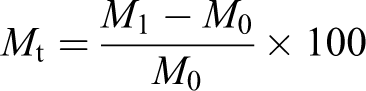
where M0 is the dry initial weight and M1 is the weight after immersion in water. Also, the values of the thickness swelling were calculated using the following equation.
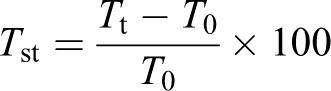
where Tst is the thickness swelling at time t, Tt is the thickness at time t, and T0 is the thickness at dried condition.
Results and discussion
Scanning electron microscopy
The interfacial bonding between R-LLDPE matrix, PR fibers modified by MAPE, NS, NC, and hybrid nanoparticles (NSNC) were investigated by SEM. Figure 1 shows SEM micrographs taken from the fracture surface of samples broken during the tensile test for the control composites without nanoparticles and WPCs loaded with different nanoparticles contents (2, 4, and 6 phc). Figure 1(a) corresponds to control composite without nanoparticles which shows some holes in the surface that can absorb water and reduce mechanical properties.14,17 This indicates that the level of interfacial bonding between the PR and R-LLDPE matrix is weak even within the presence of coupling agent because of the high PR fiber loading (65 wt%), so when stress is applied, it causes PR fibers to be pulled out from the matrix easily leaving behind gaping holes. Figure 1(b) to (d) shows the effect of incorporation of NS contents (2, 4, and 6 phc) respectively on the composites. The addition of NS showed uniform dispersion of the silica particles within the polymer matrix, and no fiber was pulled out. This confirmed that majority of all the dispersed nanoparticles have filled the voids at the interface among R-LLDPE and PR, components which indicated a stronger adhesion between the NS, PR, and the R-LLDPE matrix.18,19
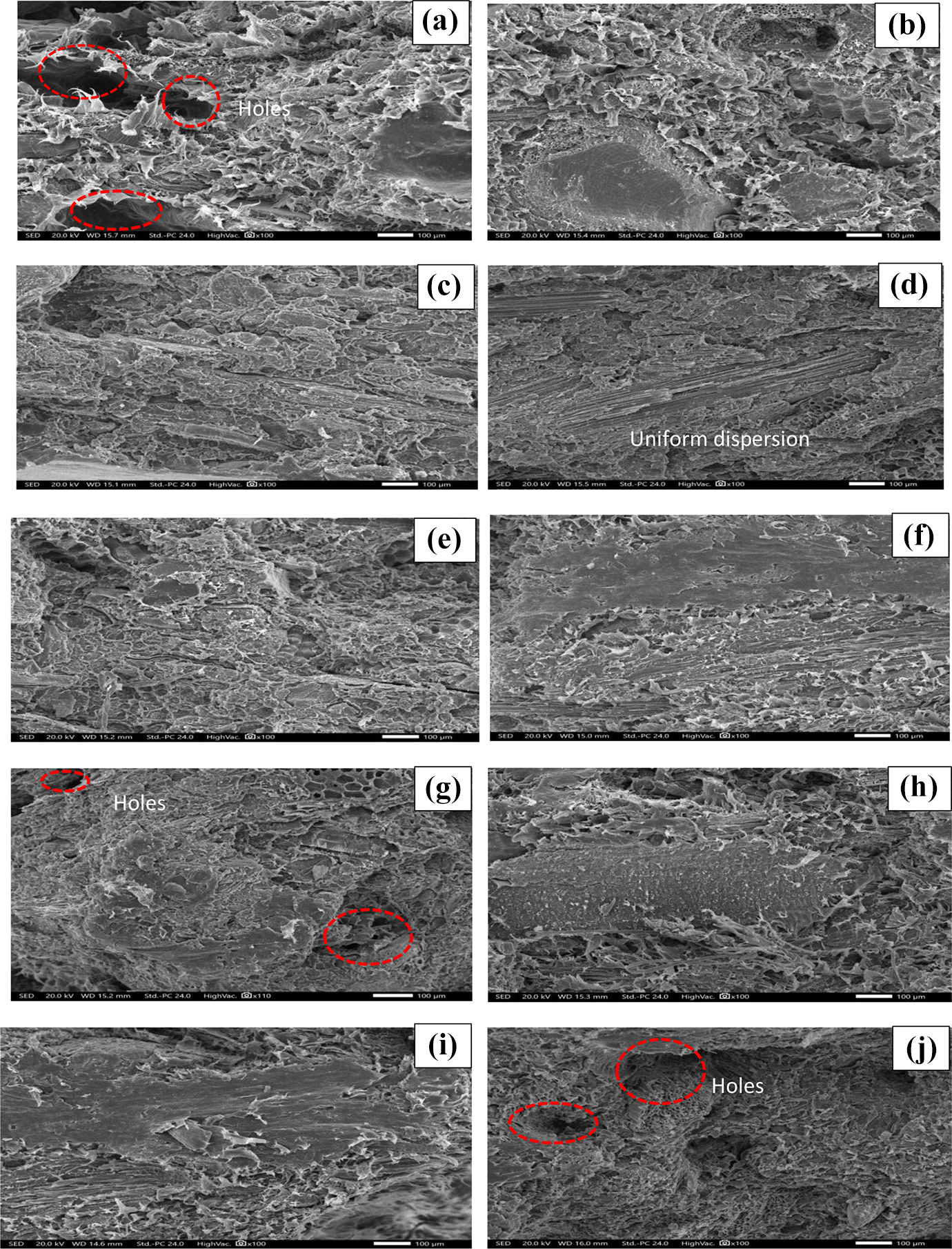
SEM micrographs of fractured surfaces of the studied composites: (a) control, (b) P35PR65M3NS2, (c) P35PR65M3NS4, (d) P35PR65M3NS6, (e) P35PR65M3NC2, (f) P35PR65M3NC4, (g) P35PR65M3NC6, (h) P35PR65M3NS1NC1, (i) P35PR65M3NS2NC2, and (j) P35PR65M3NS3NC3.
On the other hand, the SEM micrographs of the studied composites based on NC contents are shown in Figure 1(e) to (g). Figure 1(e) and (f) shows the effect of addition of NC contents (2 and 4 phc) respectively on the composites that it showed uniform dispersion of the clay layers within the polymer matrix, but the effect of incorporation of high content of NC (6 phc) on the morphology of composite is illustrated in Figure 1(g). 20 An apparent clay layers agglomeration was observed in the composite containing high NC content. This resulted in an ease of clay layers pull out from the polymer matrix, where agglomeration of the NC pellets within the R-LLDPE polymer matrix happens due to the high surface area of NC and van der Waals forces which exist between them. As a result, during the mixing of the NCs with R-LLDPE matrix, only few molecules of the polymer matrix can penetrate between the agglomerated layers of NC and react with them, thereby reducing the contact surface area between the clay and the polymer matrix. 21 SEM micrographs of incorporation of hybrid NS and NC on composites show uniform dispersion of mixed nanoparticles within polymer as illustrated in Figure 1(h) and (i). The agglomeration occurred at higher percentage of NSNC as shown in Figure 1(j) loading might be due to the improper dispersion and surface interaction between mixed nanoparticles and polymer matrix. 22
Fourier transform infrared spectroscopy
The spectrum of NS (SiO2) shows some absorption peaks at 3486 cm−1 for –OH stretching, 2931cm−1 for –CH stretching of modified hydrocarbon, and 1632 cm−1 for –OH bending of hydroxyl group adsorbed on surface of the particles. The other peaks appeared in the range of 1187–465 cm−1 was due to Si–O–Si group in the SiO2 as shown in Figure 2(a). However, NC as shown in Figure 2(b) exhibited the peaks at 3542 cm−1 for –OH stretching, 2927 cm−1 for –CH stretching of modified hydrocarbon, 1629 cm−1 for –OH bending, and 1031–460 cm−1 for oxide bonds of metals such as Si, Al, and Mg.23,24
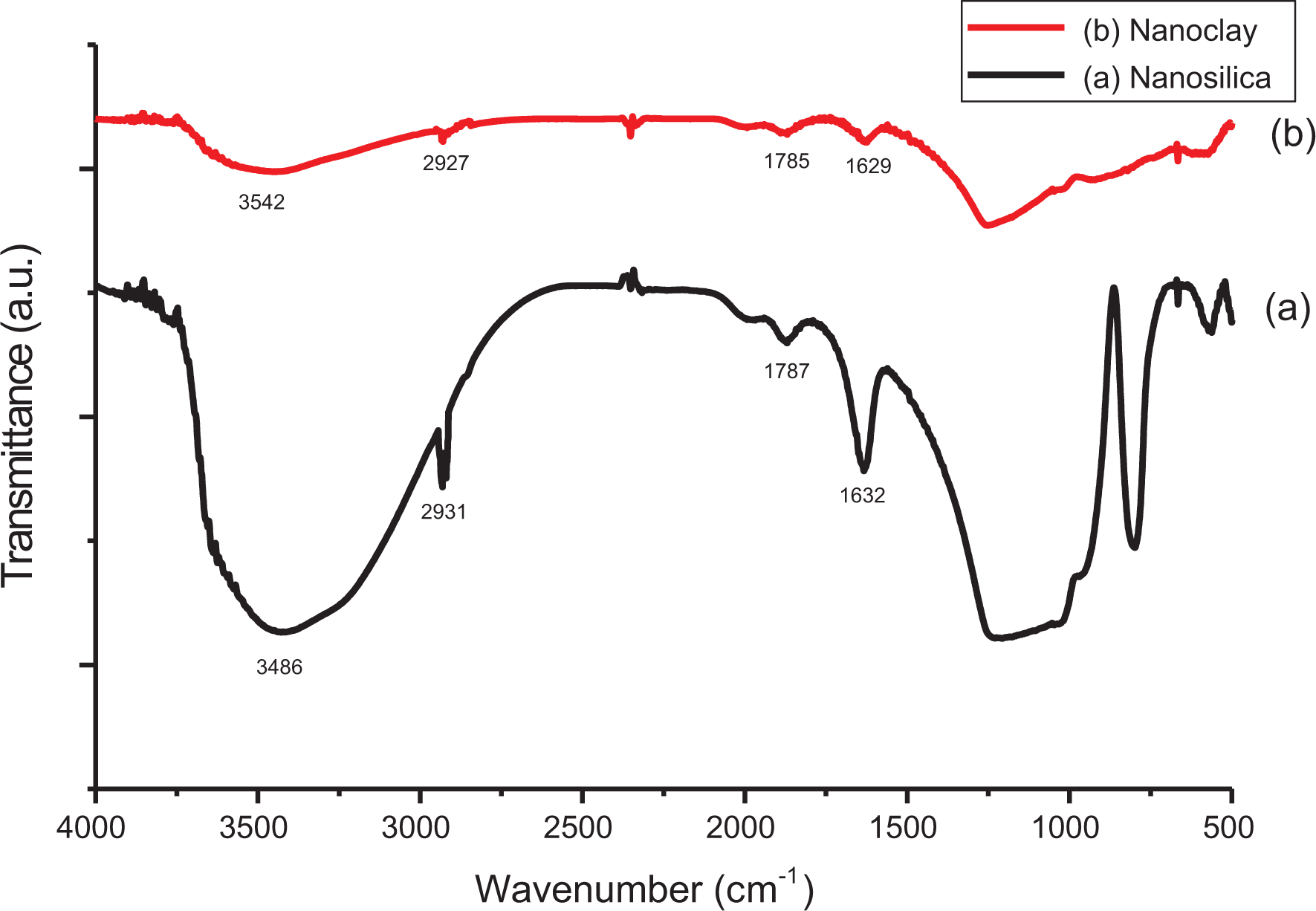
FTIR spectrum of (a) NS and (b) NC. FTIR: Fourier transform infrared spectroscopy; NS: nanosilica; NC: nanoclay.
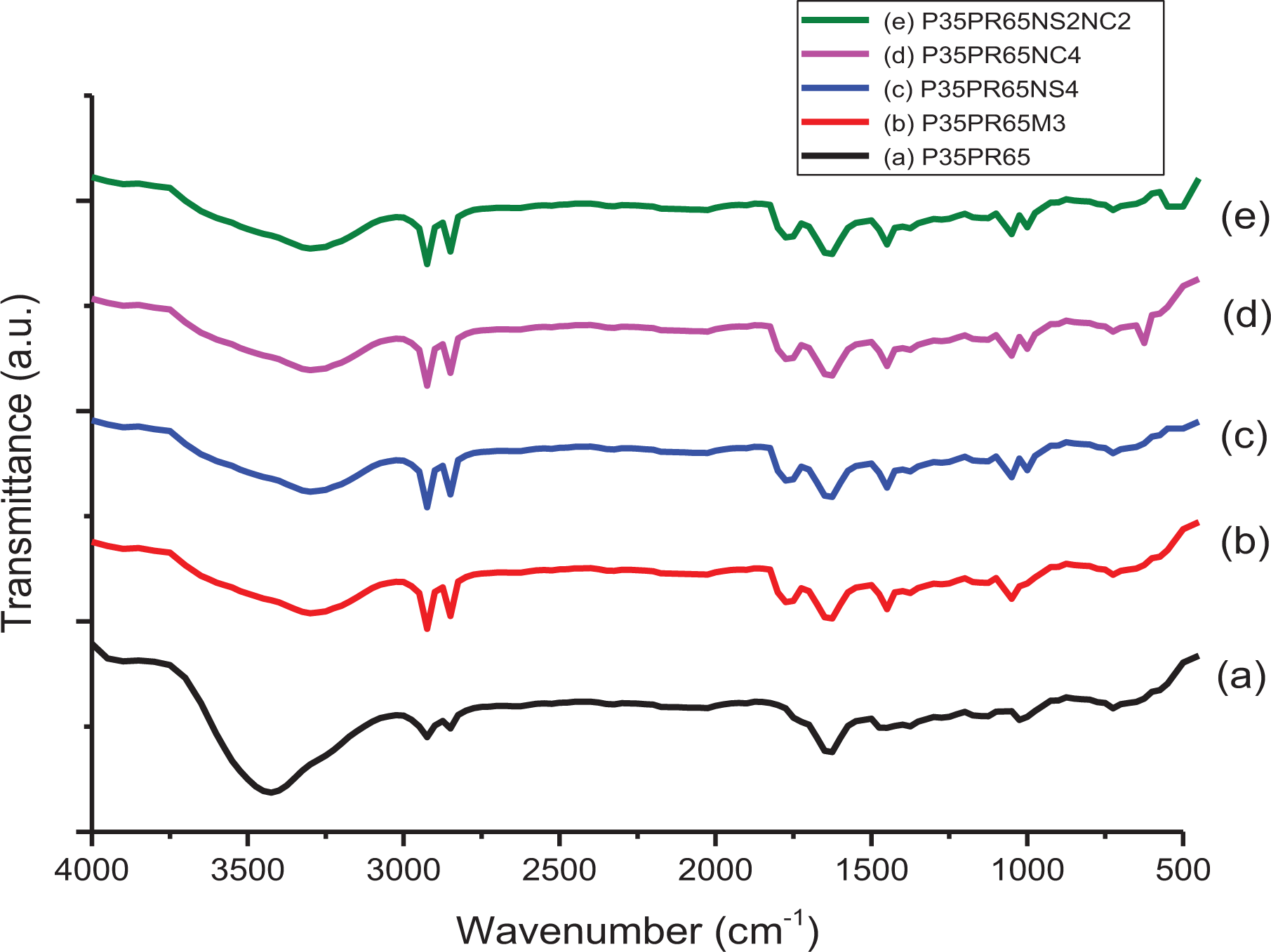
FTIR spectra of (a) P35PR65, (b) P35PR65M3, (c) P35PR65M3NS4, (d) P35PR65M3NC4, and (e) P35PR65M3NS2NC2. FTIR: Fourier transform infrared spectroscopy.
The nature of adhesion between PR and R-LLDPE matrix was explored using FTIR spectroscopy. Figure 3(a) and (b) shows the FTIR spectra of studied composites with and without compatibilizer (MAPE). Covalent linkages in the form of ester bond are formed between the compatibilizing agent (MAPE) and the hydroxyl groups on the surface of lignocellulosic natural fibers. Alongside the possible covalent linkages, hydrogen bridges might likewise contribute to interaction as shown in Figure 4. The shifting of absorption peak corresponding to hydroxyl group to lower wave numbers 3265 cm−1 confirmed the formation of hydrogen bond between natural fibers surfaces and polymer matrix. 25 Furthermore, the intensity of peaks at 2945 cm−1 corresponding to –CH stretching was more in WPCs compared to uncompatibilized composites which indicated the formation of bond between polymers, MAPE, and natural fiber. Figure 3(c) to (e) shows the effect of addition of NS, NC, and NSNC, where the intensity of the metal oxides bond appeared in the range 1130–760 cm−1, corresponding to NC and NS.26,27
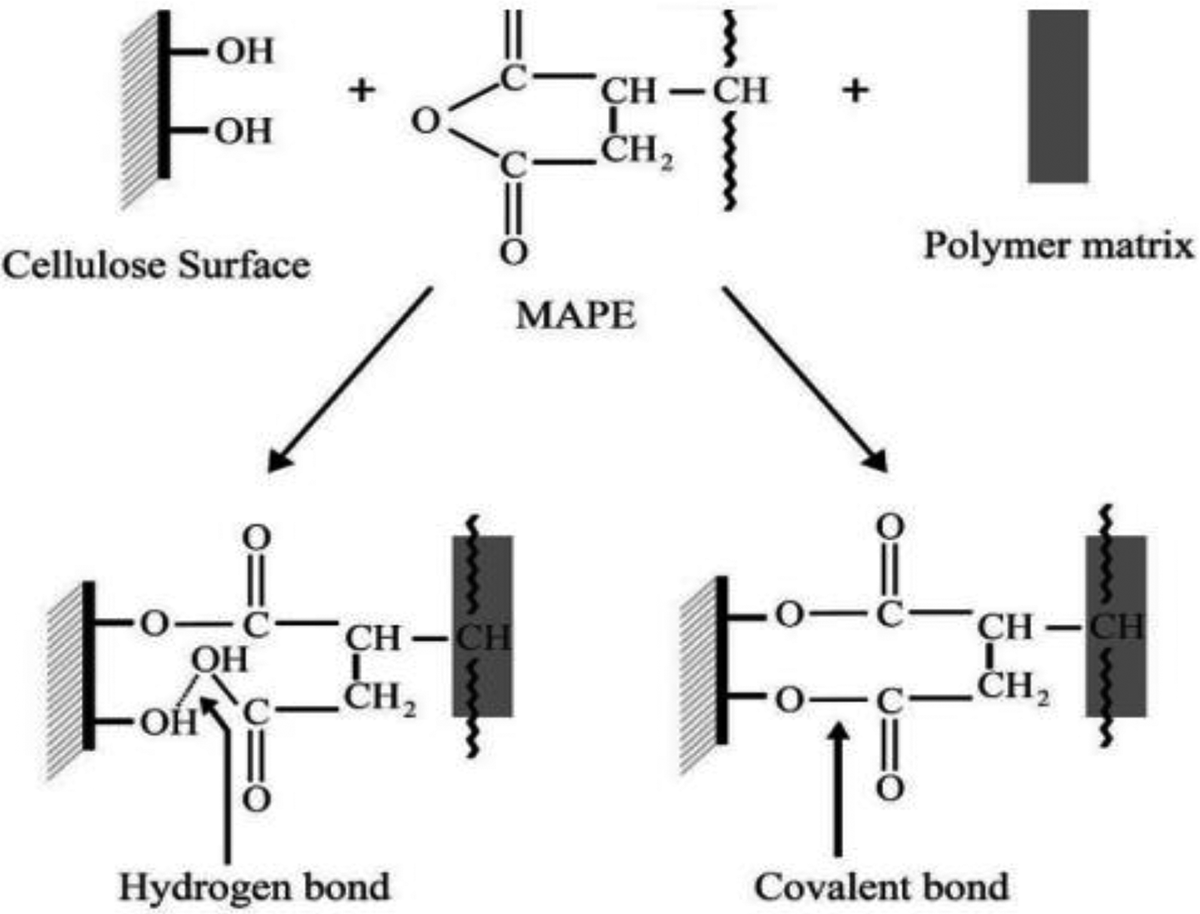
Schematic representation of the reaction between cellulose fiber hydroxyl end groups and maleated polyethylene (MAPE).
Mechanical properties
The effect of incorporation of NS, NC, and NSNC on the tensile properties of the produced composites is shown in Figure 5. Incorporation of NS at (2, 4, and 6 phc) contents improved the tensile strength by 27.9%, 44.8%, and 61.2%, respectively. The enhancement in tensile strength might be due to NS particles that were well dispersed and thereby improved the surface area for interaction. Hence, improvements in properties were observed. In addition, NS particles also increased the adhesion between PR and R-LLDPE matrix.18,28 In contrast, the incorporation of NC at (2 and 4 phc) improved the tensile strength of composites by 22.4% and 38.7%, respectively. This improvement may be related to the high aspect ratio of NC layers, which offers a high surface area for adsorption of polymer in addition, the higher dispersion of silicate layers of NC in the polymer matrix, whereas, addition of high concentration of NC (6 phc) decreased the tensile strength by 21.8%. Reduction in tensile strength is most likely because of the agglomeration of the NC platelets which drastically diminishes the dispersion of the nanoparticles in the matrix and consequently the effective of the reinforcing nanoparticles in improving the mechanical properties. 29 Addition of mixed NS and NC (2 and 4 phc) improved the tensile strength by 24.5% and 41%, respectively, while addition of high concentration of mixed nanomaterials (6 phc) decreased the tensile strength by 16.8%, due to the combined effect of NS and NC. 30
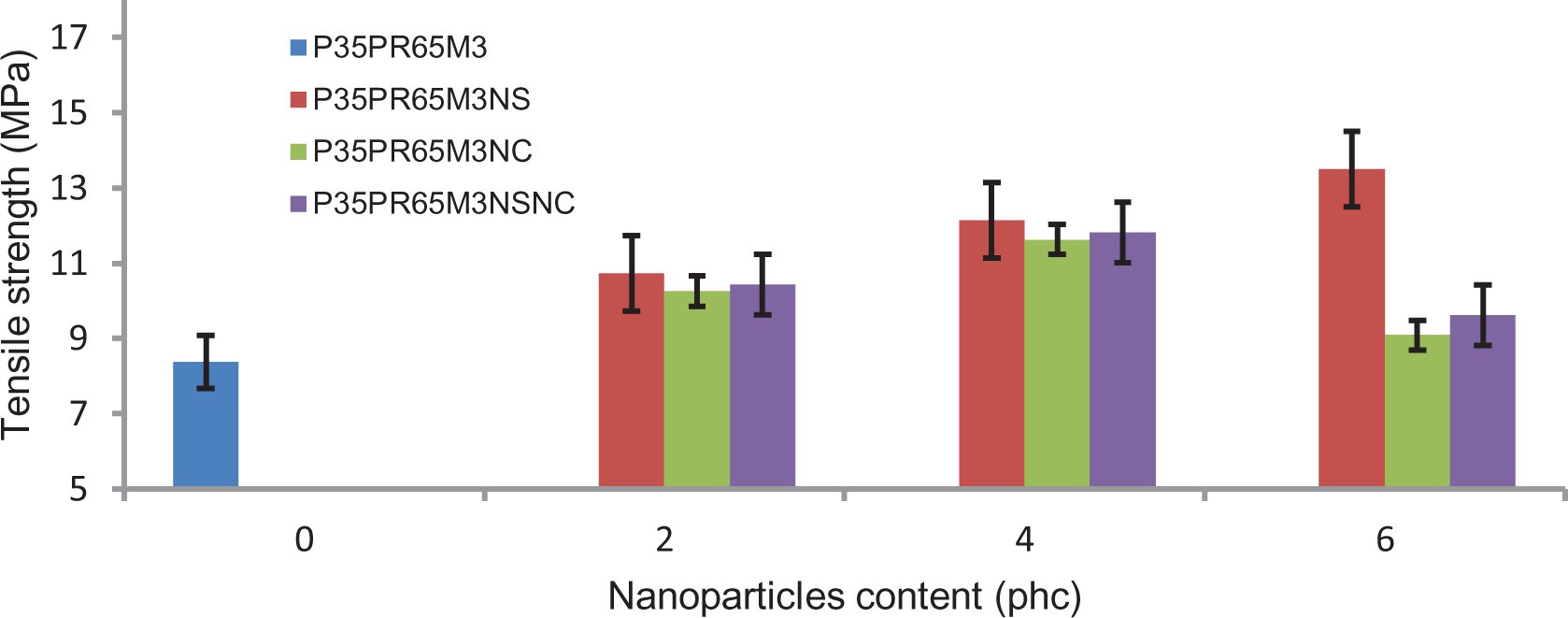
Tensile strength of the studied composites at different nanoparticles loading.
The tensile modulus of composites containing different contents of NS, NC, and NSNC is shown in Figure 6. Incorporation of NS at (2, 4, and 6 phc) contents improved the tensile modulus by 18.6%, 31.1%, and 35.5%, respectively. The improvement in tensile modulus might be due to NS particles that have a higher stiffness than R-LLDPE and PR fiber and thus leads to a better tensile modulus of R-LLDPE/PR composites. In addition, the influence of restriction in the mobility of polymer chain and increase in adhesion caused significant enhancement in mechanical properties. 31 On the other hand, addition of NC at (2 and 4 phc) contents improved the tensile modulus by 7.7% and 16.3%, respectively. Tensile modulus decreased at addition of NC 6 phc by 13.2%. Reduction in tensile modulus is probably because of the agglomeration of the NC layers. These results show that the composites made with 6 phc NS have the highest tensile properties.32,33
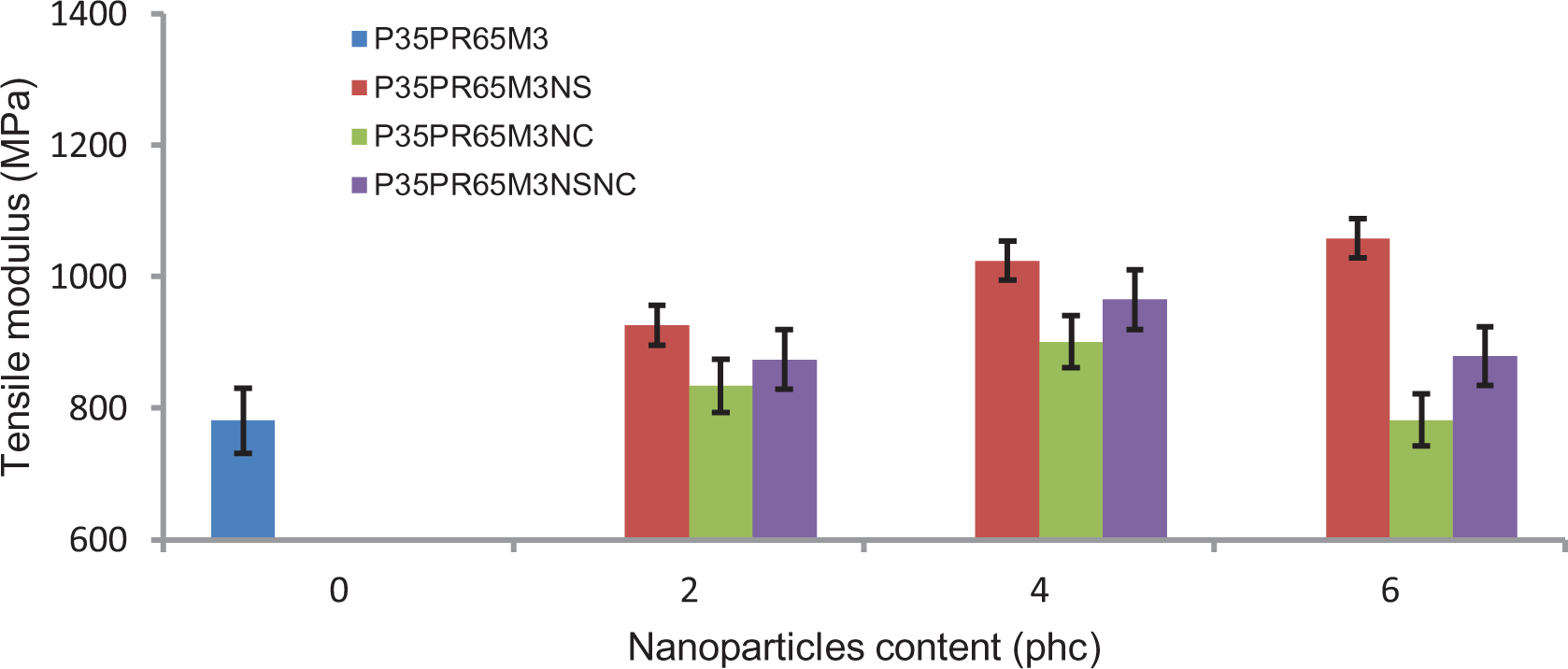
Tensile modulus of the studied composites at different nanoparticles loading.
As displayed in Figure 7, the elongation at break of the WPCs has decreased with the addition of both NS and NC in the composite. This implied that the incorporation of nanoparticles reduced the ductility of the composites, where polymer matrix mobility or deformability of a rigid interface between the fiber and the matrix decreased leading to a brittle failure under loading. 20 Similar to the elongation at break, the Izod impact strength was decreased by incorporation of NS or NC in the composites as shown in Figure 8. The reduction in impact strength might be due to the presence of nanoparticles (NS or NC) in the R-LLDPE matrix that provides points of stress concentrations, thus providing sites for crack initiation. In addition, another reason for decrease in impact strength may be the stiffening of polymer chains which result in less ability to absorb impact energy.34,35
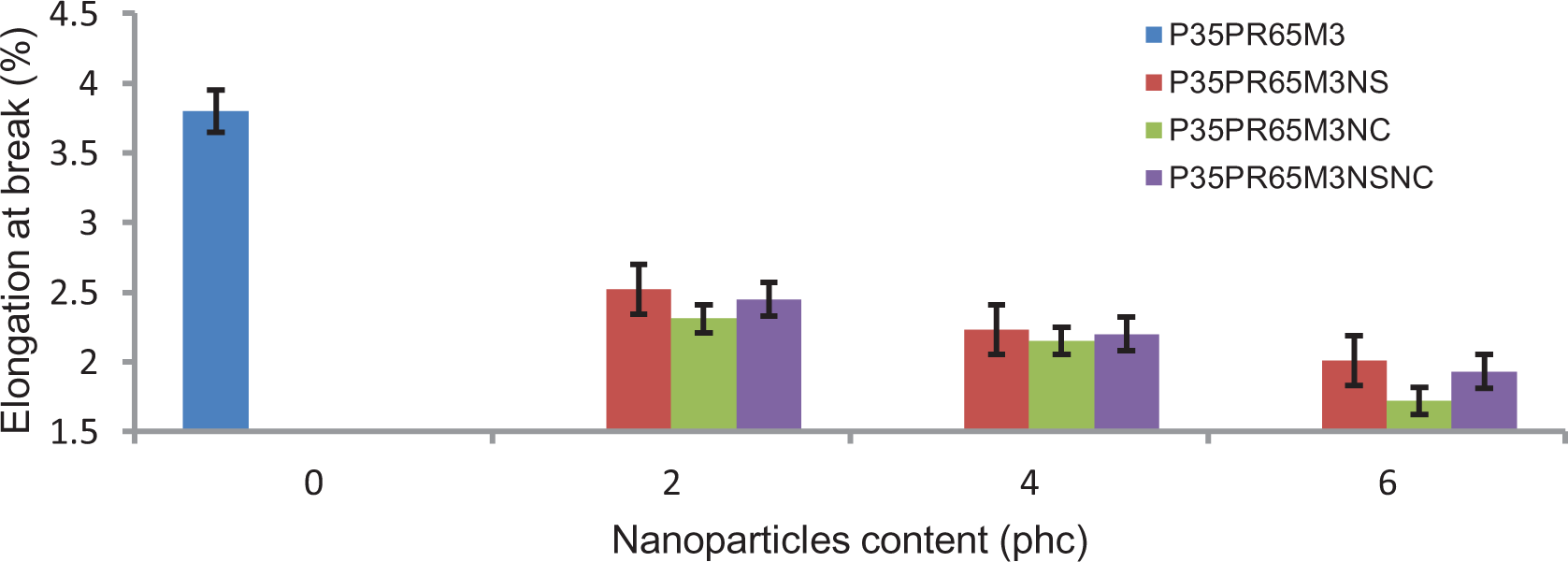
Elongation at break of the studied composites at different nanoparticles loading.
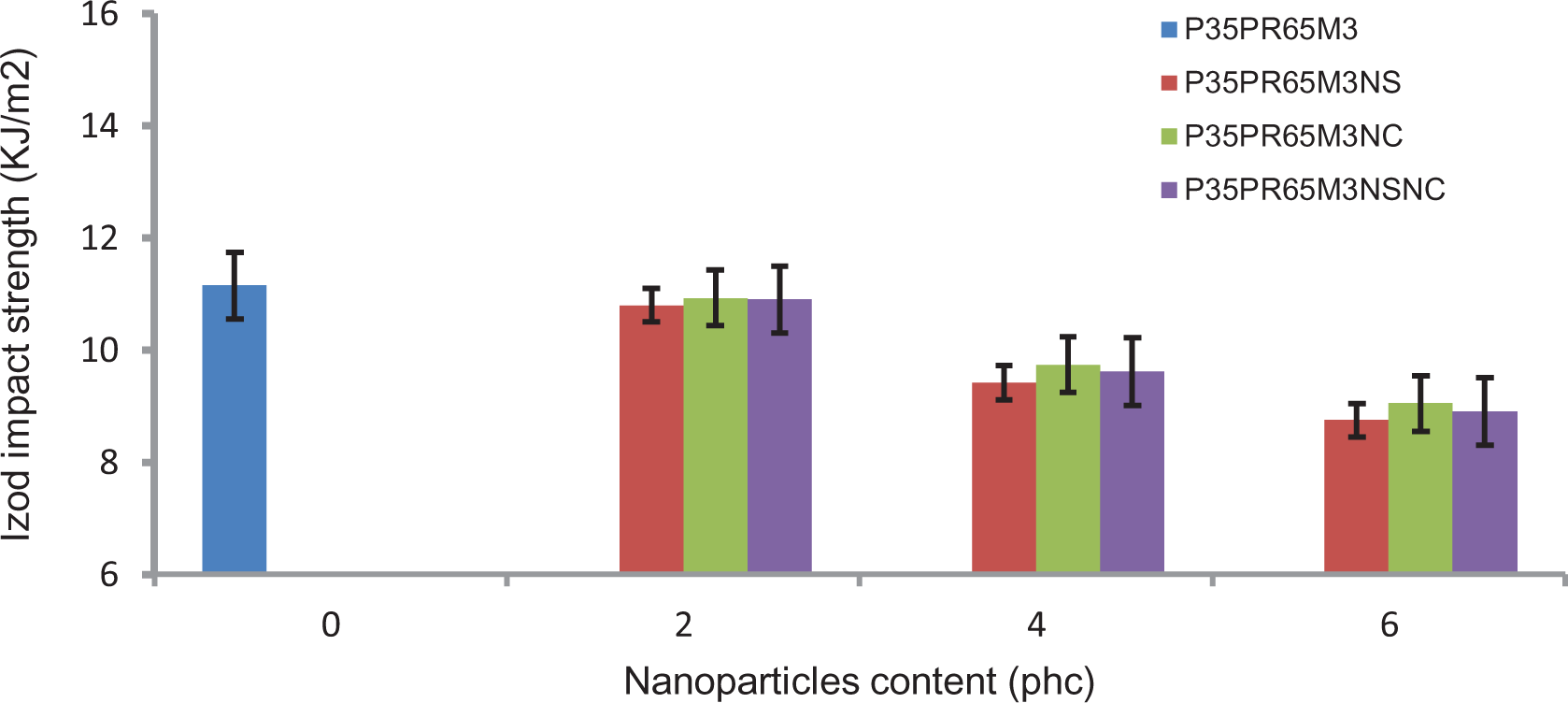
Izod impact strength of the studied composites at different nanoparticles loading.
Figure 9 shows the hardness of composites containing different contents of NS, NC, and NSNC. Incorporation of NS at (2, 4, and 6 phc) slightly increased the hardness by 1.45%, 3%, and 5.1%, respectively. In contrast, incorporation of NC at (2, 4, and 6 phc) slightly increased the hardness by 0.99%, 2.65%, and 4.6%, respectively. The reason for increase in hardness values could be explained and stated earlier. And, addition of NSNC at (2, 4, and 6 phc) increased the hardness by 1.3%, 2.65%, and 4.8%, respectively, due to the combined effect of NS and NC. 36
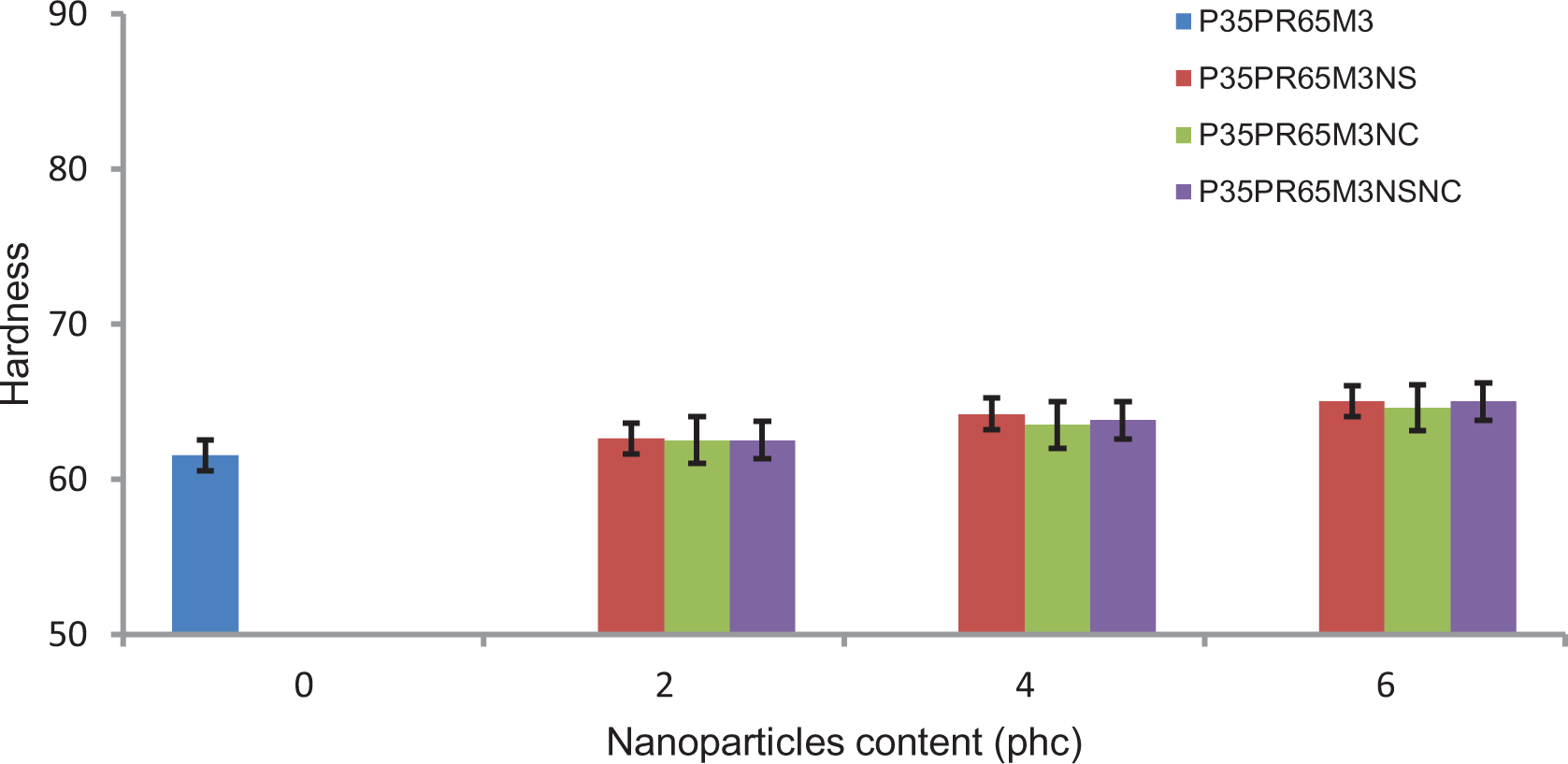
Hardness of the studied composites at different nanoparticles loading.
Thermal properties
The effect of incorporation of NS, NC, and NSNC on the thermal stability of the prepared composites was studied using thermogravimetric analysis (TGA). Figure 10 shows typical TG and DTG curves for all prepared composites with different nanoparticles content. Some thermal properties of the studied composites are summarized in Table 4. It was observed that the temperature degradation curve of all samples was divided into two main stages of thermal decomposition at about: 245–361°C and 392–503°C. The first stage had a maximum peak degradation temperature (Tmax) nearly at 302°C, which is related to the degradation of the PR components such as hemicellulose, cellulose, and lignin, while the Tmax of the second stage appeared at 473°C is attributed to the degradation of R-LLDPE matrix. The results showed that an increase in different nanoparticles (NS, NC, or NSNC) slightly increased the thermal stability of the samples by 3–8°C.29,37 The most necessary consider thermal stability, which has been produced by nanoparticles, is that the forming of a char layer that is non-burning; ultimately, the high specific surface area and proper coverage of the char layer affects thermal stability. In addition, nanoparticles lead to the formation of the crystal structure in the composites. This structure increases thermal degradation temperature of the prepared composites and improves its thermal properties. Moreover, associate increasing of thermal stability could also be the result of associate increasing of interaction between the R-LLDPE matrix, PR fibers, and nanoparticles. 38
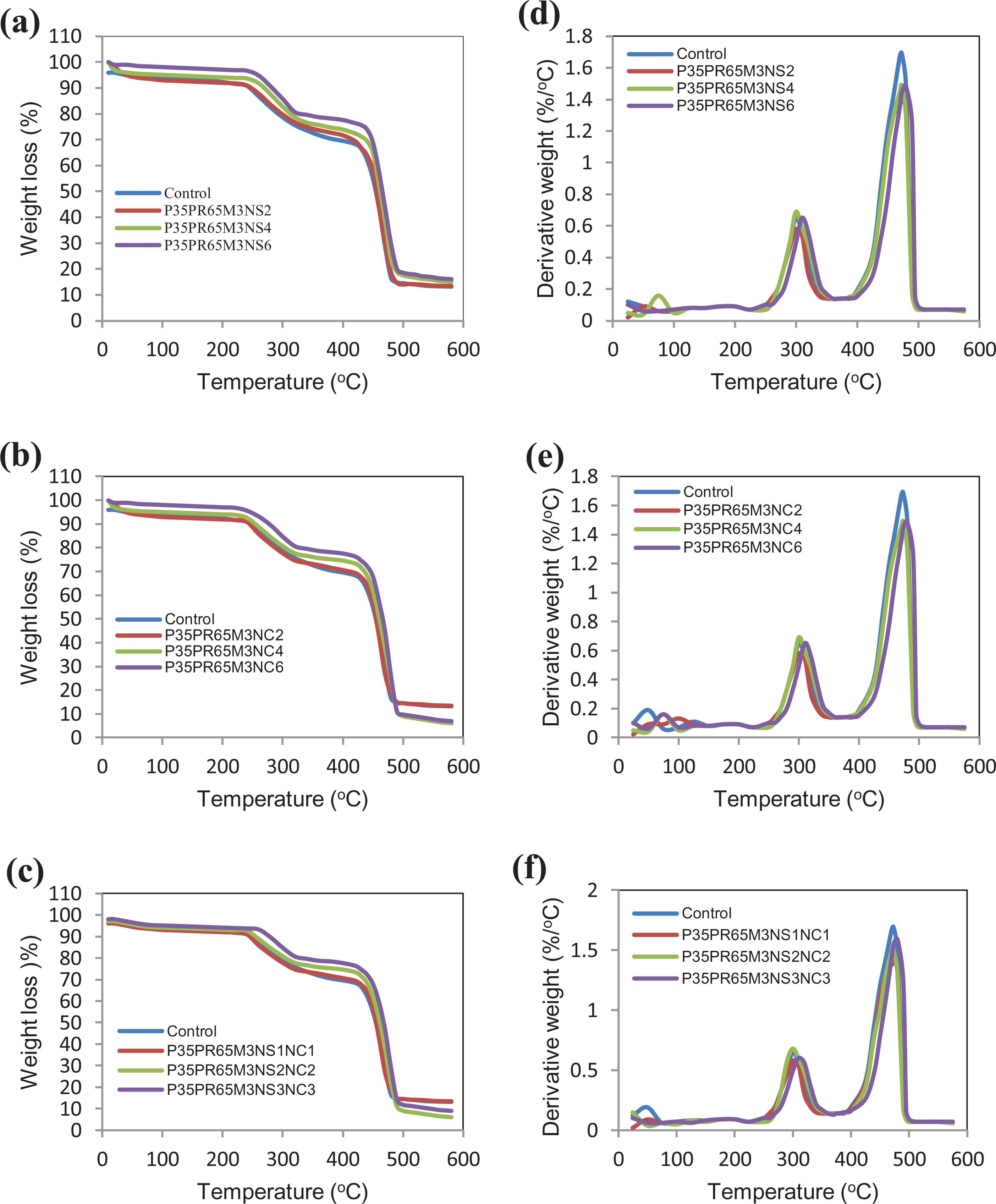
(a–c) TG and (d–f) DTG curves for the studied composites with different nanoparticles content. DTG: derivative thermogravimetry; TG: thermogravimetry.
Thermal properties of the composites with different nanoparticles contents.
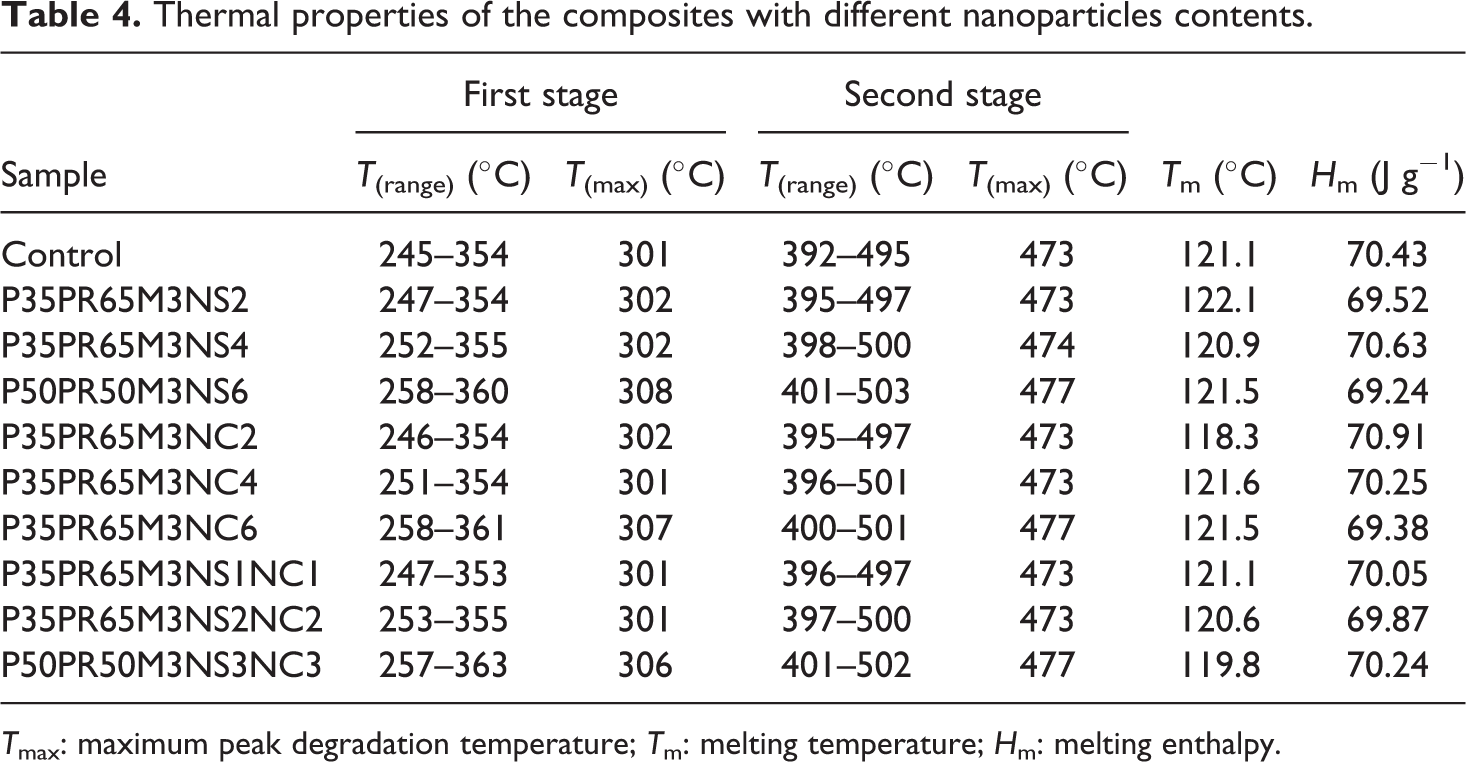
Tmax: maximum peak degradation temperature; Tm: melting temperature; Hm: melting enthalpy.
DSC measurements were performed to characterize the thermal behavior of the R-LLDPE and the R-LLDPE/PR fiber composites. The melting temperature (Tm) and melting enthalpy (Hm) of the composites samples were determined from the first heating DSC curves and are listed in Table 3. A single endothermic melting peak was observed for all WPCs samples. It was observed that the addition of different nanoparticles contents did not show remarkable change in the peak melting temperature of the composites. The values of Tm remained relatively constant for all samples, varying from 118.3°C to 122.1°C. This showed that in the presence of PR fibers and nanoparticles, the size of the crystalline domains was retained in the matrix. The melting enthalpy (Hm), however, decreased with the PR fibers increasing loading, as expected, due to the reduce in R-LLDPE matrix quantity. 39
Physical properties
Water absorption is one in every of the foremost necessary characteristics to be evaluated for composites, since it may have an effect on the mechanical properties and also dimensional stability. The effect of incorporation of different nanoparticles on the water absorption values observed in the prepared composites after 15 days water immersion times are shown in Figure 11(a) to (c). Generally, the degree of water absorption accrued with increasing immersion time. Also, once natural fibers content increases within the composites, the rate of water absorption will increase dramatically. This result was expected because of the hydrophilic behavior of natural fibers and this might be ascribed to the formation of hydrogen bonding between water molecules, and therefore the free hydroxyl groups presented in cellulose and hemicelluloses of PR fibers.40,41 Cellulose, as the most ample biopolymer on earth, is a natural polymer containing several hydroxyl groups, and these groups and their ability to create hydrogen bonds govern the overall properties of cellulose. Additionally, non-cellulosic carbohydrates or hemicelluloses have associate degree amorphous structure and hydrophilic characteristic, thus water is absorbed in hemicelluloses either. However, lignin is completely amorphous and hydrophobic, thusly; water absorption cannot happen in lignin. 42 Additionally, massive numbers of porous tubular structures found in natural fibers accelerate the penetration of water by the capillary action. Mechanisms of water uptake in a very composite embody diffusion through the matrix, capillary action through natural fibers or movement via porosities within the matrix or at the natural fiber–polymer matrix interface. Consequently, water absorption depends not solely on the relative hydrophilic behavior of the natural fibers and the matrix but also on adhesion between the polymer matrix and the natural fibers (gaps). 43
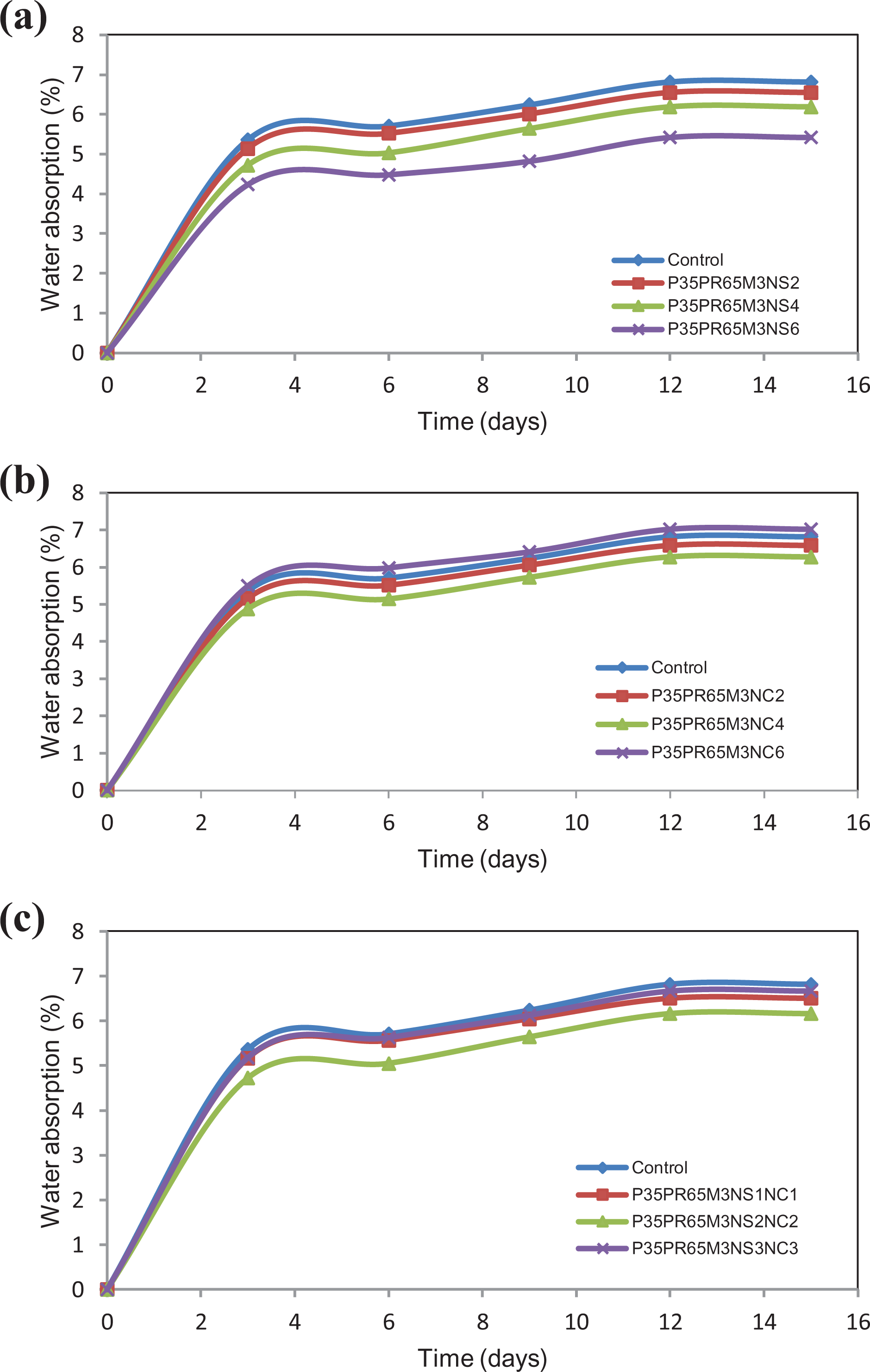
Water absorption of the studied composites based on different nanoparticles content.
In the present work, the time to reach the saturation point was the same (12 days) for all composites where no more water can be absorbed and the composite water content remains constant. Addition of NS at (2, 4, and 6 phc) decreased the water absorption after 12 days by 3.95%, 10.2%, and 20.21%, respectively, due to NS act as barrier or water repellent where they have high surface area so it well dispersed in composite and improve of interfacial bonds causes a decrease of the voids (occupation of void spaces) and decreases penetration of the water molecules into the deeper parts of the composite. In contrast, incorporation of NC at (2 and 4 phc) decreased the water absorption by 3.5% and 8.06%, respectively, addition of high concentration (6 phc) increased again the water absorption by 2.93% due to the agglomeration of the NC platelets. In addition, the incorporation of NSNC in the composites at (2 and 4 phc) decreased the water absorption by 4.54% and 9.67%, respectively, addition of high concentration (6 phc) increased again the water absorption by 2.19%.20,44
Figure 12(a) to (c) shows thickness swelling of the prepared composites after 15 days immersion in distilled water. The thickness swelling of the studied composites increases with the water absorption and therefore has a trend kind of like that of the water absorption. It can be observed that the composite without nanoparticles exhibited the highest thickness swelling values and thickness swelling decreases with incorporation of different nanoparticles meaningfully. The higher the nanoparticles content, the lower was the thickness swelling. The decrease of the thickness swelling in the prepared composites can be ascribed to the same reasons as discussed concerning water absorption.45,46
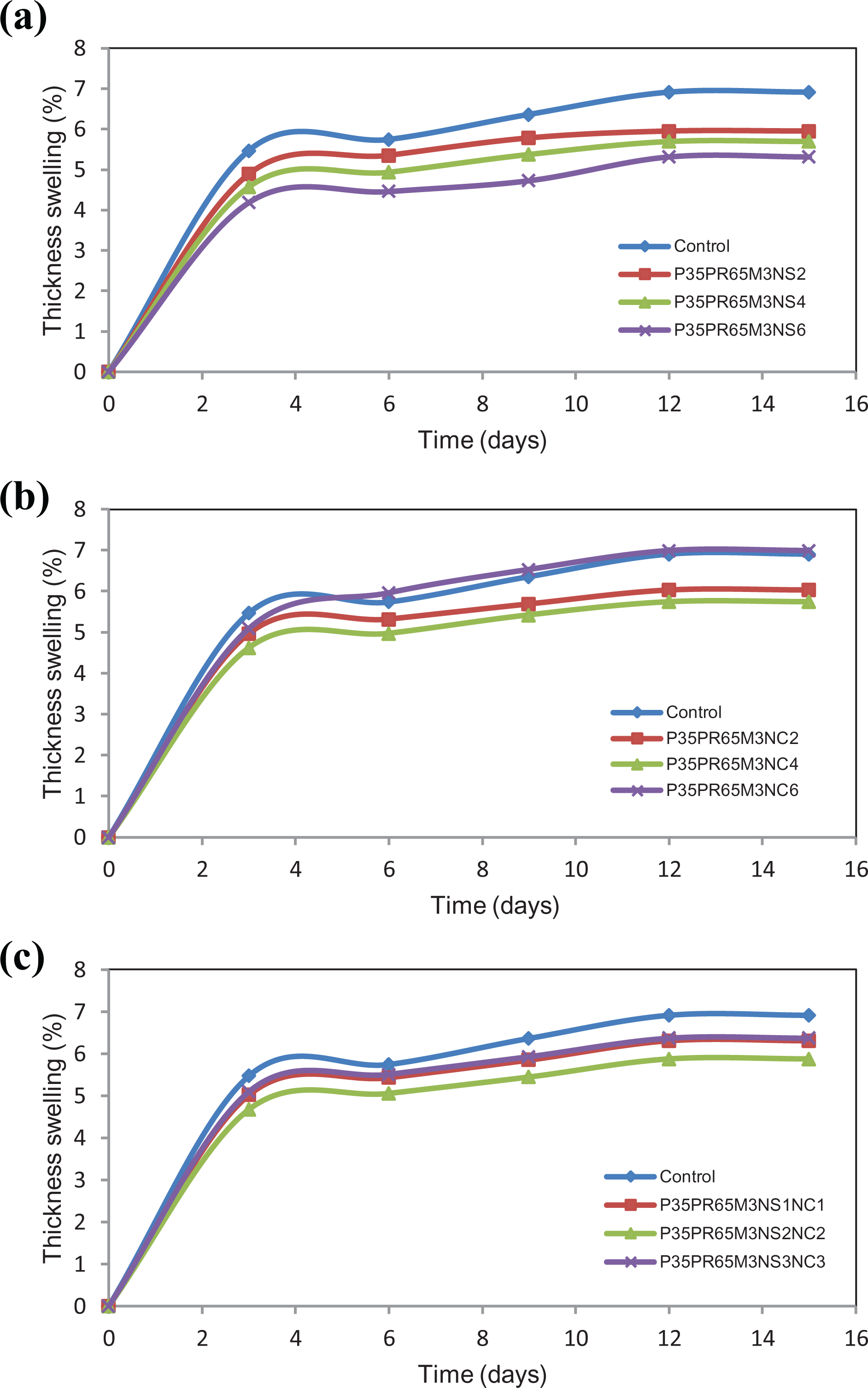
Thickness swelling of the studied composites based on different nanoparticles content.
Conclusions
The present study showed that PR fiber can be successfully utilized to make R-LLDPE/PR composites with useful physico-mechanical properties. The experimental results of the study indicated that the NS imparted composites with better interfacial adhesions, mechanical properties, and water absorption resistance than NSNC and NC. The physico-mechanical properties of R-LLDPE/PR composites could be improved with an appropriate addition of different nanoparticles content. SEM study showed that the addition of NS (up to 6 phc) could improve the interfacial adhesion resulting in reduced numbers of cavities and pulled-out fibers, and the addition of NC and NSNC (up to 4 phc) would behave the same way. However, adding more NC or NSNC (6 phc) did not enhance these properties. This was attributed to more agglomeration and poor dispersion when higher amount of NC was used, which resulted in increased voids and cracks in the composites. The incorporation of different nanoparticles slightly improved the thermal properties of composites. Finally, the utilization of recycled plastics and date palm waste in composites has several benefits such as minimize the solid waste content and conserves the natural resources. In addition, the utilization of nanoparticles in recycling agricultural and solid waste to developing WPCs by improving their properties for wide range of applications.
