




Abstract
The fatigue behavior of asphalt mixture is the main reason that affects the service performance and service life of asphalt pavement. The fatigue mechanism of asphalt mixture is still unclear. In fact, the fatigue damage of asphalt mixture is mainly related to the nature of asphalt binder. Therefore, the study of the damage of asphalt binder is beneficial to reveal the fatigue failure mechanism of asphalt mixture. At present, there is no clear damage behavior method of asphalt binder. Considering that the damage behavior of asphalt binder is actually related to its rheological behavior, the shear rheological method is used to evaluate the damage behavior of asphalt binder. The complex modulus is used as the evaluation index of asphalt damage behavior. Because the strain loading mode is consistent with the actual force of the binder in the asphalt mixture. The damage behavior of asphalt binder is studied by time scanning mode under controlled-strain mode. The influence of temperature, loading frequency, and other parameters on the damage behavior of asphalt binder is analyzed. Through the data analysis, the asphalt damage curve meets Boltzmann distribution. At the same time, the characteristics of asphalt damage curve are analyzed. It is proposed that there are three inflection points and two platforms for the typical damage curve of asphalt binder. The three inflection points divide the damage behavior of asphalt into elastic deformation stage, yield stage, crack growth stage, and failure stage. The effects of temperature and loading frequency on the curve characteristics are summarized. For asphalt binder with higher stiffness, the damage curve of asphalt binder is “L” type when the strain level and loading frequency are larger. When the temperature is higher, the loading frequency is smaller, and the strain is smaller, the damage curve will gradually change to anti-“S” type or even linear.
Introduction
Fatigue damage is one of the main failure modes of asphalt pavement. However, the mechanism of internal crack growth of asphalt mixture in fatigue process is still unclear, but researchers have realized the important role of asphalt in asphalt mixture damage. Some researchers1,2 believe that the fatigue of asphalt mixture is caused by the damage of asphalt binder.
Asphalt is a mixture of various organic materials. The experimental method of damage behavior can draw on the research results of organic polymers. In the earlier research,3,4 the fracture mechanics method was used to study the thermosetting materials, and the damage evolution model was established based on the experimental results. In recent years, most of the research on asphalt damage is fatigue behavior,5–17 but the failure behavior of asphalt at low temperature is similar to low temperature fracture, and the asphalt is in a viscous flow state at high temperature. Therefore, the theory of fatigue damage needs to be verified. The damage behavior of asphalt under different temperature and different loading frequency is studied, which lays a foundation for the research of fatigue damage of asphalt mixture.
When the asphalt binder is subjected to external force in a certain temperature range, its deformation behavior is quite different from that of inorganic non-metal materials. Its behavior is closely related to the rheological behavior of asphalt itself. Therefore, scholars18–26 studied the behavior of asphalt binder by dynamic shear rheometer (DSR).
The damage of asphalt is caused by cumulative damage. People understand its mechanism from different aspects. Raithby and Sterling 27 draws on the mechanical mechanism of material damage and first proposed the loading number stiffness reduction (Nf50) as the asphalt when the complex modulus is reduced by 50% of the initial value. Empirical indicators of fatigue life, but because of the lack of physical basis for this indicator, cannot reflect the damage mechanism of asphalt materials. Amina and Tarefdar 28 found that using three different evaluation indicators, Nf50, dissipation energy ratio (DER), and dissipative energy change rate (RDEC), statistical analysis shows that there is no significant difference in the fatigue behavior of asphalt binder.
Due to the three stages that are common in the process of material fatigue failure, there is no fatigue damage stage, micro-crack generation and expansion stage, and macro-crack generation stage. The theory of dissipative energy can well describe the process of asphalt fatigue: in the stage of no fatigue damage, if the temperature change of the material is not considered, the dissipation energy of each load remains basically unchanged, and the dissipative energy is generated by viscoelastic damping. No damage to the material; micro-crack generation and expansion stage, the dissipation energy of each loading gradually increases. The generation of cracks consumes more energy than the viscoelastic attenuation. In the macro-fracture generation stage, the cracks rapidly expand and collect performance. The dissipation energy for each load is significantly increased. Therefore, the researchers8,10,28 used this theory to evaluate the fatigue life of asphalt binders and proposed the evaluation index of fatigue life such as DER and RDEC.
Despite the related fatigue behavior of asphalt binders, these studies lack further verification of the rationality of the indicators. According to the asphalt damage behavior, combined with the damage curve, the behavior of each stage of the damage process is analyzed to understand the damage behavior of asphalt.
Materials
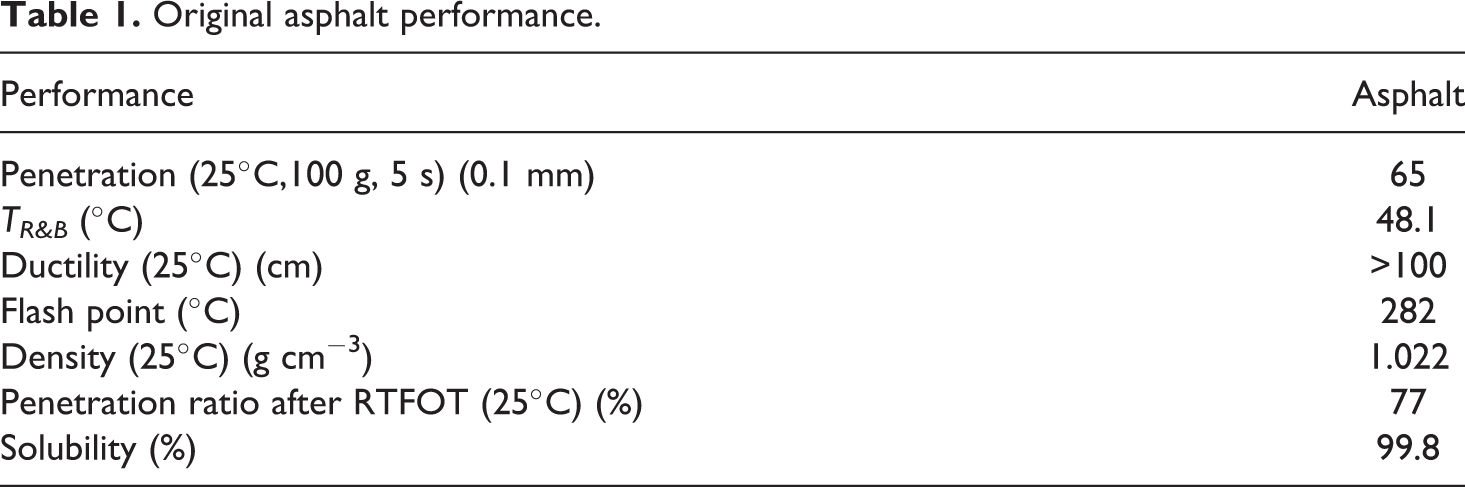
The performance of 70# asphalt are shown in Table 1.
Original asphalt performance.
Test methods
Test equipment and methods
The DHR-2 DSR produced by TA Instruments of the United States was used to conduct experimental research on the original asphalt.
The loading method of indoor test can be generally divided into stress control loading and strain control. According to the research results of Masad et al., 29 when the asphalt surface layer itself is thin, when it is subjected to load, it will produce displacement together with the base layer. The test results show that even for the same asphalt sample, there are some differences in the results of different stress loading due to slight differences in sample preparation, and the strain tolerance is much looser for the sample preparation, to ensure the experimental results. Reproducibility, so this article is based on the constant temperature strain control mode using time scanning for asphalt damage behavior research.
Evaluation index
There are many kinds of indicators for evaluating the fatigue damage behavior of asphalt at home and abroad. The earliest proposed fatigue evaluation index is the fatigue factor G*sinδ. Pell 30 of the University of Nottingham in the UK used dynamic mechanical method to asphalt in the 1960s. The cemented material was subjected to an oscillating shear test, and the fatigue properties of the asphalt cement were studied by stress and strain loading. In the 1990s, the US SHRP plans to use DSR as a fatigue performance test for asphalt binders and proposed the fatigue factor (the product of complex modulus G* and phase angle sine sinδ) as an evaluation index, but in the evaluation system. The definition of fatigue damage failure is not clear, and the target is soft and elastic asphalt binder, 19 and the experimental results show that the viscoelastic behavior of asphalt binder changes with the degree of aging, the indicator, and the actual. The difference in road surface fatigue behavior is large, and the correlation does not exceed 40%. 31
Dijk 32 firstly used dissipative energy to evaluate the fatigue damage behavior of asphalt mixture. Based on the differential idea, the work done by the external energy on the asphalt mixture is mainly the deformation energy per unit volume of the asphalt mixture in a short enough time. The influence of temperature is negligible, and then the work done by integrating the applied load actually corresponds to the volumetric strain energy of the mixture, so it is simplified to the following formula.

σ(t)—the stress at a certain moment t; ε(t)—the strain at a certain moment t.
However, dissipative energy is a concept proposed for isolated systems. For asphalt mixtures, the external work is mainly used for its volume change performance and internal energy change (i.e. temperature change), and external loading will cause the viscoelastic change of asphalt. At the same time, the energy will be emitted with a certain amount of heat, but for the asphalt mixture, the asphalt temperature will increase the energy of the asphalt mixture system, but because the proportion of asphalt is small (the mass percentage is about 5%). As the asphalt mixture, the energy corresponding to the temperature rise is negligible, so it can be approximated as an isolated system. The dissipative energy index can be used to approximate the result. Therefore, in the asphalt mixture, the external work can be approximated. The volumetric deformation energy of the asphalt mixture can be used to evaluate the fatigue damage behavior of the asphalt mixture.
However, for asphalt binders, the applicability of the method is problematic. At low frequencies, for viscoelastic materials, when there is a certain stability hysteresis in deformation and external loading when the applied load is applied, the loss of work, the cumulative dissipated energy ratio, and the rate of dissipated energy can be obtained by mathematical correlation theory.33,34 However, under the action of high frequency, due to the internal temperature rise of the asphalt, the external work as the fatigue damage behavior of the asphalt needs further study.
The damage behavior of asphalt is closely related to its rheological behavior and the evaluation index of common asphalt binder is complex modulus, it is proposed to use complex modulus as the evaluation index of asphalt damage behavior.
Through the asphalt binder of 20–40°C, the loading frequency is 2, 5, 8, and 10 Hz, respectively, the strain is 2%, 4%, 6%, and 8%, and the cylindrical asphalt with diameter of 8 mm and height of 2 mm is used. The cement is time scanned. All test results are shown in Figures 1 to 5. At 35°C and 40°C, when the strain is 2%, the complex modulus of asphalt decreases slowly within 2 h of loading, and the damage curve is straight, indicating that the asphalt damage is not obvious, and this article does not further study it.
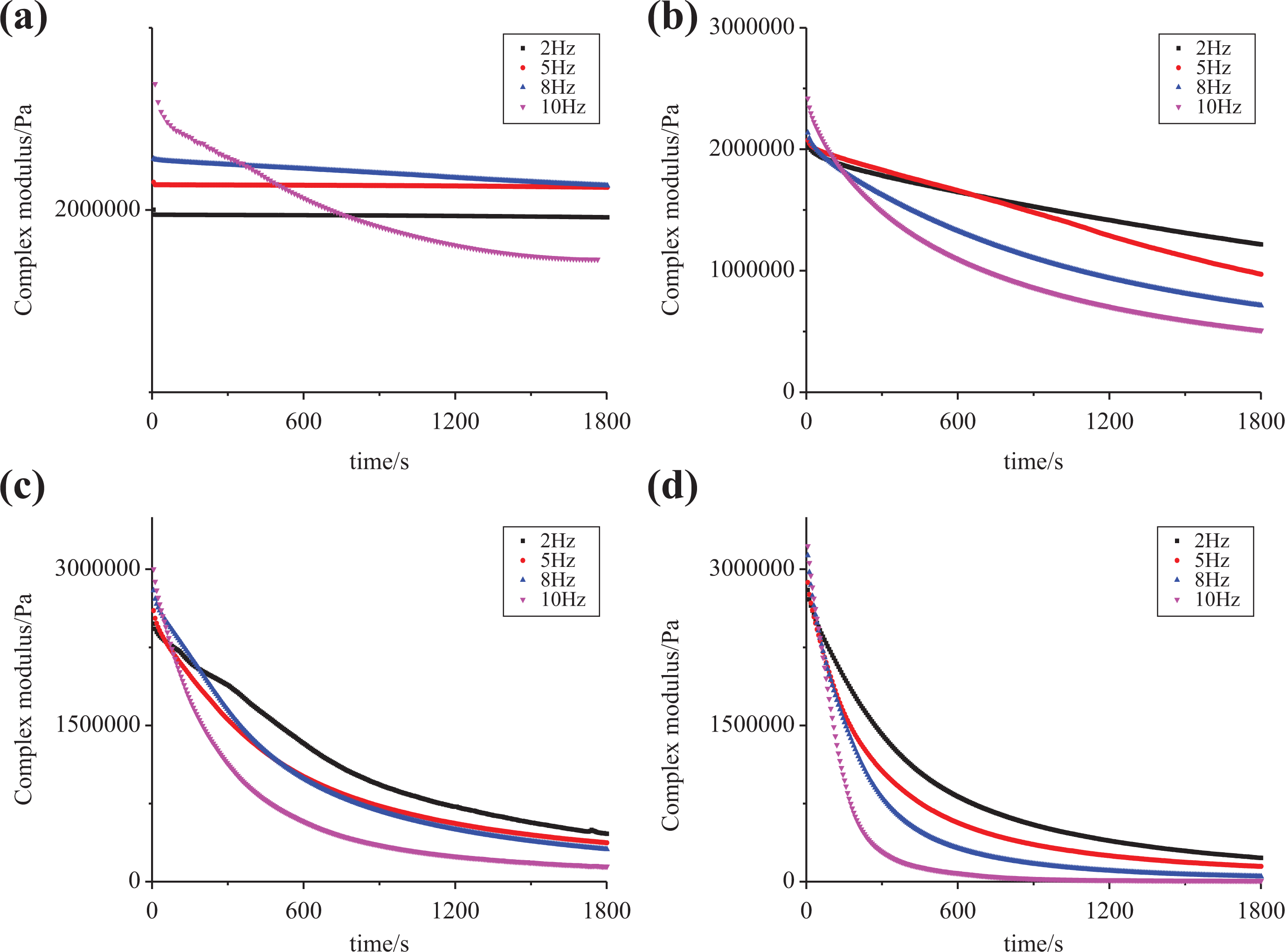
Effect of strain, loading frequency, and time on complex modulus at 20°C.
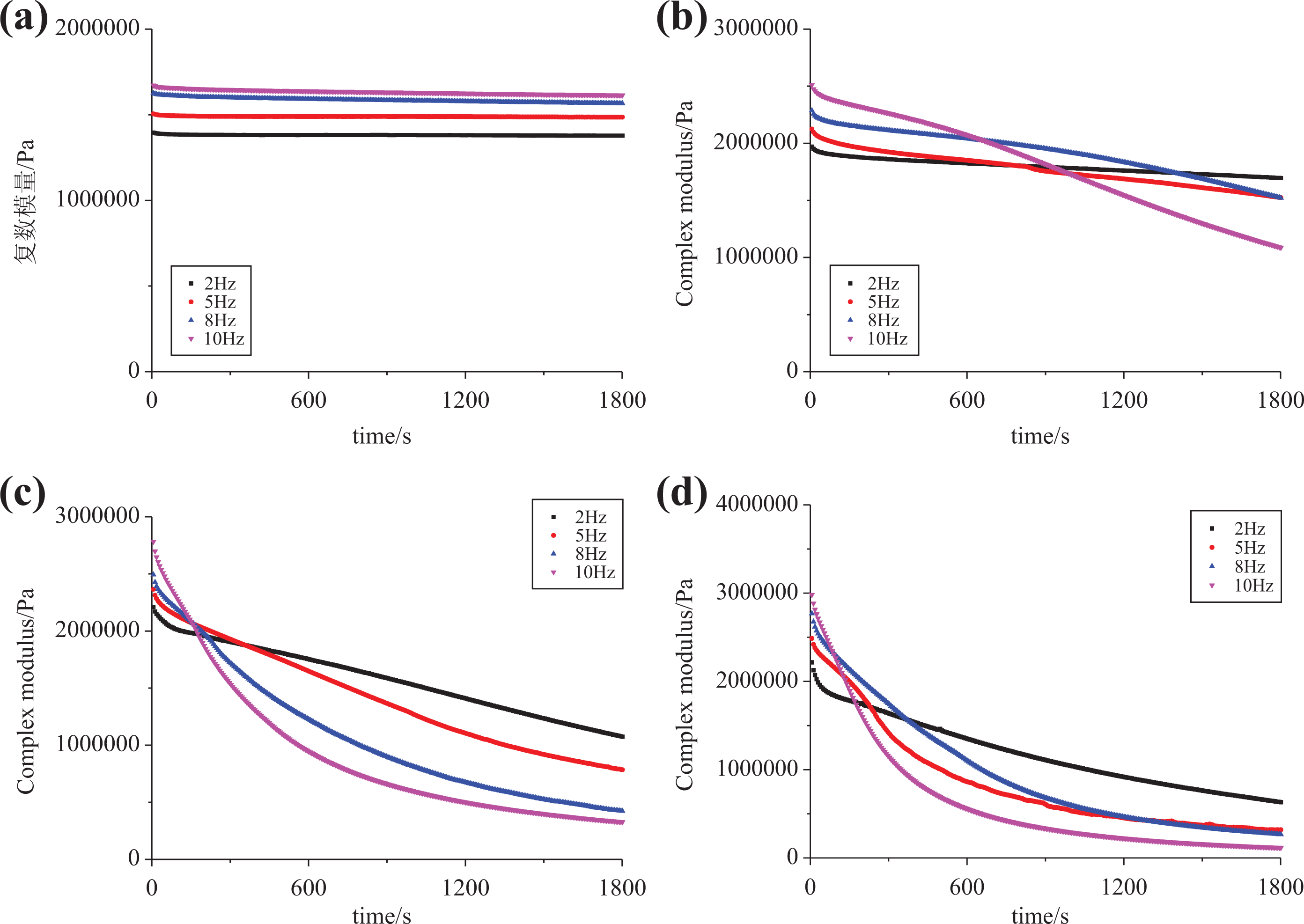
Effect of strain, loading frequency, and time on complex modulus at 25°C.
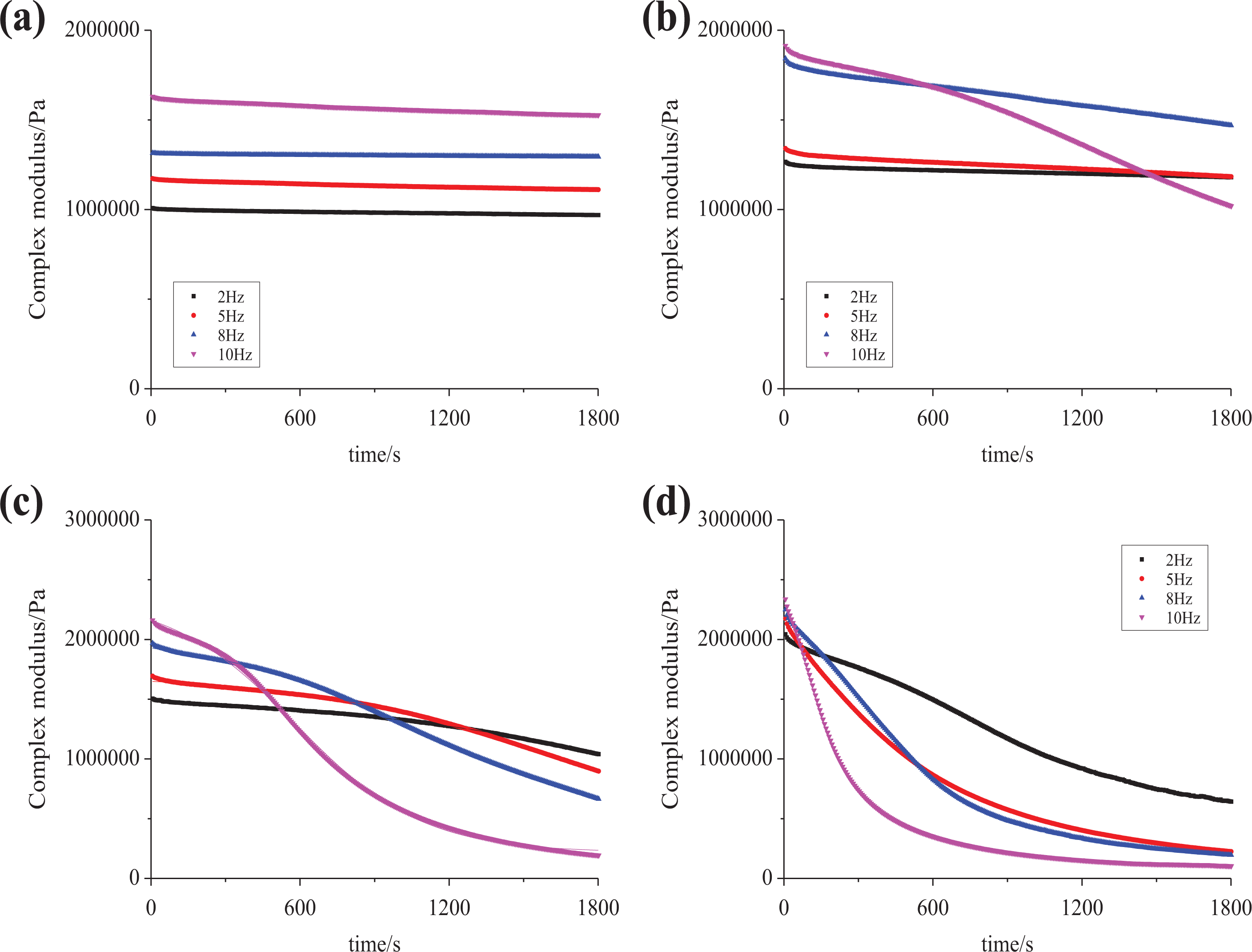
Effect of strain, loading frequency, and time on complex modulus at 30°C.
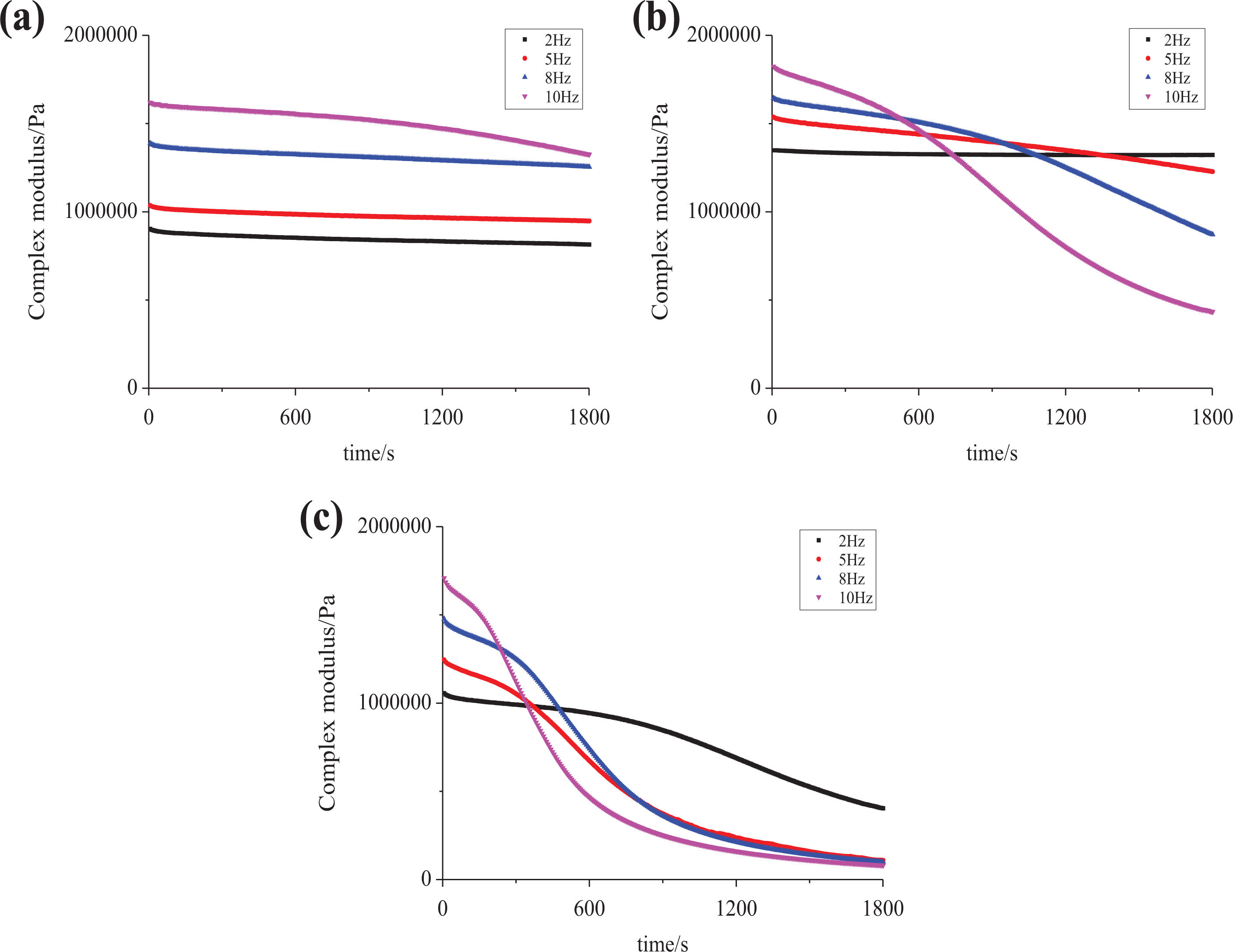
Effect of strain, loading frequency, and time on complex modulus at 35°C.
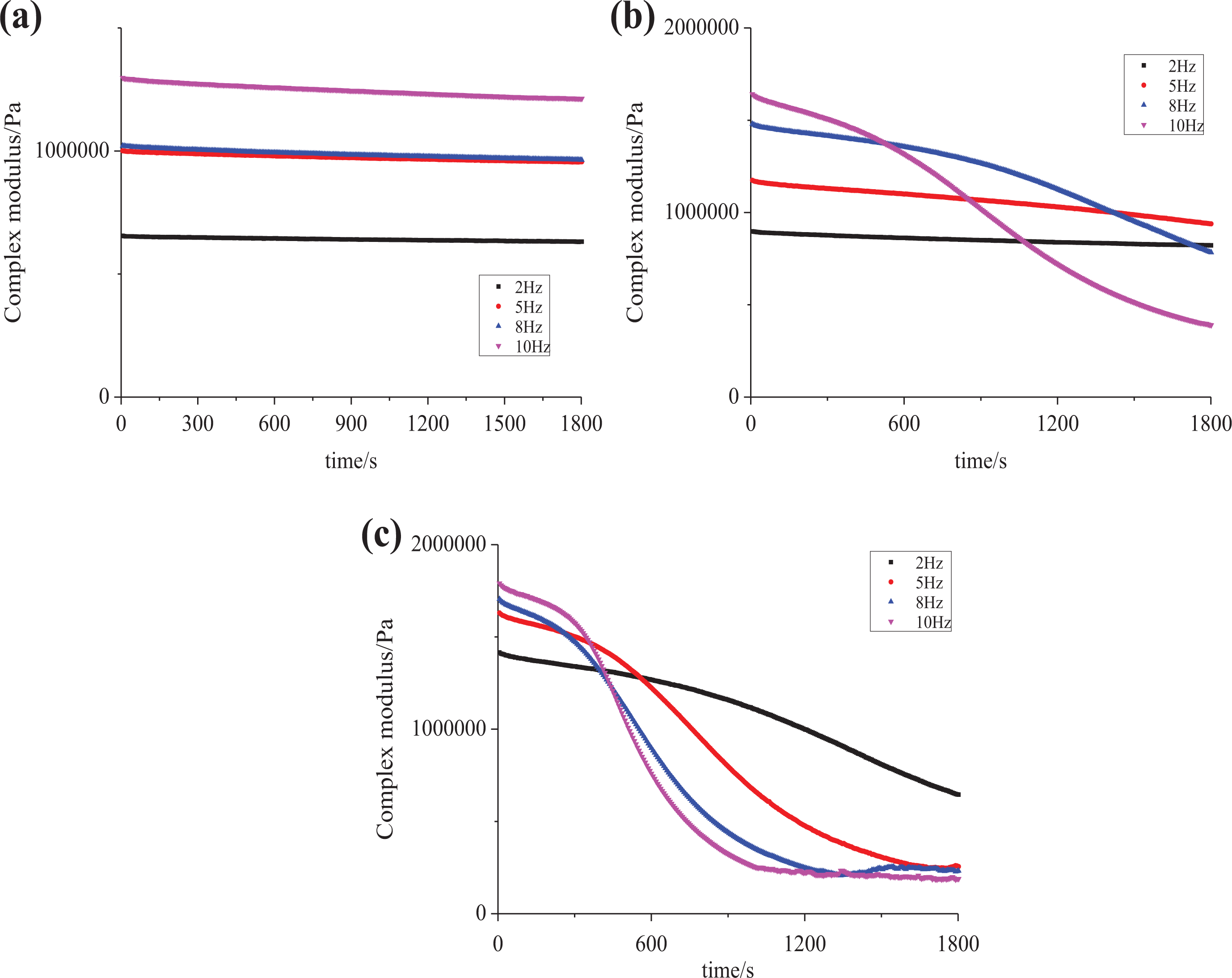
Effect of strain, loading frequency, and time on complex modulus at 40°C.
Results and discussion
Damage behavior equation fitting
Vacin and Stastna 35 used the bending beam rheometer test for modified asphalt binders and mixtures. The results show that the modified asphalt has a Boltzmann distribution between the creep compliance and the loading time t. Li et al. 36 used a tensile testing machine to study the mechanical behavior of the sealant during the tensile relaxation process and established the Boltzmann distribution equation of stress, loading time, and relaxation time.
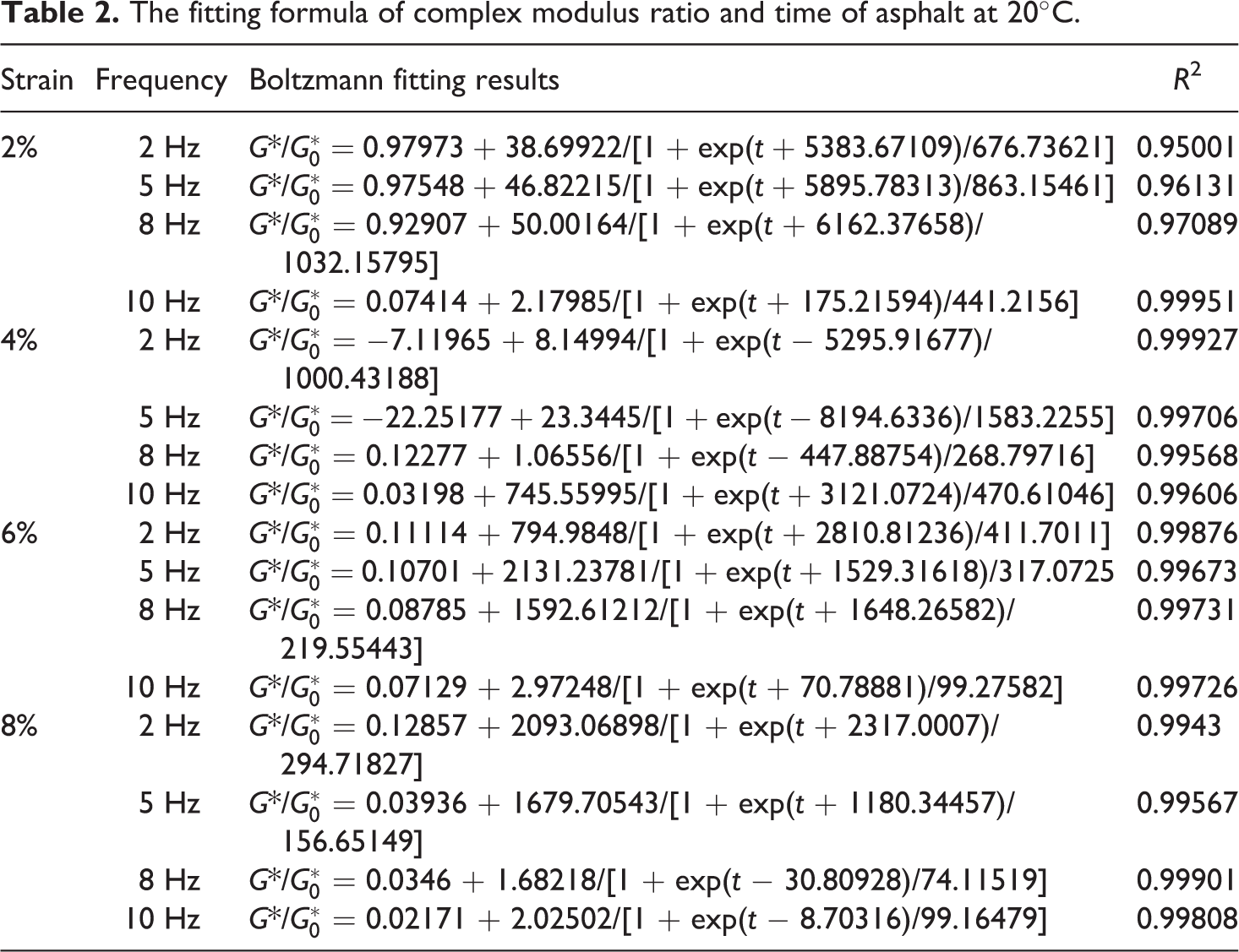
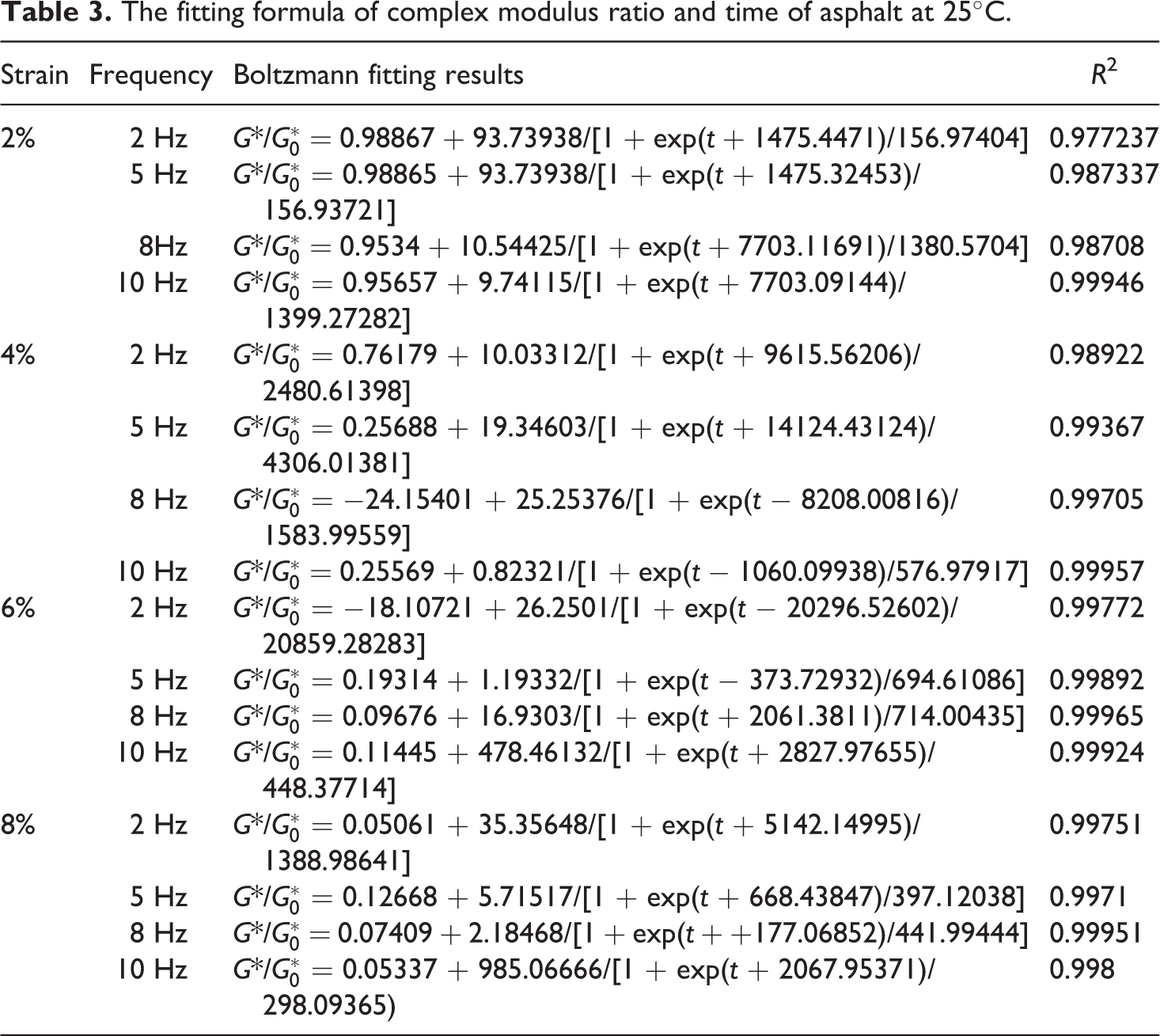
Although the above fitting results are not for complex modulus, it is feasible to use the Boltzmann distribution to fit the viscoelastic behavior of asphalt. Therefore, this article intends to use the Boltzmann distribution to fit the experimental data. The results are shown in Table 2. As shown in Table 6, the results show that the Boltzmann fit can adapt to the trend of the damage curve, and the correlation coefficient is greater than 0.95, indicating that the Boltzmann fit has a good correlation.
The fitting formula of complex modulus ratio and time of asphalt at 20°C.
The fitting equation of the complex modulus ratio (G*/
The fitting formula of complex modulus ratio and time of asphalt at 25°C.
The fitting formula of complex modulus ratio and time of asphalt at 30°C.
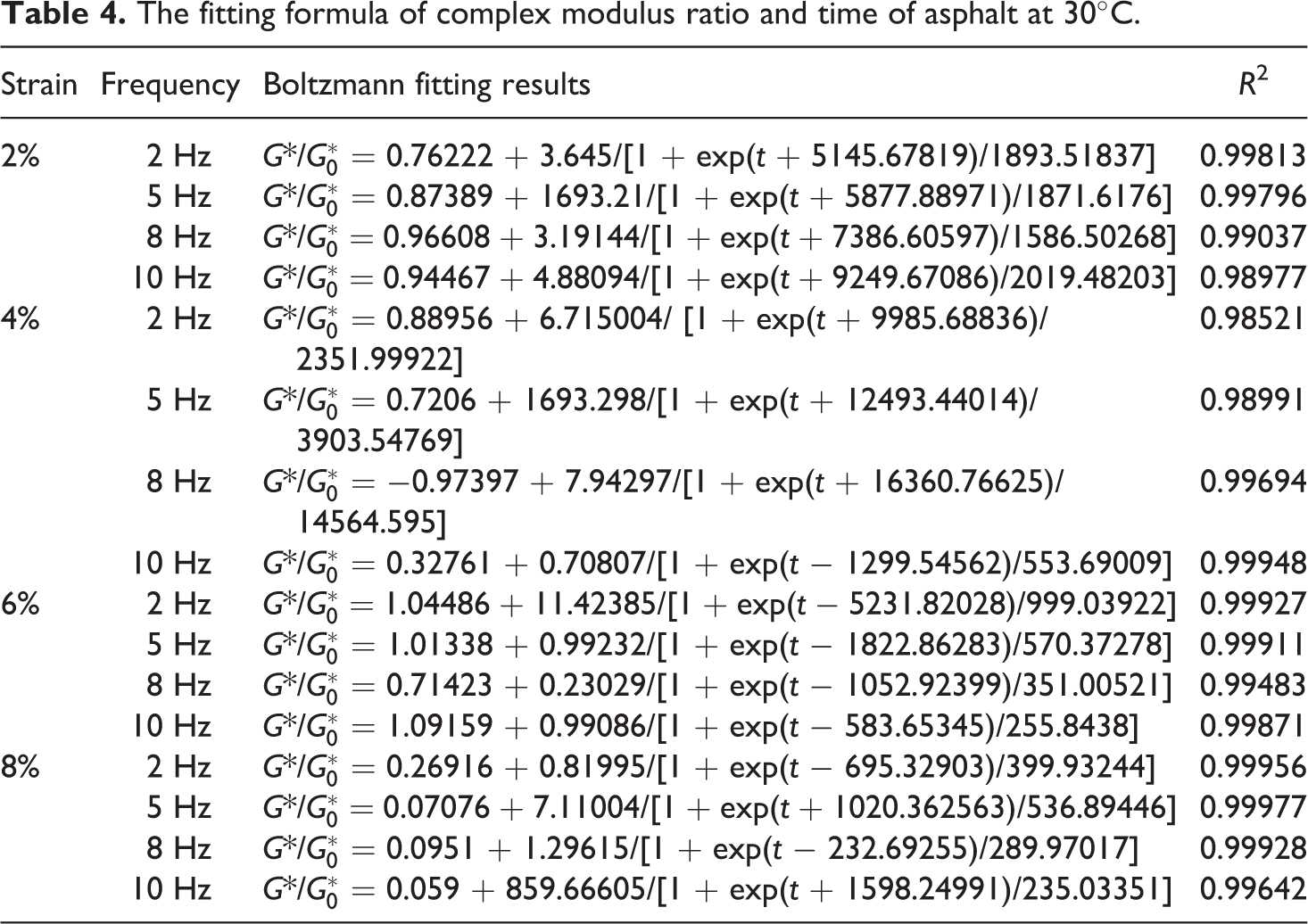
The fitting formula of complex modulus ratio and time of asphalt at 35°C.
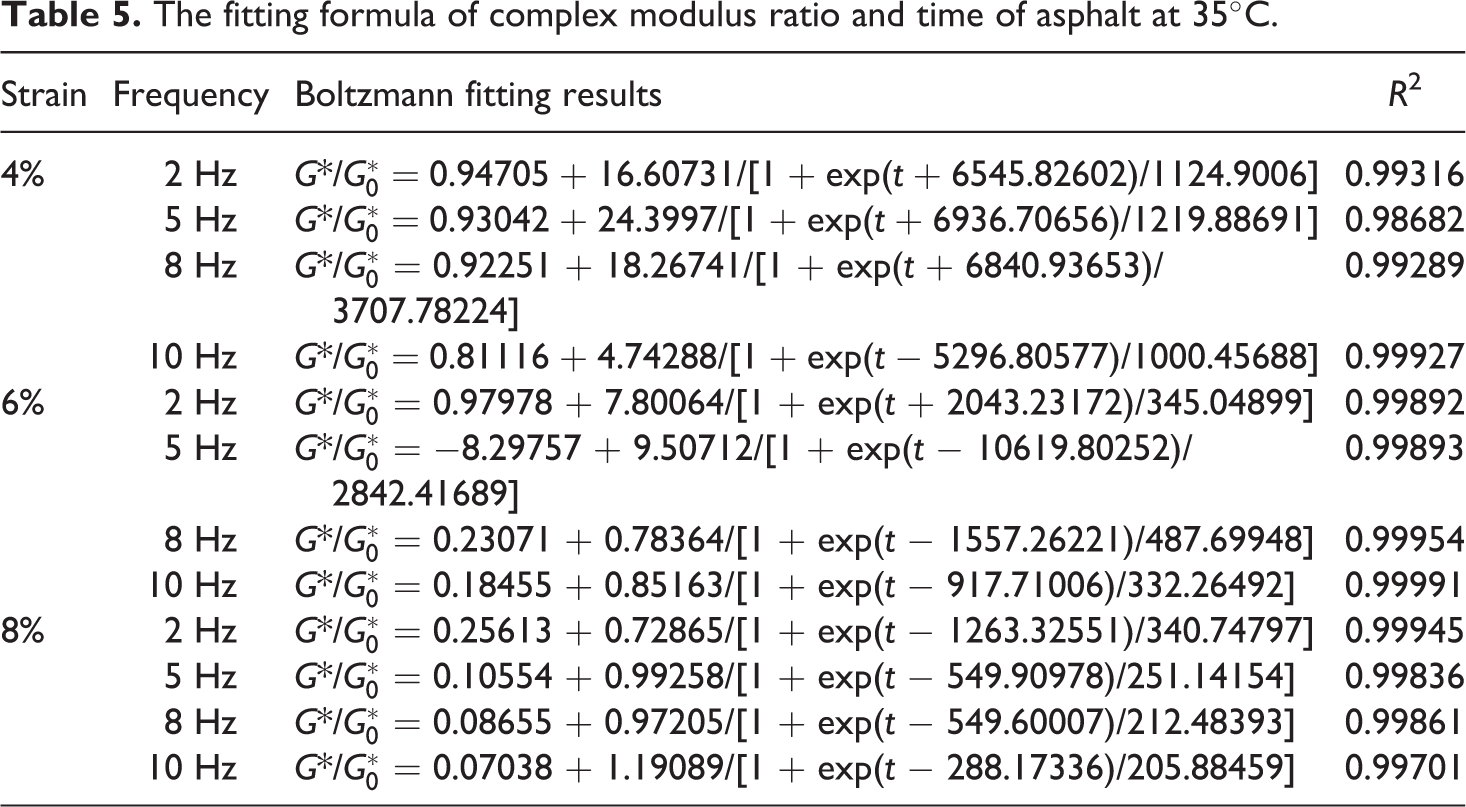
The fitting formula of complex modulus ratio and time of asphalt at 40°C.
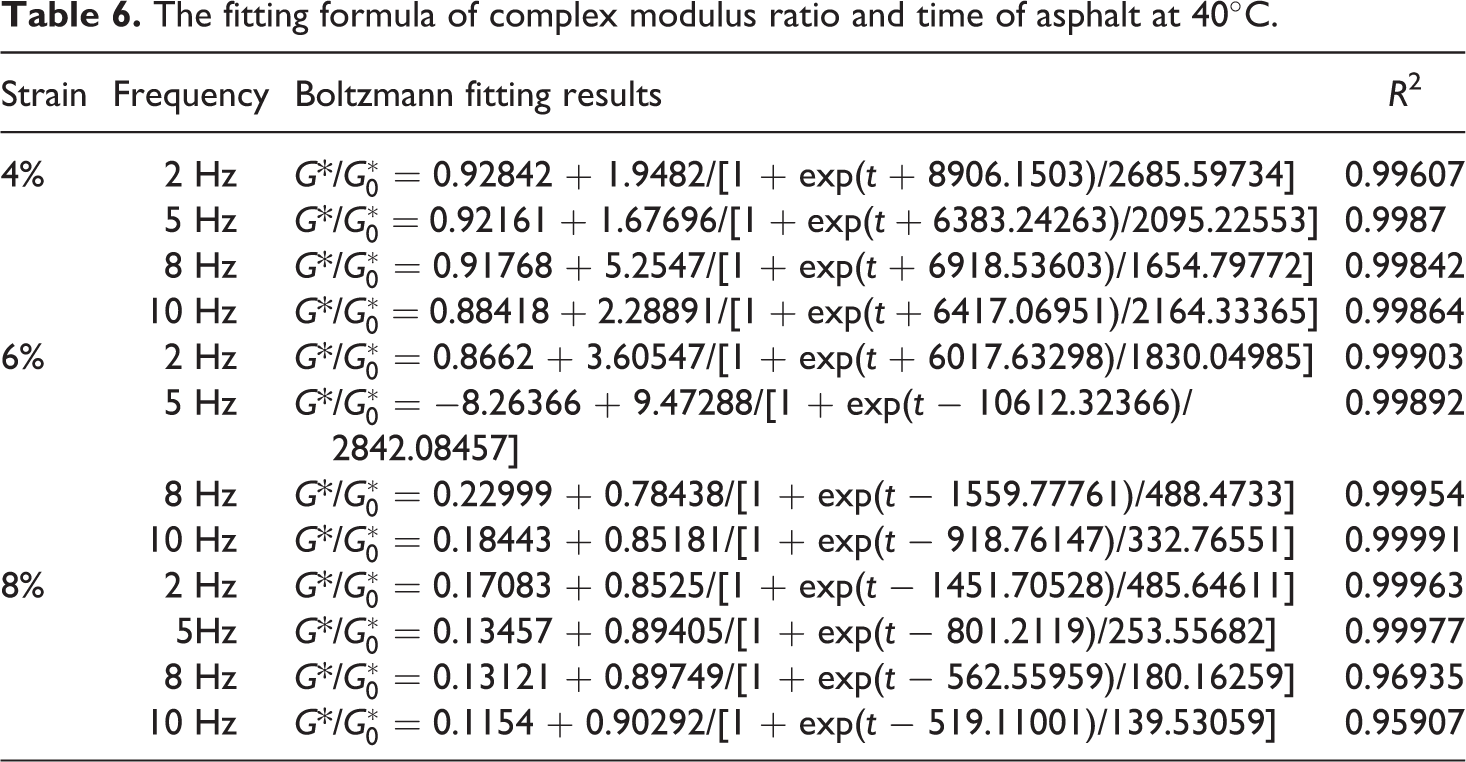
The fitting shows that for the shear damage characteristic curve of asphalt binder, the relationship between complex modulus ratio and loading time can be fitted by Boltzmann equation:
Analysis of damage curve
By comparing the damage curves of different loading frequencies and strain levels of the original asphalt at 20–40°C, the following rules were found:
At the same shear frequency and strain conditions, the higher the temperature, the lower the initial modulus of the binder, because at the lower temperature stage, the relevant molecular chains inside the asphalt binder and their segments are frozen. The segment has little diffusion motion between the various locations, so the initial complex modulus is higher in the low temperature phase. During the process of increasing temperature, the colloidal molecules of the asphalt binder will have a rapid short-range diffusion stage, a segment movement stage and an internal colloidal movement stage of the asphalt binder. The complex modulus gradually decreases during the sequential changes in each stage. It is precisely because the dynamic mechanical properties of the asphalt binder decrease under the condition of increasing temperature, the viscosity and creep properties are enhanced, and the resistance to external shearing is reduced.
The change of colloidal structure is the main reason for the influence of temperature on asphalt damage curve. Because the surface tension of the components of the internal colloid of asphalt decreases when the temperature rises, the colloidal morphology changes from the symmetry to the asymmetry of the low temperature. When flowing under the velocity gradient, the colloidal particles not only have translation, but also rotate and move accordingly. When the energy consumption is increased, the complex modulus of the asphalt decreases at a slower rate with time under the same external loading conditions.
At the same temperature, the higher the shear frequency, the higher the initial complex modulus. This is because the molecular segment movement in the asphalt can match the applied load change at a lower shear frequency, along with the shear frequency. With the increase, the segmental motion of the molecules in the asphalt cannot be matched with the applied load changes, and the interaction between the molecules will hinder the external shearing action, thus showing an increase in the macroscopic complex modulus.
At different temperatures and shear frequencies, the modulus of the asphalt binder decreases with increasing loading time; this is because under the action of shear, the forces between the molecules are destroyed, thus promoting the asphalt. The movement of the molecular segment is macroscopically reflected in the decrease of the modulus. The higher the frequency of loading, the greater the external work per unit time, the faster the intermolecular action is destroyed, and the faster the modulus declines.
At the same temperature, the higher the shear frequency, the faster the modulus decreases in the same time, because the higher the frequency, the more the number of actions per unit time, and the lower the modulus under the same strain conditions.
Analysis of characteristics of asphalt damage curve
According to the research results of Rowe and Bouldin 37 and Kim et al. 38 (as shown in Figure 6), the typical asphalt mixture (including asphalt mortar) damage curve should be anti-“S” type, the first inflection point (FIP). The FIP corresponds to the microcrack propagation in the asphalt mixture, and the second inflection point (SIP) corresponds to the macro-crack propagation, and the loading point corresponding to the transition point is fatigue life.
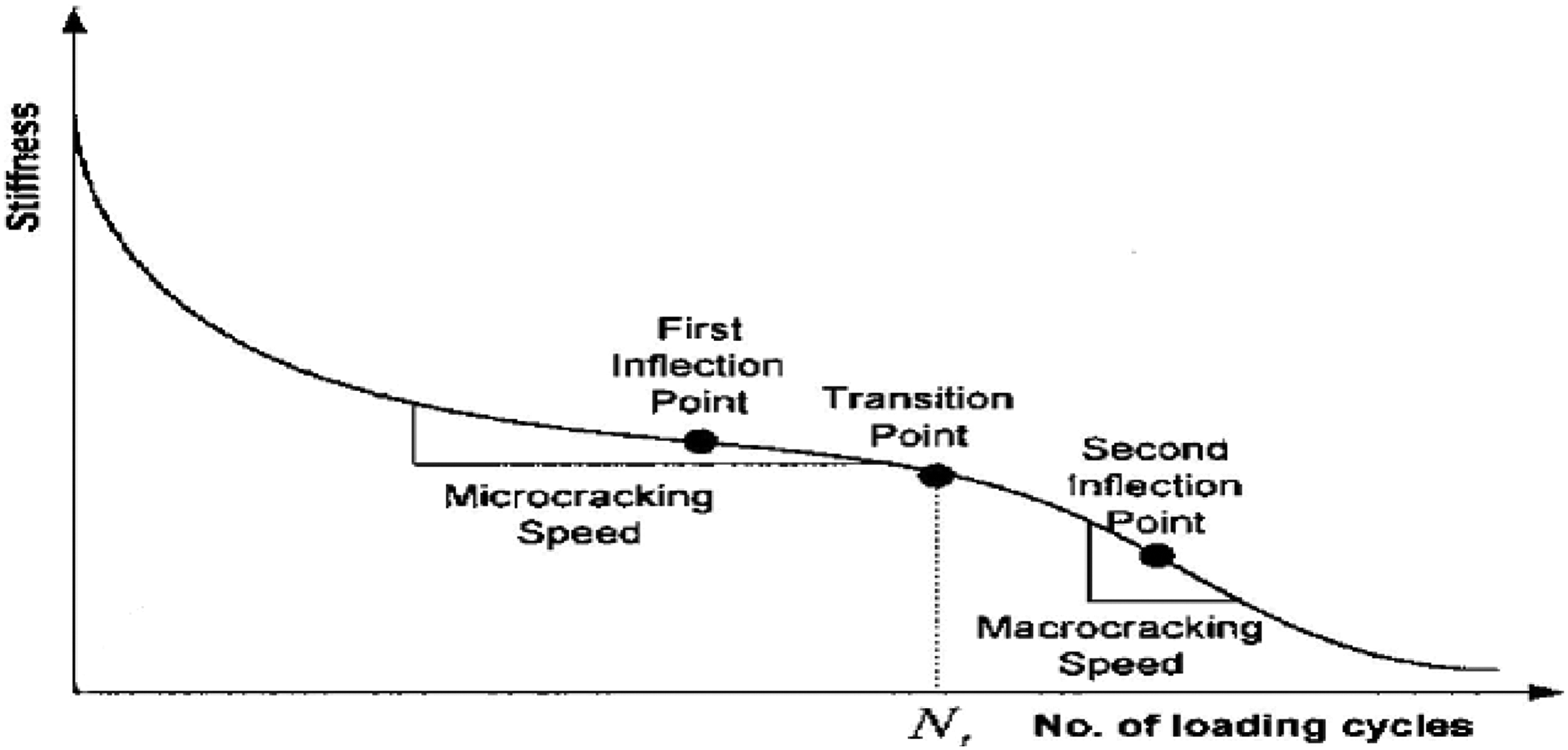
Typical damage curve of asphalt mixture.
Although there are some differences in the damage curve of asphalt cement and asphalt mixture (asphalt cement), the damage curve of asphalt binder can be analyzed by referring to the typical damage curve of asphalt mixture, and the three inflection points of typical damage curve of asphalt binder are determined and two platforms are shown in Figure 7.
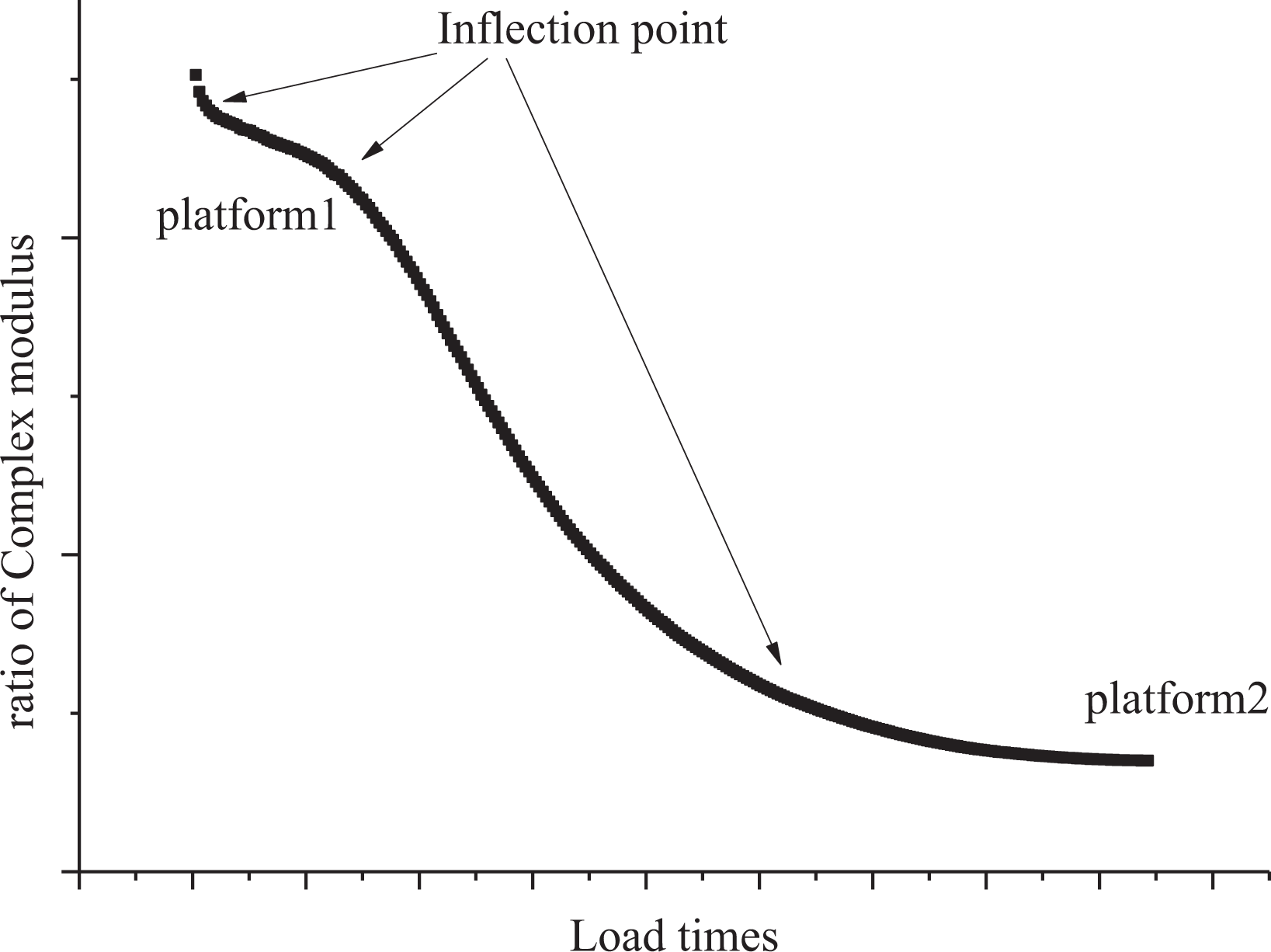
Typical damage curve of asphalt binder.
Before the FIP, this corresponds to the damage behavior of the asphalt binder under elastic deformation under certain environmental conditions and loading conditions, and when the complex modulus ratio drops to a certain extent (inflection point 1) due to the outside world. The shear force is mainly used to overcome the molecular interaction between the particles in the asphalt (mainly long-range effects, such as van der Waals forces), so before the molecular action between the particles is completely overcome, the complex modulus decrease with time (loading times) go on. When the increase is slower, the process is similar to the shear yield of the polymer. Before the yield point (inflection point 1), the deformation is reversible; after the yielding stage, the deformation begins to become irreversible due to the plastic flow colloid. The inter-molecular action is completely overcome (the end of the yielding phase) corresponds to the SIP. Since the work done by the outside is longer than the long-range interaction between the colloids, the corresponding macroscopic crack propagation of the asphalt binder is caused, resulting in a decrease in the complex modulus ratio. Increase, and when the complex modulus ratio drops to the third inflection point, the accumulated damage of the asphalt binder is close to the asphalt colloidal molecule short-range forces (such as static electricity, etc.) appeared in the platform 2, which corresponds to stage ultimate shear strength of the asphalt binder.
When the work done by the external load is not enough to overcome the elastic deformation energy of the asphalt, the complex modulus ratio of the asphalt has a linear relationship with the number of loadings. The greater the external work, the faster the change speed. The curve feature is now linear.
When the external load does a large amount of work, the molecular force between the asphalt colloids can be overcome quickly, so that no obvious inflection point 1 and inflection point 2 and platform 1 are visible in the damage curve, and the obtained damage curve is approximated as “L”.
When the work done by the external load is within a certain range (related to temperature, loading, etc.), the damage behavior of the asphalt meets the characteristics of the typical damage curve. In general, for asphalt binders with higher stiffness (such as lower temperature and greater aging), the higher the strain level, the higher the loading frequency, and the damage curve of asphalt binder is “L” type, otherwise, the temperature. The higher the loading frequency is, the smaller the strain is. The lower the strain, the smaller the loss of work due to the thermal motion of the internal molecules of the asphalt or the internal inter-molecular entanglement, resulting in the reduction of the external work in the same time, the yield phase will be formed, and the damage curve will be reversed. The S” type is even linear.
Conclusion
The higher the temperature, the lower the loading frequency and strain, the lower the initial modulus; the higher the temperature, the smaller the loading frequency and strain level, and the slower the complex modulus of asphalt decreases with time.
The typical damage curve of asphalt cement includes three inflection points and two platforms. The damage behavior of asphalt is divided into four processes: elastic deformation zone, shear yielding stage, crack propagation zone, and ultimate shear strength stage. The typical damage curve is reversed. “S” type, when the temperature rises, the strain level and the loading frequency decrease, the damage curve changes linearly, and vice versa to the “L” type.
For the asphalt damage behavior, the complex modulus is more scientifically reasonable compared with the complex modulus. For different temperatures, loading frequencies and strain, the expression of the complex modulus ratio-loading time Boltzmann fitting equation is proposed. Formula:
Footnotes
Funding
The author(s) disclosed receipt of the following financial support for the research, authorship and/or publication of this article: The project was supported by the Open Fund of the National and Local Joint Engineering Laboratory of Traffic and Civil Engineering Materials of Chongqing Jiaotong University, “Study on Self-healing Behavior Characteristics and Enhancement Technology of Asphalt Adhesives (LHSYS-2016-013)”.
