




Abstract
This research article deals with commercial polytetrafluoroethylene (PTFE)-based composites filled with 30% of bronze microparticles. This shade is used as guide rings in hydraulic cylinders. After a certain number of slip cycles, seal wear is one of the main causes of leaks in the hydraulic systems. To solve this problem, it is essential to act on the seal materials to increase its lifetime and consequently the lifetime of hydraulic systems. Excessive pressure on the seal causes a significant wear while a light contact causes lubricant leak. For both situations, we have a failure of the system. For this reason, it is necessary to have a perfect contact between the seal and the metal surface and simultaneously with minimal wear. This problem is the subject of our research works. We analyze, in this article, the tribological behavior of a PTFE/bronze composite under dry and lubricated sliding conditions for different frequencies and loads. An alternating linear motion ball/plane tribometer has been used to characterize friction and wear behavior of the material. Micrographic observation of wear track was taken with the optical microscope. The results showed the good friction behavior of material for low values of loads and frequencies and essentially for 33 N of load with 1 Hz frequency or for 81 N as normal load with 0.75 Hz frequency as well as lubrication improve the wear rate of the PTFE/bronze composite. Under lubrication, load and frequency become inversely proportional to friction coefficients.
Introduction
Polymers and especially the charged polymers are increasingly used in industrial field because of their high performance. 1 These composite materials have many applications in several industrial fields and, in particular, in friction mechanisms such as for gears, bearings, and guide ring. One of the most used polymers in sliding application is the polytetrafluoroethylene (PTFE) that has outstanding properties and distinguish it from other thermoplastic polymers, including excellent thermal and chemical resistance, as well as an extremely low friction coefficient and remains stable at high temperatures. Studies have shown also that, in dry condition sliding, PTFE is characterized by weak wear resistance. The addition of bronze particles in the PTFE matrix improves its wear resistance. 2 Pasha et al. 3 noted that the origin of the good interface between the PTFE matrix and the bronze particle is due to the formation of copper fluoride, which is caused by the degradation of PTFE and bronze.
PTFE matrix composites filled with bronze particles are widely used in different sectors, thanks to their good mechanical and especially tribological properties that depend on weight fraction. 4 Tribological behavior of these composites’ family was the subject of many research.5–9 Several research studies have shown that the incorporation of bronze particles in a PTFE matrix is a good solution to improve its friction behavior.5–8,10 Another solution to improve the tribological properties of PTFE has been proposed by Wang et al. 11 by coating of polymer with a composite layer. Under certain conditions, the addition of bronze particles in a PTFE matrix, during sliding, can lead to increase of the friction coefficient, the activation of abrasion, and the reduction of the chemical resistance of composite. 12 Studies have shown that bronze particles in a PTFE-based composite improve its wear behavior.
During sliding, the mechanical seals of the hydraulic cylinders are subjected to friction against a metal surface, which causes the wear of the material. To increase the life of these seals, it is important to control and reduce friction. The material used for these seals is the PTFE, characterized by its low friction coefficient and good resistance to solvents.7,13–16
In this study, our interest is focused on the analysis of the tribological behavior of a composite PTFE/bronze used in the guide rings of hydraulic cylinders. The evolution of the friction coefficient as a function of time has been analyzed for different loads and frequencies under dry and lubricated conditions. For the different test conditions, wear volumes and mechanisms have been explored and discussed.
Materials and methods
A PTFE matrix loaded by bronze particles (30% by weight) used for guide rings of hydraulic cylinders was considered in this study (from SKF group). This material is available as a band of 20 mm width and 3 mm thickness. According to technical data, the hardness of the material is equal to 57.3 shore D with an elasticity modulus that is equal to 676 MPa. 17
Figure 1 represents the distribution of bronze particle in the PTFE matrix obtained by scanning electron microscope. 17
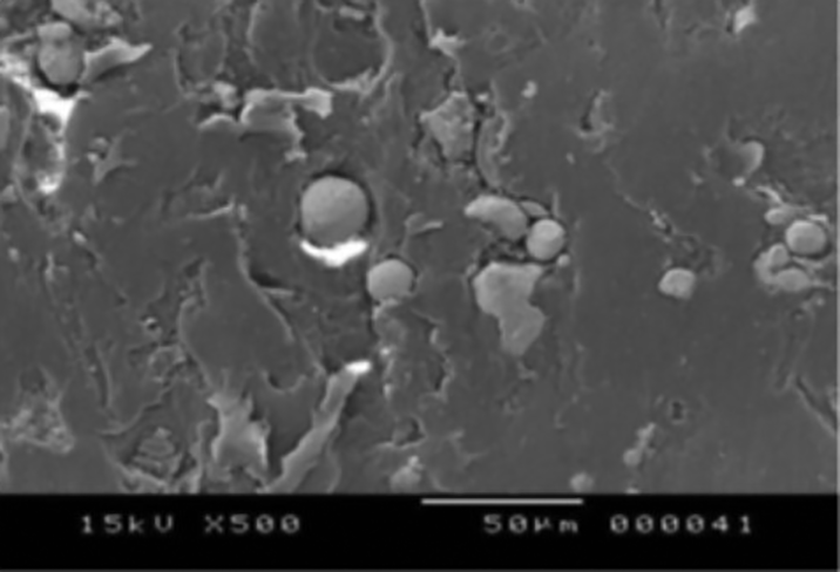
Distribution of bronze particle in PTFE matrix.
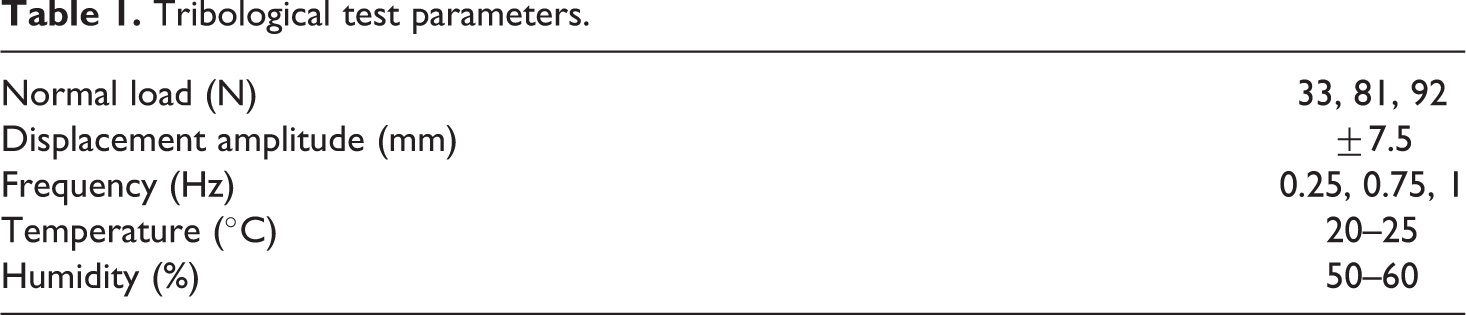
Composite samples 20 mm in length were cut from the tape to conduct friction and wear tests. Friction test was carried out using a reciprocating ball-on-flat tribometer (Figure 2). The used antagonist in this study is a high chromium steel ball (100Cr6) with a radius of 18 mm and arithmetic surface roughness of 0.06 μm. The tribometer allows contact between the antagonist and the sample under an applied normal load. Cyclic tangential motion with 7.5 mm amplitude is applied to the composite sample by means of a crank–rod system. The system is coupled to a geared motor unit equipped with a dimmer electronic speed. Tests were carried out under different values of normal load (33 N 81 N, and 92 N) and tangential motion frequency (0.25, 0.75, and 1 Hz). The used frequency values were chosen on the basis of the common displacement speed range of hydraulic cylinders spindles, whereas the choice of the used normal load values was done on the basis of the common applied loads on the spindle of hydraulic cylinders during operation. During sliding, the tangential load was measured and stored using a data acquisition system. The test parameters are indicated in Table 1. For each test condition, three tests were performed.
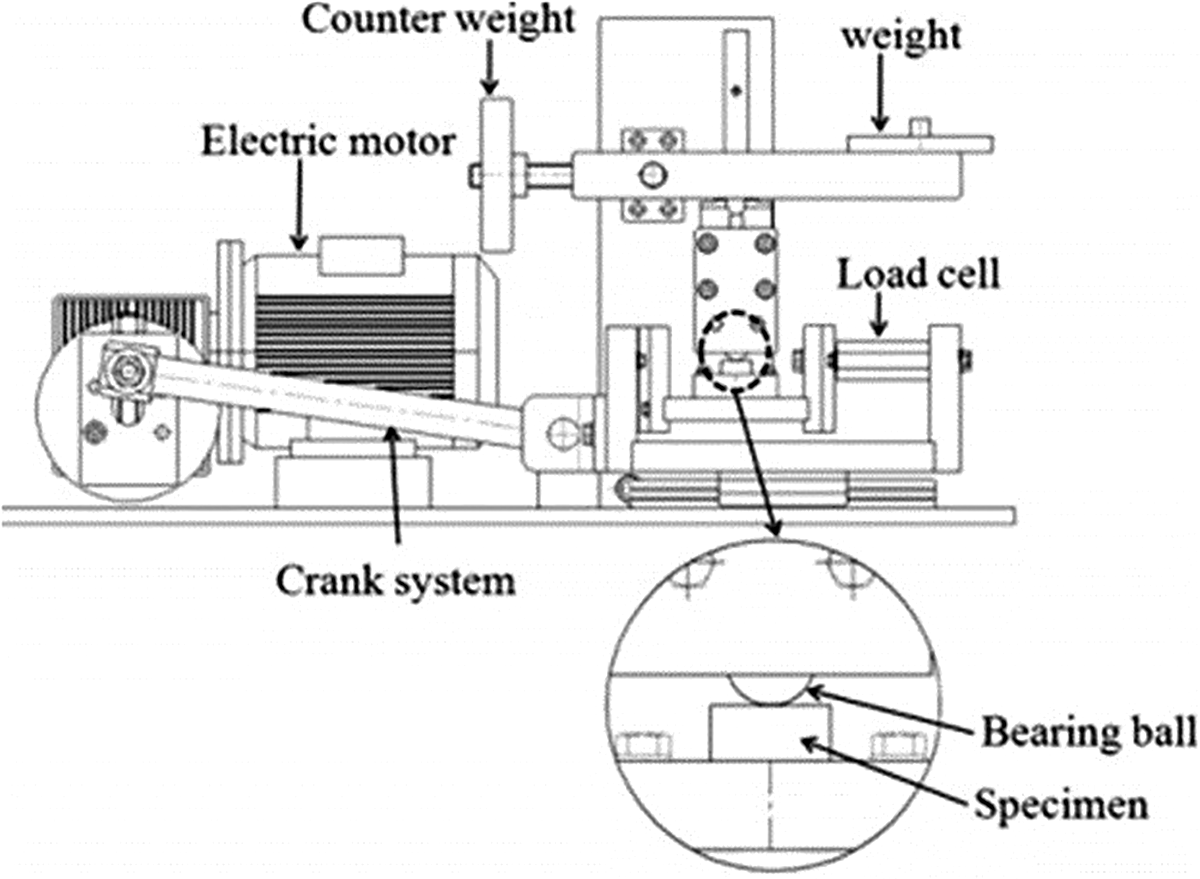
Reciprocating ball-on-flat tribometer.
Tribological test parameters.
For lubrication, we used a special oil for hydraulic cylinders. According to technical data, the density of this oil is equal to 0.87 kg l−1 (at 15°C), its viscosity is about 31.2 mm2 s−1 (at 40°C), with a flash point that is equal to 202°C.
After each friction test, the wear groove on the microcomposite samples was analyzed by optical microscope (LEICA DMILM, Germany) to analyze the wear mechanism. The cross section S (mm2) of the wear groove was measured after every wear test from the surface profile established by the mean of a roughness tester SJ-210 (Mitutoyo, Japan). The volume loss V (mm3) was calculated by using the following formula:

where d is the sliding stroke that is equal to 15 mm.
Results and discussion
Frequency effect
Dry sliding conditions
Figure 3 shows the evolution of friction coefficient against the cycle number for different frequencies (0.25, 0.75, and 1 Hz). For the three studied frequencies, friction coefficients increase with cycles number and the trends are similar, four stages can be identified: the first stage in which the friction coefficient decreases from an initial value to a minimum value. This stage is always attributed to the cleaning of surface screens. The contact between the composite sample and the counterface at the beginning of the test is limited. After some cycle number, the surface contact between the ball and the sample increases, which causes an increase in friction coefficient of the material.
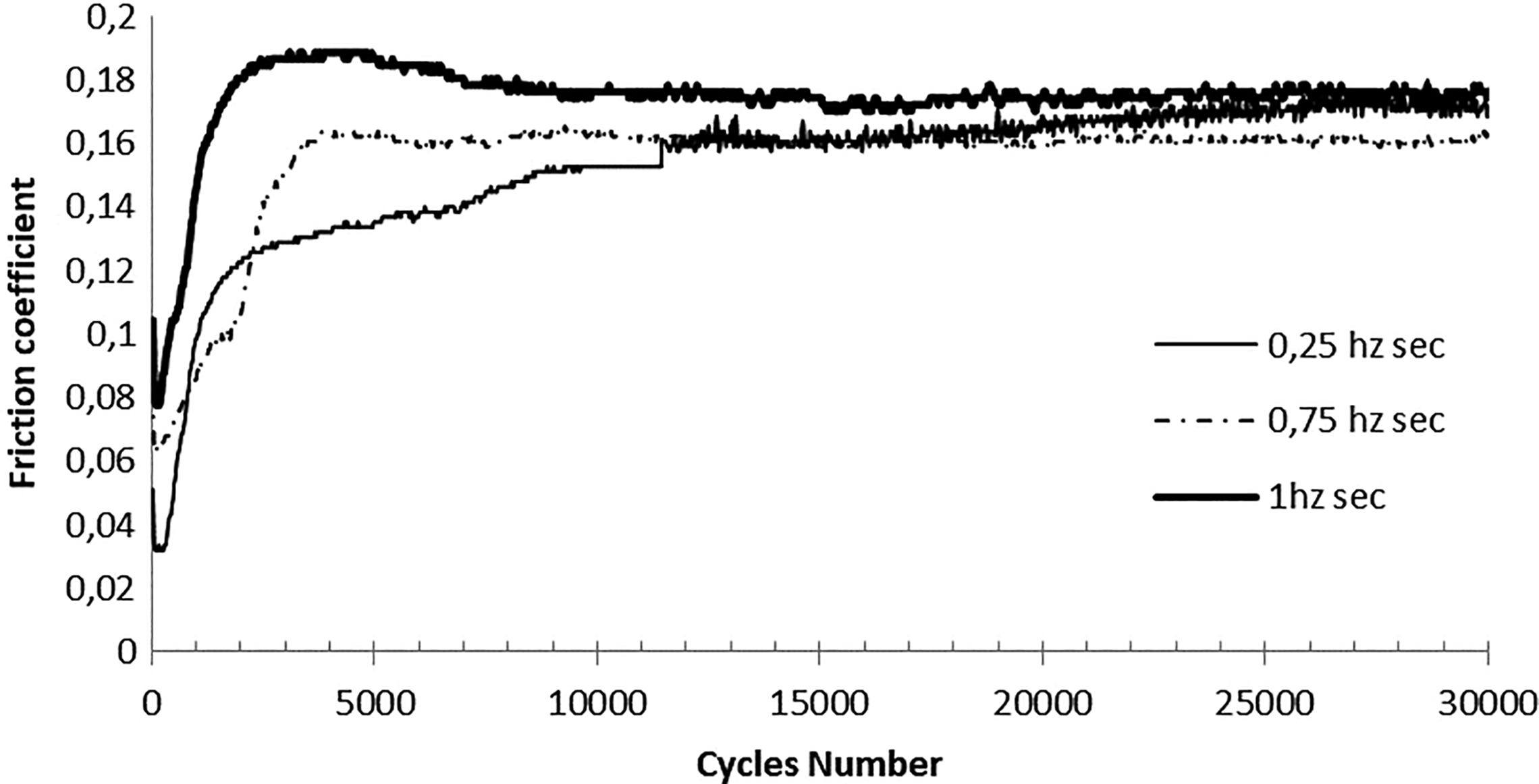
Evolution of friction coefficients against cycles number for different frequencies in dry sliding conditions under 81 N as normal load.
The second stage (running in stage) for which the friction coefficient increases with a quasi-linear manner. This stage characterizes the interaction between the asperities of the two contacting surfaces giving an increase of the real contact area.
The third stage is attributed to the development of the transfer film on the one hand and the development of the third body bed on the other hand. For this stage, some differences can be seen between the three considered frequencies. In fact, for 0.25 Hz, the friction coefficient continues to increase but with a lower slope than that of the second stage to stabilize after 13,000 cycles at 0.17. However, for 1 Hz frequency, the friction coefficient increases rapidly from the beginning of the test until reaching a maximum value that is equal to 0.19. After 17,000 cycles, the friction coefficient stabilizes at a value of 0.18. For 0.75 Hz frequency, at the beginning of the test, the friction coefficient gradually increases until it reaches a value of 0.16 and stabilizes after 6000 cycles.
The fourth stage corresponds to steady-state regime of the friction coefficient. Throughout this stage, the stability of the friction coefficient is due to a stable interaction between the third body of wear particles trapped in the contact and the transfer film formed on the counterface. We note also that, for 0.75 Hz frequency, friction behavior is the best of the three used frequencies because the friction coefficient takes the least value at the friction coefficient level and a fast stability which is reached after 6000 cycles.
These results are comparable to the results obtained by many researchers. The authors studied the tribological behavior of PTFE loaded with 60% bronze with a normal load that was fixed on 50 N for the firsts 30 s and then at 100 N, 60 Hz frequency, and 2 mm stroke. The authors have shown that the friction coefficient of the material is about 0.35. 18
Research works of Conte et al. 19 and Tzanakis and Hadfield 20 showed that during sliding, the temperature at the interface increases. The estimated mean contact temperature along the test is between 50°C and 70°C. This temperature increase depends on the type and the amount of added particle, the normal load, and the sliding speed. The authors showed also that the small crystals formed by nucleation at lower temperature (at the beginning of sliding) are destroyed during friction, thanks to the rise of temperature.
Figure 4 presents the micrographic observations of wear track for the three studied frequencies. Based on these micrographic observations, we note that bronze particles rate detached during friction and trapped in the contact are even more important when the frequency is high. The severity of the wear mechanism increases with frequency leading to stronger interactions between the steel antagonist and the composite surface. These results are in agreement with those obtained by Toumi et al., 21 who studied the tribological behavior of PTFE composite and who showed that the friction coefficient of the material increases with the frequency.
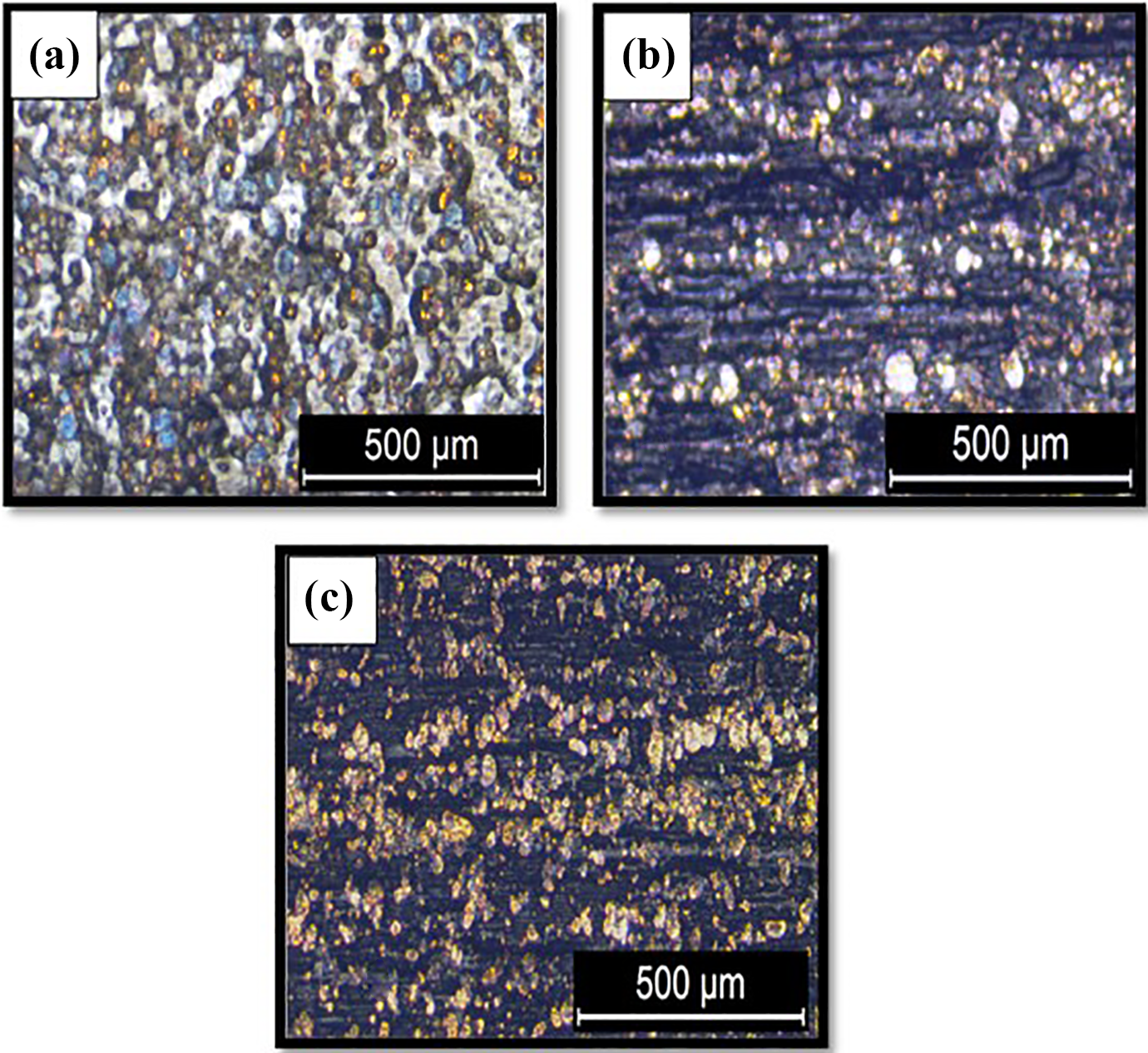
Optical micrographs of wear track in dry sliding conditions for different frequencies: (a) 0.25 Hz, (b) 0.75 Hz, and (c) 1 Hz.
Typical profile of the wear groove on the specimen surface for composite sample with 1 Hz of frequency is presented in Figure 5. Using this profile, the cross section was calculated and indicated in Table 2. This table presents the depths and the volume loss for the different used frequencies.
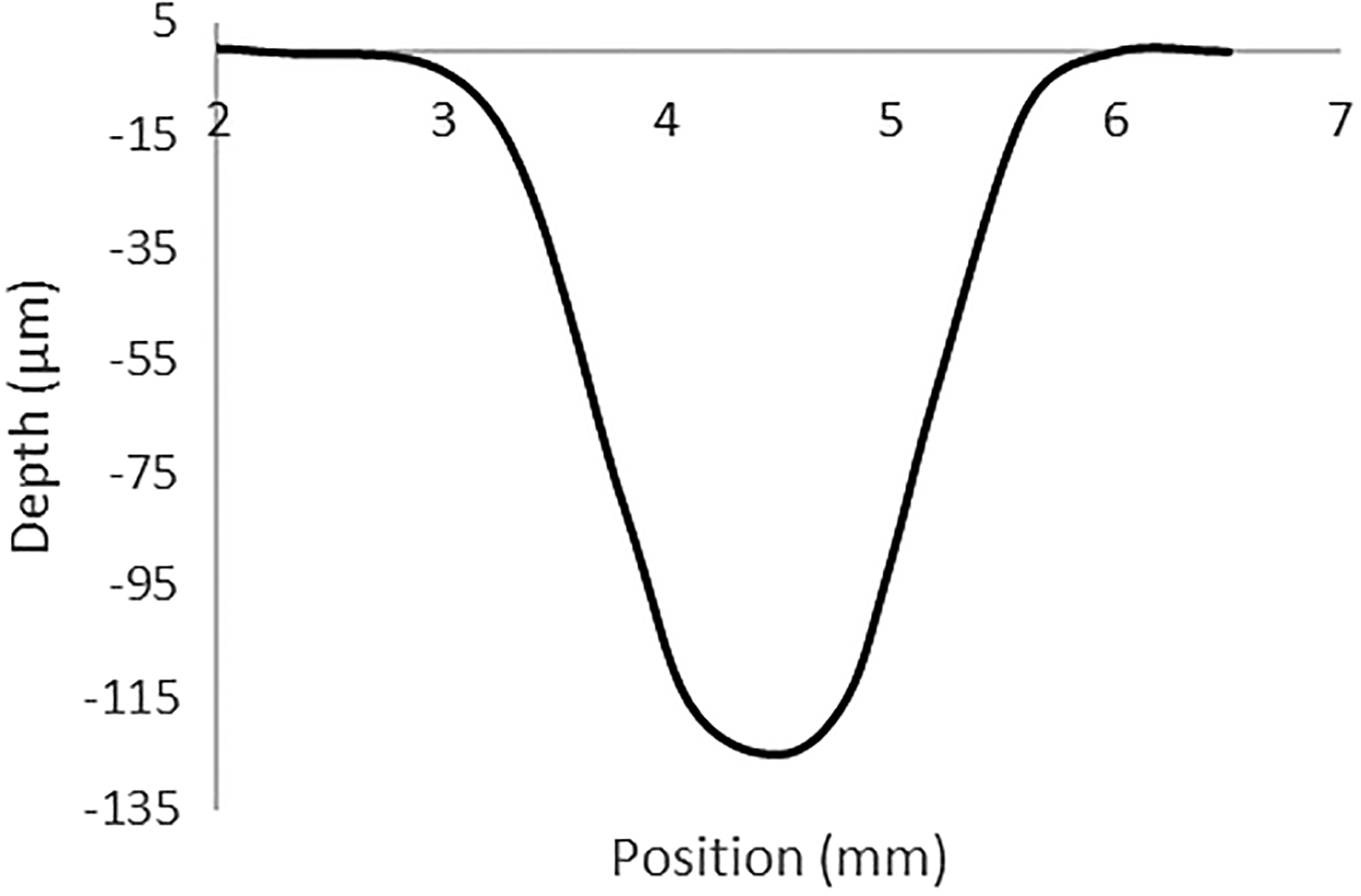
Typical profile of wear groove after 30,000 cycles with 81 N normal load and 1 Hz frequency.
Volume loss in dry sliding conditions for different frequencies.
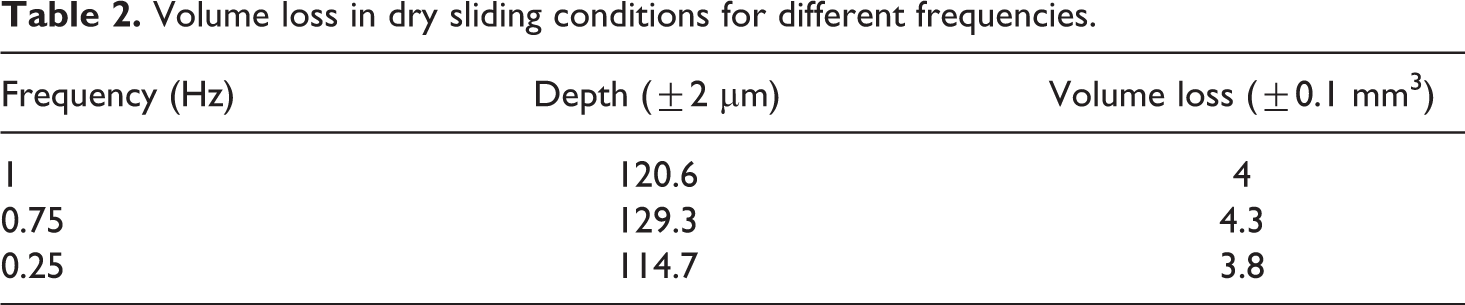
According to the results from Table 2, we note that the highest wear groove depth is accorded when the frequency is equal to 0.75 Hz and consequently the greatest value of volume loss, this value reaches 4.3 mm3. For 1 Hz frequency, the volume loss is equal to 4 and 3.8 mm3 for 0.25 Hz frequency.
Lubricated sliding condition
Figure 6 represents the evolution of the friction coefficient against the cycles number for composite material under lubrication. In fact, the three curves have the same trend composed of two stages. During the initial stage, the friction coefficient experiences a progressive increase to reach a steady-state value for the second stage. For 1 Hz frequency, the friction coefficient gradually increases from 0.03 to attain and stabilizes at a value of 0.07 after 10,000 cycles. For 0.75 Hz frequency, the friction coefficient is stabilized for an average value of 0.09. For 0.25 Hz frequency, the friction coefficient reaches the value 0.1 after 18,000 cycles and it is the highest value for the three used frequencies in lubricated sliding conditions.
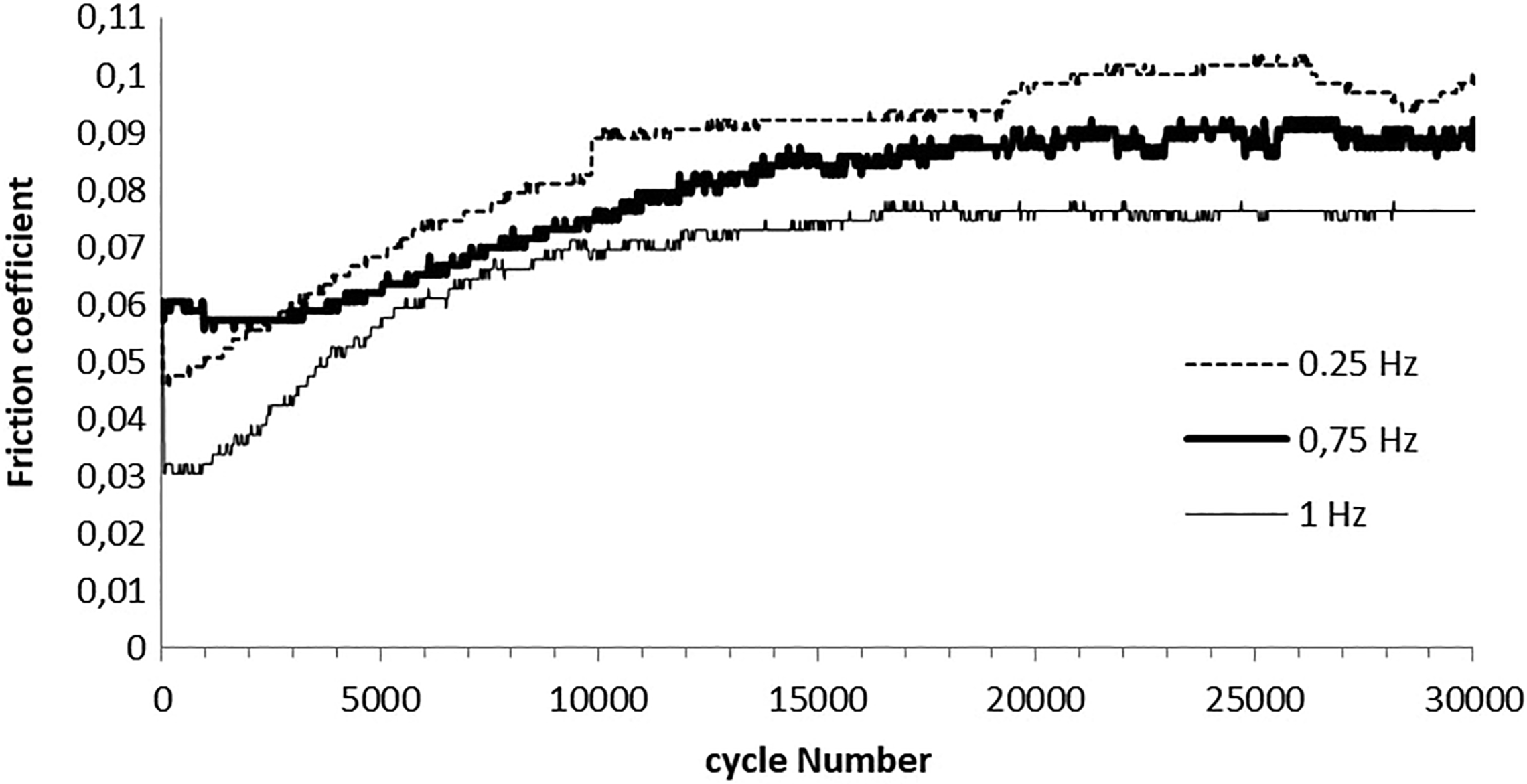
Evolution of friction coefficients against cycles number for different frequencies under lubrication (81 N as normal load).
By comparing tests carried out in dry sliding conditions with those in lubricated sliding conditions, we deduce that the composite behavior, for the three values of used frequencies, is quite improved under lubrication. In fact, the average values of frictions coefficient are almost reduced to half that of those recorded under dry sliding condition.
We conclude that under lubrication, the friction coefficient increases when the frequency decreases. For 1 Hz frequency, we note the lower friction coefficient with a fast stability. These experimental results are proved by the following formula, 22 indicating that the friction force (F) decreases with increasing frequency:

where a, b, c, and d are constants that depend on the material and v is the sliding speed.
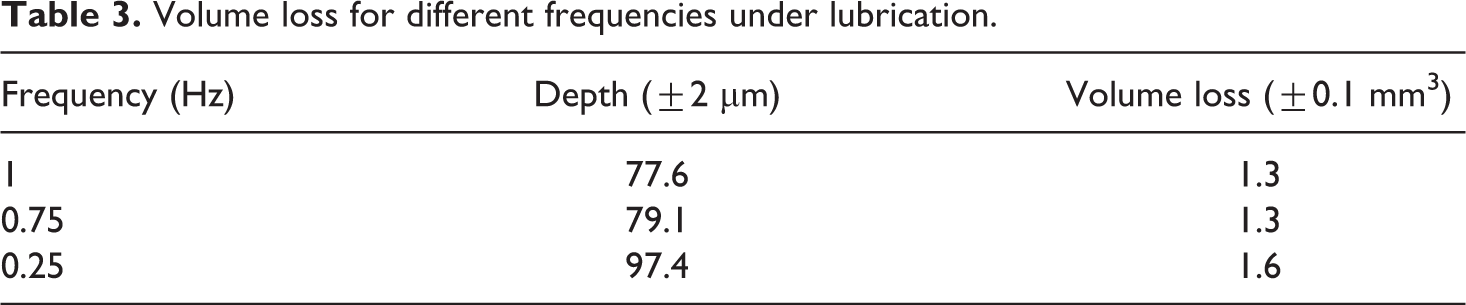
Figure 7 shows the micrographic observations of the PTFE/bronze composite samples after wear tests under lubrication for different frequencies. According to images, we note the presence of a low rate of bronze particles detached and trapped in the contact. In addition, the structure of the worn surface is quite smooth showing a soft wear mechanism involved. This result is in agreement with that obtained by friction coefficient against cycle number curves. In addition, and according to Table 3, showing volume loss for different frequency in lubricated sliding conditions, we deduce that wear is more accentuated for the lowest frequency. This result is in contrast with those on dry condition. This is due to the low contact temperature between the material and the steel ball in lubricated condition, which is the opposite in dry sliding conditions.
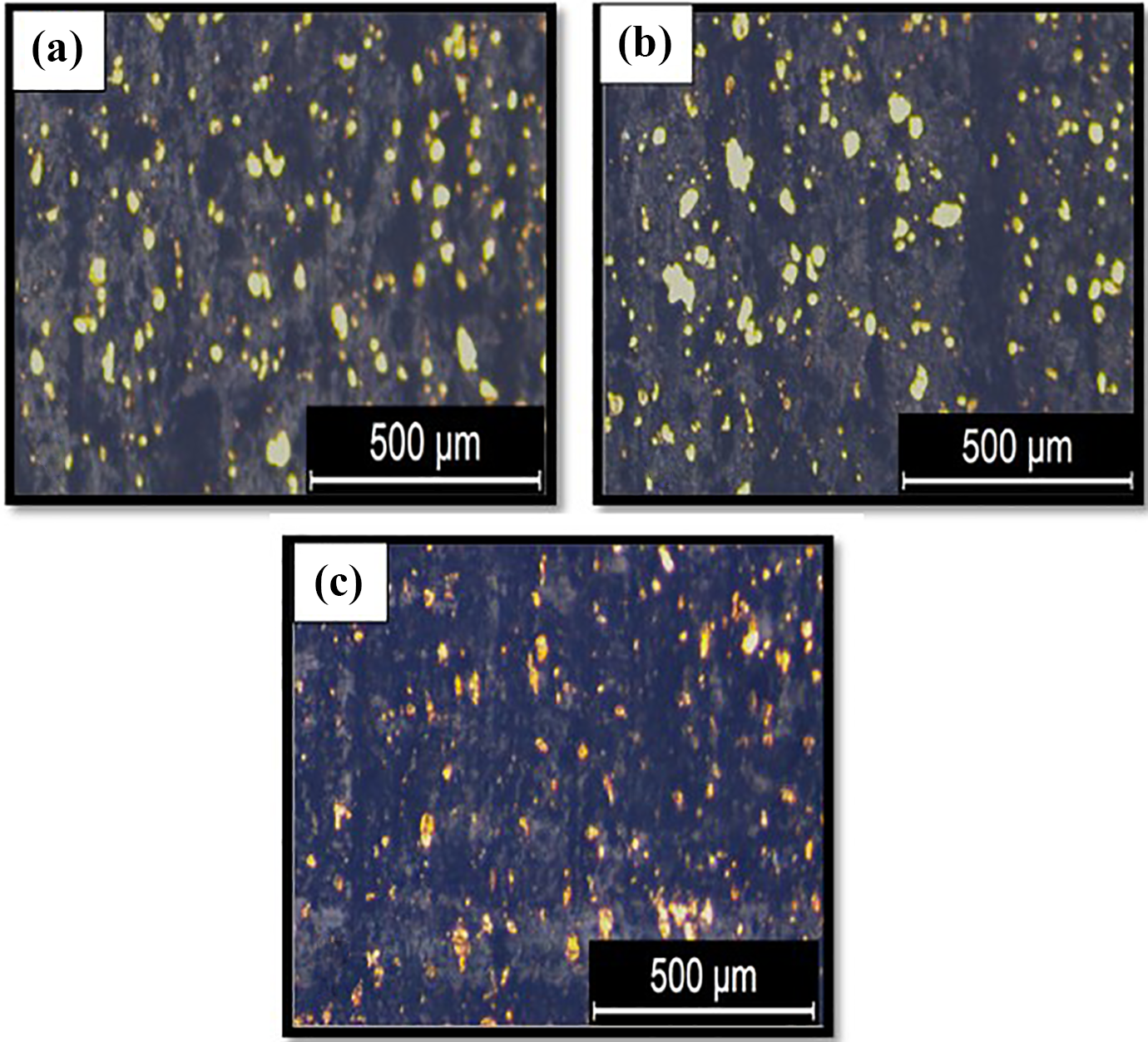
Optical micrographs of wear track under lubrication for different frequencies: (a) 0.25 Hz, (b) 0.75 Hz, and (c) 1 Hz.
Volume loss for different frequencies under lubrication.
Load effect
Dry sliding conditions
Figure 8 shows the influence of load on the tribological behavior of PTFE/bronze composites in dry sliding condition for 1 Hz frequency. For the three studied loads (33, 81, and 92 N), the friction coefficient value at the beginning of tests is 0.07 and gradually increases to reach a stable value. For 33 and 81 N loads, the friction coefficient stabilizes at a value of 0.16 after 6000 cycles. For the load of 92 N, the friction behavior is different from the two others and the friction coefficient is the highest (0.2) for the three used loads. The incorporation of bronze particles in the PTFE matrix improves the material resistance to adhesive wear mechanism and modifies the PTFE behavior. The presence of these particles prevents the nucleation of crystals. For relatively high normal loads (92 N), a higher friction coefficient is noted with less stability with comparison with the other experimental conditions. In this case and after about 20,000 cycles, we note the destruction of the transfer film accompanied by an important increase of friction coefficient. This is due to the effect of the hard-bronze particles that were torn from the matrix under the effect of a high normal charge. These particles are trapped at the interface and act as a third body, which causes an increase of the friction coefficient, as shown in Figure 8.
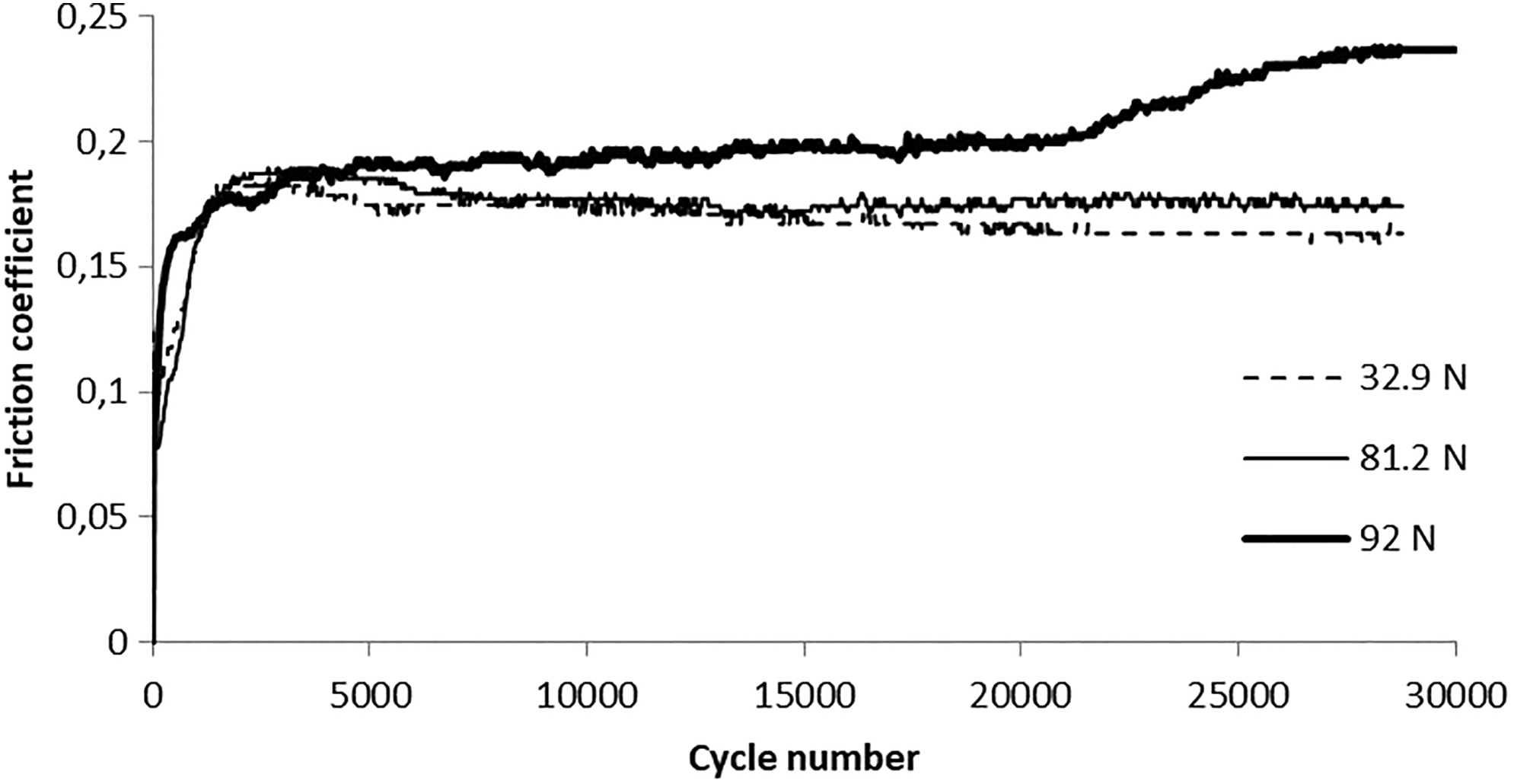
Evolution of friction coefficients against cycles number for different loads in dry sliding conditions with 1 Hz as frequency.
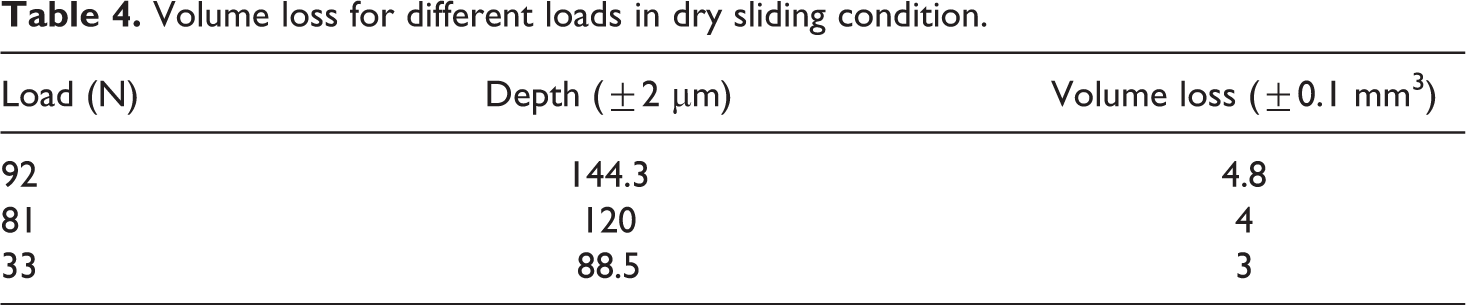
Micrographic observations of wear grooves for the different studied loads are presented in Figure 9. We notice that wear increases with the increase of load. According to the figure, the grooves are deeper when the normal load increases and become deep due to the presence of bronze particles. We also notice the absence of microcracks in wear track because of the presence of the bronze particles in PTFE matrix. The wear increases with the repetitive plowing of the material and with the increase of the normal load, which causes an increase of volume loss of material, as indicated in Table 4.
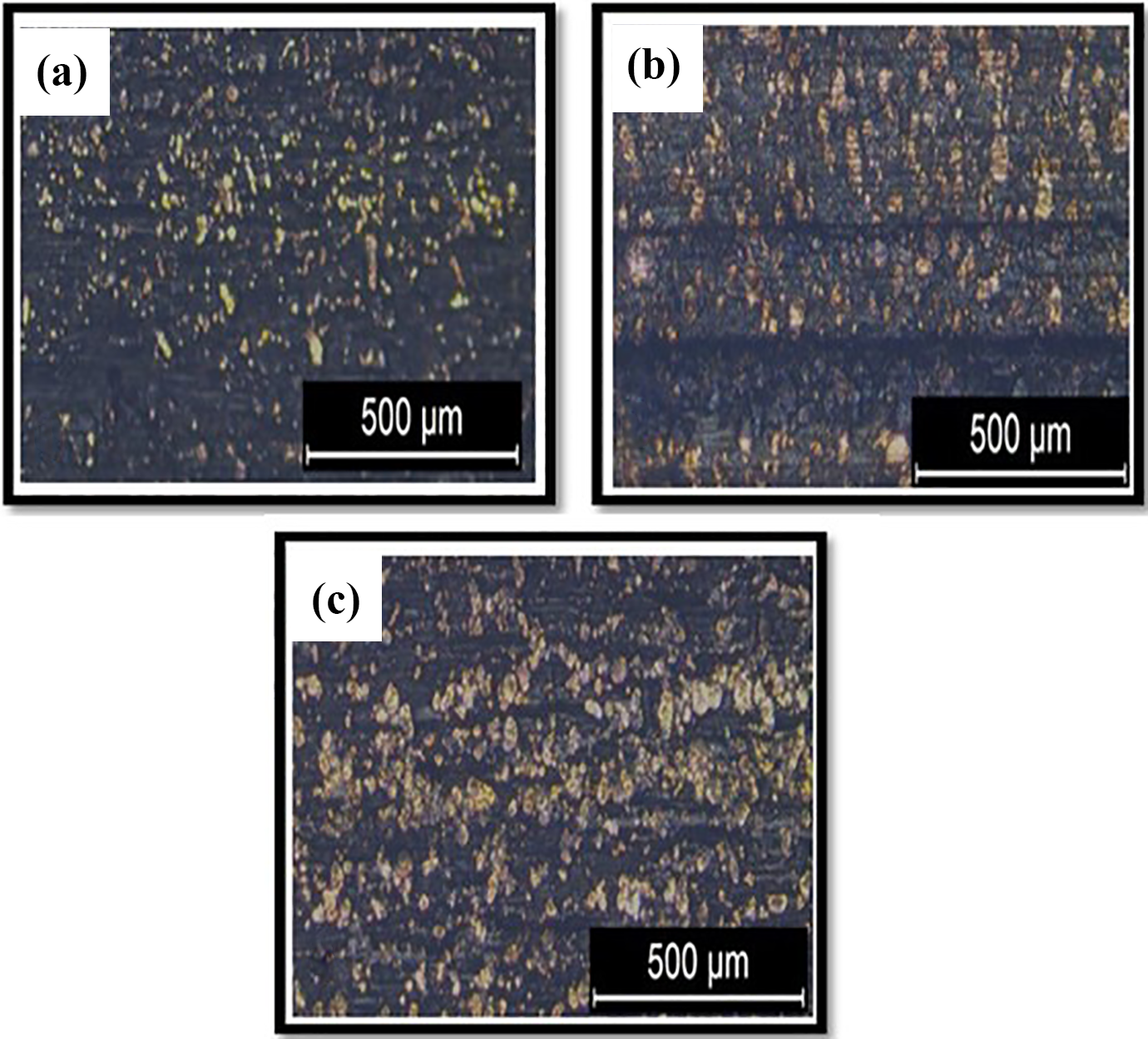
Optical micrographs of wear track in dry sliding conditions for different loads: (a) 33 N, (b) 81 N, and (c) 92 N.
Volume loss for different loads in dry sliding condition.
The removed material acts as a third body and plows the surface of the sample, as shown in Figure 9(b). For 81 N of load, we observed an abrasive wear mechanism, which results in the presence of scratches on the surface of the sample. This mechanism is softer for an applied load of 33 N, as shown in Figure 9(a).
Table 4 shows the volume loss values obtained for different loads in dry sliding condition after 30,000 cycles. We noted that volume loss increases with load.
As shown in Table 4, the load has a significant influence on the wear volume. When the normal load increases, the wear and volume loss also increase, as mentioned by many researchers.23,24
Lubricated sliding condition
The friction coefficient, for the three used loads, shows a progressive increasement with the cycles number to stabilize at the end of the test at 0.067 for the load 92 N, at 0.076 for the load 81 N, and at 0.12 for the load 32.9 N (Figure 10).
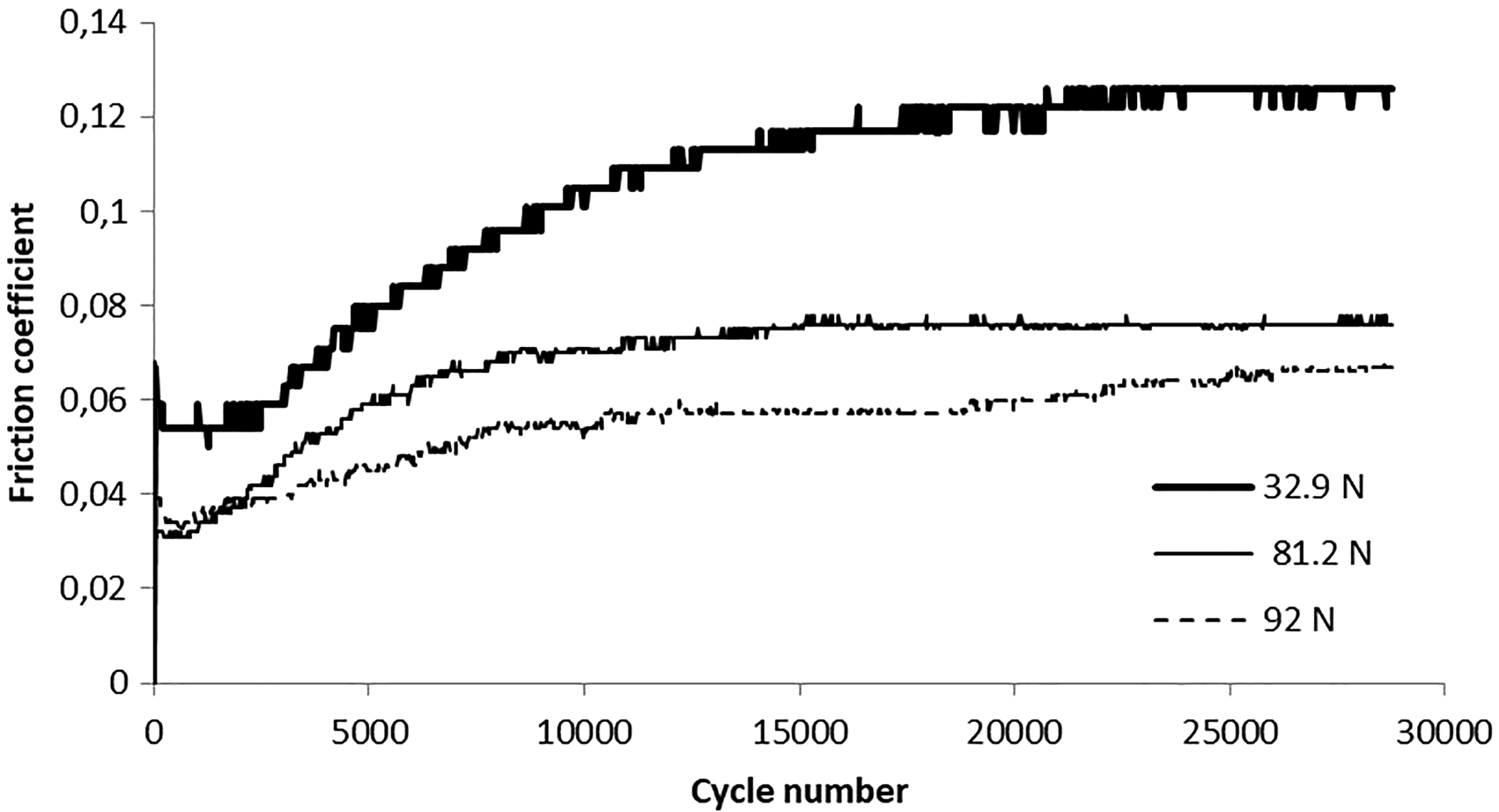
Evolution of friction coefficients against cycles number for different loads under lubrication with 1 Hz as frequency.
For the three curves, we note relatively steady friction coefficients during sliding. This stability can be caused by the formation of a transfer film on the counterface. Research works have shown that transfer film is influenced by the interfacial temperature and sliding speed. 18
We also deduce that the tribological behavior of the composite is improved under lubrication for the three used loads. Indeed, for the two loads 92 N and 81 N, the lubrication reduces the friction coefficient almost three times, whereas for the 33 N load, we recorded a very high friction coefficient in comparison with those obtained for the 92 N and 81 N loads. Several research work on PTFE matrix composites have achieved the same result. 23 Under lubrication, the interaction between the antagonist and the composite surface becomes weaker leading to a significant decrease in the friction coefficient for 81 and 92 N loads.
Micrographic observations of wear grooves under lubrication for the different studied loads are presented in Figure 11. Under lubricated sliding condition, for the three used loads, PTFE/bronze composite has a soft wear mechanism. This is due to the effects of the oil film adsorbed on the surface of the sample. As a result, the mechanical and thermal stresses in the contact zone are reduced and this has the effect of reducing the friction coefficient and the wear of the material.
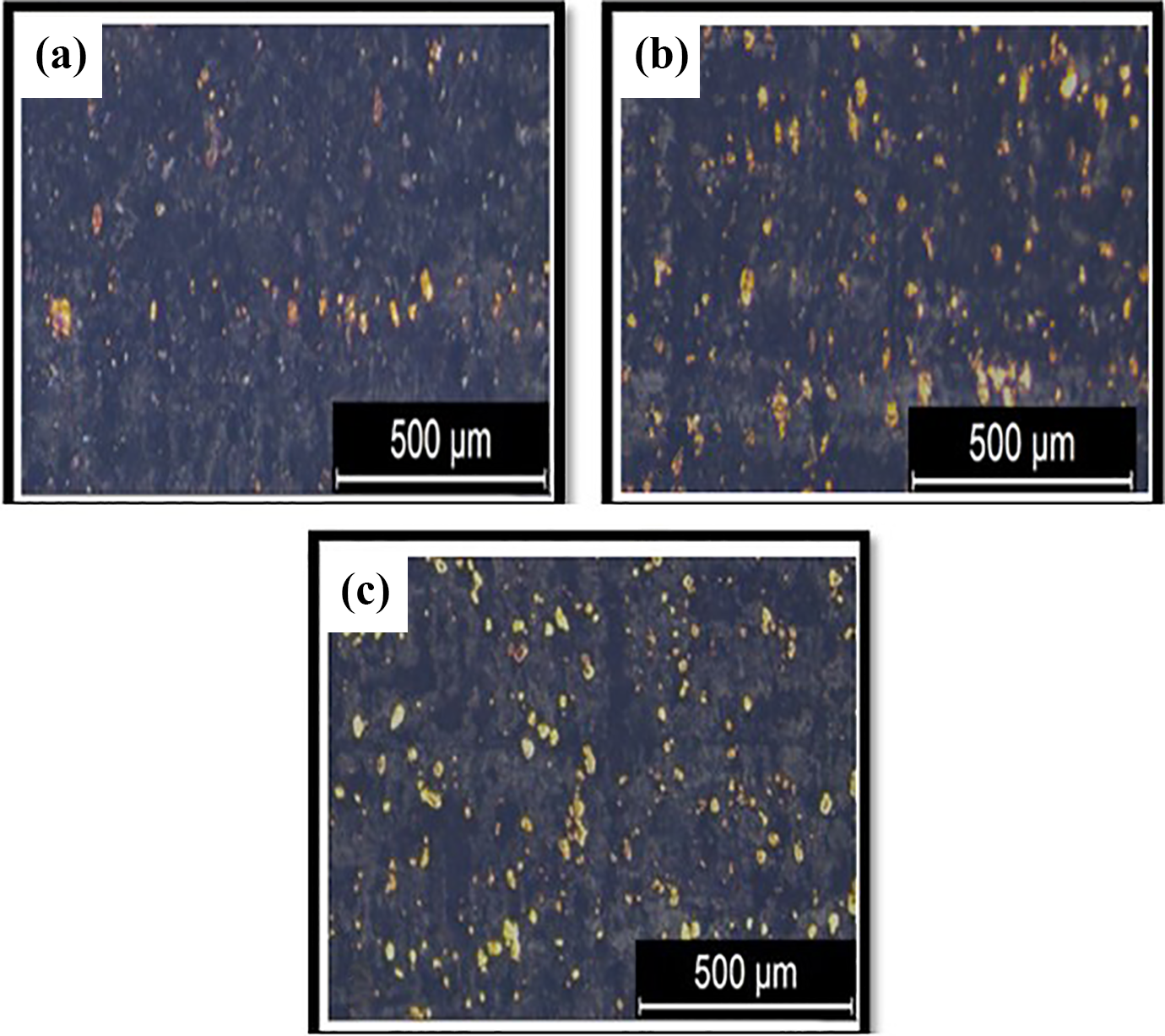
Optical micrographs of wear track under lubrication for different loads: (a) 33 N, (b) 81 N, and (c) 92 N.
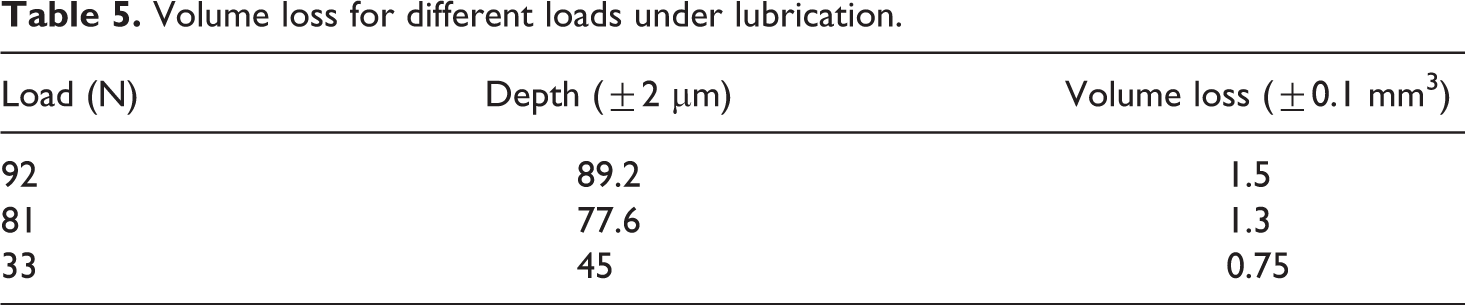
Volume loss values for different used loads under lubrication are presented in Table 5. As in dry sliding condition, wear increases with load. A comparison between the dry and lubricated conditions and for a constant load, we note a significant decrease in the volume loss. This is due to the presence of the lubricating film.
Volume loss for different loads under lubrication.
Conclusion
The effects of load, frequency, and lubrication on tribological behavior of PTFE/bronze composite were investigated in this article. Results show that load and frequency are significant parameters that strongly influence on friction coefficient and wear of PTFE/bronze composite. So, we must optimize these two parameters to increase the life of the material. Based on this study, we conclude that as follows. For low values of loads and frequencies, in dry sliding condition, the tribological study has proved the good wear behavior of material despite its high friction coefficient. In dry sliding condition, the lowest friction coefficient is measured either for 33 N of load with 1 Hz frequency or for 81 N as normal load with 0.75 Hz frequency. In terms of wear, the widest wear track is observed for 1 Hz frequency either under 92 N or 81 N as normal load in dry sliding condition Under lubrication, the wear rate and the friction coefficient of the PTFE/bronze composite are reduced compared to the dry sliding conditions. In lubricated conditions, when the load or the frequency decreases, the friction coefficient increases. Under lubrication, when the frequency increases, volume loss decreases, which is the opposite for load.
