




Abstract
The effects of enzymatic treatments on the properties of coir fiber-reinforced poly(lactic acid) (PLA) were not found in the literature. Accordingly, the effects of various enzymatic treatments on the mechanical performance of the coir fiber-reinforced PLA composites were investigated in the current study. Four different enzymes, namely lipase, lactase, pectinase, and cellulase, were used. The mechanical properties of the composites were determined by the tensile, flexural, impact tests, and dynamic mechanical analysis. According to the test results, the use of enzyme treated coir fibers affected the mechanical properties except for the flexural properties with different extents depending upon their type. The tensile strength increased with the treatments of lipase and lactase, while the treatments with pectinase and cellulase had no remarkable effect. The impact strength was improved with enzymatic treatments except for pectinase. All enzymatic treatments improved the elastic modulus below the glass transition temperature. In brief, enzymatic treatments improved the interfacial adhesion between coir fiber and PLA via the waxes and fatty acids removal and/or the increment in surface roughness.
Introduction
Poly(lactic acid) (PLA), which is a sustainable biodegradable polymer, is used in packing, textile, medical, automotive, and building applications. It can be processed with classical polymer processing techniques at low temperature. Accordingly, different natural fibers including jute, flax, sisal, and coir can be used as filler to produce fully biodegradable composite material with low weight, reasonable cost, and enhanced mechanical properties. 1 –5
Coir fiber, which is extracted from coconut husk, is used in ropes, brushes, doormats, and composite applications. It has low cellulose content with high spiral angle of 45° causing low tensile strength and modulus with high elongation. It has the highest lignin content among the natural lignocellulosic fibers. The high lignin content brings some advantageous points of low density, hard wearing, low moisture absorption, and resistance to microbial and fungi degradation with respect to other lignocellulosic fibers. 4 –9 Although the coir fiber has some advantageous points, the hydrophilic nature, like other lignocellulosic fibers, causes weak matrix fiber interfacial adhesion and poor fiber dispersion. Thus, various mechanical, physical, chemical, and biological methods including enzymatic treatment were applied for improving the interfacial interactions between lignocellulosic fibers and polymer matrix. 1 –6
Coir fiber is used as reinforcing additive in various polymers. The studies are well summarized in the detailed reviews made by Verma et al. 10 and Jayavani et al. 11 Coir fiber is used as reinforcing additive in PLA, as well. 12 –22 In these studies, coir fiber is used either pristine 12 –14 or modified with different methods including alkaline treatment, 15 –21 silane treatment, 15,17 and compatibilizer treatment 21,22 to improve the interfacial adhesion with PLA. To the best of our knowledge, no work has investigated the effect of enzymatic treatments on the mechanical properties of coir fiber-reinforced PLA composites.
Biological treatments of lignocellulosic fibers with enzymes are also preferred method for improving the adhesion and dispersion of the fiber in the last decades. Selectively removing function of enzymes brings advantages over chemical and physical methods. 6,23 In the literature, the effect of enzymatic treatments on the properties of the different lignocellulosic fiber containing polymers is studied. 24 –31 The different enzymes have distinctive effect on the removing of the major constituents of lignocellulosic fibers including lignin, hemicelluloses, cellulose, and pectin. Thus, four different enzymes with different removing function, namely lactase, lipase, pectinase, and cellulase, are used to improve the mechanical properties of the coir fiber-reinforced PLA composites. The characterization of the composites are performed using tensile, flexural, impact, dynamic mechanical analysis (DMA), and scanning electron microscopic (SEM) analysis.
Experiment
Materials
PLA under the trade name of 6202D was bought from Cargill-Dow (Nebraska, USA). It has density and the melt flow index of 1.24 g cm−3 (ASTM D792) and 15–30 g (10 min) −1 (2.16 kg, 210°C), respectively. Coir fiber was purchased from local markets in India. Coir fiber with chopped length of 8 mm has tensile strength and the diameter of 155 ± 15 MPa and 320 ± 25 µm, respectively. Enzymes, lactase (batch number: CU7QN42), lipase (batch number: LJPJ0139), pectinase (batch number: KDSY0008), and cellulase (batch number: CUN05069) were obtained from Novozymes (Copenhagen, Denmark). All chemicals were used as received without further purification.
Modification of coir fibers
Prior to enzymatic treatment, coir fibers were washed with water to remove the dust and impurities. A total of 65 g coir fiber was used for each treatment. Bioscouring was performed in Termal HT machine (Termal, Turkey) at optimum treatment conditions (pH: 7; 20 min; 55°C) provided by Novozymes. The enzymes are used in 3% (w/v) except for lipase (8 g l−1). After 20 min, the bath temperature was raised to 80°C for enzyme inactivation and waited for 10 min. Finally, the samples were rinsed with distillated water to remove any remaining enzymes. After the modification process, coir fiber was dried at 80°C for 12 h and waited in sealed plastic bag until the composite production. The characterizations of the pristine and modified fibers were performed via attenuated total reflectance–Fourier-transform infrared spectroscopy (ATR-FTIR) and SEM. The modified fibers are coded as La-CF, Li-CF, Pe-CF, and Ce-CF for lactase, lipase, pectinase, and cellulase modified ones, respectively.
Production of the composites
Coir fibers and PLA were dried at 80°C for 8 h to remove the hygroscopic humidity prior to the compounding process. The mixing of PLA and coir fiber was performed via laboratory type co-rotating twin screw extruder (L/D: 40; Φ: 16 mm) (GULNAR MAKINA, Istanbul, Turkey). The extrusion process was conducted with the temperature profile of 50-160-165-170-175-180°C at 100 r min−1. All samples contain 20 wt% coir fiber. The extrudate was pelletized and stored in sealed plastic bag until the injection molding process. A laboratory scale injection-molding machine (DSM Xplore 12 ml micro-injection molder, Netherlands) was used to shape the specimens for mechanical tests. Barrel and mold temperatures were adjusted as 180°C and 28°C, respectively.
Characterization of fibers
Coir fiber samples were analyzed using ATR-FTIR (Bruker Optics IFS 66/S series FT-IR spectrometer) at an optical resolution of 4 cm−1 with 32 scans. The morphology of coir fiber samples were examined with SEM (LEO 440 computer controlled digital, 20 kV) after sputtering with Au/Pd alloy
Characterization of composites
The mechanical properties of the composites were examined via tensile, flexural, impact, and DMA. Tensile tests were carried out on dog bone specimens (7.4 × 2.1 × 80 mm3) using Shimadzu AG-X universal testing machine equipped with 50 kN load cell at the crosshead speed of 5 mm min−1 according to ASTM D638 standard. Flexural test was also performed with the same machine used in tensile test at the crosshead speed of 1 mm min−1according to the ASTM D790 standard. The rectangular specimens with the nominal dimensions of 13 × 125 × 3.2 mm3 and the span of 55 mm were used during the flexural test. Charpy impact tests were carried out on the Coesfeld-material impact tester using 1J pendulum hammer with unnotched samples with the dimensions of 3 × 6 × 130 mm3 at room temperature according to ASTM D256 standard. All the mechanical test results showed the average value of five samples with standard deviations. DMA experiments were performed out using Perkin Elmer DMA 8000 in dual cantilever bending mode at a frequency of 1 Hz. The test was carried out in the temperature sweep mode from 20°C to 160°C at the heating rate of 10°C min−1. The fracture surfaces of the composites after tensile test were inspected in SEM (LEO 440 computer controlled digital, 20 kV) after sputtering with Au/Pd alloy.
Results and discussions
Coir fiber characterization
Coir fiber characterization after enzymatic treatment was performed using ATR-FTIR and SEM analysis. ATR-FTIR spectra of pure and modified coir fibers are shown in Figure 1. SEM photographs of the fiber samples with two different magnifications of 250× (left side) and 1000× (right side) are shown in Figure 2. Pristine coir fiber has characteristics peaks at 3300, 2915, 2840, 2325, 1730, 1610, 1450, 1240, and 1020 cm−1. The broad peak centered at 3300 cm−1 is attributed to the stretching vibrations of –OH group present in the structure of the cellulose, hemicelluloses, and lignin. The peaks seen at 2915 and 2840 cm−1 stem from the asymmetric and symmetric vibrations of –CH2 group, respectively. These peaks mainly stem from the presence of waxes and fatty acid compounds on to the fiber surface. The peak at 2325 cm−1 is due to the stretching vibrations of C–H groups in various components of coir fiber. The peak at around 1730 cm−1 arises from the characteristic stretching vibration of carbonyl group (C=O) occurring in the structure of pectin, hemicelluloses, and fatty acids. The peaks at 1610, 1450, and 1240 cm−1 are attributed to the stretching vibrations of C=C, C–H, and C–O groups in the aromatic structure of the lignin, respectively. The peak at around 1020 cm−1 corresponds to the asymmetric deformation of the C–O–C group in cellulose and hemicelluloses. 32,33 With the enzymatic treatment, the peaks seen at 2915 and 2840 cm−1 are almost disappeared. It is concluded that waxes and fatty acids on the fiber surface almost removed after all enzymatic treatments. With the removal of waxes and fatty acids, the characteristic peaks of cellulose (1020 cm−1) and lignin (1610 and 1240 cm−1) become more distinct. However, no prominent difference is observed among the enzymatic treated fibers.
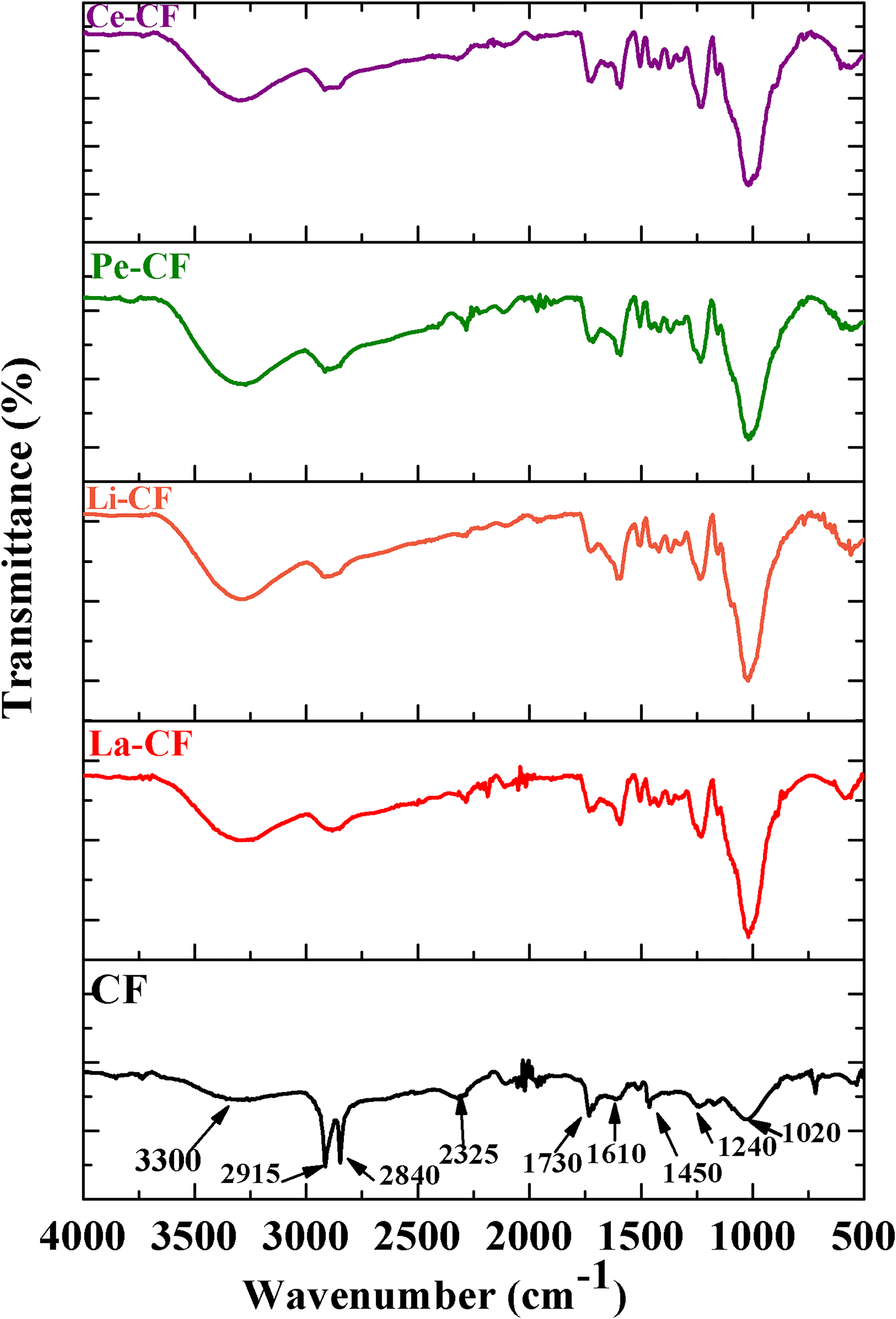
ATR-FTIR spectra of pure and modified coir fibers.
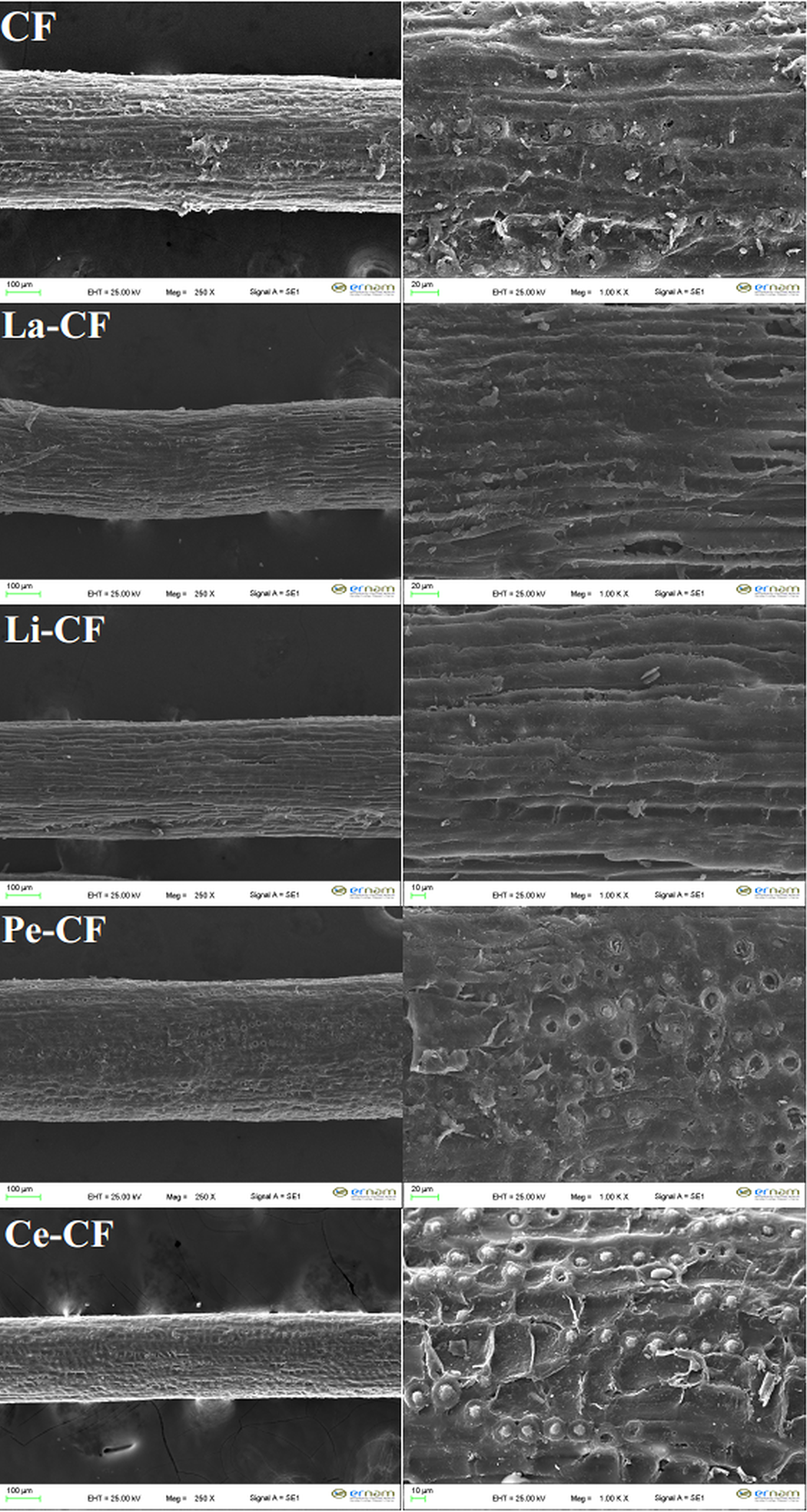
SEM photographs of the fiber samples with two different magnifications of ×250 (left side) and ×1000 (right side).
According to Figure 2, a lot of debris adheres on the untreated coir fiber surface. With the use of all enzymes, impurities are removed and fiber surfaces get significantly cleaner than untreated one. With the pectinase and cellulase treatments, globular particles become visible on the fiber surface owing to the removing of the waxes, fatty acids, and impurities. Globular particles are more visible in CE-CF. With the treatment of lactase and lipase, the globular particles are completely removed and the striations along the fiber length become visible. It can be concluded that the fiber surfaces get cleaner and rougher with globular protrusions or deeper striations after enzymatic treatments.
Morphological analysis
SEM analyses are performed on the tensile fracture surfaces of the composites to provide information related to the dispersion of the coir fiber and the interface properties. The tensile fracture surfaces of the composites with the magnifications of 45× (left side) and 250× (right side) are shown in Figure 3. In the SEM photographs of the specimens, matrix material fails in brittle manner. No remarkable difference is observed in the state of coir fiber dispersion in all composites. Broken fibers (shown with red arrow) and the marks of debonded fibers (shown with yellow arrow) and the gap at interface (shown with white arrow) are seen in all samples. However, the number of gaps is much more in untreated coir fiber containing composites due to the poor adhesion between coir fiber and PLA in the presence of waxes and fatty acids on the surface. More broken fibers are observed in La-CF, Li-CF, and Ce-CF containing composites. Coir fiber tend to break rather pull out owing to the better adhesion. It is thought that the increase in the roughness of the fiber surface after these enzymatic treatments facilitates good mechanical interlocking. These findings support the interfacial adhesion increase with the enzymatic treatments.
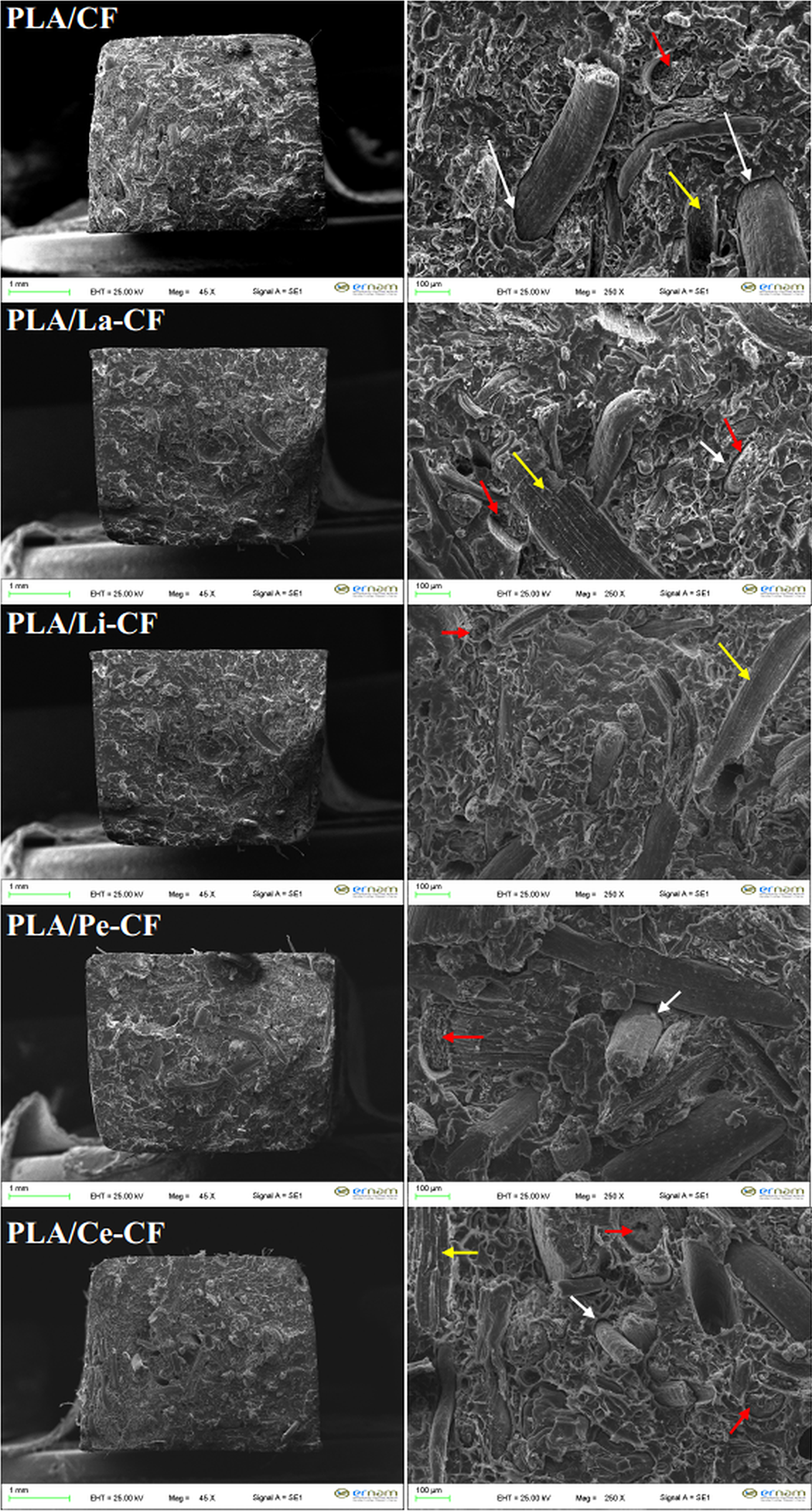
Tensile fracture surfaces of the composites with the magnifications of ×45 (left side) and ×250 (right side).
Tensile test
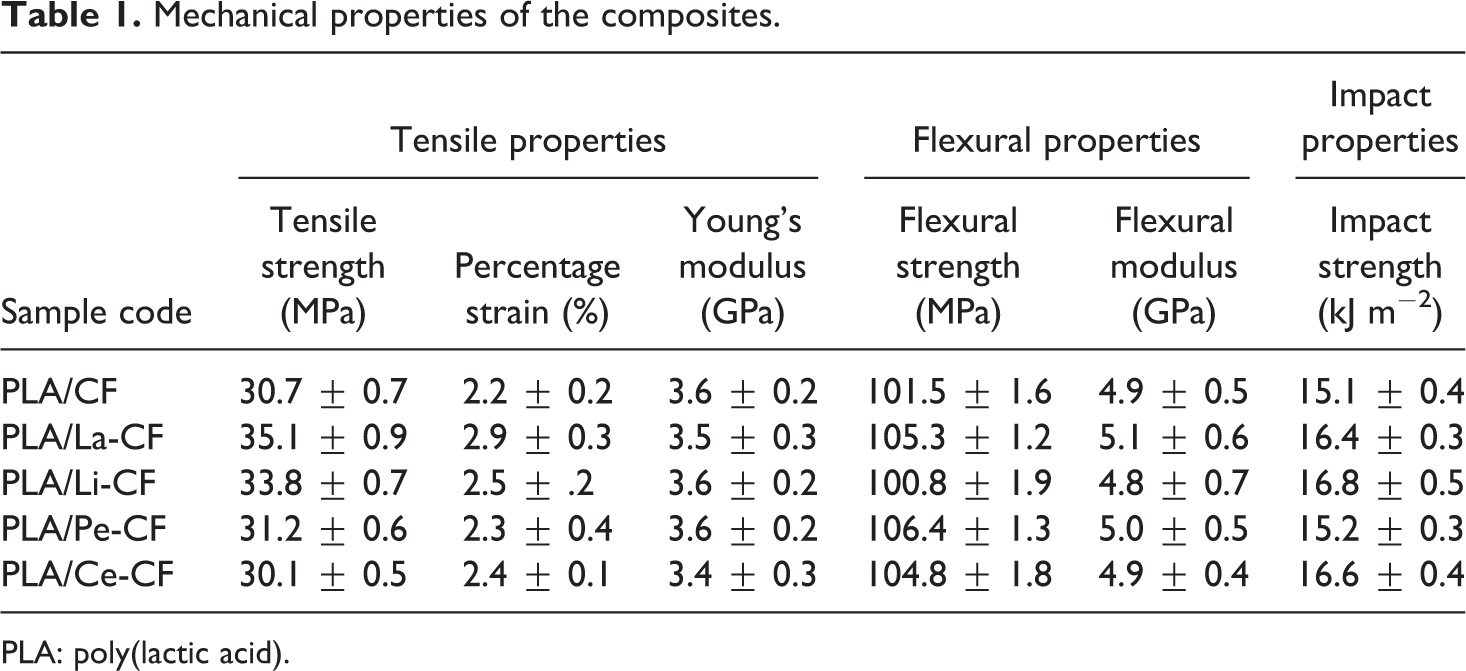
The stress–strain curves of the composites are shown in Figure 4 and the related data are listed in Table 1. All composites fail in brittle manner with percentage elongation below 3% owing to the restriction in polymer chain mobility in the presence of coir fiber. No significant effect of enzymatic treatments is observed on Young’s modulus value because it is measured at low deformations. Accordingly, the improvement in interfacial adhesion does not remarkably affect the Young’s modulus value.
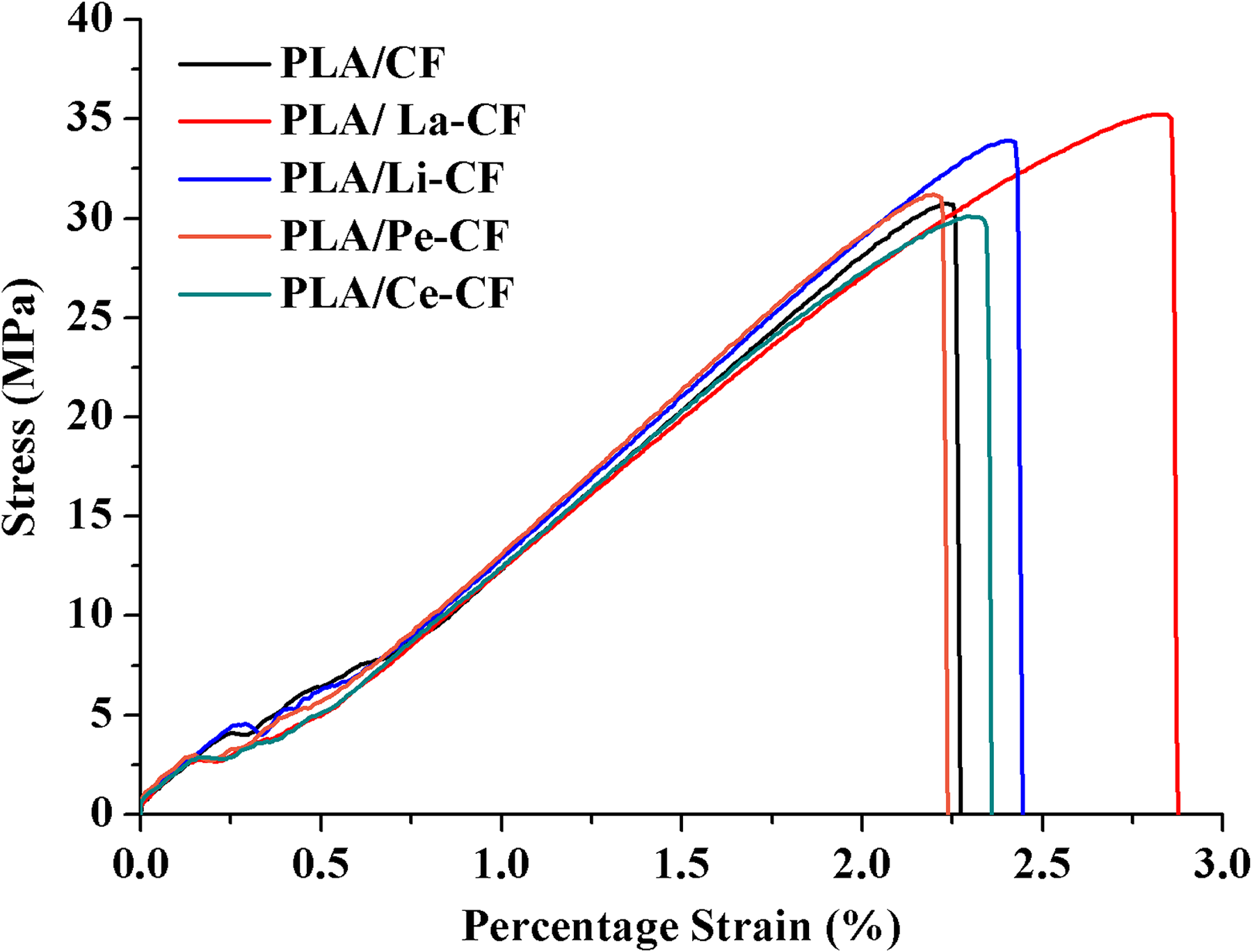
Stress–strain curves of the composites.
Mechanical properties of the composites.
PLA: poly(lactic acid).
Flexural properties
The load–deflection curves of the composites are shown in Figure 5. The relevant flexural test data are listed in Table 1. As seen in Figure 5, all composites deform almost linear up to high loadings. At high loadings, nonlinear deformation is observed with decreasing slope owing to the crack initiation. All composite materials fail mainly in flexural mode. On contrary to the tensile test results, all enzymatic treatments have no remarkable effect on flexural modulus and strength values. It is thought that the observed difference stems from applied load characteristics during the tests. The composite is subjected to tensile forces to whole cross section during the tensile test. The load transfer from matrix to fiber is affected mainly by the interfacial strength. However, the material is forced to bend during the flexural test. It is subjected to compression, tension, and shear forces simultaneously. Coir fiber is forced to buckling in the compression side of the flexural specimen regardless of the fiber–matrix interface quality. Thus, the fiber and matrix adhesion is not predominantly effect the flexural strength unlike tensile strength.
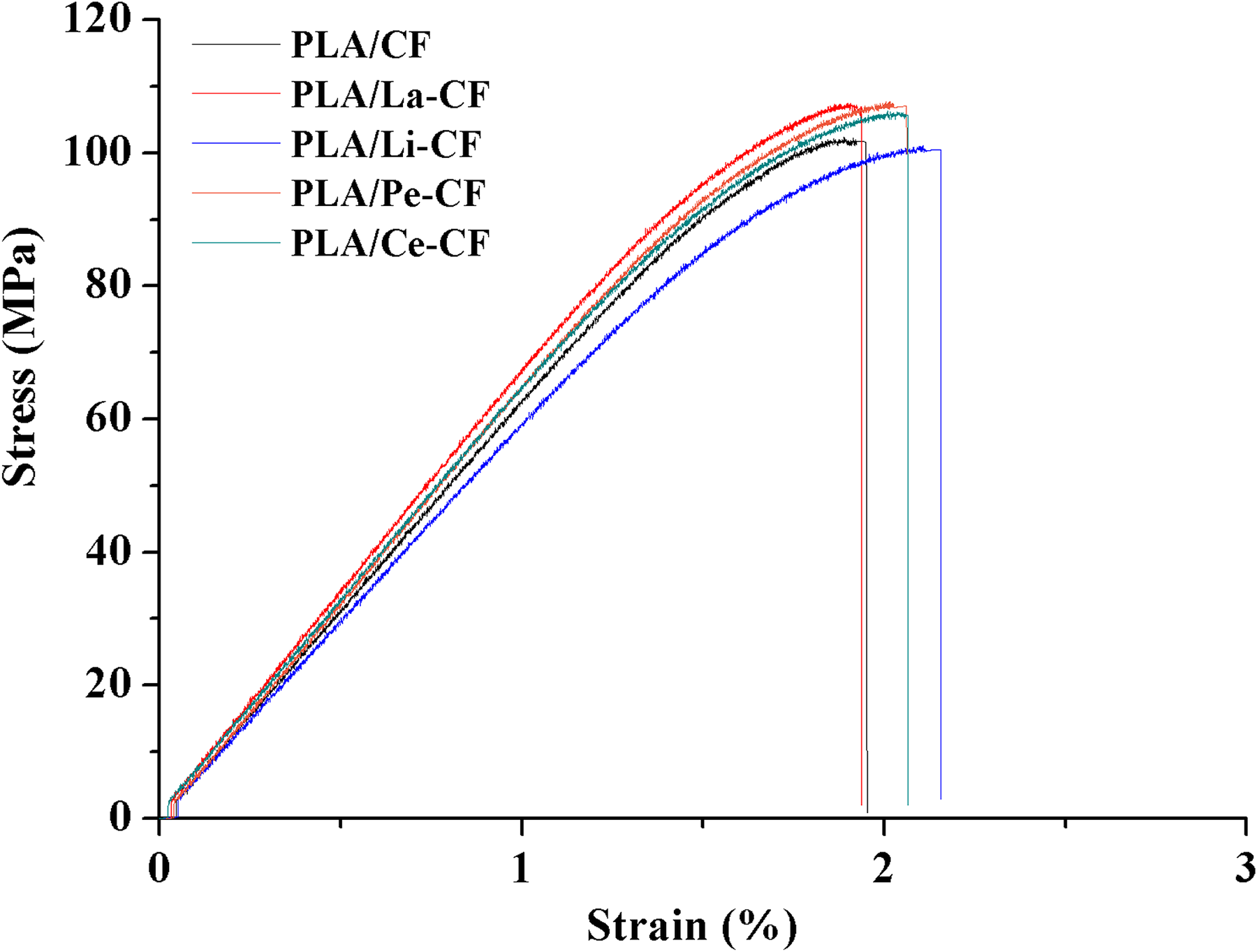
Load–deflection curves of the composites.
Charpy impact test
Impact test is performed on unnotched samples using the pendulum hammer of 1J. The related impact test data are given in Table 1. The energy consumption in unnotched samples arises mainly from fracture initiation and crack propagation. The treatment with pectinase causes no improvement in impact strength. However, the improvement in impact strength is observed with the use of La-CF, Li-CF, and Ce-CF. The highest improvement at about 11.2% is observed with the use of Li-CF. Different factors including fiber and matrix inherent characteristics, their amounts and the interface properties govern the impact strength of the fiber-reinforced polymer composites. 35,36 Same amount of coir fiber and PLA is used in the studied composites. Only the enzymatic treatment makes difference through affecting the interfacial properties. It is thought that more energy consumption is occurred during fiber pull out and debonding with improved interfacial strength.
Dynamic mechanical analysis
The elastic modulus, loss modulus, and tan δ versus temperature graphs of the composites are shown in Figure 6. Negligible change in elastic modulus of the all composites is observed up to 60°C which corresponds to glass transition temperature of PLA. Above 60°C, the elastic modulus of the composites reduces sharply owing to the thermal transitions occurred in the PLA. Over 130°C, elastic modulus increases slightly due to recrystallization behavior of PLA. 37,38 All enzyme treated fiber containing composites have higher elastic modulus value than pristine coir fiber containing one up to 60°C owing to the enhanced interfacial adhesion between coir fiber and PLA. Above Tg, no difference is observed in all composites. No meaningful difference is observed in loss modulus and tan δ versus temperature graphs, as well.
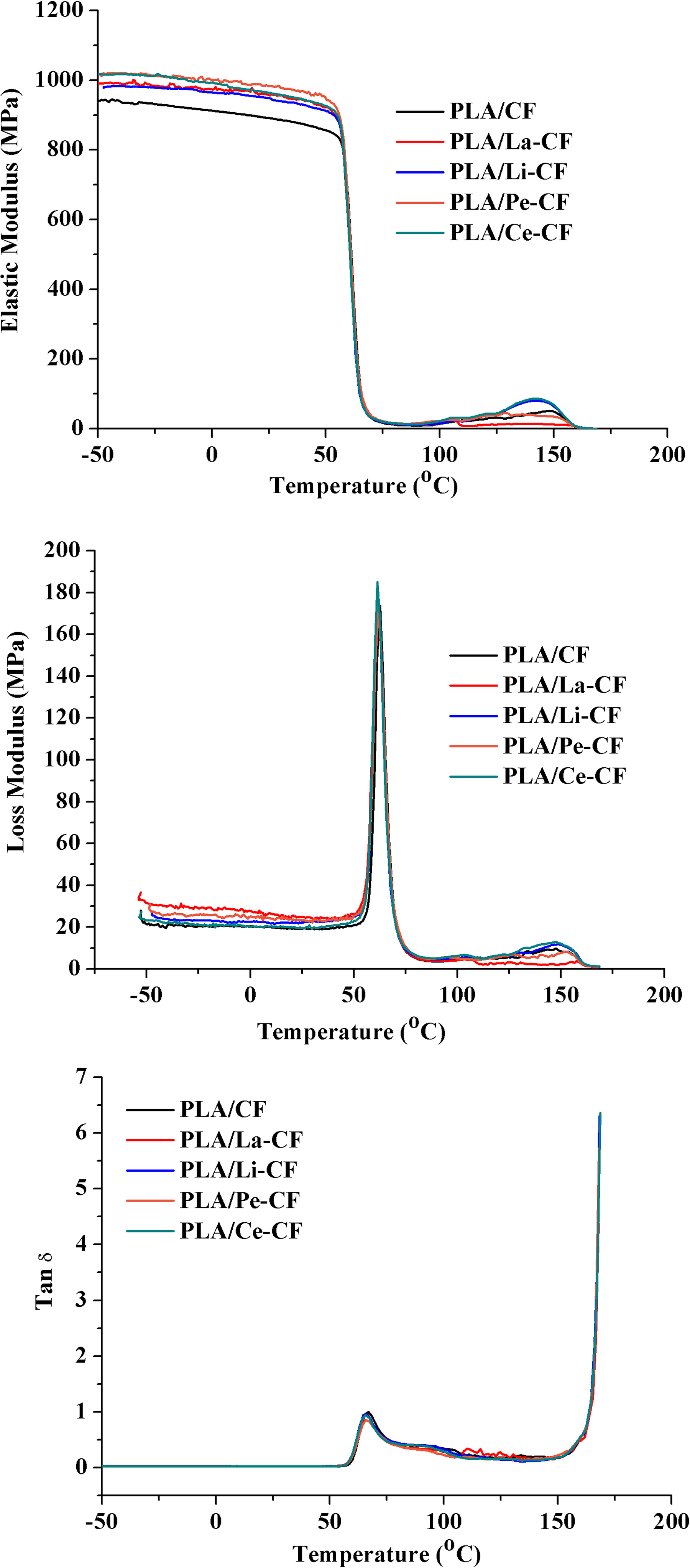
Elastic modulus, loss modulus, and tan δ versus temperature graphs of the composites.
Conclusions
In this study, the effect of four different enzymatic treatments on the mechanical properties of the coir fiber-reinforced PLA composites was evaluated. The composites were characterized by tensile, flexural, impact, DMA, and SEM analyses. The use of both Li-CF and La-CF causes improvement in tensile and impact strength. The use of Ce-CF induces increase in impact strength. No remarkable effect of enzymatic treatments is observed on flexural strength and modulus. Elastic modulus is improved in all studied enzymes up to Tg. It follows from the test results that the use of enzymatic treatment improves the interfacial adhesion between coir fiber and PLA with different extent via mainly removing the waxes and fatty acids and increment in surface roughness.
