



Abstract
The main types of distresses in asphalt mixtures are rutting, fatigue, and thermal cracking at various performance temperatures. One of the beneficial approaches for improving their strength related to these failures is modifying the characteristics of bitumen by additives. The use of polymers in modifying bitumen properties is very common now. Thermoplastic elastomers and reactive polymers are a family of polymers that have a tremendous effect on the properties of bitumen. In this study, synthesized polyurethane (PU) with polypropylene glycol (PPG) functionalized by polymeric diphenylmethane diisocyanate (MDI) as an additive in the bitumen modifier is studied. Penetration degree tests, softening point (R&B), rolling thin film oven, pressure aging vessel, dynamic shear rheometer, bending beam rheometer, and Fourier-transform infrared (FTIR) spectroscopy were carried out on the modified samples. The results of these tests showed that the PU reduced the penetration degree and increased the softening point of bitumen, in which modified bitumen had higher stiffness and viscosity with a lower thermal susceptibility. It also increased bitumen resistance to permanent deformation to provide higher performance levels. In the intermediate temperature, bitumen modified with PU had a better performance and more resistant to fatigue compared to the base bitumen. The results of FTIR revealed modified PU bonds in the modified bitumen, which confirmed the formation of bonds in bitumen and determinant of chemical structure. By calculating penetration index represented the bitumen thermal susceptibility, the control bitumen had the lowest penetration indicator and bitumen sample with 7% PU had the maximum penetration indicator −0.62 and 0.91, respectively, and yielded the lowest performance temperature which was equal to −15.04°C.
Introduction
Bitumen is a colloidal dispersion, which is obtained from crude oil. The chemical composition of bitumen and its rheology is dependent on the initial crude oil and preparation process. Generally, in bitumen is composed of four compounds: saturates, asphaltenes, resins, and aromatics, 1 which causes different physicochemical behavior. 2,3 Commonly used bituminous products have shown acceptable performance in road construction due to adhesiveness, elasticity, impermeability, and ductility of bitumen. 4 Nowadays, with increasing number of axle loads and inappropriate temperature conditions, requires careful attention to improve properties and performance of bitumen. 5 –7 Polymers are also used in concrete pavements 8 ; however, many efforts to increase asphalt mixture resistance against the destruction have been carried out with modifying bitumen properties by polymers 9 –12 which are known as the most important additives of bitumen. Polymers used for modification of bitumen are usually divided into three categories; thermoplastic elastomers, plastomers, and reactive polymers. 13,14 Polymer additives that are commonly used in modifying bitumen have physical interaction in the process of modifying with bitumen. 15,16 However, more reactive polymers has been used for modifying bitumen, followed by a chemical modification by reacting with the specific composition of bitumen. 9,15,16
Polyurethane (PU) polymer is one of the reactive polymers used in the bitumen as a modifier which provides coatings from the reaction of functional groups such as hydroxyl (OH) in the polyols with free isocyanates (NCO). 17 –19
In isocyanates groups with compounds containing active hydrogen atoms, there are a strong affinity and double bonds between carbon and nitrogen, which have the capacity to carry out anionic addition reaction with a large number of groups with active hydrogen atoms 20 . When isocyanate is reacted with bitumen polar compounds with functional groups of OH and NH will form a different structure. 15,21,22 At first, isocyanate in reaction with alcohols generates PU bonds (reaction 1). In reaction to amines, urea groups (reaction 2) and adding water to it, carbonic acid is formed, which then gets converted to carbon dioxide and amine (reaction 3). 23,24

During the mixing of PU, which has high elastomeric properties with bitumen, shear modulus and hardness of bitumen has increased, so the viscosity of bitumen at high temperatures is higher. 15,18,25
PU polymer in high and intermediate temperatures along increasing bitumen complex shear modulus reduces its phase angle, which represents an increase of elastic bitumen property at these temperatures. 26 Isocyanate used in the production of PU is in different molecular weights and as the molecular weight decreases, the complex shear modulus of bitumen increases and reduces its phase angle. Because, at the lower molecular weight of isocyanate, the greater number of isocyanate molecules at a certain weight can react with polar bitumen groups, increasing the viscosity and stiffness. In recent researches, 4,4-diphenylmethane diisocyanate (MDI) used as a modifier factor in the nanocomposite bitumen showed desirable improvement on the rheological properties. 27,28 Previous studies have shown that the addition of MDI-polypropylene glycol (PPG) in bitumen has improved rheological properties whereas this study investigated its roles in increasing bitumen resistance parameters against the asphalt failures using the SHRP method are investigated.
Experimental investigation
Materials
Weather conditions, location, type, and repetition of traffic, pavement type, genus and graded aggregates, and implementation of pavement were the parameters considered for study. Bitumen used in this study is bitumen 85/100 (PG58-22) (Pasargad Oil Company, Iran) which its properties are shown in Table 1.
Physical properties of pure bitumen.
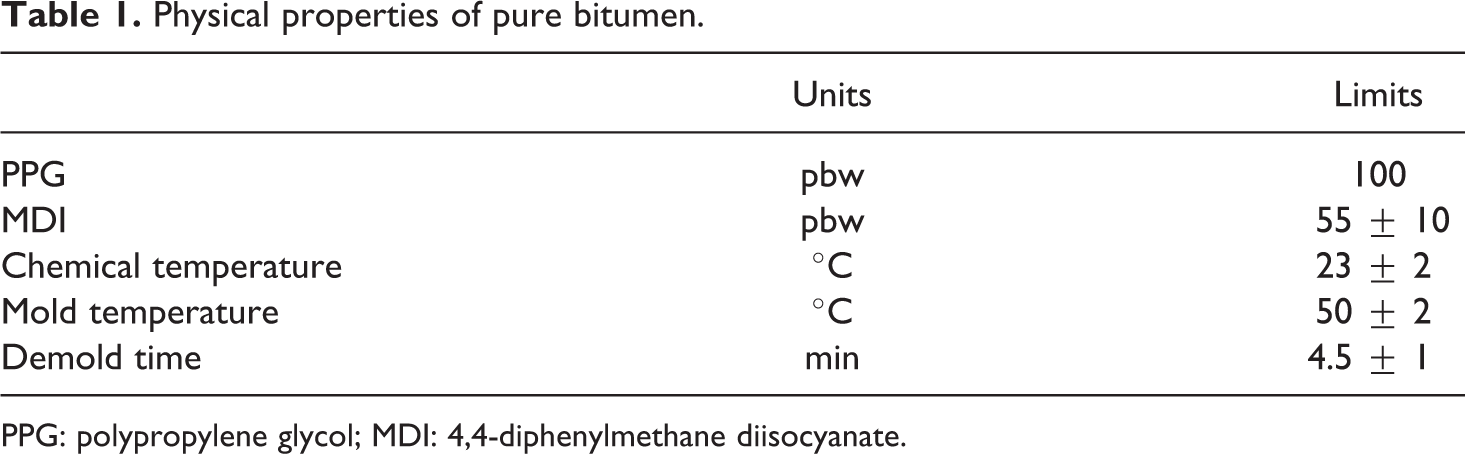
PPG: polypropylene glycol; MDI: 4,4-diphenylmethane diisocyanate.
Reactive synthesized PU with low molecular weight is used as the pure bitumen modifier prepared from PPG (K-FLEX 3673, Kaboodan Chem, Iran) functionalized by MDI (KABONATE 401, Kaboodan Chem, Iran) (Table 2). The specifications of the pure bitumen are shown on Table 3.
Physical and elemental properties of MDI and PPG. 28
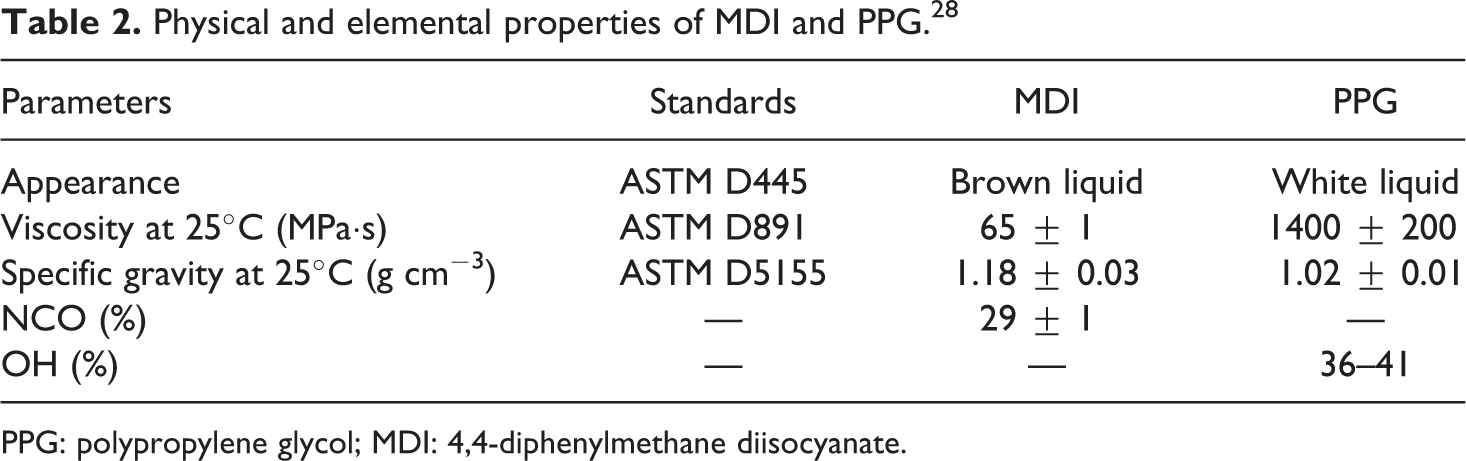
PPG: polypropylene glycol; MDI: 4,4-diphenylmethane diisocyanate.
Pure bitumen specification. 28
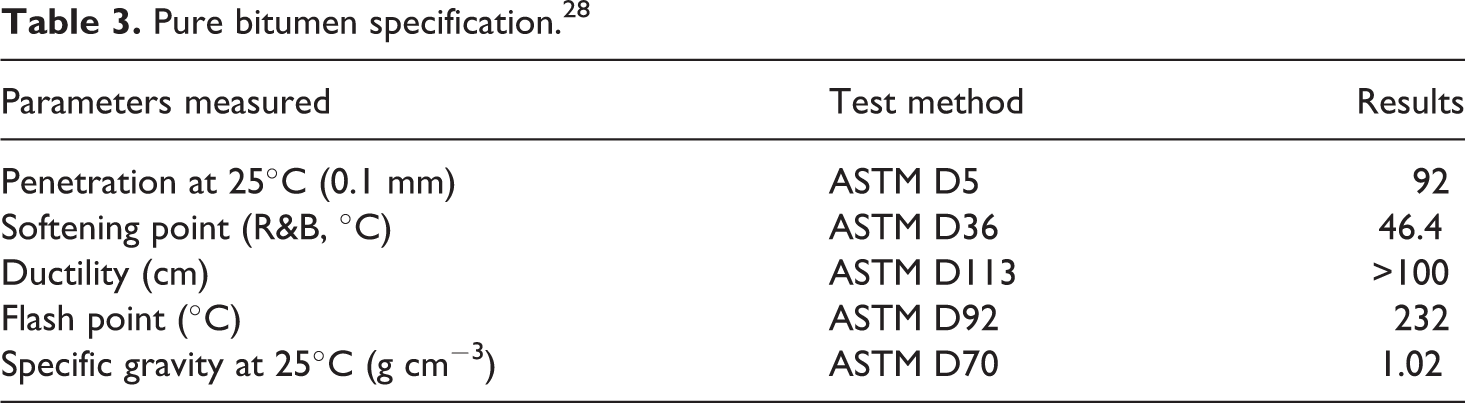
Modified bitumen preparation
Mixing synthesized PU with bitumen to produce modified bitumen and PU bituminous foam is carried out using a mixer at high shear speed composed of Polytron PT6000 homogenizer system equipped with a PT-DA 3030/2 stirring and four-blade stirring (Kinematica) is used. According to previous studies that the combination of MDI-PPG in different weight percentages between 2% and 10% was added to the bitumen 17 –19,29 ; reactive polymer to modify bitumen in weight percentages of 3, 5, and 7 were added to the bitumen. According to the past researches, the mixing temperature was considered 90 ± 1°C 18,25 . The process of mixing polymer and bitumen by the Polytron 6000 system with 4000 r min−1 speed and a four-bladed poly mix stirrer with speed of 2500 r min−1 for 1 h were performed simultaneously. Water is added to modified bitumen to prepare PU bitumen foam, 2 wt% of bitumen and for 45 min at the same temperature, and mixing speed are mixed. 25
The abbreviation names of samples
For abbreviation and identification, the samples have been named as shown in Table 4.
Bitumen codes and composition.
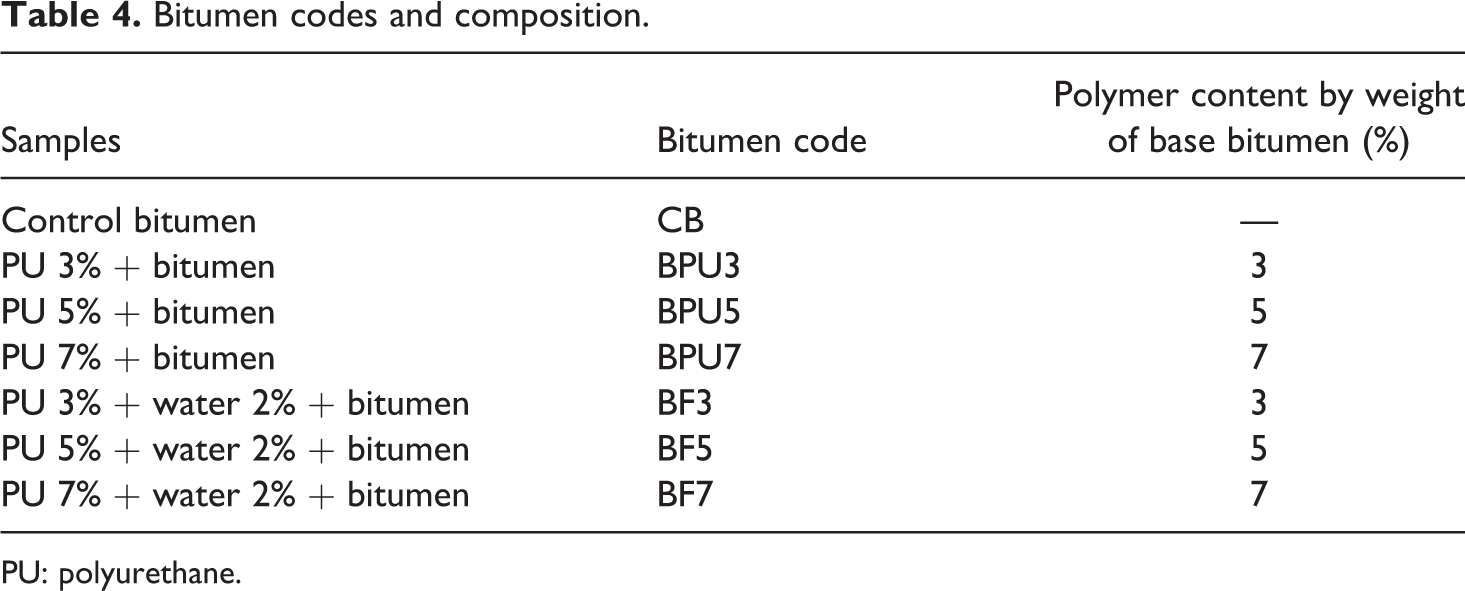
PU: polyurethane.
Testing method
Penetration test
According to ASTM D5 standard for the penetration degree test, the pure and modified bitumen samples were put in a water bath at a temperature 25°C for an hour to reach the standard temperature.
Softening point test
According to ASTM D36 standard to test the softening point, the pure and modified bitumen samples were prepared to measure the softening point of each bitumen.
Dynamic shear rheometer test
Dynamic shear rheometer (DSR) test to evaluate the performance of bitumen in the intermediate temperatures (13–31°C) for controlling parameters associated with fatigue (G*·Sin δ) and high temperatures (46–82°C) to control the rutting (G*/Sin δ) is performed. According to ASTM D2872 standard to evaluate the performance of bitumen at high temperatures, rolling thin film oven (RTFO) test was performed to simulate short-term aging at 163°C for 85 min. Also, in order to evaluate the performance of bitumen in intermediate temperature, the RTFO tested according to the ASTM D6521 standard after the pressure aging vessel (PAV) test for long-term aging.
Furthermore, temperature sweep test according to standard AASHTO TP5 in the frequency 10 rad s−1 (1.6 Hz) under the strain 1% and temperature increase rate 1°C min−1 by DSR (MCR300, Anton Paar) was performed.
Diameter and thickness of the sample studied have been selected 8 and 2 mm at intermediate temperature and 25 and 1 mm at high temperatures.
Bending beam rheometer
According to ASTM D6648 standard, bending beam rheometer (BBR) tests to evaluate the performance of bitumen at low temperature with beam samples of bitumen after applying RTFO and PAV, is carried out. Test temperatures are −6, −12, and −18°C and the test is repeated twice on each sample. Loading time is 60 s. Test results determine two parameters of Stiffness (S) and rate of change of the bitumen stiffness with time during loading (m-value). The range of these parameters for optimal bitumen performance at lower temperatures should be m > 0.3 and S < 300 MPa (Figure 1).
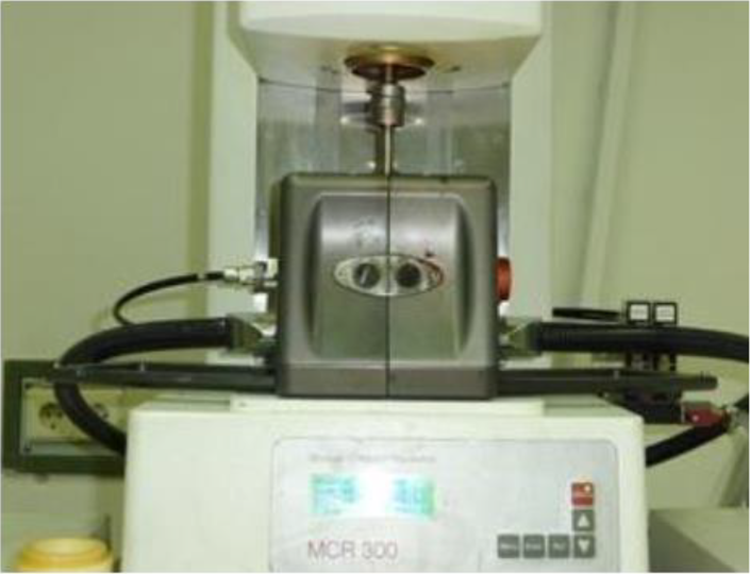
BBR apparatus, type MCR 300.
Fourier-transform infrared spectroscopy test
Fourier-transform infrared (FTIR) spectroscopy test is used to analyze the structure of the polymers. Tests are carried out by Equinox55 (Broker, Germany). To determine the chemical structure of the PU synthesized and identifying PU links in modified bitumen, the samples directly onto tablets prepared by potassium bromide (KBr) powder is embedded and spectroscopy applied.
Results and discussion
Effect of synthesized PU on the penetration
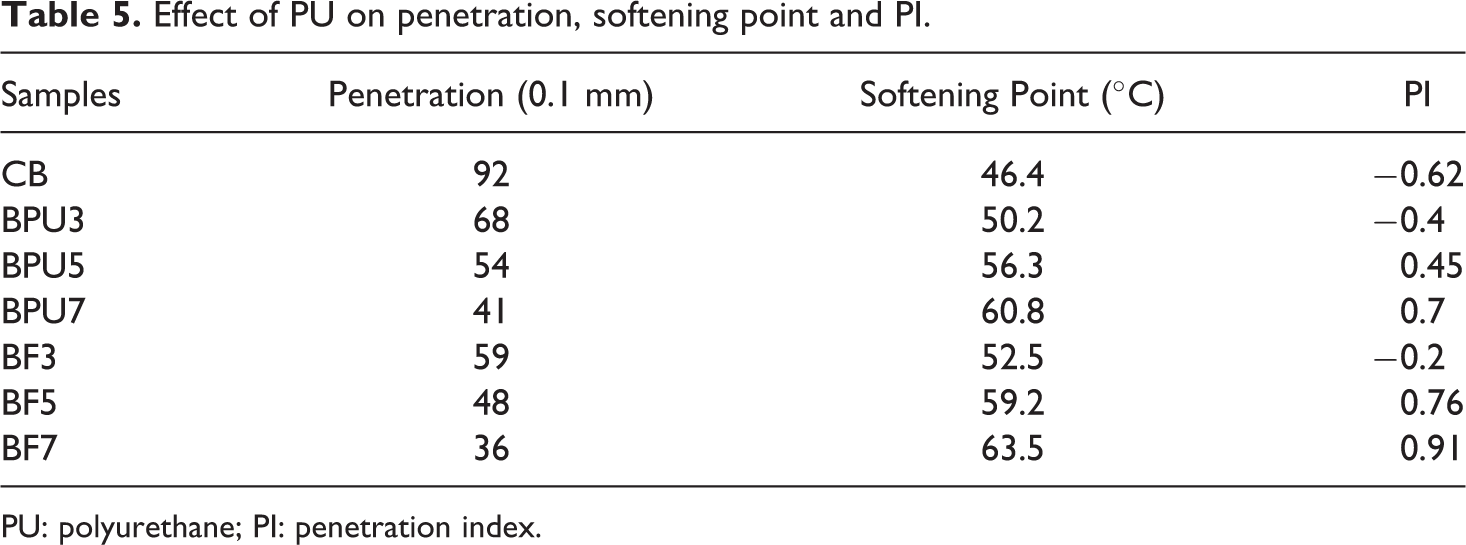
Penetration degree test results on modified examples are reported in Table 5. The degree of penetration represents bitumen relative stiffness and consistency and stability toward traffic pressure and load. The penetration decreased as calculated the value of 92 for bitumen CB with and of 68, 54, and 41 for modified bitumen BPU3, BPU5, and BPU7 and to the 59, 48, and 36 for modified bitumen BF3, BF5, and BF7. It is known that foamed bitumen PU has a significant effect on reduction of the penetration grade of bitumen and increased the consistency and stability of bitumen. It should be noted that the reduced degree of penetration and stability in all modified instances had been observed. Indeed, foams have shown more stiffness than bitumen modified with synthesized PU. In fact, the increased stiffness in the samples treated with synthesized PU is due to appropriate reaction of polymer with bitumen.
Effect of PU on penetration, softening point and PI.
PU: polyurethane; PI: penetration index.
Effect of synthesized PU on the softening point
Softening point shows bitumen and asphalt mixture resistance against permanent deformation. In Table 5, softening point test results show that softening point of bitumen at 46.4°C have been increased to the values of 50.2°C, 56.3°C and 60.8°C for bitumen BPU3, BPU5, and BPU7. Adding 2% water by weight of pure bitumen to the samples and create PU bitumen foam is reaching softening point to the values of 52.5°C, 59°C, and 63.5°C. In general, the results show that PU is increasing the viscosity of pure bitumen. The modified sample with a higher viscosity reaches a higher further softening point.
Penetration index
Bitumen thermal susceptibility with penetration index (PI) is determined and by increasing it, thermal susceptibility is decreased. Whatever the bitumen indicator PI have been closer to +1, the bitumen is more appropriate for use in road construction and asphalt performance will be higher.
PI indicator by the following Sell handbook 30 is calculated as:

In the above equation, Pen25 is degree of penetration and SP is the softening point.
According to Table 5 as can be seen, the CB PI is equal to −0.62 that by adding modifiers will be increased to positive values. BPU7 and BF7 penetration indicator are increased and reached to values 0.7 and 0.91.
Since, increasing penetration of bitumen indicates thermal susceptibility reduction, these modifiers and especially their synthesized forms are reduced pure bitumen thermal susceptibility. The greatest reduction in thermal susceptibility is seen in BF7 and increasing the percentage of these additives in bitumen causes a greater reduction in bitumen thermal susceptibility.
Effect of synthesized PU on the high-performance temperature of bitumen
DSR test results on samples at high temperatures (46–82°C) are presented and analyzed in this part. The results of the bitumen performance at high temperatures before and after short aging have been discussed. Temperature sweep tests conducted on samples aged in RTFO and values of G* and δ, parameter G*/Sin δ at high temperatures is calculated. Increased G*/Sin δ means reducing the energy dissipated or done work and ultimately reduce deformation when loading. Whatever, the amount of it increases, the resistance to deformation is permanent or creep is instantaneous. Before aging bitumen, G*/Sin δ > 1 KPa and after aging bitumen, G*/Sin δ > 2.2 KPa should be. It also should be noted that any 6°C increase in temperature of bitumen as increasing in performance category is considered.
For samples modified with synthesized PU before and after short aging, Figures 2 and 3 show that this modification will have a positive effect on the performance of bitumen at high temperatures in a way that the maximum temperature of the samples BPU3, BPU5, and BPU7 before aging are 67.69°C, 70.83°C, and 73.46°C and after aging are 63.93°C, 70.69°C, and 73.57°C. According to observed temperatures, the maximum temperature of the three modified sample is 63.93°C, 70.69°C, and 73.46°C, respectively.
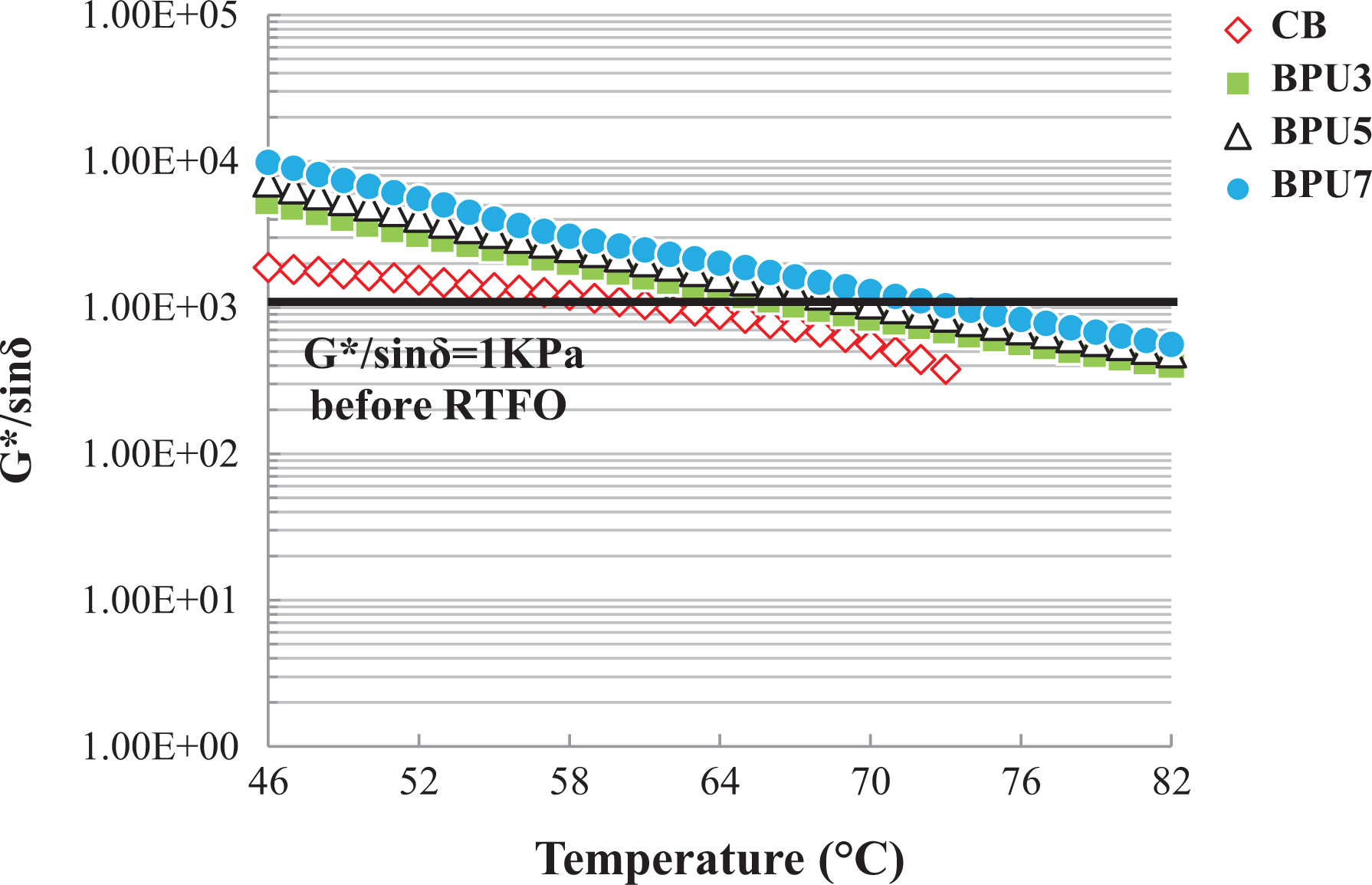
Effect of synthesized PU content on rutting parameter before short-term aging process.
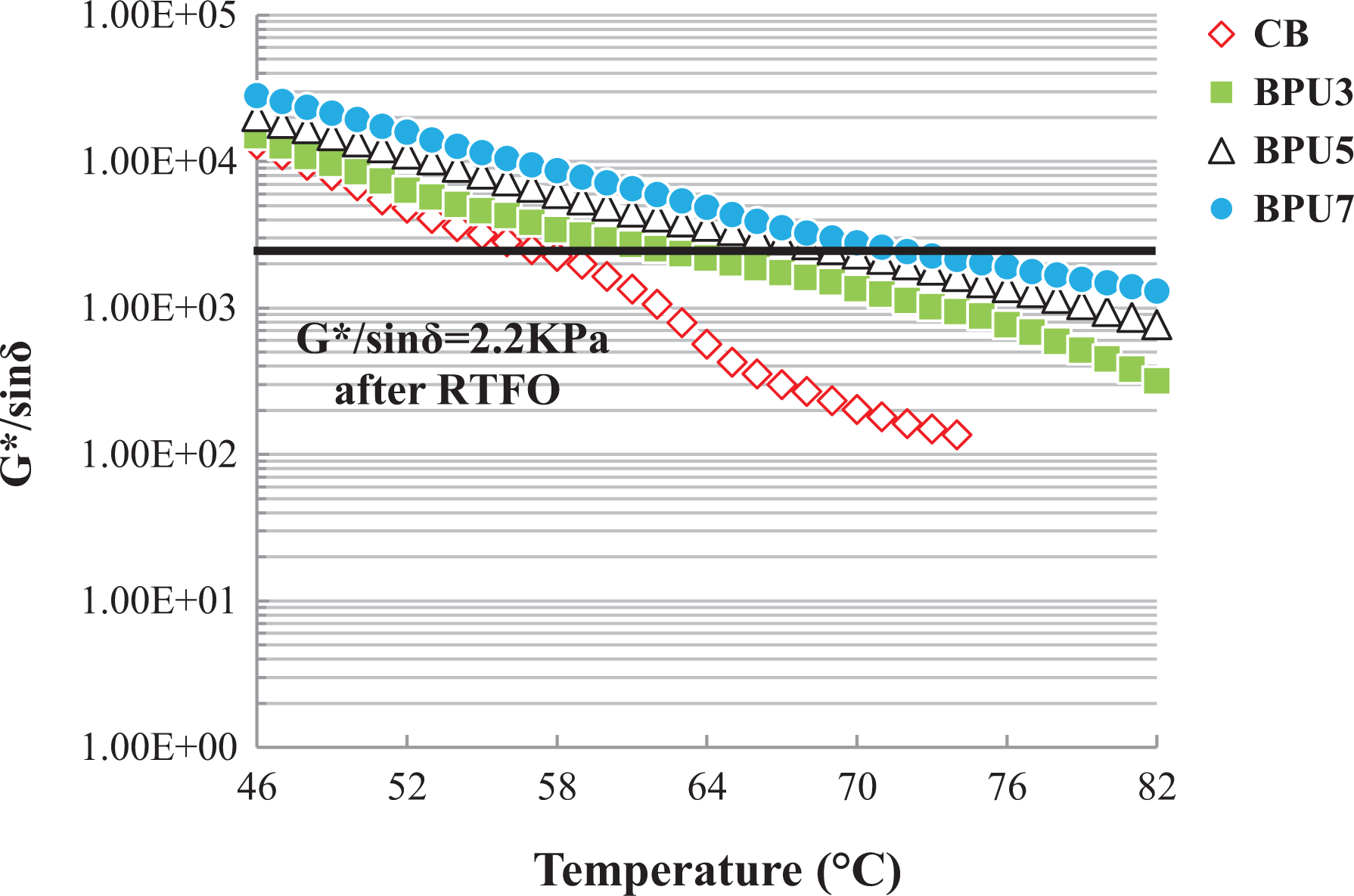
Effect of synthesized PU content on rutting parameter after short-term aging process.
According to the high-temperature performance of modified samples, BPU3 has a high-performance level of 58°C. BPU5 sample with two levels higher than control sample is having a high-performance of 70°C. BPU7 sample has been unable to place higher performance than BPU5 with rank performance temperatures similar to 70°C similar to BPU5.
It should be noted that these three samples at high temperatures have G*/Sin δ larger than the control sample and with increasing this parameter the resistance against rutting increases. With increasing the percentage of additives to the bitumen, increased resistance to rutting has improved.
In terms of the chemical structure, it should be considered that an NCO reaction in the PU synthesis reacts with the functional groups (OH) in the bitumen polar element such as asphaltene and asphaltene chain of the bitumen is increased 17 [15]. When asphaltene in the bitumen is increased, the viscosity of the bitumen is also increased, which was followed by an increase in hardness of bitumen. Bitumen at higher temperatures has more viscosity and more resistant to permanent deformation.
Modified samples for deformation at high temperatures due to strong hydrogen bonds have been formed and by the reaction of polymers and polar groups need more energy to rupture, and it is required to break-down sample modified at the high temperatures.
PU bituminous foam high-performance temperature
In this section, the results of foam bitumen PU at high temperatures are provided. According to Figures 4 and 5, which in turn indicate the parameter changes G*/Sin δ to high temperatures before and after short aging, it is observed that the maximum temperatures of samples BF3 and BF5 before aging is 71.55°C and 76.77°C,respectively. BF7 sample before aging state has high-performance temperatures of 83.85°C, which is quite remarkable, exceeded from the upper limit of performance temperatures 82°C. Also, these samples after aging state have the maximum temperature of 61.44°C, 72.51°C, 79.55°C. According to these, the maximum temperature of BF3, BF5, and BF7 is 61.44°C, 72.51°C, and 79.55°C, respectively. BF3 sample has a similar level 58°C compared to the base bitumen and BF5 by showing two grades with higher temperature than the base have high-performance temperature 70°C. BF7 sample with three higher temperature categories allocated itself ranking 76°C.
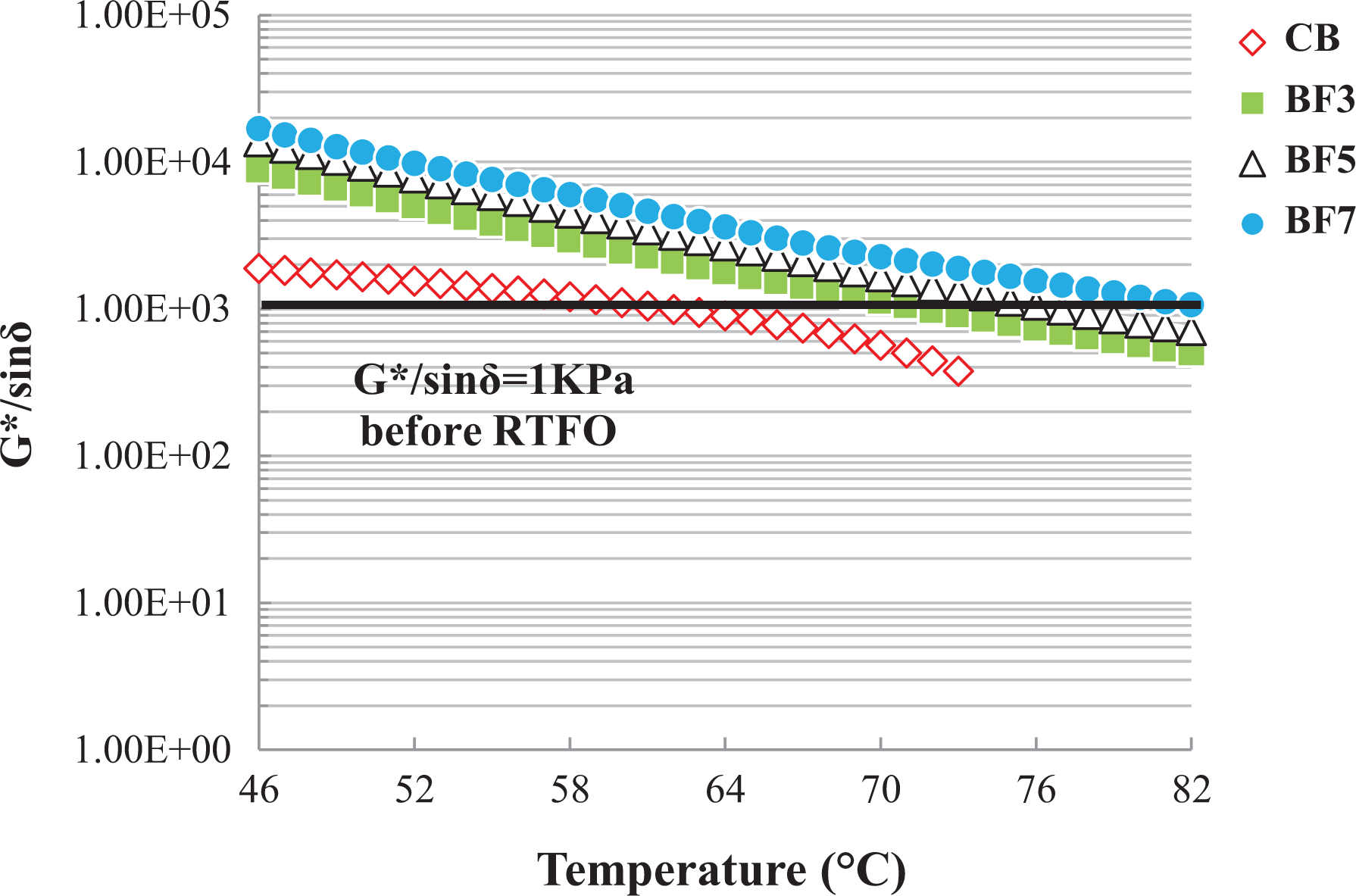
PU bituminous foam rutting parameter before short-term aging process.
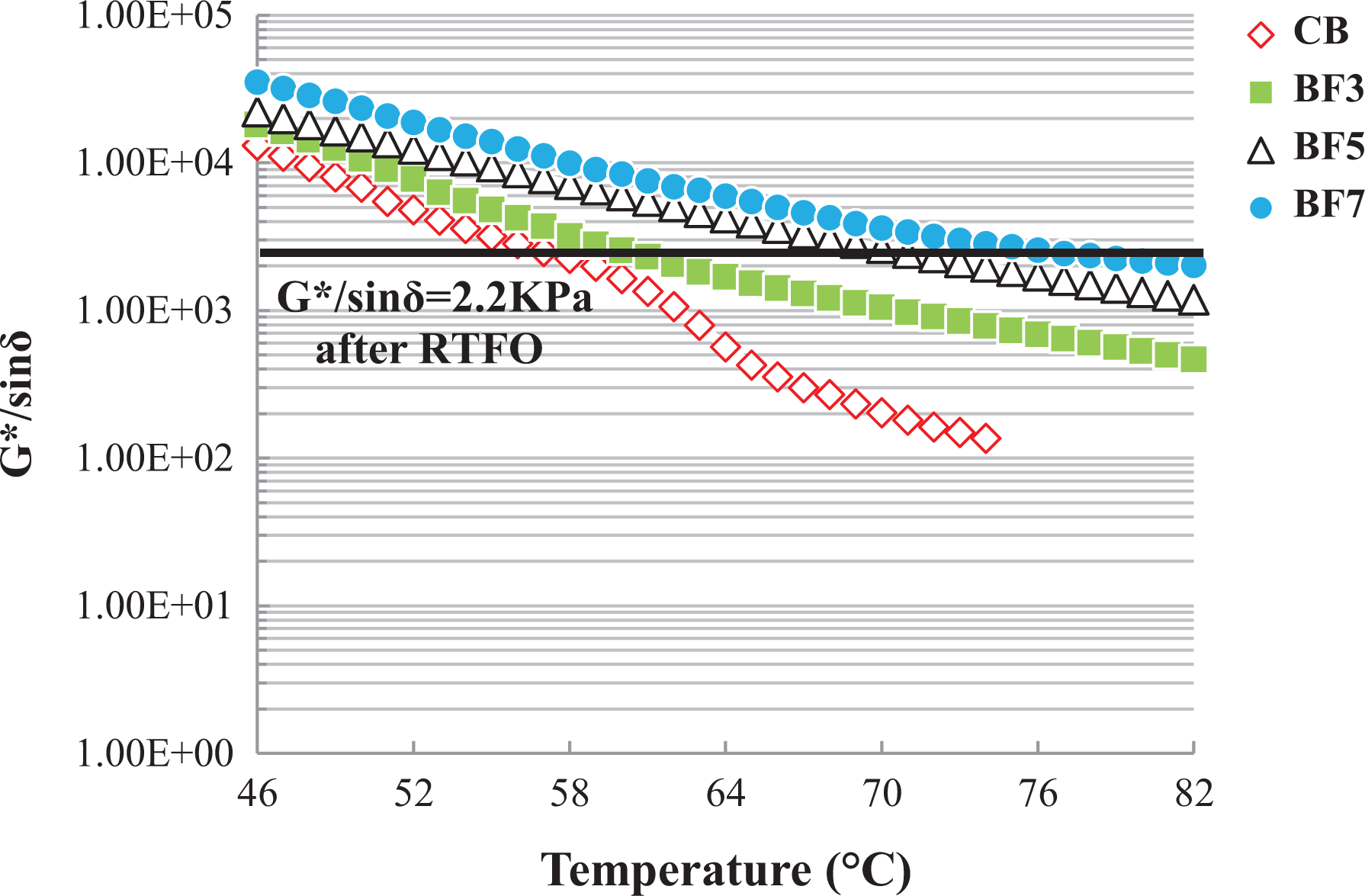
PU bituminous foam rutting parameter after short-term aging process.
A significant increase in G* in this samples and a substantial corresponding reduction in δ increase G*/Sin δ is related to the rutting. In fact, if the G* increases, bitumen stiffness will be higher; while, if the δ decreases, elastic property will increase. The occurrence of these two after bitumen modification with additives has caused the parameter G*/Sin δ rise resulting in a reduction of the energy dissipated with the performed work under the loading, followed by increasing resistance to permanent deformation.
In the procurement process of PU bitumen foam, synthetic PU is added first to the bitumen, NCO is reacted with OH or NH in the asphaltene or reacted resin and increases their range. Increasing asphaltene increased the viscosity and stiffness of the bitumen caused viscosity behavior at higher temperatures and resistance to permanent deformation rises. In the following, adding 2% water to the collection, H2O with free isocyanate (NCO) reacted and produces NH2. 17 Creating new strong hydrogen bonds gives more resistant structure to bitumen resulting in a further resistance against permanent deformation in the PU bituminous foam.
Effect of synthesized PU on the intermediate performance temperature of bitumen
DSR test results on samples at intermediate temperatures (13–31°C) are analyzed. Conducting this test on aged samples of RTFO and PAV and calculating values of G* and δ, parameter G*·Sin δ in average temperatures are calculated. G*·Sin δ < 5000 KPa is required for the proper functioning at the intermediate temperatures. G*·Sin δ parameter represents resistance estimation against fatigue. Lower the value for samples, the amount of energy dissipated or work is less.
As can be seen in Figure 6, addition of synthesized PU to the bitumen caused bitumen intermediate performance temperature dramatically reduced; so that these temperatures for bitumen BPU3, BPU5, and BPU7 reaches to 20°C, 18°C, and 17°C, respectively. Namely due to the reasons mentioned in the previous paragraph, the rate of decline phase angle at lower temperatures is greater than the rate of increasing complex shear modulus in each sample and reducing it in the modified samples compared to control bitumen, which is considered a main factor of reducing the parameter G*·Sin δ. At higher temperatures, the mentioned parameter in modified samples has the lower decline rate than control bitumen that reflects the gradual progressive of complex shear modulus in the G*·Sin δ parameter.
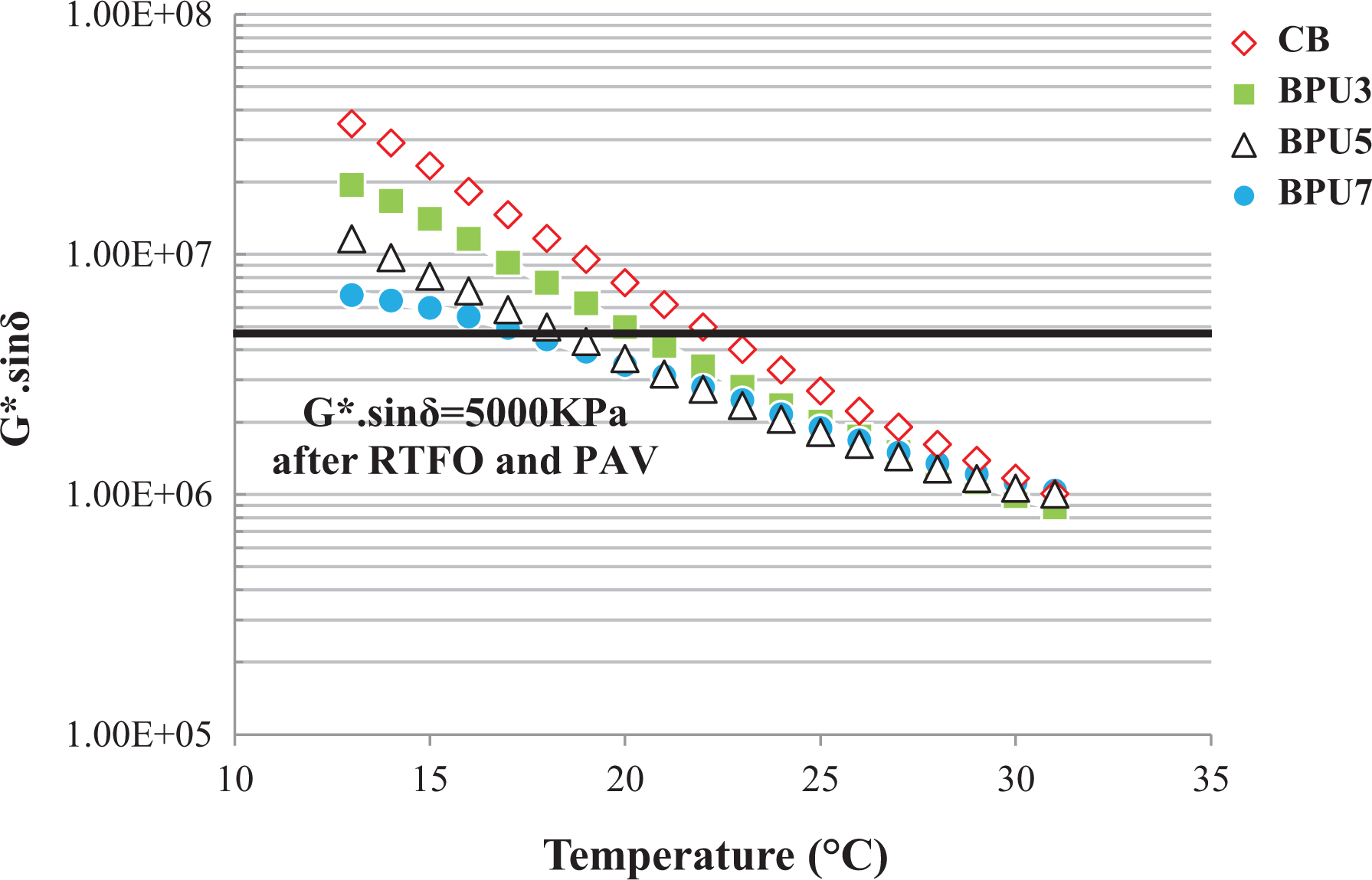
Effect of synthesized PU content on fatigue parameter after short- and long-term aging process.
The synthesized PU showed elastomeric thermoplastic behavior that has a favorable effect on bitumen at the intermediate temperatures.
PU bituminous foam high-performance temperature
According to Figure 7, it can be seen that the PU bituminous foam not only results in improving bitumen performance at intermediate temperatures, it also improves its performance at intermediate temperatures. Bituminous foam of BF3, BF5, and BF7 have shown intermediate temperatures 21°C, 19°C, and 16°C, respectively. The greatest decrease is observed in G*·Sin δ parameter in the foamed other than non-foamed state. BF7 sample at lower temperatures (13°C to 31°C) has a very low phase angle and complex shear modulus far less than other samples which results a less dissipated energy. At higher temperatures of mentioned time range due to the high rate of complex shear modulus and phase angle increases, the dominant factor in the value of G*·Sin δ is the complex shear modulus, which represents the differences between the samples and the control sample. In fact, PU bituminous foam has desirable thermoplastic elastomeric properties that in intermediate temperatures results in better performance compared to control bitumen.
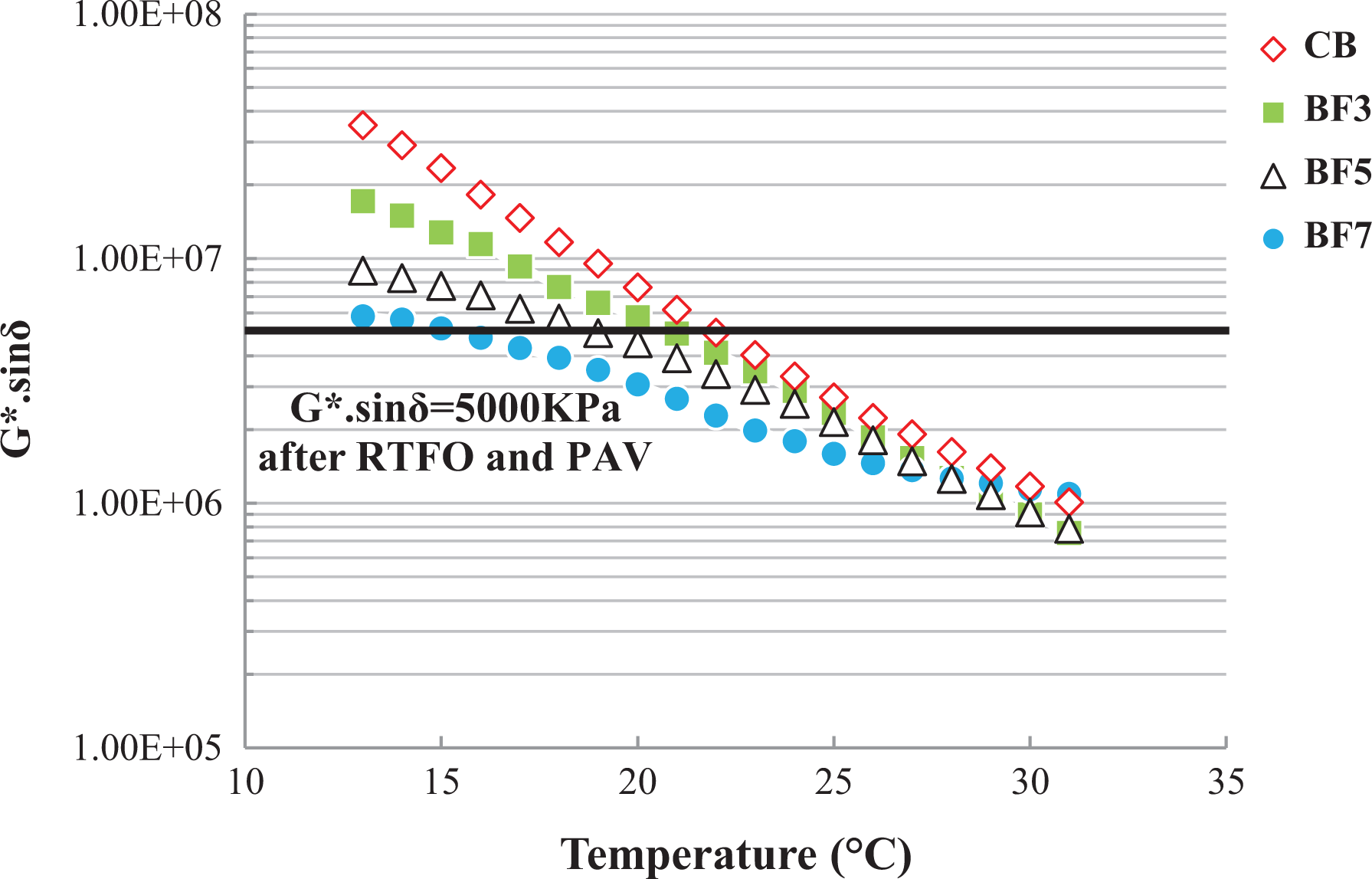
PU bituminous foam fatigue parameter after short- and long-term aging process.
Effect of synthesized PU on the low-performance temperature of bitumen
Beam bending test (BBR) for examining the samples performance in low temperature after the RTFO and PAV conditions is performed. The test is carried out in three temperatures of −6°C, −12°C, and −18°C. The results of the tests on the samples, with two parameters S and m have been shown. The suitable range for two parameters with optimal performance of bitumen is at lower temperatures m > 0.3 and S < 300 MPa. This section examines the performance of control bitumen, modified bitumen with synthesized PU as well as PU bitumen foam.
According to Figures 8 and 9 can be seen that the bitumen BPU3 containing 3% synthesized PU has a lower temperature of −14.46°C which has a better performance than the maximum low temperature of control bitumen BC equals to −13.71°C. BPU7 and BPU5 have lower temperatures −14.87°C and −15.04°C with better performance in low temperatures. This is due to low creep of modified bitumen compared to control bitumen causing increased elasticity. At these temperatures, both conditions of Stiffness < 300 MPa and m > 0.3 are established. The modified samples have a lower performance temperature lower than control bitumen.
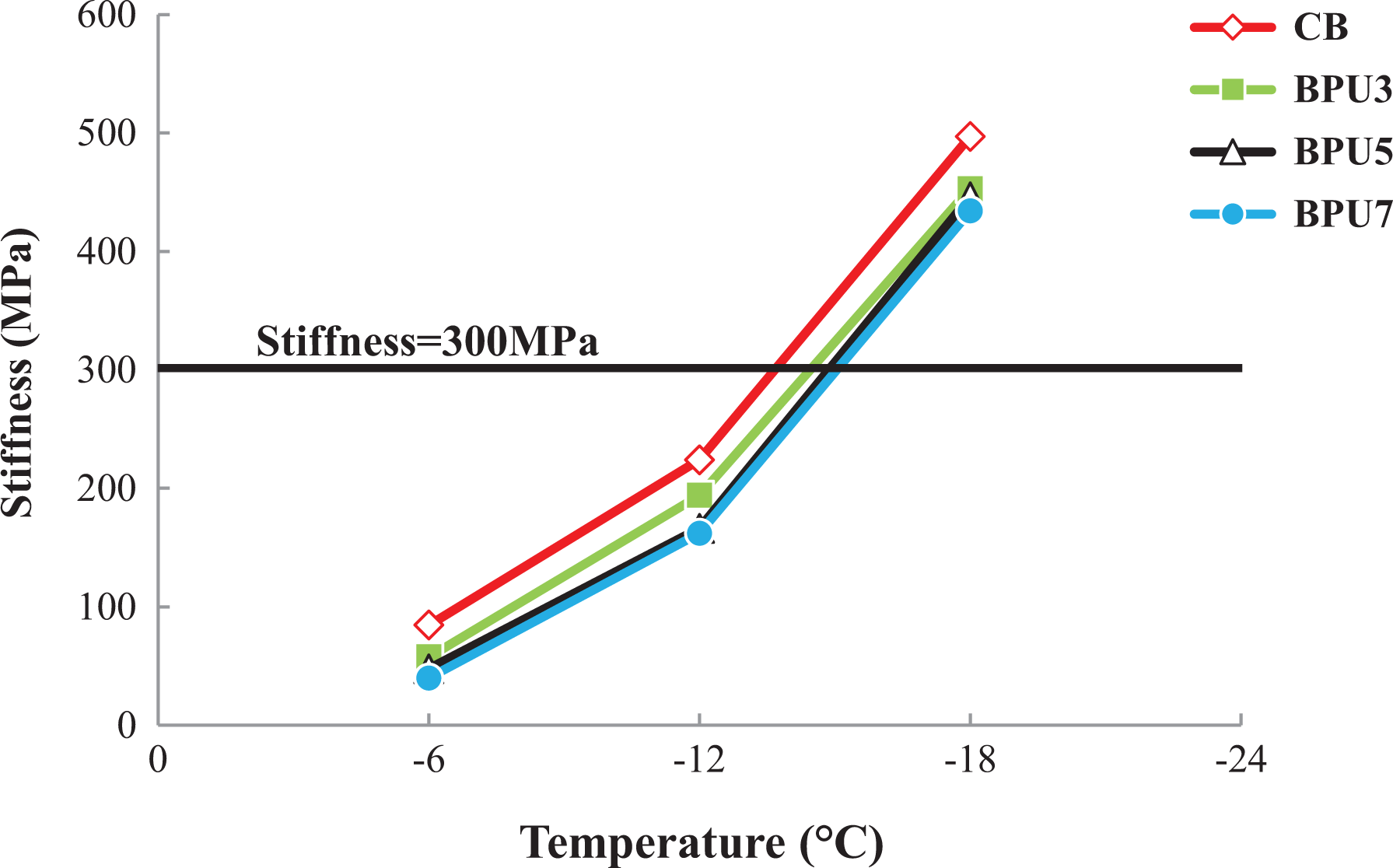
Effect of synthesized PU content on stiffness.
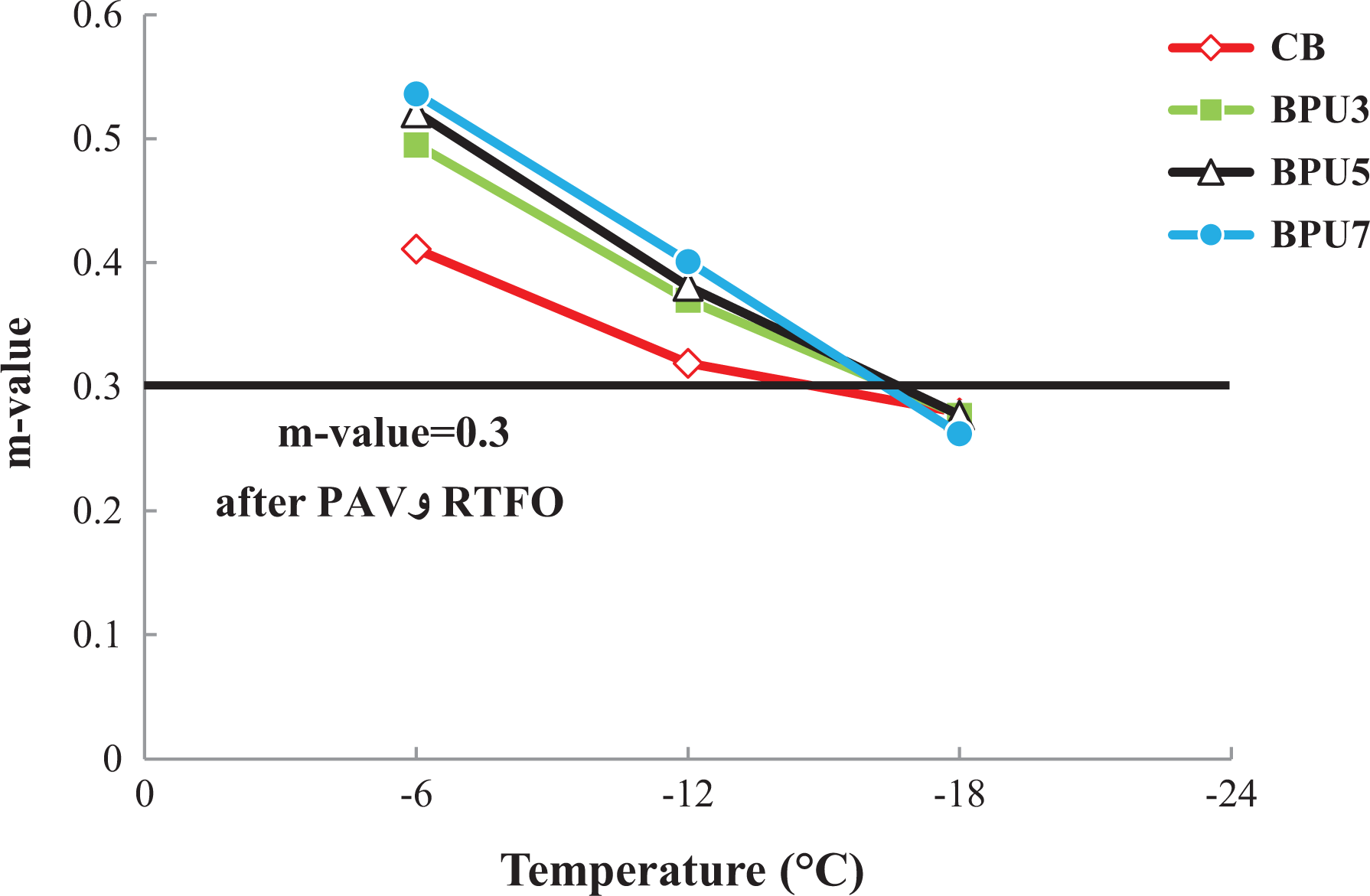
Effect of synthesized PU content on m-value.
PU bituminous foam low-performance temperature
According to the Figures 10 and 11, the results of BBR test on PU bituminous foam show that the maximum lower temperatures are related to samples BF3, BF5, and BF7 with temperatures −14.55°C, −14.87°C, and −14.89°C which compared to the maximum lower temperature of control bitumen (−13.71° C) are more favorable temperatures. However, modified samples like control bitumen have m-value lower than 0.3 and stiffness greater than 300 MPa which represents they are not responsive at this temperature.
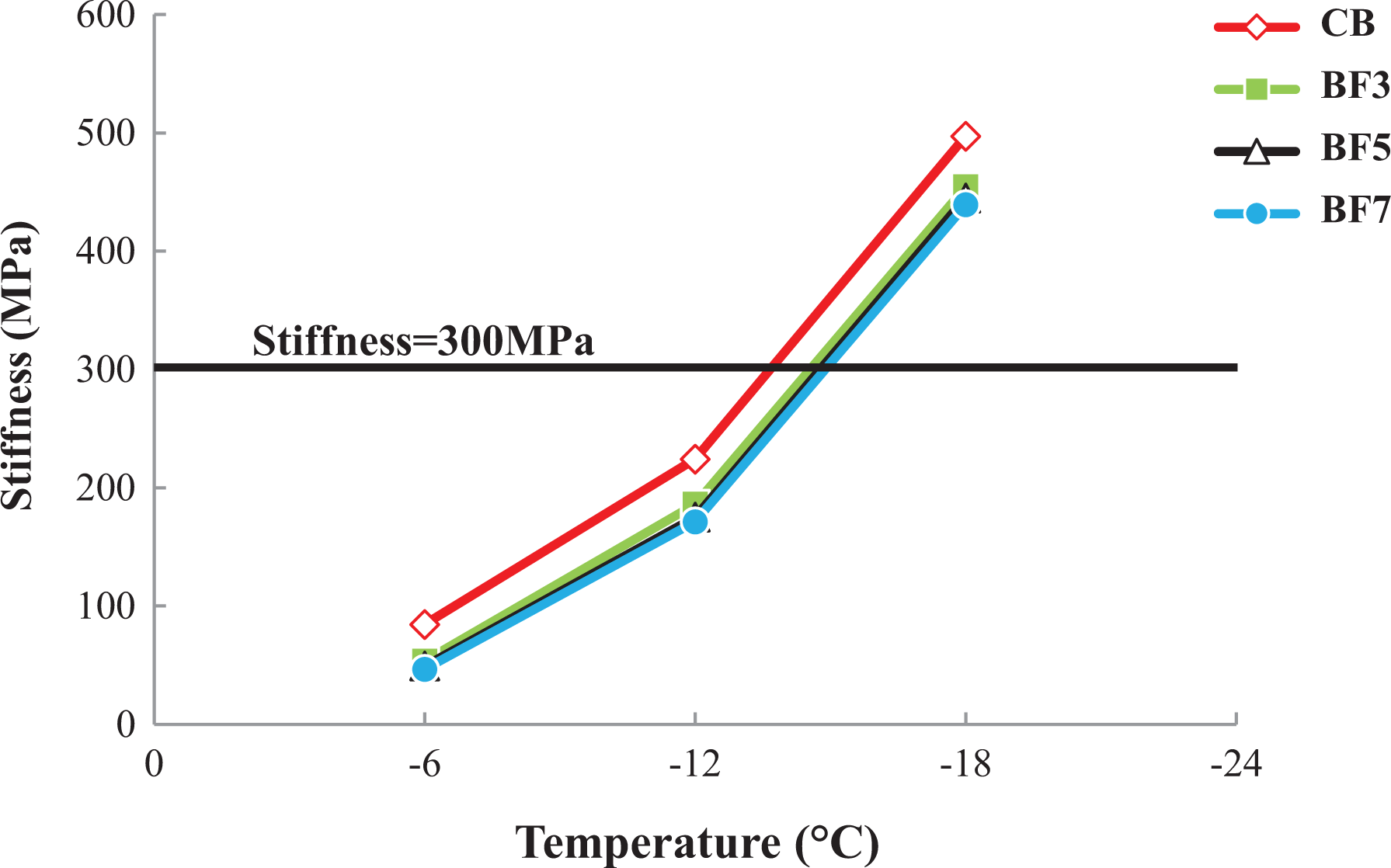
PU bituminous foam stiffness.
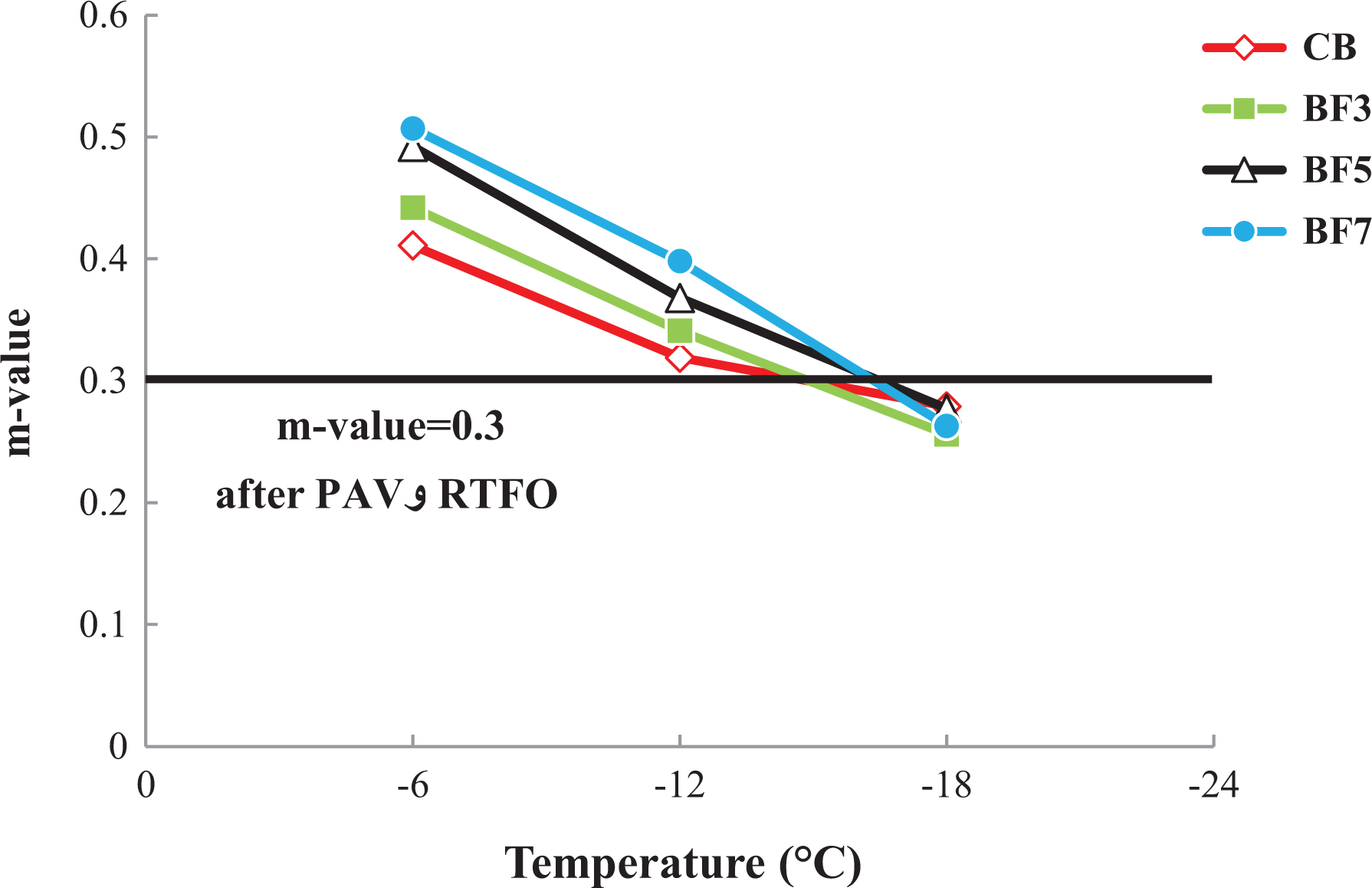
PU bituminous foam m-value.
Performance grading of modified bitumen with synthesized PU and PU bituminous foam
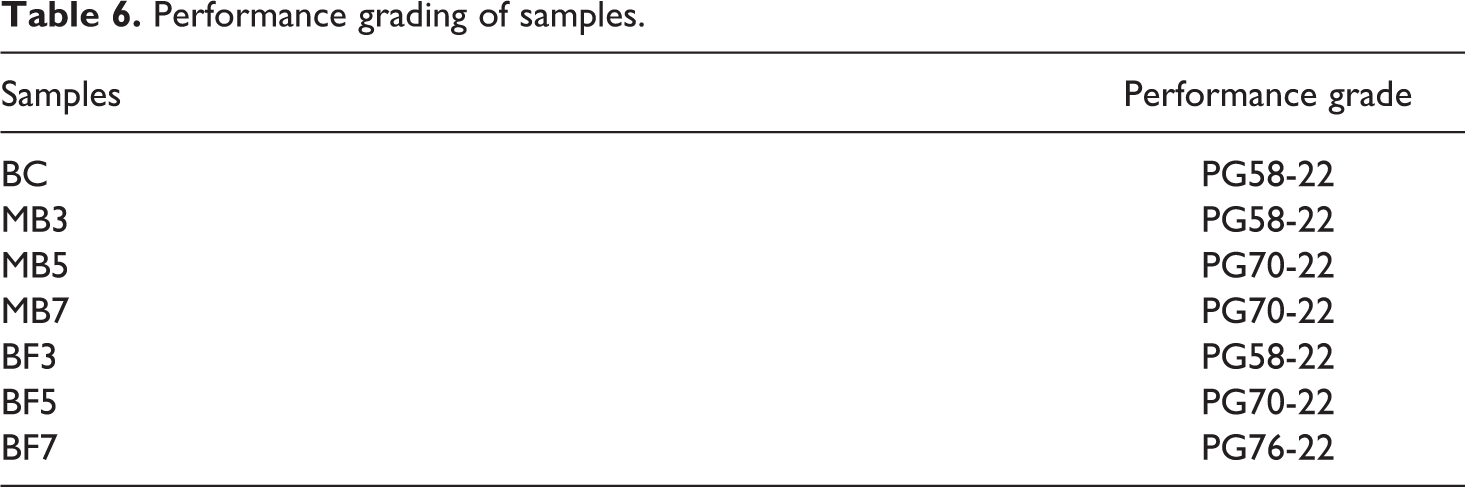
Table 6 is shown according to the temperature scan test results at high and intermediate temperatures and BBR test at low temperature in order to categorize synthesized PU modified bitumen and PU bituminous foam in term of performance. As can be seen in the Table 6, samples at low temperature have the same category and high temperature have different levels of temperature.
Performance grading of samples.
FTIR result
FTIR tests on isocyanates, polyols, synthesized PU, pure bitumen, and modified bitumen identified the structure of isocyanate and polyol as well as investigate the presence of OH and NCO in the synthesized PU and modified bitumen. According to the Figure 12, NCO bond in the isocyanate with wavenumber 2268.88 cm−1 and Figure 13, OH in polyol with wavenumber 3473.36 cm−1 can be seen. With mixing polyol and isocyanate and as a result, synthesis of the PU from these two raw materials, PU bonds in the wave of Figure 14 with wavenumber 1726.33 cm−1 is seen. Also, in PU combination, free isocyanate with wavenumber 2270.55 cm−1 can be seen that in fact proves reactions in combination with bitumen with groups containing hydroxyl.
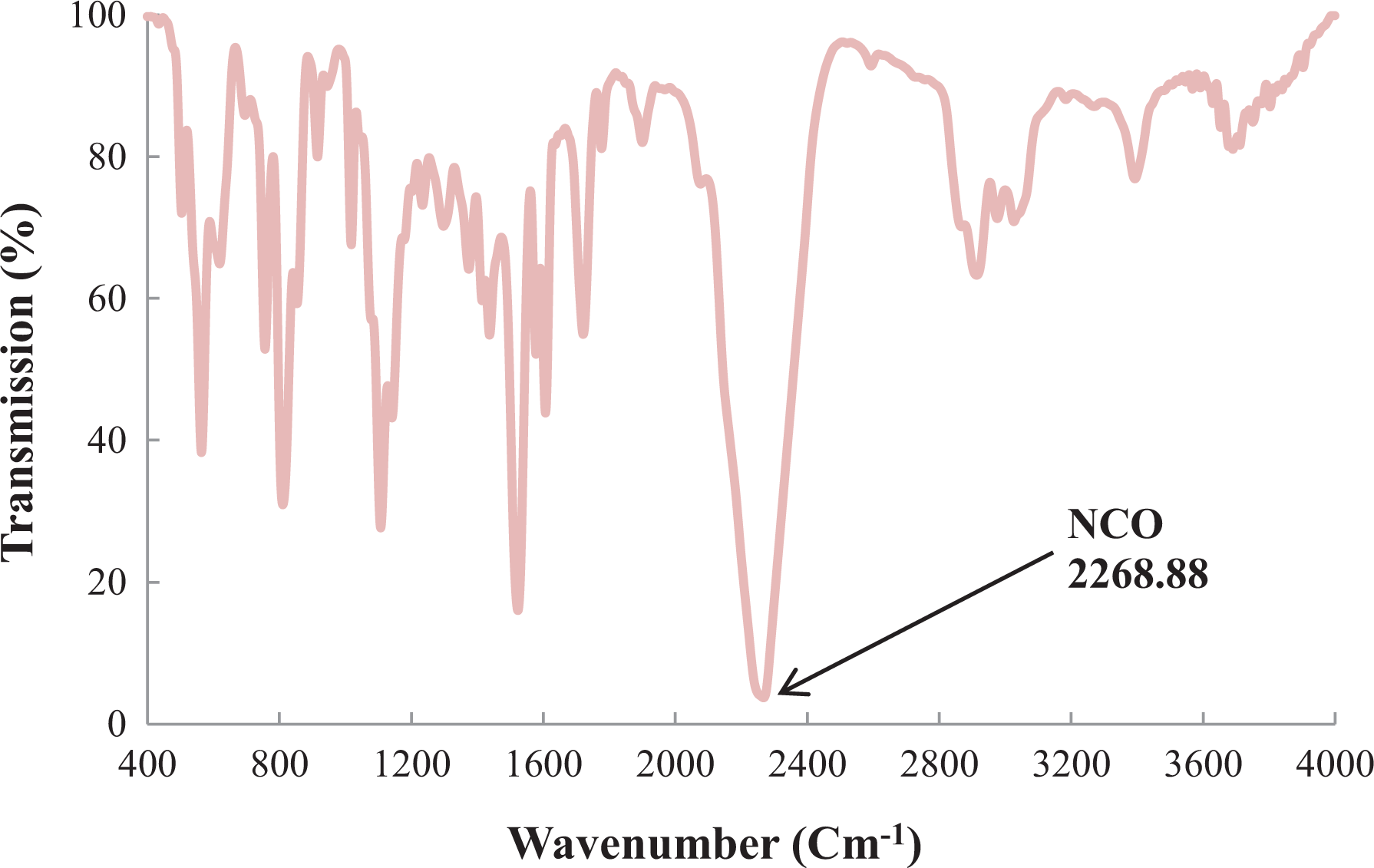
FTIR spectra for NCO band.
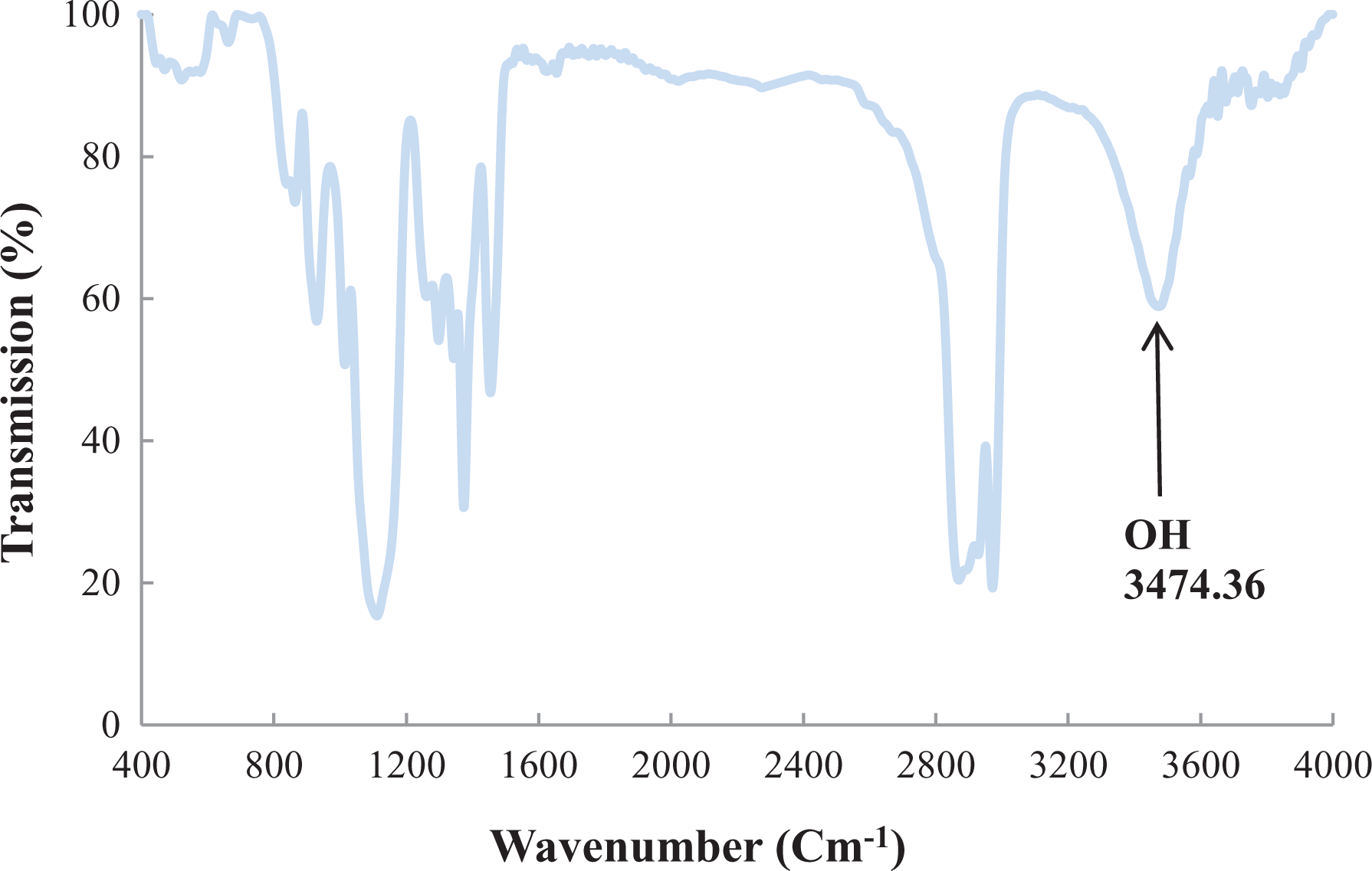
FTIR spectra for OH band.
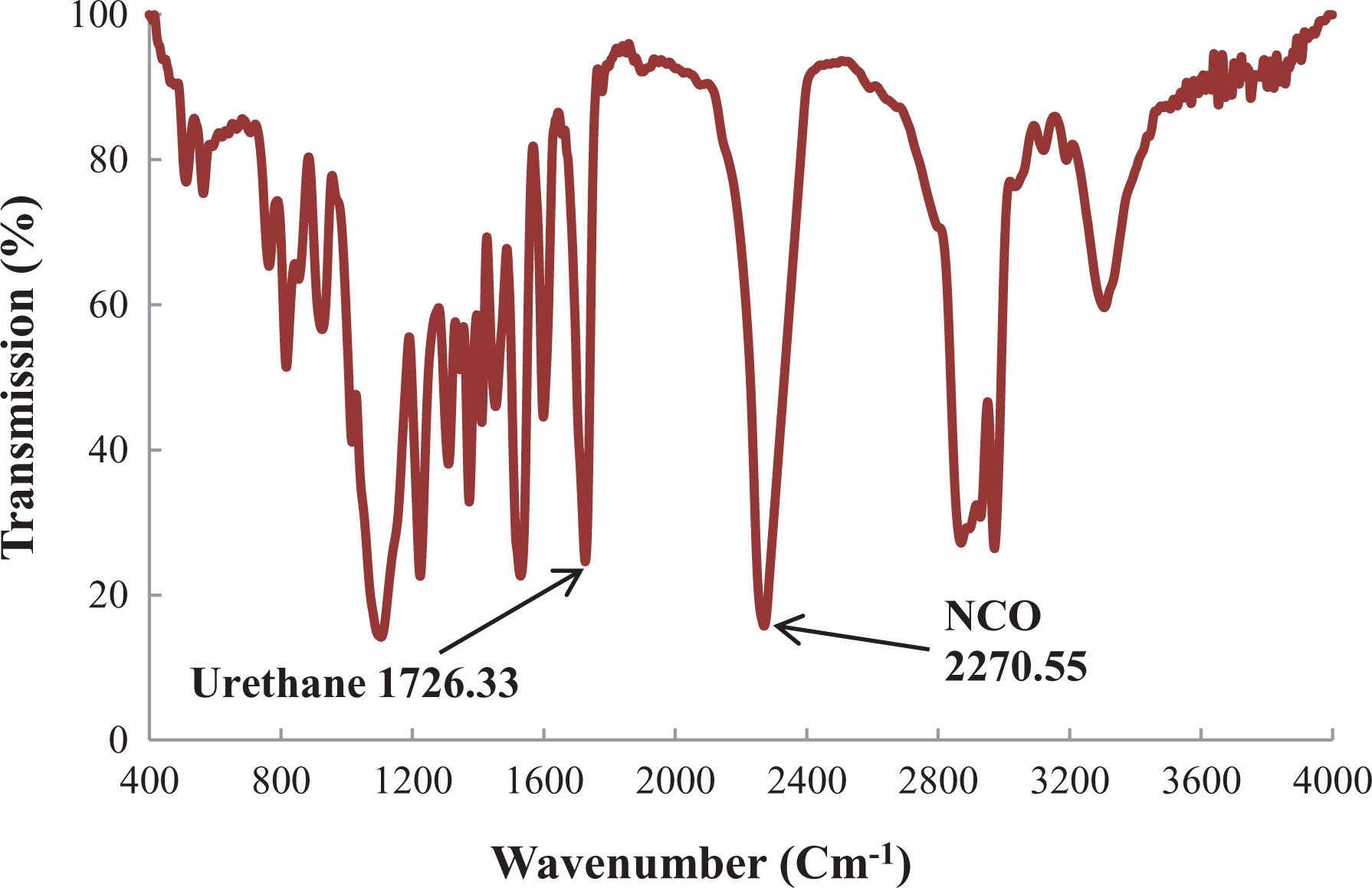
FTIR spectra for urethane band.
Figure 15 shows the control and bitumen samples modified with PU respectively which the peak of PU bonds with wavenumber of 1720.97 cm−1 can be seen. This indicates the PU bonds in this sample and may even be related to free isocyanate reaction of hydroxyl with the polar groups such as asphaltene. In any case, the wave number that corresponds to the PU bond is not seen in the control sample and range shown in Figure 15 is showing PU bonds in a modified bitumen. 17,25,31
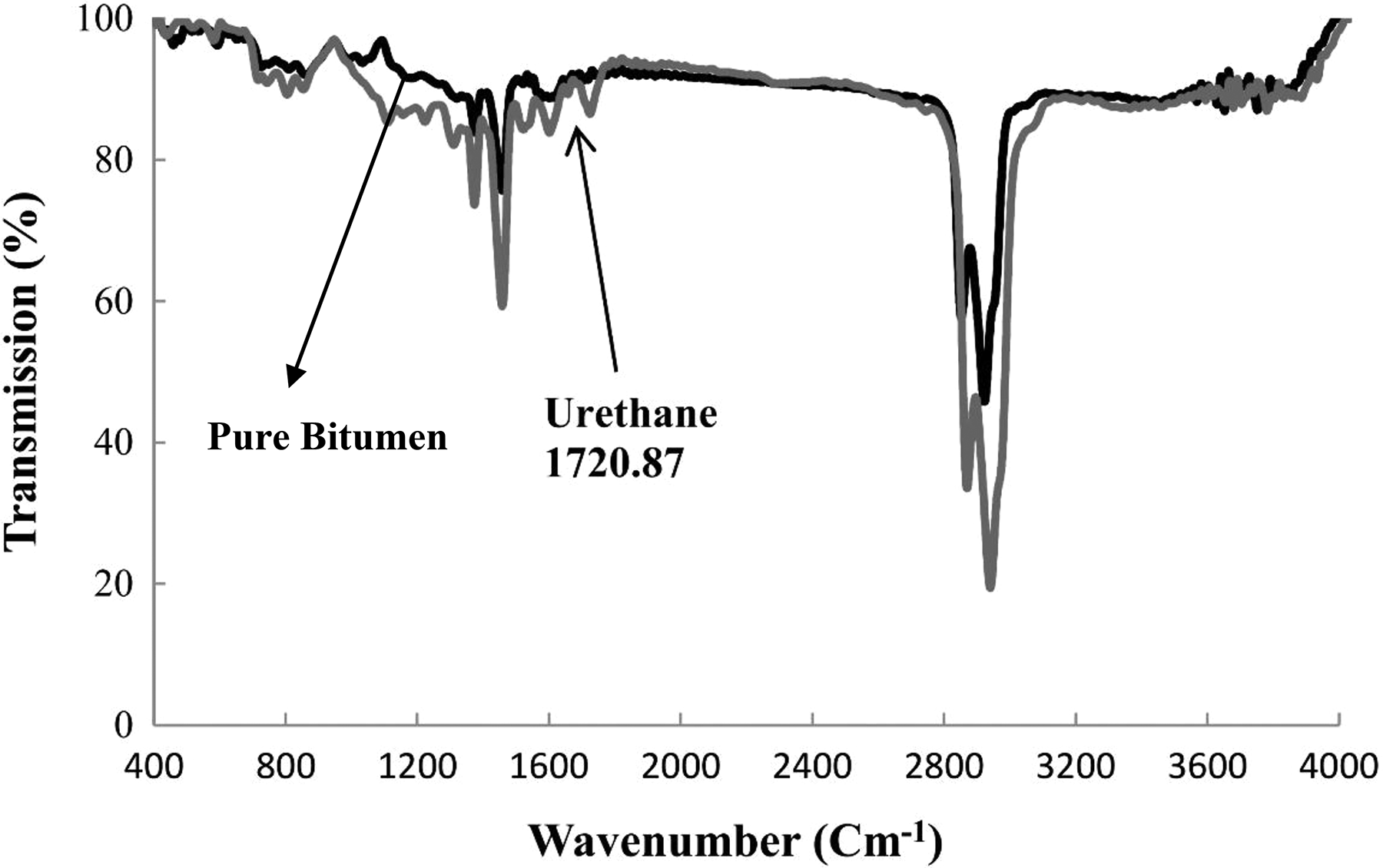
FTIR spectra for pure bitumen versus BPU7.
Conclusions
By analyzing data from the tests, the following results were obtained: Modifying bitumen with PU had reduced bitumen penetration degree. With employing bitumen foam, the penetration degree reduced more than other modified samples. Samples modified with synthesized PU had a higher softening point than the control bitumen; however, BF7 in bitumen foam attributed itself the highest softening point between modified samples, which in fact reflects the increasing resistance of bitumen and then mix asphalt to permanent deformation. By calculating PI increasing the percentage of each polymer had a more desirable effect on bitumen thermal susceptibility and the lowest thermal susceptibility was related to the samples modified with less additives weight percent. Adding synthesized PU as well as providing PU bituminous foam increased base bitumen resistance against permanent deformation. BPU3 attributed itself the most persistent to permanent deformation. In terms of chemical structure, by adding synthesized PU in the bitumen, NCO in free isocyanate was reacted with bitumen polar groups, such as asphaltene containing functional groups OH and increases the range of asphaltene chains. With increasing asphaltene in the bitumen, viscosity increased along the bitumen stiffness means bitumen showed viscosity behavior at higher temperatures. Furthermore, with increasing viscosity and stiffness of bitumen, bitumen softening point and its penetration degree decreased led to reduce the thermal susceptibility of bitumen and increase its resistance to permanent deformation at high temperatures. The production of PU bituminous foam from modified bitumen with synthesized PU and water continued reactions and water with free isocyanate produces new bonds that resulted in the production of NH2. This stronger chains increase helped increasing asphaltene chain and further increase in viscosity and stiffness of bitumen. Additives used in research improved the performance of bitumen in average temperatures in a way that with having parameter G*·Sin δ less than bitumen had higher elastic property led to greater resistance against fatigue. With increasing weight percentages of additives, the intermediate performance temperature of modified samples was less than the control bitumen. The lowest intermediate temperature was related to modified samples with 7% of each additive. Modified samples with synthesized PU and PU bituminous foam during the bending beam test with low temperature had shown better performance compared to control bitumen; however, among this, the lowest performance temperature was attributed to BPU7 which was equal to −15.04°C. The FTIR results showed that the PU bonds existed in the bitumen matrix and bitumen polar groups containing OH were synthesized with PU and its free isocyanate reacted led to asphaltene chains increase. It is recommended to investigate the effects of the nanomaterials along with PU. It is also suggested to assess hot mix asphalt samples with PU modified bitumen
