



Abstract
Poly(propylene carbonate) (PPC) blended with poly(butylene succinate) (PBS) with chain extender (CE) was prepared by melt mixing. Mechanical properties of PPC/PBS composites showed that the addition of CE can increase its tensile strength and unnotched impact strength, and the PPC/PBS composites had higher tensile strength when CE (0.4 wt%) was added into PPC/PBS composites. Thermogravimetric measurements revealed that adding CE to PPC/PBS (70/30 wt%) can improve the thermal decomposition temperatures (T −5% and T −10%). Dynamic mechanical analysis revealed that the incorporation of CE increased the storage modulus of the PPC/PBS (70/30 wt%) composites.
Keywords
Introduction
In recent years, environmental pollution has become a great problem due to the plastic waste in daily use; one of the solutions to this problem is to replace the traditional synthetic polymers with the biodegradable polymers. Moreover, large amounts of carbon dioxide (CO2) are emitted into the atmosphere from cars and modern large-scale industries, and CO2 has a surplus increment of 109 tons/year. The increased emission of CO2 causes serious environmental problems, especially in respect of the global warming. 1 –3 Scholars have been trying to convert such abundant resource of CO2 by chemical synthesis into some useful organics. Therefore, as a useful method to solve the plastic pollution, the incorporation of CO2 into polymer materials has attracted scientific and practical interests. Poly(propylene carbonate) (PPC) is a random copolymer of propylene oxide and CO2, and the characteristics of this copolymer is fully biodegradable alternative to the use of ordinary plastic, which, on the one hand, the use of CO2 as a raw material to synthesize polymer materials can reduce the CO2 emissions; on the other hand, it is possible to solve the “white pollution” problem of ordinary plastic, PPC can be degraded into water and CO2. PPC was first synthesized by Inoue et al. via the copolymerization of propylene oxide and CO2 with the molecular structure shown in Figure 1. 4 Although PPC has good properties such as impact resistance, innocuousness, translucence, and so on, it suffers many drawbacks such as its thermal stability, heat resistance, tensile strength, and the stability of product size. Therefore, its properties still need to be improved. PPC blending with other polymers to improve its properties is accepted as an effective and economical route; many approaches have been carried out to improve the physical properties of PPC by melt compounding. 5 –14 Most of the PPC studies focused on fabricating completely biodegradable materials by blending with other biodegradable polymers, 15 –21 such as poly(L-lactide), 15,16 poly(hydroxybutyrate), 17,18 and poly(butylene succinate) (PBS). 19 –21
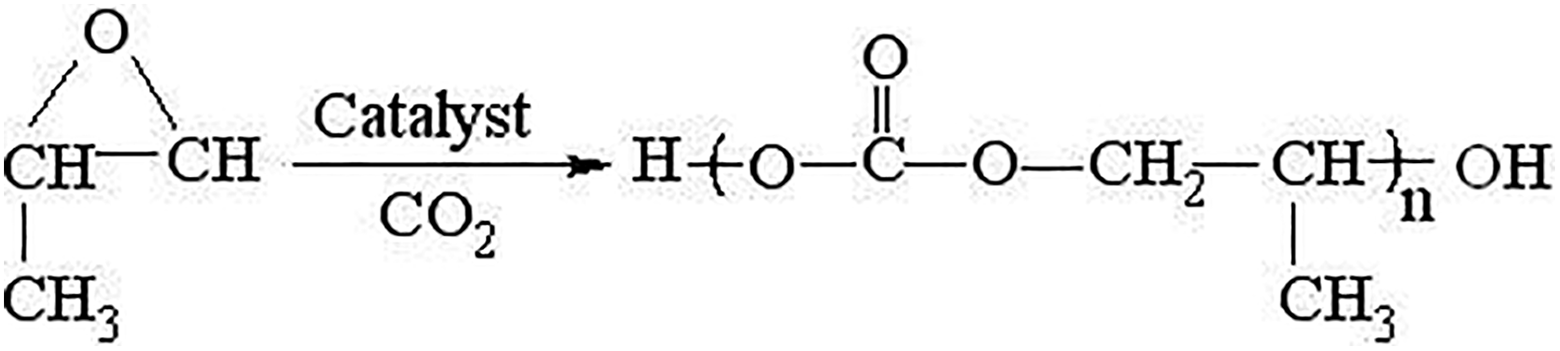
The copolymerization of CO2 and propylene oxide.
PBS is one of the many biodegradable materials that are used to modify PPC; PBS can be degraded by bacteria in soil, and it is an environmentally friendly polymer. PBS has good heat resistance, thermal deformation temperature, and good processing performance, and the temperature of PBS products can exceed 100°C. 22
Up to now, there have been few reports on the degradation of PPC/PBS composites. Zhang et al. 23 researched the miscibility of PPC/PBS by dynamic mechanical analysis (DMA), and the results indicated immiscibility between PPC and PBS. Pang et al. 19 investigated the miscibility and properties of completely biodegradable PPC/PBS composites, and the results showed that the yield strength and the strength at break of the composites increased remarkably with the incorporation of PBS. In addition, the immiscibility of the two components was verified by the two independent glass transition temperatures obtained from DMA tests. In this article, because there are hydroxyl groups in polylactic acid (PLA) and PBS molecules, the chain extender (CE) molecules have two epoxy groups, so the PLA and PBS can react with epoxy groups in the presence of CE in the process of melt extrusion (Figure 2). We expected these epoxy groups to be useful in increasing the chance of reaction at the PPC/PBS interface to increase its physical properties. The thermal properties of PPC/PBS blends were studied using thermogravimetric (TG) analysis and DMA.
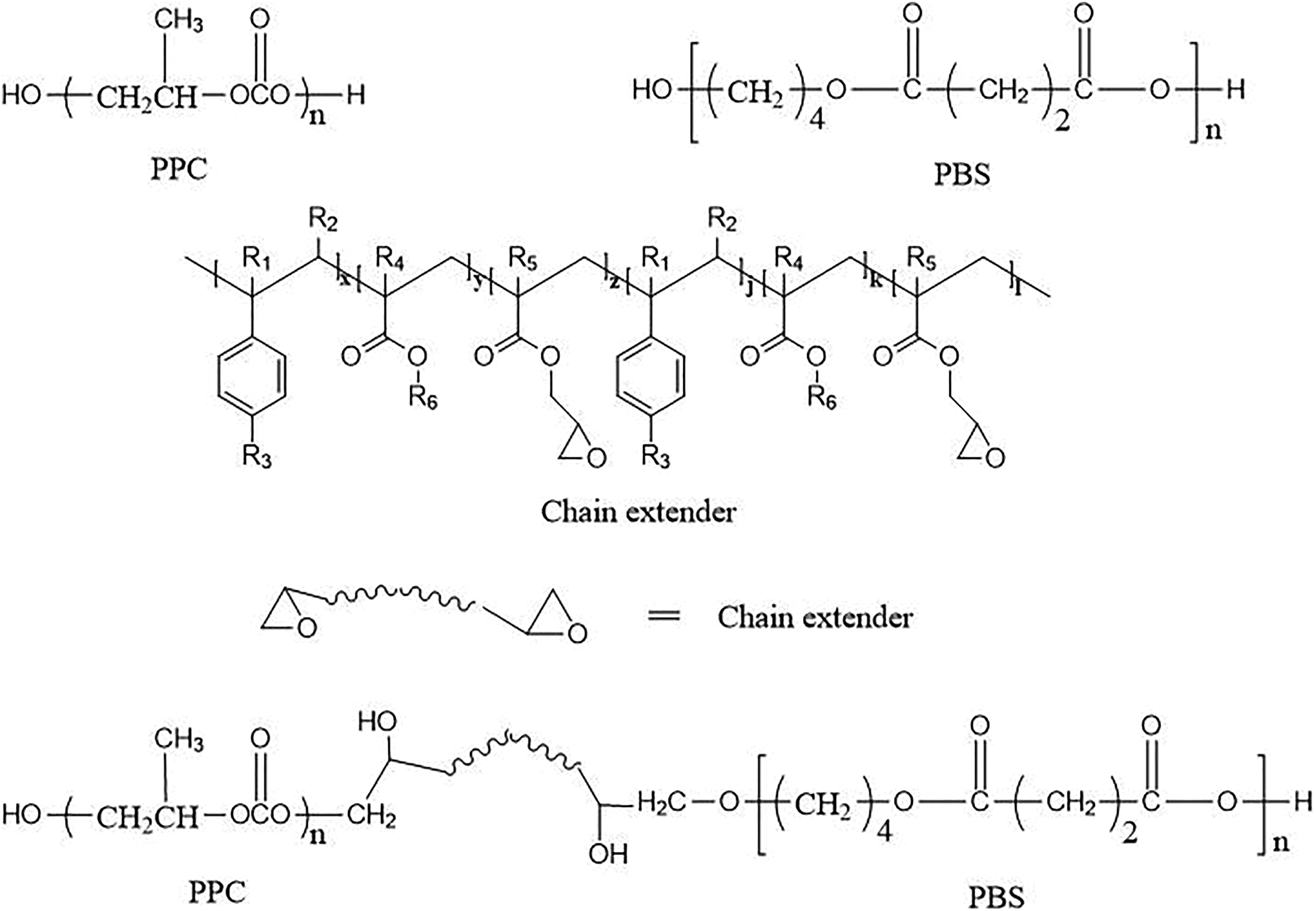
Predicted reactions of PPC, PBS, and CE.
Experimental
Materials and preparation
The PPC was provided by Henan Tianguan Enterprise Group Co., Ltd. (China) and had a number average molecular weight (Mn ) of 71,000, the PBS was provided by Anqing Hexing Chemical Co., Ltd. (China), and the CE was provided by BASF (USA). PPC and PBS pellets were dried at 60°C in vacuo for 24 h, the PPC and PBS pellets were melt blended for various compositions (90/10, 70/30, 50/50, 30/70, and 10/90) with 0, 0.2, 0.4, 0.6, and 0.8 wt% CE using a twin-screw extruder at 180°C, and then the extrudates were pelletized with a pelletizer. Parts of the extrudates were processed into test sample by an injection molding machine (CJ-80; Chen De Plastics Machinery Co., Ltd., China).
Methods of characterization
The tensile tests were performed using a tensile testing machine of Shanghai Hualong Test Instruments Co., Ltd., China, according to the standard GB/T 1040-2006. Before the measurements, the samples were conditioned at 23°C and 50% relative humidity (RH) for 48 h. The crosshead speed was set at 50 mm min−1. The tested result of each sample was the average of the five samples.
DMA was carried out with TA Q800 DMA (TA Instruments, New Castle, Delaware, USA). The dimensions of the specimens were 30 × 10 × 4 mm3. The scanning temperature ranged from −75°C to 85°C at a heating rate of 3°C min−1, a frequency of 1 Hz, and an oscillation amplitude of 0.3 mm.
TG measurements were performed on a TGA instrument (TA Instrument Model Q50). The tests were carried out from 60°C to 600°C at a heating rate of 20°C min−1 under nitrogen protective atmosphere. The peak temperatures of the derivative thermogravimetric (DTG) curves were taken as the maximum mass-loss rate temperature (T max).
Results and discussion
The thermal stability of the PPC/PBS composites was investigated in this work; the TG curves and DTG curves for neat PPC, PBS, and the PPC/PBS composites are shown in Figure 3(a) and (b), and the relevant characteristic temperatures are given in Table 1. It can be seen that the thermal decomposition temperature of PBS was much higher than that of PPC; therefore, the thermal stability of PBS is better than PPC. The neat PPC and PBS only have one-step degradation, but the PPC/PBS (90/10, 70/30, 50/50, 30/70, 10/90) composites showed two-step degradation. The thermal decomposition temperatures (T −5% and T −10%) of PPC were 254.7°C and 275.4°C, when added PBS to PPC, the thermal decomposition temperatures (T −5% and T −10%) of the PPC/PBS composites increased, but it decreased the thermal decomposition temperature with the maximum rate of the PPC-rich phase (T 1 max). But the PPC/PBS composites were processed between 160°C and 280°C, so it showed that the incorporation of PBS could improve the thermal decomposition temperatures (T −5% and T −10%) of the PPC.
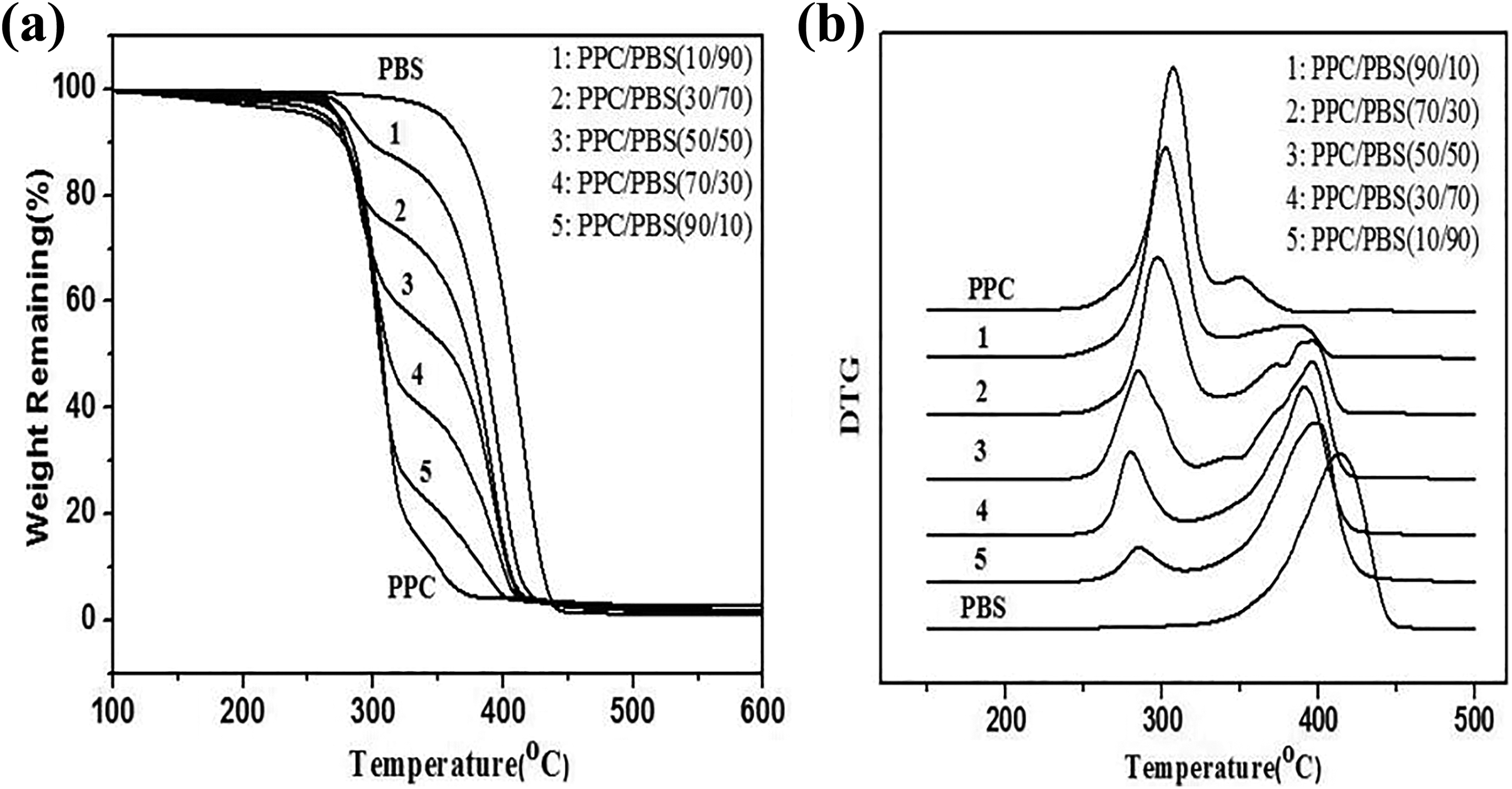
(a) TG curves for neat PPC, PBS, and PPC/PBS composites and (b) DTG curves for PPC, PBS, and PPC/PBS composites.
The characteristic temperatures of thermal stabilities for neat PPC, PBS, and the PPC/PBS composites.
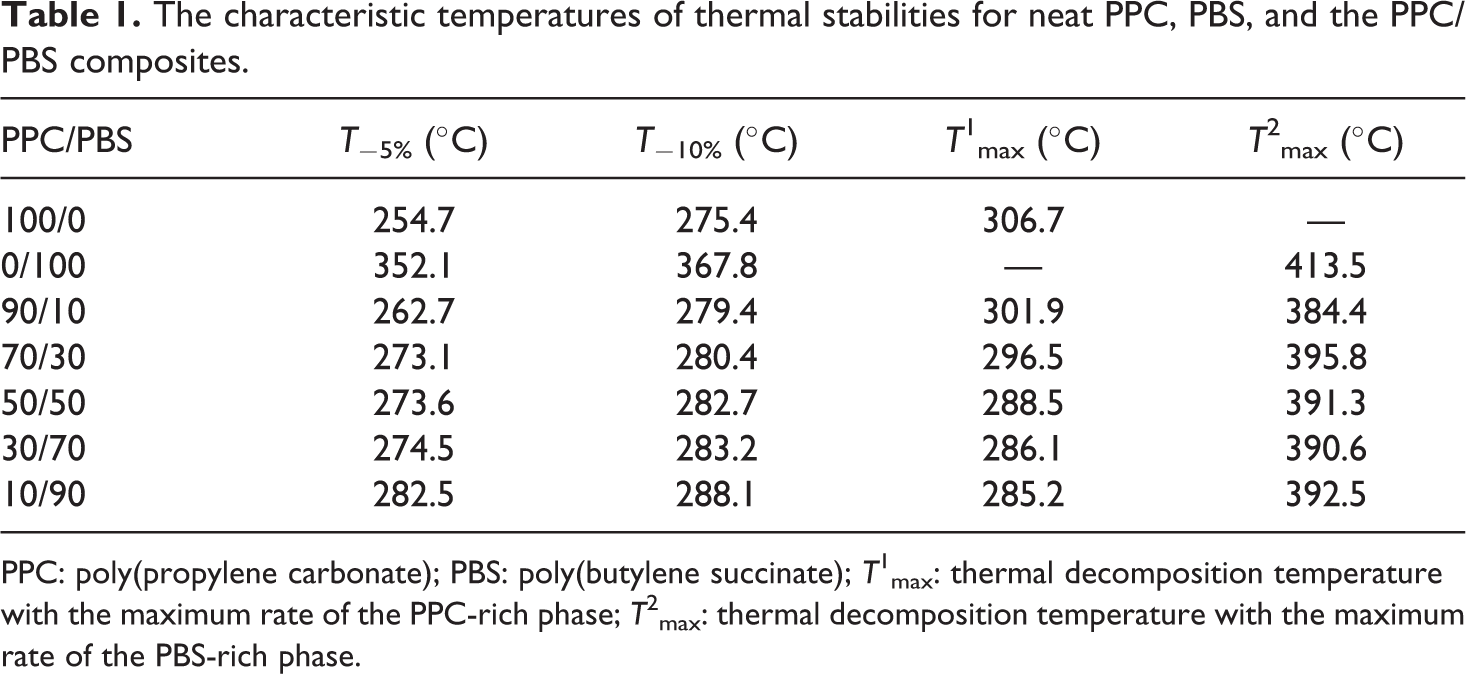
PPC: poly(propylene carbonate); PBS: poly(butylene succinate); T 1 max: thermal decomposition temperature with the maximum rate of the PPC-rich phase; T 2 max: thermal decomposition temperature with the maximum rate of the PBS-rich phase.
Figure 4 shows the thermal stability of the PPC/PBS (70/30) composites in the presence of CE and Table 2 shows the relevant characteristic temperatures. Adding CE to PPC/PBS (70/30) composites can improve the thermal decomposition temperatures (T −5% and T −10%) and the thermal decomposition temperatures with the maximum rate of the PPC-rich phase. The PPC has poor thermal stability and is prone to degrade in the process of melt extrusion, added CE into the PPC/PBS composites, the CE could react with the PPC which had thermal decomposition, ending its degradation, thus improving the thermal stability of the PPC/PBS composites.
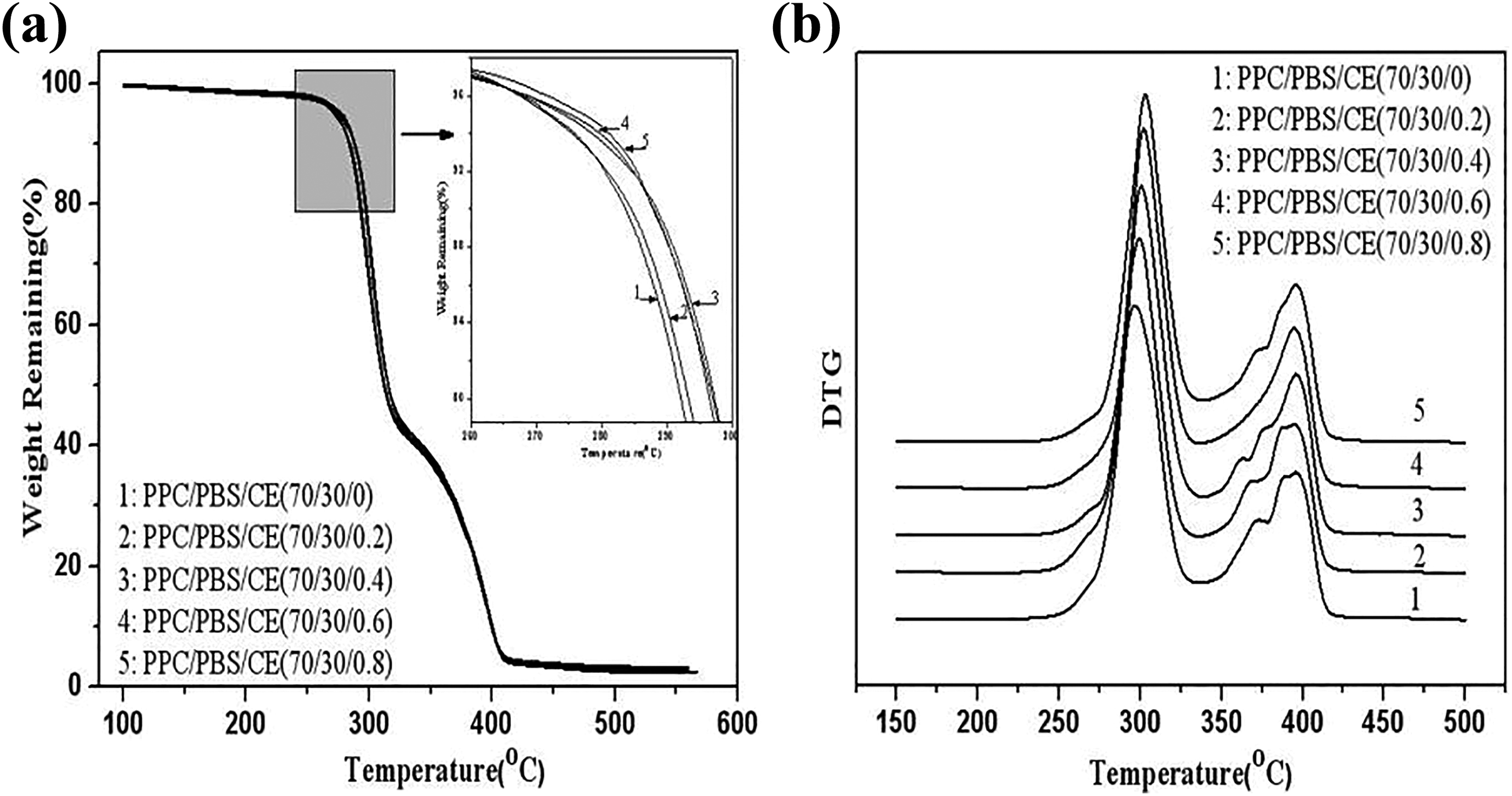
(a) TG curves for the PPC/PBS (70/30) composites in the presence of CE and (b) DTG curves for the PPC/PBS (70/30) composites in the presence of CE.
The characteristic temperatures of thermal stabilities for the PPC/PBS (70/30) composites in the presence of CE.
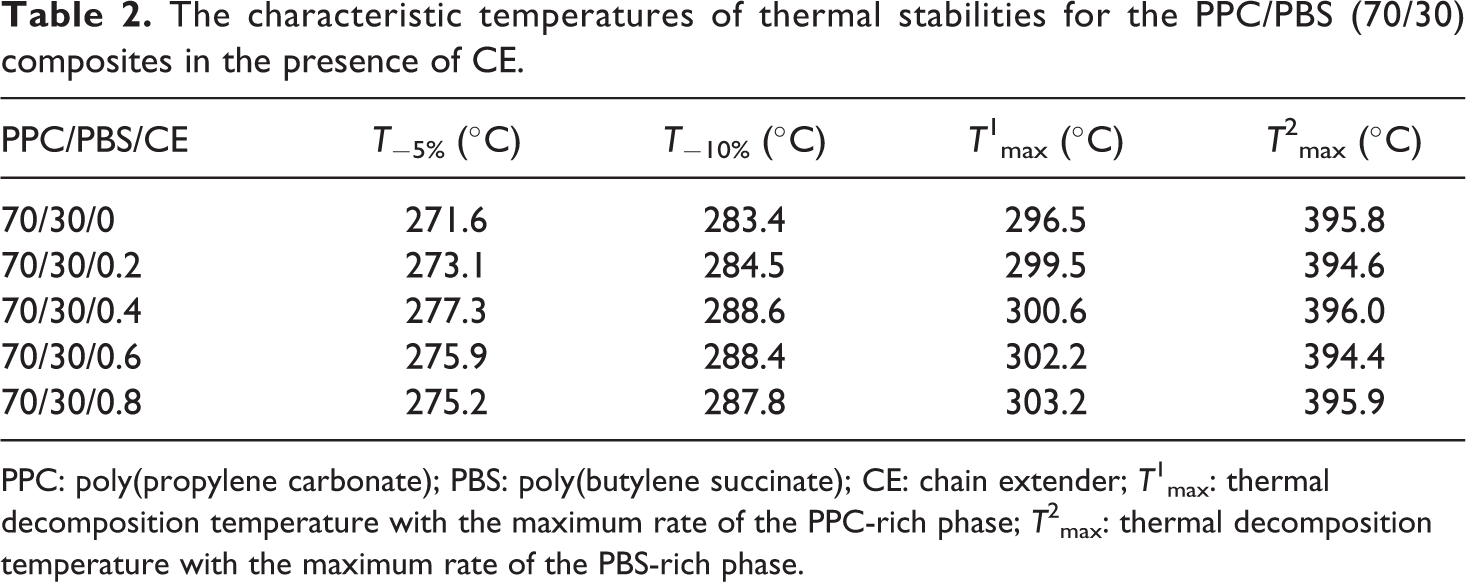
PPC: poly(propylene carbonate); PBS: poly(butylene succinate); CE: chain extender; T 1 max: thermal decomposition temperature with the maximum rate of the PPC-rich phase; T 2 max: thermal decomposition temperature with the maximum rate of the PBS-rich phase.
The tensile strength and unnotched impact strength of the PPC/PBS composites are shown in Figure 5(a) and (b). As shown in Figure 5(a), the tensile strength of the PPC/PBS composites increased with increasing PBS content; when the PBS content was less than 50%, the addition of PBS can increase the tensile strength of the PPC/PBS composites remarkably. When the PBS content was more than 50%, the addition of PBS can only increase the tensile strength of the PPC/PBS composites slightly, that’s because the tensile strength for neat PPC and PBS is 12.3 and 29.1 MPa, respectively, the tensile strength of PBS was much higher than that of PPC, so the addition of PBS content of less than 50% can increase the tensile strength of the composites remarkably. For all the PPC/PBS composites, the addition of CE can increase the tensile strength and increase with increasing CE content; all the PPC/PBS composites had higher tensile strength when adding CE by 0.4 wt%. The tensile strength of the PPC/PBS composites decreased slightly when further increasing CE content. Figure 5(b) shows the unnotched impact strength of PPC/PBS (90/10, 70/30) composites in the presence of CE, the unnotched impact strength increased with increasing CE content, when the added CE content exceeded 0.4 wt%, the unnotched impact strength decreased, for the PPC/PBS (70/30) composites, the unnotched impact strength increased two times when added CE by 0.4 wt%. The unnotched impact strength of over 30 wt% PBS content could not be measured in the presence of CE because the test specimens were not breakable. The addition of CE can improve the tensile strength and unnotched impact strength of the PPC/PBS composites indicating that CE is the more useful reactive processing agent for PPC/PBS composites, the immiscibility between PPC and PBS, 19,21 the CE can react with PPC and PBS in the process of extrusion, so it improved the compatibility between PPC and PBS phase.
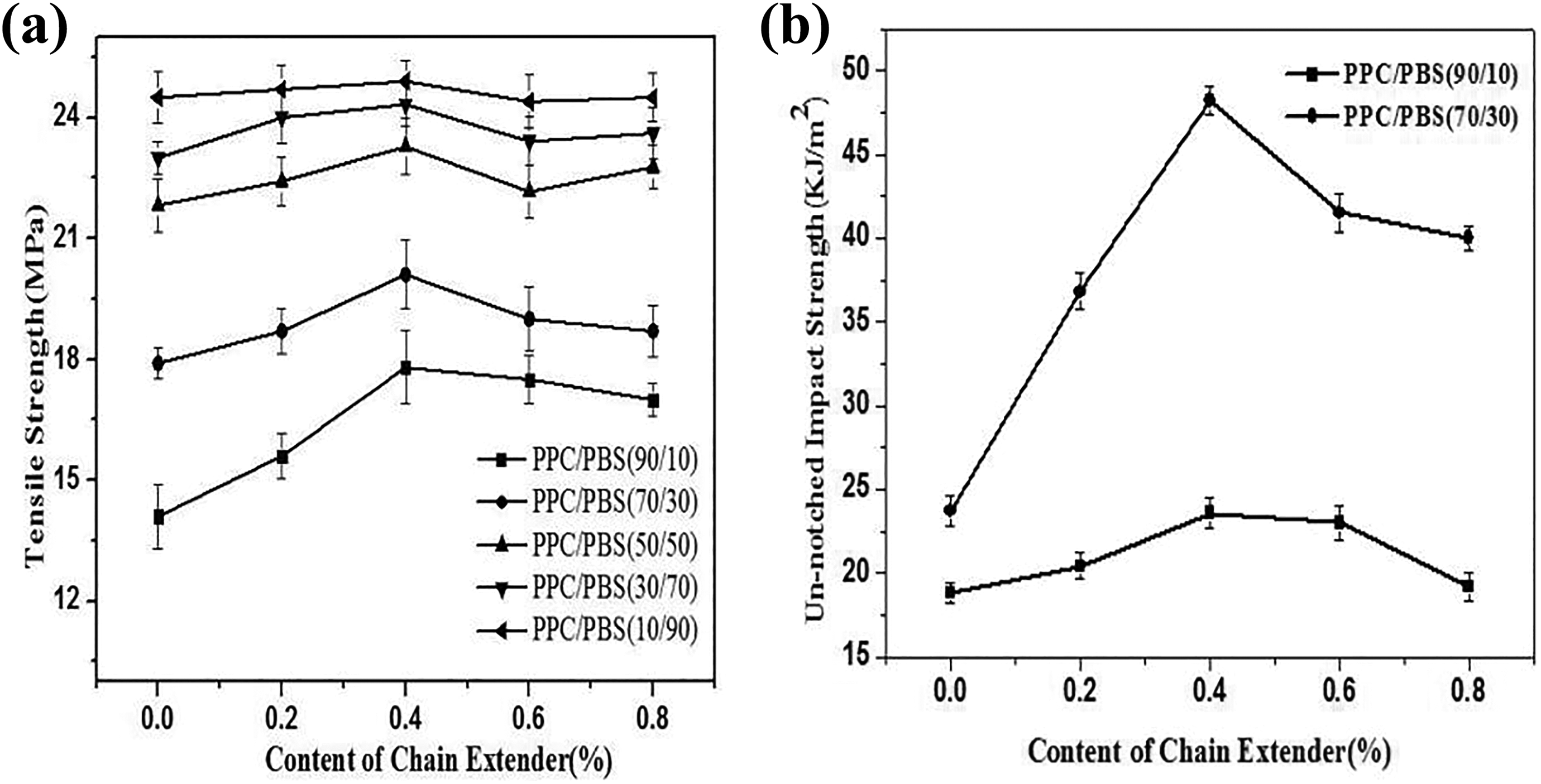
Tensile strength and unnotched impact strength of the PPC/PBS composites with CE content.
DMA is one of the sensitive techniques available for characterizing and interpreting the mechanical behavior of materials. Figure 6(a) and (b) shows the storage modulus (E′) and loss factor (tan δ) against the temperature of neat PPC, PBS, and the PPC/PBS composites. From the curves of Figure 6, it can be seen that the storage modulus of PPC is higher than that of PBS, and the storage modulus of PPC/PBS composites decreased with increasing PBS content. The decrease of the storage modulus with increasing PBS content was due to the stiffness of the PBS which is lower than that of PPC. The storage modulus decreased as temperature increased; the storage modulus of neat PPC and PPC/PBS (90/10 wt%) composites decreased significantly at about 35°C, that’s because the segments of PPC molecular chains began to motion when the temperature is above 35°C. But the storage modulus for PPC/PBS composites decreased significantly at about −33°C when PBS content was more than 20 wt%, that’s due to the segments of PBS molecular chains began to motion when the temperature is above −33°C, so it resulted in a significant decrease in the storage modulus. Figure 6(b) shows that the PPC/PBS composites had two independent loss factor (tan δ) peaks. The height of tan δ peak was generally a measurement of the damping nature of the samples. The height of the loss factor (tan δ) peak of PPC decreased significantly with increasing PBS content; this indicated that the PPC/PBS composites had lower damping and improved strength with increasing PBS content.
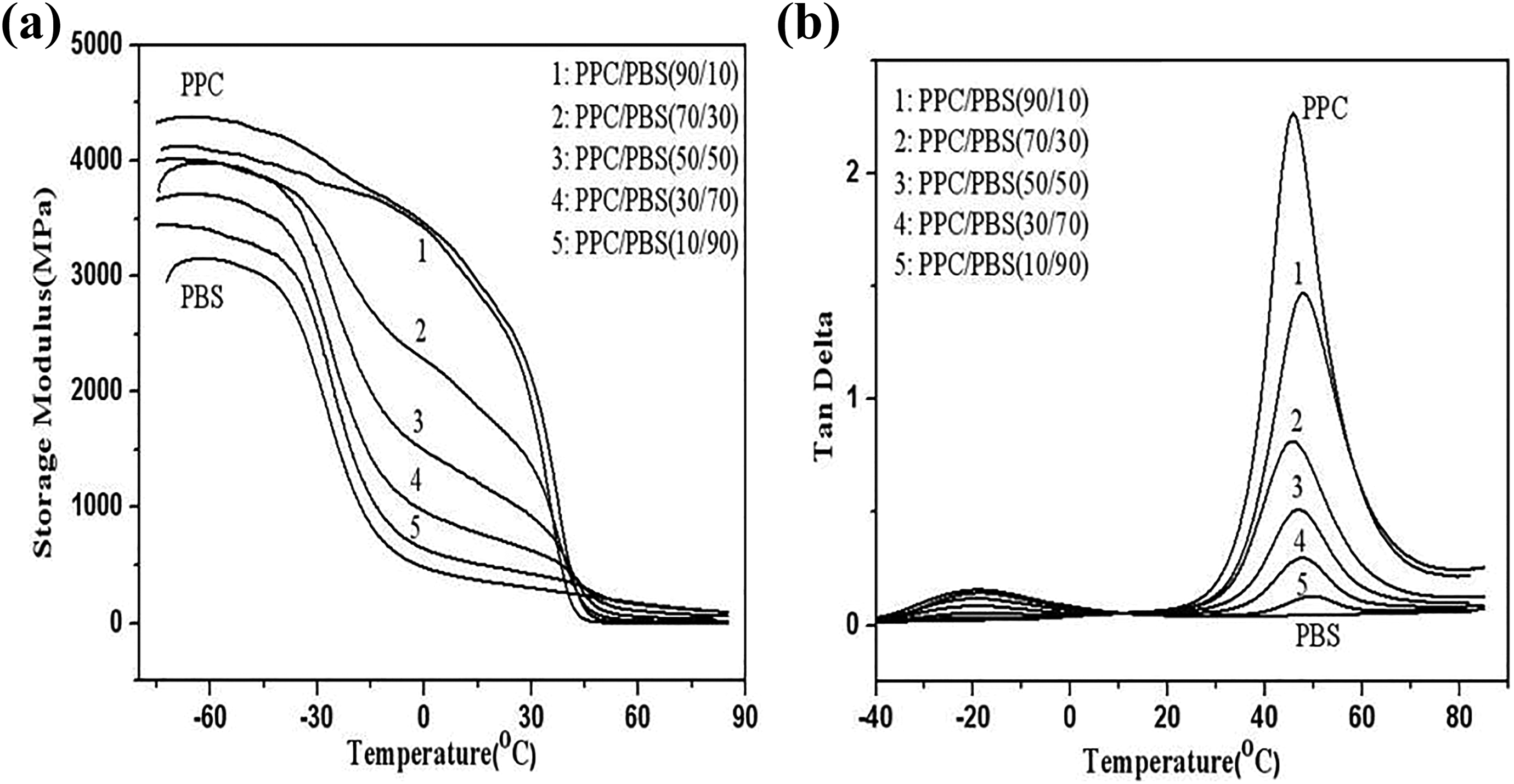
(a) Storage modulus (E′) versus temperature for PPC/PBS composites and (b) tan δ versus temperature for PPC/PBS composites.
Figure 7(a) and (b) shows the influence of CE content on the storage modulus (E′) and loss factor (tan δ) of the PPC/PBC (70/30 wt%) composites. From the curves of Figure 7(a), it can be seen that the addition of CE increased the storage modulus of the PPC/PBS (70/30 wt%) composites, and the PPC/PBS(70/30 wt%) composites with 0.4 wt% CE had the highest storage modulus. That’s because the CE could react with the PPC which had thermal decomposition and terminate its degradation in the process of extrusion melt processing; thus the addition of CE weakened the thermal degradation reaction of PPC and improved the storage modulus of the PPC/PBS composites.
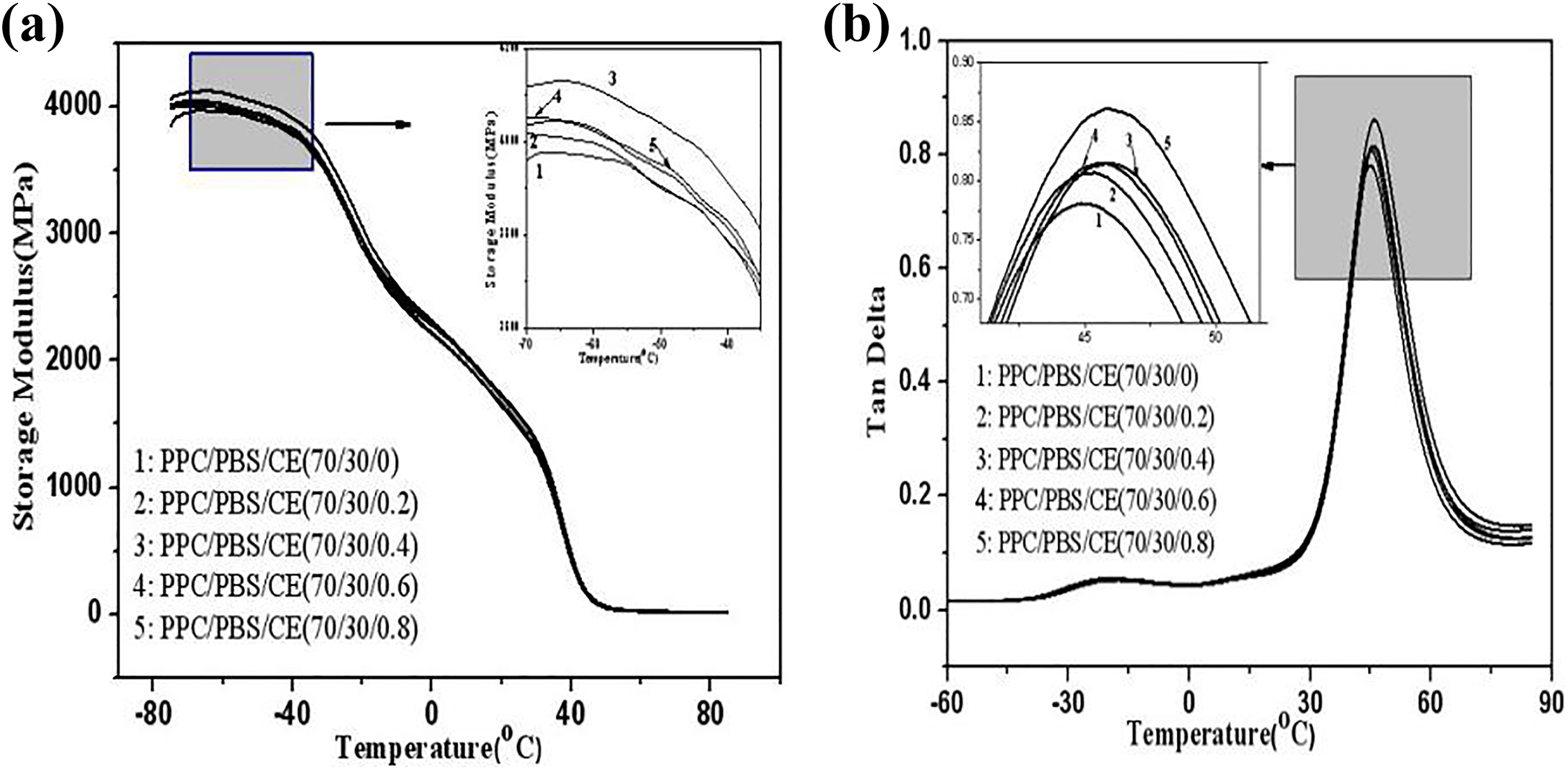
(a) Storage modulus (E′) versus temperature for the PPC/PBS (70/30) composites in the presence of CE and (b) tan δ versus temperature for the PPC/PBS (70/30) composites in the presence of CE.
Conclusions
The PPC/PBS composites were prepared in the presence of CE by melt mixing and subsequent injection molding. Mechanical properties revealed that the addition of CE can increase the tensile strength and unnotched impact strength of the PPC/PBS composites; all the PPC/PBS composites had higher tensile strength when adding CE by 0.4 wt%. TG measurements revealed that adding CE to PPC/PBS (70/30 wt%) composites can improve the thermal decomposition temperatures (T −5% and T −10%) and the thermal decomposition temperature with the maximum rate of the PPC-rich phase. DMA tests revealed that the incorporation of CE increased the storage modulus of the PPC/PBS (70/30 wt%) composites.
Footnotes
Declaration of Conflicting Interests
The author(s) declared no potential conflicts of interest with respect to the research, authorship, and/or publication of this article.
Funding
The author(s) disclosed receipt of the following financial support for the research, authorship, and/or publication of this article: This work was supported by the Guizhou Province Science and Technology Project (Qian Ke He Ji Chu [2017]1090) and the Natural Science Foundation of China (grant no. 21664004).
