




Abstract
In this work, the static and dynamic mechanical properties, crystallization behaviours, and morphology of long glass-fibre–reinforced polypropylene (PP) composites with thermo-oxidative ageing time from 0 day to 50 days at 120°C were investigated and discussed. The static mechanical properties showed a global decrease in tensile, bending and impact strengths with increasing ageing time. From the results obtained by scanning electronic microscopic observations, interface debonding clearly occurred between the glass fibre and PP matrix in the aged samples. The crystallinity (X c) of the composites was analyzed by differential scanning calorimetry; annealing process played the leading role in the early period of ageing, while as ageing progressed, the degradation of PP matrix dominated the ageing process and X c decreased. The dynamic mechanical analysis results indicated that the storage modulus and glass transition temperature of the composites also decreased with prolonging ageing time. Then, the apparent activation energy (E) of glass transition was calculated by the Arrhenius equation with different scanning frequencies. A higher value of E was obtained for the samples in the later ageing period, which means a higher energy barrier for glass transition.
Introduction
Polypropylene (PP) has been widely applied as an important general-purpose plastic because of the excellent comprehensive performance and cost-effectiveness. 1 However, PP also exhibits relatively low mechanical strength with a high moulding shrinkage rate, thereby making it susceptible to melt fracture and sensitive to notches as a type of structure material. 2,3 In recent years, there has been an increasing growth in the use of long glass-fibre–reinforced thermoplastic composites for semi-structural and engineering applications, caused by the fact that the composites show advantages of being lightweight and cost-effective as well as demonstrate high mechanical strength and excellent rigidity; these attractive advantages make them suitable for applications in automobiles, construction and aviation fields. 4 –9 In addition, as compared to ordinary PP composites, the long glass-fibre–reinforced PP (PP/LGF) composites are more suitable for applications that necessitate high demands.
During machining, storage and applications, the polymer composites are exposed to several environmental factors such as air, water and ultraviolet radiation, among others, thereby possibly making them more sensitive and vulnerable. 10 Among the environmental factors, the thermo-oxidative ageing is the one of main ageing forms of polymer composites and is the result of the integrated effects of heat and oxygen. The heat can accelerate the oxidation process of polymer, while the decomposition of oxides also leads to the scission of the main molecular chain. It is imperative to investigate the effect of thermo-oxidative ageing on the properties of polymer composites. Many studies on the thermo-oxidative ageing and dynamic mechanical analysis (DMA) of polymer composites have been reported including physical, substantial damage accrues, chemical and interface degradation. 11 –19 With the effect of thermo-oxidative ageing, the cross-linking, degradation of polymer matrix and the interface debonding can lead to the variations of static and dynamic mechanical properties, crystallinity (X c) and thermal stabilities.
Because of the tertiary carbon atoms on the main molecular chain of PP, the α-hydrogen atoms are relatively easy to react with oxygen, which make the themo-oxidative ageing the most serious affecting factor for the service life of PP composites. 20 In this work, 20 wt% glass-fibre–reinforced PP composites are prepared by melt blending. The samples are subjected to thermo-oxidative ageing for up to 50 days. The variation of the properties of the PP/LGF composites with ageing time is investigated, such as X c, morphology and static and dynamic mechanical properties. The aim of this work is to evaluate the effects and mechanism of long-time thermo-oxidative ageing on the PP/LGF composites, particularly considering the kinetics of glass transition which can be obtained from the results of dynamic mechanical properties.
Experimental
Materials
PP resins of a standard viscosity-grade product with a melt flow rate of 100 g/10 min were purchased from SK Corporation (South Korea). Continuous glass fibre rovings used were of ECT4301 grade and were subjected to surface treatment using a silane coupling agent, obtained from Chongqing Polycomp International Corporation (China). The diameter of the glass fibre was 17 μm.
Preparation of composites
The materials applied in this study were pure PP and PP/LGF masterbatches composites. The PP/LGF masterbatches were blended in the same two-screw extruder (TSE-40A, L/D = 40, D = 40 mm; Coperion Keya Machinery, Co., Ltd, China) at 190–210°C, and the continuous strand was cut into pellets with the length of 11 mm for injection moulding.
After drying for 6 h at 80°C to remove moisture water, the PP/LGF masterbatches were blended with the pure PP to make the content of glass fibre to stay at 20 wt%. Then, the blends were injection moulded (machine type: CJ80M3 V; Chen De Plastics Machinery Co., Ltd, Guangdong, China) at 200–220°C into various samples for testing and characterization. The PP/LGF specimens were put into an air-blowing thermostatic oven at 120°C. The thermo-oxidative ageing lasts from 10 days to 50 days.
Measurements and characterization
Mechanical properties testing
The tensile and bending strengths were measured by the material testing machine-type WDW-10C (Shanghai Hualong Test Instrument Co., Ltd, China), with the tensile speed of 50 mm min−1 and the bending speed of 2 mm min−1. The impact strength was measured by the LCD-type plastic pendulum impact testing machine ZBC-4B (Shenzhen Xinsansi Measurement Technology Co., Ltd, China). All mechanical tests were performed at room temperature.
Scanning electronic microscopy
Scanning electronic microscopic (SEM) images obtained on a KYKY-2800B (KYKY Technology Development Ltd, China) were used to investigate the impacting fracture of the samples. SEM graphs of the composites were recorded after gold coating surface treatment, with an accelerating voltage of 25 kV.
Differential scanning calorimetry
The melting and crystallization behaviours of unaged and aged samples were performed by differential scanning calorimetry (DSC) apparatus (Q-10 instruments; TA Co., Ltd, New Castle, Delaware, USA). Thermograms were recorded at a heating or cooling rate of 10°C min−1 under nitrogen atmosphere.
Then, the degree of percentage crystallinity (expressed in %Xc ) is calculated by integration of the area under the DSC endothermic peak divided by the heat of fusion with 100% crystalline PP using the following equation 21 :

where ΔH is the enthalpy of samples, C% is the percentage content of PP matrix in the composites (in this work, it is 80%), and ΔH m is the value of enthalpy of the melting of 100% crystalline PP (ΔH m ≈ 209 J g−1). 22
The dynamic mechanical properties testing
The dynamic mechanical properties were studied to analyse the determination of the main relaxation characteristics at different ageing times with a Q800 analyzer (TA Co., Ltd., New Castle, Delaware, USA) at a heating rate of 2°C min−1 over a temperature range from −50°C to 150°C. The samples were performed with imposed frequency of 1, 5, 10, 15 and 20 Hz and an oscillation amplitude of 10 μm in the bending mode.
Results and discussion
Static mechanical properties
The mechanical properties of the PP/LGF composites with different thermo-oxidative ageing time are investigated in this work. Figure 1 shows the variations of tensile, bending and impact strengths with increasing ageing time. It can be clearly observed from Figure 1 that the mechanical properties of PP/LGF composites exhibit a clear trend of global decrease with increasing ageing time. Compared with unaged sample, after 50 days of ageing, the tensile, bending and impact strengths decrease to 13.8, 17.5 and 5.9%, respectively; however, in the first 10 days, the corresponding strengths decrease to 9.2, 9.5 and 1.5%, respectively. In addition, it is found that the tensile and bending strengths decrease much more than the impact strengths in the early stage and the entire course of thermo-oxidative ageing. These variations indicate a trend of embrittlement for the composites, which can be attributed to the annealing of PP; when the ageing temperature (120°C) is in the range from the glass transition temperature (T g) to the melting temperature (T m) of polymer resin, the annealing of PP can occur in the early ageing period. The mobilities of PP molecular chains increase with the temperature of 120°C. The inner stress of PP matrix in moulding process can be released to make the molecules realign and crystallize. This effect can also retard the decrease of impact strength and promote the embrittlement of composites. However, the effect relatively becomes weak with longer ageing time, and the mechanical properties decrease rapidly in the later ageing period.
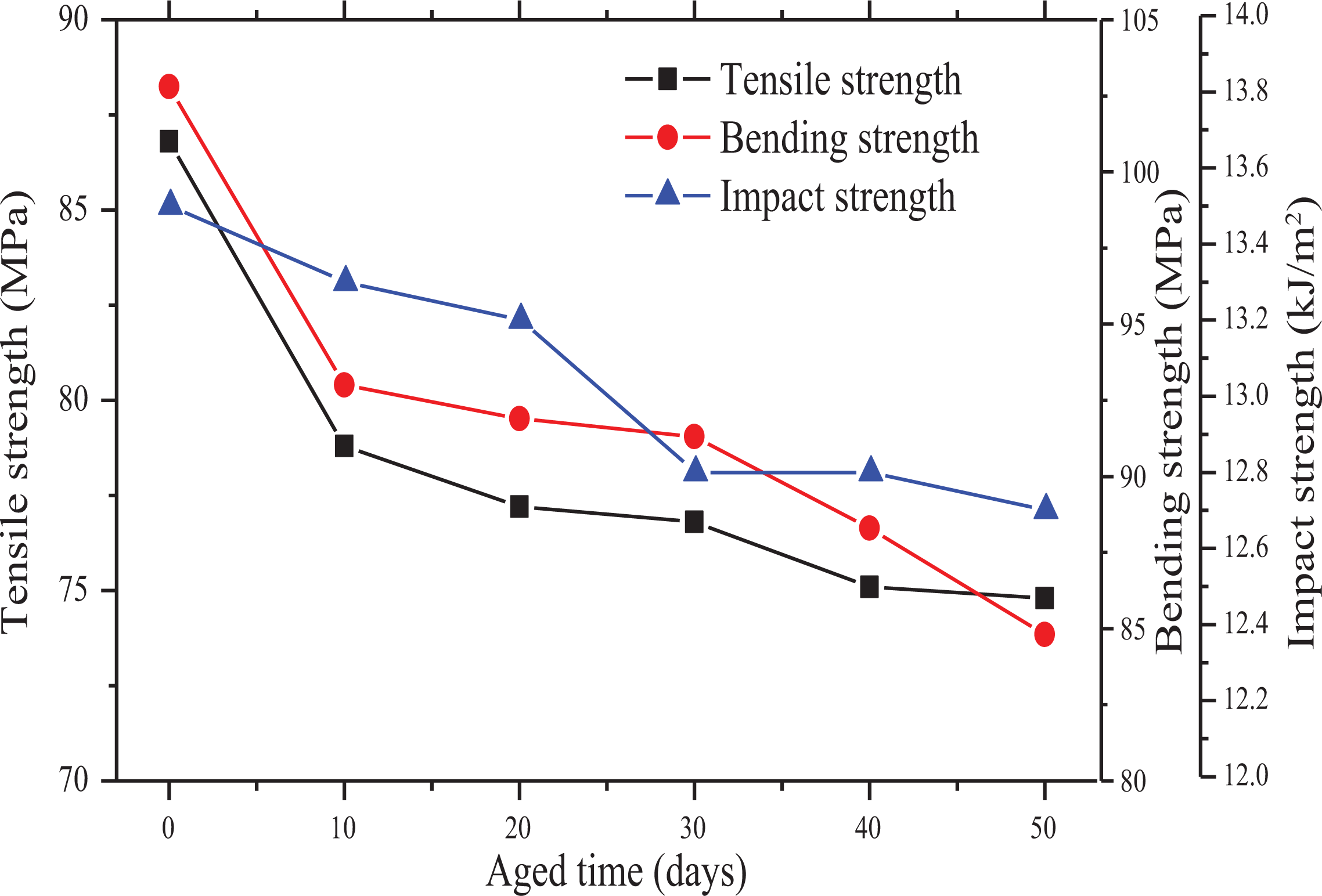
The tensile, bending and impact strengths of PP/LGF composites with different ageing time.
It is notable that significant intermolecular forces, which result from the formation of large numbers of Van der Waals’ interchain bonds, can become weak during the whole oxidation process. 23 With the combined effect of heat and oxygen, the polymer can easily display an automatic embrittlement of the oxidation reaction. Particularly, the interface between the fibre and the matrix can transfer stresses across the fibre–matrix composites, which influences the mechanical performances obviously. All of the reasons above result in the decline of the mechanical properties, and the interface debonding will be investigated by morphology analysis thereinafter.
Morphology of fracture
Fibre-reinforced polymer composites have been well known to absorb the tension energy via three major mechanisms: the breakage of glass fibre, fibre pulling out and polymer matrix rupture. 24 With the application of stress on the composites, shear stress is generated at the interfacial region to transfer the load from the matrix to the fibres. 25 The SEM photographs of the impact fracture of PP/LGF composites with different ageing time are displayed in Figure 2. It is clearly observed that the surface of glass fibres is very rough for the unaged composites, as shown in Figure 2(a). Obviously, the glass fibres and the PP matrix are well bonded, and the fracture almost occurs in the PP matrix phase rather than the pull-out of glass fibres. After different ageing time, the obvious difference of the surface between the glass fibres and the matrix can be found. As shown in Figure 2(b), the predominant grooves are observed from the pull-out of glass fibres on the matrix, while both grooves and pull-out of glass fibres are seen in the samples aged for 30 days (Figure 2(c)). In addition, with further increasing the ageing time (50 days aged in Figure 2(d)), the pull-out fibres with smooth surface are exhibited. Upon the fracture of samples, a small part of PP sheathing layers remains on the glass fibre surfaces, which indicates that an obvious interface debonding occurs. With the effect of thermo-oxidative ageing, the aged PP molecular chains easily disentangle and slid because of the lack of strong chemical bonds in the interfacial region, and the pull-out of the fibres takes place in these weak adhesion zones. The previous study 26 has demonstrated that when the fibres are debonded, they will leave a dark ring at the interface which is resulted from the local deformation of polymer matrix around the fibre. These deformations and the poor interface adhesions can explain the worse static mechanical properties of the aged PP/LGF samples compared with the unaged one.
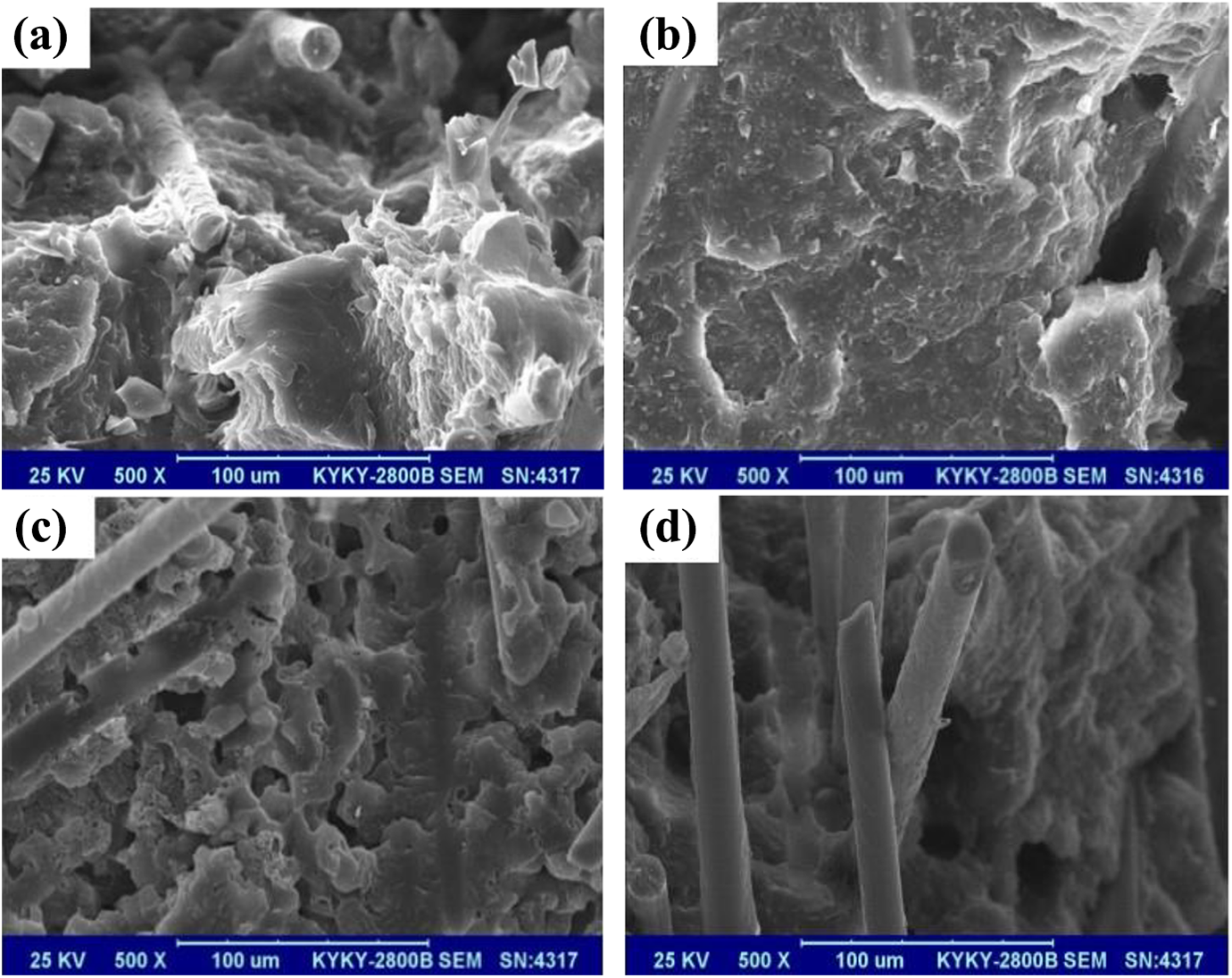
The SEM photographs of the impact fracture of PP/LGF composites with different ageing time: (a) unaged, (b) 10 days aged, (c) 30 days aged and (d) 50 days aged.
Crystallization behaviours
Figure 3 shows the DSC melting and crystallization curves of PP/LGF composites with the ageing time of 0–50 days. Table 1 lists the data obtained from all DSC curves including the T m, crystallization temperature (T c), enthalpy of samples (ΔH) and X c. From the curves in Figure 3 and data in Table 1, it can be seen that the T c value shows a decrease trend with increasing ageing time, and a decrease of more than 2°C is observed in T c after 50 days ageing. It is interesting that the value of X c displays a slight increase in the first 20 days of ageing period and then continues to decrease up to 50 days. The increase in X c in the early period of ageing can also be attributed to the annealing process of PP when the ageing temperature is between T c and T m as explained above. While the thermo-oxidative ageing time prolongs, a 3% decrease in X c is observed, which is responsible for the degradation of mechanical performances in the aged PP/LGF samples. With the combined effects of heat and oxidation, the generated free radicals and peroxides accelerate the molecular chain rupturing. During the thermo-oxidative ageing procedure, concentration of weakness rises in amorphous regions, thereby accelerating the degradation of thermal oxidation in the non-crystalline regions. 27
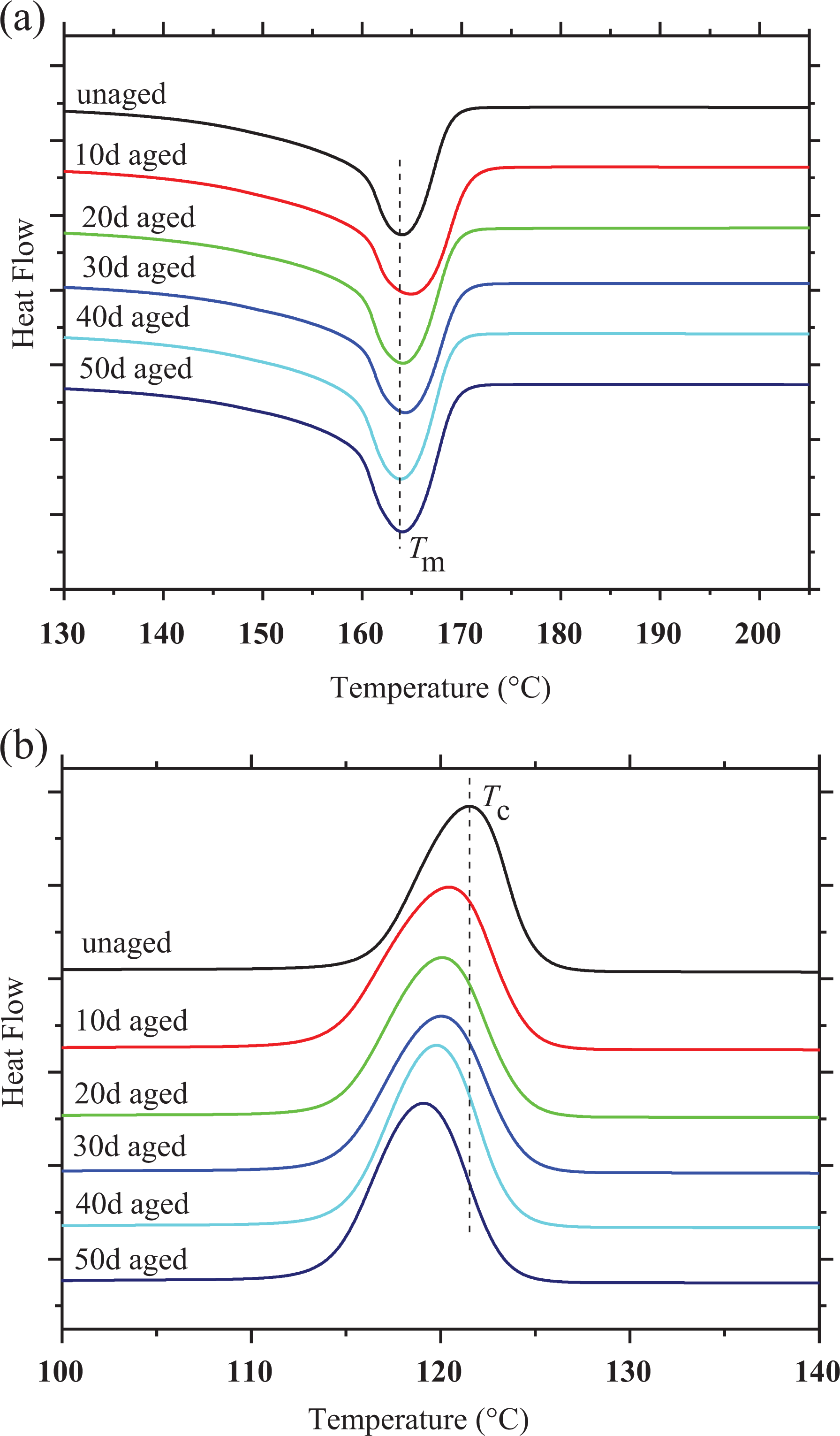
The melting and crystallization curves of the DSC for PP/LGF composites with different aged time: (a) melting curves and (b) crystallization curves.
The DSC results of PP/LGF composites with different ageing time.
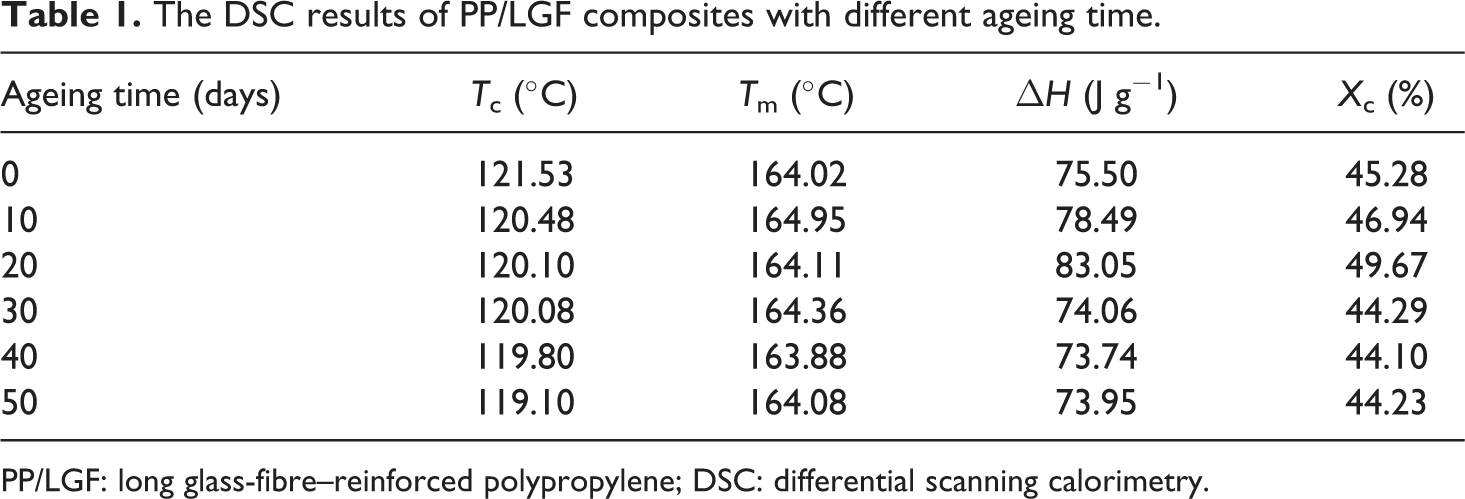
PP/LGF: long glass-fibre–reinforced polypropylene; DSC: differential scanning calorimetry.
Dynamic mechanical properties
The DMA measurements are effective for analysing the effect of ageing on the PP/LGF composites. 28,29 Figure 4 shows the storage modulus of PP/LGF composites with different ageing time at the scanning frequency of 10 Hz. It can be clearly seen that the storage modulus decreases as a function of temperature, and the value for the long-time aged samples is lower than that of unaged ones. The storage modulus is affected by the stiffness of the composites, and the variations of storage modulus with ageing time show the same decrease trend with the variation of static mechanical properties obtained above.
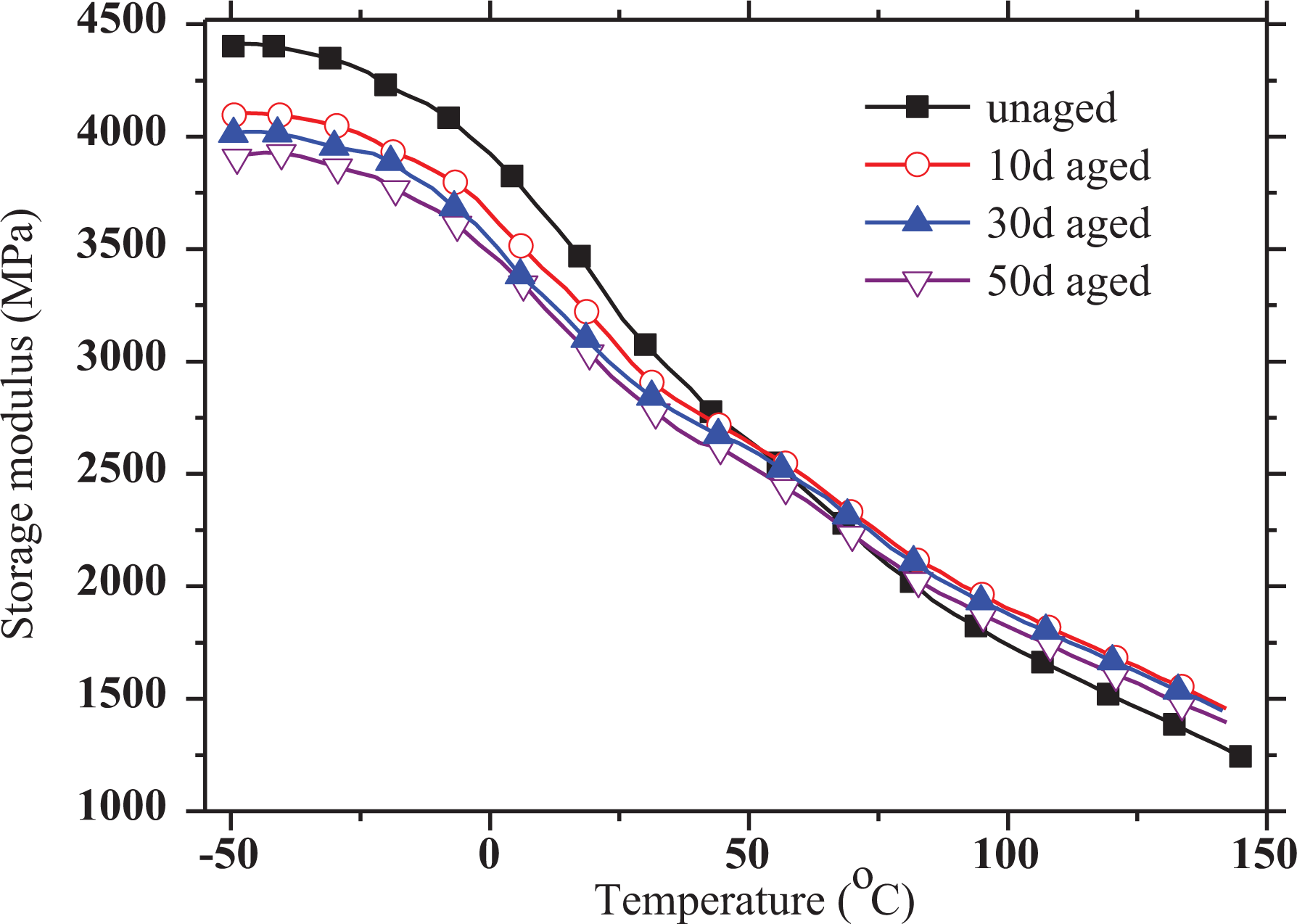
Storage modulus of PP/LGF composites with different ageing time at the scanning frequency of 10 Hz.
For analysing the kinetics of glass transition, DMA test, in this work, is conducted over a temperature range from −50°C to 150°C at five different frequencies (1, 5, 10, 15 and 20 Hz). Figure 5 shows the damping factor (tan δ) values of PP/LGF composites with different ageing time and scanning frequencies. All the curves of the PP/LGF composites exhibit two damping peaks in which the first peak at lower temperature is corresponding to the T g of PP matrix. For all the curves, the values of two damping factor (tan δ) peaks increase with increasing the scanning frequency. According to the time temperature equivalence principle, stress relaxation in polymer is observed at higher temperature and with a long time of acting force, implying a lower frequency of loading. For several kinds of polymers, 10 times of frequency can cause a 5–10°C increase in T g as the frequency increases from 1 Hz to 10 Hz in Figure 4.
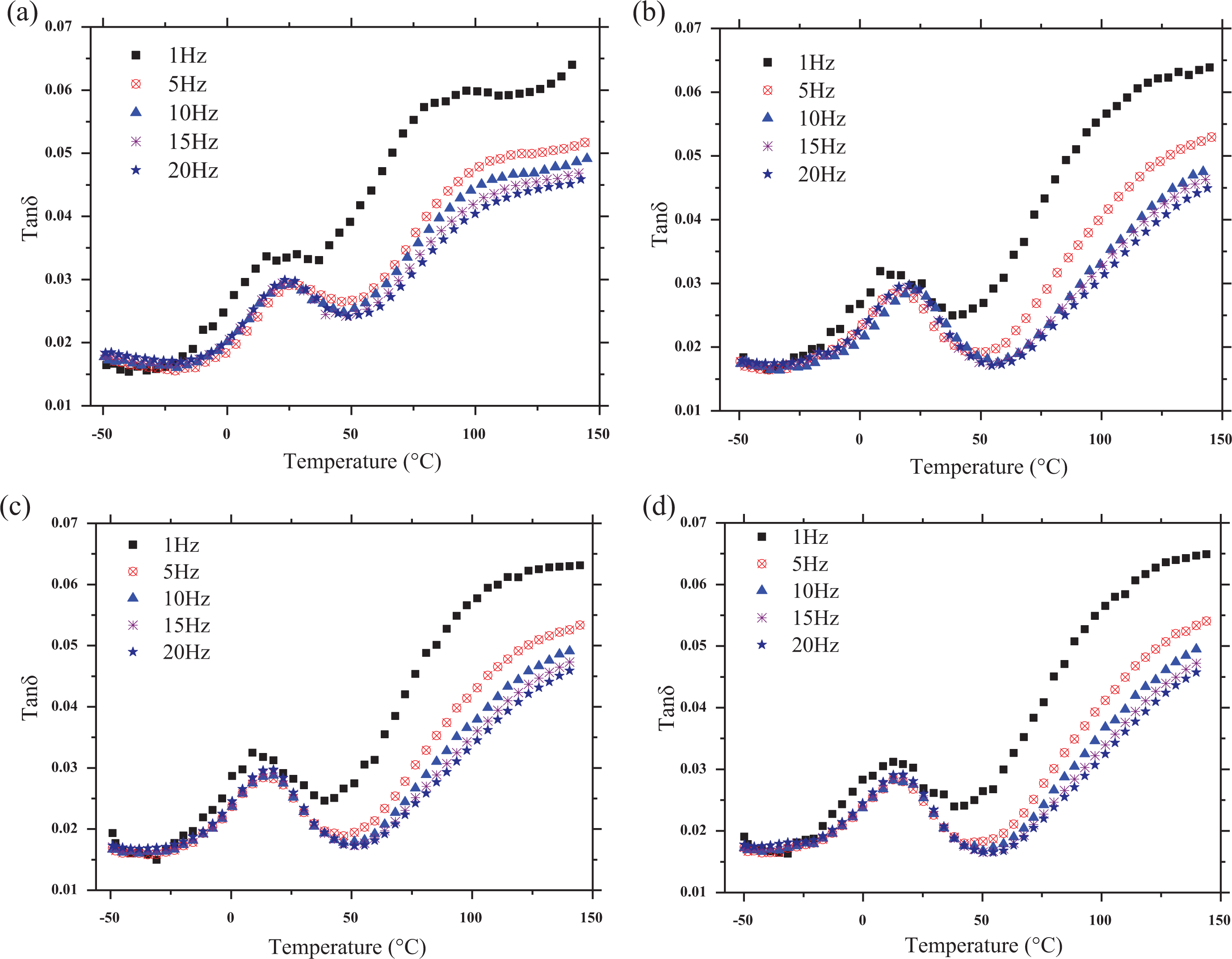
Damping factor of PP/LGF composites of different scanning frequencies of 1–20 Hz with: (a) unaged, (b) 10 days aged, (c) 30 days aged and (d) 50 days aged.
Table 2 displays the damping factor and T g at the scanning frequency of 10 Hz for 0-day to 50-day aged samples. With increasing ageing time, a gradual decrease in T g occurs, and the peak intensity of tan δ max of the longer time aged samples is also lower than that of unaged ones. In the first 10 days of ageing, only a slight decrease (approximately 2°C) in T g can be seen, which is attributed to the annealing process of PP matrix as stated above in DSC analysis. However, in the later period of thermo-oxidative ageing, the molecular degradation predominates, and the expanding of amorphous region causes the value of T g to drop rapidly. The damping factor peak intensity at T g can be considered to reflect the extent of the mobility of the macromolecular chain segments. 30 While both the peak of tan δ and T g of the samples decrease with prolonging ageing time, it can be implied that the mobility of the molecular chains and the damping properties of PP matrix are reduced during thermo-oxidative ageing and so as the interface debonding.
The T g and tan δ max values for the PP/LGF composites at the scanning frequency of 10 Hz.
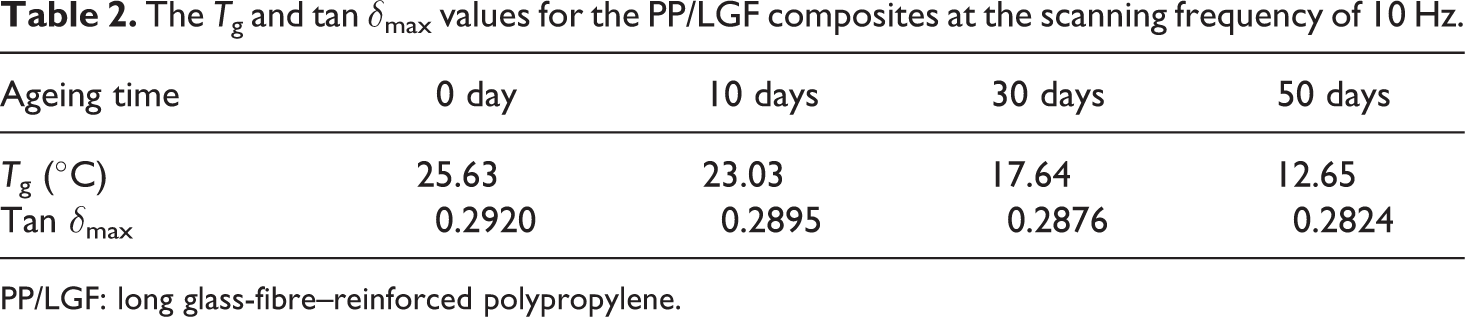
PP/LGF: long glass-fibre–reinforced polypropylene.
Glass transition kinetics
It is noted that T g represents the relationship between the mobility of polymer chains, while the apparent activation energy (E) of glass transition represents a relationship between molecular mobility and time scale. The later can also be considered as representing the energy barrier for the relaxing of glass transition. 31 First, the molecular relaxation time can be described according to the classical Arrhenius equation 32

where E and σ are the activation energy of relaxation process and stress, respectively, γ is the variable, R is the gas constant, T is the absolute temperature, and τ 0 represents the hypothetical relaxation time at infinite temperature. During ageing process, the stress (σ) can be ignored to simplify the equation as

changing to

The relaxation times are obtained from

while

A combination of equations (4) to (6) leads to

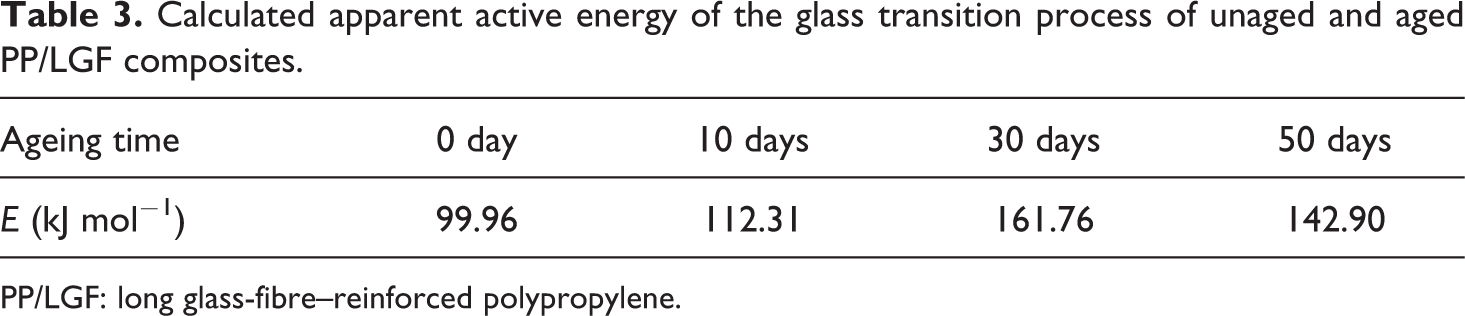
According to equation (7), the E value can be calculated from the slop of the straight line plot of ln f versus 1/T. Figure 6 shows the plots of ln f versus 1/T for different time aged samples, which represents the analysis of the E of glass transition. The calculated results are presented in Table 3. The E value increases from 99.96 kJ mol−1 to 161.76 kJ mol−1 in 30 days, while that of 50 days aged sample has a slight decrease to 142.90 kJ mol−1 but still much higher than that of early aged ones. A higher value of E means a higher energy barrier for the movement of the matrix molecular. With increasing thermo-oxidative ageing time, the degradation and oxidation process of PP/LGF composites reduces the flexibility and mobility of molecular chains, which plays an important role in affecting the macroscopic mechanical properties. The decrease in the flexibility and mobility of molecular chains is responsible for the embrittlement of materials in the main stage of ageing, which has been observed in the static mechanical properties above.
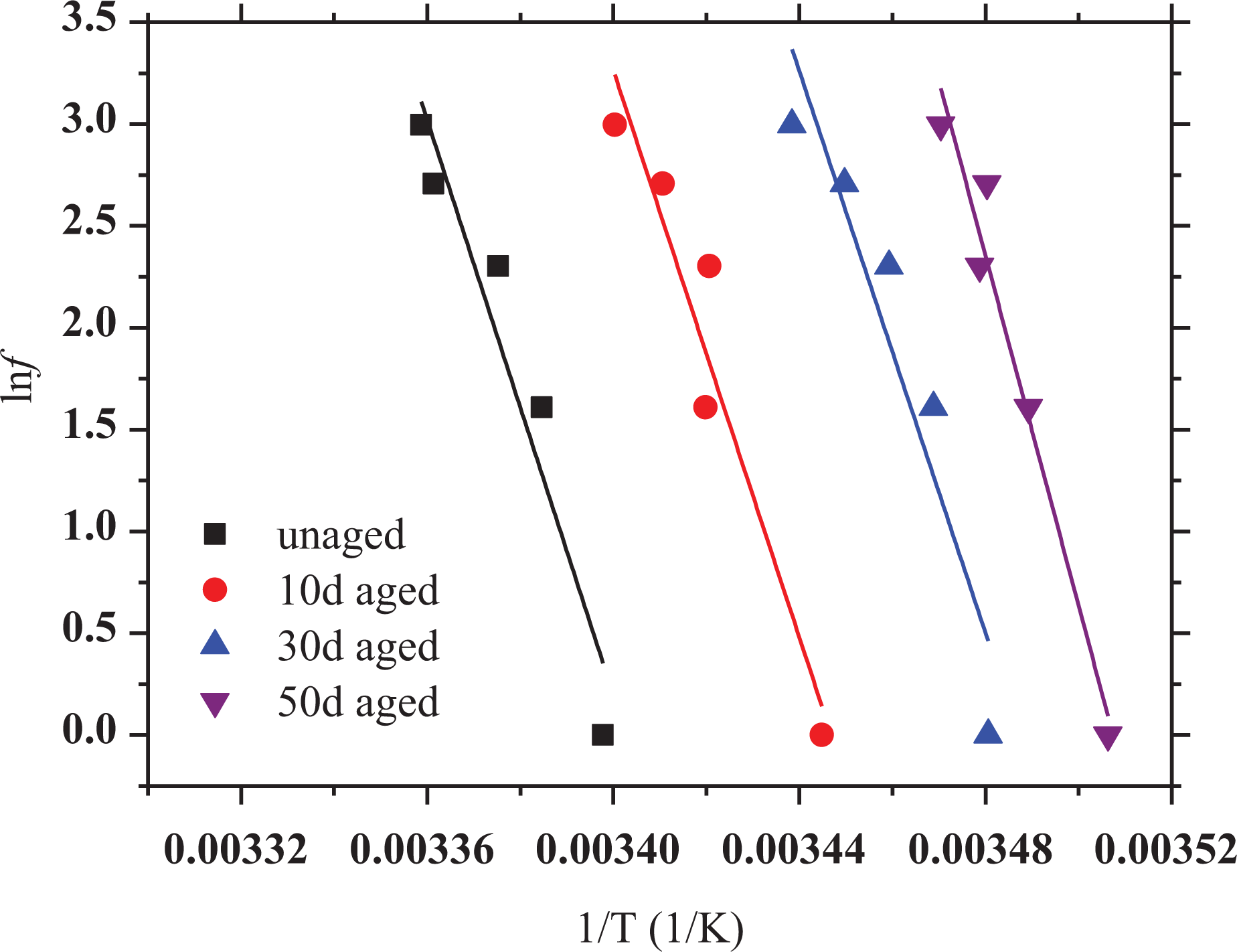
Plots of ln f and 1/T at different frequencies for PP/LGF composites with different ageing time.
Calculated apparent active energy of the glass transition process of unaged and aged PP/LGF composites.
PP/LGF: long glass-fibre–reinforced polypropylene.
Conclusions
In this work, the effects of thermo-oxidative ageing on the static and dynamic mechanical properties of PP/LGF composites are investigated at the temperature of 120°C. The results in the static mechanical analysis indicate a global decrease in the tensile, bending and impact strengths with increasing ageing time. The SEM photographs of impact fracture of samples verify that interface debonding occurs, which causes the mechanical properties to decrease. The X c obtained by DSC curves shows an increase in X c in the early period of ageing due to the annealing process of PP. While with prolonging ageing time, the thermo-oxidative degradation makes X c decrease. DMA results display a decrease in storage modulus with ageing time. This proves the variation in static mechanical properties. The T g and damping factor of the composites also decrease with increasing ageing time by different scanning frequencies. Then, the E value of glass transition is calculated; the samples with longer ageing time show higher value of E, which means a worse flexibility and mobility of molecular chains. All these issues lead to the global decrease in mechanical properties of PP/LGF composites. This work gives some significant information for further research on the ageing of glass-fibre–reinforced other polymer composites.
Footnotes
Declaration of Conflicting Interests
The author(s) declared no potential conflicts of interest with respect to the research, authorship, and/or publication of this article.
Funding
The author(s) disclosed receipt of the following financial support for the research, authorship, and/or publication of this article: This work was supported by Guizhou Province Science and Technology Fund (2015/7096, 2015/6005, 2016/4524 and 2016/4538), Special Funds of Guizhou Province Outstanding Young Scientists (2015/26), Guizhou Province High-Level Innovative Talents Training Project (2016/5667) and Chengdu International Science and Technology Cooperation Project (2015-GH02-00034-HZ).
