




Abstract
Two types of natural fibre-polymer composite (NFPC) granules were measured with electrical impedance spectroscopy (EIS). The granules were immersed in water for 70 h, after which the excess water was removed and EIS measurements were conducted. Then, the granules were let dry in open containers at normal room temperature, and EIS measurements were repeated at increasing time intervals. The results show that the EIS response as a function of moisture content (MC) depends on the fibre content of the NFPC. In addition, the results indicate that the EIS could be used for the estimation of MC of certain type of granulate, especially at low MCs, which is relevant for the manufacturing of NFPCs. For single material type, a model with impedance modulus at a single frequency was able to predict 87–95% of the MC variation. Therefore, EIS as a non-destructive on-line technique would allow the evaluation of moisture in NFPC granules.
Introduction
Use of natural fibre-polymer composites (NFPCs) has been increasing due to the environmental issues. 1 Natural fibres are typically combined with remouldable polymers, such as polyethylene, polypropylene (PP) and polyvinyl chloride, that can be processed at temperatures below 200°C. 2 However, the introduction of hydrophilic natural fibres into polymer composites produces major challenges in the moisture behaviour of the composites. 3 In addition to the fibre fraction, the moisture absorption characteristics of NFPCs have been attributed to the fibre compactness and the cellulose content. 4 Stark 5 has concluded that the moisture behaviour of wood plastic composites is related to the encapsulation of wood flour by the polymer matrix. With low fibre content, fibres are covered rather uniformly by a hydrophobic polymer and the fibres are not easily accessible by the moisture. With increasing fibre content, the encapsulation effect diminishes and the moisture absorption increases. Wang et al. 6 applied the percolation theory on the moisture absorption in the NFPCs. They concluded that there is a fibre loading threshold for the percolation; at higher fibre contents, the diffusion process is the dominant mechanism of moisture absorption, and at lower fibre contents, percolation is the dominant mechanism.
The materials for NFPC product manufacture, especially for injection moulding, are usually supplied in pelletized form, that is, granules. Typically, the granules need to be dried before the injection moulding, since the possible evaporation of water creates bubbles in the material. Overdrying of the granules can negatively affect the flow characteristics, fill and crystallization in injection moulding. 7 In addition, overdrying contributes to higher costs for the manufacturing caused by losses in time and energy. At the moment, there are two types of methods that can be used to control the moisture content (MC) of the granules. The first, a continuous and indirect method, is the dew point measurement. A dew point metre only measures the air in the dryer, not the actual MC of the granules. Another type of method is the laboratory measurements that can be used for small amounts of granules, and these are not suitable for continuous monitoring.
The MC affects material’s electrical properties, and thus, electromagnetic measurements can be used for MC determination. In electrical impedance spectroscopy (EIS), an alternating electric field at varying frequencies is used to characterize the specimen. The measured complex impedance response enables the evaluation of capacitive and conductive properties of the material. In addition to MC, density, porosity and temperature of the material have a strong effect on the response. For granular materials, the geometrical shape of the particles also has an effect.
The measurements of electrical and dielectric properties of NFPCs have been recently conducted in several studies. 8 –13 For example, the relaxation processes related to charge carrier’s diffusion and interfacial polarization at fibre/matrix interface have been identified 7,8 and the latter has been utilized in the evaluation of the coupling between wood flour and polymer matrix. Since the interfacial polarizations affect the dielectric characteristics, the dielectric spectroscopy has been used, for example, for the evaluation of optimal coupling between wood flour and polymer. 12,13 Plastics are typically good electrical insulators and often used in electronics. The increasing use of NFPC’s instead of plastics rises a question of their electrical properties and the question has been recently addressed in several studies. 10,11 Previously, EIS has been used for the moisture gradient (MG) evaluation of solid wood materials. 14,15 Dielectric method has also been used for the characterization of MC and bulk density of pelletized materials. 16
EIS could provide a direct, continuous method for the determination of the MC of NFPC granules before injection moulding and its potential has been demonstrated. 17 EIS is a relatively low-cost measurement method for continuous measurements and the electrodes can be designed to endure the industrial environment. However, there are certain challenges in the measurement of the granules. The material type, granule type, packing of the granules and MC hysteresis are expected to affect the EIS responses. In this study, the EIS characteristics of NFPC granules were studied in detail to form a basis for the development of the moisture metre.
Materials and methods
The studied material included different types of PP-based NFPCs, composites with 20%, 30%, 40% and 50% cellulose content (GP20…GP50) and another composite with 50% of thermally modified wood sawdust from two different manufacturing processes (LG1 and LG2; Figure 1). Thus, six materials in total were measured. The granules were cylindrical in shape, and the length of the cylinder varied with the material type.
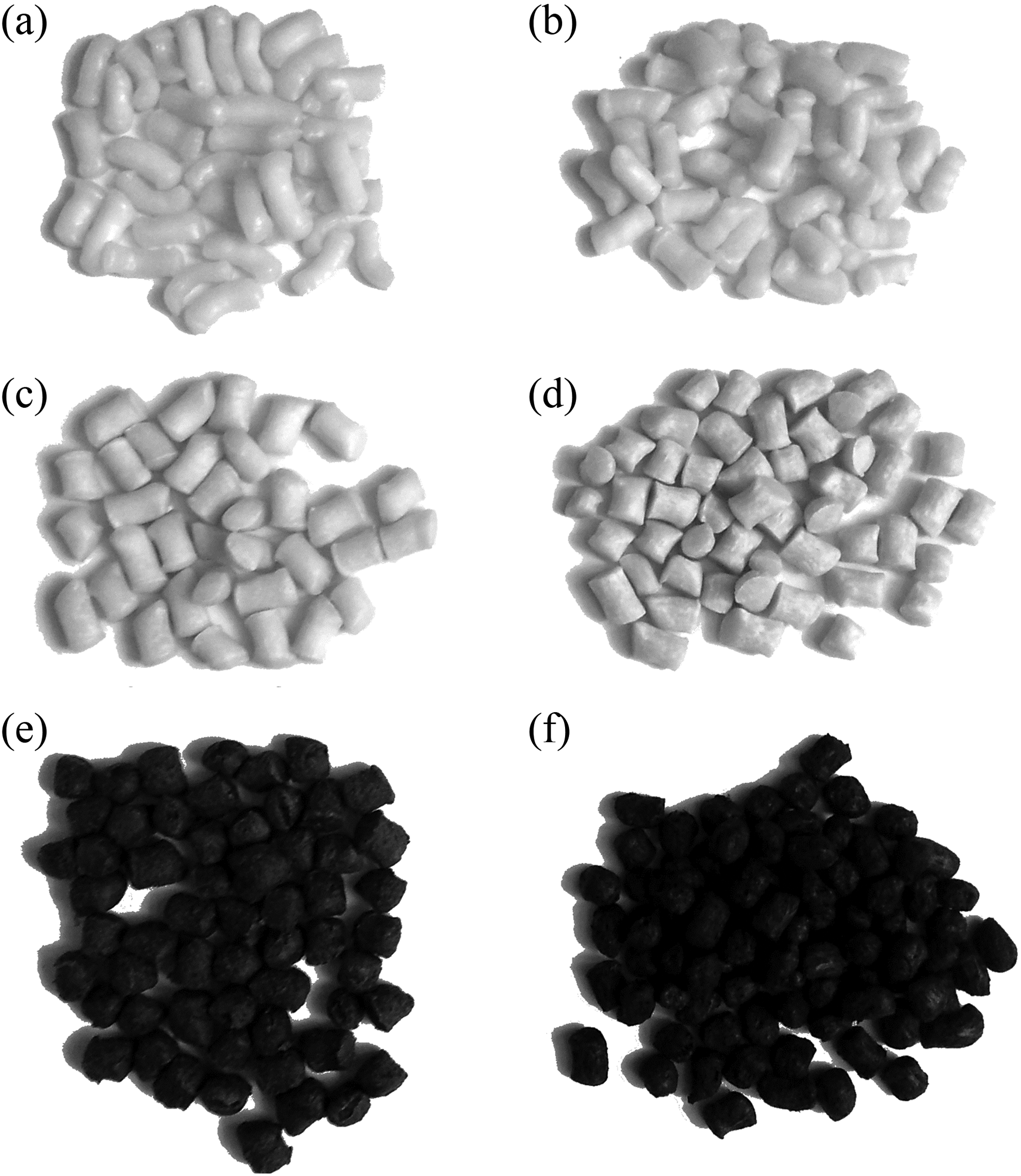
The granules: (a) GP20, (b) GP30, (c) GP40, (d) GP50, (e) LG1 and (f) LG2. The diameter of the granules varies from 2.2 to 4.5 mm and the length from 4 to 10.9 mm.
At first, six repeated measurements were performed for the materials as such at room temperature. The removal and resetting of the specimen was included into the repetitions; it was hypothesized that this causes variation into the results. Then, the materials were dried (105°C, overnight) and measured once after cooling down. While cooling, the samples were covered with an aluminium foil to avoid water absorption. After the measurements, the samples were immersed in water for about 70 h at normal room temperature. After water immersion, the excess water was removed from the samples and they were measured with EIS. Then, the samples were let dry in normal laboratory conditions in open containers. While the samples were drying, they were mixed a few times per day. The EIS measurements were conducted several times per day in the beginning of the test period and then once a day for 2 weeks. After each EIS measurement, the granules were weighed, and after 2 weeks, the samples were dried and weighed again to get the MC. Furthermore, the density of the granule batch was determined by packing them into a known volume and weighing the mass.
The materials were measured with the impedance analyser Solartron 1260A (Solartron Analytical, AMETEK Advanced Measurement Technology, Hampshire, UK) used in combination with the dielectric interface 1296A. The sample holder 12962A with gold-plated electrodes and a custom-made plastic container was used. There was a conducting tape inside the container with electrical connection to the electrode in order to measure the granules directly. The electrode diameter was 40 mm and the thickness of the measured material was 19–22.5 mm (Figure 2), which was recorded with micrometre screw for each measurement. The measurements were normalized with empty cell measurements eliminating the thickness variation.
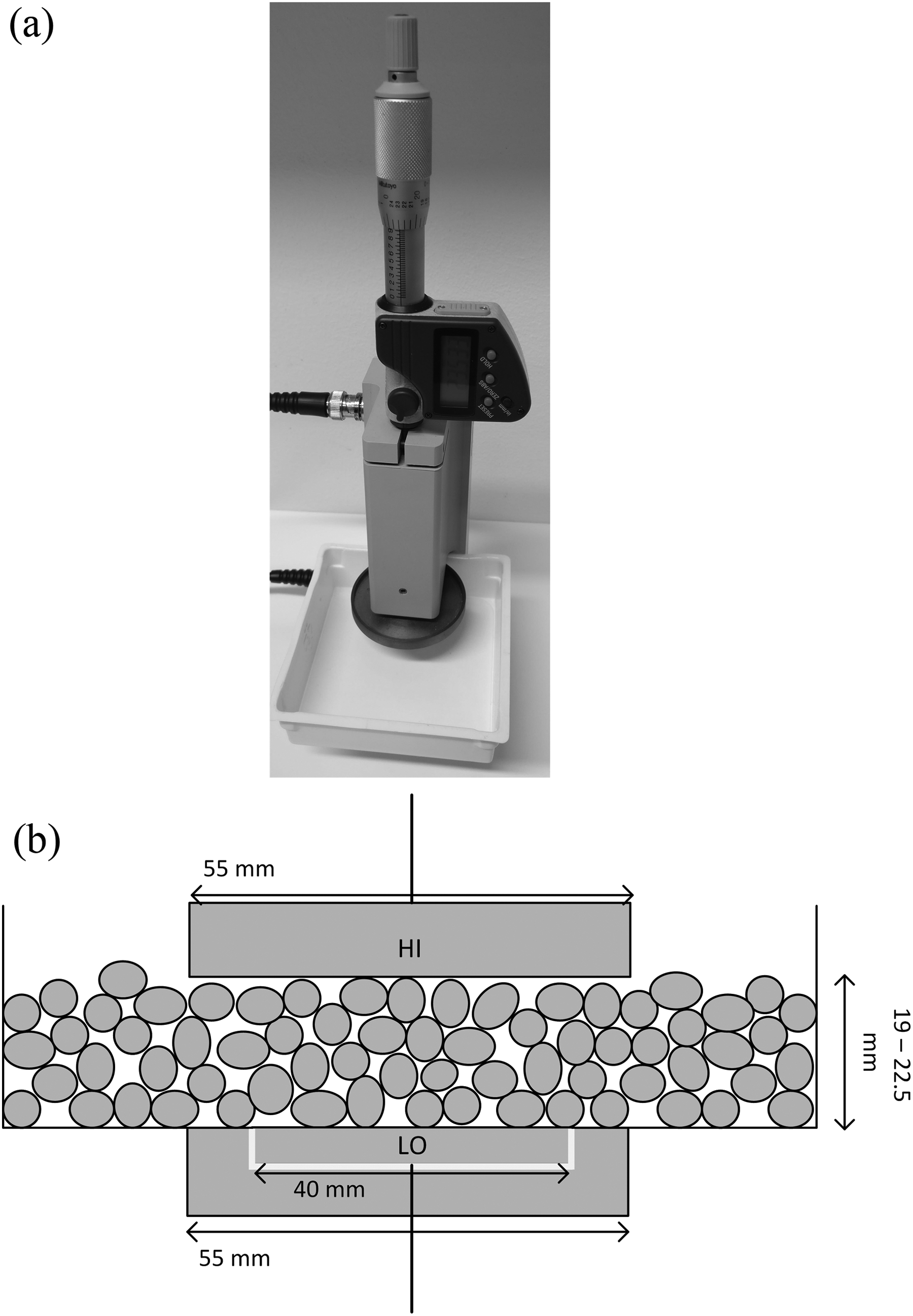
The measurement set-up: (a) Solartron sample holder 12962A with a custom-made plastic container and (b) the electrodes (HI and LO) and the granules in the electrical impedance measurement set-up.
Complex impedance response can be expressed as

where j is the imaginary unit, ω is the angular frequency and Tm
, Rm
and ψm
are the model parameters.
19
The time constant of the model can be calculated as
Results and discussion
The original MCs of the granules and their densities after drying are presented in Table 1. The MC of the samples after immersion and during drying are presented in Figure 3. For the LG2, the MC was 53% at highest, and it decreased to 14% during the test. These data are not presented in Figure 3 due to the scaling. The water absorption of GP granules increased with the increasing fibre content. The lower density of the LG materials indicates that they were more porous, which could explain also their higher water absorption compared with the GP materials. The pores and cracks in composite materials can both transfer and store the water. 20 Furthermore, the most porous material with visually detectable pores, LG2, absorbed water excessively. In addition to the porosity, the fibres play a role in water absorption characteristics of NFPCs.
The MCs of the materials in the beginning of the study and the densities of the granule batch after drying.
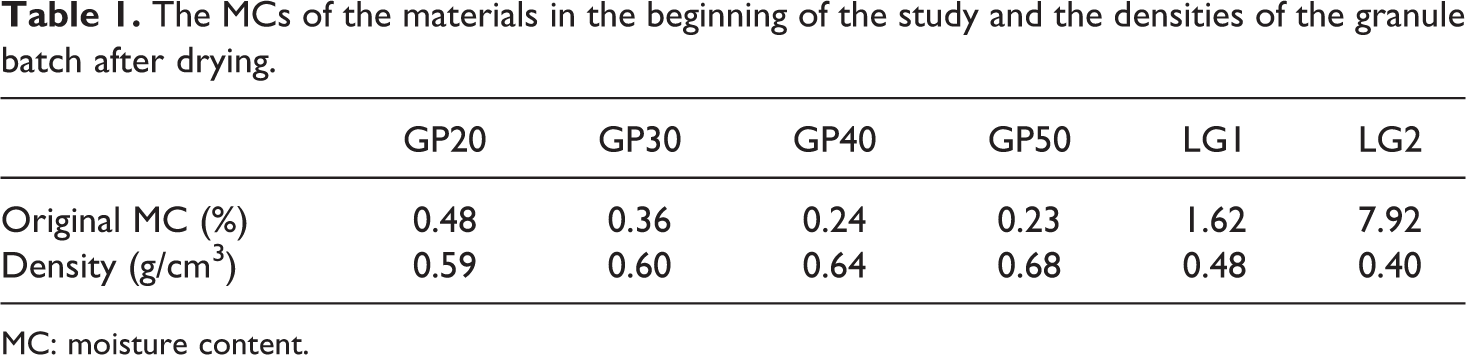
MC: moisture content.
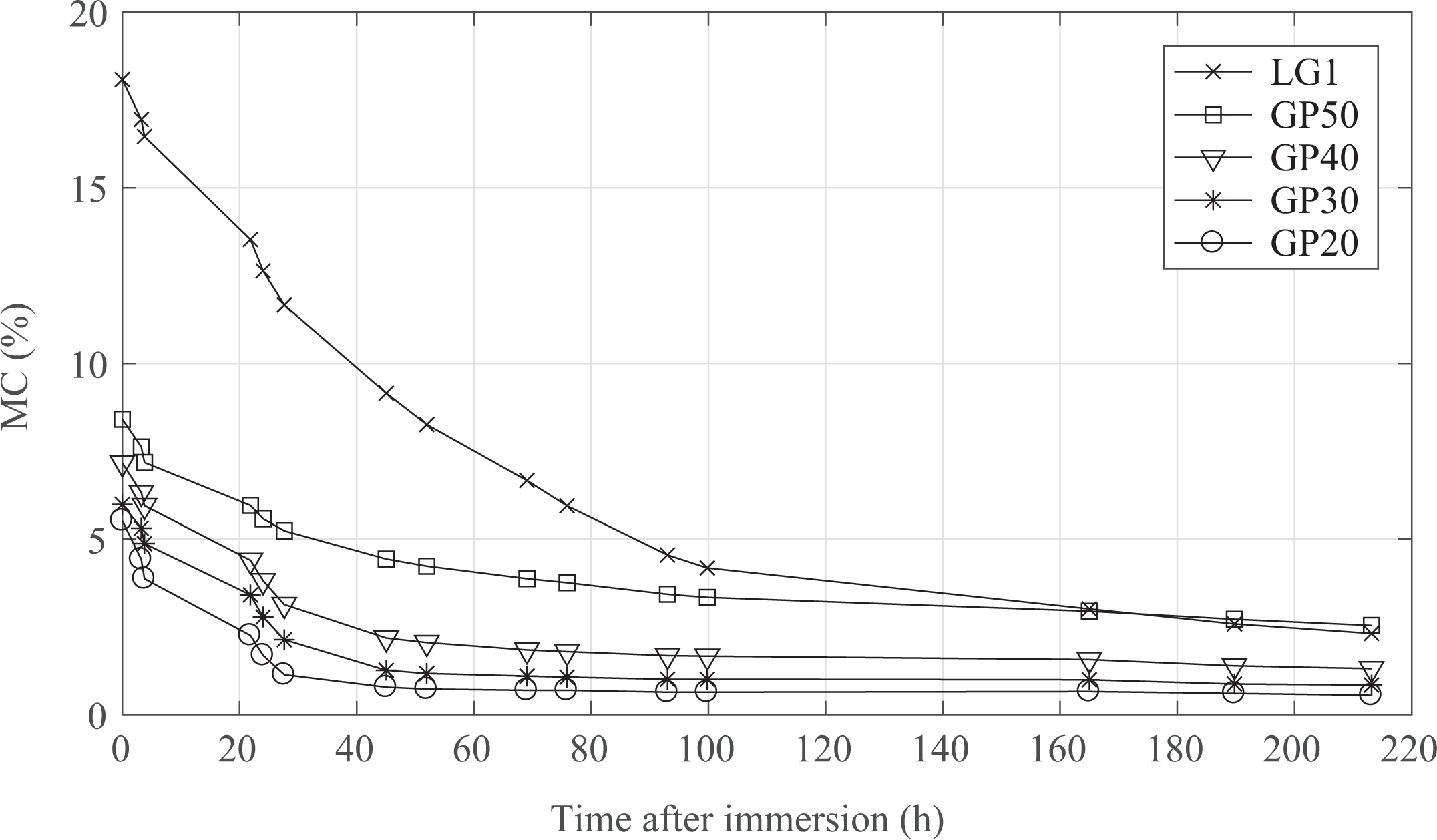
The change of MC after water immersion as a function of time. MC: moisture content.
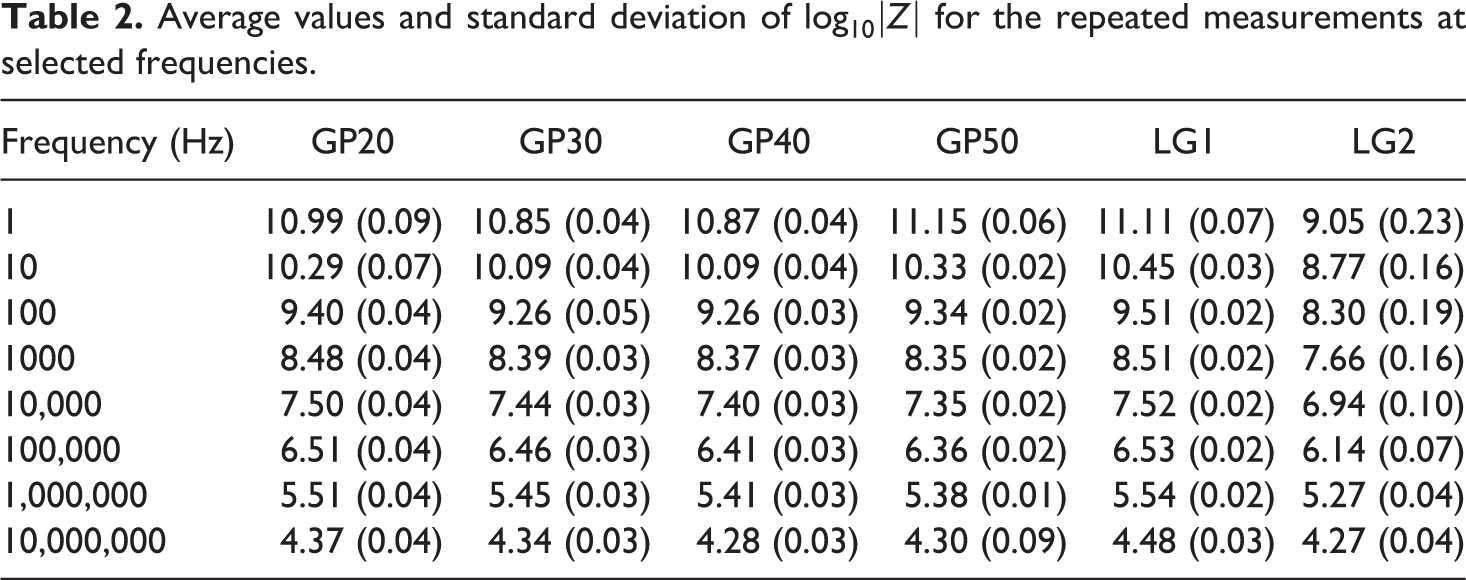
For the repeated measurements (GP20, GP30, GP 40, GP 50 and LG1), the standard deviation of log|Z| was less than 1% of the average, for frequency range 1 Hz–7 MHz (Table 2). For the LG2, which had higher original MC, the variation was slightly larger, less than 2.5% throughout the frequency range. This variation includes the effects of the sample handling, repacking and repositioning. In addition to the average MC, the distribution of moisture affects the EIS response. Thus, the responses at the same MC during drying and moistening are not the same. At the higher MC after water immersion, the variation is expected to be higher due to the different drying speeds at different parts of the batch.
Average values and standard deviation of
In Figure 4, the complex impedance is presented for different materials after the immersion; the MCs vary from 5% to 53%. The complex impedance graphs of the materials GP20, GP30, GP40 and GP50 are similar, whereas LG1 and LG2 have distinctive features; different moisture absorption rate, fibre content and additives cause this. Both dry wood and PP have high resistivity, but the moisture is mainly absorbed by the fibres. In addition, since the granules are in contact with each other during the measurement, the outermost surface has the strongest effect on the measurement response; a conductive route between the electrodes is formed even with thin conductive surface layers. Compared with the pure cellulose, thermally modified wood with lignin and partly degraded hemicelluloses and celluloses is more complex.
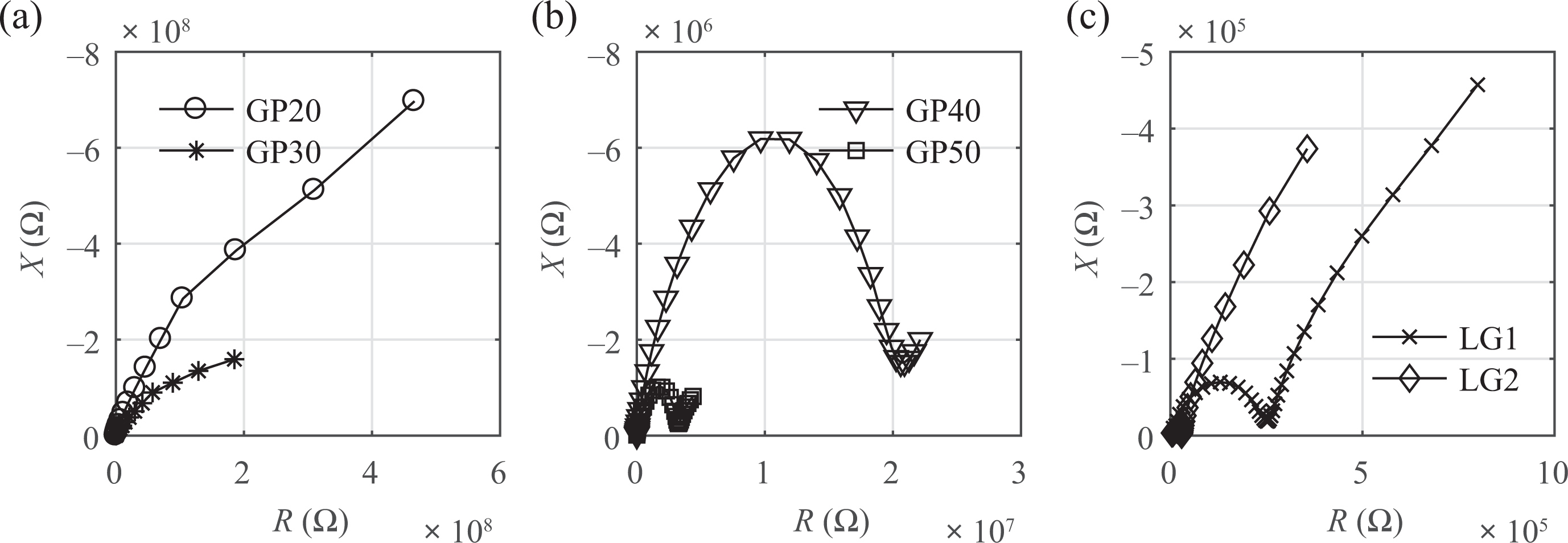
The Z in complex plain after water immersion. Frequency range 1 Hz–10 MHz.
In wood material, ion transport is the most important conduction mechanism; at low MC below 20%, the number of charge carriers is a determining factor for the conductivity of wood, whereas at higher MC, it is the mobility of the charge carriers. 21 The equivalent circuits were only fitted for a limited frequency range representing a semi-arc in the higher frequency range in (R, X) plots (Figures 4 and 5). The model parameters for the fitted equivalent circuits are presented in Figures 6 and 7. For Rm , τm and ψm , a decrease as a function of MC was observed at low MC, after which the change was minor or negligible. For Tm , a similar behaviour was observed, but the values increased as a function of MC. The turning point was different for each fibre content. For more detailed analyses of the equivalent circuit parameters, more comprehensive set of specimens should be measured in a wide frequency range with varying fibre content and MC as a function of temperature.
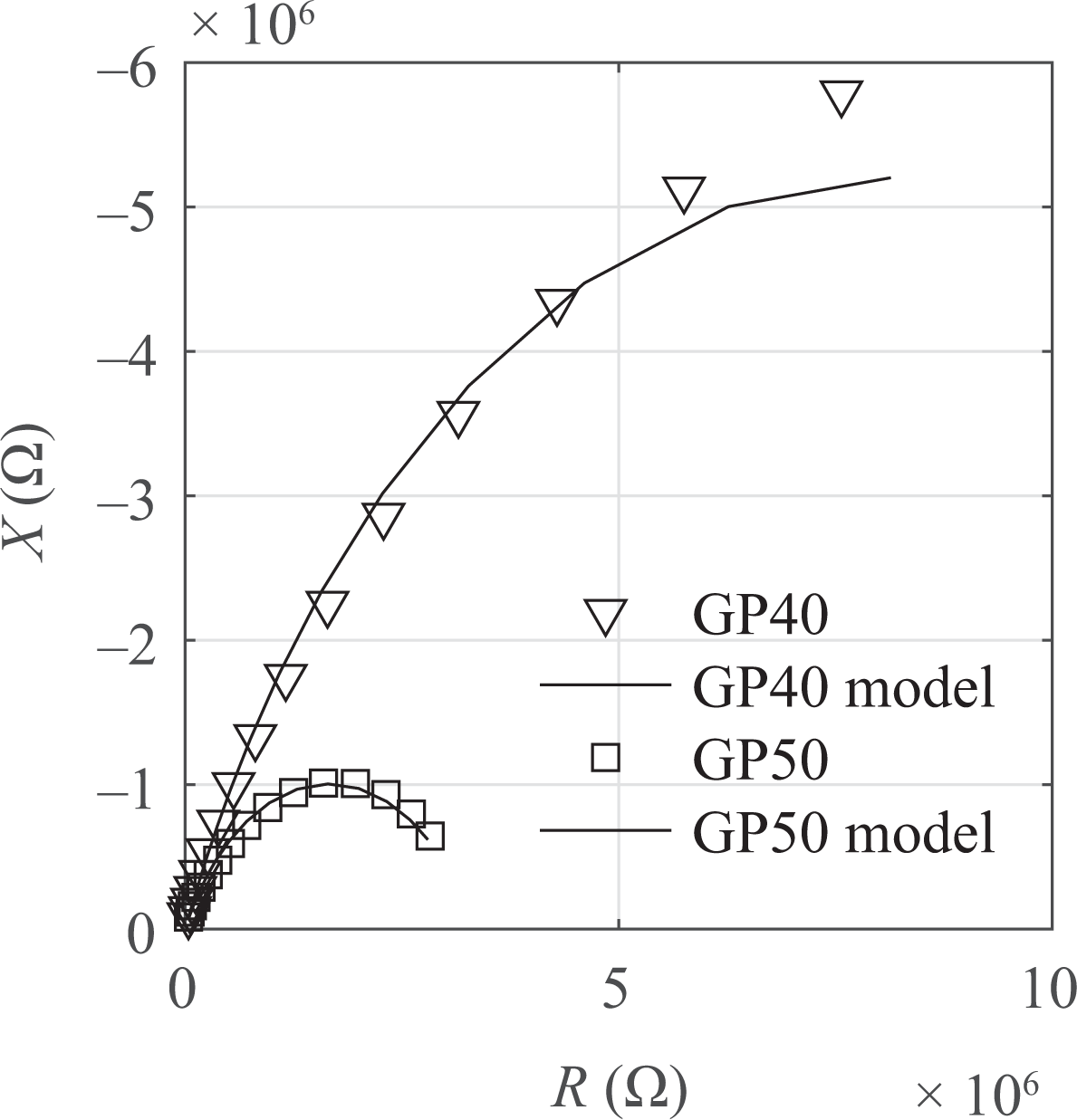
Examples of the fitted equivalent circuit models. Frequency range 1 kHz–1 MHz.
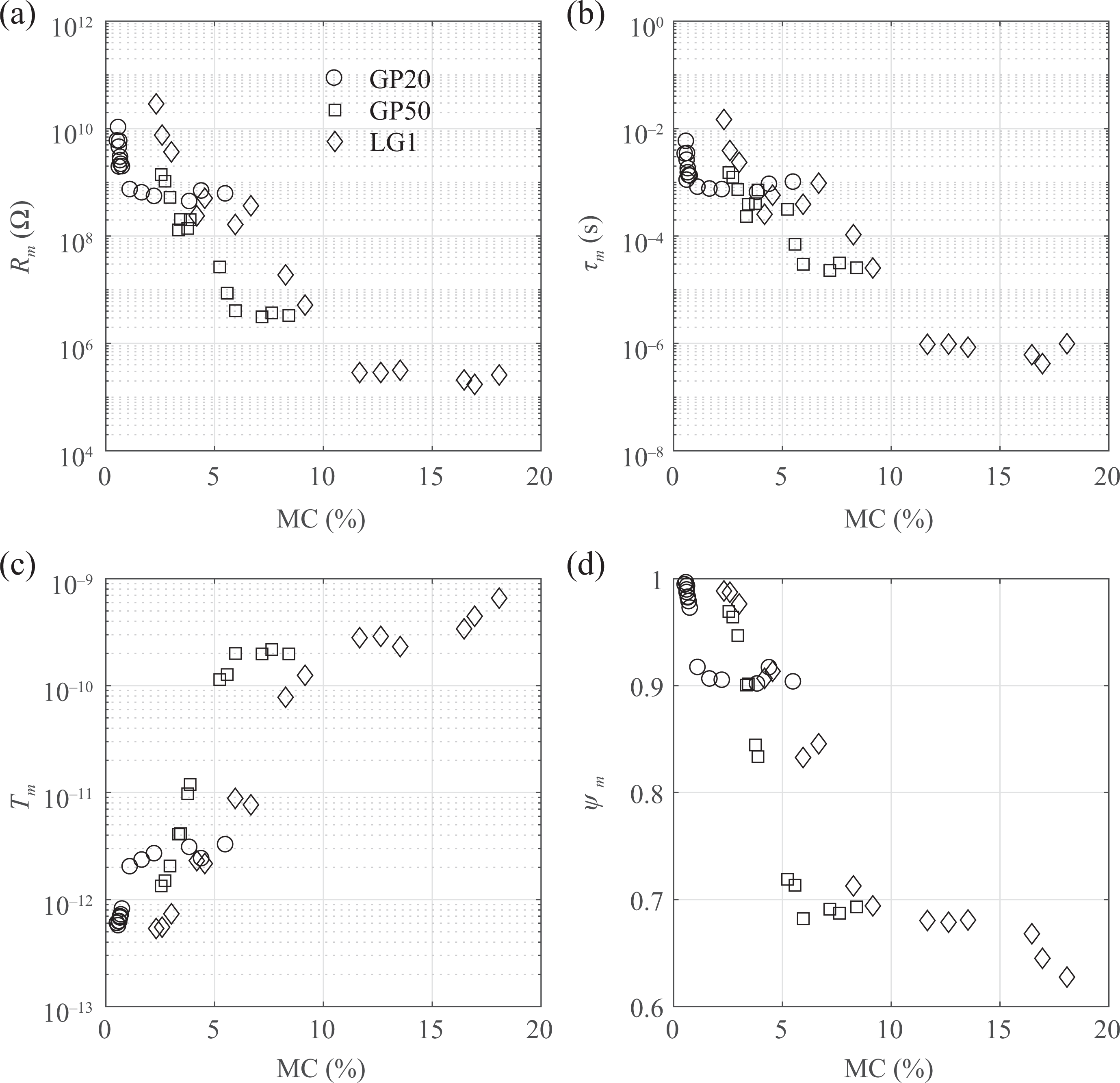
Model parameters Rm , τm , Tm and ψm for GP20 granules with 20% fibre content, for GP50 granules with 50% fibre content and for LG1 granulate.
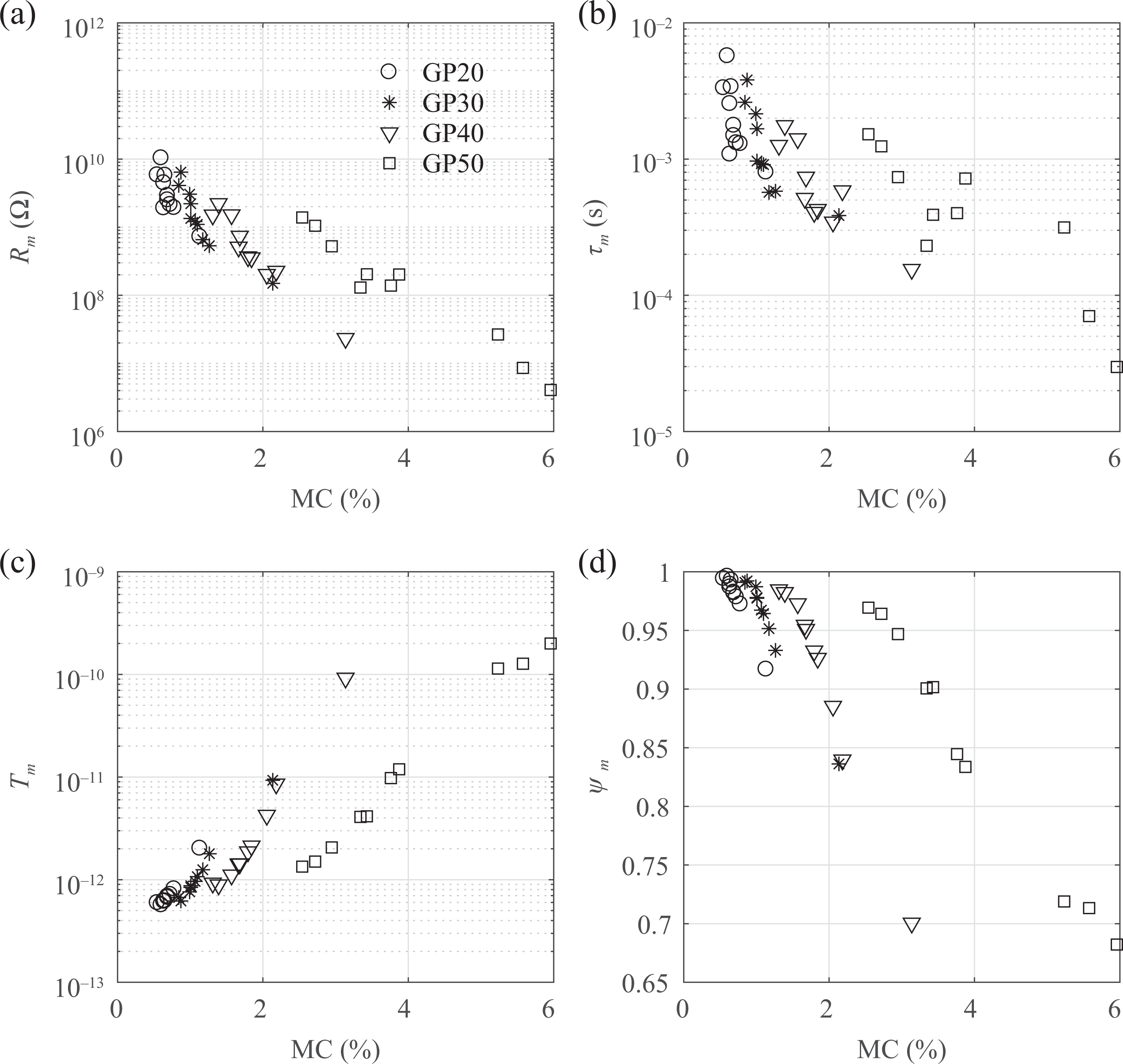
Model parameters Rm , τm , Tm and ψm for GP20, GP30, GP40 and GP50 granules with different fibre contents. The figure presents only the data, in which non-conducting behavior was observed (cf. Fig. 6 with the total measured MC range).
For NFPC granules, a decrease in impedance modulus was observed up to certain MC, after which the decrease as a function of MC was minor or non-existent. It appeared that the point where the behaviour of the EIS response changed depends on the granule type and fibre content of the granules. The observation can be explained using the percolation theory; the resistance of the granules decreases up to certain MC, after which the surface of the granules is saturated with moisture and thus becomes conductive. This forms a conductive path between the electrodes, and then, changes in the resistance Rm or other model parameters as a function of MC inside the granules are minor at higher MC.
The measured responses (|Z|) were compared with the MC data. In Figure 8, the impedance modulus is presented as a function of MC during drying and the regression models for MC are presented in Table 3. The correlations between the MC and the impedance moduli were strong and the changes related to the MC were higher than the changes observed in the repetition measurements.
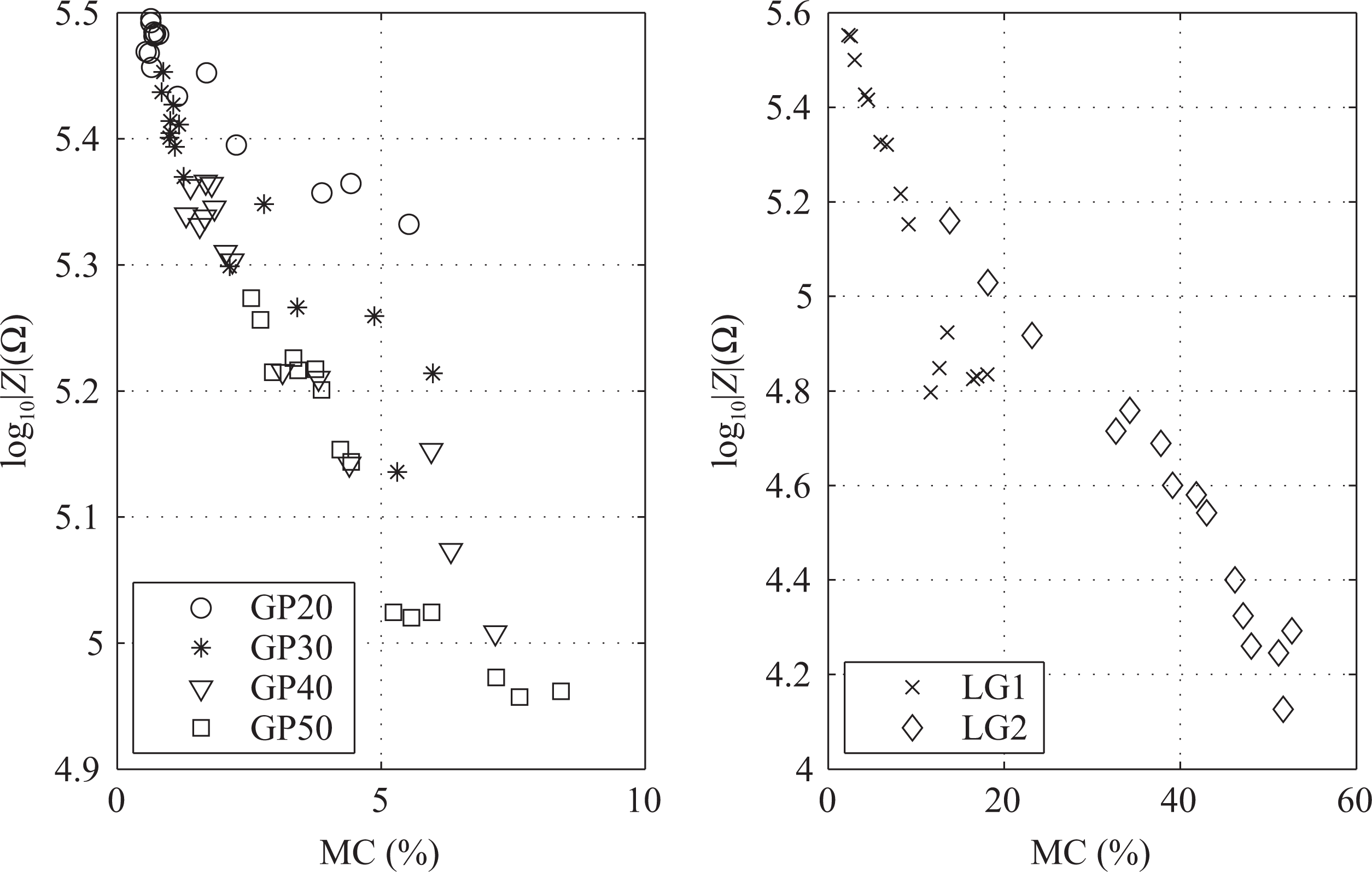
Impedance modulus |Z| at 1 MHz as a function of MC of the granules: (a) GP20, GP30, GP40 and GP50 with cellulose and (b) LG1 and LG2 with thermally modified sawdust.
Coefficients a and b of linear regression for
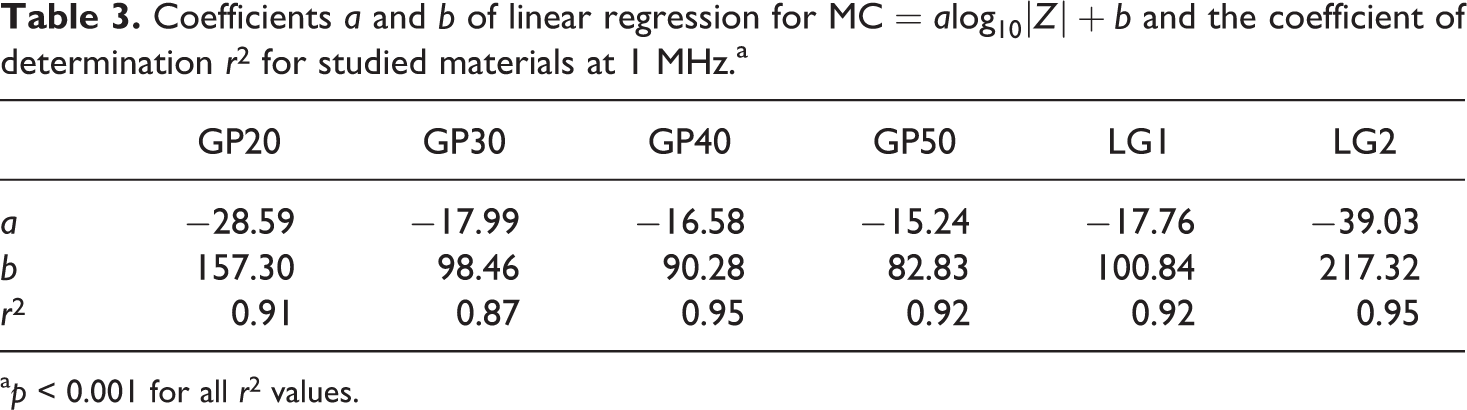
a p < 0.001 for all r 2 values.
The EIS technique appears to be suitable for the determination of MC of NFPC granules at low MC. The most critical moistures are those close to the target MC, which is rather low if the materials are injection-moulded. With the current data, the model for MC was fitted separately for each material type. However, with more comprehensive EIS data, it could be possible to predict the MC without the a priori information on the material type and fibre content by utilizing the impedance data from multiple frequencies.
To further develop the method for moisture control during drying of the granules, the temperature variations should be studied. The temperature of the material affects the electrical impedance response, and during drying of the granules, the temperature of both air and the granules varies. Furthermore, in the current study, the dehydration process was studied, but in the future the hydration process should be investigated.
Conclusions
In this study, the relation between MC and fibre content of NFPC granules with EIS data was studied. The results show that the EIS is a potential measurement technique for the offline and online determination of MC in NFPCs at low MCs. For single material type, a model with impedance modulus at a single frequency was able to predict 87–95% of the MC variation. In addition to the MC, the electrical responses depend on the fibre content, temperature and the physical characteristics of the material which should be further studied.
Footnotes
Acknowledgement
The authors would like to thank Xiuxiu Sun, MSc, for conducting the measurements.
Declaration of Conflicting Interests
The author(s) declared no potential conflicts of interest with respect to the research, authorship, and/or publication of this article.
Funding
The author(s) disclosed receipt of the following financial support for the research, authorship, and/or publication of this article: This study was supported by ERDF (granted by the Finnish Funding Agency for Technology and Innovation) and companies (project 70049/2011, ‘Novel characterization methods and applications for wood-plastic composites, WPC’).
