



Abstract
Due to their advantages (low cost, non-toxic, biodegradable, abundant, low density and very good mechanical properties), the lignocellulosic residues were widely used in the last time as reinforcements in composite materials with applications in the building industry. Besides these wastes, expanded perlite (EP) and natural polymers are promising candidates for the building industry, based on their specific characteristics and economic advantages. In this article, the results are presented regarding the thermal insulation properties of composite materials based on EP and natural polymers (starch polymer matrix reinforced with lignocellulosic wastes). The samples of composite materials were obtained from the laboratory and characterized in terms of the main specific properties of building materials, such as thermal conductivity/resistance, water absorption capacity, apparent density and image analyses by scanning electron microscopy. The obtained results have highlighted the values for thermal conductivity of composite samples between 0.05 and 0.11 (W/mK), similar to those materials currently used in building thermal insulation.
Keywords
Introduction
At present, achieving a sustainable building industry is a major issue. This is a must to meet the new requirements regarding the selection and rational use of raw materials and energy resources by controlled minimization of the total CO2 emissions as well as the requirements for the quality, reliability and functionality of building materials and structures for the provision of optimal indoor climate. 1,2
Nowadays, the trend in commercial buildings is to decrease the wall thickness to reduce the materials consumed, the transport costs and the construction time. Building materials are expected to have low weight and satisfy several aspects such as structural, thermal and acoustical performances, as well as sustainability. 3,4 The main drawback of these lightweight building materials is the low thermal mass, resulting in large temperature fluctuations indoors. In this respect, the thermal insulation materials have an important role in obtaining the energy efficiency of buildings being available in the last time in various structural forms and types. Thus, a high attention is given in many research studies to natural materials, biodegradable and renewable resources as an alternative to obtaining products with high mechanical and thermal insulation properties, but with a low impact on the environment and human health. There is a large group of materials of plant origin as rapidly renewable raw materials which can be used as a suitable reinforced component to lighten concrete mixtures. An interesting alternative for these issues might be the agro-crop by-products as well as lignocellulosic waste. These by-products have been increasingly used as reinforcement in composites, interior partitions or structural closures in the building industry. Fibres or non-fibrous materials (as waste) are the ideal candidate for an effective reinforcement in different types of concrete/mortars. Furthermore, the lignocellulosic by-products naturally present advantageous hygrothermal properties for use in building thermal insulation materials.
The composite materials based on these natural fibres or particles and lignocellulosic wastes with specific building applications are the subject of many research studies. These materials have low density and weight and better insulation properties compared to petroleum-based materials. 5
Particularly, due to their specific characteristics as well as natural polymer matrix such as starch, the economic and technical advantages of perlite as building material are reported in many studies and research. 6 –9 In the building industry, perlite is used to obtain thermal insulation and finishing materials, lightweight and fireproof bricks, shaped composite materials and plates for ceilings, tiles or exterior plywood. 10 –12 Expanded perlite (EP) is a lightweight (unit volume weight: 0.05–0.30 g/mL), odourless and heat-expanded volcanic mineral based on aluminium silicate that has been commonly used as a ultra-lightweight material to improve the structure of buildings, due to its excellent heat insulation capacity (thermal conductivity rate: 0.03–0.05 W/mK), 12 environmental safety and abundant availability. The properties of high porosity, large surface area, low sound transmission, excellent fire resistance and low moisture retention make EP a good and cheap supporting matrix for preparing composite materials. 12 –14 EP is obtained by rock drying at 150°C, crushing and undergoing an ‘expansion’ by preheating between 200°C and 400°C, followed by the treatment of perlite at high temperature (about 800–1100°C), which causes swelling and increases the volume of perlite (the volume can reach about 60 times that of the initial grain). EP is presented as a white powder whose final granulometry is obtained by crushing after the expansion. The expansion process also creates one of perlite’s most distinguishing characteristics (white colour; Figure 1). 10,11
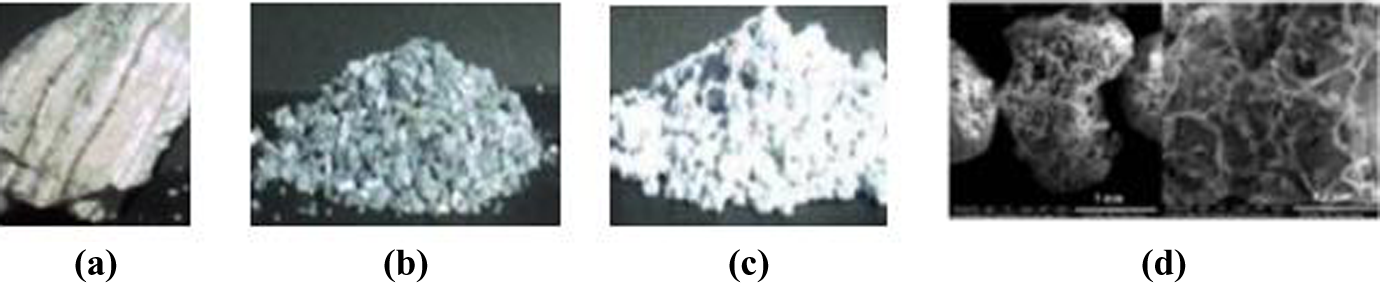
Different physic and structural forms of perlite: (a) rock, (b) ground, (c) expanded and (d) SEM images. SEM: scanning electron microscopy.
Today, a broad range of bio-based polymers that are commercially available is expected to stimulate further investigations on their potential use as matrices for biocomposites (fatty acids, isoprene, starch, ricinoleic acid, etc.). Starch is a promising biopolymer used in the production of biocomposite materials because it is renewable, completely biodegradable and easily available at a low cost. Most of the research studies showed a high compatibility between starch and natural fibres, leading to higher stiffness. 15 Furthermore, its thermoplastic derivate has been revealed as an appropriate candidate to be used as a substitute for synthetic polymers (thermoplastic/thermosetting resins).
Starch is a long polymer of α-linked D-glucopyranoses that generate two main structures that make up starch: amyloses and amylopectins. Amyloses are mainly linear structures with few side chains formed by 500–2000 units, while amylopectins are much more highly branched structures containing 10,000–100,000 glucose units. In plants, amylose and amylopectin are packed together forming granules. Such granules may also contain other residual components, including proteins, fats or salts. The size and shape of such granules depend on the ratio of amyloses and amylopectins, which vary depending on the source of origin (Figure 2). 16
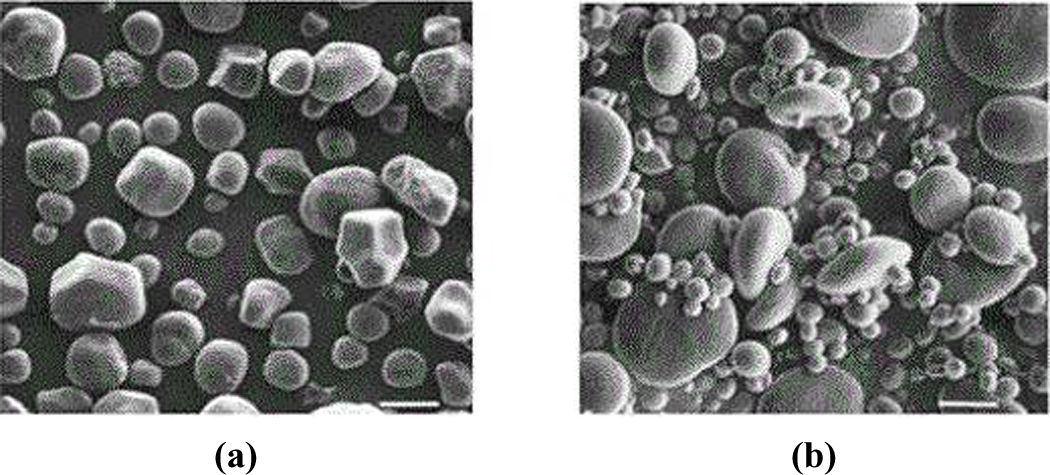
SEM images (×100) of corn (a) and wheat (b) starch granules. 12 SEM: scanning electron microscopy.
In the present study, the composite materials based on EP and natural polymer matrix (starch) reinforced with lignocellulosic wastes have been obtained at the laboratory scale. These composite materials were evaluated regarding their thermal insulation and structural properties compared to existing commercial petroleum-based insulation materials.
Experimental
Materials and methods
Materials
EP – Harbolite 350 – particulate material, white colour, with particle diameter about 25 µ, bulk density 270 g/l and thermal conductivity 0.04–0.047 W/mK;
lignocellulosic wastes based on stems of rapeseed, sunflower and hemp;
corn starch – with 24% amylose and 76% amylopectin content – was used as a suspension with 25% concentration (20 min cooking of starch at 90°C); and
urea-formaldehyde resin – Kronocol SU66 as a commercial type, white colour powder material with apparent density 0.5 kg/dm3 in an experimental programme was used as aqueous dispersion (1:1) and applied together with hardener additives.
Preparing the lignocellulosic residues
The agro-residues based on sunflower, rapeseed and hemp stems were grinded in dry state using a laboratory device (Figure 3). A particulate material with dimensions about 1–3 mm for rapeseed and sunflower and 0.1–1.00 mm for hemp husks was obtained.
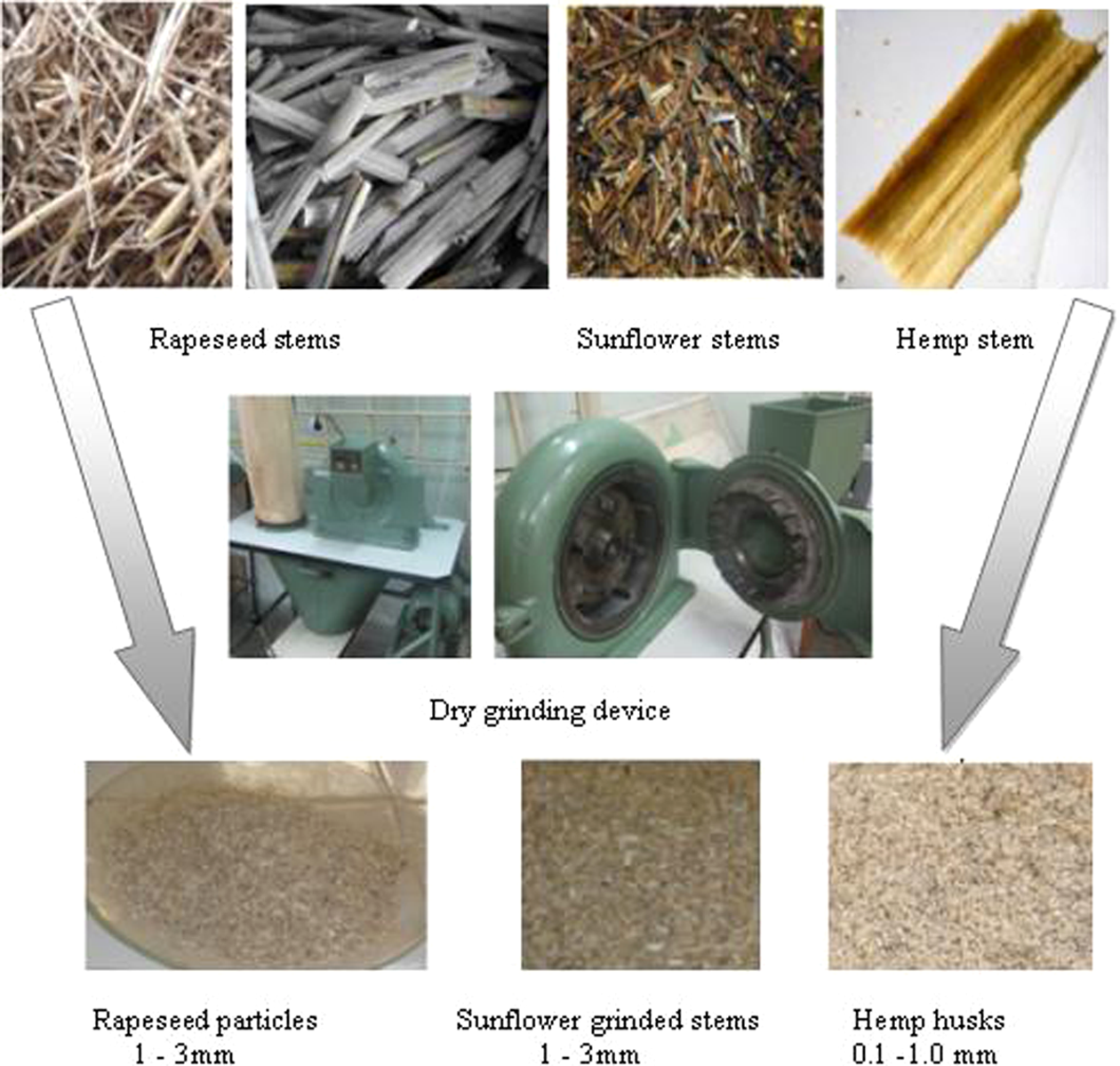
Dry grinding of lignocellulosic residues.
Preparing composite material samples
In order to obtain comparative results, with the above prepared materials, two types of composite samples were prepared for test, with dimensions of 9 × 9 × 1 cm3 and 29.5 × 29.5 × 1.9 cm3, respectively. For comparison, a composite material sample based on synthetic polymer matrix has been prepared. The various mix ratios of EP, lignocellulosic residues, corn starch and urea-formaldehyde resin used in the present study are given in Tables 1 and 2.
The composition of samples with EP, lignocellulosic residues and natural polymers.a
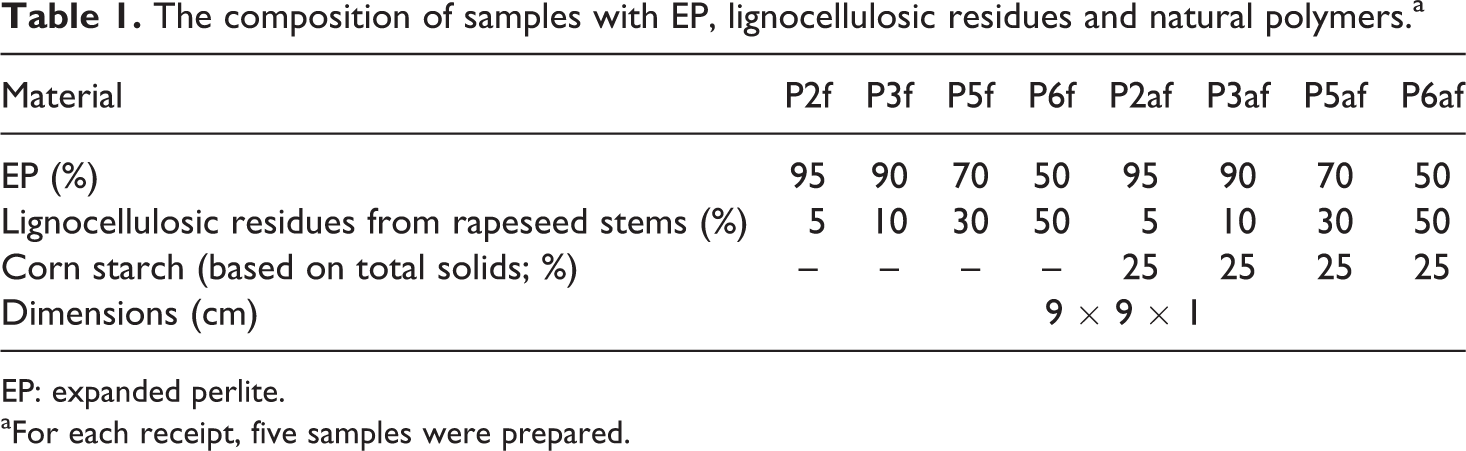
EP: expanded perlite.
aFor each receipt, five samples were prepared.
The composition of samples with EP, lignocellulosic residues and natural/synthetic polymers.a
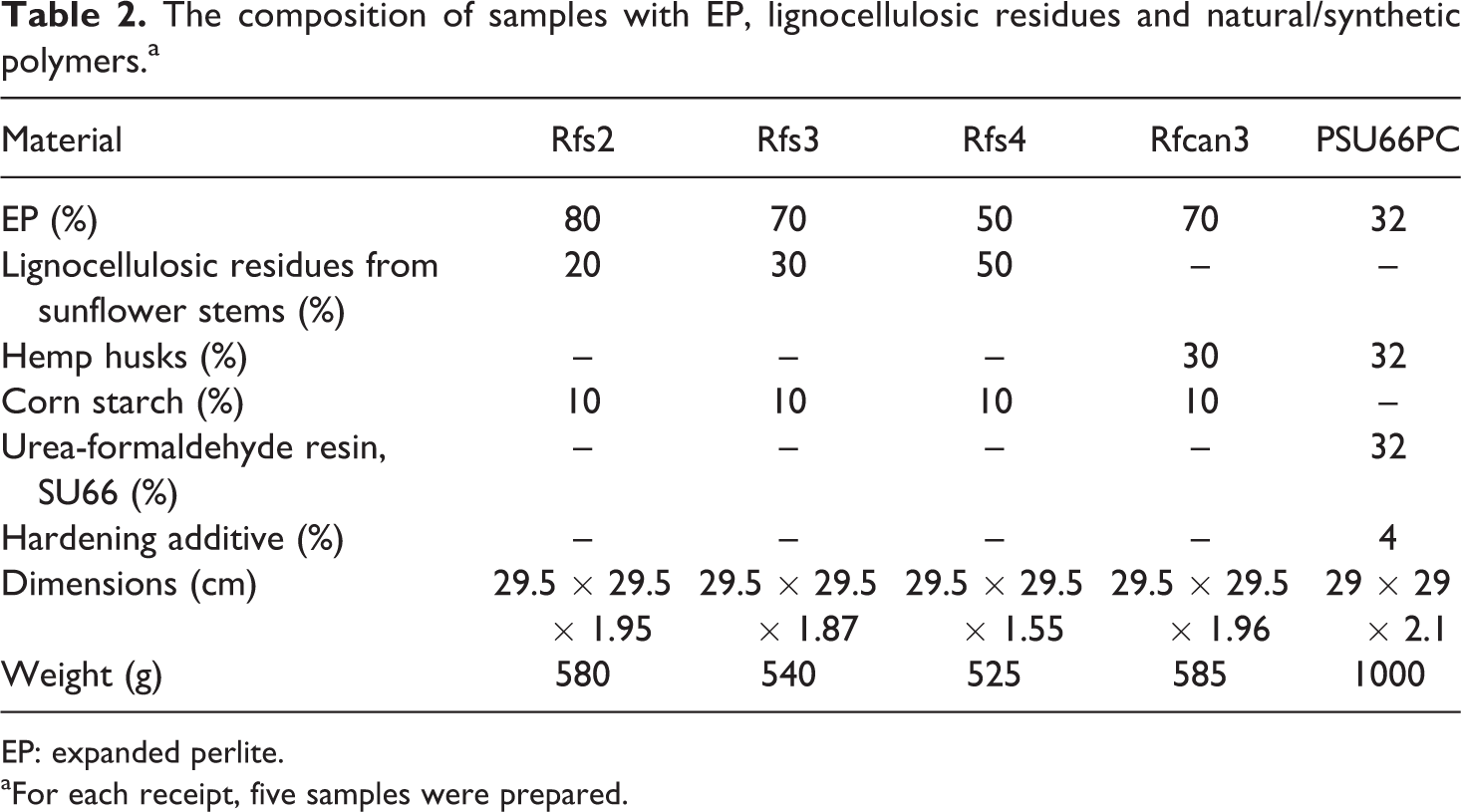
EP: expanded perlite.
aFor each receipt, five samples were prepared.
For both types of composite materials, the lightweight samples were prepared at room temperature by mixing EP, lignocellulosic residues and natural/synthetic polymers until a pasty composition with optimum moisture content was obtained. At this stage, the pasty material was moulded in a metal mould. To avoid an uneven structure, the moulded material was pressed with a laboratory uniaxial press until 10 MPa (Figure 4).
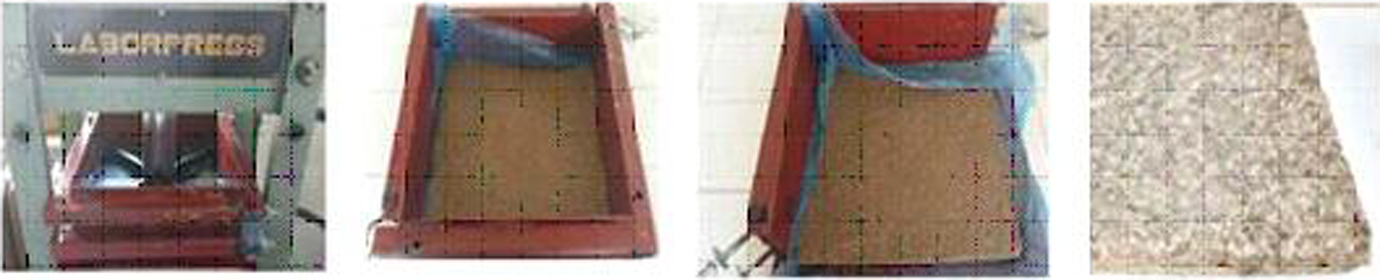
Obtaining composite materials.
The obtained samples of composite materials were air-dried at room temperature for 48 h. The dry form of composite samples is presented in Figures 5 and 6.
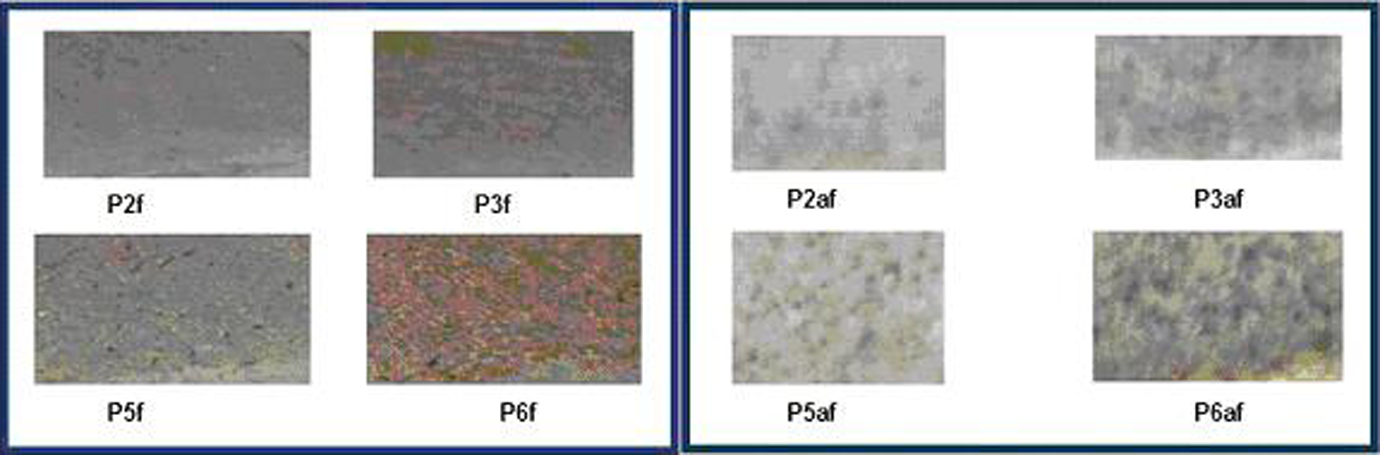
Composite samples of 9 × 9 × 1 cm3 dimensions based on EP and natural polymer matrix (starch) reinforced with lignocellulosic residues. EP: expanded perlite.
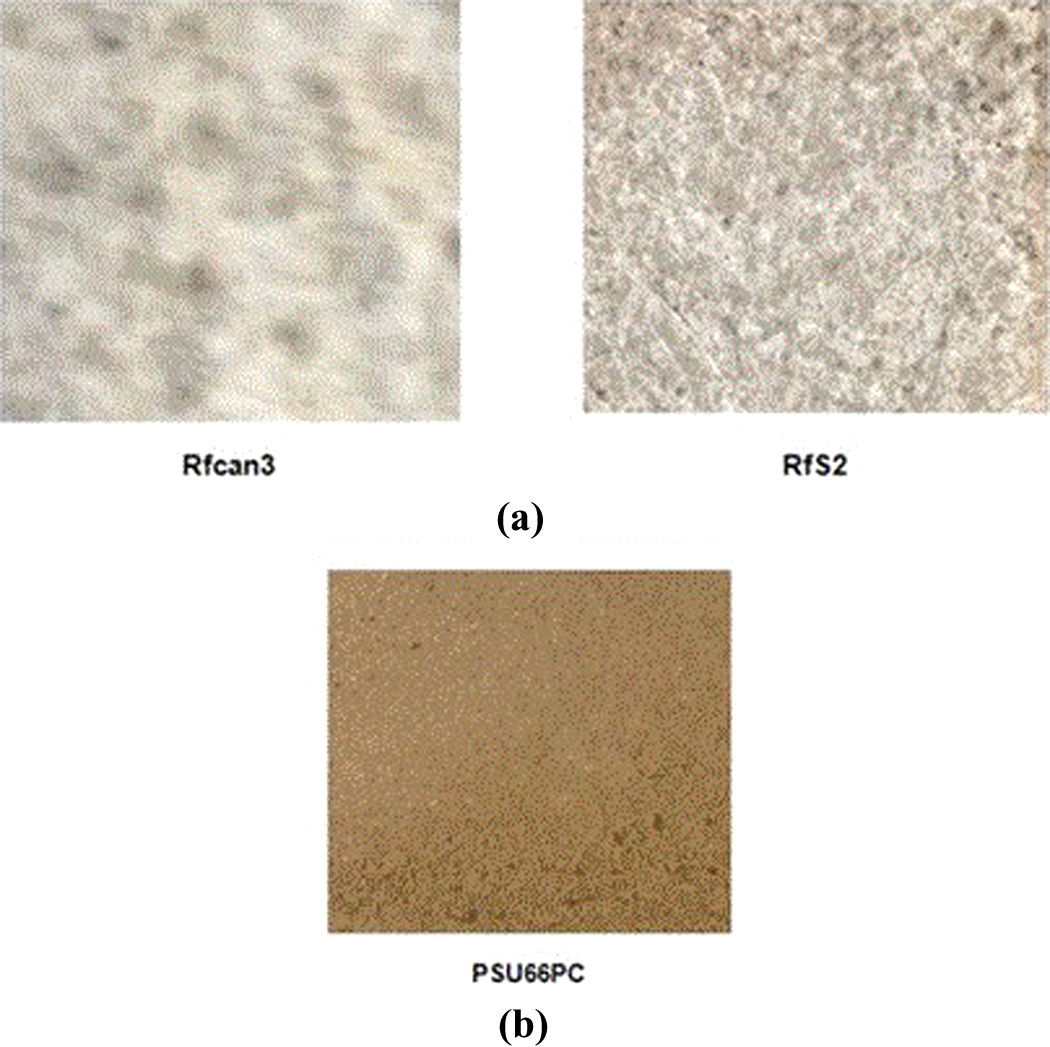
Composite samples of 29.5 × 29.5 × 1.93 cm dimensions based on EP and lignocellulosic residues. (a) natural polymer matrix (starch) and (b) synthetic polymer matrix (urea-formaldehyde resin). EP: expanded perlite.
Methods for assessing the functional properties of composite samples
The composite materials were evaluated regarding the functional characteristics specific for building materials such as: bulk density (g/cm
3
); thermal conductivity (W/mK) – was measured in the laboratory using the HLC-A90 equipment according to SR EN 12667:2002; image analyses using scanning electron microscopy (SEM; Hitachi S-2600 N microscope [Hitachi High Technologies, Europe]) for the structural analysis of the samples. SEM is a type of electron microscope that produces images of a sample by colliding an accelerated electron beam with it. Such collision produces various signals (secondary electrons (SE), backscattered electrons, characteristic X-rays), providing information about the sample’s surface topography and composition. The most common mode of detection is by SE emitted by atoms excited by the electron beam. SEM provides topographic images, which tell about surface morphology and relief. SEM is characterized by its high resolution (which can be better than 1 nm) and its depth of field, which gives three-dimensional images; and water absorption (W%) was assessed by weight difference between the samples of composite material dried (M
1) and the samples saturated with water for 24 h at T = 27°C (M
2) and calculated with the following formula:

Results and discussion
Properties of composite materials with 9 × 9 × 1 cm3 dimensions
The results regarding the evolution of specific properties of composite samples with 9 × 9 × 1 cm3 dimensions are presented in Figures 7 to 10.
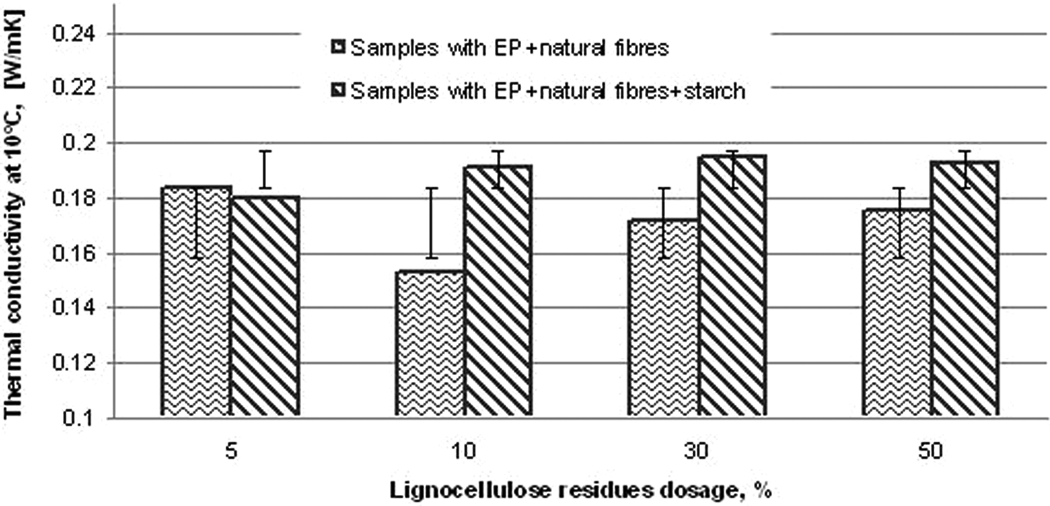
Thermal conductivity of composite samples with 9 × 9 × 1 cm3 dimensions.
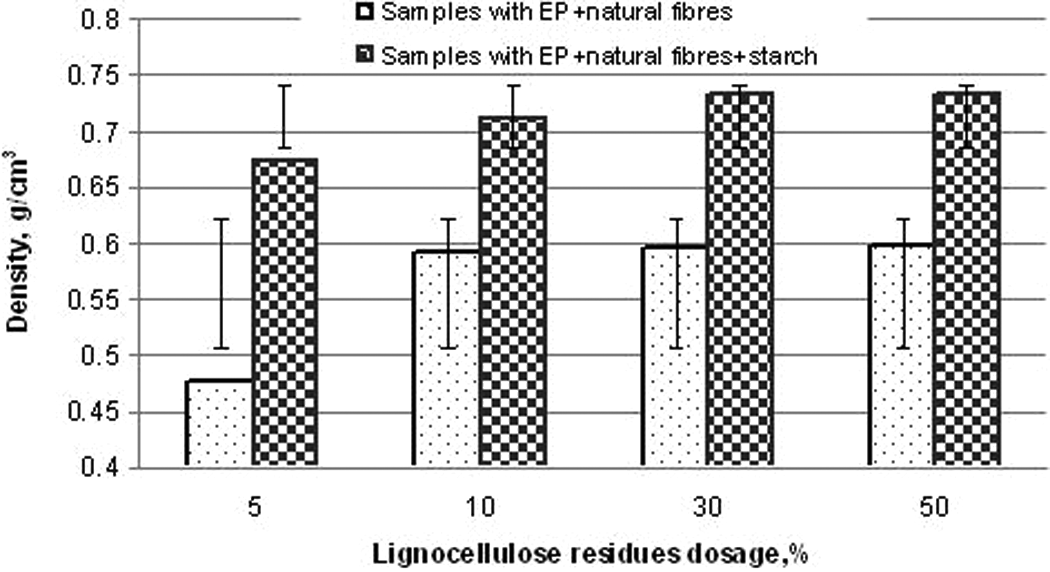
Density of composite samples with 9 × 9 × 1 cm3 dimensions.
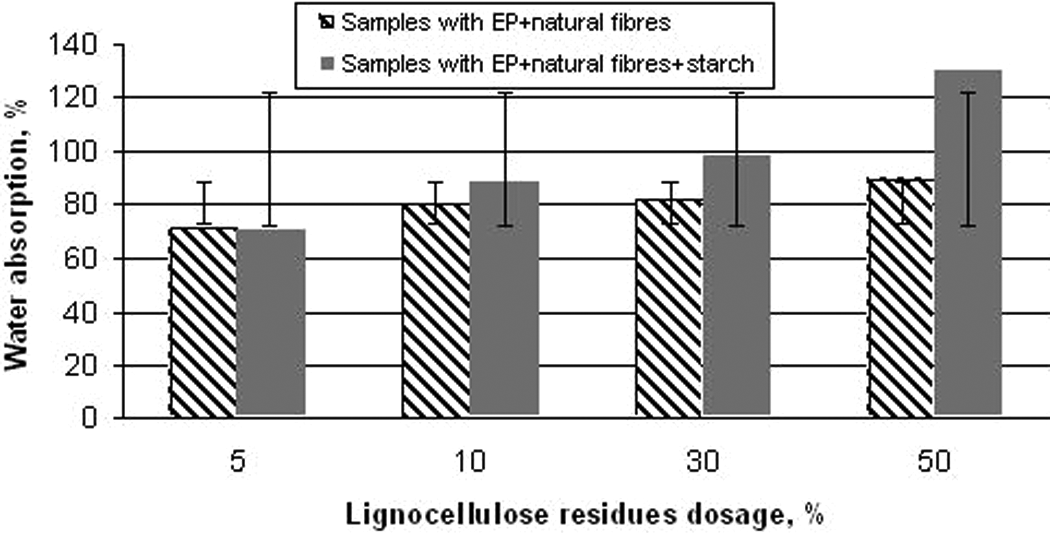
Water absorption of composite samples with 9 × 9 × 1 cm3 dimensions.
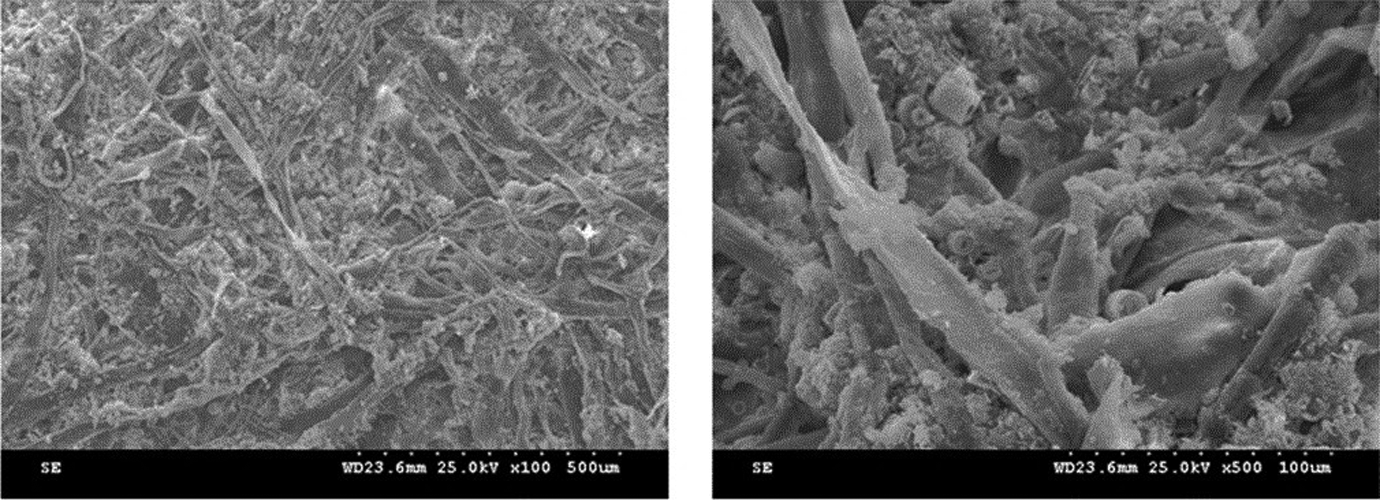
SEM images of composite samples (9 × 9 × 1 cm3 dimensions) with 50% EP and 50% lignocellulosic residues. EP: expanded perlite; SEM: scanning electron microscopy.
The thermal conductivity is a measure of the ability of a material for heat transport, which means transporting of heat from a high temperature area to one where the temperature is lower. This process is influenced by a temperature gradient that is equal to heat quantity, which passes through a unit surface in a certain time. The thermal conductivity is a constant of each material (substance) being influenced by density, porosity, humidity content or temperature. The thermal insulation capacity of a material is inversely proportional to its thermal conductivity. Therefore, when the coefficient of thermal conductivity of a material is ≤0.10 W/mK, it can be said that it is suitable for thermal insulation. 17
The thermal conductivity was calculated at +10°C using conversion coefficients at test temperature of approximately +23°C. It can be appreciated that the thermal conductivity of tested samples is less influenced by lignocellulosic residue dosage. Furthermore, the reduction of EP percentage in the composite structure does not decrease the thermal conductivity value. Globally, the level of this parameter is promising for the next stage of experiments (Figure 7).
The density increases with the lignocellulosic residue dosage for both samples, due to the reinforcing ability of natural fibres in the composite material structure. It can be observed, also, that the density of samples with starch is higher compared to the samples with EP and lignocellulosic residues. That is due to the fact that the starch fills the voids from the internal network of material composite that leads to a dense structure (Figure 8).
Water absorption of composite materials represents a main parameter that affects their durability. As the amount of water that infiltrates the material is smaller, the composite material’s strength at the environmental conditions is higher. The quantity of water absorbed by composite samples obtained with 9 × 9 × 1 cm3 dimension is shown in Figure 9. Generally, the obtained composite samples have absorbed a high quantity of water, and samples with 30% and 50% lignocellulosic residues have been destructed after water saturation. The addition of starch in the mass of composite samples does not significantly improve the absorption of water. Based on this result, the composite materials can be used as filler materials for sandwich insulation structures.
The SEM micrographs of a P6f sample that contains 50% EP and 50% lignocellulosic residues from rapeseed stems, at two levels of magnitude, are presented in Figure 10. It can be observed that the perlite particles in their original shape are distributed within lignocellulosic fibres, leading to obtain a structure with larger sized pores. This type of structure is beneficial to obtain a lower value of thermal conductivity coefficient and therefore good thermal isolation properties.
Specific properties of composite samples with 29.5 × 29.5 × 1.9 cm3 dimensions
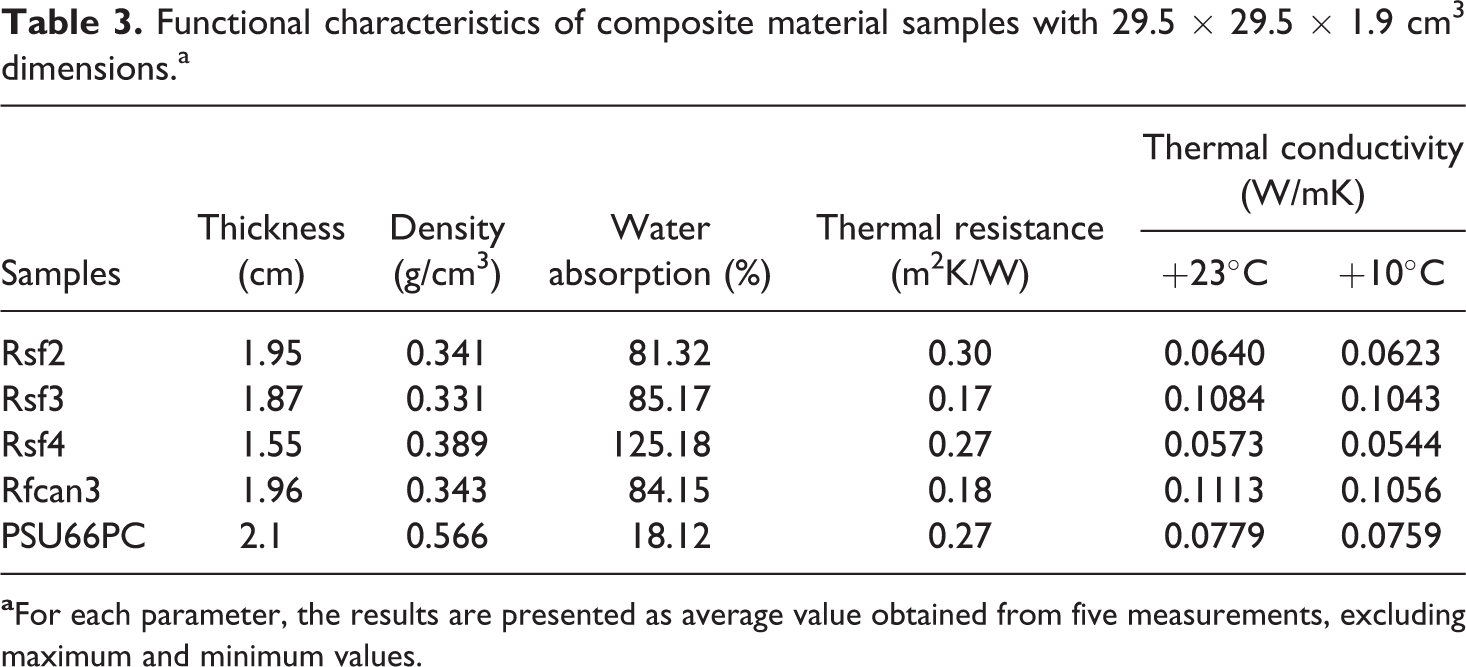
Based on the presented results in Table 3, it can be observed that all composite samples show the values of thermal conductivity between 0.05 and 0.11 (W/mK), similar to the thermal conductivity values of existing petroleum-based insulation materials (Figure 11). Furthermore, the composite samples with natural polymers registered the best thermal insulation properties (Rsf4 sample) compared to the samples based on synthetic polymer matrix (PSU66PC sample). Regarding the water absorption of composite samples, the high values of this parameter can be observed in this case, also, except for the sample containing synthetic resin (PSU66PC sample). Based on this parameter, it is confirmed as previously mentioned that these materials can be used as fillers in sandwich structure panels for the thermal insulation of buildings.
Functional characteristics of composite material samples with 29.5 × 29.5 × 1.9 cm3 dimensions.a
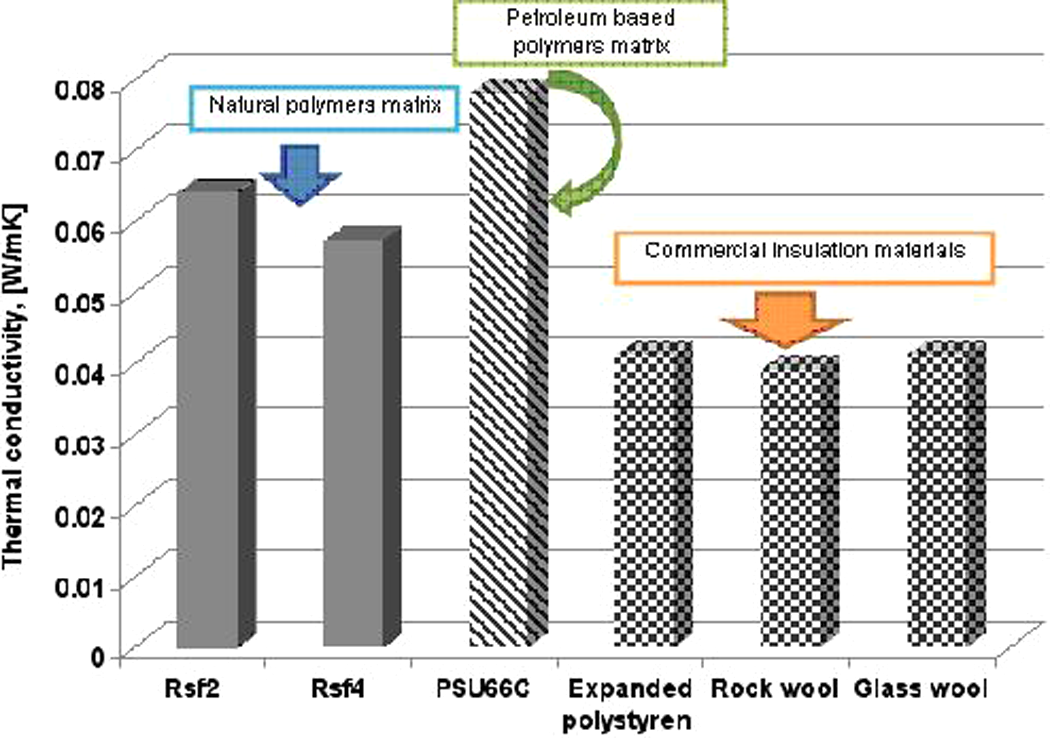
Comparison between the thermal insulation properties of obtained composite samples and existing commercial insulation materials.
Conclusions
This study emphasized that EP and lignocellulosic residues can be used to obtain composite materials with possible applications in the building industry. It can be appreciated that this is a good way to valorize the natural resources of mineral raw materials (i.e. perlite rock deposits) and agricultural wastes, to obtain the added-value products.
Based on the obtained results, it can be concluded that: the thermal conductivity of composite samples based on lignocellulosic residues and EP is similar to the existing commercial insulation materials (expanded polystyrene, rock or glass wool); in the case of the 29 × 29 × 1.9 cm3 composite type, the samples based on EP and natural polymer (starch) matrix registered the lowest thermal conductivity coefficient; based on the high water absorption of composite samples consisting of EP and natural polymers, more research is needed in the future to find technical solutions to improve this parameter as well as the mechanical properties of these types of composite materials; even if the thermal conductivity values for composite materials based on lignocellulosic residues and EP/natural polymer matrix (λ = 0.05 ÷ 0.11 W/mK) are higher than those of expanded polystyrene (λ = 0.036 ÷ 0.046 W/mK), it should be noted that in terms of toxicity of the latter, it is preferable to use the thermal insulation of buildings with composite materials reinforced with environmentally friendly materials; and besides the thermal insulating properties, the research will be completed with a study on the mechanical properties, water absorption, as well as the behaviour at environmental parameters (high and low temperature, high humidity, frost/thaw resistance as well as antifungal activity).
Footnotes
Declaration of Conflicting Interests
The author(s) declared no potential conflicts of interest with respect to the research, authorship, and/or publication of this article.
Funding
The author(s) disclosed receipt of the following financial support for the research, authorship, and/or publication of this article: This article was elaborated within the Partnership Programme – PNII, developed with the support of the Romanian Ministry of National Education – UEFISCDI, project no. PN-II-PT-PCCA-2013-4-0989 – Bio4Build.