




Abstract
Theoretical and experimental studies on the compressive mechanical behavior of 4-harness satin weave carbon/epoxy composite laminates under in-plane loading are conducted over the temperature range of 298–473 K and the strain rate range of 0.001–1700/s in this article. The stress–strain curves of 4-harness satin weave composites are obtained at different strain rates and temperatures, and key mechanical properties of the material are determined. The deformation mechanism and failure morphology of the samples are observed and analyzed by scanning electron microscope (SEM) micrographs. The results show that the uniaxial compressive mechanical properties of 4-harness satin weave composites are strongly dependent on the temperature but are weakly sensitive to strain rate. The peak stress and elastic modulus of the material have the trend of decrease with the increasing of temperature, and the decreasing trend can be expressed as the functional relationship of temperature shift factor. In addition, SEM observations show that the quasi-static failure mode of 4-harness satin weave composites is shear failure along the diagonal lines of the specimens, while the dynamic failure modes of the material are multiple delaminations and longitudinal splitting, and with the increasing of temperature, its longitudinal splitting is more serious, but the delamination is relatively reduced. A constitutive model with thermomechanical coupling effects is proposed based on the experimental results and the increment theory of elastic–plastic mechanics. The experimental verification and numerical analysis show that the model is shown to be able to predict the finite deformation behavior of 4-harness satin weave composites over a wide range of temperatures.
Keywords
Introduction
Fiber-reinforced composite laminates have been widely used in both military and civil fields due to their high specific strength, high specific stiffness, and corrosion resistance. 1 –3 In recent years, some new challenges have been encountered in the further application of composite laminates, for example, the mechanical properties of composites in extreme conditions. The dynamic load, in some cases even accompanied by high temperature, has a great influence on the mechanical properties of composite laminates. Therefore, it is necessary to study the mechanical properties of composites under high strain rates loading and elevated temperatures.
Some experimental studies have been conducted to investigate the mechanical response of fiber-reinforced composites under uniaxial compression. For example, Li and Lambros 4 studied the dynamic thermomechanical properties of a carbon-epoxy composite material using the split Hopkinson bar system and thought its internal temperature rise is mainly caused by the damage of the material. Hosur et al. 5 studied the dynamic compression properties of affordable woven carbon/epoxy composites at three different strain rate ranges and found that the peak stress and modulus of the material under dynamic loading were higher compared to that of the material under static loading. Subsequently, Hosur et al. 6 carried out the stress–strain measurements of woven graphite/epoxy composites at different temperatures and drew a conclusion that the peak stress and modulus of the material decreases with the increasing of temperature. Meanwhile, Naik and Kavala 7 studied the dynamic mechanical behavior of woven fabric composites under uniaxial compression and obtained some valuable data and conclusions. Their research indicates that there is no obvious strain rate sensitivity on compressive properties at high strain rates for the cases of plain weave carbon/epoxy along warp and fill. More recently, Thomason and Yang 8 conducted a study on the interfacial shear strength of glass–fiber epoxy composites at different temperatures and thought that the temperature dependence of interfacial shear strength of the material is related to the glass transition region of the epoxy matrix. Song et al. 9 studied the mechanical properties and failure mechanism of woven carbon/epoxy laminate composites at different strain rates and found that for the case of in-plane loading, the main failure mode of the material at high strain rates is delamination, while its failure mode under quasi-static condition is in the combination form of shear deformation and delamination. In addition, Li et al. 10 studied the static and dynamic mechanical properties of carbon/epoxy composites and thought that its tensile strength increased with the increasing of the strain rate, while its compressive strength is not sensitive to the strain rate. Because of the complexity of the mechanical properties and microstructure morphology of fiber-reinforced composites, the analysis on the mechanical response of the materials is increasingly dependent on numerical modeling. Therefore, constitutive modeling of the mechanical behavior of fiber-reinforced composites has drawn great attention from researchers recently. Early on, Tay et al. 11 proposed an empirical rate-dependent constitutive model suitable for the mechanical behavior of glass-fiber-reinforced epoxy and pure epoxy. Subsequently, Thiruppukuzhi and Sun 12 proposed a constitutive theory of finite viscoplasticity for modeling rate-dependent behavior of polymer composites based on the theory of elastic–plastic mechanics, this model was suitable for capturing the rate-dependent effect of the strength of the unidirectional and the woven material. More recently, Daniel et al. 13 proposed a new nonlinear constitutive model to describe the rate-dependent behavior of the composites under states of stress including tensile and compressive loading. Mandel et al. 14 also developed a material model for the large deformation mechanical behavior of composite laminates based on the microstructure and modality of the materials. But up to now, the mechanical properties of fiber-reinforced composites are still lack of study in depth and systematically. It can be found from the previous experimental studies that the results obtained by the researchers have notable dispersity, for example, there are significant differences in the strain rate sensitivity of the composites with different compositions and morphologies. In addition, to the best knowledge of the authors, few constitutive models have been proposed to describe the mechanical response of composite materials at different temperatures. Based on these reasons, the systematic study on the quasi-static and dynamic mechanical behavior of fiber-reinforced composites at different temperatures has important significance to investigate the failure mechanism in extreme circumstances and further optimize its performance.
The present article examines the temperature-dependent mechanical properties of a kind of 4-harness satin weave carbon/epoxy composite laminates under in-plane loading. To this end, the systematic experiment research on the mechanical behavior of 4-harness satin weave composites at the temperature range of 298–473 K and the strain rate range of 0.001–1700/s are carried out by a DNS100 servohydraulic testing machine and an Northwestern Polytechnical University’s (NPU) stress reversal Hopkinson pressure bar. The deformation mechanism and failure morphology of the samples are observed and analyzed by scanning electron microscope (SEM) micrographs. Based on the increment theory of elastic–plastic mechanics and mathematical derivation methods, an elastoplastic constitutive model describing the temperature-dependent mechanical behavior of 4-harness satin weave composites is proposed in this article. Finally, the applicability of the resulting elastoplastic model is verified by experimental results of the materials with the strain rate of 400/s and 900/s under different temperatures.
Experimental procedure
Material and specimen
The 4-harness satin weave carbon/epoxy composite laminate (HF10A-3K/3238A) used in the tests was provided by AVIC the first aircraft institute. The measured density of the composite laminate is 1.5 g/cm3, and its fiber content is about 65% of the total volume. The woven structure and layup configuration of the composite laminate is shown in Figure 1. The specimens were machined from the square panels with the stacking sequence of [(±45°)/(0°/90°)/(±45°)/(0°/90°)/(±45°)]4. The sampling process of the specimens is shown in Figure 2. The averaged tow width is approximately 0.1731 cm that obtained by measuring 20 tows extracted from the micrographs. To meet the experimental requirements and reflect the structural properties of composite laminates, the nominal dimensions of the specimens were designed as cubes which are 10 mm in length, 10 mm in width, and 4.6 mm in thickness. Before testing, all specimens were polished by the sanding rotor equipped with fine silicon carbide abrasive paper to remove any burrs or surface inconsistencies left from the mechanical cutting. For quasi-static and dynamic compression experiments, three specimens were tested repeatedly under the same test condition to determine the significance of response variability. All specimens were accurately measured and loaded along weft direction during the experiment, as shown in Figure 2.
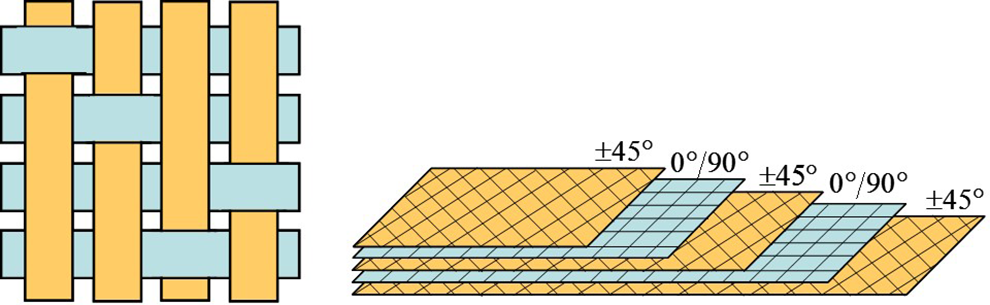
Woven structure and layup configuration of 4-harness satin weave carbon/epoxy composite laminate.

Schematic view of the sampling process and loading direction of the specimens.
Quasi-static experiments
The quasi-static compression tests were carried out at different temperatures from 298K to 473K using a DNS100 servohydraulic testing machine. The displacement and load signals from the servohydraulic testing machine were automatically recorded by the data acquisition system. All tests were carried out by controlling a constant displacement rate to ensure that a nominal strain rate can be easily realized. Before the quasi-static experiment, the indenter of the testing machine was preloaded without any sample to overcome any small misalignment along the load train. The specimen/indenter interfaces were well lubricated by a thin layer of petroleum jelly to eliminate friction effect and prevent inhomogeneous deformations. For elevated temperature testing, specimens were heated in a radiant heating furnace and the temperature was maintained constant during loading with a fluctuation of ±3 K. Based on the test data and sample dimension, the quasi-static stress–strain curves of the materials were given by mathematical calculation at low strain rates.
High strain rate experiments
The high strain rate tests were carried out using an NPU’s stress reversal Hopkinson pressure bar technique developed originally by Nemat-Nasser and Isaacs, 15 as shown in Figure 3. This improved split Hopkinson pressure bar (SHPB) technique ensured the specimens can be subjected to a single compressive pulse. Furthermore, the deformation of the specimens can be restricted by the preset gap between the transfer flange and the incident tube. The diameter of striker, incident, and transmission bars is 12.7 mm. The length of striker is 270 mm for intermediate strain rate tests and 120 mm for high strain rate tests. The lengths of incident and transmission bars are 1.2 m and 1 m, respectively. The incident tube has an outer diameter of 17.96 mm with a length of 200 mm. The reaction mass is 138 mm long and 80 mm in the outer diameter.
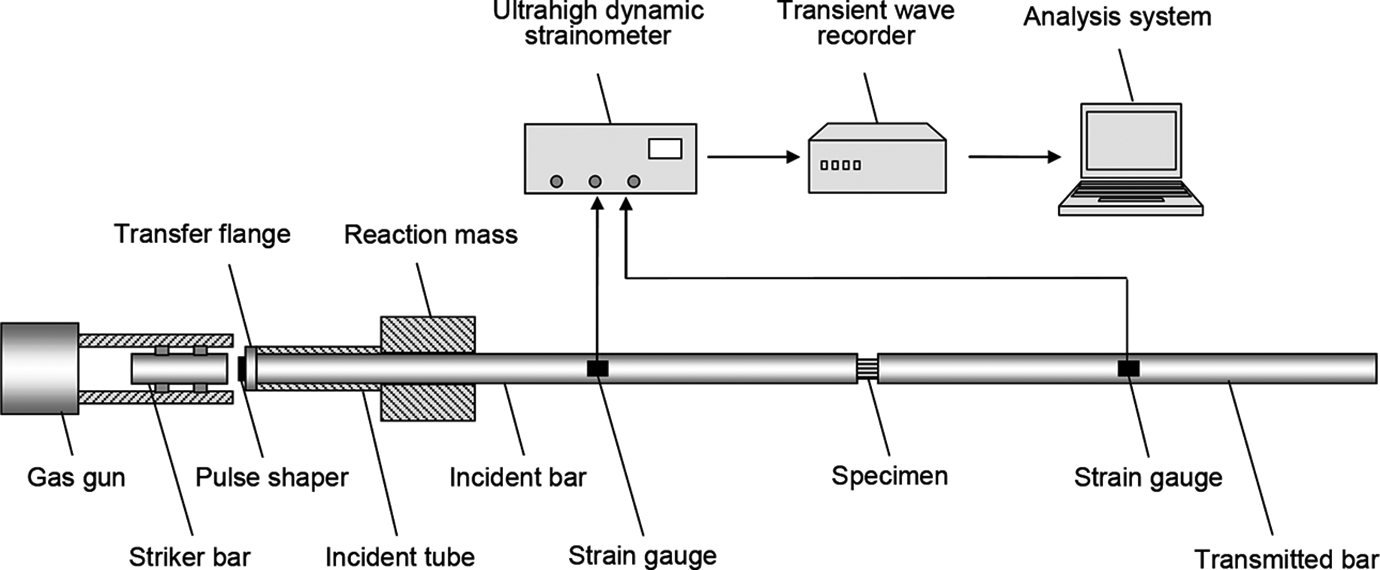
Schematic view of NPU’s stress reversal Hopkinson pressure bar system.
The elastic strains form a significant portion of the overall response in the process of composite materials subjected to impact, which would cause the occurrence of specimen failure before stress equilibrium within the specimen has been achieved. Therefore, it is necessary to discuss the stress equilibrium of the specimen in SHPB experiments. Previous researches showed that stress equilibrium of the specimen can be achieved by making the width of the incident pulse sufficiently longer than the time of stress wave passing through the specimen. 16,17 More specifically, three to four reflections of stress wave through the specimen should be demanded before stress equilibrium achieved in the entire specimen prior to failure. In the case of the brittleness of carbon/epoxy composite, a triangular incident wave containing a slow rising stage is needed to ensure that adequate wave reflections occur within the entire specimen before failure. Further, a constant strain rate in linear elastic material can be accomplished by imparting a monotonically increasing ramp-like incident pulse. 16 Thus, to reach a uniform state of stress and a nearly constant strain rate during the loading process, the traditional SHPB apparatus was modified by shaping the incident pulse using a copper cushion. 18 Through trial and error, the optimum geometry dimension of pulse shaper was chosen as 0.5 mm in thickness and 5–7 mm in diameter for different strain rates. Based on elastic stress wave theory, the stresses on both sides of the specimen were calculated as


where εI , εR , and εT are the incident, reflected, and transmitted strain, respectively; E and A are Young’s modulus and the cross-sectional area of the Hopkinson bars; As is the cross-sectional area of the specimen. To quantify the stress equilibration, a nondimensional parameter α was defined as follows: 16

It is generally considered when the parameter α is less than 5%, the stress equilibrium is prevailed. Here, the dynamic stress–strain behavior of carbon/epoxy composite at strain rates of 400/s and 1000/s was selected for stress uniformity analysis to ensure the validity of the obtained data in this study, as shown in Figure 4. It is obvious that the time to reach the dynamic stress equilibrium inside the specimen is about 28 μs and 10 μs, and the parameter α is less than 5% after this time. This illustrates that the measured stress–time curve thereafter can really reflect the stress variation law inside the specimen. Meanwhile, after the stress uniformity is reached, a nearly constant strain rate can be achieved during almost the entire deformation process. In addition, the parallelism of the loading edges for each experiment is polished before testing to ensure a parallelism error within 0.01 mm, which can prevent the occurrence of stress accumulation at the contact points. 16
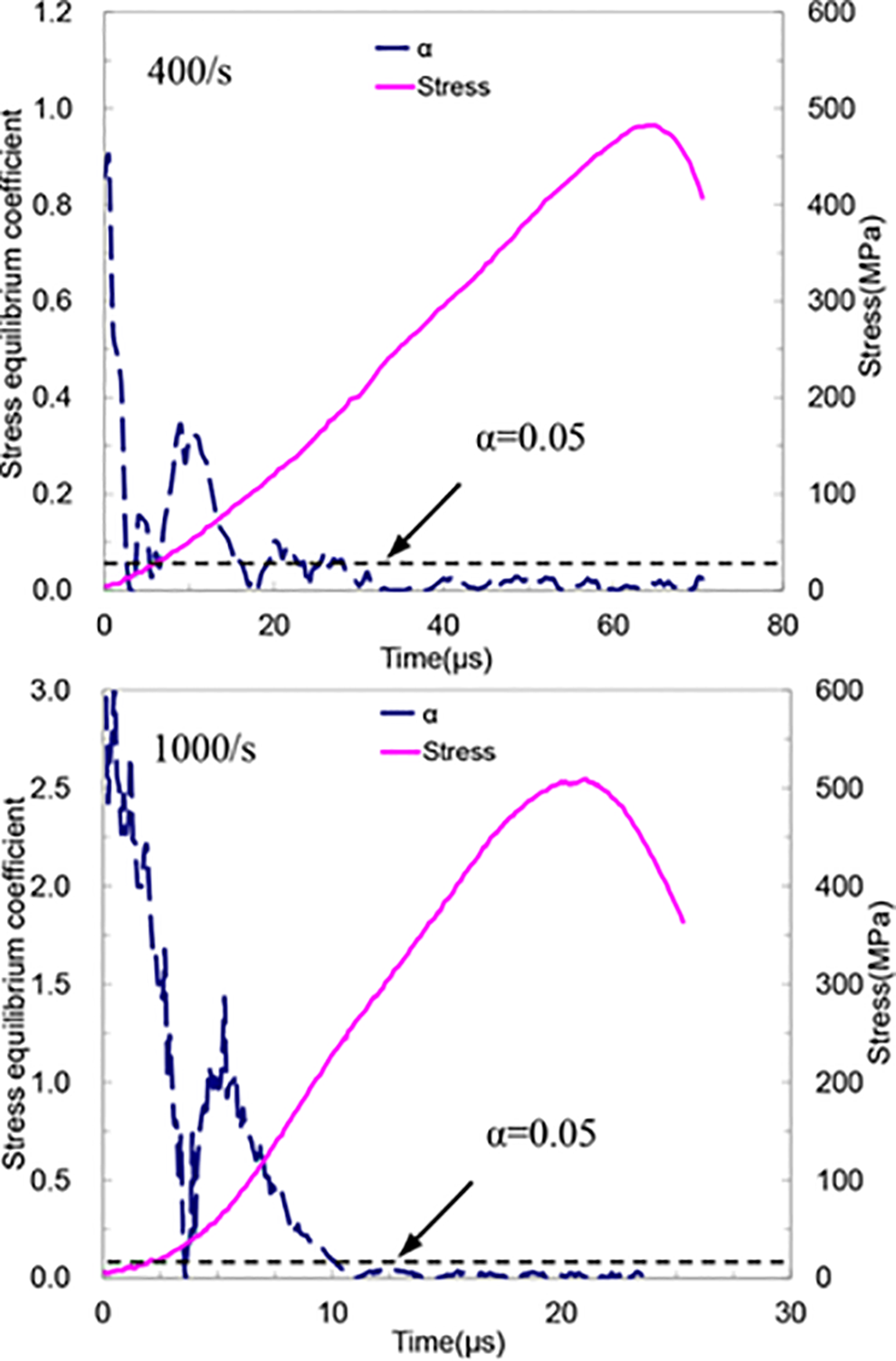
Analysis of stress uniformity for carbon/epoxy composite with the strain rates of 400/s and 1000/s at room temperature.
The mechanical behavior of 4-harness satin weave composites is mainly characterized by brittle fracture. The material has a small strain before failure. In SHPB experiments, the strain of the specimen is calculated by the strain signal of the strain gages mounted on the incident bar. In order to ensure the accuracy of the obtained strain, the strain gage was mounted on the specimen directly along the longitudinal direction to measure the actual deformation of specimen. The accuracy of the obtained strain can be ensured by comparison of the two methods. The strain–time curves obtained by the two methods are shown in Figure 5. Before 26 μs, there is a difference in strain within 7%, indicating that the strain can be measured accurately enough by the strain gage mounted on incident bar. After that, the strain signal obtained by the strain gage on the incident bar continues to increase linearly with the increase of time. However, the strain signal obtained by the strain gage on the specimen exhibits slowly increase until 34 μs, beyond which the trend reverse due to strain gage debonding. It is worth noting that the strain–time curve corresponding to the strain gage on incident bar is parallel to that corresponding to the gage on specimen within the time range of 14 μs–26 μs, resulting a nearly constant difference. Assuming that the difference in the strains at peak stress obtained by these two methods remains within 7%, the difference in modulus would be less than 7% for a linearly elastic material, which is within an acceptable error. Based on the above analysis, it is concluded that the main part of dynamic stress–strain curve can meet the requirements of the testing accuracy, which also guarantee the validity of the failure strength of the specimen.
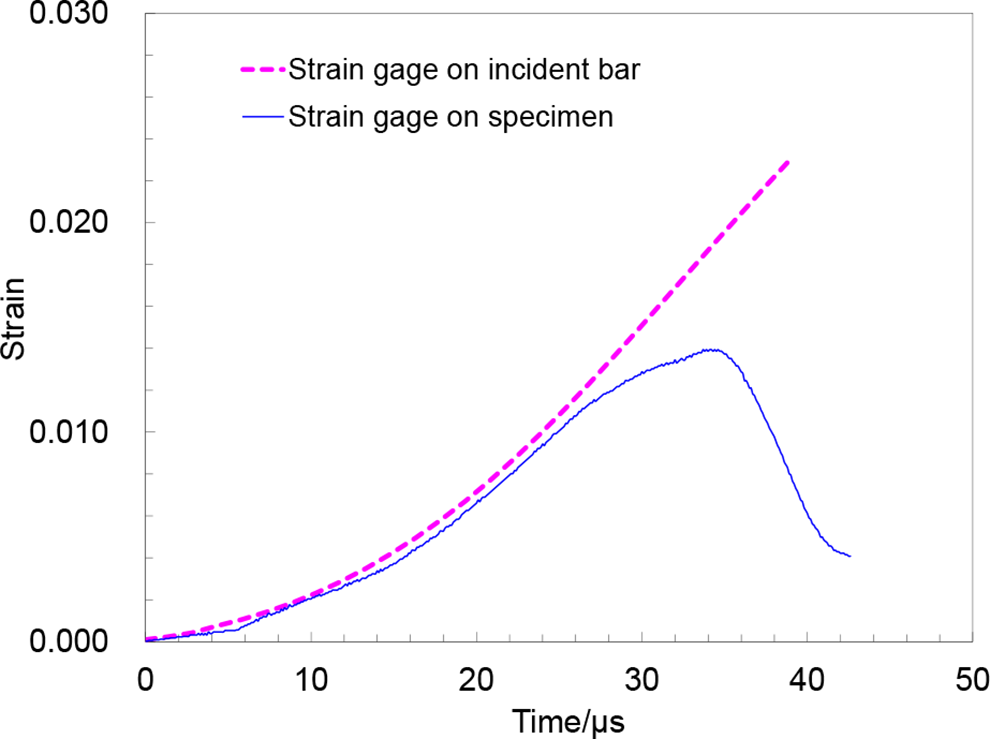
Strain–time curves obtained by the strain gages on incident bar and specimen.
Experimental results and discussion
The experimental results of 4-harness satin weave carbon/epoxy composite laminate in different conditions were obtained by the experimental techniques described in “Experimental procedure” section. The stress–strain characteristics and failure mechanism of the materials at different strain rates and temperatures would be discussed and analyzed by the following sections.
Strain rate effects on compressive properties
The dynamic and static compressive stress–strain curves of the satin weave carbon/epoxy laminates subjected to in-plane loading at temperatures of 298 K and 373 K are shown in Figure 6. For quasi-static compression testing, the strain rates are calculated by the following formula (

where cb is the longitudinal wave speed in the pressure bars. Figure 6 shows the variation characteristics of stress–strain curves of the specimens at strain rates ranging from 0.01/s to 1700/s. The results show that the stress value of the materials at temperatures of 298 K and 373 K has no obvious change with the increasing of strain rate, that is, the stress–strain behavior of the satin weave carbon/epoxy composites under in-plane loading is weakly sensitive to strain rate and behaves nearly linear elastic characteristics before failure. The strain rate dependence of the carbon/epoxy composites studied here tallies with the analysis conclusion obtained by Naik and Kavala 7 and Li et al. 10 In order to further highlight its strain rate effect, the peak stress and elastic modulus of the materials at five different strain rates are recorded from the uniaxial compressive stress–strain curves. The obtained data are then plotted as a function of logarithmic strain rate at the temperature of 298K, as shown in Figure 7. Here, the peak stress is taken from the maximum stress of stress–strain curves, while the elastic modulus is obtained using the linear section of stress–strain curve that after dynamic equilibrium of the specimen was achieved but before failure. The results show that the peak stress and elastic modulus of the materials have a little change as the logarithmic strain rate increases. It can be found by fitting analysis that the relationship of peak stress with logarithmic strain rate is approximately linear. This further shows that the uniaxial compressive mechanical behavior of 4-harness satin weave composites studied here is weakly sensitive to strain rate, thereby indicating that these composites have excellent impact-resistance mechanical properties.
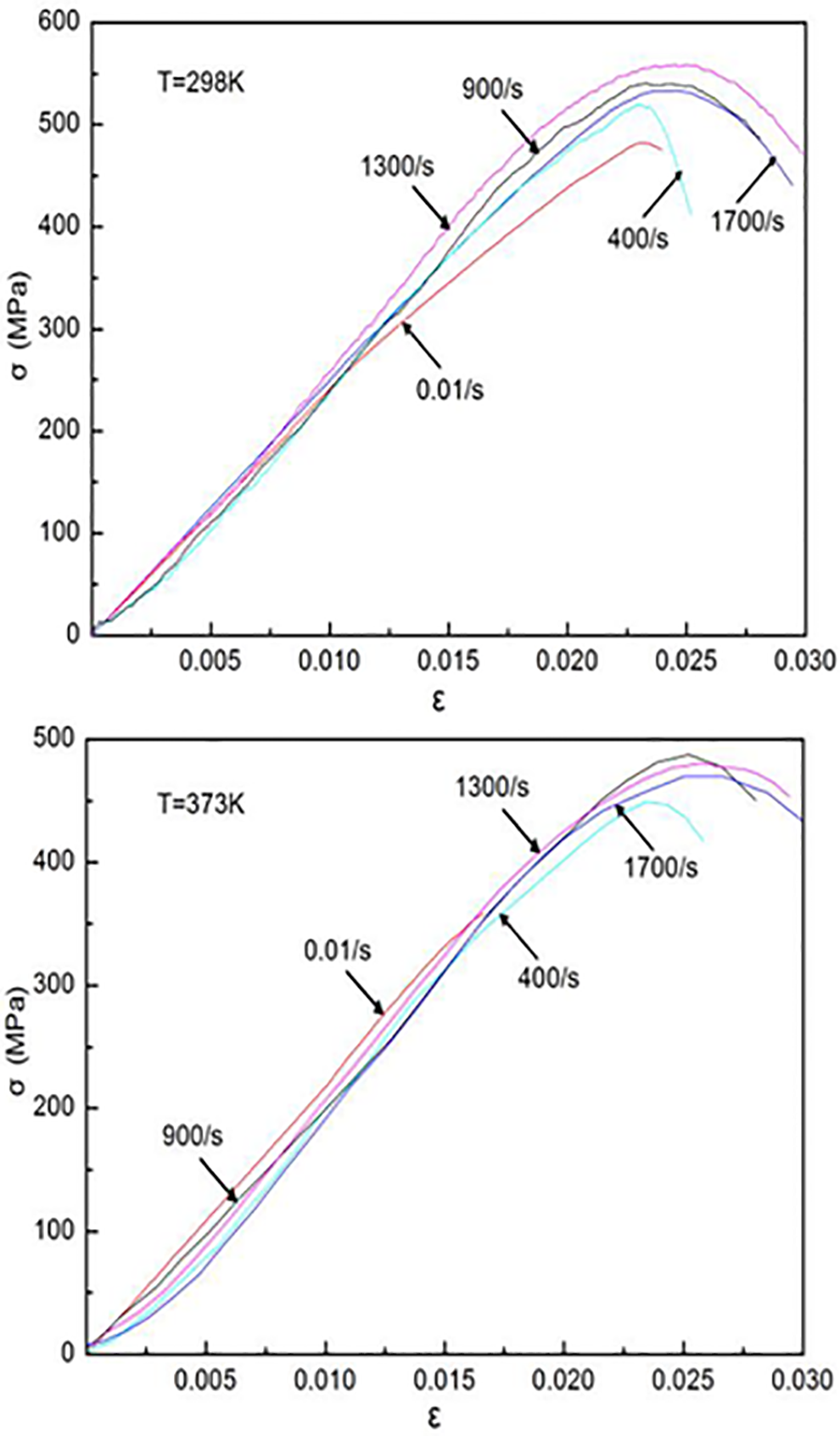
Uniaxial compressive stress–strain curves of composite laminates at different strain rates.
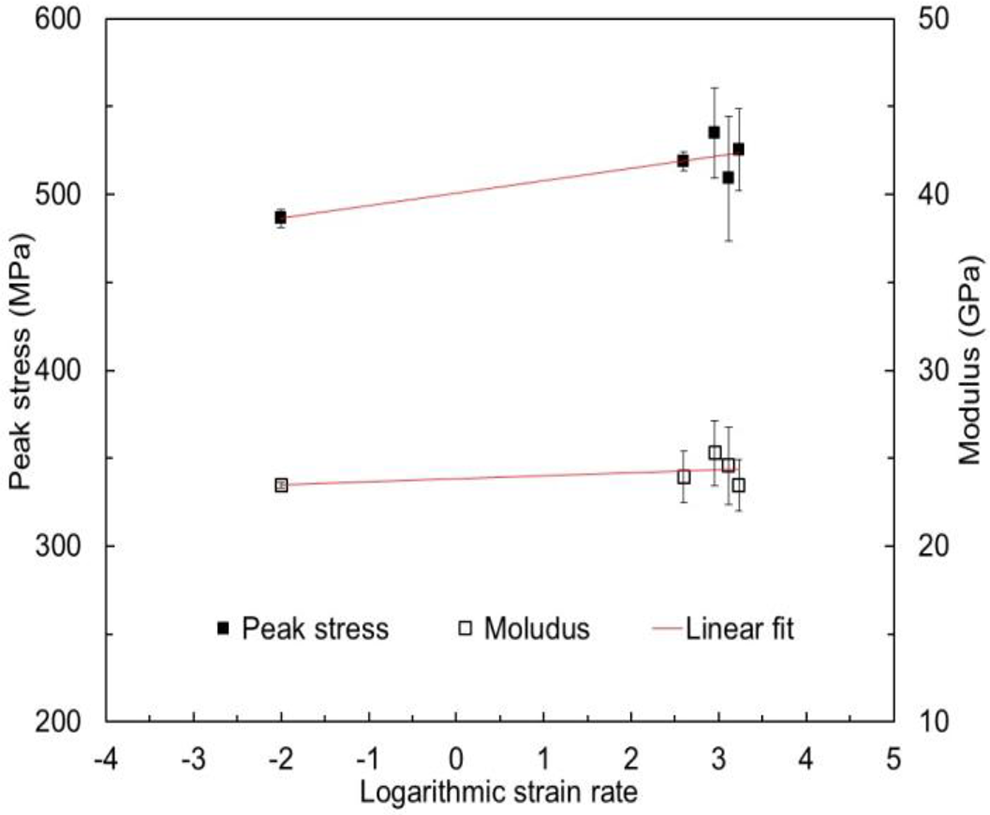
Variation regularity of the peak stress and modulus with logarithmic strain rate at the temperature of 298 K.
The SEM micrographs of typical fractured specimens after quasi-static and dynamic experiments are given to more intuitively understand the strain rate effect and failure mechanism of 4-harness satin weave composites, as shown in Figure 8. For quasi-static compression, the main failure modes of the composites are shear failure along the diagonal lines of the specimens. It can be seen from the partial enlarged view on the shear plane that the fracture surface is mainly shear fracture and splitting along the fiber bundle. SEM observations at higher magnification show that the fibers in the composites undergo shear fracture, and the fibers are debonded from the matrix. Under dynamic compressive condition, the observed results from the micrographs show that multiple delaminations with fiber breakage initiate at one side of loading faces and then gradually extended to the interior by longitudinal and transverse splitting. That is, longitudinal splitting and delamination mainly occur at one end of the specimen in contact with the incident bar are its major failure modes under dynamic loading. Moreover, the closer to the upper and lower surfaces perpendicular to the specimen loading surface, the delaminations are more serious due to larger deformation. It can be observed from SEM micrographs at higher magnification that for dynamic loading, the matrix in the composites undergoes shear failure, and the matrix close to the loading surface is crushed. Some fibers in the composites are torn under dynamic loading.
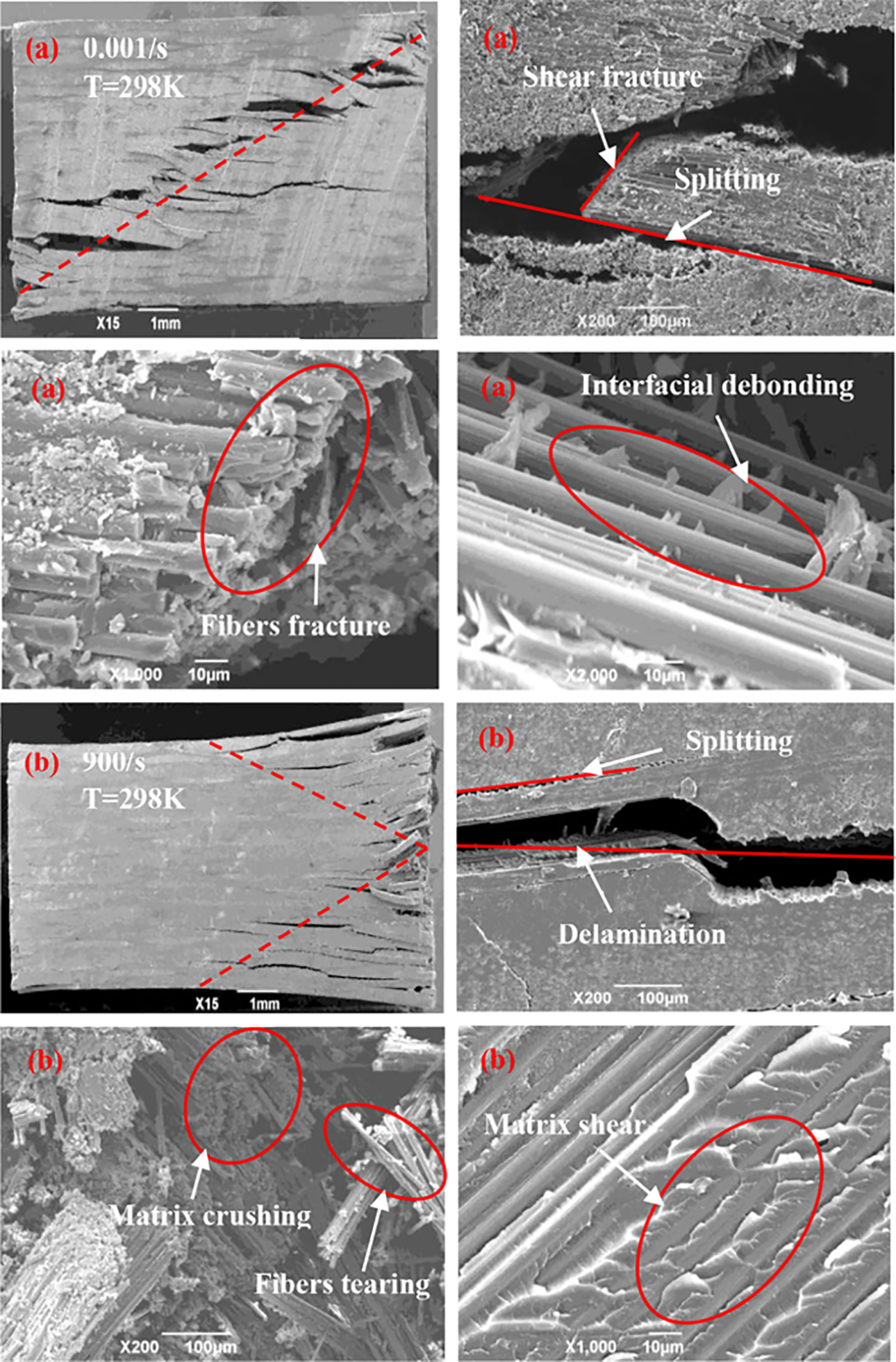
Comparison of SEM micrographs of typical fractured specimens after quasi-static and dynamic experiments.
Temperature effects on compressive properties
The temperature-dependent compressive stress–strain curves of the satin weave carbon/epoxy laminates with the strain rates of 400/s and 900/s are shown in Figure 9. The experimental results show the dynamic compressive stress–strain response of 4-harness satin weave composites at different temperatures exhibits the linear elastic characteristics up to the peak stress, and the dynamic stress decreases slowly after the peak stress. For a given strain rate, the stress value corresponding to the same deformation amount shows a decreasing trend as the temperature increases over the temperature range of 298–473K. In addition, the stress–strain behavior of the materials at different temperatures shows the change characteristics from fragility to ductility. The peak stress and elastic modulus of the materials as a function of temperature are given to further analyze the temperature-dependent mechanical properties of 4-harness satin weave composites, as shown in Figure 10. The results indicate clearly the peak stress and elastic modulus show decreasing trends along with the temperature increasing. Meanwhile, the peak stress and elastic modulus exhibit similar variation trajectory, that is, the peak stress and elastic modulus decrease slightly with the increasing temperature up to 423K, and then drop sharply at higher temperatures. Thus, the relationship of peak stress and elastic modulus with temperature can be expressed by the same type of function. Through the fitting analysis, it can be found that the peak stress and elastic modulus as a function of temperature can be described as the functional form of temperature shift factor a(T)

where C 1 and C 2 are material constants, and a(T) is the time–temperature shift function that depends on the current temperature and the reference temperature, T 0, of the materials. 19 The time–temperature shift function has been extensively studied in the constitutive modeling of coupled temperature. This function allows the mechanical properties of the materials in very short-time or extremely long-time tests at one temperature to be obtained from data at more reasonable times at other temperatures. 20 For the peak stress and elastic modulus, the specific function relationship can be obtained as follows:


where T 0 = 298K, σ p0 is the peak stress corresponds to the maximum stress of stress–strain curves at the reference temperature T 0, and E 0 is the elastic modulus at the reference temperature.
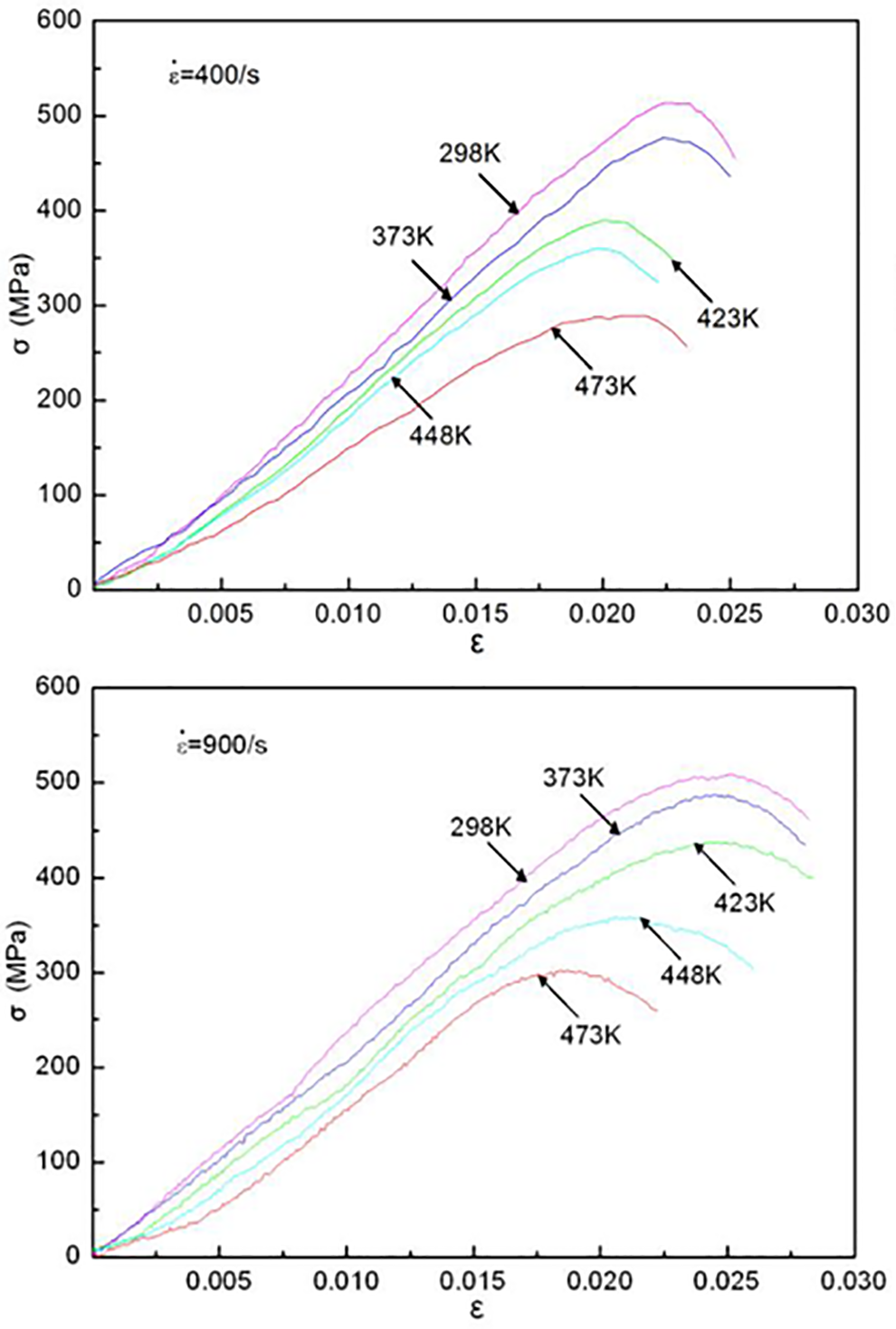
Uniaxial compressive stress–strain curves of composite laminates at different temperatures.
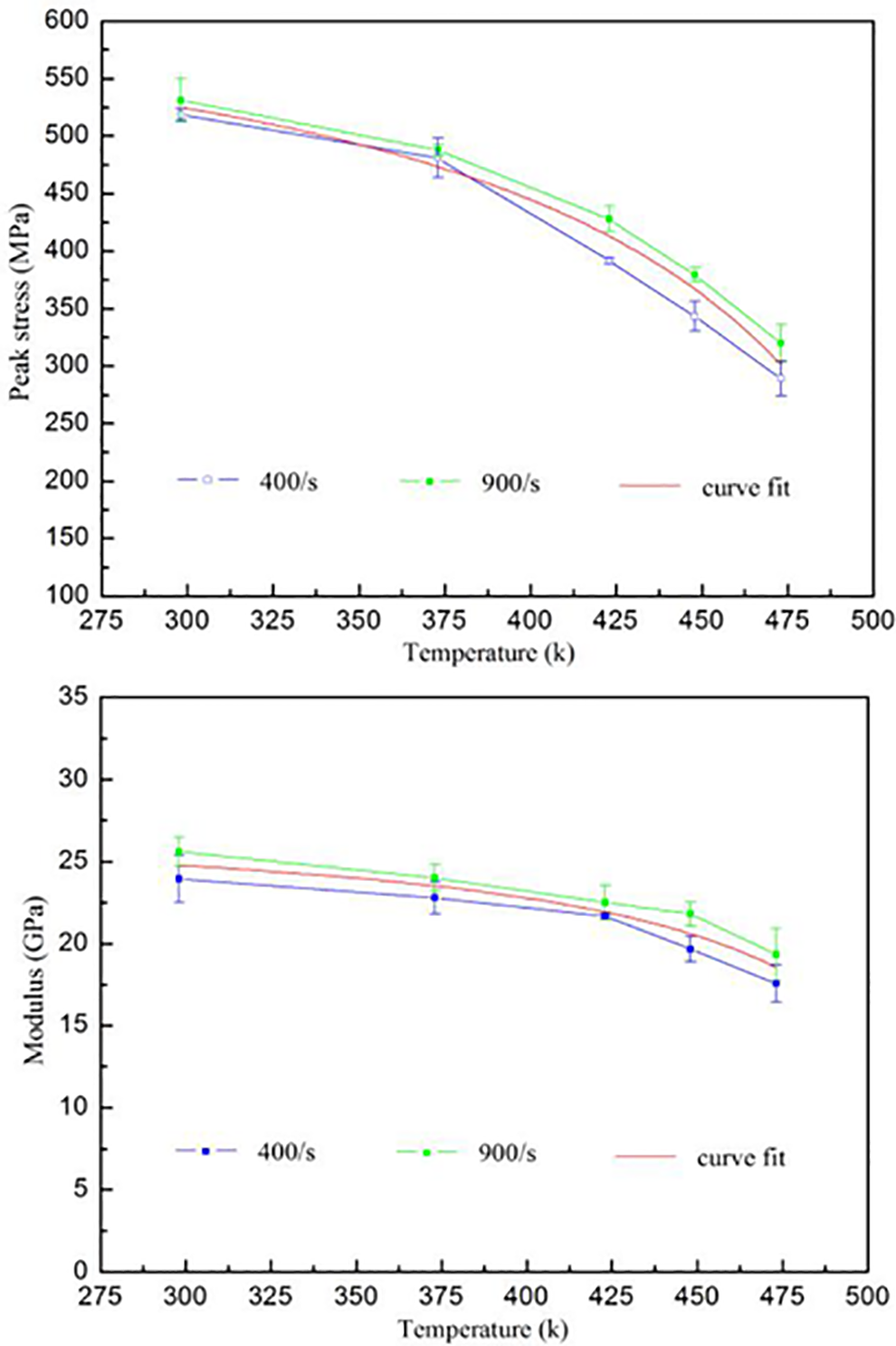
Comparison of the variation of the peak stress and elastic modulus with temperature.
The SEM micrographs of typical fractured specimens at the temperature of 423K are given to more intuitively understand the temperature-dependent failure mechanism of 4-harness satin weave composites, as shown in Figure 11. The previous analysis shows the main failure modes of 4-harness satin weave composites under quasi-static condition are shear failure along the diagonal lines of the specimens. It can be seen from Figure 11 that for quasi-static compression, the shear band of the composites after the high temperature gradually transfers inwards along the diagonal lines of the specimens. It can be observed by SEM micrographs at higher magnification that the fibers are peeled off from the matrix and undergo shear fracture. The matrix at high temperature becomes soften and shows the plastic shear failure feature. Under dynamic compressive condition, the main failure modes of the composites are multiple delaminations with fiber breakage and then gradually extended to the interior by longitudinal splitting. The longitudinal splitting of fractured specimens after the high temperature is more serious than that of fractured specimens at room temperature, but the delaminations close to surfaces are relatively reduced. SEM observations at higher magnification show that the fibers tearing and fracture are obvious. Moreover, the matrix undergoes obvious plastic deformation due to the couple of dynamic compression stress and high temperature.
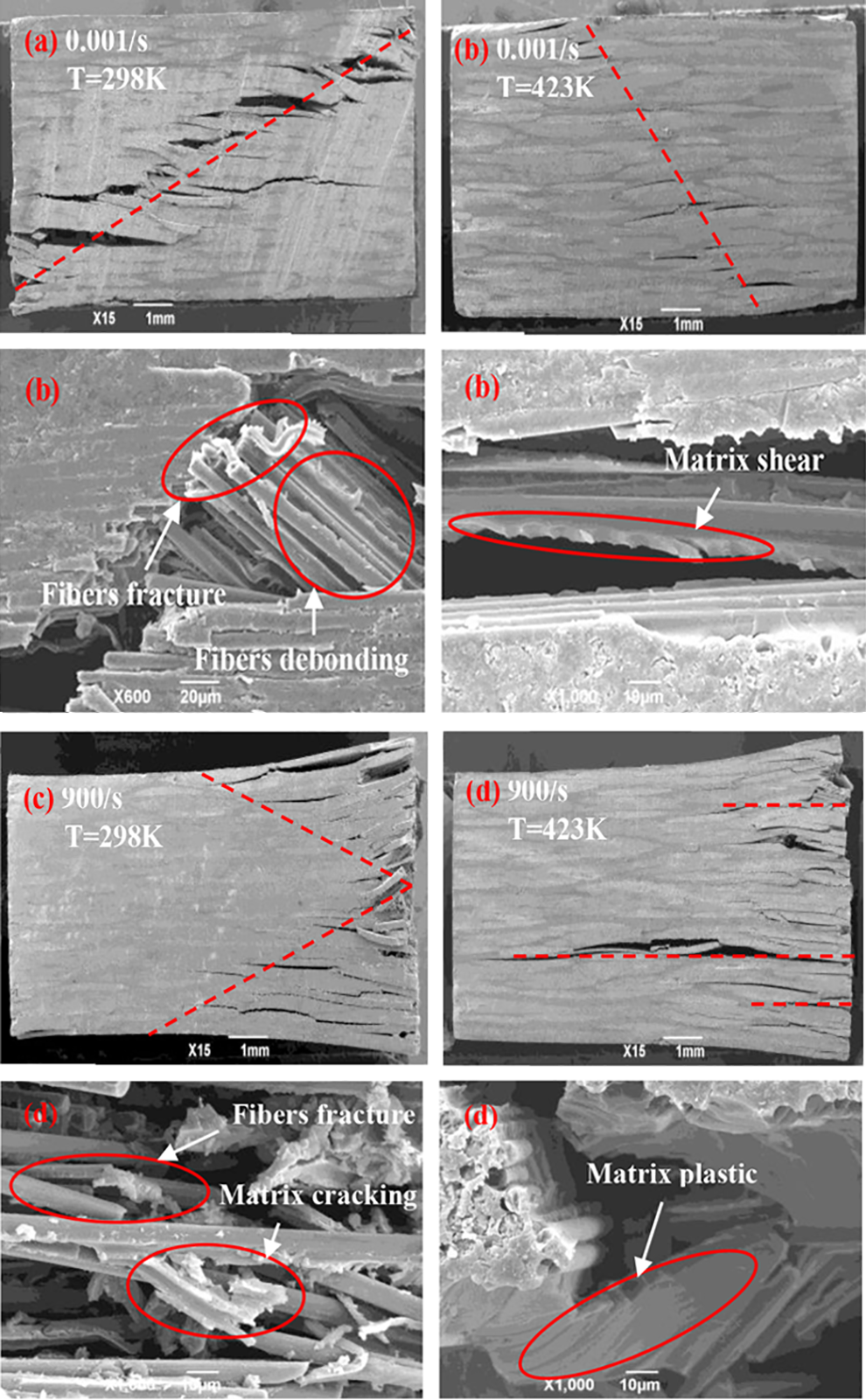
Comparison of SEM micrographs of typical fractured specimens at high temperature.
Theoretical model
To apply and disseminate this new type of composite materials, it is necessary to establish the constitutive model of the materials by numerical method. At present, some theoretical models for describing the mechanical behavior of composite materials were proposed in the literature. These theoretical models can be categorized into two major types. The first type is the macro-mechanical model based on the increment theory of elastic–plastic mechanics and viscoelastic mechanics. The representative works can be found in the literature by Werner, Daniel, and Thiruppukuzhi. 12,13,21 The second type is the micro-mechanical model based on the microstructure morphology of composite materials, such as typical models proposed by King, Wang, and Mandel. 3,14,22 Some relevant observations in “Experimental results and discussion” section indicate that the compressive stress–strain curves of 4-harness satin weave carbon/epoxy composites have the similar overall shape and share some key features, for instance, the nearly linear elastic characteristics before yielding. This indicates that the mechanical properties of this material can be described by a macroscopic mechanical model. In addition, it can be seen that the failure of this composites is mainly an accumulated result of elastic and plastic deformations by the previous analysis. Therefore, the theoretical model of 4-harness satin weave carbon/epoxy composites can be proposed based on the increment theory of elastic–plastic mechanics. In a general elastic–plastic mechanical response, the relationship between stress increment and strain increment can be expressed as

where

where

where f is the plastic potential energy function, λ is the plastic flow factor, and

where D is the combination coefficient of plastic increment. Simultaneously, equations (9)–(11) then yield

The previous researches of Daniel et al. and Thiruppukuzhi et al. 12,13 showed that the relationship between the effective plastic strain and effective stress can be expressed as follows:

where A and n are the material constants. Inserting equations (12) and (13) into equation (9) then yields

By substituting equation (14) in equation (8), the elastoplastic constitutive model for the total strain and stress increments can be obtained as follows:

In general, the plastic potential energy surface has the same shape as the yield surface. Therefore, the function of the yield surface can be used as the plastic potential energy function. Based on a modified Drucker and Prager yield criterion, 23 the yield function is taken as follows:

where α, β, and k are the positive constants at each point of the material, I 1 is the first invariant of principal stress tensor, and J 2 is the second invariant of stress deviation. The component form of the elastoplastic constitutive model can be given by substitution of equation (16) in equation (15)

The mechanical attributes of 4-harness satin weave composites under in-plane loading can be considered to be transversely isotropic based on its ply sequences. The principal stresses of the materials under uniaxial compression and tension can be expressed as

where σy is the axial stress of the materials under uniaxial loading. For the isotropic elastic-perfectly plastic materials, equation (16) can be further simplified as

Based on the plastic flow rule, the following relationships can be obtained

Thus, the combination coefficient of plastic increment can be calculated using the plastic flow rule

Considering the boundary conditions of sample cases, the constitutive relation of the composites under uniaxial compression and tension is given by substituting equations (19) and (21) in equation (17)

Integrating the incremental constitutive law from zero to the entire loading history then yields

The experimental observations in the previous section indicate that the mechanical behavior of 4-harness satin weave composites under uniaxial compression is dependent on the temperature, but is weaker dependent on strain rate. Therefore, the temperature-dependent effect of the materials should also be considered in the constitutive relationship. Through the previous analysis, it can be found that the peak stress and elastic modulus of the materials as a function of temperature can be expressed by equation (5). In the case of ignoring the transverse inertia effect in specimen, the stiffness tensor component C 11 is equal to the elastic modulus E of the materials under uniaxial compression. In addition, it can be known from the previous analysis that the stress in the phase of plastic deformation is mainly controlled by the parameter A. Therefore, the parameters C 11 and A in equation (23) are temperature dependent and can be expressed by equation (5)


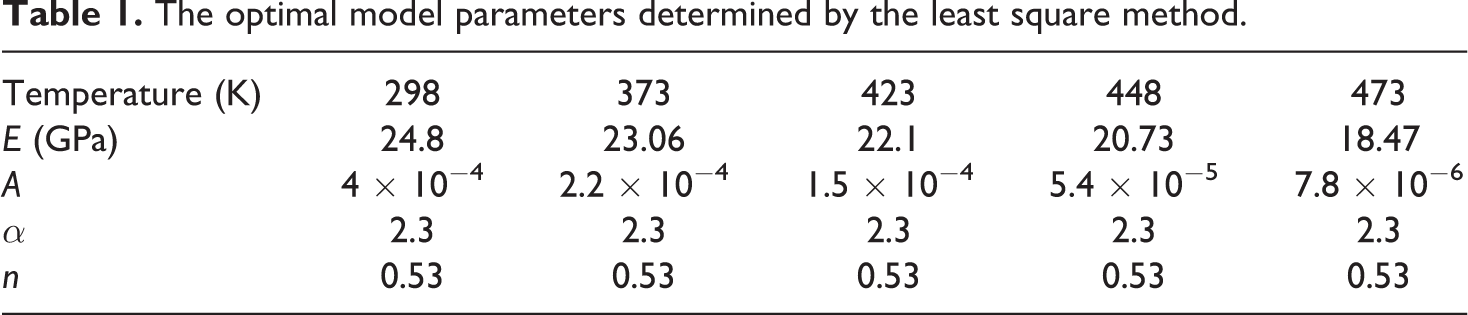
The constitutive equation with thermomechanical coupling effects of 4-harness satin weave composites can be obtained by substituting equations (24) and (25) into equation (23). The experimental results of the materials with the strain rate of 400/s and 900/s under different temperatures are used to verify the validity of the constitutive equation, as shown in Figure 12. The optimum parameter values determined by least square method are given in Table 1. The two coefficients of the temperature shift factor in equation (25) can be obtained by numerical fitting the values of parameter A in Table 1, as shown in Figure 13. Figure 12 shows that all theoretical curves give a reasonable fit to the experimental results, which indicates that the constitutive equation is suitable to describe the mechanical response of 4-harness satin weave composites at various temperatures.
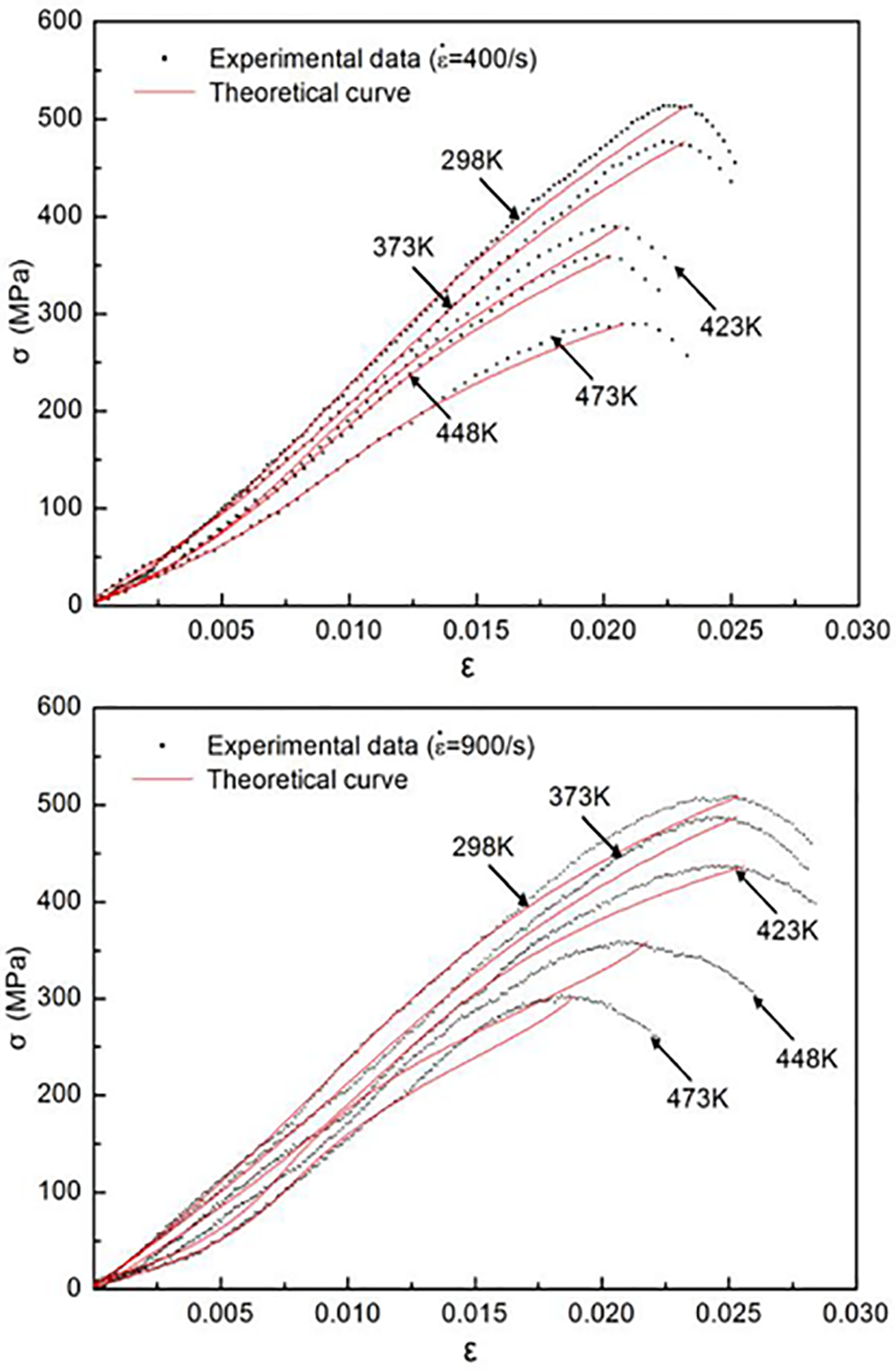
Comparison of experimental results and theoretical predictions for stress–strain curves under uniaxial compression at different temperatures.
The optimal model parameters determined by the least square method.
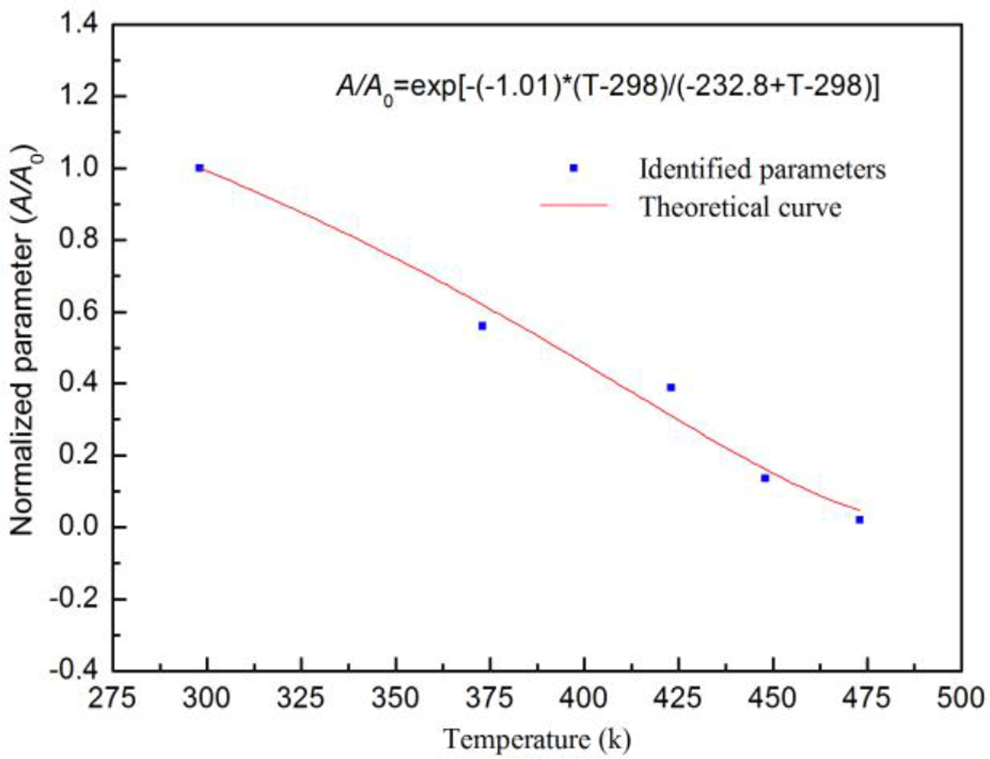
Temperature-dependence law of parameter A in the constitutive equation.
Conclusions
The experiment research on the quasi-static and dynamic mechanical properties of 4-harness satin weave composites are carried out by corresponding apparatus at the temperature range of 298–473K. The deformation mechanism and failure morphology of the materials are observed and analyzed by SEM micrographs. Based on the experimental data and the increment theory of elastic–plastic mechanics, an elastoplastic constitutive model describing the mechanical behavior of 4-harness satin weave composites is proposed in this article, which takes into account the effect of temperature. Findings of this study can be summarized as follows: The uniaxial compressive stress–strain behavior of 4-harness satin weave composites under in-plane loading is weakly sensitive to strain rate and behaves nearly linear elastic characteristics before failure. Its peak stress and elastic modulus with logarithmic strain rate have an approximately linear relationship. With the increasing of strain rate, there is a transition about failure modes caused by the variation in internal stress conditions, which further affect the variation in peak stress and modulus. The morphology examinations by SEM micrographs indicate that the main failure modes of 4-harness satin weave composites under quasi-static compression are shear failure along the diagonal lines of the specimens, while its main failure modes under dynamic loading are longitudinal splitting and delaminations. The uniaxial compressive mechanical properties of 4-harness satin weave composites are temperature dependent. For a given strain rate, the stress corresponding to the same deformation amount shows an increasing trend as the temperature decreases. The peak stress and elastic modulus of 4-harness satin weave composites have the trend of decrease with the increasing temperature due to the thermo-softening of polymeric materials. Its peak stress and elastic modulus with temperature can be expressed as the functional relationship of temperature shift factor. SEM observations show that the temperature is also an important parameter affecting the damage and fracture of the materials considering the variation in stress state at different temperatures caused by the variation of mechanical properties of component materials. For quasi-static compressive, the shear band of the composites after the high temperature gradually transfers inwards exhibiting a higher angle with respect to the loading direction. Under dynamic compressive condition, the longitudinal splitting of fractured specimens after the high temperature is more serious than that of fractured specimens at room temperature, but the delaminations close to surfaces are relatively reduced. A constitutive model with thermomechanical coupling effects is established to describe the temperature-dependent mechanical behavior of 4-harness satin weave composites. The experimental verification and numerical analysis show that the model can effectively predict the stress–strain behavior of 4-harness satin weave composites over a wide range of temperatures.
Footnotes
Declaration of Conflicting Interests
The author(s) declared no potential conflicts of interest with respect to the research, authorship, and/or publication of this article.
Funding
The author(s) disclosed receipt of the following financial support for the research, authorship, and/or publication of this article: This research work was supported by the National Natural Science Foundation of China (nos 11372255 and 11572261) and Innovation Foundation for Doctor Dissertation of Northwestern Polytechnical University (no. CX201609).