



Abstract
In this study, the effect of the temperature and talc concentration on the mechanical properties of the polypropylene (PP) + talc composite is analysed. Tensile, impact, bending and dynamic mechanical tests were carried out to evaluate the mechanical properties of PP + talc composite and to analyse the effect of temperature variation on these properties. The obtained results show that the temperature increase has a very negative effect on the mechanical strength of the PP–talc composite but it can be significantly reduced by the augmentation of the talc content.
Introduction
Polypropylene (PP) is one of the most widely used commodity thermoplastic polymers because of its high gloss, good chemical and heat resistance, besides its low density (0.9 g/cm3) and good mechanical properties. In terms of the consumption, it is the third mostly used polyolefin by volume. PP is synthesized through the polymerization of propene or pure propylene gas recycled from oil refineries or olefin manufacturing units. PP is characterized by its excellent electrical, insulating and moisture-proofing properties also. 1 –4
However, it is well known that low molecular weight of polymer could reduce its mechanical properties. Neat PP has low hardness and low operating temperature; therefore, materials with high molecular weight are usually added to it to improve its mechanical properties. The other advantage of PP is that it has good ability to be reinforced. Researchers introduced reinforcement to improve several of PP properties such as softening point, hardness, dimensional stability, barrier and membrane separation properties, flammability resistance, strength and thermal stability of polymers. To improve the physical properties of PP, such as impact and thermal resistance, formability, flexibility, manufacturability and resistance to atmospheric conditions, it is usually compounded and combined with different minerals such as talc, calcium carbonate, silica, mica or other compounds such as fibreglass, glass beads and ethylene propylene diene monomer (EPDM). 5 –10
Talc is a metamorphic hydrated magnesium silicate mineral (in sheets) with chemical formula as Mg3Si4O10(OH)2. The elementary sheet is composed of an octahedra layer of magnesium–oxygen/hydroxyl sandwiched between two tetrahedra layers of silicon oxygen. The basal surfaces of this elementary sheet do not contain hydroxyl groups or active ions, which explains the hydrophobic and inert character of the talc. Talc is practically insoluble in water, weak acids and bases. It is neither flammable nor explosive. Despite its very low chemical reactivity, talc has a marked affinity for some organic chemicals; it is in fact organophilic. Above 900°C, the talc progressively loses its hydroxyl groups, and above 1050°C, it re-crystallizes in various forms of enstatite (anhydrous magnesium silicate). The melting point of talc is 1500°C.
Talc is one of the mostly used reinforcements to improve the strength of PP. Talc provides many advantages to PP, such as increased stiffness and dimensional stability in automotive parts (under hood parts, dashboards, bumper interiors and exterior trim), home applications and home appliances. Advanced grinding technology is required to obtain the finest talcs without diminishing the reinforcing power of their lamellar structure.
The association PP and talc was the subject of several studies. 11 –15 In addition to the positive effect of the talc particles on the mechanical properties, these particles have also a beneficial effect on the macromolecular orientation of the PP. 11 The other advantages of the talc are that it is chemically inert and water repellent. This is why the use of the PP–talc composite in the food or cosmetic packaging can be very useful. It was shown that the talc particles improve the mechanical properties of the PP, such as impact resistance, if it is mixed with EPDM elastomeric. 16
In this study, we analysed experimentally the effect of the temperature and the filler content proportion on the mechanical properties of the PP–talc composite. We evaluated the PP–talc properties for different proportions of the filler material ranging from 5 to 50 wt.% and at temperature 20, 30 and 50°C.
Materials and experimental procedure
The material used in this study is Adstif HA840 R grade PP. It is a high-stiffness and high-gloss homo-polymer which is developed mainly for the use in stiff injection moulded articles where high rigidity is needed. Besides, they are used in house wares, domestic applications, packaging, and so on. No nucleating agent was added to this PP. The principal physical characteristics of the PP are as follows: density 0.9 g/cm3, melt flow rate (230°C/2.169 kg): 20 g/10 min. The Vicat softening temperature of neat PP is around 158°C. Romer machine of injection moulding was used for the elaboration of the micro composite. In order to improve the properties of PP, talc was added in different contents ranging from 5 wt.% to 50 wt.%. Fine powder was obtained from original talc powder with density of 2.78 g/cm3. Sedimentation analyses displayed an average particle size of 1 µm. Tensile specimens were prepared in accordance with ASTM D638 standards by injection moulding to achieve uniform dispersion of the talc in PP (see Figure 1). For specimen preparation, we used the test sample injection mould with six cavities. The mould has been specifically designed to produce a wide variety of test samples such as the dumbbell-shaped specimens for tensile test and impact test specimens, as well as spiral test specimens required for filling. For all configurations, we used the same injection machine with the same process parameters (screw diameter, injection speed, injection pressure). In order to be in the same configuration, we have used specimens after process stabilization subjected to 20 cycles.
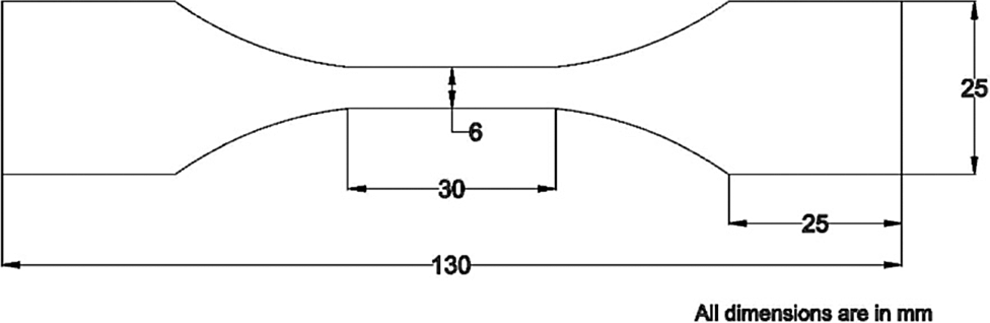
Geometry of the tensile test specimens.
Mechanical testing
Tensile tests
The tensile tests were carried out on a 25 kN capacity Zwick–Roller material testing system with variable speed control. This machine is equipped with thermal enclosure for temperature variation. During the tensile test, the dumbbell-shaped specimen is gripped at its two ends and is pulled to elongate at a determined rate to its break point. To elucidate the performance with respect to temperature, tensile tests were carried out on PP–talc composite specimens at different temperatures: 20, 30 and 50°C. The tests were performed at a tension velocity of 5 mm/min. Video extensometer was used to determine the strain of the specimen (see Figure 2). Stress–strain curves were plotted for different talc contents and different temperatures. Three parameters were determined from the stress–strain curves: elastic modulus, ultimate tensile stress and ultimate tensile strain.
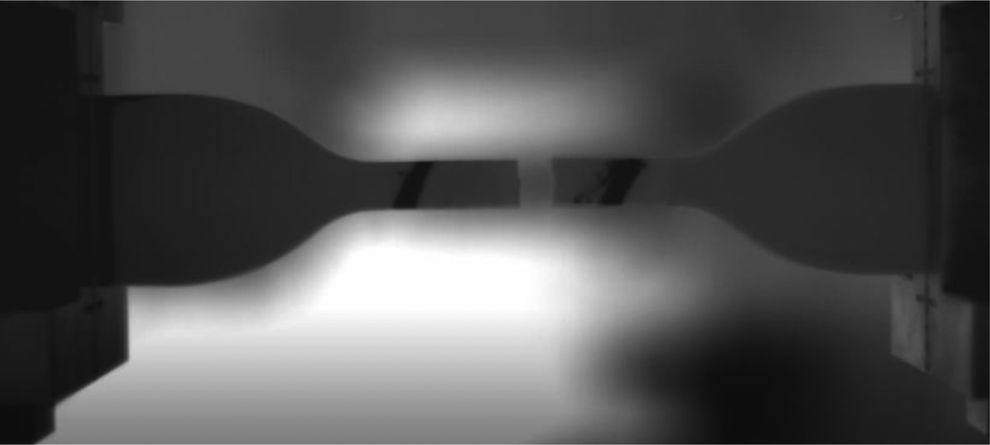
Image of the failed specimen with video extensometer.
Impact tests
To analyse the effect of the talc particles on the impact strength of the PP composite, we performed impact tests on PP–talc specimen at room temperature using Charpy tester for polymer in order. These tests were performed according to NF EN ISO 179 standards. The conditions of the impact test are as follows: Sample dimensions: 12 × 10 × 3 mm. Distance between support: 62 mm; angle: 150°. Impact speed: 3.5 m/s.
Three-point bending tests
Three-point bending tests were carried out at room temperature using Instron press machine with a special three-point bending assembly. These tests were performed according to NF EN ISO 178 standards. The experimental conditions are as follows: Size of the specimens: length = 120 mm, width = 10 mm and thickness = 3 mm. Distance between supports: 60 mm. Displacement speed: 2 mm/s.
From the bending tests, the load versus displacement curves were plotted for different talc contents and the flexural modulus of the PP and the PP + talc was calculated from the tangent of the load–displacement curve using the following expression:

where F is the load, Y is the displacement, D is the distance between support, b is the specimen width and h is the specimen thickness.
Dynamic mechanical analysis
For dynamic mechanical analysis (DMA), rectangular samples of 20 mm × 5 mm × 0.8 mm were used. Two materials were used in these tests: pure PP and PP with 30 wt.% of talc. DMA tests were carried out in RS3 analyser of TA instruments according to NF EN ISO 6721 standards. The temperature’s range over which the properties were measured was 25–120°C with a heating rate of 10°C/min. A gap of 15 mm was maintained and the maximal strain was recalculated for each material. From the DMA, we evaluated the storage modulus (E′) and the mechanical damping factor (tanδ)
Results and discussion
The principal disadvantage of the thermoplastic polymer is their low operating temperatures. In this study, we have investigated experimentally the effect of temperature on the mechanical properties of PP + talc composite. We have conducted tensile tests on samples of this composite under different temperatures and for different weight proportions of the talc. Before discussing temperature effect on this PP + talc composite, we first present its properties of at room temperature using three types of mechanical tests: tensile, impact and three-point bending tests. These tests allow us to analyse the effect of the talc particles on the mechanical properties independently from the temperature effect.
Mechanical properties at room temperature
Figure 3 presents the stress–strain curves of PP + talc composites at room temperature for different weight contents of the filler: 5, 10, 40 and 50 wt.% We have also presented the plots of pure PP as reference. From this figure, we can see that the presence of the talc in the polymer has significant influences on the mechanical properties. We can confirm that all of these properties are affected by the presence of the talc particles particularly the ultimate strain, which is highly reduced by the presence of the talc particles. For example, the ultimate strain of the unfilled PP is about 0.227 and the presence of 5 wt.% of talc reduces this property by 17%. With 50 wt.% of talc, the ultimate strain is reduced by 57% (see Figure 4).
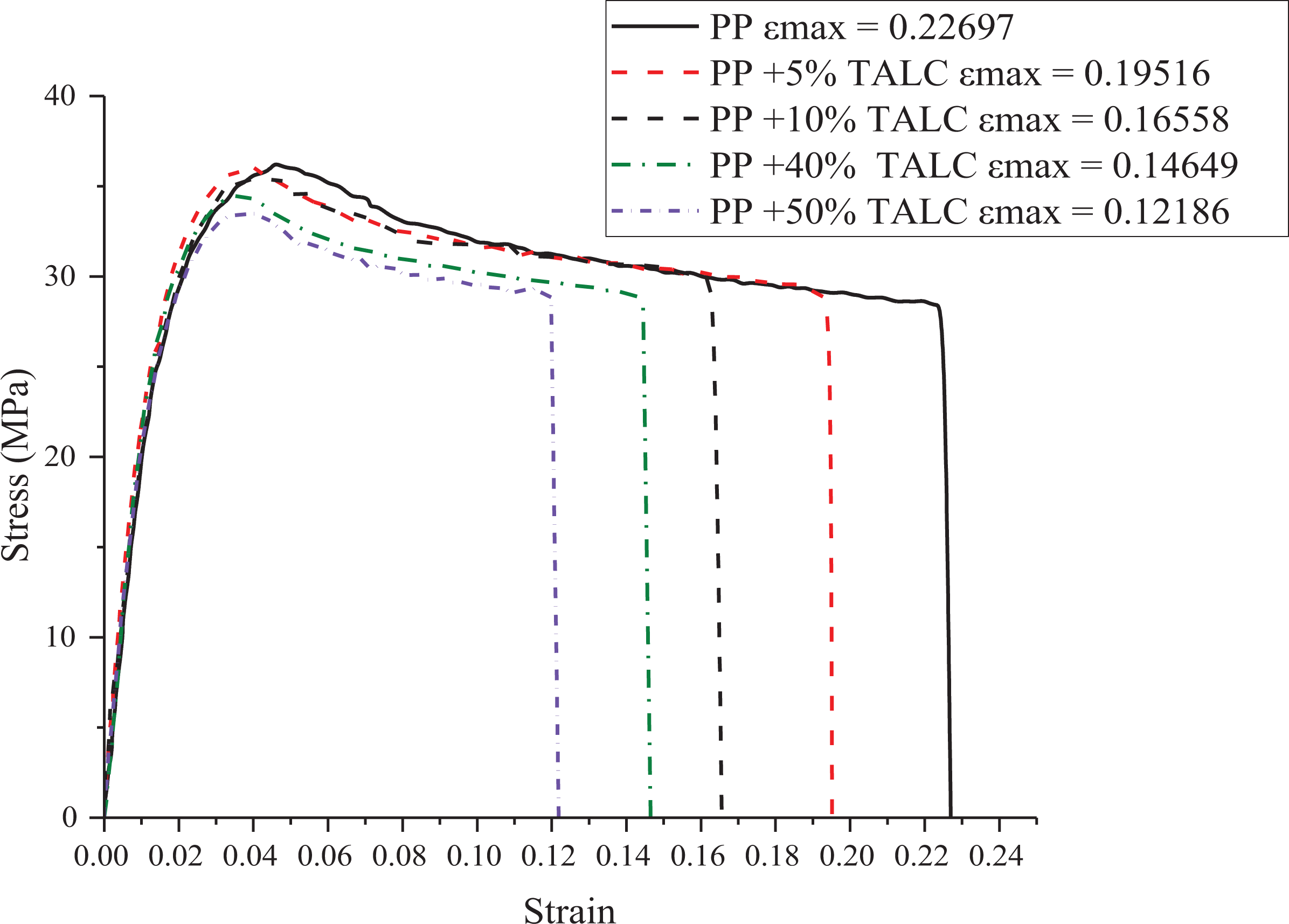
Stress–strain curves of PP–talc composite for different talc proportions at room temperature. PP: polypropylene.
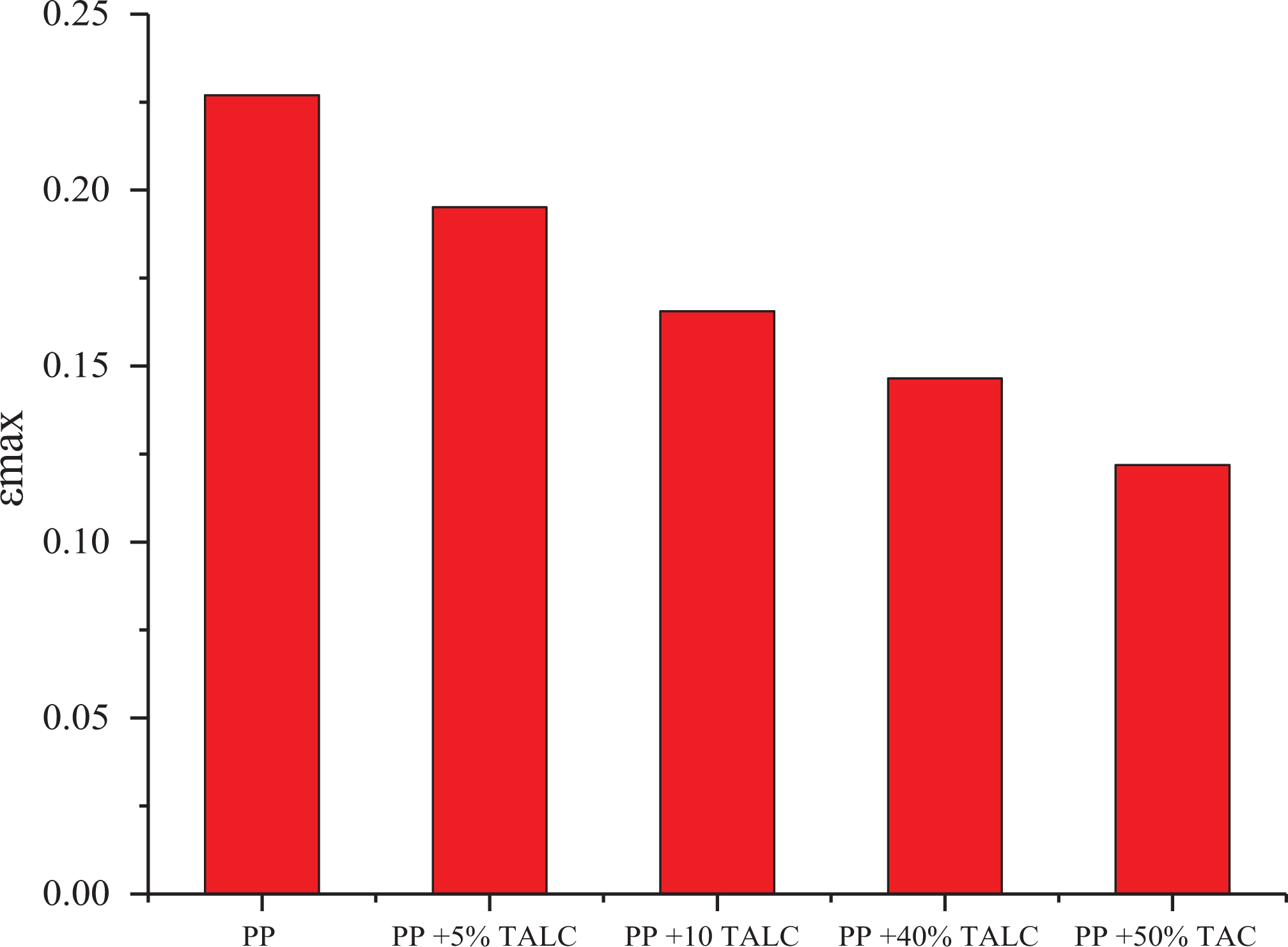
Ultimate strain of the PP + talc composite versus talc content. PP: polypropylene.
On the other hand, according to Figure 3, the presence of the talc also reduced the strength of the PP and the rate of this reduction depends on the talc content but it is less significant than that of the ultimate strain (see Figure 5). The reduction of the ultimate stress and strain by the talc is due to the high rigidity of the talc particles and to the less uniform distribution of the talc particles in the PP. The plasticity of the polymer is significantly reduced by the talc. The elastic modulus of the PP is increased by the talc particles, which confirm that the rigidity of the PP is improved by the addition of the talc particles.
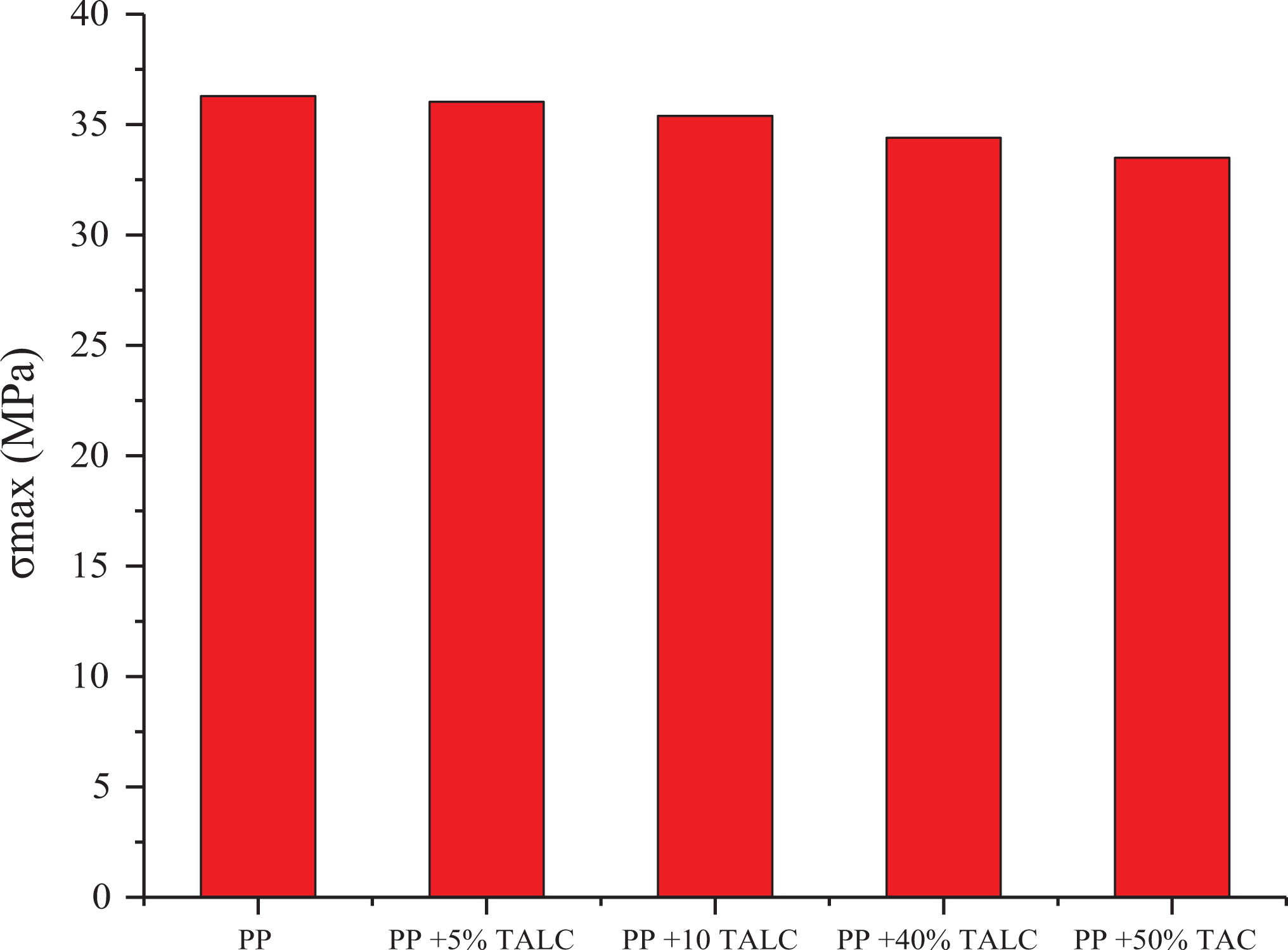
Composite strength versus talc content.
In order to highlight the effect of the talc on the impact strength of the PP specimen, we carried out impact tests on specimen in PP + talc and pure talc using Charpy tester. The objective of the impact tests is to determine the impact strength of the PP specimen for different talc contents. By repeating the tests, we observed a very large dispersion of the results as shown in Figure 6. We decided to perform six tests for each talc content (10, 20 and 30 wt.%) and to take the average value of the impact strength of the PP specimen of all six tests. Figure 7 presents the average impact strength as a function of the talc content. It can be noticed that the increase of the talc content reduces the impact energy of the PP and consequently, the impact strength will also be reduced. The average value of the impact energy is reduced from 2.6 J for the unfilled PP to 0.8 J for PP + 30 wt.% of talc, the rate of reduction is thus of 70%. The impact strength of the PP can be improved only if this polymer is mixed with an elastomeric material.
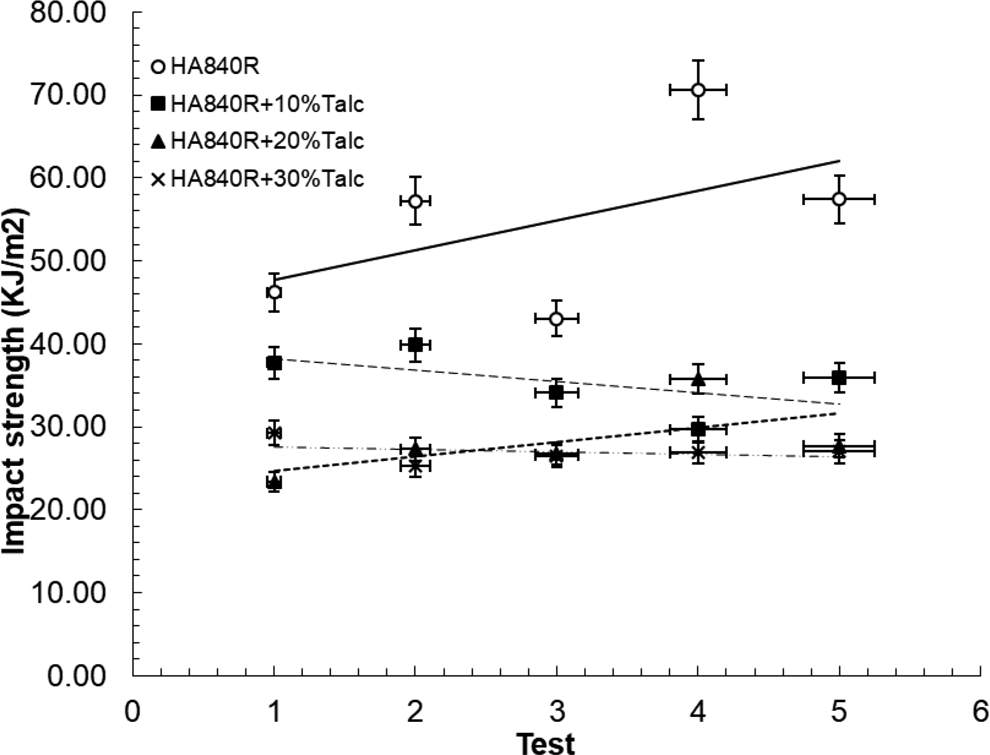
Dispersion of the results of the impact strength.
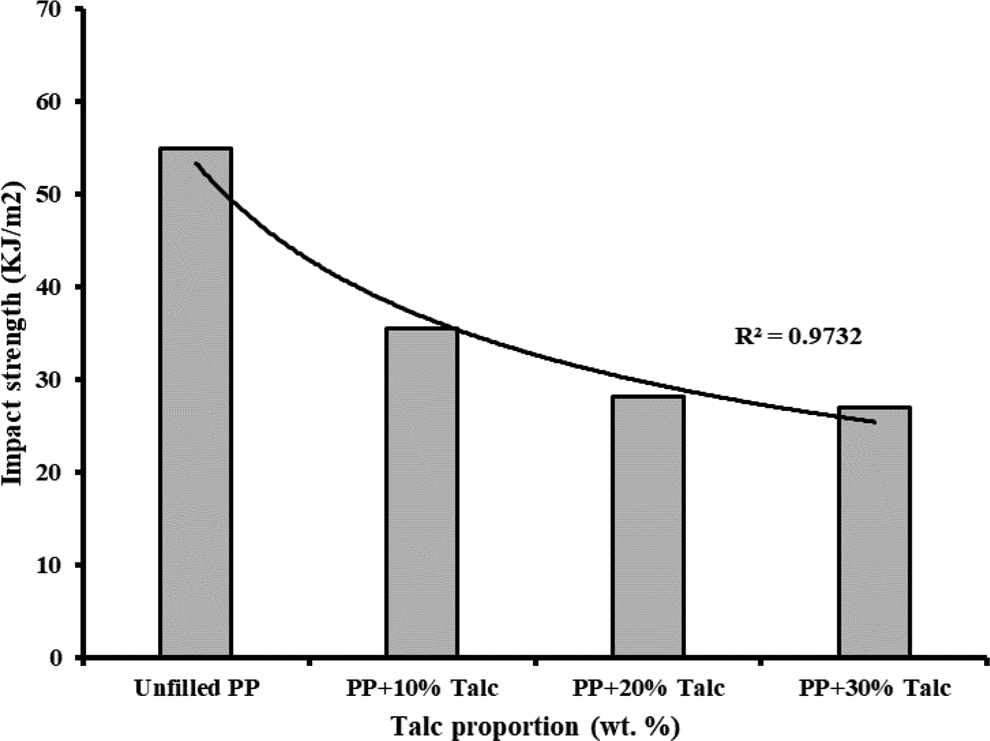
Average impact strength versus talc content.
Figure 8 presents the load–displacement curves of the bending tests for the pure PP and PP with 10, 30 and 40 wt.% of talc. From this figure, we can see that the presence of talc significantly affects the behaviour of the PP under bending loads. Indeed, the ultimate deflection is significantly reduced by the presence of the talc. The rate of reduction is about 40% between the pure PP and PP with 40 wt.% of talc. In addition, the flexural modulus is increased by the presence of the talc (see Figure 9). The modulus of elasticity increases from 1500 MPa for the pure PP to 2300 MPa for a talc content of 30 wt.%. The rate of increase is about 35%. We can thus conclude that the bending rigidity is highly improved by the presence of the talc particles.
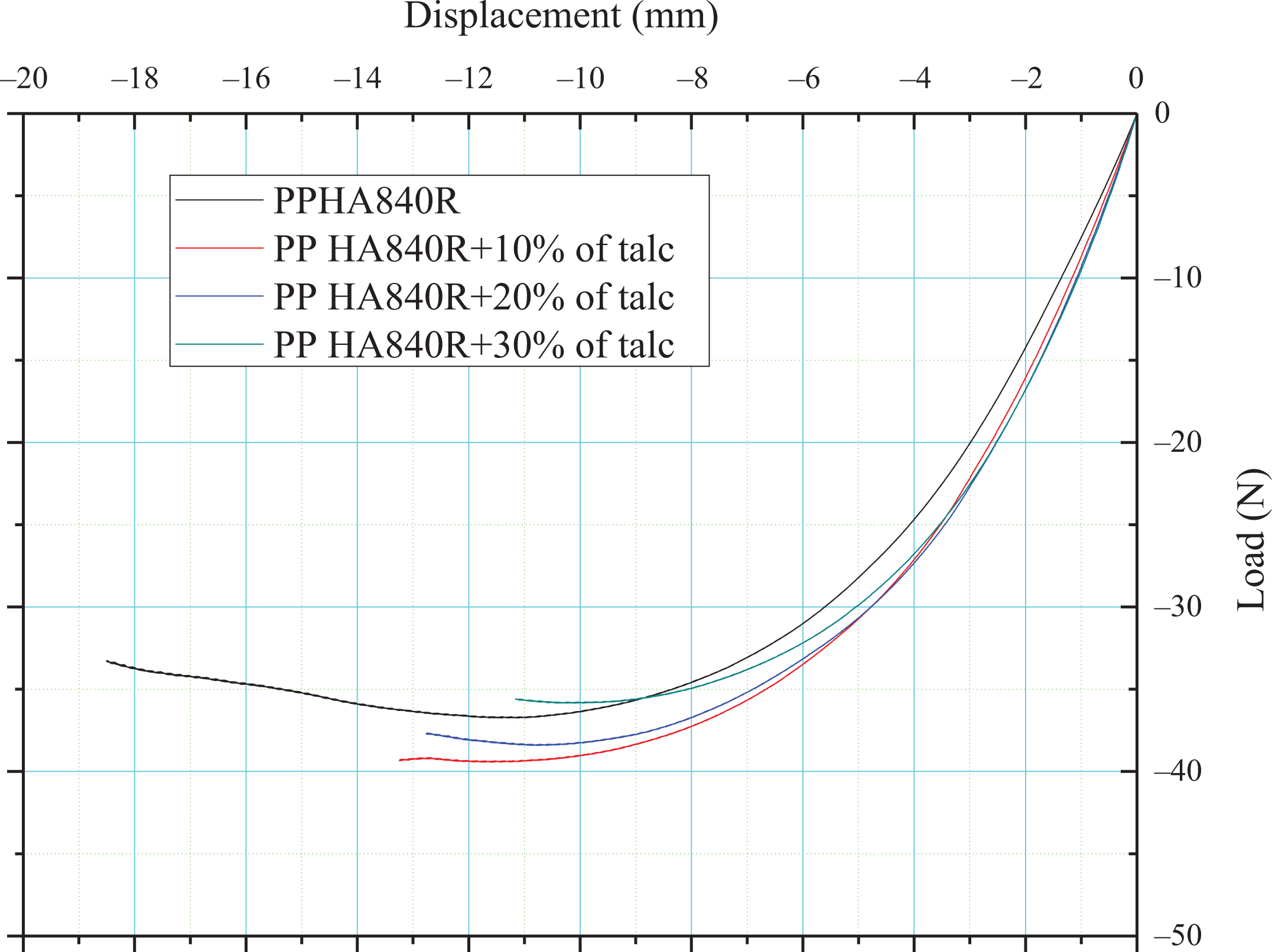
Load vs. displacement of three-point bending tests.
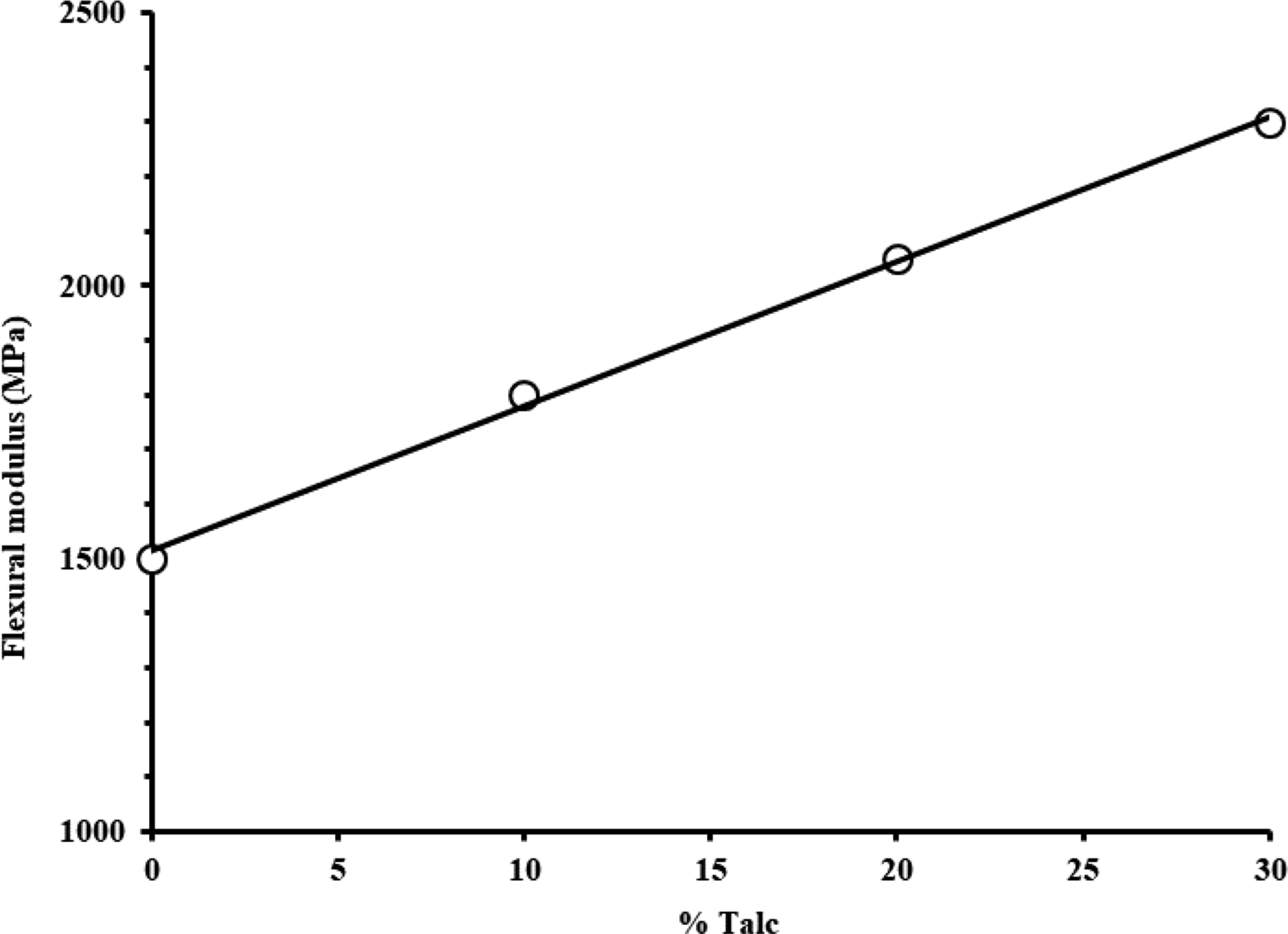
Flexural modulus versus talc content.
Effect of the temperature on the mechanical properties
Tensile properties
To achieve the objective of this work, we have carried out tensile tests on specimens with different talc contents at different temperatures of 20, 30 and 50°C, and for all tests the speed was 5 mm/min. We repeated each test three times. The differences in the measured strains between the three tests do not exceed 5%.
Figure 10 shows the stress–strain curve of the unfilled PP at different temperatures. We can see that the mechanical properties of the unfilled PP are affected by the temperature increase. The ultimate strain increases drastically with the temperature increase. The Young modulus of the unfilled PP is also reduced by the temperature increase. These results confirm that the mechanical properties of the PP are significantly affected by the operating temperature since the strength of this polymer drops with the temperature increase. The reinforcement of the PP with mineral particles can attenuate the temperature effect.
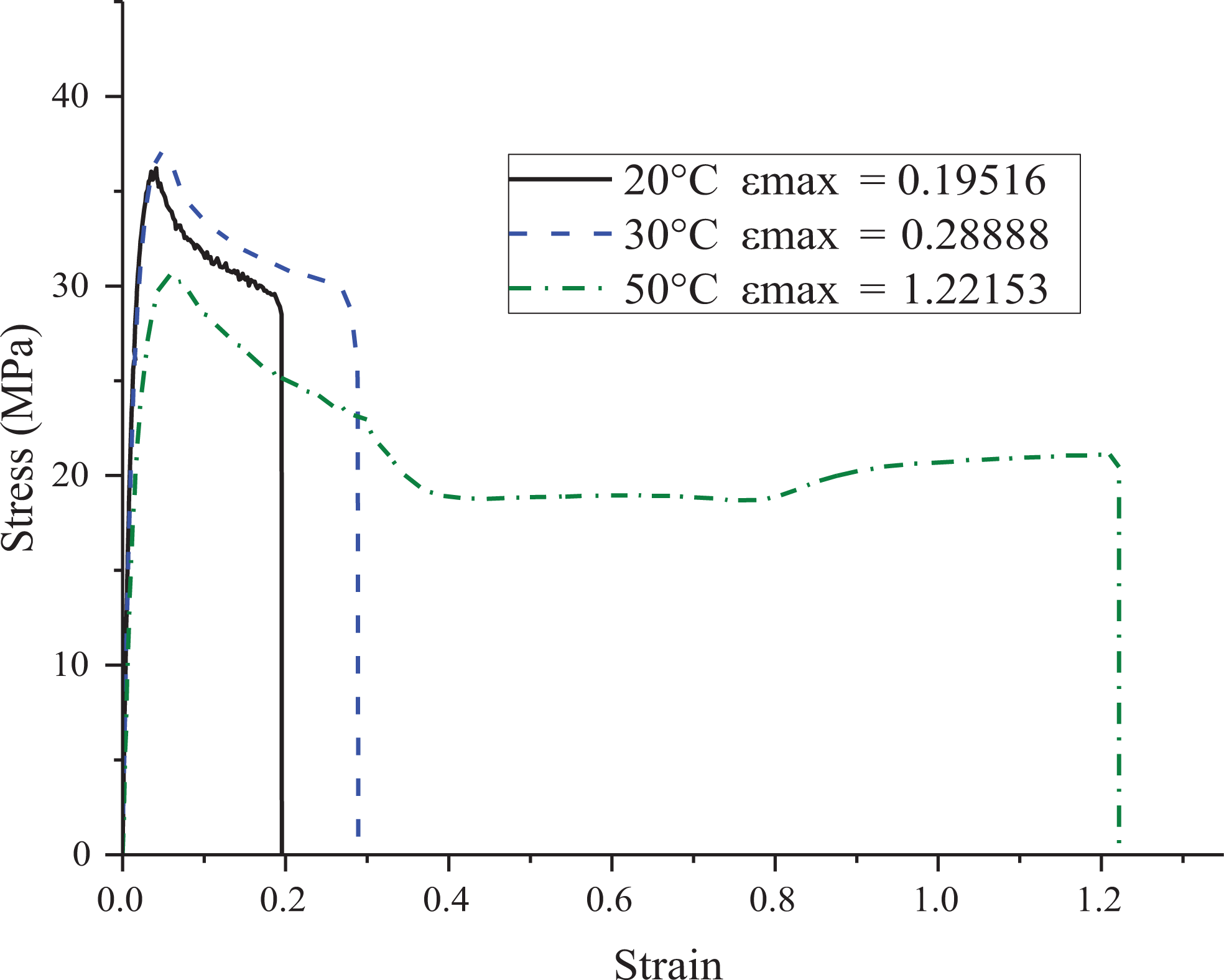
Stress–strain curves of the unfilled PP for different temperatures. PP: polypropylene.
Figure 11 presents the stress–strain curves of the PP+ 5 wt.% of talc at different temperatures. We can note that the temperature effect is attenuated for 5 wt.% of talc content but this proportion is not sufficient to give significant improvement of the mechanical properties of the PP with respect to the temperature increase.
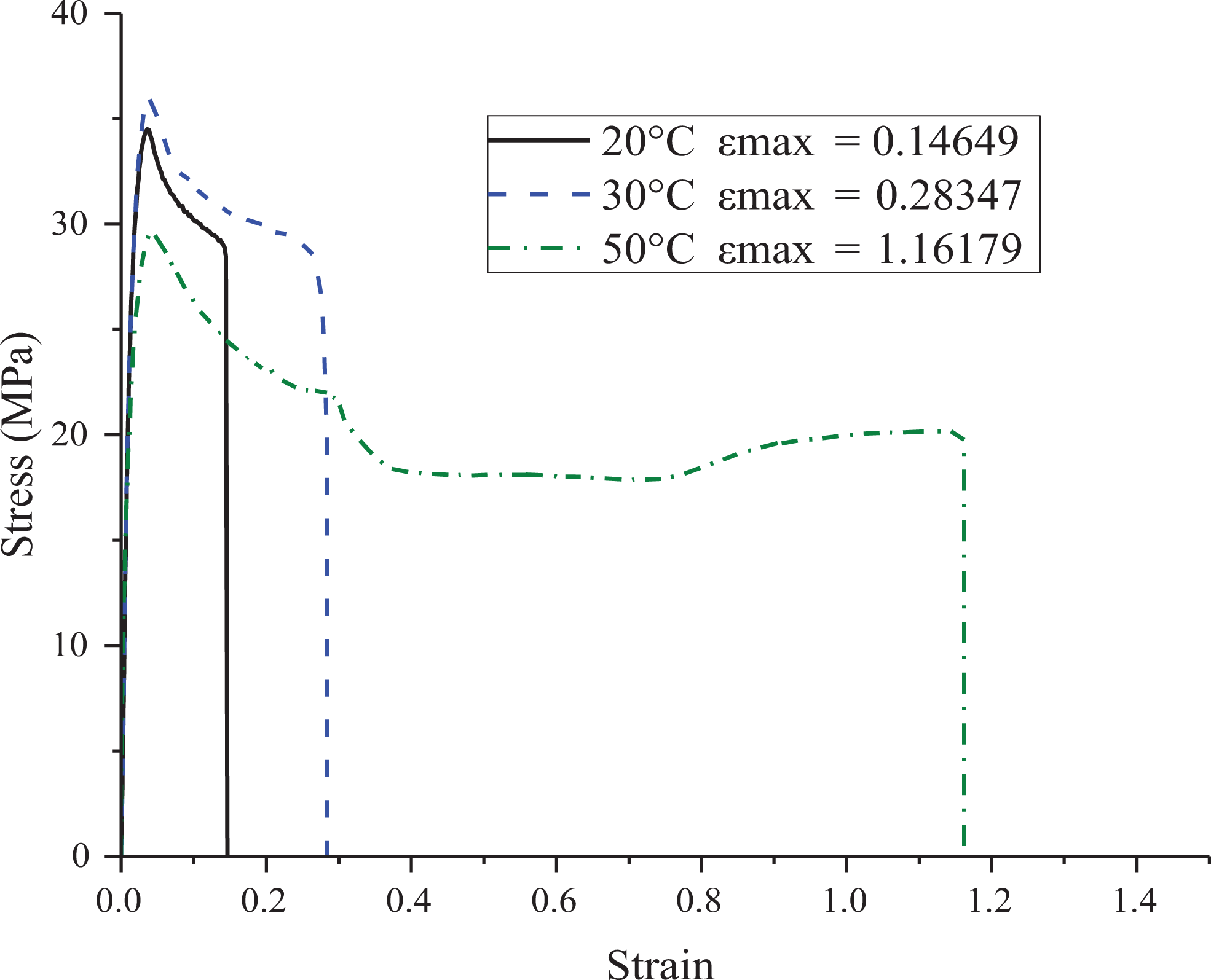
Stress–strain curves of the PP + 5 wt.% of talc for different temperatures. PP: polypropylene.
Figure 12 presents the stress–strain curve of the PP + 10 wt.% of talc at different temperatures. We can see that the increase of the talc content improves the mechanical strength of the PP despite of the temperature increase, the reduction of the ultimate strain. By further increasing the content of talc to 40 wt.% (Figure 13), we can observe an improvement of the strength of the PP even with the temperature increase. The strength of the PP is reduced when the operating temperature increases, and this reduction results in a reduction in the rigidity of the polymer. The reinforcement of the PP by particles of talc increases the rigidity of the polymer and reduces the negative effect of the temperature. This is because the talc is a mineral material, and its properties are not affected by temperatures close to 50° C.
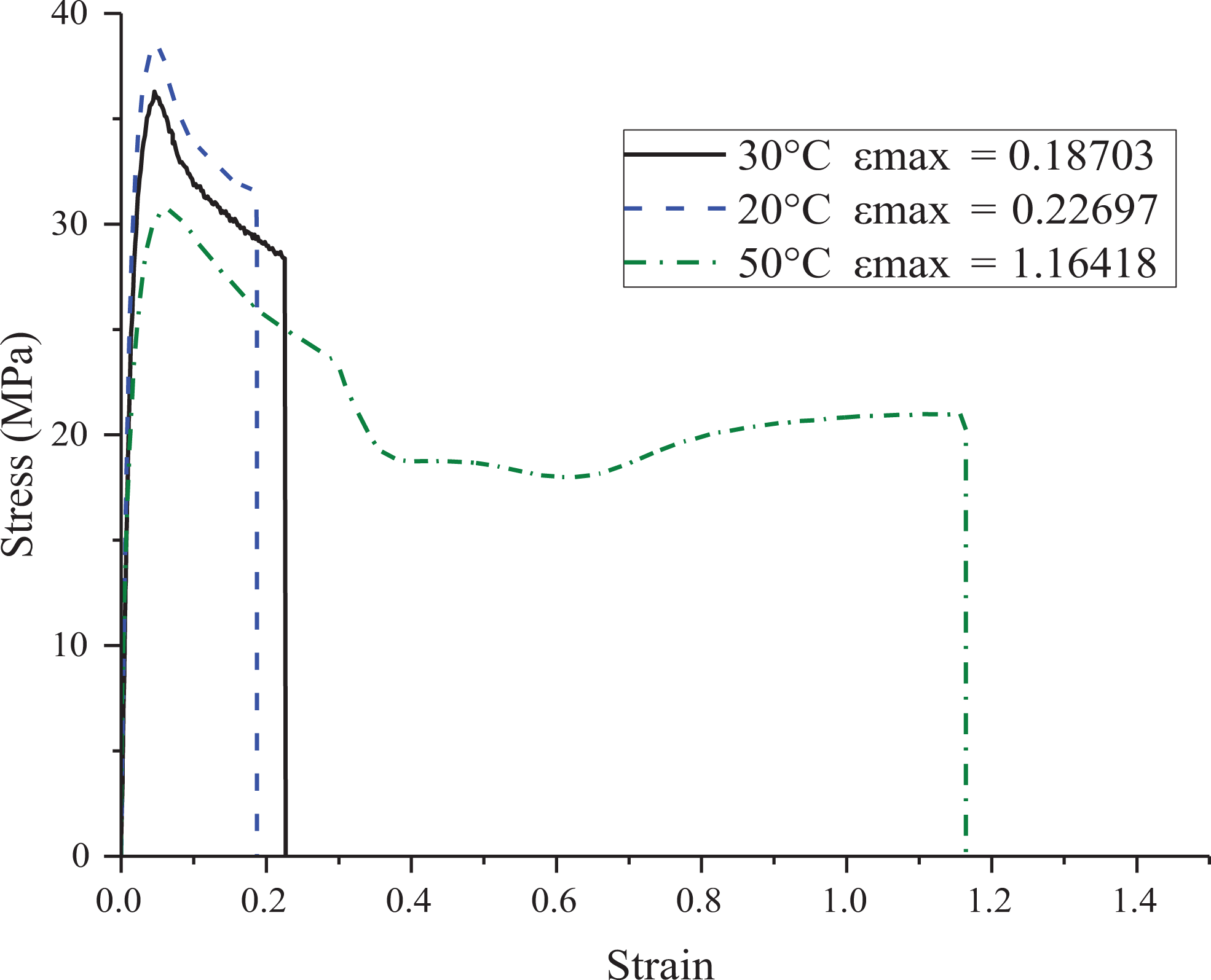
Stress–strain curves of the PP + 10 wt.% of talc for different temperatures. PP: polypropylene.
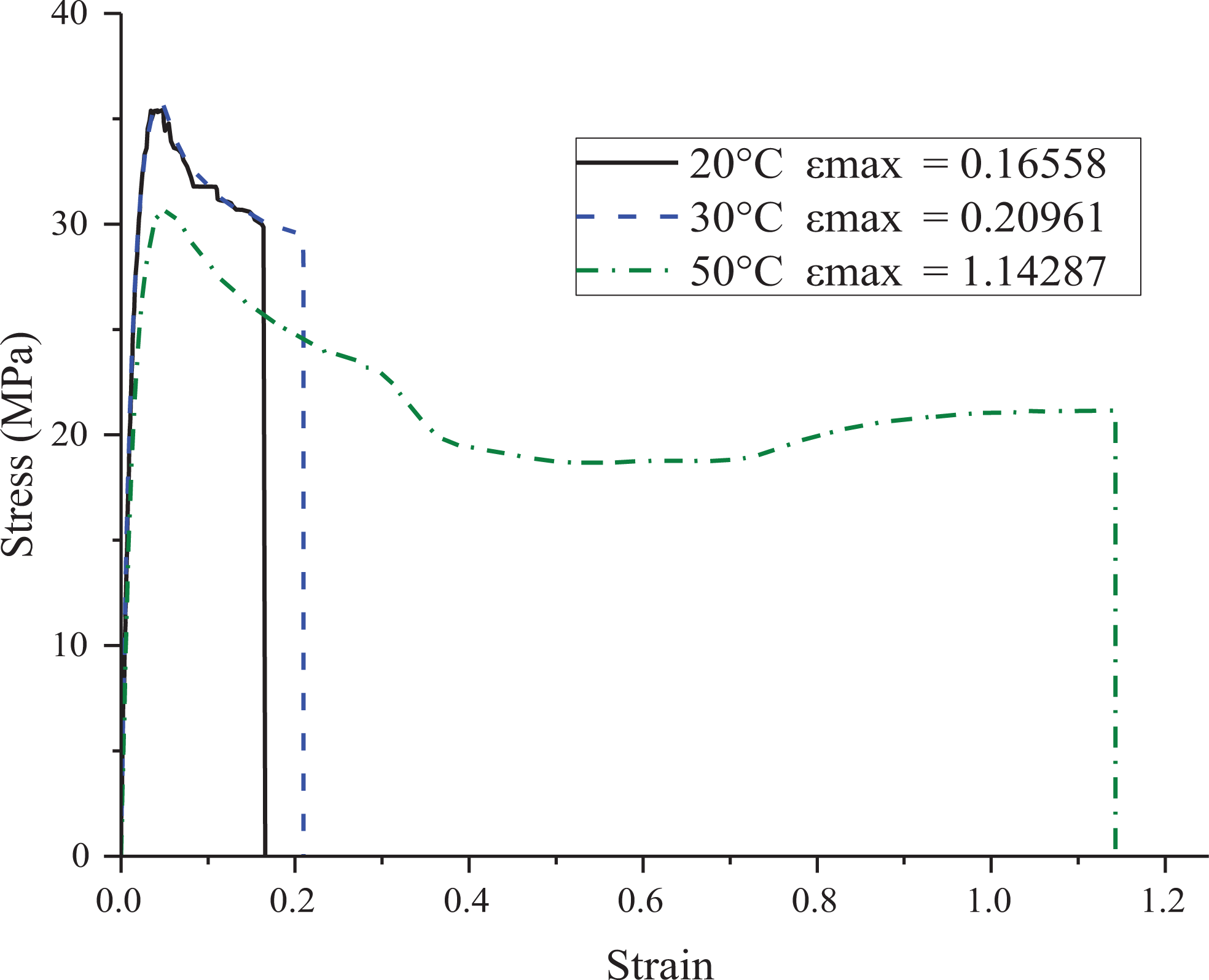
Stress–strain curves of the PP + 40 wt.% of talc for different temperatures. PP: polypropylene.
At 50 wt.% of talc (see Figure 14), the improvement of the mechanical strength of the PP is very significant. The ultimate strain is equal to 1.07 for this talc content at a temperature of 50°C, while the ultimate strain is greater than 1.2 for the unfilled PP at the same temperature. These results allow us to deduce that the presence of talc particles improves the use of the PP at higher temperature.
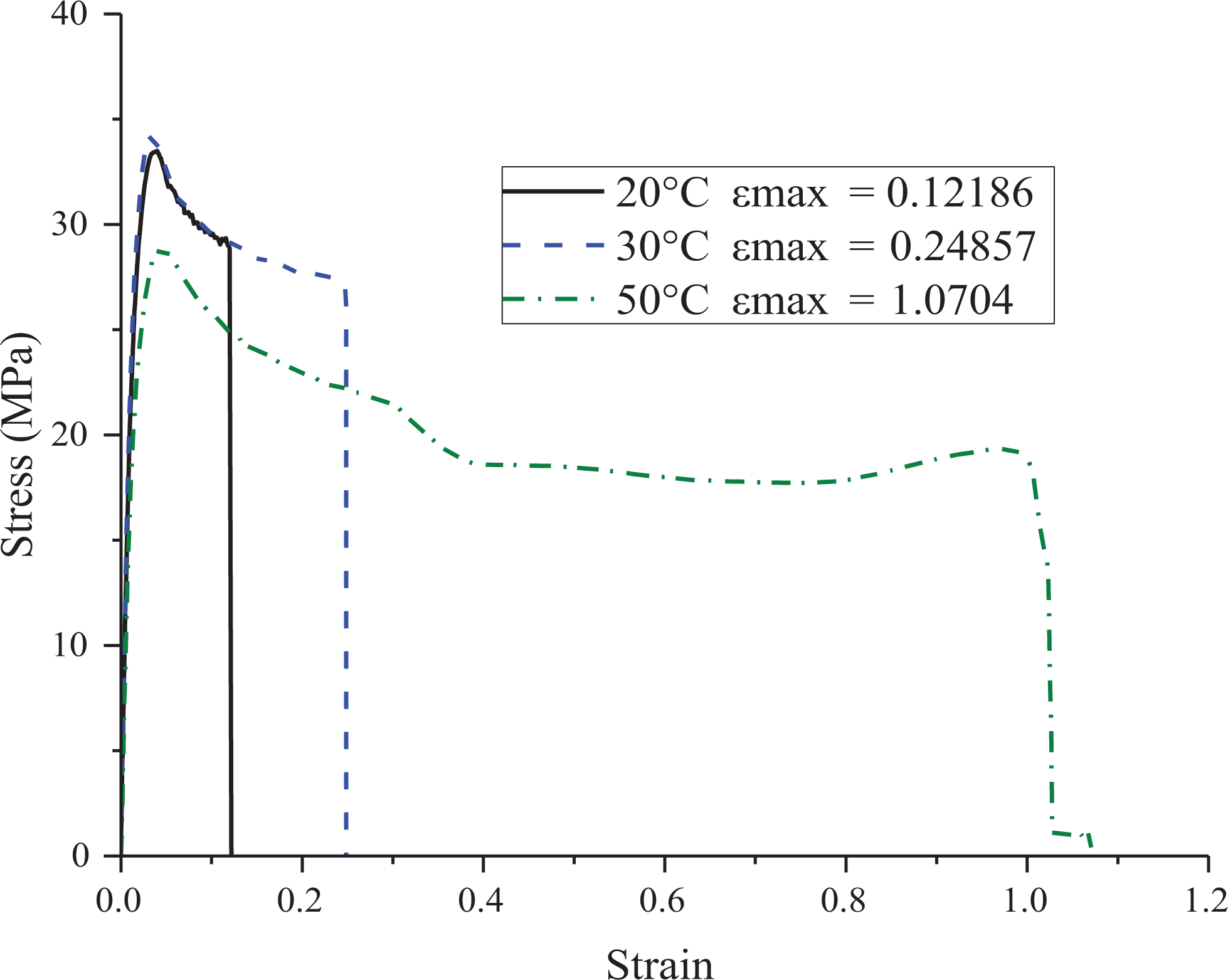
Stress–strain curves of the PP + 50 wt.% of talc for different temperatures. PP: polypropylene.
In order to clarify the combined effects of the temperature and the talc content on the mechanical properties of the PP–talc composite, we have extracted from the stress–strain curves the values of two parameters: the elastic modulus and the ultimate stress for different temperatures and different talc contents.
Figure 15 presents the variation of the Young modulus of the PP + talc composite as a function of the talc content for different temperatures. The elastic modulus of the composite increases with the increases of the talc content but it decreases as the temperature increases. However, the effect of the temperature on the variation of the Young modulus depends on the concentration the talc in PP. For example, the value of the elastic modulus of the pure PP at 20°C is 2034 MPa, the values of this modulus for the unfilled PP at 50°C is 1412 MPa, the relative difference between the two values is about 31%. With 50 wt.% of talc, the value of the Young modulus at 20°C is 2588 MPa, at 50°C this value is reduced to 2074 MPa, the relative difference is 8%. We can thus affirm that the presence of the talc improves the rigidity of the PP even as the temperature increase.
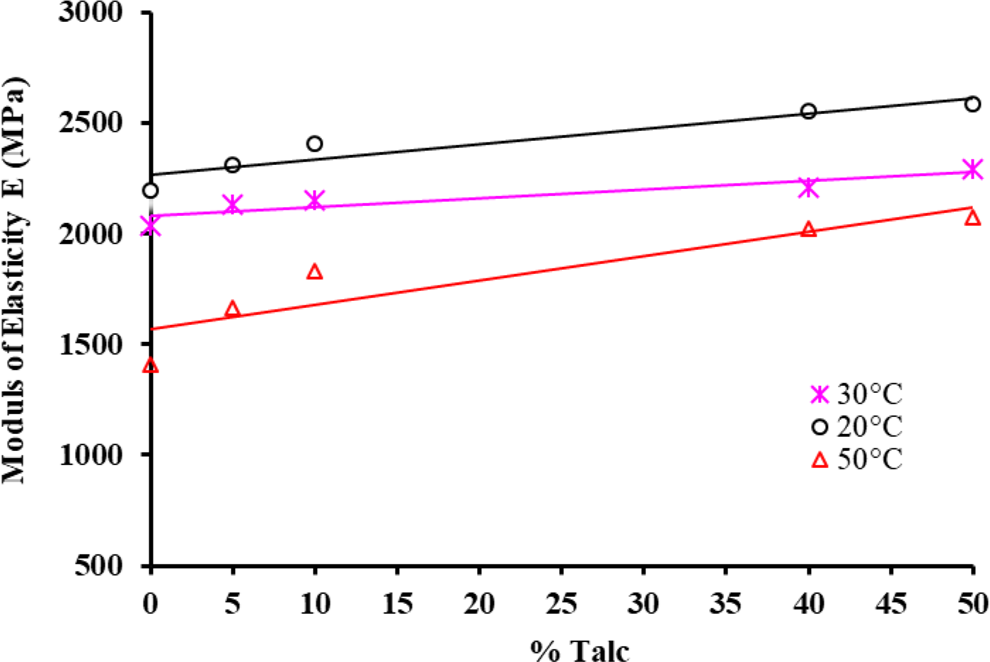
Young modulus versus talc content for different temperatures.
Figure 16 presents the variation of the ultimate stress of the PP–talc composite versus the talc content for different temperatures. The talc particles reduce the ultimate stress of the PP; this is because of the high rigidity of these particles. The temperature increase also reduces the ultimate stress of the PP but this reduction is sensible only between the temperature of 20°C and 50°C. The values of the ultimate stress are approximately the same for T = 20°C and T = 30°C. However, we can observe in Figure 16 that of reduction of the ultimate stress by the temperature is attenuated as the talc content increases. For example, the value of the ultimate stress of the pure PP at 20°C is 38 MPa and its value is 30 MPa for the pure PP at 50°C, the relative reduction of the ultimate stress is about 21% between 20°C and 50°C. For the case of PP with 50 wt.% of talc, the ultimate stress is 33 MPa at 20° C and 28 MPa at 50°C, the relative difference is 15%. The negative effect of the temperature is also reduced for the ultimate stress of the composite.
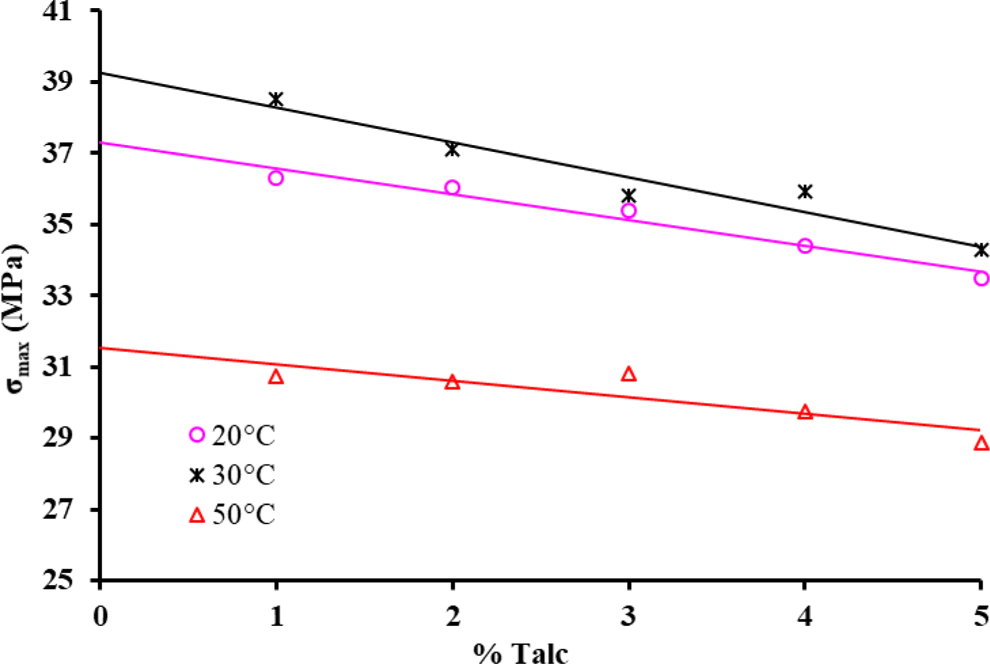
Tensile strength versus talc content for different temperatures.
Dynamic mechanical properties
The dynamic mechanical properties of a material depend on the temperature and frequency. As a general rule, dynamic measures are carried out in a frequency range at constant temperature or with a temperature range at constant frequency. In this work, the dynamic mechanical properties are at constant frequency. Thermo-mechanical properties of the samples were determined by DMA of 25°C to 80°C with a heating rate of 10°C/min at a frequency of 5 Hz.
Figure 17 presents the variation of the storage modulus (E′) as a function of the temperature for pure PP and PP with 30 wt.% of talc. This modulus represents the rigidity and the elastic component of the material. It expresses the capacity of the body to store the mechanical energy of the stress and to restore it integrally in the form of elastic deformation (notion of reversibility). From Figure 17, we can note that the presence of the talc improves the storage modulus whatever the temperature. In general, and whatever the temperature, the storage modulus is almost doubled when the PP is filled with 30 wt.% of talc. These results confirm that the presence of talc improves the rigidity of the PP.
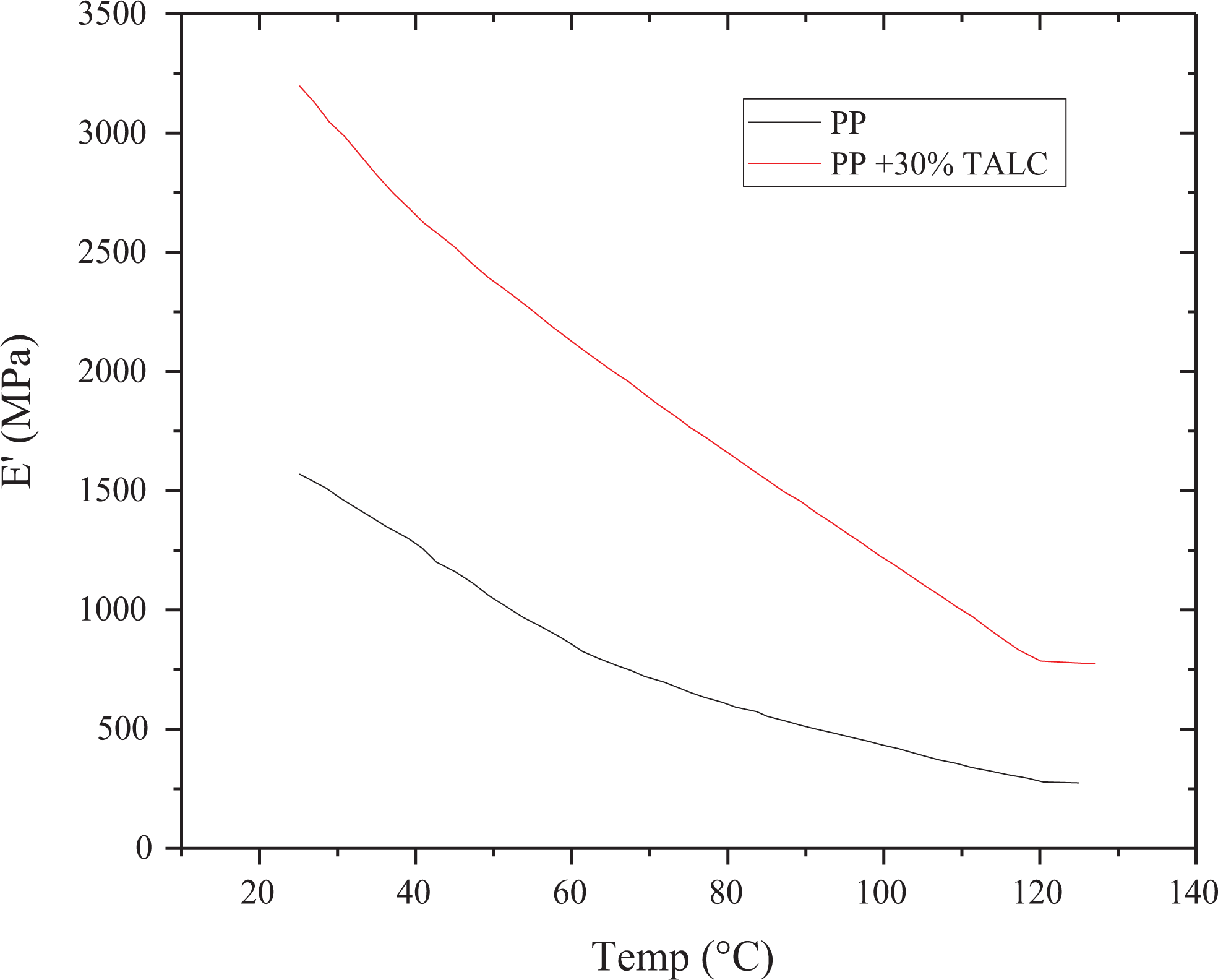
Storage modulus versus temperature.
Figure 18 presents the variation of the mechanical damping factor (tanδ) as a function of the temperature for pure PP and PP with 30 wt.% of talc. The mechanical loss angle (or damping factor) tanδ is a measure of the ratio of the energy dissipated by damping (E′′) to the elastic energy conserved and then restored during a sinusoidal deformation cycle (E′)
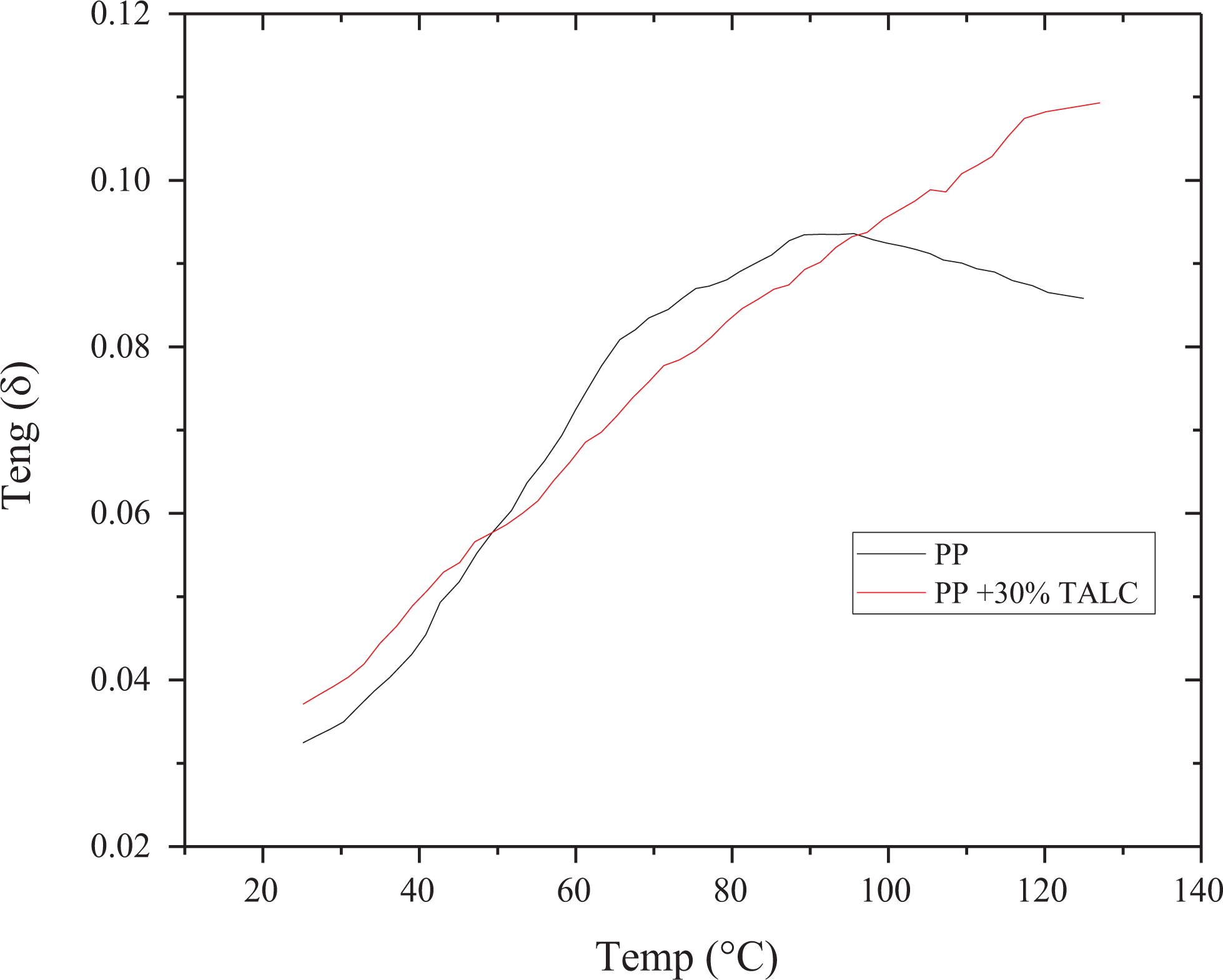
Damping factor versus temperature.

The damping factor measures the damping during dynamic deformation, that is, the capacity of the visco-elastic body to dissipate mechanical energy into heat. Higher tanδ leads to greater vibration damping. We can see in Figure 18 that the damping factor is not significantly affected by the presence of the talc. Indeed, except for higher temperatures (T > 100°C), the damping factor is about the same for pure PP and PP + 30 wt.% of talc. We can thus deduce that with the presence of talc the storage modulus (E′) increases and the loss modulus E′′ decreases with the same proportion (see Figure 19) which means their ratio (tanδ) remains almost unchanged. The loss modulus E′′ represents the viscous component of the material. Viscosity reflects its ability to dissipate mechanical energy (irreversibly lost in the form of heat). This phenomenon is associated with the friction of chains of molecules and their flow. The presence of talc improves the storage modulus and at the same time increases the dissipation of energy in the material.
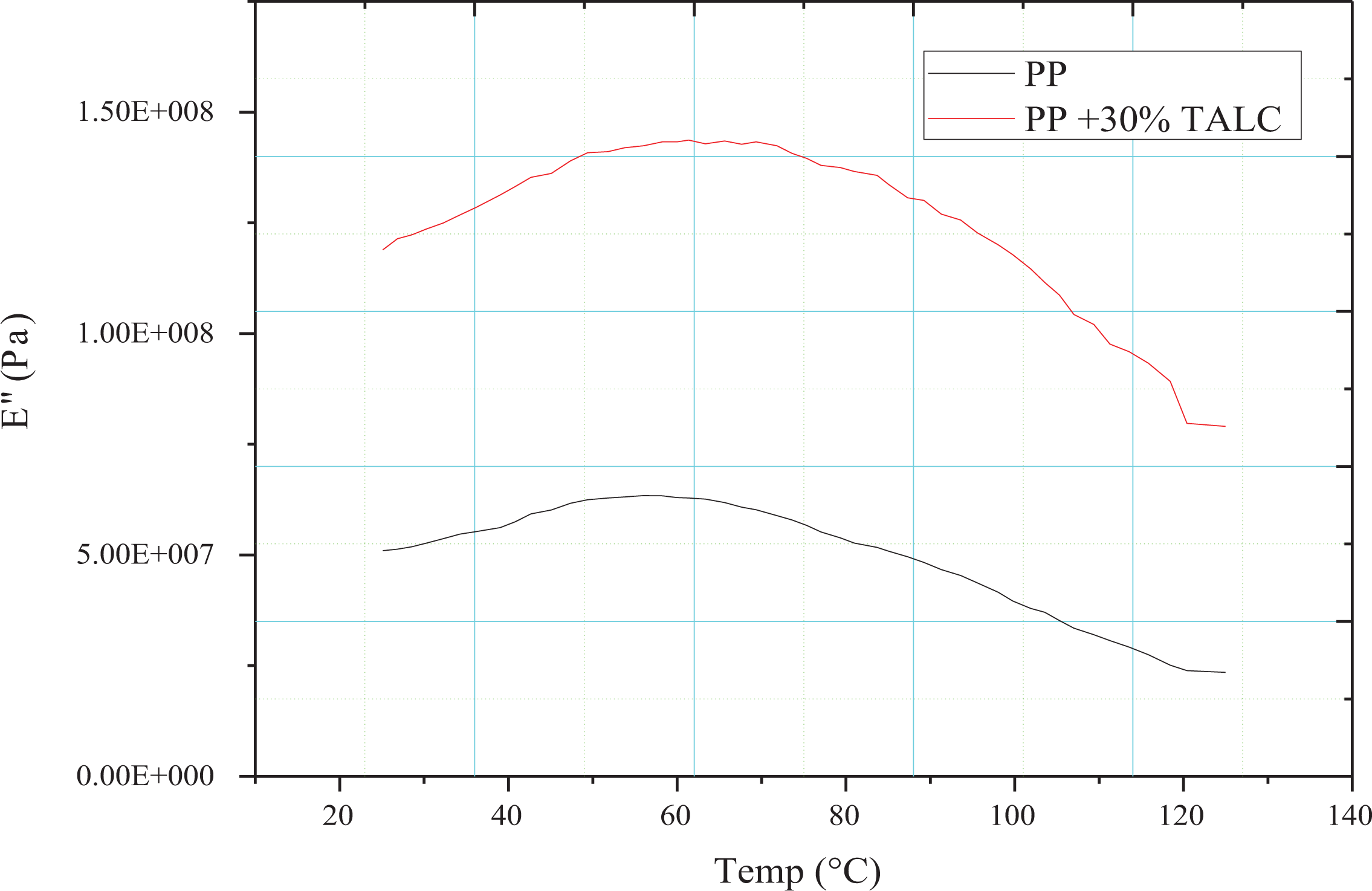
Loss modulus factor versus temperature.
Conclusion
It was shown in this study that the addition of talc particles to a thermoplastic polymer such as PP increases the tensile and bending rigidities of the polymer but it reduces its impact strength. Globally, the presence of talc particles increases the elastic properties and at the same time decreases the plasticity of the polymer. The temperature increase has a negative effect on all mechanical properties of the PP–talc composite. However, the presence of talc particles in thermoplastic matrix significantly reduces the negative effect of the temperature increase. The increase of the talc content in the PP simultaneously attenuates the reduction of the rigidity and the increase plasticity of the polymer caused by temperature increase. The presence of talc can increase the operating temperature of the thermoplastic polymers. The DMA tests showed that the presence of talc particles increased storage module and loss modulus which lead to same damping factors for the PP and the PP + talc composite.
Footnotes
Acknowledgements
The authors extend their appreciation to the Deanship of Scientific Research at King Saud University for funding the work through the research group No. RGP-VPP-035.
Declaration of Conflicting Interests
The author(s) declared no potential conflicts of interest with respect to the research, authorship, and/or publication of this article.
Funding
The author(s) received no financial support for the research, authorship, and/or publication of this article.