




Abstract
This article presents the effects of thermoplastic polyurethane (TPU) on the crystallization and melt strength of poly(lactic acid) (PLA) and on the enhancement of cell nucleation and expansion ratio to manufacture microcellular thermoplastic PLA foams in supercritical carbon dioxide. Addition of TPU increased the crystallinity and decreased the crystallite size as observed by differential scanning calorimetry and polarized optical microscope. The formed crystal domains worked as cross-linking points to increase the melt strength of a polymer that potentially affected the cell growth. Scanning electron microscope confirmed the immiscibility between PLA and TPU, and TPU was dispersed as islands in the PLA matrix. This phase morphology further influenced the cell structure of the PLA/TPU foams. TPU acted as a nucleating agent to enhance heterogeneous cell nucleation that is caused by the decrease in free energy barrier. Tensile stress that generated around the TPU and in some local regions surrounding the crystals and crystallization was dominant to induce cell nucleation.
Keywords
Introduction
With respect to protect the natural environment and petroleum resources, poly (lactic acid) (PLA) has attracted much attention due to biodegradability and biocompatibility. However, its disadvantages of low glass transition temperature (Tg), low crystallization kinetics, and especially bad foaming ability, limit the applications in biomedical, tissue engineering, and packaging fields. 1 –3 Blending PLA with various additives such as lubricant, plasticizer, or a second polymer assists in broadening its applications. 4,5 To reduce the material cost and consumption, a higher expansion ratio (greater than 10-fold expansion over unfoamed PLA) remained unobtainable. To provide PLA with a high service temperature, high crystallinity is critical. To enhance the foamability of PLA, the increase of melt strength can compensate for the molecular weight decrease caused by processing degradation. Therefore, investigating the feasibility of producing a higher expansion ratio, crystallinity, and melt strength in the PLA requires further studies.
To widen PLA’s foaming window and improve low melt strength, many research contributed to chain modification 4 and development of crystallinity compounding with nanofillers. 5 –11 Corre 6 improved the melt viscosity and elasticity to extend chain by the use of an epoxy additive during a reactive extrusion process for batch foaming. Ren 7 compared the expansion ratio and cell density of linear and branched structure PLA foams and demonstrated that the induced crystallization was more dominant than the chain modification to improve the foaming behavior. Battegazzore et al. 8 studied that PLA/talc composites increased the crystallization rate and the presence of crystals improved thermomechanical property. Ji 9 investigated that the tiny crystallite size and the well-dispersed nanosilica were the main reasons to increase the induced crystallinity of PLA for improving the foaming behavior of PLA. Ding 10 increased melt strength of PLA by the addition of cellulosic fibers and by the gas- and fiber-induced crystallization. Cellulosic fibers acted as crystal nucleating agents, increased the crystallization temperature (Tc) and the crystallinity, and decreased the crystallization half-time. The dissolved N2, the shear stress, and biaxial stretching during foaming also enhanced the crystallinity of PLA. Nofar 11 investigated how polylactide’s extrusion foaming, using supercritical CO2, depends on nano-/microsized additives (i.e. talc, nanosilica, and nanoclay). It also explored the crystallinity that these additives induced in the PLA/CO2 fluid mixture during the foaming process. The expansion ratio and cell density of the PLA foams were enhanced due to the presence of well-dispersed nanoparticles and large number of induced crystals through these nanoparticles.
Thermoplastic polyurethanes (TPUs) are copolymers comprised of soft and hard segments with the properties of flexibility over a broad service temperature, durability, abrasion resistance, biocompatibility, and biological stability, 12,13 which make them suitable for a wide range of applications in automobile parts, construction materials, sports equipment, and medical instruments. Soft matrix contains polyesters or poly(ether glycol)s which display elastic property, and hard segments consist of a diisocyanate, which are held by hydrogen bonds, and form physical cross-link that influences the mechanical property of hardness and tearing strength. 14 –16
Recently, many research 17 –20 studied the morphology, properties, and shape memory behavior of PLA/TPU blends and showed that the two polymers were immiscible and TPU acted as a toughening agent that prevented the PLA/TPU blends from breaking. Mi 21 fabricated blended TPU/PLA tissue engineering scaffolds at different ratios for tunable properties via twin screw extrusion and microcellular injection molding techniques for the first time. There have been few reports on foaming behavior of microcellular PLA/TPU composites in supercritical CO2.
In this study, supercritical CO2 was selected as the blowing agent to fabricate PLA foams using microcellular foaming technology. TPU acted as a nucleating agent to enhance cell nucleation, and the crystallinity of gas-saturated PLA resin was controlled by CO2 pressure. The foaming behavior of PLA/TPU composites at different CO2 pressures and foaming temperatures was investigated. And the effect of TPU on the induced crystallization, the expansion ratio, and cell morphology was studied. Furthermore, the effect of TPU content and CO2 pressure on the crystal size was emphasized.
Experimental
Materials
PLA (NatureWorks LLC, 8052D, Tg around 61°C) has a specific gravity of 1.24 g/cm3 and a melt flow index of about 14 g/10 min (210°C, 2.16 kg). TPU (Elastollan®TPU, 9339, Tg of −38°C), which has a specific gravity of 1.12 g/cm3 and a melt flow index of 10–20 g/10 min (190°C, 8.7 kg), was purchased from BASF. The PLA and TPU were vacuum dried at 70°C for 8 h before use. The PLA/TPU composites were melt extruded using DSM Xplore 15 Micro Compounder Extruder by maintaining a temperature of 180°C with a screw speed of 50 rpm for 5 min. The composition of composites was 1, 3, 5, 7, and 10 wt%. Pure PLA was also processed in the same condition for a comparison purpose.
Two-step batch foaming
The PLA/TPU composites were placed in a high-pressure chamber at 25°C. The chamber was flushed with low-pressure CO2 for about 1 min and then pressurized to 150 psi, 300 psi, and 600 psi. The samples were saturated under this condition for 24 h to ensure equilibrium adsorption of CO2. At the end of the experiment, the specimens were removed from the chamber after a rapid depressurization and were transferred within 1 min to the oil bath with the fixed temperature. The foamed samples were quenched in cold water with the temperature of 15°C after foaming for 20 s.
Characterization
The mass densities of the samples before (ρ) and after (ρf) foaming were measured by the water displacement method based on ISO 1183-1987. The uptake of water by the samples during this measurement can be neglected due to the samples’ smooth skin and closed cells.
The cell structures were investigated by using a JOEL6060 scanning electron microscope (SEM). The samples were freeze-fractured in liquid nitrogen and sputter-coated with gold. The cell size and cell density were obtained through the SEM photographs. The cell density (N0), the number of cells per cubic centimeter of solid polymer, was determined using equation (1) as follows:

where n is the number of cells in the SEM photographs, A is the area of the micrograph (in cm2), and RV is the volume expansion ratio of the polymer foam, which can be calculated using equation (2) as follows:

where ρP and ρf are the densities of PLA resin and PLA foam, respectively.
The crystallite morphology of PLA/TPU composites under different compressed CO2 pressures was studied using a polarized optical microscope (Olympus BX 51TF) equipped with a DP71 camera.
Differential scanning calorimetry (DSC) analyses were examined using a testing machine (Q2000 TA, USA) at a speed of 50 ml/min under a nitrogen gas atmosphere to determine the crystallinity of PLA/TPU composites and foam. The sample for DSC weighing about 4 mg was sealed in the aluminum pan. For all samples, data were obtained from heat-cool-heat for assessing the possible effect of the CO2 saturation and the foaming process on the crystallization behavior of PLA. For all CO2-saturated samples, a long-time degassing (at least 1 month, under atmosphere and room temperature) was carried out to avoid the possible effect of gas plasticization on the sample’s crystallinity.
5
The degradation temperature of the samples was about 260–400°C. The samples were first heated to 200°C at a heating rate of 10°C/min and then kept at 200°C for 5 min to eliminate any prior thermal history.
21
Next, the samples were cooled to 25°C at a rate of 10°C/min, stabilized at 25°C for 5 min, and then scanned from 25°C to 200°C at the same scanning rate under a dry nitrogen environment. The degree of crystallinity was calculated by
Melt rheology under dynamical shear was investigated with an ARES rheometer (Rheometrics TA). A parallel plate (Φ = 25 mm, gap = 1 mm) geometry was selected for the dynamic frequency sweeps under controlled strain of 5%. This strain value was first verified to be in the linear viscoelastic region for all the evaluated samples. The heated chamber was continuously purged with nitrogen. The angular frequencies were swept from 100 to 0.1 rad s−1 at a temperature of 180°C.
Results and discussion
TPU dispersion in PLA matrix
Figure 1 shows the SEM photographs of PLA/TPU composites with different TPU contents. It showed that PLA and TPU were immiscible with a two-phased morphology. TPU spherical droplets can be clearly seen in all the blends with the size of nanometers and submicrometers. According to Image J software and the data obtained from Figure 2, the size of TPU spherical droplets increased with TPU content increasing due to the agglomeration of TPU in the PLA matrix.
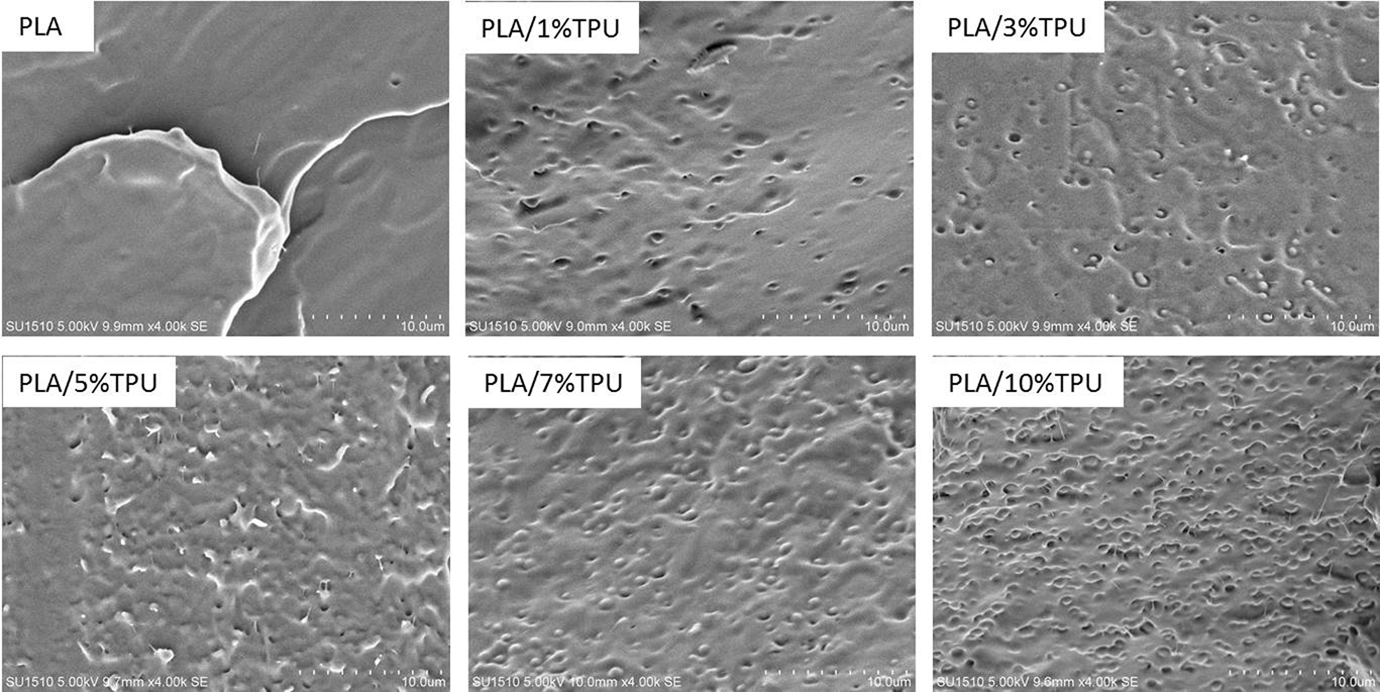
SEM photographs of the fractured surfaces of PLA/TPU composites. SEM: scanning electron microscope.
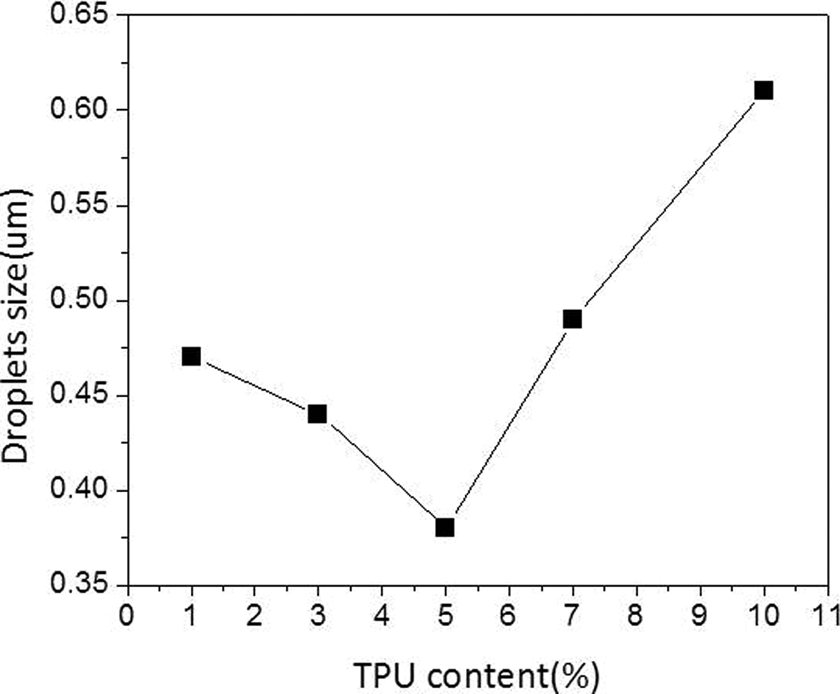
Average size of TPU spherical droplets of PLA/TPU composites. TPU: thermoplastic polyurethane; PLA: poly(lactic acid).
Influence of TPU addition, foaming process on the foaming behavior of PLA
Influence of TPU addition on the foaming behavior of PLA
The cell size is an important parameter to characterize the cell growth of polymeric foaming, and melt strength of the polymer matrix was a critical factor to determine the cell growth. 23 Figure 3 showed the effect of complex viscosity and elasticity of PLA/TPU composites on the cell nucleation. The increased complex viscosity and elasticity of PLA/TPU composite as TPU content increased lead to higher melt strength and reduced cell coalescence during the early stage of cell growth to get better foaming behavior which combined with the enhanced heterogeneous nucleation.
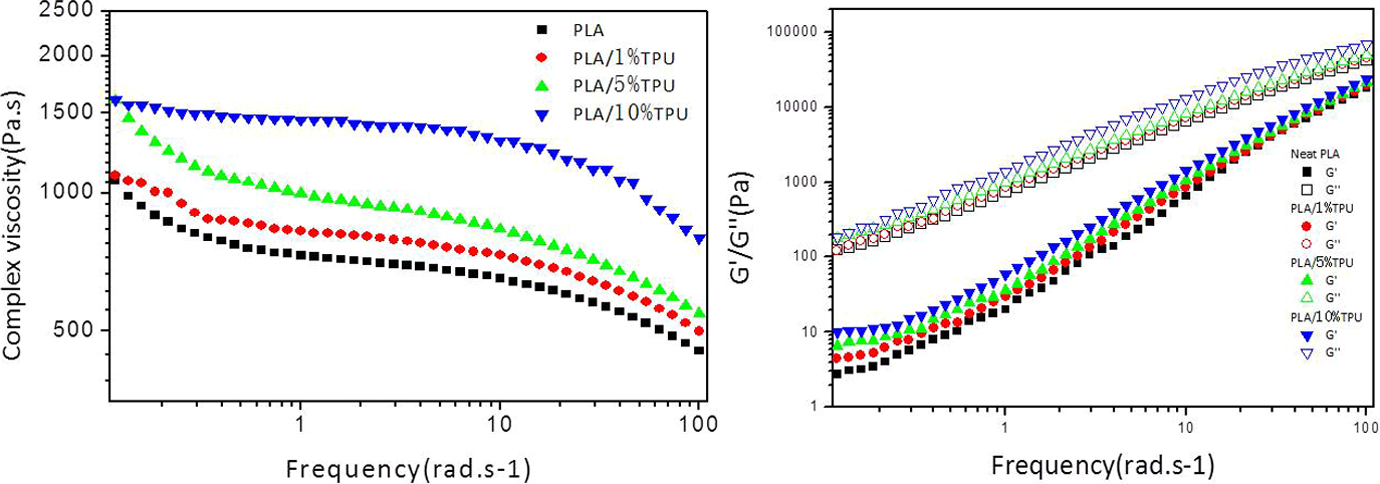
Complex viscosity and elasticity of PLA/TPU composite. PLA: poly(lactic acid); TPU: thermoplastic polyurethane.
Figure 4 showed the influence of TPU addition on the cell morphology of PLA foams saturated at 300 psi and foamed at 125°C for 20 s; PLA foams presented poor cell structure with obvious unfoamed regions, and the PLA/10%TPU foams exhibited uniform cell distribution and their cell structure was elliptical in shape. The cell size decreased but cell density increased as TPU content increased. TPU acted as a nucleating agent to enhance heterogeneous cell nucleation, which is caused by the decrease in free energy barrier. The addition of TPU not only increased the melt strength of PLA but also increased the crystallinity. Tensile stress generated as the bubble grows, and the formation of crystal network would induce the cell nucleation. Moreover, crystallization would also induce the cell nucleation, resulting in the enhancement of cell nucleation. 24,25
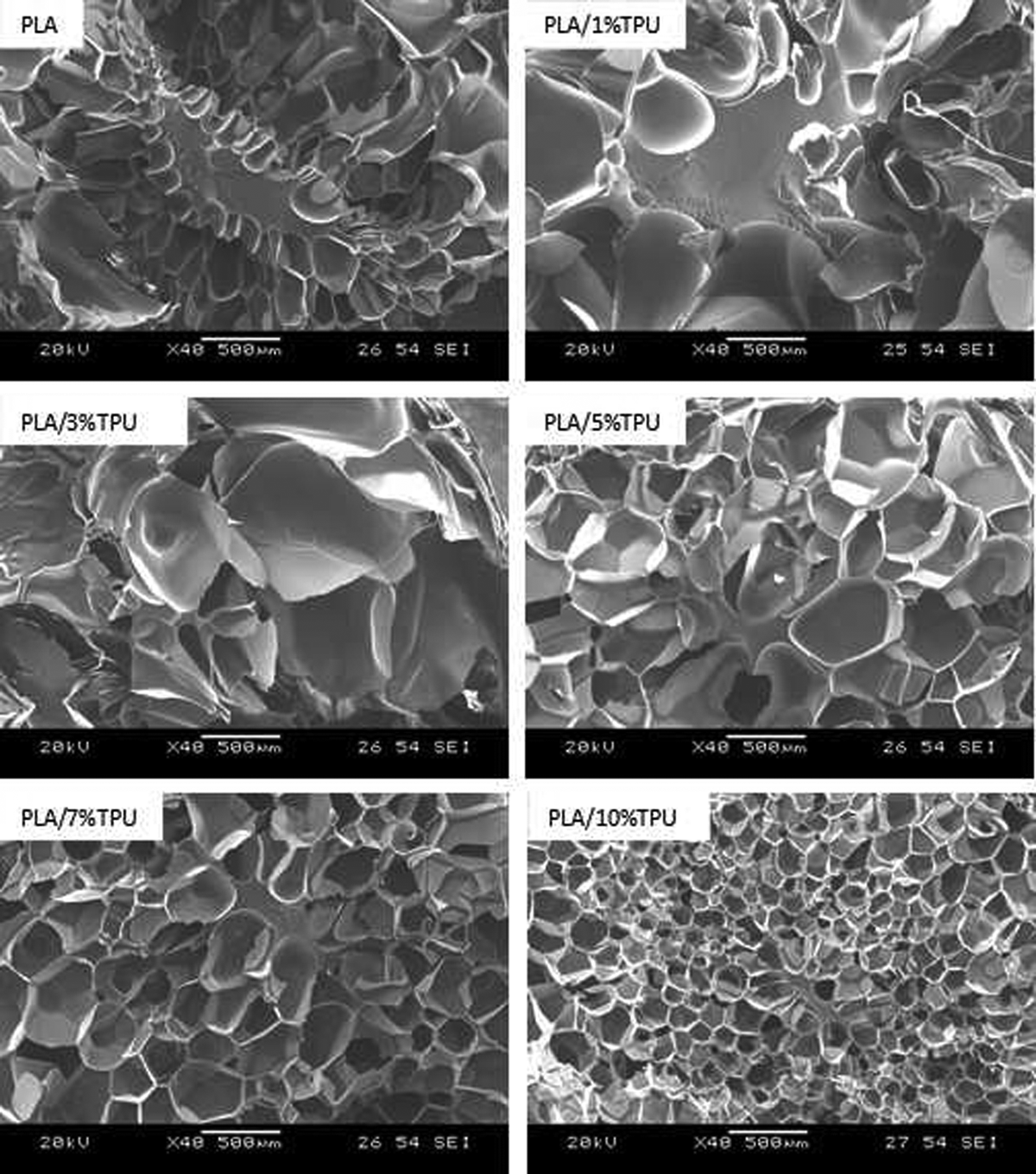
Cell morphologies of PLA/TPU foams saturated at 300 psi and foamed at 125°C for 20 s. PLA: poly(lactic acid); TPU: thermoplastic polyurethane.
Figure 5 summarized the cell size and cell density of PLA/TPU composite foams with various TPU contents. It showed that the cell size decreased with increasing TPU content and decreased from 357.99 μm of PLA foam to 157.43 μm of PLA/10%TPU foam saturated at 300 psi and foamed at 125°C. The cell density increased remarkably from 4.3 × 10⁴ cells/cm3 of PLA foam to 2.2 × 10⁶ cells/cm3 of PLA/10%TPU foam, which was almost two order of magnitude higher than PLA foam. On the one hand, nucleating agents are commonly used in polymeric foaming processes to promote cell nucleation, increase cell density, and improve cell uniformity. This improvement in foam morphology is usually considered to result from the enhanced heterogeneous nucleation caused by the lower free energy barrier for cell nucleation. TPU and the formed crystal domains supplied nucleating sites to enhance cell nucleation and acted as physical cross-linking points to increase the melt strength of polymer, which potentially stabilizes cell structure. On the other hand, the expansion of nucleated cells would generate local flow fields that induce tensile stresses around nearby TPU, resulting in local pressure fluctuations that enhance cell nucleation. The expansion ratio is a critical data to present the foaming behavior of polymers, and a high expansion ratio can effectively reduce the resin usage. Figure 6 showed the influence of foaming temperature and TPU content on the expansion ratio of PLA/TPU foams saturated at 300 psi. The addition of TPU and foaming temperature presented the obvious effect on the expansion ratio of PLA foams. The expansion ratio increased with TPU content and foaming temperature. The highest expansion ratio was obtained at the foaming temperature of 135°C and 10% of TPU content. 10%TPU and 135°C were the optimum content and foaming temperature caused by the increased viscoelastic properties as TPU content increasing and induced crystal domains after CO2 saturation acted as physical cross-linking agents which restricted the relaxation of polymer chains to stabilize the cell structure.
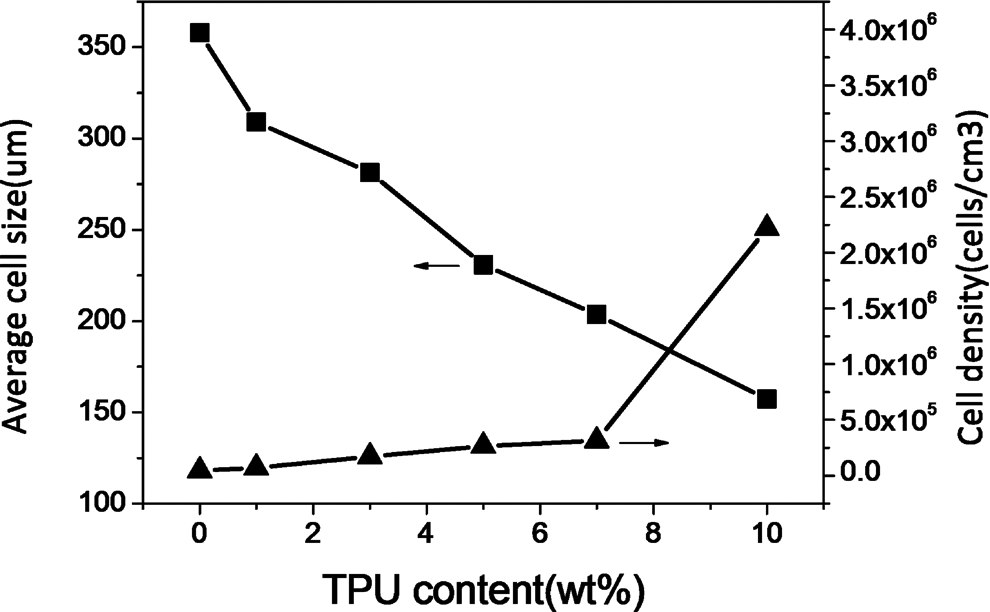
Average cell size and cell density of PLA and PLA/TPU foams saturated at 300 psi and foamed at 125°C for 20 s. PLA: poly(lactic acid); TPU: thermoplastic polyurethane.
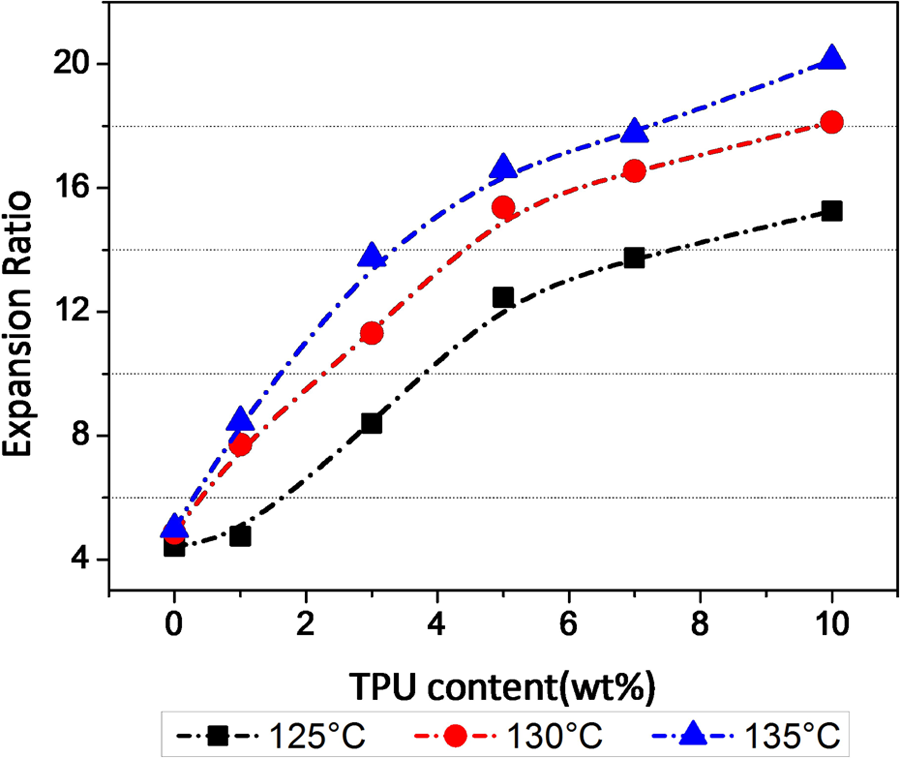
Expansion ratio of PLA/TPU foams foamed at various foaming temperatures and saturated at 300 psi for 20 s. PLA: poly(lactic acid); TPU: thermoplastic polyurethane.
Influence of saturation pressure on the foaming behavior of PLA
Figure 7 showed the comparison of the cell morphologies of PLA foams and PLA/10%TPU foams at various saturation pressure, and the cell density of PLA/TPU foams was improved greatly with the addition of 10%TPU. CO2 solubility was a critical factor to effect the cell nucleation. 26 CO2 solubility in the PLA matrix at different CO2 pressures was different. Figure 8 showed the influence of CO2 solubility on the cell nucleation. CO2 solubility in the PLA matrix increased with CO2 pressure but decreased with TPU content. CO2 can enhance the crystallization of polymer due to plasticization effect of CO2. Spherulites cannot dissolve CO2, and thus, CO2 is expelled. 27 As spherulites grow, CO2 is expelled and stagnates at the amorphous–crystalline interface. The higher the crystallinity, the lower the CO2 solubility in the polymer, and crystallization was dominant to induce cell nucleation. The cell size did not change a lot but saturated at 150 psi and 600 psi as indicated in Figure 9. The minimum cell size and maximum cell density were obtained at 150 psi CO2 pressure. CO2 solubility at 150 psi was the minimum, and the presence of crystal domains could be the mechanism for the improved foaming behavior of PLA, which could facilitate the cell nucleation and cell growth. The expansion ratio increased little from 2.61 to 5.87 saturated at 600 psi, increased 15 times from 5 to 20 saturated at 300 psi, and increased 11 times from 4 to 15 saturated at 150 psi.
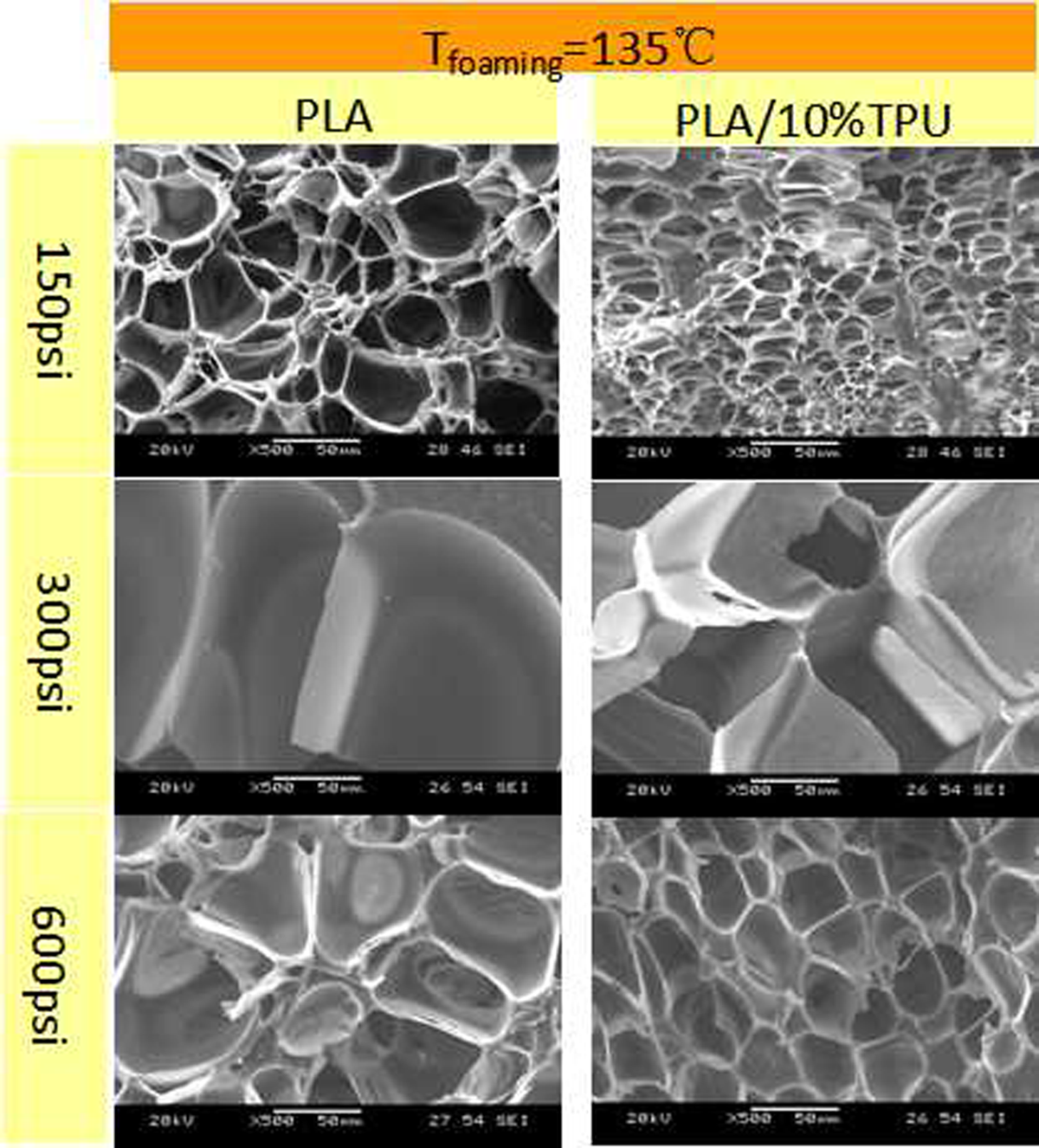
SEM photographs of PLA and PLA/10%TPU foams saturated at various CO2 pressures and foamed at 135°C for 20 s. SEM: scanning electron microscope; PLA: poly(lactic acid); TPU: thermoplastic polyurethane.
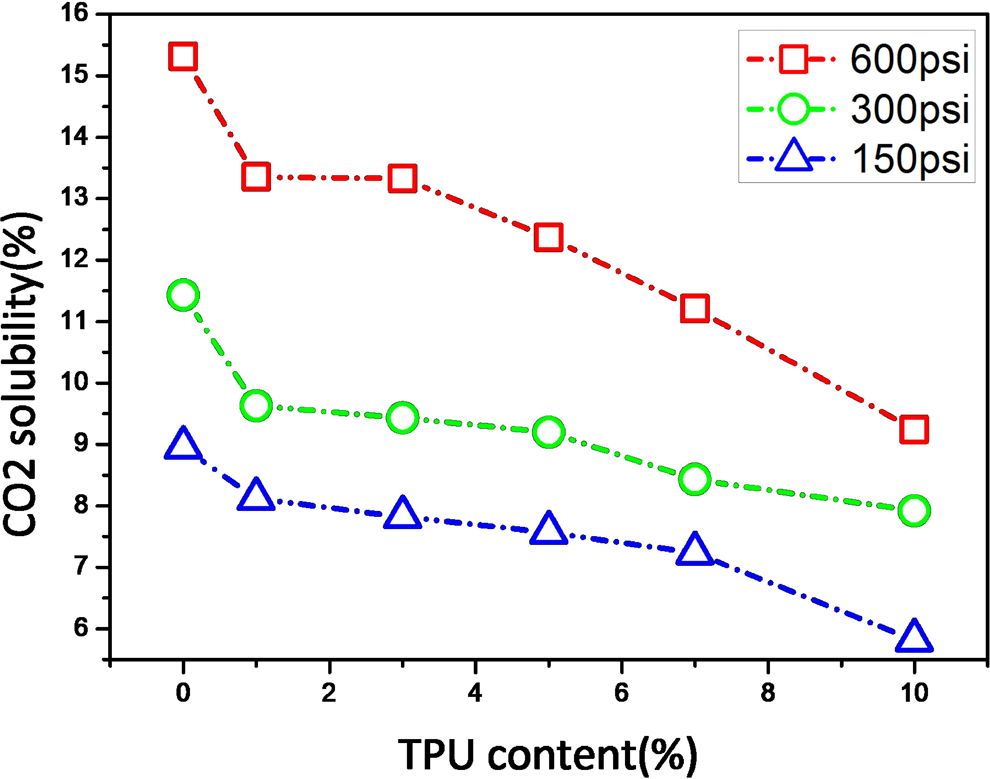
CO2 solubility in the PLA matrix at various CO2 pressures for 24 h. PLA: poly(lactic acid).
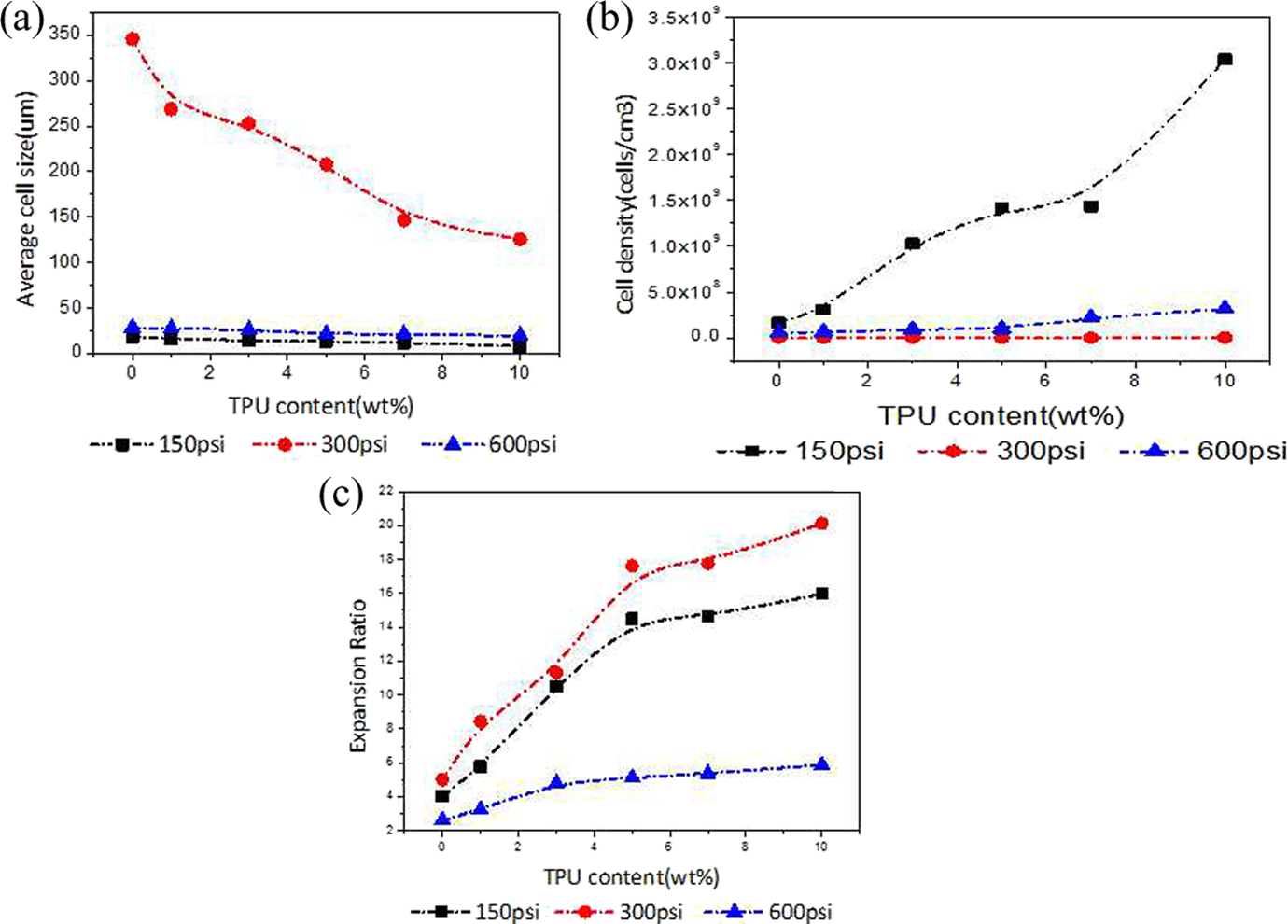
(a) Cell size, (b) cell density, and (c) the expansion ratio of PLA and PLA/TPU foams saturated at various CO2 pressures and foamed at 135°C for 20 s. PLA: poly(lactic acid); TPU: thermoplastic polyurethane.
Influence of foaming temperature on the foaming behavior of PLA
Figure 10 shows the influence of foaming temperature on the cell morphology of PLA and PLA/10%TPU foams. Cell size decreased but cell density increased with increasing foaming temperature. The temperature is the main factor to influence the crystallization rate. 28 The temperature reached melting temperature (Tm), and the strong segmental motion and tensile stress that generated as existing bubble grows in constraint amorphous region between the network of crystals enhanced cell nucleation. For PLA/10%TPU foam, it exhibited an elliptical cell structure and uniform cell distribution. The increase in foaming temperature tended to decrease the cell size and increase the cell density owing to the decreased cell growth rate at high foaming temperature which was attributed to the reduction of gas concentration. From Figure 6, at the foaming temperature of 125°C, 130°C, and 135°C, it is seen that with the increase in foaming temperature, the expansion ratio of PLA/10%TPU foams increased 5 times from 15 to 20.
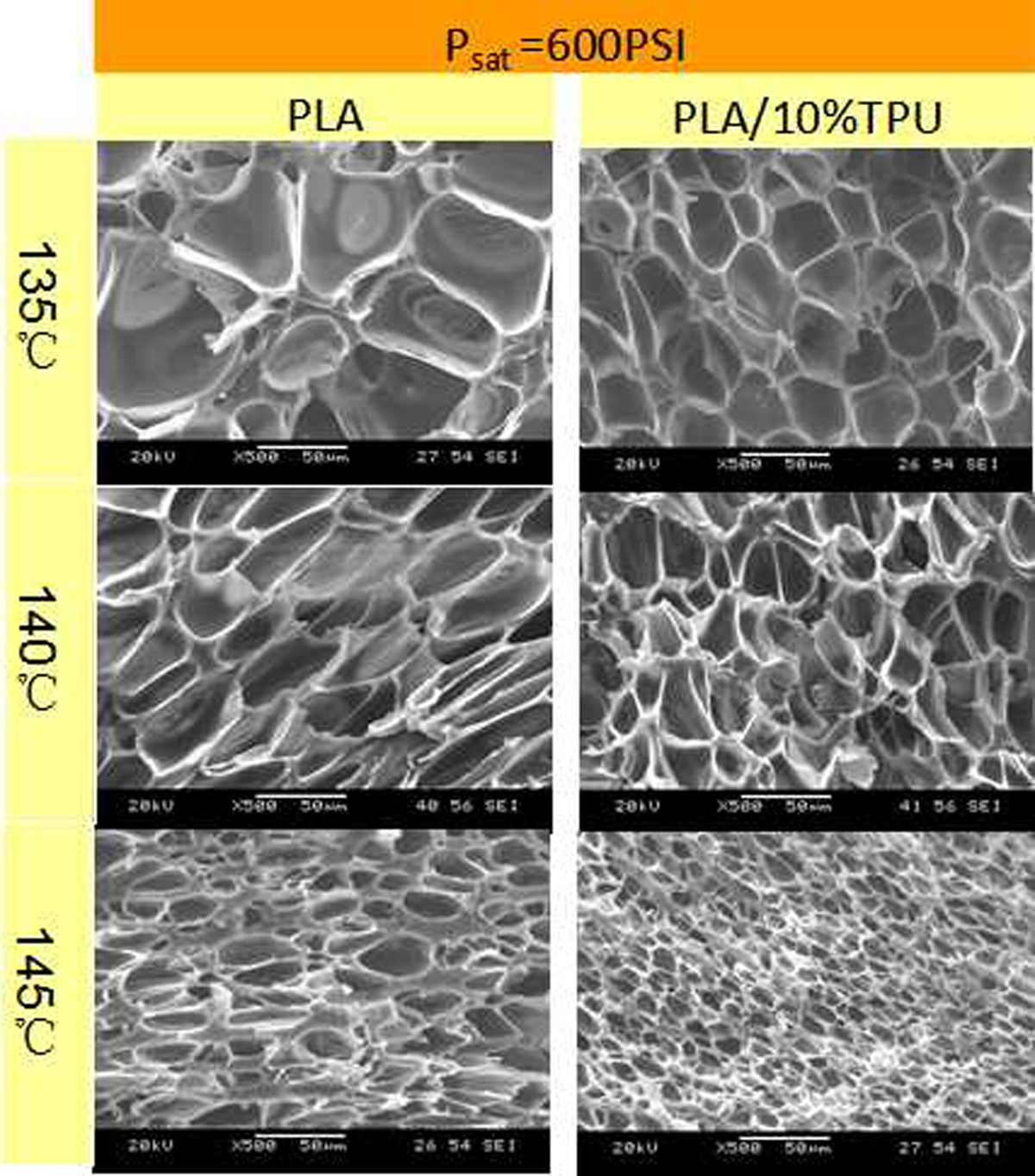
SEM photographs of PLA and PLA/10%TPU foams saturated at 600 psi CO2 pressure and foamed at various foaming temperatures for 20 s. SEM: scanning electron microscope; PLA: poly(lactic acid); TPU: thermoplastic polyurethane.
Influence of crystalline on the foaming behavior of PLA
In the solid-state foaming, the foaming behavior of PLA is significantly affected by the induced crystallinity of PLA after the CO2 saturation.
29
Crystallinity, crystallite size, and crystallite density played a key role in determining the foaming behavior of PLA/TPU composites. As shown in Figure 11 and Table 1, Tg of the PLA and PLA/TPU blends is around 61°C, Tc increased with TPU content that is attributed to interactions between the PLA molecules and the TPU molecules via the hydrogen bonds hindered the cold crystallization of PLA, and Tm is 150–157°C. χc and χm decreased with increased TPU content due to the presence of a higher percentage of crystals formed during cooling, which reduced the chain mobility. This reduction negatively affected cold crystallization process. The degree of crystallinity (χ) can be calculated by −
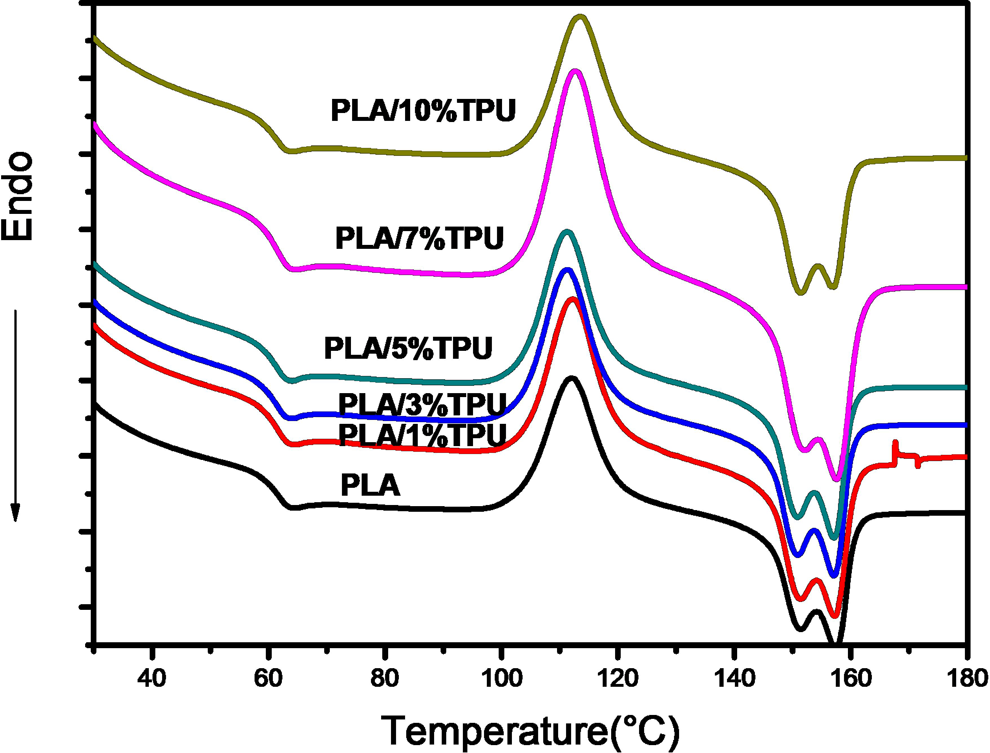
The second melting DSC curves of PLA/TPU blends. DSC: differential scanning calorimetry; PLA: poly(lactic acid); TPU: thermoplastic polyurethane.
Tc, ΔHc, Tm, and ΔHm of PLA in the PLA/TPU composites obtained from DSC curves.
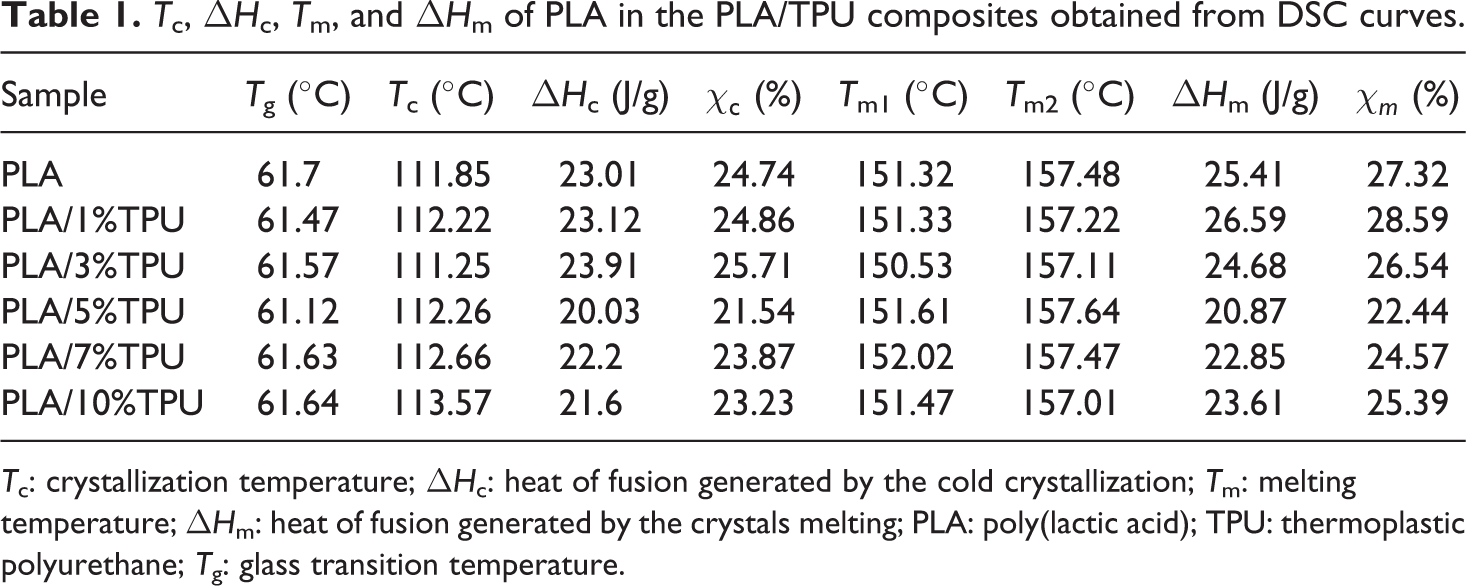
Tc: crystallization temperature; ΔHc: heat of fusion generated by the cold crystallization; Tm: melting temperature; ΔHm: heat of fusion generated by the crystals melting; PLA: poly(lactic acid); TPU: thermoplastic polyurethane; Tg: glass transition temperature.
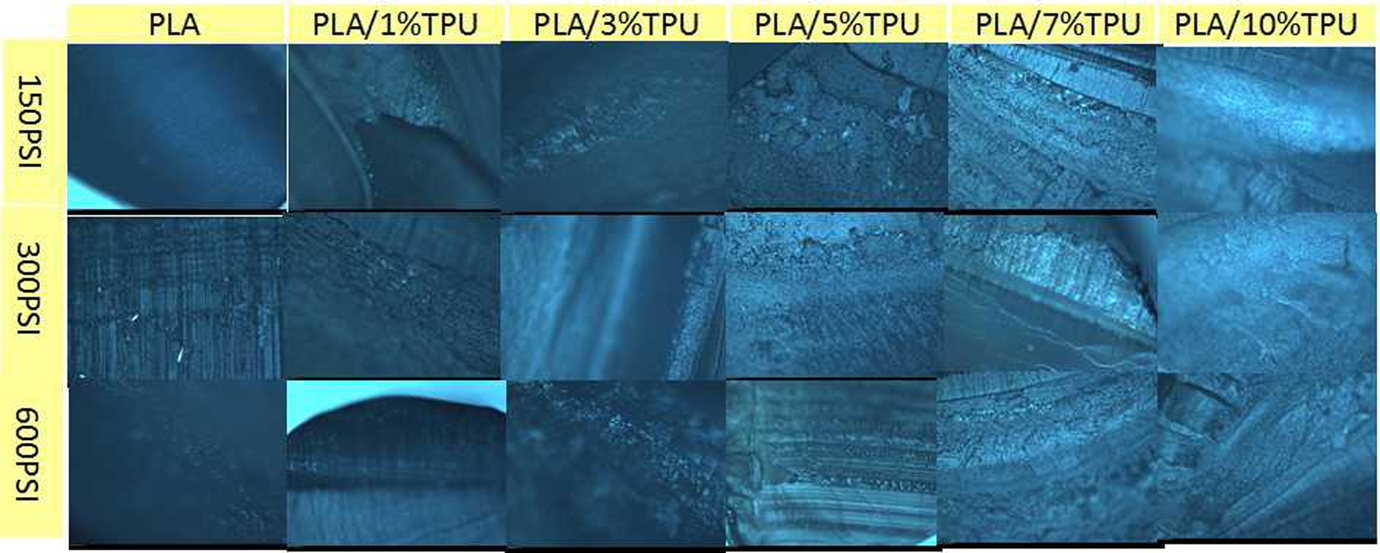
POM of PLA and PLA/TPU composites saturated at various CO2 pressures for 24 h. POM: polarized optical microscope; PLA: poly(lactic acid); TPU: thermoplastic polyurethane.
Figure 13 shows the effect of saturation pressure on crystallization, and the crystallinity of PLA decreased with saturation pressure but increased with TPU content. The crystallinity of PLA at 150 psi was the maximum. Saturation temperature (Tsat = 25°C) did not reach Tg, which restricted the movement of chain segment and improved crystal nucleation rate. CO2 solubility was affected by saturation pressure and saturation temperature, the lower CO2 solubility saturated at 150 psi in the PLA polymer, the higher crystallinity which caused shrinkage, and tensile stresses were applied on the polymer melt by the crystals, and cell nucleation enhanced as indicated in Figure 7. The cell morphology of PLA foams was un-uniform, and PLA/10%TPU foams saturated at 150 psi and foamed at 135°C possessed the obvious improved cell morphology.
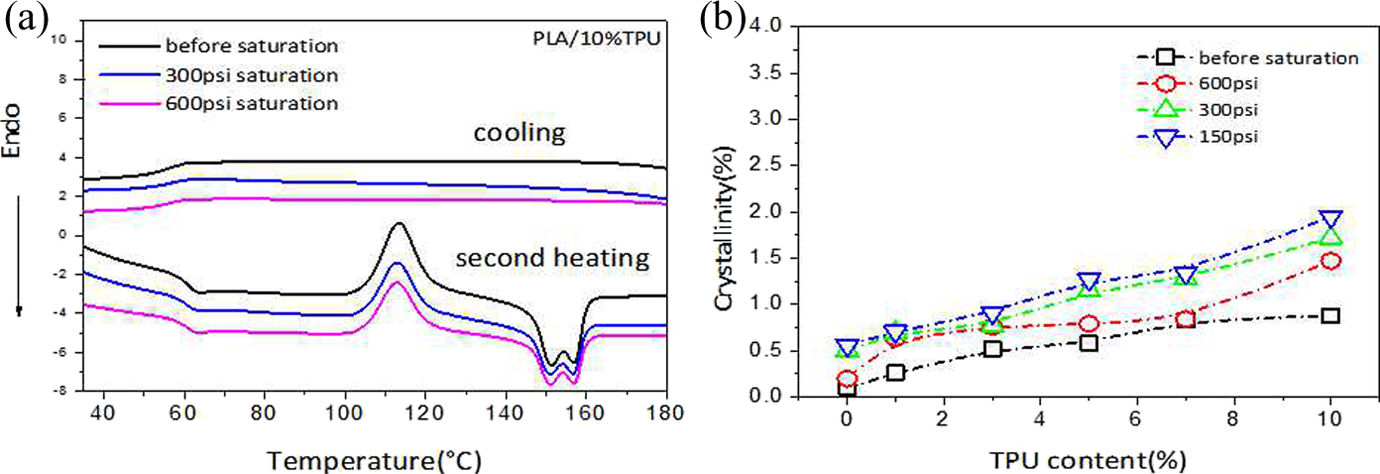
(a) DSC thermographs of PLA/10%TPU composites before and after CO2 saturation and (b) crystallinity of PLA and PLA/TPU composites saturated at various CO2 pressures for 24 h. DSC: differential scanning calorimetry; PLA: poly(lactic acid); TPU: thermoplastic polyurethane.
As shown in Figure 14, Tc and Tm decreased after foaming compared with before and after saturation. The compressed CO2 at 150 psi did not induce the obvious crystallization of PLA. After foaming at 135°C, higher crystallinity was observed. The decreased Tg was the main reason for the induced crystallization of PLA as shown in Table 2. The foaming process at high temperature is also beneficial for the crystallization development. The local strain variation around heterogeneous nucleation agent of TPU and the plasticization effect of CO2 obviously induced the crystallinity of PLA/10%TPU foams saturated at 150 psi and foamed at 135°C up to 8.61%. Foaming temperature was the main factor to influence the crystallite growth rate. Crystal included crystal nucleation and crystallite growth. Foaming temperature reached the corresponding temperature of maximum crystallization rate Tc, max = 135°C according to Tc,max = 0.85Tm, 28 which enhanced crystallization process.
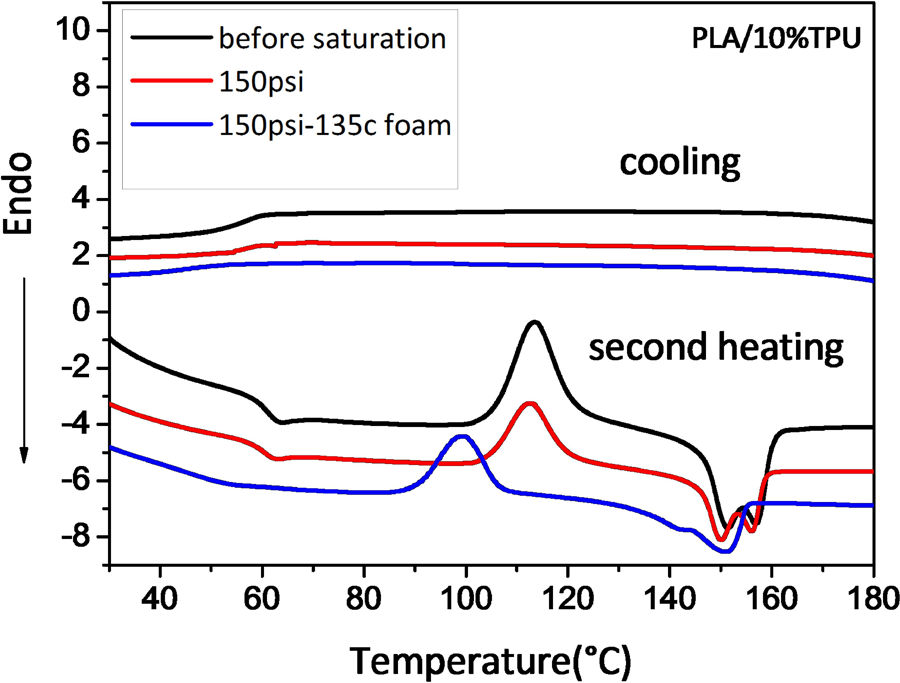
Thermogram of PLA/10%TPU composites before and after saturation and PLA/10%TPU foams saturated at 150 psi CO2 pressure for 24 h and foamed at 135°C for 20 s. PLA: poly(lactic acid); TPU: thermoplastic polyurethane.
Tg and crystallinity of PLA/10%TPU composites before and after 150 psi saturation and composites foams foamed at 135°C.
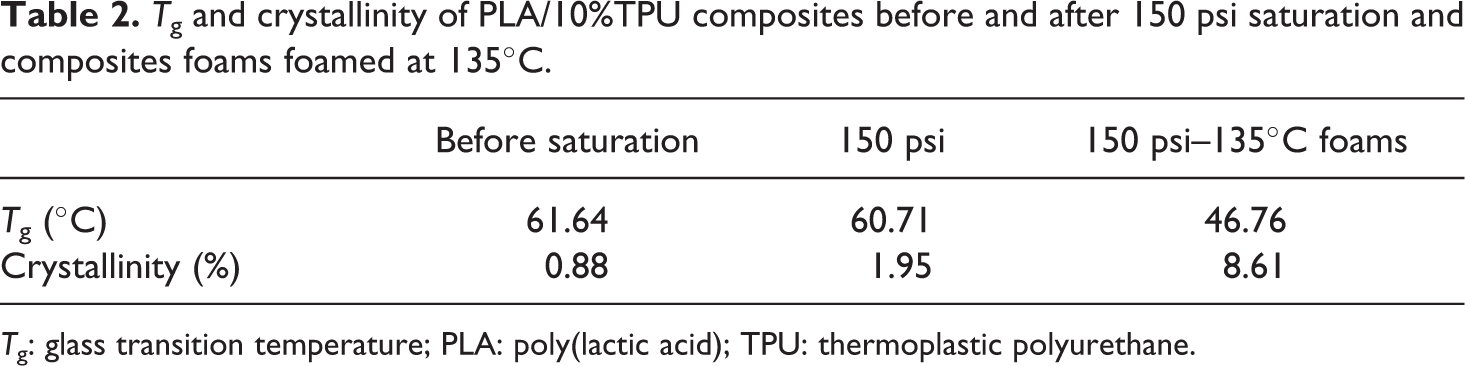
Tg: glass transition temperature; PLA: poly(lactic acid); TPU: thermoplastic polyurethane.
Conclusion
The addition of TPU into the PLA matrix significantly decreased the cell size and increased cell density and expansion ratio of PLA/TPU composite foams. Increased complex viscosity and elasticity of PLA/TPU composite as TPU content increased lead to higher melt strength and reduced cell coalescence during the early stage of cell growth to get better foaming behavior.
Increasing the TPU content noticeably increases the cell density and expansion ratio of PLA foam. The PLA/10%TPU foams saturated at 150 psi and foamed at 135°C exhibited obvious increase in cell uniformity, cell density, and the expansion ratio. The cell density increased from 108 to 109 cells/cm3, and the expansion ratio increased 12 times from 4 to 16. Extensional stress generated around TPU as cells grow, and the increase of CO2 content enhanced cell nucleation.
Crystallinity increased with TPU content and after supercritical CO2 saturation and decreased with CO2 pressure. CO2 solubility in PLA matrix increased with CO2 pressure but decreased with TPU content. The lower CO2 solubility in the polymer, the higher crystallinity, crystallization induced cell nucleation. The PLA/10%TPU composites induced a crystallinity of 1.95% at 150 psi, and the PLA/10%TPU foams increased a crystallinity of 2.58% from 6.03% to 8.61% with high cell density and uniform cell structure compared to PLA foams.
Footnotes
Acknowledgment
The authors would like to thank the microcellular plastics manufacturing Laboratory from Department of Mechanical and Industrial Engineering in University of Toronto.
Author contributions
KY, CBP, and KQ gave the guidance, and DX conducted the experiments, analyzed the data, and gave the final approval of the edition of the manuscript to be published. All authors read and approved the final manuscript.
Declaration of conflicting interests
The author(s) declared no potential conflicts of interest with respect to the research, authorship, and/or publication of this article.
Funding
The author(s) disclosed receipt of the following financial support for the research, authorship, and/or publication of this article: This work is supported by the National Key Technology R&D Program of the 12th Five-year Plan, Systematic Study on Engineering Integration of High Speed Maglev Transportation, 2013BAG19B01, a project funded by the Priority Academic Program Development of Jiangsu Higher Education Institutions.