




Abstract
This article establishes a reliable constitutive model to describe the behaviors of fiber-reinforced polymer composites under quasi-static and dynamic loading. This model integrates the contributions of all the three phases of a composite: the fiber, the matrix, and the fiber/matrix interphase, which make it capable of capturing the key micromechanical effect of the interphase on the macroscopic mechanical properties of composites. The interphase is taken as a transversely isotropic material together with the fiber. By analyzing glass/epoxy and carbon/epoxy composites, it was found that the model predictions agree well with the experimental data and the model is more effective particularly when the fiber volume fraction is high. The dynamic three-phase model was also established by using the coupling of the elastic and Maxwell elements for the viscoelasticity of the matrix as well as the interphase. The article concludes that the three-phase model with consideration of the interphase influence can precisely characterize the static and dynamic mechanical properties of a FRP composite.
Keywords
Introduction
Fiber-reinforced polymer (FRP) composites have been widely applied in aerospace fields owing to their excellent mechanical properties and flexible adaptability. These include their high stiffness-to-weight and strength-to-weight ratios, high fatigue resistance as well as their tailorable ability to specific applications. 1 However, such superior properties are significantly dependent on the microstructures and physical properties of the individual constituents of a composite.
By considering the unidirectional continuous fiber-reinforced composites as transversely isotropic materials, some micromechanical constitutive models have been proposed based on the improved mixture law of composites in conjunction with certain homogenization treatments. 2 These models can predict the longitudinal elastic modulus of a composite but have difficulties in predicting the transverse Young modulus and shear modulus. A bridging model 3,4 was then proposed to estimate the transverse properties of composite by inserting a fiber/matrix bridging relationship based on the known properties of their constituents and the composite microstructures, in which it was assumed that fibers do not alter matrix properties or the interaction between the fiber and matrix was ignored. In these mentioned models, only two phases (fiber and matrix) were taken into account for the study of mechanical behaviors of FRP composites.
However, numerous experimental investigations have revealed that the fiber/matrix interphase does play an important role in determining the macroscopic properties of a composite. Gu et al. 5 and Cech et al. 6 showed that a transition region (or an interphase) could be observed between the fiber and matrix in a FRP composite. It was found that the mechanical properties of such an interphase directly affect the stress transfer between the fiber and matrix and then the macroscopic properties of the composites. 7,8 The effects of the interphase on the mechanical properties of fiber-reinforced composites have been investigated in literature. 9,10 Especially, a generalized mechanics-of-materials approach for three-phase composites including the interphase was also proposed by Lim 11,12 to study the performance of FRP composites. Therefore, the interphase is actually important for the prediction of the material’s overall performance in FRP composites. This means that the contributions from all the three phases in a composite (i.e. the fiber, the matrix, and the interphase) should be considered in a micromechanical model, if the overall behavior of a FRP composite needs to be described precisely.
Furthermore, many composite structures can undergo dynamic loading such as those subjected to high speed and low velocity impact. Thus a great research effort has been made to understand the dynamic mechanical properties of composites. It has been concluded that the strain rate effect of a carbon fiber-reinforced composite is depend on the rate sensitivity of their matrix materials, because a carbon fiber is insensitive to strain rate. 13 Similarly, it has been reported that the behavior of a glass fiber-reinforced composite at a low-impact velocity is primarily governed by the viscosity of its resin matrix, and the rate effect of composite microstructure becomes more noticeable at higher impact velocity. 14 As such, a rate-dependent constitutive law is essential if one needs to precisely describe the dynamic properties of FRP composites at medium/high strain rates. However, the existing rate-dependent constitutive relationships are empirical and phenomenological. 15 –17 In addition, most of the existing constitutive models for composites are of the nature of two phases without the fiber/matrix interphase effect.
This article will develop a micromechanics-based three-phase constitutive model, involving continuous fibers, polymer matrix, and fiber/matrix interphase, to reveal the role of the interphase. The dynamic properties of FRP composites will also be investigated based on the three-phase constitutive description with consideration of the effect of viscoelastic interphase.
Establishment of a micromechanical three-phase model
As shown in Figure 1, a micromechanical representative volume element (RVE) including only a single fiber is selected from the bulk material to illustrate the three-phase model. Let x1, x2, and x3 be the rectangular coordinates in the three-dimensional geometry of a unidirectional composite. The fibers in the composite are unidirectionally arranged along the x1 axis. The unidirectional composite is a transversely isotropic and linearly elastic material. The fiber, matrix, and interphase are assumed to be perfectly bonded within the RVE.
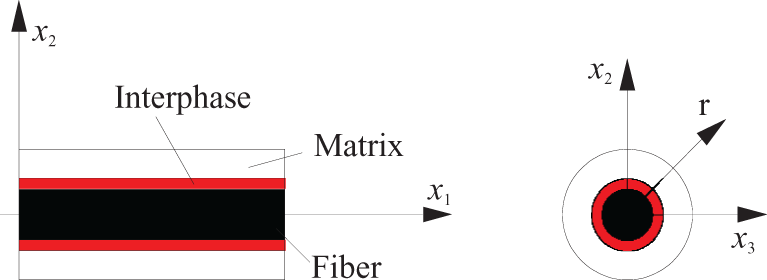
Illustration of the three-phase model by a representative volume element.
Suppose that V′ is the volume of the RVE, and
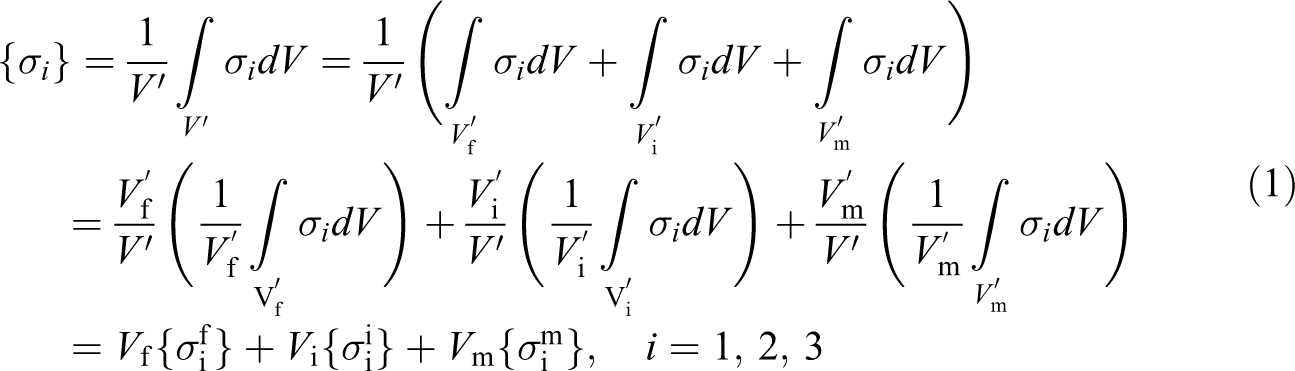

The constitutive equations of the composite and each phase correlating the averaged stresses and strains are expressed as:







By substituting equations (7), (8), and (9) into equation (1) and then equation (2), there is:

It is indicated in this equation that there are three phases in the model. By comparing it with equation (3), we get:

It can be seen from equation (11) that the mechanical properties of the composite are determined by three constituent phases: the fiber, the interphase, and the matrix. The overall compliance matrix [Sij] must be in a symmetrical form as mentioned in the bridging theory. 3 The stiffness matrix [Cij] of the composite is defined by [Cij] = [Sij]−1 (i.e. E11 = 1/S11, E22 = 1/S22, and G12 = 1/S33). Thus, the overall compliance and stiffness matrices of the composite can be calculated by using equation (11), once the bridging matrices are determined.
As we know, unidirectional fiber-reinforced composites are generally treated as a transversely isotropic plain problem, then our three-phase model can be deduced below as a two-dimensional plane case. The key step in the deduction is to effectively determine the bridging matrices and the properties of the interphase.
It is noted that the compliance matrices of composite should be a block diagonal matrix as follows
3
:

For the two phases of the fiber and interphase in our three-phase model, the bridging matrix

As there are only four independent elastic constants (i.e. elastic modulus E11 and E22, Poisson ratio υ12 and shear modulus G12) in [Sij] for a planar problem, there are also four independent elements in

Thus, the bridging matrix
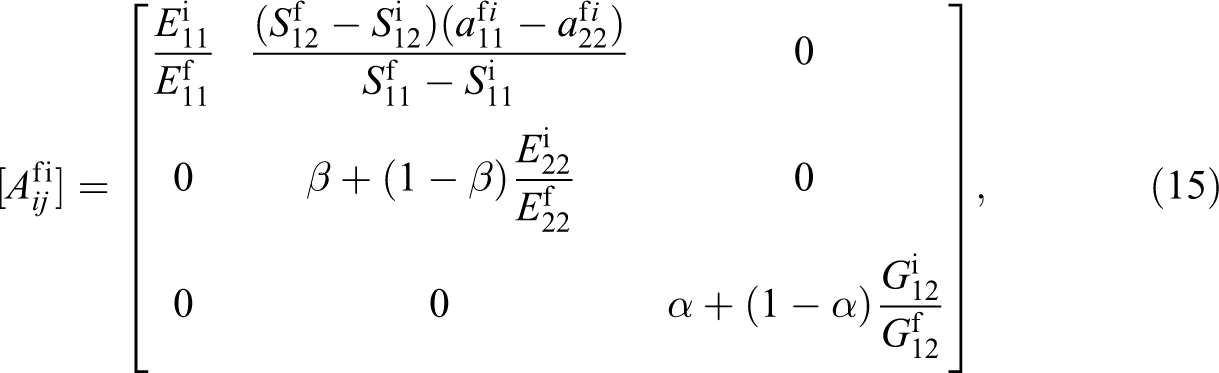
It is known that the micromechanical properties of the interphase are very important for the three-phase model, especially in the transverse direction which is perpendicular to longitudinal direction along the fiber, because transverse failure occurring under the dynamic or quasi-static loading is one of the most significant failure modes in polymer composites. As shown in equation (15), to reflect the difference of the mechanical properties of the interphase between the transverse and longitudinal directions, the interphase is considered as a transversely isotropic material similar to the fiber in our model, which is different from the empirical simple definition of the isotropy for the interphase.
Similar to the above deduction of
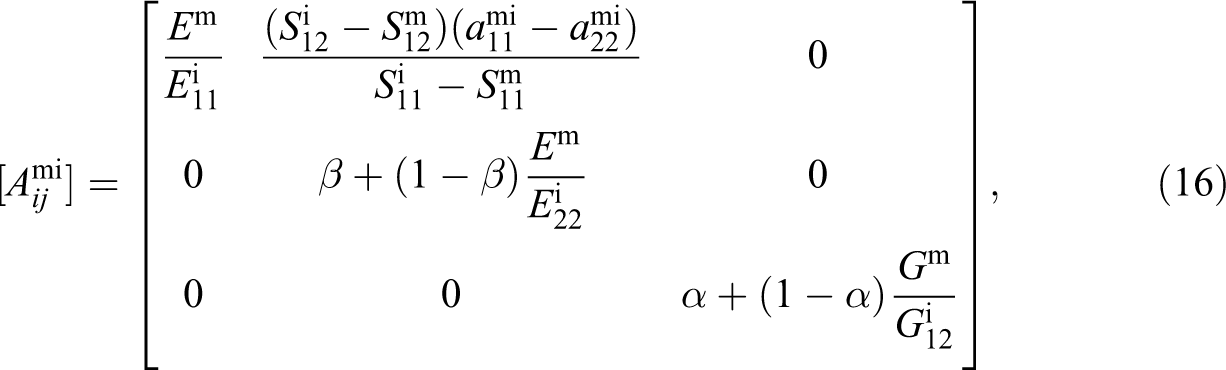
Based on the above deduction of the transversely isotropic plain problem, by substituting equations (15), (16), and (12) into equation (11), the elastic moduli E11, E22, υ12, and G22 of a unidirectional fiber-reinforced polymer composite were finally derived as follows:





Determination of the properties of interphase in the three-phase model
To complete the establishment of the above three-phase model, the interfacial properties must be effectively determined. Although an interphase region is very small, its storage modulus, 5 strength, 19 and even thermal expansion coefficient 7 can be measured and evaluated with the aid of the nanoscale measurement techniques. It has been revealed by nanomechanical experiments 5,20 that the fiber would cause a gradient variation of the modulus across the interphase region, due to the fiber/matrix bonding mechanisms. For example, the gradient interphase modulus in a carbon fiber-reinforced composite is caused by the gradient distribution of carbon element across the interfacial region. 21 The variation of interfacial properties in a glass fiber-reinforced composite was also characterized by using nanoindentation method. 22
In our modelling, the experimental data of the storage moduli of T300/epoxy and E-glass/epoxy composites given by Gu et al. 5 and Gao and Mäder, 22 respectively, have been used to characterize the gradient distribution of the modulus around the interphase, as shown in Figures 2 and 3.
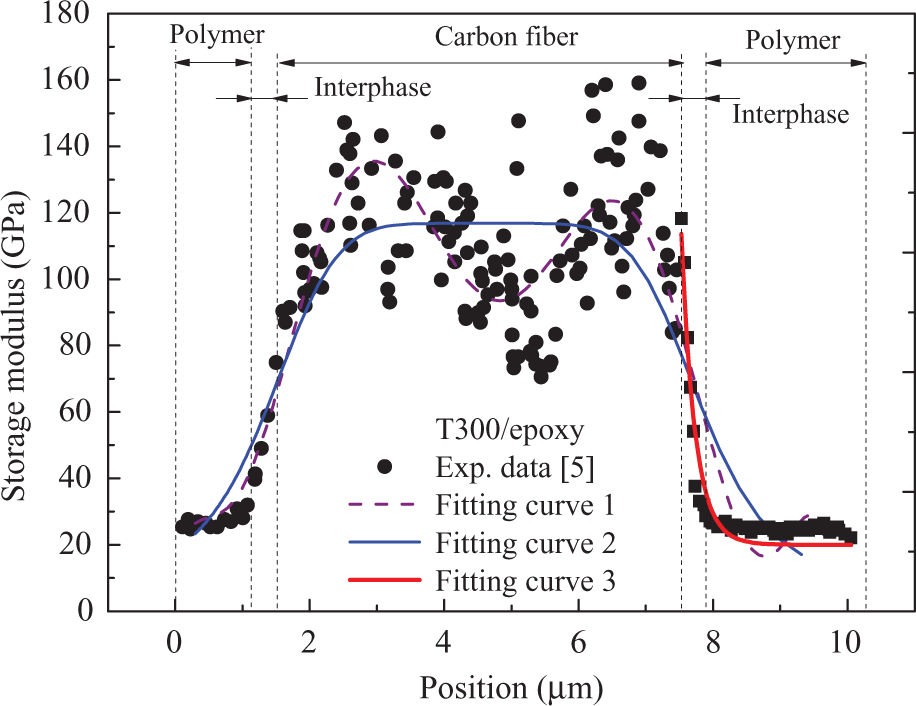
The gradient distribution of storage modulus around the interphase between the fiber and the polymer matrix in T300/epoxy composite.
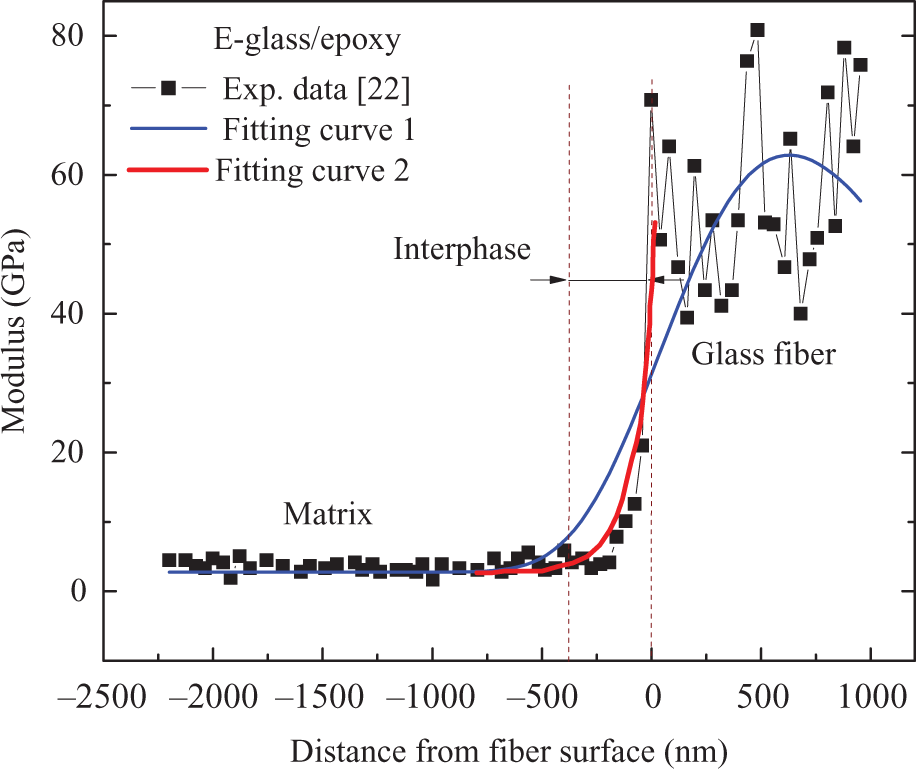
The gradient distribution of modulus around the interphase between the fiber and the polymer matrix in E-glass/epoxy composite.
Considering the continuous graded distribution of the interfacial modulus, it is reasonable to assume that the interfacial modulus is a function of the interfacial radius. Thus, Wacker et al.
9
proposed an empirical expression for the interfacial modulus of GFRPs, in which the perfect bonding between the fiber and the matrix was required to describe the continuous gradient variation of the mechanical properties in the interphase. Based on the Wacker expression, the elastic moduli of the transversely isotropic interphase can be obtained as:




Similarly, the average Poisson’s ratio and shear modulus of the interphase can be also deduced as:


Validation of the three-phase model
It is worth noting that the expression forms of E11 and υ12 will exactly the same as those given by the three phase when the interphase was introduced into the rule of mixtures. Predictions for the longitudinal Young’s modulus and the longitudinal Poisson’s ratio are quite accurate for the rule of mixtures approach. 18 Thus, the other moduli are often verified. 27 Let us now examine the predictability of the model on the transverse modulus E22 and shear modulus G12 of FRP composites.
For the glass/epoxy composite as studied by Tsai and Hahn,
18
the moduli and Poisson’s ratio of the interphase could be calculated by equations (23), (24), (25), and (26), respectively, which give rise to
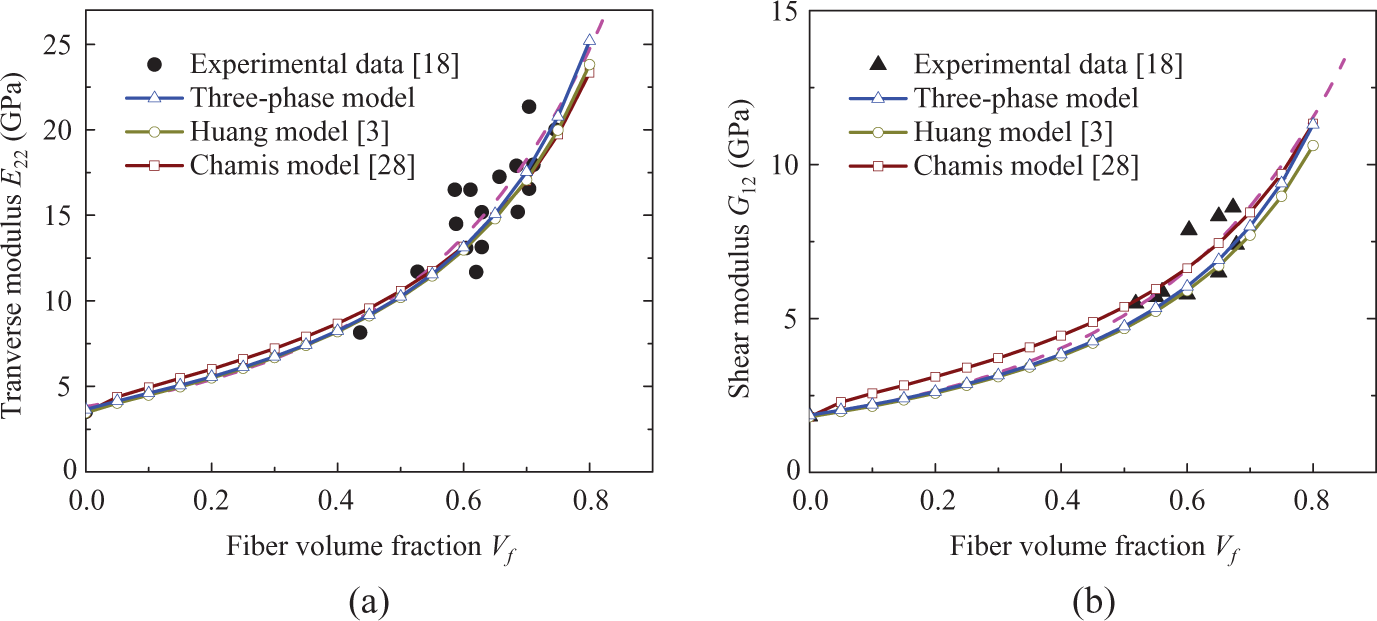
Various model predictions of (a) transverse modulus and (b) shear modulus of the unidirectional glass/epoxy composite versus fiber volume fraction. (The dash lines are the curve fitting of experimental data as a reference.)
Let us now analyze the elastic properties of AS4 carbon/3501-6 epoxy composite used in the study by Soden et al.
29
The material constants of AS4 fiber are
Comparison of the elastic constants of AS4 carbon/3501-6 epoxy composite: model predictions versus experimental results.
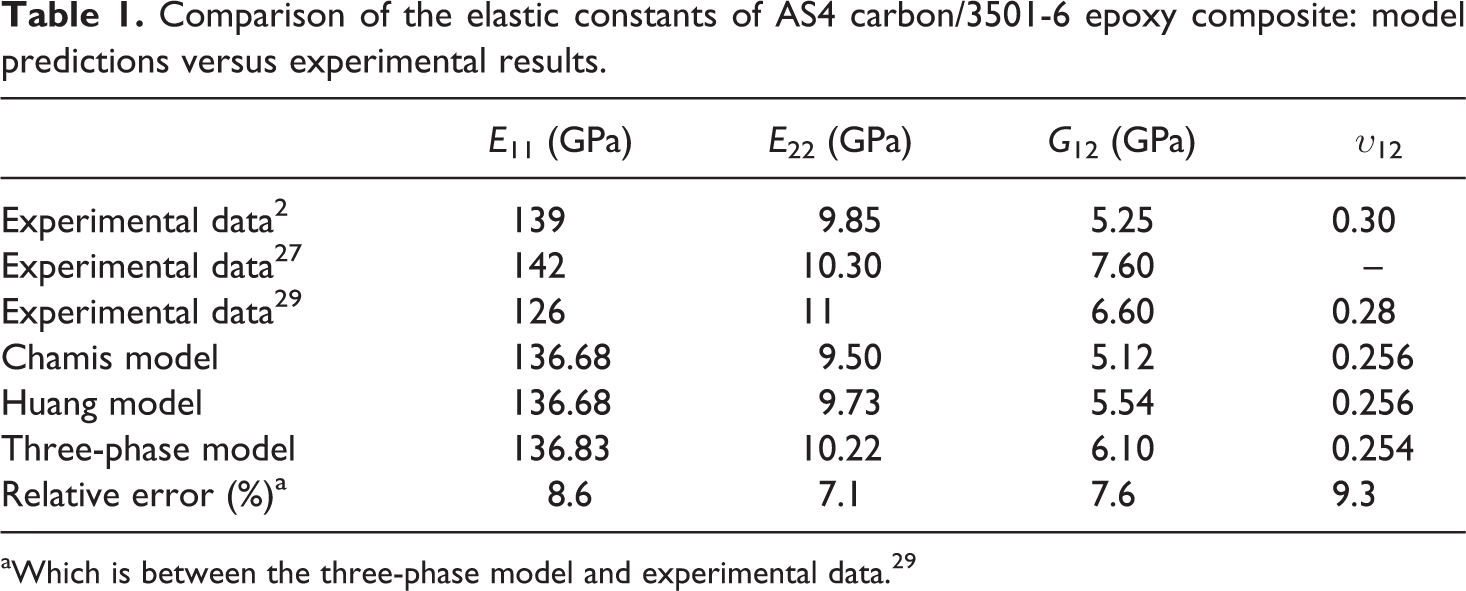
aWhich is between the three-phase model and experimental data. 29
For some other FRP composites, such as Kevlar fiber composites, there are few experimental results about the relationship of the modulus and fiber volume fraction. However, an investigation by Herbert Yeung and Rao 30 indicated that the experimentally measured mechanical properties of Kevlar fiber composites are approximately an order of magnitude lower than those predicted by various theoretical models, due to the rapid growth of fiber packing defects in the practical test of the composites. So the three-phase model will also not applicable to the composites for the difficulty of accurately evaluating their interfacial defects, though the pair of empirical parameters α and β (between 0 and 1.0) in our model can indirectly reflect the imperfect fiber–matrix bonding to some extent.
Dynamic three-phase model of FRP composites
Most composite designs are based on the material properties obtained by quasi-static tests. 31 However, there are many situations that a composite structure experiences dynamic loading; or in other word, a composite structure could undergo an impact-induced deformation of a high strain rate. Experimental investigations 13,14 have shown that the mechanical properties of composites at a high strain rate are quite different from that at a low strain rate. It is therefore essential to well understand the dynamic mechanical properties of a composite in order to design a composite structure that would not fail under high strain rate loading. To this end, the rate dependence must be accommodated in the constitutive modeling. That is, the micromechanical three-phase model established above should be modified to reflect the strain rate effect of a composite.
Establishment of a rate-dependent three-phase model
In the two-phase model, it has been confirmed that the strain rate effect of a FRP composite is mainly determined by its matrix material 14 and that the rate effect of the fiber can be neglected. 13 In the three-phase micromechanical models, the effects of interphase on the mechanical properties of composites were taken into account, 32,33 however, the strain rate effect of interphase has not been considered. Thus, the rate effect of interphase on the dynamic properties of FRP composites will be introduced in our dynamic three-phase model to be established below.
As we know, a single Maxwell viscoelastic element can be used to analyze the relaxation of a solid but is not suitable to describe a viscoelastic material because the strain in a solid under a constant stress should not become infinite with increasing the time. To resolve the problem of infinite strain, we apply an elastic element connected in parallel with the Maxwell element, which is reasonable, according to Karim,
16
to represent the viscoelastic behavior of the matrix in a FRP composite. By using this improved Maxwell viscoelastic model, the stress in the matrix can be obtained as:




Em(t) is the dynamic modulus of the matrix. At the same time, the dependency of elastic modulus on strain rate also relates to the elastic interaction within the interphase between the fibers and the matrix, in addition to the polymer matrix sensitivity to strain rate. The dynamic moduli of the transverse isotropic interphase along the longitudinal and transverse directions can be deduced based on its static moduli in equations (21) and (22):


Then, by referring to the dynamic stress expression of the matrix in equation (29), the dynamic stress of interphase along the longitudinal and transverse directions can be gotten below:


By substituting equations (29), (33), and (34) into equation (1), the dynamic three-phase model with strain rate effect can now be established as the following form:

In the case of constant strain rate, 
Under a given strain rate, since there is a conversion of t = ε11/ε0, the above equation can be further expressed as the following stress–strain constitutive relationship:


Validation of the rate-dependent three-phase model
The dynamic stress–strain curves under various strain rates have been experimentally obtained on testing a CF130/epoxy composite and a glass fiber (GF)/epoxy composite. These allow us examining the reliability of our model predictions.
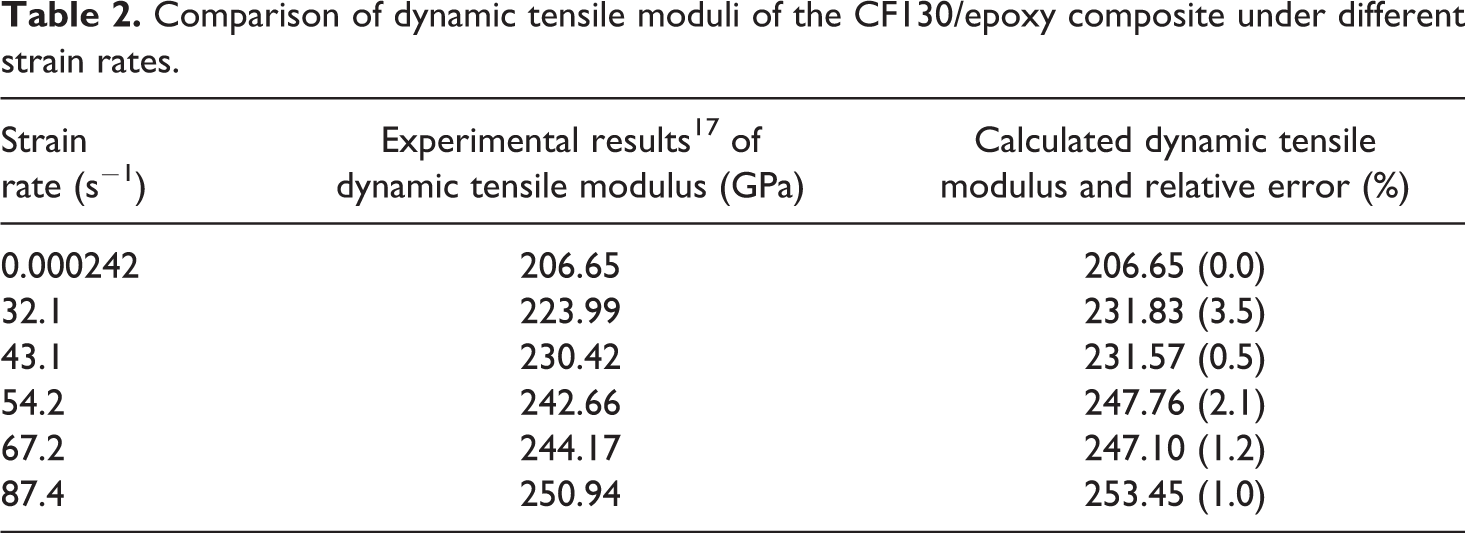
The comparison of calculated dynamic tensile moduli and measured results 17 has been listed in Table 2 for a CF130/epoxy composite under different strain rates. The longitudinal modulus of FRP composites, E11, which corresponds to a quasi-static loading condition, should be a constant value relative to strain rate because the rate effect has been separated from the modulus in the model of equation (36). However, the longitudinal dynamic modulus of composite, E11(t), increases with strain rates as indicated in the table. The test data of dynamic tensile modulus of the composite within a medium strain rate range can be well fitted by our model (k = 0.0043 GPa ⋅ s and θ = 5 × 10⁻⁵ s).
Comparison of dynamic tensile moduli of the CF130/epoxy composite under different strain rates.
As shown in Figure 5, our new model is able to precisely predict the experimental measurement 17 of quasi-static and dynamic properties of the CF130/epoxy composite. It can be seen that although the dynamic stress–strain curve predicted at a given strain rate seems to be almost linear, the dynamic modulus actually varies slightly with the strain during the deformation process. Besides, it has been known based on various findings that the rate sensitivity of elastic modulus depends on the type of FRP composites.
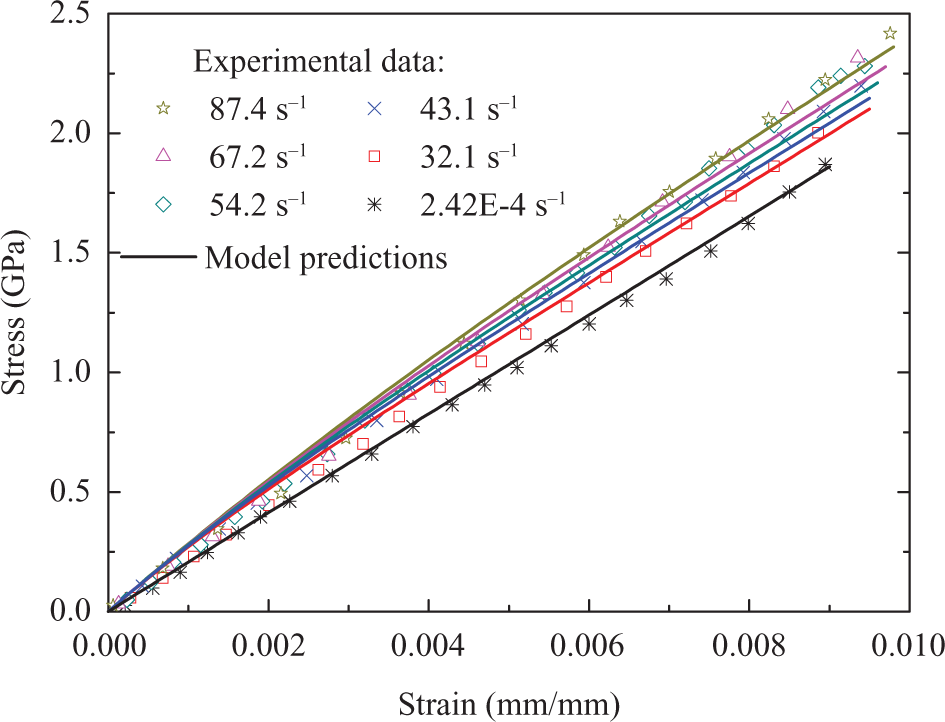
Comparison between model predictions and experimental measurements 17 of the longitudinal tension of CF130/epoxy under medium strain rates.
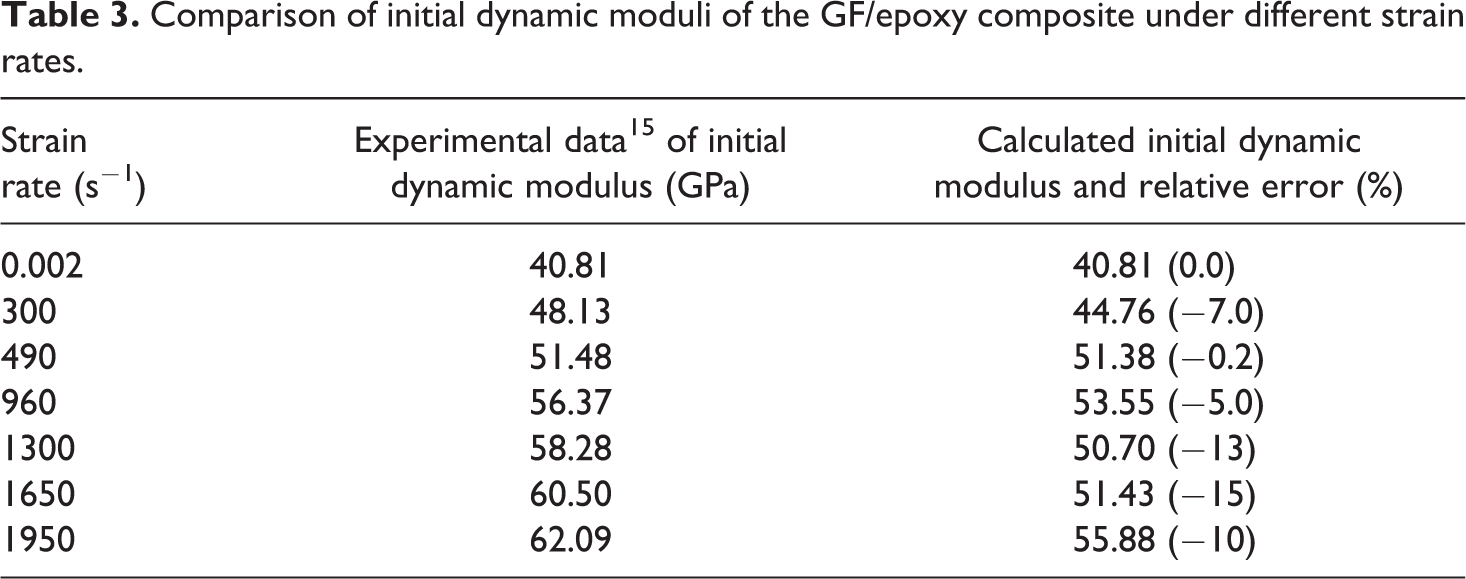
The calculated dynamic moduli for a GF/epoxy composite under different strain rates were also compared with those of tensile impact tests 15 in Table 3. The moduli compared are the initial values of dynamic moduli as the dynamic modulus at a given strain rate varies with strain during the deformation process. The average relative error of initial modulus is about 8%. Similarly, the longitudinal modulus in the model should be the constant value measured from the quasi-static test, however, the parameters k and θ are rate dependent and need be determined individually at different strain rates. Finally, it was shown in Figure 6 that our model’s predictions of stress–strain curves at different strain rates can reflect the experimental results 15 of the GF/epoxy composite very well.
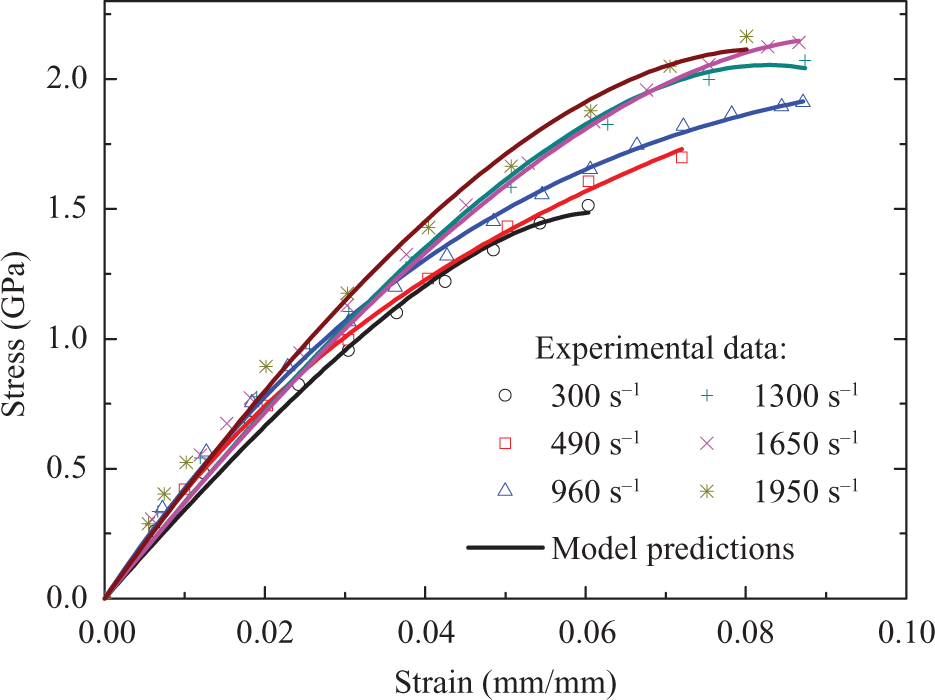
Comparison between model predictions and experimental measurements 15 of the longitudinal tension of GF/epoxy under high strain rates.
Comparison of initial dynamic moduli of the GF/epoxy composite under different strain rates.
Conclusions
By considering the influence of the fiber/matrix interphase on the mechanical properties of FRP composites, a micromechanical three-phase model has been successfully developed, in which the interphase was taken as a transversely isotropic material in the similar way to the fiber for their close relationship. Our study has shown that the three-phase model can predict well the experimental measurements on CFRP and GFRP composites, under both quasi-static and high strain rate loading conditions. The quasi-static three-phase model performs better than other traditional two-phase models especially in predicting the mechanical properties of FRP composites with a high fiber volume fraction. The dynamic three-phase model should be more important in describing the transverse strength of FRP composites which is closely related with debonding always occurring within the interfacial region. For nano-fiber composites, since the volume fraction of interphase dramatically increases to a level close to that of fiber, a three-phase model will be indispensable due to the unneglectable interphase effect.
Footnotes
Declaration of Conflicting Interests
The author(s) declared no potential conflicts of interest with respect to the research, authorship, and/or publication of this article.
Funding
The author(s) disclosed receipt of the following financial support for the research, authorship, and/or publication of this article: This research work was supported by the National Natural Science Foundation of China (no. 11272286 and no. 51221004), the Zhejiang Provincial Natural Science Foundation of China for Distinguished Young Scholars (LR13E050001), and the Open Foundation of State Key Lab of Explosion Science and Technology of China (no. KFJJ15-12M). The third author appreciates the continuous support from the Australian Research Council for his research.