



Abstract
The current study details on the moisture absorption behavior and its effect on the hybrid bionanocomposites of polylactic acid (PLA). In order to improve the compatibility between PLA and fiber, silanization was performed on fiber as well as C30B nanoclay was used as the secondary reinforcing filler. Silanization was confirmed through Fourier transform infrared study. In addition, thermogravimetric analysis (TGA) of fiber proved that hydrophilicity of fiber could decrease after silane treatment. Bionanocomposites of PLA were prepared using melt blending technique followed by injection molding. Samples were immersed in distilled water for 30 days at room temperature to analyze the moisture absorption behavior and its kinetic parameter. The results from moisture study revealed that PLA/fiber/nanoclay bionanocomposites have higher moisture resistance than PLA/fiber biocomposites. Further, the changes in mechanical as well as thermal properties of PLA and its composites during moisture absorption have been carried out. With increase in percentage of moisture absorption, the mechanical strength and modulus of composites decreased significantly, however, the unnotched impact strength and elongation at break found to improve. TGA of PLA and its composites revealed that thermal stability of composites decreased after moisture absorption. The morphology of the composites was monitored during moisture absorption, and the result revealed that moisture absorption has severely damaged the matrix–fiber interface.
Introduction
In recent years, concern regarding the health and environmental hazards has forced industries to search for new materials that can substitute the nondegradable petroleum-based polymer with degradable renewable resource-based biopolymer, which will significantly reduce the hazardous waste and carbon dioxide (CO2) emissions. 1 Polylactic acid (PLA) is a material derived from renewable resources can be preferred over nonrenewable fossil products to develop fully biodegradable composite materials. 2,3 PLA has excellent properties for more extensive applications including the automotive, packaging, and medical sectors due to its good mechanical properties, hydrophobic nature, and easy processability. 4 The major negative influence on the appliance of PLA is due to its high cost, which can be improved through the addition of abundantly available natural fibers.
Biocomposites are lightweight, recyclable, cost-effective polymer composites and are fabricated from the natural or synthetic biodegradable polymer matrix and fillers. 5 Both moisture and temperature affect the biocomposite performance like high specific strength and stiffness. 6 The polymer composites reinforced by natural fiber are gaining widespread interests and are continually growing in the market due to abundant availability, biodegradability, low density, and cost effectiveness of natural fiber. 1,7 Moreover, natural fiber will also reduce the exhaustiveness of synthetic fiber owing to its environmental friendly nature. Banana fiber is a promising natural fiber and a cheaper substitute for synthetic fibers, which hold both adequate strength and stiffness performance. However, the hydrophilic character of natural fiber due to the presence of inherent hydroxyl groups 4 makes it more prone to moisture uptake and binds them through hydrogen bonding. Absorbed water molecules impregnate through the fibers and resulting in the formation of the voids and microcracks in polymer composites. It causes a reduction in the stress transfer between fibers and matrix and hence decreases the mechanical properties. 7 –13 This remains the key issue to be addressed in terms of overall performance for outdoor applications.
Several research is being carried out to improve the moisture resistance as well as mechanical properties by improving the inherent compatibility between the hydrophilic fibers and hydrophobic matrix by chemical modification of natural fibers like silane treatment, mercerization, and so on. 14,15 The mechanical as well as moisture barrier properties of these biocomposites can be further enhanced through the addition of nanoclay like C30B 16 due to superior specific strength, stiffness, and enhanced barrier properties against oxygen, nitrogen (N2), CO2, and water vapour. 5,13
Moisture absorption into natural fiber-reinforced polymer composites has been explained by three different mechanisms. The principle mechanism is penetration of water molecule by diffusion into the matrix via the interpolymer chain micro-caps. Capillary transport tracing of water molecules into gaps and flaws of composites via the fiber and matrix interface is the second common mechanism. The third mechanism is percolating flow and storage of water molecule in the pores and microcracks of the matrix and composites, which causes swelling of biocomposites during the compounding process. 9,11,16,17 Since the matrix, PLA, is in hydrophobic nature, the moisture absorption largely occurred through the natural fiber, which is used as reinforcing filler. In general, the main drawback of natural fiber reinforced is hydrophilic nature of fiber, which adversely affect the overall properties of composites. Thus moisture absorption study in natural fiber-reinforced composite is a key issue to be addressed in research and development to fabricate natural fiber biocomposite with the positive hybrid effect for outdoor applications. Several studies have been carried out to investigate the moisture absorption characteristics of natural fiber and nanoclay-reinforced polymer composites. 5,13,18 –21
The objective of the present study was to characterize the moisture absorption and to evaluate mechanical properties of composites for 30 days as a function of moisture absorption. Scanning electron microscopy (SEM) and transmission electron microscopy (TEM) have also been done to observe the morphological properties of the filler–matrix interfacial bonding. Thermogravimetric analysis (TGA) studies have been used to investigate the effect of moisture absorption on thermal properties of PLA and its composites.
Experimental
Materials
PLA (4042 D; weight-average molecular weight = 165,000 g mol−1) was purchased from NatureWorks LLC (Minnetonka, Minnesota, USA). Banana fibers (density 1.35 g cc−1) were supplied by Chandra Prakash & Co (Jaipur, Rajasthan, India). Aminopropyltriethoxysilane (APS), a product of Evonic Degussa (China), was supplied by Aroma chemical agencies (New Delhi, India). Organically modified montmorillonite nanoclay with methyltallowbis (2-hydroxyethyl) ammonium (Cloisite 30B) was obtained from Southern Clay Product Inc. (Gonzales, Texas, USA).
Chemical treatment of banana fiber
The banana fibers were immersed in 2% detergent solution at room temperature for 2 h and then washed with distilled water to remove dust and impurities. Washed fibers were dried in air for 1 day and then in the vacuum oven at 80°C for 12 h. These dried fibers (untreated banana fiber (UTB)) were used for silane treatment. 3-APS (0.6%) was mixed with ethanol/water mixture in the ratio of 6:4 and stirred for about 15 min to facilitate proper mixing of the solution. Banana fibers were dipped into the silane solution for 1 h. Then the fibers were washed with distilled water and dried in air for 1 day. Finally the fibers were dried in vacuum oven at 80°C for 12 h and these silane-treated banana fibers (SiB) were chopped into 2–3 mm length.
Preparation of composites
PLA and chopped banana fibers (2–3 mm length) were pre-dried at 60°C for 4 h, whereas the nanoclay was pre-dried at 80°C for 8 h in a vacuum oven. Biocomposites of PLA with 30 wt% UTB and SiB were prepared using melt blending technique employing a batch mixer (Haake PolyLab-Rheomix 600, Vreden, Germany) at a temperature of 180°C with a screw speed of 60 r min−1 for 15 min mixing time. The melt mixes obtained were cooled to room temperature, granulated, and conditioned at 60°C for 2 h prior to specimen preparation. Subsequently, the melt mixes were molded by employing a mini injection jet (DSM 15 mL; Xplore, Netherlands) at 175°C, 180°C, and 180°C temperatures for three successive zones with a screw speed of 60 rpm/min−1. The bionanocomposites were also prepared using the above process wherein PLA/SiB biocomposites along with 3 wt% of nanoclay was taken. The volume fractions of fiber and nanoclay have been selected based on our previous findings. 22,23
Characterization techniques
FTIR spectroscopy
Fourier transform infrared (FTIR) analysis of the fibers (about 3 mg) was carried out using Thermo Nicolet 6700 FTIR spectrometer (Thermo Fischer Scientific, Waltham, Massachusetts, USA). The FTIR spectra were recorded from 400 to 4000 cm−1 with 4 cm−1 resolution. An average of 64 scans were recorded for each spectrum.
Moisture absorption measurement
The moisture absorption amount of PLA and its composites were evaluated according to ASTM D 570-81 standard. For moisture absorption study, disk samples with 40 mm in diameter and 1.66 mm in thickness, preconditioned at 50°C for 24 h, cooled in a desiccator, and weighed (W0), were fully dipped in distilled water at room temperature. At prescribed intervals, the samples were taken out, wiped with tissue paper to remove excess water on the surface, weighed, and immediately returned into the water. The total weight gain of sample with time was periodically recorded. An average value from three replicates of each sample was taken for each of the tests. The following equation was used to determine the percentage of moisture absorption (Mt) by the composites over a period of 30 days:

where W0 is the initial weight of the sample before moisture absorption and Wt is the weight of the sample at time t during moisture absorption. 4 –13,24 –30
Mechanical property measurement
Samples for mechanical tests were performed before and after immersing in distilled water for different time intervals of 10, 20, and 30 days in order to determine the influence of moisture in the mechanical properties. The composites with 165 × 12.7 × 3 mm3 dimension were tested for tensile strength and young’s modulus as per ASTM D 638 standard using universal testing machine (Instron, UK). The crosshead speed was set at 10 mm min−1 with a gauge length fixed at 50 mm. The composites were tested for flexural strength and flexural modulus using three-point bending mode using the same universal testing machine in accordance with ASTM D 790 standard. Samples of dimension 127 × 12.7 × 3 mm3 were taken for flexural test at a crosshead speed of 1.33 mm min−1. The unnotched impact strength of composites was tested with dimension 63.5 × 12.7 × 3 mm3 in an impactometer (Tinius Olsen, Shakopee, Minnesota, USA) according to ASTM D 256 standard.
Morphological analysis
The morphology of the composites before and after moisture absorption for different time intervals was observed using SEM and TEM in order to understand the effect of moisture absorption on the microstructure of composite surface. The morphology of the unnotched impact fractured surfaces of the composites was observed and analyzed using SEM-EVO MA 15 (Carl Zeiss, SMT Ltd, Germany). The samples were sputter coated with gold/palladium mixture to avoid subsequent charging before measurement by SEM. TEM (JEM 1400, JOEL, Japan) was also used to evaluate the dispersion of clay within the PLA/SiB/C30B bionanocomposites. Bionanocomposites were subjected to a microtome using a Cryo Leica EM UC6 instrument (Leica instruments, Switzerland) to obtain a thin section in nanometer level (65 nm). The section was loaded on the grids and subsequently subjected to TEM imaging.
Thermal property measurement
The TG analyzer (Q50; TA instruments, New Castle, Delaware, USA) has been used to study the thermal degradation temperature of fibers as well as composites. About 5–10 mg of sample was heated from 50°C to 600°C at the rate of 10°C min−1 under N2 flow. The initial degradation temperature (Ti), the temperature when the weight loss is 50% (T50), and maximum degradation temperature (Tmax) were determined from weight loss curves. Corresponding derivative thermogravimetric (DTG) curves were examined.
Results and discussion
Characterization of fiber
FTIR spectra of UTB and SiB are illustrated in Figure 1. In case of UTB, the characteristic absorption peaks at 1026, 1238, 1312, 1620, 1726, 2903, and 3328 cm−1 were observed. The absorption peak at 1026 cm−1 is related to the –C–O stretching vibrations. The peak at 1238 cm−1 corresponds to C–O bending vibration of acetyl group in pectin or hemicellulose and at 1312 cm−1 corresponds to CH2 wagging or rocking vibration of cellulose and hemicellulose, whereas the peak at 2903 cm−1 is mainly due to the C–H stretching vibration of cellulose and hemicellulose of fiber. The C=O stretching vibration of carboxylic acid group in pectin and ester group in hemicellulose was exhibited at 1726 cm−1. Similarly, the absorption peaks at 1620 and 3328 cm−1 are attributed to the bending vibration of absorbed water molecule as well as stretching vibration of hydroxyl group in cellulose and hemicellulose, respectively. 31
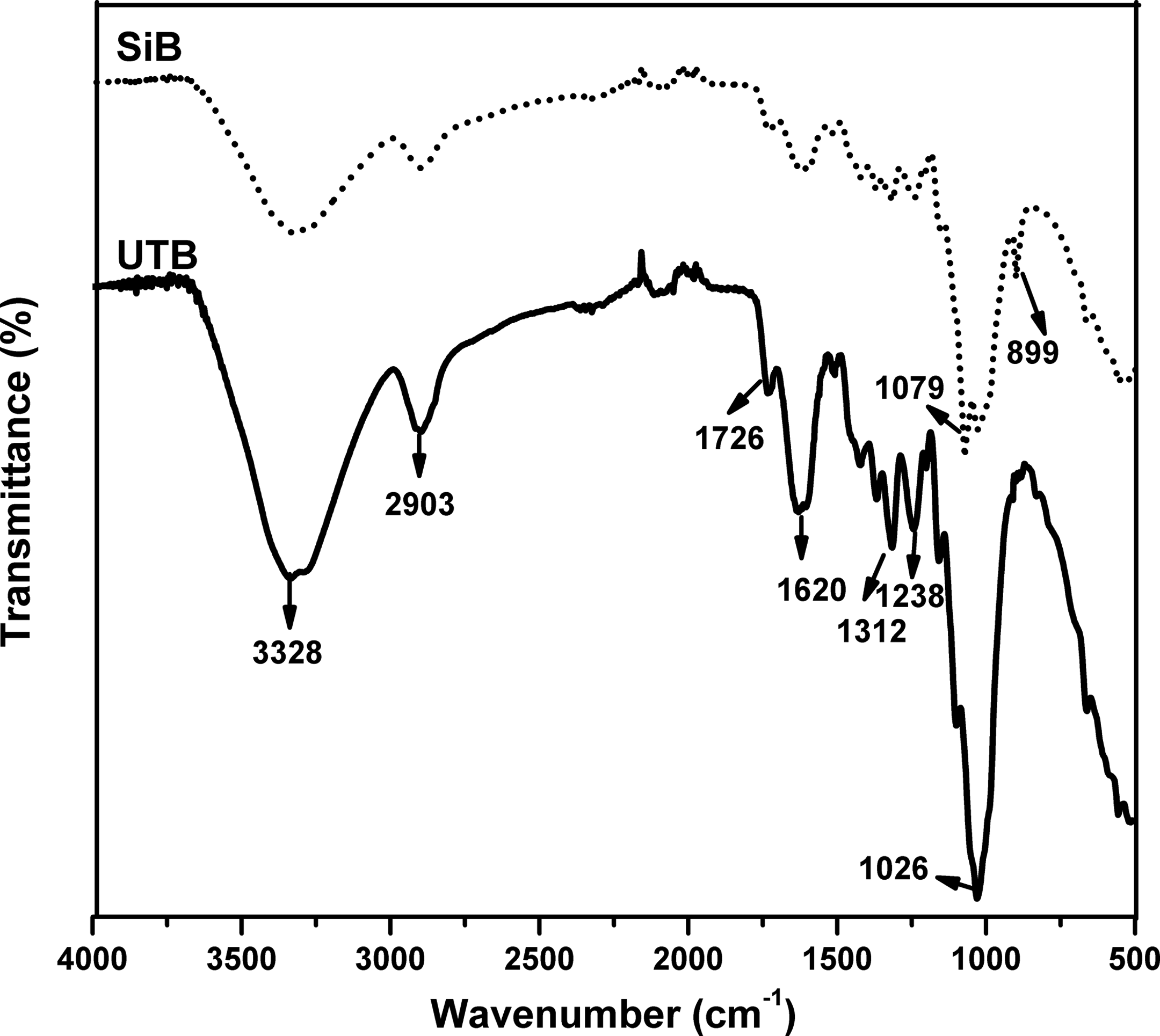
FTIR spectra of untreated and SiB fibers. FTIR: Fourier transform infrared; SiB: silane-treated banana fiber.
In case of SiB, additional peaks were observed at 1079 and 899 cm−1, highlighting the difference between UTB and SiB. The absorption peak at 1079 cm−1 represents the symmetric and asymmetric stretching vibration of –Si–O–Si or –Si–O–C groups, while the peak at 899 cm−1 is due to the symmetric and asymmetric stretching vibrations of Si–O–H group. In adsorption process, the reactive silanol gets adsorbed on the surface of fiber by forming hydrogen bond with hydroxyl group of fiber (–Si–O–H) and subsequently, the free silanol react with each other and form –Si–O–Si– bond. The hydrogen bond between the silanol and the hydroxyl group of fiber can be converted into –Si–O–C– bond, during grafting reaction. 32 Moreover, after silane treatment, the intensity of peak at 1620 cm−1 is decreased significantly, which reveals that the SiB possesses more water resistance than untreated one. In addition, the low intense peak at 1726 cm−1 of SiB as compared to UTB shows the partial removal of hemicellulose due to silane treatment. 33
The TGA and corresponding DTG curves were used to estimate the thermal degradation stability and weight loss of fiber as a function of temperature. Figure 2 displays the TGA and DTG curves of UTB and SiB. The TGA and DTG curves of both UTB and SiB show two-step decomposition patterns, which suggest the coexistence of more than one degradation process, due to pyrolysis of hemicellulose, cellulose, and lignin, which are constituents of fiber. Various literatures 34 –36 report that the thermochemical degradation of hemicellulose, cellulose, and lignin occurs at temperature range of 150–350°C, 275–350°C, and 350–500°C, respectively. Therefore, among the two-step decomposition observed for fiber, the first step may be due to the decomposition of hemicellulose and amorphous cellulose, whereas the second step is due to decomposition of crystalline cellulose and lignin. As shown in Figure 2, low-temperature shoulder peak of hemicellulose and cellulose are obvious and the high-temperature “tails” correspond to lignin and crystalline cellulose, which are less intense due to less lignin content observed in banana fiber. Further, from the TGA thermograms, it can be seen that the weight loss of SiB was less in the initial stage as compared to UTB. It can be stated that the hydrophilicity of fiber has decreased after silane treatment. In case of UTB, it can also be observed that the first and second degradation temperature was observed at 255°C and 358°C, respectively. However, in comparison to UTB, the initial and second degradation temperatures were improved to 275°C and 370°C for SiB, respectively. Silane treatment improved the maximum degradation temperature from 490°C to 530°C and this indicates that the decomposition rate of SiB is lower as compared to UTB. Further, less magnitude peak at higher temperature was observed in DTG curves of SiB as compared to UTB, confirming the slow decomposition rate of SiB.
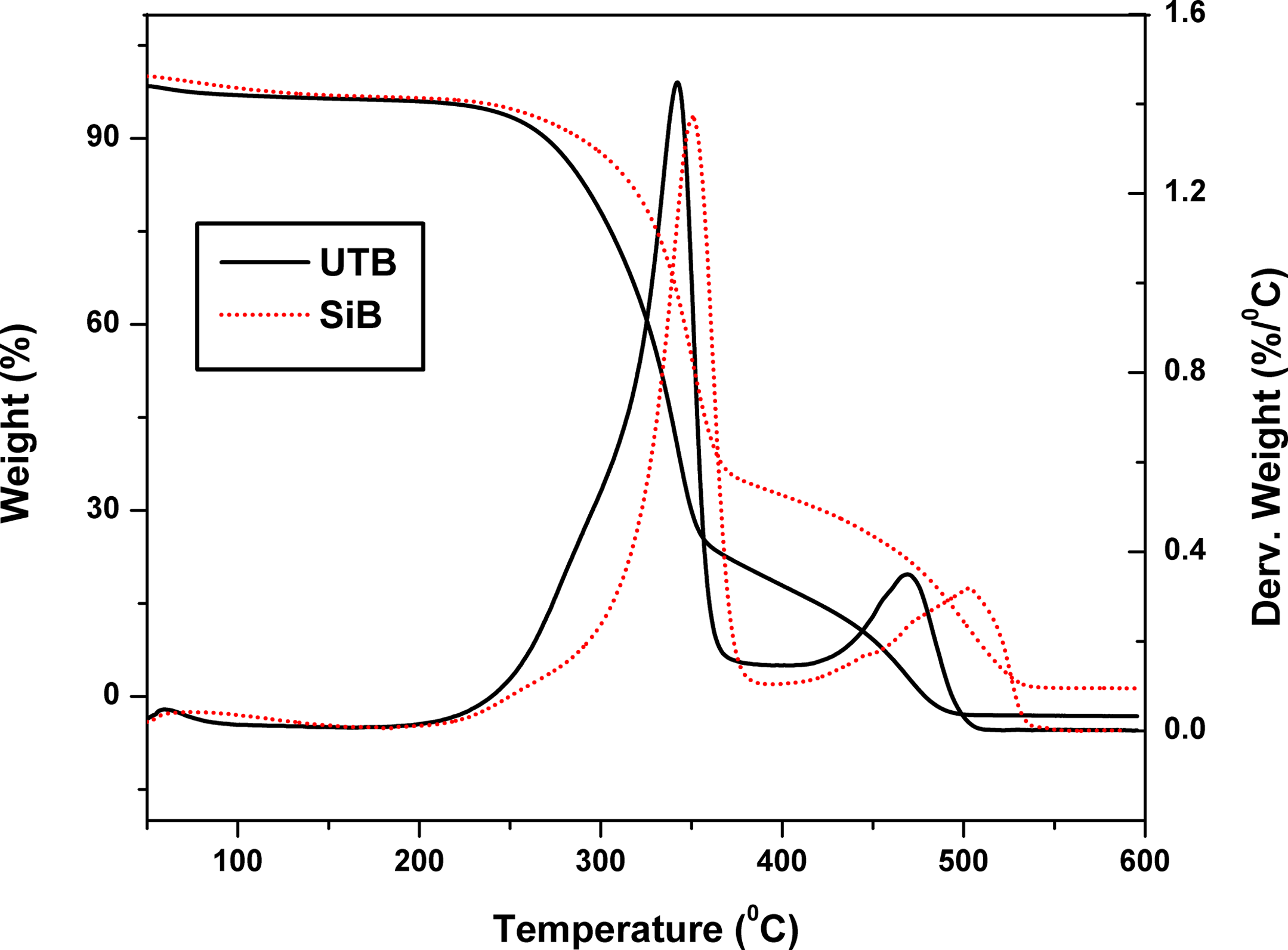
TGA and DTG thermograms of untreated and SiB. TGA: thermogravimetric analysis; DTG: derivative thermogravimetry; SiB: silane-treated banana fiber.
Moisture absorption of composites
The influence of the addition of untreated or silane-modified fiber and nanoclay on the moisture absorption rate of PLA is plotted as a function of time, as shown in Figure 3. It can be clearly seen that all composites of PLA display identical curves. Moisture absorption is increasingly linear and rapid with respect to time at the initial stage, gradually absorption rate slows down, and finally approaches leveling off at the saturation state. 4,5,8,9,25 Due to the hydrophobic nature of the PLA, this can absorb only moisture up to 0.878% (M∞) at a maximum moisture exposure time. However, in case of biocomposites and bionanocomposites, hydrophilic banana fiber content will be the major factor affecting the moisture absorption. From Figure 3, it is clearly observed that fiber-reinforced biocomposites absorb moisture very rapidly in first 10 days and later an equilibrium level was obtained. The higher moisture absorption in PLA/UTB biocomposite (M∞ = 5.27%) was expected due to the presence of high amount of free hydroxyl group of fiber, which contributes more moisture penetration into the fiber–matrix interface through the microcracks induced by fiber swelling. It is interesting to note that in PLA/UTB biocomposites, due to weak interactive force between fiber and matrix, there is a chance of the composites to get damaged, leading to more moisture penetration into the interface region through active microcracks in the matrix. 26
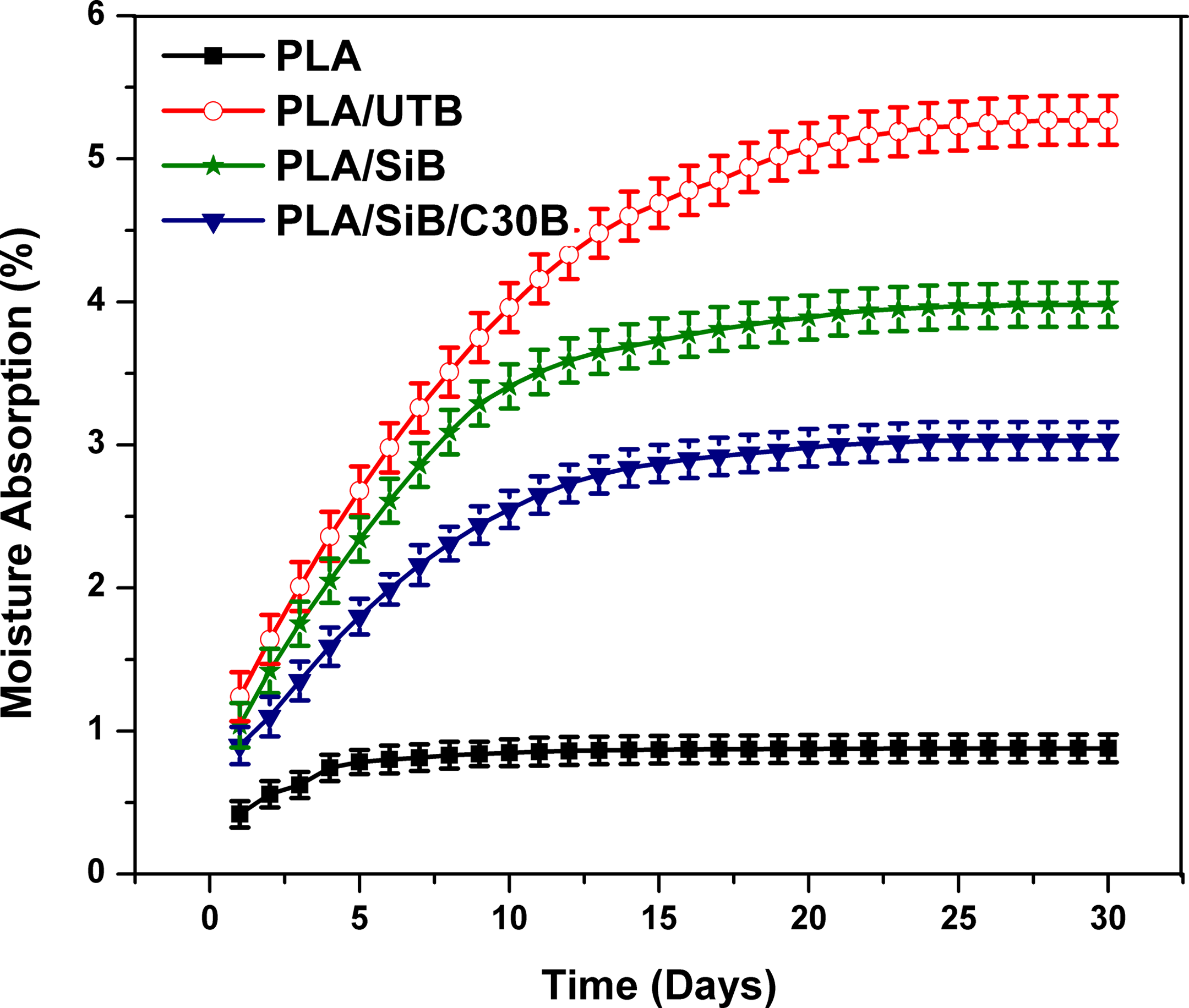
Moisture absorption of PLA and its composites at room temperature. PLA: polylactic acid.
PLA/SiB shows low moisture absorption (M∞ = 3.98%) and lesser time to reach the equilibrium as compared to PLA/UTB biocomposite. The silane treatment on fiber makes the moisture absorption difficult and suppresses the microvoids formation in the resulting composites. The silanol, which is formed during silane treatment, reacts with the hydroxyl groups of both PLA matrix and banana fiber resulting in less hydrophilicity by decreasing the free hydroxyl content in fiber as described in TGA. The better adhesion between matrix- and silane-treated fibers decreases the moisture absorption rate and the velocity of diffused water molecules. 25 Furthermore, the addition of C30B nanoclay effectively decreases the moisture absorption rate (M∞ = 3.03%) in PLA/SiB/C30B bionanocomposites can be attributed to the moisture barrier properties of nanoclay, which hinders the water flow from all directions. 5,18 In bionanocomposites, the nanoclay changes the direct fast flow of the water molecules to a maze-like path and hence takes more time for water diffusion, resulting in decreased equilibrium moisture absorption rate. 7,13,16
Moisture absorption behavior and transport coefficient
The moisture absorption process in polymer composites can be modeled according to Fick’s second law of diffusion formula 19,27 :

where C is the concentration of diffusing substance, x is the space coordinate of sample, and D is the diffusion coefficient, which is related to the ability of the solvent molecule to move among the polymer chains. Different solutions have been developed in order to describe the moisture absorption behavior of the materials. An analytical solution of moisture absorption for one-dimensional plane sheet under nonsteady state can be expressed by 11,18,19,26,27,30 :

where h denotes the thickness of disk, t is the time, and j is the summation index.
Moisture absorption Mt, at the initial stage, increases linearly with time, and the equation (3) can be simplified as follows 5,9,12,13,17,19,26 –28 :

The diffusion behavior of water molecule in polymer composite can be classified according to the relative mobility of the water molecule and the polymer chain segments, which are Fickian diffusion behavior, non-Fickian diffusion behavior, and anomalous diffusion behavior. If the value of n ≤ 0.5, then the diffusion is Fickian, in which moisture absorption rate is much less than the polymer chain mobility, where polymer rapidly reach the equilibrium level and maintain with independence of time. If the value of n is between 0.5 and 1, then the diffusion is said to be non-Fickian, in which moisture penetration rate and polymer chain relaxation processes are comparable. When the value of n > 1, then the diffusion is anomalous in nature, in which the moisture penetration rate is much greater than polymer chain relaxation process due to the development of swollen outer part. 9 The diffusion behavior of water molecule in polymer composite can be distinguished theoretically by the shape of the sorption curve represented by the following equation:

where Mt is the moisture content at the time t, M∞ is the moisture content at equilibrium, k is a constant, which indicates the interaction between polymer composite and moisture, and n indicates the mode of diffusion. The parameters n and k are essential factors to give more idea about the diffusion mechanism of moisture inside the composites. The values of n and k are analyzed from the slope of a straight line plot of

Figure 4 shows fitting of the moisture absorption experimental data to equation 6. The values of n and k obtained from the fitting curves of PLA and its composites are given in Table 1.
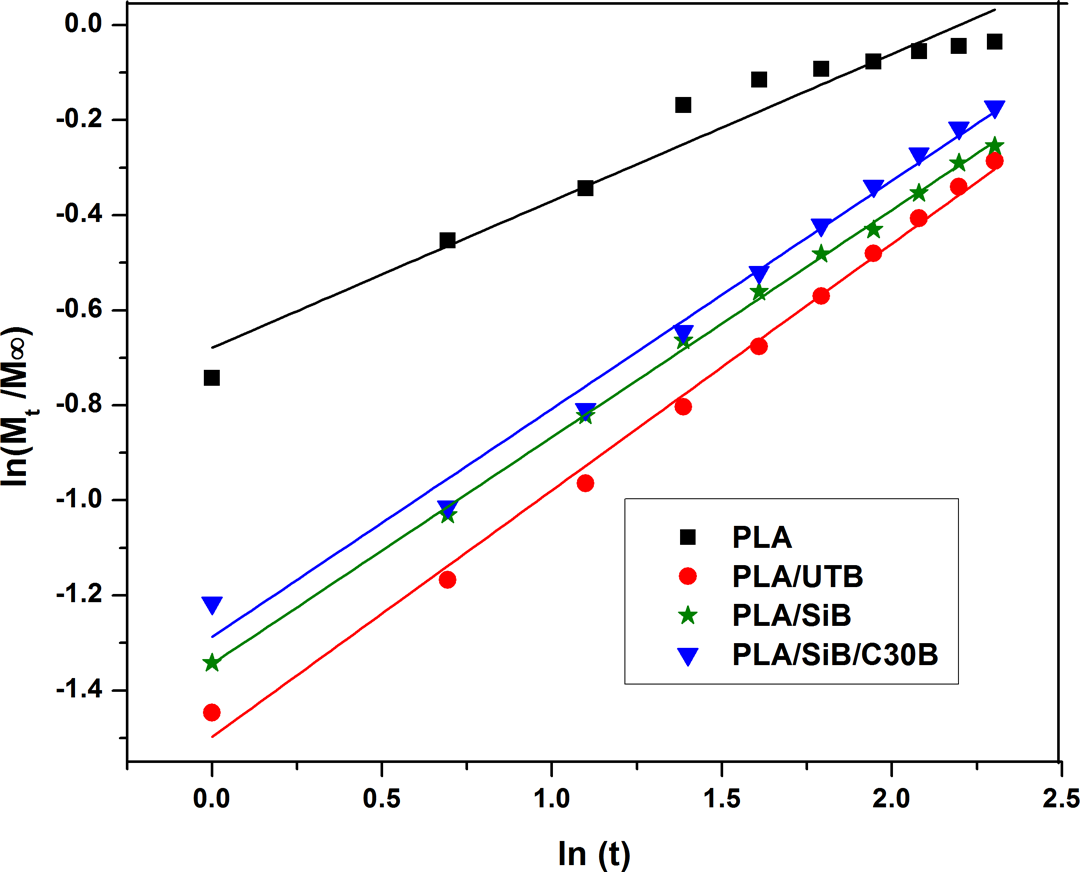
Diffusion case fitting plots for composites at room temperature.
Diffusion case selection parameters n and k.
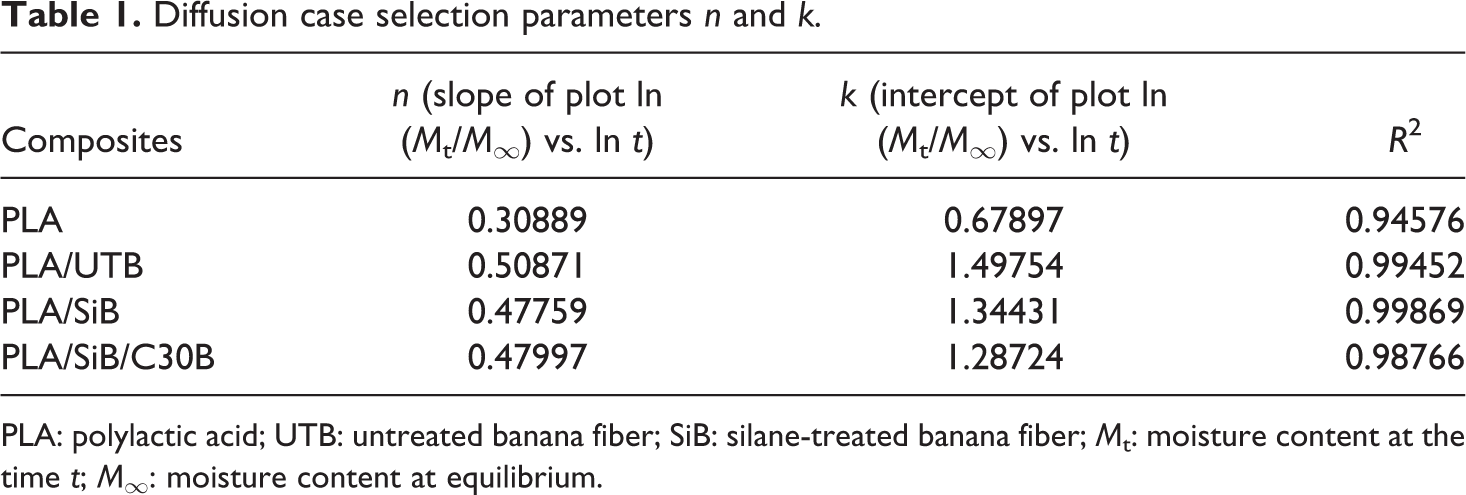
PLA: polylactic acid; UTB: untreated banana fiber; SiB: silane-treated banana fiber; Mt: moisture content at the time t; M∞: moisture content at equilibrium.
The PLA/UTB showed the highest k parameter value due to weaker fiber–matrix interface as compared to PLA/SiB biocomposite. As a consequence of less rate polymer chain relaxation, PLA/SiB/C30B bionanocomposite expressed lowest k value than biocomposites. The n values of PLA and its composites are very close to 0.5, hence the moisture absorption curves of PLA and its composites were found to obey the typical Fick’s law and its diffusion behaviors. Further attention will be focused on the analysis of transport parameter like diffusion coefficient, which shows the ability of water molecule to penetrate inside the composite material, sorption coefficient, and permeability coefficient. Moisture diffusion in the PLA and its composites is found to be Fickian diffusion, thus the equations (4) and (5) can be rewritten as:


The maximum moisture absorption depends on the rate of moisture flow into the composites rather than on moisture diffusion. 5 The average moisture diffusion coefficient can be calculated using the Fick’s steady state flow by applying the following equation 7,16,25,26 :

where k, can be calculated as the slope of the linear portion of the sorption curves, representing Mt as a function of the square root of time in second (Figure 5) and h is thickness of the disk (1.66 mm).
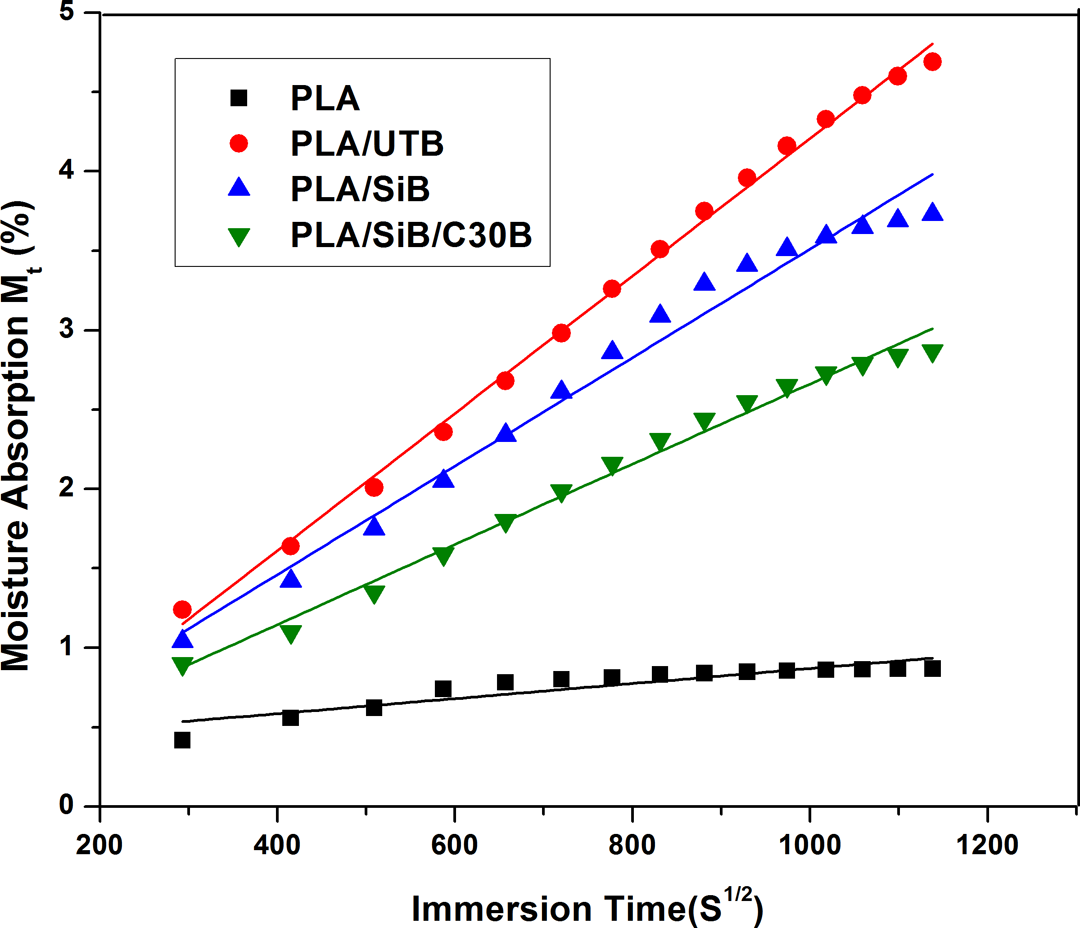
Moisture absorption fitting plots for composites at room temperature.
The permeability of moisture into PLA composites is dependent on both diffusion coefficient and the sorption coefficient of water in the polymer. Therefore, sorption coefficient S can be calculated using the following formula 25,37 :

where W0 is the initial weight of sample before moisture absorption and W∞ is the weight of water sorbed at equilibrium. The permeability coefficient (P) of the composite to water molecules can be expressed as a product of diffusion and sorption coefficient. 25,37

Table 2 represents the diffusion coefficients, sorption coefficient, and permeability coefficients of composites at room temperature. PLA/UTB biocomposites obtained highest moisture absorption and diffusion coefficient due to hydrophilic character of fiber, hence it favored the inclusion of water molecule inside the biocomposites. It can be observed that the maximum moisture absorption decreases significantly by about 24.48% for PLA/SiB biocomposites and 42.5% for PLA/SiB/C30B bionanocomposites as compared to PLA/UTB biocomposites. It can also be observed that the diffusivity decreased by about 3.9% for PLA/SiB biocomposites and 9.3% PLA/SiB/C30B bionanocomposites from 4.158 × 10⁻⁷ mm2 s−1 of PLA/UTB biocomposites. This reduction in moisture absorption at equilibrium and diffusivity of biocomposite and bionanocomposite can be attributed to the effect of silane-treated fiber, which blocked the accessibility of moisture as well as C30B nanoclay, providing a tortuous pathway for water transportation into composites. 28 The sorption values and the permeability coefficient for the PLA/SiB biocomposites and PLA/SiB/C30B bionanocomposites are decreased as compared to PLA/UTB biocomposites due to greater filler/matrix adhesion.
Values of diffusion coefficients, sorption coefficient, and permeability coefficient of composites.
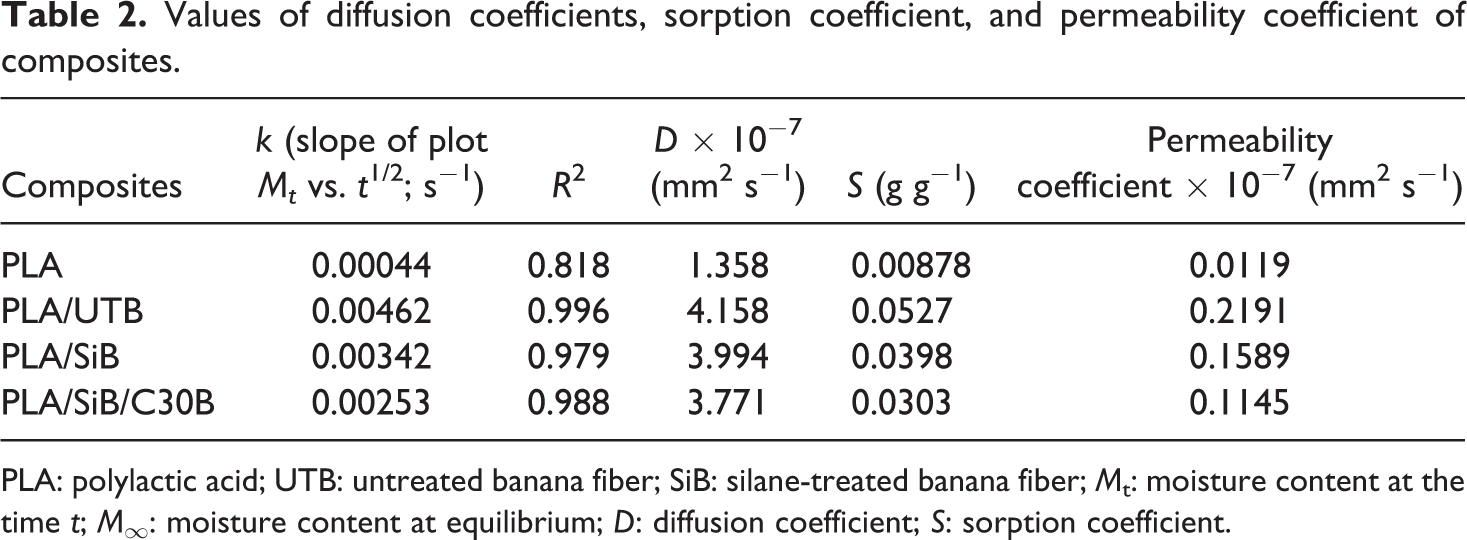
PLA: polylactic acid; UTB: untreated banana fiber; SiB: silane-treated banana fiber; Mt: moisture content at the time t; M∞: moisture content at equilibrium; D: diffusion coefficient; S: sorption coefficient.
Effect of moisture absorption on mechanical properties
Figure 6 illustrates the typical tensile stress–strain curves of PLA and its composites before and after 30 days of moisture absorption. It can be observed that the addition of rigid fiber and C30B nanoclay into the PLA matrix changes the tensile stress–strain curve pattern. The addition of SiB to the PLA matrix resulted in an improvement in the tensile stress as compared to PLA matrix. The maximum tensile stress increases with the addition of SiB followed by C30B nanoclay, however, tensile strain decreases due to the embrittlement of composites. After 30 days of moisture absorption, the maximum tensile stress of composites is found to decrease as compared to that in dry condition due to the weak stress transfer between fillers and the PLA matrix under wet condition. However, the tensile strain of all composites is significantly improved as compared to that in dry condition due to the presence of the water molecule, which acts as a plasticizing agent in the composites.
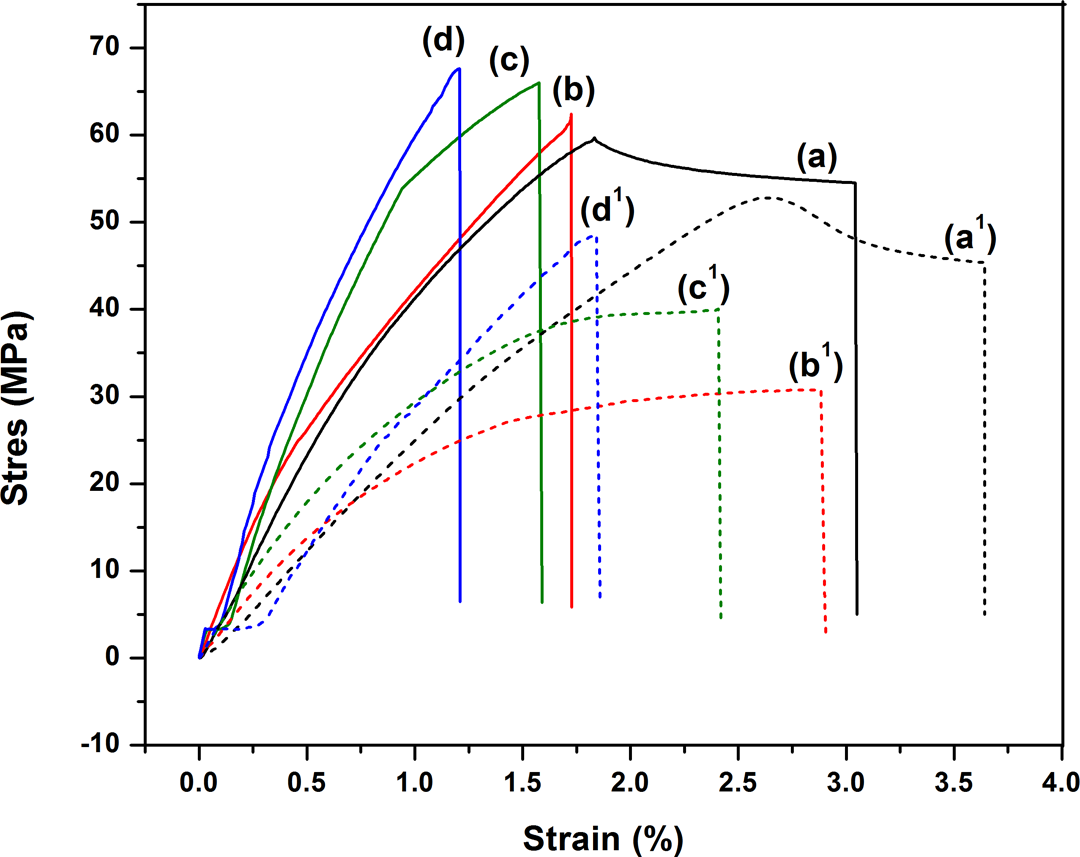
Typical stress–strain behavior of (a) and (a1) PLA; (b) and (b1) PLA/UTB; (c) and (c1) PLA/SiB; and (d) and (d1) PLA/SiB/C30B before and after 30 days moisture absorption. PLA: polylactic acid; UTB: untreated banana fiber; SiB: silane-treated banana fiber.
The tensile, flexural, and unnotched impact properties of PLA and its composites were investigated after moisture absorption for different time intervals as compared to that of the same composites before water immersion at room temperature. Figure 7(a) to (c) shows the tensile strength, tensile modulus, and elongation at break of these composites under dry and wet condition. The tensile strength of PLA, PLA/UTB, PLA/SiB, and PLA/SiB/C30B composites was 59.71, 62.45, 66.03, and 67.61 MPa, respectively, at dry condition. This result clearly indicates that the tensile strength of composites was increased due to the improvement in the interfacial adhesion between fiber and PLA as a function of silane treatment as well as the ability of C30B nanoclay to fill the microcracks formed in the composites. After moisture absorption, the composites present lower tensile strength and modulus as compared to dry samples. Due to the hydrophobic nature of PLA, the tensile strength gets reduced very slowly by 5.2%, 8.5%, and 11.6%, respectively, after 10, 20, and 30 days of moisture absorption as compared to dry sample. Moreover, the tensile strength of PLA/UTB, PLA/SiB, and PLA/SiB/C30B composites is dramatically reduced by increasing the time of water immersion. Tensile strength of PLA/UTB biocomposites decreased by 20.7%, 44.6%, and 50.7%, respectively, after 10, 20, and 30 days of the water immersion period due to the free hydroxyl groups present in natural fibers are more prone to absorb water molecules. This results in debonding of fiber–matrix interfacial region and leading to decrease in tensile strength of biocomposites. However, the tensile strength of PLA/SiB biocomposites after moisture absorption decreased slowly as compared to PLA/UTB biocomposite due to strong interaction between SiB and PLA. The decrease in tensile strength of PLA/SiB biocomposites was 20.2%, 32.1%, and 39.3%, respectively, after 10, 20, and 30 days of moisture absorption. The tensile strength of PLA/SiB/C30B bionanocomposites decreases by 12.1%, 25.9%, and 28.3%, respectively, after 10, 20, and 30 days of the moisture absorption.
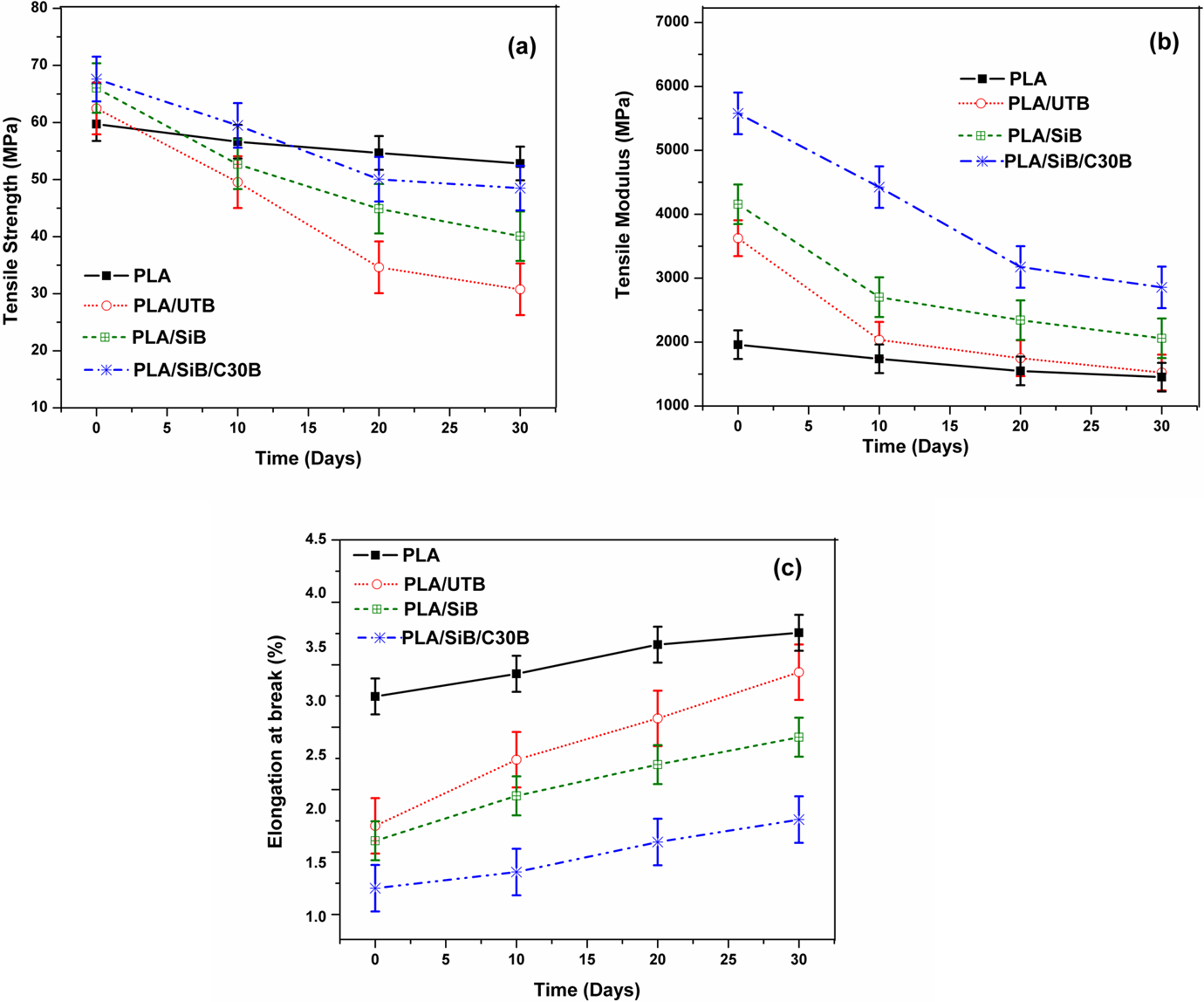
(a) Tensile strength, (b) tensile modulus, and (c) elongation at break of composites after 0, 10, 20, and 30 days of moisture absorption.
The tensile modulus results for PLA and its composites before and during water immersion are shown in Figure 7(b). PLA and PLA/UTB biocomposites show tensile modulus of 1958 and 3624 MPa, conversely PLA/SiB biocomposite exhibited an optimum increase in tensile modulus (112.15%), as compared to PLA due to good fiber–matrix interaction. High modulus nanoclays cause a further improvement in tensile modulus in PLA/SiB/C30B bionanocomposites (184.7%) as compared to PLA. Moisture absorption caused a sharp reduction in tensile modulus of PLA and composite. From Figure 7(b), it is clear that the tensile modulus of PLA decreased by 11.3%, 20.9%, and 25.9%, respectively, as the water immersion time increases by 10, 20, and 30 days. Moreover, PLA/UTB biocomposite exhibited a drastic reduction in the tensile modulus of 43.8, 51.8, and 58.1% with an increment of the water immersion time due to the diffusion of water molecules, which can cause debonding of the fiber–matrix interfacial region, creating poor stress-transfer capabilities, hence reducing the tensile modulus of composites. The tensile modulus is decreased by 34.9%, 43.6%, and 50.5% for PLA/SiB biocomposites after 10, 20, and 30 days of moisture absorption, respectively, as compared to that in dry condition. Moisture immersion of bionanocomposites resulted in a significant drop in tensile modulus from 5577 MPa at dry condition to 4423 and 3175 Mpa, respectively, after 10 and 20 days exposure. However, tensile modulus has been decreasing very slowly to 2855 MPa after 30 days of moisture absorption. This could be attributed to the effect of nanoclay, which restricts the water penetration rate as compared to PLA/SiB biocomposites.
Figure 7(c) shows the elongation at break of PLA and its composites under dry and wet condition. This graph clearly shows that as a consequence of stiffening effect of fiber, elongation at break of PLA/UTB biocomposite is 43.9% lower as compared to PLA, which has 3.05% elongation at break before moisture absorption. The elongation at break of PLA/SiB is found to be 7% less than PLA/UTB biocomposites. The addition of C30B nanoclay, which restrains the movement of polymer chains, into the PLA/SiB biocomposite causes a further reduction (60.33%) in elongation at break of bionanocomposite when compared to PLA matrix. The elongation at break of the PLA matrix is around 3.26%, 3.53%, and 3.64%, respectively, after 10, 20, and 30 days of moisture absorption. The elongation of PLA is found to be higher than its composite. However, there is a sharp improvement in the elongation as observed for PLA composite after moisture absorption. The elongation at break is enhanced by 30.9%, 50.3%, and 71.9% for PLA/UTB biocomposites and 22.6%, 38.4%, and 52.2% for PLA/SiB biocomposite, respectively, after 10, 20, and 30 days of moisture absorption as compared to that in dry condition due to the plasticization effect of the water molecule. 38 Then increment in the elongation after 10, 20, and 30 days of moisture absorption by PLA/SiB/C30B bionanocomposite is 10.7%, 30.6%, and 45.5%, respectively, as compared to its dry bionanocomposite. The possible explanation for this would be that the rigidity of nanoclay and fiber is destroyed by moisture.
Figure 8(a) and (b) shows the flexural strength and flexural modulus of PLA and its composites under dry and wet conditions. It was found that the flexural strength of the PLA was 94.19 MPa which improved with the addition of UTB by 1.3%, SiB by 9.3%, and with the addition of nanoclay by 15% in dry condition. Higher flexural strengths are observed for PLA/SiB biocomposites and PLA/SiB/C30B bionanocomposites due to the better interfacial adhesion between the filler and the matrix. It can be observed from Figure 8(a) that there is a significant drop in flexural strength of PLA and its composites after moisture absorption. The flexural strength of PLA decreased by 8.1%, 9.9%, and 12.8% from 94.19 MPa after 10, 20, and 30 days of moisture absorption, respectively. The flexural strength of PLA/UTB reduced to 78.32, 69.92, and 63.56 MPa from 95.46 and PLA/SiB significantly reduced to 86.963, 78.79, and 74.72 MPa from 102.93 MPa (dry sample) after 10, 20, and 30 days of moisture absorption, respectively. Moisture absorption of composite causes swelling of the fibers and eventually leads to the degradation of fiber–matrix interfacial bonding, creating poor stress-transfer efficiencies thus reducing the flexural strength. However, the incorporation of nanoclay to PLA/SiB biocomposites has a positive effect on the reduction of flexural strength in wet condition, even though the flexural strength of bionanocomposites also reduces after moisture absorption. The flexural strength of PLA/SiB/C30B bionanocomposites decreases from 108.34 MPa to 90.73, 81.16, and 76.15 MPa, respectively, after immersing in water for 10, 20, and 30 days.
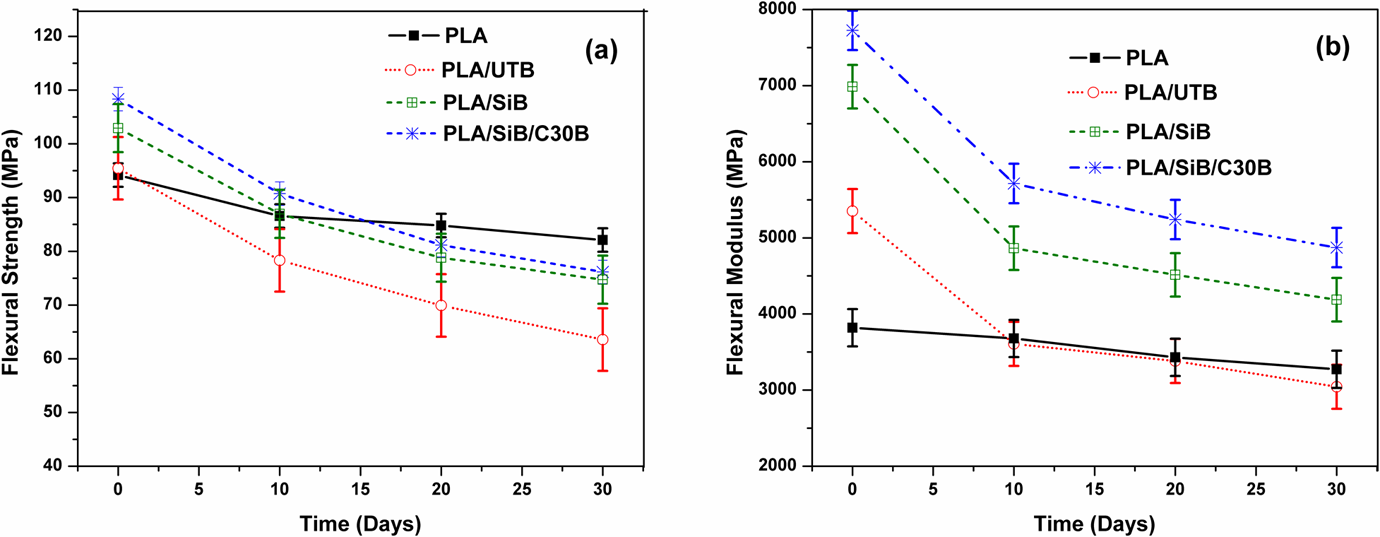
(a) Flexural strength and (b) flexural modulus of composites after 0, 10, 20, and 30 days of moisture absorption.
Flexural modulus of PLA and its composites before and during moisture absorption are shown in Figure 8(b). The results for dry composites pointed out that the flexural modulus of PLA was 3818 MPa, whereas for PLA/UTB biocomposites significant improvement in flexural modulus was observed (5352 MPa). From these results, it is clear that PLA/SiB biocomposites exhibit 82.9% better flexural modulus than that of PLA due to better adhesion between SiB with PLA matrix. After the nanoclay addition, C30B and SiB create a more uniform dispersion in a PLA matrix and the resulting bionanocomposite had a higher flexural modulus value (7725 MPa). As seen in figure, moisture absorption caused a considerable drop in composites. Flexural modulus after 10, 20, and 30 days moisture, absorbed PLA decreased by 3.7%, 10.2%, and 14.3% as compared to dry PLA. Flexural modulus of PLA/UTB biocomposite decreased from 5352 MPa to 3606, 3381, and 3043 MPa, respectively, after immersing in water for 10, 20, and 30 days due to the weak matrix–fiber interaction. The presence of high hydroxyl group content in fiber tended to show lower moisture resistance and form hydrogen bond with water molecules instead of matrix. Once the water molecules get diffused into the composites, the covalent bond between fiber and matrix is broken and is consequently replaced by the weaker bond between the hydroxyl group in fiber and water molecule and cause a decrease in flexural modulus. 7 The reduction in flexural modulus for PLA/SiB biocomposites as compared to dry sample is 30.5%, 35.9%, and 40.7%, respectively, after 10, 20, and 30 days of water immersion, which is due to the moisture absorption. However, the presence of nanoparticle in composites restricts the mobility of polymer chains and reduces the moisture absorption rate by displaying better adhesion with matrix and fiber as compared to PLA/SiB biocomposites.
The unnotched impact strength of PLA and its composites before and during moisture absorption study is demonstrated in Figure 9. The unnotched impact strength of PLA is 207.09 J m−1 due to its inherent brittleness and it has decreased to 40.4% for PLA/UTB biocomposites and 27.5% for PLA/SiB biocomposites in dry condition. This significant drop in impact strength can be attributed to the strong interaction of the PLA matrix with SiB, which restricts the mobility of matrix chain. Due to the presence of nanoclay, the bionanocomposites become bonded tightly and more brittle, which reduces the impact strength to nearly 41.73%. Interestingly, it can be observed that after moisture absorption, the unnotched impact strength of all composites significantly increased. The impact strength of PLA is slightly increased by 2.61%, 9.84%, and 10.43%, respectively over 10, 20, and 30 days moisture immersion as compared to dry samples. PLA/UTB biocomposites show a drastic improvement in impact strength after moisture absorption. The impact strength of PLA/SiB biocomposites has improved by 8.99%, 21.69%, and 25.42%, respectively, after 10, 20, and 30 days moisture absorption as compared to dry composites. The water molecules act as a plasticizing agent in the biocomposites, which lead to an increase in material ductility and result an increment in impact strength. 5 However, after the addition of C30B nanoclay to PLA/SiB, impact strength increases very slowly by moisture absorption as compared to that of PLA/SiB biocomposites.
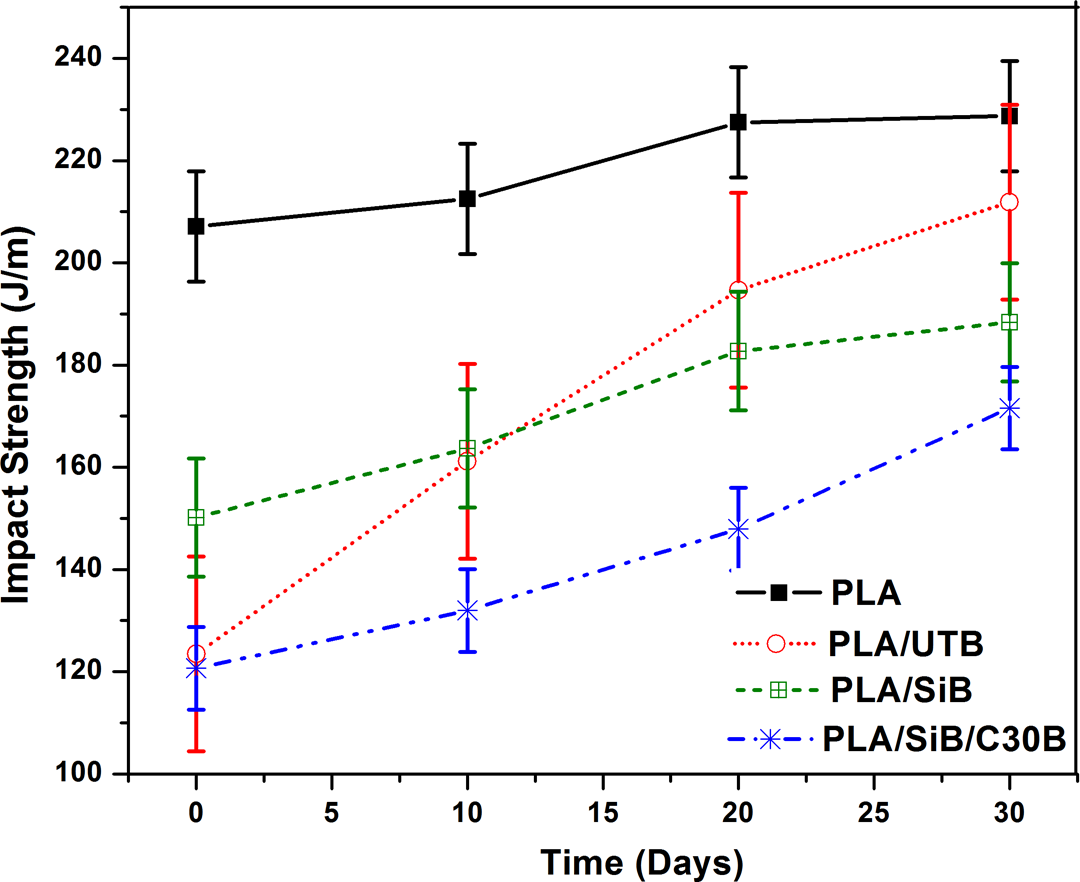
Unnotched impact strength of composites after 0, 10, 20, and 30 days of moisture absorption.
Effect of moisture absorption on thermal properties
TGA was performed for all samples before and after moisture absorption. Figure 10(a) to (d) shows the TGA and DTG curves of PLA and composites before and after 30 days of moisture absorption. The initial degradation temperature, 50% weight degradation temperature, and maximum degradation temperature obtained from TGA curves and peak temperature obtained from DTG curves are depicted in Table 3. From Figure 10(a), it can be seen that the PLA matrix after moisture absorption shows decreased initial and final degradation temperature as compared to matrix before moisture absorption. The decomposition of PLA/SiB/C30B bionanocomposites started at 295°C and has been completed at 387°C, while PLA started at 274°C and end at 357°C without residue. The main reason behind it is that SiB and C30B nanoclay delay in the weight loss during thermal degradation. Bionanocomposites expressed better thermal stability up to 295°C, which is 7.6% better than that of PLA. A very small improvement in decomposition temperature of PLA/UTB was obtained after silane treatment. The DTG curves of PLA, PLA/UTB biocomposites, PLA/SiB biocomposites, and PLA/SiB/C30B bionanocomposites showed single peak at 343°C, 345°C, 345°C, and 351°C, respectively.
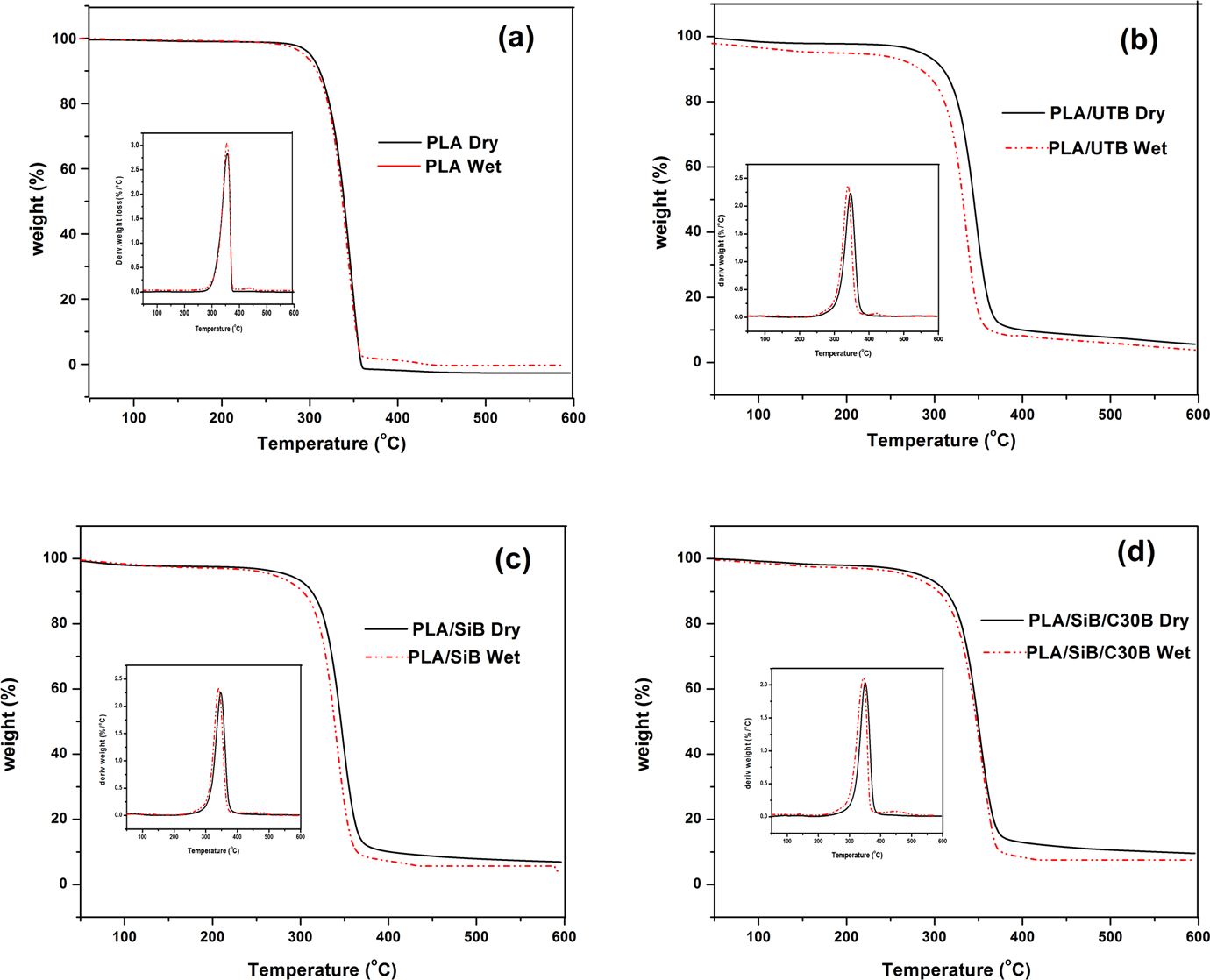
TGA and DTG curves of (a) PLA, (b) PLA/UTB biocomposites, (c) PLA/SiB biocomposites, and (d) PLA/SiB/C30B bionanocomposites before and after moisture absorption. TGA: thermogravimetric analysis; DTG: derivative thermogravimetric; PLA: polylactic acid; UTB: untreated banana fiber; SiB: silane-treated banana fiber.
Ti, T50, Tmax, Tp, and weight loss of materials obtained from TGA and DTG curves.
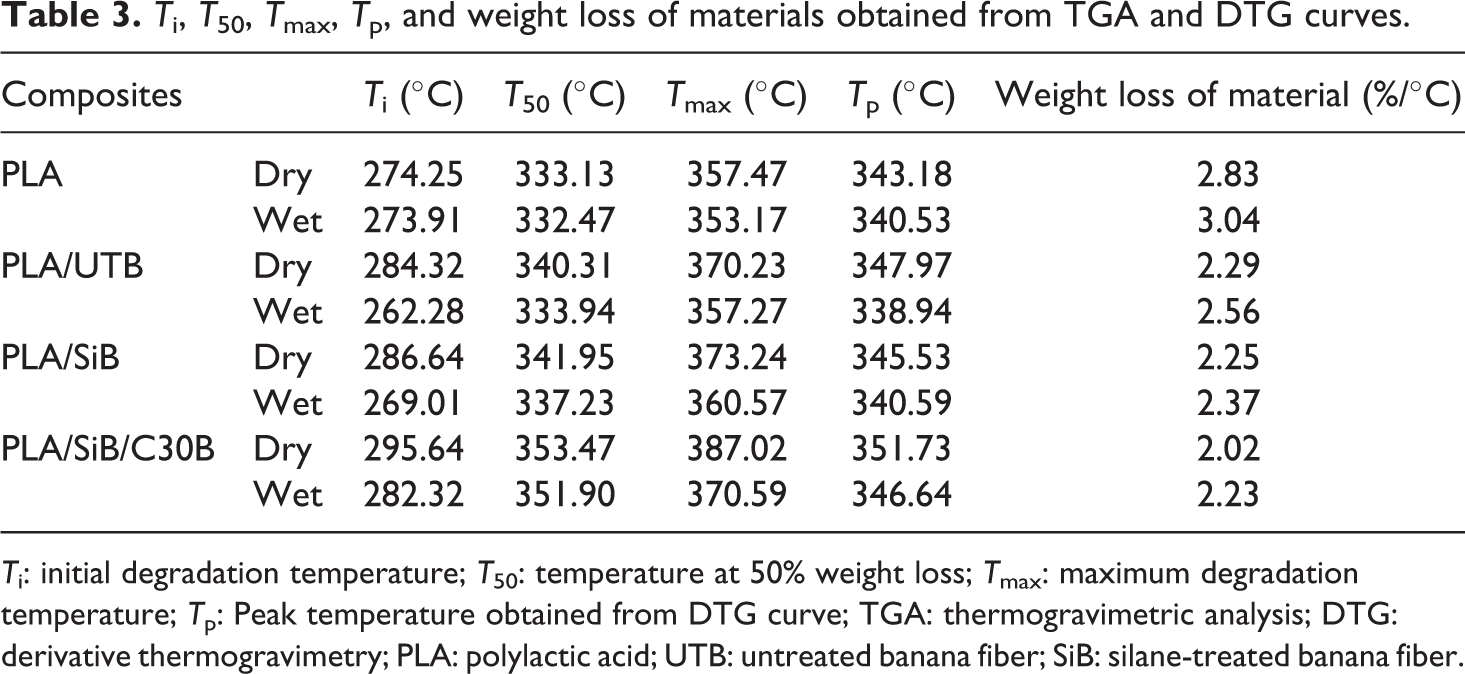
Ti: initial degradation temperature; T50: temperature at 50% weight loss; Tmax: maximum degradation temperature; Tp: Peak temperature obtained from DTG curve; TGA: thermogravimetric analysis; DTG: derivative thermogravimetry; PLA: polylactic acid; UTB: untreated banana fiber; SiB: silane-treated banana fiber.
After 30 days immersion in distilled water, the initial degradation temperature of PLA remains constant, while a slight decrease in final degradation and peak temperatures is observed as compared to PLA in dry condition. However, all the degradation temperature of fiber-reinforced composites is reduced significantly after moisture uptake. Diffused water molecule can contribute to microstructural changes in the fiber and polymer chain segments, resulting in more stress relaxation, debonding, and weakening of interface adhesion. These debonding and weakening of interfacial bonding mostly affected in PLA/UTB and PLA/SiB biocomposites due to the hydrophilic character of banana fiber. The initial degradation temperatures of biocomposites and bionanocomposites are lower with about 10–20°C as compared to those of samples before moisture absorption. However, nanoclay-filled biocomposites (PLA/SiB/C30B) exhibit better thermal stability than that of biocomposites after moisture absorption.
Morphology of composites
Figure 11 shows the SEM images for PLA and composites before and during moisture absorption study. The surface morphology of wet composites is different from that of dry composites in terms of microcracking in the matrix, swelling of composites, pores produced in fibers, and disbanding around the nanoclay. 29 It can be seen from Figure 11(a) to (d) that the moisture absorption has not affected the hydrophobic PLA matrix. Figure 11(e) to (h) displays the SEM images of PLA/UTB biocomposites. Before moisture absorption, the SEM images for biocomposites display rougher fracture surface, while SEM images during moisture absorption clearly show smoother fractured morphology with degraded and overlapped fibers, which implies lack of adhesion due to moisture absorption. Good fiber–matrix adhesion is observed for PLA/SiB biocomposites in dry condition (Figure 11(i)). However, from Figure 11(j) to (l), it can be seen that after 10, 20, and 30 days of moisture absorption, banana fibers were easily pulled out from the matrix with large voids, which indicate poor interfacial bonding between fiber and matrix in wet condition. Pores and voids can lead to premature failure of composites during loading. 30 Diffused water molecules attack the interface region and reduce the dipole–dipole interaction between fiber and matrix, resulting debonding on that region. Moisture absorption can replace the strong matrix–fiber covalent bond with weak water–fiber hydrogen bond. 5 However, Figure 11(m) clearly indicates the presence of nanoclay within the PLA matrix material and fiber, which considerably reduced the gap between fiber and matrix thereby enhancing the interfacial adhesion between matrix and fiber. But it can be seen in Figure 11(n) to (p) that moisture affected very slowly on the bionanocomposites and hence degraded the fiber–matrix interaction.
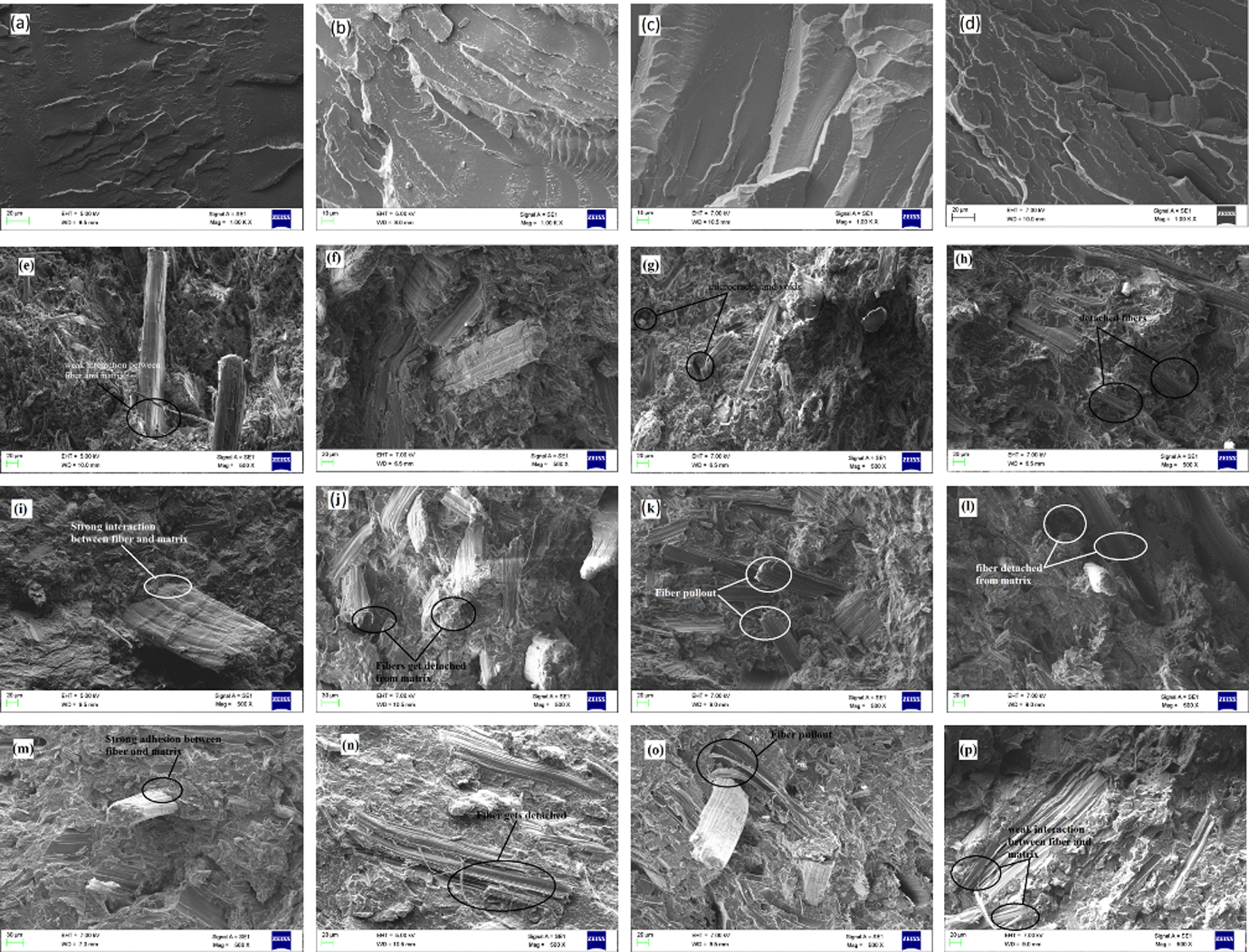
SEM images of composites after 0, 10, 20, and 30 days of moisture absorption. SEM: scanning electron microscopy.
TEM was used to investigate the dispersion of the nanoclay in the resulting PLA/SiB/C30B bionanocomposites. TEM images of PLA reinforced with 30% silane-treated fiber and 3% C30B nanoclay before and during the moisture absorption study are shown in Figure 12. In the TEM images, the bright region is the matrix phase and the dark region is the particle (fiber and nanoclay) phase. Figure 12(a) shows the combination of intercalated and exfoliated nanoclay platelet with uniform dispersion in composites. In intercalation regions, the nanoclay penetrated into the PLA matrix chain and well-separated staked arrangement of nanoclay particles is visible. After moisture absorption for 10 days, the phenomenon of delamination of fibers and nanoclay has occurred (Figure 12(b)). The synergistic action of moisture diffusion through fiber and nanoclay strongly influences the matrix surface. Figure 12(c) shows the TEM images for bionanocomposite over 20 days of moisture absorption, and the microcracks and voids are clearly observed on the surface of the matrix. Moreover, fibers have been washed away from the surface of the bionanocomposites. On extending the moisture absorption to 30 days, it can be seen from Figure 12 (d) that there is complete disallignment of fibers and nanoclay resulting in debonding of fiber and matrix. Additionally, it can be seen that macrocracks are formed on the surface.
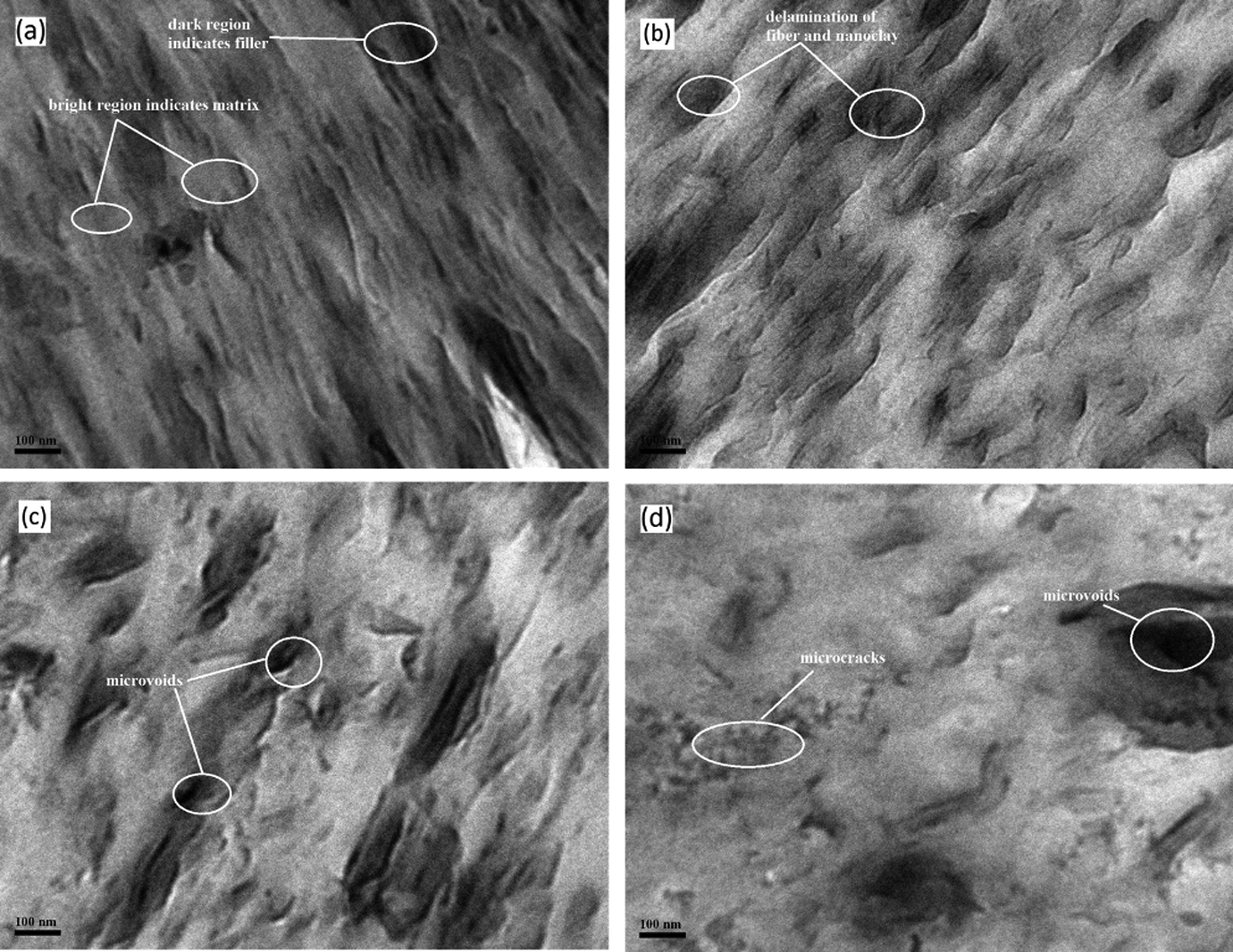
TEM images of PLA/SiB/C30B bionanocomposites subjected to different duration of water immersion, (a) 0 day, (b) 10 days, (c) 20 days, and (d) 30 days. TEM: transmission electron microscopy; PLA: polylactic acid; SiB: silane-treated banana fiber.
Conclusion
In this research, PLA, PLA/UTB biocomposite, PLA/SiB biocomposite, and PLA/SiB/C30B bionanocomposite were subjected to moisture absorption test at room temperature for different time intervals in order to study the effects of moisture absorption on the mechanical properties. The moisture absorption study of composites for different time intervals indicated that it is less for PLA/SiB/C30B bionanocomposites compared to PLA/UTB and PLA/SiB biocomposites. The moisture absorption reduced tensile strength and modulus and flexural strength and modulus as compared to dry composites due to the formation of hydrogen bonds between the fiber and water molecules and degradation of the fiber–matrix interface. Surprisingly, the moisture absorption of composite improved the impact strength as compared to dry samples due to the plasticization effect of diffused water molecules. The dimensional variation in the composite morphology and interfacial bonding between the fillers (banana fiber and C30B) and PLA matrix were observed using SEM and TEM in these periods. SEM images revealed that moisture absorption damaged the fiber by forming voids and microcracks, and the same observation were visualized from the TEM images of the bionanocomposites. Moreover, immersion in distilled water induces decrease in thermal properties of biocomposites and bionanocomposites due to the change in structural orientation of fiber and formation of microcracks in composites as confirmed from SEM and TEM analysis.
Footnotes
Declaration of Conflicting Interests
The author(s) declared no potential conflicts of interest with respect to the research, authorship, and/or publication of this article.
Funding
The author(s) disclosed receipt of the following financial support for the research, authorship, and/or publication of this article: The authors would like to acknowledge the financial support of the Department of Chemicals and Petrochemicals, Ministry of Chemicals and Fertilizer, Government of India, through GREET project.