




Abstract
Concerns about environmental waste problems caused by non-biodegradable petrochemical-based plastic packaging materials as well as consumer demand for high-quality food products have led to increased interest in the development of biodegradable packaging materials using annually renewable natural biopolymers. Inherent shortcomings of natural polymer-based packaging materials such as low mechanical properties and low barrier properties can be recovered by applying nanocomposite technology. Polymer nanocomposites, especially natural biopolymer-layered silicate nanocomposites, exhibit markedly improved packaging properties due to large nanoparticle surface area and their significant aspect ratios. Additionally, natural biopolymer is susceptible to microorganisms, resulting in good biodegradability, which is one of the most promising aspects of its incorporation in packaging materials and industries. The present review article explains the various categories of nanoclay and bio-based polymer-based composites with particular regard to their application as packaging materials. It also gives an overview of the most recent advances and emerging new aspects of nanotechnology for development of composites for environmentally compatible food packaging materials.
Introduction
Environmental concerns and petroleum resource limitations have let to ever increasing attention in developing polymers from renewable resources, particularly in the field of plastic industries over the past two decades. Polyolefins are the largest group of polymers in terms of production and consumption in plastic industries due to their relatively low production costs and wide range of properties. Natural biopolymers classified as biodegradable polyolefin open a new window into food and non-food commercial applications. They are naturally available and can be used as a source of raw materials for renewable plastic materials. Property improvement and advancement are made possible by blending and creating composite technologies. 1 Not only are these bio-based materials eco-friendly, they can also lead to economic development in the farming and rural sectors in developing countries owing to non-food commercial applications of these underutilized renewable materials. 2 Recently, there has been an increase in the use of biopolymer-blended materials in composites because of their desirable characteristics as a renewable material reinforced by growing environmental concerns. 3
Generally, natural biopolymer blends are attractive candidates for green synthesis of polymer-based nanocomposites due to numerous advantages of these polymers including low cost, accessibility, biodegradability and flexible processability to improve and develop new sets of polymeric materials with desired properties. There is a broad range of natural biopolymers, when classifying by origin, which can be blended to polyolefin. 4 Natural biopolymers can be used for the development of environmental and biomedical applications, in agriculture areas, food packaging, pharmaceutical technologies and drug delivery systems. 5 –8 Shellac, amber, wool, silk and natural rubber (NR) have been used for centuries as natural polymers. NR is a well-known biopolymer that is cheaper than common synthetic biopolymers and is the best choice for blending with polyolefins due to its ability to increase softening temperature (glass transition temperature (Tg)) of the prepared blend. 9 Other major reasons for the growing demand for this class of material are dimensional stability at elevated temperatures and affordability. However, some of its engineering properties such as oil and solvent resistance, air permeability and wet skid are quite poor. 10
Classification of polymer blends can be done in various ways based on different points and indicators. According to Mohammad, 11 sorting can be related to compatibility (compatible and incompatible blends), production methods (mechanical blend or chemical blends), polymer nature architecture (block and graft polymers), number of constituent polymers (binary blends, ternary blends, etc.) and type of constituent polymers. Currently, due to the large pool of available thermoplastics, many thermoplastic elastomers (TPEs) can be prepared. 12 –17
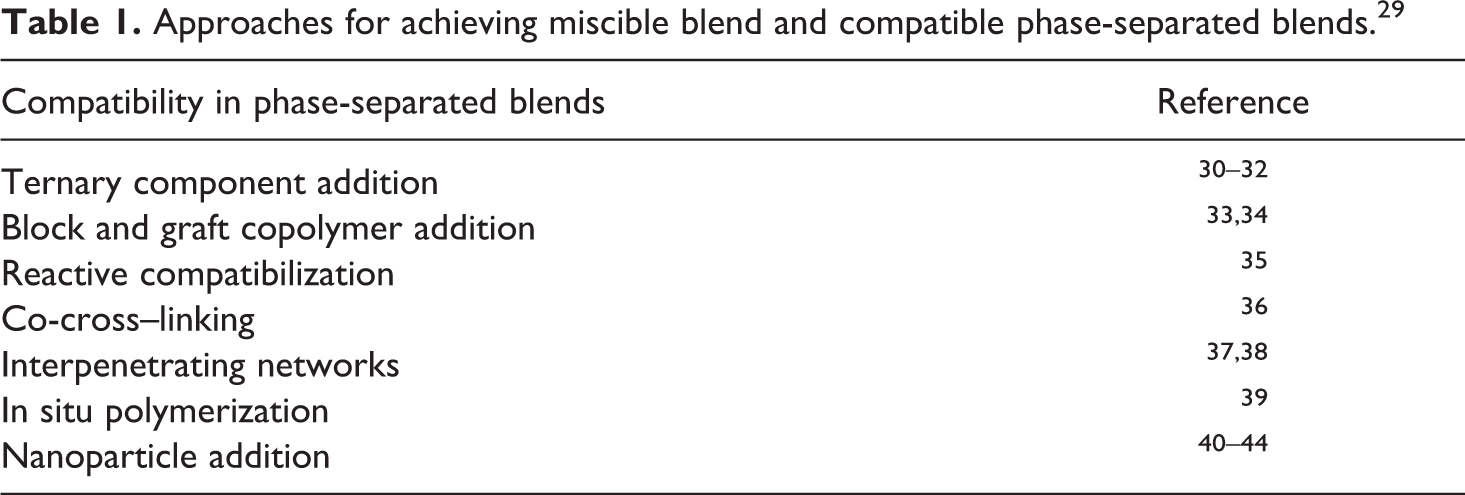
In incompatible blends, poor adhesion is mostly responsible for the lack of spreading of applied force to other parts of the blend. This causes a decrease in the system properties compared to the parent components properties, which results in a reduction in the final properties of the composites. To promote interaction between phases, use of an adhesion promoter named as a compatibilizing agent, a compatibilizer or an interfacial agent is necessary to achieve good adhesion between matrix and particles as a result of successful intercalation or exfoliation. 18 Compatibilizers provide a convenient method to improve thermal, mechanical or chemical properties of polymer materials without synthesizing new ones. 19 A large number of experiments have been conducted in order to decrease the phase separation and to improve interfacial adhesion, such as the addition of chemical or physical compatibilizers (block copolymer or a third homopolymer or graft) to act as a bond between the two phases through the introduction of covalent bonds between the homopolymer phases and interfacial modification. 20 –28 Table 1 shows different methods to compatibilize separated blend phases. 29
Approaches for achieving miscible blend and compatible phase-separated blends. 29
The idea of employing nanoscale fillers is credited to Richard Feyman in his talk on nanotechnology during an annual meeting of American Physical Society (California Institute of Technology, Pasadena, California, USA) on 29 December 1959. 45 Nanoscale particles are categorized into classes of nanoparticles, nanotubes and monolayers based on their dimensions. 46 At present, nanoclay accounts for 70% of the total market value and is the most commercially used nanoparticle. 47 There are different categories of clay minerals based on the structure and chemistry of clay as well as the source. Clay minerals based on variations in their layered structure are grouped into four major categories, namely, the montmorillonite (MMT)/smectite group, the chlorite group, the illite group and the kaolinite group. 45 Among all the groups, MMT is the most commonly used clay for preparation of nanocomposites. Layered clay has the widest acceptability due to its high surface area and surface reactivity. 48 The layered silicate mineral clay is around 1 nm in thickness and made up of platelets around 100 nm in width, which creates a large aspect ratio for the filler. The layered silicate crystal structure consists of layers made from two tetrahedral coordinated silicon atoms joined to octahedral sheets of either aluminium (Al) or magnesium (Mg) hydroxide. Fillers with high aspect ratio (ratio of largest to smallest dimension) are particularly interesting as they result in better reinforcement of the nanocomposite materials. 49
Characteristic features of petroleum-produced plastics such as lightweight, high strength, chemical inertness and low cost have led to their replacement of normal packaging plastics, which include glass, metals and ceramics. They have been widely used in every area and have provided many advantages to humankind. Table 2 shows the production volume of some important plastics in the world. 50 The physical, mechanical and chemical properties of plastics as a packaging tool have been exploited since the 19th century with the result that packaging is now the largest single application for plastics (Figure 1). 51
Traditional thermoplastics’ production in kilograms per capita in 1993. 50
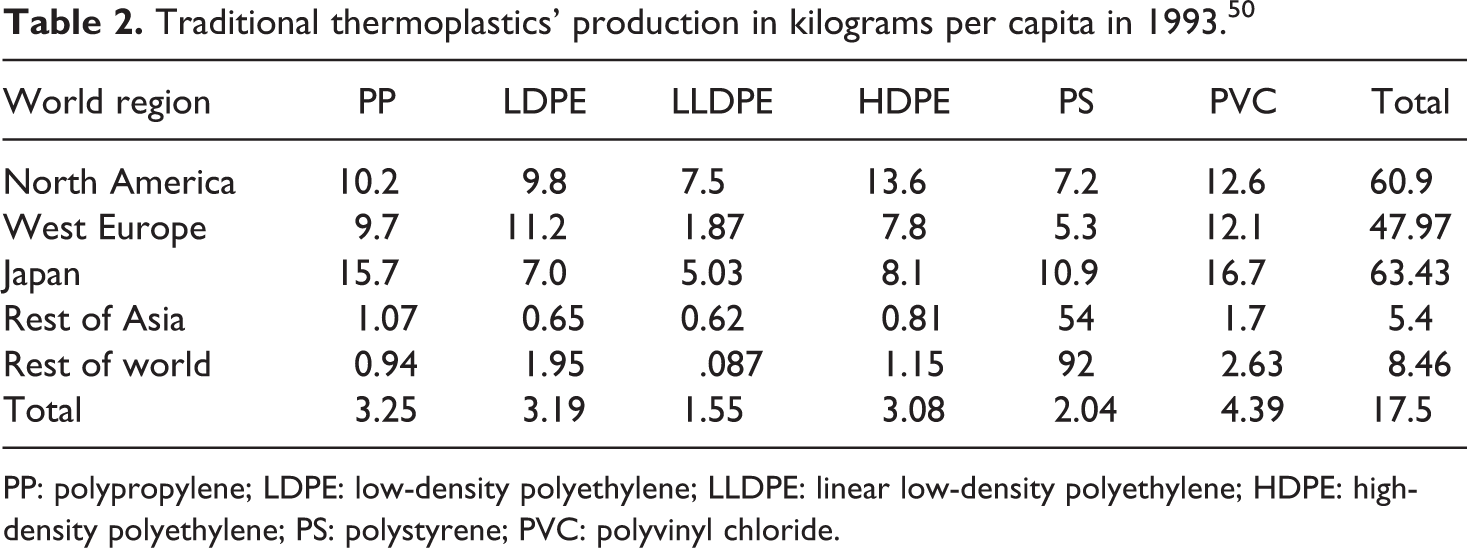
PP: polypropylene; LDPE: low-density polyethylene; LLDPE: linear low-density polyethylene; HDPE: high-density polyethylene; PS: polystyrene; PVC: polyvinyl chloride.
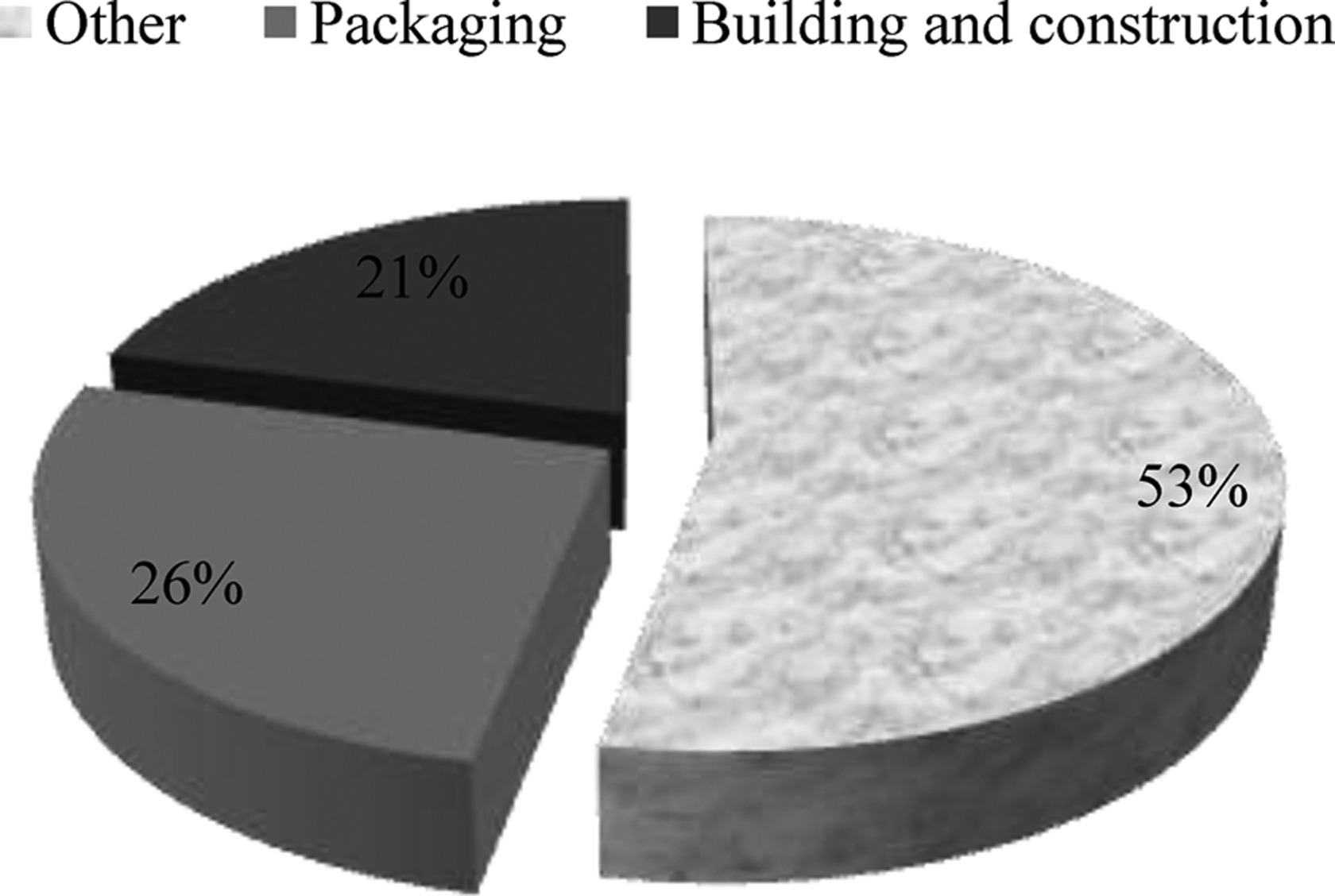
Plastics consumption in the United States in 1997.
Because of the low weight to volume ratio, plastics have a tendency to take up much more space compared to other conventional materials. However, despite its versatility and performance, their use in the food industry, in particular, is limited due to inherent permeability to gases and vapours. Oxygen plays a major role in deterioration of food either through direct or indirect action.
Furthermore, plastics made from fossil fuels used for food packaging are non-degradable, creating serious environmental problems through disposal including harm to the environment, ecosystem, water supply and sewer systems as well as damage to rivers and streams. Polyolefins do not easily degrade in the natural environment due to their natural properties. They are made up of hydrophobic, high-molecular-weight molecules that are large in dimension. 52 –54
Traditional disposal methods include recycling, incineration and burying in landfills. Recycling has remained the most viable method of waste disposal mainly since it reduces pollution and damage to the environment. However, recycling of waste into new products after processing requires prior collection and segregation, which increases the cost of processing and thus the price of recycled products. 55 In addition, these products tend to have inferior long-term properties even after proper stabilization, thereby limiting their market ability. Non-renewability, instability and rising prices due to depletion of petroleum resources are among the main reasons that researchers are motivated to seek alternative packaging materials in the place of fossil fuels that can overcome the drawbacks associated with conventional plastics such as renewability and/or biodegradability. 56 The use of renewable and/or biodegradable feedstock compared with recycled plastics opens up a new window for researchers, as they provide a better option than their conventional counterparts do. The end products are now organic matter, and toxic emissions are avoided. 3 According to Pandey et al., 57 degradation of polymers is an unchangeable process that leads to significant change in structure, usually characterized by a loss of its fragmentation properties, or simply put, a reduction of its molecular weight when placed under suitable environmental conditions. 58 Classic biodegradable plastics can be formed from fully biodegradable polymers with hydrolysable backbones such as poly(lactic acid) (PLA), poly(caprolactone), poly(hydroxyalkanoates), poly(ethylene glycol) and aliphatic polyesters such as poly(butylene succinate), poly(butylene succinate-co-butylene adipate), poly(vinyl alcohol) (PVA) and polyurethanes (PUs). Nevertheless, these groups of polymers are expensive and their abilities to be blown seem limited. 59
Food packaging is one of the largest growing sectors within the plastic packaging market domain. Food needs to be packaged with a strong material that can keep it safe from contamination from the environment as well as durable enough to keep the food safe from the time of packaging up to delivery to the consumer. The primary function of food packaging is to preserve the food from penetration by harmful or dangerous substances (oxygen, moisture, light, microbes, etc.) during storage and distribution. Other secondary functions of food packaging may relate to energy and material costs, recyclability, sustainability and disposability. 2
Nanoclays such as MMT play a vital role in the degradation of polymers when incorporated into an inert polymer as a potential ingredient 52,53,60,61 as they are environmentally friendly, toxin-free and could be used for food packaging. Furthermore, the ability to reinforce and reduce permeability of gases has been reported for polymer materials. 62,63 The incorporation of nanoclays into packaging also offers a reduction in raw material use, less dependence on specialty products, elimination of secondary processes, less complex structures and a reduction in machine cycle time. Photo-oxidative degradation of nanocomposites seems faster than pure polymers due to the presence of iron in MMT and the formation of olefins and acidic sites on the clay’s surface as a result of radical formation in the polymer by ammonium ions. 53,61 It is also found that the dispersion state of clay particles in the polymer matrix has no influence on photo-oxidative degradation of the polymeric matrix.
Naturally occurring biopolymers are potential materials for packaging applications as they have many advantages over synthetic polymers including renewability, recyclability and cost-effectiveness. 64,65 Regarding advancement in nanocomposite science and technology, compounding of polymers with biopolymer/nanoclay is a technique that can complement the drawbacks of conventional polymers and provide promise of a new product, featuring stronger, higher barrier; short life; disposal and environmentally compatible packaging materials. It is intended that the use of biopolymer/nanoclay-based materials will contribute to sustainability through a reduction in environmental hazards and a reduction in the accumulation associated with disposal of synthetic polymer-based packaging materials and plastic litter, both in the sea and on the land. This article provides recent technologies and scientific advances in food packaging polymer nanocomposites. The reinforcement aspects of nanocomposite usage, degradation and permeability to vapours and gases will also be discussed.
Bio-based packaging materials
Bio-based packaging materials have been derived primarily from annually renewable sources 66 and many (but not all) are biodegradable. Regarding to ASTM D7075-04 standard, bio-based materials are defined as materials containing carbon-based compound(s) in which the carbon comes from contemporary (non-fossil) biological sources. Bio-based polymers generally have a smaller carbon dioxide footprint and are associated with efforts to create more sustainable, environmentally friendly products.
A standard definition of a biodegradable polymer can be found in ASTM602 standard. Biodegradable materials are degradable plastics whose degradation results from the actions of naturally occurring microorganisms such as bacteria, fungi and algae. Environmentally degradable bio-based polymeric materials can be classified into different types as shown in Figure 2. 66
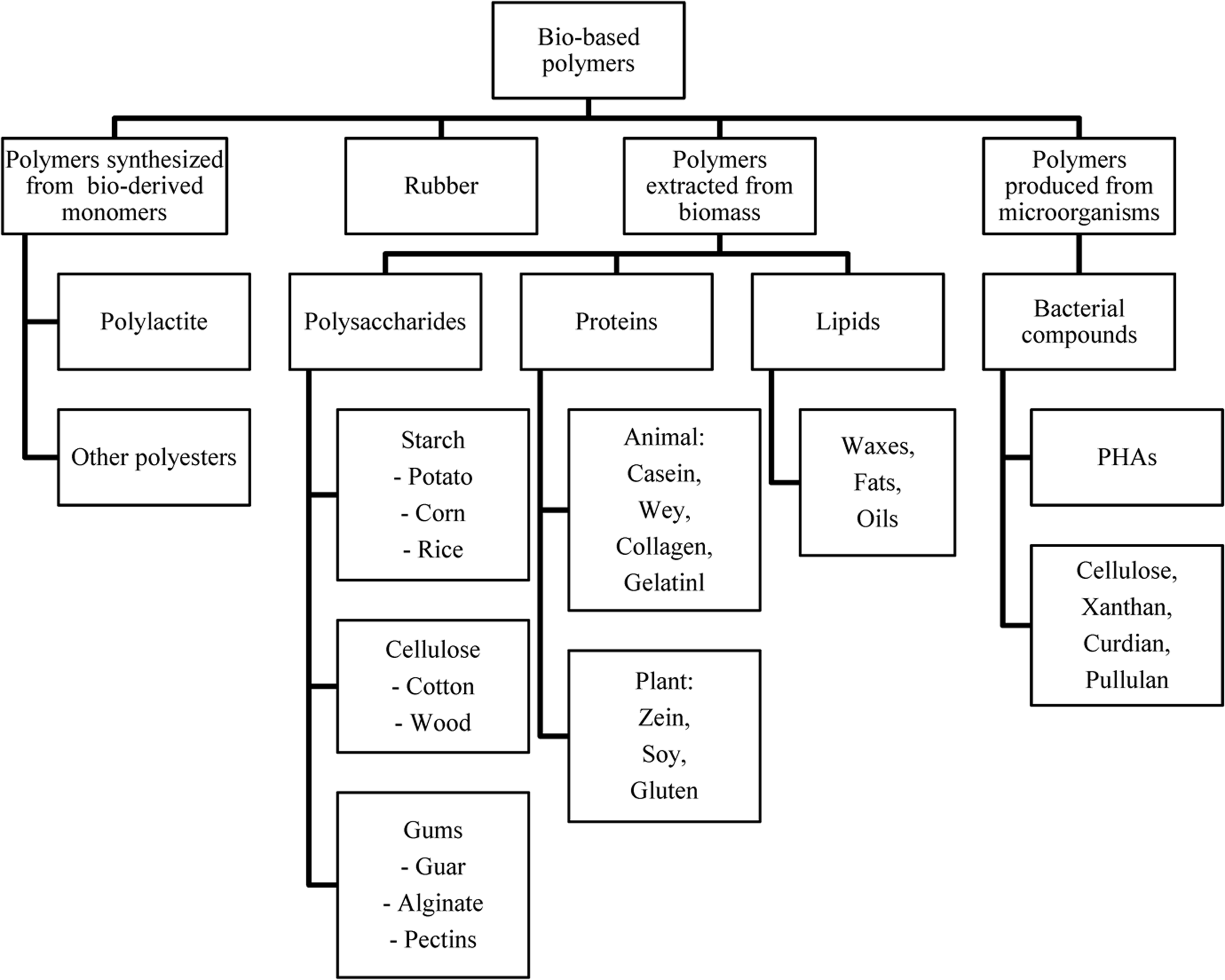
Environmentally degradable bio-based polymeric materials.
The replacement of fossil-derived materials for biomass materialswas determined based on the following functional properties: (i) durability, (ii) ability to act as a gas barrier, (iii) heat resistance, (iv) impact resistance and (v) flexibility. 67 Currently, most bio-based polymers with high potential in food packaging applications, which can be extracted from biomass directly, are NR, starch, gluten, zein and prolamine obtained from corn and chitosan, which is typically obtained from crustaceous chitin. 68
NR: NR has been reported in literature to modify different polymer matrices including co-polyester, 69 PLA, 70,71 low-density polyethylene (LDPE), 72 ethylene–propylene–diene (EPDM) terpolymer, 73 polypropylene (PP), 74 PVA 75 and recycled EPDM. 76 NR plays an important role in fulfilling the specific requirements of the composites as engineered materials and has received attention from scientists and researchers owing to its advantages over most of the other polymers. As a bio-based material, its utilization as an elastomer, its susceptibility for living organisms along with its no toxicity, low costand biocompatibility are effective properties that help produce a heat-resistant, impact-resistant, chemical-resistant, tear-resistant, eco-friendly and naturally degradable composite blend, 77 –87 which is not associated with the disposal of most of the fossil-based plastics. However, its poor compatibility with polar and/or hydrophilic polymer matrices, its lack of oil and solvent resistance and poor air permeability make it less attractive for commercial applications.
Starch: It is the most interesting material for food packaging among all biopolymers due to its commercial availability, fascinating balance of properties and industrial scale producibility. 7 Starch as a low-priced renewable source material is biocompatible and biodegradable, 88,89 where its films can be produced either by extrusion 90 or casting. 91
Zein: It is a class of prolamine protein found in corn, which was first discovered by Gorham in 1821 in the product zea, otherwise known as ‘Indian corn’. 92 At the present time, much of the zein from corn gluten meal is applied for food and pharmaceutical coatings. 93 Being mostly nonpolar in nature, zein films have been explored for coatings in numerous food applications. 94 However, due to gradual water absorption the utilization of these materials for packaging decreases.
Chitosan: The second most abundant natural biopolymer after cellulose, which is known as β-1-4–linked polymer of 2-amino-2-deoxy-β-
Chemical and physical properties of NR
The structure of NR plays a vital role and has an unavoidable impact on the final properties of NR/polymer composite or blend. 101 NR polymer chain acts as a simple olefin due to the presence of double bonds (C=C). Known as cis-1,4-polyisoprene, it is one of the most important polymers produced naturally by plants, and due to its strategic raw material property, it is used in more than 40,000 products including more than 400 medical devices. 101 At present, the sole commercial source of NR is harvested from the Brazilian rubber tree, Hevea brasiliensis. Commercial application of rubber did not occur to a significant degree until 1818, when two methods including an efficient solvent named coal tar naphtha 102 and mastication 103 were discovered by James Syme and Thomas Hancock, respectively. Demand and supply for NR has continued to increase throughout the 20th century (Figure 3). 104
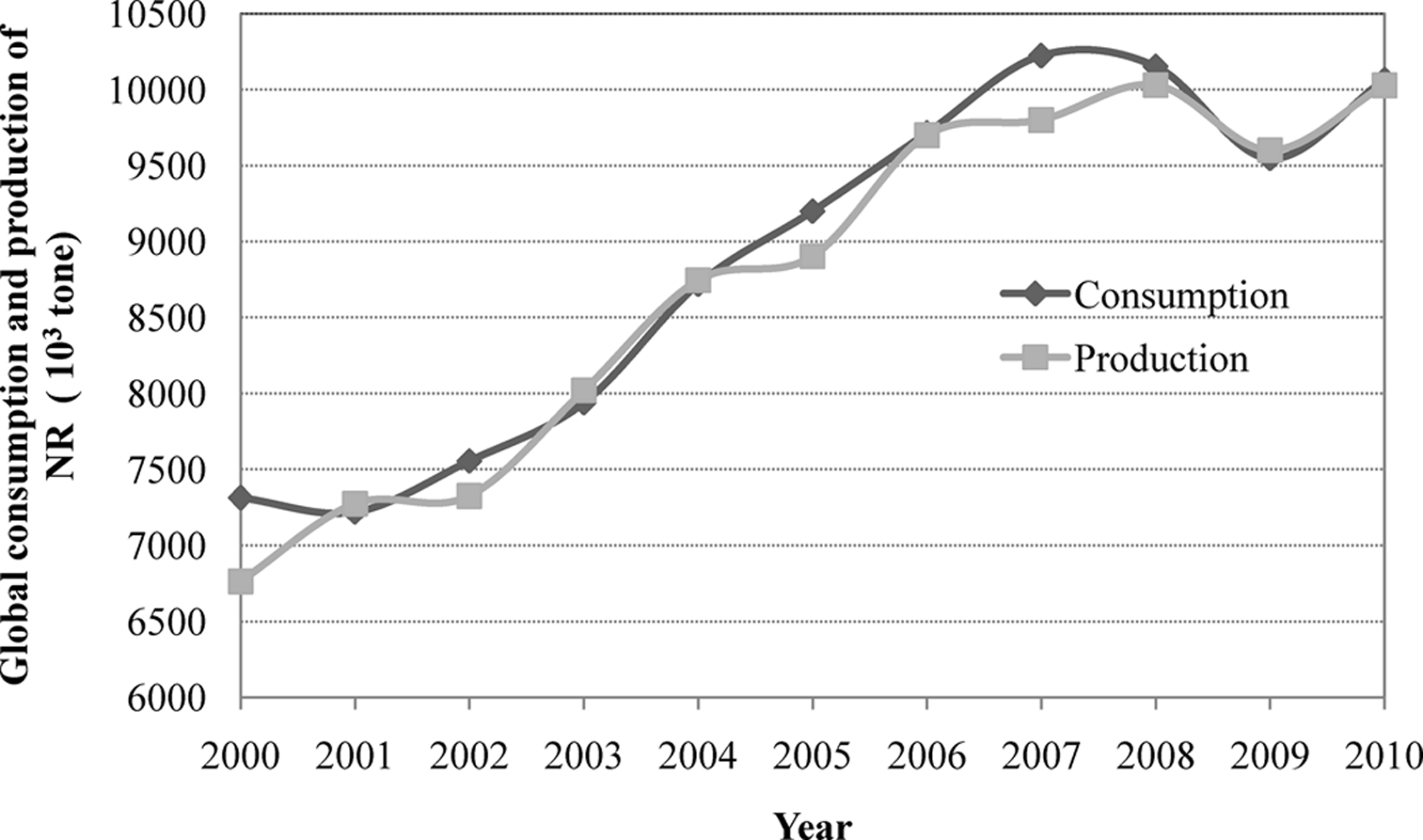
Global production and consumption of NR. NR: natural rubber.
Hevea rubber is obtained as latex which, by weight, is made up of about 35% rubber particles. It also includes about 0.6% phospholipids, 0.5% proteins and 0.09% tocotrienols as non-rubber components. However, solid rubber obtained from latex contains about 2.8% acetone-soluble fraction (tocotrienols, fatty acids, sterols, etc.), 2.5% protein fraction and 0.2% ash fraction (mainly Mg and potassium phosphates) and 94 ± 95% of rubber hydrocarbon. 105 In addition, Hevea rubber molecules have also been reported to contain abnormal groups such as esters, 106 aldehydes 107,108 and epoxides. 109,110 Due to high structural regularity, NR tends to crystallize spontaneously at low temperatures 111 or when it is stretched. 112 Crystallization gives NR high tensile strength and resistance to cutting, tearing and abrasion. In addition, the rubber’s polymer network allows elasticity and flexibility to be combined with crystallization-induced strength and toughness when stretched. Modification of NR can improve and enhance NR properties for certain applications such as hydrogenated NR, chlorinated NR, hydrohalogenated NR, cyclized NR, depolymerized liquid NR, resin-modified NR, poly(methyl methacrylate)-grafted NR, polystyrene-grafted NR and epoxidized NR. 113,114 NR is available in six basic forms, namely, sheets, crepes, technically specified sheet rubber, technically specified block rubber, preserved latex concentrates and mechanically or chemically modified specialty rubbers. 115
NR blend
Although natural biopolymers are inexpensive and available in large quantities, their properties are often inferior, or at least do not correspond to the expectation of converters or users with their properties being even farther from those of commodity plastics. As a consequence, they must often be modified to meet the expectations of the market. Consequently, the modification of these materials is the focus of scientific research. In contrast to the development of novel polymeric materials and new polymerization routes, blending is a relatively cheap and fast method to tailor the properties of plastics. Most commercial blends consist of two polymers combined with small amounts of a third compatibilizing polymer, typically a block or a graft copolymer. Biodegradable plastics are often comprised of polymer blends that contain partly bio-based (renewable) carbon derived from biomass and partly petrochemical carbon. 116
One of the new classes of polymer blend is a TPE or rubber–plastic blend, which is made by mixing thermoplastic and elastomer. Polyolefins are the best choice for blending with NR because of their high softening blending temperature (Tg) alongside its dimensional stability at elevated temperatures, low cost and abundant supply. 85 NR has been reported to improve and modify the mechanical properties of blends, making their use possible and feasible. Different polymer matrices including PP, 117,118 PE, 14,119 PU, 12 LDPE, 72 linear LDPE (LLDPE), 120,121 high-density PE, 122 –124 ultra LDPE, 125 PA, 126 chitosan 127 and PLA 70 have been blended with NR. Mechanical and thermal properties of different NR polymer blends are shown in Table 3. However, the major problem in polymer blend is often the lack of compatibility between the rubber and the plastic phases; therefore, a compatibilizer to promote applied physical force is required to convert incompatible blends into useful polymeric materials with a combination of desirable properties from each component. 128 Different compatibilizers have been employed to improve the physical properties of a blend. 129 –131
Mechanical and thermal properties of different polymer matrices blended with NR.
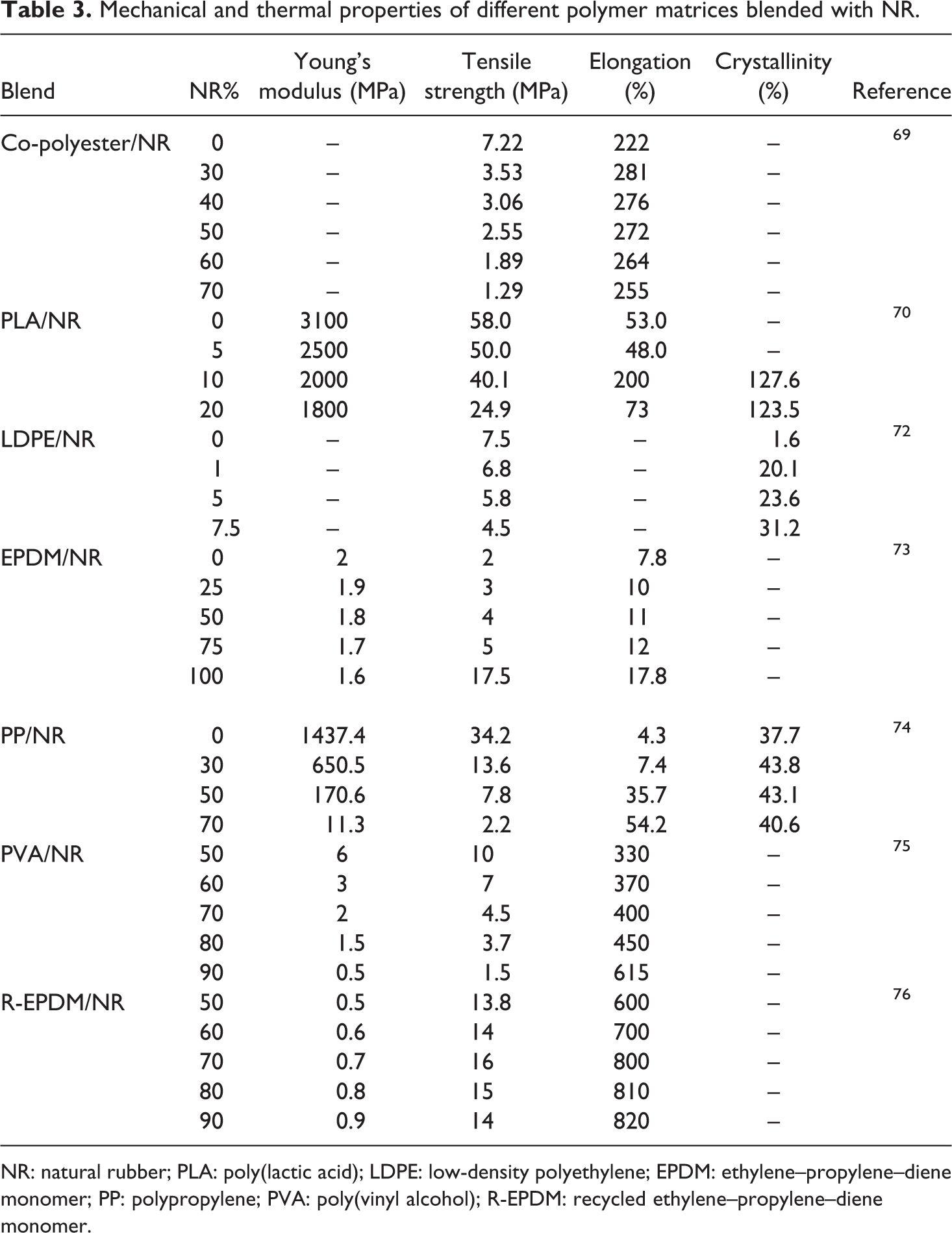
NR: natural rubber; PLA: poly(lactic acid); LDPE: low-density polyethylene; EPDM: ethylene–propylene–diene monomer; PP: polypropylene; PVA: poly(vinyl alcohol); R-EPDM: recycled ethylene–propylene–diene monomer.
In general, the incorporation of NR in a polymer blend leads to a significant decrease of tensile and Young’s moduli by means of improvements in toughness. NR in a toughened PLA blend was prepared. 132 They reported that the blend showed 20% lower Young’s modulus as compared to neat PLA but showed 33% improvement in elongation at break. In another research, the mechanical and thermal properties of polyethylene terephthalate (PET) and NR were investigated. 133 It was reported that an increased amount of incorporated NR enhanced and improved the toughness; moreover, as the NR portion in the blend is increased, the percent of crystallinity of the PET is also increased, which explains how the rubber could be acting as a nucleating agent. The influence of liquid NR (LNR) as a compatibilizer on NR/LLDPE blend was studied by Abdullah et al. 134 They reported significant improvement in the tensile properties of stress and strain and that LNR formed chemical and physical bonding between NR and LLDPE resulting in good physical properties.
Studies on microbial degradation of NR began at the beginning of the 20th century. 78,79,81 Reports surrounding decomposition of rubber by microorganisms by Söhngen and Fol 135 date back as early as 1914. Encouraged by Söhngen and Fol’s results, De Vries in 1928 examined the possible decomposition of rubber hydrocarbon by fungi. However, in 1936, Spence and van Niel were the first to use latex overlay plates for the isolation of rubber-degrading bacteria. In 1966, a strong indication of the biodegradative ability of nature towards NR was given by Taysum, who showed that no accumulation of NR occurred in the soil of a 35-year-old rubber tree plantation (Hevea brasiliensis) in Malaysia. 136 The schematic chain scission of NR is illustrated in Figure 4.
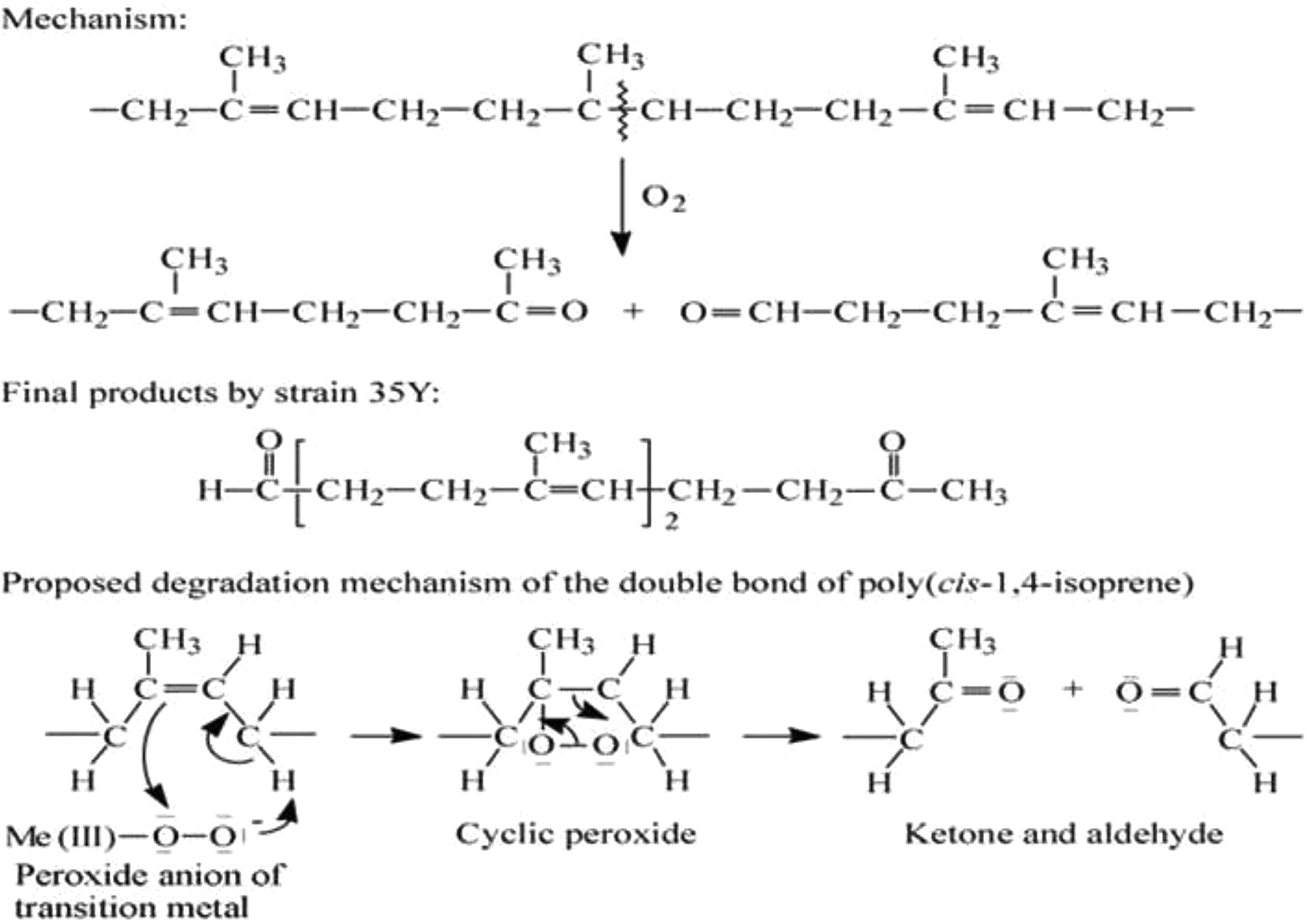
Proposed degradation mechanism of NR and final product. NR: natural rubber.
Nanoclay
Based on where they are found, clay minerals are divided into two main groups: residual clay and transported clay (or sedimentary clay). 137 Residual clays are manufactured through the surface weathering of rock or shale. They could be produced by chemical decomposition of rocks, that is, granite containing silica and alumina; by solution of rocks, that is, limestone; and by disintegration and solution of shale. On the other hand, transported clay is removed from the original deposit through erosion and deposited at a distant place. Clays are naturally occurring, inexpensive and eco-friendly substances and have been found to be useful in various applications. Clay minerals can be applied in the fields of geology, agriculture, construction, engineering, process industries and environment. 2 They provide an attractive alternative for the decontamination of soils, underground waters, sediments and industrial effluents as well. 138 Clay minerals are principally constructed of tetrahedral sheets and octahedral sheets and can be divided into three major groups based on the number and arrangement of sheets. Arrangements consist of 1:1, 2:1 and 2:1:1. The 1:1 clay consists of one tetrahedral sheet and one octahedral sheet, 2:1 clay has one octahedral sheet sandwiched between two tetrahedral sheets per layer, whilst 2:1:1 clay contains one octahedral sheet adjacent to a 2:1 layer. 45 In terms of variation in the layered structure, clay minerals are divided into four main groups: kaolinite, MMT/smetic, illite and the chlorite group (Table 4).
Classification of layered silicates. 45
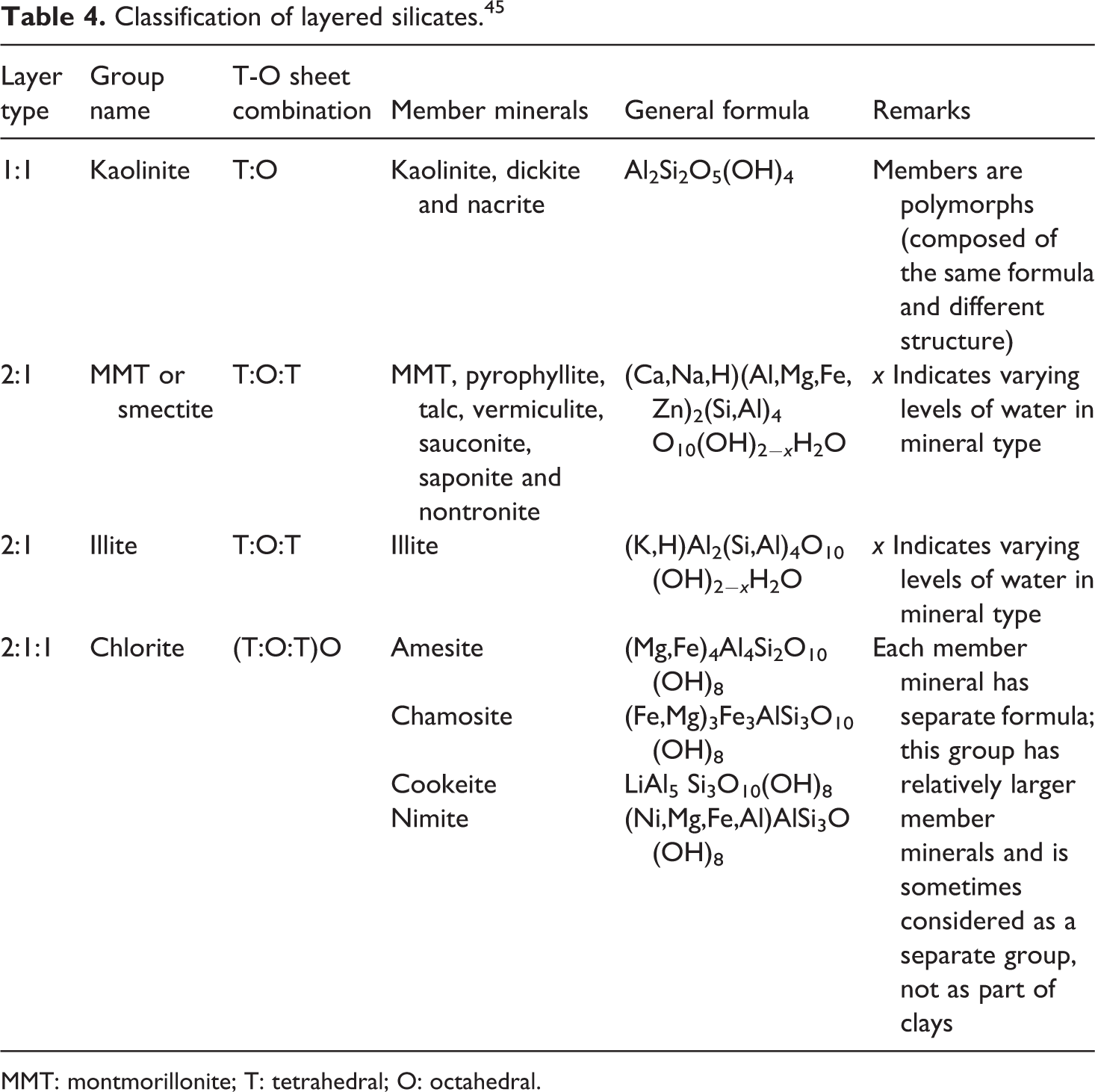
MMT: montmorillonite; T: tetrahedral; O: octahedral.
Layered silicate
Enhancement of composite performance can be done by means of nanofillers. They have a vital role in improving composite properties such as mechanical strength, thermal stability and barrier properties. Modifying the properties of various composites greatly contributes to some characteristic parameters such as filler loading, size, shape and affinity towards matrix material. At present, the materials industry has generated a significant amount of attention in the field of nanoclay-filled polymer matrix-based nanocomposites regarding the enhancement of performance. This improvement is attributed to the exfoliated clays that exhibit superior strength, modulus and higher barrier properties in comparison with virgin polymer matrix. 139 –142 In the light of recent advancements in nanotechnology, filler size correlation with material properties has become a point of great interest. Incorporation of different nanoparticles into various matrices has been reported; 143,144 however, the use of nanoparticles in the packaging industry has recently been focused on low cost, attainability and availability, processability and good performance. 2
Structural and physical properties of layered silicates
A layered silicate clay mineral is around 1 nm in thickness and is made up of platelets of around 100 nm in width, which introduces filler with a large aspect ratio. The layered silicate crystal structure consists of layers made up of two tetrahedral coordinated silicon atoms joined to an octahedral sheet of either Al or Mg hydroxide. They are stacked on the top of each other via van der Waals force known as gallery. 46,145,146 Generally, most of the clay minerals tend to have a negative charge resulting from the substitution of silica cation (Si4+) by Al cation (Al3+) in the clay sheet structure. 45
Two particular characteristics of layered silicates that play an important role in the creation of nanocomposites are the ability of the silicate sheets to disperse into individual layers, and the possibility of modifying their surface chemistry through ion-exchange reactions (increasing interlayer space) with organic and inorganic cations. 48,63 The former enhances the interaction between clay and polymer. In other words, the former reduces the interfacial energy between the polymer and the filler. The latter helps to achieve compatibility between the organic polymer chains by lowering the interfacial tension or reducing the cohesive force between clay plates. Adjustment of clay via ammonium cations characterized by long alkyl chains (C14–C18) is the most common way to obtain the hydrophobic intercalations at the interface. 147 Layered silicates commonly used in nanocomposites belong to the structural family of 2:1 phyllosilicates (Figure 5). To fabricate the polymer nanocomposite, layered clays are used to fabricate polymer. Layered clays can be divided into three categories: natural clays (e.g. MMT), hectorite and synthesized clays (laponite and mica). To prepare the nanocomposite, one of the most commonly used group of clays is MMT, which is a negatively charged layered clay.
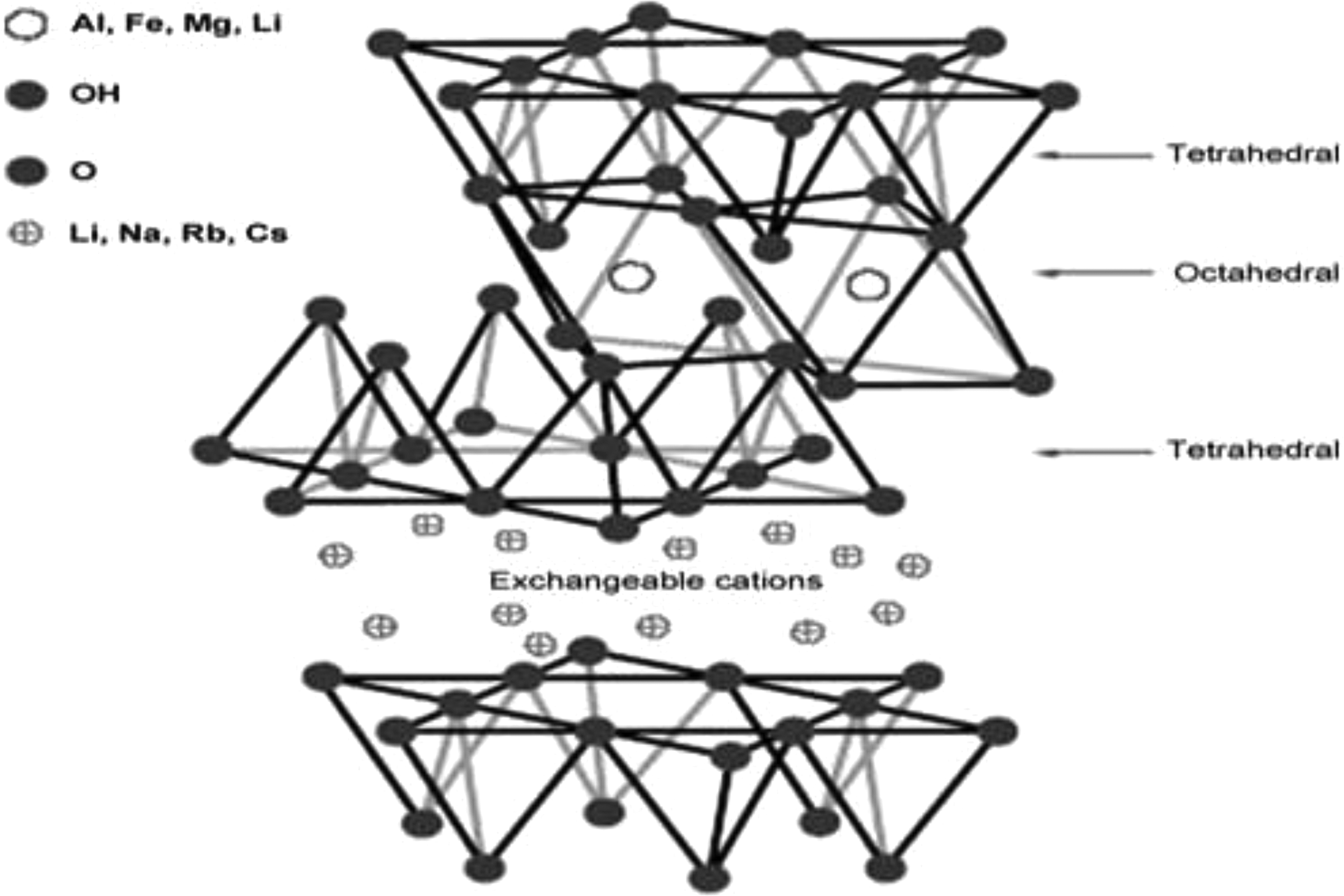
The structure of a 2:1 layered silicate. 129 Reproduced from Beyer by permission of Elsevier Science Ltd, United Kingdom.
MMT was discovered in 1847 in Montmorillon in the Viene prefecture of France. According to Alexandre and Dubois, 46 the common formula for MMT is [Mx(Al4−xMg x )Si8O20(OH)4]. M indicates exchangeable ions represented by monovalent ions and x, which is between 0.5 and 1.3, shows the degree of isomorphous substitution.
Primitive-layered inorganic materials are miscible only with hydrophilic polymers, for example, poly(ethylene oxide) and PVA because of their hydrophilic characteristics. However, most polymers are hydrophobic and are not compatible with hydrophilic clay. In this case, pretreatment of either clay or polymer is necessary. 148 In order to transform the hydrophilic inorganic substrates into organophilic, ion-exchange modification with cationic or anionic surfactants bearing long alkyl chains are generally suggested. The use of amino acids, organic ammonium salts or tetra organic phosphonium are recommended to convert the surface of clay from hydrophilic to hydrophobic. These bulky organic ions increase the interlayer distance, lower the surface energy by improving the wetting characteristic of the layers 149 and make intercalation with non-polar polymers possible. The final product using this method is called organoclay.
Polymer/clay nanocomposite
Owing to their functionality, lightweight, low cost and ease of processability, polymer replacement of conventional materials (glass, ceramics, metals, papers and boards) in food packaging has increased. Nevertheless, deformation and strength are low when compared to metals and ceramics 150 ; moreover, limited permeability to gases and vapours are problems faced by the food packaging industry. 151 To overcome these drawbacks, research and investigation in this particular area have recently increased. Over the past two decades, increased research effort has been invested in the search for suitable packaging materials, and as a result, a new and emerging class of clay-filled polymers known as polymer–clay nanocomposites (PCNs) or polymer–layered silicate nanocomposites (PLSNs) have been developed that could improve the performance of polymers for food packaging by adding nanoparticles. Different techniques are available to produce PCNs, including polymerization of monomers in the presence of clay (in situ polymerization), polymer intercalation in solution, emulsion polymerization in the presence of layered silicates and by dispersing nanoclay into the molten polymer. The advantages of the last method over either in situ polymerization or polymer solution intercalation are it is environmentally friendly due to the absence of organic solvent, it is low cost, it has high productivity, it is flexible in formulation and it is compatible with extrusion and injection moulding. 152 Moreover, the melt intercalation method allows the use of polymers that were previously not suitable for former techniques. Application of this method leads to exfoliation or intercalation of a wide range of thermoplastics from strongly polar PA6 to non-polar PS between silicate layers. However, polyolefins, which represent the biggest volume of polymers produced, have only been successfully intercalated to a limited extent. 153 –155
The first PLSNs were reported by Blumstein in 1961. 156 The concept of PCN was advanced in the late 1980s with Toyota being the first company to commercialize these types of nanocomposites as timing belt covers. Advancement in the research for nanocomposites continued well after Toyota’s research. 149 Concisely after this time, Unitika established nylone 6 nanocomposites for engine covers on Mitsubishi’s gasoline direct injection (GDI) engines.
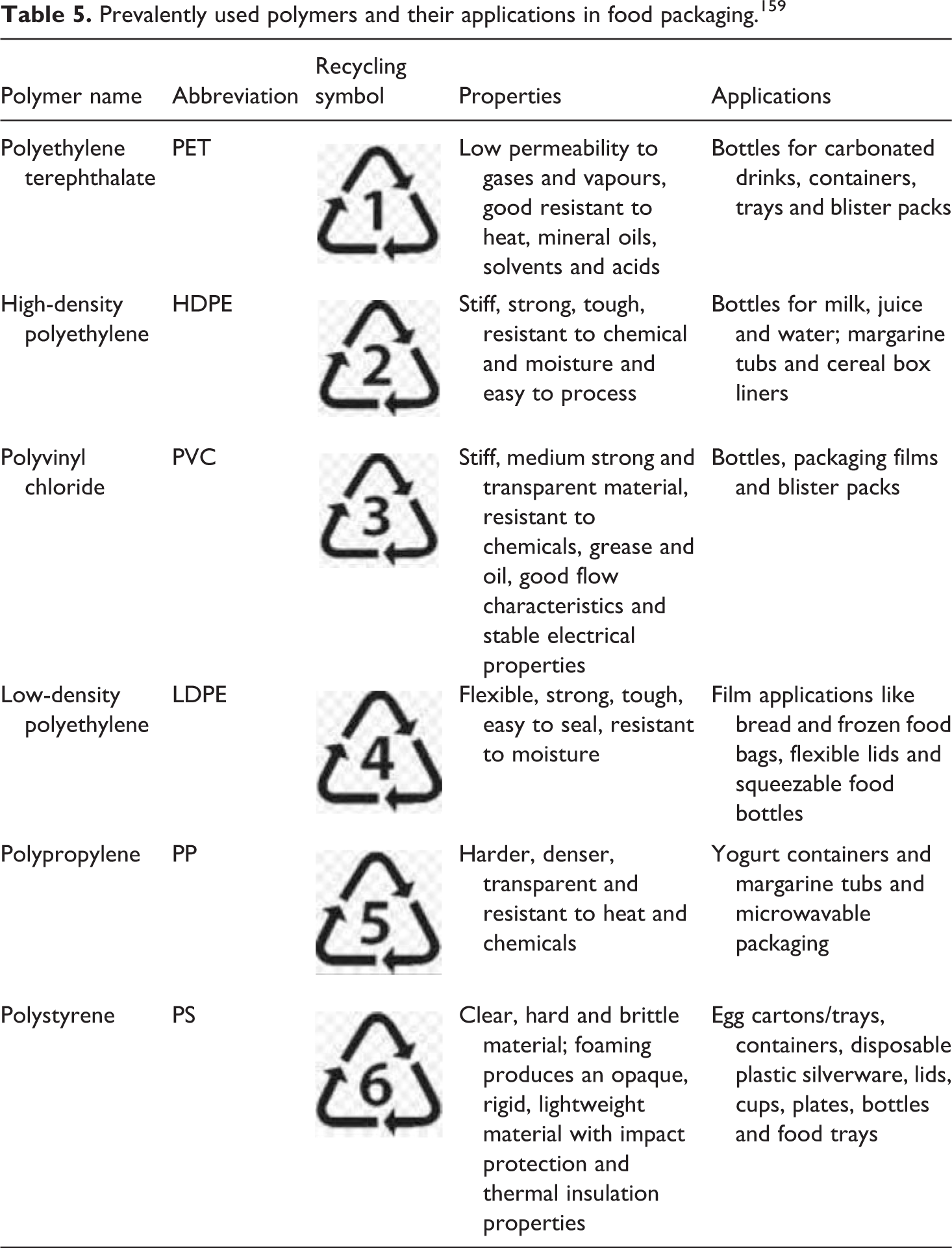
However, investigation on the development of PCN-based food packaging materials have been prepared and issued only since the late 1990s. 157 Various nanoparticles have been recognized as possible additives to enhance polymer performance. Among potential nanofillers, one of the prototypical clays utilized in food contact applications is MMT. 157–158 To achieve and to take full advantage of the reinforcement or tortuosity of clay particles for nanocomposites’ mechanical and barrier improvement, clay with large filler aspect ratio must be exfoliated into single platelets, distributed homogeneously and oriented in the appropriate direction into the continuous phase. The affinity of clay platelets towards polymer matrix is inducing exfoliation/delamination, whilst the type of processing used to prepare nanocomposite test samples, for example, mixing, extrusion, injection moulding and so on, is affecting the alignment. The commonly used polymeric materials, their typical properties and applications in food packaging are summarized in Table 5. 159
Prevalently used polymers and their applications in food packaging. 159
The proportions of major plastics discovered in packaging in US urban solid waste in 1998 is illustrated in Figure 6. 160
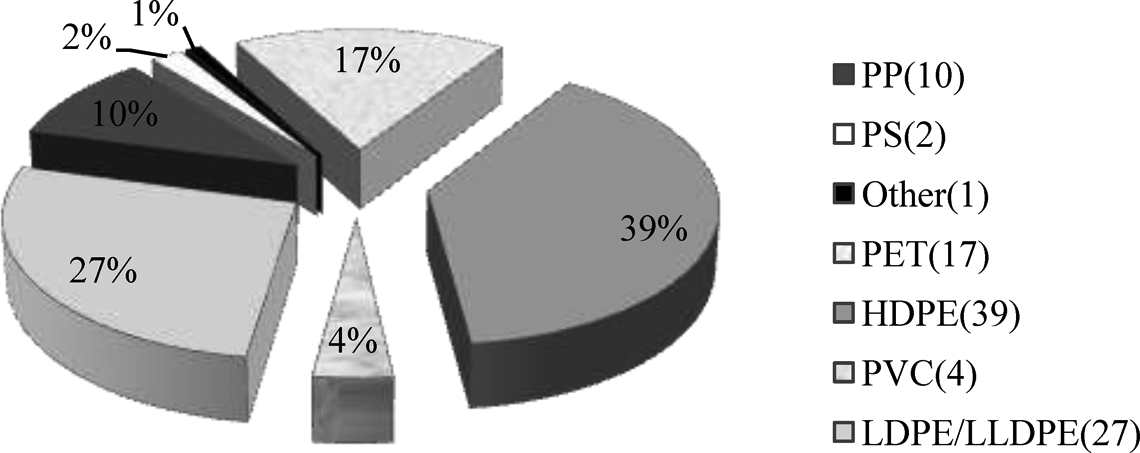
Majority of common plastic discovered in packaging in US urban solid waste in 1998.
PE, particularly as blown films, has found widespread use as a packaging material primarily because of its excellent mechanical properties, chemical and biological inertness, low cost and high energy effectiveness. 55 PCNs are actually developed to reduce the permeability of gases through packaged materials. There are many different studies on the development of nanocomposites with improved barrier properties because of the introduction of nanoclay to the system. 140–141,161 –169 Effectiveness of clay platelets in improving the barrier property of a different number of polymer clay nanocomposites is shown in Table 6. 62,166–167,170 –175
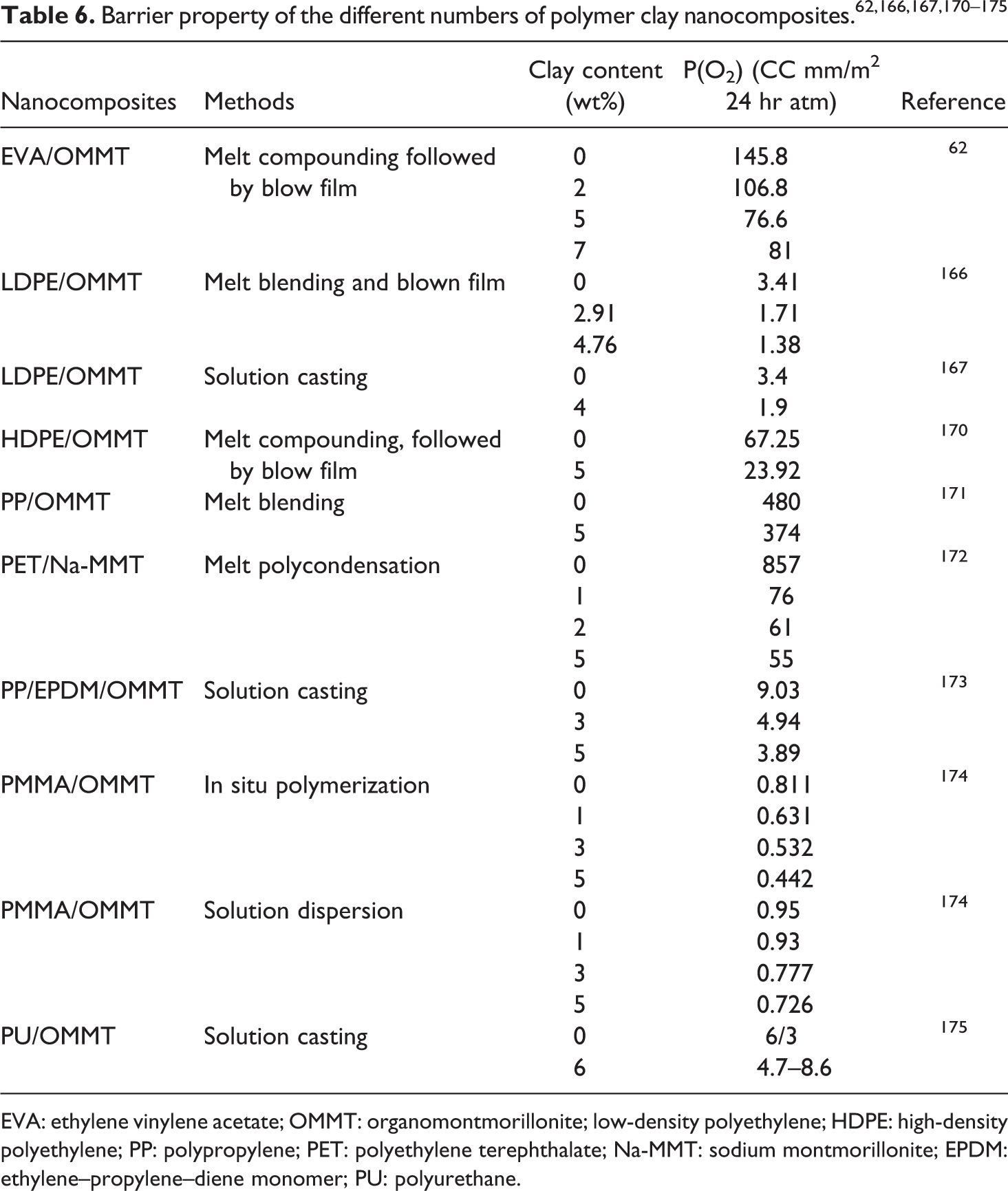
EVA: ethylene vinylene acetate; OMMT: organomontmorillonite; low-density polyethylene; HDPE: high-density polyethylene; PP: polypropylene; PET: polyethylene terephthalate; Na-MMT: sodium montmorillonite; EPDM: ethylene–propylene–diene monomer; PU: polyurethane.
The enhancement in barrier property via induction of nanoclay fillers in the polymer matrix can be described by the light of layered silicate sheets that act as an impermeable barrier in the path of fusion. 48,176 –181 The extent of enhancement is dependent on the type of polymer and nanoclay used in addition to the extent of dispersion of nanoparticle in the polymer matrix. Commonly, there are three reasons for enhancement of gas barrier properties for polymer/clay nanocomposites 182 : (i) gas-impermeable nanoclay layers dispersed in the polymer matrix form tortuous pathways, which retard the progress of gas molecules through the composite, (ii) exfoliated clay layers and intercalated clay layer bundles strongly restrict the motion of the polymer chains, probably reducing the coefficient of diffusion of the gas molecules and (iii) the smaller molecular weight between cross-links, which increases the cross-linking density due to reaction between the reacting groups (if any) in the nanoclay and the polymer and restricts the motion of the diffusion of the gas molecules. Permeability of blend as a function of morphology is illustrated in Figure 7. 183
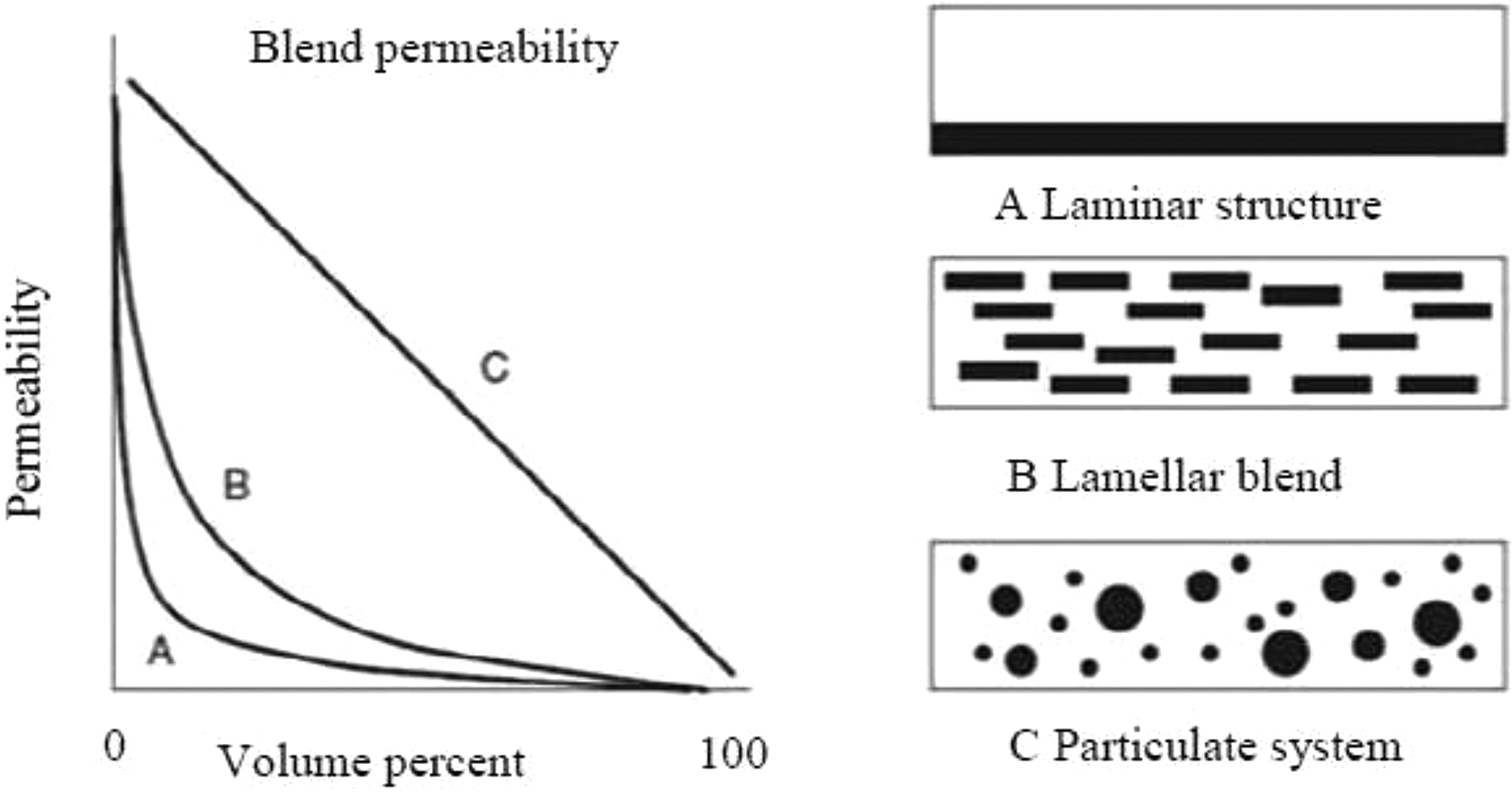
Permeability of blend as a function of morphology.
Extrinsic and intrinsic factors affect the permeability performance of a particular polymeric material. 184,185 The former include temperature and moisture conditions to which the polymer is exposed, whilst the latter is related to factors such as crystallinity, orientation, chain stiffness, free volume and cohesive energy density of the polymer. Different theoretic models such as the Nielsen model, modified Nielsen model or Bhardwaji model and Cussler model are used to estimate the rate of permeation. Interfacial regions have been found to be a specifically important parameter in polymer matrices that possess very high native gas permeability such as polyolefins. 186 Reinforcement of polymeric materials has been reported by clay incorporation even with a low level of filler loading, usually 1–5 wt%. Table 7 shows the mechanical and barrier properties of various polymer/clay nanocomposites. 62,140 –142,161,167,187 –189 Increased flame resistance 145,190,191 and enhanced thermal stability 165,190,192 –197 are among other benefits that have been reported on the performance of a variety of polymers resulting from the use of clay nanoparticles.
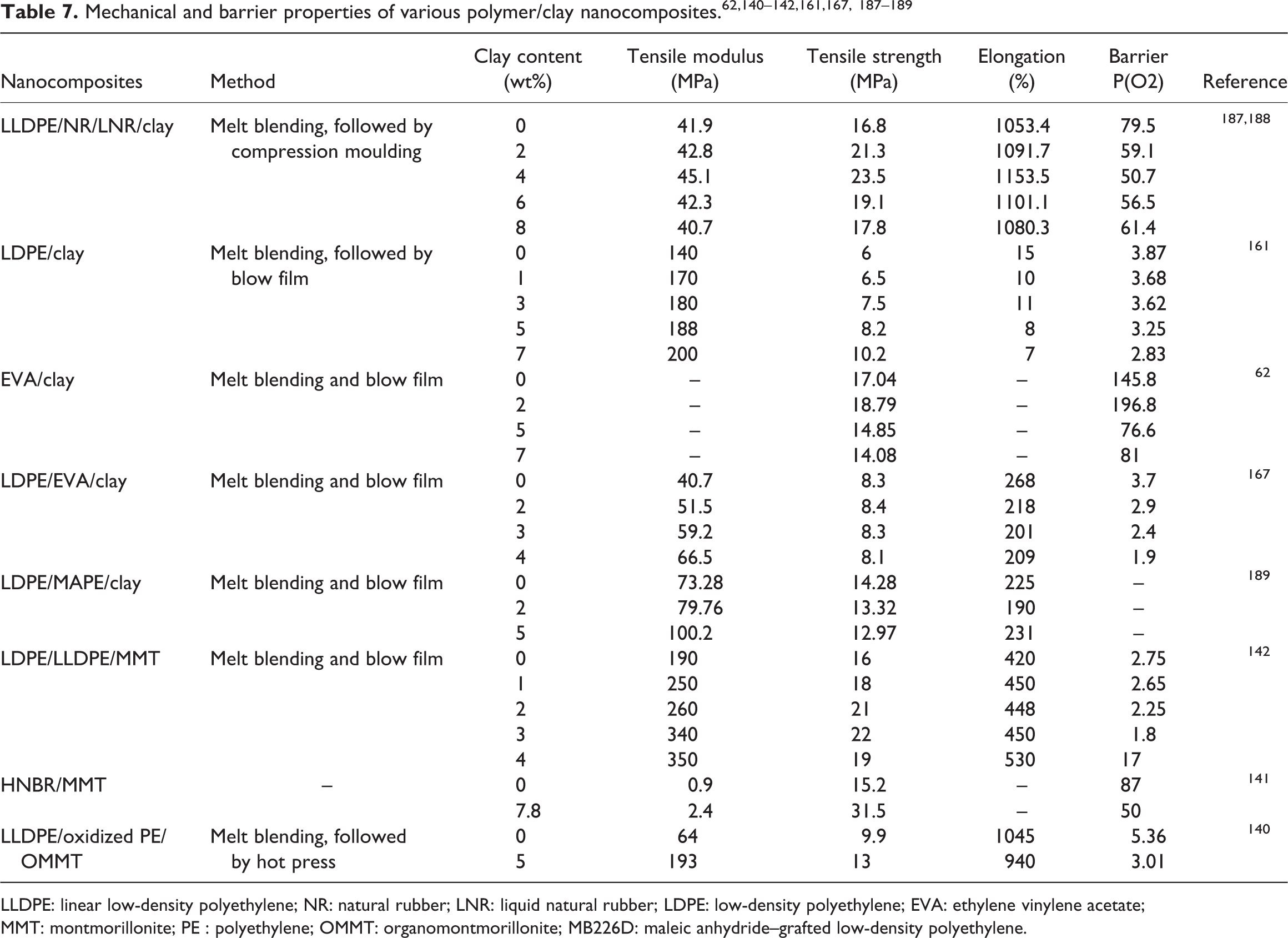
LLDPE: linear low-density polyethylene; NR: natural rubber; LNR: liquid natural rubber; LDPE: low-density polyethylene; EVA: ethylene vinylene acetate; MMT: montmorillonite; PE : polyethylene; OMMT: organomontmorillonite; MB226D: maleic anhydride–grafted low-density polyethylene.
NR-polyolefin blend nanocomposite
Thermoplastic NR (TPNR) blends are materials made by combining NR and a polyolefin whose properties are between that of rubber and plastics. 134,198,199 Nanotechnology could provide the key for improving some drawbacks associated with TPNR blend properties such as low stiffness and low service temperature. Previously, there have been studies regarding the blending of polyolefin nanocomposites with NR and encouraging results have been reported.
The properties of rubber blend nanocomposite mainly depend upon the interactions of rubber and filler and its preparation. Surface characteristics of the particles and chemical nature of rubber represent key parameters for these interactions. 200 Stable TPNR nanocomposites can be formed by compatibilization between the clay and TPNRs, as hydrophilic clay is incompatible with TPNR. Two such ways include lowering the enthalpy of the interaction between the surfactant and the clay, for example, by using octadecyl amine, 201 and the use of a coupling agent such as maleic anhydride-grafted with PE. 202,203
In work on polyolefin–rubber blend nanocomposite, researchers studied the effect of coupling agent on thermal and mechanical properties of LLDPE/NR nanocomposite. 188 They reported a positive effect of the coupling agent on the thermal and mechanical properties of LLDPE/NR nanocomposite. In another related work, researchers investigated the effect of surface modification of filler on the mechanical property of blend nanocomposite. 187 They found surface modification of the filler can improve the degree of wetting of the fillers by the polymer and the dispersion of the nanoclay. Two different preparation methods for TPNR nanocomposite were studied by Suripa et al. 204 They showed preparation methods significantly affected the crystallinity and thermal properties of polypropylene–NR nanocomposites.
Conclusion
PCNs represent one of the most promising classes of materials of the past few decades and have received much attention due to a significant increase in the mechanical and barrier properties in addition to the ease of preparation through simple processes for packaging applications. Simultaneous improvements in various material properties due to the incorporation of very low filler content and synergistic reactions between the matrix polymer and nanoclay at nanoscale level could be achieved. Environmental problems caused by these classes of materials because of non-biodegradability characteristic of nanocomposites forced researchers to enhance and develop research on the progression and utilization of these materials in several applications via incorporation and blending of bio-based polymers. The potential benefit of natural biopolymer-blended nanocomposite is the positive environmental impact with respect to ultimate disposability. However, poor incompatibility between the nanoclay, natural biopolymer and matrix phase results in poor stress-transfer efficiencies which specify the essential needs of a compatibilizer. The majority of produced plastics created from petroleum-based synthetic polymers are neither degradable in a landfill or in a compost-like environment nor renewable. Renewable polymers are generally sensitive to moisture and do not provide effective gas barrier properties. Nanoclay-reinforced polymer matrix shows a proper way to enhance the degradation and barrier in addition to the possibility of overcoming these shortcomings. Recent studies on the properties of a novel class of bio-based nanocomposites are playing a positive role in the development of stronger, high barrier and eco-friendly packaging materials. The food packaging industry is not the only market that has been improved by these new developed materials. Other markets such as medical, drug delivery and pharmaceutical could also benefit.
Future trends
Nanoclay-reinforced natural biopolymer/polymeric matrix is the subject of many scientific and research projects. When natural biopolymer/polymer matrices are mixed with nanoclay particles, the resulting materials will exhibit improved barrier properties and can be degraded/biodegraded and returned to the soil. Obtaining the optimum properties for the composites will usually require excellent dispersion of the filler and its good compatibility with the matrix. Regarding green nanocomposite expression and definition, and due to increased plastic waste on land, the urgency of producing biodegradable nanocomposite materials, especially in the field of packaging, is strongly needed and the lack of knowledge is still an obvious challenge. Moreover, the lack of compatibility and interfacial adhesion between the filler/matrix and phases prevents them from having a widespread commercial impact; thus, there is still a long way to go in order to achieve and tailor this property. Research and progress in these areas not only will benefit the current applications but would also lead to new markets as well in future development of packaging materials.
Footnotes
Declaration of Conflicting Interests
The author(s) declared no potential conflicts of interest with respect to the research, authorship, and/or publication of this article.
Funding
This research received no specific grant from any funding agency in the public, commercial or not-for-profit sectors.