




Abstract
Non-isothermal crystallization kinetics of virgin polypropylene (PP) and its nanocomposites have been evaluated using differential scanning calorimetric technique. The nanocomposites were prepared using melt intercalation method. It is observed that the crystallization peak temperature of nanocomposite is marginally higher than virgin PP at various cooling rates. The non-isothermal crystallization melt data were analysed using Avrami, Ozawa and Mos models. The half-time for crystallization decreased with incorporation of clay nanoparticles. The values of crystallization rate constant and cooling rate at unit crystallization time showed that the crystallization rate increased with the increasing of cooling rates for virgin PP and nanocomposite, but the crystallization rate of nanocomposite was faster than that of PP at a given cooling rate. The activation energy for non-isothermal crystallization of virgin polymer and nanocomposites based on Kissinger method has been determined to be 186 and 196 kJ mol−1, respectively. The polarized micrographs showed that the number of effective nuclei increased in the PP-clay nanocomposite, where the clay acts as a heterogeneous nucleating agent during the crystallization of the nanocomposite.
Keywords
Introduction
In the recent years, clay-based polyolefin nanocomposites have gained considerable research interests ranging from packaging to automotive applications. Polypropylene (PP) is one of the most widely used polyolefin polymers. Incorporation of fillers has been proved to be an effective way of improving the mechanical properties of PP. It is a semi-crystalline thermoplastic polymeric material that finds wide application because of its excellent processibility, good mechanical properties and very good chemical resistance. 1 –4 Smectite clays, such as montmorillonite, saponite and surface-modified montmorillonite, are valuable minerals used in many industrial applications because of their high aspect ratio and plate-like morphology. Among all, montmorillonite is a naturally abundant and environment-friendly cheap clay material used in polymeric matrices such as PP to make material with superior final properties 5 . PP does not contain any polar groups in its backbone for which it has been difficult to attain homogeneous dispersion of clay particles inside the polymer matrix. According to chemical thermodynamic study, entropic and enthalpic balances determine the dispersion of the clay particles in the polymer matrix. As the polymer chains become constrained between silicate layers, the entropy decreases. In order to get a homogeneous dispersion, the interaction between the clay and the polymer matrix must be favourable. 6 –8 Hence, to improve the interaction between polymer matrix and clay, montmorillonite is usually modified with alkyl ammonium, which makes the hydrophilic clay surface organophilic 9 . Several methods have been adopted to prepare organoclay/polyolefin nanocomposites, including in situ polymerization of propylene in the presence of layered silicates, 10,11 , solvent blending 12 and melt compounding. 1,13 Among all, melt compounding has been the most convenient process for preparation of the nanocomposites.
Kawasumi et al. firstly prepared PP/clay nanocomposites by direct melt blending technique with the use of maleic anhydride-modified PP (PP-g-MAH) as compatibilizer. 14 Compatibilizers are required due to the huge difference of polarity between the polyolefin matrix and the clay. PP-g-MAH allows wetting of the clay surface by hydrogen bond interactions between the anhydride functions, that is, the OH group of the MAH group (in fact, the acid functions are always present due to hydrolysis under the usual storage conditions) and the O atoms at the surface of the silicate layers. 15 The presence of PP-g-MAH is necessary to obtain significant improvements in the properties of nanocomposites 16,17 Intensive works on the PP/layered silicate nanocomposite have been carried over the years. 18,19
The subject of polymer crystallization kinetics has been of great interest for several decades and still provides fruitful areas for research. Crystallization, like any phase transformation, obeys the fundamental laws of thermodynamics, which suggest whether, under specific conditions and circumstances, there is existence of crystal or not. In ideal conditions where external conditions are constant, the studies of crystallization are limited because of fewer problems connected to cooling rates and thermal gradients inside the polymer matrix. In reality, during various industrial processes, it is seen that external conditions change continuously for which the studies of non-isothermal crystallization are more complex in nature. Whatever it may be, the study of crystallization of polymers is of great significance in a continuously varying situation since many manufacturing and engineering processes in industry proceed under nonisothermal conditions. If we see from a scientific point of view, the study of crystallization in dynamic conditions may enlarge our knowledge of understanding regarding crystallization of polymers since many isothermal processes occur frequently under constrained to narrow temperature ranges.
The purpose of this work is to provide the current state of art for non-isothermal crystallization of polymer and its nanocomposites during cooling from the melt. This article also reviews the various theories of non-isothermal crystallization processes of virgin polymer and its nanocomposites and then its experimental observations in dynamic conditions. The aim of the present work is to arouse discussion pertaining to non-isothermal crystallization kinetics in order to get better prophecy of the reaction parameters of dynamic solidification under genuine processing conditions. This comprises an imperative industrial and scientific confront in the area of non-isothermal crystallization of polymer and its nanocomposites.
It is evident that the mechanical and physical properties of polymers are invariably dependent on morphology and degree of crystallinity during the time of processing. The surface of the filler particles acts as nucleation site for semi-crystalline polymer matrix and affects the crystallization behaviour. Therefore, it is very important to study the nonisothermal crystallization kinetics of polymer materials 20 . In this article, PP and organophilic montmorillonite were used as the base polymer and reinforcing agent, respectively, for the preparation of nanocomposites. Comprehensive study has been made on the nonisothermal crystallization kinetics of PP and clay nanocomposites. In the recent years, the nonisothermal crystallization kinetics of several polymers was investigated by several authors 21 –23 and different kinetic models were applied to deal with the experimental data derived using the differential scanning calorimetry (DSC) technique. The main objective in this work is to make a relative comparison of crystallization kinetics under nonisothermal condition of virgin PP and PP/PP-g-MAH/clay nanocomposites (5 wt% compatibilizer and 5 wt% clay) using DSC. Furthermore, the kinetics is analysed using theoretical approach of Avrami, Ozawa and Mos models 24 –27 for evaluating the nonisothermal crystallization. The nucleation activity of the clay nanoparticles on the polymer matrix was obtained through polarized light microscopy (PLM). At last, the activation energy (ΔE) describing the nonisothermal crystallization process is calculated as a function of the relative crystallinity based on Kissinger method. 28–29
Experimental
Materials
PP (H100EY, weight-average molecular weight = 180,000 g mol−1) was obtained from the Reliance Industries Ltd (Jamnagar, Gujarat, India). Virgin PP was in the form of pellets with a melt flow index (MFI) of 11 g/10 min at the rate of 230°C/2.16 kg and a density of 0.9 g cm−3. PP-g-MAH (OPTIM®, P-425) was purchased from M/S Pluss Polymers (Gurgaon, Haryana, India). It is used as a compatibilizer for blending of PP-clay nanocomposite. The density of the product is 0.908 g cm−3. The MFI is of 110 g/10 min at the rate of 230°C/2.16 kg. The organoclay such as montmorillonite, (Cloisite®15A; C15A) is a natural montmorillonite chemically modified by dimethyl dehydrogenated tallow quaternary ammonium salt. The clay was a fine powder with a cation exchange capacity of 125 ml equiv/100g. The density and layer distance of clay was 1.66 g cm−3 and 31.5 Å, respectively. It was purchased from Southern Clay Products, Inc. (Gonzales, Texas, USA).
Preparation of PP/PP-g-MAH/C15A nanocomposite
Prior to extrusion, the clay powder was dried in a vacuum chamber oven at 80°C for 12 h to remove the absorbed moisture. Three PP master batches were prepared containing PP and C15A along with virgin PP master batch. The composition of each master batch containing C15A was in the range of 3, 5 and 7% by weight without using compatibilizer. Nanocomposites were prepared by melt mixing of the two components using torque rheometer (Haake Rheomix OS, Germany) with counterrotating roller rotors having a chamber size of 66 cm3. The screw speed was 80 r min−1 and the mixing time was 15 min for all the compositions. The barrel temperature profile was optimized from 175 to 190oC from feed to die zone. After compounding, the mixed material was extruded to produce cylindrical extrudes. The optimized composition of the master batch was further mixed with PP-g-MAH (90% virgin PP + 5% PP-g-MAH + 5% C15A) as compatibilizer. The mixture was extruded after passing through a twin-screw extruder to homogenize the mixture thoroughly to get the pellets. The prepared pellets were further processed to obtain the desired film for property evaluation.
Instruments and conditions
Differential scanning calorimetry
Crystallization of PP/PP-g-MAH/clay nanocomposite and virgin PP were analysed with the DSC (Q20, TA Instruments, New Castle, Delaware, USA). DSC analysis was carried out using 5–8 mg of sample. For nonisothermal crystallization kinetics, the samples were cooled at various cooling rates, that is, 5, 10, 15 and 20°C min−1, respectively. The samples were initially melted at 200°C for 5 min in order to erase the previous thermal history. All measurements were carried out under nitrogen atmosphere from the temperature range –50°C to 250°C. The crystallinity of the samples was determined from the heat of crystallization. The results were analysed with different kinetic models.
Polarized light microscopy
Crystalline morphology studies were carried out using a DM 4500 P, LED Leica; Germany PLM equipped with crossed polar in conjunction with a Linkam THMS 600 hot stage. Samples of specific thickness were prepared by cutting small pieces from films. These samples were heated to 200°C at 20°C min−1, kept for 10 min at 200°C, and then quickly cooled at the rate of 40°C min−1 to reach the desired crystallization temperature. The temperature was kept constant for 2 min at this stage and then further cooled at the rate of 2°C min−1 to 100°C. The growth of spherulite during that stage was monitored. Micrographs were taken at various time intervals for interpreting the spherulite size.
Results and discussions
Crystallization behaviour
The effects of clay on the crystallization behaviour of PP were quantitatively analysed through nonisothermal DSC experiments. The crystallization thermograms of PP and PP/PP-g-MAH/clay nanocomposites at selected cooling rates of 10°C min−1 and at various cooling rates are presented in Figures 1 and 2. From these curves, some important parameters, such as the crystallization onset temperature (Tc), crystallization peak temperature (Tp) and crystallization enthalpy (ΔHc) of PP and PP-clay nanocomposites have been determined. The results are summarized in Table 1. It is evident from the graph (see Figure 1) that the Tc of the virgin polymer increases with the incorporation of C15A nanoclay. It is also observed (see Figure 2(a) and (b)) that the exothermic trace becomes wider and the Tp value shifted to lower temperature when the cooling rate is increased.
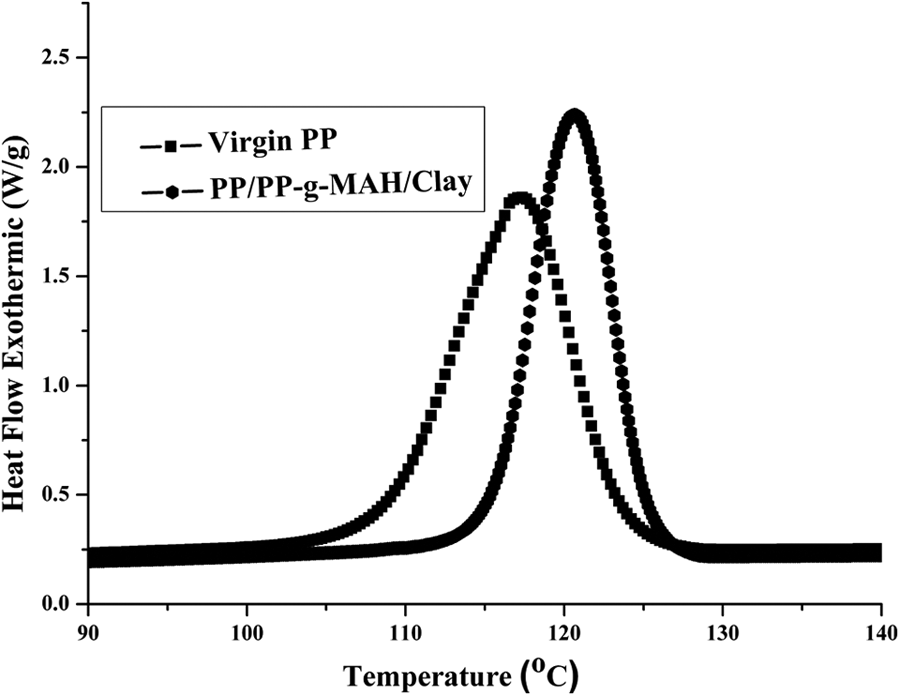
DSC thermograms virgin PP and PP/PP-g-MAH/clay nanocomposites under exothermic condition at 10°C min−1. DSC: differential scanning calorimetry; PP: polypropylene; PP-g-MAH: maleic anhydride-modified polypropylene.
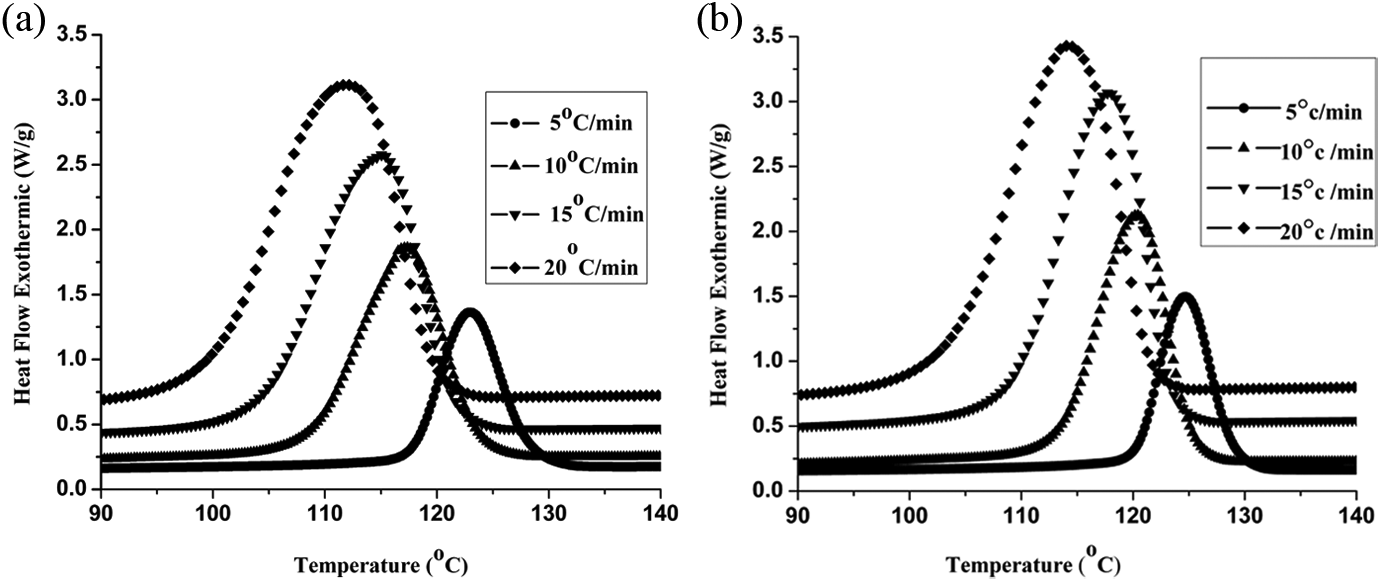
(a) DSC thermograms of virgin PP recorded during non-isothermal crystallization at different cooling rates. (b) DSC thermograms PP/PP-g-MAH/clay nanocomposite recorded during non-isothermal crystallization at different cooling rates. DSC: differential scanning calorimetry; PP: polypropylene; PP-g-MAH: maleic anhydride-modified polypropylene.
Non-isothermal crystallization kinetic parameters for virgin PP and PP/PP-g-MAH/clay nanocomposites.
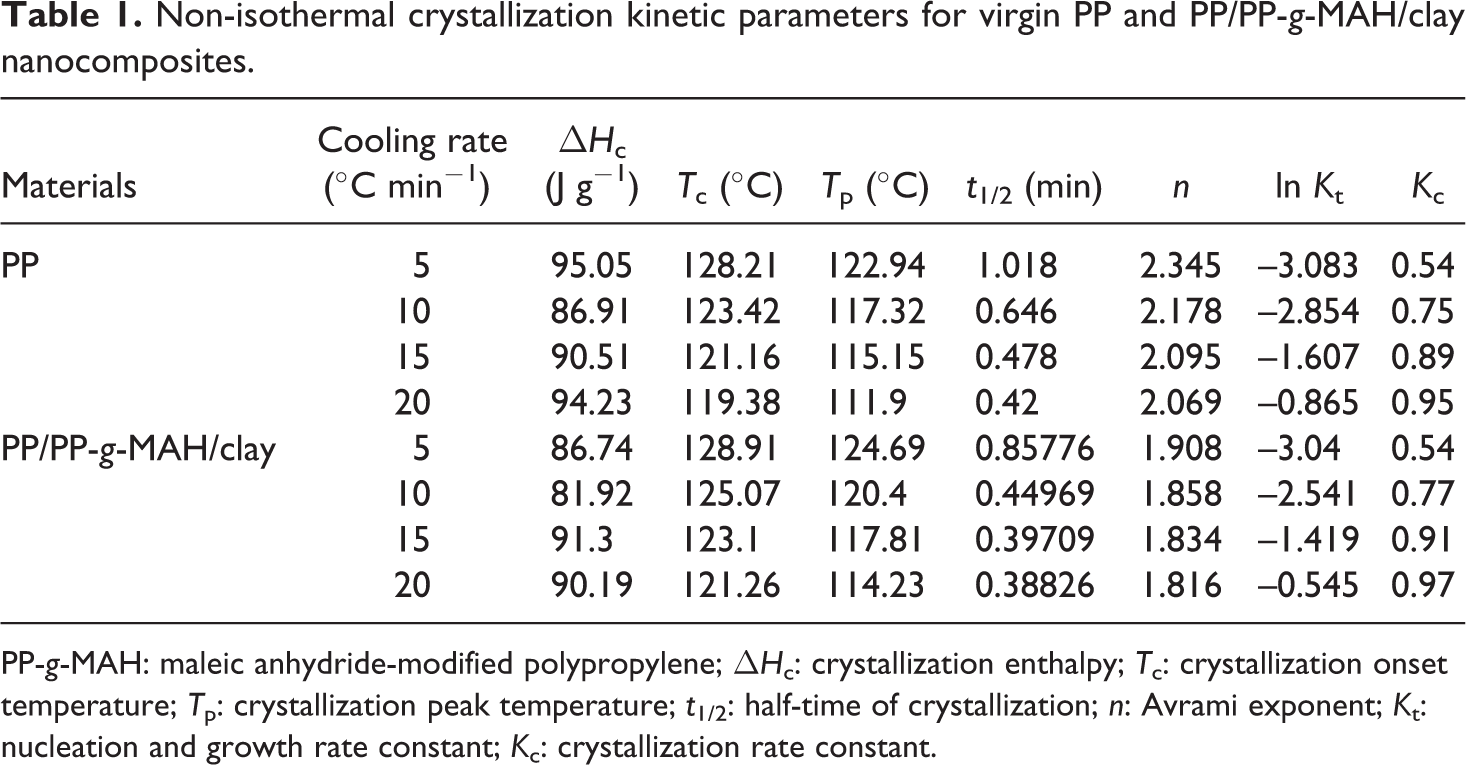
PP-g-MAH: maleic anhydride-modified polypropylene; ΔHc: crystallization enthalpy; Tc: crystallization onset temperature; Tp: crystallization peak temperature; t1/2: half-time of crystallization; n: Avrami exponent; Kt: nucleation and growth rate constant; Kc: crystallization rate constant.
Figure 3 shows the relationship between crystallization Tp and cooling rate for virgin PP and PP/ PP-g-MAH/clay nanocomposites. It is also seen that Tp decreases with increasing cooling rate. For example, Tp of virgin PP decreases about 11°C, when cooling rate increases from 5 C min−1 to 20°C min−1. Similarly Tp decreases about 10°C for the PP/PP-g-MAH/clay nanocomposites. When the cooling rate is low, polymer molecular chains get sufficient time to cross the nucleation energy barrier as a result of which the crystallization takes at higher temperature, raising the value of Tp. But when the cooling rate is increased, the polymers crystallize readily under super cooling temperature as the molecular chains cannot enter into the crystal grains. 30
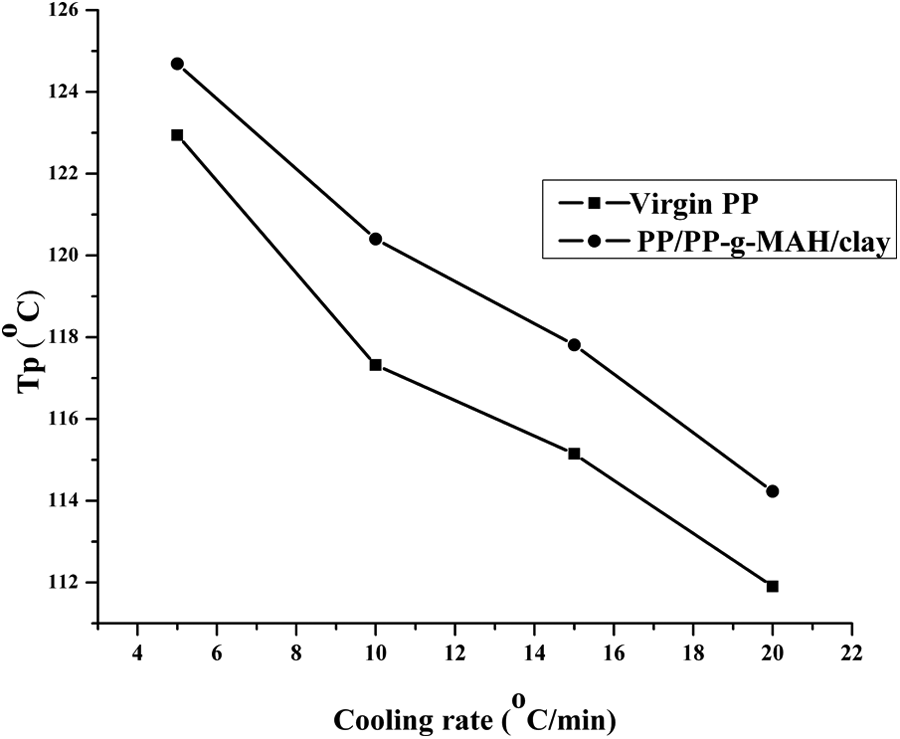
Crystallization peak temperature (Tp) versus cooling rate for (a) virgin PP and (b) PP/PP-g-MAH/clay nanocomposites. DSC: differential scanning calorimetry; PP: polypropylene; PP-g-MAH: maleic anhydride-modified polypropylene.
Under the same cooling rate, the Tp of PP/PP-g-MAH/clay nanocomposites is higher than that of virgin polymer. Similar results have been reported earlier. 31,32 For example, at the cooling rate of 10°C min−1, crystallization Tp for virgin PP is 117°C, while for PP/PP-g-MAH/clay nanocomposite, the value is 120.5°C (Figure 1). This means that the clay nanoparticles are effective nucleating agents and reduce the degree of super cooling required for crystallization. Aggregates of clay and other impurities can serve as nuclei on which the PP molecular chain can easily be absorbed leading to quicker crystallization at higher temperature. Similar trend has been observed in earlier report. 33 This can also be attributed to heterogeneous nucleation of clay particles on the polymer chain segments. The value of ΔHc (Table 1) is decreased in the presence of clay particles in the nanocomposites because the clay (foreign body) destroys the integrity of PP matrix and decreases their activity and consequently leads to fewer crystallites in the nanocomposites. 5,34
Figure 4(a) and (b) shows the relationship between the relative degree of crystallinity (Xt) as a function of temperature for the virgin PP and PP/PP-g-MAH/clay nanocomposite at different cooling rates. Here, the Xt value as a function of Tc is estimated from equation (1): (a) Relative crystallinity (Xt) versus temperature for virgin PP. (b) Relative crystallinity (Xt) versus temperature for PP/PP-g-MAH/clay nanocomposites. DSC: differential scanning calorimetry; PP: polypropylene; PP-g-MAH: maleic anhydride-modified polypropylene.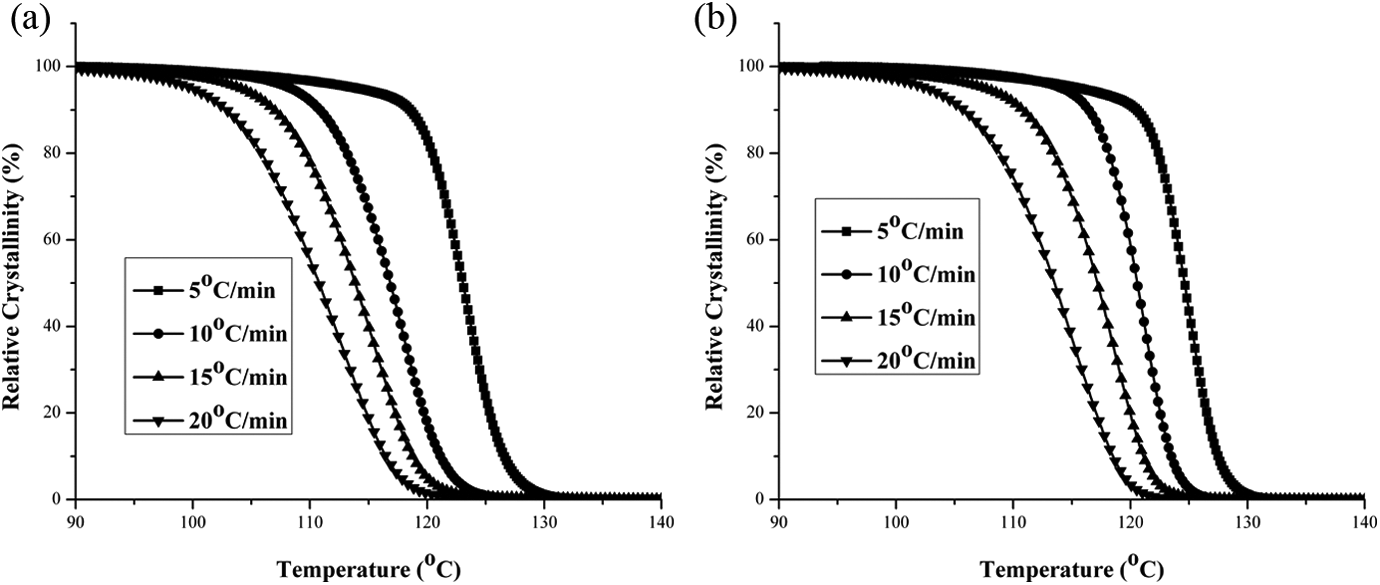
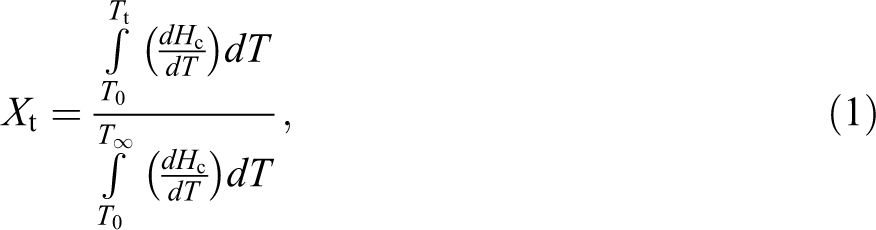
where T0 is the onset crystallization temperature, Tt is the crystallization temperature at time t and T∞ the end crystallization temperature. The dHc is the enthalpy of crystallization released during an infinitesimal temperature range dT. From the graphs, it can be seen that curves have the same inverse sigmoid shape. The shifting of curves only signifies the delayed effect of cooling rate on crystallization process. 35
The relation between crystallization time and temperature during the nonisothermal crystallization process is given by equation (2):
where Tt is the temperature at crystallization time t and λ is the cooling rate. Using this above equation, conversion from temperature to time is performed using a constant cooling rate.
Figure 5(a) and (b) shows the plots of the Xt as a function of time. It is seen that higher the cooling rate lesser the time required for completion of crystallization. From these graphs, an important parameter, that is, half-time of crystallization (t1/2) could be obtained. It is the value of the time from the onset of crystallization to the time at which Xt is equal to 50%. The value is listed in Table 1. Experimentally, t1/2 can be derived from the plot of Xt versus t. As expected, the value of t1/2 decreased with the increased cooling rate for virgin matrix and nanocomposites (Figure 6). It can be observed that for a fixed cooling rate, the half crystallization time for the PP-clay nanocomposite was lower than that of the virgin PP. It shows that the addition of clay can speed up the overall nonisothermal crystallization process. 36 The nanoclay particles act as a heterogeneous nucleating agent to facilitate crystallization.
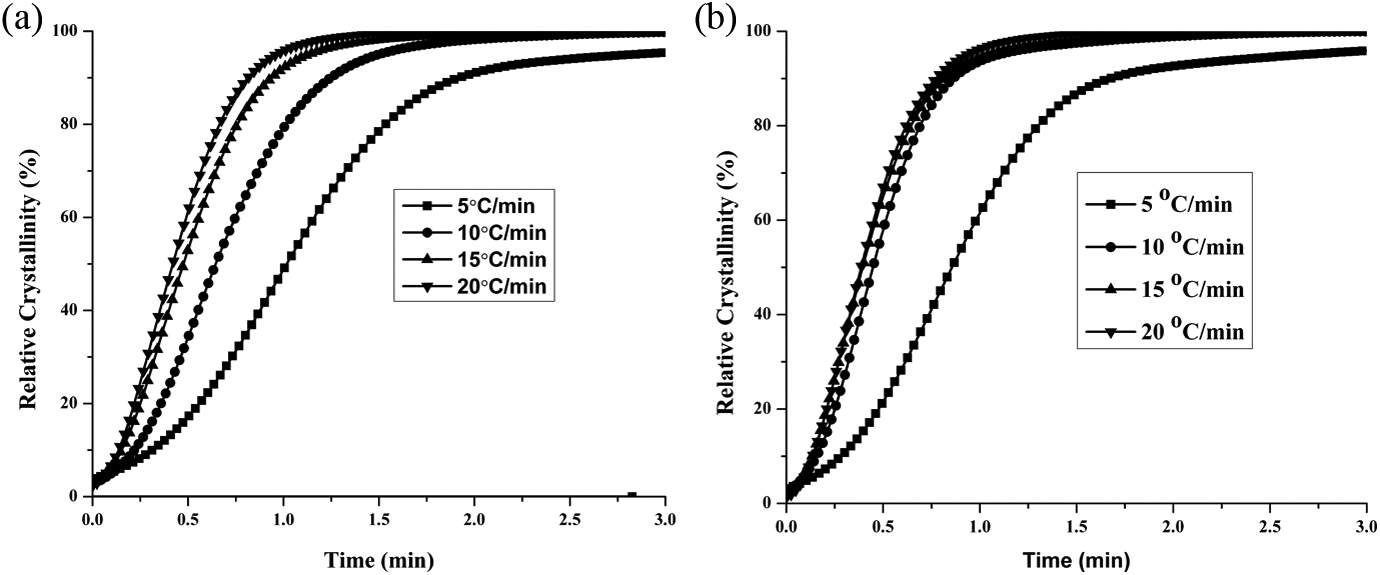
(a) Variation of relative crystallinity (Xt) versus time (t) for virgin PP. (b) Variation of relative crystallinity (Xt) versus time (t) for PP/PP-g-MAH/clay nanocomposites. PP: polypropylene; PP-g-MAH: maleic anhydride-modified polypropylene.
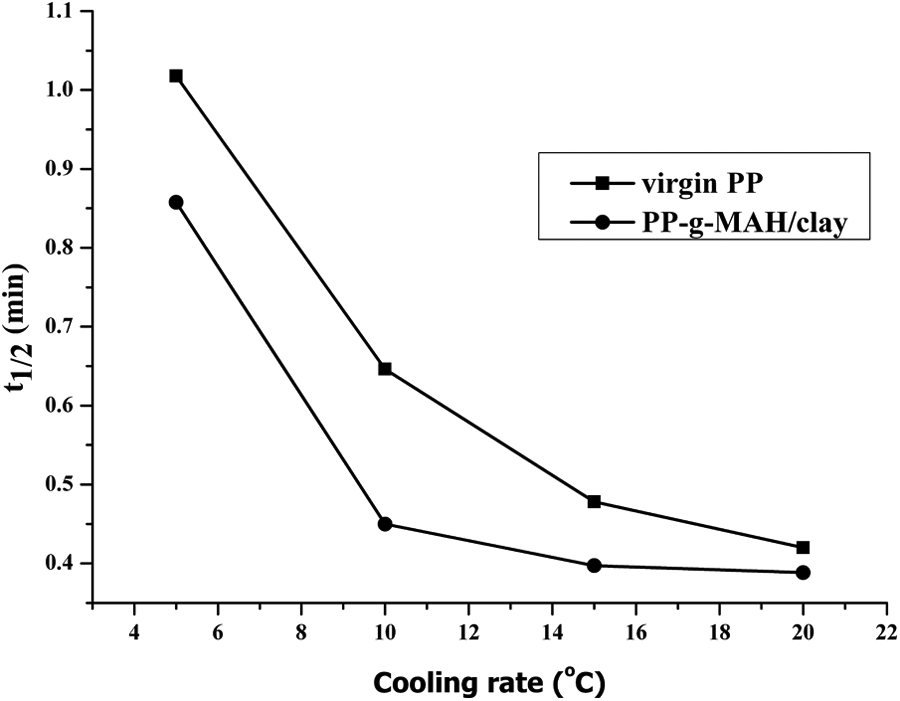
Non-isothermal crystallization half-time (t1/2) as a function of cooling rate for virgin PP and PP/PP-g-MAH/clay nanocomposites. PP: polypropylene; PP-g-MAH: maleic anhydride-modified polypropylene.
Nonisothermal crystallization kinetics
The primary stage of nonisothermal crystallization kinetics could be described by the Avrami equation. The equation is represented as follows:
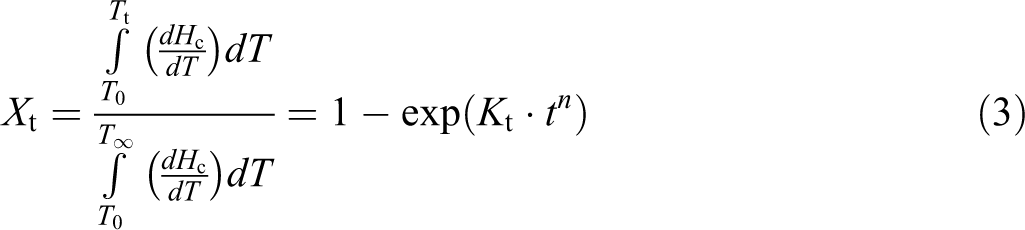
The double logarithmic form of equation (3) is given as:
Where Xt is the relative degree of crystallinity, Kt is the nucleation and growth rate constant and n is the Avrami exponent.
Figure 7(a) and (b) shows the plots of ln[–ln(1–Xt)] versus lnt for virgin PP and PP/PP-g-MAH/clay nanocomposites at various cooling rates. Each plot has a linear portion in the early stage of crystallization and is followed by a gentle deviation in the upper part at longer time. It is to mention that the parameters Kt and n have different physical meaning in nonisothermal crystallization than that of isothermal crystallization because the temperature changes continuously during the non-isothermal crystallization process. The value of n strongly depends on the mechanism of nucleation and morphology of spherulite growth. Its value varies from 1 to 4 as revealed from literature survey. For polymeric materials, n will not be an integer. The fractional values of n can be accounted for average contribution of occurrence of various modes of nucleation and growth. 37,38
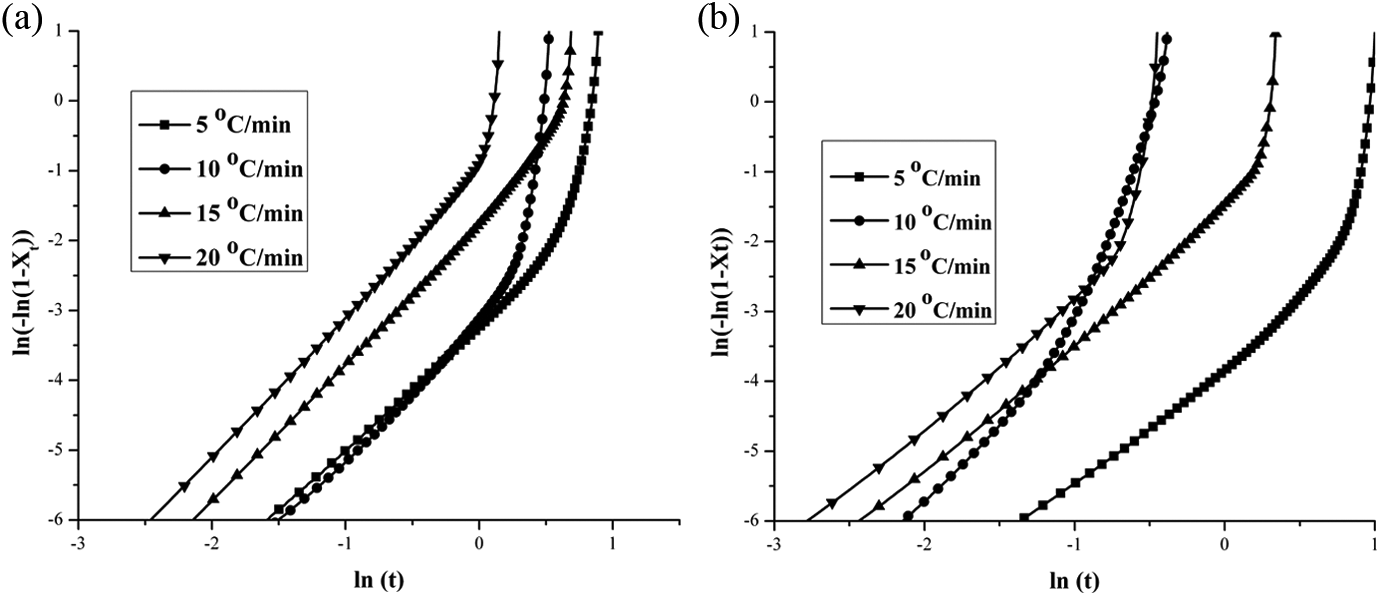
(a) Plots of ln(–ln(1–Xt)) versus ln(t) for crystallization of virgin PP at different cooling rates. (b) Plots of ln(–ln(1–Xt)) versus ln(t) for crystallization of PP/PP-g-MAH/clay nanocomposites at different cooling rates. PP: polypropylene; PP-g-MAH: maleic anhydride-modified polypropylene.
The value of n varies from 1.8 to 2.3, which may be accounted for the following reasons: simultaneous occurrence of two- and three-dimensional spherulite growths with heterogeneous nucleation; simultaneous occurrence of two-dimensional spherulite growth with heterogeneous and homogeneous nucleation; and combined effect of the above two mechanisms.
The values of n are less for PP/PP-g-MAH/clay nanocomposite than virgin PP at respective cooling rates. It may be because of simultaneous occurrence of two- and three-dimensional crystal growths and the nucleation effect is stronger than that of virgin PP. It is also seen that with increasing cooling rate, there is a gradual decrease in the value of n, which can be attributed to fact that the number of active sites increases with decreasing temperature during crystallization process.
Hao et al.
39
reported the modified Jeziorny equation for the non-isothermal crystallization process and represented as follows:
where Kc is the corrected composite rate constant and λ is the cooling rate. The values of crystallization rate constant Kc parameters are lower for virgin PP than that of PP/PP-g-MAH/clay nanocomposites. The value is nearly same at 5°C min−1 cooling rate but increases to 0.54–0.97 at higher cooling rates. This showed that the addition of compatibilizer and filler could enhance the rate of PP crystallization.
Ozawa analysis
Ozawa modified the Avrami equation by incorporating the cooling rate factor λ and is given by
22
:
where K(T) is the cooling function and m is the Ozawa exponent. The exponent depends on the dimension of crystal growth. The double logarithmic form of equation (6) can be written as:
Several authors have claimed that Ozawa model is not valid for the nonisothermal crystallization process. 20,22 But we have used this model for the nanocomposite. Drawing the plot between ln[–ln(1–Xt)] against ln λ at a given temperature it comes to be a straight line, then we can say that the Ozawa method is valid. Plots based on equation (7) for the non-isothermal crystallization of virgin PP and PP/PP-g-MAH/clay nanocomposites for a series of temperatures are given in Figure 8(a) and (b).
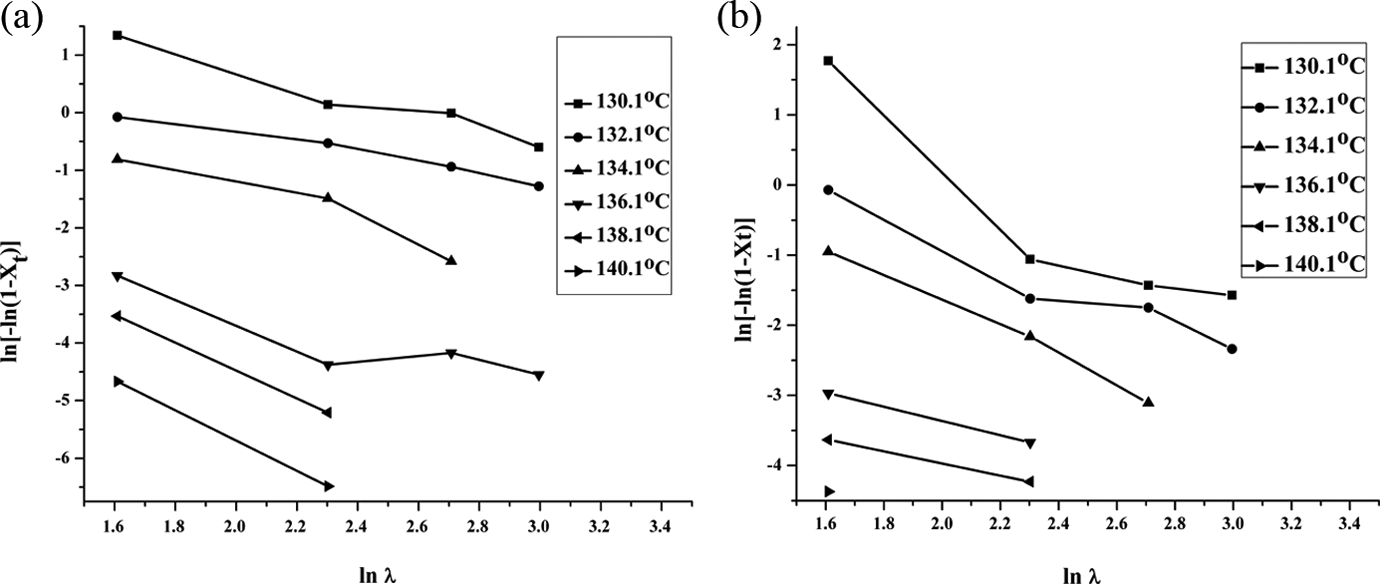
(a) Ozawa plots of ln[–ln(1–Xt)] versus ln λ for crystallization of virgin PP at different cooling rates. (b) Ozawa plots of ln[–ln(1–Xt)] versus ln λ for crystallization of PP/PP-g-MAH/clay nanocomposites at different cooling rates. PP: polypropylene; PP-g-MAH: maleic anhydride-modified polypropylene.
It is clearly seen from the Ozawa plots that the curves do not exhibit linearity in the upper parts. This might be due to retardation in crystal growth at higher cooling rate, as it takes place in a much constrained environment. It is explained that during cooling, secondary crystallization could not take place due to continuous decrease in temperature.
Mo’s analysis
In order to explain properly the kinetics of non-isothermal crystallization Mo et al.
40
derived a relation between the cooling rate (λ) and the crystallization time (t) for a given degree of crystallinity by combining both Avrami equation (4) and Ozawa equation (6). The modified equation is:
where F(T) = [K(T)/k]1/m refers to the cooling rate at unit crystallization time when the measured system has a certain degree of crystallinity. The α is the ratio between Avrami exponent n and Ozawa exponent m, that is, α = n/m. The smaller the value of F(T), the higher the crystallization rate .Therefore the value of F(T) has definite physical significance. At different degree of crystallinity, we can draw plots of ln λ versus ln t as per equation (8) shown in Figure 9(a) and (b).
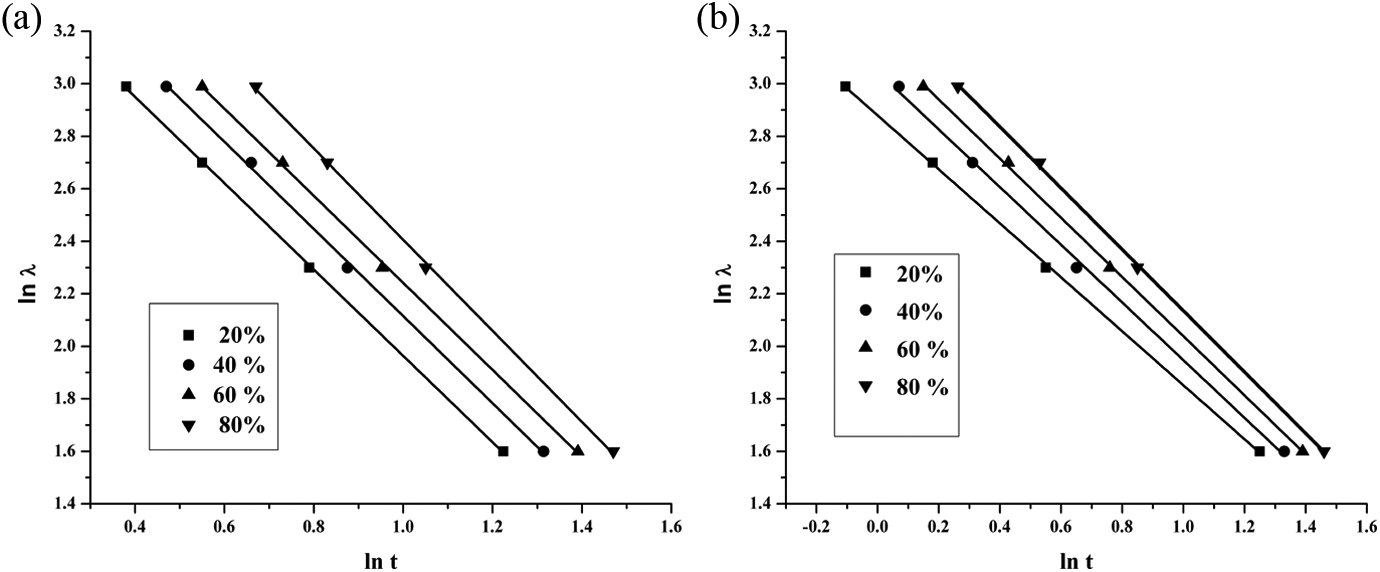
(a) Mo plots of ln λ versus ln(t) for crystallization of virgin PP at different percentage of relative crystallinity. (b) Mo plots of ln λ versus ln (t) for crystallization of PP/PP-g-MAH/clay nanocomposite at different percentage of relative crystallinity. PP: polypropylene; PP-g-MAH: maleic anhydride-modified polypropylene.
At a given degree of crystallization, a linear relationship has been seen. Using linearity fitting method, we can obtain the slope (–α) and the intercept (ln F(T)) from which slopes (α) and intercepts (F(T)) of the lines can be evaluated. The results are listed in Table 2. The values of α for virgin PP vary from 1.65 to 1.73 and for PP–PP-g-MAH-clay nanocomposite vary from 1.02 to 1.16. It is seen that the variation in the value of α is very small for both virgin PP and PP-clay nanocomposite. At a certain relative crystallinity, a high value of F(T) means a high cooling rate needed to reach the particular crystallinity in a unit time, which reflects the difficulty in crystallization process. The data in Table 2 shows that the value of F(T) is increasing with the increase of relative crystallinity, indicating that at a given crystallization time, a higher cooling rate should be used to obtain a higher degree of crystallinity. F(T) values of PP/PP-g-MAH/clay nanocomposites are smaller than those obtained from virgin PP and the value of F(T) systematically increases with increase in the relative crystallinity for both virgin PP and PP/PP-g-MAH/clay nanocomposites. It is also seen that for a definite degree of crystallinity, F(T) for nanocomposite is smaller than that of virgin PP. It means nanocomposite requires smaller cooling rate to reach the same relative degree of crystallinity because of its faster crystallization rate. This shows that F(T) signifies the crystallization facilitation effect of nanoclay on PP matrix.
Non-isothermal crystallization kinetics parameters for the PP and PP/PP-g-MAH/clay nanocomposite at different relative degrees of crystallinity by combination of Avrami–Ozawa equation.
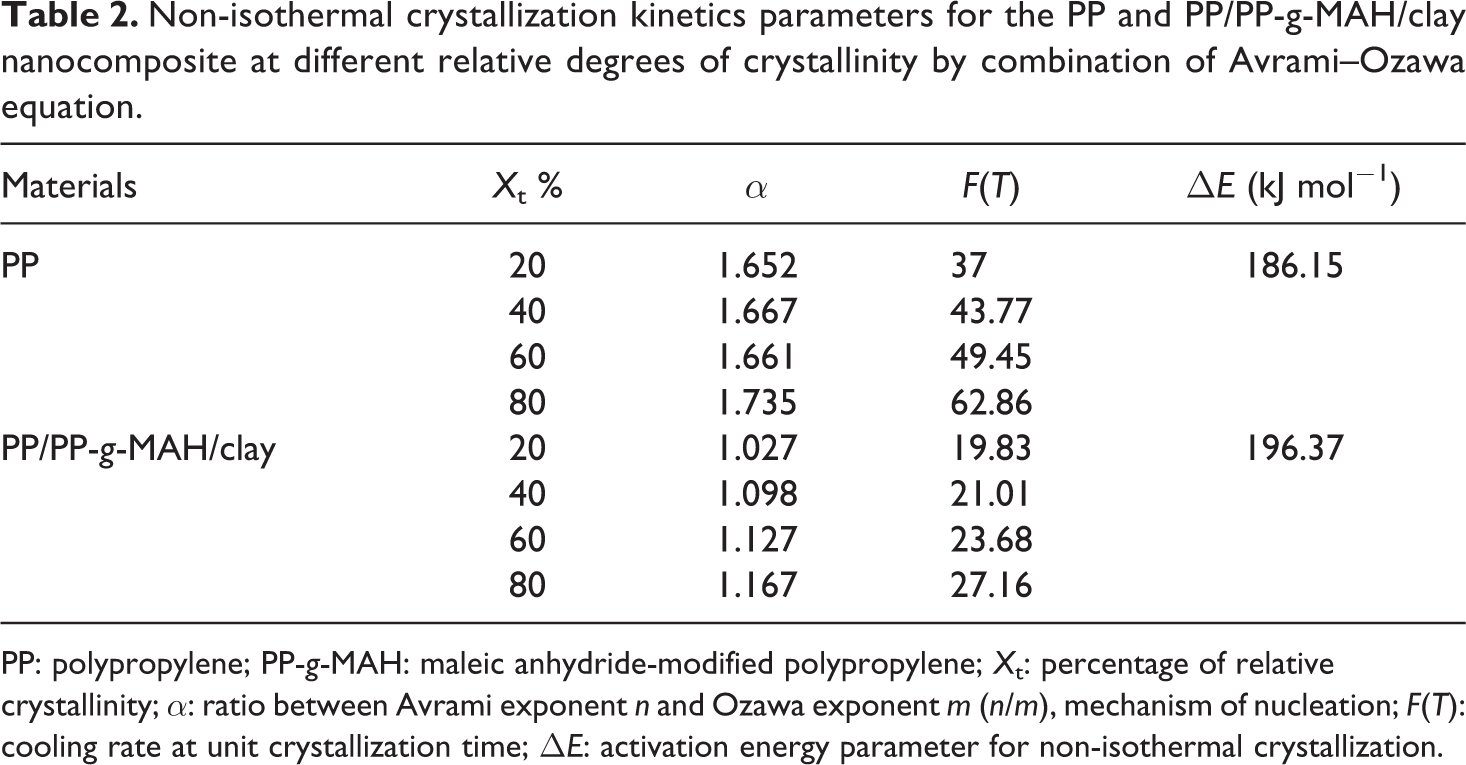
PP: polypropylene; PP-g-MAH: maleic anhydride-modified polypropylene; Xt: percentage of relative crystallinity; α: ratio between Avrami exponent n and Ozawa exponent m (n/m), mechanism of nucleation; F(T): cooling rate at unit crystallization time; ΔE: activation energy parameter for non-isothermal crystallization.
Crystallization activation energy
Apart from all the mentioned crystallization kinetic study, it is also necessary to calculate the activation energy for a non-isothermal crystallization process. Kissinger approach is widely used in estimating the overall effective energy required for the transport of the polymeric chain segments to the growing crystal surface. The Kissinger equation is 41 :

where Tp, R and λ are the crystallization peak temperature, the universal gas constant and cooling rate, respectively. ΔE is activation energy parameter of non-isothermal crystallization. It is the energy required for the transport of crystalline units across the crystal liquid interface.
Taking logarithm of equation (9), we get:

Figure 10 shows the plots based on the Kissinger method and the slopes of the lines equal to –ΔE/R, from which the activation energy ΔE can be determined. The results of ΔE are listed in Table 2. The ΔEs of non-isothermal crystallization of virgin PP and PP/PP-g-MAH/clay nanocomposite are 186.15 and 196.37 kJ mol−1, respectively. The result shows that ΔE of the PP/PP-g-MAH/clay nanocomposite is a bit larger than that of virgin PP. This means that the addition of nanoclay and compatibilizer may suppress the chain folding barrier, thus accelerate the rate of non-isothermal crystallization of PP and reduce the degree of super cooling.
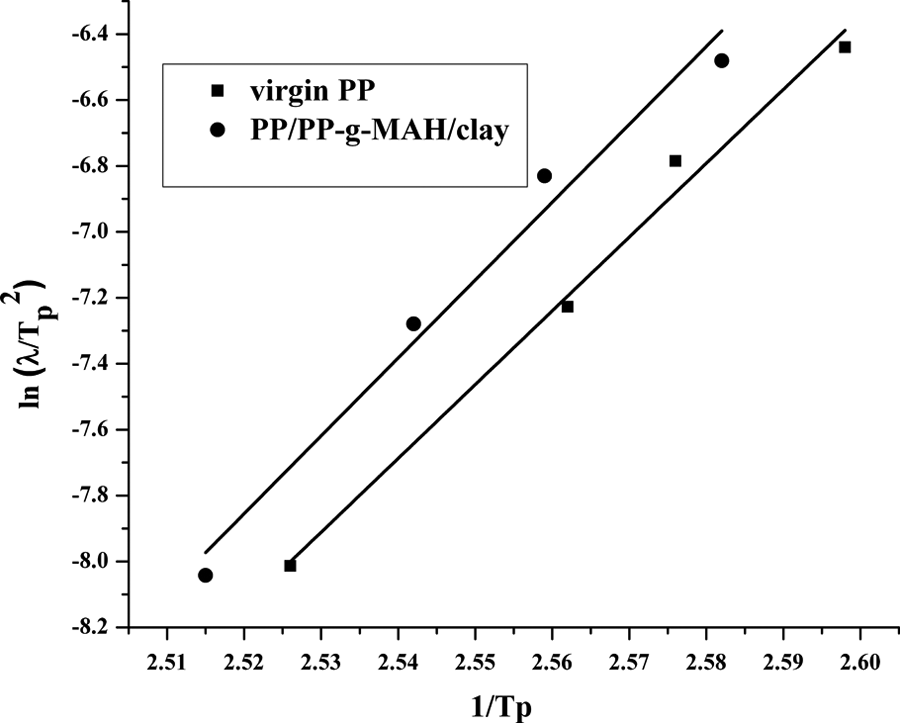
Plots of Kissinger treatment for evaluating non-isothermal crystallization activation energy of (a) virgin PP and (b) PP/PP-g-MAH/clay nanocomposites. PP: polypropylene; PP-g-MAH: maleic anhydride-modified polypropylene.
Morphological observations
Morphological observations were studied with the help of PLM. Figure 11(a) and (b) shows the micrographs of virgin PP and PP/PP-g-MAH/clay nanocomposite during non-isothermal crystallization process at 130°C. It is seen from the micrographs that the number of effective nuclei increases on addition of nanoclay, which has acted as a nucleating agent in the virgin PP matrix and thus accelerated the process of nucleation. This is the reason why the spherulite size reduced rapidly in the nanocomposite. The results obtained also provide the evidence that crystallization of the nanocomposite proceeds mainly through heterogeneous nucleation. It is known that the crystalline morphology significantly affects the mechanical properties of a material because a smaller crystal is much more susceptible to develop into a crack to absorb impact energy while a big spherulite can absorb more stress which makes the material brittle. This is the reason as to why crystalline morphology of PP/PP-g-MAH/clay nanocomposite is favourable for its mechanical properties. 42 –44
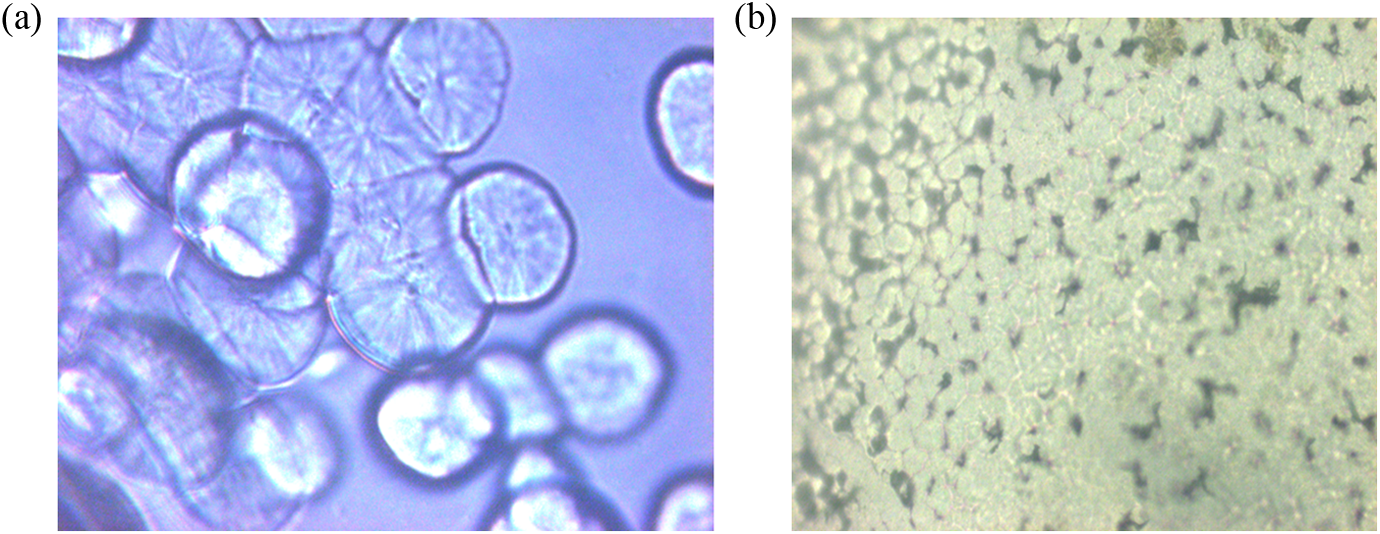
(a) The polarized light micrographs showing the morphology of crystals of virgin PP at respective crystallization temperature (magnification ×500). (b) The polarized light micrographs showing the morphology of crystals of PP/PP-g-MAH/clay nanocomposites at respective crystallization temperature (magnification ×500). PP: polypropylene; PP-g-MAH: maleic anhydride-modified polypropylene.
Conclusion
The non-isothermal crystallization behaviour of virgin PP and PP/PP-g-MAH/clay nanocomposites was studied by DSC. Various kinetic models based on Avrami, Ozawa and modified Avrami–Ozawa (called Mo and co-workers) were used to analyse the non-isothermal behaviour of the nanocomposites. The kinetic studies suggest that addition of clay to PP leads to a decrease in half-time for the crystallization for the cooling rates under investigation. This behaviour is attributed to the nucleating effect of the clay nanoparticles. The non-isothermal crystallization kinetics of virgin PP and nanocomposite at an early stage follow the Avrami model. The result obtained from Avrami analysis concluded that the primary crystallization stage during non-isothermal crystallization correspond to three-dimensional spherulite growth with simultaneous homogeneous and heterogeneous nucleation. The value of t1/2 is lower but the value of Kc is higher for the nanocomposite than the virgin polymer. The value of kinetic parameter F(T) is also lower for the nanocomposite. These data were in agreement with faster rate of crystallization of PP/cay nanocomposite than that of virgin PP. The Ozawa equation cannot satisfactorily describe the non-isothermal crystallization behaviour of PP/PP-g-MAH/clay nanocomposite. In contrast, the modified Avrami method was applied giving satisfactory results, together with the analysis of Mo and co-workers. The activation energy calculated by Kissinger method was 186.15 kJ mol−1 for the virgin PP and 196.37 kJ mol−1 for the PP/PP-g-MAH/clay nanocomposite. The increase in ΔE for the nanocomposite could be attributed to the higher viscosity of the polymer melt of the nanocomposite than that of the virgin PP matrix. This result also shows that clay may have resulted in the increase of ΔE for the transport of the macromolecular chain segments. The results of PLM technique indicate that the nanoclay can increase the crystallization temperature and the nucleation density of virgin PP. Thus, nanoclay is an effective nucleating agent for virgin PP.
Footnotes
Declaration of Conflicting Interests
The author(s) declared no potential conflicts of interest with respect to the research, authorship, and/or publication of this article.
Funding
The author(s) received no financial support for the research, authorship, and/or publication of this article.