




Abstract
Typical crystalline thermoplastic resin polypropylene (PP) and amorphous thermoplastic copolymer acrylonitrile–butadiene–styrene (ABS) were respectively blended with self-made novel low-melting point thermotropic liquid crystalline polyester (TLCP) that contained phosphorus and nitrogen elements (PN-TLCP). Then, the PP/PN-TLCP and ABS/PN-TLCP in situ-reinforced composites were prepared. The effects of PN-TLCP on mechanical property, microstructure, processability, and thermal stability of these two composites were investigated. The results showed that the strength and rigidity of matrix were improved, indicating that PN-TLCP played a role of enhancement. Meanwhile, PN-TLCP could form microfibrillar structure in PP and ABS matrix, which was the main reason of the formation of in situ composites. In the forming process, PN-TLCP could induce PP resin to form β-crystal, which was why the toughness of PP was improved. In addition, PP and ABS exhibited better processing flowability and their melt flow rates were respectively increased 18% and 56% after blending with PN-TLCP. Besides, PN-TLCP was highly beneficial to improving the thermal stabilities of matrix. Various tests showed that this kind of TLCP was suitable for crystalline thermoplastic resin PP and its composites would have more outstanding comprehensive properties.
Keywords
Introduction
The thermotropic liquid crystalline polyester (TLCP) has unique properties, such as high intensity, high modulus, outstanding thermal performance, excellent corrosion resistance and processing performance. 1 The orientation effect of the microfibrillar structure is easy to occur under the shear stress function after being molten blended with thermoplastic polymers (TPs). 2 –4 Meanwhile, the rigid molecules have a long relaxation time so that the microfibrillar structure can be kept in situ and plays a role of self-enhancement. 2,5 Compared with other ordinary reinforcing fiber, microfiber with large aspect ratio has significantly influence on intensity, and the processing fluidity of the blend is improved. In the current, a variety of TLCPs are only applied in engineering plastics with high processing temperature, such as the polyamide and polyester because of high melting point. However, relative literatures are still scarce on TLCP applying to TP with low processing temperature. 6 –11
Based on the above considerations, self-made TLCP whose flexible molecular structure contained phosphorus and nitrogen elements (named PN-TLCP) reinforced polypropylene (PP) and acrylonitrile–butadiene–styrene (ABS) in situ, respectively. Thus, PP/PN-TLCP and ABS/PN-TLCP in situ composites were prepared. The application of PN-TLCP in these two thermoplastic matrix was analyzed by comparing the effects of mechanical properties, processing properties, and thermal stability properties.
Experimental
Materials
A standard PP (K7726, melt flow rate (MFR)=24–35 g/10 min) used in this study was supplied by Yanshan Petrochemical Limited (Beijing, China).
An injection-molding grade ABS (747, MFR=12 g/10 min, at 220°C, under 10 kg) used in this study was supplied by Yanshan Petrochemical Limited (Beijing, China).
The TLCP with low-melting temperature (PN-TLCP) was synthesized in our laboratory.
Synthesis of PN-TLCP
The synthetic route of PN-TLCP is shown in Figure 1.
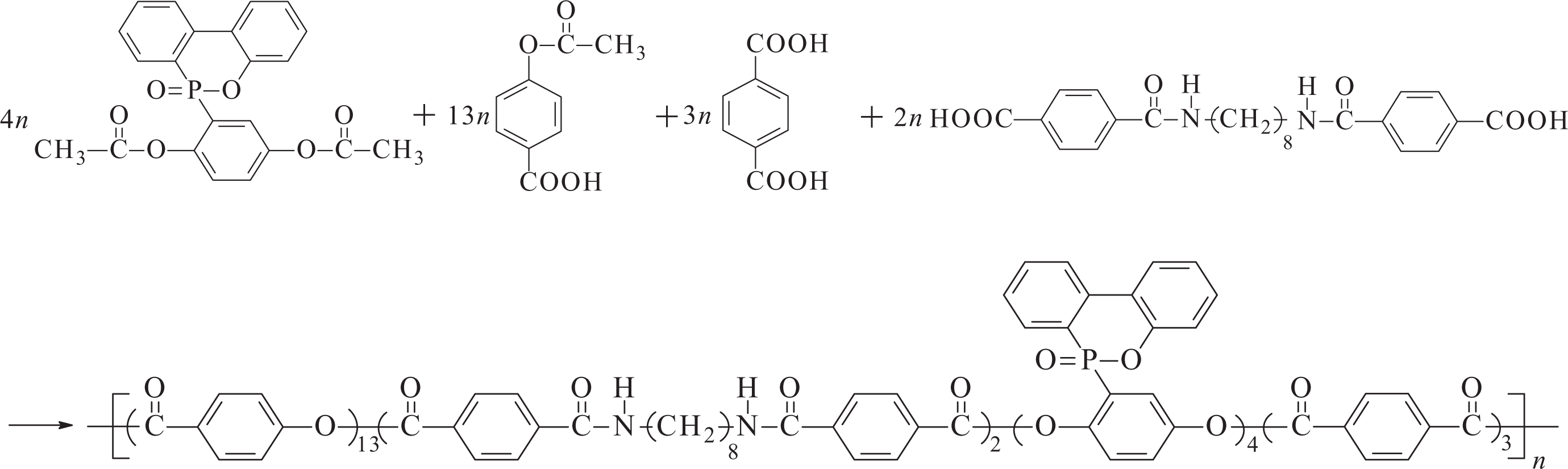
The synthetic route of PN-TLCP.
Preparation of TP/PN-TLCP in situ composites
The samples of TP (PP or ABS) and PN-TLCP in the ratio of 100:5 were prepared by melting mixing at 175°C and 180°C, respectively, on a twin-roll mill (SK-160B; Shanghai, China) for 10 min, then they were compressed into sheets under 15 MPa for 10 min at 180°C or 185°C. The sheets were cooled for a while under certain pressure, and they were cut into splines by universal cutting prototype (NHY-W, Hebei, China) for performance test.
Analysis and characterization
Mechanical testing
Tensile and Izod impact tests were carried out according to ASTM standard. For each test and type of composites, five specimens were tested, and the average values were reported. Tensile tests were conducted according to ASTM D638 using a universal testing machine (RGT-5; Shenzhen Reger Instrument Co. Ltd, China) at a crosshead speed of 50 mm/min. Izod notch impact tests were conducted according to ISO 179-1-2010 using a universal impact testing machine (RXJ-50; Shenzhen Reger Instrument Co. Ltd, China).
Scanning electron microscope
The impact specimens were frozen in liquid nitrogen for 3 h and then quickly smashed. The fracture surfaces of the specimens were sputter coated with gold before scanning electron microscope (SEM) analysis. The microstructures of the composites were analyzed using a SEM (JSM-6460LV; Electron Optics Laboratory Co. Ltd, Japan).
Wide-angle X-ray diffraction
Wide-angle X-ray diffraction (WAXD) studies of PP/PN-TLCP were carried out using a Japan Rigaku D/Max-3B XRD (35 kV, 30 mA). All experiments were carried out at ambient temperature with a scanning rate of 5°C min−1 and a step size of 0.02° in the range of 2θ = 12°–24°.
Polarizing optical microscope
The nucleation processes of PP and PP/PN-TLCP were observed by an XS-18 polarizing optical microscope (POM). The specimens were compressed into thin slice at 200°C for 10 min and kept melting at 200°C for 5 min, then quickly cooled to 120°C for 1 h and took images of the isothermal crystallization.
Rheological properties
Viscosity of composites at various shear rates was obtained at 230°C using a capillary rheometer (RH2000; British Rosand Company, UK).
Melt flow rate
The MFR was measured by Jilin test machine (XRZ-400, Jilin, China) at 230°C according to standard GB/T3682-2000.
Thermogravimetric analysis
The thermal decomposition behavior of the composites was studied by a thermogravimetry (TG, Q50; TA Instruments, New Castle, Delaware, USA) under nitrogen atmosphere at a heating rate of 10°C min−1.
Results and discussion
Mechanical properties
Mechanical property results of in-situ composites were listed in Table 1. As shown, the tensile strength, elastic modulus, yielding strength and fracture strength of both PP and ABS increased visibly after blending with the PN-TLCP, indicating that PN-TLCP played a role of enhancement. It was easy to see that the enhancement role of PN-TLCP for PP and ABS was different, where the tensile strength, elastic modulus, yielding strength, and fracture strength of PP increased with 28.7%, 33.3%, 31.8%, and 68.7%, respectively, while those of ABS was 23.7%, 50.0%, 24.0%, and 22.1%, respectively. We could know that the mechanical properties of crystalline thermoplastic resin PP exhibited an outstanding performance, especially tensile strength, fracture strength, and yielding strength.
Mechanical properties of TP/PN-TLCP in situ composites.
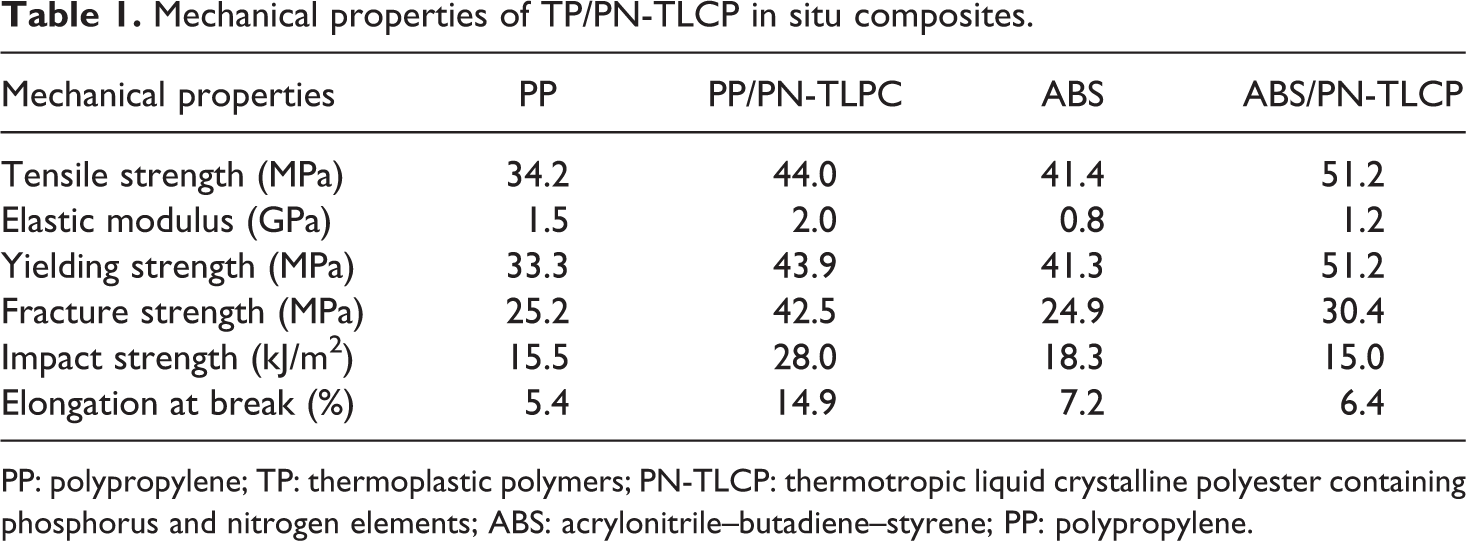
PP: polypropylene; TP: thermoplastic polymers; PN-TLCP: thermotropic liquid crystalline polyester containing phosphorus and nitrogen elements; ABS: acrylonitrile–butadiene–styrene; PP: polypropylene.
At same time, the impact strength and elongation at break of PP/PN-TLCP composite increased by 80.6% and 175.9% compared with those of PP. However, the impact strength and elongation at break of ABS/PN-TLCP composite decreased by 18.0% and 11.1%. The difference of influence was caused by different interaction between the PN-TLCP and TP. As the reinforcing effect of the PN-TLCP depended on the interface between PN-TLCP and matrix and the ability of transferring stress from matrix to PN-TLCP, this stress transfer efficiency played a dominant role in determining the mechanical properties of the composites. In a word, PN-TLCP could play a certain action of enhancement and toughness in PP while only showed enhancement action in ABS.
SEM photographs
To explore strengthening mechanism, the microstructures of TP and TP/PN-TLCP in situ composites were analyzed by SEM showed in Figure 2. Making a comparison with Figure 2(a) and (d), we could confirm that there were several white bright spots in the SEM images of in situ composites. When the white bright spots were magnified to 5000×, they became white microfibres. The diameters of microfibres were 1–3 μm and the length was 20–50 μm in PP and 50–70 μm in ABS. We could indicate that PN-TLCP formed microfibrillar structure in PP and ABS matrices. Hence, the strengthening mechanism could be explained as follows: PN-TLCP’s molecular chain was rigid, long club-shaped structure with high strength and high modulus. This kind of structure was able to form into a thermodynamic stability liquid crystal state due to short range order when it was melting. During the manufacturing process, it formed oriented liquid crystalline fibril structure that was liquid-crystalline-ordered microregion and exhibited optical anisotropy when the temperature was beyond liquid crystalline phase transition temperature. The relaxation time of PN-TLCP was long at supercooled state, thus molecular and condensed orientation could be retained in microarea during the cooling process. The properties of liquid crystal polymer condensed state could give material the ability of self-reinforcement hence TP/PN-TLCP composites were in situ. This special microfibrillar structure formed in TP leaded to high strength and rigidity composites.
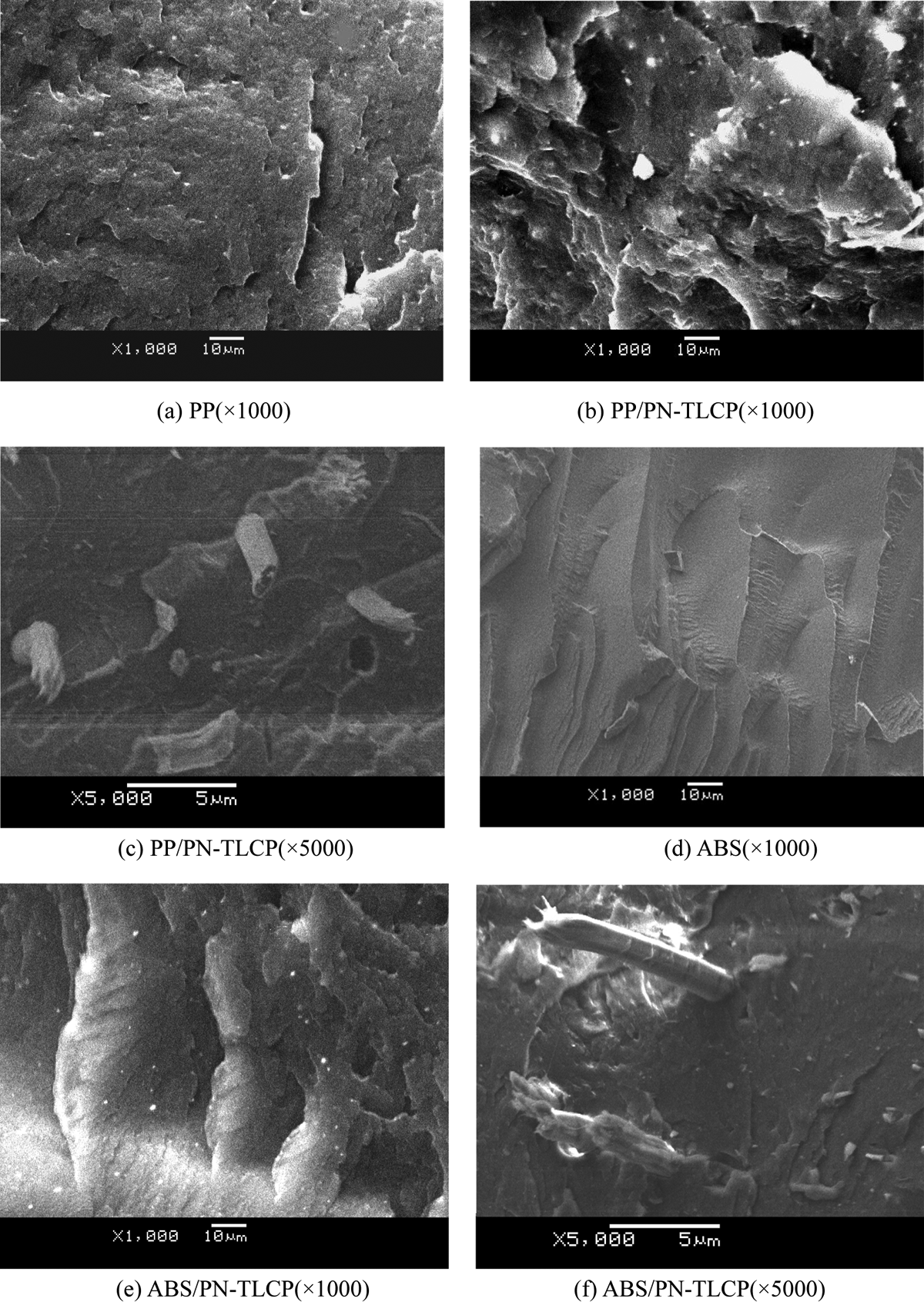
SEM images of PP, ABS and TP/PN-TLCP composites. SEM: scanning electron microscope; TP: thermoplastic polymer; PN-TLCP: thermotropic liquid crystalline polyester containing phosphorus and nitrogen elements; ABS: acrylonitrile–butadiene–styrene; PP: polypropylene.
Compared with ABS matrix, the PN-TLCP was uniformly distributed in PP matrix. There was more microfibrillar structure in the PP/PN-TLCP in situ composite. The incorporation of the PN-TLCP into the composite would automatically increase the strength of the composite, thereby resulting in a higher tensile strength. The poor interfacial adhesion between the PN-TLCP and ABS matrix resulted in the emergence of the early interface separation when an external force was exerted. This was the main reason of the toughness decrease in ABS matrix.
Crystal structure
WAXD analysis
As is well known, PP is a kind of crystalline material. Its crystal morphology has a great influence on mechanical properties. 12 In order to reveal the toughening mechanism of PN-TLCP in PP matrix, the crystal morphology was studied by WAXD. The characteristic peak at 16° attributed to β-crystal (300) of PP/PN-TLCP composite could be clearly seen from Figure 3 while such peak was nonexistent in curve of PP. The reason of the phenomenon was that there was β-crystal formed in PP/PN-TLCP composite. As the inner arrangement of β-crystal was very loose than α-crystal, the β-crystal had a better absorption effect on the impact. Therefore, the impact strength of PP/PN-TLCP composite was 1.8 times higher than PP as shown in Table 1. These all suggested that PN-TLCP had heterogeneous nucleation effect on PP, which would be beneficial to improve the toughness of PP.
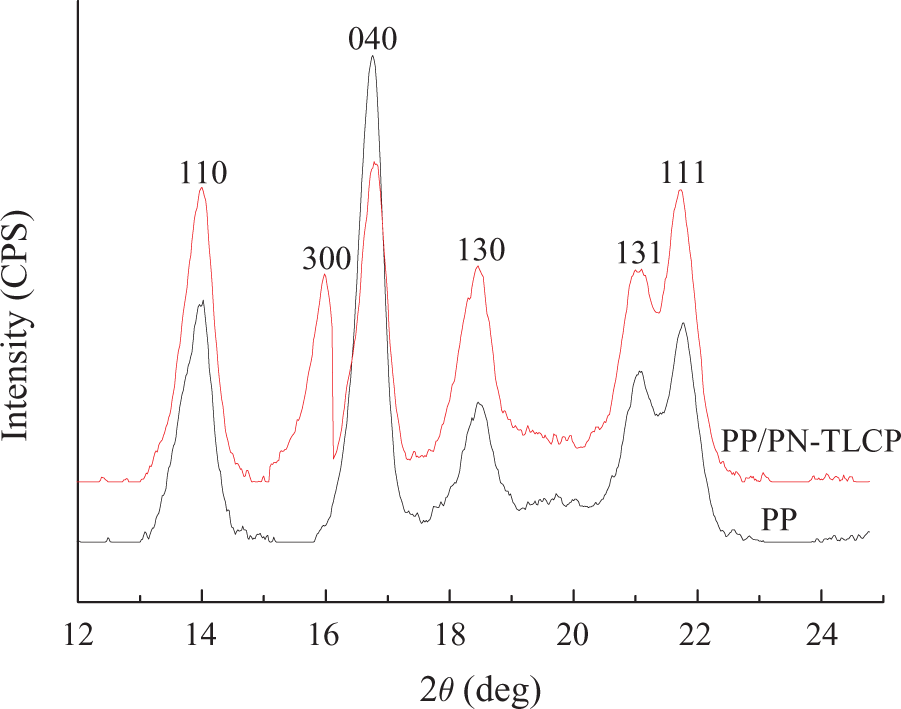
WAXD patterns of PP and PP/ PN-TLCP in situ composite. WAXD: wide-angle X-ray diffraction; PN-TLCP: thermotropic liquid crystalline polyester containing phosphorus and nitrogen elements; PP: polypropylene.
POM characterization
The larger size spherulite possesses, the greater brittleness of material is. Thereby, the spherulite size affects the impact strength of material. At the same time, fine grains in material can improve hardness, strength and toughness. The nucleation processes of PP and PP/PN-TLCP were observed by POM. Obviously, the POM observation was in agreement with the WAXD aforementioned results. As shown in Figure 4(a) and (b), the PP matrix crystallized in spherulitic structure, which contained predominantly α-crystal. The spherulitic structure possessed large diameter and its spherulites squeezed each other forming polygonal spherulites with sharp and clear boundaries. However, Figure 4(c) and 4(d) showed that a part of β-crystal formed in PP matrix after adding PN-TLCP. The PN-TLCP made the size of the PP spherulite small, the intergranular arrangement loose and interface faint. These phenomena indicated that PN-TLCP was a kind of β-crystal nucleating agent for PP. In conclusion, adding PN-TLCP could promote crystalline granular texture in PP matrix and obviously improve the toughness of PP.
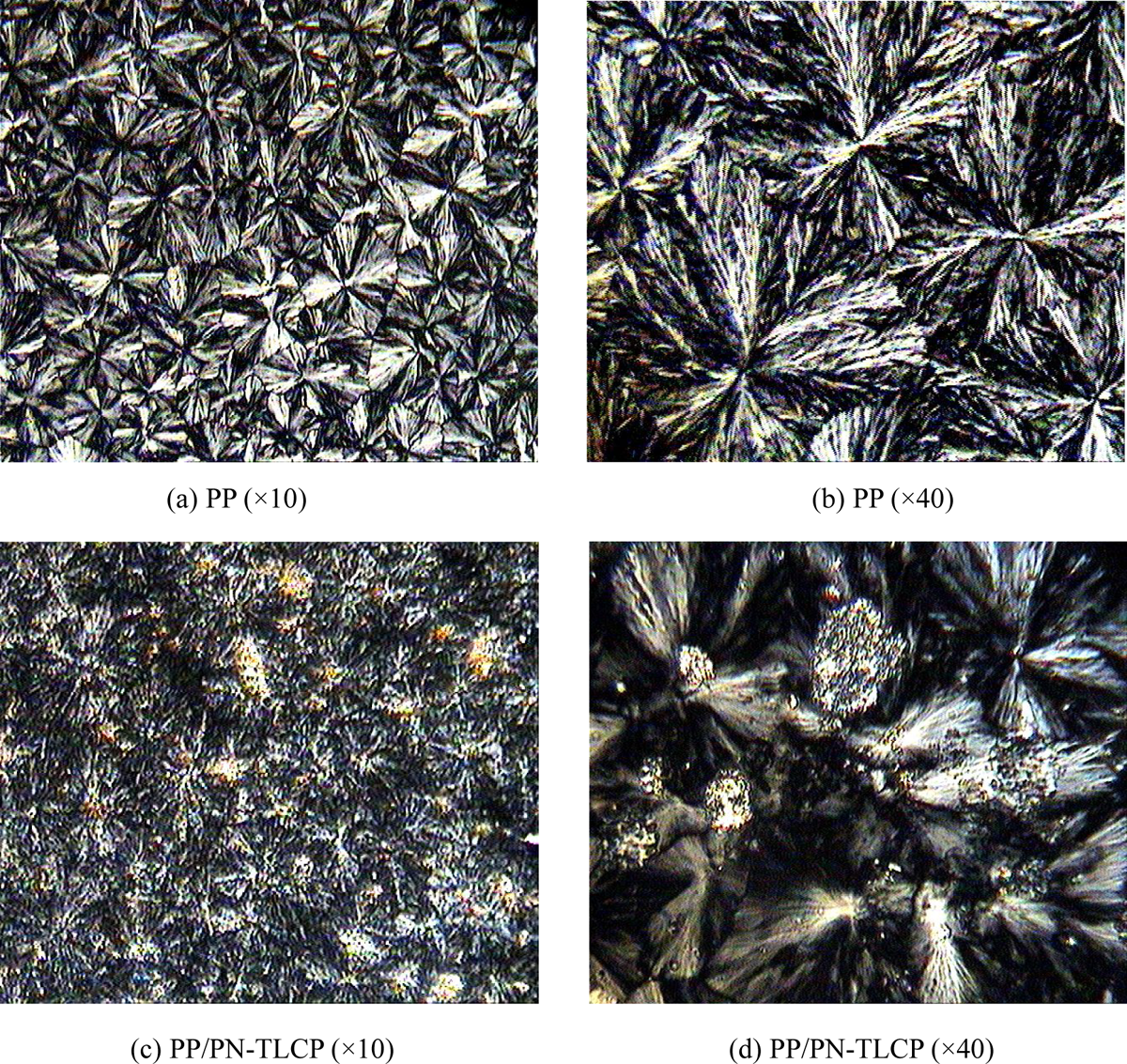
POM micrographs of PP and PP/PN-TLCP in situ composites during the isothermal crystallization at 120°C. POM: Polarizing optical microscope; PN-TLCP: thermotropic liquid crystalline polyester containing phosphorus and nitrogen elements; PP: polypropylene.
Fluidity properties
Apparent viscosity curves as a function of shear rate were shown in Figure 5(a). The apparent viscosity of TP/PN-TLCP composites was significant lower than that of TP over the range of shear rate. The higher shear rate is, the greater reduction of apparent viscosity becomes. The apparent viscosity of four kinds of materials decreased with increasing of shear rate. At high shear rate, however, in situ composites showed the low apparent viscosity due to its extraordinary shear-shinning behavior. The reason of shear-shinning behavior was that with the increasing of melt shear stress, parts of polymer macromolecular chain nodes were untied and nodes concentration decreased, which illustrated that the PN-TLCP did not change the fluid behavior on TP. So that in situ material showed a typical pseudoplastic rheology behavior.
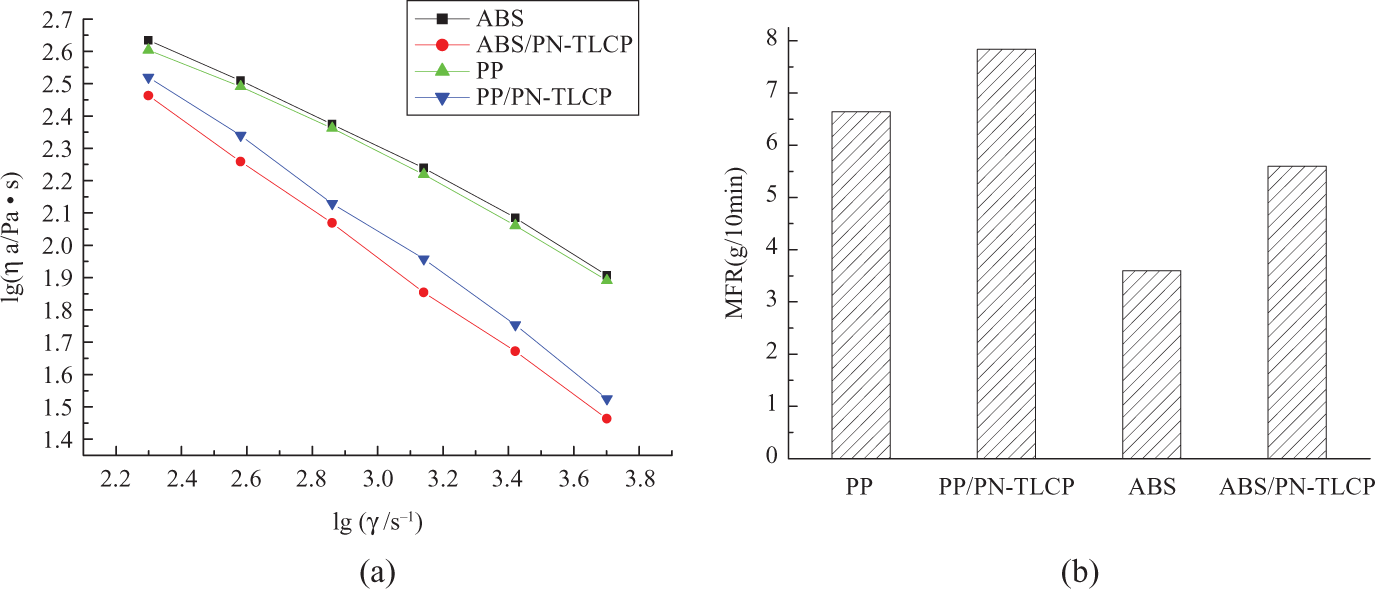
Rheological behaviors and MFR of TP and TP/PN-TLCP in situ composites. MFR: melt flow rate; PN-TLCP: thermotropic liquid crystalline polyester containing phosphorus and nitrogen elements; ABS: acrylonitrile–butadiene–styrene; PP: polypropylene; TP: thermoplastic polymer.
As Figure 5(b) shown, compared with TP matrix, the melt flow rate of TP/PN-TLCP in situ composites respectively increased by 18% and 56%. This was because PN-TLCP could form microfibrillar structure in TP matrix in the melt blending process. PN-TLCP preferred orientation along the flow direction due to its rigid rod structure. Orientation of microinterval induced the interfacial slip and polymer chains disentanglement, which could reduce the viscosity of composite and improve the flow property and processing performance. From what had been discussed above, the orientation of PN-TLCP could be promoted by increasing the shear rate, which was conducive to reduce the viscosity of composite. The processing performance of TP/PN-TLCP composites was improved, suggesting that PN-TLCP could form in situ fibrillation and in situ-reinforced composites.
Thermal stability
Thermal properties of TP and TP/PN-TLCP composites were investigated by TG and derivative TG (DTG). In order to show the comparison of the composites thermal stability clearly, five reference points on the curves including onset temperature (T onset), 50% weight loss temperature (T 50%), maximum weight loss temperature (T max), and maximum decomposition rate (V max) and the residual carbon amount at 700°C were selected.
It could be seen from Figure 6(a) and Table 2 that after adding PN-TLCP into PP, the T onset, T 50%, and the residual carbon amount at 700°C increased by 21°C, 41°C, and 4.66%, respectively. Although the thermal behavior of ABS/PN-TLCP composite was similar to that of PP/PN-TLCP composite showed in Figure 6(b) and Table 2, the degree of increase in ABS was less than that in PP. The contribution values of T onset, T 50%, and the residual carbon amount for ABS/PN-TLCP composite were 16°C, 12°C and 1.67%, respectively, compared with pure ABS.
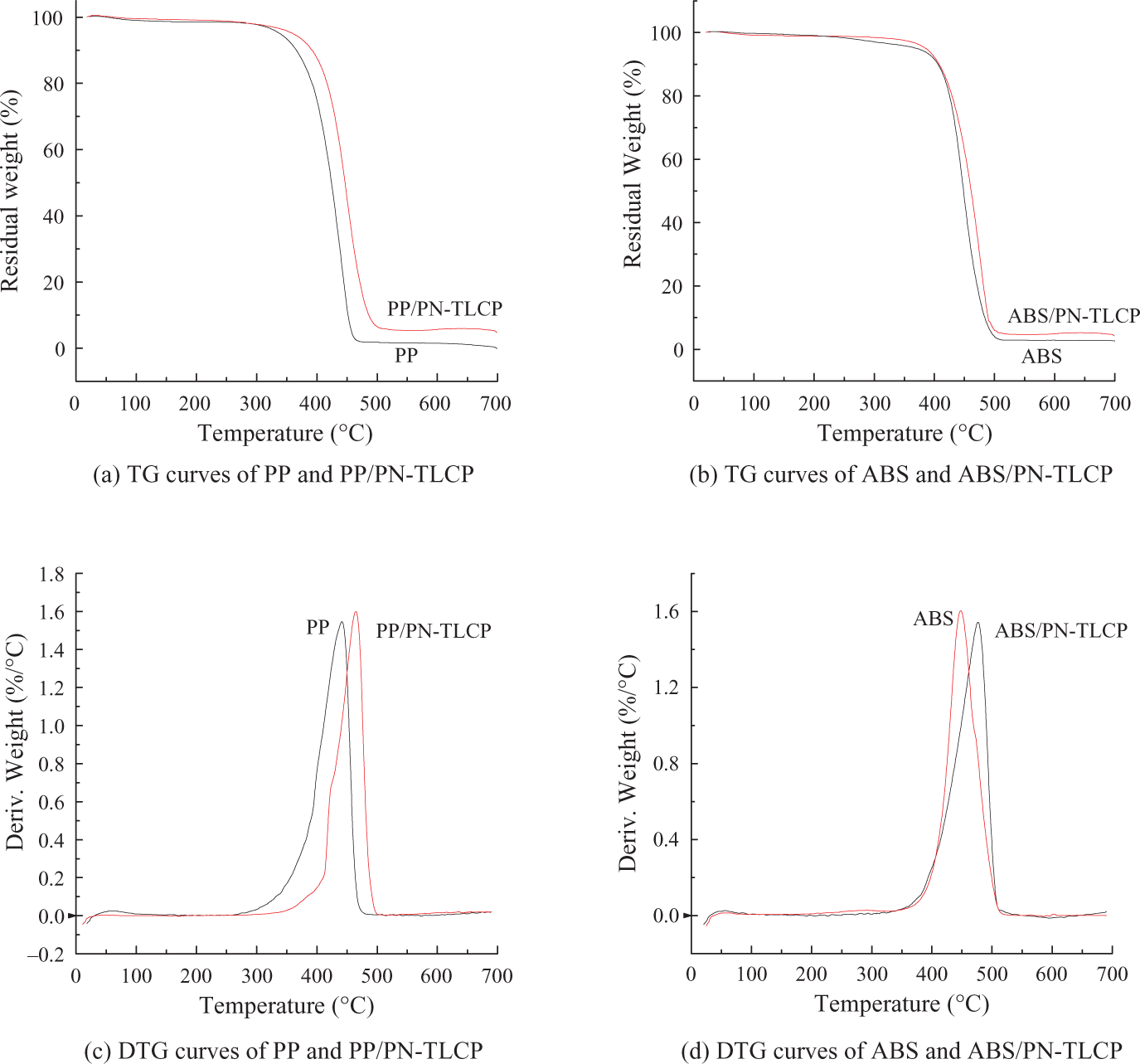
TG and DTG curves of TP and TP/PN-TLCP in situ composites. PN-TLCP: thermotropic liquid crystalline polyester containing phosphorus and nitrogen elements; TP: thermoplastic polymer; TG: thermogravimetry; DTG: derivative thermogravimetry.
TG and DTG data of TP and TP/PN-TLCP in situ composites.
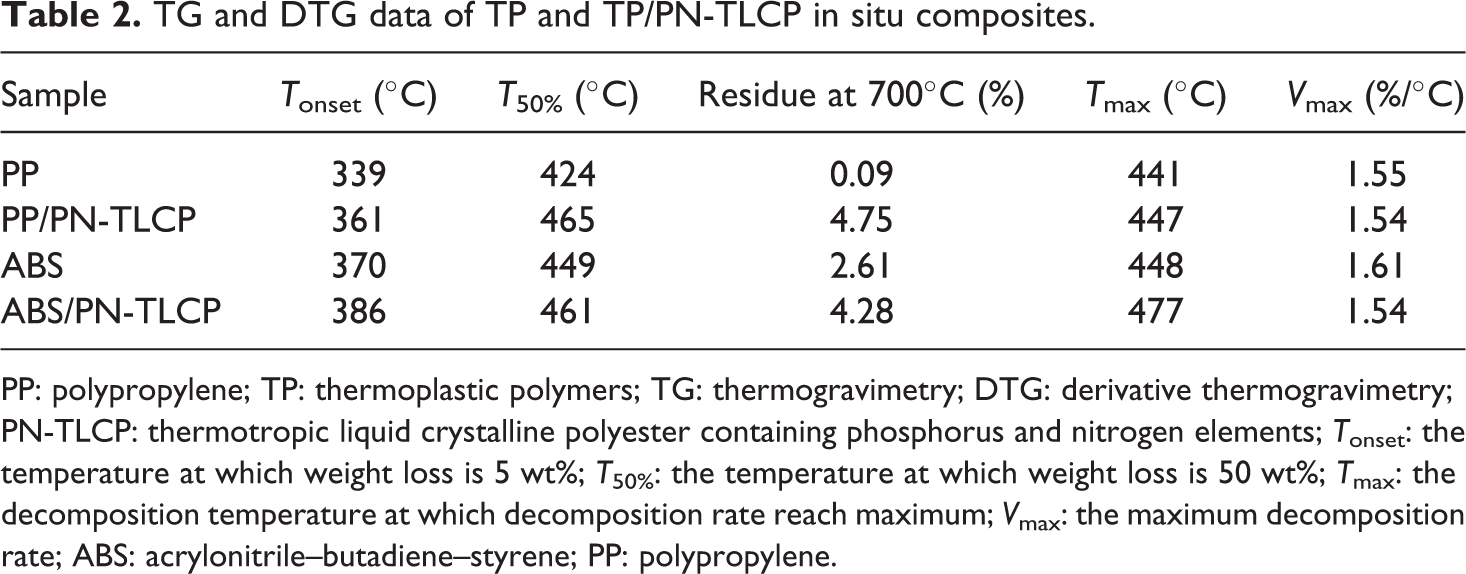
PP: polypropylene; TP: thermoplastic polymers; TG: thermogravimetry; DTG: derivative thermogravimetry; PN-TLCP: thermotropic liquid crystalline polyester containing phosphorus and nitrogen elements; T onset: the temperature at which weight loss is 5 wt%; T 50%: the temperature at which weight loss is 50 wt%; T max: the decomposition temperature at which decomposition rate reach maximum; V max: the maximum decomposition rate; ABS: acrylonitrile–butadiene–styrene; PP: polypropylene.
Figure 6(c) and Table 2 reflected that the V max had little change of PP and ABS after adding PN-TLCP. However, there was obviously variation in T max. To be specific, the T max of PP/PN-TLCP composite had extended to 447°C and ABS/PN-TLCP composite also increased to 477°C.
In summary, greater superiority had taken place in the PP/PN-TLCP composite than ABS/PN-TLCP composite. The reasons were as follows: on the one hand, PN-TLCP possesses rigid rod structure that was beneficial to increasing of thermal ability. On the other hand, PN-TLCP contained halogen-free flame-retardant elements phosphorus and nitrogen, which could impart PN-TLCP excellent heat resistance and flame resistance. Besides, the distribution of PN-TLCP in TP matrix could form protective layer on the matrix surface to cut off oxygen and volatile gas.
Conclusion
By blending PP or ABS with self-made low melting point of TLCP, two kinds of TP/PN-TLCP in situ-reinforced composites were successfully prepared. PN-TLCP could form the microfibrillar structure in PP and ABS matrix and had an obvious enhancement role, especially in the crystalline type of PP resin. PN-TLCP had a heterogeneous nucleation role and could induce PP to form β-crystal in the crystallization process, thus increasing the toughness of PP. PN-TLCP had no effect on fluid behaviors of PP and ABS, but it could improve the processing properties of PP/PN-TLCP composite and ABS/PN-TLCP composite. PN-TLCP could not only increase the thermal ability of TP/PN-TLCP composites at low temperature but also increase the thermal ability of TP/PN-TLCP composites at high temperature.
Footnotes
Declaration of Conflicting Interests
The author(s) declared no potential conflicts of interest with respect to the research, authorship, and/or publication of this article.
Funding
The author(s) disclosed receipt of the following financial support for the research, authorship, and/or publication of this article: This research was supported by the scientific and technological project of Dalian, China (2009A14 GX061).